• Trade
  • Markets
  • Copy
  • Contests
  • News
  • 24/7
  • Calendar
  • Q&A
  • Chats
Screeners
SYMBOL
LAST
ASK
BID
HIGH
LOW
NET CHG.
%CHG.
SPREAD
SPX
S&P 500 Index
6915.62
6915.62
6915.62
6932.95
6895.49
+2.26
+ 0.03%
--
DJI
Dow Jones Industrial Average
49098.70
49098.70
49098.70
49265.46
48963.05
-285.30
-0.58%
--
IXIC
NASDAQ Composite Index
23501.23
23501.23
23501.23
23610.74
23374.26
+65.22
+ 0.28%
--
USDX
US Dollar Index
96.870
96.950
96.870
97.120
96.730
-0.360
-0.37%
--
EURUSD
Euro / US Dollar
1.18645
1.18653
1.18645
1.18975
1.18441
+0.00364
+ 0.31%
--
GBPUSD
Pound Sterling / US Dollar
1.36645
1.36657
1.36645
1.36824
1.36427
+0.00215
+ 0.16%
--
XAUUSD
Gold / US Dollar
5065.47
5065.90
5065.47
5092.96
5003.35
+79.02
+ 1.58%
--
WTI
Light Sweet Crude Oil
61.001
61.031
61.001
61.179
60.514
-0.104
-0.17%
--

Community Accounts

Signal Accounts
--
Profit Accounts
--
Loss Accounts
--
View More

Become a signal provider

Sell trading signals to earn additional income

View More

Guide to Copy Trading

Get started with ease and confidence

View More

Signal Accounts for Members

All Signal Accounts

Best Return
  • Best Return
  • Best P/L
  • Best MDD
Past 1W
  • Past 1W
  • Past 1M
  • Past 1Y

All Contests

  • All
  • Trump Updates
  • Recommend
  • Stocks
  • Cryptocurrencies
  • Central Banks
  • Featured News
Top News Only
Share

Philippines Foreign Ministry: Made Firm Representations To Chinese Ambassador And Embassy In Manila

Share

Japan Prime Minister Takaichi: Plan To Send Appropriate Messages That We Are Fully Taking Into Account Fiscal Sustainability

Share

Japan Prime Minister Takaichi: Can't Comment On Market, Will Closely Monitor Speculative Moves And Respond Appropriately

Share

Japan Prime Minister Takaichi: Have Reviewed How To Secure Funding For Food Sales Tax

Share

HSBC Research: Increased Confidence In HK Mkt, Banking/ Real Estate Sectors Favored

Share

Authorities: Drone Debris Spark Fire At Two Enterprises In Russia's Krasnodar Region

Share

Japan Prime Minister Takaichi: From The Perspective Of Ensuring Safety And Liquidity To Achieve The Objectives Of These Government Assets, The Risks Of Potential Sovereign Wealth Funds Are Very High

Share

Japan Prime Minister Takaichi: Not Realistic To Create Sovereign Wealth Fund Combining Bank Of Japan's ETF Holdings, Pension Funds And Currency Reserves

Share

Singapore December Industrial Production +8.3% Year-On-Year Versus Analysts' Estimate +10.1%

Share

Singapore December Industrial Production -13.3% Month-On-Month Seasonally Adjusted Versus Analysts' Estimate -15.2%

Share

JIJI: Japan Chief Cabinet Secretary Kiahara Says Government Will Compile Tentative Budget If FY 2026 Budget Unlikely To Pass Parliament By End-March

Share

Yield On 2-Year Japanese Government Bond Rises 2 Bps To 1.27%, Highest Since 1996

Share

Japan Prime Minister Takaichi: Speaking As Premier, I Would Like To Achieve 2-Year Suspension Of 8% Tax On Food At Earliest Date Possible, Submit Relevant Legislation In Fiscal 2026 Diet

Share

[Carney Says Canada Is Not Seeking A Free Trade Agreement With China] Recently, US President Trump Has Repeatedly Pressured Canada On Trade Relations With China, Threatening To Impose A 100% Tariff On Canada. In Response, Canadian Prime Minister Carney Stated On The 25th That Canada Is Not Seeking A Free Trade Agreement With China. "What We've Done With China Is To Correct Some Problems That Have Arisen In The Past Few Years," He Said, Adding That Everything Is In Accordance With The United States-Mexico-Canada Agreement (USMCA). According To A Report By CNBC On The 25th, Carney Stated That Under The USMCA, Canada Is Committed Not To Enter Into Free Trade Agreements With Other Market Economies Without Prior Notification To The United States And Mexico

Share

Christopher Hui: More Products Like Gold Futures To Be Launched After Establishing Gold Clearing System

Share

Indonesia, GCC Seek To Finalize FTA By End-2026

Share

USA Department Of Energy- Today Issued Two Emergency Orders To Mitigate Blackouts In New England And Texas During Winter Storm Fern

Share

Japanese Finance Minister Satsuki Katayama: I Will Not Comment On The Foreign Exchange Market

Share

[State Taxation Administration: New Energy Vehicle Consumption Continues To Rise In 2025] Analysis Of Consumption Data Using Tax Big Data By The State Taxation Administration Shows That My Country's Consumer Market Presented Several New Highlights In 2025. Demand For Home Appliances, Mobile Phones, And New Energy Vehicles Was Strongly Released, New Consumption Models And Scenarios Continued To Innovate And Integrate, The Silver-haired Group Demonstrated Significant Consumption Potential, And Inbound Tourism Boosted Consumption. In 2025, Home Appliance Consumption Showed An Upward Trend, With Sales Revenue From The Retail Of Daily Household Appliances Such As Refrigerators, Kitchen And Bathroom Appliances Such As Gas Stoves, And Communication Equipment Such As Mobile Phones Increasing By 17.4%, 12.9%, And 18.6% Year-on-Year, Respectively. The Consumption Of New Energy Vehicles Continued To Rise. Data From The Unified Invoice For Motor Vehicle Sales Shows That In 2025, Sales Volume And Sales Revenue Of New Energy Passenger Vehicles Increased By 24.3% And 21.1% Year-on-Year, Respectively

Share

Thailand Board Of Investment: Value Of Total Investment Applications Rises 67% On Year In 2025

TIME
ACT
FCST
PREV
U.K. Retail Sales MoM (SA) (Dec)

A:--

F: --

P: --

France Manufacturing PMI Prelim (Jan)

A:--

F: --

P: --

France Services PMI Prelim (Jan)

A:--

F: --

P: --

France Composite PMI Prelim (SA) (Jan)

A:--

F: --

P: --

Germany Manufacturing PMI Prelim (SA) (Jan)

A:--

F: --

P: --

Germany Services PMI Prelim (SA) (Jan)

A:--

F: --

P: --

Germany Composite PMI Prelim (SA) (Jan)

A:--

F: --

P: --

Euro Zone Composite PMI Prelim (SA) (Jan)

A:--

F: --

P: --

Euro Zone Manufacturing PMI Prelim (SA) (Jan)

A:--

F: --

P: --

Euro Zone Services PMI Prelim (SA) (Jan)

A:--

F: --

P: --

U.K. Composite PMI Prelim (Jan)

A:--

F: --

P: --

U.K. Manufacturing PMI Prelim (Jan)

A:--

F: --

P: --

U.K. Services PMI Prelim (Jan)

A:--

F: --

P: --

Mexico Economic Activity Index YoY (Nov)

A:--

F: --

P: --

Russia Trade Balance (Nov)

A:--

F: --

P: --

Canada Core Retail Sales MoM (SA) (Nov)

A:--

F: --

P: --

Canada Retail Sales MoM (SA) (Nov)

A:--

F: --

P: --
U.S. IHS Markit Manufacturing PMI Prelim (SA) (Jan)

A:--

F: --

P: --

U.S. IHS Markit Services PMI Prelim (SA) (Jan)

A:--

F: --

P: --

U.S. IHS Markit Composite PMI Prelim (SA) (Jan)

A:--

F: --

P: --

U.S. UMich Consumer Sentiment Index Final (Jan)

A:--

F: --

P: --

U.S. UMich Current Economic Conditions Index Final (Jan)

A:--

F: --

P: --

U.S. UMich Consumer Expectations Index Final (Jan)

A:--

F: --

P: --

U.S. Conference Board Leading Economic Index MoM (Nov)

A:--

F: --

P: --

U.S. Conference Board Coincident Economic Index MoM (Nov)

A:--

F: --

P: --

U.S. Conference Board Lagging Economic Index MoM (Nov)

A:--

F: --

P: --

U.S. UMich 1-Year-Ahead Inflation Expectations Final (Jan)

A:--

F: --

P: --

U.S. Conference Board Leading Economic Index (Nov)

A:--

F: --

P: --

U.S. Weekly Total Rig Count

A:--

F: --

P: --

U.S. Weekly Total Oil Rig Count

A:--

F: --

P: --

Germany Ifo Business Expectations Index (SA) (Jan)

--

F: --

P: --

Germany IFO Business Climate Index (SA) (Jan)

--

F: --

P: --

Germany Ifo Current Business Situation Index (SA) (Jan)

--

F: --

P: --

U.S. Dallas Fed PCE Price Index YoY (Nov)

--

F: --

P: --

Brazil Current Account (Dec)

--

F: --

P: --

Mexico Unemployment Rate (Not SA) (Dec)

A:--

F: --

P: --

Canada National Economic Confidence Index

--

F: --

P: --

U.S. Non-Defense Capital Durable Goods Orders MoM (Excl. Aircraft) (Nov)

--

F: --

P: --

U.S. Durable Goods Orders MoM (Excl. Defense) (SA) (Nov)

--

F: --

P: --

U.S. Durable Goods Orders MoM (Excl.Transport) (Nov)

--

F: --

P: --

U.S. Durable Goods Orders MoM (Nov)

--

F: --

P: --

U.S. Chicago Fed National Activity Index (Nov)

--

F: --

P: --

U.S. Dallas Fed New Orders Index (Jan)

--

F: --

P: --

U.S. Dallas Fed General Business Activity Index (Jan)

--

F: --

P: --

U.K. BRC Shop Price Index YoY (Jan)

--

F: --

P: --

China, Mainland Industrial Profit YoY (YTD) (Dec)

--

F: --

P: --

Mexico Trade Balance (Dec)

--

F: --

P: --

U.S. S&P/CS 20-City Home Price Index YoY (Not SA) (Nov)

--

F: --

P: --

U.S. S&P/CS 20-City Home Price Index MoM (SA) (Nov)

--

F: --

P: --

U.S. FHFA House Price Index MoM (Nov)

--

F: --

P: --

U.S. FHFA House Price Index (Nov)

--

F: --

P: --

U.S. Richmond Fed Manufacturing Composite Index (Jan)

--

F: --

P: --

U.S. Conference Board Present Situation Index (Jan)

--

F: --

P: --

U.S. Conference Board Consumer Expectations Index (Jan)

--

F: --

P: --

U.S. Richmond Fed Manufacturing Shipments Index (Jan)

--

F: --

P: --

U.S. Richmond Fed Services Revenue Index (Jan)

--

F: --

P: --

U.S. Conference Board Consumer Confidence Index (Jan)

--

F: --

P: --

Australia RBA Trimmed Mean CPI YoY (Q4)

--

F: --

P: --

Australia CPI YoY (Q4)

--

F: --

P: --

Australia CPI QoQ (Q4)

--

F: --

P: --

Q&A with Experts
    • All
    • Chatrooms
    • Groups
    • Friends
    SlowBear ⛅ flag
    Cyprien🇨🇩
    The morning begins with SL
    @Cyprien🇨🇩Oh no, sorry about that bro, were you holding a short on Friday?
    P6RLW9LWV5 flag
    Kung Fu
    @Kung Fubit my balance not showing
    LOMERI flag
    SlowBear ⛅
    @SlowBear ⛅chfjpy no news this week except Japan getting it on Thursday the pzir now moved up and down
    SlowBear ⛅ flag
    ifan afian
    @ifan afianI think Knowhere is the next stop possibly
    Kung Fu flag
    ifan afian
    @ifan afianoh, yes! That's Black Hole. And here there's no returning to earth
    ifan afian flag
    yes
    ifan afian flag
    Kung Fu
    @Kung FuWahahahahahahaha
    Cyprien🇨🇩 flag
    Kung Fu
    @Kung FuWe're here bro, gold is a headache
    SlowBear ⛅ flag
    LOMERI
    @LOMERIYes i completely agree, so the next move on the yen pairs could tarry for more lower move
    Kung Fu flag
    P6RLW9LWV5
    @P6RLW9LWV5I can see it, Brother. Are you sure you're looking at the right place
    Kung Fu flag
    ifan afian
    @ifan afianhuahuahua. It's fun when one's laughter sounds like a chihuahua in outer space
    SlowBear ⛅ flag
    P6RLW9LWV5
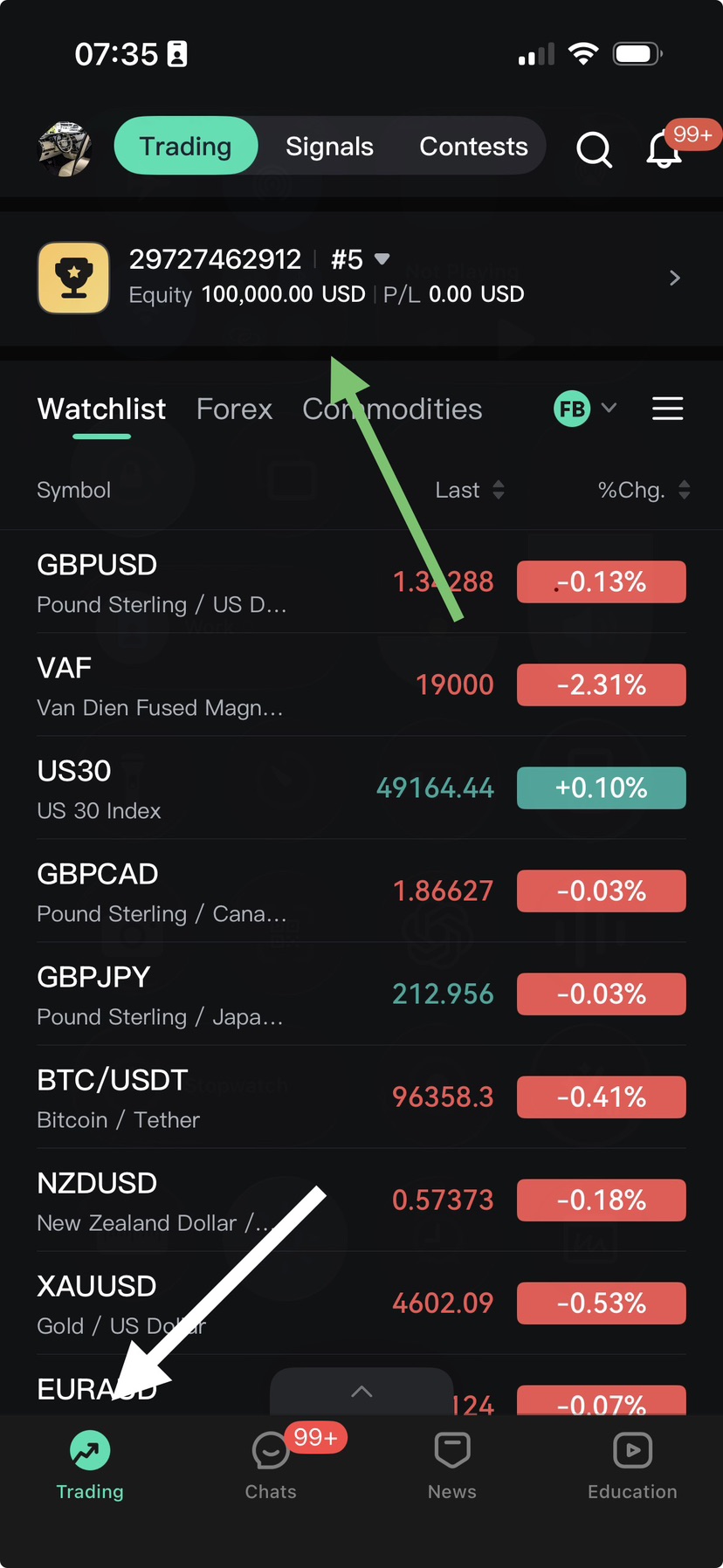
    @P6RLW9LWV5 I think you should check your internet first or juct click on the demo account itself
    mukesh jha flag
    ifan afian
    yes
    @ifan afian HAAAA BRO I LOVE YOU TOO
    SlowBear ⛅ flag
    Kung Fu flag
    P6RLW9LWV5
    @P6RLW9LWV5I see 5hat you're doing very well in the contest, Brother
    SlowBear ⛅ flag
    SlowBear ⛅
    @P6RLW9LWV5 Look at where the gree arrow is pointing at and click on it - You should get a better view of your account information
    SlowBear ⛅ flag
    ifan afian
    yes
    @ifan afianAlright, maybe 6000 this week - whatever the case maybe i will be holding!
    LOMERI flag
    SlowBear ⛅
    @SlowBear ⛅yes a break out down is loading
    NEWBIE flag
    6000 this week is crazy but we'll see
    Kung Fu flag
    LOMERI
    @LOMERIthis will happen , very likely, in another session
    Type here...
    Add Symbol or Code

      No matching data

      All
      Trump Updates
      Recommend
      Stocks
      Cryptocurrencies
      Central Banks
      Featured News
      • All
      • Russia-Ukraine Conflict
      • Middle East Flashpoint
      • All
      • Russia-Ukraine Conflict
      • Middle East Flashpoint
      Search
      Products

      Charts Free Forever

      Chats Q&A with Experts
      Screeners Economic Calendar Data Tools
      Membership Features
      Data Warehouse Market Trends Institutional Data Policy Rates Macro

      Market Trends

      Market Sentiment Order Book Forex Correlations

      Top Indicators

      Charts Free Forever
      Markets

      News

      News Analysis 24/7 Columns Education
      From Institutions From Analysts
      Topics Columnists

      Latest Views

      Latest Views

      Trending Topics

      Top Columnists

      Latest Update

      Signals

      Copy Rankings Latest Signals Become a signal provider AI Rating
      Contests
      Brokers

      Overview Brokers Assessment Rankings Regulators News Claims
      Broker listing Forex Brokers Comparison Tool Live Spread Comparison Scam
      Q&A Complaint Scam Alert Videos Tips to Detect Scam
      More

      Business
      Events
      Careers About Us Advertising Help Center

      White Label

      Data API

      Web Plug-ins

      Affiliate Program

      Awards Institution Evaluation IB Seminar Salon Event Exhibition
      Vietnam Thailand Singapore Dubai
      Fans Party Investment Sharing Session
      FastBull Summit BrokersView Expo
      Recent Searches
        Top Searches
          Markets
          News
          Analysis
          User
          24/7
          Economic Calendar
          Education
          Data
          • Names
          • Latest
          • Prev

          View All

          No data

          Scan to Download

          Faster Charts, Chat Faster!

          Download App
          English
          • English
          • Español
          • العربية
          • Bahasa Indonesia
          • Bahasa Melayu
          • Tiếng Việt
          • ภาษาไทย
          • Français
          • Italiano
          • Türkçe
          • Русский язык
          • 简中
          • 繁中
          Open Account
          Search
          Products
          Charts Free Forever
          Markets
          News
          Signals

          Copy Rankings Latest Signals Become a signal provider AI Rating
          Contests
          Brokers

          Overview Brokers Assessment Rankings Regulators News Claims
          Broker listing Forex Brokers Comparison Tool Live Spread Comparison Scam
          Q&A Complaint Scam Alert Videos Tips to Detect Scam
          More

          Business
          Events
          Careers About Us Advertising Help Center

          White Label

          Data API

          Web Plug-ins

          Affiliate Program

          Awards Institution Evaluation IB Seminar Salon Event Exhibition
          Vietnam Thailand Singapore Dubai
          Fans Party Investment Sharing Session
          FastBull Summit BrokersView Expo

          German Service Sector Ends 2025 With Solid Growth, PMI Shows

          Glendon

          Forex

          Economic

          Summary:

          Germany's service sector continued to grow at a solid pace in December, although the rate of expansion eased for the second consecutive month due mainly to a slower increase in new business, a survey showed on Tuesday.

          Germany's service sector continued to grow at a solid pace in December, although the rate of expansion eased for the second consecutive month due mainly to a slower increase in new business, a survey showed on Tuesday.

          The final HCOB Germany services PMI fell to a three-month low of 52.7 in December from 53.1 the month before, coming in just above December's preliminary reading of 52.6 and still well clear of the 50.0 mark that divides growth from contraction.

          Growth in new business slowed despite a modest rise in international sales driven by stronger demand from Asia.

          "The moderate growth in new business suggests that the start to the new year could be satisfactory," said Hamburg Commercial Bank chief economist Cyrus de la Rubia.

          Employment in the services sector rose modestly for the third month in a row, with firms reducing backlogs of work at the fastest rate since last September.

          The survey indicated faster increases in both input costs and output charges. Wages remained a key driver of rising costs, and companies were able to pass on some of these costs to customers.

          COST CONUNDRUM 'UNLIKELY TO DISAPPEAR'

          "This cost problem is unlikely to disappear in the coming year, as the main cause is demographic change and the resulting labour shortage, which continues to prevail in many sectors despite the generally weak economy," said de la Rubia.

          Business expectations dropped to their lowest level since last April, reflecting concerns over the competitiveness of German industry, the geopolitical situation and policy changes.

          The slowdown in services was also reflected in the HCOB final composite PMI that tracks services as well as manufacturing, which eased to a slightly downwardly revised 51.3 in December from November's 52.4.

          Source: Investing

          To stay updated on all economic events of today, please check out our Economic calendar
          Risk Warnings and Disclaimers
          You understand and acknowledge that there is a high degree of risk involved in trading. Following any strategies or investment methods may lead to potential losses. The content on the site is provided by our contributors and analysts for information purposes only. You are solely responsible for determining whether any trading assets, securities, strategy, or any other product is suitable for investing based on your own investment objectives and financial situation.
          Add to Favorites
          Share

          Japan's Monetary Base Shrinks for First Time Since 2007 as BOJ Tightens Policy

          Gerik

          Economic

          BOJ's Exit from Stimulus Marks a Historic Policy Shift

          In a major turning point for Japan’s monetary policy, 2025 marked the first annual contraction in the country’s monetary base since 2007. The average balance of cash in circulation and financial reserves, known as the monetary base, fell 4.9% year-on-year. This follows the Bank of Japan’s formal conclusion of its long-standing stimulus framework in March 2024, ending a policy era defined by massive asset purchases, negative interest rates, and yield curve control.
          The causal relationship here is clear: the decline in the monetary base is a direct consequence of the BOJ’s deliberate policy reversal. After maintaining aggressive stimulus measures for over a decade, the central bank's decision to reduce Japanese government bond (JGB) purchases and terminate its lending incentive schemes has tightened liquidity and constrained monetary expansion.

          Steepest Monthly Decline Highlights Pace of Normalization

          The impact of this policy tightening became particularly evident in December 2025. The monetary base fell to 594.19 trillion yen ($3.79 trillion), down 9.8% from the previous year. This marked the first time since September 2020 that the balance fell below the 600 trillion-yen threshold. This sharp monthly contraction underlines the accelerated pace of monetary normalization as the BOJ withdraws excess liquidity from the financial system.
          Unlike temporary fluctuations driven by market sentiment or global shocks, this reduction reflects a structural policy decision aimed at restoring monetary discipline following prolonged easing.

          Inflation Persistence Validates Policy Tightening

          Underpinning the BOJ’s policy recalibration is the persistence of inflation above the 2% target for nearly four consecutive years. This durability in price pressures provided the rationale for the central bank’s decision to raise its benchmark short-term rate to 0.75% in December 2025, up from 0.5%. Governor Kazuo Ueda has emphasized that the central bank stands prepared to raise rates further should economic and inflation conditions continue to align with the BOJ’s projections.
          This ongoing rate-hike cycle reveals a causal relationship between sustained inflation and the BOJ’s hawkish shift. By signaling its willingness to act decisively, the BOJ seeks to anchor inflation expectations and avoid the risk of overheating, a dynamic Japan has long struggled to attain given decades of deflationary pressures.

          Continued Contraction in Monetary Base Likely

          Analysts expect the trend of a shrinking monetary base to persist throughout 2026 as the BOJ deepens its tapering of bond purchases and potentially pursues further rate hikes. This forecast is rooted in the causal trajectory already established: tighter policy directly translates to reduced liquidity across the banking system.
          However, risks remain. Should global economic headwinds or domestic demand falter, the BOJ may be forced to reassess its current trajectory. For now, though, the momentum appears firmly in favor of normalization, marking a decisive break from the era of monetary excess that defined Japan’s post-2013 financial landscape.
          The 2025 decline in Japan’s monetary base symbolizes a broader economic rebalancing. After more than a decade of extraordinary accommodation, the BOJ’s withdrawal from stimulus is reshaping liquidity conditions and signaling renewed confidence in Japan’s inflationary outlook. This shift is not merely statistical it marks a profound recalibration of the country’s macroeconomic policy strategy. As rate hikes continue and bond purchases taper, Japan’s financial system enters a phase of tightening that could define the monetary environment for years to come.

          Source: Reuters

          To stay updated on all economic events of today, please check out our Economic calendar
          Risk Warnings and Disclaimers
          You understand and acknowledge that there is a high degree of risk involved in trading. Following any strategies or investment methods may lead to potential losses. The content on the site is provided by our contributors and analysts for information purposes only. You are solely responsible for determining whether any trading assets, securities, strategy, or any other product is suitable for investing based on your own investment objectives and financial situation.
          Add to Favorites
          Share

          South Africa’s Business Activity Declines Sharply in December, PMI Signals Deepening Economic Strain

          Gerik

          Economic

          PMI Signals Steepest Contraction Since Early 2025

          South Africa’s private sector activity deteriorated at an accelerated pace in December, as indicated by the latest S&P Global Purchasing Managers’ Index (PMI), which fell to 47.7 from November’s 49.0. This is the lowest reading since January 2025 and firmly positions the index below the 50.0 threshold that distinguishes expansion from contraction. The consistent sub-50 readings throughout Q4 2025 suggest that the country entered a prolonged downturn in business conditions during the final stretch of the year.
          The decline in the PMI is causally linked to a broad-based fall in output and new orders. Respondents attributed the reduction in activity to worsening economic conditions, weakening domestic demand, and a notable pullback in export performance. These factors collectively indicate a deteriorating macroeconomic environment rather than temporary or seasonal volatility.

          Weak Demand and Reduced Orders Undermine Recovery

          New work intakes fell for the third consecutive month, marking the steepest drop since March 2024. This drop reflects a deeper contraction in both household consumption and business-to-business demand, reinforcing the notion that South Africa’s economic weakness is systemic rather than sector-specific. Export orders, which had seen a marginal recovery in November, declined again in December, eliminating hopes that external trade might serve as a stabilizing force.
          In response to waning demand, firms cut back on purchasing activity and inventories. This behavior reflects a causal feedback loop: declining orders lead to cost-cutting measures, which in turn dampen output potential, further restricting economic momentum.

          Employment Resilience Offers Tentative Support

          Despite the broader downturn, employment edged upward for the third straight month, although only marginally. This limited improvement may be attributed to firms' cautious optimism and retention strategies rather than new hiring. It does not appear to be strongly correlated with output trends and may instead reflect isolated efforts to preserve workforce capabilities in anticipation of future recovery.
          This mild labor resilience suggests a divergence between employment sentiment and production data, highlighting a complex relationship rather than a direct cause-effect link.

          Cost Pressures and Currency Strength Influence Input Prices

          Input price inflation eased in December, assisted by the South African rand’s impressive appreciation against the U.S. dollar. The rand ended 2025 nearly 13% stronger, marking its best annual performance since 2009. A stronger exchange rate helped offset the cost of imported inputs, thereby softening overall cost pressures. However, firms continued to report rising costs in specific areas, particularly fuel and vehicles, which were not mitigated by currency gains.
          The easing in input inflation is causally linked to the currency’s strength, demonstrating how macro-level exchange rate trends can directly influence operational cost structures. Nonetheless, inflationary risks remain in sectors reliant on commodity-based inputs, which are globally priced.

          Outlook Hinges on 2026 Recovery Prospects

          Despite the sharp contraction, businesses maintain a cautiously optimistic outlook for 2026. Surveyed firms pointed to expectations of economic recovery and new project launches as potential growth drivers. While this optimism is not yet reflected in real economic indicators, it suggests that confidence in future conditions could play a role in stabilizing investment and hiring trends in the coming months.
          However, for this recovery to materialize, a sustained improvement in domestic demand and trade flows will be necessary. Without structural changes or supportive fiscal and monetary policy, the current optimism may remain aspirational rather than transformative.
          South Africa's business climate entered a more severe phase of contraction in December, with PMI data indicating a significant retreat in demand, production, and trade activity. While the strengthening rand offers some cost relief, it has not reversed the downward momentum in output or sales. With employment gains appearing limited and fragile, the country's 2026 outlook will depend on tangible improvements in consumption, policy support, and external conditions. Until then, the economic recovery remains uncertain and vulnerable to further shocks.

          Source: Reuters

          To stay updated on all economic events of today, please check out our Economic calendar
          Risk Warnings and Disclaimers
          You understand and acknowledge that there is a high degree of risk involved in trading. Following any strategies or investment methods may lead to potential losses. The content on the site is provided by our contributors and analysts for information purposes only. You are solely responsible for determining whether any trading assets, securities, strategy, or any other product is suitable for investing based on your own investment objectives and financial situation.
          Add to Favorites
          Share

          Japan's Monetary Base Shrinks as BOJ Reverses Stimulus

          Kevin Morgan

          Remarks of Officials

          Economic

          Central Bank

          Japan's monetary base, a measure of cash in circulation, fell in 2025 for the first time in 18 years, signaling a clear reversal of the central bank's long-standing stimulus policies. This contraction is a direct result of the Bank of Japan (BOJ) scaling back its massive support measures and is expected to continue as it normalizes its monetary policy.

          A Major Shift Away from Aggressive Easing

          In March 2024, the Bank of Japan officially ended a decade of aggressive economic stimulus. This policy package had included huge asset purchases, negative short-term interest rates, and a strict bond yield control mechanism. The BOJ made this historic pivot after concluding that the economy was finally on track to sustainably meet its 2% inflation target.

          Following this decision, the central bank has taken concrete steps to tighten conditions. It has slowed its purchases of Japanese government bonds (JGBs) and discontinued a special funding scheme designed to incentivize bank lending.

          Tracking the Monetary Contraction

          The effects of this policy shift are now clearly visible in the data. In 2025, the average balance of the monetary base dropped 4.9% year-on-year, the first annual decline recorded since 2007, which coincided with the BOJ's previous rate-hike cycle.

          Data for December showed the average balance at ¥594.19 trillion (US$3.79 trillion), a 9.8% decrease from the previous year. This also marked the first time the figure has dipped below the ¥600 trillion level since September 2020.

          The Outlook for Further Tightening

          Analysts widely expect Japan's monetary base to shrink further as the BOJ continues to taper its bond purchases and raise interest rates.

          The central bank's tightening stance comes as inflation has remained above its 2% target for nearly four years. In a decisive move in December, the BOJ raised short-term rates to 0.75% from 0.5%.

          Governor Kazuo Ueda has reinforced this outlook, stressing that the bank is prepared to continue raising rates if economic performance and price trends align with its official forecasts.

          To stay updated on all economic events of today, please check out our Economic calendar
          Risk Warnings and Disclaimers
          You understand and acknowledge that there is a high degree of risk involved in trading. Following any strategies or investment methods may lead to potential losses. The content on the site is provided by our contributors and analysts for information purposes only. You are solely responsible for determining whether any trading assets, securities, strategy, or any other product is suitable for investing based on your own investment objectives and financial situation.
          Add to Favorites
          Share

          Gold Climbs on Fed Rate-Cut Expectations and Venezuela Tensions, Silver and Platinum Extend Record Rally

          Gerik

          Economic

          Commodity

          Monetary Policy Outlook Drives Renewed Gold Momentum

          Gold prices advanced 0.5% to $4,469.96 per ounce in early Tuesday trading, marking the highest level in a week. This movement continues a bullish trajectory that saw bullion rise nearly 3% in the previous session. The metal is regaining momentum after reaching an all-time high of $4,549.71 on December 26 and closing 2025 with a record-breaking 64% annual gain the best since 1979.
          Investors are increasingly confident that the U.S. Federal Reserve will begin reducing interest rates in 2026. This expectation was reinforced by recent statements from Minneapolis Fed President Neel Kashkari, who noted that while inflation is gradually easing, a potential spike in unemployment remains a concern. These dovish remarks increased the likelihood of at least two rate cuts this year, fueling bullish sentiment in gold markets.
          The relationship here is causal: lower interest rates reduce the opportunity cost of holding non-yielding assets like gold, directly enhancing their appeal to investors.

          Safe-Haven Demand Spikes Amid Venezuela Political Crisis

          Beyond monetary policy, geopolitical instability has provided further support for gold’s upward trend. The recent capture and extradition of Venezuelan President Nicolás Maduro by the U.S., where he pleaded not guilty to drug trafficking charges, has created ripple effects across global markets. This dramatic move not only destabilized Caracas but also raised concerns about rising tensions between global powers, particularly the U.S. and China.
          These developments increased demand for safe-haven assets. Gold, traditionally sought in times of crisis, has benefitted directly from investor efforts to hedge against heightened geopolitical risks. This is not merely a correlation but a causally reinforced pattern observed throughout periods of international turmoil.

          Silver and Platinum Outperform as Investment Interest Broadens

          While gold remained the focal point, silver and platinum posted even stronger performances. Spot silver climbed 3.5% to $79.18 per ounce after ending 2025 with a record annual gain of 147%. The metal briefly touched an all-time high of $83.62 on December 29, reflecting both industrial demand and speculative inflows.
          Platinum prices also surged, up 2.8% to $2,334.25 per ounce, hitting a one-week high after previously reaching a record of $2,478.50. The over 5% intra-day rally suggests that investor appetite is not confined to gold alone. Both metals have historically tracked gold’s movement during macroeconomic shifts but have now begun charting their own path due to unique supply-demand dynamics, particularly in industrial applications.
          These gains demonstrate a cause-effect chain: falling real yields and rising global uncertainty push capital into the broader precious metals complex, not just gold. Silver’s dual role as both a monetary and industrial metal further explains its outsized performance.
          The rally across gold, silver, and platinum underscores growing market concerns about both monetary easing and geopolitical fragility. The Federal Reserve’s increasingly dovish tone is creating a fertile environment for non-yielding assets, while Venezuela’s crisis amplifies broader deglobalization concerns. With a critical U.S. nonfarm payroll report looming, investor positioning is likely to remain defensive. If labor data further supports the case for rate cuts, the current upward momentum in precious metals could accelerate, reaffirming their status as strategic hedges in a volatile global environment.

          Source: Reuters

          To stay updated on all economic events of today, please check out our Economic calendar
          Risk Warnings and Disclaimers
          You understand and acknowledge that there is a high degree of risk involved in trading. Following any strategies or investment methods may lead to potential losses. The content on the site is provided by our contributors and analysts for information purposes only. You are solely responsible for determining whether any trading assets, securities, strategy, or any other product is suitable for investing based on your own investment objectives and financial situation.
          Add to Favorites
          Share

          Mounting Economic Despair and Foreign Pressure Intensify Iran's Domestic Crisis

          Gerik

          Economic

          Widespread Unrest Fueled by Economic Collapse

          The recent wave of nationwide protests in Iran, beginning in Tehran’s bazaar on December 28, has rapidly escalated into one of the most widespread anti-regime movements in recent years. Demonstrations have spread to more than 250 locations across 27 of Iran’s 31 provinces, reflecting both the severity and scale of public discontent. Initial outrage centered on economic hardship, including soaring inflation and currency devaluation, but the demands have expanded to broader political grievances.
          The economic backdrop offers a critical causal explanation for the protests. Inflation surged to 42.5% by the end of 2025, while the Iranian rial fell to a record low of 1.45 million per U.S. dollar. These figures suggest that the unrest is not merely correlated with hardship it is directly caused by a systemic economic crisis that erodes purchasing power and social stability.

          Dual Response from Leadership Highlights Strategic Divide

          Iranian President Masoud Pezeshkian has taken a more conciliatory stance, offering modest reforms such as a 10 million rial monthly digital grocery stipend (approximately $7) and restructuring of the foreign exchange subsidy system. These measures aim to placate economic frustration, but their limited scale and implementation challenges may fall short of public expectations.
          Conversely, Supreme Leader Ayatollah Ali Khamenei has signaled a forceful crackdown, stating that “rioters must be put in their place.” This comment, interpreted as a call for aggressive security intervention, reveals the regime’s reliance on coercion to suppress dissent. The conflicting approaches within Iran’s leadership expose a strategic tension between reformist appeasement and authoritarian control.

          Shift From Economic to Political Defiance

          What began as a movement against economic suffering has now evolved into a broader challenge to the regime’s legitimacy. Slogans such as “Death to the dictator,” referencing Khamenei, demonstrate that protestors are no longer solely motivated by inflation or unemployment, but by a loss of faith in the ruling structure itself. This evolution signals a causal progression, where prolonged economic distress breeds political radicalization.
          The Trump administration’s assertive foreign policy adds a new layer of geopolitical risk. Following the U.S. military’s arrest of Venezuelan President Nicolás Maduro, Trump issued public warnings pledging support for Iranian protestors and threatening retaliation if violence continues. These threats are not just symbolic; they follow last year’s U.S.-Israeli joint strike on Iranian nuclear sites.
          This sequence of events creates a causal relationship between U.S. foreign interventions and Iran’s domestic calculus. Analysts from Fitch’s BMI unit suggest that Tehran may now hesitate to deploy lethal force, fearing an American military response. An unnamed Iranian official reportedly warned that Iran could become “the next victim” of Trump’s campaign to reshape the Middle East through force.

          Internal Fragility Greater Than External Threat

          Despite the looming specter of U.S. involvement, experts like David Roche argue that Iran’s greatest vulnerability is internal. Years of sanctions, economic mismanagement, and war with Israel have eroded the country's resilience. According to Roche, geopolitical threats are not sufficient to topple the Iranian regime, but sustained internal protest amid economic decline may eventually destabilize its foundations.
          Roche points out that while the regime might survive the current unrest, it lacks effective tools to resolve the root causes. The absence of credible economic reform or political openness suggests that the regime’s long-term stability remains in doubt.
          Iran stands at a critical crossroads, with its economic breakdown fueling widespread defiance and its leadership split between reform and repression. Trump’s aggressive posturing raises the stakes, but the most significant threat to the regime is domestic: a population increasingly unwilling to tolerate hardship or autocracy. The situation remains volatile, and the regime’s next moves either toward reform or suppression will shape Iran’s trajectory in 2026 and beyond.

          Source: CNBC

          To stay updated on all economic events of today, please check out our Economic calendar
          Risk Warnings and Disclaimers
          You understand and acknowledge that there is a high degree of risk involved in trading. Following any strategies or investment methods may lead to potential losses. The content on the site is provided by our contributors and analysts for information purposes only. You are solely responsible for determining whether any trading assets, securities, strategy, or any other product is suitable for investing based on your own investment objectives and financial situation.
          Add to Favorites
          Share

          US Debt Hits $38.5T: A Bull Signal for Bitcoin?

          Jason

          Economic

          Cryptocurrency

          Bond

          Traders' Opinions

          Forex

          Remarks of Officials

          Commodity

          Central Bank

          Political

          Data Interpretation

          The US national debt has surged to a record $38.5 trillion, an unprecedented level of borrowing from both domestic and international lenders. While this figure is alarming on its own, its relationship to the broader economy reveals the full scale of the challenge and its potential implications for assets like Bitcoin.

          America's Debt-to-GDP Ratio Exceeds 120%

          The raw debt figure doesn't tell the whole story. When measured against the country's economic output, the situation becomes clearer. With a US Gross Domestic Product (GDP) near $30 trillion, the national debt-to-GDP ratio now stands at over 120%.

          To put it simply, for every $100 the US economy produces in a year, the government owes $120.

          This mountain of debt is the result of decades of fiscal spending on infrastructure, military, and social programs, compounded by significant expenditures during the coronavirus pandemic. Today, the annual interest payments alone have crossed the $1 trillion mark, exceeding the national defense budget. Over 70% of this debt is held by domestic lenders, with Japan, China, and the United Kingdom being the largest foreign creditors.

          Why High Debt Could Force Interest Rates Down

          A heavy debt burden often forces a government's hand on monetary policy. To keep the cost of servicing its debt manageable, there is immense pressure on the central bank to maintain low interest rates.

          It is in this context that President Donald Trump has repeatedly called for the Federal Reserve to slash rates to 1% or lower. This policy preference can lead to a condition known as "fiscal dominance," where the central bank's decisions are driven more by the government's financing needs than by its mandate to control inflation.

          Prominent officials, including former Treasury Secretary and Fed Chair Janet Yellen, have acknowledged that mounting debt could compel the Fed to keep rates low to minimize interest costs, effectively prioritizing debt management over inflation control.

          The Fed's Dilemma and the Yield Curve

          As a government's borrowing needs grow, lenders typically demand higher interest rates to compensate for the increased risk. If private demand falters, the central bank may be forced to step in as a "buyer of last resort."

          In this scenario, the Fed would purchase short-term government debt to ensure immediate financing needs are met and market liquidity is maintained. This action suppresses short-term yields while longer-term bond yields continue to rise, creating a steeper yield curve.

          According to analysts at Bitfinex, the U.S. yield curve has already been steepening. "This configuration, combined with a structurally weaker dollar, rewards assets with real or defensive characteristics," the analysts noted.

          Currency Debasement and the Case for Gold

          Soaring debt levels historically stoke fears of currency debasement—the erosion of a currency's purchasing power. As investors anticipate the dollar will buy less in the future, they often flock to stores of value.

          These fears have already had a tangible market impact, helping to send gold prices 60% higher last year. The practice of debasing currency to finance state expenses is not new; the Roman Empire famously reduced the precious metal content in its coins to cover its costs, a policy that ultimately led to rampant inflation.

          When central banks inject new money into the economy to help finance government debt, they risk triggering the same inflationary pressures, weakening the currency and prompting investors to seek alternatives.

          Analysts are now confident that Bitcoin will begin to price in these currency debasement fears, potentially catching up to gold's performance as a hedge against fiscal instability.

          To stay updated on all economic events of today, please check out our Economic calendar
          Risk Warnings and Disclaimers
          You understand and acknowledge that there is a high degree of risk involved in trading. Following any strategies or investment methods may lead to potential losses. The content on the site is provided by our contributors and analysts for information purposes only. You are solely responsible for determining whether any trading assets, securities, strategy, or any other product is suitable for investing based on your own investment objectives and financial situation.
          Add to Favorites
          Share
          FastBull
          Copyright © 2026 FastBull Ltd

          728 RM B 7/F GEE LOK IND BLDG NO 34 HUNG TO RD KWUN TONG KLN HONG KONG

          TelegramInstagramTwitterfacebooklinkedin
          App Store Google Play Google Play
          Products
          Charts

          Chats

          Q&A with Experts
          Screeners
          Economic Calendar
          Data
          Tools
          Membership
          Features
          Function
          Markets
          Copy Trading
          Latest Signals
          Contests
          News
          Analysis
          24/7
          Columns
          Education
          Company
          Careers
          About Us
          Contact Us
          Advertising
          Help Center
          Feedback
          User Agreement
          Privacy Policy
          Personal Information Protection Statement
          Business

          White Label

          Data API

          Web Plug-ins

          Poster Maker

          Affiliate Program

          Risk Disclosure

          The risk of loss in trading financial instruments such as stocks, FX, commodities, futures, bonds, ETFs and crypto can be substantial. You may sustain a total loss of the funds that you deposit with your broker. Therefore, you should carefully consider whether such trading is suitable for you in light of your circumstances and financial resources.

          No decision to invest should be made without thoroughly conducting due diligence by yourself or consulting with your financial advisors. Our web content might not suit you since we don't know your financial conditions and investment needs. Our financial information might have latency or contain inaccuracy, so you should be fully responsible for any of your trading and investment decisions. The company will not be responsible for your capital loss.

          Without getting permission from the website, you are not allowed to copy the website's graphics, texts, or trademarks. Intellectual property rights in the content or data incorporated into this website belong to its providers and exchange merchants.

          Not Logged In

          Log in to access more features

          Connect Broker
          Become a signal provider
          Help Center
          Customer Service
          Dark Mode
          Price Up/Down Colors

          Log In

          Sign Up

          Position
          Layout
          Fullscreen
          Default to Chart
          The chart page opens by default when you visit fastbull.com