• Trade
  • Markets
  • Copy
  • Contests
  • News
  • 24/7
  • Calendar
  • Q&A
  • Chats
Trending
Screeners
SYMBOL
LAST
BID
ASK
HIGH
LOW
NET CHG.
%CHG.
SPREAD
SPX
S&P 500 Index
6858.48
6858.48
6858.48
6894.88
6824.32
+12.98
+ 0.19%
--
DJI
Dow Jones Industrial Average
48382.38
48382.38
48382.38
48404.06
47853.04
+319.10
+ 0.66%
--
IXIC
NASDAQ Composite Index
23235.62
23235.62
23235.62
23585.96
23119.49
-6.37
-0.03%
--
USDX
US Dollar Index
98.440
98.520
98.440
98.500
98.170
+0.300
+ 0.31%
--
EURUSD
Euro / US Dollar
1.16680
1.16688
1.16680
1.17212
1.16679
-0.00515
-0.44%
--
GBPUSD
Pound Sterling / US Dollar
1.34515
1.34522
1.34515
1.34738
1.34136
+0.00017
+ 0.01%
--
XAUUSD
Gold / US Dollar
4413.61
4414.02
4413.61
4439.72
4353.42
+81.24
+ 1.88%
--
WTI
Light Sweet Crude Oil
57.744
57.774
57.744
57.774
56.183
+0.539
+ 0.94%
--

Community Accounts

Signal Accounts
--
Profit Accounts
--
Loss Accounts
--
View More

Become a signal provider

Sell trading signals to earn additional income

View More

Guide to Copy Trading

Get started with ease and confidence

View More

Signal Accounts for Members

All Signal Accounts

Best Return
  • Best Return
  • Best P/L
  • Best MDD
Past 1W
  • Past 1W
  • Past 1M
  • Past 1Y

All Contests

  • All
  • Trump Updates
  • Recommend
  • Stocks
  • Cryptocurrencies
  • Central Banks
  • Featured News
Top News Only
Share

[Market Update] WTI Crude Oil Rose 1% Intraday, Currently Trading At $57.95 Per Barrel; Brent Crude Oil Rose 0.8%

Share

Hungarian Prime Minister Orban: Hungary Still Aiming For US Backstop After First Attempt Fizzles

Share

Minneapolis Fed President Kashkari: Inflation Is Still Too High

Share

Sources Say Italy Plans To Support MERCOSUR In Paving The Way For A New EU Trade Agreement

Share

Brazil's Natural Gas Production Reaches 182.57 Million Cubic Meters/Day In November, +15.7% From Previous Year

Share

Brazil's Oil Output Reaches 3.773 Million Barrels/Day In November, +13.9% From Previous Year

Share

Oil Regulator Anp: Brazil's Oil And Natural Gas Output Hits 4.921 Million Boed In November

Share

India Likely To Retain 4% Inflation Target For Central Bank, Bloomberg News Reports

Share

Reserve Bank Of India: Issues Amendment Directions On Lending To Related Parties By Regulated Entities

Share

Reuters Poll - US Crude Oil Expected To Average $58.15/Bbl In 2026 Versus$59.00 Forecast In November

Share

Reuters Poll - Brent Crude Oil Expected To Average $61.27/Bbl In 2026 Versus$62.23 Forecast In November

Share

Statistics Bureau - Kazakhstan's December CPI At 0.9% Month-On-Month

Share

[Trump Family Mining Business American Bitcoin Acquires 329 Btc] January 5Th: The Trump Family-Backed Bitcoin Mining Company American Bitcoin Corp (Abtc) Increased Its Holdings By 329 Btc, Now Holding A Total Of 5,427 Btc

Share

ICE Futures Europe - Feed Wheat Speculators Leave Net Short Position Unchanged At 1123 Lots As Of Dec 30 - Exchange Cot Data

Share

ICE Futures Europe - Cocoa Speculators Trim Net Short Position By 1347 Lots To 20964 Lots As Of Dec 30 - Exchange Cot Data

Share

ICE Futures Europe - White Sugar Speculators Raise Net Long Position By 4269 Lots To 43484 Lots As Of Dec 30 - Exchange Cot Data

Share

ICE Futures Europe - Robusta Coffee Speculators Raise Net Long Position By 611 Lots To 3541 Lots As Of Dec 30 - Exchange Cot Data

Share

Statistics Bureau - Kazakhstan's December CPI At 12.3% Year-On-Year

Share

ICE - Brent Crude Speculators Raise Net Long Positions By 27388 Contracts To 126184 In Week To December 30

Share

UK Labour Party Leader Starmer: International Law Is Framework Against Which We Judge Other Governments

TIME
ACT
FCST
PREV
Italy Manufacturing PMI (SA) (Dec)

A:--

F: --

P: --

Euro Zone Manufacturing PMI Final (Dec)

A:--

F: --

P: --

Euro Zone M3 Money Supply (SA) (Nov)

A:--

F: --

P: --

Euro Zone 3-Month M3 Money Supply YoY (Nov)

A:--

F: --

P: --

Euro Zone Private Sector Credit YoY (Nov)

A:--

F: --

P: --

Euro Zone M3 Money Supply YoY (Nov)

A:--

F: --

P: --

U.K. Manufacturing PMI Final (Dec)

A:--

F: --

P: --

India Deposit Gowth YoY

A:--

F: --

P: --

Brazil IHS Markit Manufacturing PMI (Dec)

A:--

F: --

P: --

Canada Manufacturing PMI (SA) (Dec)

A:--

F: --

P: --

U.S. IHS Markit Manufacturing PMI Final (Dec)

A:--

F: --

P: --

Mexico Manufacturing PMI (Dec)

A:--

F: --

P: --

U.S. Weekly Treasuries Held by Foreign Central Banks

A:--

F: --

P: --

Philadelphia Fed President Henry Paulson delivers a speech
Japan Manufacturing PMI Final (Dec)

A:--

F: --

P: --

China, Mainland Caixin Composite PMI (Dec)

A:--

F: --

P: --

China, Mainland Caixin Services PMI (Dec)

A:--

F: --

P: --

Indonesia Trade Balance (Nov)

A:--

F: --

P: --

Indonesia Core Inflation YoY (Dec)

A:--

F: --

P: --

Indonesia Inflation Rate YoY (Dec)

A:--

F: --

P: --

Saudi Arabia IHS Markit Composite PMI (Dec)

A:--

F: --

P: --

Turkey CPI YoY (Excl. Energy, Food, Beverage, Tobacco & Gold) (Dec)

--

F: --

P: --

Turkey CPI YoY (Dec)

A:--

F: --

P: --

Turkey PPI YoY (Dec)

A:--

F: --

P: --

U.K. Mortgage Approvals (Nov)

A:--

F: --

P: --
U.K. M4 Money Supply MoM (Nov)

A:--

F: --

P: --

U.K. Mortgage Lending (Nov)

A:--

F: --

P: --
U.K. M4 Money Supply (SA) (Nov)

--

F: --

P: --

Euro Zone Sentix Investor Confidence Index (Jan)

--

F: --

P: --

U.K. M4 Money Supply YoY (Nov)

A:--

F: --

P: --

Canada National Economic Confidence Index

A:--

F: --

P: --

U.S. ISM Inventories Index (Dec)

--

F: --

P: --

U.S. ISM Output Index (Dec)

--

F: --

P: --

U.S. ISM Manufacturing PMI (Dec)

--

F: --

P: --

U.S. ISM Manufacturing Employment Index (Dec)

--

F: --

P: --

U.S. ISM Manufacturing New Orders Index (Dec)

--

F: --

P: --

Japan Monetary Base YoY (SA) (Dec)

--

F: --

P: --

Japan Foreign Exchange Reserves (Dec)

--

F: --

P: --

U.K. BRC Shop Price Index YoY (Dec)

--

F: --

P: --

Japan 10-Year Note Auction Yield

--

F: --

P: --

India HSBC Services PMI Final (Dec)

--

F: --

P: --

India IHS Markit Composite PMI (Dec)

--

F: --

P: --

South Africa IHS Markit Composite PMI (SA) (Dec)

--

F: --

P: --

Turkey Trade Balance (Dec)

--

F: --

P: --

Italy Composite PMI (Dec)

--

F: --

P: --

Italy Services PMI (SA) (Dec)

--

F: --

P: --

Germany Composite PMI Final (SA) (Dec)

--

F: --

P: --

Euro Zone Composite PMI Final (Dec)

--

F: --

P: --

Euro Zone Services PMI Final (Dec)

--

F: --

P: --

U.K. Services PMI Final (Dec)

--

F: --

P: --

U.K. Composite PMI Final (Dec)

--

F: --

P: --

U.K. Total Reserve Assets (Dec)

--

F: --

P: --

U.K. Official Reserves Changes (Dec)

--

F: --

P: --

Germany 2-Year Schatz Auction Avg. Yield

--

F: --

P: --

Mexico Consumer Confidence Index

--

F: --

P: --

Germany CPI Prelim MoM (Dec)

--

F: --

P: --

Germany CPI Prelim YoY (Dec)

--

F: --

P: --

Brazil IHS Markit Services PMI (Dec)

--

F: --

P: --

Germany HICP Prelim MoM (Dec)

--

F: --

P: --

Brazil IHS Markit Composite PMI (Dec)

--

F: --

P: --

Germany HICP Prelim YoY (Dec)

--

F: --

P: --

Q&A with Experts
    • All
    • Chatrooms
    • Groups
    • Friends
    EuroTrader flag
    marsgents
    @marsgentsokay mate but we still nee more confirmation we can not trust the band soley
    EuroTrader flag
    wriswros
    Gold is going down from 4411.60
    @wriswroswere you able to participate in the sells on Xauusd. over here am waiting patiently for the new York session
    Size flag
    marsgents
    @marsgentsTrue bro, too much dip gives your account a workout.
    ifan afian flag
    if the price moved deeper at 4395 .. many buyers from the opening time closing trade or SL hit
    EuroTrader flag
    marsgents
    @marsgents have you taken a look at the 4hr time frame for more confirmations
    wriswros flag
    EuroTrader
    @EuroTraderyes bro
    marsgents flag
    Size
    @Sizelike always mate,im done scalping metal today both gold and silver,now looking if the dip is good enough for swing it
    wriswros flag
    I'm going to hold the sells on gold
    EuroTrader flag
    @marsgentsthe price action on that time frame is a lot cleaner and smoother for our trades
    Size flag
    wriswros
    Gold is going down from 4411.60
    Sellers are taking control around that zone.
    ifan afian flag
    just enjoy the dip.. dont ride id .. unless using a good management
    Lord Yellow Mountain flag
    ifan afian flag
    but i ride it anyways
    EuroTrader flag
    wriswros
    I'm going to hold the sells on gold
    @wriswros what level will you like to see the market drop towards mate any target in mind
    marsgents flag
    EuroTrader
    @EuroTraderyes both 1h and 4h expanding both side brother,that is from bollinger user point of view
    Bonava veo flag
    what about eurusd anybody
    ifan afian flag
    wih using a very very tight break even
    wriswros flag
    Size
    @Sizesure
    EuroTrader flag
    marsgents
    @marsgents is bollinger band the only price action confirmation you make use off brother
    EuroTrader flag
    marsgents
    @marsgentsThat means there is volatility in the markets for the bollinger band go expand
    Type here...
    Add Symbol or Code

      No matching data

      All
      Trump Updates
      Recommend
      Stocks
      Cryptocurrencies
      Central Banks
      Featured News
      • All
      • Russia-Ukraine Conflict
      • Middle East Flashpoint
      • All
      • Russia-Ukraine Conflict
      • Middle East Flashpoint
      Search
      Products

      Charts Free Forever

      Chats Q&A with Experts
      Screeners Economic Calendar Data Tools
      Membership Features
      Data Warehouse Market Trends Institutional Data Policy Rates Macro

      Market Trends

      Market Sentiment Order Book Forex Correlations

      Top Indicators

      Charts Free Forever
      Markets

      News

      News Analysis 24/7 Columns Education
      From Institutions From Analysts
      Topics Columnists

      Latest Views

      Latest Views

      Trending Topics

      Top Columnists

      Latest Update

      Signals

      Copy Rankings Latest Signals Become a signal provider AI Rating
      Contests
      Brokers

      Overview Brokers Assessment Rankings Regulators News Claims
      Broker listing Forex Brokers Comparison Tool Live Spread Comparison Scam
      Q&A Complaint Scam Alert Videos Tips to Detect Scam
      More

      Business
      Events
      Careers About Us Advertising Help Center

      White Label

      Data API

      Web Plug-ins

      Affiliate Program

      Awards Institution Evaluation IB Seminar Salon Event Exhibition
      Vietnam Thailand Singapore Dubai
      Fans Party Investment Sharing Session
      FastBull Summit BrokersView Expo
      Recent Searches
        Top Searches
          Markets
          News
          Analysis
          User
          24/7
          Economic Calendar
          Education
          Data
          • Names
          • Latest
          • Prev

          View All

          No data

          Scan to Download

          Faster Charts, Chat Faster!

          Download App
          English
          • English
          • Español
          • العربية
          • Bahasa Indonesia
          • Bahasa Melayu
          • Tiếng Việt
          • ภาษาไทย
          • Français
          • Italiano
          • Türkçe
          • Русский язык
          • 简中
          • 繁中
          Open Account
          Search
          Products
          Charts Free Forever
          Markets
          News
          Signals

          Copy Rankings Latest Signals Become a signal provider AI Rating
          Contests
          Brokers

          Overview Brokers Assessment Rankings Regulators News Claims
          Broker listing Forex Brokers Comparison Tool Live Spread Comparison Scam
          Q&A Complaint Scam Alert Videos Tips to Detect Scam
          More

          Business
          Events
          Careers About Us Advertising Help Center

          White Label

          Data API

          Web Plug-ins

          Affiliate Program

          Awards Institution Evaluation IB Seminar Salon Event Exhibition
          Vietnam Thailand Singapore Dubai
          Fans Party Investment Sharing Session
          FastBull Summit BrokersView Expo

          German Electricity Generation Still Stunted Despite Lower Prices

          Kevin Du
          Summary:

          German day-ahead power prices in the first half of 2023 averaged roughly half of their 2022 levels, but industrial power use remains so restricted that electricity generation was curtailed to its lowest first-half total since at least 2015.
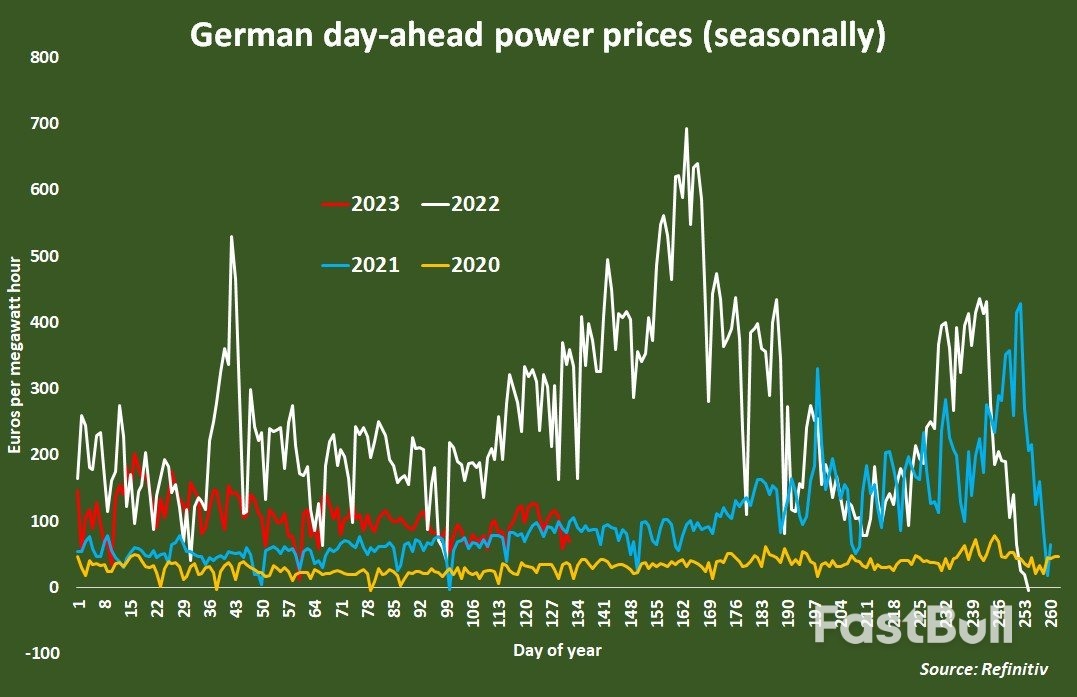
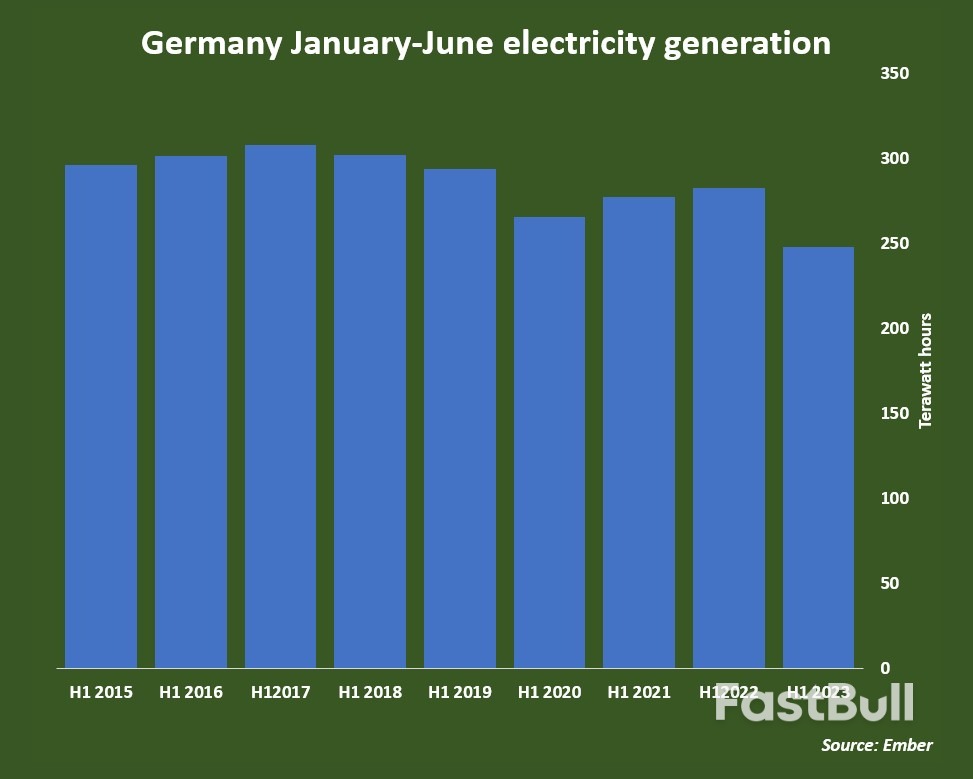
          German day-ahead power prices in the first half of 2023 averaged roughly half of their 2022 levels, but industrial power use remains so restricted that electricity generation was curtailed to its lowest first-half total since at least 2015.
          German power prices started July at one-tenth of their 2022 peak, and are now below where they were at the same point in 2021 - well before Russia's invasion of Ukraine cut natural gas flows and sparked power costs to surge across Europe.
          Even so, current day-ahead prices remain roughly 75% above the average from 2018 through 2020, Refinitiv data shows, leaving cost-sensitive manufacturers and other key power users wary of raising output and committing to additional energy use.German Electricity Generation Still Stunted Despite Lower Prices_1
          Thanks to government support for businesses struggling with high operating costs, including a 50-billion euro package unveiled last month, some industries are starting to cautiously crank up production from depressed levels, including the power-intensive chemicals sector.
          German Electricity Generation Still Stunted Despite Lower Prices_2But unless power prices undergo a significant further and persistent decline, total German energy consumption - and output - may remain depressed and cause enduring economic harm.
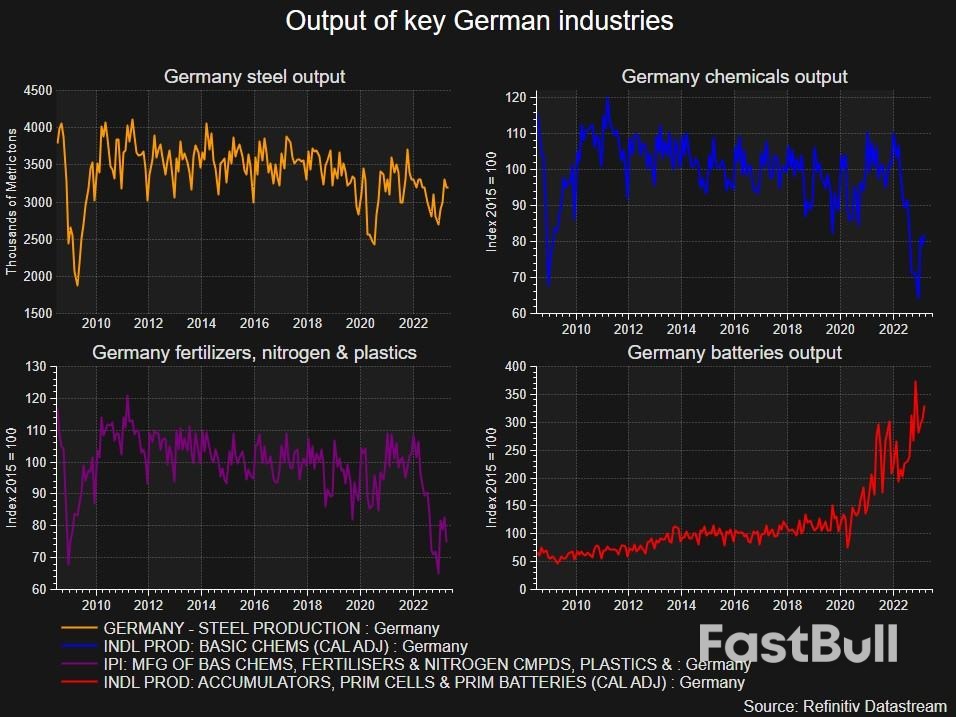
          Price Pressure
          Germany's day-ahead power prices averaged around 107 euros per megawatt hour (MWh) through the end of June, down from 197 euros over the same period in 2022, when power costs soared after Russia's invasion.
          Despite persistently lower prices, German total electricity generation was 247 terawatt hours (TWh) in the first half, 12.4% lower than the 282 TWh generated over the same period in 2022.
          The 2023 generation total was also nearly 7% lower than during the opening half of 2020, when COVID-19 lockdowns stalled much of the economy. This shows the deep impact on total electricity consumption from sustained cuts to power use by certain production lines and smokestack plants.
          German Electricity Generation Still Stunted Despite Lower Prices_3Some energy efficiency improvements have also helped lower the total amount of electricity needed, especially among households and in office buildings sporting new devices such as heat pumps.
          But many large businesses that still rely on fossil fuels for at least some power needs have been forced to remain offline or partially curtailed. These will require time and money to retool power systems to cut emissions and lower energy input needs.
          Renewables Drive
          Further sharp increases in supplies of non-emitting and cheap renewable power could prove decisive.
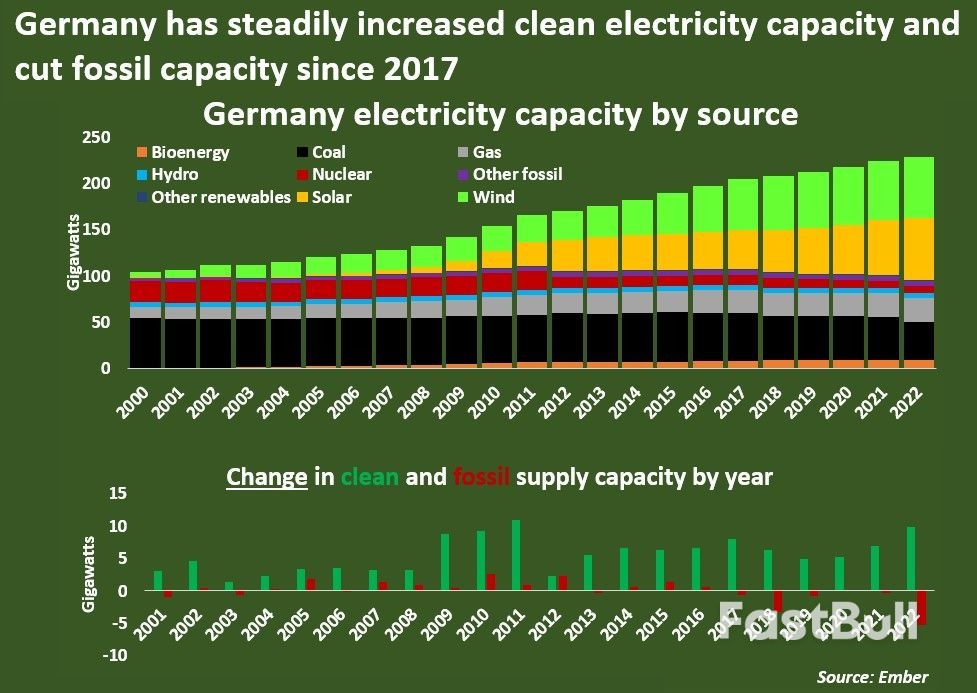
          For German energy producers, subsidies are available to build renewable supply capacity from solar and wind sites, which can help lift total electricity supply relatively quickly and help end users decarbonise.
          German utilities increased solar supply capacity by a record 12% in 2022, and wind capacity by nearly 4%, boosting overall clean power capacity by close to 7% to a record 156 gigawatts, data from think tank Ember shows.
          German Electricity Generation Still Stunted Despite Lower Prices_4Utilities reduced fossil fuel capacity by close to 7% in 2022, to 72.3 gigawatts, by closing outdated coal plants, and in 2023 also cut nuclear supply capacity completely.
          By reducing capacity from coal and nuclear facilities the German energy supply system is set up for further clean-oriented growth in the long term, which will help the power sector reach key emissions-reduction goals and allow heavy energy consumers to reduce fossil-energy reliance.
          But for many of Germany's industries and manufacturers, the near-term cost of power remains too high to allow for even moderate increases in output from current stunted levels.
          And without further steep, sustained reductions in power costs in coming months, many of these businesses may risk permanent contractions or closure even though power costs have already retreated sharply from last year's peaks.

          Source: ET Auto

          Risk Warnings and Disclaimers
          You understand and acknowledge that there is a high degree of risk involved in trading. Following any strategies or investment methods may lead to potential losses. The content on the site is provided by our contributors and analysts for information purposes only. You are solely responsible for determining whether any trading assets, securities, strategy, or any other product is suitable for investing based on your own investment objectives and financial situation.
          Comments
          Add to Favorites
          Share

          Week Ahead – US Inflation Report, BoC and RBNZ Meetings Eyed

          Justin

          Central Bank

          Economic

          Dollar in limbo, awaits inflation test

          The second quarter of this year was tough for the dollar, even though the US economy seems to be humming along. Economic growth is running near 2%, the housing market has enjoyed a sensational comeback, and the labor market seems to be in good shape.
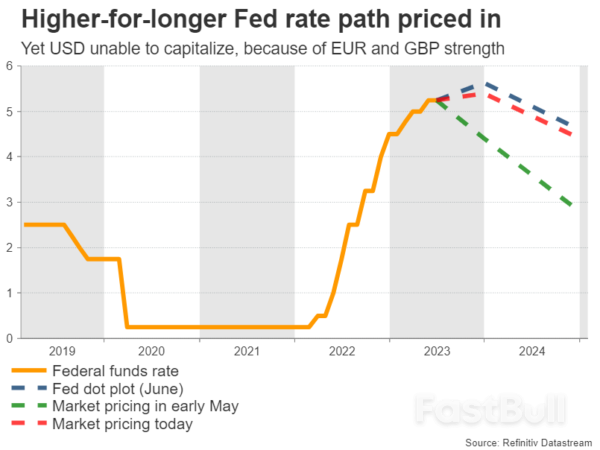
          Investors responded by pricing in a higher-for-longer path for interest rates, pushing out the projected timing of any rate cuts into the second half of 2024. In turn, that sparked some pretty impressive moves in the bond market, with the 2-year yield in particular racing higher.
          Yet the dollar was unable to capitalize, drifting sideways instead. This stagnation probably reflects the strength in other major currencies, specifically the euro and sterling, as their central banks telegraphed a series of rate increases ahead.
          Week Ahead – US Inflation Report, BoC and RBNZ Meetings Eyed_1
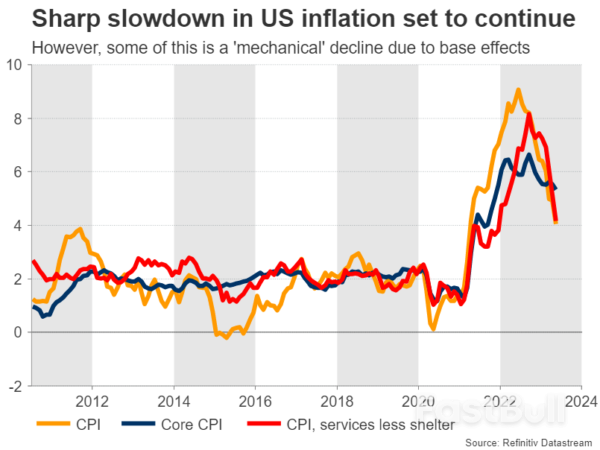
          The upcoming US inflation report on Wednesday can help break this FX stalemate. In yearly terms, forecasts point to a sharp slowdown in inflation. The headline CPI rate is set to decline to 3.6% from 4% previously, while the core rate is seen dropping to 5% from 5.3% in May.
          Much of this improvement is due to base effects, as some extremely hot CPI prints from June 2022 will now be dropping out of the 12-month calculation. Inflation is definitely coming down, something also confirmed by business surveys, but not at such an astonishing pace. Data on producer prices will also be released on Thursday.
          As for the dollar, the outlook for the second half of the year seems brighter. It’s a story of relative economic performance, as the US economy is far superior to the Eurozone’s or China’s at this stage. And this gap could widen further as the year unfolds, amid warnings from business surveys that both Europe and China are losing steam, in contrast to resilient US surveys.
          Week Ahead – US Inflation Report, BoC and RBNZ Meetings Eyed_2
          Currency markets have been trading almost entirely on rate differentials lately, helping to explain the strength in the euro as the ECB maintained a hawkish stance. However, with central banks approaching the end of their tightening cycles, the next trading theme might be growth differentials, which clearly favor the US.
          A potential shift in global risk appetite could also help the dollar to recover. If the euphoria in stock markets calms down and there’s a correction in risk assets later this year, the world’s reserve currency could finally attract some safe haven flows.

          Traders divided on Canadian rate hike

          Crossing into neighboring Canada, the central bank will wrap up its meeting on Wednesday, with market participants assigning almost equal chances for a 25bps rate increase or no action at all.
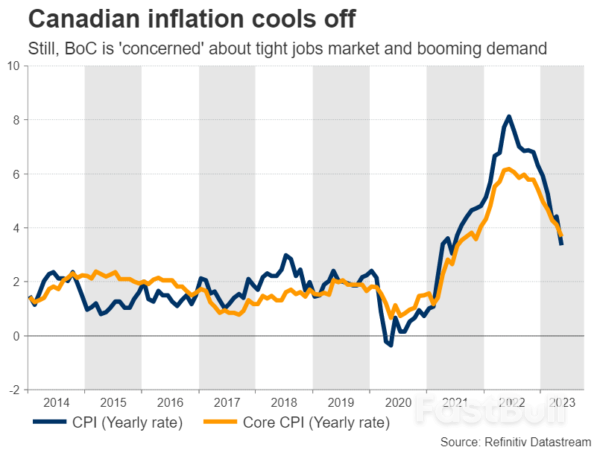
          Arguing for the Bank of Canada to do nothing is the steady decline in inflation this year, which is the most important element for any central bank. Additionally, the nation’s manufacturing sector is struggling amid a global downturn and oil prices have declined substantially.
          However, the labor market is still very tight, consumer spending has been resilient, and housing costs have not really cooled despite the sharp increase in interest rates, as net population growth has been exceptionally strong.
          Week Ahead – US Inflation Report, BoC and RBNZ Meetings Eyed_3
          Hence, it’s a true dilemma for the central bank – inflation is cooling but several factors suggest it could heat up again moving forward.
          In the FX market, the risks seem tilted towards a negative reaction in the Canadian dollar. With inflation coming down, it would make more sense for the BoC to take the sidelines for now. Even if the BoC raises rates and the loonie spikes higher, there’s still a risk the initial excitement fades quickly if policymakers signal this is probably their final move.

          RBNZ – A quiet meeting

          It’s going to be a more straight-forward affair when the Reserve Bank of New Zealand decides early on Wednesday. The RBNZ made it clear at its latest meeting that it will adopt a wait-and-see stance and examine incoming data for some time, before making its next move.
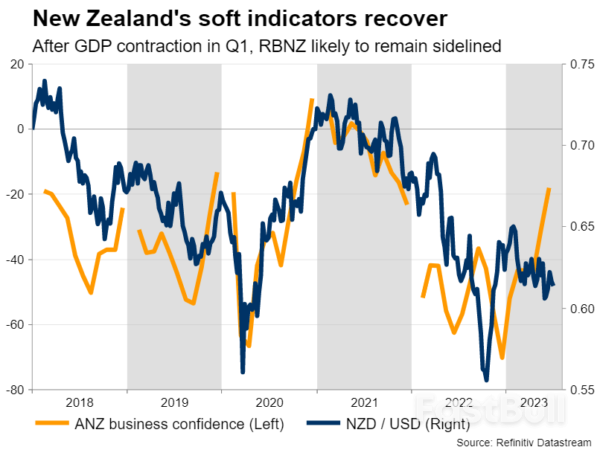
          Economic data since then has been mixed, with GDP growth turning slightly negative in Q1 but survey-based indicators pointing to a recovery in the second quarter. Overall though, nothing shocking enough to nudge the RBNZ out of its neutral stance.
          Week Ahead – US Inflation Report, BoC and RBNZ Meetings Eyed_4
          Therefore, the reaction in the New Zealand dollar might be relatively minimal, leaving the currency mostly in the hands of global risk sentiment and any news out of China. Specifically, any stimulus announcements by Chinese authorities could be crucial, considering the close trading links between the two economies.
          Speaking of China, the nation’s inflation stats for June will be released early on Monday. Producer prices – a proxy for factory demand – have been falling steadily in recent months as the manufacturing sector lost power and it will be interesting to see if this trend persists. The latest trade data will also be released on Thursday.
          Last but not least, the UK will see the release of its employment numbers for May on Tuesday, ahead of monthly GDP data for the same month on Thursday.

          Source:XM

          To stay updated on all economic events of today, please check out our Economic calendar
          Risk Warnings and Disclaimers
          You understand and acknowledge that there is a high degree of risk involved in trading. Following any strategies or investment methods may lead to potential losses. The content on the site is provided by our contributors and analysts for information purposes only. You are solely responsible for determining whether any trading assets, securities, strategy, or any other product is suitable for investing based on your own investment objectives and financial situation.
          Comments
          Add to Favorites
          Share

          The Case for Gold as a Short-term Trading Asset

          Cohen

          Commodity

          Gold's timeless appeal has long upheld its status as a safe haven. For centuries, people have been captivated by its lustrous shine and its historical significance as a store of value. However, while gold may have its merits as a long-term investment vehicle, it can be argued that it shines just as well, if not better, as a short-term trading asset. A careful examination shows that gold is not always the ideal choice for long-term investment goals, as is commonly believed.
          The store of value of gold can be a double-edged sword
          While value preservation is a good thing on the surface, it does not happen in a vacuum. If an asset class retains its value in a particular currency, what happens when inflation reduces the value of that currency? It has not really retained its value because the currency's value has gone down. Although this point is commonly made, the timescale over which this happens is often taken for granted. Consider the following: In December 1979, the price of gold per ounce was approximately $500. In December 2005, the price of gold was still $500. If you had invested in gold back then, it would have taken nearly three decades to see any appreciable return on your investment. This is not taking into account the fact that $500 in 1979 was worth a lot more than $500 in 2005.
          And what happened between 1979 and 2005? The price of gold fluctuated in a range from $250 to $500. For an asset known for its stability, that's a significant range of fluctuation. Five years later, in December 2010, the price had reached $1,400 – nearly tripling in one-fifth of the period. As evidenced, gold's prices can swing dramatically in response to short-term factors such as economic conditions, geopolitical events, and market sentiment. In recent years, gold prices have been subject to wild swings, making it a difficult asset to predict and rely on for long-term gains.
          The downside risks of holding onto gold as long terms investment
          In addition to quantitative evidence, there are also qualitative factors to consider. One of the main shortcomings of gold as a long-term investment is that it lacks intrinsic value. Unlike stocks, bonds, or real estate, gold does not yield dividends, interest, or cash flows. It simply sits in a vault collecting dust. Moreover, holding onto gold as a long-term investment comes with an opportunity cost. The money tied up in gold could be invested in other assets that have the potential to generate income or grow over time. The S&P 500 has had an average annualized return of 9.82% since its inception in 1928, while corporate bonds have had an average annual rate of return of 5% since 1920. Since the end of the gold standard in 1974, gold has not fared much better with a 7% annualized rate of return.
          Inflation, storage costs, and other expenses can also erode the value of gold as a long-term investment. While gold has historically been a hedge against inflation in the short term – but not in the long term as we have already seen from historical price data – it does not provide reliable and consistent protection against rising prices. Storage costs, insurance fees, and other expenses associated with owning physical gold can eat into its returns and make it less attractive as a long-term investment option.
          Given the unfavorable conditions of a long-term gold investment, short term trading in gold comes with a reduced set of risks. Investing in physical gold for short-term trading purposes, without resorting to leverage, can provide a secure and lucrative method of diversifying your investment portfolio. Being a tangible asset, physical gold can act as a safeguard against market volatility and inflation in the short term, while not being subject to the hazards linked to borrowing or leverage.
          It's all about timing and choices
          Gold may indeed have its merits as a short-term trading asset, but capitalizing on its volatility is dependent on the level of risk you are comfortable with. Timing the market is no easy feat, but the alternative is a less than ideal choice of a long-term investment that may or may not generate the expected return depending on the decade. Gold's volatile nature, lack of intrinsic value, opportunity cost, and associated risks make it less attractive as a long-term investment vehicle. Investors should carefully evaluate the limitations and risks of long-term gold investment and consider short-term trading options that align with their financial goals and risk tolerance. Seeking professional financial advice and conducting thorough research is crucial when making investment decisions to avoid falling for the golden illusion.
          The conclusion remains: If you want to make a worthwhile return on your investment, timing your entry into the gold market remains the most effective way. As illustrated in an earlier example, the difference between 26 wasted years of investing and five years in which you could have tripled your investment is a matter of timing.

          Source: ZAWAY

          Risk Warnings and Disclaimers
          You understand and acknowledge that there is a high degree of risk involved in trading. Following any strategies or investment methods may lead to potential losses. The content on the site is provided by our contributors and analysts for information purposes only. You are solely responsible for determining whether any trading assets, securities, strategy, or any other product is suitable for investing based on your own investment objectives and financial situation.
          Comments
          Add to Favorites
          Share

          The Mena Region Is Teetering Between Conflict Resolution and Chaos

          Devin

          Political

          There is light at the end of the tunnel in the Middle East. The region is slowly moving away from the geopolitical confrontations that dominated its landscape for decades to a promising new era of geoeconomic co-operation. However, a return to new era of chaos cannot be completely ruled out.
          This perpetually tense region is finally leaving behind the "bad C" – confrontation – for a "good C" that stands for conversation and co-operation. The regional powers – Iran, Saudi Arabia, Turkey, Egypt and the UAE, among others – are suddenly engaged in serious and productive dialogue the likes of which the region has not seen in recent years.
          For the past decade or so, confrontation, chaos, civil war, cold war, as well as jockeying for power and domination was the order of the day throughout the Middle East and North Africa. But regional antagonists and political rivals are now reaching out to each other, seeking de-escalation.
          Detente is the new buzz world in the Mena region, raising hopes of a possible decade of stability and prosperity. Arab Gulf states are opening to regional rival Iran, a precarious ceasefire is holding up in Yemen, the 12-year civil war in Syria is in its final stage and Libya is on a tentative course to political reconciliation. These developments are ushering in a badly needed period of normality in an otherwise insecure part of the world.
          This new move from confrontation to conversation in the Gulf and throughout the wider Middle East stands in sharp contrast to what is happening elsewhere. Europe, for instance, is dealing with several security issues, ranging from the war in Ukraine, conflict between Azerbaijan and Armenia, and rising tensions in the Balkans.
          Asia, too, is experiencing growing geopolitical tensions around Taiwan, the Korean peninsula and the many island disputes in the South China Sea. Compared to all of this, the Middle East seems unusually calm.
          Similarly, the Middle East is vastly better off compared to Africa, which has seen civil wars drag on in Sudan, Somalia, Ethiopia and Mali, to name but a few hotspots in a continent where there are more than a dozen active armed conflicts. In 2022, Africa and Europe each suffered more fatalities from political violence than the Middle East, according to the Armed Conflict Location and Event Data Project (Acled).
          Indeed, the Middle East seems to be moving away from being a red zone full of conflicts to a blue zone where neighbouring states want to build bridges and live in peace.
          Much of the momentum towards the good C of "conversation" comes from the six Arab Gulf states, led by Saudi Arabia and the UAE. Both Riyadh and Abu Dhabi have recently taken the lead in shaping peace and stability in the region by working for consensus and promoting good neighbourliness.
          The UAE went to engage with Iran directly in the latter's own capital. It also reached out to Ankara, taking everyone by surprise. It was the Emirates, moreover, that was daring enough to engage with Syria before anybody else. The UAE was first to disengage from the war in Yemen, too, and swiftly normalised relations with Israel when it signed the Abraham Accords.
          For the first time in decades, Middle East capitals are taking responsibility for their own journey. They are in the driver's seat, taking matters into their own hands. A regional, not global, agenda is responsible for the drift away from confrontation. The Arab League summit in Jeddah two months ago has accelerated this positive regional dynamism.
          But how sustainable is this trend from geopolitics to geoeconomics, and from a red-zone Middle East to a blue-zone one?
          The momentum is very encouraging, but its sustainability is very difficult to predict. As the budding forces of co-operation and conversation take hold, there are numerous potential forces of chaos waiting to be activated. Spoilers are all over the place, and at least three of them are worth mentioning. They represent the ugly forces of chaos.
          Israel, feeling isolated, tops the list. (This week's events in Jenin are a worrying sign.) An Israeli military strike against Iranian nuclear sites, for instance, would severely derail the current positive momentum towards de-escalation. Radical and revolutionary forces in Iran, meanwhile, have the power to undermine regional rapprochement. And a possible Donald Trump comeback in 2024 could easily freeze the region's drift into calm. Each one of these three spoilers can change the good C of "co-operation" not only into the bad C of "conflict" but the ugly C of "chaos".
          When we look underneath the current of progress, we can see that on some level that things remain precarious. On top of Sudan already being on fire, peace in Yemen is still fragile. The political track in Libya is, too. And the chances of another round of civil war in Syria cannot be discounted. The seemingly calm Middle East is just one inch away from falling back into the dark tunnel of perpetual tension.

          Source: The National News

          Risk Warnings and Disclaimers
          You understand and acknowledge that there is a high degree of risk involved in trading. Following any strategies or investment methods may lead to potential losses. The content on the site is provided by our contributors and analysts for information purposes only. You are solely responsible for determining whether any trading assets, securities, strategy, or any other product is suitable for investing based on your own investment objectives and financial situation.
          Comments
          Add to Favorites
          Share

          Geoeconomics Will Loom Large in Reserve Manager Decisions

          Justin

          Economic

          Forex

          The turn of the 21st century brought a fundamental reordering of how economic battles are waged. After 9/11, the US Treasury recognised that global dollar dominance gave Washington control over the critical plumbing of global finance. A new breed of financial sanctions emerged which could precisely cut individual targets – terrorists, foreign government officials, state institutions, firms – off from the dollar system. ‘Smart’ financial sanctions revolutionised economic warfare.
          American presidents responded to the new tool with enthusiasm, deploying sanctions with increasing frequency over the past two decades. In 2000, just four countries were targeted under a US financial sanctions programme. By 2020, this had risen to 21, meaning roughly one in 10 sovereign states was facing some level of pressure from a financial sanctions programme. In several cases, foreign central banks were targeted. In Libya, Venezuela, Iran and most recently Russia, official money managers found their dollar reserves frozen as a result of sanctions. These acts have implications for official portfolio decisions.
          In ‘Bucking the Buck: US Financial Sanctions and the International Backlash Against the Dollar’, I argue that Washington’s growing use of the dollar as a tool of economic coercion has generated political risk in the international currency system. Political risk, in this context, is the potential for a political act to raise the expected cost of using the dollar as a store of value or medium of exchange.
          The US’s penchant for financial sanctions does not jeopardise dollar supremacy. The currency retains undeniable economic and political advantages over all rivals. US Treasury bonds will remain the fundamental component of most central bank portfolios for the foreseeable future. However, monetary authorities in states with adversarial relations with the US are exploring ways to hedge against the risk of asset freezes. That will intensify in the near term in the wake of the most recent sanctions against the Central Bank of Russia.
          Monetary gold is a key beneficiary in the current environment. After two decades of declining popularity as a reserve asset in the 1990s and 2000s, gold has experienced a revival since 2010. Some of this relates to economic considerations. The metal is a popular hedge against dollar weakness. However, gold’s rising appeal has much to do with its emergent role as a hedge against sanctions risk.
          Bullion held in a national vault cannot be seized by Washington short of a military invasion. Central banks in states that are targets of US sanctions as well as those that are at higher risk of facing sanctions purchased more gold on an annual basis between 2008-20 compared to unsanctioned states. Notably, central bank demand for gold in 2022 – following severe sanctions targeting Russia for its invasion of Ukraine – was the highest on record, with China as a major buyer.
          Yet, there are limits to how much gold central banks will want to hold. Targeted and at-risk states are likely to make additional efforts to ‘sanction-proof’ their portfolios. Shifting the geographic distribution of reserve assets, including dollar reserves, out of the US is one such tactic. Russia did this in 2018 following a major tranche of US financial sanctions, cutting its share of reserves custodied at US institutions to about 5% that year, down from around 30%. Brad Setser, senior fellow at the Council on Foreign Relations, has pointed out that China has most likely moved some of its US Treasury holdings to places like Belgium in an effort to escape US legal jurisdiction and improve resilience to future sanctions.
          Finally, among sanctioned and at-risk countries, there may be some marginal movement of official foreign exchange reserves into the renminbi. Beijing’s willingness to deepen its economic relationship with Russia signals to other states that the world’s second-largest economy can serve as an economic and financial lifeline to blacklisted economies. Though renminbi reserves are of limited usefulness, lacking full convertibility, they can be freely used in current account transactions with China.
          As the shadow of geoeconomics looms ever larger over the world economy, expect political considerations to shape reserve manager decisions in new and meaningful ways even as the dollar’s fundamental position atop the global currency hierarchy remains stable.

          Source:Daniel McDowell

          To stay updated on all economic events of today, please check out our Economic calendar
          Risk Warnings and Disclaimers
          You understand and acknowledge that there is a high degree of risk involved in trading. Following any strategies or investment methods may lead to potential losses. The content on the site is provided by our contributors and analysts for information purposes only. You are solely responsible for determining whether any trading assets, securities, strategy, or any other product is suitable for investing based on your own investment objectives and financial situation.
          Comments
          Add to Favorites
          Share

          Hottest Day on Record Puts Fresh Focus on Top CO2 Emitters

          Kevin Du

          Energy

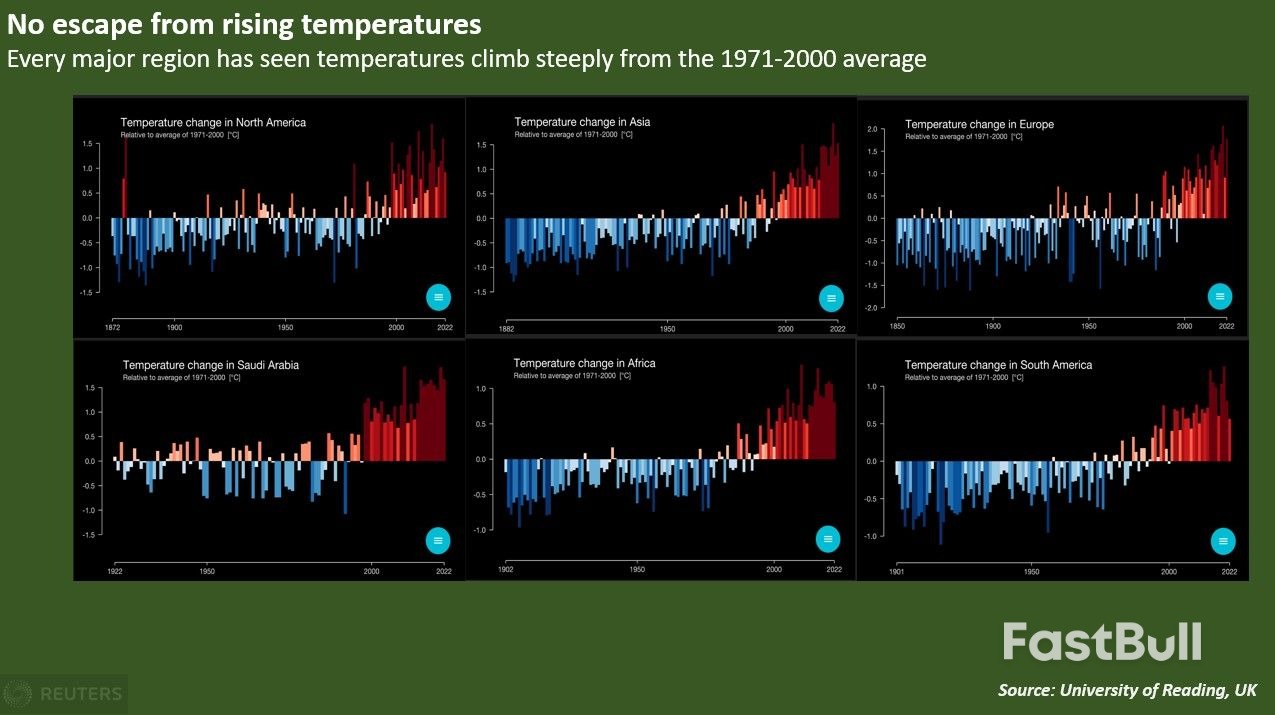
          The world's largest emitters of carbon dioxide (CO2) and other greenhouse gases are coming under fresh scrutiny after global temperatures averaged 17.01 degrees Celsius (62.62 Fahrenheit) on Monday, the highest ever recorded.
          More than half of the world's population has been impacted as several regions were struck by record heatwaves in recent weeks, including South and Southeast Asia, Northern China, North Africa and parts of North America.
          Climate scientists expect further records to be hit this year as rising emissions of carbon dioxide combine with an El Nino weather pattern to push average temperatures higher still.Hottest Day on Record Puts Fresh Focus on Top CO2 Emitters_1
          In response to the sweltering conditions, several climate campaigners are calling for more urgent action among major economies to accelerate efforts to cut emissions and attempt to reverse temperature trajectories.
          Pressure Points
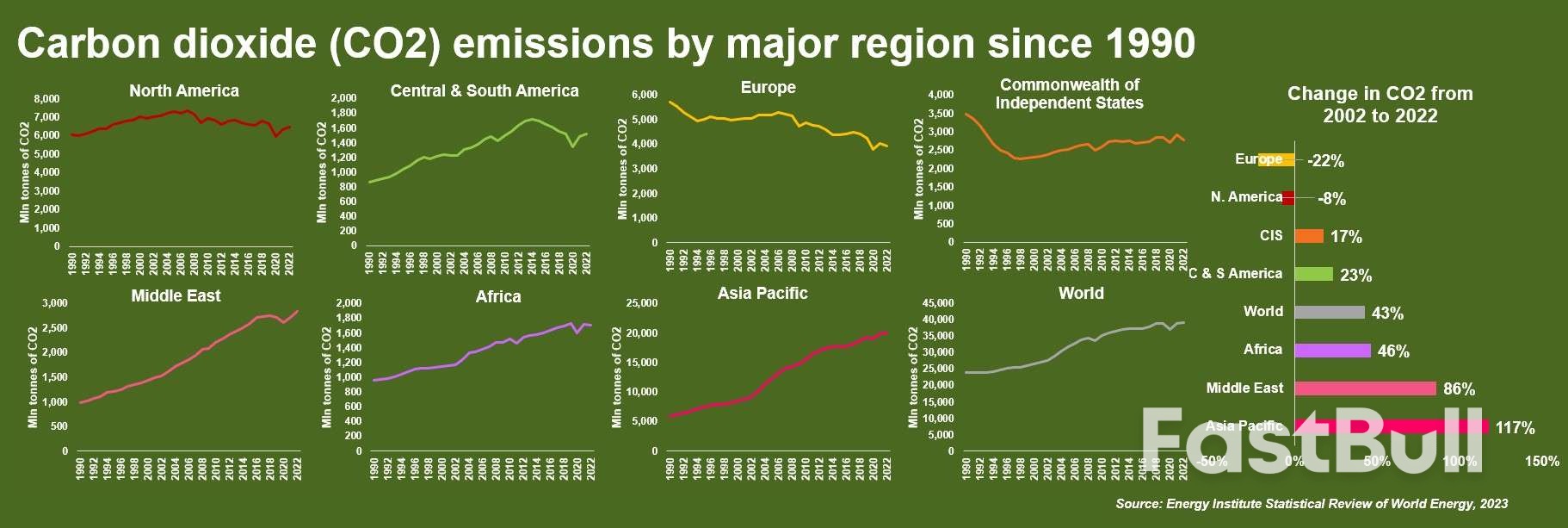
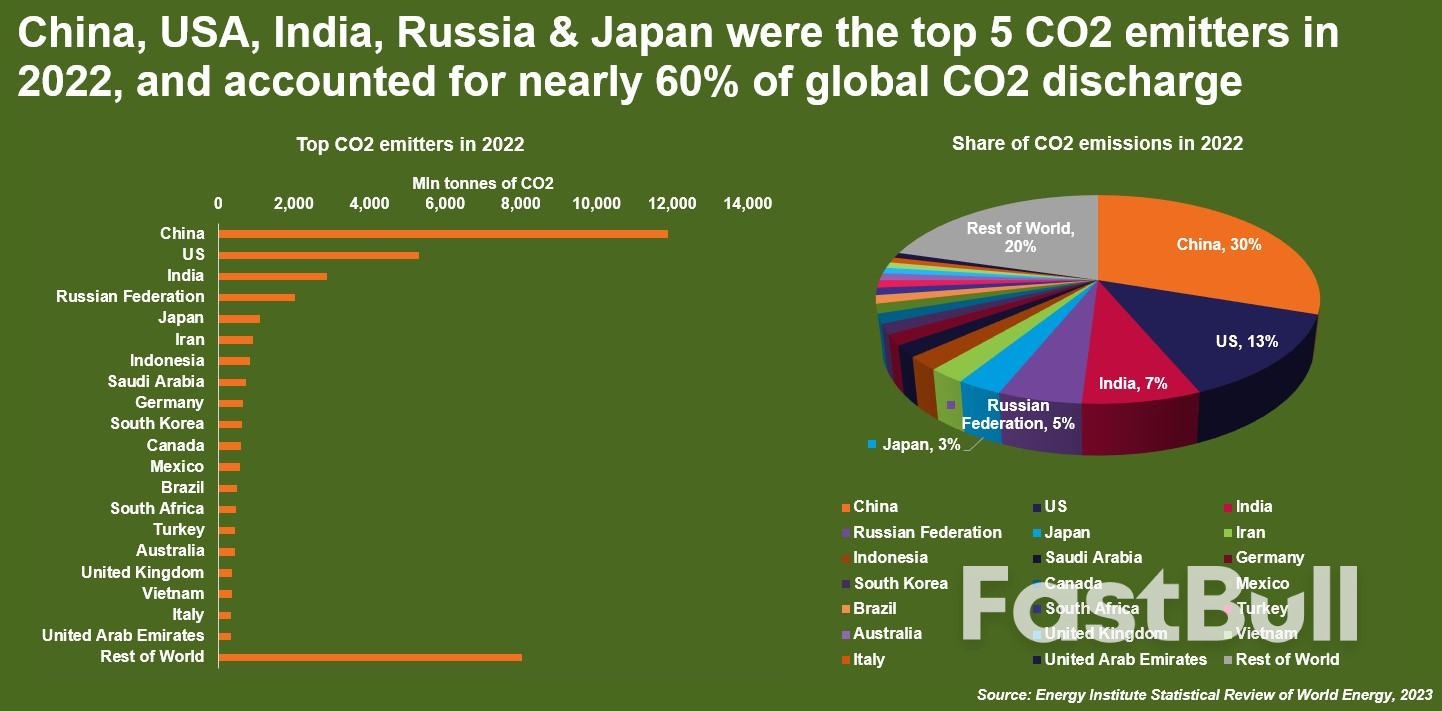
          China, the world's single largest CO2 polluter since 2005, has come under particular scrutiny after the country generated over 30% of global CO2 discharge in 2022, according to the Energy Institute Statistical Review of World Energy.
          The country relied on thermal coal for more than 61% of electricity generation in 2022, according to Ember, which discharged over 4.45 billion tonnes of CO2.
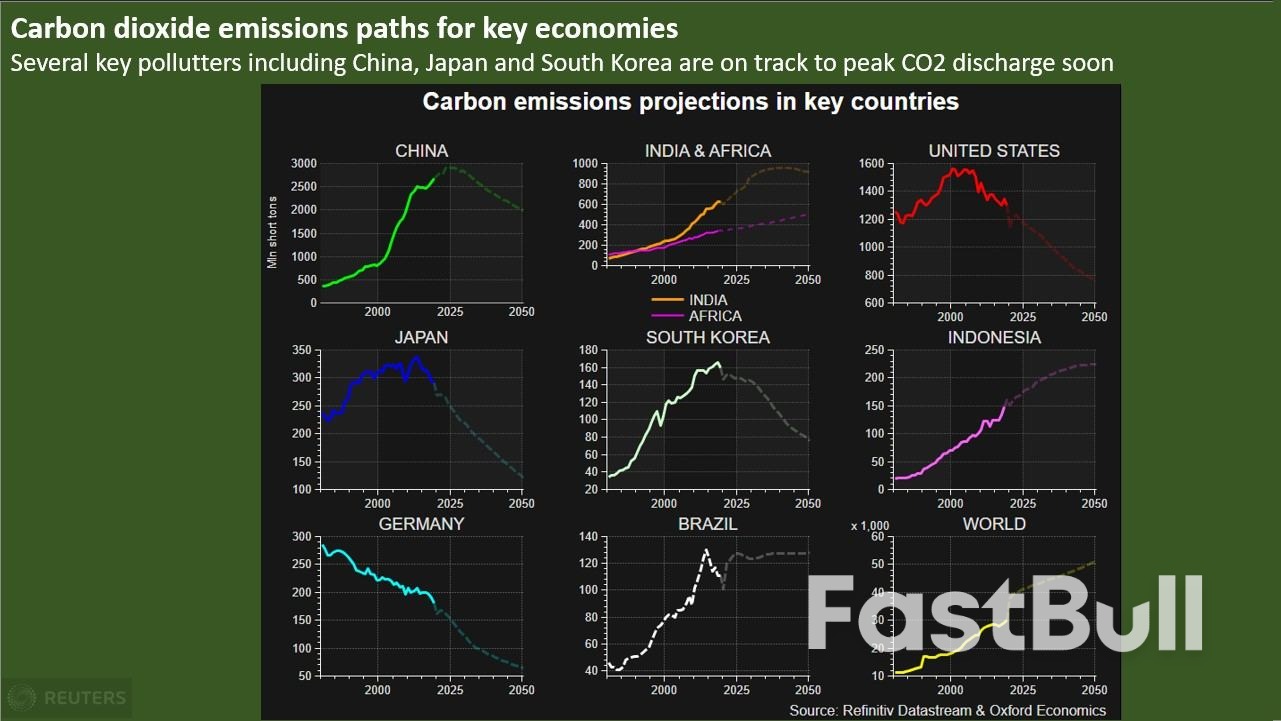
          Hottest Day on Record Puts Fresh Focus on Top CO2 Emitters_2However, as the world's largest and fastest-growing producer of renewable power, China is also the global leader in clean energy efforts, and is on track to reach peak CO2 emissions as soon as this year, according to the Centre for Research on Energy and Clean Air (CREA).
          Japan and South Korea - the fifth and tenth largest polluters in 2022 respectively - have already reached peak CO2 emissions are will also do so soon, according to Oxford Economics.
          Hottest Day on Record Puts Fresh Focus on Top CO2 Emitters_3The United States, the second largest polluter in 2022 and by far the largest overall CO2 emitter in history, has already brought emissions onto a downward trajectory, as has Germany, Europe's largest polluter.
          Growing Pains & Unclear Pathways
          While the main economies of North East Asia are expected to bring CO2 levels lower by 2030, key economies in South and South East Asia are expected to continue increasing CO2 discharge for several more years, projections by Oxford Economics show.
          Hottest Day on Record Puts Fresh Focus on Top CO2 Emitters_4India, already the world's third largest CO2 polluter in 2022, is seen increasing total CO2 discharge until 2040, while CO2 emissions in Indonesia - the seventh largest polluter last year - may not peak until 2050.
          Brazil, number 13 on the CO2 list in 2022, also looks set to keep CO2 discharge totals climbing over the coming years.
          Several other fast-growing economies currently have rising CO2 trajectories that look set to keep climbing until after 2040, including Turkey, Nigeria, Egypt, Mexico and The Philippines.
          However, each nation also has aggressive plans for reducing energy sector emissions and lowering reliance on fossil fuels.
          If those plans take root as quickly as has been seen in other economies in recent years, then downward revisions to CO2 glide paths may soon become appropriate, which may lessen the toll on global climate systems.
          But if most emerging economies maintain their current reliance on fossil-heavy energy systems, then global emissions levels look set to keep climbing, and set the stage for even higher temperature records across the world in the years ahead.

          Source: Reuters

          Risk Warnings and Disclaimers
          You understand and acknowledge that there is a high degree of risk involved in trading. Following any strategies or investment methods may lead to potential losses. The content on the site is provided by our contributors and analysts for information purposes only. You are solely responsible for determining whether any trading assets, securities, strategy, or any other product is suitable for investing based on your own investment objectives and financial situation.
          Comments
          Add to Favorites
          Share

          Is Global Debt Posing a Risk to Economies?

          Damon

          Economic

          The world's leverage is at a higher level than pre-global financial crisis (GFC) peaks. Yet demand for debt is likely to continue. Rising interest rates and slowing economies are making the debt burden heavier and to mitigate the risk of a financial crisis, trade-offs between spending and saving may be necessary.
          The record debt which global governments, households, financial corporates, and nonfinancial corporates owed in June 2022 was $300 trillion, as estimated by the Institute of International Finance. That $300 trillion is equivalent to 349% of global gross domestic product and is 26% higher than the pre-GFC figure of 278%. For perspective, $300 trillion works out to $37,500 of debt for every person in the world, compared with a GDP per capita of just $12,000.
          We have seen that global productivity from debt has declined due to the upward trend of global debt-to-GDP ratios since the GFC. The economic value-add from every additional dollar of debt has decreased, while leverage of the government sector has grown aggressively. The sector's debt-to-GDP ratio rose 76%, to a total of 102%, from 2007 to 2022. Whereas mature market governments and nonfinancial corporates tend to be more leveraged. Further, corporates in some European, Japanese, and emerging markets operate at higher leverage levels. China is of particular concern, as its debt makes up a third of global corporate debt. Meanwhile, the percentage of U.S. speculative grade issuers with ratings of 'B-' and below doubled to 36% in September 2022 compared with September 2007.
          Financial sectors were more conservative with 85%, which poses a risk as higher returns are required. To add, central banks are raising policy rates and investors are demanding higher yields in response to inflation. We see 2022 as the inflexion point of the monetary environment moving away from low interest rates and easy money. Higher yields imply a repricing of assets while tighter money could translate to lessened market liquidity.
          Interest burden
          Higher interest expenses are already straining less-creditworthy governments and corporates, as well as lower-income households. The fed funds rate went up nearly 4 percentage points (pp) in 2022, and the European Central Bank rate by 2 pp. Applying the average of the two rates (3 pp) on the floating-rate portion of debt (assuming 35% of debt is floating and 65% is fixed) implies an additional annual interest expense of $3 trillion. This is equivalent to $380, or 3% of GDP, per capita, on average debt of $37,500. As fixed-rate debt is increasingly refinanced, this amount will rise over time to $8.6 trillion, or $1,080 per capita.
          The price of an asset is, in theory, its discounted cash flow. Unsurprisingly, the stock market corrected in 2022. The S&P 500 index price-to-earnings ratio (PE) was 29x at the end of November 2021, implying a 3.5% discount rate (inverse of PE). This rate is about the average yield for U.S. 'BB' corporate bonds in 2021. The PE is now 19x, implying a 5.2% rate—slightly below the 'BB' yield in 2022. Previously, borrowers were able to take on low-return projects because of low interest rates. Such projects now require higher return thresholds, making them less viable. This development will add to financial pressures on borrowers and dampen future business activity volumes.
          By examining three possible scenarios for the year 2030 of the global debt leverage trend—base case, pessimistic, and optimistic—it is our belief that there will be no easy way out.
          Our base case scenario assumes global total debt leverage over the next eight years, by 2030-end, will grow by 5%, which is about the same rate as that for the eight-year period before COVID-19 hit in 2020. We see the leverage rising slightly faster for mature markets than for emerging markets, as we expect more GDP growth upside for the latter markets. Altogether, the projected global debt-to-GDP ratio could reach 366% in 2030 versus June 2022's 349%. For rated sovereigns, our base case sees the total gross debt-to-GDP ratio of mature market sovereigns rising marginally to 107% by 2025 from 106% in 2022. For emerging markets, the projected ratio remains roughly flat at 65%.
          If global borrowers freely take on more less-productive debt, for example, because governments give in to populist demands or lenders are overly desperate to book assets, the projected debt-to-GDP ratio could hit a much more worrying 391% by 2030, up 12% from June 2022's 349%.
          In an optimistic scenario whereby governments and regulators collectively decide to manage their economy's leverage down with a goal to return to pre-COVID-19 levels by 2030, the debt-to-GDP ratio would decline by 8% to 321% by 2030-end. The ratio in the first quarter of 2019 was 321%. This does not imply that no new debt is formed, but rather that productive new debt replaces unproductive old debt.
          As Carl Jung said: "No tree, it is said, can grow to heaven unless its roots reach down to hell." Avoiding the hell of a debt crisis may require ensuring only productive new debt is deployed, writing down unproductive debt, curbing overconsumption and restructuring loss-making enterprises. These actions may not be popular. A "Great Reset" of community acceptance of more judicious spending and policymaker caution about debt may be needed.

          Source: ZAWAY

          To stay updated on all economic events of today, please check out our Economic calendar
          Risk Warnings and Disclaimers
          You understand and acknowledge that there is a high degree of risk involved in trading. Following any strategies or investment methods may lead to potential losses. The content on the site is provided by our contributors and analysts for information purposes only. You are solely responsible for determining whether any trading assets, securities, strategy, or any other product is suitable for investing based on your own investment objectives and financial situation.
          Comments
          Add to Favorites
          Share
          FastBull
          Copyright © 2026 FastBull Ltd

          728 RM B 7/F GEE LOK IND BLDG NO 34 HUNG TO RD KWUN TONG KLN HONG KONG

          TelegramInstagramTwitterfacebooklinkedin
          App Store Google Play Google Play
          Products
          Charts

          Chats

          Q&A with Experts
          Screeners
          Economic Calendar
          Data
          Tools
          Membership
          Features
          Function
          Markets
          Copy Trading
          Latest Signals
          Contests
          News
          Analysis
          24/7
          Columns
          Education
          Company
          Careers
          About Us
          Contact Us
          Advertising
          Help Center
          Feedback
          User Agreement
          Privacy Policy
          Personal Information Protection Statement
          Business

          White Label

          Data API

          Web Plug-ins

          Poster Maker

          Affiliate Program

          Risk Disclosure

          The risk of loss in trading financial instruments such as stocks, FX, commodities, futures, bonds, ETFs and crypto can be substantial. You may sustain a total loss of the funds that you deposit with your broker. Therefore, you should carefully consider whether such trading is suitable for you in light of your circumstances and financial resources.

          No decision to invest should be made without thoroughly conducting due diligence by yourself or consulting with your financial advisors. Our web content might not suit you since we don't know your financial conditions and investment needs. Our financial information might have latency or contain inaccuracy, so you should be fully responsible for any of your trading and investment decisions. The company will not be responsible for your capital loss.

          Without getting permission from the website, you are not allowed to copy the website's graphics, texts, or trademarks. Intellectual property rights in the content or data incorporated into this website belong to its providers and exchange merchants.

          Not Logged In

          Log in to access more features

          FastBull Membership

          Not yet

          Purchase

          Become a signal provider
          Help Center
          Customer Service
          Dark Mode
          Price Up/Down Colors

          Log In

          Sign Up
          Position
          Layout
          Fullscreen
          Default to Chart
          The chart page opens by default when you visit fastbull.com