• Trade
  • Markets
  • Copy
  • Contests
  • News
  • 24/7
  • Calendar
  • Q&A
  • Chats
Trending
Screeners
SYMBOL
LAST
BID
ASK
HIGH
LOW
NET CHG.
%CHG.
SPREAD
SPX
S&P 500 Index
6827.42
6827.42
6827.42
6899.86
6801.80
-73.58
-1.07%
--
DJI
Dow Jones Industrial Average
48458.04
48458.04
48458.04
48886.86
48334.10
-245.98
-0.51%
--
IXIC
NASDAQ Composite Index
23195.16
23195.16
23195.16
23554.89
23094.51
-398.69
-1.69%
--
USDX
US Dollar Index
97.950
98.030
97.950
98.500
97.950
-0.370
-0.38%
--
EURUSD
Euro / US Dollar
1.17394
1.17409
1.17394
1.17496
1.17192
+0.00011
+ 0.01%
--
GBPUSD
Pound Sterling / US Dollar
1.33707
1.33732
1.33707
1.33997
1.33419
-0.00148
-0.11%
--
XAUUSD
Gold / US Dollar
4299.39
4299.39
4299.39
4353.41
4257.10
+20.10
+ 0.47%
--
WTI
Light Sweet Crude Oil
57.233
57.485
57.233
58.011
56.969
-0.408
-0.71%
--

Community Accounts

Signal Accounts
--
Profit Accounts
--
Loss Accounts
--
View More

Become a signal provider

Sell trading signals to earn additional income

View More

Guide to Copy Trading

Get started with ease and confidence

View More

Signal Accounts for Members

All Signal Accounts

Best Return
  • Best Return
  • Best P/L
  • Best MDD
Past 1W
  • Past 1W
  • Past 1M
  • Past 1Y

All Contests

  • All
  • Trump Updates
  • Recommend
  • Stocks
  • Cryptocurrencies
  • Central Banks
  • Featured News
Top News Only
Share

Incoming Czech Prime Minister Babis: Czech Republic Will Not Take On Guarantees For Ukraine Financing, European Commission Must Find Alternatives

Share

Turkey President Erdogan: Hopes To Discuss Ukraine-Russia Peace Plan With Trump After Meeting With Putin

Share

Turkey President Erdogan: Peace Is Not Far Away, Black Sea Should Not Be Used As A Battleground, Safe Navigation Needed

Share

IAEA: Ukraine's Znpp Temporarily Lost All Offsite Power Overnight Due To Widespread Military Activities Affecting The Electrical Grid

Share

Iranian Media Says 18 Crew Members Of Foreign Tanker Seized In Gulf Of Oman Over Carrying 'Smuggled Fuel' Detained

Share

Regional Governor: Two Killed In Ukrainian Drone Strike On Russia's Saratov

Share

Chinese Foreign Ministry - China Foreign Minister Met With United Arab Emirates Counterpart On Dec 12

Share

China's Central Financial And Economic Affairs Commission Deputy Director: Will Expand Export And Increase Import In 2026

Share

Thai Leader Anutin: Landmine Blast That Killed Thai Soldiers 'Not A Roadside Accident'

Share

Thai Leader Anutin: Thailand To Continue Military Action Until 'We Feel No More Harm'

Share

Cambodian Prime Minister Hun Manet Says He Had Phone Calls With Trump And Malaysian Leader Anwar About Ceasefire

Share

Cambodia's Hun Manet Says USA, Malaysia Should Verify 'Which Side Fired First' In Latest Conflict

Share

Cambodia's Hun Manet: Cambodia Maintains Its Stance In Seeking Peaceful Resolution Of Disputes

Share

Nasdaq Companies: Allergan, Ferrovia, Insmed, Monolithic Power Systems, Seagate Technology, And Western Digital Will Be Added To The NASDAQ 100 Index. Biogen, CdW, GlobalFoundries, Lululemon, ON Semiconductor, And Tradedesk Will Be Removed From The NASDAQ 100 Index

Share

Witkoff Headed To Berlin This Weekend To Meet With Zelenskiy, European Leaders -Wsj Reporter On X

Share

Russia Attacks Two Ukrainian Ports, Damaging Three Turkish-Owned Vessels

Share

[Historic Flooding Occurs In At Least Four Rivers In Washington State Due To Days Of Torrential Rains] Multiple Areas In Washington State Have Been Hit By Severe Flooding Due To Days Of Torrential Rains, With At Least Four Rivers Experiencing Historic Flooding. Reporters Learned On The 12th That The Floods Caused By The Torrential Rains In Washington State Have Destroyed Homes And Closed Several Highways. Experts Warn That Even More Severe Flooding May Occur In The Future. A State Of Emergency Has Been Declared In Washington State

Share

Trump Says Proposed Free Economic Zone In Donbas Would Work

Share

Trump: I Think My Voice Should Be Heard

Share

Trump Says Will Be Choosing New Fed Chair In Near Future

TIME
ACT
FCST
PREV
U.K. Trade Balance Non-EU (SA) (Oct)

A:--

F: --

P: --

U.K. Trade Balance (Oct)

A:--

F: --

P: --

U.K. Services Index MoM

A:--

F: --

P: --

U.K. Construction Output MoM (SA) (Oct)

A:--

F: --

P: --

U.K. Industrial Output YoY (Oct)

A:--

F: --

P: --

U.K. Trade Balance (SA) (Oct)

A:--

F: --

P: --

U.K. Trade Balance EU (SA) (Oct)

A:--

F: --

P: --

U.K. Manufacturing Output YoY (Oct)

A:--

F: --

P: --

U.K. GDP MoM (Oct)

A:--

F: --

P: --

U.K. GDP YoY (SA) (Oct)

A:--

F: --

P: --

U.K. Industrial Output MoM (Oct)

A:--

F: --

P: --

U.K. Construction Output YoY (Oct)

A:--

F: --

P: --

France HICP Final MoM (Nov)

A:--

F: --

P: --

China, Mainland Outstanding Loans Growth YoY (Nov)

A:--

F: --

P: --

China, Mainland M2 Money Supply YoY (Nov)

A:--

F: --

P: --

China, Mainland M0 Money Supply YoY (Nov)

A:--

F: --

P: --

China, Mainland M1 Money Supply YoY (Nov)

A:--

F: --

P: --

India CPI YoY (Nov)

A:--

F: --

P: --

India Deposit Gowth YoY

A:--

F: --

P: --

Brazil Services Growth YoY (Oct)

A:--

F: --

P: --

Mexico Industrial Output YoY (Oct)

A:--

F: --

P: --

Russia Trade Balance (Oct)

A:--

F: --

P: --

Philadelphia Fed President Henry Paulson delivers a speech
Canada Building Permits MoM (SA) (Oct)

A:--

F: --

P: --

Canada Wholesale Sales YoY (Oct)

A:--

F: --

P: --

Canada Wholesale Inventory MoM (Oct)

A:--

F: --

P: --

Canada Wholesale Inventory YoY (Oct)

A:--

F: --

P: --

Canada Wholesale Sales MoM (SA) (Oct)

A:--

F: --

P: --

Germany Current Account (Not SA) (Oct)

A:--

F: --

P: --

U.S. Weekly Total Rig Count

A:--

F: --

P: --

U.S. Weekly Total Oil Rig Count

A:--

F: --

P: --

Japan Tankan Large Non-Manufacturing Diffusion Index (Q4)

--

F: --

P: --

Japan Tankan Small Manufacturing Outlook Index (Q4)

--

F: --

P: --

Japan Tankan Large Non-Manufacturing Outlook Index (Q4)

--

F: --

P: --

Japan Tankan Large Manufacturing Outlook Index (Q4)

--

F: --

P: --

Japan Tankan Small Manufacturing Diffusion Index (Q4)

--

F: --

P: --

Japan Tankan Large Manufacturing Diffusion Index (Q4)

--

F: --

P: --

Japan Tankan Large-Enterprise Capital Expenditure YoY (Q4)

--

F: --

P: --

U.K. Rightmove House Price Index YoY (Dec)

--

F: --

P: --

China, Mainland Industrial Output YoY (YTD) (Nov)

--

F: --

P: --

China, Mainland Urban Area Unemployment Rate (Nov)

--

F: --

P: --

Saudi Arabia CPI YoY (Nov)

--

F: --

P: --

Euro Zone Industrial Output YoY (Oct)

--

F: --

P: --

Euro Zone Industrial Output MoM (Oct)

--

F: --

P: --

Canada Existing Home Sales MoM (Nov)

--

F: --

P: --

Euro Zone Total Reserve Assets (Nov)

--

F: --

P: --

U.K. Inflation Rate Expectations

--

F: --

P: --

Canada National Economic Confidence Index

--

F: --

P: --

Canada New Housing Starts (Nov)

--

F: --

P: --

U.S. NY Fed Manufacturing Employment Index (Dec)

--

F: --

P: --

U.S. NY Fed Manufacturing Index (Dec)

--

F: --

P: --

Canada Core CPI YoY (Nov)

--

F: --

P: --

Canada Manufacturing Unfilled Orders MoM (Oct)

--

F: --

P: --

Canada Manufacturing New Orders MoM (Oct)

--

F: --

P: --

Canada Core CPI MoM (Nov)

--

F: --

P: --

Canada Manufacturing Inventory MoM (Oct)

--

F: --

P: --

Canada CPI YoY (Nov)

--

F: --

P: --

Canada CPI MoM (Nov)

--

F: --

P: --

Canada CPI YoY (SA) (Nov)

--

F: --

P: --

Canada Core CPI MoM (SA) (Nov)

--

F: --

P: --

Q&A with Experts
    • All
    • Chatrooms
    • Groups
    • Friends
    Connecting
    .
    .
    .
    Type here...
    Add Symbol or Code

      No matching data

      All
      Trump Updates
      Recommend
      Stocks
      Cryptocurrencies
      Central Banks
      Featured News
      • All
      • Russia-Ukraine Conflict
      • Middle East Flashpoint
      • All
      • Russia-Ukraine Conflict
      • Middle East Flashpoint
      Search
      Products

      Charts Free Forever

      Chats Q&A with Experts
      Screeners Economic Calendar Data Tools
      Membership Features
      Data Warehouse Market Trends Institutional Data Policy Rates Macro

      Market Trends

      Market Sentiment Order Book Forex Correlations

      Top Indicators

      Charts Free Forever
      Markets

      News

      News Analysis 24/7 Columns Education
      From Institutions From Analysts
      Topics Columnists

      Latest Views

      Latest Views

      Trending Topics

      Top Columnists

      Latest Update

      Signals

      Copy Rankings Latest Signals Become a signal provider AI Rating
      Contests
      Brokers

      Overview Brokers Assessment Rankings Regulators News Claims
      Broker listing Forex Brokers Comparison Tool Live Spread Comparison Scam
      Q&A Complaint Scam Alert Videos Tips to Detect Scam
      More

      Business
      Events
      Careers About Us Advertising Help Center

      White Label

      Data API

      Web Plug-ins

      Affiliate Program

      Awards Institution Evaluation IB Seminar Salon Event Exhibition
      Vietnam Thailand Singapore Dubai
      Fans Party Investment Sharing Session
      FastBull Summit BrokersView Expo
      Recent Searches
        Top Searches
          Markets
          News
          Analysis
          User
          24/7
          Economic Calendar
          Education
          Data
          • Names
          • Latest
          • Prev

          View All

          No data

          Scan to Download

          Faster Charts, Chat Faster!

          Download App
          English
          • English
          • Español
          • العربية
          • Bahasa Indonesia
          • Bahasa Melayu
          • Tiếng Việt
          • ภาษาไทย
          • Français
          • Italiano
          • Türkçe
          • Русский язык
          • 简中
          • 繁中
          Open Account
          Search
          Products
          Charts Free Forever
          Markets
          News
          Signals

          Copy Rankings Latest Signals Become a signal provider AI Rating
          Contests
          Brokers

          Overview Brokers Assessment Rankings Regulators News Claims
          Broker listing Forex Brokers Comparison Tool Live Spread Comparison Scam
          Q&A Complaint Scam Alert Videos Tips to Detect Scam
          More

          Business
          Events
          Careers About Us Advertising Help Center

          White Label

          Data API

          Web Plug-ins

          Affiliate Program

          Awards Institution Evaluation IB Seminar Salon Event Exhibition
          Vietnam Thailand Singapore Dubai
          Fans Party Investment Sharing Session
          FastBull Summit BrokersView Expo

          Fed Set to Raise Rates Amidst Ongoing Banking Sector Concerns

          Devin
          Summary:

          European markets got off to a disappointing start to the week yesterday, after a collapse in energy prices knocked the stuffing out of the FTSE100, pushing it to its lowest level since April 11th.

          European markets got off to a disappointing start to the week yesterday, after a collapse in energy prices knocked the stuffing out of the FTSE100, pushing it to its lowest level since April 11th.
          The slide in energy prices appears to be a wider symptom of concern about the global economic outlook and ergo the recovery in the Chinese economy after a surprise contraction in Chinese manufacturing activity in April, knocked the DAX and CAC40 sharply lower, with weakness in industrials and luxury stocks.
          These increasing growth concerns also saw European banks come under pressure after the latest ECB banking survey showed that lending slowed more than expected during Q1, raising concerns of a stalling recovery, and the worry the ECB might repeat its mistake of 2008 and overtighten when it meets to raise rates tomorrow.
          US markets also fell sharply and bond yields slid as investors moved into the safety of government bonds with US 2-year yields sliding below 4%, having peaked at 4.16% on Monday.
          For today the focus remains on today's Fed meeting against the backdrop of yesterday's sharp selloff in US banks, which at one point saw PacWest shares slide 40% before rebounding. There doesn't appear to have been a clear catalyst for yesterday's rout in regional bank shares apart from rising nervousness about the effect future rate increases might have on financial stability.
          It is against this volatile backdrop that the Federal Reserve concludes its latest two-day meeting and a decision on whether to raise rates later today. A lot of water has flowed under the bridge since the Fed last raised rates by 25bps in March, in the teeth of concern over financial stability and the US banking system.
          While this is still reverberating across markets, there was a sense it was being contained, although there is some evidence it may be starting to materially affect the US economy, while yesterday's sharp sell-off in regional banks suggests the potential for further concern.
          Some of the recent manufacturing data has shown increasing signs of disinflation, and credit conditions are starting to tighten a little, although the same can't be said to the same extent in the services sector which looks resilient, and food prices which have remained high.
          This is likely to temper any sort of guidance that Fed officials might deign to offer in the statement in the aftermath of today's rate decision.
          The consensus around the jobs market is that it is starting to slow, but not by enough to suggest that it is likely to see a drag on demand.
          The recent earnings numbers from the likes of JPMorgan Chase and Bank of America suggest that the consumer remains in decent shape although one year inflation expectations showed a sharp rise in March to 4.6%.
          This would suggest that we are likely to see a 25bps rate hike today, with the main challenge facing Powell set to be on how he keeps his options open about further moves, with markets pricing that this will be the last hike of the current cycle.
          There is a chance that the Fed might leave rates unchanged, however that might signal a wider concern to markets that the central bank is concerned about the stability of the US banking system considering yesterday's sell-off.
          Even with the weakness being seen in US regional bank stocks and the rescue of First Republic Bank by JPMorgan Chase it would be surprising if Powell were to row back on his view that there won't be any rate cuts this year.
          After yesterday's JOLTs data showed that vacancies fell to 9.6m in March, a number that is still eye-wateringly high, today's ADP payrolls report for April is set to point to continued resilience in the US labour market with 150k new jobs added, a modest improvement on the 145k seen in March.
          The key data is expected to be with the latest ISM services data which is expected to come in at 51.8 on the headline number, and a modest improvement on March's 51.2. The key component will be prices paid and employment, both of which were resilient in March at 59.5, and 51.3.
          Any indication of significant weakness in either of these numbers, while not indicative of a pause today could well be indicative of a 25bps today with a pause thereafter into the summer months.
          Yesterday we saw US 2-year yields post their biggest one-day decline since March, falling below 4%, after rising to a one week high of 4.16% on Monday.
          Today's European open looks set to be a modestly positive one after US markets managed to finish off their lows of the day.
          EUR/USD – continues to range trade after yesterday's failure to slide below 1.0940. Currently have resistance just below the 1.1100 area, with a break above 1.1120 needed to signal further gains. Below 1.0940 retargets the 1.0870 level.
          GBP/USD – slipped back further from its 11-month highs of last week yesterday with the risk we could slip back towards support at the 1.2340 area, which needs to hold to keep the bias for a move towards 1.2630 intact or risk a move towards 1.2270.
          EUR/GBP – rebounded from the 0.8760 area yesterday after dropping from last week's multiple peaks at the 0.8875 area. We still have potential for further declines towards the 200-day SMA at 0.8730. A break above the 0.8870 area suggests a retest the March peaks of 0.8925.
          USD/JPY – pushed up to the 137.80 area, after breaking above the 135.20 area, but the move through the 200-day SMA appears to have lost momentum, closing back below it yesterday. The 135.20 area now becomes support, which needs to hold to extend gains to the 139.60 area which is a 50% retracement of the 151.95/127.22 down move.

          Source: CMC

          Risk Warnings and Disclaimers
          You understand and acknowledge that there is a high degree of risk involved in trading. Following any strategies or investment methods may lead to potential losses. The content on the site is provided by our contributors and analysts for information purposes only. You are solely responsible for determining whether any trading assets, securities, strategy, or any other product is suitable for investing based on your own investment objectives and financial situation.
          Comments
          Add to Favorites
          Share

          First Impressions: NZ Labour Market March Quarter 2023

          Thomas

          Central Bank

          The New Zealand labour market remains hot, if past its peak. Unemployment held steady at 3.4% and annual wage growth continued to pick up.
          March quarter 2023 labour market surveys
          · Unemployment rate: 3.4% (prev: 3.4%, Westpac f/c: 3.4%)Employment change: +0.8% (prev: +0.5%, f/c: +0.8%)
          · Labour costs (private, ordinary time): +1.0% (prev: 1.1%, f/c: 1.1%)
          · Average hourly earnings (private, ordinary time): +1.9% (prev: 0.9%, f/c: 1.3%)
          The unemployment rate held steady at 3.4% in the March quarter. That was in line with our forecast, and marginally stronger than the 3.5% that the market and the Reserve Bank were expecting. The number of people employed rose by 0.8%, also in line with our view (and the December quarter was revised up from 0.1% to 0.5%).
          The growth in employment is in part being driven by the fact that there are more people around to hire. The resurgence of migrant inflows saw the working-age population rise by 0.5% over the March quarter, compared to zero growth a year ago.
          Even so, employment is still outstripping population growth. The remainder was driven by attracting more people into the labour force – the participation rate rose from 71.7% to 72.0%, another new record high.
          The wage measures were strong, but a mixed bag relative to forecasts. The Labour Cost Index rose by 1% for the quarter, a touch lower than the 1.1% rise last quarter. Private sector labour costs were up 0.9%, while the public sector was up 1.3% as collective pay agreements, particularly in healthcare, came into effect.
          On an annual basis the LCI was up by 4.3%, compared to 4.1% last quarter. Wage growth tends to be one of the most lagging aspects to the economic cycle, so it’s not surprising that we’d see annual wage growth continuing to accelerate at this point even as consumer price inflation has clearly passed its peak.
          The Quarterly Employment Survey (QES) measure of average hourly earnings rose by 1.9% for the quarter, with annual growth picking up from 7.4% to 7.6%. This measure is quite choppy from quarter to quarter, so we don’t put much weight on the fact that it was higher than what we had pencilled in. But it does highlight that what workers are receiving in hand is now keeping up with the rising cost of living.
          Overall, the details of these surveys can be summed up by looking at the unemployment rate. The labour market is tight (3.4% is still very low compared to history), albeit past its hottest point (compared to the record low of 3.2% last year), and it isn’t deteriorating in any meaningful way yet. Wage pressures haven’t yet peaked on an annual basis, but are getting close to that point.

          Source: Westpac Banking

          Risk Warnings and Disclaimers
          You understand and acknowledge that there is a high degree of risk involved in trading. Following any strategies or investment methods may lead to potential losses. The content on the site is provided by our contributors and analysts for information purposes only. You are solely responsible for determining whether any trading assets, securities, strategy, or any other product is suitable for investing based on your own investment objectives and financial situation.
          Comments
          Add to Favorites
          Share

          Oil Prices Drift Down on Renewed Economy Concerns

          Cohen

          Commodity

          Oil prices have slipped back as the short-covering rally prompted by OPEC+'s surprise output target cut has been completed and given way to a wave of profit-taking and fresh short selling prompted by concerns about the economy.
          Hedge funds and other money managers sold the equivalent of 87 million barrels in the six most important petroleum futures and options contracts over the seven days ending on April 25.
          The selling was the first since the U.S. regional banking crisis erupted in March and came after funds had purchased a total of 245 million barrels over the previous four weeks.
          The most recent week saw sales across the board, including Brent (-35 million barrels), NYMEX and ICE WTI (-19 million), European gas oil (-14 million), U.S. gasoline (-13 million) and U.S. diesel (-6 million).
          The combined position fell to 447 million barrels (23rd percentile for all weeks since 2013) down from 534 million barrels (38th percentile) seven days earlier.
          The ratio of bullish long to bearish short positions fell to 3.52:1 (39th percentile) from 5.00:1 (64th percentile) a week before.
          Heightened fears about a business cycle slowdown hitting petroleum consumption overwhelmed any residual bullishness stemming from the OPEC+ production cut announced on April 2.
          Investment managers have become especially bearish about the outlook for middle distillates, such as diesel and gas oil, which are the most exposed to the industrial cycle.
          Funds held a net position in middle distillates of just 7 million barrels (21st percentile) and bullish longs outnumbered bearish shorts by just 1.13:1 (21st percentile) on April 25.
          Persistent inflation, increasing corporate layoffs, and heightened caution around spending by businesses and households signal a further slowdown in the business cycle over the next few months.
          U.S. NATURAL GAS
          Investors also tempered their recent optimism about U.S. gas prices as inventories continued to swell faster than normal for the time of year despite very low prices.
          Funds sold the equivalent of 99 billion cubic feet over the seven days ending on April 25, after buying a net total of 1,287 billion cubic feet in the previous eight weeks.
          The position slipped to 12 billion cubic feet net short (31st percentile for all weeks since 2006) from 87 billion cubic feet net long (34th percentile) a week earlier.
          The ratio of bullish long to bearish short positions slipped to 1.00:1 (31st percentile) from 1.03:1 (34th percentile) the previous week.
          Inventories continue tracking much higher than normal despite ultra-low prices fostering more consumption and the re-starting of the Freeport LNG export terminal.
          Stocks were 280 billion cubic feet (+16% or +0.61 standard deviations) above the prior ten-year seasonal average on April 21, up from a deficit of 263 billion cubic feet (-8% or -0.98 standard deviations) on Jan. 1.
          Stocks have continued to swell even though inflation-adjusted prices are in the 3rd percentile for all days since 1990, a signal that there is a persistent production surplus that will necessitate a further slowdown in drilling.

          Source: Reuters

          Risk Warnings and Disclaimers
          You understand and acknowledge that there is a high degree of risk involved in trading. Following any strategies or investment methods may lead to potential losses. The content on the site is provided by our contributors and analysts for information purposes only. You are solely responsible for determining whether any trading assets, securities, strategy, or any other product is suitable for investing based on your own investment objectives and financial situation.
          Comments
          Add to Favorites
          Share

          May 3rd Financial News

          FastBull Featured

          Daily News

          【Quick Facts】

          1. U.S. job openings decreased and layoffs hit a more than two-year high as the labor market softened.
          2. RBA unexpectedly raised interest rates by 25bps.
          3. Eurozone inflation picked up in April, but the core inflation unexpectedly slowed.
          4. Oil prices plummeted 5% due to concerns about the U.S. debt ceiling and interest rate hikes.
          5. The new panic in the banking industry may push gold prices higher as the Fed's resolution is approaching.
          6. The probability of the Fed raising interest rates by 25bps in May is 85.4%.

          【News Details】

          1. U.S. job openings decreased and layoffs hit a more than two-year high as the labor market softened.
          According to the monthly Job Openings and Labor Turnover Survey (JOLTS) report released by the U.S. Department of Labor, there were 1.6 job openings for every unemployed person in March, the lowest since October 2021. Job openings, a measure of labor demand, dropped by 384,000 to 9.59 million, the lowest level since April 2021, while layoffs jumped by 248,000 to 1.8 million, the highest level since December 2020, indicating a softening in the labor market that could help the Fed fight inflation. Investors are trying to guess whether the Fed is likely to pause rate hikes when it finishes its two-day meeting this week, or whether further hikes are possible if inflation remains high.
          2. RBA unexpectedly raised interest rates by 25bps.
          The Reserve Bank of Australia unexpectedly raised its cash rate by 25 bps to 3.85%, the highest level since 2012, as the market expected to keep interest rates unchanged. RBA governor Philip Lowe said policymakers were "absolutely serious" about controlling inflation and were on track to achieve that goal without tipping the economy into recession. Lowe said the central bank has raised its rate earlier in the day to ensure that the current high inflation did not turn into a damaging price-wage cycle. It was ready to tighten policy to avoid another rise in prices caused by inflationary psychology, Lowe said.
          AUDUSD jumped to 0.6716, the highest level since April 21, and then retreated. Financial website XM.com reported that it is doubtful whether the Australian dollar has room to gain, given the sharp drop in iron ore prices and the deterioration of economic data in Asia, both of which paint a bleaker picture for the export-dependent Australian economy.
          3. Eurozone inflation picked up in April, but the core inflation unexpectedly slowed.
          Eurozone inflation accelerated in April, but core price growth unexpectedly slowed, strengthening the expectation for a small rate hike at the meeting of the ECB on Thursday. Headline inflation rose to 7.0% in April from 6.9% in March, according to Eurostat on Tuesday, in line with forecasts of economists in the survey. Core inflation slowed to 7.3% from 7.5%, while core inflation, excluding alcohol and tobacco, slowed to 5.6% from 5.7%, below analysts' forecast of 5.7% and the first decline since last June.
          4. Oil prices plummeted 5% due to concerns about the U.S. debt ceiling and interest rate hikes.
          Oil prices fell about 5% to a five-week low on Tuesday on concerns about the economy. Tamas Varga, the oil broker PVM, said the actions taken by central banks to rein high consumer and producer prices were painting a bleak picture of the future outlook. Investors are currently looking for market direction from expectations of a rate hike from central banks that are still fighting inflation. And further interest rate hikes could slow economic growth and weaken energy demand. On the supply side, the market's reaction to the news that OPEC's oil output fell in April was muted, with Craig Erlam, senior market analyst at OANDA, saying that gains after OPEC+ production cuts have now been erased, suggesting that traders believe the economic outlook has deteriorated to a certain extent, and production cuts will not cause the (supply) deficit that has been feared.
          5. The new panic in the banking industry may push gold prices higher as the Fed's resolution is approaching.
          Gold hit its biggest one-day gain in a month on Tuesday as bond yields fell on renewed fears of contagion from the U.S. banking crisis ahead of an expected rate hike by the Fed. Edward Moya, senior market analyst at OANDA, said that concerns about the banking sector had back, which did remove the risk that the Fed may consider raising interest rates in June. The market now generally expects the Fed to raise interest rates by 25bps at this meeting, expecting a one-quarter chance of a rate cut in June, and believes that there is no chance of another rate hike. Gold was also supported by some safe-haven demand amid renewed concerns about the health of the banking sector and uncertainty about the U.S. debt ceiling, analysts at BOCI said.
          6. The probability of the Fed raising interest rates by 25bps in May is 85.4%.
          According to CME "Fed Watch": the probability of the Fed keeping interest rates unchanged in May is 14.6%, and the probability of raising interest rates by 25bps is 85.4%; the probability of maintaining interest rates at the current level by June is 14.5%, the probability of a cumulative 25bps hike is 84.6%, and the probability of a cumulative 50bps hike is 0.9%.

          【Focus of the Day】

          UTC+8 17:00 Eurozone Unemployment Rate in March
          UTC+8 20:15 U.S. April ADP Employment Figures
          UTC+8 21:45 U.S. April Markit Services PMI Final
          UTC+8 22:00 U.S. April ISM Non-Manufacturing PMI
          UTC+8 22:30 U.S. EIA Crude Oil Inventory for the Week from April 28
          UTC+8 02:00 The Fed Interest Rate Decision
          UTC+8 02:30 The Fed Chairman Powell Holds a Press Conference
          Risk Warnings and Disclaimers
          You understand and acknowledge that there is a high degree of risk involved in trading. Following any strategies or investment methods may lead to potential losses. The content on the site is provided by our contributors and analysts for information purposes only. You are solely responsible for determining whether any trading assets, securities, strategy, or any other product is suitable for investing based on your own investment objectives and financial situation.
          Comments
          Add to Favorites
          Share

          The Commodities Feed: Oil Slides

          Owen Li

          Commodity

          Energy - Oil sell-off continues

          Sentiment in the oil market remains negative. ICE Brent settled more than 5% lower yesterday leaving it in the US$75/bbl region. This is the largest daily percentage decline since early January and the lowest level seen since March. There is little in the way of fresh fundamentals to justify the sell-off, though investors seem to be getting increasingly nervous about the macro outlook and its implications for oil demand. In recent weeks, we have already seen speculators reduce their net long in ICE Brent, while for ICE gasoil, speculators have flipped from a net long to a net short position. The key question now is where the floor is for the market. From a technical point of view, US$70/bbl, which was close to the low seen in March, should provide support to the market. In addition, it is around these levels that we could possibly see the US administration starting to refill its strategic petroleum reserves. And finally, breaking below US$70/bbl would be a concern for OPEC+, and so talk of additional cuts would likely grow if we trade down towards this level.
          Bloomberg's OPEC production survey shows that the group's output fell by 310Mbbls/d MoM to 28.8MMbbls/d in April. The decline was largely driven by Iraq, where output is estimated to have fallen by 250Mbbls/d MoM. This was a result of the stoppage of oil flows from Northern Iraq via Ceyhan in Turkey. In addition, Nigerian output is estimated to have fallen by 120Mbbls/d. Further production declines will be seen for May with a number of OPEC producers cutting output further from May through until the end of the year.
          Inventory numbers from the API overnight showed that US crude oil inventories fell by 3.9MMbbls over the last week, which was more than the roughly 500Mbbls decline the market was expecting. On the product side, gasoline stocks grew by 400Mbbls, whilst distillate fuel oil stocks declined by 1MMbbls.

          Metals – Iron ore weakness

          Iron ore prices continue to hover around the US$100/t mark after declining more than 17% MoM in April. Prices have come under pressure due to demand uncertainties and abundant seaborne supply, especially from Australia. China's weaker-than-expected peak construction season has also kept raw material prices under pressure. Last week, China Baowu Steel Group, the top global steelmaker, highlighted that the domestic as well as global environment for steel producers remained severe while expecting Chinese steel demand to remain weak for the year.
          Agriculture – Cocoa supplies & unfavourable weather
          The latest reports suggest that the cocoa mid-crop harvest in Ivory Coast might be affected by heavy rains and flooding in the region. There are also reports that a poor number of pods on trees has already slowed the mid-crop harvest process. As a result, cocoa supplies from West Africa are expected to lag behind last season. Similarly, cocoa plantations in Cameroon are also affected by the heavy rainfall. Meanwhile, recent rains in Ghana are boosting the cocoa crop, but pest invasion and soaring input costs could cap harvest prospects for the season.
          Weekly data from the European Commission show that soft wheat shipments from the EU reached 25.7mt as of 30 April, up 9.4% compared to 23.5mt for the same period last year. Morocco, Algeria, and Nigeria were the top destinations for these shipments

          Source: ING

          Risk Warnings and Disclaimers
          You understand and acknowledge that there is a high degree of risk involved in trading. Following any strategies or investment methods may lead to potential losses. The content on the site is provided by our contributors and analysts for information purposes only. You are solely responsible for determining whether any trading assets, securities, strategy, or any other product is suitable for investing based on your own investment objectives and financial situation.
          Comments
          Add to Favorites
          Share

          Crisis over? Don't Bank on It

          Samantha Luan
          Maybe the U.S. banking turmoil of March 2023 wasn't boxed up, tied with a bow, and neatly shelved for posterity after all.
          Shares in regional U.S. banks got clobbered on Tuesday - PacWest BanCorp lost a quarter of its market cap - setting a gloomy and defensive tone for Asian markets on Wednesday ahead of the Federal Reserve's latest interest rate decision.
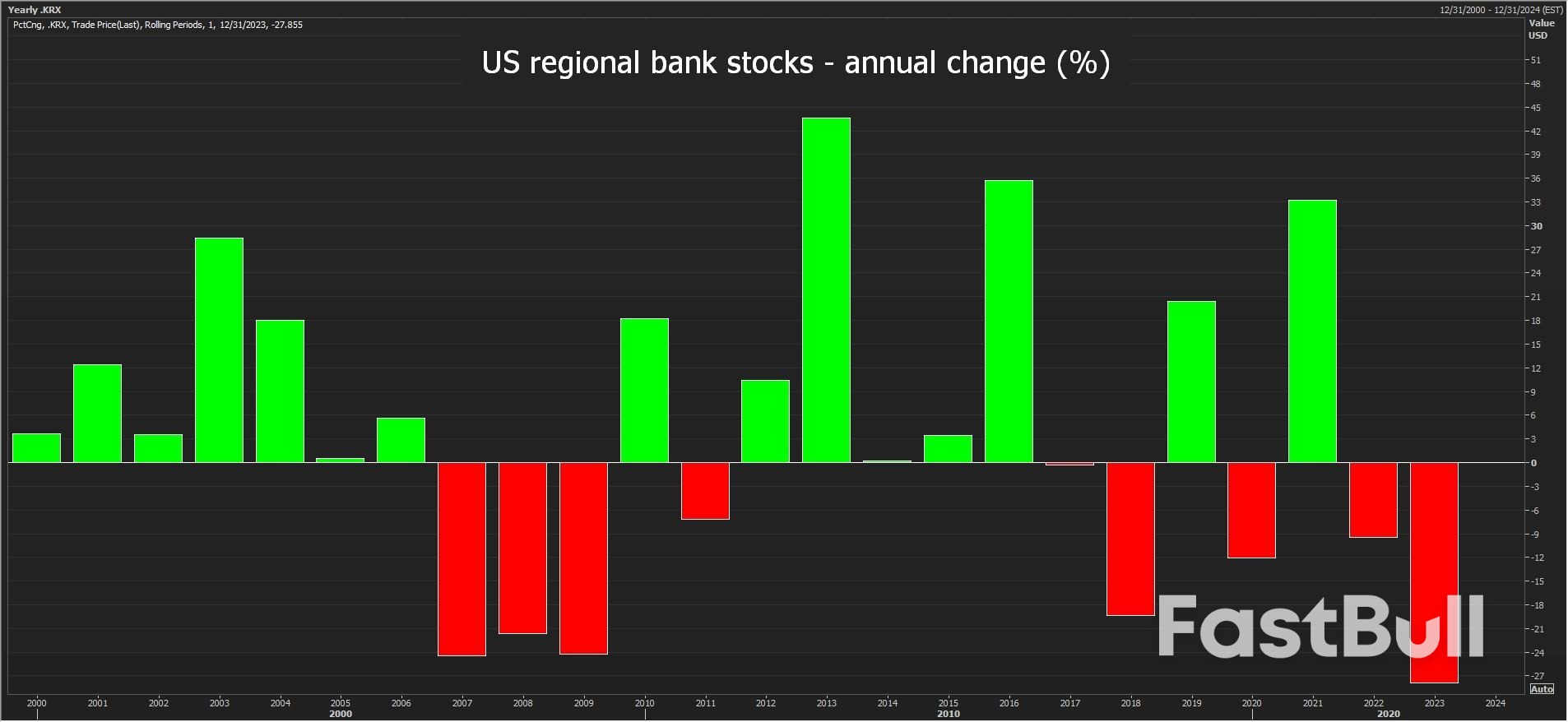
          The U.S. regional banking index tanked 5.5% on Tuesday, its biggest fall since the depths of the crisis in mid-March. The index is at a two and a half year low and has lost a third of its value in the last two months.
          Crisis over? Don't Bank on It_1Not coincidentally, renewed fears over the U.S. banking system following JP Morgan's recent takeover of failed First Republic Bank also dovetailed with unexpectedly weak U.S. jobs data and increasing alarm over the U.S. debt ceiling standoff.
          In addition, global jitters intensified on Tuesday - the Reserve Bank of Australia's shock rate hike, a downbeat bank lending survey from the European Central Bank, and a 5% slump in oil prices painted a gloomy picture for the world economy.
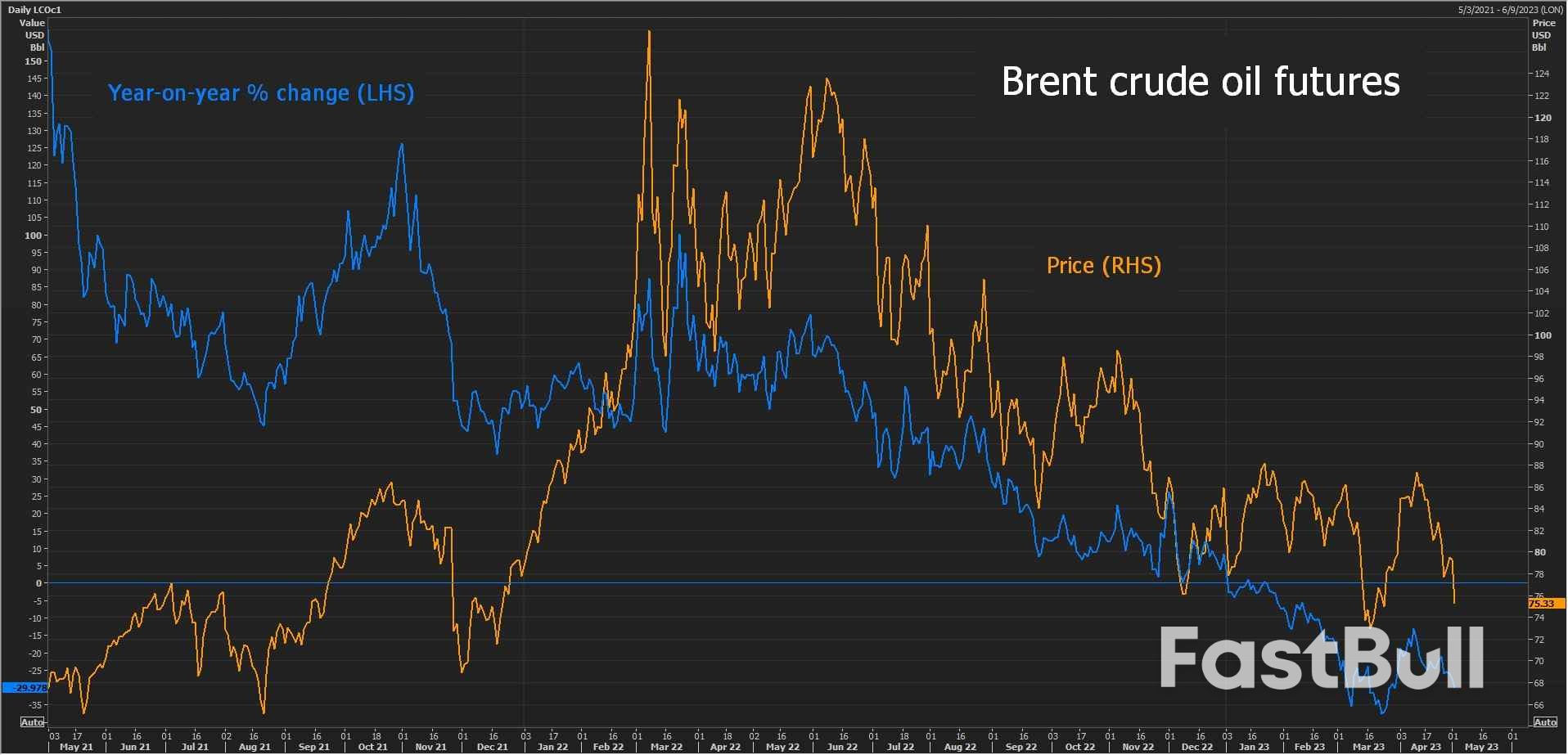
          Brent crude oil is now down almost 30% year-on-year - a huge disinflationary impulse for the world economy.
          Crisis over? Don't Bank on It_2This may play into Malaysian policymakers' thinking as they prepare to deliver their latest interest rate decision on Wednesday. Twenty one of 25 economists polled by Reuters expect the key interest rate to be kept on hold at 2.75% for a third consecutive meeting, with the other four predicting a quarter point hike.
          Not only that, Bank Negara Malaysia is expected to keep rates on hold for the rest of this year and all of next, according to the Reuters poll.
          Crisis over? Don't Bank on It_3As the RBA reminded everyone on Tuesday, however, policymakers still retain the ability to surprise. Surely the Fed won't throw a curve ball later on Wednesday, will it?
          Markets are pricing in a 15% chance of no move, a small but not negligible chance, and an 85% probability the Fed will deliver one final 25 basis point hike.
          But that's what Asian markets will be waking up to on Thursday. Before that on Wednesday they have the Malaysian rate decision, services PMI data from Australia and India, and South Korean FX reserves to offer local direction.
          Here are three key developments that could provide more direction to markets on Wednesday:
          - Malaysia interest rate decision
          - India, Australia services PMIs (April)
          - U.S. Fed interest rate decision

          Source: Reuters

          Risk Warnings and Disclaimers
          You understand and acknowledge that there is a high degree of risk involved in trading. Following any strategies or investment methods may lead to potential losses. The content on the site is provided by our contributors and analysts for information purposes only. You are solely responsible for determining whether any trading assets, securities, strategy, or any other product is suitable for investing based on your own investment objectives and financial situation.
          Comments
          Add to Favorites
          Share

          Standard Chartered Most Gender-Balanced Commercial Bank

          Justin

          Central Bank

          Economic

          Topping this year’s OMFIF Gender Balance Index ratings is Standard Chartered, climbing 26 places from last year as the most balanced commercial bank. Jerry Zhang, chief executive officer, China, spoke with Clive Horwood, OMFIF’s managing editor and deputy chief executive officer, about how and why the bank is a place where women can thrive.
          Clive Horwood: Why has Standard Chartered been more successful than its global peers in promoting women to important senior roles?
          Jerry Zhang: For women to thrive, you need the right environment. We have a very strong culture at Standard Chartered. I have worked here for almost 30 years and one of the reasons I have chosen to stay is that, at each and every stage of my career, there is something interesting to grow into. There’s no glass ceiling here for women. Just over 70% of our workforce in China is made up of women, and 50% of our senior management in the country. So perhaps on the balance side, we need to do more for men!
          CH: What tools or policies do Standard Chartered use to promote the role of women?
          JZ: We have a number of intervention tools. We have our own initiatives such as our global women’s network and our Women in Business Leadership Forum. We have strong connections with a number of external associations. And we also invite our C-suite female clients to share their views with our own staff.
          CH: What role does mentorship play at Standard Chartered?
          JZ: A very important one. I am lucky to work for our Asia CEO Ben Hung, who is a tremendous mentor. Our senior leaders – including CEO Bill Winters – are always there to share ideas and find ways to help me. Earlier in my career, I was lucky to benefit from the support and experience of other female leaders, such as our former CEO for China, Katherine Tsang and our former Regional Head of Financial Institutions, Margaret Lee. These were women running important profit and loss businesses, who were both teachers and inspirations.
          CH: What’s the most valuable piece of advice you can share?
          JZ: There are a couple of pieces. First, don’t set limits on your own ambitions and aspirations. If you think you can only do so much, then you limit yourself. Be confident in your own ability and the sky is the limit. Second, make sure you get your support system in place and work out how you can best take care of your family and your job. You need a stable background at home to help you focus on work. And don’t be apologetic when it is time to do so.
          CH: Do you believe that a diverse business is a better business?
          JZ: Men and women are different animals. Each has their own respective set of strengths. You need your team to have complementary skills and more diversity makes for a better team.
          CH: China is seen in much of the world as a country where men still dominate, whether in politics or business. Is this perception wrong? Does it make it harder for a woman?
          JZ: Some aspects of Chinese society – as in many other countries – still have a male-led hierarchy. But I have found that, for the vast majority of my clients, they only care about the quality of the work and advice we give them. But we can’t ignore the fact that for centuries, men had a dominant role, and some women continue to see their careers through the lens of how men view them. I remember one member of my team, who was extremely successful and talented, but who left the bank because her husband demanded she stay at home. When her husband’s business ran into difficulty, I suggested she come back. She did, and she continues to have a great career.
          CH: Is there more that Standard Chartered could have done to keep her in the first instance?
          JZ: Perhaps. Today we have a sabbatical programme which is available to our highest achievers. It shows our commitment to, and investment in, those individuals. We also have much more ability to work remotely, especially since Covid-19, although we find that many of our colleagues want to be in-person with their teams as often as possible.
          CH: Investment banking, in particular, is a highly competitive industry in which work can be all-consuming. Does that rule out part-time work, which can be a useful way to keep women in the workplace?
          JZ: It is a competitive environment. In senior roles, we are completely occupied. My team expects me to give 100% at all times, and I expect the same of them. But just as important is that they feel they can achieve 100% of what is expected of them. And that requires the right working environment, which we try our best to create.
          CH: Have you ever felt being a woman has held your career back?
          JZ: In this bank, no. My bosses have always been supportive and understanding, creating the right environment for me to be successful in work and supported at home. It’s also about mindset. I want to achieve more in my career. There is no glass ceiling here – just look at the number of women in senior positions. Of course, there are questions I ask myself. Am I of the right calibre to step up to the next level? Do I have enough experience internationally? Have I worked in a broad enough range of business lines? But this is nothing to do with gender.

          Source:Clive Horwood

          To stay updated on all economic events of today, please check out our Economic calendar
          Risk Warnings and Disclaimers
          You understand and acknowledge that there is a high degree of risk involved in trading. Following any strategies or investment methods may lead to potential losses. The content on the site is provided by our contributors and analysts for information purposes only. You are solely responsible for determining whether any trading assets, securities, strategy, or any other product is suitable for investing based on your own investment objectives and financial situation.
          Comments
          Add to Favorites
          Share
          FastBull
          Copyright © 2025 FastBull Ltd

          728 RM B 7/F GEE LOK IND BLDG NO 34 HUNG TO RD KWUN TONG KLN HONG KONG

          TelegramInstagramTwitterfacebooklinkedin
          App Store Google Play Google Play
          Products
          Charts

          Chats

          Q&A with Experts
          Screeners
          Economic Calendar
          Data
          Tools
          Membership
          Features
          Function
          Markets
          Copy Trading
          Latest Signals
          Contests
          News
          Analysis
          24/7
          Columns
          Education
          Company
          Careers
          About Us
          Contact Us
          Advertising
          Help Center
          Feedback
          User Agreement
          Privacy Policy
          Business

          White Label

          Data API

          Web Plug-ins

          Poster Maker

          Affiliate Program

          Risk Disclosure

          The risk of loss in trading financial instruments such as stocks, FX, commodities, futures, bonds, ETFs and crypto can be substantial. You may sustain a total loss of the funds that you deposit with your broker. Therefore, you should carefully consider whether such trading is suitable for you in light of your circumstances and financial resources.

          No decision to invest should be made without thoroughly conducting due diligence by yourself or consulting with your financial advisors. Our web content might not suit you since we don't know your financial conditions and investment needs. Our financial information might have latency or contain inaccuracy, so you should be fully responsible for any of your trading and investment decisions. The company will not be responsible for your capital loss.

          Without getting permission from the website, you are not allowed to copy the website's graphics, texts, or trademarks. Intellectual property rights in the content or data incorporated into this website belong to its providers and exchange merchants.

          Not Logged In

          Log in to access more features

          FastBull Membership

          Not yet

          Purchase

          Become a signal provider
          Help Center
          Customer Service
          Dark Mode
          Price Up/Down Colors

          Log In

          Sign Up

          Position
          Layout
          Fullscreen
          Default to Chart
          The chart page opens by default when you visit fastbull.com