Markets
News
Analysis
User
24/7
Economic Calendar
Education
Data
- Names
- Latest
- Prev



Signal Accounts for Members
All Signal Accounts
All Contests


Iran To List Armed Forces Of EU Countries That Blacklisted Revolutionary Guards As 'Terrorist', Top Iranian Security Official Larjani Says In Post On X
Russian Foreign Ministry: Russia Will Use All The Available Means To Defend Vessels Under Russian Flags In Case Their Rights Are Violated
Russian Foreign Ministry On Russian Tanker Grinch, Intercepted By French Navy: Restrictive Measures Contradict International Law
South Africa's Cumulative Jan-Dec Trade Balance 201.62 Billion Rand Versus 197.07 Billion Rand Same Period Last Year
Brazil's Unemployment Rate 5.1% In Three Months Through December - Ibge (Reuters Poll 5.1 Percent)

Japan Retail Sales YoY (Dec)A:--
F: --
Japan Large-Scale Retail Sales YoY (Dec)A:--
F: --
P: --
Japan Industrial Output Prelim MoM (Dec)A:--
F: --
P: --
Japan Industrial Output Prelim YoY (Dec)A:--
F: --
P: --
Australia PPI YoY (Q4)A:--
F: --
P: --
Australia PPI QoQ (Q4)A:--
F: --
P: --
Japan Construction Orders YoY (Dec)A:--
F: --
P: --
Japan New Housing Starts YoY (Dec)A:--
F: --
P: --
France GDP Prelim YoY (SA) (Q4)A:--
F: --
P: --
Turkey Trade Balance (Dec)A:--
F: --
P: --
France PPI MoM (Dec)A:--
F: --
Germany Unemployment Rate (SA) (Jan)A:--
F: --
P: --
Germany GDP Prelim YoY (Not SA) (Q4)A:--
F: --
P: --
Germany GDP Prelim QoQ (SA) (Q4)A:--
F: --
P: --
Germany GDP Prelim YoY (Working-day Adjusted) (Q4)A:--
F: --
P: --
Italy GDP Prelim YoY (SA) (Q4)A:--
F: --
P: --
U.K. M4 Money Supply (SA) (Dec)A:--
F: --
U.K. M4 Money Supply YoY (Dec)A:--
F: --
P: --
U.K. M4 Money Supply MoM (Dec)A:--
F: --
P: --
U.K. Mortgage Lending (Dec)A:--
F: --
U.K. Mortgage Approvals (Dec)A:--
F: --
Italy Unemployment Rate (SA) (Dec)A:--
F: --
P: --
Euro Zone Unemployment Rate (Dec)A:--
F: --
P: --
Euro Zone GDP Prelim QoQ (SA) (Q4)A:--
F: --
P: --
Euro Zone GDP Prelim YoY (SA) (Q4)A:--
F: --
P: --
Italy PPI YoY (Dec)A:--
F: --
P: --
Mexico GDP Prelim YoY (Q4)A:--
F: --
P: --
Brazil Unemployment Rate (Dec)A:--
F: --
P: --
South Africa Trade Balance (Dec)A:--
F: --
P: --
India Deposit Gowth YoYA:--
F: --
P: --
Germany CPI Prelim YoY (Jan)--
F: --
P: --
Germany CPI Prelim MoM (Jan)--
F: --
P: --
Germany HICP Prelim YoY (Jan)--
F: --
P: --
Germany HICP Prelim MoM (Jan)--
F: --
P: --
U.S. Core PPI YoY (Dec)--
F: --
P: --
U.S. Core PPI MoM (SA) (Dec)--
F: --
P: --
U.S. PPI YoY (Dec)--
F: --
P: --
U.S. PPI MoM (SA) (Dec)--
F: --
P: --
Canada GDP MoM (SA) (Nov)--
F: --
P: --
Canada GDP YoY (Nov)--
F: --
P: --
U.S. PPI MoM Final (Excl. Food, Energy and Trade) (SA) (Dec)--
F: --
P: --
U.S. PPI YoY (Excl. Food, Energy & Trade) (Dec)--
F: --
P: --
U.S. Chicago PMI (Jan)--
F: --
Canada Federal Government Budget Balance (Nov)--
F: --
P: --
Brazil CAGED Net Payroll Jobs (Dec)--
F: --
P: --
U.S. Weekly Total Oil Rig Count--
F: --
P: --
U.S. Weekly Total Rig Count--
F: --
P: --
China, Mainland NBS Manufacturing PMI (Jan)--
F: --
P: --
China, Mainland NBS Non-manufacturing PMI (Jan)--
F: --
P: --
China, Mainland Composite PMI (Jan)--
F: --
P: --
South Korea Trade Balance Prelim (Jan)--
F: --
Japan Manufacturing PMI Final (Jan)--
F: --
P: --
South Korea IHS Markit Manufacturing PMI (SA) (Jan)--
F: --
P: --
Indonesia IHS Markit Manufacturing PMI (Jan)--
F: --
P: --
China, Mainland Caixin Manufacturing PMI (SA) (Jan)--
F: --
P: --
Indonesia Trade Balance (Dec)--
F: --
P: --
Indonesia Inflation Rate YoY (Jan)--
F: --
P: --
Indonesia Core Inflation YoY (Jan)--
F: --
P: --
India HSBC Manufacturing PMI Final (Jan)--
F: --
P: --
Australia Commodity Price YoY (Jan)--
F: --
P: --


No matching data
Latest Views
Latest Views
Trending Topics
Top Columnists
Latest Update
White Label
Data API
Web Plug-ins
Affiliate Program
View All

No data
Eurozone Q4 2025 growth surprised, driven by rising optimism, yet global and structural headwinds persist.
The Eurozone economy maintained a steady 0.3% quarter-on-quarter growth rate in the fourth quarter of 2025, outperforming downbeat expectations. This resilience was largely driven by accelerating growth in Germany and Spain, with support from Italy, which together compensated for slower performance in France.

Looking ahead, the Eurozone appears poised for accelerated growth. A key signal comes from the European Commission's economic sentiment indicator, which surged in January to its highest level in three years. This optimism was not isolated, showing a broad-based improvement across member states and major economic sectors.
Furthermore, the industrial sector began a revival in late 2025. This production upswing is expected to gain momentum, fueled by increased defense investment across the bloc and new infrastructure spending in Germany.
However, significant challenges continue to cloud the outlook. The global economic environment remains uncertain, and the Eurozone's declining competitiveness is a persistent issue. Consequently, trade is expected to be a drag on growth this year.
Deeper structural problems are also not being resolved quickly enough, which could limit the region's long-term economic prospects.
Despite these external pressures and internal challenges, the domestic economy appears strong enough to drive a modest acceleration in growth. In an environment of global turmoil, even this level of progress marks a notable achievement for the Eurozone.
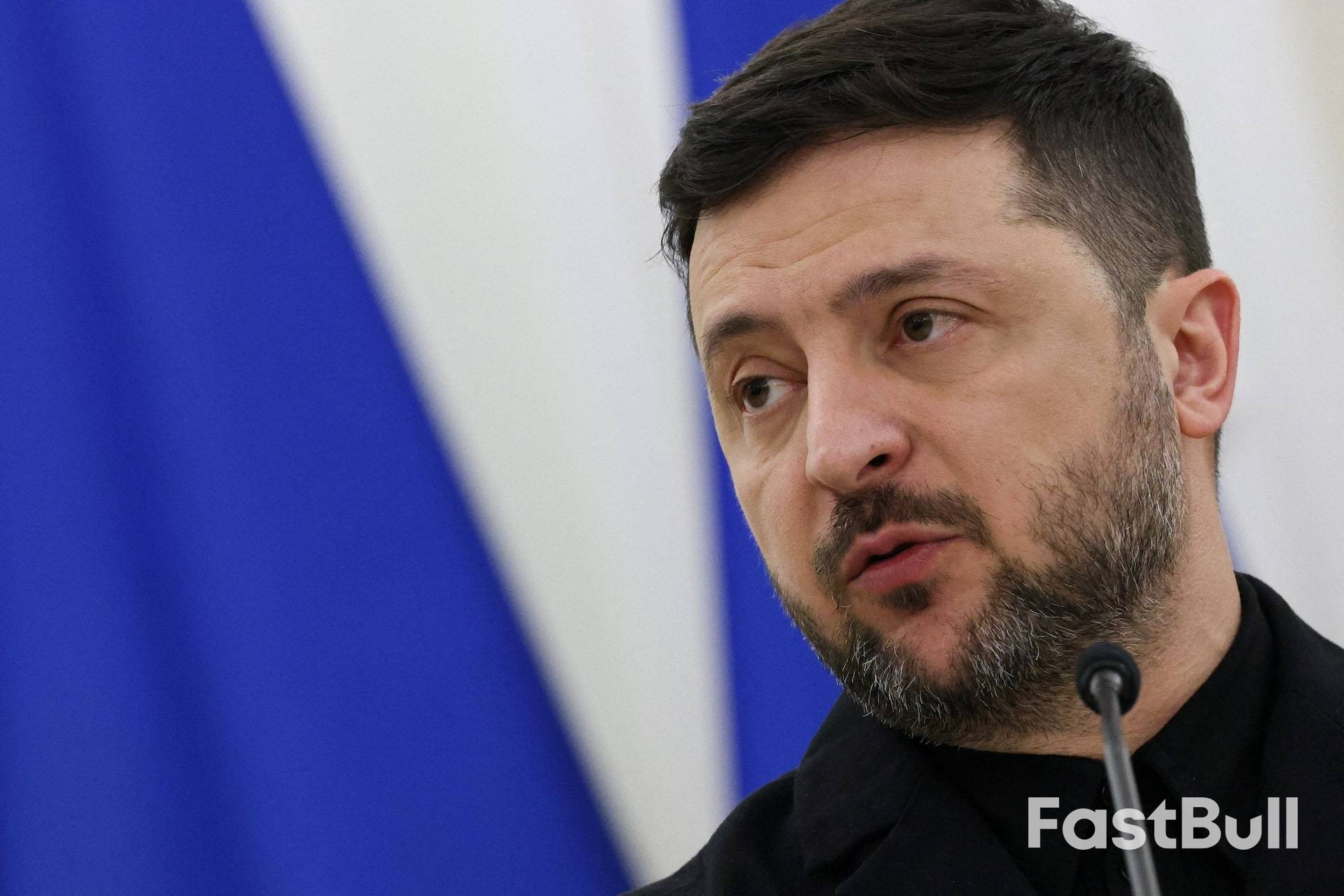
Ukrainian President Volodymyr Zelenskiy has indicated that Kyiv is prepared to halt hostilities if Russia stops its attacks on the country's critical energy infrastructure. The statement comes as the capital, Kyiv, endures freezing temperatures, though Zelenskiy clarified that no formal truce is in place.
This potential de-escalation follows a proposal from the United States. On Thursday, U.S. President Donald Trump stated that Russian President Vladimir Putin had consented to a one-week pause in attacks on Kyiv due to the severe cold, with temperatures expected to drop to minus 26 degrees Celsius.

Speaking to reporters in Kyiv, Zelenskiy explained that the de-escalation concept was introduced by the U.S. during trilateral peace negotiations in Abu Dhabi last weekend. He framed the proposal as a starting point for diplomacy rather than a finalized deal.
"The Americans said they want to raise the issue of de-escalation, with both sides demonstrating certain steps toward refraining from the use of long-range capabilities," Zelenskiy said in remarks released Friday. "At this stage, this is an initiative of the American side... We regard it as an opportunity rather than an agreement."
The Kremlin has not yet issued any public comment on the proposed energy ceasefire.
Despite the diplomatic discussions, Russian attacks on Ukraine persist. The Ukrainian Air Force reported on Friday that Russia launched a ballistic missile and 111 drones in overnight strikes.
While regional officials confirmed airstrikes in frontline areas, there were no immediate reports of these attacks targeting energy facilities. A ceasefire for the energy sector would mark a significant development as the war approaches its fourth anniversary next month.
Russian forces are maintaining their advance in the eastern Donetsk region, complemented by almost daily drone attacks on Ukrainian cities far from the frontlines. Since last autumn, Russia has intensified its assault on Ukraine's power grid, causing widespread blackouts and leaving Kyiv without heat during one of the most severe winters in a decade.
Previous diplomatic efforts to end the conflict have failed to yield tangible results, and major disagreements continue to block progress. Key unresolved issues include:
• The territorial status of Donetsk.
• Control of the Zaporizhzhia nuclear power plant, the largest in Europe.
• President Putin's demand that Ukraine surrender the 5,000 sq km (1,900 sq miles) of territory it still controls, which constitutes about 20% of the disputed region.
Zelenskiy has consistently rejected any proposal that involves surrendering territory Ukraine has fought to defend.
The path forward for negotiations remains unclear. Zelenskiy stated he did not know when the next meeting between Russian, Ukrainian, and U.S. representatives would occur.
Adding to the uncertainty, U.S. Secretary of State Marco Rubio said Wednesday that top envoys Steve Witkoff and Jared Kushner would not attend the next meeting scheduled for the weekend in Abu Dhabi. Zelenskiy stressed the importance of having the same personnel present to ensure continuity and monitor progress from previous discussions.
"The date or the location may change," Zelenskiy noted, suggesting external factors could be at play. "In our view, something is happening in the situation between the United States and Iran. And those developments could likely affect the timing."
Official data released Friday confirms Japan held back from intervening in currency markets through the last month, relying solely on verbal warnings to defend the struggling yen.
According to the Ministry of Finance, Japan spent no funds on currency intervention between December 29 and January 28. This clarifies that a mysterious 1.7% surge in the yen on January 23, which occurred after a Bank of Japan decision and near an 18-month low against the dollar, was not the result of direct government action.
In the days following the jump, the yen continued to rally on reports that finance officials in Tokyo and Washington were conducting "rate checks"—a move often seen as a precursor to intervention. This fueled speculation of rare, coordinated action to support Japan's currency.
However, money market data from the Bank of Japan later showed none of the massive capital outflows that typically accompany direct market intervention.
Top officials have remained tight-lipped on the matter. Finance Minister Satsuki Katayama and top currency diplomat Atsushi Mimura have both declined to comment on the rate checks. Mimura simply stated that Japan would maintain close coordination with the United States on foreign exchange and act appropriately.
Despite the tough talk, the yen's advance was short-lived. On Friday, it fell 0.5% to 153.79 per dollar.
Market analysts argue that fundamental economic pressures are the real drivers behind the yen's valuation, making any intervention a temporary fix at best.
"History tells you that intervention is only a temporary solution to a weaker currency," said Rodrigo Catril, a currency strategist at National Australia Bank in Sydney. "There are real and fundamental arguments as to why the yen is where it's at."
While authorities have warned they are ready to counter speculative, one-sided moves, their actions have so far been restrained. Still, Japan has significant firepower, with foreign currency reserves totaling $1.16 trillion as of December.
The yen's prolonged weakness and a recent surge in Japanese government bond (JGB) yields to record highs reflect growing investor concern over the nation's strained finances. This market volatility comes at a critical time for Prime Minister Sanae Takaichi, who faces a snap election on February 8 and is seeking a mandate for her economic reflation agenda.
The last time Japan engaged in major currency intervention was in 2024. At that time, the government spent a record 15.3 trillion yen ($99.43 billion) to prop up the currency as monetary policy diverged sharply between the Federal Reserve and the Bank of Japan.
($1 = 153.8800 yen)
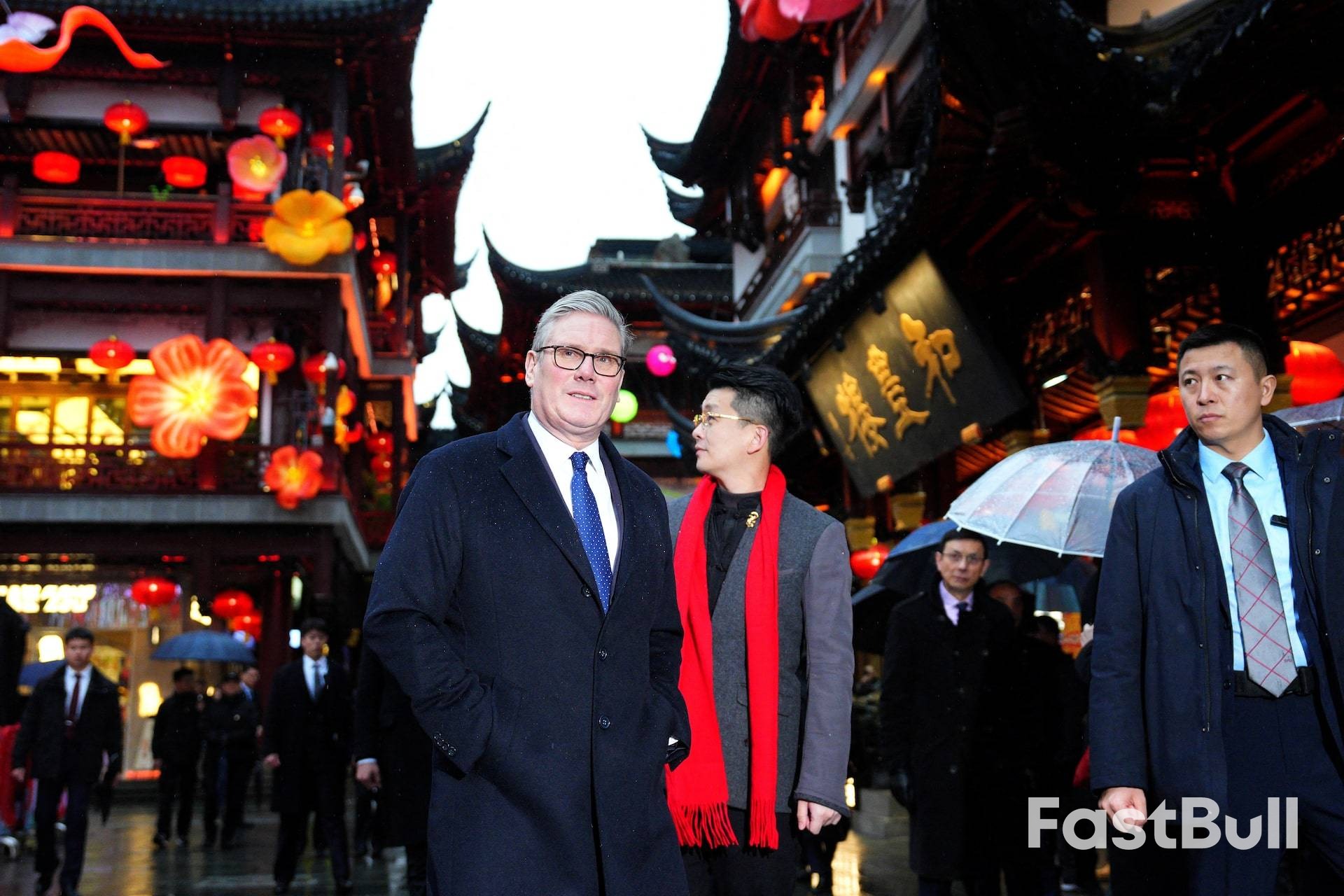
British Prime Minister Keir Starmer’s high-profile visit to China marks another victory for Beijing in its ongoing rivalry with Washington. But while he returns to London with new deals in hand, the trip also exposes the stark limitations facing middle powers trying to navigate a world fractured by US-China tensions.
Starmer is the latest Western leader to court Beijing, following Canadian counterpart Mark Carney, who secured a trade deal just weeks earlier. These visits are becoming a pattern as leaders from Europe, India, and beyond seek alternatives to an unpredictable United States under President Donald Trump, who has spent his second term disrupting long-standing alliances.

From London's perspective, engaging with China sends a clear message to Trump: if the U.S. continues to apply pressure over issues like Greenland or the USMCA trade pact, its traditional allies have other options. However, some analysts view these moves as "superficial gestures amid stalled global growth."
"Traditional U.S. allies feel hard done by and are now hedging their bets, but they are far from being able or willing to substitute China for the United States," said John Quelch, an expert in global strategy at Duke Kunshan University.
On his trip, Starmer secured a few tangible benefits for Britain:
• Visa-Free Travel: Britons gain 30-day visa-free access to China.
• Lower Whisky Tariffs: A key win for a signature British export.
• Major Investment: British pharmaceutical giant AstraZeneca unveiled a new $15 billion investment in China.
However, on more contentious topics, progress was limited to "frank dialogue." Key areas of tension—including China's stance on Taiwan, its close relationship with Russia, and the rights crackdown in Hong Kong—remain unresolved. The visit also drew criticism from politicians in both the UK and US over accusations of espionage and human rights abuses, which Beijing denies.
While the economic gains for Western nations are modest, the diplomatic visits are a significant boost for China's global standing. Beijing can present itself as a "reliable partner," contrasting its stability with Trump's chaotic tariff policies and frequent demands on allies.
"President Trump's efforts to decouple the United States from China are also decoupling the United States from the world," Quelch noted.
This narrative is reinforced with each visit, supporting the idea of a global "pivot to China" as a counterweight to American influence.
The deals Western powers are striking come at the cost of deeper integration with an economy running on overdrive. China’s trade surplus hit a record $1.2 trillion last year—roughly the size of the Dutch economy. This surplus is fueled by a manufacturing sector so powerful that it overwhelms foreign markets, even as domestic consumption remains too weak to support its own producers.
The trade data tells a clear story of imbalance:
• European Union: China's exports grew 8.4%, while imports fell 0.4%.
• United Kingdom: China sold 7.8% more goods while buying 4.7% less.
• Canada: Chinese sales increased 3.2%, while purchases dropped 10.4%.
"These visits highlight the severe limits of any 'pivot' to China," said Alicia Garcia-Herrero, chief Asia-Pacific economist at Natixis. "They expose middle powers' vulnerability, chasing scraps while China's export flood overwhelms their industries."
The flood of Chinese exports poses a direct threat to Western manufacturing. At its current pace, China's trade surplus is on track to match the size of France's $3 trillion economy by 2030 and Germany's $5 trillion economy by 2033.
"This makes it an especially risky proposition for countries trying to protect or grow their own manufacturing industries to substantially increase trade integration with China," warned Eswar Prasad, former China director at the IMF. "China hardly provides a safe harbour."
Furthermore, cozying up to Beijing invites backlash from Washington. Before Starmer even left China, Trump warned that it was "very dangerous" for the UK to get into business with Beijing. Similarly, Canada’s deal on canola and lobsters was met with threats of 100% U.S. tariffs and a warning against allowing Chinese EVs into North America.
Despite the risks, some analysts argue that these diplomatic missions are less about securing major trade wins and more about managing complex relationships. For countries like Britain and Canada, simply "reducing tension with Beijing" may be the most realistic goal.
Noah Barkin of the German Marshall Fund called the visits a "propaganda coup for Beijing" but clarified, "This is not a pivot to China. It is about reducing tension."
After all, previous deteriorations in relations with China exposed critical supply chain vulnerabilities and only widened trade imbalances. In a world dominated by two superpowers, the ultimate goal for middle powers is survival. As Barkin puts it, "No country wants to be in open conflict with the two superpowers at the same time."
China's imports of liquefied natural gas (LNG) are on track for a third straight month of year-over-year growth, signaling a sustained recovery in demand. According to analytics firm Kpler, the country is expected to import 6.94 million tons of LNG in January.
This projection represents a 15% increase compared to January 2025. The rising import volumes may indicate that more cargoes are now being delivered to China under long-term contracts.

The recent growth marks a significant turnaround. For most of the past year, China's LNG imports saw annual declines, influenced by tariffs and a surge in domestic gas production.
Domestic output hit an all-time high earlier in the year, causing LNG imports to fall to a six-year low. In the first seven months of 2025, imports dropped by 19% year-over-year. This slowdown was also partly a consequence of a record-setting import year in 2024, when China focused on filling its gas inventories ahead of winter.
From November 2024 to October 2025, China recorded 12 consecutive months of falling LNG import volumes.
The downward trend finally reversed in November 2025 as seasonal demand for electricity and heating began to climb.
• November 2025: Imports rose to 6.94 million tons, a 13.6% increase from the previous year.
• December 2025: Volumes grew further, reaching an estimated 7.17 million tons, according to Kpler data.
Imports from Russia, in particular, reached an all-time high at the end of last year. In November, China imported 1.6 million tons of Russian LNG, a figure that doubled from October. This strong import trend was expected to continue into December and possibly into January.
British lenders approved 61,013 mortgages in December, the lowest since June 2024 and down from a revised 64,072 in November, Bank of England data showed on Friday.
Economists polled by Reuters had a median forecast of 64,800 for December, up marginally from November's original reading of 64,530.
Britain's housing market slowed in 2025 after the end of a temporary tax break on some house purchases, and there were was some further loss of momentum in the months running up to finance minister Rachel Reeves' annual budget on November 26 due to fears of higher taxes on more expensive homes.
Mortgage lender Halifax reported that house prices rose just 0.3% in the 12 months to December - well below the rate of consumer price inflation - and rival Nationwide recorded a 0.6% annual increase.
However, the Royal Institution of Chartered Surveyors said there was the beginning of signs of a turnaround in sentiment in December as sales expectations rose to their highest since October 2024.
Hong Kong’s economy posted a robust 3.8% year-on-year expansion in the fourth quarter of 2025, according to official advance estimates. This marks the city's 12th consecutive quarter of growth, driven by strong regional trade, a recovery in tourism, and vigorous activity in the financial services sector.
The fourth-quarter performance represents an acceleration from previous periods. The economy grew by a revised 3.7% in the third quarter, 3.1% in the second, and 3.0% in the first quarter of 2025. On a seasonally adjusted quarterly basis, GDP expanded by 1.0% in the final three months of the year, up from 0.7% in the third quarter.
For the entirety of 2025, Hong Kong's real GDP grew by 3.5%. This figure not only surpassed the government's own forecast of 3.2% but also marked a significant increase from the 2.5% growth recorded in 2024.
The momentum was underpinned by strong performance across several key economic pillars:
• Private Consumption: Expenditure rose by 2.5% in the fourth quarter, slightly ahead of the 2.4% increase in Q3. For the full year, private consumption grew by 1.6%.
• Goods Exports: Total exports surged by 15.5% in Q4, a notable jump from the 12% rise in the previous quarter. This brought full-year export growth to 12%.
• Goods Imports: Imports expanded by 18.4% in Q4, up from 11.7% in Q3, resulting in 12.6% growth for the full year.
Looking ahead, the government anticipates that the Hong Kong economy will maintain its positive trajectory into 2026. A government spokesperson stated that the city is "expected to maintain good momentum."
Several factors are expected to support this continued growth. A moderate but sustained expansion of the global economy, combined with strong international demand for electronics enabled by artificial intelligence, is projected to bolster Hong Kong's export performance.
Furthermore, improving sentiment among consumers and businesses, alongside the possibility of interest rate cuts in the United States, is expected to stimulate local consumption and investment.
Despite the optimistic forecast, officials cautioned that external uncertainties persist, particularly amid escalating geopolitical tensions that could pose risks to the outlook.
White Label
Data API
Web Plug-ins
Poster Maker
Affiliate Program
The risk of loss in trading financial instruments such as stocks, FX, commodities, futures, bonds, ETFs and crypto can be substantial. You may sustain a total loss of the funds that you deposit with your broker. Therefore, you should carefully consider whether such trading is suitable for you in light of your circumstances and financial resources.
No decision to invest should be made without thoroughly conducting due diligence by yourself or consulting with your financial advisors. Our web content might not suit you since we don't know your financial conditions and investment needs. Our financial information might have latency or contain inaccuracy, so you should be fully responsible for any of your trading and investment decisions. The company will not be responsible for your capital loss.
Without getting permission from the website, you are not allowed to copy the website's graphics, texts, or trademarks. Intellectual property rights in the content or data incorporated into this website belong to its providers and exchange merchants.
Not Logged In
Log in to access more features
Log In
Sign Up