Markets
News
Analysis
User
24/7
Economic Calendar
Education
Data
- Names
- Latest
- Prev


Signal Accounts for Members
All Signal Accounts
All Contests


Norway Sovereign Wealth Fund's Holdings In USA Treasuries Worth $199 Billion At December 31 Versus$181 Billion At June 30, Fund Data Shows
Bessent Says 'Independence Does Not Mean No Accountability' In Defending Justice Department Probe Of Fed Chief
Spot Gold Broke Through $5,380 Per Ounce, Up 3.8% On The Day. Spot Silver Extended Its Gains To 4%, Currently Trading At $116.49 Per Ounce
Jeff Rosenberg Of BlackRock: The Federal Reserve's Response Mechanism (compared To Its Focus On Price Stability) Is More Focused On The Labor Side
Chicago Wheat Futures Rose About 2.3%, Corn Rose 1%. In Late New York Trading On Wednesday (January 28), The Bloomberg Grains Index Rose 1.19% To 29.3655 Points, Reaching A Daily High Of 29.5851 Points At 23:06 Beijing Time. CBOT Corn Futures Rose 1.00%, And CBOT Wheat Futures Rose 2.29%. CBOT Soybean Futures Rose 0.70% To $10.7475 Per Bushel, Reaching A Daily High Of $10.8475 At 22:41; Soybean Meal Futures Rose 1.22%, And Soybean Oil Futures Fell 0.11%
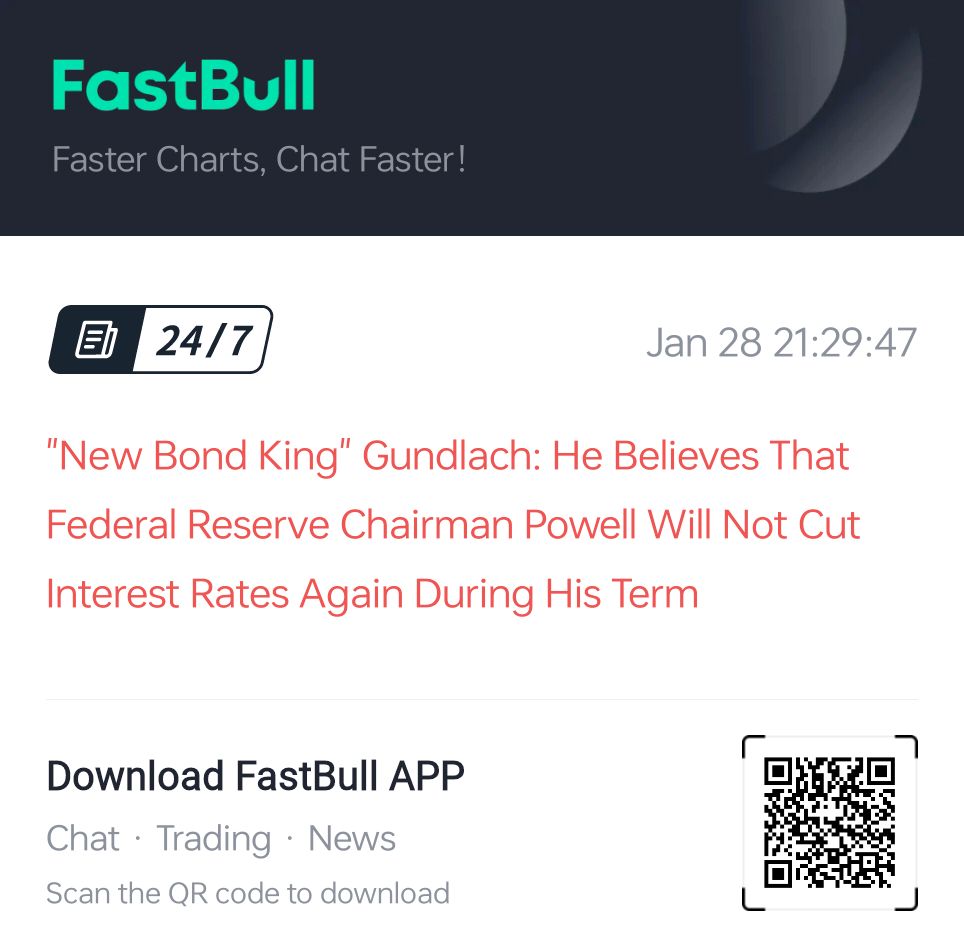
"New Bond King" Gundlach: He Believes That Federal Reserve Chairman Powell Will Not Cut Interest Rates Again During His Term
Powell: The Message Is Simply Not About Our Credibility, Inflation Expectations Show We Have Credibility
Powell: Also Advice For The Next Fed Chair Is The Need To Earn Democratic Legitimacy With Congressional Overseers
Powell: Has Been A Divide Between Solid Growth And Weakning Labor Market, Which May Be Explained By Rising Productivity

U.S. 5-Year Note Auction Avg. YieldA:--
F: --
P: --
U.S. API Weekly Refined Oil StocksA:--
F: --
P: --
U.S. API Weekly Crude Oil StocksA:--
F: --
P: --
U.S. API Weekly Gasoline StocksA:--
F: --
P: --
U.S. API Weekly Cushing Crude Oil StocksA:--
F: --
P: --
Australia RBA Trimmed Mean CPI YoY (Q4)A:--
F: --
P: --
Australia CPI YoY (Q4)A:--
F: --
P: --
Australia CPI QoQ (Q4)A:--
F: --
P: --
Germany GfK Consumer Confidence Index (SA) (Feb)A:--
F: --
P: --
Germany 10-Year Bund Auction Avg. YieldA:--
F: --
P: --
India Industrial Production Index YoY (Dec)A:--
F: --
P: --
India Manufacturing Output MoM (Dec)A:--
F: --
P: --
U.S. MBA Mortgage Application Activity Index WoWA:--
F: --
P: --
Canada Overnight Target RateA:--
F: --
P: --
BOC Monetary Policy Report
U.S. EIA Weekly Crude Stocks ChangeA:--
F: --
P: --
U.S. EIA Weekly Cushing, Oklahoma Crude Oil Stocks ChangeA:--
F: --
P: --
U.S. EIA Weekly Crude Demand Projected by ProductionA:--
F: --
P: --
U.S. EIA Weekly Crude Oil Imports ChangesA:--
F: --
P: --
U.S. EIA Weekly Heating Oil Stock ChangesA:--
F: --
P: --
U.S. EIA Weekly Gasoline Stocks ChangeA:--
F: --
P: --
BOC Press Conference
Russia PPI MoM (Dec)A:--
F: --
P: --
Russia PPI YoY (Dec)A:--
F: --
P: --
U.S. Interest Rate On Reserve BalancesA:--
F: --
P: --
U.S. Target Federal Funds Rate Lower Limit (Overnight Reverse Repo Rate)A:--
F: --
P: --
U.S. Federal Funds Rate TargetA:--
F: --
P: --
U.S. Target Federal Funds Rate Upper Limit (Excess Reserves Ratio)A:--
F: --
P: --
FOMC Statement
FOMC Press Conference
Brazil Selic Interest Rate--
F: --
P: --
Australia Import Price Index YoY (Q4)--
F: --
P: --
Japan Household Consumer Confidence Index (Jan)--
F: --
P: --
Turkey Economic Sentiment Indicator (Jan)--
F: --
P: --
Euro Zone M3 Money Supply (SA) (Dec)--
F: --
P: --
Euro Zone Private Sector Credit YoY (Dec)--
F: --
P: --
Euro Zone M3 Money Supply YoY (Dec)--
F: --
P: --
Euro Zone 3-Month M3 Money Supply YoY (Dec)--
F: --
P: --
South Africa PPI YoY (Dec)--
F: --
P: --
Euro Zone Consumer Confidence Index Final (Jan)--
F: --
P: --
Euro Zone Selling Price Expectations (Jan)--
F: --
P: --
Euro Zone Industrial Climate Index (Jan)--
F: --
P: --
Euro Zone Services Sentiment Index (Jan)--
F: --
P: --
Euro Zone Economic Sentiment Indicator (Jan)--
F: --
P: --
Euro Zone Consumer Inflation Expectations (Jan)--
F: --
P: --
Italy 5-Year BTP Bond Auction Avg. Yield--
F: --
P: --
Italy 10-Year BTP Bond Auction Avg. Yield--
F: --
P: --
France Unemployment Class-A (Dec)--
F: --
P: --
South Africa Repo Rate (Jan)--
F: --
P: --
Canada Average Weekly Earnings YoY (Nov)--
F: --
P: --
U.S. Nonfarm Unit Labor Cost Final (Q3)--
F: --
P: --
U.S. Initial Jobless Claims 4-Week Avg. (SA)--
F: --
P: --
U.S. Weekly Continued Jobless Claims (SA)--
F: --
P: --
U.S. Trade Balance (Nov)--
F: --
P: --
U.S. Weekly Initial Jobless Claims (SA)--
F: --
P: --
Canada Trade Balance (SA) (Nov)--
F: --
P: --
U.S. Exports (Nov)--
F: --
P: --
Canada Imports (SA) (Nov)--
F: --
P: --
Canada Exports (SA) (Nov)--
F: --
P: --
U.S. Unit Labor Cost Revised MoM (SA) (Q3)--
F: --


No matching data
Latest Views
Latest Views
Trending Topics
Top Columnists
Latest Update
White Label
Data API
Web Plug-ins
Affiliate Program
View All

No data
ECB officials are increasingly concerned that the euro's recent strength could undermine inflation targets, poised to significantly influence upcoming interest rate decisions.
European Central Bank officials are growing concerned that the euro's recent strength could undermine inflation, a development that is set to heavily influence upcoming decisions on interest rates.
Francois Villeroy de Galhau, a member of the ECB's Governing Council, has confirmed the bank is actively monitoring the currency's gains. While the ECB does not target a specific exchange rate, the French central banker highlighted worries that a stronger euro could exert downward pressure on prices.
"We are closely monitoring this appreciation of the euro and its possible consequences in terms of lower inflation," Villeroy stated. "This is one of the factors that will guide our monetary policy and our decisions on interest rates over the coming months."
The ECB's vigilance comes as inflation in the eurozone remains just under its 2% target, with forecasts projecting it will stay below that level this year and next. This situation makes policymakers particularly sensitive to any factor that could further suppress price growth.
Villeroy's comments echo a sentiment shared across the ECB's leadership.
• Martin Kocher, Austria's central bank chief, told Bloomberg Television the ECB must watch if the currency continues to climb.
• Luis de Guindos, the ECB's vice president, noted in July that a rate of $1.20 was "perfectly acceptable" but warned that a move higher "would be much more complicated."
• Gediminas Simkus, head of Lithuania's central bank, cautioned in an interview that calling the $1.19 level a direct trigger for policy action would be an "oversimplification."
The euro briefly surpassed $1.20 against the U.S. dollar for the first time since June 2021 after President Donald Trump said he was not concerned about the dollar's decline. By Wednesday, the euro was trading just below that mark, having gained 2% against the dollar so far this year.
Market analysts believe currency movements will be a central theme at the ECB's next meeting on February 4-5. Bloomberg Economics anticipates that while rates will likely remain unchanged, policymakers may emphasize the economic drag from a stronger euro to avoid language that could boost it further.
Carsten Brzeski, head of macro research at ING in Frankfurt, suggests that sustained currency strength could lead to calls for more aggressive action. "If the strengthening continues, calls for a rate cut will get louder," he said.
Villeroy attributed the market shifts to doubts surrounding U.S. economic policy. "The dollar is falling significantly against most currencies, including the euro," he noted. "This is a sign of reduced confidence in light of the unpredictability of US economic policy."
In response to this broader geopolitical uncertainty, the ECB is accelerating its plans for a digital euro to bolster Europe's financial autonomy.
Piero Cipollone, an ECB executive board member, argued in an interview with El País that rising global tensions strengthen the case for a European-controlled digital payments network. He described the proposed digital euro as "public money in digital form," necessary to complement physical cash in an evolving payments landscape.
Cipollone pointed out that cash's share of daily transaction value fell from 40% in 2019 to approximately 24% in 2024. As the public's use of money changes, he argued, the ECB must adapt.
He directly linked this initiative to global politics, warning that the "weaponisation of every conceivable tool" necessitates a retail payment system "fully under our control" and built on European technology.
Cipollone stressed that the digital euro would have legal tender status, meaning merchants that accept digital payments "will have to accept" it. He dismissed the idea of waiting for a private-sector alternative, stating the ECB has "been calling on the private sector to come up with a pan-European solution for many years now."
This push is supported by external experts. A January 11 open letter signed by about 70 economists and policymakers urged EU lawmakers to prioritize the digital euro, warning that further delays could deepen Europe's reliance on large, non-European payment firms.
The U.S. Nuclear Regulatory Commission (NRC) is preparing to review federal radiation exposure limits next month, following a directive from a May 2025 executive order by Donald Trump. The move aims to slash regulations and stimulate the nation's stagnant nuclear energy industry.
While the United States currently generates more nuclear energy than any other country, its leadership is precarious. The domestic nuclear sector has been declining for decades, relying on an aging fleet of reactors with very few new projects planned.

A key reason for this stagnation is the staggering cost and bureaucratic complexity of building new reactors, which often leads to long and unpredictable timelines.
The troubled Plant Vogtle in Georgia serves as a case in point. As the only new nuclear plant completed in the U.S. for decades, its final reactor came online in 2024 after 14 years of work and a final cost of $35 billion—massively over budget and years behind schedule.
To avoid repeating such delays, the Trump administration is targeting what it sees as excessive red tape, including public safety measures. The May 23 executive order specifically directs the NRC to "reconsider reliance on the linear no-threshold (LNT) model for radiation exposure and the 'as low as reasonably achievable' standard." The stated goal is to "reestablish the United States as the global leader in nuclear energy."
However, this push for deregulation has drawn sharp criticism from experts who worry about the potential consequences for public health and the industry's own goals.
Critics argue that weakening the NRC's licensing and review processes could have serious downsides. A recent column from the Carnegie Endowment for International Peace warned that the administration "may be working against its own long-term goals by short-circuiting the public arbitration process... that is critical to building and maintaining public acceptance and confidence in nuclear energy."
The executive order might not even speed up nuclear production, according to a recent op-ed in Scientific American by Katy Huff, a nuclear energy advocate and former Department of Energy official. "I want to see more nuclear energy on the grid soon," she wrote. "But loosening the protections of the linear no-threshold (LNT) model is not supported by current research."
Huff noted that the NRC has previously rejected similar proposals due to a lack of scientific evidence. She argued the executive order pressures the agency to make a political decision rather than a scientific one and called for more research, especially on early findings that suggest higher radiation exposure could pose specific risks to women and children.
Despite the concerns, many experts agree that U.S. nuclear regulations are overdue for an update. While caution is essential in nuclear power, America's current framework is seen as overly restrictive, causing it to fall behind global competitors.
In the time it took to build Plant Vogtle, China has tripled its nuclear energy capacity. Today, China has 27 new reactors under construction, with average build times of around seven years.
This growing imbalance has fueled calls for change. At the World Nuclear Symposium last September, a panel of experts concluded that "regulation must evolve to enable innovation."
Pete Bryant, CEO of the World Nuclear Transport Institute, argued for a new approach. "We must build upon a common goal, wider than just safety. A common goal could be tackling climate change," he stated. "We must ensure proportionate, outcome-focused approaches and show that safety, security, innovation and sustainability can reinforce each other."
He added, "Regulation is not just rules... It's the foundation of public confidence, it's the enabler of innovation, and it's the key to nuclear's role in a sustainable future."

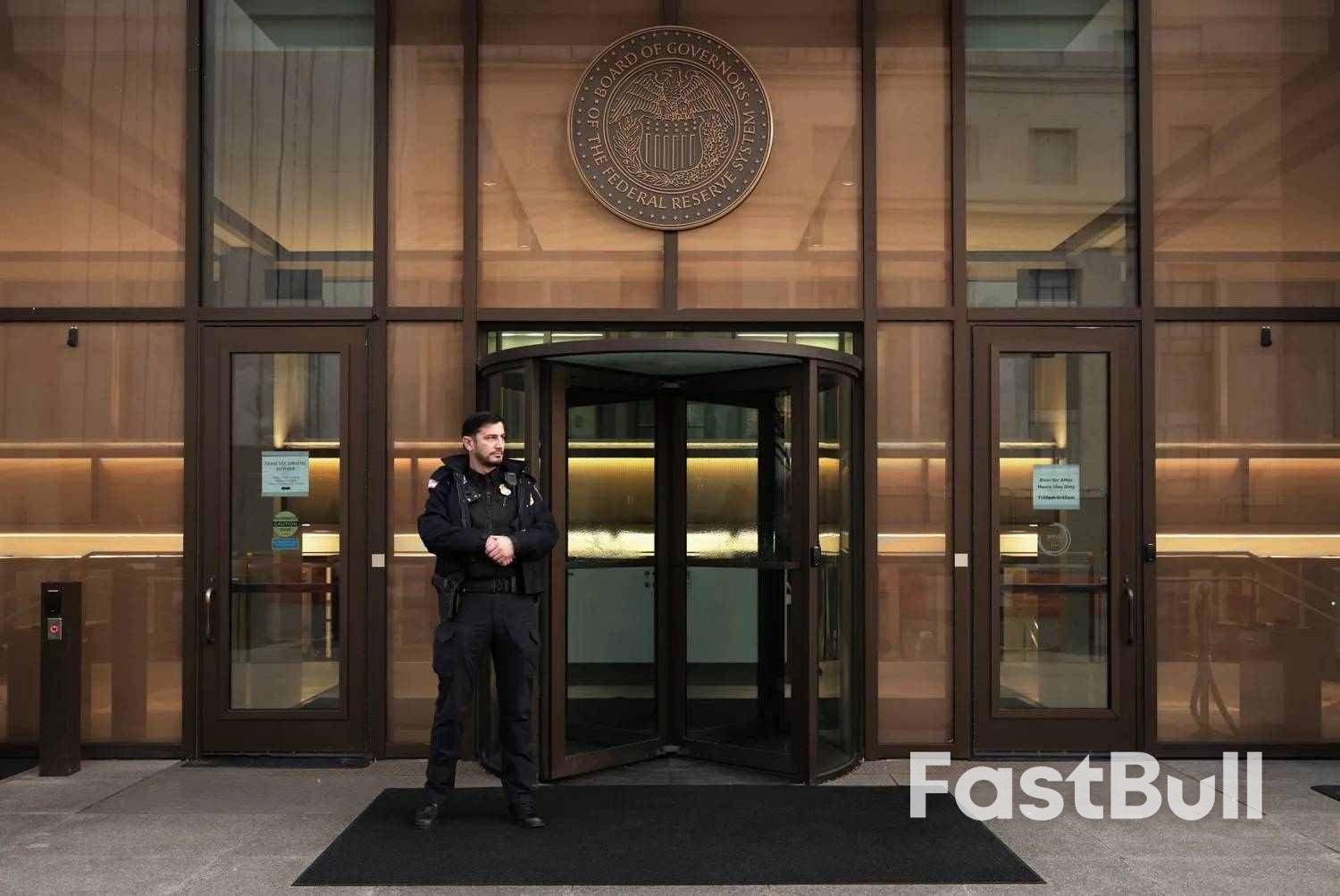
The Federal Reserve is expected to keep its influential fed funds rate unchanged this afternoon, after cutting in each of its last three meetings. Central bankers will release a written statement outlining their decision at 2 p.m. Eastern Time.
Federal Reserve Chair Jerome Powell will speak with reporters at 2:30 p.m. to provide more details and answer questions. Analysts are keeping a sharp eye on the press conference to see whether Powell offers any hints about the path ahead and how he will respond to questions about tensions with the president.
The Federal Open Market Committee is the body that sets policy for the Federal Reserve System, the United States' central bank. The committee members meet eight times a year in a two-day, closed-door meeting.
Their primary policy tool is the fed funds rate . The Fed's use of interest rates to influence the economy is called monetary policy.
The 12 members of the FOMC cast votes to decide whether to raise, lower, or leave their key interest rate unchanged. Voters include the seven board governors, the president of the Federal Reserve Bank of New York, and four other regional bank presidents, who serve rotating one-year terms.
At each FOMC meeting, the committee members discuss economic and financial conditions and how those factors should affect their decision. The FOMC issues a public statement about its decision at 2 p.m. on the Wednesday the meeting concludes.
The Fed chair, currently Jerome Powell, typically hosts a press conference afterward to explain the decision.
The first wave of Japan’s $550 billion investment commitment to the U.S. is taking shape, with synthetic diamond production and Hitachi-led power infrastructure projects emerging as leading candidates, according to sources familiar with the negotiations. These initiatives represent the first concrete steps in a major trade deal struck last year.
A key potential investment focuses on a $500 million facility for manufacturing high-pressure, high-temperature (HPHT) diamond grit. A fact sheet on U.S. investments released by Japan highlighted that Element Six Holdings, part of the De Beers Group, is considering the involvement of Japanese suppliers and buyers in the project.
Synthetic diamonds are not just for jewelry; they have critical industrial applications, particularly in semiconductor manufacturing. This makes a stable supply essential for economic security. The push for a new production facility comes as China, a dominant global producer, imposed export restrictions on some synthetic diamonds last year, creating a pressing need for Tokyo and Washington to secure alternative sources.
Another significant possibility involves power transmission and distribution infrastructure from Japanese industrial giant Hitachi. The company is reportedly structuring projects to bolster U.S. supply chains.
These initiatives could include crucial components such as:
• Power transmission links and substations
• Transformers specifically designed for data centers
These potential investments are part of a broader agreement reached in July of last year. The Japanese government committed to $550 billion in investment and financing in the United States in a deal that secured lower U.S. tariffs.
According to Ryosei Akazawa, Japan's Minister of Economy, Trade and Industry, the government aims to announce the first official project by this spring. It is possible that multiple projects could be selected in this initial round.
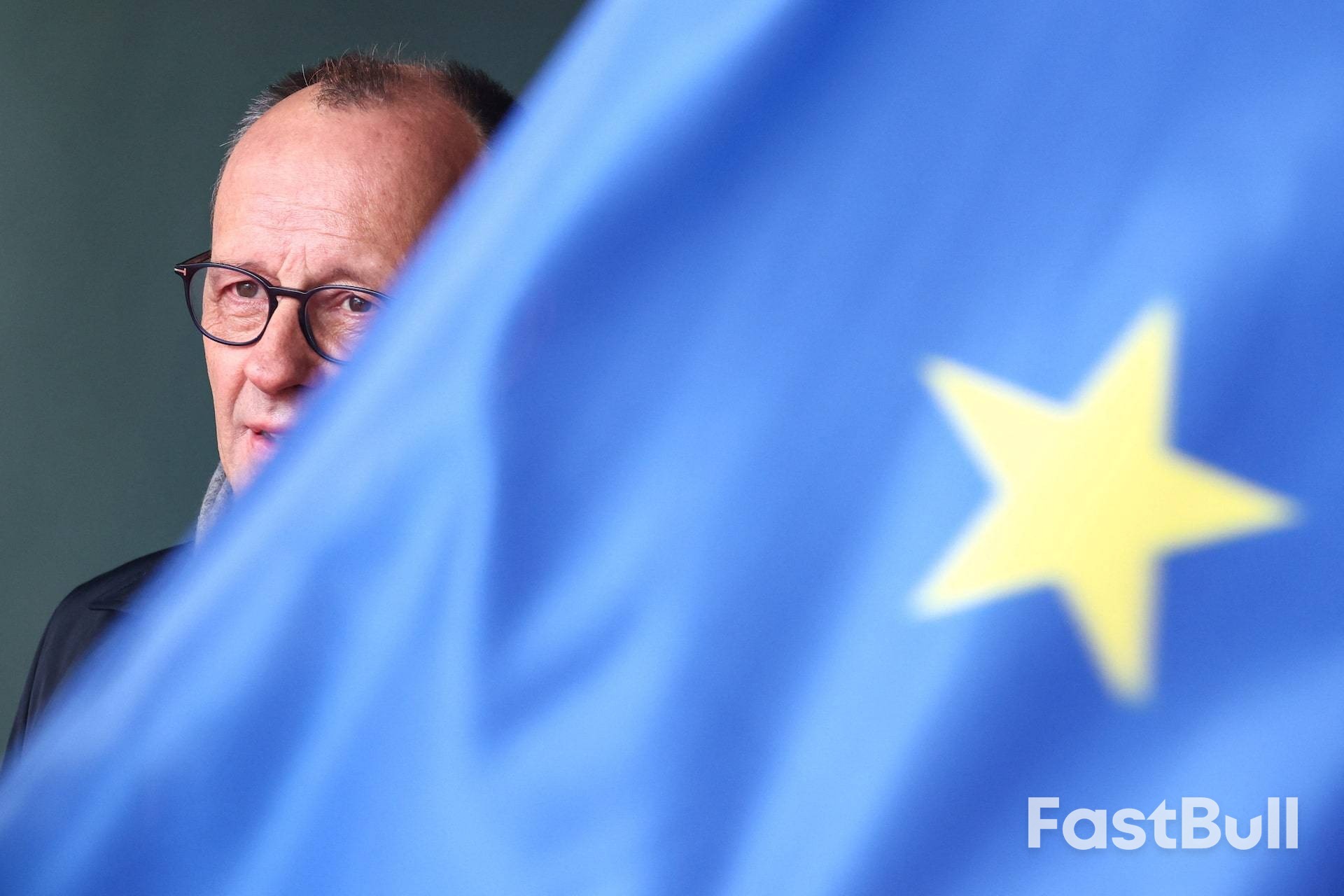
Ministers from six of Europe's largest economies, including Germany and France, have committed to driving European progress by forming a new coalition designed to bypass the EU's notoriously complex decision-making process. The move comes as the bloc faces geopolitical upheaval and criticism over its slow response to global challenges.
The video conference, which also included finance and economy ministers from Poland, Spain, Italy, and the Netherlands, signals a shift in strategy. The initiative follows ridicule from the U.S. administration under President Donald Trump regarding the time it takes the 27-member European Union to reach a consensus.
"As six major economies in Europe, we now want to be the drivers," German Finance Minister Lars Klingbeil stated after the meeting. "We are providing momentum; others can join. What matters is strengthening our competitiveness and our defence capability."

The concept of ad-hoc coalitions—allowing a smaller group of EU countries to pursue projects without waiting for all 27 members—is not new. It has been used for major initiatives like the euro currency. However, the idea is gaining fresh momentum as Europe grapples with widening insecurity, sluggish economic growth, and deep political divisions. This pragmatic approach aims to deliver effective action on geopolitical challenges posed by the U.S., Russia, and China.
While the group did not make concrete decisions in its initial call, it agreed to focus on four critical areas to enhance European sovereignty.
Key Objectives of the New Coalition
• Capital Markets Union: Creating a more integrated and efficient financial system across the bloc.
• International Role of the Euro: Strengthening the currency's global standing, including the potential development of an independent European payment system.
• Coordinated Defence Investments: Aligning spending and strategy to bolster Europe's collective security.
• Access to Critical Minerals: Securing vital resources through coordinated purchasing, creating emergency reserves, and forging new trade partnerships.
"In view of global uncertainties, we are placing greater emphasis on European sovereignty," Klingbeil said, though he avoided repeating his earlier mention of creating a "two-speed Europe."
It remains unclear exactly when other countries might be invited to join or how the group will operate outside the EU's traditional, often glacial, decision-making channels. One EU source described the initiative as an informal, ad-hoc group that will convene as needed, while another emphasized it would not be an exclusive club.
The push for more agile action has strong backing. German Chancellor Friedrich Merz has shown increasing willingness to move forward on issues like the Mercosur trade deal and support for Ukraine without EU unanimity. France has also advocated for years for smaller groups to advance policies on everything from steel import safeguards to nuclear energy, which remain blocked at the full EU level.
The sentiment is shared among the new coalition's members. "The European economy needs to accelerate. Changes are happening too slowly," Polish Finance Minister Andrzej Domański told Reuters, reflecting a growing consensus that business as usual is no longer an option.
India's crude oil and condensate imports are set to shatter records in January, hitting an estimated 5.2 million barrels per day (bpd). This surge is driven by a significant pivot, as Indian refiners ramp up purchases from non-Russian suppliers to compensate for barrels affected by U.S. sanctions.
According to energy tracking firm Vortexa, the spike in cargoes from alternative sources is expected to more than offset the recent decline in oil deliveries from Russia.

This marks a major reversal of a nearly four-year trend. Following Moscow's invasion of Ukraine in early 2022, India, the world's third-largest crude importer, dramatically increased its intake of discounted Russian oil. Russia quickly became India's single biggest supplier, accounting for approximately one-third of its total crude imports.
The landscape shifted after the United States imposed sanctions on Russian energy giants Rosneft and Lukoil at the end of October. In response, Indian refiners have reportedly halted imports from these sanctioned entities and scaled back their overall purchases of Russian crude.
This move also comes amid broader geopolitical pressure. U.S. President Donald Trump has targeted India for its high volume of Russian oil purchases. To penalize the country, President Trump doubled the existing 25% tariff to 50%, effective August 2025. While initially appearing unfazed, Indian refiners have now significantly cut their Russian crude intake since the new sanctions were announced.
To fill the gap, Indian refiners are turning to alternative markets. They are sourcing more cargoes from the Middle East, the Americas, and, when arbitrage opportunities arise, West Africa.
This shift represents a fundamental change in procurement patterns. Ivan Mathews, Head of APAC Analysis at Vortexa, noted, "Discharges of Russian crude are set to fall further in January, extending a post-November unwind and signaling a strategic pivot among major refiners."
A potential trade deal between the United States and India is another critical factor influencing New Delhi's energy strategy. Reports suggest India is working to finalize an agreement and is looking to demonstrate a reduction in its intake of Russian crude.
According to Vortexa, such a trade deal would likely have a major impact on India's oil purchasing decisions, potentially requiring a significant reduction or even a complete halt of Russia-origin imports.
President Donald Trump isn't losing sleep over a weaker U.S. dollar, but investors are finding reasons to be concerned. The dollar recently posted its most significant one-day slide since April after the president declined to comment on its 10% slump over the past year. While it saw a slight rebound, Trump’s position remains clear.
When asked about the falling greenback, he said, "I think it's great," echoing a long-held view that a weaker dollar makes American goods more competitive abroad. This is often seen as a boon for U.S. multinationals, but it carries a hidden cost: it can signal eroding international confidence in the country's fiscal and economic stability.
A declining dollar isn't just about trade advantages; it's a measure of global sentiment. "A weak dollar is not the weather, it's the barometer," explained Steve Englander, head of global G10 FX research at Standard Chartered.
While a lower currency provides a "narrow sort of way" to boost competitiveness, Englander cautions that it also reflects deeper anxieties. It suggests "that investors are more concerned about your economy, more concerned about the range of policies that they see you might be implementing." In short, foreign investors are growing wary.
One of the most significant risks of a weakening dollar lies in the U.S. Treasury market. A sustained decline could force investors to demand a higher risk premium for holding U.S. government bonds. This would make it more expensive for the government to finance its massive federal deficit, which is projected to hit $1.8 trillion by fiscal year 2025.
Signs of this pressure may already be emerging in the bond market. This month alone, the yield on the U.S. 10-year Treasury note climbed above 4.25%, up from around 4.16% at the start of the year.
Peter Corey, chief market strategist at Pave Finance, warns of the potential consequences. "If foreign investors believe that the dollar is about to enter a more sustained second leg down, they clearly will pull away from future Treasury purchases," he wrote.
The dollar's slide may not be limitless. Several factors could provide a floor for the currency and prevent a freefall.
• Bond Yields: Corey notes that the 10-year Treasury yield has been trading within a range of 3.85% to 4.60%. A move above this range would be a "tripwire" that could trigger a more significant market reaction.
• Global Alternatives: The dollar could regain its appeal if other major economies falter. Should Europe or China show signs of economic weakness, the U.S. greenback could become the "least objectionable" alternative for investors seeking a safe haven.
Another critical factor that could mitigate the risks of a soft dollar is a pickup in productivity. Standard Chartered's Englander is closely watching whether corporate productivity gains can fuel enough economic expansion to help the government manage its deficit.
"If we're right that productivity growth is picking up, then GDP is going to pick up, federal government revenues are going to pick up, and the deficit picture won't be as dire as it looks right now," Englander said.
However, he also warned of the alternative. "If we're wrong, then we're kind of in trouble, because we're just another country that spends too much."
As he aptly concluded, "Ultimately, the chickens come home to roost."
White Label
Data API
Web Plug-ins
Poster Maker
Affiliate Program
The risk of loss in trading financial instruments such as stocks, FX, commodities, futures, bonds, ETFs and crypto can be substantial. You may sustain a total loss of the funds that you deposit with your broker. Therefore, you should carefully consider whether such trading is suitable for you in light of your circumstances and financial resources.
No decision to invest should be made without thoroughly conducting due diligence by yourself or consulting with your financial advisors. Our web content might not suit you since we don't know your financial conditions and investment needs. Our financial information might have latency or contain inaccuracy, so you should be fully responsible for any of your trading and investment decisions. The company will not be responsible for your capital loss.
Without getting permission from the website, you are not allowed to copy the website's graphics, texts, or trademarks. Intellectual property rights in the content or data incorporated into this website belong to its providers and exchange merchants.
Not Logged In
Log in to access more features
Log In
Sign Up