• Trade
  • Markets
  • Copy
  • Contests
  • News
  • 24/7
  • Calendar
  • Q&A
  • Chats
Screeners
SYMBOL
LAST
ASK
BID
HIGH
LOW
NET CHG.
%CHG.
SPREAD
SPX
S&P 500 Index
6917.82
6917.82
6917.82
6993.09
6862.05
-58.62
-0.84%
--
DJI
Dow Jones Industrial Average
49240.98
49240.98
49240.98
49653.13
48832.78
-166.67
-0.34%
--
IXIC
NASDAQ Composite Index
23255.18
23255.18
23255.18
23691.60
23027.21
-336.92
-1.43%
--
USDX
US Dollar Index
97.170
97.250
97.170
97.300
97.140
-0.030
-0.03%
--
EURUSD
Euro / US Dollar
1.18327
1.18334
1.18327
1.18360
1.18075
+0.00152
+ 0.13%
--
GBPUSD
Pound Sterling / US Dollar
1.37150
1.37160
1.37150
1.37194
1.36821
+0.00186
+ 0.14%
--
XAUUSD
Gold / US Dollar
5077.11
5077.54
5077.11
5090.35
4910.07
+130.86
+ 2.65%
--
WTI
Light Sweet Crude Oil
63.504
63.534
63.504
63.865
63.180
-0.130
-0.20%
--

Community Accounts

Signal Accounts
--
Profit Accounts
--
Loss Accounts
--
View More

Become a signal provider

Sell trading signals to earn additional income

View More

Guide to Copy Trading

Get started with ease and confidence

View More

Signal Accounts for Members

All Signal Accounts

Best Return
  • Best Return
  • Best P/L
  • Best MDD
Past 1W
  • Past 1W
  • Past 1M
  • Past 1Y

All Contests

  • All
  • Trump Updates
  • Recommend
  • Stocks
  • Cryptocurrencies
  • Central Banks
  • Featured News
Top News Only
Share

Azeri Central Bank Sets Key Refinancing Rate At 6.50% (Previously 6.75%)

Share

Eni Sees 2026 LNG Market 'Finely Balanced' On Thin Supply, Asian Demand

Share

Malaysia's Ringgit Continues To Strengthen On Hefty Capital Inflows - Minister Amir

Share

Equinor - Q4 Equity Production At 2198 Mboe/Day (Equinor Poll 2170 Mboe/Day)

Share

UBS CEO: As We Approach End Of Integration, Confident In Ability To Capture Remaining Synergies By Year-End, Which We Increased By $500 Million To $13.5 Billion

Share

UBS: Remain On Track To Complete Integration By Year-End, With Greater Proportion Of Net Saves Weighted To H2 2026

Share

UBS: Net New Asset Inflows In Global Wealth Management For The Year Reached $101 Billion

Share

UBS: Continued Wind-Down Of Non-Core And Legacy Risk-Weighted Asset, Reducing Rwa To $28.8 Billion

Share

UBS: Q4 Full-Time Equivalent Personnel At 103177 Versus 104427 As Of September 30, 2025

Share

Kazakhstan's Kaztransoil: Supplies Of 1.017 Million Tons Of Oil, Including 863000 Tons Of Russian Oil, To China In January Via Kazakhstan

Share

Bank Of Japan Won't Come To The Rescue Of A Takaichi-Driven Bond Rout

Share

New York Gold Futures Broke Through $5,100 Per Ounce, Up 3.34% On The Day

Share

Spot Gold Broke Through $5,080 Per Ounce, Up 2.71% On The Day

Share

Petronas Sets January Malaysian Crude Oil Price At $74.35

Share

Hsi Closes Midday At 26724, Down 109 Pts, Hsti Closes Midday At 5347, Down 119 Pts, Tencent Down Over 3%, Xinyi Glass, Techtronic Ind, Wharf Reic, Yankuang Energy, China East Air Hit New Highs

Share

India's Nifty 50 Index Turns Positive, Last Up 0.2%

Share

India's NIFTY IT Index Extends Losses, Last Down 6%

Share

《Hibor》1-Month Hibor Down To 2.49%, Sinking For 9 Days Logging 1-Month Low

Share

India's Nifty Bank Index Futures Down 0.05% In Pre-Open Trade

Share

Spot Gold Broke Through $5,070 Per Ounce, Up 2.49% On The Day

TIME
ACT
FCST
PREV
US President Trump delivered a speech
South Korea CPI YoY (Jan)

A:--

F: --

P: --

Japan Monetary Base YoY (SA) (Jan)

A:--

F: --

P: --

Australia Building Approval Total YoY (Dec)

A:--

F: --

P: --
Australia Building Permits MoM (SA) (Dec)

A:--

F: --

P: --
Australia Building Permits YoY (SA) (Dec)

A:--

F: --

P: --

Australia Private Building Permits MoM (SA) (Dec)

A:--

F: --

P: --
Australia Overnight (Borrowing) Key Rate

A:--

F: --

P: --

RBA Rate Statement
Japan 10-Year Note Auction Yield

A:--

F: --

P: --

The U.S. House of Representatives voted on a short-term spending bill to end the partial government shutdown.
Saudi Arabia IHS Markit Composite PMI (Jan)

A:--

F: --

P: --

RBA Press Conference
Turkey PPI YoY (Jan)

A:--

F: --

P: --

Turkey CPI YoY (Jan)

A:--

F: --

P: --

Turkey CPI YoY (Excl. Energy, Food, Beverage, Tobacco & Gold) (Jan)

A:--

F: --

P: --

U.K. 10-Year Note Auction Yield

A:--

F: --

P: --

Richmond Federal Reserve President Barkin delivered a speech.
U.S. Weekly Redbook Index YoY

A:--

F: --

P: --

Mexico Manufacturing PMI (Jan)

A:--

F: --

P: --

U.S. API Weekly Refined Oil Stocks

A:--

F: --

P: --

U.S. API Weekly Gasoline Stocks

A:--

F: --

P: --

U.S. API Weekly Cushing Crude Oil Stocks

A:--

F: --

P: --

U.S. API Weekly Crude Oil Stocks

A:--

F: --

P: --

Japan IHS Markit Services PMI (Jan)

A:--

F: --

P: --

Japan IHS Markit Composite PMI (Jan)

A:--

F: --

P: --

China, Mainland Caixin Services PMI (Jan)

A:--

F: --

P: --

China, Mainland Caixin Composite PMI (Jan)

A:--

F: --

P: --

India HSBC Services PMI Final (Jan)

A:--

F: --

P: --

India IHS Markit Composite PMI (Jan)

A:--

F: --

P: --

Russia IHS Markit Services PMI (Jan)

A:--

F: --

P: --

South Africa IHS Markit Composite PMI (SA) (Jan)

--

F: --

P: --

Italy Services PMI (SA) (Jan)

--

F: --

P: --

Italy Composite PMI (Jan)

--

F: --

P: --

Germany Composite PMI Final (SA) (Jan)

--

F: --

P: --

Euro Zone Composite PMI Final (Jan)

--

F: --

P: --

Euro Zone Services PMI Final (Jan)

--

F: --

P: --

U.K. Composite PMI Final (Jan)

--

F: --

P: --

U.K. Total Reserve Assets (Jan)

--

F: --

P: --

U.K. Services PMI Final (Jan)

--

F: --

P: --

U.K. Official Reserves Changes (Jan)

--

F: --

P: --

Euro Zone Core CPI Prelim YoY (Jan)

--

F: --

P: --

Euro Zone Core HICP Prelim YoY (Jan)

--

F: --

P: --

Euro Zone PPI MoM (Dec)

--

F: --

P: --

Euro Zone HICP Prelim YoY (Jan)

--

F: --

P: --

Euro Zone Core HICP Prelim MoM (Jan)

--

F: --

P: --

Italy HICP Prelim YoY (Jan)

--

F: --

P: --

Euro Zone Core CPI Prelim MoM (Jan)

--

F: --

P: --

Euro Zone PPI YoY (Dec)

--

F: --

P: --

U.S. MBA Mortgage Application Activity Index WoW

--

F: --

P: --

Brazil IHS Markit Composite PMI (Jan)

--

F: --

P: --

Brazil IHS Markit Services PMI (Jan)

--

F: --

P: --

U.S. ADP Employment (Jan)

--

F: --

P: --

The U.S. Treasury Department released its quarterly refinancing statement.
U.S. IHS Markit Composite PMI Final (Jan)

--

F: --

P: --

U.S. IHS Markit Services PMI Final (Jan)

--

F: --

P: --

U.S. ISM Non-Manufacturing Price Index (Jan)

--

F: --

P: --

U.S. ISM Non-Manufacturing Employment Index (Jan)

--

F: --

P: --

U.S. ISM Non-Manufacturing New Orders Index (Jan)

--

F: --

P: --

U.S. ISM Non-Manufacturing PMI (Jan)

--

F: --

P: --

U.S. ISM Non-Manufacturing Inventories Index (Jan)

--

F: --

P: --

Q&A with Experts
    • All
    • Chatrooms
    • Groups
    • Friends
    SlowBear ⛅ flag
    marsgents
    @marsgentsI mean that is just pretty smart, we should be able to see 4500 in the future, but i have had my fun with gold now, i approcah it very carefully
    marsgents flag
    SlowBear ⛅
    @SlowBear ⛅yesterday i short at 4984 yo 4884,and buy below my tp 4882,long still running,silver i short 89 to 82.9
    Brendon Urie flag
    Brendon Urie
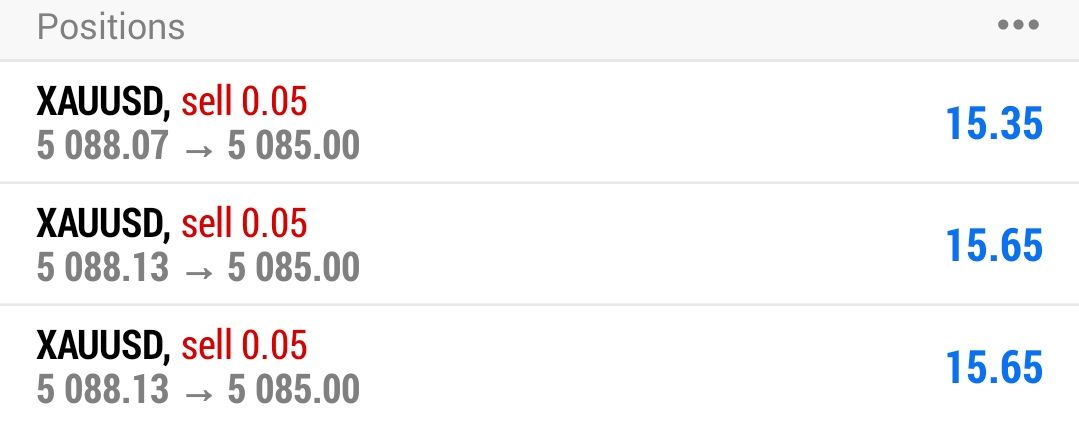
    gold sell now 5088/5090 target 5085/ target 5082/ target 5070/5060 stop loss 5102
    xauusd Sell tp1 5085 Hit 🎯 running Profits +30 Pips ❤️‍🔥 pro Entry Clean Execution 💥💥
    Brendon Urie flag
    Brendon Urie flag
    who want accurate trades daily 7/10
    SlowBear ⛅ flag
    marsgents
    @marsgents Oh that is clean bro, you milk front back and centre, i was not in the mood to tade Gold that way yesterday i just took one and slept on it
    Issy Nakam flag
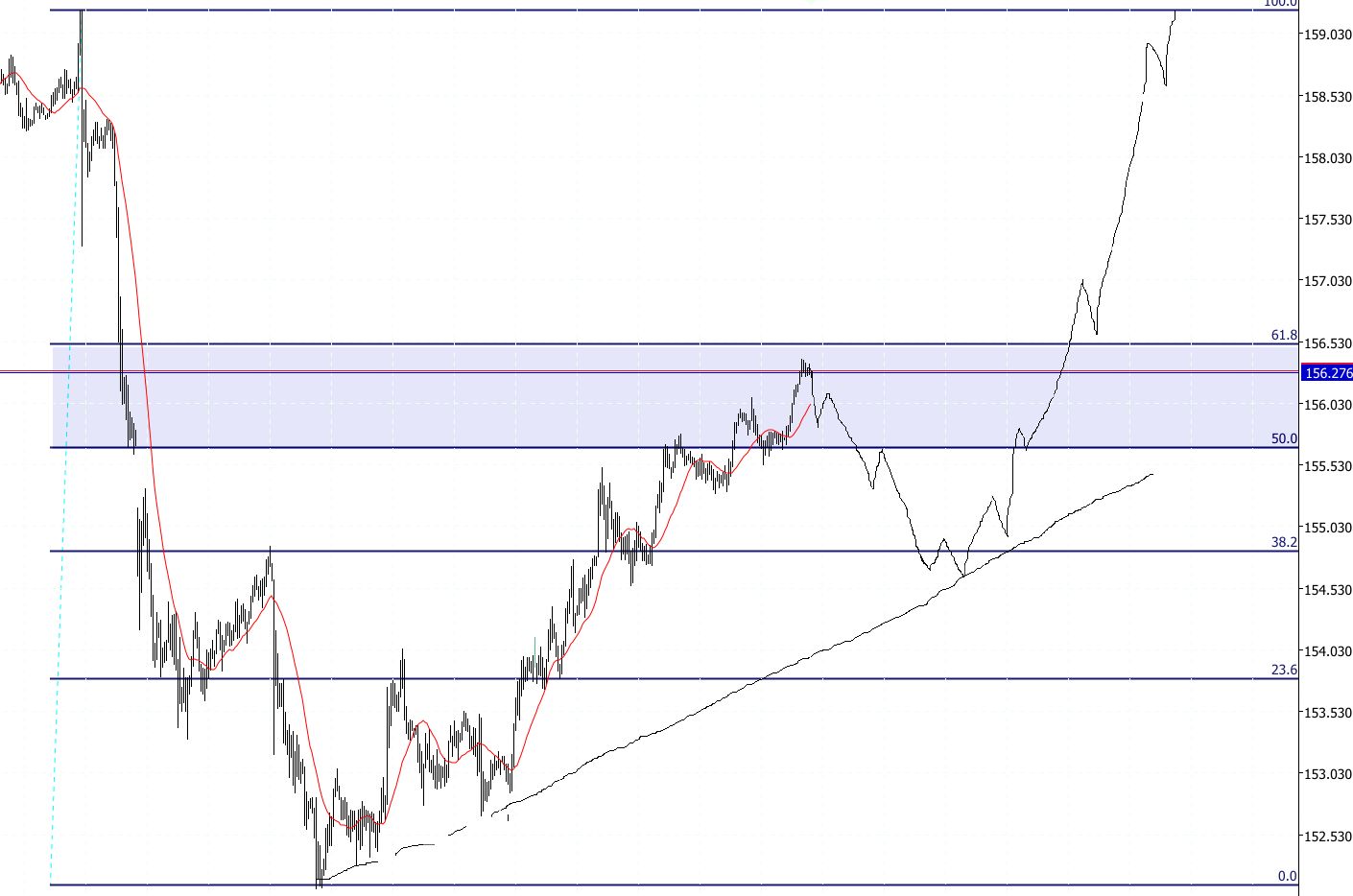
    USDJPY has reached its 61.8 fib retrasement , verry exited to see what will happen , looking at a drop to 155.030 before continuation of the intended bulish direction .
    Issy Nakam flag
    Brendon Urie flag
    Brendon Urie
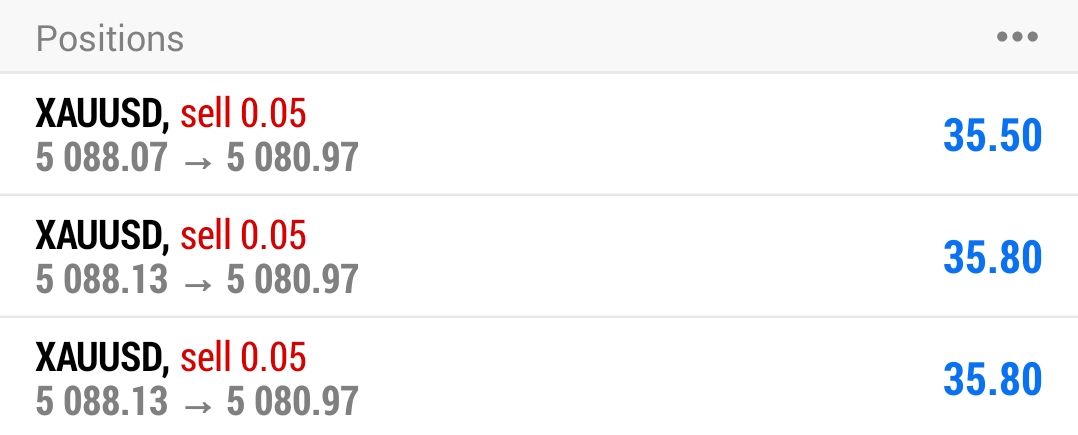
    gold sell now 4988/4990 target 4985/ target 4982/ target 4970/4960 stop loss 5002
    xauusd Sell. Tp2 5081 Hit Successfully running Profits +70 Pip's ❤️‍🔥 pro Entry Clean Execution ❤️‍🔥 let's Close All
    Brendon Urie flag
    Brendon Urie flag
    who want accurate trades daily 7/10
    marsgents flag
    SlowBear ⛅
    @SlowBear ⛅it need retest low,but keep refusing boss🤣
    SlowBear ⛅ flag
    Issy Nakam
    USDJPY has reached its 61.8 fib retrasement , verry exited to see what will happen , looking at a drop to 155.030 before continuation of the intended bulish direction .
    @Issy Nakam i am looking for a drop on UJ towards 149 before i run a buy back on it
    SlowBear ⛅ flag
    Issy Nakam
    @Issy NakamThis is decent though, if we are focusing on that trend and the trendline, but i am sleeping on the daily trend! Ans that needs a 3wave corrective move!
    SlowBear ⛅ flag
    marsgents
    @marsgents Yes we know what happen when Gold refuse to retest low, it runs up, ten crash down!
    marsgents flag
    SlowBear ⛅
    @SlowBear ⛅we need careful on her,she wipe 2 weeks gain in 2 days when her period came😂
    marsgents flag
    SlowBear ⛅
    @SlowBear ⛅4h base on recent rally look weak boss
    SlowBear ⛅ flag
    marsgents
    @marsgents Oh yes, and lets hope the next pain does not have anything to do with her labouring
    SlowBear ⛅ flag
    marsgents
    @marsgentsI am seeing that bos, you can tune it done to 15min ans see a real weakness
    SlowBear ⛅ flag
    marsgents
    @marsgentsOn 15min the candles looks like a minions doji - very weird bro, i wil not be running into this just hold and shill!
    Type here...
    Add Symbol or Code

      No matching data

      All
      Trump Updates
      Recommend
      Stocks
      Cryptocurrencies
      Central Banks
      Featured News
      • All
      • Russia-Ukraine Conflict
      • Middle East Flashpoint
      • All
      • Russia-Ukraine Conflict
      • Middle East Flashpoint
      Search
      Products

      Charts Free Forever

      Chats Q&A with Experts
      Screeners Economic Calendar Data Tools
      Membership Features
      Data Warehouse Market Trends Institutional Data Policy Rates Macro

      Market Trends

      Market Sentiment Order Book Forex Correlations

      Top Indicators

      Charts Free Forever
      Markets

      News

      News Analysis 24/7 Columns Education
      From Institutions From Analysts
      Topics Columnists

      Latest Views

      Latest Views

      Trending Topics

      Top Columnists

      Latest Update

      Signals

      Copy Rankings Latest Signals Become a signal provider AI Rating
      Contests
      Brokers

      Overview Brokers Assessment Rankings Regulators News Claims
      Broker listing Forex Brokers Comparison Tool Live Spread Comparison Scam
      Q&A Complaint Scam Alert Videos Tips to Detect Scam
      More

      Business
      Events
      Careers About Us Advertising Help Center

      White Label

      Broker API

      Data API

      Web Plug-ins

      Affiliate Program

      Awards Institution Evaluation IB Seminar Salon Event Exhibition
      Vietnam Thailand Singapore Dubai
      Fans Party Investment Sharing Session
      FastBull Summit BrokersView Expo
      Recent Searches
        Top Searches
          Markets
          News
          Analysis
          User
          24/7
          Economic Calendar
          Education
          Data
          • Names
          • Latest
          • Prev

          View All

          No data

          Scan to Download

          Faster Charts, Chat Faster!

          Download App
          English
          • English
          • Español
          • العربية
          • Bahasa Indonesia
          • Bahasa Melayu
          • Tiếng Việt
          • ภาษาไทย
          • Français
          • Italiano
          • Türkçe
          • Русский язык
          • 简中
          • 繁中
          Open Account
          Search
          Products
          Charts Free Forever
          Markets
          News
          Signals

          Copy Rankings Latest Signals Become a signal provider AI Rating
          Contests
          Brokers

          Overview Brokers Assessment Rankings Regulators News Claims
          Broker listing Forex Brokers Comparison Tool Live Spread Comparison Scam
          Q&A Complaint Scam Alert Videos Tips to Detect Scam
          More

          Business
          Events
          Careers About Us Advertising Help Center

          White Label

          Broker API

          Data API

          Web Plug-ins

          Affiliate Program

          Awards Institution Evaluation IB Seminar Salon Event Exhibition
          Vietnam Thailand Singapore Dubai
          Fans Party Investment Sharing Session
          FastBull Summit BrokersView Expo

          China’s Bid To Weaken Dollar Dominance Faces Structural Limits

          Gerik

          Economic

          Forex

          Summary:

          China is accelerating efforts to internationalize the renminbi amid a weakening US dollar and rising geopolitical uncertainty, yet deep structural barriers mean the currency is far from displacing the dollar’s global dominance....

          A Window Created By Dollar Volatility

          China is attempting to capitalize on a rare moment of vulnerability in the global monetary system. Heightened geopolitical uncertainty linked to the economic policies of Donald Trump has unsettled markets, pushing the US dollar to four-year lows while driving investors toward traditional safe havens. Gold prices have surged to record highs above $5,500 an ounce, reflecting a broad reassessment of risk rather than a sudden loss of faith in the dollar itself. This environment has nevertheless created space for China to argue that reliance on a single dominant currency exposes the world to political and financial shocks.
          Against this backdrop, China’s Communist Party journal Qiushi released previously private remarks by Xi Jinping, outlining ambitions for the renminbi to evolve into a currency widely used in international trade, foreign exchange, and global pricing. While no immediate shift in the monetary order is expected, the sharp decline in the dollar since Trump’s return to office has altered perceptions about whether alternatives can gain incremental ground.

          Why Reserve Currency Status Matters

          The dollar’s dominance has shaped the global economy since World War II and the Bretton Woods system, granting the United States enduring advantages in borrowing costs, financial influence, and sanctions power. Today, the International Monetary Fund recognizes several reserve currencies beyond the dollar, including the euro, yen, pound sterling, and the renminbi, yet their roles are not equal. According to IMF data, the dollar still accounted for roughly 57 percent of global foreign exchange reserves last year, compared with about 20 percent for the euro and only around 2 percent for the renminbi.
          For Beijing, expanding the renminbi’s role is less about outright replacement and more about reducing exposure to US financial pressure while increasing strategic autonomy. This reflects a correlation between geopolitical tension and currency diversification rather than a direct causal shift away from the dollar driven by market fundamentals alone.

          Policy Moves To Elevate The Renminbi

          China has spent more than a decade laying the groundwork for broader renminbi use. Authorities have expanded foreign access to domestic stocks, bonds, and commodity markets, streamlined cross-border payment systems, and encouraged settlement of trade in renminbi rather than dollars. These efforts gained momentum after Western sanctions on Russia following the invasion of Ukraine, as China remained a key trading partner and renminbi-denominated transactions surged to record levels.
          Officials at the People's Bank of China have framed this strategy as part of a transition toward a multipolar currency system. Last summer, central bank governor Pan Gongsheng stated that the renminbi had become the world’s largest trade finance currency and the third-largest payment currency. This growth reflects practical usage in trade corridors linked to China rather than a wholesale shift in global reserve preferences.

          Global Reactions And Strategic Hedging

          Concerns over US trade policy and sanctions have encouraged some countries to reduce reliance on the dollar at the margin. European Central Bank President Christine Lagarde has argued for a stronger international role for the euro, while emerging economies increasingly view currency diversification as a form of risk management. Within the BRICS grouping, discussions about alternative reserve arrangements have further unsettled Washington, prompting Trump to warn of punitive tariffs should such initiatives materialize.
          These developments illustrate a growing desire among states to hedge rather than abandon the dollar. The behavior is driven by correlation between political risk and diversification strategies, not by a clear causal loss of confidence in the dollar’s underlying liquidity and institutional support.

          Why The Dollar Remains Hard To Displace

          Despite Beijing’s ambitions, major obstacles limit how far the renminbi can advance. Capital controls remain a central constraint, restricting the free movement of money into and out of China and discouraging global investors from holding large renminbi reserves. Financial institutions also remain wary of regulatory opacity and political intervention, factors that contrast sharply with the transparency and depth of US financial markets.
          China’s own economic priorities further complicate the picture. Maintaining a relatively weaker currency supports export competitiveness, creating tension between domestic policy goals and the requirements of a widely trusted reserve asset. These structural realities suggest that while the renminbi’s international role can expand, it is unlikely to approach the scale of the dollar or even the euro in the foreseeable future.

          An Incremental Shift Rather Than A Revolution

          China’s strategy reflects a calculated assessment of global trends rather than an expectation of imminent dominance. The weakening dollar and rising geopolitical fragmentation offer an opportunity to gain incremental influence, particularly in trade finance and bilateral settlements. However, the foundations of dollar dominance remain intact, supported by deep capital markets, institutional credibility, and network effects that cannot be replicated quickly.
          In this sense, Beijing’s push is best understood as an effort to narrow the gap rather than overturn the system. The global financial order may become more diversified over time, but the renminbi’s rise is likely to be gradual, constrained, and complementary rather than transformational.

          Source: CNN

          To stay updated on all economic events of today, please check out our Economic calendar
          Risk Warnings and Disclaimers
          You understand and acknowledge that there is a high degree of risk involved in trading. Following any strategies or investment methods may lead to potential losses. The content on the site is provided by our contributors and analysts for information purposes only. You are solely responsible for determining whether any trading assets, securities, strategy, or any other product is suitable for investing based on your own investment objectives and financial situation.
          Add to Favorites
          Share

          Miran’s Exit From the White House Signals Deeper Shifts Inside the Federal Reserve

          Gerik

          Economic

          A Controversial Dual Role Comes To An End

          Stephen Miran has stepped down as chair of the White House’s Council of Economic Advisers, ending an unusual period in which he simultaneously held a senior White House position and served as a governor at the Federal Reserve. The resignation was confirmed late Tuesday by White House spokesperson Kush Desai and follows a commitment Miran made during his Senate confirmation process. His decision aligns with long-standing norms designed to preserve the Fed’s independence from direct political influence, even though no formal rule explicitly barred his dual role.
          Miran was appointed to the Fed’s seven-member Board of Governors by Donald Trump in September, after Adriana Kugler resigned unexpectedly. He completed Kugler’s term, which officially ended on January 31, but under existing rules, he is permitted to remain on the board until a successor is confirmed by the Senate. While previous administrations have appointed White House aides to the Fed, it has been customary for those individuals to fully relinquish executive branch roles before assuming monetary policymaking responsibilities. Miran instead took an unpaid leave, a choice that drew criticism and intensified scrutiny.

          Implications For Monetary Policy Governance

          The episode matters because Fed governors play a direct role in interest rate decisions and bank regulatory policy, areas where institutional independence is closely guarded. Miran had stated when appointed that he would resign from the Council of Economic Advisers if he stayed on the Fed board beyond January 31, and his resignation fulfills that pledge. The situation illustrates the delicate balance between political appointment power and the expectation of nonpartisan economic governance, highlighting how even temporary overlaps can raise concerns about perceived influence rather than direct causation over policy outcomes.
          Miran’s departure also adds momentum to speculation surrounding upcoming changes at the top of the Fed. Trump has nominated Kevin Warsh to replace current Fed chair Jerome Powell, whose term as chair expires on May 15. Due to a structural quirk, Powell could remain on the Fed’s board even after stepping down as chair, limiting Trump’s ability to immediately appoint an additional governor. As a result, many analysts expect a sequence in which Warsh first fills Miran’s seat and is then elevated to chair in May, although this pathway has not yet been officially confirmed.
          While Miran’s resignation does not directly alter monetary policy in the short term, it reinforces the sensitivity surrounding Fed governance at a moment of leadership transition. The situation reflects correlation rather than direct policy causation between political maneuvering and central bank decisions, yet it underscores how personnel shifts can shape expectations in financial markets. As confirmation battles and succession plans unfold, attention is likely to remain focused on whether the Fed’s institutional independence is preserved in both form and practice.

          Source: AP

          To stay updated on all economic events of today, please check out our Economic calendar
          Risk Warnings and Disclaimers
          You understand and acknowledge that there is a high degree of risk involved in trading. Following any strategies or investment methods may lead to potential losses. The content on the site is provided by our contributors and analysts for information purposes only. You are solely responsible for determining whether any trading assets, securities, strategy, or any other product is suitable for investing based on your own investment objectives and financial situation.
          Add to Favorites
          Share

          Oil Prices Spike as US-Iran Tensions Flare in Hormuz

          Daniel Foster

          Middle East Situation

          Russia-Ukraine Conflict

          Traders' Opinions

          Energy

          Data Interpretation

          Economic

          Commodity

          Daily News

          Political

          Oil prices pushed higher on Wednesday, extending gains from the previous session after a series of confrontations between the United States and Iran in the Strait of Hormuz stoked fears of a wider conflict in the critical energy chokepoint.

          Brent crude futures climbed 65 cents, or 1.0%, to $67.98 per barrel. In the U.S., West Texas Intermediate (WTI) crude was up 69 cents, or 1.1%, trading at $63.90 per barrel. Both benchmarks had already risen by nearly 2% on Tuesday.

          Fresh Confrontations in the Middle East

          The latest rally is directly linked to two recent military incidents. The U.S. military reported on Tuesday that it had shot down an Iranian drone that approached the Abraham Lincoln aircraft carrier in an "aggressive" manner in the Arabian Sea.

          Separately, maritime sources confirmed that a group of Iranian gunboats approached a U.S.-flagged tanker in the Strait of Hormuz, the narrow waterway between the Persian Gulf and the Gulf of Oman.

          These events have amplified market uncertainty, which was already heightened by diplomatic friction. Tehran is reportedly demanding that its upcoming talks with the U.S. on nuclear issues be held in Oman instead of Turkey and be limited to two-way negotiations, raising doubts about whether the meeting will proceed as planned.

          "Heightened tensions in the Middle East provided support to the oil market," noted Satoru Yoshida, a commodity analyst with Rakuten Securities.

          The Strait of Hormuz is a vital artery for global energy, with major OPEC producers like Saudi Arabia, Iran, the UAE, Kuwait, and Iraq using it to export crude, primarily to Asian markets. According to U.S. Energy Information Administration data, Iran was the third-largest crude producer in OPEC in 2025.

          US Inventory Data Surprises the Market

          Adding to the upward price pressure was industry data indicating a significant drop in U.S. crude stockpiles. According to sources citing American Petroleum Institute (API) figures, inventories fell by over 11 million barrels last week.

          This sharp decline contrasts with expectations from analysts polled by Reuters, who had forecast an increase in crude inventories. The market is now awaiting official data from the U.S. Energy Information Administration (EIA), scheduled for release at 10:30 a.m. EST.

          Broader Geopolitical Drivers

          Beyond the immediate tensions in the Gulf, other global developments are also supporting oil prices. On Tuesday, a trade agreement between the United States and India boosted optimism for stronger global energy demand.

          At the same time, continued Russian attacks on Ukraine are reinforcing concerns that sanctions on Moscow's oil exports will remain in place for an extended period.

          "India's trade agreement with the U.S. to halt purchases of Russian crude, along with the ongoing Russia-Ukraine war, is also providing support," said Yoshida. He projected that WTI would likely continue to trade around the $65 per barrel mark for the time being.

          To stay updated on all economic events of today, please check out our Economic calendar
          Risk Warnings and Disclaimers
          You understand and acknowledge that there is a high degree of risk involved in trading. Following any strategies or investment methods may lead to potential losses. The content on the site is provided by our contributors and analysts for information purposes only. You are solely responsible for determining whether any trading assets, securities, strategy, or any other product is suitable for investing based on your own investment objectives and financial situation.
          Add to Favorites
          Share

          Seoul Scrambles as US Weighs Korea Tariff Hike

          King Ten

          Economic

          Remarks of Officials

          Political

          The Trump administration is internally discussing plans to formalize a tariff increase on South Korea, a move that would escalate trade tensions between the two allies. Seoul's Trade Minister, Yeo Han-koo, confirmed on Tuesday that U.S. government agencies are consulting on the matter.

          The potential action follows a threat from President Donald Trump last week to raise tariffs on Korean goods. The proposed hikes target "reciprocal" tariffs as well as specific levies on automobiles, lumber, and pharmaceuticals, which would jump from 15% to 25%. The administration cited delays in South Korea's legislative process for implementing a bilateral trade deal as the primary reason for the threat.

          South Korean Trade Minister Yeo Han-koo speaks to the press at Incheon International Airport about the ongoing trade dispute with the United States.

          Trump's Tariff Threat Edges Closer to Reality

          Concerns in Seoul are mounting over the possibility that the White House will publish the tariff plan in the Federal Register, the official public record of the U.S. government. Such a step would transform the president's threat into a more concrete administrative action.

          "Regarding the issue of putting the tariff plan on the Federal Register, I think that consultations among relevant government agencies are under way," Yeo told reporters. He described the process as a routine administrative procedure but acknowledged that discussions within the U.S. government are ongoing.

          Seoul Mounts Diplomatic Push in Washington

          In response to the tariff threat, South Korea has launched a diplomatic effort to de-escalate the situation. Minister Yeo arrived in Washington on Friday to dissuade the Trump administration from moving forward.

          During his visit, Yeo met with U.S. Trade Representative Jamieson Greer. In their talks, he emphasized Seoul's firm commitment to fulfilling its side of the existing trade agreement, which includes significant investment pledges.

          The diplomatic push involves multiple high-level officials. Industry Minister Kim Jung-kwan also met with Commerce Secretary Howard Lutnick, though those discussions reportedly ended without a clear conclusion.

          Understanding the Core Trade Commitments

          At the heart of the dispute is a trade deal under which Seoul agreed to invest $350 billion in the United States, with an annual cap of $2 billion. In exchange for this and other commitments, Washington agreed to lower its reciprocal tariffs on Korean goods to 15% from 25%.

          Minister Yeo suggested that part of the friction may stem from a lack of understanding in Washington about South Korea's political and legislative systems. "I think we might have to continue our outreach to the U.S. as there are aspects of our system that the U.S. side does not fully understand," he noted.

          To stay updated on all economic events of today, please check out our Economic calendar
          Risk Warnings and Disclaimers
          You understand and acknowledge that there is a high degree of risk involved in trading. Following any strategies or investment methods may lead to potential losses. The content on the site is provided by our contributors and analysts for information purposes only. You are solely responsible for determining whether any trading assets, securities, strategy, or any other product is suitable for investing based on your own investment objectives and financial situation.
          Add to Favorites
          Share

          SPDR S&P Software & Services ETF (XSW) Price Forecast: Breakdown Targets Key Support Zone

          Samantha Luan

          Stocks

          Key Points:

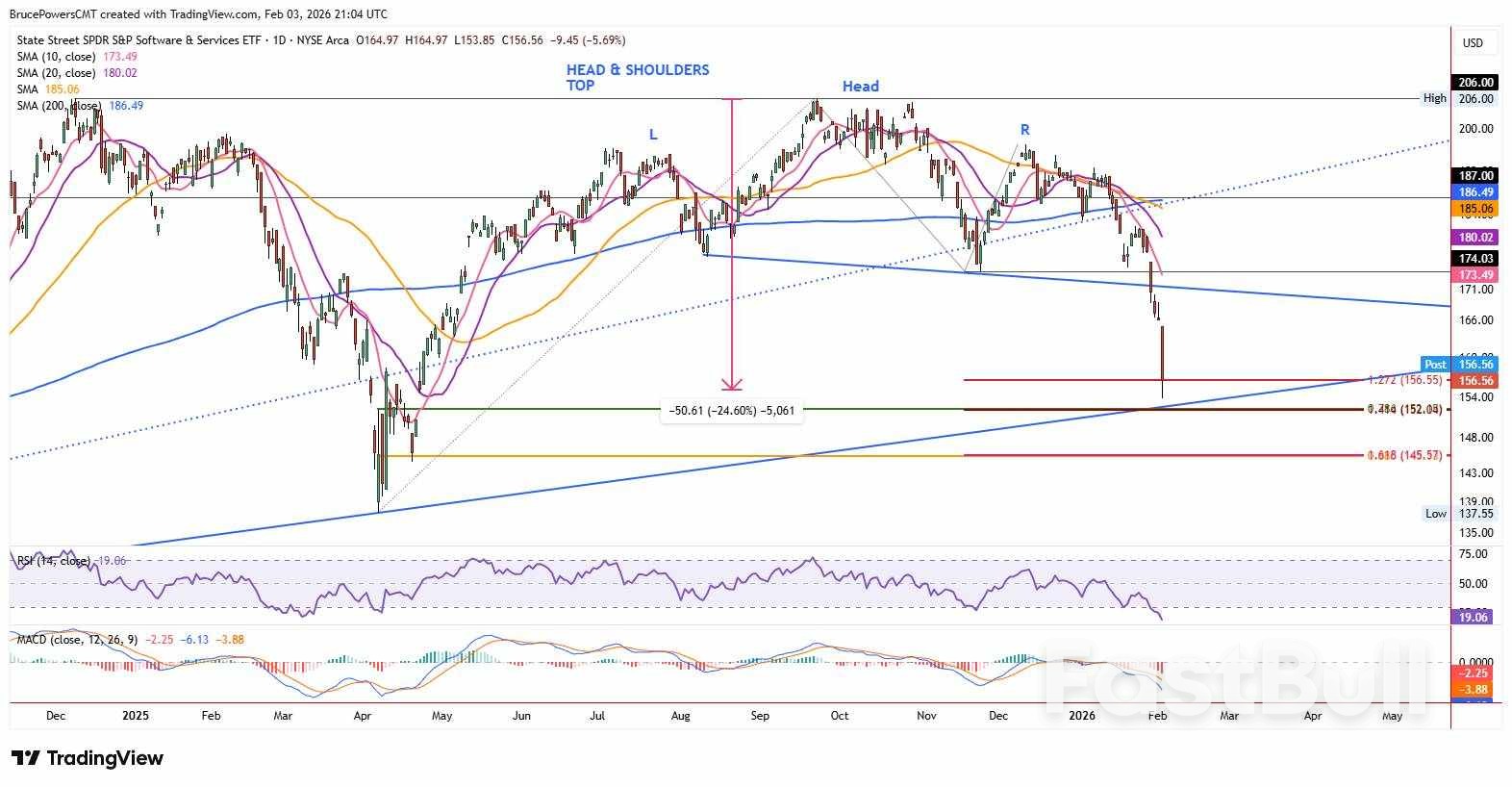
          · XSW confirms head-and-shoulders breakdown below $172 neckline
          · Bearish momentum remains strong, sellers firmly in control
          · Measured move suggests deeper downside toward $142–$144 if next support fails

          AI-Driven Selloff Pressures Software Sector

          Software related stocks got pummeled on Tuesday, as sentiment grew more bearish due to concerns about the impact of artificial intelligence (AI) on the industry. Fears were triggered following a disappointing earnings release from PayPal (PYPL) pre-market. Also, Anthropic released productivity tools for attorneys, which increased selling pressure on related legal publishing and software firms. Risks to the sector have been rising in recent months in anticipation that further advances in AI will cause a greater threat to software business models. Given the sharp declines across the sector, once support is found, buyers may return.

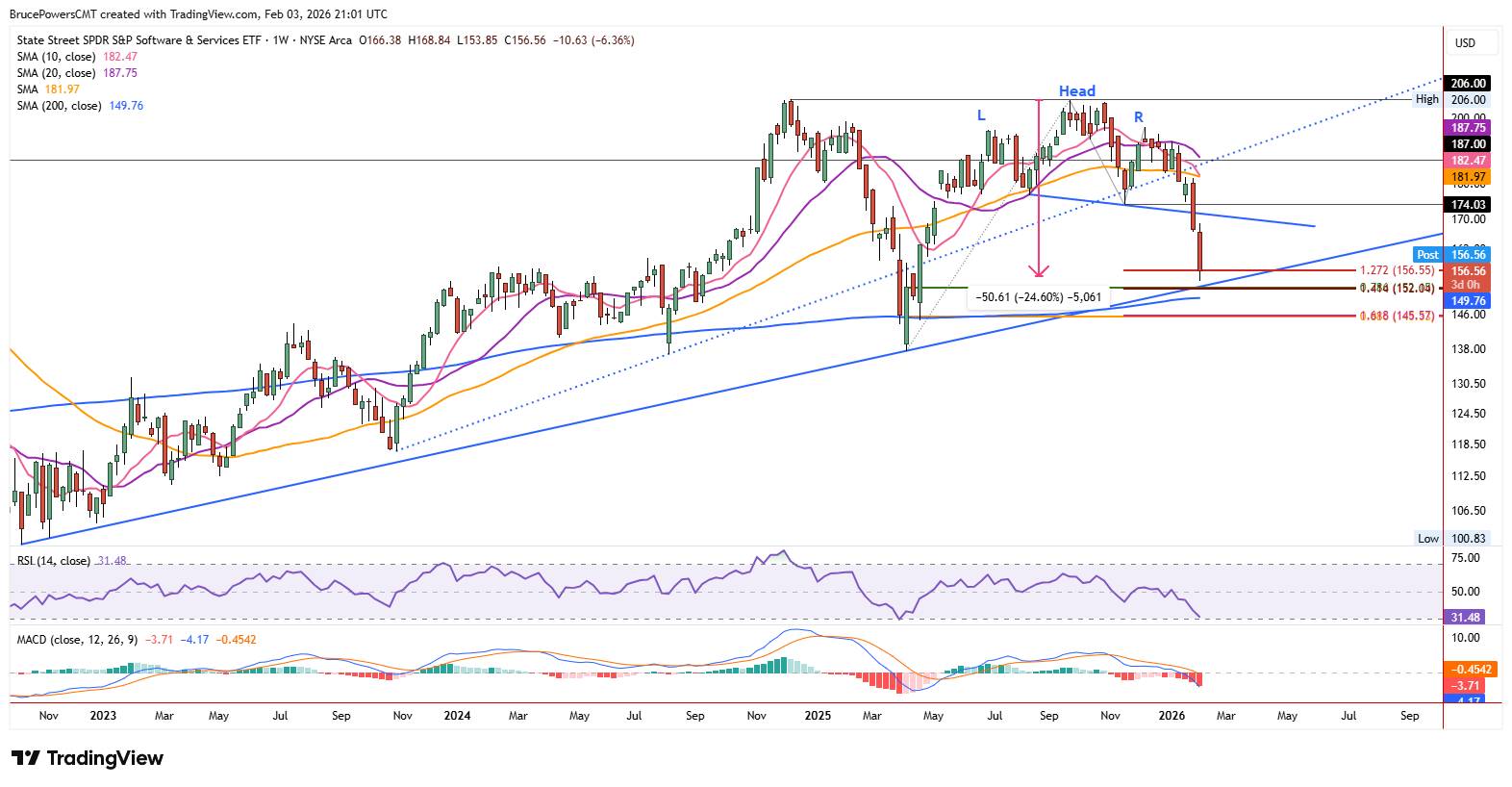
          XSW weekly chart shows approach towards long-term uptrend line and 200-day average support (Source: TradingView)

          XSW Confirms Head and Shoulders Breakdown

          The SPDR S&P Software & Services ETF (XSW) is a proxy for the sector. It broke down from a head and shoulders top reversal pattern last week, on a drop through a swing low at $174.03 and then the neckline of the pattern around $172. Bearish follow-through has been sharp and decisive, leaving little doubt that the sellers are in charge. XSW reached a low of $153.85 on Tuesday. Nonetheless, XSW is rapidly approaching a potentially significant support zone at the convergence of several indicators near $152.

          XSW daily chart shows head and shoulders bearish reversal and decline towards support zone. (Source: TradingView)

          Support zone converges near $152

          When multiple indicators point to a similar price zone, that area can act both as a magnet, pulling price to it, and a strong support zone in the case of XSW. A 78.6% Fibonacci retracement of the previous upswing is at $152.15, and a 141.4% (√2) projection of a bearish measured move points to $152.04. Further, a long-term uptrend line is currently rising through that price zone. If there is an overshoot to the downside, then the 200-day average is at $149.75, providing a lower potential target zone. Since XSW has fallen hard and is very close to that long-term average, it wouldn't be surprising for it to be hit before the current retracement bottoms.

          Pattern targets $142–$144 if support fails

          The head and shoulders pattern suggests a lower target could be reached. Measuring the pattern provides an initial downside target around $141.79. Of course, that level would be preceded by a failure of support at the uptrend line and 200-day average. That target is derived when using the neckline as the bear trigger. However, if the swing low at $174.03 is used, a target at $144.12 is indicated.

          Source: FX Empire

          Risk Warnings and Disclaimers
          You understand and acknowledge that there is a high degree of risk involved in trading. Following any strategies or investment methods may lead to potential losses. The content on the site is provided by our contributors and analysts for information purposes only. You are solely responsible for determining whether any trading assets, securities, strategy, or any other product is suitable for investing based on your own investment objectives and financial situation.
          Add to Favorites
          Share

          USDCHF Moves Higher As Expected And Hits Targets

          Justin

          Forex

          Economic

          On January 30 2026 our clients was expecting for USDCHF to push higher to terminate red wave c, red wave y, blue wave (iv).

          The first chart below was published in our private members area and clearly shows the Elliott Wave count was calling for the red wave c push higher.

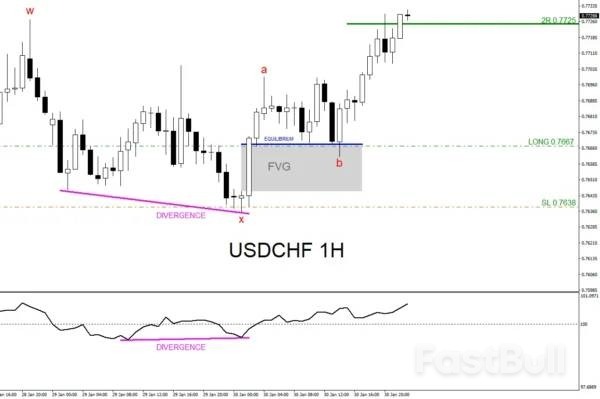
          The second chart is my buy entry. When the USDCHF pair tagged the bullish FVG zone (Gray Box) I entered the buy trade at 0.7667 with a 29 pip stop loss at 0.7638 and a take profit target at the 2R 0.7725.

          Added confirmation for the buy entry was the bullish divergence market pattern (Pink) which formed at the red wave x termination.

          USDCHF 1 Hour Chart January 30 2026

          USDCHF moves higher and hits 2R target at 0.7725 where I closed buy position for +58 pips and a +2% profit gain. (Risking 1% on every trade)

          A trader should always have multiple strategies all lined up before entering a trade. Never trade off one simple strategy. When multiple strategies all line up it allows a trader to see a clearer trade setup.

          We at EWF never say we are always right. No market service provider can forecast markets with 100% accuracy. Only thing we at EWF 100%, is that we are RIGHT more than we are WRONG.

          Of course, like any strategy/technique, there will be times when the strategy/technique fails so proper money/risk management should always be used on every trade.

          Source: Elliott Wave Forecast

          To stay updated on all economic events of today, please check out our Economic calendar
          Risk Warnings and Disclaimers
          You understand and acknowledge that there is a high degree of risk involved in trading. Following any strategies or investment methods may lead to potential losses. The content on the site is provided by our contributors and analysts for information purposes only. You are solely responsible for determining whether any trading assets, securities, strategy, or any other product is suitable for investing based on your own investment objectives and financial situation.
          Add to Favorites
          Share

          NZ Labour Market Statistics, December Quarter 2025

          Westpac

          Political

          Economic

          The unemployment rate ticked up to 5.4% in the December quarter. The details were positive though, with growth in jobs and hours being outstripped by an even larger rise in participation.

          · Unemployment rate: 5.4% (prev: 5.3%, Westpac: 5.3%, RBNZ: 5.3%, mkt: 5.3%)
          · Employment change: +0.5% (prev: 0.0%, Westpac: +0.3%, RBNZ: +0.2%, mkt: +0.3%)
          · Participation rate: 70.5% (prev: 70.3%, Westpac: 70.3%, RBNZ: 70.3%, mkt: 70.3%)
          · Labour costs (private sector): +0.5% (prev: +0.4%, Westpac: +0.5%, RBNZ: +0.5%, mkt: +0.5%)

          The December quarter labour market surveys showed some early signs of improvement in the jobs market, despite a further small rise in the headline unemployment rate. Wage growth measures remained unsurprisingly subdued at this stage of the cycle.

          Overall, we think the results were broadly in line with the Reserve Bank's forecasts and won't give them much new to mull over ahead of their 18 February policy review. What that means is there is little here to hurry the RBNZ quickly towards reversing those last 75bp of OCR cuts made after August 2025. Still muted wage pressures should imply there is time to assess the strength and durability of the recovery before raising rates. We remain comfortable with our forecast of a December 2026 first rate hike.

          The number of people employed rose by 0.5% for the quarter – actually more than what was suggested by the Monthly Employment Indicator, and ahead of the 0.3% rise in the working-age population. However, there was an even more significant rise in labour force participation from 70.3% to 70.5%, with the net result being an uptick in the unemployment rate. In any case, both of these 'surprises' are well with the margin of error for this survey, and we don't regard them as being meaningfully different from our expectations.

          Another positive indicator from the household survey was a 1% rise in hours worked for the quarter, on top of a 1.1% rise in the September quarter. We certainly wouldn't dismiss this lightly, given that this measure has been an unusually good guide to the swings in quarterly GDP in recent times. However, there was a contrasting 0.5% fall in total hours paid in the business-oriented Quarterly Employment Survey (which had also seen a strong 1.1% rise last quarter).

          Given the existing degree of slack in the labour market, wage trends unsurprisingly remained subdued. The Labour Cost Index rose by 0.4% overall for the quarter, with a 0.5% rise in the private sector and a more modest 0.3% rise in the public sector. On an annual basis the LCI rose by 2.0%, its slowest pace since March 2021.

          The unadjusted analytical LCI, which includes pay increases that are related to higher productivity, rose by 0.8% for the quarter, slightly more than the 0.7% rise in the September quarter. The annual growth rate slowed from 3.4% to 3.3%, also the lowest reading since March 2021. The distribution of pay rates continues to drift towards annual increases in the 2-3% range, and away from the larger increases that were more common in previous years.

          Source: Westpac Banking Corporation

          To stay updated on all economic events of today, please check out our Economic calendar
          Risk Warnings and Disclaimers
          You understand and acknowledge that there is a high degree of risk involved in trading. Following any strategies or investment methods may lead to potential losses. The content on the site is provided by our contributors and analysts for information purposes only. You are solely responsible for determining whether any trading assets, securities, strategy, or any other product is suitable for investing based on your own investment objectives and financial situation.
          Add to Favorites
          Share
          FastBull
          Copyright © 2026 FastBull Ltd

          728 RM B 7/F GEE LOK IND BLDG NO 34 HUNG TO RD KWUN TONG KLN HONG KONG

          TelegramInstagramTwitterfacebooklinkedin
          App Store Google Play Google Play
          Products
          Charts

          Chats

          Q&A with Experts
          Screeners
          Economic Calendar
          Data
          Tools
          Membership
          Features
          Function
          Markets
          Copy Trading
          Latest Signals
          Contests
          News
          Analysis
          24/7
          Columns
          Education
          Company
          Careers
          About Us
          Contact Us
          Advertising
          Help Center
          Feedback
          User Agreement
          Privacy Policy
          Personal Information Protection Statement
          Business

          White Label

          Broker API

          Data API

          Web Plug-ins

          Poster Maker

          Affiliate Program

          Risk Disclosure

          The risk of loss in trading financial instruments such as stocks, FX, commodities, futures, bonds, ETFs and crypto can be substantial. You may sustain a total loss of the funds that you deposit with your broker. Therefore, you should carefully consider whether such trading is suitable for you in light of your circumstances and financial resources.

          No decision to invest should be made without thoroughly conducting due diligence by yourself or consulting with your financial advisors. Our web content might not suit you since we don't know your financial conditions and investment needs. Our financial information might have latency or contain inaccuracy, so you should be fully responsible for any of your trading and investment decisions. The company will not be responsible for your capital loss.

          Without getting permission from the website, you are not allowed to copy the website's graphics, texts, or trademarks. Intellectual property rights in the content or data incorporated into this website belong to its providers and exchange merchants.

          Not Logged In

          Log in to access more features

          Connect Broker
          Become a signal provider
          Help Center
          Customer Service
          Dark Mode
          Price Up/Down Colors

          Log In

          Sign Up

          Position
          Layout
          Fullscreen
          Default to Chart
          The chart page opens by default when you visit fastbull.com