• Trade
  • Markets
  • Copy
  • Contests
  • News
  • 24/7
  • Calendar
  • Q&A
  • Chats
Screeners
SYMBOL
LAST
ASK
BID
HIGH
LOW
NET CHG.
%CHG.
SPREAD
SPX
S&P 500 Index
6798.39
6798.39
6798.39
6857.86
6780.45
-84.33
-1.23%
--
DJI
Dow Jones Industrial Average
48908.71
48908.71
48908.71
49340.90
48829.10
-592.58
-1.20%
--
IXIC
NASDAQ Composite Index
22540.58
22540.58
22540.58
22841.28
22461.14
-363.99
-1.59%
--
USDX
US Dollar Index
97.700
97.780
97.700
97.790
97.680
-0.120
-0.12%
--
EURUSD
Euro / US Dollar
1.17877
1.17886
1.17877
1.17913
1.17655
+0.00089
+ 0.08%
--
GBPUSD
Pound Sterling / US Dollar
1.35474
1.35485
1.35474
1.35500
1.35081
+0.00170
+ 0.13%
--
XAUUSD
Gold / US Dollar
4825.51
4825.90
4825.51
4846.30
4655.10
+47.62
+ 1.00%
--
WTI
Light Sweet Crude Oil
63.350
63.385
63.350
63.654
62.146
+0.416
+ 0.66%
--

Community Accounts

Signal Accounts
--
Profit Accounts
--
Loss Accounts
--
View More

Become a signal provider

Sell trading signals to earn additional income

View More

Guide to Copy Trading

Get started with ease and confidence

View More

Signal Accounts for Members

All Signal Accounts

Best Return
  • Best Return
  • Best P/L
  • Best MDD
Past 1W
  • Past 1W
  • Past 1M
  • Past 1Y

All Contests

  • All
  • Trump Updates
  • Recommend
  • Stocks
  • Cryptocurrencies
  • Central Banks
  • Featured News
Top News Only
Share

India's Nifty Bank Futures Down 0.19% In Pre-Open Trade

Share

India's Nifty 50 Index Down 0.14% In Pre-Open Trade

Share

Indian Rupee Opens 0.08% Higher At 90.2850 Per USA Dollar, Previous Close 90.3550

Share

The Thailand Futures Exchange (TFEX) Has Announced A Temporary Suspension Of Online Trading In Silver Futures

Share

Indonesian President: Signs Security Treaty With Australia

Share

Source: Trump Offered To Unfreeze Funding For Nyc Tunnel If Dulles Airport, Train Station Renamed For Him

Share

Indonesia's 2025 White Sugar Output At 2.67 Million Metric Tons - Agri Ministry

Share

Indonesia's Forex Reserves Drop To $154.6 Billion At End-January

Share

Former Japan Currency Chief Says Forex Intervention Should Be Backed By Rate Hikes

Share

Spot Silver Rises 3% To $73.41/Oz

Share

USA Military Says It Attacked An Alleged Drug Vessel In The Eastern Pacific On Thursday And Killed Two People

Share

Spot Gold Rises Over 1% To $4827.16/Oz

Share

Spot Silver Broke Through $72 Per Ounce, Up 1.71% On The Day

Share

Spot Gold Has Climbed Back Above $4,800 Per Ounce, Rebounding Nearly $150 From Its Daily Low, Up 0.43% On The Day

Share

Spot Silver Reverses Course, Last Up Nearly 1% At $71.95/Oz

Share

Spot Gold Reverses Course, Last Up 0.6% At $4797.29/Oz

Share

Spot Platinum Falls 5% To $1818.25/Oz

Share

Ether Rises 4.8%, Reversing Losses From Earlier In The Session

Share

U.S. Stock Index Futures Narrowed Their Losses, With S&P 500 Futures Down 0.2%

Share

[Bitcoin Bounces Nearly 10% From This Morning'S Low Point, Providing Market Relief] February 6Th: Bitcoin Fell To $60,000 This Morning, Hitting Its Lowest Point Since October 2024. In The Past 105 Minutes, It Has Rebounded By 9.75%, Providing The Market With Some Breathing Room

TIME
ACT
FCST
PREV
Germany Construction PMI (SA) (Jan)

A:--

F: --

P: --

Italy Retail Sales MoM (SA) (Dec)

A:--

F: --

P: --

U.K. Markit/CIPS Construction PMI (Jan)

A:--

F: --

P: --

France 10-Year OAT Auction Avg. Yield

A:--

F: --

P: --

Euro Zone Retail Sales YoY (Dec)

A:--

F: --

P: --
Euro Zone Retail Sales MoM (Dec)

A:--

F: --

P: --
U.K. BOE MPC Vote Cut (Feb)

A:--

F: --

P: --

U.K. BOE MPC Vote Hike (Feb)

A:--

F: --

P: --

U.K. BOE MPC Vote Unchanged (Feb)

A:--

F: --

P: --

U.K. Benchmark Interest Rate

A:--

F: --

P: --

MPC Rate Statement
U.S. Challenger Job Cuts (Jan)

A:--

F: --

P: --

U.S. Challenger Job Cuts MoM (Jan)

A:--

F: --

P: --

U.S. Challenger Job Cuts YoY (Jan)

A:--

F: --

P: --

Bank of England Governor Bailey held a press conference on monetary policy.
Euro Zone ECB Marginal Lending Rate

A:--

F: --

P: --

Euro Zone ECB Deposit Rate

A:--

F: --

P: --

Euro Zone ECB Main Refinancing Rate

A:--

F: --

P: --

ECB Monetary Policy Statement
U.S. Weekly Initial Jobless Claims (SA)

A:--

F: --

P: --

U.S. Initial Jobless Claims 4-Week Avg. (SA)

A:--

F: --

P: --

U.S. Weekly Continued Jobless Claims (SA)

A:--

F: --

P: --
ECB Press Conference
U.S. JOLTS Job Openings (SA) (Dec)

A:--

F: --

P: --
U.S. EIA Weekly Natural Gas Stocks Change

A:--

F: --

P: --

BOC Gov Macklem Speaks
Mexico Policy Interest Rate

A:--

F: --

P: --

U.S. Weekly Treasuries Held by Foreign Central Banks

A:--

F: --

P: --

Reserve Bank of Australia Governor Bullock testified before Parliament.
Japan Foreign Exchange Reserves (Jan)

A:--

F: --

P: --

India Benchmark Interest Rate

--

F: --

P: --

India Cash Reserve Ratio

--

F: --

P: --

India Repo Rate

--

F: --

P: --

India Reverse Repo Rate

--

F: --

P: --

Japan Leading Indicators Prelim (Dec)

--

F: --

P: --

Germany Industrial Output MoM (SA) (Dec)

--

F: --

P: --

Germany Exports MoM (SA) (Dec)

--

F: --

P: --

U.K. Halifax House Price Index YoY (SA) (Jan)

--

F: --

P: --

U.K. Halifax House Price Index MoM (SA) (Jan)

--

F: --

P: --

France Trade Balance (SA) (Dec)

--

F: --

P: --

Canada Leading Index MoM (Jan)

--

F: --

P: --

India Deposit Gowth YoY

--

F: --

P: --

Canada Employment (SA) (Jan)

--

F: --

P: --
Canada Full-time Employment (SA) (Jan)

--

F: --

P: --
Canada Part-Time Employment (SA) (Jan)

--

F: --

P: --
Canada Unemployment Rate (SA) (Jan)

--

F: --

P: --

Canada Labor Force Participation Rate (SA) (Jan)

--

F: --

P: --

Due to the previous government shutdown, the release date of the US January non-farm payroll report has been changed to February 11.
Canada Ivey PMI (Not SA) (Jan)

--

F: --

P: --

Canada Ivey PMI (SA) (Jan)

--

F: --

P: --

U.S. 5-10 Year-Ahead Inflation Expectations (Feb)

--

F: --

P: --

U.S. UMich Consumer Sentiment Index Prelim (Feb)

--

F: --

P: --

U.S. UMich 1-Year-Ahead Inflation Expectations Prelim (Feb)

--

F: --

P: --

U.S. UMich 5-Year-Ahead Inflation Expectations Prelim YoY (Feb)

--

F: --

P: --

U.S. UMich Current Economic Conditions Index Prelim (Feb)

--

F: --

P: --

U.S. UMich Consumer Expectations Index Prelim (Feb)

--

F: --

P: --

China, Mainland Foreign Exchange Reserves (Jan)

--

F: --

P: --

Russia Retail Sales YoY (Dec)

--

F: --

P: --

Russia Unemployment Rate (Dec)

--

F: --

P: --

Russia Quarterly GDP Prelim YoY (Q1)

--

F: --

P: --

U.S. Weekly Total Oil Rig Count

--

F: --

P: --

Q&A with Experts
    • All
    • Chatrooms
    • Groups
    • Friends
    "Nawhdir Øt" recalled a message
    Kung Fu flag
    Lý Liêm
    Hello everyone
    @Lý Liêmyou seem pretty new here. Are you indeed?
    Nawhdir Øt flag
    Visxa Benfica
    Have you been up for a long time?
    @Visxa Benfica I woke up 3.5 hours before you!
    Visxa Benfica flag
    Nawhdir Øt
    @Nawhdir ØtOh, I woke up quite late today
    Visxa Benfica flag
    I probably stayed up too late yesterday watching the charts
    zenko flag
    Lý Liêm flag
    I come from Vietnam
    Kung Fu flag
    Visxa Benfica
    Have you been up for a long time?
    @Visxa Benficayou missed your alarm more tan 40 times, you kniw@Nawhdir Øt
    Visxa Benfica flag
    Lý Liêm
    I come from Vietnam
    @Lý LiêmNice to meet you bro
    Visxa Benfica flag
    @Lý Liêm How are you today?
    Kung Fu flag
    zenko
    @zenkoI love this.
    zenko flag
    if anyone asks eth. he will stop at 17
    Kung Fu flag
    Lý Liêm
    I come from Vietnam
    @Lý LiêmI love Vietnamese, Mate. I've not seen you here before
    Lý Liêm flag
    I'm looking for intraday XAUUSD trades.
    Lý Liêm flag
    Kung Fu
    I just downloaded the app.
    Kung Fu flag
    Lý Liêm
    I'm looking for intraday XAUUSD trades.
    @Lý LiêmI see. Don't be in a hurry. What's the time now in Vietnam
    Kung Fu flag
    Lý Liêm
    @Lý LiêmI figure. You're warmly welcome to this our community
    Nawhdir Øt flag
    Nawhdir Øt flag
    Nawhdir Øt flag
    Type here...
    Add Symbol or Code

      No matching data

      All
      Trump Updates
      Recommend
      Stocks
      Cryptocurrencies
      Central Banks
      Featured News
      • All
      • Russia-Ukraine Conflict
      • Middle East Flashpoint
      • All
      • Russia-Ukraine Conflict
      • Middle East Flashpoint
      Search
      Products

      Charts Free Forever

      Chats Q&A with Experts
      Screeners Economic Calendar Data Tools
      Membership Features
      Data Warehouse Market Trends Institutional Data Policy Rates Macro

      Market Trends

      Market Sentiment Order Book Forex Correlations

      Top Indicators

      Charts Free Forever
      Markets

      News

      News Analysis 24/7 Columns Education
      From Institutions From Analysts
      Topics Columnists

      Latest Views

      Latest Views

      Trending Topics

      Top Columnists

      Latest Update

      Signals

      Copy Rankings Latest Signals Become a signal provider AI Rating
      Contests
      Brokers

      Overview Brokers Assessment Rankings Regulators News Claims
      Broker listing Forex Brokers Comparison Tool Live Spread Comparison Scam
      Q&A Complaint Scam Alert Videos Tips to Detect Scam
      More

      Business
      Events
      Careers About Us Advertising Help Center

      White Label

      Broker API

      Data API

      Web Plug-ins

      Affiliate Program

      Awards Institution Evaluation IB Seminar Salon Event Exhibition
      Vietnam Thailand Singapore Dubai
      Fans Party Investment Sharing Session
      FastBull Summit BrokersView Expo
      Recent Searches
        Top Searches
          Markets
          News
          Analysis
          User
          24/7
          Economic Calendar
          Education
          Data
          • Names
          • Latest
          • Prev

          View All

          No data

          Scan to Download

          Faster Charts, Chat Faster!

          Download App
          English
          • English
          • Español
          • العربية
          • Bahasa Indonesia
          • Bahasa Melayu
          • Tiếng Việt
          • ภาษาไทย
          • Français
          • Italiano
          • Türkçe
          • Русский язык
          • 简中
          • 繁中
          Open Account
          Search
          Products
          Charts Free Forever
          Markets
          News
          Signals

          Copy Rankings Latest Signals Become a signal provider AI Rating
          Contests
          Brokers

          Overview Brokers Assessment Rankings Regulators News Claims
          Broker listing Forex Brokers Comparison Tool Live Spread Comparison Scam
          Q&A Complaint Scam Alert Videos Tips to Detect Scam
          More

          Business
          Events
          Careers About Us Advertising Help Center

          White Label

          Broker API

          Data API

          Web Plug-ins

          Affiliate Program

          Awards Institution Evaluation IB Seminar Salon Event Exhibition
          Vietnam Thailand Singapore Dubai
          Fans Party Investment Sharing Session
          FastBull Summit BrokersView Expo

          China Warns Panama of 'Heavy Price' Over Canal Port Deal

          Isaac Bennett

          Political

          Remarks of Officials

          Economic

          Summary:

          China threatens Panama with severe fallout after its court voided a key port contract, escalating a US-China rivalry over the vital canal.

          China has issued a stark warning to Panama, threatening severe political and economic consequences after the Central American nation’s Supreme Court voided a key port operations contract linked to a Hong Kong-based firm. The move escalates a geopolitical clash over control of one of the world's most critical maritime chokepoints.

          Court Voids Contract at Key Canal Ports

          The controversy centers on a decision by Panama's Supreme Court to nullify the operating license of CK Hutchison, a Hong Kong conglomerate. The ruling affects its subsidiary, Panama Ports Company, which managed strategic ports at both ends of the Panama Canal: Balboa on the Pacific and Cristóbal on the Atlantic.
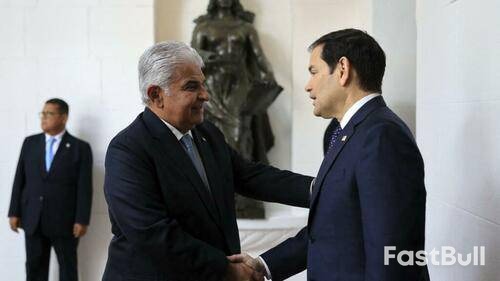
          This decision is widely seen as a victory for Washington, following sustained pressure from the Trump administration to curb Chinese influence in the region. President Trump had previously stated that the canal was "vital to our country" and expressed concern that "it's being operated by China."

          Beijing Delivers a Vehement Rebuke

          Beijing's response was swift and uncompromising. China's State Council Hong Kong and Macao Affairs Office condemned the court's decision as "logically flawed" and "utterly ridiculous." The office made it clear that both the central Chinese government and the Hong Kong Special Administrative Region government vehemently oppose the ruling.

          "The Panamanian authorities should recognize the situation and correct their course," the office stated. In a direct threat, the statement added: "If they persist in their own way and remain obstinate, they will inevitably pay a heavy price in terms of politics and economics!"

          Economic Retaliation Measures Begin

          As it prepares a legal challenge, Beijing is already taking concrete steps to apply economic pressure on Panama. According to reports, China has initiated several retaliatory actions that could impact billions of dollars in investment and trade.

          • Project Suspension: Chinese state-owned enterprises have reportedly been instructed to halt all discussions on new projects in Panama.

          • Shipping Diversions: Beijing is advising shipping companies to explore alternative cargo routes that bypass Panama, as long as they do not create significant extra costs.

          • Increased Inspections: Chinese customs authorities are intensifying inspections on key imports from Panama, including products like bananas and coffee, potentially disrupting trade flows.

          Panama Caught Between Global Powers

          The dispute places Panama in a difficult position, caught between the United States and China. Panamanian President Jose Raul Mulino has stated that he "strongly" rejects the Chinese government's threats.

          He emphasized his respect for the country's rule of law and the independence of its judiciary. Despite this stance, Panama now faces the challenge of navigating intense economic pressure from Beijing while asserting its national sovereignty.

          To stay updated on all economic events of today, please check out our Economic calendar
          Risk Warnings and Disclaimers
          You understand and acknowledge that there is a high degree of risk involved in trading. Following any strategies or investment methods may lead to potential losses. The content on the site is provided by our contributors and analysts for information purposes only. You are solely responsible for determining whether any trading assets, securities, strategy, or any other product is suitable for investing based on your own investment objectives and financial situation.
          Add to Favorites
          Share

          Oil Prices Ease as US–Iran Talks Temper Geopolitical Risk Premium

          Gerik

          Economic

          Commodity

          Geopolitical Tensions Recede From The Forefront

          Crude prices continued to fall on Friday as markets focused on upcoming nuclear negotiations between the United States and Iran, easing concerns about near-term military escalation in the Middle East. West Texas Intermediate traded below $63 a barrel after posting its largest one-day decline in three weeks, while Brent settled under $68. The move reflects a partial unwinding of the risk premium that had built up amid heightened regional tensions, given that the Middle East supplies roughly one-third of global crude output.
          This price reaction is primarily causal rather than coincidental. Expectations of diplomacy reduce the perceived probability of supply disruptions, directly lowering the geopolitical insurance embedded in oil prices.

          Conflicting Signals From Policy And Producers

          Futures initially weakened after Donald Trump said Iran was negotiating with Washington, reinforcing hopes for de-escalation. Prices later recovered slightly after Saudi Arabia cut official selling prices for Asian buyers by less than expected. That decision was interpreted as a signal of confidence in underlying demand, limiting the downside move but failing to reverse the broader bearish trend.
          Despite the easing tone, uncertainty remains high. Diverging positions between Washington and Tehran on the scope and conditions of a potential agreement raise doubts about whether negotiations can bridge key differences. As a result, the talks are likely to remain a dominant factor in oil price expectations, even as concerns about physical oversupply persist.

          Oil Heads For First Weekly Loss Since December

          With the latest pullback, crude is now on track for its first weekly loss since mid-December. This marks a shift in market narrative from conflict-driven tightness toward a more balanced assessment of supply and demand. While geopolitical risk has not disappeared, it is no longer the sole driver of prices, allowing fundamentals and broader macro sentiment to regain influence.
          Broader Diplomatic Developments In FocusBeyond the Middle East, parallel diplomatic efforts have added to the perception of reduced global tension. In trilateral discussions involving the US, Ukraine and Russia, the two warring countries agreed to exchange prisoners for the first time in five months, a step that suggests incremental progress toward de-escalation. Although not directly linked to oil flows, such developments contribute to a broader easing of geopolitical stress across energy markets.

          Supply Expansion And Investment Signals

          On the supply side, BP is reportedly seeking a partner to help expand output at Iraq’s Kirkuk oil field, one of the region’s oldest producing assets. The project highlights the relative ease and lower cost of bringing Middle Eastern crude to market compared with production elsewhere, reinforcing the longer-term backdrop of ample supply capacity.
          Taken together, these factors suggest that oil markets are entering a phase where diplomatic signals and supply dynamics are weighing more heavily than acute conflict risk, leaving prices vulnerable to further adjustment if negotiations continue to dampen geopolitical fears.

          Source: Bloomberg

          To stay updated on all economic events of today, please check out our Economic calendar
          Risk Warnings and Disclaimers
          You understand and acknowledge that there is a high degree of risk involved in trading. Following any strategies or investment methods may lead to potential losses. The content on the site is provided by our contributors and analysts for information purposes only. You are solely responsible for determining whether any trading assets, securities, strategy, or any other product is suitable for investing based on your own investment objectives and financial situation.
          Add to Favorites
          Share

          Japanese Pharma Stocks Slide as TrumpRx Raises Pricing Pressure Risks

          Gerik

          Economic

          Stocks

          TrumpRx Launch Triggers Market Reaction

          Japanese pharmaceutical stocks came under immediate pressure after U.S. President Donald Trump unveiled TrumpRx.gov, a new government-backed website offering discounted prescription drugs to American consumers. The platform went live following agreements with 16 of the world’s largest drugmakers, granting U.S. buyers “most-favoured nation” pricing in exchange for exemptions from U.S. tariffs.
          The announcement introduced fresh uncertainty for global drug pricing structures, particularly for export-heavy Japanese firms that rely heavily on the U.S. market for revenue growth.

          Japanese Drugmakers Lead Sector Declines

          In early Tokyo trading, selling pressure was concentrated in large-cap pharmaceutical names. Sumitomo Pharma slid 4.5%, while Chugai Pharmaceutical, a Roche affiliate, fell 3.1%. Takeda Pharmaceutical, the country’s largest drugmaker, declined 1.5%.
          As a result, the pharmaceutical sector dropped 1.6%, making it the second-worst performing industry group among the Tokyo Stock Exchange’s 33 sub-indexes. This underperformance suggests investors are pricing in not just short-term headline risk, but the possibility of longer-term margin pressure.

          Pricing Power And Policy Risk

          The market reaction reflects a causal relationship between U.S. policy shifts and global pharmaceutical valuations. By institutionalizing discounted prices for U.S. consumers, TrumpRx potentially weakens pricing power across international markets, especially if similar frameworks are later adopted elsewhere or referenced in future negotiations.
          For Japanese drugmakers, the concern is less about immediate revenue loss and more about precedent. The U.S. has long been a high-margin market that offsets lower prices in other regions. Any structural change to that dynamic could compress global earnings, even if tariff exemptions offer partial relief.

          Investor Sentiment Turns Cautious

          While details of the TrumpRx agreements remain limited, equity markets reacted swiftly, indicating heightened sensitivity to regulatory intervention in healthcare pricing. Until there is greater clarity on how discounts will be implemented and whether participation is voluntary or binding, pharmaceutical stocks are likely to remain vulnerable to further volatility.
          In the near term, the selloff underscores how political initiatives in the U.S. can ripple quickly through Asian equity markets, particularly in sectors where pricing power and regulation are tightly intertwined.

          Source: The Japan Times

          To stay updated on all economic events of today, please check out our Economic calendar
          Risk Warnings and Disclaimers
          You understand and acknowledge that there is a high degree of risk involved in trading. Following any strategies or investment methods may lead to potential losses. The content on the site is provided by our contributors and analysts for information purposes only. You are solely responsible for determining whether any trading assets, securities, strategy, or any other product is suitable for investing based on your own investment objectives and financial situation.
          Add to Favorites
          Share

          Powell's Positive Outlook Complicates Trump's Rate Cut Push

          Kevin Morgan

          Central Bank

          Political

          Stocks

          Data Interpretation

          Remarks of Officials

          Economic

          Following its January meeting, the Federal Reserve delivered an optimistic assessment of the U.S. economy, but the positive report creates a complex political landscape for former President Donald Trump. Fed Chair Jerome Powell's confident tone suggests the central bank sees little reason to implement the interest rate cuts that Trump has publicly demanded, setting the stage for a potential conflict between monetary policy and political objectives.

          Powell Signals Economic Resilience

          In his post-meeting press conference, Chair Powell outlined several indicators pointing to a surprisingly durable economy, a stabilizing labor market, and progress on inflation.

          Key takeaways from his assessment include:

          • Inflation: Disinflation is now visible in the services sector, although tariffs continue to keep goods inflation elevated. Crucially, long-term inflation expectations remain anchored within the Fed's preferred 2% target.

          • Economic Activity: Powell noted that economic activity has been solid, with resilient consumers and continued business investment. He acknowledged, however, that the housing sector remains a notable weak spot.

          • Labor Market: After a period of softening, data suggests the labor market is stabilizing. While job growth is slowing—partly due to slower workforce growth from lower immigration and participation—key metrics like job openings, layoffs, and wage growth have held steady.

          Powell also acknowledged that the previous government shutdown likely had a temporary negative impact on the economy but expects a rebound in the current quarter.

          The Political Dilemma: Why Good News is Bad for Trump

          A strong economic report presents a direct challenge to Donald Trump, who has been a vocal proponent of the Fed lowering interest rates to stimulate the economy further. The central bank's dual mandate requires it to pursue stable prices and maximum employment. With inflation still running at 3% in January and the labor market showing signs of stability, the justification for rate cuts weakens considerably.

          Figure 1: Former President Donald Trump has publicly advocated for the Federal Reserve to lower interest rates, creating tension with the central bank's policy outlook.

          If the Fed were to cut rates now, it would risk over-stimulating demand and reigniting inflationary pressures. As long as consumers remain resilient and employment holds up, the Fed has a strong case for maintaining its current policy stance. While Trump's criticism of the Fed is prominent, he is not the first president to pressure the central bank on interest rate policy.

          Voter Concerns and the Affordability Crisis

          The debate over interest rates is unfolding against a backdrop of widespread economic anxiety among voters. Many Americans are grappling with an affordability crisis, as the surge in inflation since the pandemic has driven up the cost of living.

          Housing costs, in particular, now consume a much larger share of income. For many, even rising salaries have not been enough to cover daily expenses while also saving for retirement or a home purchase. With midterm elections scheduled for later this year, the economy is a top issue for voters. Trump and the Republican party are keen to maintain their congressional majority to advance their agenda, making interest rates and affordability central political concerns.

          Market Expectations vs. Fed Reality

          Despite the Fed's steady message, financial markets are still pricing in two interest rate cuts this year. However, if incoming data continues to confirm a stable labor market and ongoing disinflation, the central bank will have little incentive to act.

          A decision to hold off on cuts could negatively impact the stock market, creating another political headache for Trump. At the same time, the economic outlook can change rapidly. Monthly inflation and labor reports have been difficult to predict, meaning the potential for more rate cuts than expected—or none at all—remains a key uncertainty for investors to monitor.

          To stay updated on all economic events of today, please check out our Economic calendar
          Risk Warnings and Disclaimers
          You understand and acknowledge that there is a high degree of risk involved in trading. Following any strategies or investment methods may lead to potential losses. The content on the site is provided by our contributors and analysts for information purposes only. You are solely responsible for determining whether any trading assets, securities, strategy, or any other product is suitable for investing based on your own investment objectives and financial situation.
          Add to Favorites
          Share

          Retail Crypto Boom Turns Into Bust as ETF Buyers Bear the Brunt

          Gerik

          Economic

          Cryptocurrency

          From Political Tailwind To Market Gravity

          The sharp crypto selloff marks a decisive reversal for retail investors who rushed into digital assets after the election of Donald Trump, drawn by promises of a friendlier regulatory environment and Wall Street’s endorsement through exchange-traded funds. Bitcoin and a wide range of altcoin ETFs have now erased all gains accumulated since the pre-election period, effectively wiping out the speculative premium that defined the latest crypto boom.
          Bitcoin has fallen roughly 50% from its peak and is trading near $63,000, while smaller tokens have performed far worse. A broad index tracking 50 altcoins has dropped about 67% from its October high. In aggregate, the crypto market has lost at least $700 billion in value over the past week alone, highlighting how quickly sentiment has flipped.

          ETFs Open The Door But Not The Safety Net

          Regulatory approval under a pro-crypto White House encouraged asset managers to launch a wave of crypto-linked ETFs, extending beyond Bitcoin into Ether, Solana, XRP and multi-token strategies. These products were marketed as a way for everyday investors to gain transparent, regulated access to digital assets, but they offered no insulation from downside risk.
          This distinction has become painfully clear. According to data from Glassnode, the average cost basis for U.S. spot-Bitcoin ETF holders is around $84,100, meaning a large share of retail investors are now sitting on losses. The relationship here is causal rather than coincidental. The easier access provided by ETFs attracted late-cycle buyers at elevated prices, leaving them more exposed when momentum reversed.

          Confidence Breaks As Flows Reverse

          The emotional impact has been significant. Unlike long-time crypto participants accustomed to extreme swings, many ETF buyers entered the market after institutional and regulatory validation signaled legitimacy. When those same products turned sharply negative, confidence began to fracture.
          Fund flows reflect this shift. More than $740 million was pulled from crypto-themed ETFs in a single day, with cumulative outflows nearing $4 billion over the past three months. While spot-Bitcoin funds accounted for a large share, products tied to Ether, XRP, Solana and diversified crypto baskets also suffered heavy redemptions. This pattern suggests not just tactical repositioning but a broader retreat from the narrative that had fueled the rally.

          Institutional Exposure Amplifies The Damage

          The downturn has not spared larger players. Strategy Inc., the world’s largest corporate holder of Bitcoin, reported a $12.4 billion quarterly loss driven by mark-to-market declines on its crypto holdings. Ventures linked to Trump-aligned entities have also come under pressure, reinforcing the sense that political endorsement does not translate into price stability.
          For many retail traders who bought near the top, the lesson has been harsh. A supportive administration can accelerate adoption and legitimacy, but it cannot override market cycles. The current drawdown reflects a classic unwinding of leverage and expectations rather than a policy failure.

          History Reasserts Itself

          Market historians note that political enthusiasm often peaks alongside market optimism. Peter Atwater of Financial Insyghts points out that Washington tends to embrace laissez-faire approaches when confidence is highest, citing precedents ahead of the dot-com bust and the global financial crisis. In that context, the crypto selloff appears less anomalous and more consistent with past cycles.
          The broader takeaway is not that crypto ETFs are broken, but that they function like any other market vehicle. They provide access, not protection. For retail investors who mistook regulatory approval for a floor under prices, the past week has delivered a costly but familiar market lesson. Volatility remains intrinsic, and no political or institutional endorsement can remove it.

          Source: Bloomberg

          To stay updated on all economic events of today, please check out our Economic calendar
          Risk Warnings and Disclaimers
          You understand and acknowledge that there is a high degree of risk involved in trading. Following any strategies or investment methods may lead to potential losses. The content on the site is provided by our contributors and analysts for information purposes only. You are solely responsible for determining whether any trading assets, securities, strategy, or any other product is suitable for investing based on your own investment objectives and financial situation.
          Add to Favorites
          Share

          Oil Prices Retreat as Geopolitics and Data Collide

          Dark Current

          Middle East Situation

          Traders' Opinions

          Energy

          Remarks of Officials

          Commodity

          The recent rally in oil prices has hit a wall, with crude posting its first decline in three days. A combination of factors is weighing on the market, including the potential selection of a more dovish Federal Reserve chair, cooling rhetoric between the U.S. and Iran, a routine OPEC+ meeting, and a reduction in U.S. tariffs on India.

          However, the most significant catalyst was Iran's announcement that it will hold direct talks with the United States, easing market fears of an imminent military confrontation.

          Geopolitical Thaw Pushes Crude Prices Lower

          Iranian Foreign Minister Abbas Araghchi confirmed that negotiations with the U.S. are scheduled for Friday in Oman. The news immediately sent oil prices down, as traders priced out some of the geopolitical risk premium.

          At 11:50 a.m. ET, Brent crude for March delivery fell 2.9% to $67.54 per barrel. The corresponding West Texas Intermediate (WTI) contract declined 3.0% to $63.19 per barrel.

          Prices had spiked last week after U.S. President Donald Trump threatened force against Iran following a crackdown on nationwide protests that resulted in thousands of deaths. Despite the planned talks, a U.S. official told the AP that the White House remains "very skeptical" about a positive outcome. Trump also issued a warning that Iran's Supreme Leader Ayatollah Ali Khamenei "should be very worried."

          OPEC+ Holds Cuts as US Inventories Plunge

          On the supply side, the OPEC+ alliance met on February 1 and agreed to maintain its current voluntary production cuts through March 2026. The decision means the planned, gradual return of 1.65 million barrels per day (bpd) to the market will remain paused for the first quarter of 2026, citing expectations of weaker seasonal demand. The group reiterated that it retains "full flexibility" to adjust output based on market conditions.

          Member countries also reaffirmed their commitment to compensating for any overproduction since January 2024. This is achieved through "make-up" cuts monitored by the Joint Ministerial Monitoring Committee (JMMC).

          Key overproducers—including Iraq, Russia, and Kazakhstan—have submitted detailed schedules to offset a cumulative 4.779 million bpd of excess production from 2024 through early 2025. Kazakhstan is set to make the largest adjustment, cutting nearly 670,000 bpd by June. However, full implementation remains uncertain, as both Kazakhstan and Iraq have historically struggled to meet compensation targets.

          Meanwhile, in the United States, the American Petroleum Institute (API) reported a massive draw in crude inventories. For the week ending February 4, stockpiles fell by 11.1 million barrels to 420.3 million barrels, dramatically exceeding market expectations of a 640,000-barrel draw. The decline was largely attributed to severe winter storm "Fern," which disrupted energy infrastructure and caused production freeze-offs, especially in the Permian Basin. Distillate fuel stocks also dropped by 4.8 million barrels, while gasoline inventories rose by 4.7 million barrels.

          Analysts See Market Tightening in Late 2026

          Despite the recent price drop, commodity analysts at Standard Chartered report that market sentiment is gradually turning more positive for the second half of 2026. The bank suggests that the bearish oversupply narrative that dominated late 2025 is fading.

          This shift is driven by changes beneath the market's surface. The Brent forward curve has strengthened significantly, with backwardation now extending toward early 2027. This signals that traders are reassessing the depth and duration of the previously feared oversupply.

          Standard Chartered also notes that:

          • Many large projected supply surpluses from last year are likely to be revised toward more typical seasonal balances.

          • Demand expectations for 2026 are already being adjusted higher, partly due to fiscal stimulus in China.

          • Speculative long positions in crude are not overstretched, leaving room for more buying.

          • U.S. shale growth is slowing in response to lower prices, making supply more price-sensitive.

          Based on this, the analysts expect OPEC+ to restart incremental production increases in the second quarter of 2026. They argue this will happen not because the market is loose, but because tighter fundamentals will allow it to absorb the extra barrels, ultimately exposing how concentrated global spare capacity has become.

          Natural Gas Prices Halve on Mild Weather Forecasts

          In the natural gas market, U.S. prices have pulled back sharply. After recently trading above $7/MMBtu, Henry Hub prices have been cut in half to $3.48/MMBtu. This move was driven by forecasts of milder weather, which reduces heating demand and eases supply concerns.

          The EIA forecasts that Henry Hub prices will average just under $3.50/MMBtu in 2026, while European TTF gas prices are expected to stabilize around €30/MWh. Over the long term, however, gas prices are projected to trend upward, fueled by explosive demand growth from AI-driven data centers, even as demand in Europe is expected to weaken due to electrification and renewable energy adoption.

          Risk Warnings and Disclaimers
          You understand and acknowledge that there is a high degree of risk involved in trading. Following any strategies or investment methods may lead to potential losses. The content on the site is provided by our contributors and analysts for information purposes only. You are solely responsible for determining whether any trading assets, securities, strategy, or any other product is suitable for investing based on your own investment objectives and financial situation.
          Add to Favorites
          Share

          Mexico Weighs Cuba Fuel Aid Amid U.S. Tariff Threats

          Thomas

          Daily News

          Political

          Remarks of Officials

          Energy

          Mexican officials are navigating a diplomatic minefield, exploring ways to send essential fuel to Cuba without triggering punishing tariffs from the United States. According to four sources familiar with the discussions, high-level talks are underway to find a solution that balances humanitarian support with economic reality.

          The core of the issue is an executive order from U.S. President Donald Trump threatening tariffs against any country supplying fuel to the island nation. Mexican officials have been in frequent contact with their U.S. counterparts to understand the full scope of this threat and determine if any exemptions for aid are possible.

          High-Stakes Talks Over Cuban Fuel Shipments

          The outcome of these negotiations remains uncertain. When asked about the situation, the White House pointed to earlier remarks from President Trump, who told reporters on Monday he believed Mexico would cease oil shipments to Cuba, though he did not specify why.

          The Mexican presidency and the U.S. State Department did not immediately provide comments, while Mexico's Foreign Ministry stated it had no information on the matter.

          "There are talks happening almost every other day," said one source, who spoke on the condition of anonymity. "Mexico doesn't want tariffs imposed, but it is also firm in its policy of helping the Cuban people."

          Three of the sources indicated that the talks are progressing, expressing hope that a resolution can be found. If an agreement is reached, two sources noted that Mexico could dispatch a tanker with gasoline, food, and other supplies classified as humanitarian aid within days.

          Cuba's Deepening Energy Crisis

          The need for fuel in Cuba is critical. The country imports two-thirds of its energy and is currently facing severe power outages and long lines at gas stations.

          The crisis intensified after a U.S. blockade of Venezuelan tankers in December, followed by the capture of President Nicolas Maduro in early January, which halted oil shipments from Venezuela. This left Mexico as Cuba's largest supplier, but that relief was short-lived.

          In mid-January, the Mexican government stopped its own shipments of crude and refined products following pressure from the Trump administration. Washington then issued its tariff threat, justifying it by claiming Cuba poses an "extraordinary threat" to U.S. national security—a charge Havana denies.

          In response to the shortages, the Cuban government announced on Thursday that it was developing a plan to address "acute fuel shortages," with more details expected next week.

          Humanitarian Concerns and Political Pressures

          The situation has drawn international attention. U.N. Secretary-General António Guterres warned this week that Cuba could face a humanitarian "collapse" if its energy needs are not met.

          Domestically, Mexican President Claudia Sheinbaum is facing pressure from her own coalition. The ruling Morena party has long-standing ideological and historical ties to Cuba, and there is a strong desire within the party not to abandon Havana in its time of need.

          Sheinbaum herself highlighted the potential human cost of the U.S. policy. "Imposing tariffs on countries that supply oil to Cuba could trigger a far-reaching humanitarian crisis, directly affecting hospitals, food, and other basic services for the Cuban people," she stated last Friday. "A situation that must be avoided through respect for international law and dialogue."

          Risk Warnings and Disclaimers
          You understand and acknowledge that there is a high degree of risk involved in trading. Following any strategies or investment methods may lead to potential losses. The content on the site is provided by our contributors and analysts for information purposes only. You are solely responsible for determining whether any trading assets, securities, strategy, or any other product is suitable for investing based on your own investment objectives and financial situation.
          Add to Favorites
          Share
          FastBull
          Copyright © 2026 FastBull Ltd

          728 RM B 7/F GEE LOK IND BLDG NO 34 HUNG TO RD KWUN TONG KLN HONG KONG

          TelegramInstagramTwitterfacebooklinkedin
          App Store Google Play Google Play
          Products
          Charts

          Chats

          Q&A with Experts
          Screeners
          Economic Calendar
          Data
          Tools
          Membership
          Features
          Function
          Markets
          Copy Trading
          Latest Signals
          Contests
          News
          Analysis
          24/7
          Columns
          Education
          Company
          Careers
          About Us
          Contact Us
          Advertising
          Help Center
          Feedback
          User Agreement
          Privacy Policy
          Personal Information Protection Statement
          Business

          White Label

          Broker API

          Data API

          Web Plug-ins

          Poster Maker

          Affiliate Program

          Risk Disclosure

          The risk of loss in trading financial instruments such as stocks, FX, commodities, futures, bonds, ETFs and crypto can be substantial. You may sustain a total loss of the funds that you deposit with your broker. Therefore, you should carefully consider whether such trading is suitable for you in light of your circumstances and financial resources.

          No decision to invest should be made without thoroughly conducting due diligence by yourself or consulting with your financial advisors. Our web content might not suit you since we don't know your financial conditions and investment needs. Our financial information might have latency or contain inaccuracy, so you should be fully responsible for any of your trading and investment decisions. The company will not be responsible for your capital loss.

          Without getting permission from the website, you are not allowed to copy the website's graphics, texts, or trademarks. Intellectual property rights in the content or data incorporated into this website belong to its providers and exchange merchants.

          Not Logged In

          Log in to access more features

          Connect Broker
          Become a signal provider
          Help Center
          Customer Service
          Dark Mode
          Price Up/Down Colors

          Log In

          Sign Up

          Position
          Layout
          Fullscreen
          Default to Chart
          The chart page opens by default when you visit fastbull.com