• Trade
  • Markets
  • Copy
  • Contests
  • News
  • 24/7
  • Calendar
  • Q&A
  • Chats
Trending
Screeners
SYMBOL
LAST
BID
ASK
HIGH
LOW
NET CHG.
%CHG.
SPREAD
SPX
S&P 500 Index
6835.74
6835.74
6835.74
6878.28
6827.18
-34.66
-0.50%
--
DJI
Dow Jones Industrial Average
47678.48
47678.48
47678.48
47971.51
47611.93
-276.50
-0.58%
--
IXIC
NASDAQ Composite Index
23489.09
23489.09
23489.09
23698.93
23455.05
-89.03
-0.38%
--
USDX
US Dollar Index
99.000
99.080
99.000
99.160
98.730
+0.050
+ 0.05%
--
EURUSD
Euro / US Dollar
1.16409
1.16416
1.16409
1.16717
1.16162
-0.00017
-0.01%
--
GBPUSD
Pound Sterling / US Dollar
1.33284
1.33293
1.33284
1.33462
1.33053
-0.00028
-0.02%
--
XAUUSD
Gold / US Dollar
4186.79
4187.20
4186.79
4218.85
4175.92
-11.12
-0.26%
--
WTI
Light Sweet Crude Oil
58.625
58.655
58.625
60.084
58.495
-1.184
-1.98%
--

Community Accounts

Signal Accounts
--
Profit Accounts
--
Loss Accounts
--
View More

Become a signal provider

Sell trading signals to earn additional income

View More

Guide to Copy Trading

Get started with ease and confidence

View More

Signal Accounts for Members

All Signal Accounts

Best Return
  • Best Return
  • Best P/L
  • Best MDD
Past 1W
  • Past 1W
  • Past 1M
  • Past 1Y

All Contests

  • All
  • Trump Updates
  • Recommend
  • Stocks
  • Cryptocurrencies
  • Central Banks
  • Featured News
Top News Only
Share

Brent Crude Futures Settle At $62.49/Bbl, Down $1.26, 1.98 Percent

Share

Trump: Farming Equipment Has Gotten Too Expensive

Share

Trump: We Will Take Off A Lot Of Environment Rules That Affect Tractor Companies

Share

Kremlin Says Still No Word On US-Ukraine Talks In Florida

Share

Trump: USA Will Take Small Portion Of Tariff Revenues To Give It To Farmers

Share

Trump: Taking Action To Protect Farmers

Share

Nymex January Gasoline Futures Closed At $1.7981 Per Gallon, And Nymex January Heating Oil Futures Closed At $2.2982 Per Gallon

Share

USA Crude Oil Futures Settle At $58.88/Bbl, Down $1.20, 2.00 Percent

Share

Netflix Co-CEO On Warner Bros Deal: We Are Very Confident That Regulators Should And Will Approve It

Share

Alina Habba, The Interim Federal Prosecutor For New Jersey, Has Resigned. This Follows An Appeals Court Ruling That President Trump's Nomination Of Her Was Illegitimate

Share

Netflix Co-CEO On Paramount Skydance Bid For Warner Bros Says The Move Was Entirely Expected- UBS Conf

Share

U.S. Senate Democratic Member And Antitrust Activist Warren Stated That Paramount Skydance's Hostile Takeover Offer Triggered A "Level 5 Antitrust Alert."

Share

Benin Government: Coup Plotters Kidnapped Two Senior Military Officials Who Were Later Freed

Share

Canada: G7 Finance Ministers Discussed Export Controls And Critical Minerals In Call

Share

Benin Government: Nigeria Carried Out Air Strikes To Help Thwart Coup Bid

Share

Fitch: Expects General Government (Gg) Deficit To Fall Modestly In Canada And But Rise Modestly In USA In 2026

Share

An Important Point Of Consensus Was Concern Regarding Application Of Non-Market Policies, Including Export Controls, To Critical Minerals Supply Chains

Share

Fitch: Despite Full-Year Impact Of Tariffs, We Expect USA Fiscal Deficit To Widen In 2026 Due To Additional Tax Cuts Under One Big Beautiful Bill Act

Share

Private Equity Firm Cinven Has Signed A £190 Million Deal To Acquire A Majority Stake In UK Advisory Firm Flint Global

Share

Bank Of England's Taylor Expects Inflation To Fall To Target 'In The Near Term'

TIME
ACT
FCST
PREV
France Trade Balance (SA) (Oct)

A:--

F: --

P: --
Euro Zone Employment YoY (SA) (Q3)

A:--

F: --

P: --
Canada Part-Time Employment (SA) (Nov)

A:--

F: --

P: --

Canada Unemployment Rate (SA) (Nov)

A:--

F: --

P: --

Canada Full-time Employment (SA) (Nov)

A:--

F: --

P: --

Canada Labor Force Participation Rate (SA) (Nov)

A:--

F: --

P: --

Canada Employment (SA) (Nov)

A:--

F: --

P: --

U.S. PCE Price Index MoM (Sept)

A:--

F: --

P: --

U.S. Personal Income MoM (Sept)

A:--

F: --

P: --

U.S. Core PCE Price Index MoM (Sept)

A:--

F: --

P: --

U.S. PCE Price Index YoY (SA) (Sept)

A:--

F: --

P: --

U.S. Core PCE Price Index YoY (Sept)

A:--

F: --

P: --

U.S. Personal Outlays MoM (SA) (Sept)

A:--

F: --

P: --
U.S. 5-10 Year-Ahead Inflation Expectations (Dec)

A:--

F: --

P: --

U.S. Real Personal Consumption Expenditures MoM (Sept)

A:--

F: --

P: --
U.S. Weekly Total Rig Count

A:--

F: --

P: --

U.S. Weekly Total Oil Rig Count

A:--

F: --

P: --

U.S. Consumer Credit (SA) (Oct)

A:--

F: --

P: --
China, Mainland Foreign Exchange Reserves (Nov)

A:--

F: --

P: --

Japan Trade Balance (Oct)

A:--

F: --

P: --

Japan Nominal GDP Revised QoQ (Q3)

A:--

F: --

P: --

China, Mainland Imports YoY (CNH) (Nov)

A:--

F: --

P: --

China, Mainland Exports (Nov)

A:--

F: --

P: --

China, Mainland Imports (CNH) (Nov)

A:--

F: --

P: --

China, Mainland Trade Balance (CNH) (Nov)

A:--

F: --

P: --

China, Mainland Exports YoY (USD) (Nov)

A:--

F: --

P: --

China, Mainland Imports YoY (USD) (Nov)

A:--

F: --

P: --

Germany Industrial Output MoM (SA) (Oct)

A:--

F: --

P: --
Euro Zone Sentix Investor Confidence Index (Dec)

A:--

F: --

P: --

Canada National Economic Confidence Index

A:--

F: --

P: --

U.K. BRC Like-For-Like Retail Sales YoY (Nov)

--

F: --

P: --

U.K. BRC Overall Retail Sales YoY (Nov)

--

F: --

P: --

Australia Overnight (Borrowing) Key Rate

--

F: --

P: --

RBA Rate Statement
RBA Press Conference
Germany Exports MoM (SA) (Oct)

--

F: --

P: --

U.S. NFIB Small Business Optimism Index (SA) (Nov)

--

F: --

P: --

Mexico 12-Month Inflation (CPI) (Nov)

--

F: --

P: --

Mexico Core CPI YoY (Nov)

--

F: --

P: --

Mexico PPI YoY (Nov)

--

F: --

P: --

U.S. Weekly Redbook Index YoY

--

F: --

P: --

U.S. JOLTS Job Openings (SA) (Oct)

--

F: --

P: --

China, Mainland M1 Money Supply YoY (Nov)

--

F: --

P: --

China, Mainland M0 Money Supply YoY (Nov)

--

F: --

P: --

China, Mainland M2 Money Supply YoY (Nov)

--

F: --

P: --

U.S. EIA Short-Term Crude Production Forecast For The Year (Dec)

--

F: --

P: --

U.S. EIA Natural Gas Production Forecast For The Next Year (Dec)

--

F: --

P: --

U.S. EIA Short-Term Crude Production Forecast For The Next Year (Dec)

--

F: --

P: --

EIA Monthly Short-Term Energy Outlook
U.S. API Weekly Gasoline Stocks

--

F: --

P: --

U.S. API Weekly Cushing Crude Oil Stocks

--

F: --

P: --

U.S. API Weekly Crude Oil Stocks

--

F: --

P: --

U.S. API Weekly Refined Oil Stocks

--

F: --

P: --

South Korea Unemployment Rate (SA) (Nov)

--

F: --

P: --

Japan Reuters Tankan Non-Manufacturers Index (Dec)

--

F: --

P: --

Japan Reuters Tankan Manufacturers Index (Dec)

--

F: --

P: --

Japan Domestic Enterprise Commodity Price Index MoM (Nov)

--

F: --

P: --

Japan Domestic Enterprise Commodity Price Index YoY (Nov)

--

F: --

P: --

China, Mainland PPI YoY (Nov)

--

F: --

P: --

China, Mainland CPI MoM (Nov)

--

F: --

P: --

Italy Industrial Output YoY (SA) (Oct)

--

F: --

P: --

Q&A with Experts
    • All
    • Chatrooms
    • Groups
    • Friends
    Connecting
    .
    .
    .
    Type here...
    Add Symbol or Code

      No matching data

      All
      Trump Updates
      Recommend
      Stocks
      Cryptocurrencies
      Central Banks
      Featured News
      • All
      • Russia-Ukraine Conflict
      • Middle East Flashpoint
      • All
      • Russia-Ukraine Conflict
      • Middle East Flashpoint
      Search
      Products

      Charts Free Forever

      Chats Q&A with Experts
      Screeners Economic Calendar Data Tools
      Membership Features
      Data Warehouse Market Trends Institutional Data Policy Rates Macro

      Market Trends

      Market Sentiment Order Book Forex Correlations

      Top Indicators

      Charts Free Forever
      Markets

      News

      News Analysis 24/7 Columns Education
      From Institutions From Analysts
      Topics Columnists

      Latest Views

      Latest Views

      Trending Topics

      Top Columnists

      Latest Update

      Signals

      Copy Rankings Latest Signals Become a signal provider AI Rating
      Contests
      Brokers

      Overview Brokers Assessment Rankings Regulators News Claims
      Broker listing Forex Brokers Comparison Tool Live Spread Comparison Scam
      Q&A Complaint Scam Alert Videos Tips to Detect Scam
      More

      Business
      Events
      Careers About Us Advertising Help Center

      White Label

      Data API

      Web Plug-ins

      Affiliate Program

      Awards Institution Evaluation IB Seminar Salon Event Exhibition
      Vietnam Thailand Singapore Dubai
      Fans Party Investment Sharing Session
      FastBull Summit BrokersView Expo
      Recent Searches
        Top Searches
          Markets
          News
          Analysis
          User
          24/7
          Economic Calendar
          Education
          Data
          • Names
          • Latest
          • Prev

          View All

          No data

          Scan to Download

          Faster Charts, Chat Faster!

          Download App
          English
          • English
          • Español
          • العربية
          • Bahasa Indonesia
          • Bahasa Melayu
          • Tiếng Việt
          • ภาษาไทย
          • Français
          • Italiano
          • Türkçe
          • Русский язык
          • 简中
          • 繁中
          Open Account
          Search
          Products
          Charts Free Forever
          Markets
          News
          Signals

          Copy Rankings Latest Signals Become a signal provider AI Rating
          Contests
          Brokers

          Overview Brokers Assessment Rankings Regulators News Claims
          Broker listing Forex Brokers Comparison Tool Live Spread Comparison Scam
          Q&A Complaint Scam Alert Videos Tips to Detect Scam
          More

          Business
          Events
          Careers About Us Advertising Help Center

          White Label

          Data API

          Web Plug-ins

          Affiliate Program

          Awards Institution Evaluation IB Seminar Salon Event Exhibition
          Vietnam Thailand Singapore Dubai
          Fans Party Investment Sharing Session
          FastBull Summit BrokersView Expo

          Canada CPI Preview: Inflation Expected To Rebound Slightly To 3.1% In February

          Alex

          Economic

          Summary:

          The Canadian Consumer Price Index is expected to have risen by 3.1% YoY in February.The BoC shows no rush to lower its interest rate.
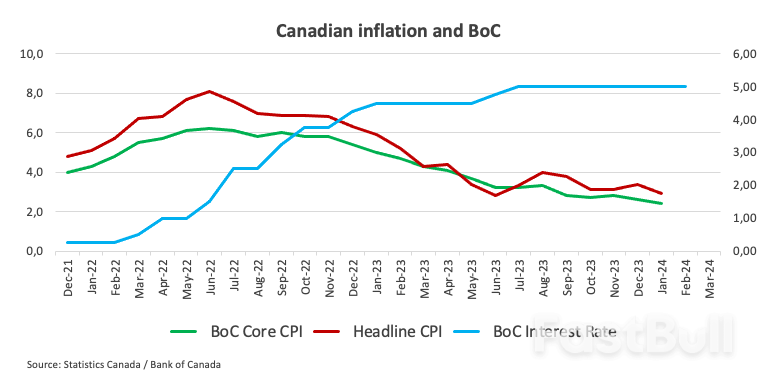
          Canada is slated to unveil the always-relevant inflation-related figures on Tuesday. Statistics Canada will release the Consumer Price Index (CPI) for the month of February, with expectations pointing towards a year-on-year rise of 3.1% in the headline print, slightly surpassing January’s 2.9% increase. Monthly projections anticipate a 0.6% increase in the index compared to the previous month's flat reading.
          Alongside the CPI data, the Bank of Canada (BoC) will release its Core Consumer Price Index gauge, which excludes volatile elements like food and energy costs. In January, the BoC Core CPI indicated a monthly uptick of 0.1% and a year-on-year rise of 2.4%.
          These statistics will be closely monitored as they could influence the trajectory of the Canadian Dollar (CAD) and shape outlooks regarding the Bank of Canada's monetary policy. Speaking about the Canadian Dollar (CAD), it has shown weakness against the US Dollar (USD) in past sessions and presently hovers around multi-session lows well past the 1.3500 yardstick.

          What to expect from Canada’s inflation rate?

          Analysts expect a pick-up of price pressures throughout Canada during last month. In fact, inflation measured by annual changes in the Consumer Price Index, is forecast to resume its upward trajectory in February, mirroring trends observed in many of Canada's G10 counterparts, notably its neighbour, the US. After reaching 4% in August, the CPI has shown a downward trend, with the exception of the bounce recorded in the last month of the year. All in all, inflation indicators still remain well above the Bank of Canada's 2% target.Canada CPI Preview: Inflation Expected To Rebound Slightly To 3.1% In February_1
          Should the forthcoming data confirm the anticipated increase in inflationary pressures, investors might consider the possibility of the central bank keeping the current restrictive stance in place for a longer duration than originally predicted. Still, any additional tightening of monetary conditions seems unlikely, as per comments from the bank’s officials.
          The latter situation would necessitate a sudden and sustained resurgence of price pressures and a rapid increase in consumer demand, both of which seem improbable in the foreseeable future.
          During his remarks at the latest BoC meeting, Governor Tiff Macklem expressed optimism about the ongoing battle against inflation, noting current progress and anticipating further advancements. He highlighted the significance of core inflation measures, suggesting that if they remain unchanged, the forecasts for overall inflation reduction may not come to fruition. He assessed the risks to the inflation outlook as reasonably balanced and noted that well-anchored inflation expectations are aiding efforts to bring inflation back under control.

          When is the Canada CPI data due and how could it affect USD/CAD?

          On Tuesday at 12:30 GMT, Canada is set to release the Consumer Price Index for February. The Canadian Dollar's potential response is tied to changes in monetary policy expectations by the Bank of Canada. However, barring any real surprise in either direction, the BoC is unlikely to change its current cautious monetary policy stance, in line with other central banks such as the Federal Reserve (Fed).
          The USD/CAD has started the new trading year in quite a bullish fashion, although the uptrend appears to have met a decent barrier around the 1.3600 zone.
          Pablo Piovano, Senior Analyst at FXStreet, says: “There is a strong likelihood of USD/CAD maintaining the constructive bias as long as it remains above the significant 200-day Simple Moving Average (SMA) at 1.3479. The bullish sentiment is expected to strengthen even more if there is a sustained break above the so-far yearly tops around 1.3600. On the flip side, the breach of the 200-day SMA could open the door to extra losses and a potential move to the January low of 1.3358 (January 31). South from here, there are no support levels of note prior to the December 2023 bottom of 1.3177, which occurred on December 27”.
          Pablo adds: "Significant increases in volatility around CAD would require unexpected inflation figures. If the numbers fall below expectations, it could strengthen the argument for potential interest rate cuts by the BoC in the next few months, further appreciating USD/CAD. However, a rebound in the CPI, similar to trends observed in the US, might provide some support to the Canadian Dollar, although to a limited extent. A higher-than-anticipated inflation reading would intensify pressure on the Bank of Canada to maintain elevated rates for an extended period, potentially resulting in prolonged challenges for many Canadians dealing with higher interest rates, as highlighted by Bank of Canada Governor Macklem."

          Source:FXStreet

          To stay updated on all economic events of today, please check out our Economic calendar
          Risk Warnings and Disclaimers
          You understand and acknowledge that there is a high degree of risk involved in trading. Following any strategies or investment methods may lead to potential losses. The content on the site is provided by our contributors and analysts for information purposes only. You are solely responsible for determining whether any trading assets, securities, strategy, or any other product is suitable for investing based on your own investment objectives and financial situation.
          Add to Favorites
          Share

          Stable Eurozone Bond Yields Amidst BOJ Policy Shift; Investor Confidence Boosts Equities

          Ukadike Micheal

          Economic

          Stocks

          Bond

          Eurozone bond yields remained largely unchanged on Tuesday, with global attention focused on the Bank of Japan's decision to terminate eight years of negative interest rates. Germany's 10-year bond yield, serving as the eurozone's benchmark, saw a marginal increase of less than 1 basis point, reaching 2.462%. Similarly, the 2-year bond yield for Germany experienced a minor uptick of less than 1 basis point, climbing to 2.923%. The BOJ announced its new policy rate, setting the overnight call rate within a range of 0-0.1%, marking a departure from its previous key rate of -0.1%.
          Analysts indicated that further rate hikes might be necessary before Japanese investors consider withdrawing from foreign bond markets to repatriate cash. Meanwhile, upbeat investors rushed into emerging market equities in March at the fastest pace since April 2017 and into eurozone stocks at the quickest clip since June 2020, according to Bank of America's fund manager survey. Global growth expectations among fund managers surveyed by BofA were at a two-year high, with "risk appetite" reaching its highest level since November 2021.
          The surge in investor optimism was fueled by a series of stronger-than-expected U.S. data releases, boosting sentiment in global stock markets and reducing the likelihood of Federal Reserve rate cuts, which could potentially impact bond prices. Despite this, the benchmark U.S. S&P 500 continued to trade at all-time highs. BofA's survey revealed a shift in sentiment regarding bond yields, with only 40% of respondents expecting lower yields in the next 12 months, down from 62% in December 2023. Inflation emerged as the primary concern for markets, replacing the previous fear of a global recession.
          March witnessed outflows from U.S. equities, particularly from discretionary and tech stocks. However, the "long Magnificent Seven" stocks, comprising Alphabet, Amazon, Apple, Meta, Microsoft, Nvidia, and Tesla, remained the most crowded trade among investors. Notably, survey respondents expressed positive sentiments about corporate profit growth for the first time since January 2022, underscoring the prevailing investor optimism in the market.
          The stability in eurozone bond yields amid the BOJ's policy shift reflects the intricate interplay between global monetary policies and investor sentiments. Despite uncertainties surrounding inflation and market risks, the surge in investor optimism, particularly in emerging market equities and eurozone stocks, underscores the resilience of global markets. Investors should remain vigilant and adapt their strategies to navigate evolving market conditions effectively.

          Source: Yahoo Finance

          To stay updated on all economic events of today, please check out our Economic calendar
          Risk Warnings and Disclaimers
          You understand and acknowledge that there is a high degree of risk involved in trading. Following any strategies or investment methods may lead to potential losses. The content on the site is provided by our contributors and analysts for information purposes only. You are solely responsible for determining whether any trading assets, securities, strategy, or any other product is suitable for investing based on your own investment objectives and financial situation.
          Add to Favorites
          Share

          The Commodities Feed: Energy Supply Risks

          ING

          Commodity

          Energy markets continue to move higher, buoyed by growing supply risks following disruptions to Russian refinery capacity.

          Energy – Crude hits highest levels since November

          The oil market rallied further yesterday, with ICE Brent settling more than 1.8% higher on a day which saw Brent briefly trading above US$87/bbl and its highest levels since November. The catalyst for the move appears to have been further Ukrainian attacks on Russian refinery capacity over the weekend.
          Likely providing further support were reports that Iraq’s oil ministry plans to trim oil exports to 3.3m b/d over the coming months. This compares with the 3.43m b/d of exports in February. The move is primarily to absorb the oversupply from Jan’24-Feb’24 and to showcase the nation’s commitment to stick to its voluntary oil cuts as part of the OPEC+ agreement. Recent OPEC numbers showed that Iraq pumped 0.2m b/d of oil above its agreed quota of 4m b/d last month.
          The EIA’s latest drilling productivity report estimates that US shale oil production will rise by 10k b/d MoM to 9.77m b/d in April, following the steady rise in the US rig count this year. The increase is set to be driven by the Permian and Bakken regions. Meanwhile, EIA also revised up its shale oil forecast for March to 9.76m b/d from 9.72m b/d. The report also showed that the number of drilled but uncompleted wells (DUCs) fell by 3 over the month to 4,483 at the end of February.

          Metals – Yunnan province to restart aluminium capacity

          The latest reports from Shanghai Metals Market (SMM) suggest that aluminium smelters in Yunnan province will restart nearly half of idled capacity. Aluminium smelters are expected to restart about 520kt of idle capacity in the near term. It is estimated that roughly 1.17mt of aluminium capacity has been idled since November due to hydropower shortages during the dry season.
          The latest data from China customs shows that China’s imports of unwrought aluminium and aluminium products rose 77.3% YoY to 340kt in February, while gaining 93.6% YoY to 720kt in the first two months of 2024. Looking at exports, alumina exports rose 22% YoY to 140kt in February and year-to-date shipments increased by 10.3% YoY to 280kt in the first two months of the year.

          Agriculture – Indian sugar output falls

          Recent data from the Indian Sugar & Bio-energy Manufacturers Association (ISMA) shows that 2023/24 sugar production in India fell marginally to 28.1mt (excluding sugar diverted for ethanol production) to15 March, compared to 28.3mt during the same period last year. Sugar production has been recovering over the past few weeks and recently the Association also revised up its total sugar production estimate for the 2023/24 season, to 34mt from 33.05mt on improving weather. The group said that 371 mills were crushing cane by mid-March, compared to 325 mills at the same time last year.
          The latest trade numbers from China customs show that corn imports declined by 15.7% YoY to 2.6mt last month. China's forecast rise in GMO (Genetically Modified) corn planting has doubled this year compared to last year. Cumulative imports are still up 16.2% YoY, to 6.2mt over the first two months of the year. Among other grains, wheat imports surged 19.2% YoY to 1.8mt in February.
          The latest data from Ukraine’s Agriculture Ministry shows that grain exports so far in the 2023/24 season dropped to 32.4mt as of 18 March, a decline of 9.4% YoY. This includes wheat exports of 12.9mt, up 5% YoY, and corn shipments of 17.4mt, down 17% YoY. Exports through the Black Sea port route continue to be impacted following a recent Russian missile attack that damaged grain storage facilities and warehouses at Odesa port.
          Risk Warnings and Disclaimers
          You understand and acknowledge that there is a high degree of risk involved in trading. Following any strategies or investment methods may lead to potential losses. The content on the site is provided by our contributors and analysts for information purposes only. You are solely responsible for determining whether any trading assets, securities, strategy, or any other product is suitable for investing based on your own investment objectives and financial situation.
          Add to Favorites
          Share

          Morgan Stanley Warns US Stocks at Risk in ‘Dollar Regime Shift’

          Thomas

          Economic

          Forex

          Stocks

          Morgan Stanley Warns US Stocks at Risk in ‘Dollar Regime Shift’_1
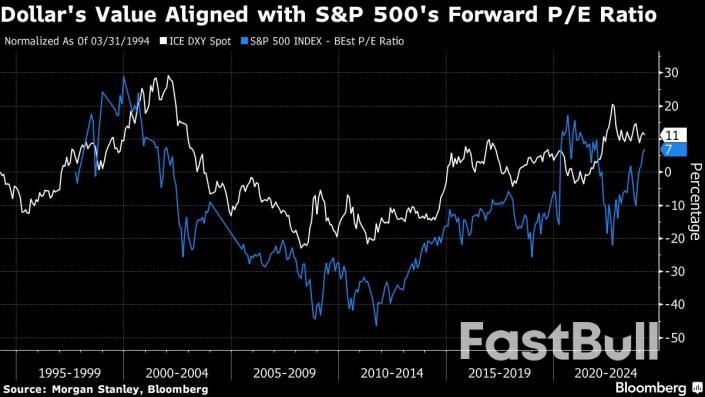
          The chief investment officer of Morgan Stanley Wealth Management has a warning for stock bulls: the structural forces weighing on the dollar are threatening to spread to US equities in turn.
          “Consider preparing for a US dollar regime shift,” cautioned Lisa Shalett. Deteriorating relations with China, the end of yield curve management in Japan and rising Bitcoin and commodity prices suggest the currency’s run “might be hitting its limit.”
          “While correlation is not causation, the correlation of US dollar strength to P/E ratios is worth monitoring now that the greenback’s bull market cycle may be maturing,” she wrote in a note Monday.
          According to Shalett, that dollar strength has been at the “heart of an easy money regime” in the US — by pushing down import-related inflation and pressuring energy prices lower — that has boosted the performance of the equity market of late.
          Shalett recently encouraged investors to look abroad for future stock returns as a hedge against a potential correction in US equities. She, along with a handful of others on Wall Street have cautioned on the latest bull run in stocks even as US benchmarks continue to reach new milestones.
          After falling nearly 3% in 2023, the greenback got off to a hot start this year as traders rapidly dialed back expectations of monetary easing from the Federal Reserve. But those gains have stalled even as bets on the pace of rate cuts were further reined in. A Bloomberg gauge of the dollar has slipped 0.5% this March while Bitcoin and gold prices traded to recent, record highs.
          Pressuring the dollar is the prospect of Bank of Japan tightening its policy even as major Group-of-10 peers cut interest rates, that should boost the yen and Japanese rates and repatriation flows out of US equities, Shalett said. Fractured US-China relations, especially in the midst of the US presidential election, also threaten to accelerate de-dollarization — a move perhaps reflected in rising gold prices — she said.
          A broader downtrend in the dollar would then flow through to US stocks via earnings multiples, the expansion of which has been responsible for much of the market’s recent gains.
          “If global policy starts rebalancing toward a pre-GFC mix, or market euphoria ushers in a capital markets bust and a weaker dollar, investors may benefit from more asset and geographic diversification,” Shalett said.

          Source: Bloomberg

          To stay updated on all economic events of today, please check out our Economic calendar
          Risk Warnings and Disclaimers
          You understand and acknowledge that there is a high degree of risk involved in trading. Following any strategies or investment methods may lead to potential losses. The content on the site is provided by our contributors and analysts for information purposes only. You are solely responsible for determining whether any trading assets, securities, strategy, or any other product is suitable for investing based on your own investment objectives and financial situation.
          Add to Favorites
          Share

          Cryptocurrency Market Sees 5% Decline as Investors Take Profits

          Ukadike Micheal

          Economic

          Cryptocurrency

          In a notable downturn, Bitcoin experienced its most significant one-day decline in two weeks, dropping by as much as 5.7% on Tuesday, alongside a broader sell-off impacting cryptocurrencies and other high-risk assets such as stocks. The cryptocurrency's price dipped to $63,806, marking a 5.25% decrease from its recent highs and hitting a two-week low of $63,555. Ether, the second-largest cryptocurrency by market capitalization, followed suit, witnessing a 5.1% decline to $3,326.
          Despite this recent decline, Bitcoin's year-to-date performance still boasts a substantial 52% gain, reflecting the ongoing interest of investors who have turned to U.S. exchange-traded funds backed by spot bitcoin. This surge in investment underscores the continued allure of cryptocurrencies as a lucrative asset class amidst broader market volatility.
          From a technical standpoint, Bitcoin's sharp downturn highlights the inherent volatility that characterizes the cryptocurrency market. Market sentiment, regulatory developments, and macroeconomic factors can all contribute to rapid price fluctuations, necessitating close attention from investors to navigate market dynamics effectively.
          The sell-off in Bitcoin and other cryptocurrencies may be attributed to a variety of factors, including profit-taking by investors who have benefited from the recent price rally. Moreover, concerns surrounding regulatory scrutiny and geopolitical tensions can exacerbate market uncertainty, prompting some investors to adopt a risk-averse approach and divest from high-risk assets like cryptocurrencies.
          The impact of Bitcoin's price decline extends beyond the cryptocurrency market, potentially influencing sentiment in broader financial markets. Cascading sell-offs across different digital assets could occur as market participants reassess their risk tolerance and investment strategies in response to heightened volatility.
          Despite short-term fluctuations, many analysts maintain a positive outlook on the long-term prospects of Bitcoin and other cryptocurrencies. The underlying blockchain technology continues to drive innovation and disrupt traditional financial systems, offering unique opportunities for investors seeking exposure to the digital economy.
          The recent downturn in Bitcoin underscores the inherent volatility and uncertainty inherent in the cryptocurrency market. While short-term price fluctuations may dampen investor sentiment, the long-term outlook for Bitcoin remains optimistic, underpinned by increasing adoption and technological advancements. Investors are advised to exercise caution, conduct thorough research, and diversify their portfolios to mitigate risks associated with investing in cryptocurrencies amidst market fluctuations

          Source: Reuters

          To stay updated on all economic events of today, please check out our Economic calendar
          Risk Warnings and Disclaimers
          You understand and acknowledge that there is a high degree of risk involved in trading. Following any strategies or investment methods may lead to potential losses. The content on the site is provided by our contributors and analysts for information purposes only. You are solely responsible for determining whether any trading assets, securities, strategy, or any other product is suitable for investing based on your own investment objectives and financial situation.
          Add to Favorites
          Share

          BOJ Ends Era Of Negative Rates With Few Clues On More Hikes

          Samantha Luan

          Economic

          Central Bank

          The Bank of Japan ended the most aggressive monetary stimulus program in modern history, scrapping the world’s last negative interest rate while keeping financial conditions easy for now — a dovish tone that weakened the yen after the widely expected decision.
          The central bank set a new policy rate range of between 0% and 0.1%, shifting from a -0.1% short-term interest rate, according to a statement after a two-day board gathering that concluded Tuesday. The BOJ also scrapped the yield curve control program while pledging to keep buying long-term government bonds as needed. It also ended its purchases of exchange-traded funds.
          The bank’s indication that financial conditions will remain accommodative suggests this isn’t the beginning of an aggressive tightening cycle of the sort seen in US and Europe in recent years. That stance appeared to disappoint some market players looking for a more aggressive rate outlook. The vote for the rate hike was 7-2.
          The yen fell against the dollar from 149.29 just before the announcement to as weak as 150 afterwards. The move was relatively modest, with similarly subdued reaction in other markets. The broad Topix stock index rose about 0.4% while the Nikkei 225 Stock Average was little changed. Benchmark 10-year government bond yields edged lower.
          In ending the negative rate, Governor Kazuo Ueda makes history by turning the page on the BOJ’s experimental monetary easing program after years in which Japan’s central bank was a global outlier. The policy gap now becomes even more stark as the BOJ makes its first upward move in close to 17 years just as its peers around the world are mulling cutting their rates after historically aggressive tightening campaigns.
          Some investors were looking for a more concrete indication that rates would continue rising as Japan returned toward a conventional policy stance. Others may also have seen the majority vote as showing a degree of resistance to upward moves.
          The BOJ couldn’t say anything about the policy path toward additional hikes because it will depend on incoming data, said economist Yuichi Kodama at Meiji Yasuda Research Institute.
          “But I think we should be ready for possibilities that the rate hike pace will happen faster than expected because wages are rising this much, which is likely to support consumer spending,” he said.BOJ Ends Era Of Negative Rates With Few Clues On More Hikes_1
          The BOJ’s move comes as other major central banks are set to hold policy rates this month. The Federal Reserve is expected to hold interest rates at a two-decade high for a fifth month as officials meet later this week. The Bank of England is set to leave its key rate at a 16-year high of 5.25% at its March 21 meeting and the European Central Bank earlier this month left interest rates unchanged for a fourth meeting. The Reserve Bank of Australia announced earlier Tuesday that its cash rate target will remain at 4.35%.
          High rates and a strong currency in the US have kept Japan’s 10-year yields and the yen under pressure. The yield slipped as low as 0.725% after the decision, contrary to some expectations that it would rise with a rate hike and the removal of yield curve control.
          The dynamic between Japanese and US rates is set to continue despite the BOJ’s hike given ongoing strength in the US economy and resilient consumer spending there.
          “This is a little bit like the party has started - but when are you coming next? Markets will push the BOJ,” said Alicia Garcia Herrero, Natixis SA’s chief Asia Pacific economist.
          The BOJ said its stable inflation target of 2% has come into sight as a virtuous cycle of wages feeding demand-led inflation is solidifying. Rengo, Japan’s biggest umbrella group for labor unions, reported Friday that wage talks resulted in an initial deal for 5.28% increases, the best outcome since 1991. That fueled market speculation that the conditions were finally in place for a rate move after Ueda had repeatedly emphasized the importance of wage trends.
          Some 38% of 50 economists surveyed by Bloomberg had expected the March rate liftoff, while another 54% predicted the move would come a month later. The survey was conducted before the strong results from annual wage negotiations that fueled widespread speculation the central bank wouldn’t wait.
          As part of its policy shift, the central bank said it would ditch its buying of real estate investment trusts, too. The BOJ adopted the highly unusual measure of buying risk assets like ETFs in 2010, ultimately becoming the biggest single holder of Japanese stocks, before buying operations slowed to only three instances last year. The optics of using the measure became increasingly awkward as Japanese stocks hit a record high this month, begging the question of why the equity market needed support.

          What Bloomberg Economics Says...

          “In our view, the BOJ moving even after recent data depicted wobbly growth and slack inflation hints at a strong resolve to normalize its policy even if the economy isn’t in top shape.”
          — Taro Kimura, economist
          Ueda, the first former academic to take the helm at the BOJ, had previously adjusted aspects of the ultra-easy policy settings he inherited when he became governor in April, tweaking the parameters of YCC in both July and October. Few analysts predicted Ueda would be able to unwind within a year so many policies that had become a headache for the central bank.
          Ueda’s predecessor Haruhiko Kuroda launched a shock-and-awe stimulus bazooka in April 2013 with the aim of achieving 2% inflation in two years. As that goal stayed out of reach, Kuroda adopted the negative rate and then the YCC program in 2016. His focus thereafter increasingly fell on enhancing the sustainability of these monetary settings with policy tweaks.
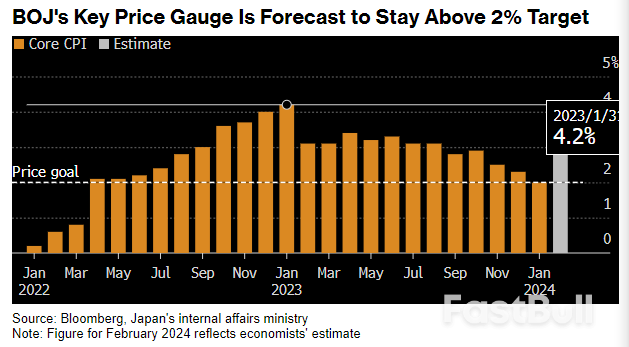
          The prolonged monetary easing led to an expansion of the BOJ’s balance sheet to the point where it’s now worth 127% of the annual economy, four times bigger than the Federal Reserve’s assets-to-economy ratio. Even so, inflation didn’t really kick in until the supply shocks triggered by Covid-19 and Russia’s war in Ukraine. Japan’s key inflation gauge has stayed at or above the 2% target for 22 months, and that stretch is forecast to continue with national price data due Friday.
          Ueda’s post-decision press conference will begin at 3:30 p.m. in Tokyo. At that event he will elaborate on the thinking behind Tuesday’s policy decisions.

          Source:Bloomberg

          To stay updated on all economic events of today, please check out our Economic calendar
          Risk Warnings and Disclaimers
          You understand and acknowledge that there is a high degree of risk involved in trading. Following any strategies or investment methods may lead to potential losses. The content on the site is provided by our contributors and analysts for information purposes only. You are solely responsible for determining whether any trading assets, securities, strategy, or any other product is suitable for investing based on your own investment objectives and financial situation.
          Add to Favorites
          Share

          Swiss Central Bank Eases Efforts to Support Franc by the Conclusion of 2023

          Ukadike Micheal

          Economic

          Forex

          In response to the franc's surge against the euro, the Swiss National Bank (SNB) scaled back its foreign exchange sales in the fourth quarter, amounting to 20.3 billion francs, down from 37.6 billion francs in the previous quarter. This adjustment reflects a shift in the SNB's intervention strategy, announced in mid-December, allowing actions in both directions to stabilize the exchange rate and reduce its substantial balance sheet.
          Throughout 2023, the SNB sold a total of 132.9 billion francs, a significant increase from 2022's 22.3 billion francs in sales and 2021's 21.1 billion francs in purchases. This sales surge came amid the Swiss franc's 4% appreciation against the euro in the fourth quarter, reaching its highest level in almost a decade by the end of 2023. However, since the beginning of the current year, the franc has experienced a sharp decline, nearly erasing its quarterly gains against the euro amidst speculation that the SNB may consider interest rate cuts before mid-year.
          The SNB's decision to ease off on currency sales effectively stalls the process of reducing its inflated balance sheet. This development has raised concerns, with the OECD warning that the central bank's asset reserves have become uncomfortably large. Despite this, official confirmation is pending until March 28, when the SNB is expected to provide an update.
          From a technical perspective, the SNB's reduced intervention in the foreign exchange market could have significant implications for currency traders and investors. The Swiss franc's recent volatility against the euro and other major currencies underscores the challenges faced by central banks in managing exchange rates amidst global economic uncertainties.
          The SNB's intervention strategy not only influences currency markets but also has broader implications for Switzerland's economy. By stabilizing the exchange rate, the SNB aims to support Swiss exporters and maintain price stability. However, excessive intervention can distort market dynamics and create risks, such as asset bubbles and inflationary pressures.
          The SNB's decision to scale back its foreign exchange sales reflects a nuanced approach to managing currency markets amidst shifting economic conditions. While this adjustment may temporarily alleviate pressure on the franc, it also raises questions about the sustainability of the SNB's monetary policy. Investors and analysts will closely monitor future developments, including potential interest rate adjustments, to gauge the impact on currency markets and the broader Swiss economy.

          Source: Bloomberg

          To stay updated on all economic events of today, please check out our Economic calendar
          Risk Warnings and Disclaimers
          You understand and acknowledge that there is a high degree of risk involved in trading. Following any strategies or investment methods may lead to potential losses. The content on the site is provided by our contributors and analysts for information purposes only. You are solely responsible for determining whether any trading assets, securities, strategy, or any other product is suitable for investing based on your own investment objectives and financial situation.
          Add to Favorites
          Share
          FastBull
          Copyright © 2025 FastBull Ltd

          728 RM B 7/F GEE LOK IND BLDG NO 34 HUNG TO RD KWUN TONG KLN HONG KONG

          TelegramInstagramTwitterfacebooklinkedin
          App Store Google Play Google Play
          Products
          Charts

          Chats

          Q&A with Experts
          Screeners
          Economic Calendar
          Data
          Tools
          Membership
          Features
          Function
          Markets
          Copy Trading
          Latest Signals
          Contests
          News
          Analysis
          24/7
          Columns
          Education
          Company
          Careers
          About Us
          Contact Us
          Advertising
          Help Center
          Feedback
          User Agreement
          Privacy Policy
          Business

          White Label

          Data API

          Web Plug-ins

          Poster Maker

          Affiliate Program

          Risk Disclosure

          The risk of loss in trading financial instruments such as stocks, FX, commodities, futures, bonds, ETFs and crypto can be substantial. You may sustain a total loss of the funds that you deposit with your broker. Therefore, you should carefully consider whether such trading is suitable for you in light of your circumstances and financial resources.

          No decision to invest should be made without thoroughly conducting due diligence by yourself or consulting with your financial advisors. Our web content might not suit you since we don't know your financial conditions and investment needs. Our financial information might have latency or contain inaccuracy, so you should be fully responsible for any of your trading and investment decisions. The company will not be responsible for your capital loss.

          Without getting permission from the website, you are not allowed to copy the website's graphics, texts, or trademarks. Intellectual property rights in the content or data incorporated into this website belong to its providers and exchange merchants.

          Not Logged In

          Log in to access more features

          FastBull Membership

          Not yet

          Purchase

          Become a signal provider
          Help Center
          Customer Service
          Dark Mode
          Price Up/Down Colors

          Log In

          Sign Up
          Position
          Layout
          Fullscreen
          Default to Chart
          The chart page opens by default when you visit fastbull.com