

Markets
News
Analysis
User
24/7
Economic Calendar
Education
Data
- Names
- Latest
- Prev



Signal Accounts for Members
All Signal Accounts
All Contests
Brazil's Petrobras Estimates 2025 Proven Reserves Of Oil, Condensate, And Natural Gas At 12.1 Billion BOE, Up From 11.4 BOE In 2024
Norway Sovereign Wealth Fund's Holdings In USA Treasuries Worth $199 Billion At December 31 Versus$181 Billion At June 30, Fund Data Shows
Bessent Says 'Independence Does Not Mean No Accountability' In Defending Justice Department Probe Of Fed Chief
Spot Gold Broke Through $5,380 Per Ounce, Up 3.8% On The Day. Spot Silver Extended Its Gains To 4%, Currently Trading At $116.49 Per Ounce
Jeff Rosenberg Of BlackRock: The Federal Reserve's Response Mechanism (compared To Its Focus On Price Stability) Is More Focused On The Labor Side
Chicago Wheat Futures Rose About 2.3%, Corn Rose 1%. In Late New York Trading On Wednesday (January 28), The Bloomberg Grains Index Rose 1.19% To 29.3655 Points, Reaching A Daily High Of 29.5851 Points At 23:06 Beijing Time. CBOT Corn Futures Rose 1.00%, And CBOT Wheat Futures Rose 2.29%. CBOT Soybean Futures Rose 0.70% To $10.7475 Per Bushel, Reaching A Daily High Of $10.8475 At 22:41; Soybean Meal Futures Rose 1.22%, And Soybean Oil Futures Fell 0.11%
"New Bond King" Gundlach: He Believes That Federal Reserve Chairman Powell Will Not Cut Interest Rates Again During His Term
Powell: The Message Is Simply Not About Our Credibility, Inflation Expectations Show We Have Credibility
Powell: Also Advice For The Next Fed Chair Is The Need To Earn Democratic Legitimacy With Congressional Overseers
 U.S. 5-Year Note Auction Avg. Yield
A:--
F: --
P: --
U.S. API Weekly Refined Oil StocksA:--
F: --
P: --
U.S. API Weekly Crude Oil StocksA:--
F: --
P: --
U.S. API Weekly Gasoline StocksA:--
F: --
P: --
U.S. API Weekly Cushing Crude Oil StocksA:--
F: --
P: --
 Australia RBA Trimmed Mean CPI YoY (Q4)
A:--
F: --
P: --
Australia CPI YoY (Q4)A:--
F: --
P: --
Australia CPI QoQ (Q4)A:--
F: --
P: --
 Germany GfK Consumer Confidence Index (SA) (Feb)
A:--
F: --
P: --
Germany 10-Year Bund Auction Avg. YieldA:--
F: --
P: --
 India Industrial Production Index YoY (Dec)
A:--
F: --
P: --
India Manufacturing Output MoM (Dec)A:--
F: --
P: --
U.S. MBA Mortgage Application Activity Index WoWA:--
F: --
P: --
 Canada Overnight Target Rate
A:--
F: --
P: --
BOC Monetary Policy Report U.S. EIA Weekly Crude Stocks ChangeA:--
F: --
P: --
U.S. EIA Weekly Cushing, Oklahoma Crude Oil Stocks ChangeA:--
F: --
P: --
U.S. EIA Weekly Crude Demand Projected by ProductionA:--
F: --
P: --
U.S. EIA Weekly Crude Oil Imports ChangesA:--
F: --
P: --
U.S. EIA Weekly Heating Oil Stock ChangesA:--
F: --
P: --
U.S. EIA Weekly Gasoline Stocks ChangeA:--
F: --
P: --
BOC Press Conference Russia PPI MoM (Dec)
A:--
F: --
P: --
Russia PPI YoY (Dec)A:--
F: --
P: --
U.S. Interest Rate On Reserve BalancesA:--
F: --
P: --
U.S. Target Federal Funds Rate Lower Limit (Overnight Reverse Repo Rate)A:--
F: --
P: --
U.S. Federal Funds Rate TargetA:--
F: --
P: --
U.S. Target Federal Funds Rate Upper Limit (Excess Reserves Ratio)A:--
F: --
P: --
FOMC Statement FOMC Press Conference Brazil Selic Interest Rate
--
F: --
P: --
Australia Import Price Index YoY (Q4)--
F: --
P: --
 Japan Household Consumer Confidence Index (Jan)
--
F: --
P: --
 Turkey Economic Sentiment Indicator (Jan)
--
F: --
P: --
 Euro Zone M3 Money Supply (SA) (Dec)
--
F: --
P: --
Euro Zone Private Sector Credit YoY (Dec)--
F: --
P: --
Euro Zone M3 Money Supply YoY (Dec)--
F: --
P: --
Euro Zone 3-Month M3 Money Supply YoY (Dec)--
F: --
P: --
 South Africa PPI YoY (Dec)
--
F: --
P: --
Euro Zone Consumer Confidence Index Final (Jan)--
F: --
P: --
Euro Zone Selling Price Expectations (Jan)--
F: --
P: --
Euro Zone Industrial Climate Index (Jan)--
F: --
P: --
Euro Zone Services Sentiment Index (Jan)--
F: --
P: --
Euro Zone Economic Sentiment Indicator (Jan)--
F: --
P: --
Euro Zone Consumer Inflation Expectations (Jan)--
F: --
P: --
 Italy 5-Year BTP Bond Auction Avg. Yield
--
F: --
P: --
Italy 10-Year BTP Bond Auction Avg. Yield--
F: --
P: --
 France Unemployment Class-A (Dec)
--
F: --
P: --
South Africa Repo Rate (Jan)--
F: --
P: --
Canada Average Weekly Earnings YoY (Nov)--
F: --
P: --
U.S. Nonfarm Unit Labor Cost Final (Q3)--
F: --
P: --
U.S. Initial Jobless Claims 4-Week Avg. (SA)--
F: --
P: --
U.S. Weekly Continued Jobless Claims (SA)--
F: --
P: --
U.S. Trade Balance (Nov)--
F: --
P: --
U.S. Weekly Initial Jobless Claims (SA)--
F: --
P: --
Canada Trade Balance (SA) (Nov)--
F: --
P: --
U.S. Exports (Nov)--
F: --
P: --
Canada Imports (SA) (Nov)--
F: --
P: --
Canada Exports (SA) (Nov)--
F: --
P: --
U.S. Unit Labor Cost Revised MoM (SA) (Q3)--
F: --


















No matching data

Latest Views
Latest Views
Trending Topics
Top Columnists
Latest Update
White Label
Data API
Web Plug-ins
Affiliate Program
View All
No data
Brazil's public debt is projected to surge to nearly $2 trillion amid record interest rates and election volatility, spurring a new financing strategy.
Brazil's Treasury has set a target for federal public debt to close the year between 9.7 trillion and 10.3 trillion reais ($1.86 to $1.98 trillion). This projection signals a potential increase of up to 19% from the 8.635 trillion reais recorded in 2025.
The forecast marks another year of double-digit expansion for the public debt of Latin America's largest economy, following an 18% increase last year.
In its Annual Financing Plan, the Treasury detailed a strategy for a "more frequent market presence." The plan involves consistent U.S. dollar bond issuances and an openness to other currencies, including the euro and yuan, to diversify Brazil's financing sources.
A central objective is to gradually refine the public debt's composition. The Treasury aims to achieve this by increasing the share of fixed-rate bonds and extending the maturities of its debt instruments.
According to its new guidelines, fixed-rate bonds are projected to represent 21% to 25% of the total debt by year-end, a shift from 22% in 2025.
Meanwhile, debt linked to the benchmark Selic interest rate is estimated to account for 46% to 50% of the total, after rising to 48.3% last year. These floating-rate bonds, known as LFTs, tend to be more attractive to investors during periods of elevated risk aversion. However, they also expose public debt servicing costs to sharp increases when interest rates climb.
Many market participants expect volatility to intensify this year due to Brazil's upcoming general election in October.
The nation's benchmark Selic rate currently stands at 15%, a near 20-year high, where it has remained since July. The central bank is holding rates firm to bring inflation back to its 3% target. This comes as the economy has been slow to show clear signs of cooling amid government stimulus under President Luiz Inacio Lula da Silva.
The sharp monetary tightening last year, which saw the Selic rise from 12.25%, was a primary driver of the increase in public debt. Policymakers are set to announce their next monetary policy decision late on Wednesday, with markets widely expecting another hold.
($1 = 5.2074 reais)
Ecuador just made a stunning return to global credit markets, and investors are betting Argentina could be next. In its first major bond sale since a 2020 debt restructuring, Ecuador successfully sold $4 billion in bonds—its largest global offering ever.
The deal attracted so much demand that the South American nation secured its lowest borrowing costs in years. The positive momentum was reinforced when Moody's Ratings upgraded the country's credit score, causing yields to compress even further.
This successful issuance is more than just a win for Ecuador, which plans to use the funds to repay existing debt. It’s a clear signal of strong investor appetite for high-yield emerging-market credits and raises hopes for Argentina, which has also been locked out of global markets since its own 2020 restructuring.
"Ecuador's debt issuance this week shows that even countries with a long history of defaults, high political risk and scarce reserves can access international markets at single-digit yields," noted Diego Chameides, chief economist at Banco Galicia, one of Argentina's largest lenders. "It appears the window for Argentina's market access could open up, which is key to dealing with large debt maturities in the coming years."
Reflecting this optimism, Argentine bonds rallied alongside Ecuadorian debt, and a key measure of the country's risk has fallen below 500 basis points—a level officials previously identified as compatible with a market return.
Despite Argentina's economy being roughly four times larger than Ecuador's, the two nations share several key financial characteristics.
• History of Defaults: Both have restructured their debt multiple times. Since the early 1800s, Argentina has defaulted nine times and Ecuador ten.
• IMF Programs: Both countries remain under International Monetary Fund programs.
• Weak Reserves: Both face chronically weak foreign-reserve positions, a major concern for debt investors.
However, their prospects are improving under new administrations focused on fiscal consolidation. In Ecuador, President Daniel Noboa cut a diesel subsidy while containing the resulting social unrest. In Argentina, President Javier Milei has eased investor concerns by loosening currency restrictions and rebuilding foreign reserves since his victory in October's midterm elections.
For many analysts, Ecuador’s strategy of using the new issuance to buy back debt and reduce near-term maturities could serve as a direct template for Argentina.
"Ecuador's latest transaction is a clean read-through for how Argentina's curve could react to a well-designed liability management deal," said Mauro Favini, a senior portfolio manager at Vanguard. "Argentina is clearly improving, but until it extends its debt stack through a transaction akin to Ecuador's, the market will struggle to take the curve meaningfully tighter."
Argentina has been considering a return to markets ever since Milei's election win pushed yield spreads toward the 550 basis-point range. While corporate and provincial entities have successfully issued debt, the sovereign has held back, using a repurchase agreement with banks to handle January payments.
A top priority for Argentina is rebuilding its depleted foreign reserves. The central bank has been actively buying U.S. dollars, but may want to demonstrate more substantial progress before tapping the markets.
"Our impression is that they want to show several billion in FX purchases before going to market, as they are very focused on bringing down country risk before launching the deal," explained Walter Stoeppelwerth, chief investment officer at Grit Capital Group. "But it's not as simple as Ecuador. Argentina's swap could be gigantic in comparison."
Argentine officials have tried to manage expectations. Economy Minister Luis Caputo has stated a desire to reduce the nation's reliance on Wall Street, and President Milei recently said, "the only thing we would go to international markets for would be rollover." This marks a sharp contrast to the 2016-2018 period under former President Mauricio Macri, when broad market access fueled a debt boom that ultimately collapsed.
Despite the cautious rhetoric, Argentina has limited time to wait. According to calculations by Galicia, foreign-currency debt payments for 2026 and 2027 total nearly $43 billion, making a return to market financing critical.
With yields on its 2035 global bonds near 9.1%, Argentina remains one of the few large emerging-market credits offering such attractive returns. As sovereign bond risk in the developing world hits a 13-year low, the pool of high-yielding assets is shrinking, driving more demand toward riskier debt.
Investors argue that this combination of factors should push Argentina to act sooner rather than later.
"To push the curve toward true normalization and lower long-term funding costs, Argentina will need an Ecuador-style, proactive liability management strategy," Favini concluded. "Even after covering its 2026 liquidity needs via the repo, Argentina still needs to use the current market window."
With the indictment of Venezuela’s President Nicolás Maduro, the global energy market is now focused on a critical question: can the nation's collapsed oil industry be rebuilt? The path to restoring Venezuela's crude production to its former glory is long, complicated, and paved with skepticism from the very companies needed to make it happen.
The conversation has shifted toward a potential U.S.-led effort to bring major oil companies back to the politically volatile nation, which nationalized many of their assets in 2007. However, reviving an industry battered by decades of decline is a monumental task.
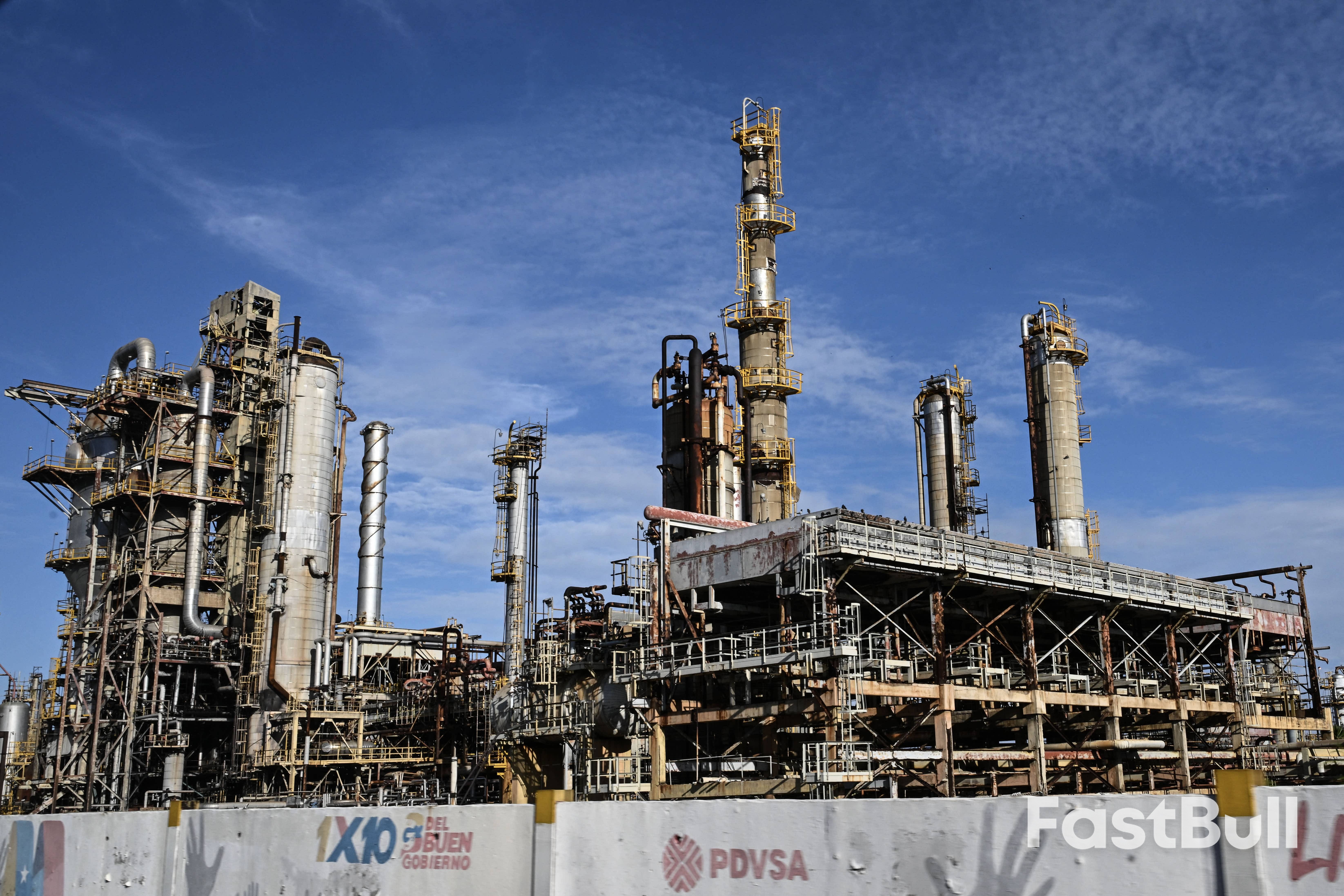
Venezuela currently produces an average of 800,000 barrels of crude oil per day (bpd), a fraction of its peak output of 3.5 million bpd in the 1990s. The decline accelerated sharply after the 2007 expropriation of U.S. oil assets.
The industry was further damaged by the 2014-2016 global oil price crash, which saw crude prices fall by up to 70%. Even as prices stabilized, Venezuela’s production failed to recover and was hit again by the pandemic-induced price slump in 2020. Recent years have seen a slight recovery, but the numbers remain bleak.
While current production is low, Venezuela's untapped potential is enormous. Research firm Wood Mackenzie estimates the country holds at least 241 billion barrels of recoverable crude oil. Analysts at Bernstein suggest the figure could be as high as 300 billion barrels of proven reserves, placing it among the largest in the world.
In a recent note, Bernstein declared, "Venezuela has the potential to be an oil superpower." But turning those vast underground reserves into actual production is where the real challenge lies.
Despite the immense reserves, Wall Street remains deeply skeptical about any near-term production boom. Bernstein analysts point out that the issue has never been the oil in the ground but the "above-surface constraints."
Their research highlights the core problems: "Since the 2006/07 nationalization of western oil company interests by Hugo Chavez, lack of investment, mismanagement, neglect, have driven an oil production decline of 70% to just 1% of current global output."
U.S. oil majors share this caution. Burned by the last decade's price crash, Western energy companies are now focused on capital discipline and efficient cash flow. The specific risk of being "twice bitten by Venezuelan nationalization," as Bernstein puts it, makes them "exceptionally cautious about committing fresh capital quickly."
This sentiment was voiced directly by Exxon Mobil CEO Darren Woods at a White House meeting. After President Trump suggested U.S. oil companies would spend $100 billion in the country, Woods told him the Venezuelan market is "uninvestable" in its current state.
Chevron stands as a notable exception. As the only major U.S. oil company still operating in Venezuela, it holds a significant advantage. The company, which has been in the country since 1923, maintains a joint venture with the national oil company PDVSA that currently produces about 240,000 bpd.
At the same White House meeting, Chevron CEO Mike Wirth stated the company could increase its production by about 50% "within our own disciplined investment schemes" in the next 18 to 24 months.
The Trump administration has signaled that new production is a higher priority than reclaiming nationalized assets. This comes as Chinese and Russian state-controlled oil companies hold rights to millions of barrels in Venezuela—up to 6.5 million, according to research from Wood Mackenzie and Morgan Stanley.
Meanwhile, the U.S. refining system is well-positioned to process Venezuelan crude. "In the absence of sanctions or other disruptions, U.S. Gulf Coast refiners are the natural destination of Venezuela's crude," Bernstein wrote. This has already benefited some investors and refiners like Valero Energy, which was among the first to purchase Venezuelan oil recently. U.S. Energy Secretary Chris Wright noted that the U.S. has received 30% higher prices for Venezuelan crude in its first sales since the military action, with Trump stating Venezuela will turn over 30 to 50 million barrels of sanctioned oil to be sold at market prices.
Analysts are divided on how quickly Venezuela can ramp up its output, with most agreeing that significant progress will take years and substantial capital.
• BMO Capital Markets: Expects little change in export levels in the near term but sees potential for higher production in 3-5 years if U.S. majors return.
• Wolfe Research: Believes production could rise to around 1 million bpd over the next few years with basic maintenance.
• JPMorgan Chase: Estimates that with political stability and new licensing, production could reach 1.2 million bpd within months and 1.4 million bpd in two years. Over the next decade, output could potentially hit 2.5 million bpd.
• Goldman Sachs: Daan Struyven, co-head of commodities research, projected on a recent podcast that production could rise by 50% by 2030 and potentially double with substantial investment from U.S. producers.
Ultimately, rebuilding Venezuela's oil industry hinges on massive, sustained investment. Analysts at Wood Mackenzie and Morgan Stanley note that while well workovers could boost production to the 2 million bpd range within two years, going beyond that requires serious capital.
The consensus is that a significant revival will be expensive:
• $15 billion to $20 billion: This investment over a decade could raise output to 1.5 million bpd, according to estimates from David Oxley at Capital Economics and analysis from Wood Mackenzie.
• $180 billion: To restore production to over 3 million bpd, Oxley estimates a staggering $180 billion would be needed over the next 15 years.
For now, the risks remain high, and any production upside depends entirely on government stability, sanctions policy, and favorable fiscal terms—not just the oil in the ground.
European Central Bank officials are growing concerned that the euro's recent strength could undermine inflation, a development that is set to heavily influence upcoming decisions on interest rates.
Francois Villeroy de Galhau, a member of the ECB's Governing Council, has confirmed the bank is actively monitoring the currency's gains. While the ECB does not target a specific exchange rate, the French central banker highlighted worries that a stronger euro could exert downward pressure on prices.
"We are closely monitoring this appreciation of the euro and its possible consequences in terms of lower inflation," Villeroy stated. "This is one of the factors that will guide our monetary policy and our decisions on interest rates over the coming months."
The ECB's vigilance comes as inflation in the eurozone remains just under its 2% target, with forecasts projecting it will stay below that level this year and next. This situation makes policymakers particularly sensitive to any factor that could further suppress price growth.
Villeroy's comments echo a sentiment shared across the ECB's leadership.
• Martin Kocher, Austria's central bank chief, told Bloomberg Television the ECB must watch if the currency continues to climb.
• Luis de Guindos, the ECB's vice president, noted in July that a rate of $1.20 was "perfectly acceptable" but warned that a move higher "would be much more complicated."
• Gediminas Simkus, head of Lithuania's central bank, cautioned in an interview that calling the $1.19 level a direct trigger for policy action would be an "oversimplification."
The euro briefly surpassed $1.20 against the U.S. dollar for the first time since June 2021 after President Donald Trump said he was not concerned about the dollar's decline. By Wednesday, the euro was trading just below that mark, having gained 2% against the dollar so far this year.
Market analysts believe currency movements will be a central theme at the ECB's next meeting on February 4-5. Bloomberg Economics anticipates that while rates will likely remain unchanged, policymakers may emphasize the economic drag from a stronger euro to avoid language that could boost it further.
Carsten Brzeski, head of macro research at ING in Frankfurt, suggests that sustained currency strength could lead to calls for more aggressive action. "If the strengthening continues, calls for a rate cut will get louder," he said.
Villeroy attributed the market shifts to doubts surrounding U.S. economic policy. "The dollar is falling significantly against most currencies, including the euro," he noted. "This is a sign of reduced confidence in light of the unpredictability of US economic policy."
In response to this broader geopolitical uncertainty, the ECB is accelerating its plans for a digital euro to bolster Europe's financial autonomy.
Piero Cipollone, an ECB executive board member, argued in an interview with El País that rising global tensions strengthen the case for a European-controlled digital payments network. He described the proposed digital euro as "public money in digital form," necessary to complement physical cash in an evolving payments landscape.
Cipollone pointed out that cash's share of daily transaction value fell from 40% in 2019 to approximately 24% in 2024. As the public's use of money changes, he argued, the ECB must adapt.
He directly linked this initiative to global politics, warning that the "weaponisation of every conceivable tool" necessitates a retail payment system "fully under our control" and built on European technology.
Cipollone stressed that the digital euro would have legal tender status, meaning merchants that accept digital payments "will have to accept" it. He dismissed the idea of waiting for a private-sector alternative, stating the ECB has "been calling on the private sector to come up with a pan-European solution for many years now."
This push is supported by external experts. A January 11 open letter signed by about 70 economists and policymakers urged EU lawmakers to prioritize the digital euro, warning that further delays could deepen Europe's reliance on large, non-European payment firms.
The U.S. Nuclear Regulatory Commission (NRC) is preparing to review federal radiation exposure limits next month, following a directive from a May 2025 executive order by Donald Trump. The move aims to slash regulations and stimulate the nation's stagnant nuclear energy industry.
While the United States currently generates more nuclear energy than any other country, its leadership is precarious. The domestic nuclear sector has been declining for decades, relying on an aging fleet of reactors with very few new projects planned.

A key reason for this stagnation is the staggering cost and bureaucratic complexity of building new reactors, which often leads to long and unpredictable timelines.
The troubled Plant Vogtle in Georgia serves as a case in point. As the only new nuclear plant completed in the U.S. for decades, its final reactor came online in 2024 after 14 years of work and a final cost of $35 billion—massively over budget and years behind schedule.
To avoid repeating such delays, the Trump administration is targeting what it sees as excessive red tape, including public safety measures. The May 23 executive order specifically directs the NRC to "reconsider reliance on the linear no-threshold (LNT) model for radiation exposure and the 'as low as reasonably achievable' standard." The stated goal is to "reestablish the United States as the global leader in nuclear energy."
However, this push for deregulation has drawn sharp criticism from experts who worry about the potential consequences for public health and the industry's own goals.
Critics argue that weakening the NRC's licensing and review processes could have serious downsides. A recent column from the Carnegie Endowment for International Peace warned that the administration "may be working against its own long-term goals by short-circuiting the public arbitration process... that is critical to building and maintaining public acceptance and confidence in nuclear energy."
The executive order might not even speed up nuclear production, according to a recent op-ed in Scientific American by Katy Huff, a nuclear energy advocate and former Department of Energy official. "I want to see more nuclear energy on the grid soon," she wrote. "But loosening the protections of the linear no-threshold (LNT) model is not supported by current research."
Huff noted that the NRC has previously rejected similar proposals due to a lack of scientific evidence. She argued the executive order pressures the agency to make a political decision rather than a scientific one and called for more research, especially on early findings that suggest higher radiation exposure could pose specific risks to women and children.
Despite the concerns, many experts agree that U.S. nuclear regulations are overdue for an update. While caution is essential in nuclear power, America's current framework is seen as overly restrictive, causing it to fall behind global competitors.
In the time it took to build Plant Vogtle, China has tripled its nuclear energy capacity. Today, China has 27 new reactors under construction, with average build times of around seven years.
This growing imbalance has fueled calls for change. At the World Nuclear Symposium last September, a panel of experts concluded that "regulation must evolve to enable innovation."
Pete Bryant, CEO of the World Nuclear Transport Institute, argued for a new approach. "We must build upon a common goal, wider than just safety. A common goal could be tackling climate change," he stated. "We must ensure proportionate, outcome-focused approaches and show that safety, security, innovation and sustainability can reinforce each other."
He added, "Regulation is not just rules... It's the foundation of public confidence, it's the enabler of innovation, and it's the key to nuclear's role in a sustainable future."

The Federal Reserve is expected to keep its influential fed funds rate unchanged this afternoon, after cutting in each of its last three meetings. Central bankers will release a written statement outlining their decision at 2 p.m. Eastern Time.
Federal Reserve Chair Jerome Powell will speak with reporters at 2:30 p.m. to provide more details and answer questions. Analysts are keeping a sharp eye on the press conference to see whether Powell offers any hints about the path ahead and how he will respond to questions about tensions with the president.
The Federal Open Market Committee is the body that sets policy for the Federal Reserve System, the United States' central bank. The committee members meet eight times a year in a two-day, closed-door meeting.
Their primary policy tool is the fed funds rate . The Fed's use of interest rates to influence the economy is called monetary policy.
The 12 members of the FOMC cast votes to decide whether to raise, lower, or leave their key interest rate unchanged. Voters include the seven board governors, the president of the Federal Reserve Bank of New York, and four other regional bank presidents, who serve rotating one-year terms.
At each FOMC meeting, the committee members discuss economic and financial conditions and how those factors should affect their decision. The FOMC issues a public statement about its decision at 2 p.m. on the Wednesday the meeting concludes.
The Fed chair, currently Jerome Powell, typically hosts a press conference afterward to explain the decision.
728 RM B 7/F GEE LOK IND BLDG NO 34 HUNG TO RD KWUN TONG KLN HONG KONG


White Label
Data API
Web Plug-ins
Poster Maker
Affiliate Program
The risk of loss in trading financial instruments such as stocks, FX, commodities, futures, bonds, ETFs and crypto can be substantial. You may sustain a total loss of the funds that you deposit with your broker. Therefore, you should carefully consider whether such trading is suitable for you in light of your circumstances and financial resources.
No decision to invest should be made without thoroughly conducting due diligence by yourself or consulting with your financial advisors. Our web content might not suit you since we don't know your financial conditions and investment needs. Our financial information might have latency or contain inaccuracy, so you should be fully responsible for any of your trading and investment decisions. The company will not be responsible for your capital loss.
Without getting permission from the website, you are not allowed to copy the website's graphics, texts, or trademarks. Intellectual property rights in the content or data incorporated into this website belong to its providers and exchange merchants.
Not Logged In
Log in to access more features


Log In
Sign Up


