• Trade
  • Markets
  • Copy
  • Contests
  • News
  • 24/7
  • Calendar
  • Q&A
  • Chats
Trending
Screeners
SYMBOL
LAST
BID
ASK
HIGH
LOW
NET CHG.
%CHG.
SPREAD
SPX
S&P 500 Index
6827.42
6827.42
6827.42
6899.86
6801.80
-73.58
-1.07%
--
DJI
Dow Jones Industrial Average
48458.04
48458.04
48458.04
48886.86
48334.10
-245.98
-0.51%
--
IXIC
NASDAQ Composite Index
23195.16
23195.16
23195.16
23554.89
23094.51
-398.69
-1.69%
--
USDX
US Dollar Index
97.890
97.970
97.890
98.070
97.810
-0.060
-0.06%
--
EURUSD
Euro / US Dollar
1.17495
1.17502
1.17495
1.17596
1.17262
+0.00101
+ 0.09%
--
GBPUSD
Pound Sterling / US Dollar
1.33883
1.33892
1.33883
1.33961
1.33546
+0.00176
+ 0.13%
--
XAUUSD
Gold / US Dollar
4333.64
4333.98
4333.64
4350.16
4294.68
+34.25
+ 0.80%
--
WTI
Light Sweet Crude Oil
56.875
56.905
56.875
57.601
56.789
-0.358
-0.63%
--

Community Accounts

Signal Accounts
--
Profit Accounts
--
Loss Accounts
--
View More

Become a signal provider

Sell trading signals to earn additional income

View More

Guide to Copy Trading

Get started with ease and confidence

View More

Signal Accounts for Members

All Signal Accounts

Best Return
  • Best Return
  • Best P/L
  • Best MDD
Past 1W
  • Past 1W
  • Past 1M
  • Past 1Y

All Contests

  • All
  • Trump Updates
  • Recommend
  • Stocks
  • Cryptocurrencies
  • Central Banks
  • Featured News
Top News Only
Share

Statement: US Travel Group Warns New Proposed Trump Administration Requirements For Foreign Tourists To Provide Social Media Histories Could Mean Millions Of People Opting Not To Visit

Share

Blackrock: Kerry White Will Become Head Of Citi Investment Management At Citi Wealth

Share

Blackrock: Rob Jasminski, Head Of Citi Investment Management, Has Joined With Team

Share

Blackrock: Effective Dec 15, Citi Investment Management Employees Will Join Blackrock

Share

Blackrock: Formally Launch Citi Portfolio Solutions Powered By Blackrock

Share

According To Data From The Federal Reserve Bank Of New York, The Secured Overnight Funding Rate (Sofr) Was 3.67% On The Previous Trading Day (December 15), Compared To 3.66% The Day Before

Share

Peru Energy And Mines Ministry: Copper Production Up 4.8% Year-On-Year In October To 248192 Metric Tons

Share

Security Source: Ukrainian Drones Hits Russian Oil Infrastructure In Caspian Sea For Third Time

Share

Spot Palladium Extends Gains, Last Up 5% To $1562.7/Oz

Share

Mexico's Economy Ministry Announces Start Of Anti-Dumping Investigation And Anti-Subsidy Investigations Into USA Pork Imports

Share

Canada Nov CPI Common +2.8%, CPI Median +2.8%, CPI Trim +2.8% On Year

Share

NY Fed's Empire State Prices Paid Index +37.6 In December Versus+49.0 In November

Share

Canada Nov Consumer Prices +0.1% On Month, +2.2% On Year

Share

Canada Nov CPI Core -0.1% On Month, +2.9% On Year

Share

Canada Nov Core CPI, Seasonally Adjusted +0.2% On Month, Oct +0.3% (Unrevised)

Share

Canada CPI YoY (Nov)

Share

Canada Core CPI YoY (Nov)

Share

U.S. NY Fed Manufacturing Index (Dec)

Share

UK Health Minister Streeting On Doctors' Strike: Vote To Go Ahead Reveals The Bma's Shocking Disregard For Patient Safety

Share

Venezuelan State Oil Company Pdvsa Says Was Subject To Cyber Attack But Operations Unaffected

TIME
ACT
FCST
PREV
Japan Tankan Small Manufacturing Outlook Index (Q4)

A:--

F: --

P: --

Japan Tankan Large Non-Manufacturing Outlook Index (Q4)

A:--

F: --

P: --

Japan Tankan Large Manufacturing Outlook Index (Q4)

A:--

F: --

P: --

Japan Tankan Small Manufacturing Diffusion Index (Q4)

A:--

F: --

P: --

Japan Tankan Large Manufacturing Diffusion Index (Q4)

A:--

F: --

P: --

Japan Tankan Large-Enterprise Capital Expenditure YoY (Q4)

A:--

F: --

P: --

U.K. Rightmove House Price Index YoY (Dec)

A:--

F: --

P: --

China, Mainland Industrial Output YoY (YTD) (Nov)

A:--

F: --

P: --

China, Mainland Urban Area Unemployment Rate (Nov)

A:--

F: --

P: --

Saudi Arabia CPI YoY (Nov)

A:--

F: --

P: --

Euro Zone Industrial Output YoY (Oct)

A:--

F: --

P: --

Euro Zone Industrial Output MoM (Oct)

A:--

F: --

P: --

Canada Existing Home Sales MoM (Nov)

A:--

F: --

P: --

Canada National Economic Confidence Index

A:--

F: --

P: --

Canada New Housing Starts (Nov)

A:--

F: --

P: --
U.S. NY Fed Manufacturing Employment Index (Dec)

A:--

F: --

P: --

U.S. NY Fed Manufacturing Index (Dec)

A:--

F: --

P: --

Canada Core CPI YoY (Nov)

A:--

F: --

P: --

Canada Manufacturing Unfilled Orders MoM (Oct)

A:--

F: --

P: --

U.S. NY Fed Manufacturing Prices Received Index (Dec)

A:--

F: --

P: --

U.S. NY Fed Manufacturing New Orders Index (Dec)

A:--

F: --

P: --

Canada Manufacturing New Orders MoM (Oct)

A:--

F: --

P: --

Canada Core CPI MoM (Nov)

A:--

F: --

P: --

Canada Trimmed CPI YoY (SA) (Nov)

A:--

F: --

P: --

Canada Manufacturing Inventory MoM (Oct)

A:--

F: --

P: --

Canada CPI YoY (Nov)

A:--

F: --

P: --

Canada CPI MoM (Nov)

A:--

F: --

P: --

Canada CPI YoY (SA) (Nov)

A:--

F: --

P: --

Canada Core CPI MoM (SA) (Nov)

A:--

F: --

P: --

Canada CPI MoM (SA) (Nov)

A:--

F: --

P: --

Federal Reserve Board Governor Milan delivered a speech
U.S. NAHB Housing Market Index (Dec)

--

F: --

P: --

Australia Composite PMI Prelim (Dec)

--

F: --

P: --

Australia Services PMI Prelim (Dec)

--

F: --

P: --

Australia Manufacturing PMI Prelim (Dec)

--

F: --

P: --

Japan Manufacturing PMI Prelim (SA) (Dec)

--

F: --

P: --

U.K. 3-Month ILO Employment Change (Oct)

--

F: --

P: --

U.K. Unemployment Claimant Count (Nov)

--

F: --

P: --

U.K. Unemployment Rate (Nov)

--

F: --

P: --

U.K. 3-Month ILO Unemployment Rate (Oct)

--

F: --

P: --

U.K. Average Weekly Earnings (3-Month Average, Including Bonuses) YoY (Oct)

--

F: --

P: --

U.K. Average Weekly Earnings (3-Month Average, Excluding Bonuses) YoY (Oct)

--

F: --

P: --

France Services PMI Prelim (Dec)

--

F: --

P: --

France Composite PMI Prelim (SA) (Dec)

--

F: --

P: --

France Manufacturing PMI Prelim (Dec)

--

F: --

P: --

Germany Services PMI Prelim (SA) (Dec)

--

F: --

P: --

Q&A with Experts
    • All
    • Chatrooms
    • Groups
    • Friends
    Connecting
    .
    .
    .
    Type here...
    Add Symbol or Code

      No matching data

      All
      Trump Updates
      Recommend
      Stocks
      Cryptocurrencies
      Central Banks
      Featured News
      • All
      • Russia-Ukraine Conflict
      • Middle East Flashpoint
      • All
      • Russia-Ukraine Conflict
      • Middle East Flashpoint
      Search
      Products

      Charts Free Forever

      Chats Q&A with Experts
      Screeners Economic Calendar Data Tools
      Membership Features
      Data Warehouse Market Trends Institutional Data Policy Rates Macro

      Market Trends

      Market Sentiment Order Book Forex Correlations

      Top Indicators

      Charts Free Forever
      Markets

      News

      News Analysis 24/7 Columns Education
      From Institutions From Analysts
      Topics Columnists

      Latest Views

      Latest Views

      Trending Topics

      Top Columnists

      Latest Update

      Signals

      Copy Rankings Latest Signals Become a signal provider AI Rating
      Contests
      Brokers

      Overview Brokers Assessment Rankings Regulators News Claims
      Broker listing Forex Brokers Comparison Tool Live Spread Comparison Scam
      Q&A Complaint Scam Alert Videos Tips to Detect Scam
      More

      Business
      Events
      Careers About Us Advertising Help Center

      White Label

      Data API

      Web Plug-ins

      Affiliate Program

      Awards Institution Evaluation IB Seminar Salon Event Exhibition
      Vietnam Thailand Singapore Dubai
      Fans Party Investment Sharing Session
      FastBull Summit BrokersView Expo
      Recent Searches
        Top Searches
          Markets
          News
          Analysis
          User
          24/7
          Economic Calendar
          Education
          Data
          • Names
          • Latest
          • Prev

          View All

          No data

          Scan to Download

          Faster Charts, Chat Faster!

          Download App
          English
          • English
          • Español
          • العربية
          • Bahasa Indonesia
          • Bahasa Melayu
          • Tiếng Việt
          • ภาษาไทย
          • Français
          • Italiano
          • Türkçe
          • Русский язык
          • 简中
          • 繁中
          Open Account
          Search
          Products
          Charts Free Forever
          Markets
          News
          Signals

          Copy Rankings Latest Signals Become a signal provider AI Rating
          Contests
          Brokers

          Overview Brokers Assessment Rankings Regulators News Claims
          Broker listing Forex Brokers Comparison Tool Live Spread Comparison Scam
          Q&A Complaint Scam Alert Videos Tips to Detect Scam
          More

          Business
          Events
          Careers About Us Advertising Help Center

          White Label

          Data API

          Web Plug-ins

          Affiliate Program

          Awards Institution Evaluation IB Seminar Salon Event Exhibition
          Vietnam Thailand Singapore Dubai
          Fans Party Investment Sharing Session
          FastBull Summit BrokersView Expo

          BOJ Jolts Markets in Surprise Change to Yield Curve Policy

          Winkelmann

          Forex

          Central Bank

          Summary:

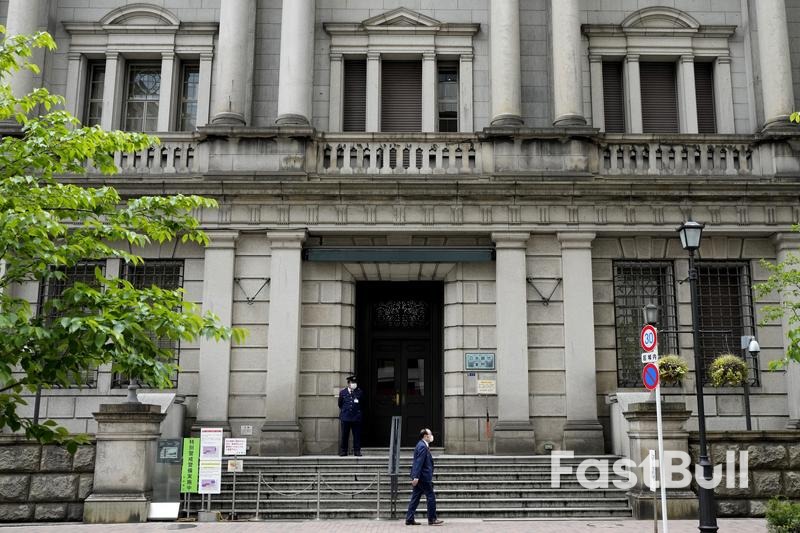
          The Bank of Japan (BOJ) is set to maintain ultra-low interest rates on Tuesday and reassure markets it will be in no rush to withdraw stimulus, even as rising inflation prods investors to price in the chance of a policy.
          BOJ Jolts Markets in Surprise Change to Yield Curve Policy_1

          By Leika Kihara

          The Bank of Japan (BOJ) is set to maintain ultra-low interest rates on Tuesday and reassure markets it will be in no rush to withdraw stimulus, even as rising inflation prods investors to price in the chance of a policy tweak next year.

          The BOJ’s decision would contrast with last week’s interest rate hikes by its U.S. and European counterparts aimed at countering persistent price pressures.

          At a two-day policy meeting ending on Tuesday, the BOJ is widely expected to keep unchanged its yield curve control (YCC) targets set at -0.1% for short-term interest rates and around zero for the 10-year bond yield.

          BOJ Governor Haruhiko Kuroda is also likely to stress at his post-meeting briefing the bank’s resolve to keep ultra-loose policy until inflation sustainably hits 2%, analysts say.

          But with some of his fellow board members dropping hawkish hints on the policy outlook, Kuroda is set to face tough questions on the rising cost of prolonged easing and the lifespan of YCC, which was first introduced in 2016.

          There is now growing uncertainty Kuroda’s reassurances can tame mounting market speculation the BOJ will tweak YCC once the dovish governor’s second, five-year term ends next April.

          Markets are rife with speculation the BOJ will tweak its yield cap and allow long-term interest rates to rise more when a new central bank governor takes the helm.

          The yen climbed and government bonds came under pressure on Monday after media reports the government will next year consider revising a joint statement with the BOJ that commits the bank to meeting its 2% inflation target as soon as possible.

          “The BOJ was able to maintain YCC for such a long time because inflation was distant from its 2% target,” said former BOJ Deputy Governor Hirohide Yamaguchi, who is considered a candidate to become next central bank governor.

          “When prices start rising, it’s very hard to maintain YCC,” he said, pointing out the chance of a hike to the 10-year yield target next year.

          U.S. recession fears and slowing Chinese growth have darkened the outlook for Japan’s export-reliant economy, helping the BOJ make the case for keeping policy ultra-loose.

          But with inflation exceeding the BOJ’s target for seven straight months in October, the bank’s ultra-low rates have drawn public criticism for stoking an unwelcome yen fall that has pushed up the cost of imports.

          Sources have told Reuters that debate over how to remove the BOJ’s yield cap could gather pace next year, provided wages perk up and major economic risks remain contained.

          (Reporting by Leika Kihara; Editing by Sam Holmes)

          Article Source: FXEMPIRE

          Risk Warnings and Disclaimers
          You understand and acknowledge that there is a high degree of risk involved in trading. Following any strategies or investment methods may lead to potential losses. The content on the site is provided by our contributors and analysts for information purposes only. You are solely responsible for determining whether any trading assets, securities, strategy, or any other product is suitable for investing based on your own investment objectives and financial situation.
          Comments
          Add to Favorites
          Share

          Majid Jafar: 'Lack of Investment Fuelling First Global Energy Crisis'

          Cohen

          Energy

          The world is experiencing the first global energy crisis, thanks to a chronic lack of investment in ensuring supply meets growing demand amid the transition to a net-zero emissions future, according to the vice chairman of family-owned holding company Crescent Group.
          This crisis is playing out "across the entire world and all forms of energy. And that has never happened before", said Majid Jafar, who is also the chief executive of oil and gas company Crescent Petroleum, which started the group more than 50 years ago.
          "The big challenge is how to achieve what's called the energy trilemma, which is affordability and availability, as well as sustainability," Mr Jafar told the Business Extra podcast show.
          "It is like a three-legged stool. If you neglect any one of the three, the stool collapses. And, unfortunately, now looking at the world overall, we are actually failing on all three."
          There have been sharp price increases, risks of blackouts in Europe and elsewhere, and this has led to more coal being burnt, he said.
          While short-term issues such as Ukraine, Covid-19 and stretched supply chains, as well as China consuming more gas, have made the situation worse, a failure to invest has chiefly created the crisis.
          "There is a deficit in investment of about $200 billion to $300 billion annually, just in the oil and gas sector," said Mr Jafar, who is board managing director of Dana Gas, a publicly listed natural gas producer, in which Crescent was the founding shareholder.
          "And there is a lack of sufficient investment in other sectors like nuclear, and also renewables."
          There has been a misunderstanding within the net-zero agenda, he said.
          "Somehow, it got misconstrued that we don't need oil and gas any more. Nobody actually said that. But the message went to the financial markets, you shouldn't be funding this any more, or you don't need to be funding this any more," said Mr Jafar, who worked previously at Shell.
          Many institutions, including banks such as HSBC, say they are no longer financing new oil and gas projects amid criticism from shareholders and activists over climate action.
          "And fundamentally, climate change is about emissions, not starving energy; it is about trying to achieve the energy you need with reducing emissions. And to just starve the supply while the demand keeps growing doesn't make sense because, ultimately, climate change is demand driven," said Mr Jafar.
          The energy transition's success will depend less on developed economies, he said.
          "The developing world is where this whole challenge is going to be won or lost … It is where the growth in demand is for energy. Because that is where the economic growth is, the population growth is," Mr Jafar said.
          There is a credibility issue at play too, according to Mr Jafar.
          Developing countries have "seen the problems caused by developed economies, including inflation, thanks to loose monetary policy, the block on investments in energy [and also] vaccine hoarding during Covid-19 pandemic", he said.
          However, progress in the conversation about loss and damage from climate change has been helpful.
          "The language of reparations is what we saw at Sharm El Sheikh [during Cop27] and there was some agreement on a way forward although concern and reticence from many of the richer countries about that new dialogue … But it is a development issue," said Mr Jafar.
          "The countries that don't yet have the economic development are the ones that are going to suffer the most from climate change."
          Contrasting the approach in the region with that of Europe, he said it was apt that Cop 27 was held in Egypt "and, of course, everybody is looking now to Cop28 here in the UAE next year".
          "A lot of western countries, developed countries, just put a target out there, you know, net zero and 2050, or whatever, with no plan. Whereas by contrast, the UAE actually had an energy plan for 2050, even before its net-zero target for 2050.
          "And, as it has been said, you know, a goal without a plan is just a wish or a dream. And that is what has been lacking … we are not going to get there just by having a net-zero target. And then the demand keeps growing. And there is actually been a starving of investment in the supply," he said.
          With half the world's oil and gas reserves and huge potential in areas such as solar, the Middle East region "is going to play a larger and larger role across all the types of energy" over the next few decades, said Mr Jafar.
          Crescent Petroleum has a presence in the UAE, Egypt, Pakistan, Yemen, Canada, Montenegro, Tunisia, Argentina and Iraq.
          Since its formation in 1971, Crescent "has expanded from its oil focus in Sharjah at the start to become a regional producer in Iraq and Egypt also, with 85 per cent natural gas", said Mr Jafar.
          The role of gas in the energy transition is important, he said.
          "The gas [Crescent] produces — by displacing diesel for power generation in this region — avoids more than 5 million tonnes of CO2 [carbon dioxide] emissions annually … more than all the Tesla cars on the planet," Mr Jafar said.
          While oil and gas are still going to be needed, "the way we produce it needs to be cleaner, we need to decarbonise it, in essence, and also the way we consume it is going to be different".
          "We looked at how can we minimise our emissions … [gas] flaring [is down] to nearly zero and then we offset the remainder with carbon credits … to achieve and declare net-zero carbon across our operations a year ago. And that is something we intend to maintain," he said.
          Despite the challenges, including political difficulties, the consequences of conflict and corruption, the potential for Iraq — where the company has been operating for 15 years — is "huge", in particular, in gas.
          "[Crescent] has invested over $2.5 billion in the oil and gas sector. Our main focus has been in the Kurdistan Region and gas. But we also hope to soon sign contracts with the federal government … and we could do similar for the central Iraq and also southern Iraq," Mr Jafar said.
          It is a "tragedy" that Iraq still cannot provide more access to reliable electricity, he said.
          "On the energy side, there is still more investment that is needed in water treatment and infrastructure. And the electricity provision really needs addressing, because it is a tragedy that Iraq still doesn't have good electricity provision, and it is holding back the overall development," he said.
          Mr Jafar said there was some hope for reform under new Prime Minister Mohammed Shia Al Sudani.
          "With the new government that has been formed of better relations between Baghdad and Erbil, and they have been generally good in the wider region, Iraq has been, you know, hosting talks even between Saudi Arabia and Iran and Baghdad," he said.
          "But absolutely, the domestic economic reform agenda is necessary [for] tackling corruption and services. These are the key things that the Iraqi people want to see."

          Source: The National News

          Risk Warnings and Disclaimers
          You understand and acknowledge that there is a high degree of risk involved in trading. Following any strategies or investment methods may lead to potential losses. The content on the site is provided by our contributors and analysts for information purposes only. You are solely responsible for determining whether any trading assets, securities, strategy, or any other product is suitable for investing based on your own investment objectives and financial situation.
          Comments
          Add to Favorites
          Share

          Gold is a Certainty in Uncertain Times

          Winkelmann

          Commodity

          A robust strategy to help investors weather the storm is to diversify their portfolio and invest in assets that tend to do well in times of economic turbulence, such as gold. Offering a measure of stability, gold has been a reliable store of value for centuries, whose price is not dependent on the economy's health. It also has the advantage of high liquidity, so investors can easily trade it for cash at any time.

          Buying and storing gold, however, is a challenge for most investors, especially those with limited resources, to safely keep it in their position. A practical and more straightforward way to get invested in gold is through gold-backed cryptocurrency.

          Gold-backed cryptocurrency is a cost-effective way to invest in gold as investors do not have to worry about the costly fees associated with buying and storing the physical asset.

          The strategic importance of gold-backed cryptocurrency as a potential game changer in global finance gained strength when some of the world's superpowers hinted at a move to create a new digital reserve currency. As the BRICS countries – Brazil, Russia, India, China, and South Africa – recently revealed plans of collectively developing a new basket-based reserve currency, Russia and China are also reportedly moving ahead with separate plans to create a new gold-backed currency that could undermine the US dollar.

          These moves may have raised eyebrows, but from an investor's perspective, they reflect gold-backed currency's massive economic and investment potential.

          The Zambesi Gold (ZGD), is a gold-backed cryptocurrency that aims to lead the transition of mining assets into fully backed digital assets. ZGD token has continued to increase in value since its launch date despite the market conditions, a significant milestone that underlines investors' strong confidence in a cryptocurrency backed by gold.

          ZGD is developed by Zambesi Gold (Pty) Ltd, a mining company run by professionals with over 40 years of experience in the mining industry. The company's expertise in gold mining and its ability to continuously grow its gold reserves through its mining operations are key advantages that set ZGD apart from other gold-backed cryptocurrencies.

          Zambesi Gold reinvests 75 per cent of its profits into the business and in acquiring new gold mines, with the remaining gold profits sent to a vault, increasing the amount of gold each token represents. The company's first gold mine is the 50,000-ton-per-month Middelvlei Mine, which has already started operations last month.

          ZGD has a high-earning staking system that delivers steady profits to users, offering up to 30 per cent returns on the staked amount in 24 months. In addition, all tokens received from users withdrawing investments are also removed from circulation through a coin-burning mechanism, which effectively ensures the value of ZGD goes higher as more people use it.

          Article Source: zawya

          Risk Warnings and Disclaimers
          You understand and acknowledge that there is a high degree of risk involved in trading. Following any strategies or investment methods may lead to potential losses. The content on the site is provided by our contributors and analysts for information purposes only. You are solely responsible for determining whether any trading assets, securities, strategy, or any other product is suitable for investing based on your own investment objectives and financial situation.
          Comments
          Add to Favorites
          Share

          Insurers Shun FTX-linked Crypto Firms as Contagion Risk Mounts

          Kevin Du

          Cryptocurrency

          Insurers are denying or limiting coverage to clients with exposure to bankrupt crypto exchange FTX, leaving digital currency traders and exchanges uninsured for any losses from hacks, theft or lawsuits, several market participants said.
          Insurers were already reluctant to underwrite asset and directors and officers (D&O) protection policies for crypto companies because of scant market regulation and the volatile prices of Bitcoin and other cryptocurrencies.
          Now, the collapse of FTX last month has amplified concerns.
          Specialists in the Lloyd's of London and Bermuda insurance markets are requiring more transparency from crypto companies about their exposure to FTX. The insurers are also proposing broad policy exclusions for any claims arising from the company's collapse.
          Kyle Nichols, president of broker Hugh Wood Canada Ltd, said insurers were requiring clients to fill out a questionnaire asking whether they invested in FTX, or had assets on the exchange.
          Lloyd's of London broker Superscript is giving clients that dealt with FTX a mandatory questionnaire to outline the percentage of their exposure, said Ben Davis, lead for digital assets at Superscript.
          "Let's say the client has 40% of their total assets at FTX that they can't access, that is either going to be a decline or we're going to put on an exclusion that limits cover for any claims arising out of their funds held on FTX," he said.
          The exclusions denying payout for any claims arising out of the FTX bankruptcy are found in insurance policies that cover the protection of digital assets and for personal liabilities of directors and officers of companies that deal in crypto, five insurance sources told Reuters. A couple of insurers have been pushing for a broad exclusion to policies for anything related to FTX, a broker said.
          Exclusions may act as a failsafe for insurers, and will make it even more difficult for companies that are seeking coverage, insurers and brokers said.
          Bermuda-based crypto insurer Relm, which previously has provided coverage to entities linked to FTX, takes an even stricter approach.
          "If we have to include a crypto exclusion or a regulatory exclusion, we're just not going to offer the coverage," said Relm co-founder Joe Ziolkowski.
          D&O Question
          Now, one of the most pressing questions is whether insurers will cover D&O policies at other companies that had dealings with FTX, given the problems facing exchange's leadership, Ziolkowski said.
          U.S. prosecutors say former FTX Chief Executive Officer Sam Bankman-Fried engaged in a scheme to defraud FTX's customers by misappropriating their deposits to pay for expenses and debts and to make investments on behalf of his crypto hedge fund, Alameda Research LLC.
          A lawyer for Bankman-Fried said on Tuesday his client is considering all of his legal options.
          D&O policies, which are used to pay legal costs, do not always pay out in cases of fraud.
          Insurance sources would not name their clients or potential clients that could be affected by policy changes, citing confidentiality. Crypto firms with financial exposure to FTX include Binance, a crypto exchange, and Genesis, a crypto lender, neither of which responded to e-mails seeking comment.
          While the least risky parts of the crypto market, such as companies that own cold wallets storing assets on platforms not connected to the internet, may get cover for up to $1 billion, a D&O insurance policyholder's cover may now be limited to tens of millions of dollars for the rest of the market, Ziolkowski said.
          The FTX collapse will also likely lead to a rise in insurance rates, especially in the U.S. D&O market, insurers said. The rates are already high because of the perceived risks and lack of historical data on cryptocurrency insurance losses.
          A typical crime bond -- used to protect against losses resulting from a criminal act -- would cost $30,000 to $40,000 per $1 million of coverage for a digital assets trader. That compares with a cost of about $5,000 per $1 million for a traditional securities trader, Hugh Wood Canada's Nichols said.

          Source: Reuters

          Risk Warnings and Disclaimers
          You understand and acknowledge that there is a high degree of risk involved in trading. Following any strategies or investment methods may lead to potential losses. The content on the site is provided by our contributors and analysts for information purposes only. You are solely responsible for determining whether any trading assets, securities, strategy, or any other product is suitable for investing based on your own investment objectives and financial situation.
          Comments
          Add to Favorites
          Share

          RBA Board Considered Pause in December

          Alex

          Central Bank

          Despite the pause consideration the case was weak – expect another hike of 25 in February.
          The Reserve Bank Board considered three options in its deliberations at the December Board meeting. The options were: 50 basis point increase in the cash rate; 25 basis point increase; or no increase .
          This contrasts with recent meetings when only the 50 basis point and 25 basis point options were considered.
          Given consistent rhetoric from the Bank about pausing it would come as no surprise that the Board did consider the pause. Indeed, it came as a bigger surprise that 50 basis points was still on the table.
          The case for pausing rested on the theme of placing "further emphasis on the lagged effects of a large policy adjustment to date, and the value in proceeding cautiously in an uncertain environment."
          But this argument seemed to be quickly dismissed, noting that the Bank's forecasts in the November SOMP were that, despite further increases in interest rates (forecasts are based on market pricing and analysts forecasts), "inflation was expected to take several years to return to the target range." Most importantly, since the forecasts were released in early November "incoming information had not warranted a reassessment of that broad outlook."
          It is also interesting that the Board noted that "members noted that no other central bank had yet paused."
          As with the October and November meetings, the case for 25 basis points over 50 basis points relied on the lags associated with policy: "There had already been a significant cumulative increase in interest rates and the full effects of this adjustment would take time to occur."
          The impact of the policy changes was also likely to be delayed more than normal due to the predominance of fixed rate mortgages savings buffers; and the strong reopening effect that may extend into the summer holidays.
          It was also once again noted that there were benefits in acting consistently.
          The argument for 50 basis points was quite robust – inflation is too high in an economy operating with excess demand; some other economies had seen wages pick up strongly, risking entrenched inflation; the inflation mind-set was shifting; wages growth potentially building; and the cash rate is not at a high level historically.
          Members concluded that the range of options considered would continue to be discussed at future meetings.
          In the final paragraph the Board chose, for the first time in any recent final paragraph, to strongly emphasise the dangers of inflation further than we have seen in the Minutes of earlier meetings, "High inflation damages the economy and makes life more difficult for people" and of course the Board repeats the wording in an earlier paragraph that "The Board expects to increase interest rates further over the period ahead, but it is not on a pre set path." That final qualification is consistent with the signal that the Board will continue to consider the three options going forward.
          Despite the fact that the Board considered the "pause" option, these Minutes do not paint a dovish picture of the Board.
          Having discussed a pause on multiple occasions in recent RBA communications it would be surprising that the pause option was not raised at the meeting.
          But the key is that the current forecasts which have rates rising further are still pointing to a number of years where the inflation rate is outside the range. So unless there has been a change in the data since those November forecasts were released, the Board needs to press on.
          The monthly inflation print that came after the November meeting was lower than expected but mainly due to supply side effects and the Board noted that they "needed to be interpreted with caution" while key services inflation was only going to be reported later in the quarter.
          The key issue for the RBA is around demand and wages growth. The fear is noted in the "50" discussion, "inflation mind set was shifting… wages growth potentially building."
          The Minutes point out a number of very recent developments on wages – "around 35% of firms in liaison had reported wage increases of greater than 5% in October and November"; "liaison reported that labour availability remained a key challenge, although there were tentative signs this had started to ease a little."
          Since the Board meeting the November employment report highlighted those prospects: 3.4% unemployment; 107,100 jobs being added in October and November; 0.2% fall in the underemployment rate; record high participation and employment-to-population ratio indicating very tight labour markets.
          Tighter labour markets than expected even at the November Board and the November forecasts in the SOMP raise the risk to the Board that the scenario we have seen in other countries could repeat in Australia (see the case for "50").
          This risk will be even more of a concern if, as the Board notes, resilience to the slowdown through household savings buffers; high fixed rate exposure from mortgages; and an ongoing reopening effect reflect solid spending momentum in the early months of 2023.
          Conclusion
          Westpac expects the economy to slow through 2023 with "stagnation" in the second half but does see some momentum extending into 2023.
          When the Board comes to consider its options at the next meeting in February it will have the December quarter Inflation Report but will also be observing data for the holiday period that may be holding up better than expected.
          Based on the analysis in the Minutes, that will set the scene for hikes in both February and March (December quarter Wages Report available for the March meeting) while the May meeting will also be confronted with uncomfortably high inflation for the March quarter and a central bank that is observing tight labour markets and rising wages pressures.
          A hike in May will be appropriate following other central banks, who will already be on hold, and the clear evidence of the economic damage builds – time to pause at the June meeting for the rest of the year.

          Source: Westpac Banking

          Risk Warnings and Disclaimers
          You understand and acknowledge that there is a high degree of risk involved in trading. Following any strategies or investment methods may lead to potential losses. The content on the site is provided by our contributors and analysts for information purposes only. You are solely responsible for determining whether any trading assets, securities, strategy, or any other product is suitable for investing based on your own investment objectives and financial situation.
          Comments
          Add to Favorites
          Share

          Bank of Korea Stresses Highly Uncertain Inflation Path

          Thomas

          Central Bank

          South Korea's central bank said on Tuesday the country's consumer inflation would remain around 5% for some time and then gradually ease, but cautioned that domestic and global factors are raising uncertainty about how fast prices will slow.
          "Going forward, uncertainty is high with regard to the oil prices, foreign exchange rates, domestic public utility fares and the pace of economic growth," the Bank of Korea (BOK) said in a twice-yearly inflation report.
          The assessment was in line with its views disclosed at BOK Governor Rhee Chang-yong's news conference on Nov. 24 about the policy board's decision that day to raise the benchmark interest rate to the highest in a decade.
          On Tuesday, Rhee emphasised the huge amount of uncertainty in predicting future inflation, citing such factors as the war in Ukraine and the magnitude of domestic public utility fare raises widely expected in 2023.
          Domestic bond prices, which were already pressured by losses in U.S. bond prices overnight, fell as his comments as a whole failed to provide any indication that the tightening cycle that started late last year would reach its peak any time soon.
          "His comments were not surprisingly hawkish but were as a whole fell short of giving any boost to bond investors worried about aggressive U.S. rate increases," said Park Sang-hyun, economist at HI Investment and Securities.
          The most popular futures on three-year treasury bonds KTBc1 fell as much as 22 ticks to 103.74 after Rhee's news conference, after having traded at around 103.84.
          The central bank's latest inflation projections released last month forecast it will slow to 4.2% in the first half of 2023 from an estimated 5.6% in the second half of 2022, and to further ease to 3.1% in the second half of 2023.
          Its medium-term inflation target is around 2%.

          Source: CNA

          Risk Warnings and Disclaimers
          You understand and acknowledge that there is a high degree of risk involved in trading. Following any strategies or investment methods may lead to potential losses. The content on the site is provided by our contributors and analysts for information purposes only. You are solely responsible for determining whether any trading assets, securities, strategy, or any other product is suitable for investing based on your own investment objectives and financial situation.
          Comments
          Add to Favorites
          Share

          The Hardest Part Is Yet to Come for Gas-Hoarding Europe

          Devin

          Energy

          Europe faces a much tougher task to rebuild gas stocks next year compared with this winter, meaning energy bills are likely to stay high and governments could have to implement painful rationing measures they have so far avoided.
          Previously dominant, gas supplies from Russia have since late August been greatly reduced, meaning the task of refilling storage will be much harder when levels are depleted by early next year.
          The expense of buying gas on the open market rather than through contracts negotiated at favourable prices will also be harder to bear for governments weakened by months of steep energy costs that have driven inflation to multi-decade highs.
          This year, the European Union successfully filled reserves to a peak of 96%-full in November to try to ensure sufficient winter supplies.
          Countries also managed to restrain use during unusually mild weather but a prolonged cold snap this month has focused minds on the scale of the task ahead.
          "Many of the circumstances that allowed EU countries to fill their storage sites ahead of this winter may well not be repeated in 2023," Fatih Birol, Executive Director of Paris-based International Energy Agency (IEA) said last week.
          The IEA said Europe could face a shortfall of almost 30 billion cubic metres (bcm) next winter, equivalent to nearly 7% of 2021 demand.
          Pipelines Versus LNG
          Before Russia invaded Ukraine in February, prompting Western sanctions, Russia provided around 40% of Europe's gas.
          Of this, around 65% of Europe's pipeline deliveries came via the Nord Stream pipeline to Germany and the rest through pipelines via Ukraine.
          Shipments via Ukraine continue, but are at risk as the war with Russia shows no sign of ending, while gas deliveries through Nord Stream have stopped since the end of August.
          Suspected sabotage has since damaged the link, which is not expected to return to service in the near future.
          Analysts at Wood Mackenzie forecast up to 25 bcm less Russian gas will reach Europe for the 2023 filling season from April to end September when summer temperatures reduce heating demand.
          That means the levels left in storage at the end of this winter will determine the scale of the challenge for the following winter.
          Energy Aspects analyst Leon Izbicki expects Europe's stocks to be around 55 bcm, or just over half full by the end of March compared with levels around 84% now.
          The European Commission has said these stores must be 90% full by Nov. 1 2023.
          Based on an average gas price forecast of 95 euros per megawatt hour (MWh) for 2023, Izbicki said it will cost around 58 billion euros for Europe to meet the target, similar to the filling costs analysts calculated for this year.
          Weather And Price Determine Demand
          The cost of energy has focused minds on reducing gas consumption, which fell by around a quarter in October and November year-on-year, analysts said, through a wide range of measures such as fuel switching, efficiency, and curtailing production.
          "The focus will continue to be on demand-side reductions next year, with the scale of the challenge dependent in part on where stocks sit coming out of winter," Luke Cottell, senior analyst at Timera Energy, said.
          German automotive giant Mercedes-Benz for instance said it could cut gas use by up to 50% this year by using more renewable electricity while retailers across Europe have dimmed lights and turned off advertising screens.
          A large dent has also come from industrial sectors forced to curb output as high gas prices make production uneconomic with some firms shifting production to regions with cheaper energy.
          "We still see the reduction in industrial gas demand owing to lower economic activity as mostly reversible in 2023 if prices drop, but the longer prices stay elevated the more likely it is that businesses will permanently offshore their gas-intensive production," Energy Aspects' Izbicki said.
          How much demand can be reduced is heavily dependent on the weather as well as on price.
          As temperatures plunged in Europe earlier this month, the German energy regulator, the Federal Network Agency said Europe's largest gas consumer had fallen short of its gas saving targets for the first time.
          Fight For Supplies
          The obvious way to boost supplies is through liquefied natural gas (LNG).
          Countries such as Germany, Poland and the Netherlands built or expanded LNG regasification terminals that receive seaborne cargoes of LNG from around the world, and reheat it to pump into domestic gas networks.
          Europe and Britain's LNG import capacity will increase around 25% by the end of 2023 compared with 2021 levels, data compiled by the U.S. Energy Information Administration showed.
          But having capacity is no guarantee of supplies.
          This year, lower demand and high prices meant Chinese buyers largely shunned the spot LNG market and some cargoes destined for Asian buyers were diverted to Europe.
          That may not happen next year, meaning Europe would face fierce competition for LNG that would drive up the cost.
          "Asia consumption could shift from a tailwind to Europe to a major headwind for European buying," said Sean Morgan, director at U.S. banking firm Evercore ISI.
          Europe's efforts to introduce a cap on gas prices in the European Union could further hamper EU attempts to secure cargoes, countries, such as Germany, which have opposed the plan, say.
          Record high prices in Europe, however painful, helped the region to secure record volumes of LNG imports this year.
          Benchmark European gas prices hit a peak in August of more than 300 euros/MWh.
          Unless Europe can agree on a price cap, most analysts forecast prices will remain elevated, in a 90-200 euros/MWh range in 2023 compared with prices below 20 euros/MWh in 2020.
          "Next year will be a constant headache for prices rather than the pain of the being punched in the face, migraine attack we saw this August," Henning Gloystein, a director at consultancy Eurasia, said.

          Source: U.S.News

          Risk Warnings and Disclaimers
          You understand and acknowledge that there is a high degree of risk involved in trading. Following any strategies or investment methods may lead to potential losses. The content on the site is provided by our contributors and analysts for information purposes only. You are solely responsible for determining whether any trading assets, securities, strategy, or any other product is suitable for investing based on your own investment objectives and financial situation.
          Comments
          Add to Favorites
          Share
          FastBull
          Copyright © 2025 FastBull Ltd

          728 RM B 7/F GEE LOK IND BLDG NO 34 HUNG TO RD KWUN TONG KLN HONG KONG

          TelegramInstagramTwitterfacebooklinkedin
          App Store Google Play Google Play
          Products
          Charts

          Chats

          Q&A with Experts
          Screeners
          Economic Calendar
          Data
          Tools
          Membership
          Features
          Function
          Markets
          Copy Trading
          Latest Signals
          Contests
          News
          Analysis
          24/7
          Columns
          Education
          Company
          Careers
          About Us
          Contact Us
          Advertising
          Help Center
          Feedback
          User Agreement
          Privacy Policy
          Business

          White Label

          Data API

          Web Plug-ins

          Poster Maker

          Affiliate Program

          Risk Disclosure

          The risk of loss in trading financial instruments such as stocks, FX, commodities, futures, bonds, ETFs and crypto can be substantial. You may sustain a total loss of the funds that you deposit with your broker. Therefore, you should carefully consider whether such trading is suitable for you in light of your circumstances and financial resources.

          No decision to invest should be made without thoroughly conducting due diligence by yourself or consulting with your financial advisors. Our web content might not suit you since we don't know your financial conditions and investment needs. Our financial information might have latency or contain inaccuracy, so you should be fully responsible for any of your trading and investment decisions. The company will not be responsible for your capital loss.

          Without getting permission from the website, you are not allowed to copy the website's graphics, texts, or trademarks. Intellectual property rights in the content or data incorporated into this website belong to its providers and exchange merchants.

          Not Logged In

          Log in to access more features

          FastBull Membership

          Not yet

          Purchase

          Become a signal provider
          Help Center
          Customer Service
          Dark Mode
          Price Up/Down Colors

          Log In

          Sign Up

          Position
          Layout
          Fullscreen
          Default to Chart
          The chart page opens by default when you visit fastbull.com
