• Trade
  • Markets
  • Copy
  • Contests
  • News
  • 24/7
  • Calendar
  • Q&A
  • Chats
Trending
Screeners
SYMBOL
LAST
BID
ASK
HIGH
LOW
NET CHG.
%CHG.
SPREAD
SPX
S&P 500 Index
6827.42
6827.42
6827.42
6899.86
6801.80
-73.58
-1.07%
--
DJI
Dow Jones Industrial Average
48458.04
48458.04
48458.04
48886.86
48334.10
-245.98
-0.51%
--
IXIC
NASDAQ Composite Index
23195.16
23195.16
23195.16
23554.89
23094.51
-398.69
-1.69%
--
USDX
US Dollar Index
98.000
98.080
98.000
98.070
97.920
+0.050
+ 0.05%
--
EURUSD
Euro / US Dollar
1.17335
1.17343
1.17335
1.17447
1.17283
-0.00059
-0.05%
--
GBPUSD
Pound Sterling / US Dollar
1.33563
1.33570
1.33563
1.33740
1.33549
-0.00144
-0.11%
--
XAUUSD
Gold / US Dollar
4327.26
4327.64
4327.26
4329.64
4294.68
+27.87
+ 0.65%
--
WTI
Light Sweet Crude Oil
57.536
57.573
57.536
57.601
57.194
+0.303
+ 0.53%
--

Community Accounts

Signal Accounts
--
Profit Accounts
--
Loss Accounts
--
View More

Become a signal provider

Sell trading signals to earn additional income

View More

Guide to Copy Trading

Get started with ease and confidence

View More

Signal Accounts for Members

All Signal Accounts

Best Return
  • Best Return
  • Best P/L
  • Best MDD
Past 1W
  • Past 1W
  • Past 1M
  • Past 1Y

All Contests

  • All
  • Trump Updates
  • Recommend
  • Stocks
  • Cryptocurrencies
  • Central Banks
  • Featured News
Top News Only
Share

Reuters Poll - Bank Of Thailand To Lower Key Policy Rate To 1.00% In Q1 Of 2026, Said A Majority Of Economists

Share

Reuters Poll - Bank Of Thailand To Cut Its Key Interest Rate To 1.25% On December 17, Said 26 Of 27 Economists

Share

Thai Finance Minister: Earlier Stimulus Measures To Shore Up Economy

Share

Thai Finance Minister: Strong Baht Driven By Capital Inflows

Share

Thai Finance Minister: Has Discussed With Central Bank To Handle Baht

Share

India's Nifty Bank Futures Down 0.1% In Pre-Open Trade

Share

India's Nifty 50 Futures Down 0.3% In Pre-Open Trade

Share

India's Nifty 50 Index Down 0.45% In Pre-Open Trade

Share

Indian Rupee Weakens Past 90.55 Versus USA Dollar To All-Time Low

Share

China's Fossil-Fuelled Power Generation Falls 4.2% Year-On-Year In November

Share

Indian Rupee Opens Down 0.1% At 90.5450 Per USA Dollar, Versus 90.4150 Previous Close

Share

Australia Home Minister: Father Involved In Bondi Gun Attack Came To Australia On Student Visa, Son Is An Australian-Born Citizen

Share

Australian Prime Minister Albanese: Stricter Gun Control Laws Will Include Restrictions On The Number Of Guns An Individual Can Own Or License To Use

Share

Australia's Prime Minister Albanese: We Are Considering A Review Of Gun Licenses For Some Time

Share

Australia's Prime Minister Albanese: Government Considering Tougher Gun Laws

Share

China Stats Bureau Spokesperson: Next Year, Adverse Impact Of Protectionism And Unilateralism May Continue

Share

China's Onshore Yuan Strengthens To A High Of 7.0516 Per Dollar, Strongest Level Since Oct 8, 2024

Share

Indonesia's November Refined Tin Exports At 7458.64 Metric Tons

Share

China's National Bureau Of Statistics: In The Next Stage, We Will Continue To Implement The Special Action To Boost Consumption And Focus On Stabilizing Employment And Promoting Income Growth

Share

China Stats Bureau Spokesperson: Household Consumption Capability And Confidence Needs To Be Further Improved

TIME
ACT
FCST
PREV
U.K. Trade Balance (Oct)

A:--

F: --

P: --

France HICP Final MoM (Nov)

A:--

F: --

P: --

China, Mainland Outstanding Loans Growth YoY (Nov)

A:--

F: --

P: --

China, Mainland M2 Money Supply YoY (Nov)

A:--

F: --

P: --

China, Mainland M0 Money Supply YoY (Nov)

A:--

F: --

P: --

China, Mainland M1 Money Supply YoY (Nov)

A:--

F: --

P: --

India CPI YoY (Nov)

A:--

F: --

P: --

India Deposit Gowth YoY

A:--

F: --

P: --

Brazil Services Growth YoY (Oct)

A:--

F: --

P: --

Mexico Industrial Output YoY (Oct)

A:--

F: --

P: --

Russia Trade Balance (Oct)

A:--

F: --

P: --

Philadelphia Fed President Henry Paulson delivers a speech
Canada Building Permits MoM (SA) (Oct)

A:--

F: --

P: --

Canada Wholesale Sales YoY (Oct)

A:--

F: --

P: --

Canada Wholesale Inventory MoM (Oct)

A:--

F: --

P: --

Canada Wholesale Inventory YoY (Oct)

A:--

F: --

P: --

Canada Wholesale Sales MoM (SA) (Oct)

A:--

F: --

P: --

Germany Current Account (Not SA) (Oct)

A:--

F: --

P: --

U.S. Weekly Total Rig Count

A:--

F: --

P: --

U.S. Weekly Total Oil Rig Count

A:--

F: --

P: --

Japan Tankan Small Manufacturing Outlook Index (Q4)

A:--

F: --

P: --

Japan Tankan Large Non-Manufacturing Diffusion Index (Q4)

A:--

F: --

P: --

Japan Tankan Large Non-Manufacturing Outlook Index (Q4)

A:--

F: --

P: --

Japan Tankan Large Manufacturing Outlook Index (Q4)

A:--

F: --

P: --

Japan Tankan Small Manufacturing Diffusion Index (Q4)

A:--

F: --

P: --

Japan Tankan Large Manufacturing Diffusion Index (Q4)

A:--

F: --

P: --

Japan Tankan Large-Enterprise Capital Expenditure YoY (Q4)

A:--

F: --

P: --

U.K. Rightmove House Price Index YoY (Dec)

A:--

F: --

P: --

China, Mainland Industrial Output YoY (YTD) (Nov)

A:--

F: --

P: --

China, Mainland Urban Area Unemployment Rate (Nov)

A:--

F: --

P: --

Saudi Arabia CPI YoY (Nov)

--

F: --

P: --

Euro Zone Industrial Output YoY (Oct)

--

F: --

P: --

Euro Zone Industrial Output MoM (Oct)

--

F: --

P: --

Canada Existing Home Sales MoM (Nov)

--

F: --

P: --

Euro Zone Total Reserve Assets (Nov)

--

F: --

P: --

U.K. Inflation Rate Expectations

--

F: --

P: --

Canada National Economic Confidence Index

--

F: --

P: --

Canada New Housing Starts (Nov)

--

F: --

P: --

U.S. NY Fed Manufacturing Employment Index (Dec)

--

F: --

P: --

U.S. NY Fed Manufacturing Index (Dec)

--

F: --

P: --

Canada Core CPI YoY (Nov)

--

F: --

P: --

Canada Manufacturing Unfilled Orders MoM (Oct)

--

F: --

P: --

U.S. NY Fed Manufacturing Prices Received Index (Dec)

--

F: --

P: --

U.S. NY Fed Manufacturing New Orders Index (Dec)

--

F: --

P: --

Canada Manufacturing New Orders MoM (Oct)

--

F: --

P: --

Canada Core CPI MoM (Nov)

--

F: --

P: --

Canada Trimmed CPI YoY (SA) (Nov)

--

F: --

P: --

Canada Manufacturing Inventory MoM (Oct)

--

F: --

P: --

Canada CPI YoY (Nov)

--

F: --

P: --

Canada CPI MoM (Nov)

--

F: --

P: --

Canada CPI YoY (SA) (Nov)

--

F: --

P: --

Canada Core CPI MoM (SA) (Nov)

--

F: --

P: --

Canada CPI MoM (SA) (Nov)

--

F: --

P: --

Federal Reserve Board Governor Milan delivered a speech
U.S. NAHB Housing Market Index (Dec)

--

F: --

P: --

Australia Composite PMI Prelim (Dec)

--

F: --

P: --

Australia Services PMI Prelim (Dec)

--

F: --

P: --

Australia Manufacturing PMI Prelim (Dec)

--

F: --

P: --

Japan Manufacturing PMI Prelim (SA) (Dec)

--

F: --

P: --

U.K. Unemployment Rate (Nov)

--

F: --

P: --

U.K. 3-Month ILO Unemployment Rate (Oct)

--

F: --

P: --

Q&A with Experts
    • All
    • Chatrooms
    • Groups
    • Friends
    Connecting
    .
    .
    .
    Type here...
    Add Symbol or Code

      No matching data

      All
      Trump Updates
      Recommend
      Stocks
      Cryptocurrencies
      Central Banks
      Featured News
      • All
      • Russia-Ukraine Conflict
      • Middle East Flashpoint
      • All
      • Russia-Ukraine Conflict
      • Middle East Flashpoint

      Search
      Products

      Charts Free Forever

      Chats Q&A with Experts
      Screeners Economic Calendar Data Tools
      Membership Features
      Data Warehouse Market Trends Institutional Data Policy Rates Macro

      Market Trends

      Market Sentiment Order Book Forex Correlations

      Top Indicators

      Charts Free Forever
      Markets

      News

      News Analysis 24/7 Columns Education
      From Institutions From Analysts
      Topics Columnists

      Latest Views

      Latest Views

      Trending Topics

      Top Columnists

      Latest Update

      Signals

      Copy Rankings Latest Signals Become a signal provider AI Rating
      Contests
      Brokers

      Overview Brokers Assessment Rankings Regulators News Claims
      Broker listing Forex Brokers Comparison Tool Live Spread Comparison Scam
      Q&A Complaint Scam Alert Videos Tips to Detect Scam
      More

      Business
      Events
      Careers About Us Advertising Help Center

      White Label

      Data API

      Web Plug-ins

      Affiliate Program

      Awards Institution Evaluation IB Seminar Salon Event Exhibition
      Vietnam Thailand Singapore Dubai
      Fans Party Investment Sharing Session
      FastBull Summit BrokersView Expo
      Recent Searches
        Top Searches
          Markets
          News
          Analysis
          User
          24/7
          Economic Calendar
          Education
          Data
          • Names
          • Latest
          • Prev

          View All

          No data

          Scan to Download

          Faster Charts, Chat Faster!

          Download App
          English
          • English
          • Español
          • العربية
          • Bahasa Indonesia
          • Bahasa Melayu
          • Tiếng Việt
          • ภาษาไทย
          • Français
          • Italiano
          • Türkçe
          • Русский язык
          • 简中
          • 繁中
          Open Account
          Search
          Products
          Charts Free Forever
          Markets
          News
          Signals

          Copy Rankings Latest Signals Become a signal provider AI Rating
          Contests
          Brokers

          Overview Brokers Assessment Rankings Regulators News Claims
          Broker listing Forex Brokers Comparison Tool Live Spread Comparison Scam
          Q&A Complaint Scam Alert Videos Tips to Detect Scam
          More

          Business
          Events
          Careers About Us Advertising Help Center

          White Label

          Data API

          Web Plug-ins

          Affiliate Program

          Awards Institution Evaluation IB Seminar Salon Event Exhibition
          Vietnam Thailand Singapore Dubai
          Fans Party Investment Sharing Session
          FastBull Summit BrokersView Expo

          Australian Dollar Attempts to Snap Recent Losses as Australia's Inflation Rises, Commodity Prices Decline

          FXOpen

          Economic

          Forex

          Summary:

          Australian Dollar snaps the losing streak due to a rise in monthly CPI. Australia's inflation reported a reading of 5.2% as expected, up from the 4.9% prior. U.S. Dollar (USD) trades around 106.30, the highest since December.
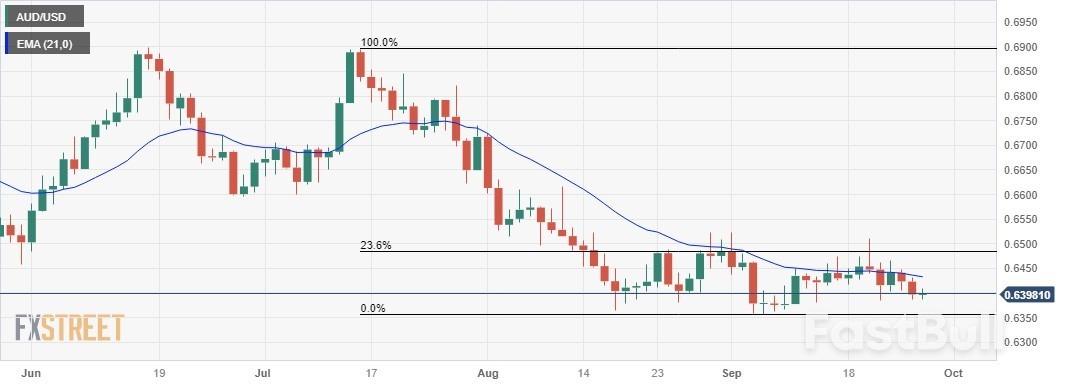
          The Australian Dollar (AUD) looks to snap a two-day losing streak against the U.S. Dollar (USD) after Australia's inflation data release, which showed an expected rise in August. However, the AUD/USD pair is failing to capitalize on hot Australian Consumer Price Index (CPI) inflation data due to risk aversion. The decline in commodity prices is capping the upside in the AUD.
          Reserve Bank of Australia's (RBA) Minutes from the September monetary policy meeting suggested that if inflation proves to be more enduring than expected, there may be a need for further tightening.
          However, the argument for keeping the current policy unchanged appeared to be more compelling. As a result, this could also potentially limit the upside potential of the AUD/USD pair.
          The U.S. Dollar Index (DXY) trades around its highest level since December. This strength in the U.S. Dollar is supported by the upbeat U.S. Treasury yields. The yield on the 10-year U.S. bond note has risen to a level not seen since October 2007.
          United States (U.S.) upbeat data released on Tuesday is reinforcing the strength of the Dollar. U.S. Consumer Confidence along with Building Permits and House Price Index improved in the reported period.
          Moreover, most members of the U.S. Federal Reserve (Fed) still anticipate further interest rate increases later in the year, which could be attributed to robust economic activities in the U.S.. The Fed recently made the decision to keep the interest rate within the range of 5.25% to 5.50%, maintaining the status quo.
          Daily Digest Market Movers: Australian Dollar looks to more downside amid firmer U.S. Dollar
          • Australia's Monthly Consumer Price Index (YoY) for August rose to 5.2% as expected, up from the previous rate of 4.9%.
          • The upcoming October 3 meeting, which will be Michele Bullock's first as a Governor of RBA, is not currently anticipated by the market to result in a rate hike.
          • Expectations for a rate increase are on the rise for the November and December meetings by RBA.
          • According to Bloomberg's World Interest Rate Probability (WIRP), the likelihood of another rate hike increases to 85% for the first quarter of the following year.
          • Market participants will focus on Australia's Retail Sales for August on Thursday, which is expected to grow by 0.3% lower than the previous rate of 0.5%.
          • The hawkish remarks from Fed officials have led to a broad-based strengthening of the U.S. Dollar (USD) and have acted as a headwind for the AUD/USD pair.
          • U.S. Consumer Confidence released on Tuesday for September rose by 103.0 from the previous reading of 108.7 in August.
          • Building Permits improved to 1.541M in August from 1.443M prior. While the House Price Index (MoM) for July rose to 0.8% compared to the market expectations of 0.5% from the previous rate of 0.4%.
          • Minneapolis Fed President Neel Kashkari stated on Tuesday that one more rate hike is expected through the end of this year 2023.
          • Traders await the U.S. Durable Goods Orders report to be released on Wednesday. Additionally, the Core Personal Consumption Expenditure (PCE) Price Index, the Fed's preferred measure of consumer inflation, is due on Friday. The annual rate is expected to reduce from 4.2% to 3.9%.
          Technical Analysis: Australian Dollar hovers around 0.6400 psychological level, barrier at 21-day EMA
          Australian Dollar trades higher around 0.6400 psychological level during the Asian session on Wednesday. AUD/USD pair could find a barrier around the 21-day Exponential Moving Average (EMA) at 0.6433, followed by the 0.6450 psychological level. A firm break above the latter could support the Aussie Dollar (AUD) to explore the region around 26.6% Fibonacci retracement at 0.6484 level. On the downside, the AUD/USD pair could find the key support around the monthly low at 0.6357 aligned to the 0.6350 psychological level.Australian Dollar Attempts to Snap Recent Losses as Australia's Inflation Rises, Commodity Prices Decline_1

          Australian Dollar FAQs

          What key factors drive the Australian Dollar?
          One of the most significant factors for the Australian Dollar (AUD) is the level of interest rates set by the Reserve Bank of Australia (RBA). Because Australia is a resource-rich country another key driver is the price of its biggest export, Iron Ore. The health of the Chinese economy, its largest trading partner, is a factor, as well as inflation in Australia, its growth rate and Trade Balance. Market sentiment – whether investors are taking on more risky assets (risk-on) or seeking safe-havens (risk-off) – is also a factor, with risk-on positive for AUD.
          How do the decisions of the Reserve Bank of Australia impact the Australian Dollar?
          The Reserve Bank of Australia (RBA) influences the Australian Dollar (AUD) by setting the level of interest rates that Australian banks can lend to each other. This influences the level of interest rates in the economy as a whole. The main goal of the RBA is to maintain a stable inflation rate of 2-3% by adjusting interest rates up or down. Relatively high interest rates compared to other major central banks support the AUD, and the opposite for relatively low. The RBA can also use quantitative easing and tightening to influence credit conditions, with the former AUD-negative and the latter AUD-positive.
          How does the health of the Chinese Economy impact the Australian Dollar?
          China is Australia's largest trading partner so the health of the Chinese economy is a major influence on the value of the Australian Dollar (AUD). When the Chinese economy is doing well it purchases more raw materials, goods and services from Australia, lifting demand for the AUD, and pushing up its value. The opposite is the case when the Chinese economy is not growing as fast as expected. Positive or negative surprises in Chinese growth data, therefore, often have a direct impact on the Australian Dollar and its pairs.
          How does the price of Iron Ore impact the Australian Dollar?
          Iron Ore is Australia's largest export, accounting for $118 billion a year according to data from 2021, with China as its primary destination. The price of Iron Ore, therefore, can be a driver of the Australian Dollar. Generally, if the price of Iron Ore rises, AUD also goes up, as aggregate demand for the currency increases. The opposite is the case if the price of Iron Ore falls. Higher Iron Ore prices also tend to result in a greater likelihood of a positive Trade Balance for Australia, which is also positive of the AUD.
          How does the Trade Balance impact the Australian Dollar?
          The Trade Balance, which is the difference between what a country earns from its exports versus what it pays for its imports, is another factor that can influence the value of the Australian Dollar. If Australia produces highly sought after exports, then its currency will gain in value purely from the surplus demand created from foreign buyers seeking to purchase its exports versus what it spends to purchase imports. Therefore, a positive net Trade Balance strengthens the AUD, with the opposite effect if the Trade Balance is negative.
          To stay updated on all economic events of today, please check out our Economic calendar
          Risk Warnings and Disclaimers
          You understand and acknowledge that there is a high degree of risk involved in trading. Following any strategies or investment methods may lead to potential losses. The content on the site is provided by our contributors and analysts for information purposes only. You are solely responsible for determining whether any trading assets, securities, strategy, or any other product is suitable for investing based on your own investment objectives and financial situation.
          Comments
          Add to Favorites
          Share

          Shutdown Looms as US Senate, House Take Dueling Tacks on Funding

          Damon

          Economic

          Political

          The U.S. Senate on Tuesday took a step forward on a bipartisan bill meant to stop the government from shutting down in just five days, while the House sought to push ahead with a conflicting measure backed only by Republicans.
          The Senate voted 77-19 to begin debate on a measure that would fund the government through Nov. 17, and includes around $6 billion for domestic disaster responses and another roughly $6 billion in aid for Ukraine.
          The Republican-controlled House of Representatives, however, planned to push along with its own partisan approach that was unlikely to win support in the Democratic-majority Senate.
          The House took a procedural vote to move ahead on four spending bills that reflect conservative priorities and stand no chance of becoming law. Even if enacted, the measures fund only a portion of the government and would not avert a shutdown.
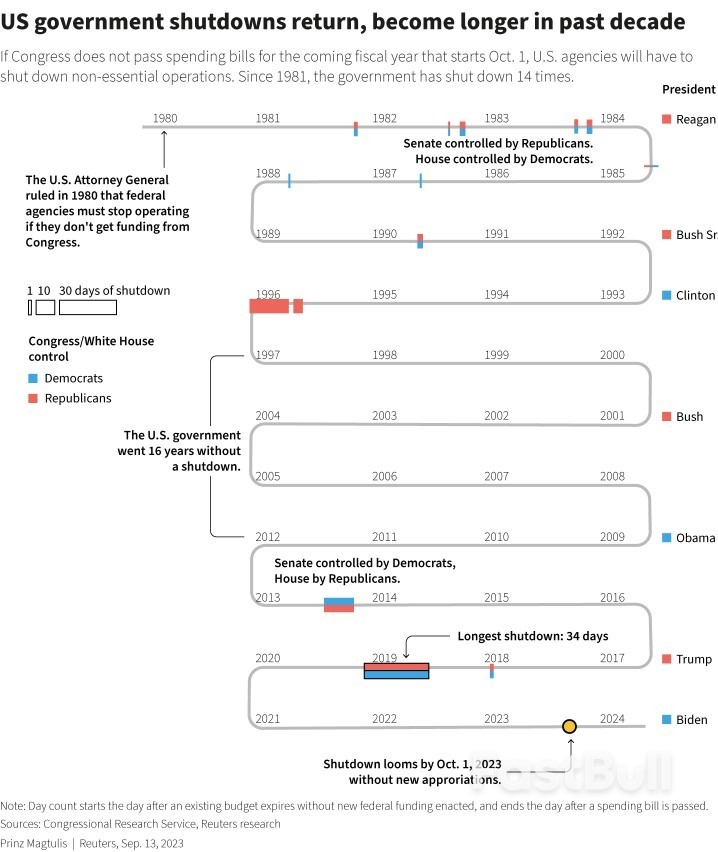
          The split between the two chambers suggests the federal government is increasingly likely to enter its fourth shutdown in a decade on Sunday, a pattern of partisan gridlock that has begun to darken Wall Street's view of U.S. government credit.
          Senate Majority Leader Chuck Schumer, a Democrat, and Senate Republican Leader Mitch McConnell worked in tandem to win passage of a bipartisan short-term extension of federal funding at current levels.
          House Speaker Kevin McCarthy on Tuesday told reporters he would seek approval from his splintered Republicans on a bill that also would temporarily fund the government.
          But he intends to attach tough border and immigration restrictions that are unlikely to win support from enough Democrats in the House or Senate to become law.
          Democratic President Joe Biden and McCarthy had aimed to head off a shutdown this year when they agreed in May, at the end of a standoff over the federal debt ceiling, to discretionary spending of $1.59 trillion for the fiscal year beginning Oct. 1.
          The White House on Tuesday urged Republicans to honor that deal.
          "House Republicans should join the Senate in doing their job, stop playing political games with peoples' lives, and abide by the bipartisan deal two-thirds of them voted for in May," said Press Secretary Karine Jean-Pierre in a statement.
          But hardliners to the right of McCarthy have rejected that deal, demanding another $120 billion in cuts.
          McCarthy's measure would restart construction of the U.S.-Mexico border wall, a signature policy of former President Donald Trump, and tighten immigration policies.
          Critics have said it would effectively put an end to U.S. asylum for immigrants.
          'Shutdowns are bad news'
          McCarthy called on the Biden and congressional Democrats to reconsider their opposition. The top Senate Republican pleaded with his House counterpart to embrace the Senate bill.
          "Government shutdowns are bad news, whichever way you'd look at it," McConnell said.
          McCarthy countered: "Let's do something on the border, keep the government open and show this nation that we can do it right, and solve the rest of our problems as we go."
          Hundreds of thousands of federal workers will be furloughed and a wide range of services, from economic data releases to nutrition benefits, will be suspended beginning on Sunday if the two sides do not reach agreement.
          The standoff has caused concern at credit rating agency Moody's, though it is unclear whether it will hurt U.S. creditworthiness, as past shutdowns have not had a significant impact on the world's largest economy.
          Trump, the front-runner for the 2024 Republican nomination, has cheered on the shutdown talk.
          The cuts that hardliners are pushing for only account for a fraction of the total U.S. budget, which will come to $6.4 trillion for this fiscal year. Lawmakers are not considering cuts to popular benefit programs like Social Security and Medicare, which are projected to grow dramatically as the population ages.
          Congress has shut down the government 14 times since 1981, though most of those funding gaps have lasted only a day or two.Shutdown Looms as US Senate, House Take Dueling Tacks on Funding_1

          Source: Reuters

          To stay updated on all economic events of today, please check out our Economic calendar
          Risk Warnings and Disclaimers
          You understand and acknowledge that there is a high degree of risk involved in trading. Following any strategies or investment methods may lead to potential losses. The content on the site is provided by our contributors and analysts for information purposes only. You are solely responsible for determining whether any trading assets, securities, strategy, or any other product is suitable for investing based on your own investment objectives and financial situation.
          Comments
          Add to Favorites
          Share

          September 27th Financial News

          FastBull Featured

          Daily News

          [Quick Facts]

          1. Fed's Kashkari expects a 40% chance of meaningfully higher rates.
          2. Two Middle Eastern countries plan to expand refining capacity, which may further tighten crude oil supply.
          3. The Japanese yen nears the intervention level.
          4. U.S. Congress advances a stopgap spending bill to avoid a government shutdown.
          5. A 77.8% probability of the Fed leaving rates unchanged in November.

          [News Details]

          Fed's Kashkari expects a 40% chance of meaningfully higher rates
          Minneapolis Fed President Neel Kashkari said on Tuesday local time that the Fed has two potential options for dealing with inflation in the future. One is a "soft landing" path, in which policymakers may raise interest rates one more time before keeping interest rates stable to fully cool inflation. He believes sees a 60% chance the Fed can bring inflation down to the 2% target, without causing serious damage to the economy. In the other scenario (which he sees as a 40% chance), inflation would be more entrenched and would require further rate hikes to get it under control, perhaps even a significant one. Despite the tightening cycle nearing its end, the Fed's hawkish stance is intensifying, unsettling investors who have been betting on rate cuts as early as the spring of 2024.
          Two Middle Eastern countries plan to expand refining capacity, which may further tighten crude oil supply
          Oil supplies remain tight as Russia and Saudi Arabia have extended production cuts through the end of the year. It is reported that Oman and Bahrain plan to expand refining capacity and consume more crude oil to produce fuels such as diesel for export, which will lead to a crude oil reduction of more than 300,000 barrels per day in the Middle East, thus further tightening the global oil supply. In addition, due to strong refining and export demand, U.S. crude oil inventories in Cushing, Oklahoma, fell by 828,000 barrels last week to the lowest level in 14 months, which may extend the oil price rally.
          The Japanese yen nears the intervention level
          The yen is under increasing pressure as the Bank of Japan has set a high bar for exiting its ultra-loose monetary policy. A year ago, when the USDJPY approached the 150 level, Japanese officials strengthened verbal warnings and then intervened in the foreign exchange market to support the yen. This time, however, verbal intervention has yet to occur, which could indicate that the threshold has changed somewhat. However, the yen fell below 149 per dollar on Tuesday, hitting its lowest level since October 2022. Japan's Finance Minister Shunichi Suzuki made two statements on the exchange rate in one day, saying he was closely monitoring forex movements with a strong sense of urgency.
          U.S. Congress advances a stopgap spending bill to avoid a government shutdown
          On Tuesday, U.S. Senate Majority Leader Chuck Schumer said there would be a cross-party stopgap spending bill in the Senate, which would not contain everything the parties want but could provide short-term funding to prevent a government shutdown. The House, on the other hand, is trying to move forward with a contradictory measure that has only Republican support. U.S. House Speaker Kevin McCarthy said President Joe Biden needs to take action on border security to keep the government running. The split between the House and Senate signaled the growing likelihood that the federal government would enter its fourth shutdown in a decade on Sunday.
          A 77.8% probability of the Fed leaving rates unchanged in November
          According to the CME FedWatch tool, the probability that the Federal Reserve will keep interest rates unchanged in November in the range of 5.25%-5.50% is 77.8%, and the probability of raising interest rates by 25 basis points to 5.50%-5.75% range is 22.2%. The probability of keeping rates unchanged through December is 64.1%, the probability of a 25 basis point rate hike through December is 32%, and 50 basis points, 3.9%.

          [Focus of the Day]

          UTC+8 09:30 Australia CPI YoY (Aug)
          UTC+8 14:00 Germany Gfk Consumer Confidence Index (Oct)
          UTC+8 16:00 Switzerland ZEW Investor Confidence Index (Sept)
          UTC+8 20:30 U.S. Durable Goods Order MoM (Aug)
          UTC+8 22:30 U.S. EIA Crude Stocks for the Week Ended September 22
          Risk Warnings and Disclaimers
          You understand and acknowledge that there is a high degree of risk involved in trading. Following any strategies or investment methods may lead to potential losses. The content on the site is provided by our contributors and analysts for information purposes only. You are solely responsible for determining whether any trading assets, securities, strategy, or any other product is suitable for investing based on your own investment objectives and financial situation.
          Comments
          Add to Favorites
          Share

          Back to Regularly Scheduled Programming

          Samantha Luan

          Economic

          Wall Street on Tuesday buckled under the weight of high and rising U.S. bond yields, leading a steep decline in global stocks and risk appetite that looks certain to push Asian markets lower at the open on Wednesday.
          A Bank of Thailand interest rate decision and the latest snapshots of Australian consumer price inflation and Chinese industrial profits are the highlights on the region's economic and policy calendar.
          Investor sentiment is weak and fragile.
          The three major U.S. equity indexes all lost more than 1% on Tuesday, with the Dow Jones Industrials posting its worst day since March and the S&P 500 and Nasdaq both on track for their biggest monthly losses this year of 5% and 7%, respectively.
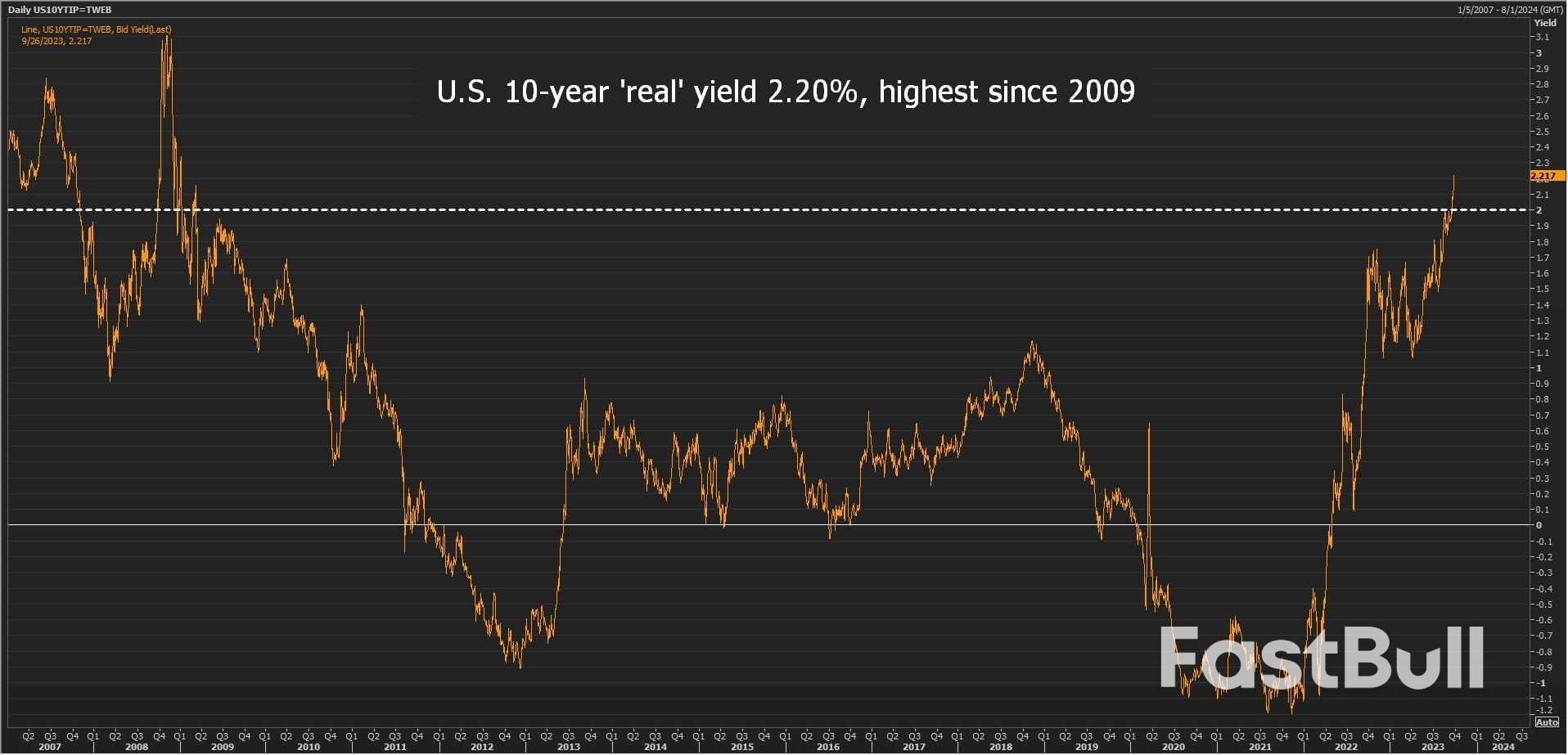
          The move in Treasuries was nowhere near as big as Monday's. But another day of curve steepening, and 10-year nominal and real yields rising to new multi-year highs crushed stocks.
          Back to Regularly Scheduled Programming_1Volatility on Wall Street is finally picking up too, and at 19.0 the VIX 'fear index' of implied vol is closer to long-term averages. Only a couple of weeks ago it registered its lowest daily close since before the pandemic.
          U.S. bond market volatility - a key driver of global market stability and liquidity - had its biggest rise since early July. This will reverberate into Asian markets on Wednesday.
          Investors in Asia will also note the significance of U.S. crude oil's rise on Tuesday after a few days of consolidation, not for the 1% rise in itself, but because it lifts the year-on-year price rise to almost 20%.
          Bearing in mind that as recently as June oil was down 45% year-on-year, this is a remarkable turnaround and helps explain why longer-dated bond yields are rising so much.
          In Asia on Wednesday, Thailand's central bank is expected to leave its key policy rate unchanged at 2.25% and likely through 2024, marking an end to a year-long tightening cycle, although a minority of economists polled by Reuters still expect one final hike.
          Despite inflation edging up slightly to 0.88% in August, it has been below the central bank's 1% to 3% target range for four months in a row, suggesting the Bank of Thailand can stop hiking.
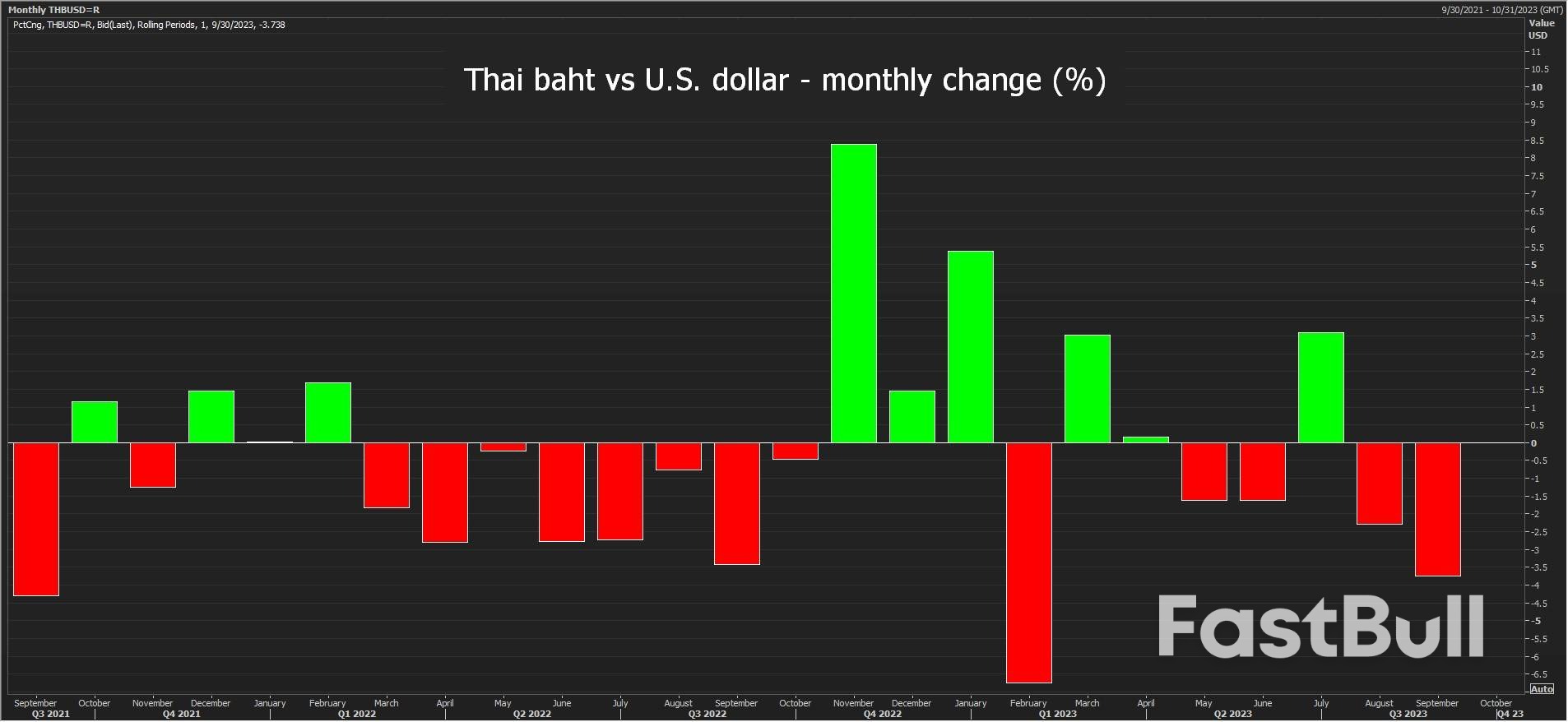
          Back to Regularly Scheduled Programming_2Add this to the U.S. dollar's global tear higher, the Thai baht has slumped to its weakest level since November. It is down almost 4% this month, on track for its second-biggest monthly fall in two years.
          Meanwhile, there is still no sign of Japanese authorities intervening in the FX market to support the yen, which hit a new 11-month low closer to the 150 per dollar level.
          Here are key developments that could provide more direction to markets on Wednesday:
          - Bank of Thailand rate decision
          - Australia consumer price inflation (August)
          - China industrial profits (August)

          Source: Yahoo

          To stay updated on all economic events of today, please check out our Economic calendar
          Risk Warnings and Disclaimers
          You understand and acknowledge that there is a high degree of risk involved in trading. Following any strategies or investment methods may lead to potential losses. The content on the site is provided by our contributors and analysts for information purposes only. You are solely responsible for determining whether any trading assets, securities, strategy, or any other product is suitable for investing based on your own investment objectives and financial situation.
          Comments
          Add to Favorites
          Share

          Could This Week's CPI Prints Diminish the Chances of Further ECB Rate Hikes?

          Justin

          Central Bank

          Economic

          Has the ECB hiked for the last time?

          Contrary to the other key central banks, the ECB announced another rate hike at its September meeting. The statement and the accompanying press conference did not differ much from the message coming from the recent Jackson Hole gathering as President Lagarde, and numerous hawks after the meeting, has tried to keep the door open to another rate hike if needed. However, the market does not appear convinced as the next rate move is expected to be a rate cut. Understandably, most ECB doves have also come out, insisting that the ECB has done enough.
          As the September ECB staff projections showed headline inflation dropping to 2.1% by 2025, and core inflation a tad higher at 2.2%, one can say that the ECB is probably not there yet. And at this point, the discussion about the growth outlook comes in. The market believes that a stagnant economy, and potentially a short-term recession, will persist, increasing the possibility of inflation slowing down even more aggressively. This expectation is mostly confirmed by the most recent PMI figures.

          ECB is aware of the grim growth outlook

          However, Lagarde made it clear that the ECB is aware that the rough patch will continue in the fourth quarter of 2023, spilling over into 2024 as well. And despite this grim outlook, the ECB opted to hike, potentially fearing that the current inflation deceleration could be temporary. Considering the oil price performance over the past two months, these fears could materialize going forward. Additionally, a couple of weeks ago we got an interesting comment from Bank of Japan member Tamura. He commented that Japan’s inflation is likely to slow for the time being, and then accelerate moderately again. If this applies to the euro area economy as well, then the ECB is probably sensible in keeping an open mind at this juncture.

          Inflation still matters

          In this context, on Thursday we will get the preliminary print for German inflation with the euro area aggregate figures released on Friday. Regarding Germany, the market is currently forecasting a significant deceleration at the annual pace of increase from 6.1% in August to just 4.6% in September. If confirmed, this will be the lowest headline figure since October 2021, a strong sign that the ECB’s monetary policy stance is working. Consequently, the euro area aggregate print is also expected to record a slowdown but less dramatic. The headline figure is seen easing to a 4.5% YoY growth from 5.2% in August, with the core component forecast to slow to an annual growth of 4.8%.

          What does that mean for the ECB and the euro?

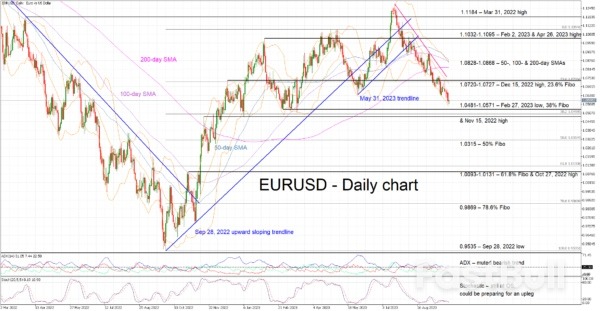
          Unfortunately for the hawks, the ECB has reached the stage where an upside surprise in inflation is not sufficient justification for a rate hike at the next meeting. Other pieces of the economic puzzle i.e. growth outlook, wage developments and oil price action must align in order to increase the possibility of an inflation overshoot and eventually force the ECB to react. However, in the case of a stronger inflation print this week, the euro stands to benefit against the US dollar. A move towards the 1.0720 area could clearly please the euro bulls but these gains might prove short-lived if the incoming data continue to paint a grim growth picture.
          On the flip side, the barrier for rate cuts remains high. However, certain ECB members have started to mention the word “cut” which suits the market’s intentions. We will gradually see more “rate cut” comments if there is a downside surprise at this week’s CPI figures. This outcome could bring forward the currently priced-in rate cuts and thus allow the euro-dollar pair to continue its aggressive downward trend. A break of the busy 1.0481-1.0571 area could open the door to a more protracted move towards 1.0315.
          Could This Week's CPI Prints Diminish the Chances of Further ECB Rate Hikes?_1

          Source:XM

          To stay updated on all economic events of today, please check out our Economic calendar
          Risk Warnings and Disclaimers
          You understand and acknowledge that there is a high degree of risk involved in trading. Following any strategies or investment methods may lead to potential losses. The content on the site is provided by our contributors and analysts for information purposes only. You are solely responsible for determining whether any trading assets, securities, strategy, or any other product is suitable for investing based on your own investment objectives and financial situation.
          Comments
          Add to Favorites
          Share

          Why Is the U.S. Fed so Hawkish after Interest Rate Pause?

          Cohen

          Economic

          In my column on September 5, I made the case that central banks were likely at or near the end of their rate-raising cycles, and events over the past couple of weeks have borne that out.
          The European Central Bank delivered a "dovish hike" that is likely to be its last in the current cycle, the U.S. Federal Reserve managed to upset bond markets with a "hawkish hold" and the Bank of England surprised by keeping rates unchanged on growth concerns.
          For the GCC, it is the Fed's decision that matters the most, given the currency pegs to the dollar.
          While the Fed kept rates on hold at 5.5 per cent, as the market expected, and retained its forecast of another 25-basis-point hike before year-end, it was the 2024 economic and interest rate projections that unsettled financial markets.
          This pushed both the two-year and 10-year Treasury bond yields to their highest levels since 2007 and triggered the worst week for equities since the U.S. banking sector crisis in March.
          The Fed raised its U.S. economic growth forecast for next year to 1.5 per cent from 1.1 per cent in June and lowered its unemployment forecast to 4.1 per cent from 4.5 per cent previously.
          So far so good: the U.S. economy has proven to be much more resilient in the face of a record pace of rate hikes than had been expected at the start of this year.
          As the Fed forecasts suggest – despite chairman Jerome Powell's comments that a soft landing was not the base-case scenario – the central bank now expects the U.S. economy to avoid a recession next year.
          Despite the more upbeat economic outlook, the inflation forecast for 2024 was unchanged from June, at 2.5 per cent on headline Personal Consumption Expenditure inflation (the Fed's preferred measure) and 2.6 per cent on core inflation.
          Most importantly for the market, the Fed's interest rate projections – the so-called "dot plot" – now show just 50bp of rate cuts next year, down from 100bp in the June dots.
          The new dots imply a much higher "real" or inflation-adjusted interest rate – and a much more restrictive monetary policy setting – in 2024 than had been projected just three months ago.
          Essentially, the Fed is indicating that given the stronger economic outlook for the U.S. economy, interest rates will need to remain higher for longer to keep inflation coming down towards the 2 per cent target.
          Even under this higher-for-longer scenario, the Fed doesn't think its inflation target will be reached until 2026 – more than two years away.
          The messaging from the Fed is clear: don't expect rate cuts anytime soon.
          The question is why the central bank is so hawkish when there is already clear evidence that the labour market is normalising, activity is slowing and there are significant downside risks ahead, including the resumption of student loan repayments, the car workers' strike, and a looming government shutdown that could last several weeks.
          One reason is that policymakers are simply pushing back against an early repricing of rate expectations in the market, which could result in an easing in financial conditions before inflation has been tamed.
          Typically, the market prices expected future developments today, so if the Fed had signalled that it was done with raising rates last week, the bond market would most likely have rallied on expectations of rate cuts to come in 2024.
          By stressing that there is still a possibility of a further increase in the Fed funds rate this year and removing 50bp of easing that it had previously pencilled in for next year, the central bank has kept bond yields higher and financial conditions tighter – for now.
          It remains to be seen how long rates will stay at these elevated levels, particularly if the labour market continues to soften and the downside risks to growth materialise.

          Source: The National News

          To stay updated on all economic events of today, please check out our Economic calendar
          Risk Warnings and Disclaimers
          You understand and acknowledge that there is a high degree of risk involved in trading. Following any strategies or investment methods may lead to potential losses. The content on the site is provided by our contributors and analysts for information purposes only. You are solely responsible for determining whether any trading assets, securities, strategy, or any other product is suitable for investing based on your own investment objectives and financial situation.
          Comments
          Add to Favorites
          Share

          Copper Prices Slump as LME Stocks Continue to Pile Up

          Owen Li

          Commodity

          LME copper stocks double
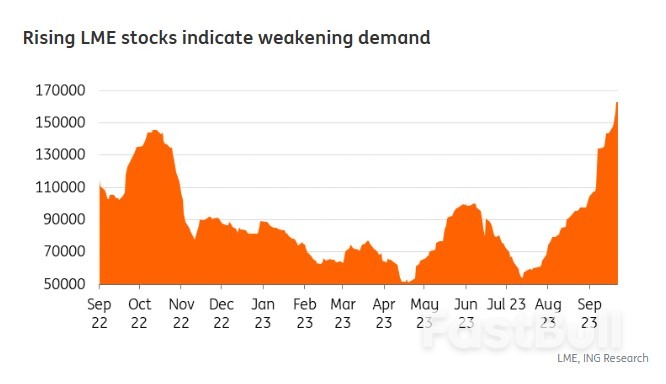
          Copper stocks held on the London Metal Exchange (LME) have more than doubled in the space of two months. This shows clear signals of weakening demand. Inventories of the red metal on the exchange now stand at 162,900 tonnes, according to the latest LME daily data, after 7,200 tonnes of the metal were delivered to LME warehouses in Hamburg, Rotterdam and New Orleans. So far in September, inventories are up by more than 50%, following a similar rise in August.
          LME copper stocks have been rising since mid-July with more than 100,000 tonnes of the metal having been delivered into the exchange's warehouses. They do, however, remain low by historical standards. We believe low inventories fuel the possibility for spot prices to rise rapidly if consumption picks up sooner than expected.
          Meanwhile, loose nearby spreads indicate an ample supply of available material. The discount for near-term delivery versus the three-month contract continues to rise, which signals more deliveries might be on the way. It last stood at $64.25, compared to $4.50 on 5 September. This is the widest discount in data going back to 1994.
          With rising LME inventories and loosening nearby spreads, more weakness may lie ahead for copper prices.Copper Prices Slump as LME Stocks Continue to Pile Up_1
          LME prices struggle for direction
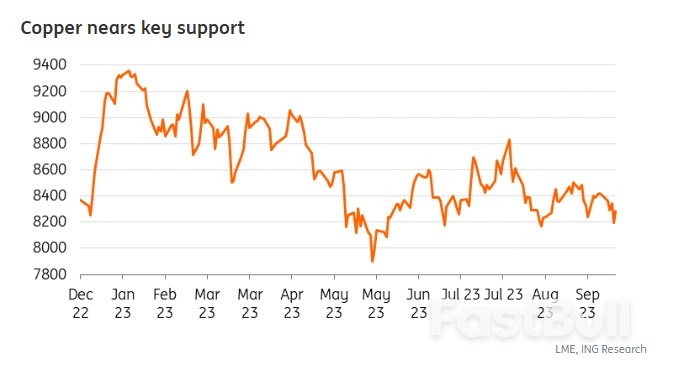
          Copper has been struggling for direction lately amid concerns over Federal Reserve policy and a disappointing Chinese economic recovery.
          Copper prices fell to their lowest level in five weeks earlier this week, hitting $8,110.50/t, after the Fed indicated that its policy would remain restrictive for longer, which pushed the dollar to a six-month high. Further rate hikes could add more headwinds during a time of already weakening demand for copper.
          Meanwhile, worries over China's real estate sector continue to escalate after Moody's Investors Service put two of the country's strongest property developers – China Jinmao Holdings Group and China Vanke – on review for possible downgrades.
          China's new home prices fell for a third month in August and at a slightly faster pace, according to the latest government data. New home prices in 70 cities, excluding state-subsidised housing, declined by 0.29% last month from July, when they fell 0.23%.
          At the end of last month, Beijing rolled out a set of stimulus measures, reducing down-payment requirements for homebuyers and allowing lenders to lower rates on existing mortgages, resulting in a spurt of homebuying earlier in the month, however that is already losing momentum.
          Still, there are some signs of economic activity picking up in August. Industrial production rose by 4.5% from a year earlier while retail sales jumped 4.6%, the latest data show.
          However, China's recovery is still uncertain, with anything related to real estate continuing to struggle. For copper, risks remain to the downside heading into the year's end on China's uncertain outlook for the property sector. We believe commodity-intensive stimulus is needed to support short to medium-term demand growth. We maintain our price forecast of an average of $8,582/t in 2023.Copper Prices Slump as LME Stocks Continue to Pile Up_2

          Source: ING

          Risk Warnings and Disclaimers
          You understand and acknowledge that there is a high degree of risk involved in trading. Following any strategies or investment methods may lead to potential losses. The content on the site is provided by our contributors and analysts for information purposes only. You are solely responsible for determining whether any trading assets, securities, strategy, or any other product is suitable for investing based on your own investment objectives and financial situation.
          Comments
          Add to Favorites
          Share
          FastBull
          Copyright © 2025 FastBull Ltd

          728 RM B 7/F GEE LOK IND BLDG NO 34 HUNG TO RD KWUN TONG KLN HONG KONG

          TelegramInstagramTwitterfacebooklinkedin
          App Store Google Play Google Play
          Products
          Charts

          Chats

          Q&A with Experts
          Screeners
          Economic Calendar
          Data
          Tools
          Membership
          Features
          Function
          Markets
          Copy Trading
          Latest Signals
          Contests
          News
          Analysis
          24/7
          Columns
          Education
          Company
          Careers
          About Us
          Contact Us
          Advertising
          Help Center
          Feedback
          User Agreement
          Privacy Policy
          Business

          White Label

          Data API

          Web Plug-ins

          Poster Maker

          Affiliate Program

          Risk Disclosure

          The risk of loss in trading financial instruments such as stocks, FX, commodities, futures, bonds, ETFs and crypto can be substantial. You may sustain a total loss of the funds that you deposit with your broker. Therefore, you should carefully consider whether such trading is suitable for you in light of your circumstances and financial resources.

          No decision to invest should be made without thoroughly conducting due diligence by yourself or consulting with your financial advisors. Our web content might not suit you since we don't know your financial conditions and investment needs. Our financial information might have latency or contain inaccuracy, so you should be fully responsible for any of your trading and investment decisions. The company will not be responsible for your capital loss.

          Without getting permission from the website, you are not allowed to copy the website's graphics, texts, or trademarks. Intellectual property rights in the content or data incorporated into this website belong to its providers and exchange merchants.

          Not Logged In

          Log in to access more features

          FastBull Membership

          Not yet

          Purchase

          Become a signal provider
          Help Center
          Customer Service
          Dark Mode
          Price Up/Down Colors

          Log In

          Sign Up

          Position
          Layout
          Fullscreen
          Default to Chart
          The chart page opens by default when you visit fastbull.com