Markets
News
Analysis
User
24/7
Economic Calendar
Education
Data
- Names
- Latest
- Prev


Signal Accounts for Members
All Signal Accounts
All Contests


U.K. Retail Sales MoM (SA) (Dec)A:--
F: --
P: --
France Manufacturing PMI Prelim (Jan)A:--
F: --
P: --
France Services PMI Prelim (Jan)A:--
F: --
P: --
France Composite PMI Prelim (SA) (Jan)A:--
F: --
P: --
Germany Manufacturing PMI Prelim (SA) (Jan)A:--
F: --
P: --
Germany Services PMI Prelim (SA) (Jan)A:--
F: --
P: --
Germany Composite PMI Prelim (SA) (Jan)A:--
F: --
P: --
Euro Zone Composite PMI Prelim (SA) (Jan)A:--
F: --
P: --
Euro Zone Manufacturing PMI Prelim (SA) (Jan)A:--
F: --
P: --
Euro Zone Services PMI Prelim (SA) (Jan)A:--
F: --
P: --
U.K. Composite PMI Prelim (Jan)A:--
F: --
P: --
U.K. Manufacturing PMI Prelim (Jan)A:--
F: --
P: --
U.K. Services PMI Prelim (Jan)A:--
F: --
P: --
Mexico Economic Activity Index YoY (Nov)A:--
F: --
P: --
Russia Trade Balance (Nov)A:--
F: --
P: --
Canada Core Retail Sales MoM (SA) (Nov)A:--
F: --
P: --
Canada Retail Sales MoM (SA) (Nov)A:--
F: --
U.S. IHS Markit Manufacturing PMI Prelim (SA) (Jan)A:--
F: --
P: --
U.S. IHS Markit Services PMI Prelim (SA) (Jan)A:--
F: --
P: --
U.S. IHS Markit Composite PMI Prelim (SA) (Jan)A:--
F: --
P: --
U.S. UMich Consumer Sentiment Index Final (Jan)A:--
F: --
P: --
U.S. UMich Current Economic Conditions Index Final (Jan)A:--
F: --
P: --
U.S. UMich Consumer Expectations Index Final (Jan)A:--
F: --
P: --
U.S. Conference Board Leading Economic Index MoM (Nov)A:--
F: --
P: --
U.S. Conference Board Coincident Economic Index MoM (Nov)A:--
F: --
P: --
U.S. Conference Board Lagging Economic Index MoM (Nov)A:--
F: --
P: --
U.S. UMich 1-Year-Ahead Inflation Expectations Final (Jan)A:--
F: --
P: --
U.S. Conference Board Leading Economic Index (Nov)A:--
F: --
P: --
U.S. Weekly Total Rig CountA:--
F: --
P: --
U.S. Weekly Total Oil Rig CountA:--
F: --
P: --
Germany Ifo Business Expectations Index (SA) (Jan)--
F: --
P: --
Germany IFO Business Climate Index (SA) (Jan)--
F: --
P: --
Germany Ifo Current Business Situation Index (SA) (Jan)--
F: --
P: --
U.S. Dallas Fed PCE Price Index YoY (Nov)--
F: --
P: --
Brazil Current Account (Dec)--
F: --
P: --
Mexico Unemployment Rate (Not SA) (Dec)A:--
F: --
P: --
Canada National Economic Confidence Index--
F: --
P: --
U.S. Non-Defense Capital Durable Goods Orders MoM (Excl. Aircraft) (Nov)--
F: --
P: --
U.S. Durable Goods Orders MoM (Excl. Defense) (SA) (Nov)--
F: --
P: --
U.S. Durable Goods Orders MoM (Excl.Transport) (Nov)--
F: --
P: --
U.S. Durable Goods Orders MoM (Nov)--
F: --
P: --
U.S. Chicago Fed National Activity Index (Nov)--
F: --
P: --
U.S. Dallas Fed New Orders Index (Jan)--
F: --
P: --
U.S. Dallas Fed General Business Activity Index (Jan)--
F: --
P: --
U.K. BRC Shop Price Index YoY (Jan)--
F: --
P: --
China, Mainland Industrial Profit YoY (YTD) (Dec)--
F: --
P: --
Mexico Trade Balance (Dec)--
F: --
P: --
U.S. S&P/CS 20-City Home Price Index YoY (Not SA) (Nov)--
F: --
P: --
U.S. S&P/CS 20-City Home Price Index MoM (SA) (Nov)--
F: --
P: --
U.S. FHFA House Price Index MoM (Nov)--
F: --
P: --
U.S. FHFA House Price Index (Nov)--
F: --
P: --
U.S. Richmond Fed Manufacturing Composite Index (Jan)--
F: --
P: --
U.S. Conference Board Present Situation Index (Jan)--
F: --
P: --
U.S. Conference Board Consumer Expectations Index (Jan)--
F: --
P: --
U.S. Richmond Fed Manufacturing Shipments Index (Jan)--
F: --
P: --
U.S. Richmond Fed Services Revenue Index (Jan)--
F: --
P: --
U.S. Conference Board Consumer Confidence Index (Jan)--
F: --
P: --
Australia RBA Trimmed Mean CPI YoY (Q4)--
F: --
P: --
Australia CPI YoY (Q4)--
F: --
P: --
Australia CPI QoQ (Q4)--
F: --
P: --


No matching data
Latest Views
Latest Views
Trending Topics
Top Columnists
Latest Update
White Label
Data API
Web Plug-ins
Affiliate Program
View All

No data
Yen strengthens on BoJ rate hike speculation and intervention outlook, amid global market uncertainty.
The Japanese yen is gaining ground against major currencies as traders position themselves for the Bank of Japan's (BoJ) next move. Market focus is locked on the conclusion of the central bank's two-day policy meeting this Friday, which is expected to provide critical clues about the timing of its next interest rate hike.
Several dynamics are contributing to the yen's upward momentum. Anticipation is building that Japanese authorities may intervene to halt further depreciation of the currency. This sentiment, combined with a broader risk-off mood in the markets, enhances the appeal of the safe-haven JPY.
Further bolstering this view were recent comments from Japan's finance minister, Satsuki Katayama, who suggested that Japan and the U.S. could cooperate to address the yen's recent weakness. The possibility of additional policy tightening by the BoJ is also seen as a significant supportive factor for the currency.
The yen's rally comes amid wider market uncertainty. European stocks traded lower, with investors unnerved by ongoing trade jitters linked to Greenland.
Meanwhile, the "Sell America" trade appears to be taking a pause, and the euro is holding firm near recent highs. Market participants are also looking ahead to speeches by U.S. President Donald Trump and ECB President Christine Lagarde at the Davos summit.
During European trading, the yen demonstrated notable strength across the board:
• Against the Euro (EUR/JPY): The yen rose to 184.82 from a one-week low of 185.54. The next resistance level is seen around 183.00.
• Against the Pound (GBP/JPY): The yen advanced to 211.97 from an early low of 212.65, with potential resistance near 210.00.
• Against the Swiss Franc (CHF/JPY): The currency climbed to 199.26 from 200.31. The next key level to watch is the 197.00 resistance area.
• Against the U.S. Dollar (USD/JPY): The yen strengthened to 157.82 from 158.28. Resistance is anticipated around the 156.00 mark.
• Against the Canadian Dollar (CAD/JPY): The yen moved to 114.09 from 114.39, with the next resistance target at 112.00.
Traders will be closely monitoring a series of economic data releases during the New York session. Key reports include:
• U.S. MBA mortgage approvals data
• Canada's Producer Price Index (PPI) and raw material prices for December
• U.S. pending home sales for December
• U.S. construction spending for September
President Donald Trump is set to significantly increase his domestic travel in the lead-up to the November midterm elections, aiming to promote his economic policies and win over American voters concerned about the cost of living.
White House Chief of Staff Susie Wiles confirmed the new strategy, telling reporters that Trump plans to travel "every week" and will intensify this schedule as the elections draw closer. The goal is to secure control of Congress by directly addressing economic anxieties.
As part of a coordinated White House effort, Cabinet members will also scale back international trips to concentrate on domestic stops. This initiative is designed to amplify the administration's economic message at a time when affordability is a primary concern for voters.
The renewed travel plan includes a trip to Iowa on Tuesday, a state pivotal to Trump's political rise, where he will discuss the farm economy and energy. This follows a recent visit to a Ford Motor Co. facility in Michigan, where he promoted his tariff agenda and efforts to boost domestic manufacturing.
While the administration has previously announced plans for more travel, this new push signals a campaign-level intensity that has not yet fully materialized.
The travel announcement came shortly before Trump was scheduled to deliver a major speech on affordability at the World Economic Forum in Davos. His populist platform includes several key proposals designed to address rising costs for Americans.
According to National Economic Council Director Kevin Hassett, the president's agenda features several bold initiatives:
• Housing: A ban on institutional investors purchasing single-family homes.
• Credit: A temporary cap on credit card interest rates at 10% for one year.
• Mortgages: Directing Fannie Mae and Freddie Mac to buy $200 billion in mortgage bonds to help lower lending rates.
• Retirement Savings: Allowing Americans to use funds from their 401(k) retirement plans for a down payment on a home.
On Tuesday, Trump signed an executive order outlining a process to limit institutional home purchases, though it did not immediately implement new regulations.
The administration is ramping up its focus on the cost of living as high prices for groceries, housing, and healthcare continue to strain household budgets. Republicans are under pressure to maintain their narrow majority in Congress. A loss in either the House or the Senate could jeopardize Trump's legislative agenda and expose him to greater oversight.
This economic messaging has been inconsistent in the past. Trump previously dismissed affordability concerns as a Democratic "hoax" before later insisting that his economic record was strong and that his policies simply needed more time to work. The upcoming travel blitz represents a clear effort to unify this message and present a proactive stance on the economy ahead of the crucial November elections.
The European Union's historic free trade agreement with the South American Mercosur bloc is now facing a serious threat. After 25 years of negotiations, EU lawmakers have narrowly voted to challenge the deal in the bloc's highest court, a move that could stall its implementation by at least two years and potentially unravel it completely.
On Wednesday, a motion to refer the trade pact to the EU Court of Justice passed with 334 votes in favor to 324 against, with 11 abstentions. The challenge was initiated by a group of 144 lawmakers who have raised critical questions about the agreement's legal standing.
Specifically, the court will be asked to rule on two key issues:
• Can the deal be provisionally applied before it is fully ratified by every EU member state?
• Do its provisions unfairly restrict the EU's power to set its own environmental and consumer health policies?
A ruling from the court typically takes around two years.
The vote exposes a deep rift within the EU over the trade deal, which was signed on Saturday with Mercosur members Argentina, Brazil, Paraguay, and Uruguay.
Opposition From the Agricultural Sector
Opponents, with France's powerful farming lobby at the forefront, argue the deal will flood the European market with cheap agricultural imports. They are primarily concerned about increased competition from beef, sugar, and poultry, which they say will undercut domestic producers who have already staged multiple protests against the pact.


The Geopolitical Argument for the Deal
On the other side, supporters like Germany and Spain view the agreement as a crucial strategic move. They argue that amid global trade disruptions, such as U.S. tariffs implemented under President Donald Trump, the deal is essential for the EU's economic security.
Proponents believe the pact will:
• Offset business lost due to U.S. trade policies.
• Reduce the EU's economic reliance on China.
• Secure access to critical minerals from South America.
They also warn that the Mercosur nations are growing impatient after decades of talks, and further delays could jeopardize the entire relationship.
While the legal challenge proceeds, the EU could technically apply the trade agreement on a provisional basis. However, this would be a politically difficult move given the strong opposition and the risk of a public backlash.
Ultimately, the European Parliament still holds the power to annul the deal later on. With the pact now heading to the courts, the future of the EU's largest-ever trade agreement remains highly uncertain.
Swiss National Bank Chairman Martin Schlegel on Wednesday stressed that central bank independence is essential for controlling inflation, a statement made amid mounting political pressure on the U.S. Federal Reserve and its chair, Jerome Powell.
The SNB joined other central banks last week in supporting Powell after the U.S. Justice Department, under President Donald Trump, threatened him with a criminal investigation. Powell has described the probe, which concerns renovations at two Fed buildings, as a pretext to pressure the central bank into cutting interest rates—a move Trump has repeatedly demanded.
"Central bank independence is very important," Schlegel told Reuters during the World Economic Forum in Davos. "A central bank needs to be independent to fulfil its mandate, which is price stability."
He highlighted the global significance of the Fed's autonomy, adding, "It's really important that the Fed is independent. Typically, when a central bank is not independent, inflation is higher."
Schlegel noted that recent global political turbulence has driven up the value of the Swiss franc, which investors traditionally view as a safe-haven asset.
The franc recorded its strongest annual performance since 2002 last year, gaining nearly 14.5% against the dollar as President Trump's global tariff offensive disrupted trade and unsettled investors. Renewed fears of a trade war with Europe have fueled further gains, with the franc climbing 1.4% this week after remaining stable for most of January.
The franc's appreciation directly impacts the SNB's balance sheet, reducing the value of its dollar-denominated assets. U.S. dollar holdings constitute approximately 36% of the central bank's 765 billion Swiss francs ($966 billion) in foreign currency reserves.
While Schlegel did not comment on whether the SNB would reduce its dollar holdings, he emphasized that the bank's strategy is built on diversification and liquidity.
"What's important for us is diversification, with currencies, so U.S. dollars, euro, and so on, but also in other instruments, government bonds, corporate bonds, and also equities," he explained. "We are looking at our investment universe constantly, and we are able to make decisions if necessary."
Despite a 36.3-billion-franc profit from its gold holdings last year, driven by investors seeking refuge from economic turmoil, Schlegel confirmed the SNB has no intention of altering its position.
"We have no plan to buy or sell gold," he stated, referring to the bank's 1,040 metric tons of reserves.
The SNB also remains unconcerned by recent low inflation figures. Switzerland's annual inflation rate was 0.1% in December, sitting at the bottom of the bank's 0%-2% target range. Schlegel said the SNB expects inflation to rise but is prepared for some months of negative inflation.
"If we have some negative prints this year, for example, this is not a problem with the Swiss National Bank," he said, "because we look at the medium-term price stability."
($1 = 0.7917 Swiss francs)
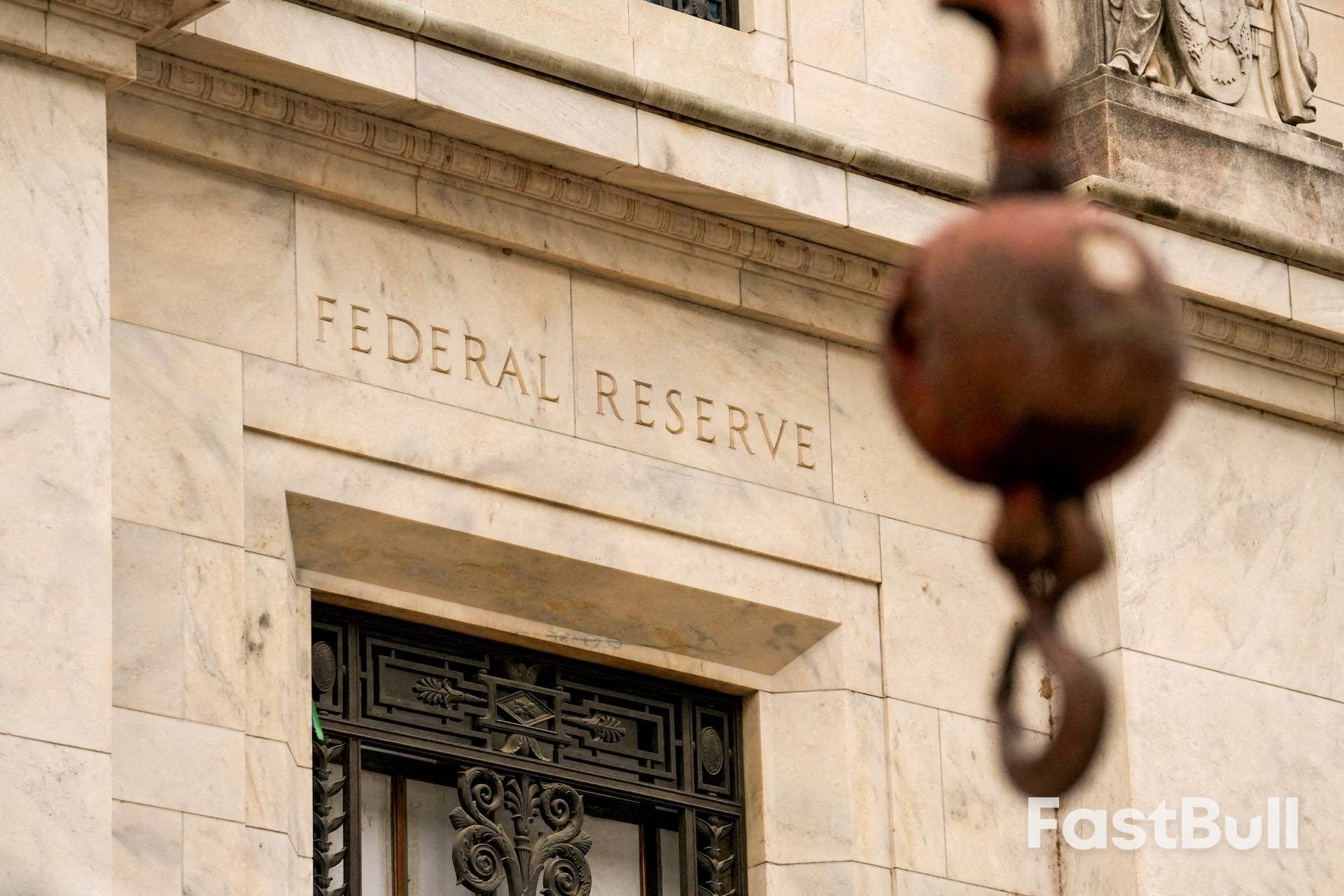
Economists have hit the brakes on their rate cut predictions for the U.S. Federal Reserve. A new Reuters poll indicates a significant shift in expectations, with a majority now forecasting that the central bank will hold its key interest rate steady through the first quarter.
Just a month ago, most experts anticipated at least one rate reduction by March. Now, the consensus suggests that any policy easing is unlikely until Fed Chair Jerome Powell's term concludes in May. This pivot is driven by a surprisingly resilient U.S. economy and escalating political pressures on the central bank's independence.

The January 16-21 poll of 100 economists shows a unified front for the short term. Every respondent expects the Fed to keep rates in the 3.50%-3.75% range at its upcoming meeting on January 27-28.
Furthermore, 58% of those surveyed foresee no change for the entire quarter. This marks a stark reversal from the previous month's poll, where a rate cut was the prevailing view.
Looking beyond the first quarter, the outlook remains uncertain. However, a slight majority of 55 economists believe rate cuts could resume once Powell's tenure ends in May, highlighting the critical role of the Fed's future leadership in shaping monetary policy.
Jeremy Schwartz, a senior U.S. economist at Nomura, noted the complexity of the situation. "The economic outlook on the surface suggests the Fed should remain on hold, maybe even consider putting hikes on the table sometime later this year or next year," he said. "In reality, though, we think the Fed will remain on hold for the remainder of Powell's term through May, but we suspect the new leadership will likely manage to get another 50 basis points of rate cuts later in the year."
The Fed's policy path is complicated by mounting political interference. President Donald Trump has consistently criticized Chair Powell for not cutting rates more aggressively.
These tensions have intensified recently, with the Justice Department bringing criminal charges against Powell concerning renovations at the Fed's headquarters. Concurrently, an attempt by Trump to remove Fed Governor Lisa Cook is awaiting a Supreme Court hearing.
This contentious environment is expected to impact the selection of the next Fed chair, a decision Treasury Secretary Scott Bessent suggested could come as early as next week.
"There's going to be more pushback than ever on the selection of the next chair, all because of the criminal investigation," said Bernard Yaros, lead U.S. economist at Oxford Economics. "I don't expect Trump to be able to really fill the Fed with people who will cut interest rates."
Underlying the delayed rate-cut expectations is the sheer strength of the U.S. economy. After expanding at a robust 4.3% pace in the third quarter, growth is now projected to hit 2.3% this year, an upgrade from the 2.0% predicted last month. This forecast is well above the 1.8% level the Fed considers non-inflationary.
Economists at Oxford Economics are even more bullish, forecasting 2.8% growth in 2026. "We are looking for a very strong U.S. GDP growth in 2026 due to further investments in AI, but even more because of the tax cuts under the fiscal bill," Yaros explained. He estimates the bill will add six-tenths of a percentage point to annual GDP growth this year alone.
This sustained economic momentum reduces the urgency for the Fed to stimulate activity with lower interest rates.
A consequence of strong economic growth is that inflation is likely to remain elevated. According to the poll, the Personal Consumption Expenditures (PCE) index—the Fed's preferred inflation gauge—is expected to stay above the 2% target for the rest of this year and through 2028.
Meanwhile, the labor market remains stable, with the unemployment rate projected to average 4.5% this year. With solid growth, a tight job market, and persistent inflation, the economic argument for holding interest rates steady appears compelling.

Remarks of Officials

Middle East Situation

Latest news on the Israeli-Palestinian conflict

Palestinian-Israeli conflict

Political
A fragile U.S.-brokered ceasefire in Gaza is under severe pressure as fresh violence erupts, stalling a 20-point peace plan championed by President Donald Trump. Israeli fire has killed five Palestinians, including two boys, according to local health officials, highlighting the repeated violations that have plagued the truce since it began in October.
The agreement, intended to de-escalate a two-year war that has devastated the region, is struggling to move beyond its initial phase.
In central Gaza, Palestinian medics reported that Israeli tank shelling east of Deir Al-Balah resulted in the deaths of three people, one of whom was a 10-year-old boy. Two other Palestinians, a 13-year-old boy and a woman, were killed in separate shooting incidents in eastern Khan Younis, located in the southern part of the enclave.

Local residents stated these incidents occurred in areas controlled by Palestinians. While the ceasefire involved a partial Israeli military withdrawal, Israeli forces still hold approximately 53% of Gaza and have been gradually expanding their presence, leading to further displacement of Palestinian families.
Earlier on Wednesday, the Israeli military announced its forces had killed a "terrorist" who posed an imminent threat after crossing into an area under their control.
The October deal has not progressed past its first stage, which involved a cessation of major fighting, a partial Israeli pullback, and an exchange of Hamas-held hostages for Palestinian detainees and prisoners.

Future phases of the plan remain stalled, with no timetable set for their implementation. These steps are supposed to include:
• The disarmament of Hamas.
• A further withdrawal of Israeli forces.
• The installation of an internationally supported administration to oversee the reconstruction of Gaza.
On Thursday, President Trump is scheduled to preside over a ceremony for the Board of Peace, a group he established with the stated aim of redeveloping the coastal territory.
Disputes Over Hostages and Disarmament
Progress is deadlocked over key disagreements. Israel insists it will only proceed to the second phase after Hamas returns the remains of the last Israeli hostage.
In response, Hamas Gaza spokesperson Hazem Qassem said on Wednesday that the group has shared all available information about the body and that its search efforts were unsuccessful, blaming what he termed obstruction by the Israeli military.
Since the ceasefire took effect, more than 460 Palestinians and three Israeli soldiers have been reported killed in clashes. The wider conflict began after a Hamas-led attack on October 7, 2023, which killed 1,200 people, according to Israeli data. Israel's subsequent air and ground assault has killed 71,000 Palestinians, according to Gaza's health authorities.
White Label
Data API
Web Plug-ins
Poster Maker
Affiliate Program
The risk of loss in trading financial instruments such as stocks, FX, commodities, futures, bonds, ETFs and crypto can be substantial. You may sustain a total loss of the funds that you deposit with your broker. Therefore, you should carefully consider whether such trading is suitable for you in light of your circumstances and financial resources.
No decision to invest should be made without thoroughly conducting due diligence by yourself or consulting with your financial advisors. Our web content might not suit you since we don't know your financial conditions and investment needs. Our financial information might have latency or contain inaccuracy, so you should be fully responsible for any of your trading and investment decisions. The company will not be responsible for your capital loss.
Without getting permission from the website, you are not allowed to copy the website's graphics, texts, or trademarks. Intellectual property rights in the content or data incorporated into this website belong to its providers and exchange merchants.
Not Logged In
Log in to access more features
Log In
Sign Up