• Trade
  • Markets
  • Copy
  • Contests
  • News
  • 24/7
  • Calendar
  • Q&A
  • Chats
Screeners
SYMBOL
LAST
ASK
BID
HIGH
LOW
NET CHG.
%CHG.
SPREAD
SPX
S&P 500 Index
6950.22
6950.22
6950.22
6964.65
6921.61
+34.61
+ 0.50%
--
DJI
Dow Jones Industrial Average
49412.39
49412.39
49412.39
49488.81
49137.65
+313.69
+ 0.64%
--
IXIC
NASDAQ Composite Index
23601.35
23601.35
23601.35
23688.94
23486.08
+100.11
+ 0.43%
--
USDX
US Dollar Index
97.030
97.110
97.030
97.060
96.710
+0.200
+ 0.21%
--
EURUSD
Euro / US Dollar
1.18546
1.18553
1.18546
1.18991
1.18502
-0.00247
-0.21%
--
GBPUSD
Pound Sterling / US Dollar
1.36682
1.36691
1.36682
1.37003
1.36636
-0.00098
-0.07%
--
XAUUSD
Gold / US Dollar
5084.77
5085.18
5084.77
5100.65
5013.05
+74.50
+ 1.49%
--
WTI
Light Sweet Crude Oil
60.316
60.346
60.316
60.755
60.054
-0.432
-0.71%
--

Community Accounts

Signal Accounts
--
Profit Accounts
--
Loss Accounts
--
View More

Become a signal provider

Sell trading signals to earn additional income

View More

Guide to Copy Trading

Get started with ease and confidence

View More

Signal Accounts for Members

All Signal Accounts

Best Return
  • Best Return
  • Best P/L
  • Best MDD
Past 1W
  • Past 1W
  • Past 1M
  • Past 1Y

All Contests

  • All
  • Trump Updates
  • Recommend
  • Stocks
  • Cryptocurrencies
  • Central Banks
  • Featured News
Top News Only
Share

South Korea: USA Letter Not Directly Related To Trump's Announcement On Tariffs

Share

Statement: Zambia's 2025 Copper Production At 890346 Metric Tons

Share

Indian Refiners Say Offers Of Venezuelan Oil Limited, Most Going To US

Share

South Korea's Blue House: Have Received Letter From USA Asking Not To Discriminate Against USA Companies On Digital Matters

Share

Russia's Central Bank: Inflationary Expectations Among Households At 13.7% In January Versus 13.7% In December

Share

European Commission President Ursula Von Der Leyen: In A Context Of Trade Being "weaponized," The EU-India Free Trade Agreement Will Help Reduce Its Strategic Dependence

Share

Gail Cmd: More Natural Gas Availability Is Expected, Will Help India

Share

Hong Kong December Exports +26.1 Percent From A Year Earlier

Share

Hong Kong December Imports +30.6 Percent From A Year Earlier

Share

Romanian Broad Money (M3) At End-December At 795408 Million Lei, Up 7.2% Year-On-Year

Share

Russian Human Rights Commissioner: Russia And Ukraine Are Currently In Active Dialogue Regarding The Number Of Prisoners To Be Exchanged And Other Details

Share

Ukraine Grain Exports As Of January 26

Share

Indian Prime Minister Modi: We Need To Reform Global Institutions

Share

Indian Prime Minister Modi: Both India And The EU Believe In Multilateralism

Share

Indian Prime Minister Modi: Today We Discussed The Situation In Ukraine, West Asia, And The Indo-Pacific Region

Share

Spain's Quarterly Unemployment Rate Dips Below 10% For First Time In 18 Years

Share

India - EU: Costa Says Taking Partnership To Next Level

Share

India - EU: Modi Says Cooperation To Strengthen Global Order

Share

India - EU: Modi Says Defence Pact To Push Co-Development And Co-Production

Share

Sandvik CEO On India-EU Trade Deal: Generally It Is Positive With Low Trade Barriers But Can't Comment On Details As There Are None Yet

TIME
ACT
FCST
PREV
U.S. IHS Markit Manufacturing PMI Prelim (SA) (Jan)

A:--

F: --

P: --

U.S. IHS Markit Services PMI Prelim (SA) (Jan)

A:--

F: --

P: --

U.S. IHS Markit Composite PMI Prelim (SA) (Jan)

A:--

F: --

P: --

U.S. UMich Consumer Sentiment Index Final (Jan)

A:--

F: --

P: --

U.S. UMich Current Economic Conditions Index Final (Jan)

A:--

F: --

P: --

U.S. UMich Consumer Expectations Index Final (Jan)

A:--

F: --

P: --

U.S. Conference Board Leading Economic Index MoM (Nov)

A:--

F: --

P: --

U.S. Conference Board Coincident Economic Index MoM (Nov)

A:--

F: --

P: --

U.S. Conference Board Lagging Economic Index MoM (Nov)

A:--

F: --

P: --

U.S. UMich 1-Year-Ahead Inflation Expectations Final (Jan)

A:--

F: --

P: --

U.S. Conference Board Leading Economic Index (Nov)

A:--

F: --

P: --

U.S. Weekly Total Rig Count

A:--

F: --

P: --

U.S. Weekly Total Oil Rig Count

A:--

F: --

P: --

Japanese Prime Minister Sanae Takaichi delivers a speech
Germany Ifo Business Expectations Index (SA) (Jan)

A:--

F: --

P: --

Germany IFO Business Climate Index (SA) (Jan)

A:--

F: --

P: --

Germany Ifo Current Business Situation Index (SA) (Jan)

A:--

F: --

P: --

Brazil Current Account (Dec)

A:--

F: --

P: --

Mexico Unemployment Rate (Not SA) (Dec)

A:--

F: --

P: --

Canada National Economic Confidence Index

A:--

F: --

P: --

U.S. Non-Defense Capital Durable Goods Orders MoM (Excl. Aircraft) (Nov)

A:--

F: --

P: --
U.S. Durable Goods Orders MoM (Excl. Defense) (SA) (Nov)

A:--

F: --

P: --
U.S. Durable Goods Orders MoM (Excl.Transport) (Nov)

A:--

F: --

P: --

U.S. Durable Goods Orders MoM (Nov)

A:--

F: --

P: --
U.S. Chicago Fed National Activity Index (Nov)

A:--

F: --

P: --
U.S. Dallas Fed New Orders Index (Jan)

A:--

F: --

P: --

U.S. Dallas Fed General Business Activity Index (Jan)

A:--

F: --

P: --
U.S. 2-Year Note Auction Avg. Yield

A:--

F: --

P: --

U.K. BRC Shop Price Index YoY (Jan)

A:--

F: --

P: --

China, Mainland Industrial Profit YoY (YTD) (Dec)

A:--

F: --

P: --

Germany 2-Year Schatz Auction Avg. Yield

--

F: --

P: --

Mexico Trade Balance (Dec)

--

F: --

P: --

U.S. Weekly Redbook Index YoY

--

F: --

P: --

U.S. S&P/CS 20-City Home Price Index YoY (Not SA) (Nov)

--

F: --

P: --

U.S. S&P/CS 20-City Home Price Index MoM (SA) (Nov)

--

F: --

P: --

U.S. FHFA House Price Index MoM (Nov)

--

F: --

P: --

U.S. FHFA House Price Index (Nov)

--

F: --

P: --

U.S. FHFA House Price Index YoY (Nov)

--

F: --

P: --

U.S. S&P/CS 10-City Home Price Index YoY (Nov)

--

F: --

P: --

U.S. S&P/CS 10-City Home Price Index MoM (Not SA) (Nov)

--

F: --

P: --

U.S. S&P/CS 20-City Home Price Index (Not SA) (Nov)

--

F: --

P: --

U.S. S&P/CS 20-City Home Price Index MoM (Not SA) (Nov)

--

F: --

P: --

U.S. Richmond Fed Manufacturing Composite Index (Jan)

--

F: --

P: --

U.S. Conference Board Present Situation Index (Jan)

--

F: --

P: --

U.S. Conference Board Consumer Expectations Index (Jan)

--

F: --

P: --

U.S. Richmond Fed Manufacturing Shipments Index (Jan)

--

F: --

P: --

U.S. Richmond Fed Services Revenue Index (Jan)

--

F: --

P: --

U.S. Conference Board Consumer Confidence Index (Jan)

--

F: --

P: --

U.S. 5-Year Note Auction Avg. Yield

--

F: --

P: --

U.S. API Weekly Refined Oil Stocks

--

F: --

P: --

U.S. API Weekly Crude Oil Stocks

--

F: --

P: --

U.S. API Weekly Gasoline Stocks

--

F: --

P: --

U.S. API Weekly Cushing Crude Oil Stocks

--

F: --

P: --

Australia RBA Trimmed Mean CPI YoY (Q4)

--

F: --

P: --

Australia CPI YoY (Q4)

--

F: --

P: --

Australia CPI QoQ (Q4)

--

F: --

P: --

Germany GfK Consumer Confidence Index (SA) (Feb)

--

F: --

P: --

Germany 10-Year Bund Auction Avg. Yield

--

F: --

P: --

India Industrial Production Index YoY (Dec)

--

F: --

P: --

India Manufacturing Output MoM (Dec)

--

F: --

P: --

Q&A with Experts
    • All
    • Chatrooms
    • Groups
    • Friends
    john flag
    Fed expectations are driving gold more than data right now
    SlowBear ⛅ flag
    marsgents
    @marsgentsOh yes i saw someone that bough at 5103 bro, i mean it is just scary to see that people can now buy at the all time high and still hope for more high
    SlowBear ⛅ flag
    @Sarkar
    @@SarkarI am trading Gold but buying from the very bottm on 4750
    @Sarkar flag
    SlowBear ⛅
    @SlowBear ⛅I don't use it.
    Mohamed Ja flag
    NZD
    Mohamed Ja flag
    What is his analysis?
    marsgents flag
    SlowBear ⛅
    @SlowBear ⛅i already give some a hint at asia session,best buy might be below 5000,hope some listen
    john flag
    3444482 flag
    Where can we watch FOMC live?
    SlowBear ⛅ flag
    @Sarkar
    @@SarkarOh you do not use Trailing stop it is not bad though, but i also like Set and forget
    @Sarkar flag
    SlowBear ⛅
    @SlowBear ⛅yes 5055
    john flag
    john
    what do you make of silver looking at this ??
    SlowBear ⛅ flag
    3444482
    Where can we watch FOMC live?
    @3444482You can watch on CNBC on Youtube or just tune in on Bloomberg on Youtube or yout cable
    john flag
    3444482
    Where can we watch FOMC live?
    @Visitor3444482FastBull 24/7 but this will happen tomorrow
    SlowBear ⛅ flag
    @Sarkar
    @@SarkarNot bad bro, 5055 target from the short sell it might playout real fast if the current sell off is actual
    Mohamed Ja flag
    Brothers, can you analyze NZD?
    @Sarkar flag
    SlowBear ⛅
    @SlowBear ⛅GOOD 👍
    marsgents flag
    john
    @johni see it can go to 100 or 94 zone,from where it drop is mystery
    john flag
    marsgents
    @marsgentsso what is your current move on gold at the moment
    rawa ronte flag
    hello.. hello
    Type here...
    Add Symbol or Code

      No matching data

      All
      Trump Updates
      Recommend
      Stocks
      Cryptocurrencies
      Central Banks
      Featured News
      • All
      • Russia-Ukraine Conflict
      • Middle East Flashpoint
      • All
      • Russia-Ukraine Conflict
      • Middle East Flashpoint
      Search
      Products

      Charts Free Forever

      Chats Q&A with Experts
      Screeners Economic Calendar Data Tools
      Membership Features
      Data Warehouse Market Trends Institutional Data Policy Rates Macro

      Market Trends

      Market Sentiment Order Book Forex Correlations

      Top Indicators

      Charts Free Forever
      Markets

      News

      News Analysis 24/7 Columns Education
      From Institutions From Analysts
      Topics Columnists

      Latest Views

      Latest Views

      Trending Topics

      Top Columnists

      Latest Update

      Signals

      Copy Rankings Latest Signals Become a signal provider AI Rating
      Contests
      Brokers

      Overview Brokers Assessment Rankings Regulators News Claims
      Broker listing Forex Brokers Comparison Tool Live Spread Comparison Scam
      Q&A Complaint Scam Alert Videos Tips to Detect Scam
      More

      Business
      Events
      Careers About Us Advertising Help Center

      White Label

      Data API

      Web Plug-ins

      Affiliate Program

      Awards Institution Evaluation IB Seminar Salon Event Exhibition
      Vietnam Thailand Singapore Dubai
      Fans Party Investment Sharing Session
      FastBull Summit BrokersView Expo
      Recent Searches
        Top Searches
          Markets
          News
          Analysis
          User
          24/7
          Economic Calendar
          Education
          Data
          • Names
          • Latest
          • Prev

          View All

          No data

          Scan to Download

          Faster Charts, Chat Faster!

          Download App
          English
          • English
          • Español
          • العربية
          • Bahasa Indonesia
          • Bahasa Melayu
          • Tiếng Việt
          • ภาษาไทย
          • Français
          • Italiano
          • Türkçe
          • Русский язык
          • 简中
          • 繁中
          Open Account
          Search
          Products
          Charts Free Forever
          Markets
          News
          Signals

          Copy Rankings Latest Signals Become a signal provider AI Rating
          Contests
          Brokers

          Overview Brokers Assessment Rankings Regulators News Claims
          Broker listing Forex Brokers Comparison Tool Live Spread Comparison Scam
          Q&A Complaint Scam Alert Videos Tips to Detect Scam
          More

          Business
          Events
          Careers About Us Advertising Help Center

          White Label

          Data API

          Web Plug-ins

          Affiliate Program

          Awards Institution Evaluation IB Seminar Salon Event Exhibition
          Vietnam Thailand Singapore Dubai
          Fans Party Investment Sharing Session
          FastBull Summit BrokersView Expo

          Xi Courts Finland Amid Rising Arctic Tensions

          King Ten

          Energy

          Remarks of Officials

          Political

          Russia-Ukraine Conflict

          Economic

          Summary:

          Xi Jinping and Petteri Orpo met to discuss a multipolar world and Arctic strategy amidst security concerns.

          Chinese President Xi Jinping met with Finnish Prime Minister Petteri Orpo on Tuesday, outlining a vision for a partnership centered on a multipolar global order and strengthened economic ties. The talks come as shifting geopolitics and growing strategic competition in the Arctic region reshape international relations.

          China's Vision for a Multipolar World

          During the meeting, Xi expressed Beijing's readiness to collaborate with Helsinki to support an international system centered on the United Nations. He emphasized a future based on a multipolar world and continued economic globalization.

          In this context, Xi highlighted the role he hopes Finland will play in fostering a healthy and stable relationship between China and the European Union. The discussions occur as European nations increasingly look to diversify their foreign relations in response to the volatile foreign policy decisions of the U.S. under President Donald Trump.

          The Arctic: A New Geopolitical Flashpoint

          The Arctic has emerged as a key area of strategic interest for both nations. As melting ice opens new, faster shipping routes between Asia and Europe, the region's importance for international trade is growing rapidly.

          Finland, with one-third of its territory above the Arctic Circle, has deep security concerns. Speaking at the World Economic Forum in Davos, Finnish President Alexander Stubb stated his desire for NATO to agree on an Arctic security deal at its July summit. This follows recent heightened attention on the region, partly fueled by Trump's previous threats regarding Greenland, which were aimed at curbing Chinese and Russian influence.

          China, which defines itself as a "near-Arctic state," is actively pursuing its "Polar Silk Road" initiative to capitalize on these new maritime corridors.

          Undercurrents of Tension in Bilateral Talks

          While the meeting focused on cooperation, it follows recent candid discussions about sensitive security issues. During a state visit to Beijing in 2024, President Stubb raised concerns with Xi over a series of incidents involving damage to undersea power cables, gas pipelines, and telecom infrastructure where Chinese-registered vessels have been implicated. A Chinese ship captain is currently facing allegations of criminal damage in a Hong Kong court related to one of the cases.

          Stubb also addressed the issue of North Korean support for Russia's invasion of Ukraine, a matter that both NATO and the EU consider a provocation.

          Economic Cooperation and Diplomatic Overtures

          On the economic front, Xi encouraged deeper collaboration in sectors like energy transition, agriculture, and forestry. He welcomed Finnish enterprises to "swim freely" in the "vast ocean" of China's market.

          Prime Minister Orpo, who is in Beijing from January 25 to 28, told Xi he looked forward to continuing discussions on both bilateral cooperation and international issues. He also reiterated President Stubb's invitation for Xi to visit Finland. In a reciprocal gesture, Finland's speaker of parliament, Jussi Halla-aho, has invited top Chinese lawmaker Zhao Leji for a visit.

          To stay updated on all economic events of today, please check out our Economic calendar
          Risk Warnings and Disclaimers
          You understand and acknowledge that there is a high degree of risk involved in trading. Following any strategies or investment methods may lead to potential losses. The content on the site is provided by our contributors and analysts for information purposes only. You are solely responsible for determining whether any trading assets, securities, strategy, or any other product is suitable for investing based on your own investment objectives and financial situation.
          Add to Favorites
          Share

          China’s Factory Profits Return to Growth in 2025 as Price War Controls Take Hold

          Gerik

          Economic

          Industrial Profits Reverse A Three Year Slide

          China’s industrial profits rose 0.6% in 2025 compared with the previous year, marking a turning point after three years of contraction. Data released by the National Bureau of Statistics showed that profit growth accelerated toward the end of the year, improving from a 0.1% increase recorded over the January to November period. While the rebound is limited in scale, it signals a stabilization phase for the industrial sector following prolonged margin pressure.
          This improvement reflects a correlation between tighter pricing discipline and profit recovery rather than a broad based demand revival. Manufacturing output expanded despite subdued household consumption, suggesting that cost control and output efficiency played a larger role than final demand growth.

          December Surge Signals Short Term Momentum

          The recovery became more visible in December, when industrial profits climbed 5.3% year on year, the strongest monthly performance since September, when profits surged 21.6%. This followed sharp declines in October and November, when profits fell 5.5% and 13.1% respectively. The rebound coincided with a return to growth in factory activity after eight consecutive months of contraction.
          According to officials, part of the December improvement was linked to pre holiday stockpiling ahead of the Lunar New Year in February. This highlights a short term cyclical boost rather than a structural shift, as seasonal inventory building temporarily lifted production and earnings.

          Policy Intervention Curbs Price Erosion

          A key driver behind the profit stabilization has been Beijing’s campaign against aggressive price undercutting across industrial sectors. Last year’s intense price wars, triggered by weak consumer demand and excess capacity, had significantly eroded margins for major manufacturers. Government intervention to discourage destructive competition appears to have eased downward pressure on prices, allowing profits to recover modestly.
          At the same time, Chinese firms have increasingly turned outward, expanding overseas sales to offset domestic weakness. This strategy has helped sustain industrial output and provided an alternative revenue channel, reinforcing the link between export orientation and profit resilience.

          Exports Offset Weak Domestic Demand

          China met its official economic growth target of 5% last year, supported in part by strong export performance under a one year U.S. China trade truce that limited tariff escalation. Industrial output expanded 5.9% in 2025, outpacing retail sales growth of 3.7%, underscoring the imbalance between production capacity and household consumption.
          This divergence suggests that the profit recovery is more closely tied to supply side adjustments and external demand than to improvements in domestic spending power. As long as consumption growth lags behind output, profit gains are likely to remain uneven across sectors.

          Beijing Signals More Support For Consumption

          Policymakers have acknowledged the need to strengthen domestic demand to sustain recovery momentum. Officials from the Commerce Ministry said Beijing will intensify efforts to boost household spending on cars, home appliances, and electronic goods, while also targeting services consumption. These measures aim to address the structural weakness in consumer demand that continues to constrain broader profit growth.
          Overall, the return to positive industrial profit growth in 2025 marks an important stabilization point rather than a full recovery. The data indicate that policy discipline and export expansion can arrest declines, but lasting improvement will depend on whether consumption driven demand can meaningfully reaccelerate in the year ahead.

          Source: CNBC

          To stay updated on all economic events of today, please check out our Economic calendar
          Risk Warnings and Disclaimers
          You understand and acknowledge that there is a high degree of risk involved in trading. Following any strategies or investment methods may lead to potential losses. The content on the site is provided by our contributors and analysts for information purposes only. You are solely responsible for determining whether any trading assets, securities, strategy, or any other product is suitable for investing based on your own investment objectives and financial situation.
          Add to Favorites
          Share

          Tariff Threats Return as Big Tech Earnings Steady Market Focus

          Gerik

          Economic

          Trump Reapplies Tariff Leverage On South Korea

          The White House has once again turned to tariffs as a policy lever, with Donald Trump announcing plans to raise duties on selected South Korean imports. Tariffs on automobiles, pharmaceuticals, and lumber are set to increase to 25% from 15%, a move Trump framed as a response to delays in Seoul’s legislative approval of a bilateral trade agreement reached in October.
          This decision underscores how trade policy is increasingly being used as a tool to influence domestic political processes in partner countries, rather than purely to address trade imbalances. The relationship between tariff threats and legislative pressure is direct, as the higher duties are explicitly tied to perceived inaction by South Korea’s parliament rather than shifts in trade volumes or competitiveness.

          Global Trade Realignment Continues Elsewhere

          While Washington raises barriers, other economies are pursuing deeper integration. India confirmed it has concluded negotiations on a trade agreement with the European Union, with formal signing expected within six months and implementation within a year. This contrast highlights a growing divergence in global trade strategy, where U.S. policy leans toward coercive measures while other regions prioritize corridor building and tariff reduction.
          The broader implication is not immediate market disruption, but a gradual recalibration of global trade relationships. As U.S. actions become more unpredictable, partners may increasingly seek stability through alternative alliances, a trend that remains correlational for now but could develop into a structural shift over time.

          Markets Stay Anchored To Big Tech Momentum

          Despite the geopolitical noise, equity markets showed resilience. Major U.S. indexes closed higher on Monday, driven by gains in Apple, Meta, and Microsoft, as investors positioned ahead of their earnings reports later this week. The performance suggests that corporate fundamentals and profit outlooks continue to outweigh political risk in the short term.
          Technology sector confidence was further supported by Nvidia’s $2 billion investment in CoreWeave, reinforcing expectations of sustained capital spending tied to artificial intelligence infrastructure. In parallel, industry executives warned that memory chip shortages are likely to persist through 2027, reflecting ongoing demand pressures from AI-related applications.

          Currencies And Commodities Signal Underlying Unease

          While equities held firm, other asset classes reflected growing caution. The U.S. Dollar Index hovered near its weakest level since September, suggesting that tariff escalation and policy uncertainty are weighing on currency sentiment. Precious metals extended their rally, with both gold and silver posting sharp gains, indicating sustained demand for perceived stores of value amid geopolitical tension.
          These movements point to a correlation between policy unpredictability and hedging behavior, even as risk assets remain supported by earnings strength.

          Federal Reserve Looms As Next Catalyst

          Attention now shifts to the Federal Reserve, which is set to announce its policy decision in the coming days. While rates are widely expected to remain unchanged, Chair Jerome Powell’s press conference will be closely scrutinized, particularly in light of Trump’s repeated criticism of the Fed’s independence. Markets are also alert to the possibility that Trump could time the announcement of a future Fed chair nominee around the same period, adding another layer of uncertainty.
          For now, markets appear willing to compartmentalize geopolitical risk, focusing instead on earnings momentum and technology-led growth. Trump’s renewed tariff threats against South Korea add to an already crowded policy backdrop, but unless they translate into broader trade retaliation or earnings damage, investors remain anchored to corporate performance rather than political headlines.

          Source: CNBC

          To stay updated on all economic events of today, please check out our Economic calendar
          Risk Warnings and Disclaimers
          You understand and acknowledge that there is a high degree of risk involved in trading. Following any strategies or investment methods may lead to potential losses. The content on the site is provided by our contributors and analysts for information purposes only. You are solely responsible for determining whether any trading assets, securities, strategy, or any other product is suitable for investing based on your own investment objectives and financial situation.
          Add to Favorites
          Share

          Dollar Pressure Deepens as Investors Reprice Trump Risk and Global Instability

          Gerik

          Forex

          Economic

          Dollar Weakness Reemerges After Brief Calm

          The U.S. dollar has come under renewed pressure in recent weeks, marking one of its sharpest short-term declines since last spring. Against a basket of major currencies, the greenback is on course for its largest three-day fall since April 2025, when tariff announcements by Donald Trump triggered a broad selloff in U.S. assets. This renewed weakness reflects a shift in investor perception rather than a single shock, as markets begin to question assumptions of stability that had underpinned dollar strength.
          In Trump’s first year back in office, the dollar fell more than 9 percent, its worst annual performance since 2017. Erratic trade policy, confrontations with allies, repeated attacks on the Federal Reserve, and aggressive fiscal expansion have collectively undermined confidence in U.S. macroeconomic stewardship. Early 2026 data show the dollar once again underperforming peers such as the euro, sterling, and Swiss franc.

          Policy Volatility And Geopolitics Drive Repricing

          The renewed decline is closely linked to a rapid accumulation of policy and geopolitical risks. In just one month, Trump has floated threats ranging from asserting control over Greenland and imposing tariffs on European allies to criminal action against the Fed chair and the seizure of Venezuela’s president. While markets have partially shrugged off some of these developments, the cumulative effect has been to elevate volatility and erode the dollar’s safe-haven appeal.
          This is not a simple “Sell America” trade, but rather a reassessment of fundamentals. Persistent volatility in bond markets, combined with a sharp selloff in Japanese government debt, has raised fears of spillover into U.S. Treasuries. At the same time, gold’s surge to repeated record highs signals growing investor demand for alternatives to sovereign currencies and bonds, reinforcing a correlation between geopolitical uncertainty and declining confidence in the dollar.

          Monetary Policy Expectations Undercut Dollar Appeal

          Monetary policy dynamics are amplifying these pressures. Markets widely expect the Federal Reserve to cut interest rates at least twice this year, even as other major central banks pause or consider tightening. This divergence reduces the relative attractiveness of dollar-denominated assets, encouraging capital to flow toward markets offering higher or rising yields.
          Further weighing on sentiment is uncertainty surrounding Fed leadership. Jerome Powell is due to step down in May, and speculation over his successor has intensified. Betting markets now assign a sharply higher probability to Rick Rieder, a proponent of lower rates, becoming the next Fed chair. This expectation reinforces the perception of a more accommodative monetary stance ahead, creating a causal link between leadership uncertainty and dollar weakness.

          Capital Diversification Accelerates Beyond The U.S.

          While U.S. equities benefited strongly from artificial intelligence enthusiasm last year, relative performance has begun to lag. Since Trump’s inauguration, the S&P 500 has gained around 15 percent, far below the gains seen in Asian markets such as South Korea’s Kospi, Japan’s Nikkei, and China’s CSI 300. This divergence has encouraged global asset managers to reduce what many now see as excessive U.S. exposure.
          The trend reflects structural rather than cyclical repositioning. Investors are increasingly wary that U.S. policy is becoming more confrontational and geopolitically driven, rather than economically pragmatic. As a result, diversification away from U.S. assets is accelerating, reinforcing downward pressure on the dollar even without a full-scale capital flight.

          Yen Intervention Signals Add Another Layer Of Uncertainty

          Currency markets have also been unsettled by developments in Japan. Suspected rate checks involving the Bank of Japan and the New York Fed have raised the prospect of coordinated intervention to support the yen, a move not seen in 15 years. While the yen remains weaker year-on-year, the episode highlights Washington’s willingness to tolerate or even encourage dollar softness, further weakening investor confidence in the greenback’s medium-term trajectory.
          On a trade-weighted basis, the dollar has declined less sharply than against major peers, losing about 5.3 percent over the past year. However, this relative resilience does little to offset growing concern that U.S. policy uncertainty, rather than cyclical growth shifts alone, is becoming a defining driver of currency markets.
          The emerging picture suggests that dollar weakness in 2026 is not merely a short-term correction. Instead, it reflects a broader reassessment of U.S. political risk, institutional credibility, and global leadership. As policy volatility, geopolitical tension, and monetary easing converge, the dollar’s traditional role as the world’s anchor currency is increasingly being questioned, with lasting implications for global capital flows in the months ahead.

          Source: Reuters

          To stay updated on all economic events of today, please check out our Economic calendar
          Risk Warnings and Disclaimers
          You understand and acknowledge that there is a high degree of risk involved in trading. Following any strategies or investment methods may lead to potential losses. The content on the site is provided by our contributors and analysts for information purposes only. You are solely responsible for determining whether any trading assets, securities, strategy, or any other product is suitable for investing based on your own investment objectives and financial situation.
          Add to Favorites
          Share

          Minnesota Backlash Forces Tactical Retreat In Trump’s Immigration Crackdown

          Gerik

          Political

          Enforcement Pullback After Public Outcry

          The Trump administration is beginning to withdraw key figures from its intensified immigration operation in Minnesota after weeks of protests and growing political fallout. Greg Bovino, a US Border Patrol commander who became the public face of the crackdown in Minneapolis, is expected to leave the city alongside some federal agents as early as Tuesday, according to local officials. His departure follows sustained backlash linked to Operation Metro Surge, which deployed thousands of immigration agents across the state.
          The move reflects a clear causal relationship between public pressure and operational adjustment. While the administration has framed the withdrawal as a tactical redeployment rather than a reversal, the timing suggests that sustained outrage has made the current posture politically and operationally costly.

          Fatal Shootings Intensify Scrutiny

          The backlash escalated sharply after the Jan. 24 killing of Alex Pretti, a 37-year-old intensive care nurse, who was shot by a Border Patrol agent during an enforcement operation. Initial official statements claimed Pretti posed a threat, but video footage circulating online appeared to show him subdued before the shooting, undermining the credibility of those claims.
          This incident followed the Jan. 7 killing of Renee Good, a Minneapolis mother of three and US citizen, by an ICE agent during a separate raid. Together, the two deaths transformed local resistance into a national flashpoint, shifting the debate from immigration control toward accountability, use of force, and constitutional limits on federal enforcement.

          Political Fallout And Conflicting Narratives

          Senior figures within the administration defended the operations. Trump adviser Stephen Miller characterized Pretti as a violent threat, while Homeland Security Secretary Kristi Noem said the victim attempted to obstruct law enforcement. These statements hardened opposition among local leaders and civil rights groups, deepening distrust between federal authorities and the community.
          Reports suggesting Bovino had been removed from his role were denied by the Department of Homeland Security, which insisted he remained on duty. Regardless of formal status, his exit from Minneapolis marks a symbolic retreat, signaling recognition within the administration that the optics and consequences of the operation had become unsustainable.

          Local Leaders Push Back On Federal Tactics

          Minneapolis Mayor Jacob Frey publicly criticized the federal presence as chaotic and counterproductive. While reaffirming cooperation on serious criminal investigations, he stated the city would refuse to assist in immigration arrests he considers unconstitutional. After a phone call with Donald Trump, Frey said he would continue pressing for a full withdrawal of agents tied to the operation.
          Minnesota Governor Tim Walz also described recent talks with Trump as productive, a shift from earlier confrontational exchanges. His office said the president agreed to consider independent investigations into both fatal shootings and to review the scale of federal enforcement in the state. This suggests a tentative move toward de-escalation driven by political necessity rather than ideological change.

          White House Recalibrates With New Emissary

          In an apparent effort to lower tensions, the White House announced it would send border czar Tom Homan to Minneapolis. Homan, a former acting director of ICE, is seen as favoring more targeted enforcement over broad street-level operations. He is expected to meet with local officials and oversee immigration actions on the ground, reporting directly to Trump.
          The decision indicates recognition that the administration’s sweeping approach may have eroded public confidence, even among voters broadly supportive of immigration enforcement. The recalibration reflects correlation between declining public support and strategic adjustment, rather than a wholesale policy reversal.

          Economic And National Political Pressure Builds

          Opposition has extended beyond elected officials. Business leaders in Minnesota, including executives from Target Corp. and Best Buy Co. Inc., warned that the federal operation was harming worker morale and threatening economic stability. At the national level, Senate Democrats have threatened to block funding for DHS unless enforcement limits are imposed, raising the risk of a partial government shutdown.
          Public opinion data reinforce the administration’s dilemma. Polls show nearly half of Americans believe the deportation campaign has become too aggressive, and even a significant share of Trump voters support the goals of enforcement while disapproving of its execution. This divergence underscores a growing gap between policy intent and public tolerance for its methods.

          A Tactical Retreat, Not A Strategic Shift

          The drawdown in Minnesota does not signal the end of Trump’s hardline immigration agenda. Rather, it illustrates the constraints imposed by legal scrutiny, public outrage, and political risk when enforcement actions produce civilian casualties. The administration’s response suggests a tactical retreat aimed at restoring control over the narrative and preventing further erosion of legitimacy.
          Whether this recalibration leads to a more restrained national strategy remains uncertain. What is clear is that the events in Minnesota have exposed the limits of maximum-pressure immigration enforcement in democratic societies, where public consent and institutional credibility remain decisive forces.

          Source: Bloomberg

          Risk Warnings and Disclaimers
          You understand and acknowledge that there is a high degree of risk involved in trading. Following any strategies or investment methods may lead to potential losses. The content on the site is provided by our contributors and analysts for information purposes only. You are solely responsible for determining whether any trading assets, securities, strategy, or any other product is suitable for investing based on your own investment objectives and financial situation.
          Add to Favorites
          Share

          Gold Pushes Beyond $5,000 As Currency And Bond Confidence Erodes

          Gerik

          Economic

          Commodity

          Gold Rally Strengthens On Dollar Weakness And Risk Aversion

          Gold continued to trade above the psychologically important $5,000 level for a second consecutive session, extending a powerful rally driven by a weakening U.S. dollar and growing investor unease toward traditional stores of value such as government bonds and fiat currencies. Bullion climbed as much as 1.3% on Tuesday, marking its seventh straight day of gains, while silver surged sharply alongside it.
          The immediate catalyst came from renewed geopolitical uncertainty and currency market dynamics. The U.S. dollar slid to its lowest level in nearly four years amid speculation that Washington may support Japan in stabilizing the yen, reducing the dollar’s appeal and mechanically lowering the cost of dollar-denominated gold for non-U.S. buyers. This relationship is causal rather than coincidental, as a softer dollar directly enhances gold’s relative attractiveness across global markets.

          Debasement Trade Reasserts Itself

          Gold’s recent performance highlights its historic role as a barometer of financial stress. The metal has more than doubled over the past two years and is already up roughly 17% year to date, following its strongest annual gain since 1979. This surge has been closely tied to the debasement trade, where investors move away from currencies and sovereign debt amid concerns over fiscal sustainability and monetary credibility.
          A sharp selloff in the Japanese government bond market has reinforced this narrative. Investors have reacted to heavy fiscal spending and rising yields by reducing exposure to sovereign debt, pushing capital toward assets perceived as immune to political and monetary manipulation. The correlation between bond market instability and gold inflows has become increasingly pronounced during this cycle.

          Geopolitical Shocks Add Momentum

          Political risk has added further fuel to the rally. Recent actions and rhetoric from Donald Trump, including renewed tariff threats against South Korea and earlier warnings toward Canada over trade with China, have unsettled markets. These developments follow prior episodes involving Greenland and Venezuela that already strained investor confidence in global political stability.
          Such shocks do not directly cause gold prices to rise in isolation, but they intensify uncertainty around trade, diplomacy, and policy continuity. This environment increases demand for hedging assets, reinforcing gold’s upward momentum through a strong correlation with global risk aversion.

          Speculative Positioning And Volatility Signal Conviction

          Market data suggest the rally is being reinforced by strong speculative conviction. Options traders are positioning for further upside, and implied volatility on Comex gold futures has climbed to its highest level since the peak of the Covid-19 crisis in March 2020. Volatility in SPDR Gold Shares, the world’s largest bullion-backed exchange-traded fund, has also broken higher, reflecting expectations of sustained price swings rather than an imminent reversal.
          According to analysts, market behavior shows that investors are increasingly buying price pullbacks instead of fading rallies, a pattern that typically characterizes late-stage but still powerful momentum phases. As long as this mindset holds, near-term downside appears limited even if prices temporarily diverge from traditional valuation metrics.

          Monetary Policy Outlook Remains Supportive

          Looking ahead, attention is turning to leadership changes at the Federal Reserve. Trump has indicated he has completed interviews for the next Fed chair, raising speculation that a more dovish appointment could accelerate expectations for further interest rate cuts later this year. Lower rates tend to support non-yielding assets like gold by reducing the opportunity cost of holding them.
          In the immediate term, however, the Fed is widely expected to pause its rate-cutting cycle at its policy meeting on Wednesday, as labor market conditions stabilize. Even so, the broader monetary trajectory remains supportive for bullion if confidence in fiat currencies continues to weaken.

          Precious Metals Reflect A Broader Shift

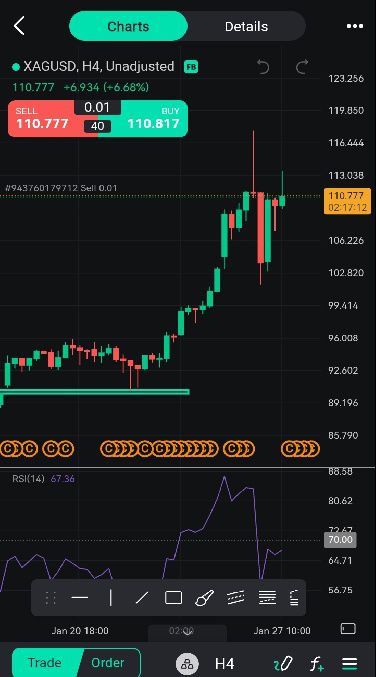
          By mid-morning in Asia, gold traded around $5,063 per ounce, while silver surged to nearly $110 after briefly touching an all-time high above $117 in the previous session. Platinum and palladium also advanced, underscoring a broader move into hard assets.
          Taken together, gold’s sustained strength above $5,000 reflects more than short-term speculation. It signals a deeper reassessment of currency credibility, fiscal discipline, and geopolitical stability. As long as doubts persist across these fronts, the debasement trade is likely to remain a dominant force shaping precious metals markets.

          Source: Bloomberg

          To stay updated on all economic events of today, please check out our Economic calendar
          Risk Warnings and Disclaimers
          You understand and acknowledge that there is a high degree of risk involved in trading. Following any strategies or investment methods may lead to potential losses. The content on the site is provided by our contributors and analysts for information purposes only. You are solely responsible for determining whether any trading assets, securities, strategy, or any other product is suitable for investing based on your own investment objectives and financial situation.
          Add to Favorites
          Share

          Gold Prices Surge as Geopolitical Tensions Mount

          Alex

          Central Bank

          Remarks of Officials

          Commodity

          China–U.S. Trade War

          Political

          Economic

          Forex

          Gold continued its upward trend on Tuesday, building on momentum that pushed it past the US$5,100 mark for the first time in the previous session. The rally is fueled by strong safe-haven demand as investors navigate growing geopolitical uncertainty and a weakening U.S. dollar.

          Spot gold climbed 1.1% to US$5,068.05 per ounce, after hitting a record high of US$5,110.50 a day earlier. Meanwhile, U.S. gold futures for February delivery saw a 0.4% increase, trading at US$5,063.0 per ounce.

          Dollar Weakness and Trade Disputes Bolster Gold

          A primary driver behind gold's ascent is the U.S. dollar, which is lingering near a four-month low. The dollar's weakness is compounded by domestic issues, including the possibility of a government shutdown and unpredictable policymaking. A weaker greenback makes gold, which is priced in dollars, more affordable for international buyers.

          Adding to market anxiety are escalating trade tensions. On Monday, U.S. President Donald Trump announced plans to raise tariffs to 25% on South Korean imports, including autos, lumber, and pharmaceuticals, citing frustrations over a trade deal. This move followed threats of tariffs against Canada, even as relations between the two countries were changing, underscored by Prime Minister Mark Carney's visit to China earlier in the month.

          Federal Reserve Policy and Leadership in Focus

          Investors are also closely watching the Federal Reserve, which is expected to keep interest rates unchanged at its upcoming monetary policy meeting. However, the central bank is operating under a cloud of political pressure.

          The situation is complicated by a criminal investigation into Fed chief Jerome Powell by the Trump administration, an ongoing effort to remove Fed governor Lisa Cook, and the approaching nomination of Powell's successor in May. This backdrop of instability is contributing to the uncertain economic outlook driving investors toward gold.

          Mining Sector Heats Up with Major Acquisition

          The record-high gold prices are directly impacting the mining industry, boosting profit margins and encouraging consolidation.

          In a sign of this trend, Zijin Gold announced it will acquire Canada's Allied Gold for approximately C$5.5 billion (US$4.02 billion) in cash. The deal highlights the Chinese mining company's push for global expansion as it capitalizes on the favorable market conditions.

          How Other Precious Metals Are Faring

          The rally is not limited to gold, with other precious metals seeing significant price movements.

          • Silver: Spot silver jumped 6.3% to US$110.39 an ounce, a day after reaching a record high of US$117.69. The metal has gained an impressive 55% so far this year.

          • Platinum: After hitting a record of US$2,918.80 in the prior session, spot platinum fell back 2.5% to US$2,688.12 per ounce.

          • Palladium: The metal saw a slight increase of 0.1%, rising to US$1,980.50.

          To stay updated on all economic events of today, please check out our Economic calendar
          Risk Warnings and Disclaimers
          You understand and acknowledge that there is a high degree of risk involved in trading. Following any strategies or investment methods may lead to potential losses. The content on the site is provided by our contributors and analysts for information purposes only. You are solely responsible for determining whether any trading assets, securities, strategy, or any other product is suitable for investing based on your own investment objectives and financial situation.
          Add to Favorites
          Share
          FastBull
          Copyright © 2026 FastBull Ltd

          728 RM B 7/F GEE LOK IND BLDG NO 34 HUNG TO RD KWUN TONG KLN HONG KONG

          TelegramInstagramTwitterfacebooklinkedin
          App Store Google Play Google Play
          Products
          Charts

          Chats

          Q&A with Experts
          Screeners
          Economic Calendar
          Data
          Tools
          Membership
          Features
          Function
          Markets
          Copy Trading
          Latest Signals
          Contests
          News
          Analysis
          24/7
          Columns
          Education
          Company
          Careers
          About Us
          Contact Us
          Advertising
          Help Center
          Feedback
          User Agreement
          Privacy Policy
          Personal Information Protection Statement
          Business

          White Label

          Data API

          Web Plug-ins

          Poster Maker

          Affiliate Program

          Risk Disclosure

          The risk of loss in trading financial instruments such as stocks, FX, commodities, futures, bonds, ETFs and crypto can be substantial. You may sustain a total loss of the funds that you deposit with your broker. Therefore, you should carefully consider whether such trading is suitable for you in light of your circumstances and financial resources.

          No decision to invest should be made without thoroughly conducting due diligence by yourself or consulting with your financial advisors. Our web content might not suit you since we don't know your financial conditions and investment needs. Our financial information might have latency or contain inaccuracy, so you should be fully responsible for any of your trading and investment decisions. The company will not be responsible for your capital loss.

          Without getting permission from the website, you are not allowed to copy the website's graphics, texts, or trademarks. Intellectual property rights in the content or data incorporated into this website belong to its providers and exchange merchants.

          Not Logged In

          Log in to access more features

          Connect Broker
          Become a signal provider
          Help Center
          Customer Service
          Dark Mode
          Price Up/Down Colors

          Log In

          Sign Up

          Position
          Layout
          Fullscreen
          Default to Chart
          The chart page opens by default when you visit fastbull.com