
• Trade
  • Markets
  • Copy
  • Contests
  • News
  • 24/7
  • Calendar
  • Q&A
  • Chats
Trending
Screeners
SYMBOL
LAST
BID
ASK
HIGH
LOW
NET CHG.
%CHG.
SPREAD
SPX
S&P 500 Index
6827.42
6827.42
6827.42
6899.86
6801.80
-73.58
-1.07%
--
DJI
Dow Jones Industrial Average
48458.04
48458.04
48458.04
48886.86
48334.10
-245.98
-0.51%
--
IXIC
NASDAQ Composite Index
23195.16
23195.16
23195.16
23554.89
23094.51
-398.69
-1.69%
--
USDX
US Dollar Index
97.980
98.060
97.980
98.070
97.920
+0.030
+ 0.03%
--
EURUSD
Euro / US Dollar
1.17325
1.17332
1.17325
1.17447
1.17283
-0.00069
-0.06%
--
GBPUSD
Pound Sterling / US Dollar
1.33605
1.33614
1.33605
1.33740
1.33546
-0.00102
-0.08%
--
XAUUSD
Gold / US Dollar
4337.22
4337.63
4337.22
4347.21
4294.68
+37.83
+ 0.88%
--
WTI
Light Sweet Crude Oil
57.517
57.554
57.517
57.601
57.194
+0.284
+ 0.50%
--

Community Accounts

Signal Accounts
--
Profit Accounts
--
Loss Accounts
--
View More

Become a signal provider

Sell trading signals to earn additional income

View More

Guide to Copy Trading

Get started with ease and confidence

View More

Signal Accounts for Members

All Signal Accounts

Best Return
  • Best Return
  • Best P/L
  • Best MDD
Past 1W
  • Past 1W
  • Past 1M
  • Past 1Y

All Contests

  • All
  • Trump Updates
  • Recommend
  • Stocks
  • Cryptocurrencies
  • Central Banks
  • Featured News
Top News Only
Share

Stats Office - Swiss November Producer/Import Prices -1.6% Year-On-Year (Versus-1.7% In Prior Month)

Share

Stats Office - Swiss November Producer/Import Prices -0.5% Month-On-Month (Versus-0.3% In Prior Month)

Share

Thailand To Hold Elections On Feb 8 - Multiple Local Media Reports

Share

Taiwan Dollar Falls 0.6% To 31.384 Per USA Dollar, Lowest Since December 3

Share

Stats Office - Botswana November Consumer Inflation At 0.0% Month-On-Month

Share

Stats Office - Botswana November Consumer Inflation At 3.8% Year-On-Year

Share

Statistics Bureau - Kazakhstan's Jan-Nov Industrial Output +7.4% Year-On-Year

Share

Fca: Sets Out Plans To Help Build Mortgage Market Of Future

Share

Eurostoxx 50 Futures Up 0.38%, DAX Futures Up 0.43%, FTSE Futures Up 0.37%

Share

[Delivery Of New US Presidential Aircraft Delayed Again] According To The Latest Timeline Released By The US Air Force, The Delivery Of The First Of The Two Newly Commissioned Air Force One Presidential Aircraft Will Not Be Earlier Than 2028. This Means That The Delivery Of The New Air Force One Has Been Delayed Once Again

Share

German Nov Wholesale Prices +0.3% Month-On-Month

Share

Norway's Nov Trade Balance Nok 41.3 Billion - Statistics Norway

Share

German Nov Wholesale Prices +1.5% Year-On-Year

Share

Romania's Adjusted Industrial Production +0.4% Month-On-Month In October, +0.2% Year-On-Year - Statistics Board

Share

Russia Says It Destroyed 130 Ukrainian Drones Overnight, Some Moscow Airports Disrupted

Share

EU Commissioner Kos: This Is No Time To Speculate On Timeframe For Ukraine's Accession To EU

Share

Lithuania Foreign Minister: Ukraine Needs Article 5-Alike Security Guarantees, With Nuclear Deterrent

Share

Russia's Central Bank Says It Seeks 18.2 Trillion Roubles In Damages From Euroclear

Share

Lithuania's Foreign Minister Says Expects EU Today To Broaden Belarus Sanctions Regime To Include Hybrid Activity

Share

India's Nifty 50 Index Pares Losses, Last Down 0.1%

TIME
ACT
FCST
PREV
U.K. Trade Balance Non-EU (SA) (Oct)

A:--

F: --

P: --

France HICP Final MoM (Nov)

A:--

F: --

P: --

China, Mainland Outstanding Loans Growth YoY (Nov)

A:--

F: --

P: --

China, Mainland M2 Money Supply YoY (Nov)

A:--

F: --

P: --

China, Mainland M0 Money Supply YoY (Nov)

A:--

F: --

P: --

China, Mainland M1 Money Supply YoY (Nov)

A:--

F: --

P: --

India CPI YoY (Nov)

A:--

F: --

P: --

India Deposit Gowth YoY

A:--

F: --

P: --

Brazil Services Growth YoY (Oct)

A:--

F: --

P: --

Mexico Industrial Output YoY (Oct)

A:--

F: --

P: --

Russia Trade Balance (Oct)

A:--

F: --

P: --

Philadelphia Fed President Henry Paulson delivers a speech
Canada Building Permits MoM (SA) (Oct)

A:--

F: --

P: --

Canada Wholesale Sales YoY (Oct)

A:--

F: --

P: --

Canada Wholesale Inventory MoM (Oct)

A:--

F: --

P: --

Canada Wholesale Inventory YoY (Oct)

A:--

F: --

P: --

Canada Wholesale Sales MoM (SA) (Oct)

A:--

F: --

P: --

Germany Current Account (Not SA) (Oct)

A:--

F: --

P: --

U.S. Weekly Total Rig Count

A:--

F: --

P: --

U.S. Weekly Total Oil Rig Count

A:--

F: --

P: --

Japan Tankan Small Manufacturing Outlook Index (Q4)

A:--

F: --

P: --

Japan Tankan Large Non-Manufacturing Diffusion Index (Q4)

A:--

F: --

P: --

Japan Tankan Large Non-Manufacturing Outlook Index (Q4)

A:--

F: --

P: --

Japan Tankan Large Manufacturing Outlook Index (Q4)

A:--

F: --

P: --

Japan Tankan Small Manufacturing Diffusion Index (Q4)

A:--

F: --

P: --

Japan Tankan Large Manufacturing Diffusion Index (Q4)

A:--

F: --

P: --

Japan Tankan Large-Enterprise Capital Expenditure YoY (Q4)

A:--

F: --

P: --

U.K. Rightmove House Price Index YoY (Dec)

A:--

F: --

P: --

China, Mainland Industrial Output YoY (YTD) (Nov)

A:--

F: --

P: --

China, Mainland Urban Area Unemployment Rate (Nov)

A:--

F: --

P: --

Saudi Arabia CPI YoY (Nov)

A:--

F: --

P: --

Euro Zone Industrial Output YoY (Oct)

--

F: --

P: --

Euro Zone Industrial Output MoM (Oct)

--

F: --

P: --

Canada Existing Home Sales MoM (Nov)

--

F: --

P: --

Euro Zone Total Reserve Assets (Nov)

--

F: --

P: --

U.K. Inflation Rate Expectations

--

F: --

P: --

Canada National Economic Confidence Index

--

F: --

P: --

Canada New Housing Starts (Nov)

--

F: --

P: --

U.S. NY Fed Manufacturing Employment Index (Dec)

--

F: --

P: --

U.S. NY Fed Manufacturing Index (Dec)

--

F: --

P: --

Canada Core CPI YoY (Nov)

--

F: --

P: --

Canada Manufacturing Unfilled Orders MoM (Oct)

--

F: --

P: --

U.S. NY Fed Manufacturing Prices Received Index (Dec)

--

F: --

P: --

U.S. NY Fed Manufacturing New Orders Index (Dec)

--

F: --

P: --

Canada Manufacturing New Orders MoM (Oct)

--

F: --

P: --

Canada Core CPI MoM (Nov)

--

F: --

P: --

Canada Trimmed CPI YoY (SA) (Nov)

--

F: --

P: --

Canada Manufacturing Inventory MoM (Oct)

--

F: --

P: --

Canada CPI YoY (Nov)

--

F: --

P: --

Canada CPI MoM (Nov)

--

F: --

P: --

Canada CPI YoY (SA) (Nov)

--

F: --

P: --

Canada Core CPI MoM (SA) (Nov)

--

F: --

P: --

Canada CPI MoM (SA) (Nov)

--

F: --

P: --

Federal Reserve Board Governor Milan delivered a speech
U.S. NAHB Housing Market Index (Dec)

--

F: --

P: --

Australia Composite PMI Prelim (Dec)

--

F: --

P: --

Australia Services PMI Prelim (Dec)

--

F: --

P: --

Australia Manufacturing PMI Prelim (Dec)

--

F: --

P: --

Japan Manufacturing PMI Prelim (SA) (Dec)

--

F: --

P: --

U.K. Unemployment Claimant Count (Nov)

--

F: --

P: --

U.K. Unemployment Rate (Nov)

--

F: --

P: --

Q&A with Experts
    • All
    • Chatrooms
    • Groups
    • Friends
    Connecting
    .
    .
    .
    Type here...
    Add Symbol or Code

      No matching data

      All
      Trump Updates
      Recommend
      Stocks
      Cryptocurrencies
      Central Banks
      Featured News
      • All
      • Russia-Ukraine Conflict
      • Middle East Flashpoint
      • All
      • Russia-Ukraine Conflict
      • Middle East Flashpoint
      Search
      Products

      Charts Free Forever

      Chats Q&A with Experts
      Screeners Economic Calendar Data Tools
      Membership Features
      Data Warehouse Market Trends Institutional Data Policy Rates Macro

      Market Trends

      Market Sentiment Order Book Forex Correlations

      Top Indicators

      Charts Free Forever
      Markets

      News

      News Analysis 24/7 Columns Education
      From Institutions From Analysts
      Topics Columnists

      Latest Views

      Latest Views

      Trending Topics

      Top Columnists

      Latest Update

      Signals

      Copy Rankings Latest Signals Become a signal provider AI Rating
      Contests
      Brokers

      Overview Brokers Assessment Rankings Regulators News Claims
      Broker listing Forex Brokers Comparison Tool Live Spread Comparison Scam
      Q&A Complaint Scam Alert Videos Tips to Detect Scam
      More

      Business
      Events
      Careers About Us Advertising Help Center

      White Label

      Data API

      Web Plug-ins

      Affiliate Program

      Awards Institution Evaluation IB Seminar Salon Event Exhibition
      Vietnam Thailand Singapore Dubai
      Fans Party Investment Sharing Session
      FastBull Summit BrokersView Expo
      Recent Searches
        Top Searches
          Markets
          News
          Analysis
          User
          24/7
          Economic Calendar
          Education
          Data
          • Names
          • Latest
          • Prev

          View All

          No data

          Scan to Download

          Faster Charts, Chat Faster!

          Download App
          English
          • English
          • Español
          • العربية
          • Bahasa Indonesia
          • Bahasa Melayu
          • Tiếng Việt
          • ภาษาไทย
          • Français
          • Italiano
          • Türkçe
          • Русский язык
          • 简中
          • 繁中
          Open Account
          Search
          Products
          Charts Free Forever
          Markets
          News
          Signals

          Copy Rankings Latest Signals Become a signal provider AI Rating
          Contests
          Brokers

          Overview Brokers Assessment Rankings Regulators News Claims
          Broker listing Forex Brokers Comparison Tool Live Spread Comparison Scam
          Q&A Complaint Scam Alert Videos Tips to Detect Scam
          More

          Business
          Events
          Careers About Us Advertising Help Center

          White Label

          Data API

          Web Plug-ins

          Affiliate Program

          Awards Institution Evaluation IB Seminar Salon Event Exhibition
          Vietnam Thailand Singapore Dubai
          Fans Party Investment Sharing Session
          FastBull Summit BrokersView Expo

          Will China’s Relaxed Share Buyback Rules Help Or Hinder The Market?

          Cohen

          Economic

          Summary:

          The amended regulation is meant to encourage the practice, which in theory is positive for stock prices, but skeptics warn the changes may amplify risks, deter investment, and enable more self-serving repurchases.
          Will China’s Relaxed Share Buyback Rules Help Or Hinder The Market?_1
          China’s new rules on listed companies’ share buybacks were introduced supposedly to shore up the sagging stock market. But skeptical voices are growing, warning the changes might in fact amplify market risks, deter additional investment, and enable more self-serving share repurchases.
          Stock buybacks in theory give prices a quick boost by removing some shares from circulation and injecting capital into the market. However, the vast majority of repurchase proposals released last year were designed for equity incentives or employee stock ownership plans, which would redirect funds designated for universal cash dividends to instead benefit company executives and employees.
          Insider trading poses another concern about the relaxed rules. The ban on listed companies repurchasing shares before the announcements of earnings reports, which are sensitive periods, has been lifted.
          Because listed companies have access to all relevant information about themselves, eliminating these restrictions has fueled concerns that they may create additional avenues for insider trading and market manipulation.
          But share buybacks have a solid track record of boosting market confidence and stabilizing share prices in the short term during downturns in China. And the regulator has assured that it will heighten monitoring of repurchasing transactions to root out any illegal activity.

          Relaxed rules

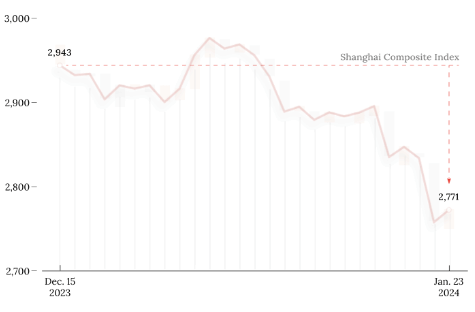
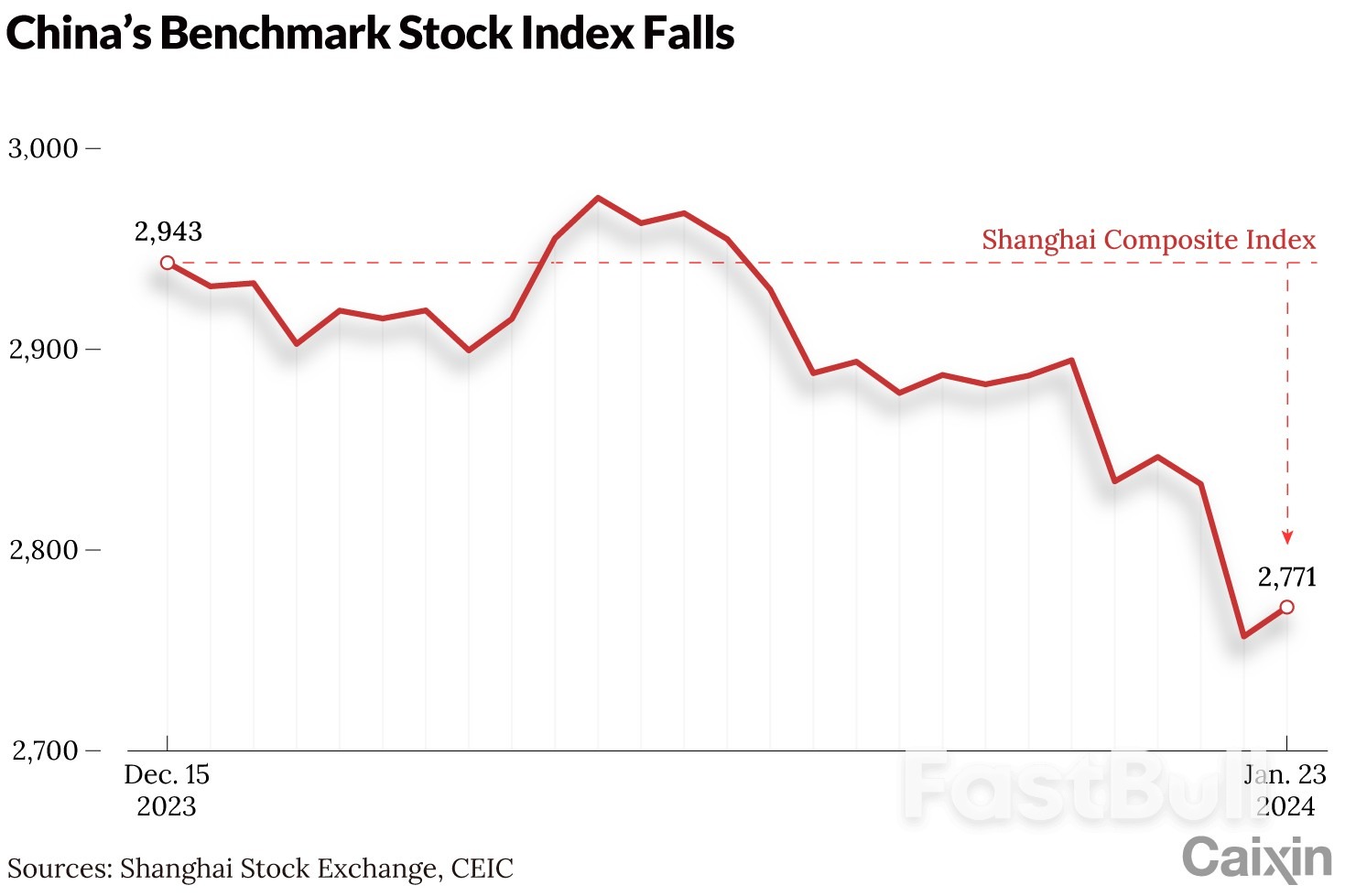
          The updates, published by the China Securities Regulatory Commission (CSRC) on Dec. 15, include a provision enabling share buybacks when the closing price of a company’s stock falls below 50% of its highest closing price within the past year. The newly added rule is part of the optimization to encourage buybacks to safeguard a company’s value and shareholder rights and interests.
          In addition, the threshold for triggering repurchases after a cumulative decline in the closing value of a company’s stock within 20 consecutive trading days has been reduced to 20% from 30%.
          The new rules also shorten the so-called blackout period when newly listed companies cannot buy back shares to six months from one year. The CSRC has also shifted the ban on initiating repurchases from within the 30 minutes before the close of trading to during the three-minute closing call auction, extending the amount of time available for daily repurchases.

          Potential market benefits

          Buybacks usually have a positive effect on the market in the short term, as they take some publicly traded shares out of circulation and in turn add more capital to the stock market.
          As such, the updated rules on share buybacks are regarded as a “market rescue” measure, given the disappointing performance of China’s stock market, with the benchmark Shanghai Composite Index sliding 3.7% last year.
          The number of listed companies releasing share buyback plans hit a decade-high last year, exceeding 1,700, according to data compiled by financial information provider East Money Information Co. Ltd. Buybacks surged after the CSRC said on Aug. 18 they would relax rules around share repurchasing.

          Self-serving

          However, a breakdown of reasons for share buyback plans released in the first 11 months of last year shows that more than 90% were designed for equity incentives or employee stock ownership plans, according to financial data provider Wind Information Co. Ltd. This means most of the shares bought back would not be canceled.
          This practice could undermine the interests of small and midsize shareholders, according to law experts. Funds that could have been designated for universal cash dividends are redirected to share repurchases, benefiting company executives and employees at the expense of small and midsize shareholders, they say.
          Buybacks used to cancel shares, on the other hand, will increase the earnings per share of the company by reducing the number of existing shares, and therefore serve as a form of cash dividend.
          “If a listed company genuinely aims to boost market confidence, they should cancel the repurchased shares,” a law professor specializing in investor protection told Caixin. Buybacks intended for employee stock ownership plans infringe upon the interests of ordinary shareholders, as this stock is typically acquired by employees at a low price and sold at a higher price, undermining investor confidence, he added.
          Li Weifeng, a senior partner at Seven Dimension Law Firm, echoed the view, suggesting that regulations for share buybacks should be differentiated. If repurchases are employed to decrease registered capital, benefiting investor interests, they can be subject to relaxed restrictions, he continued. However, adopting a blanket approach that opens the door to buybacks, encompassing those for equity incentives and employee stock ownership plans, could create room for manipulation, added Li.Will China’s Relaxed Share Buyback Rules Help Or Hinder The Market?_2

          Insider trading concerns

          The relaxed rules have also sparked concerns over increased opportunities for insider trading. The ban on listed companies repurchasing shares within 10 trading days before the announcements of yearly, half-year or quarterly reports, or performance forecasts has been lifted in the updated rules.
          In a supplementary explainer of the revised regulations, the CSRC has acknowledged the risk of insider trading and said it will strengthen the monitoring mechanism for repurchase transactions, double down on regulatory efforts throughout the trading process, and crack down on illegal activities including insider trading and market manipulation.
          Professor Peng Bing of Peking University Law School said that, intentionally or not, any trading of a company’s stocks by insiders before insider information is publicly disclosed may lead to insider trading.
          This is because, theoretically, listed companies have access to all relevant information about themselves. Such shortcomings cannot be fully avoided even when the ban on repurchasing during sensitive periods was in place, Peng said.
          Nonetheless, the elimination of the ban has fueled concerns that it might create additional avenues for listed companies to exploit opportunities for insider trading and market manipulation, which would pose a significant threat to investor confidence and fall short of giving the stock market the boost it needs.

          Source:CaiXin

          To stay updated on all economic events of today, please check out our Economic calendar
          Risk Warnings and Disclaimers
          You understand and acknowledge that there is a high degree of risk involved in trading. Following any strategies or investment methods may lead to potential losses. The content on the site is provided by our contributors and analysts for information purposes only. You are solely responsible for determining whether any trading assets, securities, strategy, or any other product is suitable for investing based on your own investment objectives and financial situation.
          Comments
          Add to Favorites
          Share

          Gold Tumbles in Response to Disappointing NFP Numbers

          Chandan Gupta

          Traders' Opinions

          Economic

          Commodity

          Funndamental Analysis

          Gold prices took a hit for the second consecutive session as investors reevaluate the possibility of a Federal Reserve rate cut after spring. The strong demand for workers has tempered expectations for such a move.
          The upbeat United States Nonfarm Payrolls (NFP) data for January triggered a sell-off in the Gold price (XAU/USD) during Monday's European session. Investors now anticipate the Federal Reserve (Fed) maintaining interest rates at the current 5.25% range in March, given the robust labor market data supporting the case for sustained higher interest rates until the end of spring.
          The buoyant labor demand and increased wage offerings by US employers to attract or retain workers signal a positive demand outlook. This, in turn, suggests a persistent inflationary environment, necessitating the continuation of higher interest rates to prevent further escalation.
          While Gold faces pressure, the outlook for US bond yields and the US Dollar Index (DXY) has significantly improved. The USD Index has reclaimed the 104.00 resistance level for the first time in two months. Meanwhile, the focus is on the US Institute of Supply Management (ISM) Services PMI for January, representing the service sector, which accounts for two-thirds of the economy.
          As the Gold price extends its downside to around $2,023, the latest employment data has diminished expectations of early rate cuts by the Federal Reserve. The positive labor demand and robust wage growth in January suggest a resilient inflation outlook. This upbeat employment data strengthens the argument of Fed policymakers advocating for keeping interest rates higher for a longer duration than market expectations.
          According to the United States Bureau of Labor Statistics (BLS), payrolls surged by 353K in January, nearly doubling the consensus of 180K, and surpassing the upwardly revised December figures of 333K. Average Hourly Earnings also posted strong growth, exceeding expectations at 0.6%, compared to the anticipated 0.3%, and the previous increase of 0.4%. Annual wage growth was higher at 4.5%, surpassing the estimated 4.1% and the prior reading of 4.4%. Annual Average Hourly Earnings for December were revised from 4.1% to 4.4%.
          In contrast to other Group of Seven economies struggling with labor market stability, the US economy is outperforming, providing Fed policymakers with room to emphasize the narrative of maintaining higher interest rates at least for the first half of this year.
          Fed Governor Michelle Bowman, on Friday, acknowledged the encouraging decline in price pressures but cautioned against premature rate cuts. She emphasized that such cuts could impede the decline in price pressures toward the 2% target, potentially forcing policymakers to raise interest rates again.
          Meanwhile, the USD Index has marked a fresh seven-week high at 104.20 ahead of the US ISM Services PMI for January, scheduled for publication at 15:00 GMT. Investors anticipate an increase in Services PMI to 52.0 from 50.6 in December.
          In summary, Gold's recent decline is attributed to the strong US NFP data, shifting expectations away from early Fed rate cuts. The robust labor market performance and wage growth underscore a positive economic outlook, supporting the Fed's commitment to maintaining higher interest rates. As market dynamics continue to evolve, investors closely monitor indicators like the USD Index and ISM Services PMI for further insights into the economic landscape.

          Technical Analysis

          Looking at the technical side of things, if Gold slips below the 50-day Simple Moving Average and dips below Friday's swing low, around the $2,028-2,027 range, we might see it heading towards the $2,012-2,010 area. The $2,000 range is a crucial level, and a decisive break might favor bearish traders, exposing the 100SMA support near the $1,983-1,982 region. Thereafter, the Gold price could potentially challenge the important 200-day SMA around the $1,965 mark.
          On the optimistic side, if momentum picks up inn Asian session, approximately at $2,042, it could face resistance around the $2,054-2,055 zone before reaching the $2,065 area or last week's swing high. Daily chart oscillators hovering in the positive territory suggest that continued buying momentum may push the Gold price towards the $2,078-2,079 range, or even revisit the Year-To-Date (YTD) peak set in January. A sustained upward move could pave the way for Gold to reclaim the $2,100 mark and aim for the $2,020 resistance.
          Breaking above the $2,075 threshold could potentially shift the market dynamics into a more long-term, buy-and-hold scenario. Currently, it seems that market participants are driven by short-term considerations, often overlooking anything beyond the immediate minutes. Gold, with its various supporting factors, remains an appealing asset, and the $2,000 level acts as a critical support.
          In this scenario, it appears that Gold might fluctuate within a defined range, primarily oscillating between $2,000 and $2,075. However, a significant drop below the $1,980 mark would carry strongly negative implications, potentially leading to a more substantial downturn.Gold Tumbles in Response to Disappointing NFP Numbers_1
          To stay updated on all economic events of today, please check out our Economic calendar
          Risk Warnings and Disclaimers
          You understand and acknowledge that there is a high degree of risk involved in trading. Following any strategies or investment methods may lead to potential losses. The content on the site is provided by our contributors and analysts for information purposes only. You are solely responsible for determining whether any trading assets, securities, strategy, or any other product is suitable for investing based on your own investment objectives and financial situation.
          Comments
          Add to Favorites
          Share

          China’s Three-Year Stock Slump Resists Policy Prescriptions For Rebound

          Alex

          Economic

          Stocks

          Chinese investors began 2023 full of optimism that an economic rebound fueled by resilient export growth, relaxed real estate policies and other regulatory prescriptions would lead to a turnaround for the nation’s bear market in stocks. Instead, China ended the year with the world’s worst-performing equity market and its blue-chip CSI 300 Index down for the third straight year, losing 35% over 36 months.
          The bear market for equities – triggered by the pandemic – now reminds investors of the 2015 stock market crash when A-shares lost a third of their value in one month and a series of government interventions did little to quell investor fears.
          Since August, the authorities have launched a series of support measures, such as lowering the stamp duty on stock trades, tightening regulations on initial public offerings to limit the number of IPOs and reducing the minimum margin ratio for stock purchases through margin financing. Since October, China’s $1.24 trillion sovereign wealth fund, Central Huijin Investment Ltd., has repeatedly bought ETFs and shares of state-owned banks.
          In December, the country’s securities watchdog released new rules for listed companies’ share buybacks and cash dividends, aiming to boost market confidence. The measures failed to reignite investor optimism. The CSI 300 benchmark continued its decline in the first three weeks of January ,the index was down 10% for the new year.
          Experts have diverging views on the current regulatory policies to stabilize the stock market. Some call for a halt to IPOs, limits on selling by large shareholders and the rapid establishment of a stabilization fund to buy shares. Others say it is necessary to respect the laws of the market and that government shouldn’t place too many restrictions on stock trading.
          “Rescuing the market is not a long-term solution,” Hu Zuliu, who also goes by Fred Hu, founder and chairman of private equity firm Primavera Capital and a former economist at the International Monetary Fund, told Caixin this month in Davos, Switzerland. “The focus should be improving fundamentals and improving confidence.”

          Snowball-triggered selloff

          Different from previous A-share slumps, in which heavy-leveraged institutional investors suffered the worst losses, the current bear market has hurt individual investors the most.
          Among the more than 10 listed brokerages that have posted 2023 results, all but one reported increased net profit, and most cited gains from investments.
          Chinese retail investors who loaded up on derivative products known as “snowballs” have been hit particularly hard, further undermining market confidence.
          Snowballs are derivatives which promise sizeable interest payments as long as the underlying stock indices trade within a certain range. Once the index breaches a pre-set lower limit, it will trigger a so-called knock in that leaves holders with substantial losses.
          The protracted A-shares rout has led to many snowball products, especially those tracking the CSI Smallcap 500 Index and the CSI 1000 Index, breaching the knock-in level, triggering forced sales of the futures contracts.
          A screenshot of a snowball investor’s online chat that went viral online recently showed that the investor bought 8 million yuan ($1.11 million) of snowball products tracking the CSI 500 Index. After the index dropped more than 25%, the investor’s investment was wiped out, the screenshot showed. China’s Three-Year Stock Slump Resists Policy Prescriptions For Rebound_1
          As snowball products are traded in the over-the-counter market, there is no public data on the scale of their use. China Futures Co. Ltd. and Cinda Securities estimated the value of snowball products tracking the CSI 500 Index and the CSI 1000 Index at 200 billion yuan. Sinolink Securities estimated the market at more than 327 billion yuan. Multiple brokerages estimate that the decline in stocks has pushed 100 billion yuan of snowball products near their knock-in level.
          But some analysts say the snowball-triggered selloff is not enough to move the whole market. “The concentration of snowball knock-ins is at most just one of the reasons for the recent market decline, and one that is easy to be seen on the surface, but it can’t play a decisive role in terms of quantity,” a public fund manager in Shanghai told Caixin on Jan. 24. Many people ignore that the fundamentals of A-shares since last year are not very good and a large number of listed companies have posted worse-than-expected financial results, the fund manager said.
          “The problem is not just the stock market,” a person close to the regulators told Caixin. “The root cause is the macroeconomic and external environment.” The person cited the weak economic recovery, a sluggish real estate market and a “decoupling” between China and the U.S.
          Although China managed to generate 5.2% growth in 2023 GDP, many challenges at the microeconomic level remain and many listed companies are under financial pressure, Hu said.
          One market veteran said in August: “Buying stocks is buying the future. How can you expect the stock market to rise when listed companies generally have poor earnings and no revenue growth?”
          During last year’s third quarter, 5,279 Chinese listed companies reported total revenue of 53.27 trillion yuan, an increase of only 2.22% from the 2022 third period. Among them, 1,041 companies reported net losses for the first three quarters, and almost half of them posted profit declines ranging between 13.3% to 37.5%, according to their financial reports.
          Northbound funds, mainly consisting of foreign capital by offshore investors flowing back to the A-share market through Hong Kong, are often referred to as smart money and have long been seen as a bellwether for foreign investor sentiment.
          Since August, foreign holders have sold net 213.8 billion yuan of A-shares as of January 24, according to data from Wind Information Co. Ltd.
           China’s Three-Year Stock Slump Resists Policy Prescriptions For Rebound_2

          Call off IPOs

          Some experts say Chinese regulators should suspend IPOs again, as they did in previous stock market routs. China suspended IPOs in 2013 and for about five months in 2015.
          Since the sharp drop in stock prices in August, the China Securities Regulatory Commission (CSRC) has gradually slowed the pace of IPOs. At that time, many investors expected the tightening period to last longer than the previous suspension. There speculation was that the regulator would apply the brakes for at least a year by tightening the listing threshold.
          At a press conference in September, the CSRC responded to reporters’ questions on the matter cautiously, saying such speculation was incomplete or inaccurate.
          In July, August, October and November, the Shanghai and Shenzhen stock exchanges and their Nasdaq-like tech boards didn’t process any IPO applications. Then the exchanges reviewed 20 IPO applications in the last week of December.
          In 2023, Shanghai and Shenzhen stock exchanges approved 245 IPOs, 38% fewer than in the previous year. Only 32 new listings occurred from September through December amid efforts to temporally slow IPOs in response to market fluctuations, Yan Bojin, head of the CSRC’s department of public offering supervision, said at a press conference Jan. 12.
          “The CSRC and stock exchanges will continue to uphold stringent IPO standards, enhance the quality of listed companies from the start and perform counter-cyclical adjustments,” Yan said.
          Hong Hao, chief economist at Grow Investment Group, believes the suspension of IPOs can temporarily reduce the capital that IPOs divert from existing stocks, but it won’t cure the market’s decline.
          “It is normal to see more IPOs when the market is good and less when the market is down,” said a managing director at a brokerage. But manually controlling the number of IPOs is not in line with the concept of the IPO registration system, which is to return the power to the market and investors, he said.
          Historical data also shows that the suspension of IPOs won’t rescue the market, but creates backlog of initial offerings that flood the market later.
          In the last market slump in 2015, the CSRC suspended IPOs between July and November of that year, during which the Shanghai Stock Exchange Composite Index still fell 3%.
          From 1994 to 2015, the CSRC suspended or tightened IPO approvals nine times, with the duration ranging from three months to 15 months, according to data from Topsperity Securities. During the nine suspensions, the Shanghai Stock Exchange Composite Index fell five times and rose four times, suggesting that IPO suspensions aren’t co-related to subsequent market moves.
          “Instead of calling for calling off IPOs, it is better to think about why there are still a large number of new issues when the stock market has been depressed for so many years,” a former analyst at ArrowGrass, Deutsche Bank’s hedge fund, told Caixin.
          While A-share IPOs and financing decreased in 2003, the Shanghai and Shenzhen Stock Exchanges still rank first and second in the world respectively in terms of fundraising, according to a report by PwC. The consulting firm expects China’s A-share IPOs will outpace all other markets this year.
          China has never established an effective price mechanism for IPOs, according to an executive at a small brokerage. No matter which company is going public, retail investors rush to buy their new shares, the executive said.
          Regulators should try to maintain a certain pace for IPOs because a suspension could build up the demand for shell buying and boost speculation for small cap and junk stocks, which will cause further chaos in A-share prices, the executive said.
          Despite the current macro and micro economic challenges and the wavering of investor confidence, many economists have pointed out that the fundamentals of China’s economy have not reversed. To stabilize the stock market, the key is to formulate appropriate policies and promoting necessary structural reforms to help get the economy back on track to its potential growth rate, they said.

          Source:CaiXin

          To stay updated on all economic events of today, please check out our Economic calendar
          Risk Warnings and Disclaimers
          You understand and acknowledge that there is a high degree of risk involved in trading. Following any strategies or investment methods may lead to potential losses. The content on the site is provided by our contributors and analysts for information purposes only. You are solely responsible for determining whether any trading assets, securities, strategy, or any other product is suitable for investing based on your own investment objectives and financial situation.
          Comments
          Add to Favorites
          Share

          Capital Markets Are Open And Risk Appetite Is Poised To Grow In 2024

          Goldman Sachs

          Economic

          Investors’ increasing conviction that the US economy will avoid recession, and that the Federal Reserve and other central banks will start cutting interest rates, could boost IPO activity and corporate debt issuance in the year ahead. A key question in the coming months is the extent of acquisition activity and whether there will be a pick-up in transactions by private-equity financial sponsors.

          Equity capital markets: The pipeline is growing

          “The Fed’s shift, and that of global central banks, will be a positive tailwind for the full suite of equity capital markets,” says Elizabeth Reed, global head of the Equity Syndicate Desk. “We want to emphasize that the equity capital markets are open, and importantly, the shift in investor engagement has rapidly improved as the macro has stabilized.”
          Global equity issuance totalled about $400 billion in 2023, an increase of roughly 30% from 2022. Still, that remains about a third below the average volume seen across 2018 and 2019. “Equity capital markets continue to heal,” Reed says.
          The pipeline of IPOs is now growing, she says. Companies that contemplated an offering in 2023 but found that valuations didn’t align with their objectives are still waiting in the wings, and Reed expects pricing to improve in 2024. While IPOs in recent years have priced at a higher file/offer discount than historical averages, Reed anticipates that discounts will recover.
          “The beginning stage of the IPO reopening is going to have the flight-to-quality bias,” she says. Reed anticipates that the breadth of companies looking to IPO will increase in the second and third quarters.
          She also projects that there will be increasing activity from financial sponsors and venture capital firms aiming to monetize their portfolios. Meanwhile, she says convertible bond offerings have become “incredibly attractive” for companies to pursue, so it’s no surprise that global volume doubled in 2023 as compared to 2022. More than $200 billion of convertible debt matures between 2024 and 2026, indicating a need for refinancing of that paper.

          High-yield bonds and leveraged loans: M&A is the key question

          Just about every index of high-yield bonds and speculative-grade loans is showing signs of growing investor confidence this year, says Christina Minnis, head of Global Credit Finance and head of Global Acquisition Finance. She adds that while defaults rose modestly in 2023, there’s a general sense that many investment portfolios are in a good place.
          For now, the pipeline for sub-investment-grade offerings is full of re-pricings and plans to amend and extend existing loans, as companies and investors continue to digest the rapid rise in interest rates. Minnis expects those types of deals to predominate in the first quarter.
          The key question is whether mergers and acquisitions increase.
          Minnis says her colleagues in the M&A teams have noted a backlog of transactions as well as growing confidence among CEOs. This suggests that M&A activity could become more robust starting in the middle of the year.
          Minnis points out that there’s been a rebirth in demand for riskier, CCC rated company debt. “The high yield and loan market ended last year up significantly,” she says.
          Financial sponsors, meanwhile, have been relatively quiet for the last 18 months. Yet their need to return capital to limited partners and raise new funds will likely pressure these institutions to make transactions. “There is a lot of pent-up need,” Minnis says.
          And importantly, with over 40% of bonds in the CCC rated universe now trading at yields of less than of 10%, the cost of capital is much more reasonable than it was last year. “Sellers and buyers are having a much more traditional meeting of the minds,” Minnis says.

          Investment-grade corporate bonds: Issuance is expected in advance of the US election

          “The investment grade corporate bond markets are incredibly resilient,” says Eric Jordan, co-head of Global Investment Grade Capital Markets. He notes that at the end of 2023, not only did Treasury yields fall significantly, but corporate bond spreads (the additional yield investors demand to own a risk asset instead of a risk-free Treasury) fell back toward multi-decade lows.
          Jordan expects the US investment grade market to see $1.3 trillion of issuance this year, about the same as last year. However, he says borrowers are likely to shift bond sales to the earlier part of 2024 to avoid uncertainties that could emerge around the US election in November.
          The yield curve will be an important consideration in the coming months. Jordan notes that only 16% of US-dollar issuance in 2023 had a maturity of 20 years or longer, compared with 25% of issuance in recent years when yields were lower.
          For now, offerings will probably be predominantly for refinancing, and he expects an increase in financing for acquisitions (rather than for capital expenditures). New capital regulation could spur additional offerings from the financial sector.
          “We are seeing a rush for folks getting ready to issue,” Jordan says. He points out that high yields on cash make it attractive to raise funds sooner than later, since funds raised from a bond offering can generate relatively high yields while the company is waiting to deploy the money.
          To stay updated on all economic events of today, please check out our Economic calendar
          Risk Warnings and Disclaimers
          You understand and acknowledge that there is a high degree of risk involved in trading. Following any strategies or investment methods may lead to potential losses. The content on the site is provided by our contributors and analysts for information purposes only. You are solely responsible for determining whether any trading assets, securities, strategy, or any other product is suitable for investing based on your own investment objectives and financial situation.
          Comments
          Add to Favorites
          Share

          [Fed] Powell: A Rate Cut Will Be Unlikely at the March Meeting

          FastBull Featured

          Remarks of Officials

          Jerome Powell, the Fed Chair, gave 60 Minutes an interview on February 4. His main points were as follows:
          Q1: Is the Fed's job to fight inflation done?
          A1: Inflation has declined in the past year, which has fallen rapidly in the past six months. But it cannot be said that this work is done, and we will continue to restore the stability of the price.
          Q2: The U.S. economy seems to have avoided a recession, so why not cut interest rates sooner? What data are you looking at? And when will the Fed cut interest rates?
          A2: The economy is growing steadily. Against this backdrop, we have more leeway to be cautious about the time to start cutting interest rates. Inflation data for the last six months has been satisfactory, but it is not enough. We need to see more data to boost confidence that inflation is coming down to 2% on a sustained basis. The rate cut node depends on the data, and we will weigh the risk of implementing the decision too early or too late and make a judgment in real-time. If the labor market is weaker or the decline in inflation is more convincing, it will prompt us to cut interest rates more quickly.
          Q3: What are the dangers of cutting interest rates too soon? Will it trigger inflation again?
          A3: The positive data obtained in the past six months may not truly reflect the direction of inflation. If rates are cut too quickly, we could see inflation stabilize well above the 2% target.
          Q4: What are the dangers of cutting interest rates too late? Will it cause a recession?
          A4: If interest rates are cut too late, the policy will be more restrictive and have an impact on economic activity and the labor market. We need to balance these two risks. At the moment, the economy is in good shape and inflation is coming down. We just need more confidence.
          Q5: What is your optimistic forecast for inflation currently?
          A5: I suppose that inflation will decline this year, and inflationary pressures are weakening. The reasons for this are twofold, one of which is the resumption of the disruption of supply and demand caused by the pandemic. The second is that we have adopted a tight monetary policy.
          Q6: Inflation is not the same as prices, will prices fall as well?
          A6: The overall price level is not expected to fall. Prices are now much higher than before the pandemic, which is why people are not satisfied with the "strong economy". Products affected by commodity prices will decline, but the overall price level will not fall unless there is a recession.
          Q7: The next meeting to decide the direction of interest rates will be held in March this year. Based on what you know now, is a rate cut more or less likely at that time?
          A7: Our dual mission is full employment and price stability. Currently, the overall picture is strong economic growth, a healthy labor market, historically low unemployment, and declining inflation. Choosing the target of interest rate cut is also an important tool to achieve dual tasks, and we will be cautious about the issue of interest rate cuts.
          The committee is unlikely to cut rates at the March meeting. However, this year will begin to reverse the restrictive stance by cutting rates. We will choose the right time according to the overall situation.
          Q8: In the monetary policy report last December, the Fed expected interest rates to fall to 4.6% this year, is this still possible? Is this the FOMC's unanimous interest rate cut consensus?
          A8: These are individual committee projections, not committee plans. We will update the SEP at our March meeting. In the interim, nothing would have made me think that the commissioners would drastically change their forecasts. However, interest rates depend on the data, which will drive these decisions. Actually, our actions will depend on how the economy develops. If the economy is sluggish, we will cut rates sooner and faster. If inflation is stubborn, we will cut rates later. However, the 19 commissioners almost unanimously agreed that a cut in the federal funds rate this year is appropriate.
          Q9: What economic factors or indicators does the Fed consider when adjusting interest rates?
          A9: We need to look at the overall picture of economic activity. I would like to point out two points in particular, one is whether inflation gives us more confidence that it will continue to fall to 2%, and the other is our dual mission of full employment and price stability. Therefore, we will look at a large amount of labor market data to gauge its strength. There was an extreme shortage of labor a few years ago, but now the situation is much better. People are returning to the labor market, and the labor market is recovering to balance. We will continue to monitor these developments.
          Although the overall inflation is our target, our attention is more on core inflation (excluding food and energy prices) as it gives a better picture of inflation.
          Q10: Real estate is declining and the hiring industry is slowing down. Are these signs of a recession?
          A10: A recession could happen at any time. Hiring is declining, but it's coming down from a high and unsustainable level. Currently, the labor market is continuing to recover from the overheating of a few years ago to a state of equilibrium, which is a very healthy level.
          Q11: Does the U.S. economy seem to have made a successful soft landing?
          A11: I don't think so. We still have a lot of work to do, but soft landings are extremely rare in history. There are a lot of factors that come together to contribute to this, but these factors are not in the scope of our consideration.
          Q12: What are the important factors for the stability of the labor market?
          A12: One is the return of workers. The labor shortage was caused by the departure of workers from the pandemic. The other is immigration. These two factors have an important impact on the supply of labor.
          Transcript of Powell's Interview
          Risk Warnings and Disclaimers
          You understand and acknowledge that there is a high degree of risk involved in trading. Following any strategies or investment methods may lead to potential losses. The content on the site is provided by our contributors and analysts for information purposes only. You are solely responsible for determining whether any trading assets, securities, strategy, or any other product is suitable for investing based on your own investment objectives and financial situation.
          Comments
          Add to Favorites
          Share

          HSBC India Services PMI Jumps To 61.8 In January

          Alex

          Economic

          India's dominant services sector expanded at the fastest pace in six months in January on robust demand, according to a business survey which also showed output prices rose at their slowest rate since February 2023 and optimism was at a four-month high.
          That indicated India would continue to hold its title of fastest growing major economy over the coming months, reducing pressure on the government and allowing it to focus on fiscal consolidation over the coming year.
          The HSBC final India Services Purchasing Managers' Index , compiled by S&P Global, jumped to 61.8 last month from December's 59.0.
          The final reading also beat a preliminary estimate of 61.2, remaining above the 50-mark separating expansion from contraction for a 30th consecutive month.
          "New business expanded at a faster pace and managers' expectations for future activity was strong. The new export business index accelerated, signaling that India's services exports remained robust," said Ines Lam, economist at HSBC.
          While the new business sub-index, in expansionary territory for two-and-half years, showed demand rose at the quickest pace since July, exports were at a three-month high.
          That kept firms optimistic at the start of the final quarter of fiscal year 2023-24 with confidence around year-ahead activity hitting its highest since September, encouraging firms to continue adding workers.
          Although operating costs rose at the quickest pace since August, prices charged increased at the slowest pace in nearly a year, indicating a moderation in inflation.
          Overall inflation in the country picked up to a four-month high in December and remained above the Reserve Bank of India's medium-term 4% target. That ,alongside strong economic growth, is expected to prompt the central bank to keep interest rates steady at least for a few months.
          With manufacturing activity expanding at the fastest pace in four months and services industry growth remaining robust, the overall HSBC India Composite PMI Output Index rose to a six-month high of 61.2 in January from December's 58.5 and better than a flash estimate of 61.0.

          Source:BusinessLine

          To stay updated on all economic events of today, please check out our Economic calendar
          Risk Warnings and Disclaimers
          You understand and acknowledge that there is a high degree of risk involved in trading. Following any strategies or investment methods may lead to potential losses. The content on the site is provided by our contributors and analysts for information purposes only. You are solely responsible for determining whether any trading assets, securities, strategy, or any other product is suitable for investing based on your own investment objectives and financial situation.
          Comments
          Add to Favorites
          Share

          Japan Increasing Faith In Positive Interest Rates

          Zi Cheng

          Traders' Opinions

          Economic

          Bank Of Japan Officials is confident that the Japan's current economy is strong enough to withstand the impacts from positive interest rates, this is giving confidence for Bank of Japan to raise their interest rates, leaving the negative interest rate region. The central bank's optimism stems from a stronger inflation outlook, driven by momentum in wage increases and growth in service sector prices. This has bolstered the belief that the Bank of Japan might end its negative interest rates, a key component of its ultra-loose monetary policy since 2016, as early as March.
          In its latest policy meeting in January, the Bank of Japan maintained overnight interest rates at minus 0.1%, with Governor Kazuo Ueda providing limited hints on the timing of a potential rate hike – the first since 2007. However, a notable change emerged in the quarterly economic outlook report released concurrently with the rate decision. The report introduced a new phrase, stating that the "likelihood" of achieving the 2% inflation target "has continued to gradually rise," marking a strong indication that policy normalization is on the horizon.
          Japan Increasing Faith In Positive Interest Rates_1
          A Bank of Japan official explained that the inclusion of this phrase aimed to convey the central bank's intention to financial markets and underscore its optimistic outlook on the economy. While no specific timeline was provided, the official affirmed that the economy is steadily progressing towards a policy revision.
          During a recent news conference, Governor Ueda clarified that the end of negative interest rates wouldn't necessarily trigger a cycle of rate increases, emphasizing the continuation of an extremely accommodative financial environment for the time being.
          While the Bank of Japan signaled a move towards policy normalization, it stressed the need to assess additional economic data on prices and wages. Nevertheless, officials maintained a more hawkish tone in communications with financial market participants.
          Economists from UBS, Morgan Stanley MUFG, and BNP Paribas speculated on the possibility of an interest rate increase as early as March. Since the Bank of Japan's meeting, the yen has appreciated about 1% against the US dollar, and the yield on the 10-year Japanese government bond has risen from 0.6% to 0.7%, consistent with the belief that Japan may soon transition away from negative interest rates.
          It is highly anticipated to witness Bank Of Japan's decision on the interest rate for March. If the decision happens to be positive interest rate, JPY could have a very huge surge towards the upside as higher interest rates, increases currency value.
          To stay updated on all economic events of today, please check out our Economic calendar
          Risk Warnings and Disclaimers
          You understand and acknowledge that there is a high degree of risk involved in trading. Following any strategies or investment methods may lead to potential losses. The content on the site is provided by our contributors and analysts for information purposes only. You are solely responsible for determining whether any trading assets, securities, strategy, or any other product is suitable for investing based on your own investment objectives and financial situation.
          Comments
          Add to Favorites
          Share
          FastBull
          Copyright © 2025 FastBull Ltd

          728 RM B 7/F GEE LOK IND BLDG NO 34 HUNG TO RD KWUN TONG KLN HONG KONG

          TelegramInstagramTwitterfacebooklinkedin
          App Store Google Play Google Play
          Products
          Charts

          Chats

          Q&A with Experts
          Screeners
          Economic Calendar
          Data
          Tools
          Membership
          Features
          Function
          Markets
          Copy Trading
          Latest Signals
          Contests
          News
          Analysis
          24/7
          Columns
          Education
          Company
          Careers
          About Us
          Contact Us
          Advertising
          Help Center
          Feedback
          User Agreement
          Privacy Policy
          Business

          White Label

          Data API

          Web Plug-ins

          Poster Maker

          Affiliate Program

          Risk Disclosure

          The risk of loss in trading financial instruments such as stocks, FX, commodities, futures, bonds, ETFs and crypto can be substantial. You may sustain a total loss of the funds that you deposit with your broker. Therefore, you should carefully consider whether such trading is suitable for you in light of your circumstances and financial resources.

          No decision to invest should be made without thoroughly conducting due diligence by yourself or consulting with your financial advisors. Our web content might not suit you since we don't know your financial conditions and investment needs. Our financial information might have latency or contain inaccuracy, so you should be fully responsible for any of your trading and investment decisions. The company will not be responsible for your capital loss.

          Without getting permission from the website, you are not allowed to copy the website's graphics, texts, or trademarks. Intellectual property rights in the content or data incorporated into this website belong to its providers and exchange merchants.

          Not Logged In

          Log in to access more features

          FastBull Membership

          Not yet

          Purchase

          Become a signal provider
          Help Center
          Customer Service
          Dark Mode
          Price Up/Down Colors

          Log In

          Sign Up

          Position
          Layout
          Fullscreen
          Default to Chart
          The chart page opens by default when you visit fastbull.com