• Trade
  • Markets
  • Copy
  • Contests
  • News
  • 24/7
  • Calendar
  • Q&A
  • Chats
Trending
Screeners
SYMBOL
LAST
BID
ASK
HIGH
LOW
NET CHG.
%CHG.
SPREAD
SPX
S&P 500 Index
6862.51
6862.51
6862.51
6878.28
6861.22
-7.89
-0.11%
--
DJI
Dow Jones Industrial Average
47839.38
47839.38
47839.38
47971.51
47771.72
-115.60
-0.24%
--
IXIC
NASDAQ Composite Index
23596.50
23596.50
23596.50
23698.93
23579.88
+18.38
+ 0.08%
--
USDX
US Dollar Index
99.040
99.120
99.040
99.060
98.730
+0.090
+ 0.09%
--
EURUSD
Euro / US Dollar
1.16340
1.16348
1.16340
1.16717
1.16311
-0.00086
-0.07%
--
GBPUSD
Pound Sterling / US Dollar
1.33175
1.33184
1.33175
1.33462
1.33136
-0.00137
-0.10%
--
XAUUSD
Gold / US Dollar
4183.86
4184.27
4183.86
4218.85
4177.03
-14.05
-0.33%
--
WTI
Light Sweet Crude Oil
59.006
59.036
59.006
60.084
58.892
-0.803
-1.34%
--

Community Accounts

Signal Accounts
--
Profit Accounts
--
Loss Accounts
--
View More

Become a signal provider

Sell trading signals to earn additional income

View More

Guide to Copy Trading

Get started with ease and confidence

View More

Signal Accounts for Members

All Signal Accounts

Best Return
  • Best Return
  • Best P/L
  • Best MDD
Past 1W
  • Past 1W
  • Past 1M
  • Past 1Y

All Contests

  • All
  • Trump Updates
  • Recommend
  • Stocks
  • Cryptocurrencies
  • Central Banks
  • Featured News
Top News Only
Share

The S&P 500 Opened 4.80 Points Higher, Or 0.07%, At 6875.20; The Dow Jones Industrial Average Opened 16.52 Points Higher, Or 0.03%, At 47971.51; And The Nasdaq Composite Opened 60.09 Points Higher, Or 0.25%, At 23638.22

Share

Reuters Poll - Swiss National Bank Policy Rate To Be 0.00% At End-2026, Said 21 Of 25 Economists, Four Said It Would Be Cut To -0.25%

Share

USGS - Magnitude 7.6 Earthquake Strikes Misawa, Japan

Share

Reuters Poll - Swiss National Bank To Hold Policy Rate At 0.00% On December 11, Said 38 Of 40 Economists, Two Said Cut To -0.25%

Share

Traders Believe There Is A 20% Chance That The European Central Bank Will Raise Interest Rates Before The End Of 2026

Share

Toronto Stock Index .GSPTSE Rises 11.99 Points, Or 0.04 Percent, To 31323.40 At Open

Share

Japan Meteorological Agency: A Tsunami With A Maximum Height Of Three Meters Is Expected Following The Earthquake In Japan

Share

Japan Meteorological Agency: A 7.2-magnitude Earthquake Struck Off The Coast Of Northern Japan, And A Tsunami Warning Has Been Issued

Share

Japan Finance Minister Katayama: G7 Expected To Hold Another Meeting By The End Of This Year

Share

The Japan Meteorological Agency Reported That An Earthquake Occurred In The Sea Near Aomori

Share

Japan Finance Minister Katayama: The G7 Finance Ministers' Meeting Discussed The Critical Mineral Supply Chain And Support For Ukraine

Share

Japan Finance Minister Katayama: Held Onlinemeeting With G7 Finance Ministers

Share

Fed Data - USA Effective Federal Funds Rate At 3.89 Percent On 05 December On $88 Billion In Trades Versus 3.89 Percent On $87 Billion On 04 December

Share

Chinese Foreign Minister Wang Yi: One-China Principle Is An Important Political Foundation For China-Germany Relations, And There Is No Room For Ambiguity

Share

Chinese Foreign Minister Wang Yi: Hopes Germany To Understand, Support China's Position Regarding Japan Prime Minister's Remark On Taiwan

Share

Chinese Foreign Minister Wang Yi: Hopes Germany Will View China More Objectively And Rationally, Adhere To The Positioning Of China-Germany Partnership

Share

China Foreign Ministry: China's Foreign Minister Wang Yi Meets German Counterpart

Share

Israeli Government Spokesperson: Netanyahu Will Meet Trump On December 29

Share

Stc Did Not Ask Internationally-Government To Leave Aden - Senior Stc Official To Reuters

Share

Members Of Internationally-Recognised Government, Opposed To Northern Houthis, Have Left Aden - Senior Stc Official To Reuters

TIME
ACT
FCST
PREV
France Trade Balance (SA) (Oct)

A:--

F: --

P: --
Euro Zone Employment YoY (SA) (Q3)

A:--

F: --

P: --
Canada Part-Time Employment (SA) (Nov)

A:--

F: --

P: --

Canada Unemployment Rate (SA) (Nov)

A:--

F: --

P: --

Canada Full-time Employment (SA) (Nov)

A:--

F: --

P: --

Canada Labor Force Participation Rate (SA) (Nov)

A:--

F: --

P: --

Canada Employment (SA) (Nov)

A:--

F: --

P: --

U.S. PCE Price Index MoM (Sept)

A:--

F: --

P: --

U.S. Personal Income MoM (Sept)

A:--

F: --

P: --

U.S. Core PCE Price Index MoM (Sept)

A:--

F: --

P: --

U.S. PCE Price Index YoY (SA) (Sept)

A:--

F: --

P: --

U.S. Core PCE Price Index YoY (Sept)

A:--

F: --

P: --

U.S. Personal Outlays MoM (SA) (Sept)

A:--

F: --

P: --
U.S. 5-10 Year-Ahead Inflation Expectations (Dec)

A:--

F: --

P: --

U.S. Real Personal Consumption Expenditures MoM (Sept)

A:--

F: --

P: --
U.S. Weekly Total Rig Count

A:--

F: --

P: --

U.S. Weekly Total Oil Rig Count

A:--

F: --

P: --

U.S. Consumer Credit (SA) (Oct)

A:--

F: --

P: --
China, Mainland Foreign Exchange Reserves (Nov)

A:--

F: --

P: --

Japan Trade Balance (Oct)

A:--

F: --

P: --

Japan Nominal GDP Revised QoQ (Q3)

A:--

F: --

P: --

China, Mainland Imports YoY (CNH) (Nov)

A:--

F: --

P: --

China, Mainland Exports (Nov)

A:--

F: --

P: --

China, Mainland Imports (CNH) (Nov)

A:--

F: --

P: --

China, Mainland Trade Balance (CNH) (Nov)

A:--

F: --

P: --

China, Mainland Exports YoY (USD) (Nov)

A:--

F: --

P: --

China, Mainland Imports YoY (USD) (Nov)

A:--

F: --

P: --

Germany Industrial Output MoM (SA) (Oct)

A:--

F: --

P: --
Euro Zone Sentix Investor Confidence Index (Dec)

A:--

F: --

P: --

Canada National Economic Confidence Index

A:--

F: --

P: --

U.K. BRC Like-For-Like Retail Sales YoY (Nov)

--

F: --

P: --

U.K. BRC Overall Retail Sales YoY (Nov)

--

F: --

P: --

Australia Overnight (Borrowing) Key Rate

--

F: --

P: --

RBA Rate Statement
RBA Press Conference
Germany Exports MoM (SA) (Oct)

--

F: --

P: --

U.S. NFIB Small Business Optimism Index (SA) (Nov)

--

F: --

P: --

Mexico 12-Month Inflation (CPI) (Nov)

--

F: --

P: --

Mexico Core CPI YoY (Nov)

--

F: --

P: --

Mexico PPI YoY (Nov)

--

F: --

P: --

U.S. Weekly Redbook Index YoY

--

F: --

P: --

U.S. JOLTS Job Openings (SA) (Oct)

--

F: --

P: --

China, Mainland M1 Money Supply YoY (Nov)

--

F: --

P: --

China, Mainland M0 Money Supply YoY (Nov)

--

F: --

P: --

China, Mainland M2 Money Supply YoY (Nov)

--

F: --

P: --

U.S. EIA Short-Term Crude Production Forecast For The Year (Dec)

--

F: --

P: --

U.S. EIA Natural Gas Production Forecast For The Next Year (Dec)

--

F: --

P: --

U.S. EIA Short-Term Crude Production Forecast For The Next Year (Dec)

--

F: --

P: --

EIA Monthly Short-Term Energy Outlook
U.S. API Weekly Gasoline Stocks

--

F: --

P: --

U.S. API Weekly Cushing Crude Oil Stocks

--

F: --

P: --

U.S. API Weekly Crude Oil Stocks

--

F: --

P: --

U.S. API Weekly Refined Oil Stocks

--

F: --

P: --

South Korea Unemployment Rate (SA) (Nov)

--

F: --

P: --

Japan Reuters Tankan Non-Manufacturers Index (Dec)

--

F: --

P: --

Japan Reuters Tankan Manufacturers Index (Dec)

--

F: --

P: --

Japan Domestic Enterprise Commodity Price Index MoM (Nov)

--

F: --

P: --

Japan Domestic Enterprise Commodity Price Index YoY (Nov)

--

F: --

P: --

China, Mainland PPI YoY (Nov)

--

F: --

P: --

China, Mainland CPI MoM (Nov)

--

F: --

P: --

Q&A with Experts
    • All
    • Chatrooms
    • Groups
    • Friends
    Connecting
    .
    .
    .
    Type here...
    Add Symbol or Code

      No matching data

      All
      Trump Updates
      Recommend
      Stocks
      Cryptocurrencies
      Central Banks
      Featured News
      • All
      • Russia-Ukraine Conflict
      • Middle East Flashpoint
      • All
      • Russia-Ukraine Conflict
      • Middle East Flashpoint
      Search
      Products

      Charts Free Forever

      Chats Q&A with Experts
      Screeners Economic Calendar Data Tools
      Membership Features
      Data Warehouse Market Trends Institutional Data Policy Rates Macro

      Market Trends

      Market Sentiment Order Book Forex Correlations

      Top Indicators

      Charts Free Forever
      Markets

      News

      News Analysis 24/7 Columns Education
      From Institutions From Analysts
      Topics Columnists

      Latest Views

      Latest Views

      Trending Topics

      Top Columnists

      Latest Update

      Signals

      Copy Rankings Latest Signals Become a signal provider AI Rating
      Contests
      Brokers

      Overview Brokers Assessment Rankings Regulators News Claims
      Broker listing Forex Brokers Comparison Tool Live Spread Comparison Scam
      Q&A Complaint Scam Alert Videos Tips to Detect Scam
      More

      Business
      Events
      Careers About Us Advertising Help Center

      White Label

      Data API

      Web Plug-ins

      Affiliate Program

      Awards Institution Evaluation IB Seminar Salon Event Exhibition
      Vietnam Thailand Singapore Dubai
      Fans Party Investment Sharing Session
      FastBull Summit BrokersView Expo
      Recent Searches
        Top Searches
          Markets
          News
          Analysis
          User
          24/7
          Economic Calendar
          Education
          Data
          • Names
          • Latest
          • Prev

          View All

          No data

          Scan to Download

          Faster Charts, Chat Faster!

          Download App
          English
          • English
          • Español
          • العربية
          • Bahasa Indonesia
          • Bahasa Melayu
          • Tiếng Việt
          • ภาษาไทย
          • Français
          • Italiano
          • Türkçe
          • Русский язык
          • 简中
          • 繁中
          Open Account
          Search
          Products
          Charts Free Forever
          Markets
          News
          Signals

          Copy Rankings Latest Signals Become a signal provider AI Rating
          Contests
          Brokers

          Overview Brokers Assessment Rankings Regulators News Claims
          Broker listing Forex Brokers Comparison Tool Live Spread Comparison Scam
          Q&A Complaint Scam Alert Videos Tips to Detect Scam
          More

          Business
          Events
          Careers About Us Advertising Help Center

          White Label

          Data API

          Web Plug-ins

          Affiliate Program

          Awards Institution Evaluation IB Seminar Salon Event Exhibition
          Vietnam Thailand Singapore Dubai
          Fans Party Investment Sharing Session
          FastBull Summit BrokersView Expo

          Will Australia’s Labor Data Tempt RBA to Hike Again?

          Justin

          Forex

          Central Bank

          Summary:

          Despite the Reserve Bank of Australia (RBA) saying at its May meeting that more rate increases may be required, investors are nearly convinced that it will take no action at the June gathering, and evenly split on whether another 25bps may be warranted in August or September. So, to get a better sense of how the RBA may proceed henceforth, they may pay close attention to wage growth and employment data, due out on Wednesday and Thursday, respectively.

          Market expects the RBA to return to the sidelines

          At its latest gathering, the RBA raised interest rates by 25bps, stunning investors who were expecting officials to stay sidelined for the second time in a row. Policymakers decided to hike due to stubbornly high services inflation and faster-than-expected rental increases, adding that more hikes may be required depending on how the economy and the inflation outlook evolve.
          In the minutes of that meeting, released today, it was revealed that board members were considering staying sidelined for another month, but the inflation risks convinced them that a hike was a more appropriate decision.
          Having said all that though, despite officials saying that more hikes may be required, and despite Australia’s consumer prices increasing 6.3% year-on-year in March, market participants are currently assigning an 87% probability for no change at the upcoming meeting in June, with the remaining 13% pointing to another quarter-point hike.
          Perhaps that’s due to inflation being in a downtrend since December, when it hit 8.4% y/y, and due to Chinese data suggesting that after the post-reopening boost, the world’s second largest economy and Australia’s main trading partner is losing momentum.
          Will Australia’s Labor Data Tempt RBA to Hike Again?_1

          Will the jobs data increase the chances of another hike?

          Beyond June, investors are pricing in around a 30% chance for a quarter-point hike in July, while they are evenly split for August and September. So, as they try to better understand how the RBA could proceed later this year, they may pay attention to the wage price index for Q1 and the employment report for April, due out during the Asian sessions Wednesday and Thursday, respectively.
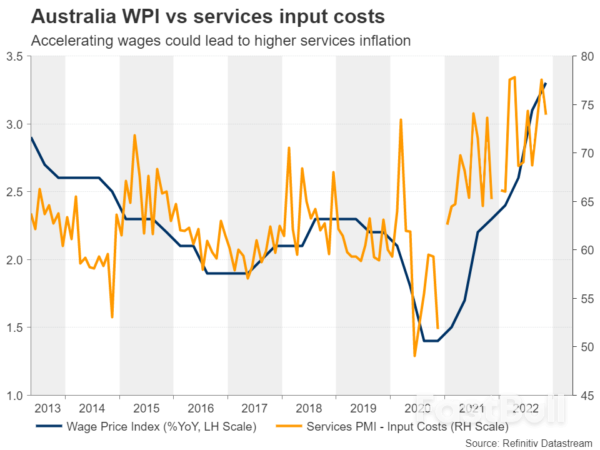
          Wages are forecast to have continued to accelerate for the 9th consecutive quarter, which could add to concerns about inflation staying elevated, and although the employment change is expected to show that the economy added less than half the jobs it gained in March, the unemployment rate is seen holding steady at 3.5%, just a tick above its record low of 3.4%.
          Will Australia’s Labor Data Tempt RBA to Hike Again?_2
          A tight labor market and rising wage growth, which according to the S&P Global services PMI, is contributing to accelerating price pressures for firms in Australia, could prompt investors to price in a higher probability for a hike during the summer months.

          Aussie may be destined to stay weak for a while longer

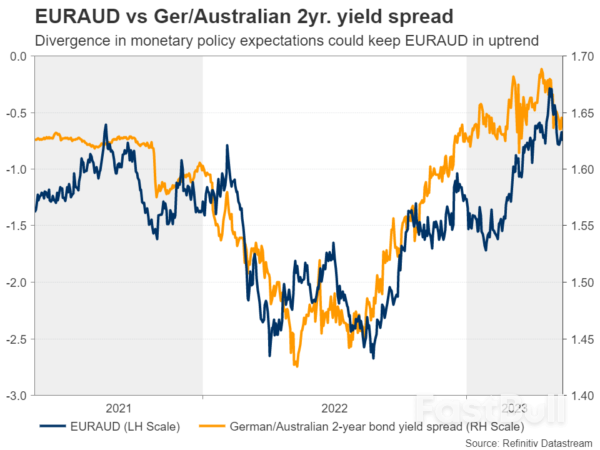
          This could prove positive for the Australian dollar, but its upside may be capped by market participants’ concerns over the outlook of the Chinese economy. With the Fed expected to proceed with nearly three quarter-point cuts by the end of the year, the picture in ausie/dollar may not be so clear, but with the ECB seen hiking by another 50bps, euro/aussie may be destined to continue its uptrend for a while longer, even if the Australian currency temporarily benefits by this week’s data.
          Will Australia’s Labor Data Tempt RBA to Hike Again?_3
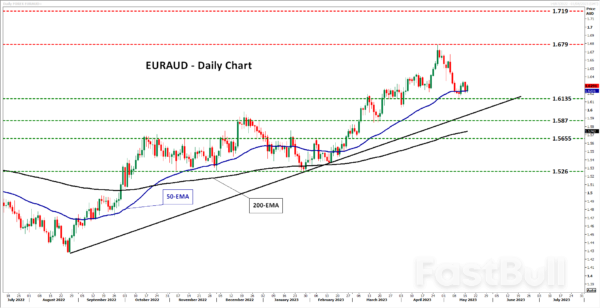
          Euro/aussie has been in a sliding mode since April 26, when it hit resistance at 1.6790, a territory that threw the bulls out of the game back in October 2020 as well. Nonetheless, the pair remains above the uptrend line drawn from the low of August 26, which keeps the bigger picture positive.
          Will Australia’s Labor Data Tempt RBA to Hike Again?_4
          Even if the slide extends beyond last week’s low of 1.6135, the buyers could still step back into the action from near the uptrend line and perhaps stage another march towards the 1.6790 zone. If they manage to break that zone, they could then put the 1.7190 area on their radar, which offered resistance back in early May 2020.
          The outlook could start darkening if the bears are able to break the aforementioned uptrend line, but also the 1.5870 support. Should this happen, they may get encouraged to dive towards the 1.5655 territory, marked by the inside swing high of February 6, the break of which could see scope for extensions towards the 1.5260 area, which acted as a floor between November 4 and January 30.

          Source:XM

          Risk Warnings and Disclaimers
          You understand and acknowledge that there is a high degree of risk involved in trading. Following any strategies or investment methods may lead to potential losses. The content on the site is provided by our contributors and analysts for information purposes only. You are solely responsible for determining whether any trading assets, securities, strategy, or any other product is suitable for investing based on your own investment objectives and financial situation.
          Comments
          Add to Favorites
          Share

          Canada: Inflation Takes a Breather from its Downward Trek in April

          Justin

          Central Bank

          Economic

          Consumer price inflation surprised in April, ticking up to 4.4% year-on-year (y/y), from 4.3% in March. That was against market expectations for a slight deceleration.
          Prices at the pump were a key part of the surprise, rising 6.3% on the month. Even with that steep monthly increase, gasoline prices were 7.7% below year ago levels when oil prices spiked in the early days of Russia’s invasion of Ukraine.
          Consumers did get some good news on their grocery bills, as inflation there cooled to 9.1% y/y in April from 9.7% in March.
          Thankfully, shelter inflation moved in the right direction in April, up 4.9% y/y, down from 5.4% y/y in March. Homeowners’ replacement costs continued to slow to 0.2% y/y in April reflecting a general cooling in the housing market. However, mortgage interest cost inflation keeps getting worse – up 28.5% versus a year ago in April.
          Switching gears from March, core goods inflation ticked up a bit to 3.5% y/y in April from 3.3% in March. However, the good news is that “supercore” inflation – a measure of core services inflation – decelerated to 5.7% in April from 6.3% in March.
          The Bank of Canada’s underlying inflation pressures cooled modestly in April. CPI-trim eased to 4.2% y/y (4.4% in Mar.) and CPI-median at 4.2% y/y (4.5% in Mar.). However, looking at the recent monthly trends, there has been a slight heating up recently with CPI- trim on a three-month annualized basis at 3.7% and median at 3.8%, up from 3.3% and 3.6% in March.

          Key Implications

          Headline inflation took a breather on it’s trek down the mountain in April thanks to surging gasoline prices. We expect the pause will be temporary and inflation will resume heading lower in the months ahead. As outlined in our March forecast, we expect core inflation to continue to decelerate below 3% y/y in the second half of the year, as does the Bank of Canada.
          Cooler inflation for demand-sensitive services inflation, or “supercore” was the most encouraging development of the report, even though it was somewhat offset by hotter inflation for goods. This reinforces the challenge Governor Macklem has talked about in bringing inflation all the way back to 2%. This suggests that the BoC needs to remain vigilant to inflation pressures, and may need to hike again if momentum in the domestic economy does not cool as expected.

          Source:TD Bank Financial Group

          To stay updated on all economic events of today, please check out our Economic calendar
          Risk Warnings and Disclaimers
          You understand and acknowledge that there is a high degree of risk involved in trading. Following any strategies or investment methods may lead to potential losses. The content on the site is provided by our contributors and analysts for information purposes only. You are solely responsible for determining whether any trading assets, securities, strategy, or any other product is suitable for investing based on your own investment objectives and financial situation.
          Comments
          Add to Favorites
          Share

          Biden, Republicans Set for Debt Ceiling Face-Off

          Alex

          Economic

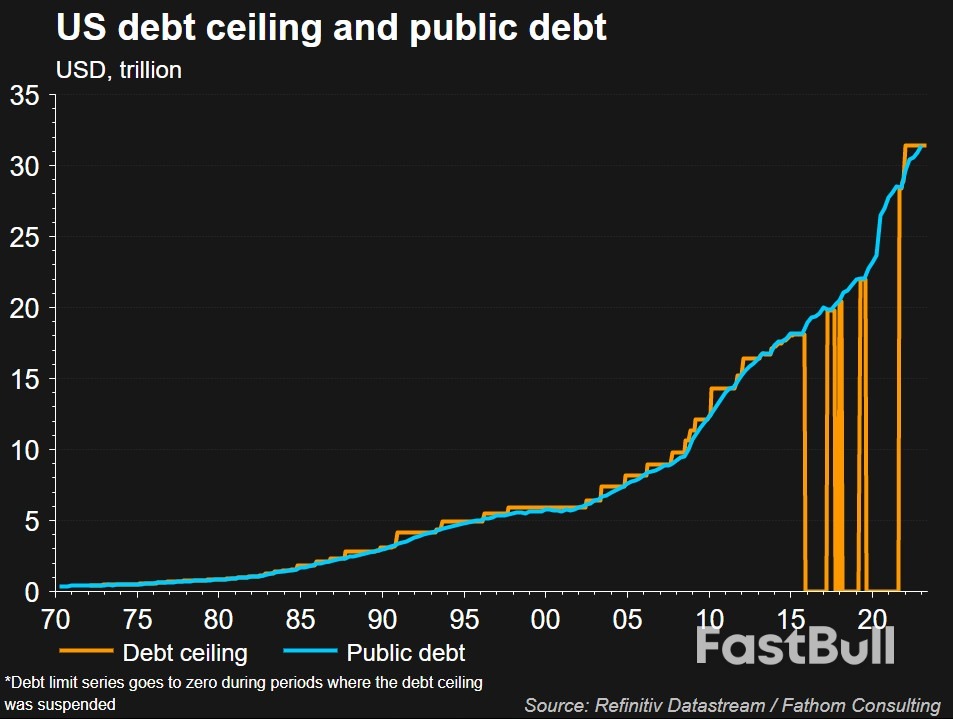
          Another day, another meeting in Washington. President Joe Biden and senior Republicans, including House Speaker Kevin McCarthy, are to sit down on Tuesday in an attempt to thrash out a deal to raise the debt limit and avoid a catastrophic default.
          The mood surrounding the latest talks has perhaps been more optimistic than in previous weeks, which should not be surprising given it's around two weeks until the U.S. runs out of cash to pay its bills.
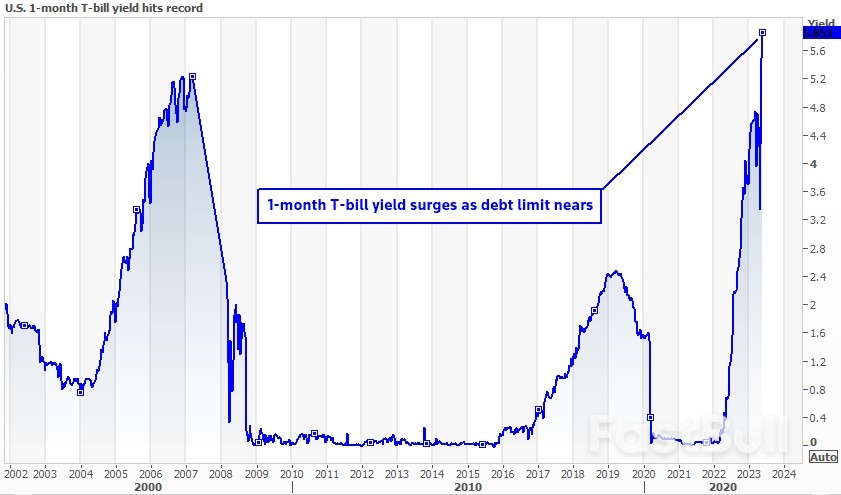
          Investors are clearly nervous about the potential for default. You only have to look at the 1-month Treasury-Bill yield hitting another record high on Tuesday. But they're maybe not as nervous as you might expect.
          The benchmark S&P 500 is little changed on the month, while the tech-heavy Nasdaq 100 has even eked out a 1% gain. Futures are pointing to another flat open on Tuesday.
          That relative calm has been reflected in the latest Bank of America fund manager survey for May.
          Equity allocations rose to a five-month high, while a vast majority (71%) expect the U.S. to agree on a deal to raise the debt ceiling before the so-called "X-date".
          Biden, Republicans Set for Debt Ceiling Face-Off_1Away from the debt ceiling and the Federal Reserve's data dependency will be tested with the latest retail sales and industrial production figures.
          We'll also hear from what seems like every voting member on the FOMC. Mester, Bostic, Barr, Williams, Goolsbee and Logan all have speaking engagements throughout the day.
          They follow four regional central bank presidents who spoke on Monday. All seemed to signal they see interest rates staying high given inflation may be slow to improve and an economy showing any signs of weakness.
          Investors continue to bet that the central bank will be cutting rates later this year, with around 70 basis points of cuts priced by year-end, due to some combination of recession or a faster-than-expected fall in inflation.
          Policymakers don't seem to share that view.
          Biden, Republicans Set for Debt Ceiling Face-Off_2Key developments that should provide more direction to U.S. markets later on Tuesday:
          * U.S. President Biden meets top Republicans in Washington on debt ceiling impasse
          * U.S. retail sales, industrial production, Canadian CPI
          * Home Depot earnings
          * U.S. auctions 52-week Bills

          Source: Reuters

          To stay updated on all economic events of today, please check out our Economic calendar
          Risk Warnings and Disclaimers
          You understand and acknowledge that there is a high degree of risk involved in trading. Following any strategies or investment methods may lead to potential losses. The content on the site is provided by our contributors and analysts for information purposes only. You are solely responsible for determining whether any trading assets, securities, strategy, or any other product is suitable for investing based on your own investment objectives and financial situation.
          Comments
          Add to Favorites
          Share

          Australian Banks' Bid to Shake Mortgage Reliance Brings New Risks

          Alex

          Economic

          Australia's big banks are pivoting to what analysts say could be a risky fight for growth in the country's unloved business loans market as a price war ends a decade-long profit bonanza in the mortgage sector.
          The country's four largest lenders said this month they would redirect capital and staff to the business banking sector after competition for mortgages wiped out the margin benefits they typically get when interest rates rise.
          But that exposes the so-called Big Four, which rank among the country's top few listed entities, to a smaller, less-secure market as company failures rise, raising concerns about whether lenders will be able to sustain years of the almost uninterrupted profit growth they enjoyed under the old strategy.
          "The investor focus right now is on margins as opposed to the cost of risk or bad debt charges, but once the credit cycle turns the focus will very quickly shift to the cost of risk," said Azib Khan, a banking analyst at E&P Financial.
          "When there's a macroeconomic downturn, it's generally institutional and business lending exposures that are impacted first," he added.
          For decades, Australian housing finance has significantly outpaced business lending, making home loan margins the engine of profits. A more recent exodus from non-lending retail services like financial advice has further weighted banks' allocation of capital to residential property.
          As of March, Commonwealth Bank of Australia, Westpac Banking Corp, National Australia Bank Ltd and ANZ Banking Group Ltd collectively held more than three quarters of the country's mortgages by dollar value, according to Australian Prudential Regulation Authority data.
          While banks would typically expect to grow profits during a time of rising interest rates, the boost to margins has been offset by increased competition including from investment bank Macquarie Group Ltd's push into retail banking.
          CBA was not immediately available for comment, while ANZ, NAB and Westpac did not respond to requests for comment.
          The big four banks said in earnings updates this month that their net interest margins peaked in late 2022 and have since narrowed.
          To compensate, they are now chasing the more fragmented business lending market where they hold just 69% of total loans, according to the government data.
          Banks charge wider margins for commercial loans than for mortgages because of the higher risk of losing money, but the country's A$969 billion of total business loans is less than half its mortgages outstanding.
          That could make competition tough.
          "Business banking ... is probably less competitive at the moment but if you look at it from a capital perspective, the ability for the banks to create that leverage is not as great as what it is in mortgages," said UBS banking analyst John Storey.
          Insolvencies Rise
          Adding to the risks, corporate collapses are rising amid an end to pandemic support and emergency company protections, according to data from the securities regulator.
          Some 830 Australian companies filed for insolvency in March, according to the Australian Securities and Investments Commission, the most since June 2020, as many construction and retail firms buckled under sharp increases in costs of borrowing, materials and staffing.
          In the first nine months of the financial year starting July 2022, insolvencies were up about 70% on the same time a year earlier.
          "There's a reason why they get the higher return, and it means higher risk," said John Winter, CEO of the Australian Restructuring Insolvency & Turnaround Association, an industry group, referring to business lending.
          "That needs to be gone into with eyes wide open."
          However, banks are now less inclined to force insolvent companies out of business after a damaging 2018 inquiry into the sector aired accounts from small business owners who claimed they were financially ruined by inflexible loan conditions, said Winter.
          PWC Australia banking and capital markets leader Sam Garland said while insolvencies have risen, recent earnings updates from the showed little system stress.
          To hedge against interest rates risks, the Big Four may now chase new services-based revenues from commercial clients in non-lending segments, added Garland.
          "The base of earnings is now much narrower than it was," he said.

          Source: Yahoo

          To stay updated on all economic events of today, please check out our Economic calendar
          Risk Warnings and Disclaimers
          You understand and acknowledge that there is a high degree of risk involved in trading. Following any strategies or investment methods may lead to potential losses. The content on the site is provided by our contributors and analysts for information purposes only. You are solely responsible for determining whether any trading assets, securities, strategy, or any other product is suitable for investing based on your own investment objectives and financial situation.
          Comments
          Add to Favorites
          Share

          Erdogan Election Showing Cools Turkish Turnaround Hopes

          Thomas

          Political

          Hopes among investors of a surge in Turkish markets evaporated on Monday after long-standing President Tayyip Erdogan took a commanding position in Turkey's elections.
          The combative 69-year-old performed better than expected in Sunday's first round vote, securing a comfortable lead for the second round on May 28 and dousing talk of an end to years of high inflation and repeated currency crises under Erdogan.
          "Hope is dead," Abrdn's head of emerging market local currency debt Kieran Curtis said of the prospects for Erdogan's main challenger Kemal Kilicdaroglu and meaningful policy change.
          The outperformance of another candidate, the nationalist Sinan Ogan whose voters are likely to switch to Erdogan in the head-to-head runoff, should seal the result, he said, adding: "It means Erdogan is coming back".
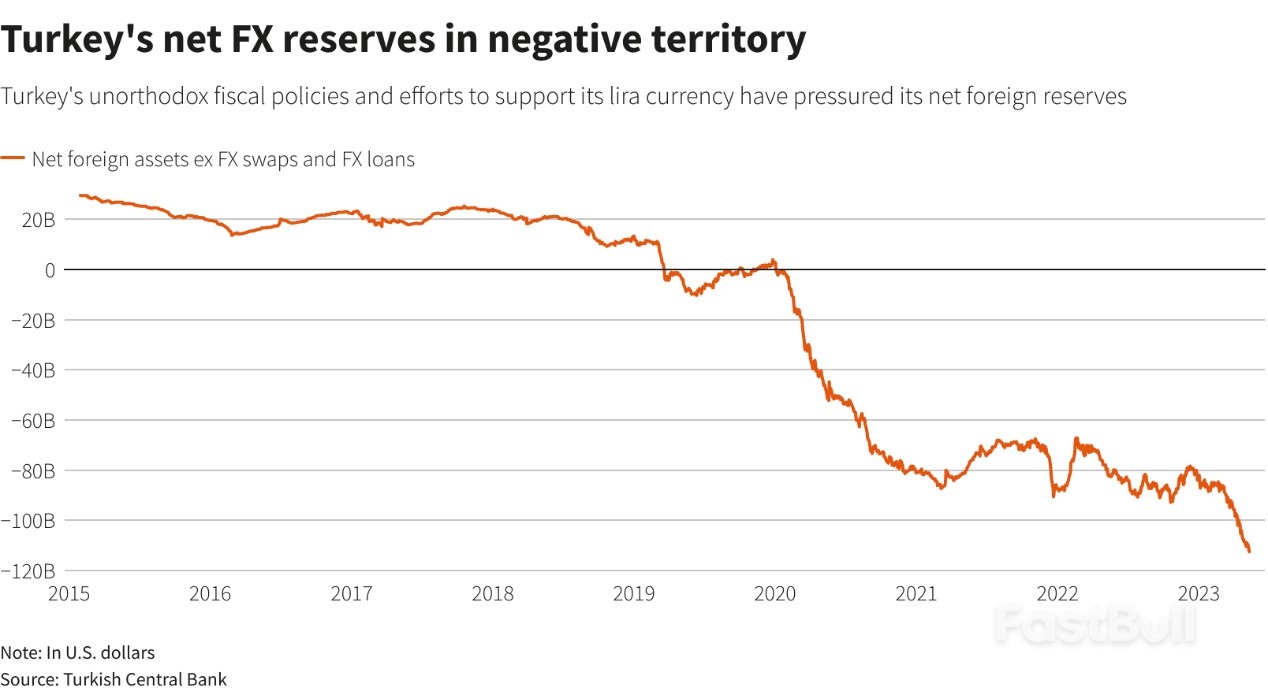
          "So we are back to where we were and it means FX reserves will continue to drain until we have a set of sensible economic policies," Curtis said.
          Erdogan Election Showing Cools Turkish Turnaround Hopes_1Others, however, saw a silver lining in that a disputed result and potential civil unrest were now unlikely, although the main question remained what now lies ahead in terms of economic policies that have become increasingly unconventional.
          Monday's initial market reaction had seen the Turkish lira dip to 2-month low alongside more pronounced drops in banking shares and hard currency government bonds.
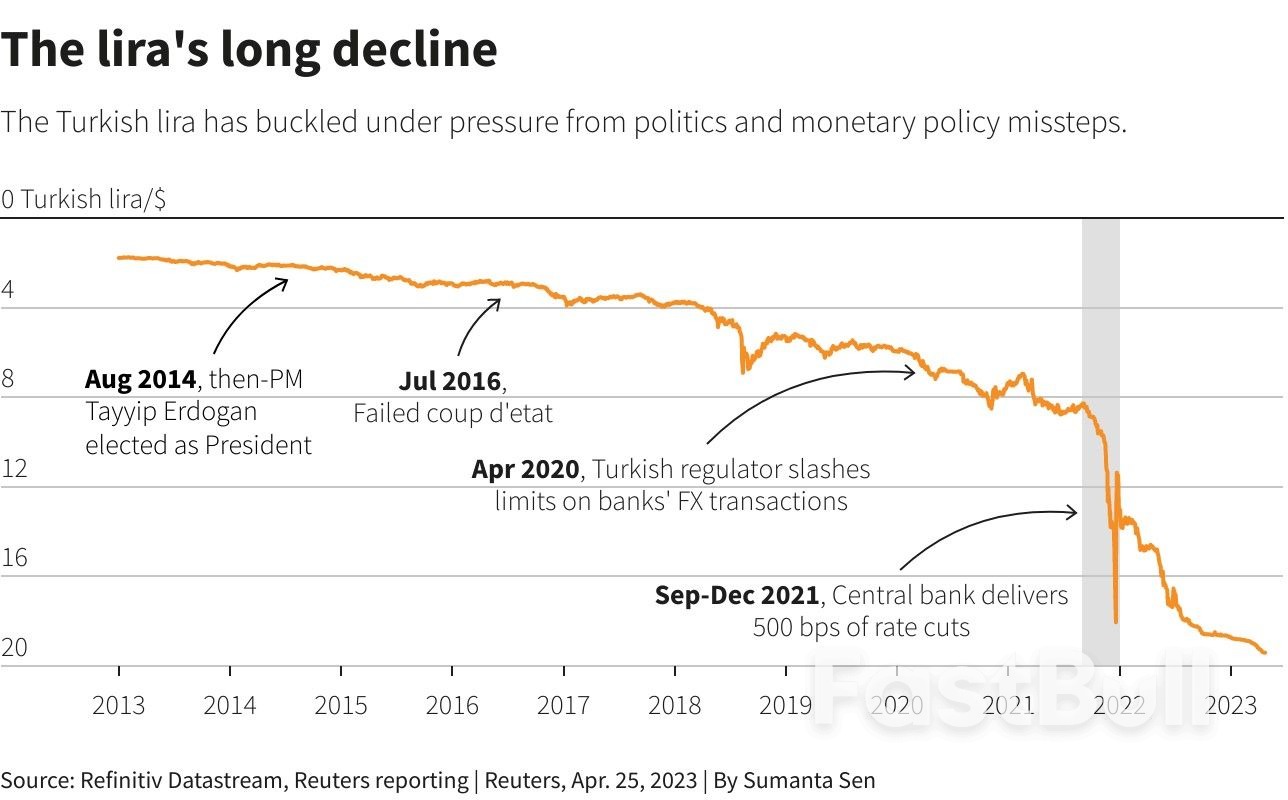
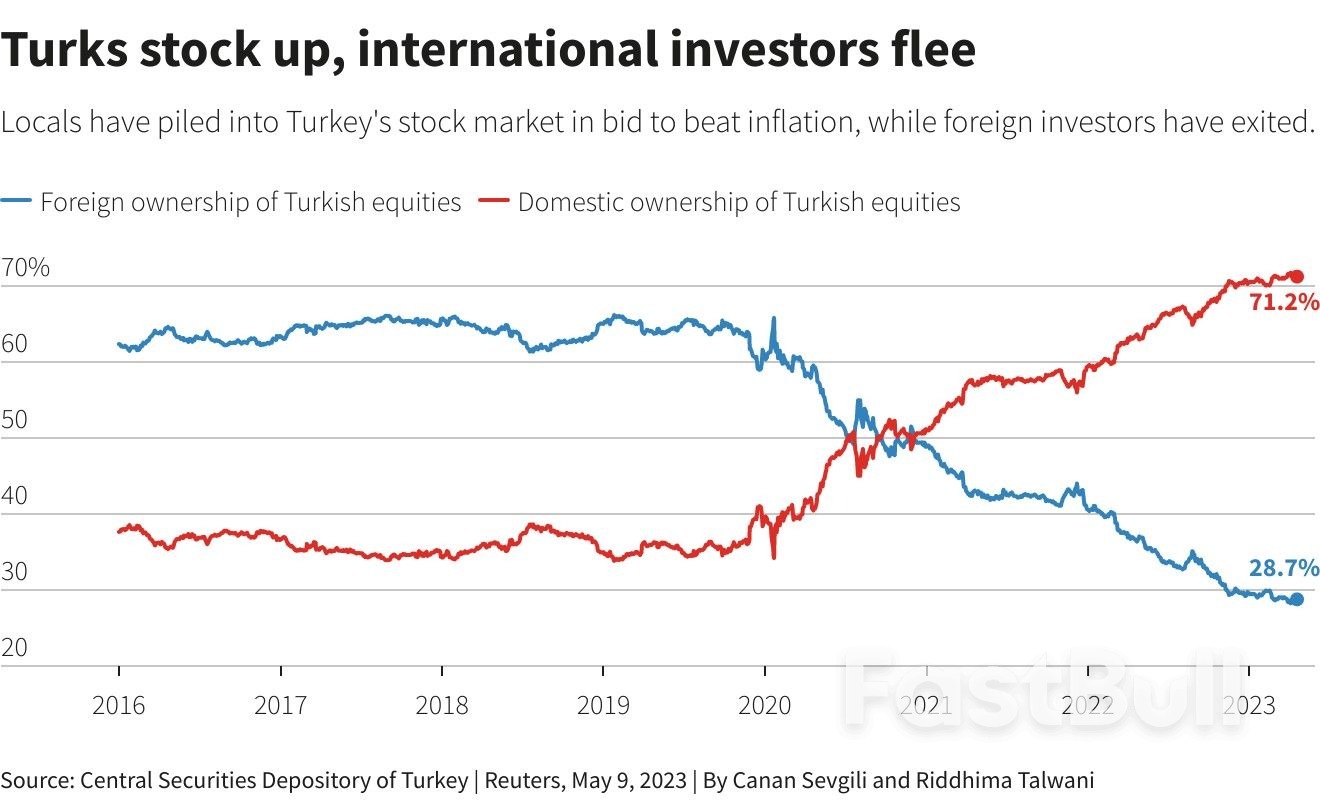
          The lira is now tightly managed, analysts say, having lost almost 95% of its value against the dollar over the last 15 years, while international money managers have been selling out of lira-dominated bonds and slashed equity holdings.
          "The next five years will likely be quite difficult for Turkey," Omotunde Lawal, head of emerging markets corporate debt at Barings said, pointing to divisions within society and the risk of more volatility for the lira.
          "There is a risk that the government resorts to measures like restricting FX transactions for individuals or corporates as they try to control the exchange rate," she added, saying that would make life increasingly difficult for firms.

          Erdogan Election Showing Cools Turkish Turnaround Hopes_2Banks

          Analysts at JPMorgan said that assuming Erdogan secures victory, Turkey's fiscal policy would remain expansionary as he makes good on his campaign spending promises to boost incomes and rebuild the country after February's earthquake.
          In the run-up the bank had forecast that the lira could fall as far at 30 to the dollar without a clear shift back towards orthodox policy, but its analysts pointed out that 'FX forwards' markets had pivoted sharply on Monday.
          With inflation still running above 40%, Turkey's interest rates had been expected to be jacked up to 30%-40% or even 50% from their current 8.5% level had the opposition-bloc won. But that was now seen as off the table.
          "A continuity of policies would argue for low FX volatility," JPMorgan added, as Erdogan's economic team would look to limit the changes and FX volatility.
          Erdogan Election Showing Cools Turkish Turnaround Hopes_3Although the summer holiday period often eases pressure on the lira when tourists bring in their euros, dollars and pounds Rob Drijkoningen, co-head of emerging markets debt at Neuberger Berman said the question was what happens in the longer term.
          If Turks began withdrawing money, especially dollar denominated savings, out the banks again that could jeopardise the government's ability to repay debt, although that would represent an extreme loss of control.
          While Turkey has been seeing its borrowing rise, it still has a relatively low level of debt as a proportion of Gross Domestic Product although that would change quickly if a full-blown crisis takes hold.
          "We have been watching this movie for a couple of years now," said Drijkoningen, "That is the reality - no one has a good sense of what would trigger a true crisis."

          Erdogan Election Showing Cools Turkish Turnaround Hopes_4Source: Ekathimerini

          Risk Warnings and Disclaimers
          You understand and acknowledge that there is a high degree of risk involved in trading. Following any strategies or investment methods may lead to potential losses. The content on the site is provided by our contributors and analysts for information purposes only. You are solely responsible for determining whether any trading assets, securities, strategy, or any other product is suitable for investing based on your own investment objectives and financial situation.
          Comments
          Add to Favorites
          Share

          China's Industrial Output Shows Resilience but Falls Short of Expectations

          Warren Takunda

          Traders' Opinions

          China's industrial production has demonstrated steady growth, marking the 12th consecutive month of expansion in April 2023. However, the latest figures revealed that the growth rate fell below market expectations, casting a shadow of uncertainty on the nation's industrial sector. Despite this slight setback, China's manufacturing and mining sectors remain resilient, supported by the easing of the zero-COVID policy. Let's delve into the details of China's industrial output performance and examine the implications for the country's economic landscape.
          Mixed Performance Across Sectors
          In April 2023, China's industrial production increased by 5.6% compared to the same period last year, which represents a noticeable acceleration from the 3.9% growth recorded in March. However, the growth rate fell short of market forecasts of 10.9%, causing some analysts to raise concerns about the robustness of China's economic recovery.China's Industrial Output Shows Resilience but Falls Short of Expectations_1
          When examining specific sectors within manufacturing, the oil and gas industry experienced growth of 5.6%, while chemical raw materials and non-ferrous metal smelting saw increases of 7.5% and 7.4% respectively. Additionally, electrical machinery production surged by 17.3%, highlighting the strength of China's technological manufacturing capabilities. However, certain sectors faced declines, including textiles (-3.0%), agriculture (-1.6%), coal mining, and non-metallic mineral products (both at -0.6%).
          Factors Impacting Industrial Output
          China's industrial production growth has been influenced by multiple factors. The lifting of the zero-COVID policy played a significant role in stimulating manufacturing and mining activities, contributing to the overall expansion. Moreover, increased domestic demand, particularly in the automotive industry, has been a key driver, with a remarkable growth rate of 44.6% in April. On the other hand, the decline in textiles and agriculture can be attributed to various challenges, such as supply chain disruptions and changing consumer preferences.
          Comparative Analysis
          Taking into account the first four months of 2023, industrial production in China has grown by 3.6% compared to the same period in 2022. This suggests a moderate yet positive trajectory, indicating that the industrial sector is gradually recovering from the setbacks caused by the pandemic. However, it is important to note that in 2022, industrial production also expanded by 3.6%, highlighting the need for sustained and accelerated growth to maintain a robust economic momentum.
          Implications for China's Economy
          China's industrial output serves as a vital indicator of the nation's economic health. While the recent growth figures show resilience, the lower-than-expected expansion rate raises concerns about the overall pace of recovery. As industrial production is a crucial driver of employment, investment, and consumption, any fluctuations or unexpected deceleration could potentially impact the broader economy. Policymakers and market participants will closely monitor this trend to gauge the need for potential adjustments to stimulate further growth and ensure a sustainable recovery.
          China's industrial output displayed commendable resilience in April 2023, with a year-on-year growth rate of 5.6%. However, the figures fell short of market expectations, highlighting the need for continued efforts to bolster the nation's economic recovery. The performance of specific sectors within manufacturing, such as electrical machinery and automotive, demonstrates the potential for sustained growth, while declines in textiles and agriculture serve as reminders of ongoing challenges. Maintaining a favorable business environment, supporting innovation, and addressing sector-specific issues will be crucial in driving China's industrial production and securing a robust economic rebound in the coming months.
          Risk Warnings and Disclaimers
          You understand and acknowledge that there is a high degree of risk involved in trading. Following any strategies or investment methods may lead to potential losses. The content on the site is provided by our contributors and analysts for information purposes only. You are solely responsible for determining whether any trading assets, securities, strategy, or any other product is suitable for investing based on your own investment objectives and financial situation.
          Comments
          Add to Favorites
          Share

          'Magic Moment' For Italian Bonds as Foreign Interest Revives

          Devin

          Bond

          International investors look poised to reverse a decade of disinvestment from Italian government bonds, as high yields and encouraging economic reports spur demand for the debt, latest data shows and analysts say.
          A vote of confidence in what has for years been seen as one of the riskiest euro zone bond markets would boost Rome's efforts to manage the bloc's second-largest debt pile, as the European Central Bank winds down its bond purchases.
          Foreign holdings of Italian government paper increased in February after 10 consecutive monthly declines, according to Bank of Italy data.
          Moreover, in April the value of Italian notes borrowed by investors betting on a fall in their prices had dropped by around 40% to $27 billion from a mid-November peak of $46 billion, S&P Global Market Intelligence data showed.
          Analysts say firmer-than-expected economic growth, declining public debt, and the prospect of political stability under Giorgia Meloni's seven-month-old government are starting to lure foreign investors back to Italian bonds, demand for which proved resilient even as recent banking turmoil roiled world markets.
          Domenico Siniscalco, vice chairman of Morgan Stanley and a former Italian economy minister, said Italy was no longer seen as a target of speculation, and international investors were now looking at the country with "total calm and confidence".
          "This is a magic moment for Italian bonds," he told Reuters.
          There is much lost ground to make up.
          The share of Italian government debt held by foreign investors fell to below 20% at the end of 2022 from around 50% before the 2008 financial crisis, Bank of Italy data shows. The 2012 euro zone debt crisis and the COVID-19 pandemic triggered sharp sell-offs.
          'Magic Moment' For Italian Bonds as Foreign Interest Revives_1Luca Cazzulani, head of strategy research at UniCredit, said the level of yields now offered by Italian paper makes it hard for foreign banks and funds to ignore.
          "Keeping an underweight position on Italy will risk hurting (investors') performance," he said.
          The yield on Italy's 10-year BTP bonds has risen from a record low around 0.4% in February 2021 to about 4.2%, following the massive ECB rate hike cycle which began last July.
          The 10-year yields are almost double those of higher-rated German peers and some 70 bps above benchmark U.S. yields.
          Positive Growth Surprises
          Economic growth in Italy, traditionally the laggard of the euro zone, has consistently beaten expectations since the end of the COVID pandemic, with gross domestic product (GDP) expanding by 3.7% last year after 7.0% in 2021.
          That kind of growth represents a post-pandemic rebound which analysts say is not sustainable, but the positive surprises continued in the first quarter when GDP rose 0.5% from the previous three months.
          In April the Treasury hiked its forecast for the full year to 1.0% from 0.6%.
          "We are already seeing a more positive attitude towards Italy from non-domestic investors," said Filippo Mormando, fixed income strategist at Spanish bank BBVA, referring to the take-up of Rome's most recent syndicated bond deal, and financial flows in the latest balance of payments data.
          The new trend started in April, Mormando said, thanks to a investor perception that global central banks would hike rates less aggressively after U.S. banking turmoil, and to progress made by Italy in covering its funding needs.
          Italy has already met its net financing requirements for this year, well ahead of Germany, France and Spain.
          On the political front Meloni, who took office in October, has largely avoided confrontation with the European Union and committed to keeping the budget deficit and public debt on a declining path.
          "Hedge funds that last year probably speculated against Italy after the elections, have closed their positions. Now we are waiting for real money investors to come back," said Luca Mezzomo, head of macroeconomic analysis at Intesa Sanpaolo.
          A Helping Hand
          A fall in Italy's debt-to-GDP ratio to 144.6% last year, down by five percentage points from the year before and by 10 points from 2020 has also helped sentiment. Meloni has targeted a decline to 141.4% this year.
          The downtrend has been helped by the surge in inflation, which increases revenues and nominal GDP, and therefore proportionally lowers the debt-to-GDP ratio.
          The picture is not all rosy. The rise in ECB rates increases borrowing costs for companies as well as the state, and Rome is struggling to meet policy pledges to the European Commission in return for some 200 billion euros ($220.16 billion) of pandemic recovery funds through 2026.
          The country has also fallen behind schedule in spending the EU transfers it has already received.
          However, Morgan Stanley's Siniscalco said these difficulties were not enough to undermine a promising public finance trend or hurt investor confidence.
          On Friday Fitch Ratings, which last month cut France's rating, confirmed Italy at BBB with a stable outlook, while hiking its forecast for Italian GDP growth this year to 1.2% from 0.5%, above the government's own estimate.
          The Italian Treasury has already taken steps to shore up demand for its bonds as the ECB retreats, by boosting purchases among domestic households and companies.
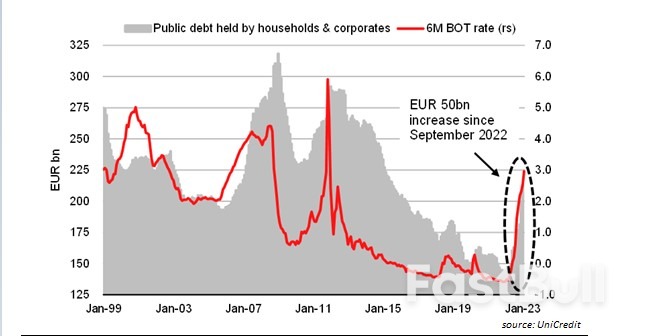
          Together, Italian families and firms now hold around 215 billion euros, or 9%, of Rome's debt, UniCredit's Cazzulani said, the highest level since mid-2015.
          'Magic Moment' For Italian Bonds as Foreign Interest Revives_2($1 = 0.9084 euros)

          Source: Reuters

          Risk Warnings and Disclaimers
          You understand and acknowledge that there is a high degree of risk involved in trading. Following any strategies or investment methods may lead to potential losses. The content on the site is provided by our contributors and analysts for information purposes only. You are solely responsible for determining whether any trading assets, securities, strategy, or any other product is suitable for investing based on your own investment objectives and financial situation.
          Comments
          Add to Favorites
          Share
          FastBull
          Copyright © 2025 FastBull Ltd

          728 RM B 7/F GEE LOK IND BLDG NO 34 HUNG TO RD KWUN TONG KLN HONG KONG

          TelegramInstagramTwitterfacebooklinkedin
          App Store Google Play Google Play
          Products
          Charts

          Chats

          Q&A with Experts
          Screeners
          Economic Calendar
          Data
          Tools
          Membership
          Features
          Function
          Markets
          Copy Trading
          Latest Signals
          Contests
          News
          Analysis
          24/7
          Columns
          Education
          Company
          Careers
          About Us
          Contact Us
          Advertising
          Help Center
          Feedback
          User Agreement
          Privacy Policy
          Business

          White Label

          Data API

          Web Plug-ins

          Poster Maker

          Affiliate Program

          Risk Disclosure

          The risk of loss in trading financial instruments such as stocks, FX, commodities, futures, bonds, ETFs and crypto can be substantial. You may sustain a total loss of the funds that you deposit with your broker. Therefore, you should carefully consider whether such trading is suitable for you in light of your circumstances and financial resources.

          No decision to invest should be made without thoroughly conducting due diligence by yourself or consulting with your financial advisors. Our web content might not suit you since we don't know your financial conditions and investment needs. Our financial information might have latency or contain inaccuracy, so you should be fully responsible for any of your trading and investment decisions. The company will not be responsible for your capital loss.

          Without getting permission from the website, you are not allowed to copy the website's graphics, texts, or trademarks. Intellectual property rights in the content or data incorporated into this website belong to its providers and exchange merchants.

          Not Logged In

          Log in to access more features

          FastBull Membership

          Not yet

          Purchase

          Become a signal provider
          Help Center
          Customer Service
          Dark Mode
          Price Up/Down Colors

          Log In

          Sign Up

          Position
          Layout
          Fullscreen
          Default to Chart
          The chart page opens by default when you visit fastbull.com