• Trade
  • Markets
  • Copy
  • Contests
  • News
  • 24/7
  • Calendar
  • Q&A
  • Chats
Trending
Screeners
SYMBOL
LAST
BID
ASK
HIGH
LOW
NET CHG.
%CHG.
SPREAD
SPX
S&P 500 Index
6966.29
6966.29
6966.29
6978.37
6917.65
+44.83
+ 0.65%
--
DJI
Dow Jones Industrial Average
49504.06
49504.06
49504.06
49571.41
49197.06
+237.96
+ 0.48%
--
IXIC
NASDAQ Composite Index
23671.34
23671.34
23671.34
23721.15
23426.48
+191.33
+ 0.81%
--
USDX
US Dollar Index
98.860
98.940
98.860
98.980
98.600
+0.290
+ 0.29%
--
EURUSD
Euro / US Dollar
1.16309
1.16389
1.16309
1.16618
1.16179
-0.00271
-0.23%
--
GBPUSD
Pound Sterling / US Dollar
1.33930
1.34121
1.33930
1.34505
1.33922
-0.00468
-0.35%
--
XAUUSD
Gold / US Dollar
4509.15
4509.15
4509.15
4517.06
4452.75
+31.36
+ 0.70%
--
WTI
Light Sweet Crude Oil
58.641
58.670
58.641
59.589
57.491
+0.393
+ 0.67%
--

Community Accounts

Signal Accounts
--
Profit Accounts
--
Loss Accounts
--
View More

Become a signal provider

Sell trading signals to earn additional income

View More

Guide to Copy Trading

Get started with ease and confidence

View More

Signal Accounts for Members

All Signal Accounts

Best Return
  • Best Return
  • Best P/L
  • Best MDD
Past 1W
  • Past 1W
  • Past 1M
  • Past 1Y

All Contests

  • All
  • Trump Updates
  • Recommend
  • Stocks
  • Cryptocurrencies
  • Central Banks
  • Featured News
Top News Only
Share

[US Media Reports: At Least 4 Of The 16 Tomahawk Missiles Fired By The US Military Failed To Detonate] US President Trump Stated On December 25th That The US Launched A "powerful And Deadly" Strike Against ISIS Terrorists In Northwestern Nigeria. According To The Latest Report From The Washington Post, At Least Four Of The 16 Tomahawk Missiles Fired By The US Military Appear To Have Failed To Detonate, Raising Questions About The Effectiveness Of The Operation And The Intelligence Supporting It

Share

[Probability Of Trump Being Impeached Again During His Term Rises To 57%] January 11Th, According To Information From The Kalshi Platform, The Probability Of Trump Being Impeached Again During His 2025-2029 Term Has Risen To 57%, Reaching A New All-Time High.Previously, Trump Stated That If The Democratic Party Were To Achieve A Major Victory In The 2026 Midterms, He Might Face A New Impeachment Attempt

Share

Iran's Police Chief Radan Says The Level Of Confrontation With Rioters Has Been Stepped Up

Share

Iran's Parliament Speaker Warns USA President Any Attack Will Lead To Tehran Striking Israel And Regional USA Bases As 'Legitimate Targets'

Share

Governor: One Civilian Dead After Ukrainian Drone Attack On Russia's Voronezh

Share

[Order Gradually Returning To Venezuela's Capital] A Week Has Passed Since The US Raided Caracas, The Venezuelan Capital, On January 3 And Forcibly Took President Maduro And His Wife Into Custody. CCTV Reporters Observed On The Streets Of Caracas That Traffic Is Generally Stable, With A Significant Increase In Vehicle Volume. Local Residents Told Reporters That US Interference Will Not Deprive Venezuelans Of Their Motivation To Continue Developing

Share

Three Israeli Sources Who Attended Israeli Security Talks: Israel Is On High Alert For The Possibility Of Any USA Intervention In Iran

Share

EU Demands 'Farage Clause' As Part Of Brexit Reset Talks With Britain - Ft

Share

[Mass Shooting In Mississippi] Mississippi Police Said On January 10 That A Series Of Shootings In Clay County, Mississippi, On The Evening Of January 9 Left At Least Six People Dead, Including A Child. One Suspect Has Been Arrested. Police Said The Incidents Occurred In A Rural Community In West Point, Clay County, Where A 24-year-old Man Named Darika Moore Opened Fire At Three Different Locations. The Motive Is Currently Unclear. Moore Has Been Charged With First-degree Murder

Share

Rubio And Netanyahu Discuss Iran, Syria And Gaza, Axios Reports

Share

[A Whale Moves $2.2M Worth Of Trump To Binance, Anticipates Over 50% Loss] January 11Th, According To Onchainschool.Pro Monitoring, Early This Morning, A Wallet Transferred $2.2 Million Worth Of Trump To Binance. Most Of These Tokens Were Withdrawn From A Cex About 8 Months Ago. The Actual Estimated Loss Is Expected To Be $2.5 Million

Share

Bill Pulte, Head Of The Federal Housing Finance Agency (FhFA), Stated That An Investigation Is Needed Into The Issue Of Reduced Inventory At Housing Developer Kb Home

Share

[Grok AI-generated Pornographic Images Controversy Escalates; Musk Accuses UK Government Of Being "fascist"] Following The UK's Further Threat To Ban X Due To The Creation Of Sexually Suggestive Images Of Women And Children By The AI ​​tool Grok, Elon Musk Accused The UK Government Of Being "fascist." Regarding A Chart Claiming That The UK Has The Highest Number Of Arrests Globally For Social Media Posts, Musk Posted, "Why Is The UK Government So Fascist?" In Several Other Posts A Few Hours Earlier, He Also Said That The UK Wanted To "crack Down On Freedom Of Speech" And Referred To The Country As A "prison Island."

Share

Governor: Ukrainian Drone Attack Injures Four, Damages Buildings In Russia's Voronezh

Share

Bessent: US May Lift More Venezuela Sanctions Next Week

Share

Bessent: USA Is Willing To Convert Venezuela's IMF Special Drawing Rights To Dollars To Aid Reconstruction

Share

Bessent: Chevron Has Been In Venezuela A Long Time, Expect Its Commitment To Increase Greatly

Share

North Korea's Supreme Leader Kim Yo Jong Says South Korea Still Needs To Explain About Drone Incidents

Share

North Korea's Supreme Leader Kim Yo Jong Says It Is Wise Decision That South Korea Does Not Have Intent To Provoke

Share

USA Military Says It Conducted Large-Scale Strikes Against Multiple ISIS Targets Across Syria

TIME
ACT
FCST
PREV
U.S. Average Hourly Wage MoM (SA) (Dec)

A:--

F: --

P: --
U.S. Average Weekly Working Hours (SA) (Dec)

A:--

F: --

P: --

U.S. New Housing Starts Annualized MoM (SA) (Oct)

A:--

F: --

P: --
U.S. Total Building Permits (SA) (Oct)

A:--

F: --

P: --

U.S. Building Permits MoM (SA) (Oct)

A:--

F: --

P: --

U.S. Annual New Housing Starts (SA) (Oct)

A:--

F: --

P: --
U.S. U6 Unemployment Rate (SA) (Dec)

A:--

F: --

P: --

U.S. Manufacturing Employment (SA) (Dec)

A:--

F: --

P: --
U.S. Labor Force Participation Rate (SA) (Dec)

A:--

F: --

P: --

U.S. Private Nonfarm Payrolls (SA) (Dec)

A:--

F: --

P: --
U.S. Unemployment Rate (SA) (Dec)

A:--

F: --

P: --
U.S. Nonfarm Payrolls (SA) (Dec)

A:--

F: --

P: --
U.S. Average Hourly Wage YoY (Dec)

A:--

F: --

P: --
Canada Full-time Employment (SA) (Dec)

A:--

F: --

P: --

Canada Part-Time Employment (SA) (Dec)

A:--

F: --

P: --

Canada Unemployment Rate (SA) (Dec)

A:--

F: --

P: --

Canada Labor Force Participation Rate (SA) (Dec)

A:--

F: --

P: --

U.S. Government Employment (Dec)

A:--

F: --

P: --

Canada Employment (SA) (Dec)

A:--

F: --

P: --

U.S. UMich Consumer Expectations Index Prelim (Jan)

A:--

F: --

P: --

U.S. UMich Consumer Sentiment Index Prelim (Jan)

A:--

F: --

P: --

U.S. UMich Current Economic Conditions Index Prelim (Jan)

A:--

F: --

P: --

U.S. UMich 1-Year-Ahead Inflation Expectations Prelim (Jan)

A:--

F: --

P: --

U.S. UMich 5-Year-Ahead Inflation Expectations Prelim YoY (Jan)

A:--

F: --

P: --

U.S. 5-10 Year-Ahead Inflation Expectations (Jan)

A:--

F: --

P: --

China, Mainland M1 Money Supply YoY (Dec)

--

F: --

P: --

China, Mainland M0 Money Supply YoY (Dec)

--

F: --

P: --

China, Mainland M2 Money Supply YoY (Dec)

--

F: --

P: --

U.S. Weekly Total Oil Rig Count

A:--

F: --

P: --

U.S. Weekly Total Rig Count

A:--

F: --

P: --

Indonesia Retail Sales YoY (Nov)

--

F: --

P: --

Euro Zone Sentix Investor Confidence Index (Jan)

--

F: --

P: --

India CPI YoY (Dec)

--

F: --

P: --

Germany Current Account (Not SA) (Nov)

--

F: --

P: --

Canada National Economic Confidence Index

--

F: --

P: --

FOMC Member Barkin Speaks
U.S. 3-Year Note Auction Yield

--

F: --

P: --

U.S. 10-Year Note Auction Avg. Yield

--

F: --

P: --

Japan Trade Balance (Customs Data) (SA) (Nov)

--

F: --

P: --

Japan Trade Balance (Nov)

--

F: --

P: --

U.K. BRC Overall Retail Sales YoY (Dec)

--

F: --

P: --

U.K. BRC Like-For-Like Retail Sales YoY (Dec)

--

F: --

P: --

Turkey Retail Sales YoY (Nov)

--

F: --

P: --

U.S. NFIB Small Business Optimism Index (SA) (Dec)

--

F: --

P: --

Brazil Services Growth YoY (Nov)

--

F: --

P: --

Canada Building Permits MoM (SA) (Nov)

--

F: --

P: --

U.S. CPI MoM (SA) (Dec)

--

F: --

P: --

U.S. CPI YoY (Not SA) (Dec)

--

F: --

P: --

U.S. Real Income MoM (SA) (Dec)

--

F: --

P: --

U.S. CPI MoM (Not SA) (Dec)

--

F: --

P: --

U.S. Core CPI (SA) (Dec)

--

F: --

P: --

U.S. Core CPI YoY (Not SA) (Dec)

--

F: --

P: --

U.S. Core CPI MoM (SA) (Dec)

--

F: --

P: --

U.S. Weekly Redbook Index YoY

--

F: --

P: --

U.S. New Home Sales Annualized MoM (Oct)

--

F: --

P: --

U.S. Annual Total New Home Sales (Oct)

--

F: --

P: --

U.S. Cleveland Fed CPI MoM (SA) (Dec)

--

F: --

P: --

China, Mainland Imports YoY (CNH) (Dec)

--

F: --

P: --

China, Mainland Trade Balance (CNH) (Dec)

--

F: --

P: --

China, Mainland Imports YoY (USD) (Dec)

--

F: --

P: --

China, Mainland Exports YoY (USD) (Dec)

--

F: --

P: --

Q&A with Experts
    • All
    • Chatrooms
    • Groups
    • Friends
    mukesh jha flag
    BABA MEANS ALIBABA
    RPGFX flag
    mukesh jha
    BABA MEANS ALIBABA
    @mukesh jhaYeah, BABA stocks is the symbol for shares in Alibaba
    EuroTrader flag
    mukesh jha
    BABA MEANS ALIBABA
    @mukesh jhaohh i can see, ive not really even opened alibab stock since i started trading six years ago
    RPGFX flag
    Wu Frank
    What do you think of BABA stock?
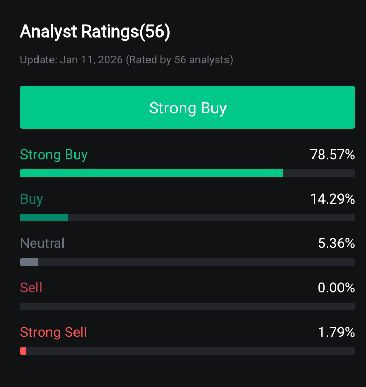
    @Wu FrankBased on analysts, this is a time for strong buy on BABA stock
    RPGFX flag
    RPGFX flag
    RPGFX
    43 out of 56 analysts indicate a strong buy and 8 out of the rest are on a buy, 3 are on neutral and just 1 on a strong sell with non on sell, so buying chances are very very high @Wu Frank
    RPGFX flag
    RPGFX flag
    RPGFX
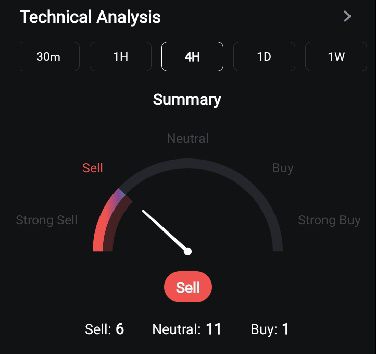
    @Wu Frank However the 4 hour technicals an chart patterns indicate a sell but not strong sell
    RPGFX flag
    Wu Frank
    Is it a good time to buy now?
    Just hold on and check again later this week for when the technicals turn bullish then you are good for an entry @Wu Frank
    3323469 flag
    fhdidss12
    3323469 flag
    poi99.5
    3323469 flag
    fuudiuyhg285
    3323469 flag
    fuduifygtfk45
    3323469 flag
    idfifuygiduhg25
    Nawhdir. Øt flag
    baba = father.
    mukesh jha flag
    Nawhdir. Øt
    baba = father.
    @Nawhdir. Øt GOD FATHER
    mukesh jha flag
    OLAKA KOLAKAA KIYA KARAKKA
    EuroTrader flag
    mukesh jha
    @mukesh jha and he is the lion, thr roar, the liquid metal, the indaboski bahose, the slayer of the markets and reaper of the broker
    mukesh jha flag
    mukesh jha flag
    ENJOY LIFE AND WIFE NO USE WTI OIL SIMPLE RULES ONLY FOR SOUL LOVE
    Type here...
    Add Symbol or Code

      No matching data

      All
      Trump Updates
      Recommend
      Stocks
      Cryptocurrencies
      Central Banks
      Featured News
      • All
      • Russia-Ukraine Conflict
      • Middle East Flashpoint
      • All
      • Russia-Ukraine Conflict
      • Middle East Flashpoint
      Search
      Products

      Charts Free Forever

      Chats Q&A with Experts
      Screeners Economic Calendar Data Tools
      Membership Features
      Data Warehouse Market Trends Institutional Data Policy Rates Macro

      Market Trends

      Market Sentiment Order Book Forex Correlations

      Top Indicators

      Charts Free Forever
      Markets

      News

      News Analysis 24/7 Columns Education
      From Institutions From Analysts
      Topics Columnists

      Latest Views

      Latest Views

      Trending Topics

      Top Columnists

      Latest Update

      Signals

      Copy Rankings Latest Signals Become a signal provider AI Rating
      Contests
      Brokers

      Overview Brokers Assessment Rankings Regulators News Claims
      Broker listing Forex Brokers Comparison Tool Live Spread Comparison Scam
      Q&A Complaint Scam Alert Videos Tips to Detect Scam
      More

      Business
      Events
      Careers About Us Advertising Help Center

      White Label

      Data API

      Web Plug-ins

      Affiliate Program

      Awards Institution Evaluation IB Seminar Salon Event Exhibition
      Vietnam Thailand Singapore Dubai
      Fans Party Investment Sharing Session
      FastBull Summit BrokersView Expo
      Recent Searches
        Top Searches
          Markets
          News
          Analysis
          User
          24/7
          Economic Calendar
          Education
          Data
          • Names
          • Latest
          • Prev

          View All

          No data

          Scan to Download

          Faster Charts, Chat Faster!

          Download App
          English
          • English
          • Español
          • العربية
          • Bahasa Indonesia
          • Bahasa Melayu
          • Tiếng Việt
          • ภาษาไทย
          • Français
          • Italiano
          • Türkçe
          • Русский язык
          • 简中
          • 繁中
          Open Account
          Search
          Products
          Charts Free Forever
          Markets
          News
          Signals

          Copy Rankings Latest Signals Become a signal provider AI Rating
          Contests
          Brokers

          Overview Brokers Assessment Rankings Regulators News Claims
          Broker listing Forex Brokers Comparison Tool Live Spread Comparison Scam
          Q&A Complaint Scam Alert Videos Tips to Detect Scam
          More

          Business
          Events
          Careers About Us Advertising Help Center

          White Label

          Data API

          Web Plug-ins

          Affiliate Program

          Awards Institution Evaluation IB Seminar Salon Event Exhibition
          Vietnam Thailand Singapore Dubai
          Fans Party Investment Sharing Session
          FastBull Summit BrokersView Expo

          Why Trump's Tariffs Won't Crash the Crypto Market

          Henry Thompson

          Economic

          Cryptocurrency

          Bond

          Traders' Opinions

          Remarks of Officials

          Data Interpretation

          Summary:

          Fears of a tariff refund market shock fade as Treasury assures gradual payouts and robust cash reserves.

          Fears of a market shock rippled through financial circles this week, centered on a potential U.S. Supreme Court ruling that could strike down tariffs from the Trump administration. For traders, the logic was simple: a massive, court-ordered tariff refund could force the U.S. Treasury to flood the system with liquidity, potentially destabilizing bond markets and sending risk assets like crypto into a tailspin.

          However, U.S. Treasury officials have moved quickly to address these concerns, signaling that the risk of a financial cataclysm is minimal.

          Treasury Debunks Fears of a Liquidity Shock

          U.S. Treasury Secretary Scott Bessent has reassured markets that the government is fully equipped to handle any potential tariff refunds. He clarified that even a worst-case scenario would not involve a single, massive payout.

          Instead, any refunds would be distributed gradually over weeks, months, or longer. This staggered approach is designed to prevent the kind of sudden liquidity event that could rattle markets.

          Bessent stated that the Treasury is well-prepared for this contingency and does not foresee the process disrupting government funding or overall financial stability. While expressing doubt that the Supreme Court would overturn the tariffs, he emphasized that robust contingency plans are in place regardless.

          The Logistical Hurdles of a Mass Refund

          Beyond the Treasury's capacity to pay, the refund process itself is expected to be highly complex. According to Bessent, any court ruling would likely come with conditions that complicate how the money flows back into the economy.

          There is also significant uncertainty about whether corporations that paid the tariffs, such as large retailers, would pass the refunds on to consumers. These logistical challenges make a rapid, market-disrupting payout even less probable.

          How Market Panic Cooled Down

          Earlier in the week, analysts had warned that a ruling against the tariffs could trigger a broad market correction. The primary concern was that a large refund obligation might compel the Treasury to issue more bonds, which would push yields higher and drain liquidity from speculative assets, including the crypto market.

          These fears began to subside after the Supreme Court adjusted its timeline in a separate case, effectively delaying the tariff decision. This postponement reduced immediate market pressure and helped stabilize investor sentiment.

          A $774 Billion Cash Buffer Provides Stability

          A key factor calming the market is the Treasury's exceptionally strong cash position. Government cash balances currently stand near $774 billion and are projected to grow to approximately $850 billion by the end of March 2026.

          This substantial buffer means there is no need for emergency borrowing or an aggressive bond issuance to fund potential refunds. For crypto markets, this suggests that the threat of a liquidity-driven crash tied to the Trump-era tariffs is largely overblown.

          What This Means for Traders

          For now, the systemic risk from this issue appears to be contained. Here are the key takeaways:

          • Gradual Payouts: Any tariff refunds would be spread out over time, preventing a sudden shock to the financial system.

          • Ample Liquidity: The U.S. Treasury confirms it has more than enough cash on hand to manage refunds without disrupting bond markets.

          • Delayed Timeline: The Supreme Court has pushed its decision further out, removing any immediate threat to market stability.

          • No Forced Selling: With a strong cash position, the Treasury will not need to issue a wave of new bonds that could pull capital away from risk assets like crypto.

          To stay updated on all economic events of today, please check out our Economic calendar
          Risk Warnings and Disclaimers
          You understand and acknowledge that there is a high degree of risk involved in trading. Following any strategies or investment methods may lead to potential losses. The content on the site is provided by our contributors and analysts for information purposes only. You are solely responsible for determining whether any trading assets, securities, strategy, or any other product is suitable for investing based on your own investment objectives and financial situation.
          Add to Favorites
          Share

          Is Germany Planning a Shift to a War Economy?

          Michael Ross

          Remarks of Officials

          Russia-Ukraine Conflict

          Economic

          Political

          Prominent German economist Moritz Schularick, president of the Kiel Institute for the World Economy, has suggested that Germany’s path out of its economic slump lies in a pivot toward a war economy, signaling a striking embrace of central planning over market principles.

          A Call for a Centrally Planned Arms Industry

          In an interview with the Neue Osnabrücker Zeitung, Schularick identified a leadership vacuum in German arms policy. He framed a state-directed industrial policy focused on weapons manufacturing as the solution to Germany's economic challenges, even calling increased arms production a potential "job booster."

          Moritz Schularick, president of the Kiel Institute for the World Economy, has advocated for a centrally managed arms production push.

          His argument is rooted in geopolitical strategy. "If we want Europe to truly stand on its own in defense soon and not remain dependent on the MAGA-USA," Schularick stated, "then Defense Minister Boris Pistorius must be given the order to work with European partners to eventually replace the USA and its capabilities."

          This rhetoric of "orders to march" and military self-sufficiency reveals a dangerous convergence between politics and state-aligned economic research. Instead of advocating for deregulation and lower taxes to cure economic ills, the focus has shifted to centrally managed industrial policy.

          Schularick proposes a top-level arms coordinator to manage investment funds, citing the Russian threat as justification. With over €500 billion in defense investments planned by the end of the decade, the goal is to reduce Germany's security dependence on the United States.

          The Problem with Production Capacity

          A key frustration for Schularick is the slow pace of ramping up arms production. He notes that four years into the war, little has been done to significantly boost manufacturing capacity.

          "How many Taurus missiles are finished per month? Not even a handful," he lamented, diagnosing this as a clear deficit in industrial policy.

          This perspective highlights a new trend in German economic thinking, where state-aligned research champions an active industrial policy directed by Berlin and Brussels. Central planners like Schularick appear to believe that idle German industrial capacity can simply be repurposed for the defense sector. The assumption is that civilian car production can be easily converted into tank production.

          However, this approach creates a new subsidy-dependent industry that pulls resources from civilian manufacturing, produces goods not demanded by private households, and artificially inflates costs for consumers.

          The Illusion of a State-Directed Boom

          Schularick seems to find a "rediscovered" work ethic in the prospect of a war economy, noting that arms production still operates on a single-shift, five-day work week. The implication is that these state-directed jobs represent Germany's economic future.

          Yet, this vision overlooks critical questions. Little thought is given to what civilian goods should be produced to prevent empty shelves during a potential conflict. Schularick acknowledges that Germany has fallen behind not just in producing armored vehicles but also in future technologies like autonomous systems, satellites, AI, and robotics.

          The interview fails to address the source of this competitive disadvantage. The possibility that burdensome German policy and Brussels bureaucracy are the primary antagonists is seemingly ignored. This reveals a growing gap between economic reality and the insulated world of politics and state-backed research, which promotes massive economic mismanagement while failing to critically assess Russia's actual military capabilities.

          Historical Lessons and Political Realities

          The practical challenges of converting civilian production lines to military manufacturing are immense. Beyond financing, the knowledge transfer required to build a centrally planned war economy is a massive and time-consuming undertaking. Germany's political learning curve appears flat, even after decades of a green transformation that primarily succeeded in driving capital out of the country.

          This raises a cynical question: Was the goal of restrictive climate policies to corner industry until it faltered, only to fill the resulting capacity with arms production?

          As the climate subsidy model fails, a new one appears to be emerging: the European defense sector. Whether this experiment can survive real-world economic pressures like falling productivity and rising debt is highly doubtful.

          No deep economic expertise is needed to see that such a militarization strategy is likely to fail. A brief look at 20th-century history reveals the pitfalls of massive resource mismanagement under central planning. Furthermore, modern obstacles include issues of national sovereignty, divergent geopolitical interests within the EU, and a divided union in which Eastern European nations are wary of conflict with Russia.

          When economists like Schularick champion the logic of powerful central planning, it suggests a departure from sound economic principles. The allure of high-level positions, such as a ministerial-level arms coordinator, may be a powerful incentive, but it risks leading the economy down a path of short-term ambition and long-term failure.

          To stay updated on all economic events of today, please check out our Economic calendar
          Risk Warnings and Disclaimers
          You understand and acknowledge that there is a high degree of risk involved in trading. Following any strategies or investment methods may lead to potential losses. The content on the site is provided by our contributors and analysts for information purposes only. You are solely responsible for determining whether any trading assets, securities, strategy, or any other product is suitable for investing based on your own investment objectives and financial situation.
          Add to Favorites
          Share

          China's Nuclear Secrecy Is Raising the Stakes for Global War

          James Riley

          Political

          China is deliberately concealing its nuclear doctrine as a cornerstone of its national strategy, a policy that dramatically increases the risk of a global nuclear catastrophe. This approach marks a stark departure from the norms established during the Cold War.

          Despite their intense rivalry, the United States and the Soviet Union worked to maintain open channels regarding their nuclear arsenals. Both superpowers understood the need for clear communication and a mutual understanding of each other's intentions. This cooperative framework was crucial in preventing multiple crises from escalating into a full-scale nuclear exchange between 1945 and 1991.

          Today, the People's Republic of China (PRC), a rapidly growing nuclear power, has rejected this model of transparency. Beijing seems intent on keeping the U.S. and the international community in the dark, not only obscuring its true nuclear capabilities but also neglecting basic crisis-management tools like a direct military hotline with Washington.

          A Deliberate Strategy of Ambiguity

          Beijing's refusal to let the West understand its nuclear capabilities—and therefore its intentions—is a calculated strategy rooted in the ruling party's obsession with secrecy. This opaqueness has already had major geopolitical consequences.

          One significant outcome was the Trump administration's 2019 decision to withdraw from the 1987 Intermediate-Range Nuclear Forces (INF) Treaty with Russia. The move was less about hostility toward Moscow and more a response to a critical strategic imbalance: China was never a signatory to the treaty and faced no restrictions on its missile development.

          Freed from the INF Treaty's constraints, the Chinese military aggressively developed and deployed a vast arsenal of advanced intermediate-range ballistic missiles (IRBMs). This unchecked expansion created a significant threat to U.S. military assets and allies across the Indo-Pacific.

          In recent years, Western intelligence has uncovered a massive construction campaign for new nuclear missile silos. These findings have fueled concerns that China's nuclear arsenal is far larger than previously assessed by U.S. intelligence agencies.

          Blurring Lines with Military-Civil Fusion

          China's strategy of concealment extends to its operational forces. Recent evidence suggests that mobile nuclear missile launchers are being disguised to look like civilian construction cranes.

          Specifically, transporter-erector-launchers (TELs)—the massive trucks used to move and fire China's Dong Feng series of ballistic missiles—are being camouflaged with external covers and markings to resemble equipment from Zoomlion, a major Chinese construction company.

          This tactic is a clear example of China's "military-civil fusion" (MCF) program, which aims to seamlessly integrate its military and civilian sectors. The strategy serves two purposes:

          • It allows Beijing to marshal national resources for a single grand strategic objective.

          • It confuses American adversaries, who maintain a clear separation between their military and civilian domains.

          How Miscalculation Can Trigger Nuclear War

          This systematic deception exponentially raises the risk of miscalculation during a major geopolitical crisis. If U.S. intelligence cannot accurately assess the capabilities and intentions of China's nuclear forces, and if no reliable communication channels exist, American leaders would be forced to assume the worst-case scenario.

          Acting on worst-case assumptions during a nuclear standoff is a nightmare scenario. The combination of Beijing's aggressive rhetoric, its refusal to communicate, and its efforts to mask its nuclear forces suggests it may be developing a first-strike capability, a departure from a purely deterrent posture.

          Given these developments, Washington must prepare for such contingencies. This reality underscores the importance of proposals like the Trump administration's call for a "Golden Dome" national missile defense system.

          At the same time, any calls to dismantle portions of America's nuclear arsenal appear increasingly dangerous. The U.S. arsenal is aging, and its size may no longer be sufficient to deter multiple adversaries. Instead of reductions, a strategic expansion of American nuclear forces, not seen since the Cold War, may be necessary to ensure stability.

          Ultimately, unless Beijing and Washington establish a crisis-management framework similar to the one that prevented catastrophe between the U.S. and the Soviet Union, the world faces the real possibility of its first nuclear war—an event that would undoubtedly be the final conflict of our time.

          Risk Warnings and Disclaimers
          You understand and acknowledge that there is a high degree of risk involved in trading. Following any strategies or investment methods may lead to potential losses. The content on the site is provided by our contributors and analysts for information purposes only. You are solely responsible for determining whether any trading assets, securities, strategy, or any other product is suitable for investing based on your own investment objectives and financial situation.
          Add to Favorites
          Share

          Wall Street Giants Raise Bets on 2026 Fed Rate Cuts

          Henry Thompson

          Economic

          Traders' Opinions

          Daily News

          Remarks of Officials

          Central Bank

          Major financial institutions, including Morgan Stanley and Citigroup, are revising their forecasts to predict more aggressive Federal Reserve rate cuts in 2026. This shift reflects a growing consensus on Wall Street that as economic momentum cools, the central bank is preparing to ease monetary policy.

          The updated outlook is driven by a combination of weaker economic data and anticipation of new leadership at the Federal Reserve. With President Trump set to nominate a new Fed Chair, analysts are reassessing how quickly policymakers might pivot to support economic growth.

          Morgan Stanley Adjusts Its Timeline

          Morgan Stanley now projects a total of 50 basis points in rate reductions for 2026, delivered through two separate 25-basis-point cuts. The bank has pushed back its expected timing for these moves from January and April to June and September.

          This adjustment signals a degree of caution regarding near-term inflation, even as signs of an economic slowdown become more apparent. Morgan Stanley’s forecast suggests the Fed will likely wait for clearer economic signals before taking action.

          Citigroup Calls for Deeper Easing

          Citigroup has adopted a more dovish stance, now forecasting 75 basis points of cuts in 2026. The bank anticipates three 25-basis-point reductions occurring in March, July, and September.

          This outlook places Citigroup at the more aggressive end of the spectrum among major banks. It indicates a heightened concern about growth risks and a strong conviction that inflation will subside enough to justify earlier and more substantial rate cuts.

          A Broader Consensus Forms Around Easing

          The move toward expecting more rate cuts is not limited to Morgan Stanley and Citigroup. A broader Wall Street consensus has emerged, with several key players aligning their forecasts.

          Major banks now projecting 50 basis points of total cuts in 2026 include:

          • Goldman Sachs

          • Bank of America

          • Wells Fargo

          • Barclays

          While specific timelines vary between institutions, the general agreement on policy easing marks a significant shift from earlier expectations.

          Data and Politics Drive the New Outlook

          The revised forecasts are shaped by two primary factors. First, recent jobs reports have been weaker than anticipated, fueling concerns about slowing economic activity. However, persistent inflation remains a complicating variable, leading some analysts to believe the Fed may pause in early 2026 before initiating cuts.

          Second, political dynamics are playing a key role. Wall Street widely expects that a new Fed Chair appointed by President Trump could be more inclined to favor lower interest rates. This view aligns with comments from Treasury Secretary Scott Bessent, who has emphasized the need to reduce borrowing costs.

          Where Interest Rates Could Land

          Based on these projections, the federal funds rate is expected to settle into a neutral range of approximately 2.75% to 3.25% by the end of 2026. Whether the Fed ultimately delivers two or three cuts, the message from Wall Street is becoming increasingly unified: the next major policy move will be downward.

          To stay updated on all economic events of today, please check out our Economic calendar
          Risk Warnings and Disclaimers
          You understand and acknowledge that there is a high degree of risk involved in trading. Following any strategies or investment methods may lead to potential losses. The content on the site is provided by our contributors and analysts for information purposes only. You are solely responsible for determining whether any trading assets, securities, strategy, or any other product is suitable for investing based on your own investment objectives and financial situation.
          Add to Favorites
          Share

          Russia Vows to Target Any Western Troops Deployed in Ukraine

          James Riley

          Remarks of Officials

          Russia-Ukraine Conflict

          Daily News

          Political

          Russia’s Foreign Ministry has issued a stark warning that any deployment of troops from NATO countries onto Ukrainian soil would be considered an act of foreign intervention, making them legitimate military targets. The statement follows a renewed push by Ukraine and its Western allies to establish a framework for such a deployment as part of a potential peace arrangement.

          Moscow's Red Line: A Direct Threat to Security

          Russian Foreign Ministry spokeswoman Maria Zakharova delivered the message, clarifying that Moscow's position covers more than just soldiers. "The deployment of military units, military facilities, warehouses, and other infrastructure of Western countries on Ukrainian territory will be classified as foreign intervention," she stated.

          Zakharova emphasized that such a move would pose "a direct threat to the security of not only Russia but also other European countries." She concluded with an unambiguous threat: "All such units and facilities will be considered legitimate combat targets of the Russian Armed Forces."

          The UK-France Pact Fueling Tensions

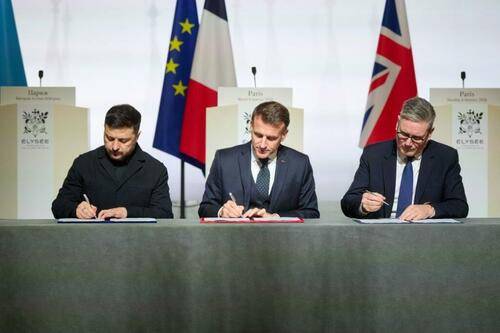
          The Kremlin's sharp rhetoric comes in direct response to a "declaration of intent" signed by the United Kingdom and France, which commits both nations to lead a future troop deployment in Ukraine.

          Figure 1: Ukrainian President Volodymyr Zelensky, French President Emmanuel Macron, and British Prime Minister Keir Starmer sign a 'declaration of intent' in Paris, establishing a framework for potential troop deployments.

          British Prime Minister Keir Starmer described the agreement as paving "the way for the legal framework, under which British, French and partner forces could operate on Ukrainian soil." However, the document currently lacks specific details on the composition or mission of such a force.

          "Coalition of the Willing" and US Involvement

          The declaration was finalized after a meeting in Paris between Starmer, French President Emmanuel Macron, and Ukrainian President Volodymyr Zelensky. The gathering was framed as a meeting of the "coalition of the willing"—a term for countries open to sending troops to Ukraine. US envoy Steve Witkoff and President Trump's son-in-law, Jared Kushner, were also in attendance.

          While the United States has not committed to sending its own troops, it has signaled a willingness to provide air support and other forms of assistance to European forces deployed in Ukraine. Zelensky's office confirmed this, stating that Ukraine "values the United States' readiness to support forces tasked with preventing a recurrence of Russian aggression."

          Peace Prospects Dim as Confrontation Looms

          Despite some calls within the EU for a greater focus on diplomacy, the path toward a negotiated settlement appears increasingly blocked. The likelihood of a lasting peace deal remains extremely low due to several key factors:

          • The continued insistence by Western powers on deploying troops to Ukraine.

          • The willingness of the U.S. to provide "NATO-style" security guarantees for the country.

          • President Zelensky's steadfast refusal to cede any Ukrainian territory to Russia.

          Risk Warnings and Disclaimers
          You understand and acknowledge that there is a high degree of risk involved in trading. Following any strategies or investment methods may lead to potential losses. The content on the site is provided by our contributors and analysts for information purposes only. You are solely responsible for determining whether any trading assets, securities, strategy, or any other product is suitable for investing based on your own investment objectives and financial situation.
          Add to Favorites
          Share

          Iran Protests: An Economic Crisis Pushes Regime to the Brink

          Isaac Bennett

          Economic

          Political

          Governments in the US, UK, and Japan have recently fallen over public anger at the rising cost of living. Now, events unfolding in Iran show that authoritarian regimes are not immune to the political fallout from soaring inflation.

          Protests ignited in Tehran late last month after the Iranian rial collapsed to a record low, driving up the price of essential goods. The demonstrations, fueled by an economic crisis deepened by global sanctions, have since spread nationwide. In response, Iran's religious and military leadership has threatened to crack down on what they label "rioters."

          The Islamic Republic is no stranger to public dissent. In 2022, women led massive demonstrations against their treatment following the death of a young woman in custody. The 2009 "Green Movement" protests over the disputed re-election of President Mahmoud Ahmadinejad were the most severe unrest since the 1979 revolution.

          Historically, Supreme Leader Ayatollah Ali Khamenei and the Islamic Revolutionary Guard Corps (IRGC) have suppressed these movements, often violently. This time, however, two crucial factors make the situation different, leading one expert to predict significant change is on the horizon.

          Dina Esfandiary, who heads Middle East geoeconomics for Bloomberg Economics, forecasts that the Islamic Republic "is unlikely to survive in its current form" through the end of 2026. While change seems inevitable, its ultimate form remains an open question.

          The Economic Collapse Fueling the Uprising

          The primary difference in today's protests is the dire state of Iran's economy. After years of sanctions, the financial situation has deteriorated dramatically.

          The rial has lost approximately 40% of its value, which has helped push year-on-year food inflation to an estimated 70%, according to Gavekal Research. This crisis is compounded by years of drought and poor water management that have crippled domestic food production.

          The economic pressures on ordinary Iranians and businesses include:

          • Protracted power cuts

          • A weak job market, with one estimate putting labor force participation at just 41%

          This challenging environment has caused many small and medium-sized businesses to collapse. Esfandiary notes that enterprises connected to the IRGC are attempting to fill the void, concentrating economic power.

          As poverty spreads, so does resentment toward the politically connected elite who remain insulated from the crisis. Tom Holland, deputy global research director at Gavekal, observed that "broad swathes of the population" have now united to demand political change. In a telling sign of eroding support, even Tehran's Grand Bazaar—a traditional bastion of conservative government backing—has been on strike for nearly two weeks.

          A Weaker Iran on the World Stage

          The second key factor is Iran's diminished geopolitical standing. The regime's influence in the region has been significantly weakened by several recent events. Last year, the ouster of Syrian President Bashar al Assad ended a crucial alliance for Tehran. Furthermore, Iran's allies Hezbollah in Lebanon and Hamas in Gaza have been bombed and degraded.

          More directly, a two-year exchange of fire between Israel and Iran culminated in a surprise American attack on Iran's key nuclear facilities last June. President Donald Trump has continued to threaten more action, including offering support to the protestors. Esfandiary argues that regardless of the credibility of Trump's threats, the Iranian government now faces a real possibility of external conflict.

          Four Scenarios for Iran's Future

          If the current system is indeed unsustainable, what might replace it? Esfandiary outlined four potential outcomes.

          She assigns a low probability to either an outright collapse of the government or a genuine reform program that addresses public grievances. This leaves two more likely scenarios: the system remains in place but with different leaders at the helm, or a military coup led by the IRGC.

          Another major variable is the health of the 86-year-old Supreme Leader, Ayatollah Ali Khamenei. His death would trigger only the second succession process since the Shah was overthrown in 1979.

          "The difference this time compared with last time is the IRGC is much more prevalent," Esfandiary said. "There is no scenario in which the next supreme leader doesn't work very closely with the IRGC."

          While these outcomes may not be promising for advocates of democracy, they could still lead to a form of rapprochement with Washington, marking a significant evolution in the complex history of US-Iran relations.

          To stay updated on all economic events of today, please check out our Economic calendar
          Risk Warnings and Disclaimers
          You understand and acknowledge that there is a high degree of risk involved in trading. Following any strategies or investment methods may lead to potential losses. The content on the site is provided by our contributors and analysts for information purposes only. You are solely responsible for determining whether any trading assets, securities, strategy, or any other product is suitable for investing based on your own investment objectives and financial situation.
          Add to Favorites
          Share

          Gold Hits New Highs: Why the Rally Could Continue

          Golden Gleam

          Economic

          Traders' Opinions

          Remarks of Officials

          Commodity

          Central Bank

          Political

          Data Interpretation

          Gold has surged back to record territory, erasing its late October losses and closing December at an all-time high. The precious metal capped its best year since 1979, fueled by a 64% rally in 2025 and an astonishing gain of nearly 140% since the beginning of 2023.

          According to strategists at UBS led by Giovanni Staunovo, the new records were driven by a confluence of factors, including "demand for real assets amid USD weakness, geopolitical tensions, institutional uncertainties, and low seasonal liquidity."

          The Fundamental Case for More Upside

          Despite the powerful rally, UBS analysts believe the underlying fundamentals support further gains for gold in 2026. They point to a significant drop in U.S. real interest rates, which represent the opportunity cost of holding non-yielding assets like gold. These rates are now at their lowest point since mid-2023, making gold a more attractive investment.

          With this backdrop, the bank remains bullish on gold and recently increased its March 2026 price target to $5,000 an ounce.

          "We think gold's role as a diversifier and hedge is undiminished," the strategists noted. "For investors with an affinity for the asset class, we think a mid-single-digit allocation to gold can fit in a diversified portfolio."

          Geopolitics and Structural Demand

          Recent world events have underscored gold's defensive appeal. UBS highlighted the market reaction following the unexpected U.S. military capture of Venezuelan President Nicolas Maduro. On the day of the news, gold and silver prices climbed 2.2% and 4.3% respectively, while Brent crude oil fell 1.3%.

          Beyond short-term shocks, long-term demand trends provide a solid foundation for prices.

          • Central Bank Buying: UBS expects central banks to purchase between 900 and 950 metric tons of gold in 2025, just shy of the previous year's record.

          • Global Demand: Total global gold demand is forecast to hit approximately 4,850 metric tons, which would be the highest level recorded since 2011.

          Rising Government Debt as a Tailwind

          Adding to the bullish outlook is the sharp rise in government debt across advanced economies. According to the International Monetary Fund, this debt is projected to reach about 110% of GDP this year, a steep increase from roughly 75% two decades ago. The IMF forecasts this figure will climb further to 118% by the end of the decade.

          This trend continues to reinforce interest in gold as a reliable store of value in an environment of increasing fiscal pressure.

          To stay updated on all economic events of today, please check out our Economic calendar
          Risk Warnings and Disclaimers
          You understand and acknowledge that there is a high degree of risk involved in trading. Following any strategies or investment methods may lead to potential losses. The content on the site is provided by our contributors and analysts for information purposes only. You are solely responsible for determining whether any trading assets, securities, strategy, or any other product is suitable for investing based on your own investment objectives and financial situation.
          Add to Favorites
          Share
          FastBull
          Copyright © 2026 FastBull Ltd

          728 RM B 7/F GEE LOK IND BLDG NO 34 HUNG TO RD KWUN TONG KLN HONG KONG

          TelegramInstagramTwitterfacebooklinkedin
          App Store Google Play Google Play
          Products
          Charts

          Chats

          Q&A with Experts
          Screeners
          Economic Calendar
          Data
          Tools
          Membership
          Features
          Function
          Markets
          Copy Trading
          Latest Signals
          Contests
          News
          Analysis
          24/7
          Columns
          Education
          Company
          Careers
          About Us
          Contact Us
          Advertising
          Help Center
          Feedback
          User Agreement
          Privacy Policy
          Personal Information Protection Statement
          Business

          White Label

          Data API

          Web Plug-ins

          Poster Maker

          Affiliate Program

          Risk Disclosure

          The risk of loss in trading financial instruments such as stocks, FX, commodities, futures, bonds, ETFs and crypto can be substantial. You may sustain a total loss of the funds that you deposit with your broker. Therefore, you should carefully consider whether such trading is suitable for you in light of your circumstances and financial resources.

          No decision to invest should be made without thoroughly conducting due diligence by yourself or consulting with your financial advisors. Our web content might not suit you since we don't know your financial conditions and investment needs. Our financial information might have latency or contain inaccuracy, so you should be fully responsible for any of your trading and investment decisions. The company will not be responsible for your capital loss.

          Without getting permission from the website, you are not allowed to copy the website's graphics, texts, or trademarks. Intellectual property rights in the content or data incorporated into this website belong to its providers and exchange merchants.

          Not Logged In

          Log in to access more features

          FastBull Membership

          Not yet

          Purchase

          Become a signal provider
          Help Center
          Customer Service
          Dark Mode
          Price Up/Down Colors

          Log In

          Sign Up

          Position
          Layout
          Fullscreen
          Default to Chart
          The chart page opens by default when you visit fastbull.com