Markets
News
Analysis
User
24/7
Economic Calendar
Education
Data
- Names
- Latest
- Prev



Signal Accounts for Members
All Signal Accounts
All Contests


U.K. Retail Sales MoM (SA) (Dec)A:--
F: --
P: --
France Manufacturing PMI Prelim (Jan)A:--
F: --
P: --
France Services PMI Prelim (Jan)A:--
F: --
P: --
France Composite PMI Prelim (SA) (Jan)A:--
F: --
P: --
Germany Manufacturing PMI Prelim (SA) (Jan)A:--
F: --
P: --
Germany Services PMI Prelim (SA) (Jan)A:--
F: --
P: --
Germany Composite PMI Prelim (SA) (Jan)A:--
F: --
P: --
Euro Zone Composite PMI Prelim (SA) (Jan)A:--
F: --
P: --
Euro Zone Manufacturing PMI Prelim (SA) (Jan)A:--
F: --
P: --
Euro Zone Services PMI Prelim (SA) (Jan)A:--
F: --
P: --
U.K. Composite PMI Prelim (Jan)A:--
F: --
P: --
U.K. Manufacturing PMI Prelim (Jan)A:--
F: --
P: --
U.K. Services PMI Prelim (Jan)A:--
F: --
P: --
Mexico Economic Activity Index YoY (Nov)A:--
F: --
P: --
Russia Trade Balance (Nov)A:--
F: --
P: --
Canada Core Retail Sales MoM (SA) (Nov)A:--
F: --
P: --
Canada Retail Sales MoM (SA) (Nov)A:--
F: --
U.S. IHS Markit Manufacturing PMI Prelim (SA) (Jan)A:--
F: --
P: --
U.S. IHS Markit Services PMI Prelim (SA) (Jan)A:--
F: --
P: --
U.S. IHS Markit Composite PMI Prelim (SA) (Jan)A:--
F: --
P: --
U.S. UMich Consumer Sentiment Index Final (Jan)A:--
F: --
P: --
U.S. UMich Current Economic Conditions Index Final (Jan)A:--
F: --
P: --
U.S. UMich Consumer Expectations Index Final (Jan)A:--
F: --
P: --
U.S. Conference Board Leading Economic Index MoM (Nov)A:--
F: --
P: --
U.S. Conference Board Coincident Economic Index MoM (Nov)A:--
F: --
P: --
U.S. Conference Board Lagging Economic Index MoM (Nov)A:--
F: --
P: --
U.S. UMich 1-Year-Ahead Inflation Expectations Final (Jan)A:--
F: --
P: --
U.S. Conference Board Leading Economic Index (Nov)A:--
F: --
P: --
U.S. Weekly Total Rig CountA:--
F: --
P: --
U.S. Weekly Total Oil Rig CountA:--
F: --
P: --
Germany Ifo Business Expectations Index (SA) (Jan)--
F: --
P: --
Germany IFO Business Climate Index (SA) (Jan)--
F: --
P: --
Germany Ifo Current Business Situation Index (SA) (Jan)--
F: --
P: --
U.S. Dallas Fed PCE Price Index YoY (Nov)--
F: --
P: --
Brazil Current Account (Dec)--
F: --
P: --
Mexico Unemployment Rate (Not SA) (Dec)A:--
F: --
P: --
Canada National Economic Confidence Index--
F: --
P: --
U.S. Non-Defense Capital Durable Goods Orders MoM (Excl. Aircraft) (Nov)--
F: --
P: --
U.S. Durable Goods Orders MoM (Excl. Defense) (SA) (Nov)--
F: --
P: --
U.S. Durable Goods Orders MoM (Excl.Transport) (Nov)--
F: --
P: --
U.S. Durable Goods Orders MoM (Nov)--
F: --
P: --
U.S. Chicago Fed National Activity Index (Nov)--
F: --
P: --
U.S. Dallas Fed New Orders Index (Jan)--
F: --
P: --
U.S. Dallas Fed General Business Activity Index (Jan)--
F: --
P: --
U.K. BRC Shop Price Index YoY (Jan)--
F: --
P: --
China, Mainland Industrial Profit YoY (YTD) (Dec)--
F: --
P: --
Mexico Trade Balance (Dec)--
F: --
P: --
U.S. S&P/CS 20-City Home Price Index YoY (Not SA) (Nov)--
F: --
P: --
U.S. S&P/CS 20-City Home Price Index MoM (SA) (Nov)--
F: --
P: --
U.S. FHFA House Price Index MoM (Nov)--
F: --
P: --
U.S. FHFA House Price Index (Nov)--
F: --
P: --
U.S. Richmond Fed Manufacturing Composite Index (Jan)--
F: --
P: --
U.S. Conference Board Present Situation Index (Jan)--
F: --
P: --
U.S. Conference Board Consumer Expectations Index (Jan)--
F: --
P: --
U.S. Richmond Fed Manufacturing Shipments Index (Jan)--
F: --
P: --
U.S. Richmond Fed Services Revenue Index (Jan)--
F: --
P: --
U.S. Conference Board Consumer Confidence Index (Jan)--
F: --
P: --
Australia RBA Trimmed Mean CPI YoY (Q4)--
F: --
P: --
Australia CPI YoY (Q4)--
F: --
P: --
Australia CPI QoQ (Q4)--
F: --
P: --


No matching data
Latest Views
Latest Views
Trending Topics
Top Columnists
Latest Update
White Label
Data API
Web Plug-ins
Affiliate Program
View All

No data
The number of Americans filing new applications for unemployment benefits rose moderately last week, suggesting that layoffs were relatively low at the end of 2025, though demand for labor remained sluggish.
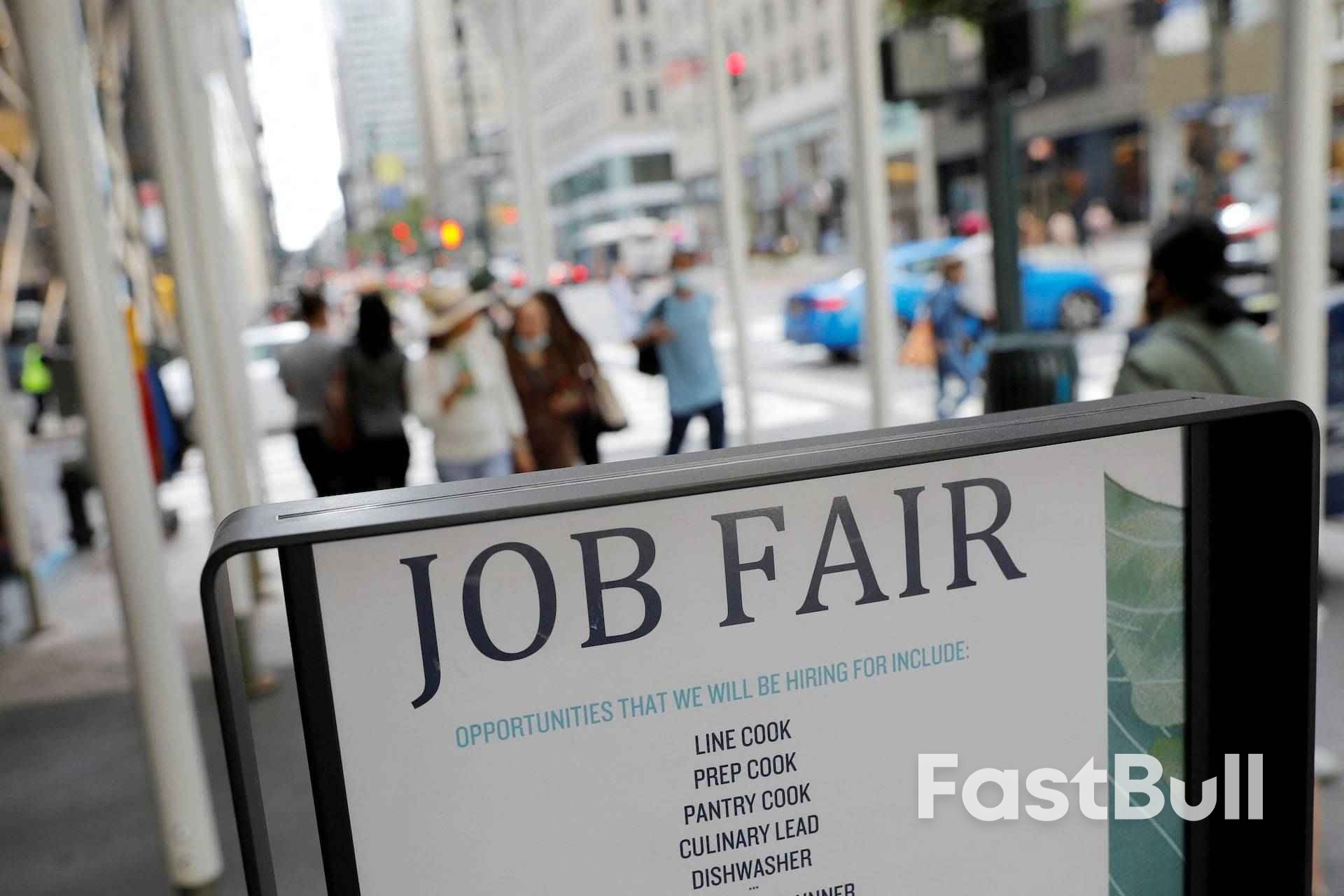
The number of Americans filing new applications for unemployment benefits rose moderately last week, suggesting that layoffs were relatively low at the end of 2025, though demand for labor remained sluggish.
Initial claims for state unemployment benefits rose 8,000 to a seasonally adjusted 208,000 for the week ended December 27, the Labor Department said on Thursday. Economists polled by Reuters had forecast 210,000 claims for the latest week.
Claims have been choppy in recent weeks amid challenges adjusting the data for seasonal fluctuations around the year-end holiday season. Through the volatility, layoffs have remained low by historical standards.
Employers have been reluctant to boost headcount amid tariff-related uncertainty and growing popularity of artificial intelligence, but they have not engaged in mass firings of workers, keeping the labor market in a state of paralysis.
While a separate report from global outplacement firm Challenger, Gray & Christmas showed layoffs announced by U.S.-based employers jumped 58% to a five-year high of 1.206 million in 2025, cost cutting by the federal government and technology companies accounted for the bulk of the planned reductions.
"Technology has been pivoting to both developing and implementing artificial intelligence much more quickly than any other industry," said Andy Challenger, chief revenue officer at Challenger, Gray & Christmas. "This coupled with over-hiring over the last decade created a wave of job loss in the industry."
Hiring plans dropped 34% to 507,647 last year, the lowest level since 2010. Lackluster hiring means more unemployed people are experiencing long bouts of joblessness.
The number of people receiving unemployment benefits after an initial week of aid, a proxy for hiring, increased 56,000 to a seasonally adjusted 1.914 million during the week ended December 20, the claims report showed.
The government reported on Wednesday that job openings dropped to a 14-month low in November. There were 0.91 job openings for every unemployed person in November, the lowest level seen since March 2021, and down from 0.97 in October.
The claims data have no bearing on December's employment report due to be released on Friday.
Nonfarm payrolls probably increased by 60,000 jobs last month after rising 64,000 in November, a Reuters survey of economists predicted. But the focus is likely to be on the unemployment rate, estimated to have slipped to 4.5% after accelerating to more than a four-year high of 4.6% in November.
The November unemployment rate was partially distorted by the 43-day federal government shutdown, which also prevented the collection of household data for October. The unemployment rate for October was not published for the first time since the government started tracking the series in 1948.
A record-setting minimum wage increase in Colombia is delivering a significant inflation shock, building a powerful case for higher interest rates, according to senior central banker Mauricio Villamizar.
The unexpected 23% salary hike for 2026, announced last month, is projected to add roughly two percentage points to consumer price inflation this year.
In a Wednesday interview in Bogota, Villamizar stated that the argument for tighter monetary policy was already compelling even before the wage decision.
"Even without the minimum wage hikes, you have all these market signals that warrant a more restrictive stance on monetary policy," he said. "We are at a point where it's very clear that we need to reinforce the contractionary stance further."
The central bank held its key interest rate at 9.25% during its December meeting, which occurred before the wage increase was finalized. Villamizar now sees the need for a rate hike that "reflects a clear tightening stance rather than a token adjustment."
Labor costs are set to climb even more steeply due to two other factors: a two-hour legal reduction in the work week and a new law that increases pay for evening and weekend work.
"If we were expecting inflation by the end of 2026 to be very close to 4%, now we would be expecting numbers closer to 6%," Villamizar explained. An outcome at that level would mark the sixth consecutive year that inflation has exceeded the central bank's target range of 2% to 4%.
Market sentiment is already pricing in aggressive policy moves. Traders in interest-rate swaps are anticipating a key rate of 11.5% by the end of the year.
Villamizar said he believes in "front-loading" interest rate increases. He argued that acting decisively now is preferable to delaying and being forced to keep borrowing costs "higher for longer," a scenario he believes would ultimately cause more damage to future economic growth.
Other significant inflation risks identified by Villamizar include:
• A wide fiscal deficit
• Strong domestic demand
• Higher natural gas prices
The 17% rally in the peso last year provided some relief, trimming about 1.5 percentage points from the headline inflation rate. However, Villamizar described this as a "tailwind" that is unlikely to be repeated in 2026. He added that a potential reversal of the peso's recent strength would further complicate the central bank's inflation fight.
The central bank's internal debate reflects a deep policy division. Minutes from the December meeting revealed that two board members initially pushed to begin a tightening cycle but ultimately agreed to hold rates after a tied vote.
This push for higher rates contrasts sharply with the position of President Gustavo Petro, who has repeatedly pressured the bank to lower borrowing costs to support economic growth. His finance minister, who sits on the board, joined two other members in voting for an interest rate reduction at the last meeting.
Canada's trade balance unexpectedly swung to a deficit in October, as a surge in computer and electronics imports overpowered a significant spike in gold exports to international markets.
Statistics Canada reported on Thursday that the country's merchandise trade shortfall reached C$583 million ($421 million). This figure, while a deficit, was considerably smaller than the C$1.5 billion gap that economists surveyed by Bloomberg had anticipated.
Overall imports climbed 3.4% in October, driven by record-high shipments of computers and computer components. According to the national statistics agency, this increase was led by processing units arriving from Ireland.
Other key drivers for the rise in imports included:
• Smartphones
• Precious metals
• Industrial machinery
In volume terms, stripping away price changes, imports rose by 2.6%.
Total exports increased by 2.1%, largely due to a boom in gold shipments, particularly to the United Kingdom. Exports of unwrought precious metals, including gold, silver, and platinum, jumped by 47.4% in October.
Statistics Canada noted, "Higher gold prices have largely been behind this recent growth, but volumes were also up, increasing by nearly 40% in October 2025 on a year-over-year basis."
In contrast, energy exports experienced an 8.4% decline. On a volume basis, total exports actually fell by 0.4%.
A significant trend highlighted in the data is the declining reliance on the U.S. market. The share of Canadian exports destined for the United States fell to 67.3%, the lowest level on record in data going back to 1997, excluding the pandemic period. Shipments to the U.S. dropped by another 3.4% in October, pulled down by falling exports of aircraft and gold.
This shift comes amid ongoing trade challenges. Under President Donald Trump, the U.S. has imposed major tariffs on Canadian goods, with autos, lumber, steel, and aluminum facing particularly heavy levies. The impact of this trade friction is visible in the year-to-date figures, with export volumes up just 0.8% in the first ten months of 2025 compared to the previous year.
While the US-Mexico-Canada Agreement (CUSMA) exempts many products from tariffs, economists estimate Canada still faces an effective tariff rate between 5% and 7%.
Financial markets showed a muted reaction to the report. The yield on the Canadian government two-year bond rose by about two basis points to 2.577%. The Canadian dollar, or loonie, was relatively stable at C$1.3865 per U.S. dollar. Traders continue to price in the expectation that the Bank of Canada will maintain its key interest rate at 2.25% for most of the year.
Looking ahead, Katherine Judge, an economist at Canadian Imperial Bank of Commerce, noted the persistent headwinds. In a report to investors, she stated, "Canadian exporters remain challenged by US tariffs and uncertainty around CUSMA renegotiations, and likely won't see a sustained improvement in activity until that uncertainty fades further into 2026."
The Bank of England reduced its benchmark interest rate to 3.75% on Thursday, but a deeply divided policy committee and cautious signals from the governor suggest the pace of future cuts may slow.
In a narrow 5-4 vote, the Monetary Policy Committee (MPC) enacted its sixth rate cut since August 2024, lowering the rate from 4%. The decision followed a significant drop in inflation and a new internal forecast indicating the UK economy is stagnating.
The four dissenting members voted to hold rates steady, citing concerns that inflation—still the highest among G7 economies—could remain stubbornly above target. The outcome aligned with analyst expectations, as a Reuters poll last week had largely predicted a 5-4 vote in favor of a reduction.
Governor Andrew Bailey shifted his stance to vote for the cut, pointing to projections that see inflation returning close to the BoE's 2% target by April or May of next year. This is nearly a year earlier than the central bank had forecast just last month.
Despite his vote, Bailey warned that inflation risks have not disappeared. "The calls will become closer, and I would expect the pace of cuts, therefore, to ease off at some point," he told broadcasters. "But I'm not going to judge exactly when that is, because it's too uncertain at the moment."
Among the policymakers who voted against the cut, Deputy Governor Clare Lombardelli stated she was more concerned about inflation proving stronger than expected. Chief Economist Huw Pill also saw a greater risk of inflation getting stuck at a high level. MPC member Catherine Mann described her decision to vote for a hold as "quite finely balanced."
The British pound strengthened against the U.S. dollar immediately following the announcement, though it later pared some of its gains.
In the bond market, interest-rate-sensitive two-year gilt yields rose by as much as 6 basis points. The move signaled that investors now see a slightly lower probability of more than one additional rate cut next year, revising their expectations based on the BoE's cautious tone.
The rate decision comes amid a challenging economic backdrop. While UK inflation fell sharply to 3.2% in data released Wednesday, it remains higher than in peer economies. Recent labor market data also showed signs of weakening, with the unemployment rate rising to its highest level since 2021.
The BoE has downgraded its economic forecast, now expecting the economy to stagnate in the final quarter of 2025, a revision from the 0.3% growth predicted last month.
Analysts largely believe more rate cuts are coming, but the path forward is debated.
• Deutsche Bank: Sanjay Raja, chief UK economist, maintained his forecast for two more quarter-point cuts in March and June 2026. However, he noted the possibility that the BoE could move more slowly.
• ING: Economists James Smith and Chris Turner said the decision was not a "game-changer," writing that "most officials at least—still think further cuts are likely." They also expect two more cuts next year.
The BoE also noted that the recent budget announced by finance minister Rachel Reeves is expected to lower inflation by about half a percentage point in 2026 but would add at most 0.2% to the size of the economy in 2026 and 2027. This monetary loosening places the BoE in a different position from other major central banks, as the U.S. Federal Reserve has signaled one more move in 2026, while the European Central Bank is likely finished with its cutting cycle.
U.S. labor productivity accelerated in the third quarter to its strongest pace in two years, providing fresh evidence that efficiency gains are helping to suppress inflationary pressures from wages. This trend highlights a key dynamic where businesses are generating more output per hour, potentially easing the path for the Federal Reserve.
Data from the Bureau of Labor Statistics revealed that productivity, measured as the output per hour from nonfarm employees, soared at a 4.9% annualized rate. This follows an upwardly revised 4.1% advance in the second quarter.
This surge in efficiency occurred even as the U.S. economy grew at its fastest rate in two years. Critically, the data also showed that unit labor costs—what companies pay employees to produce one unit of output—fell by 1.9%. This marked the first time since 2019 that unit labor costs have declined for two consecutive quarters.
The drop in employment costs points to a bifurcation in the economy, where solid economic growth coexists with a softening labor market.
Recent data on unemployment offers a glimpse into this dynamic. In the week ending January 3, initial applications for unemployment insurance rose by 8,000 to 208,000. Meanwhile, continuing claims, which track the number of people receiving ongoing benefits, increased to 1.91 million in the prior week. It is worth noting, however, that these figures are often volatile during this time of year.
The resurgence in productivity suggests companies are successfully mitigating the impact of higher duties on imported goods and finding ways to operate with leaner staffing. Technology plays a crucial role in this shift, enabling businesses to enhance worker efficiency without expanding their workforce.
Looking ahead, the current figures may foreshadow future productivity improvements. Significant investment in artificial intelligence, combined with capital spending incentives from President Donald Trump's "One Big Beautiful Bill Act," could continue to fuel these gains.
Federal Reserve officials can take comfort in sustained efficiency growth because it helps limit wage-driven inflation. With labor costs being the largest expense for many businesses, companies are increasingly turning to new technology and equipment to boost productivity.
As the job market has shifted into a lower gear, most economists anticipate that wage gains will cool. However, separate data released this week suggests the labor market may have gained some momentum toward the end of the year:
• Corporate Hiring: Hiring at U.S. companies rose by 41,000 in December, reversing a decline from the previous month, according to ADP Research.
• Services Sector: A key gauge of hiring in the services sector expanded in the last month at its fastest rate since February.
• Job Cuts & Hiring Plans: Figures from Challenger, Gray & Christmas showed that announced job cuts fell to their lowest level since July 2024. At the same time, hiring intentions for December were the strongest since 2022.
The government's official monthly jobs report, due on Friday, will provide further clarity on the state of the labor market.
Russia has unleashed a major wave of missile and drone attacks on Ukraine's energy infrastructure, cutting power and heat to hundreds of thousands of people as Kyiv and Washington work to advance a framework for peace.
The attacks targeted Dnipro, Ukraine's fourth-largest city, and the surrounding Dnipropetrovsk region, along with the neighboring Zaporizhzhia region.
According to DTEK, Ukraine's largest private energy company, the strikes caused power outages affecting approximately 600,000 households in the Dnipropetrovsk region. Ivan Fedorov, the governor of Zaporizhzhia, reported a total blackout across his region in a post on Telegram.
Ukrainian President Volodymyr Zelenskyy condemned the assault, stating it held no strategic value. "This is Russia's war specifically against our people, against life in Ukraine – an attempt to break Ukraine," he posted on X, emphasizing that diplomatic talks should not delay the delivery of air defense systems.
The assault comes as Zelenskyy's administration negotiates with the United States to end the full-scale invasion. This week, the Ukrainian president indicated his team is prepared to discuss the "most difficult issues" with envoys for President Donald Trump after a breakthrough on security guarantees for Kyiv.
Zelenskyy stated on Thursday that these guarantees are now "essentially ready" to be finalized with Trump, adding that he expects to meet him for discussions soon.
As Ukrainian, U.S., and European officials work to resolve remaining obstacles before presenting a deal to Moscow, negotiations are now expected to address the challenging issue of territorial control.
Russia has maintained its maximalist demands, insisting that Ukraine cede territory that Moscow claims but does not fully control. Another major point of contention is control over Europe's largest nuclear power plant, located in the Russian-occupied Zaporizhzhia region.
On Thursday, Russian Foreign Ministry spokeswoman Maria Zakharova criticized a separate security agreement reached in Paris by a "Coalition of the Willing," composed mostly of European allies. She described it as being "aimed not at achieving lasting peace and security, but at continuing the militarization, escalation and expansion of the conflict."
Zakharova also warned that the deployment of any Western military units in Ukraine would be considered a "direct threat" to Russia and a legitimate target for its military.
In a related development, U.S. Senator Lindsey Graham announced Thursday that Trump had "greenlit" a bipartisan sanctions bill targeting countries that purchase sanctioned Russian oil. The Republican lawmaker hopes for a vote on the bill as soon as next week.
While electricity was restored to the Zaporizhzhia region later on Thursday, the outages also disrupted heating and water supplies during a cold spell. Local authorities reported that emergency services are working to restore supplies to critical infrastructure, including hospitals. Emergency stations have been established to provide civilians with hot food and electricity from generators.
The mayor of Dnipro, Borys Filatov, described the situation in his city and its surroundings as complicated. President Zelenskyy said he has instructed Prime Minister Yuliia Svyrydenko to provide all necessary support to local authorities.
This latest wave of strikes follows a recent attack on the southern port city of Odesa, which resulted in at least one fatality.
White Label
Data API
Web Plug-ins
Poster Maker
Affiliate Program
The risk of loss in trading financial instruments such as stocks, FX, commodities, futures, bonds, ETFs and crypto can be substantial. You may sustain a total loss of the funds that you deposit with your broker. Therefore, you should carefully consider whether such trading is suitable for you in light of your circumstances and financial resources.
No decision to invest should be made without thoroughly conducting due diligence by yourself or consulting with your financial advisors. Our web content might not suit you since we don't know your financial conditions and investment needs. Our financial information might have latency or contain inaccuracy, so you should be fully responsible for any of your trading and investment decisions. The company will not be responsible for your capital loss.
Without getting permission from the website, you are not allowed to copy the website's graphics, texts, or trademarks. Intellectual property rights in the content or data incorporated into this website belong to its providers and exchange merchants.
Not Logged In
Log in to access more features
Log In
Sign Up