Markets
News
Analysis
User
24/7
Economic Calendar
Education
Data
- Names
- Latest
- Prev



Signal Accounts for Members
All Signal Accounts
All Contests


U.S. Dallas Fed New Orders Index (Jan)A:--
F: --
P: --
U.S. 2-Year Note Auction Avg. YieldA:--
F: --
P: --
U.K. BRC Shop Price Index YoY (Jan)A:--
F: --
P: --
China, Mainland Industrial Profit YoY (YTD) (Dec)A:--
F: --
P: --
Germany 2-Year Schatz Auction Avg. YieldA:--
F: --
P: --
Mexico Trade Balance (Dec)A:--
F: --
P: --
U.S. Weekly Redbook Index YoYA:--
F: --
P: --
U.S. S&P/CS 20-City Home Price Index YoY (Not SA) (Nov)A:--
F: --
P: --
U.S. S&P/CS 20-City Home Price Index MoM (SA) (Nov)A:--
F: --
U.S. FHFA House Price Index MoM (Nov)A:--
F: --
P: --
U.S. FHFA House Price Index (Nov)A:--
F: --
P: --
U.S. FHFA House Price Index YoY (Nov)A:--
F: --
U.S. S&P/CS 10-City Home Price Index YoY (Nov)A:--
F: --
P: --
U.S. S&P/CS 10-City Home Price Index MoM (Not SA) (Nov)A:--
F: --
P: --
U.S. S&P/CS 20-City Home Price Index (Not SA) (Nov)A:--
F: --
P: --
U.S. S&P/CS 20-City Home Price Index MoM (Not SA) (Nov)A:--
F: --
P: --
U.S. Richmond Fed Manufacturing Composite Index (Jan)A:--
F: --
P: --
U.S. Conference Board Present Situation Index (Jan)A:--
F: --
P: --
U.S. Conference Board Consumer Expectations Index (Jan)A:--
F: --
P: --
U.S. Richmond Fed Manufacturing Shipments Index (Jan)A:--
F: --
P: --
U.S. Richmond Fed Services Revenue Index (Jan)A:--
F: --
P: --
U.S. Conference Board Consumer Confidence Index (Jan)A:--
F: --
U.S. 5-Year Note Auction Avg. YieldA:--
F: --
P: --
U.S. API Weekly Refined Oil StocksA:--
F: --
P: --
U.S. API Weekly Crude Oil StocksA:--
F: --
P: --
U.S. API Weekly Gasoline StocksA:--
F: --
P: --
U.S. API Weekly Cushing Crude Oil StocksA:--
F: --
P: --
Australia RBA Trimmed Mean CPI YoY (Q4)A:--
F: --
P: --
Australia CPI YoY (Q4)A:--
F: --
P: --
Australia CPI QoQ (Q4)A:--
F: --
P: --
Germany GfK Consumer Confidence Index (SA) (Feb)--
F: --
P: --
Germany 10-Year Bund Auction Avg. Yield--
F: --
P: --
India Industrial Production Index YoY (Dec)--
F: --
P: --
India Manufacturing Output MoM (Dec)--
F: --
P: --
U.S. MBA Mortgage Application Activity Index WoW--
F: --
P: --
Canada Overnight Target Rate--
F: --
P: --
BOC Monetary Policy Report
U.S. EIA Weekly Crude Stocks Change--
F: --
P: --
U.S. EIA Weekly Cushing, Oklahoma Crude Oil Stocks Change--
F: --
P: --
U.S. EIA Weekly Crude Demand Projected by Production--
F: --
P: --
U.S. EIA Weekly Crude Oil Imports Changes--
F: --
P: --
U.S. EIA Weekly Heating Oil Stock Changes--
F: --
P: --
U.S. EIA Weekly Gasoline Stocks Change--
F: --
P: --
BOC Press Conference
Russia PPI MoM (Dec)--
F: --
P: --
Russia PPI YoY (Dec)--
F: --
P: --
U.S. Target Federal Funds Rate Lower Limit (Overnight Reverse Repo Rate)--
F: --
P: --
U.S. Interest Rate On Reserve Balances--
F: --
P: --
U.S. Federal Funds Rate Target--
F: --
P: --
U.S. Target Federal Funds Rate Upper Limit (Excess Reserves Ratio)--
F: --
P: --
FOMC Statement
FOMC Press Conference
Brazil Selic Interest Rate--
F: --
P: --
Australia Import Price Index YoY (Q4)--
F: --
P: --
Japan Household Consumer Confidence Index (Jan)--
F: --
P: --
Turkey Economic Sentiment Indicator (Jan)--
F: --
P: --
Euro Zone M3 Money Supply (SA) (Dec)--
F: --
P: --
Euro Zone Private Sector Credit YoY (Dec)--
F: --
P: --
Euro Zone M3 Money Supply YoY (Dec)--
F: --
P: --
Euro Zone 3-Month M3 Money Supply YoY (Dec)--
F: --
P: --
South Africa PPI YoY (Dec)--
F: --
P: --


No matching data
Latest Views
Latest Views
Trending Topics
Top Columnists
Latest Update
White Label
Data API
Web Plug-ins
Affiliate Program
View All

No data
Trump on Monday declared his intent to hike US levies on goods from South Korea to 25% from the 15% current rate.
The United States is not yet prepared to lift tariffs on Indian goods, as India must first do more to address Washington's concerns over its continued purchases of Russian oil.
According to US Trade Representative Jamieson Greer, a deal to provide tariff relief remains distant until India further reduces its reliance on discounted Russian crude.
In a Fox Business interview on Tuesday, Greer acknowledged that New Delhi has "made a lot of progress" in curbing its intake of Russian crude. However, he noted that completely weaning off these supplies is challenging for India because "they like the discount that you get from Russian oil."
This dynamic is the central sticking point in ongoing trade negotiations. The 50% tariff, imposed by President Donald Trump last year, was a direct response to the view that India's oil purchases were helping to finance Russia's war effort in Ukraine.
"I am in frequent contact with my counterpart in India. I have a great working relationship with him, but they still have a ways to go on this point," Greer said, signaling that current efforts are insufficient.
Analysts project that discounted Russian crude will continue to represent a significant portion of India's oil imports, a trend that could persist well into 2026.
While talks with the U.S. have stalled, India has successfully finalized a long-awaited free-trade agreement with the European Union. The pact, which was two decades in the making, is widely seen as a strategic move to counter aggressive American trade policies.
Greer commented on the new agreement, stating that India appears to be the clear winner.
"I think India comes out on top on this. Frankly, they have more market access into Europe. It sounds like they have some additional immigration rights," he said Tuesday.
He added that India is positioned for a "heyday" with the deal, leveraging its low-cost labor. Greer contrasted the EU's approach with Washington's, noting, "it looks like the EU is doubling down on globalization when we're trying to fix some of the problems with globalization here in the US."
The Japanese yen surged to the 152 level against the U.S. dollar on Tuesday, reaching its strongest point since November 7. The move was driven by comments from Japan's finance minister that fueled speculation of a potential joint currency intervention with the United States.
Speaking to reporters after a virtual meeting of G7 finance ministers, Japanese Finance Minister Satsuki Katayama stated, "We will take appropriate action as necessary in close cooperation with U.S. authorities."
This statement was interpreted by traders as a signal that officials in both countries might be preparing to step in to support the yen and prevent it from weakening further.
Adding to the speculation were reports from the previous week that the Federal Reserve had conducted a "rate check"—a practice often seen as a preliminary step before a foreign exchange intervention. However, when asked about these checks on Monday, Japan's top currency diplomat, Atsushi Mimura, said he had "no intention of answering."
The view from the White House presented a different perspective. When asked if he was concerned about a weakening dollar, U.S. President Donald Trump told reporters in Iowa, "No, I think it's great." He added that he wanted the dollar "to seek its own level, which is the fair thing to do."
The yen's advance comes amid a period of broad weakness for the U.S. dollar. The dollar index, which measures its value against a basket of other currencies, has fallen to its lowest level since February 2022.
Several factors have contributed to the dollar's decline, including:
• The Trump administration's stated desire for the Federal Reserve to lower interest rates.
• Ongoing geopolitical risks.
• Friction related to trade tariffs.
The sentiment against the dollar is also reflected in market positioning. According to a January Bank of America survey of approximately 200 fund managers, the most crowded trades were being long gold, buying tech stocks, and shorting the U.S. dollar.
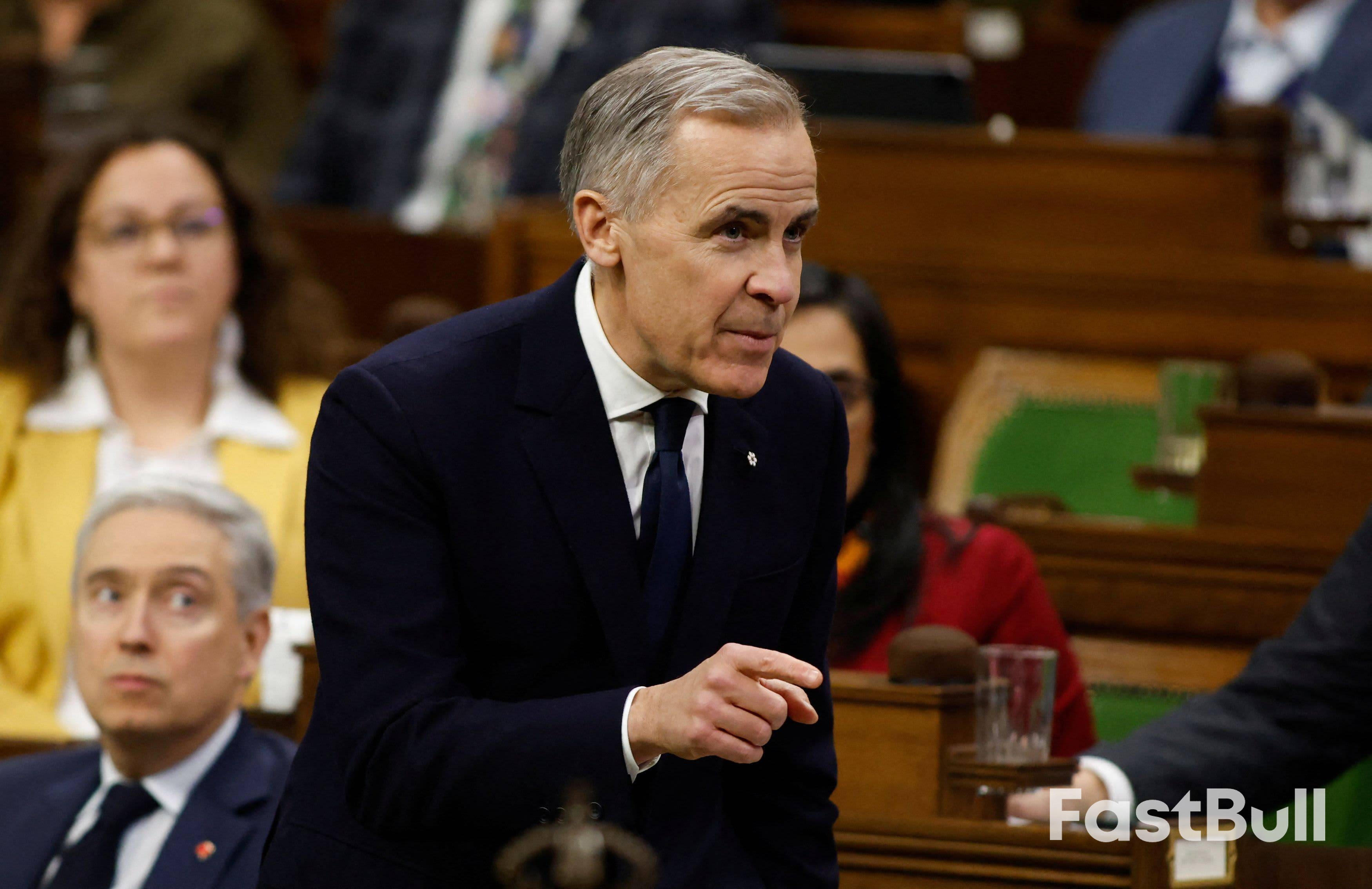
Canadian Prime Minister Mark Carney on Tuesday forcefully denied claims from the U.S. Treasury Secretary that he had backtracked on critical remarks about the Trump administration’s global economic policies.
Speaking to reporters in Ottawa, Carney insisted he stood by his recent speech in Davos, Switzerland, where he had challenged the current U.S.-led world order.
"To be absolutely clear, and I said this to the president, I meant what I said in Davos," Carney stated, directly refuting comments made by Treasury Secretary Scott Bessent.

The dispute stems from Carney's address to the World Economic Forum, which earned a rare standing ovation. In his speech, the Prime Minister declared that the established global order was in the "midst of a rupture" and warned that the "bargain" of American hegemony "no longer works."
He added that "great powers" have exploited and weaponized economic tools like tariffs—a pointed critique delivered as President Donald Trump was pressuring Europe over the potential U.S. purchase of Greenland from Denmark.
Carney explained on Tuesday that his speech reflected "that Canada was the first country to understand the change in U.S. trade policy that he [Trump] had initiated, and we're responding to that."
The U.S. administration's response was swift and critical. In a Fox News interview on Monday, Bessent claimed that during a phone call with Trump earlier that day, Carney was "very aggressively walking back some of the unfortunate remarks he made at Davos."
President Trump also criticized the Canadian leader, accusing him and his country of being ungrateful. The White House followed by rescinding Canada's invitation to join the "Board of Peace."
Over the weekend, the situation escalated when Trump threatened to impose a 100% tariff on Canadian imports if Ottawa proceeds with a trade deal with China.
Carney confirmed the call with Trump took place, noting that the U.S. president had initiated it. He said they discussed several topics, including the war in Ukraine and "Arctic security," a reference to the Greenland controversy.
However, he firmly rejected the characterization of the conversation. When asked directly if he had walked back his Davos remarks, Carney gave a simple answer: "No."
He said the context of the call was to highlight "what Canada is doing positively to build new partnerships around the world," including "our arrangement with China."
In response to the Trump administration's unpredictable use of tariffs, Canada and other U.S. trading partners have been actively forging new economic ties with other major economies. Carney told reporters he boasted to Trump that Canada had secured "12 new deals on four continents in six months," adding that the president "was impressed."
Despite the tariff threats, Carney stated on Sunday that Canada does not currently intend to pursue a full free trade agreement with China. The U.S. Treasury Department has not yet responded to requests for comment on Carney’s latest remarks.
The Brazilian real surged to its strongest level since May 2024 on Tuesday, closing at R5.20 against the US dollar. The currency's impressive performance marks a nearly 14% appreciation over the past 12 months, driven by a combination of domestic policy and a global decline in the dollar.
The real has been on a sharp upward trend since December 23, when it traded near R5.59 to the dollar.
A key driver behind the real's strength is the central bank's firm monetary policy. According to Milene Dellatore, a director at Brazilian prop firm MIDE, the bank's decision to maintain its target rate at 15% since last June has been a major factor.
Policymakers are expected to hold rates steady at their meeting on Wednesday, with potential cuts not anticipated until March. This high-rate environment makes Brazilian assets attractive to global investors.
Further supporting the currency are two additional factors:
• Cooling Inflation: Brazil's headline inflation slowed to an annual rate of 4.26% in December, coming in lower than market forecasts.
• Institutional Stability: A widespread perception of short-term stability in the country is creating a favorable moment for global capital to flow into Brazil, Dellatore noted.
The real's rally is also a story about the US dollar's global retreat. The US Dollar Index (DXY), which measures the greenback against six major currencies, fell for a fourth straight session on Tuesday, hitting its lowest point since February 2022.
Several issues in the United States are weighing on its currency. Dellatore pointed to political uncertainty, including what she described as "President Donald Trump's more volatile rhetoric," as a source of downward pressure.
Fears of a potential US government shutdown have also contributed to the dollar's weakness this week. As a result, Dellatore added, investors are actively seeking opportunities in emerging markets and other assets outside the US.
Investors are now closely watching the outcomes of monetary policy meetings in both countries. The US Federal Reserve is set to conclude its first meeting of the year on Wednesday, where it is widely expected to leave the federal funds rate unchanged. Brazil's central bank is also anticipated to hold its policy rate steady, reinforcing the current dynamics that favor the real.
The Trump administration has put South Korea on notice, threatening to hike tariffs to 25% unless Seoul takes immediate action to implement a six-month-old trade agreement. According to U.S. officials, the move stems from growing frustration in Washington over perceived delays and broader tensions involving digital service regulations.
President Donald Trump’s latest tariff threat brings to a head simmering disputes in the U.S.-South Korea trade relationship. While the administration insists the tariff issue is separate from other grievances, friction over Seoul's handling of U.S. technology firms has amplified the discord.
On Monday, Trump announced his intention to raise tariffs on South Korean goods from the current 15% rate to 25%. Although the declaration was made on social media, the administration has not yet formally implemented the increase, leaving room for negotiation.
The primary driver behind the tariff threat is the perception that South Korea has failed to uphold its side of the trade pact announced last July. People familiar with the matter say Washington feels Seoul is dragging its feet on ratifying the deal, prompting the U.S. to reconsider its own commitments.
U.S. Trade Representative Jamieson Greer confirmed he spoke with South Korean officials Tuesday morning and said a team from Seoul would visit Washington for further talks later in the week.
In a Fox Business interview, Greer laid out Washington's specific complaints. "They haven't been able to get a bill through to do the investment, they've introduced new laws on digital services, they haven't done what they needed to do on agriculture and industry," he said. "And so it's hard to continue to hold up our end of the bargain while they have not moved forward swiftly enough on their end."
A South Korean bill to formalize investment commitments under the deal was introduced last November. However, its passage has stalled due to domestic concerns over capital outflows, currency volatility, and the project selection process.
While officials maintain that digital regulations are not the direct cause of the tariff threat, they remain a significant point of contention.
Last week, Vice President JD Vance met with South Korean Prime Minister Kim Min-seok in Washington and reportedly warned him against penalizing American tech companies. A key example cited was Coupang Inc., a popular U.S.-based e-commerce retailer currently under scrutiny in South Korea for a data breach.
The Coupang case has intensified scrutiny. The company disclosed a data breach in November that impacted roughly two-thirds of South Korea's population. In response, a major shareholder, Greenoaks Capital Partners LLC, petitioned the Office of the U.S. Trade Representative to launch a formal trade probe. Separately, U.S.-based shareholders, including Greenoaks and Altimeter Capital Management LP, have submitted a notice of intent under the Korea–U.S. free trade agreement.
During a meeting with U.S. lawmakers, Prime Minister Kim insisted that his government was not discriminating against Coupang. A White House official noted that concerns over the treatment of U.S. digital service providers predate and extend beyond the ongoing Coupang case.
This episode fits a familiar pattern in the Trump administration's approach to trade. The president has frequently used tariff threats to pressure partners, creating widespread uncertainty. Similar threats have recently been aimed at Europe, Canada, and nations doing business with Iran.
U.S. officials have openly criticized other nations for what they see as slow implementation of trade promises. Greer has expressed frustration with the European Union, and Indonesia has also faced criticism. In contrast, a White House official highlighted Japan as a country that is moving more quickly to deliver on its trade commitments.
However, many of Trump's tariff threats do not come to full fruition. Data compiled by Bloomberg shows that only about 27% of such threats made since late 2024 were fully executed.
Despite the stern warning, President Trump has suggested a resolution is possible. "We'll work something out. We'll work something out with South Korea," he told reporters on Tuesday.
The stakes are high. If the 25% tariffs are implemented, they could have significant consequences for major South Korean exporters. For example, Hyundai Motor Co. shipped 1.1 million vehicles to the United States in 2024. The situation remains fluid as both sides prepare for another round of discussions, with the global markets watching closely.
The Federal Reserve’s recent balance sheet operations are showing early signs of success in stabilizing critical funding markets, while in Europe, Germany is rewriting its debt issuance strategy with a blockbuster bond sale.

Since restarting its bills-buying program, the Federal Reserve has added approximately $65 billion in assets, bringing its total holdings of Treasury bills to nearly $260 billion. During the same period, about $20 billion in mortgage-backed securities (MBS) rolled off its balance sheet. Coupled with a rise in government bond holdings, the Fed's net securities holdings have increased by $55 billion since mid-December 2025.
This expansion has been partially offset by a rise in the Treasury's cash balance due to tax inflows, leaving bank reserves steady at around $3 trillion.
The primary goal of this initiative—to calm the repo market—appears to be succeeding. Conditions have eased, addressing the perceptions of liquidity tightness that prompted the Fed to act. However, the effective federal funds rate remains elevated. It now stands 14 basis points above the Fed's floor, compared to 8 basis points previously.
While a small margin, this upward drift is an irritation for the Fed and was a key trigger for the bills-buying program. The effective funds rate is currently just 1 basis point below the interest rate paid on excess reserves, which should theoretically function as a ceiling.
Despite this, the Fed will likely view the overall outcome as positive given the net calming of repo market conditions. No further action is expected at this time. The strategy will continue to focus on increasing bills holdings while reducing MBS holdings and maintaining its government bond portfolio, which accounts for just over half of the Fed's total $6.2 trillion in assets.
Germany successfully sold €6.5 billion of a new 20-year bond, attracting a near-record order book of €73 billion. This is the first time Germany has launched a new benchmark at this maturity.
The move is part of a broader strategic shift for two key reasons:
• To spread out increasing funding requirements.
• To adapt to the Dutch pension reform, which is anticipated to reduce structural demand for longer 30-year bonds.
This rethink of issuance strategy is not unique to Germany; other countries, including the Netherlands and Slovenia, are making similar adjustments. This trend should help ultra-long bonds move away from their cheap valuation relative to swaps as supply and demand find a better balance. However, the ultra-long end of the curve could still resteepen as pension funds continue to adjust their hedging strategies.
Markets are looking ahead to a week of key central bank communications and debt sales.
The main event is the Federal Reserve's monetary policy decision. While no change in policy is expected, the market will focus intensely on the accompanying communication, any signs of dissent among officials, and commentary around the Fed's independence. President Trump's upcoming selection of a new Fed Chair adds another layer of scrutiny.
In the eurozone, the data calendar is light. A presentation by ECB official Isabel Schnabel during the European evening is the only event of potential note.
In primary debt markets, several auctions are scheduled:
• Germany: Selling €6 billion in 10-year Bunds.
• Portugal: Auctioning up to €1.25 billion in 5-year and 10-year bonds.
• United States: The Treasury will sell $30 billion in new 2-year floating rate notes.
White Label
Data API
Web Plug-ins
Poster Maker
Affiliate Program
The risk of loss in trading financial instruments such as stocks, FX, commodities, futures, bonds, ETFs and crypto can be substantial. You may sustain a total loss of the funds that you deposit with your broker. Therefore, you should carefully consider whether such trading is suitable for you in light of your circumstances and financial resources.
No decision to invest should be made without thoroughly conducting due diligence by yourself or consulting with your financial advisors. Our web content might not suit you since we don't know your financial conditions and investment needs. Our financial information might have latency or contain inaccuracy, so you should be fully responsible for any of your trading and investment decisions. The company will not be responsible for your capital loss.
Without getting permission from the website, you are not allowed to copy the website's graphics, texts, or trademarks. Intellectual property rights in the content or data incorporated into this website belong to its providers and exchange merchants.
Not Logged In
Log in to access more features
Log In
Sign Up