

Markets
News
Analysis
User
24/7
Economic Calendar
Education
Data
- Names
- Latest
- Prev



Signal Accounts for Members
All Signal Accounts
All Contests
 U.K. Input PPI MoM (Not SA) (Dec)
A:--
F: --
U.K. Core CPI MoM (Dec)A:--
F: --
P: --
U.K. Retail Prices Index MoM (Dec)A:--
F: --
P: --
U.K. Input PPI YoY (Not SA) (Dec)A:--
F: --
P: --
U.K. CPI YoY (Dec)A:--
F: --
P: --
U.K. Output PPI MoM (Not SA) (Dec)A:--
F: --
P: --
U.K. Output PPI YoY (Not SA) (Dec)A:--
F: --
P: --
U.K. Core Retail Prices Index YoY (Dec)A:--
F: --
P: --
U.K. Core CPI YoY (Dec)A:--
F: --
P: --
U.K. Retail Prices Index YoY (Dec)A:--
F: --
P: --
 Indonesia 7-Day Reverse Repo Rate
A:--
F: --
P: --
Indonesia Loan Growth YoY (Dec)A:--
F: --
P: --
Indonesia Deposit Facility Rate (Jan)A:--
F: --
P: --
Indonesia Lending Facility Rate (Jan)A:--
F: --
P: --
 South Africa Core CPI YoY (Dec)
A:--
F: --
P: --
South Africa CPI YoY (Dec)A:--
F: --
P: --
 IEA Oil Market Report U.K. CBI Industrial Output Expectations (Jan)
A:--
F: --
U.K. CBI Industrial Prices Expectations (Jan)A:--
F: --
P: --
South Africa Retail Sales YoY (Nov)A:--
F: --
P: --
U.K. CBI Industrial Trends - Orders (Jan)A:--
F: --
P: --
 Mexico Retail Sales MoM (Nov)
A:--
F: --
P: --
 U.S. MBA Mortgage Application Activity Index WoW
A:--
F: --
P: --
 Canada Industrial Product Price Index YoY (Dec)
A:--
F: --
Canada Industrial Product Price Index MoM (Dec)A:--
F: --
U.S. Weekly Redbook Index YoYA:--
F: --
P: --
U.S. Pending Home Sales Index YoY (Dec)A:--
F: --
P: --
U.S. Pending Home Sales Index MoM (SA) (Dec)A:--
F: --
P: --
U.S. Construction Spending MoM (Oct)A:--
F: --
U.S. Pending Home Sales Index (Dec)A:--
F: --
P: --
U.S. API Weekly Refined Oil Stocks--
F: --
P: --
U.S. API Weekly Gasoline Stocks--
F: --
P: --
U.S. API Weekly Cushing Crude Oil Stocks--
F: --
P: --
U.S. API Weekly Crude Oil Stocks--
F: --
P: --
 South Korea GDP Prelim YoY (SA) (Q4)
--
F: --
P: --
South Korea GDP Prelim QoQ (SA) (Q4)--
F: --
P: --
 Japan Imports YoY (Dec)
--
F: --
P: --
Japan Exports YoY (Dec)--
F: --
P: --
Japan Goods Trade Balance (SA) (Dec)--
F: --
P: --
Japan Trade Balance (Not SA) (Dec)--
F: --
 Australia Employment (Dec)
--
F: --
P: --
Australia Labor Force Participation Rate (SA) (Dec)--
F: --
P: --
Australia Unemployment Rate (SA) (Dec)--
F: --
P: --
Australia Full-time Employment (SA) (Dec)--
F: --
P: --
 Turkey Consumer Confidence Index (Jan)
--
F: --
P: --
Turkey Capacity Utilization (Jan)--
F: --
P: --
Turkey Late Liquidity Window Rate (LON) (Jan)--
F: --
P: --
Turkey Overnight Lending Rate (O/N) (Jan)--
F: --
P: --
Turkey 1-Week Repo Rate--
F: --
P: --
U.K. CBI Distributive Trades (Jan)--
F: --
P: --
U.K. CBI Retail Sales Expectations Index (Jan)--
F: --
P: --
U.S. Weekly Continued Jobless Claims (SA)--
F: --
P: --
U.S. Initial Jobless Claims 4-Week Avg. (SA)--
F: --
P: --
U.S. Real Personal Consumption Expenditures Final QoQ (Q3)--
F: --
P: --
Canada New Housing Price Index MoM (Dec)--
F: --
P: --
U.S. Weekly Initial Jobless Claims (SA)--
F: --
P: --
U.S. Real GDP Annualized QoQ Final (Q3)--
F: --
P: --
U.S. PCE Price Index Final QoQ (AR) (Q3)--
F: --
P: --
U.S. Personal Outlays MoM (SA) (Nov)--
F: --
P: --
U.S. Core PCE Price Index YoY (Nov)--
F: --
P: --










No matching data

Latest Views
Latest Views
Trending Topics
Top Columnists
Latest Update
White Label
Data API
Web Plug-ins
Affiliate Program
View All
No data
The US projects a 30% jump in Venezuela's oil output, but industry skepticism clouds the ambitious recovery plan.
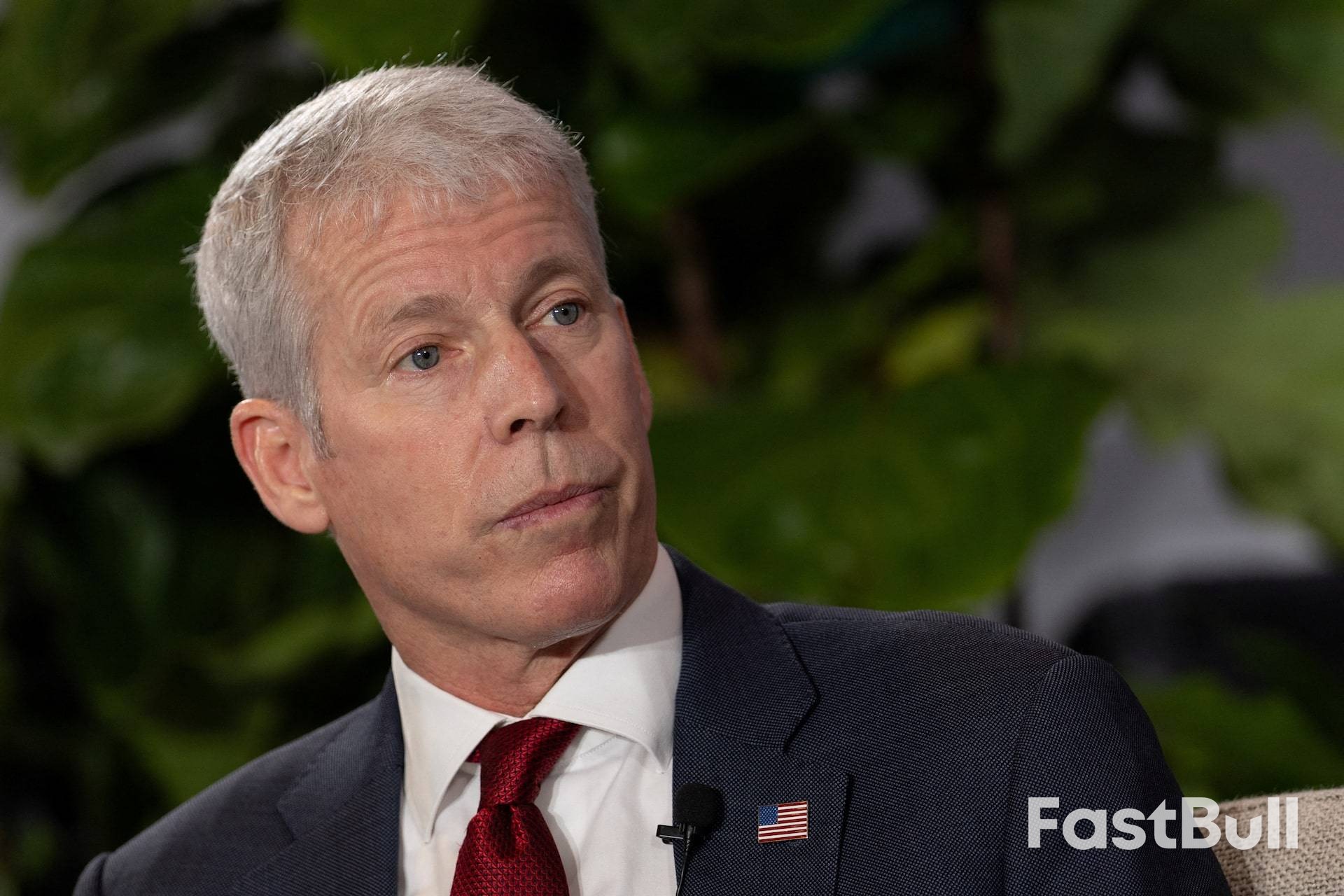
U.S. Energy Secretary Chris Wright has told oil executives that Venezuela's crude production could increase by 30% in the short- to medium-term. Speaking at a private meeting in Davos, Switzerland, he projected output could rise from its current level of 900,000 barrels per day (bpd), according to three executives who attended.
The closed-door discussion took place on the sidelines of the World Economic Forum and follows the recent capture of Venezuelan leader Nicolas Maduro by U.S. forces.
Reviving output from Venezuela, which holds the world's largest oil reserves, is now a primary goal for U.S. President Donald Trump. His administration plans to control the country's oil resources indefinitely through a $100 billion plan aimed at rebuilding its oil industry.
On Tuesday, Trump stated that his administration has already taken 50 million barrels of oil out of Venezuela and is selling some of it on the open market.
Earlier this month, Trump met with over 15 oil executives at the White House. During that meeting, Exxon CEO Darren Woods noted that Venezuela would need to amend its laws before it could become an attractive destination for investment.
Despite the administration's goals, oil analysts and industry executives remain skeptical about a rapid recovery for Venezuela's oil sector. They argue that the country's degraded infrastructure requires billions of dollars and several years to rebuild after a long period of under-investment and sanctions.
Venezuela's production capacity has collapsed over the decades. In the 1970s, the nation pumped 3.5 million bpd, accounting for 7% of global supply. Today, its output represents just 1% of the world's total.
Furthermore, Venezuela's oil reserves are among the most expensive to develop globally. Its crude is exceptionally thick and heavy, demanding specialized equipment for extraction, transportation, and refining into usable fuels.


Burberry (BRBY.L) beat expectations for sales growth in the key holiday quarter as its marketing push featuring British celebrities resonated with shoppers and helped attract more Gen Z consumers in China, sending its shares up more than 4%.
Joshua Schulman, who became CEO in July 2024 as sales were sliding, is leading a turnaround focused on trench coats, scarves and the brand's British heritage, while cutting costs after reducing the workforce by 20% last year.
"In China in particular we were really driven by the growth in Gen Z, which we had called out in the previous quarter, but really accelerated as we came into the peak of outerwear and scarf season," Schulman said on a call with journalists.
The company's shares, which gained about 29% in 2025, were up 4.4% by 0940 GMT.
Burberry's comparable store sales rose 3% in the three months to December 27, beating analysts' expectation of 2% growth, according to a company-compiled consensus.
Sales in China rose 6% on a comparable basis as the brand continued its recovery in the crucial luxury market, led by "double-digit" growth in sales to Gen Z customers.
Burberry has staged new marketing efforts in China including a branded ice rink with an outerwear and scarf store in a mall in Beijing, and a pop-up shop on a ski slope in Chongli, complete with a ski lift wrapped in Burberry check.
"We've increased localisation of the storytelling and we've introduced new influencers and brand ambassadors (in China)," said Schulman.
Burberry launched a campaign ahead of Chinese Lunar New Year to mark the Year of the Horse, an opportunity for the brand whose logo is an equestrian knight on horseback.
J.P. Morgan analysts said Burberry's update could be received positively by investors in the wider luxury sector, "providing relief on the state of the luxury consumer, in China in particular."
Luxury brands have been struggling for the past two years as consumers slashed spending on handbags and designer clothes, driving sales down across the industry after a post-pandemic boom.
Beyond China, Schulman said Burberry was attracting more younger shoppers globally, particularly to its scarves.
Overall, the company said its markdown period was shorter and "shallower" than last year, with more customers willing to pay full price.
"Traffic (in stores) is still quite challenging everywhere, but we are really, really encouraged by what we're seeing in terms of conversion - strong conversion everywhere, so customers coming in and certainly liking what they're seeing," said Burberry's chief financial officer Kate Ferry on a call with analysts.
Burberry has taken several steps to lure shoppers back, including tightening the link between design decisions and commercial teams, and holiday campaigns with celebrities such as British actor Olivia Colman, who starred as Queen Elizabeth II in "The Crown."
Burberry said it expects full-year adjusted operating profit to be in line with the consensus forecast of 149 million pounds ($200 million).
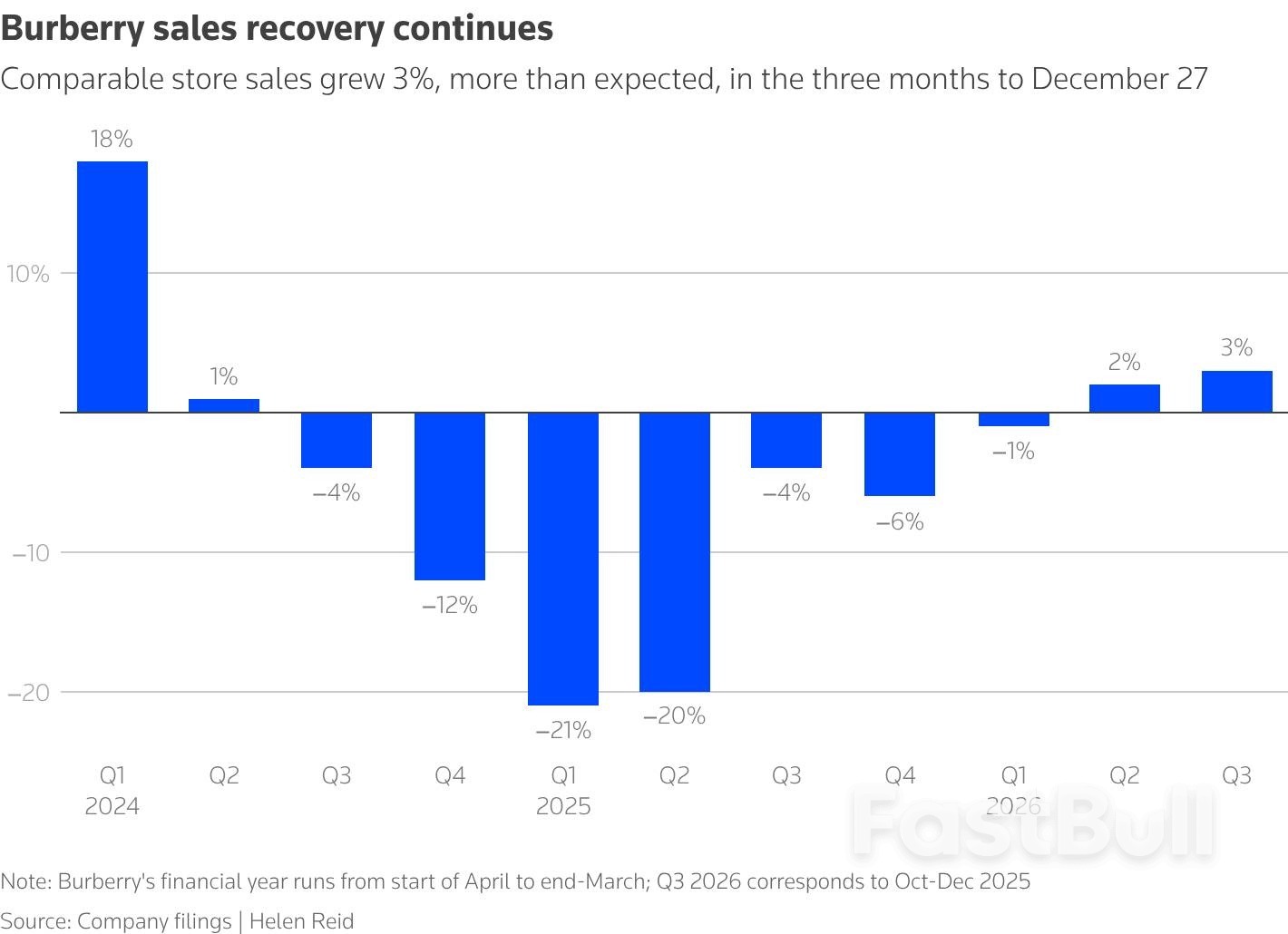 Chart showing quarterly
($1 = 0.7442 pounds)

The global oil market is heading for a major supply surplus in the first quarter of 2026, according to a new report from the International Energy Agency (IEA). The influential body, which advises industrialized nations, warns that excess supply is already large enough to offset the geopolitical risks currently pressuring the market.
In its latest monthly oil report, the IEA projected that global oil supply would outpace demand by a staggering 4.25 million barrels per day (bpd) in the first quarter. A surplus of this magnitude represents about 4% of total world demand and is larger than many other forecasts.
Despite the underlying supply glut, oil prices have climbed approximately 6% since the start of the year. This rise has been fueled by market concerns over potential disruptions. Global benchmark Brent crude was trading at $65.02 as of 11:42 GMT on Wednesday.
Recent geopolitical events contributing to market anxiety include:
• Venezuela: The U.S. captured President Nicolas Maduro early in the month and encouraged oil companies to invest in the country. However, short-term supplies have been disrupted, with a U.S. blockade lowering exports by 580,000 bpd from December to early January.
• Iran: The threat of possible U.S. strikes has raised concerns about reduced supplies from the region.
• Kazakhstan: A combination of drone attacks and technical problems has curtailed the country's output.
Even with these flashpoints, the IEA notes that the market's oversupply provides a significant buffer. "Barring any significant disruptions to supplies in Iran, Venezuela, or further cuts from other producers, a significant surplus is likely to re-emerge in the first quarter of 2026," the agency stated. "For now, bloated balances provide some comfort to market participants and have kept prices in check."
The rapid increase in global oil supply stems from two primary sources. The OPEC+ alliance, comprising the Organization of the Petroleum Exporting Countries, Russia, and other allies, began increasing its output in April 2025 following years of production cuts.
Simultaneously, production has ramped up in countries outside the alliance, particularly the United States, Guyana, and Brazil. While OPEC+ has decided to pause its output hikes for the first quarter of 2026, the market is still contending with the earlier increases.
For the full year of 2026, the IEA now forecasts an implied market surplus of 3.69 million bpd. This is a slight downward revision from the 3.84 million bpd surplus projected in its previous report.
A key factor in this adjustment is a modest upgrade to the global oil demand forecast. The IEA raised its demand growth prediction by 70,000 bpd to 930,000 bpd for the year. The agency attributes this to a normalization of economic conditions following last year's tariff turmoil and oil prices that are lower than a year ago.
The IEA’s forecast of a deep surplus is not universally shared. Rival forecaster OPEC holds a more optimistic view on demand, predicting oil consumption will rise by a much stronger 1.38 million bpd this year. Based on OPEC's figures, the market in 2026 appears to be nearly balanced between supply and demand, a stark contrast to the IEA's glut scenario.
The IEA projects the surplus will be most pronounced in the first quarter, partly due to seasonal factors. Global oil refiners typically schedule maintenance shutdowns during this period, which temporarily reduces crude demand. "With seasonal refinery maintenance about to commence, reducing demand for crude, further reductions in crude production will be needed," the Paris-based agency concluded.
On the supply side, the IEA revised its global growth forecast for the year upward to 2.5 million bpd. Crucially, it projects that around 52% of this new supply growth will come from producers outside the OPEC+ alliance.
The Japanese yen is gaining ground against major currencies as traders position themselves for the Bank of Japan's (BoJ) next move. Market focus is locked on the conclusion of the central bank's two-day policy meeting this Friday, which is expected to provide critical clues about the timing of its next interest rate hike.
Several dynamics are contributing to the yen's upward momentum. Anticipation is building that Japanese authorities may intervene to halt further depreciation of the currency. This sentiment, combined with a broader risk-off mood in the markets, enhances the appeal of the safe-haven JPY.
Further bolstering this view were recent comments from Japan's finance minister, Satsuki Katayama, who suggested that Japan and the U.S. could cooperate to address the yen's recent weakness. The possibility of additional policy tightening by the BoJ is also seen as a significant supportive factor for the currency.
The yen's rally comes amid wider market uncertainty. European stocks traded lower, with investors unnerved by ongoing trade jitters linked to Greenland.
Meanwhile, the "Sell America" trade appears to be taking a pause, and the euro is holding firm near recent highs. Market participants are also looking ahead to speeches by U.S. President Donald Trump and ECB President Christine Lagarde at the Davos summit.
During European trading, the yen demonstrated notable strength across the board:
• Against the Euro (EUR/JPY): The yen rose to 184.82 from a one-week low of 185.54. The next resistance level is seen around 183.00.
• Against the Pound (GBP/JPY): The yen advanced to 211.97 from an early low of 212.65, with potential resistance near 210.00.
• Against the Swiss Franc (CHF/JPY): The currency climbed to 199.26 from 200.31. The next key level to watch is the 197.00 resistance area.
• Against the U.S. Dollar (USD/JPY): The yen strengthened to 157.82 from 158.28. Resistance is anticipated around the 156.00 mark.
• Against the Canadian Dollar (CAD/JPY): The yen moved to 114.09 from 114.39, with the next resistance target at 112.00.
Traders will be closely monitoring a series of economic data releases during the New York session. Key reports include:
• U.S. MBA mortgage approvals data
• Canada's Producer Price Index (PPI) and raw material prices for December
• U.S. pending home sales for December
• U.S. construction spending for September
President Donald Trump is set to significantly increase his domestic travel in the lead-up to the November midterm elections, aiming to promote his economic policies and win over American voters concerned about the cost of living.
White House Chief of Staff Susie Wiles confirmed the new strategy, telling reporters that Trump plans to travel "every week" and will intensify this schedule as the elections draw closer. The goal is to secure control of Congress by directly addressing economic anxieties.
As part of a coordinated White House effort, Cabinet members will also scale back international trips to concentrate on domestic stops. This initiative is designed to amplify the administration's economic message at a time when affordability is a primary concern for voters.
The renewed travel plan includes a trip to Iowa on Tuesday, a state pivotal to Trump's political rise, where he will discuss the farm economy and energy. This follows a recent visit to a Ford Motor Co. facility in Michigan, where he promoted his tariff agenda and efforts to boost domestic manufacturing.
While the administration has previously announced plans for more travel, this new push signals a campaign-level intensity that has not yet fully materialized.
The travel announcement came shortly before Trump was scheduled to deliver a major speech on affordability at the World Economic Forum in Davos. His populist platform includes several key proposals designed to address rising costs for Americans.
According to National Economic Council Director Kevin Hassett, the president's agenda features several bold initiatives:
• Housing: A ban on institutional investors purchasing single-family homes.
• Credit: A temporary cap on credit card interest rates at 10% for one year.
• Mortgages: Directing Fannie Mae and Freddie Mac to buy $200 billion in mortgage bonds to help lower lending rates.
• Retirement Savings: Allowing Americans to use funds from their 401(k) retirement plans for a down payment on a home.
On Tuesday, Trump signed an executive order outlining a process to limit institutional home purchases, though it did not immediately implement new regulations.
The administration is ramping up its focus on the cost of living as high prices for groceries, housing, and healthcare continue to strain household budgets. Republicans are under pressure to maintain their narrow majority in Congress. A loss in either the House or the Senate could jeopardize Trump's legislative agenda and expose him to greater oversight.
This economic messaging has been inconsistent in the past. Trump previously dismissed affordability concerns as a Democratic "hoax" before later insisting that his economic record was strong and that his policies simply needed more time to work. The upcoming travel blitz represents a clear effort to unify this message and present a proactive stance on the economy ahead of the crucial November elections.
The European Union's historic free trade agreement with the South American Mercosur bloc is now facing a serious threat. After 25 years of negotiations, EU lawmakers have narrowly voted to challenge the deal in the bloc's highest court, a move that could stall its implementation by at least two years and potentially unravel it completely.
On Wednesday, a motion to refer the trade pact to the EU Court of Justice passed with 334 votes in favor to 324 against, with 11 abstentions. The challenge was initiated by a group of 144 lawmakers who have raised critical questions about the agreement's legal standing.
Specifically, the court will be asked to rule on two key issues:
• Can the deal be provisionally applied before it is fully ratified by every EU member state?
• Do its provisions unfairly restrict the EU's power to set its own environmental and consumer health policies?
A ruling from the court typically takes around two years.
The vote exposes a deep rift within the EU over the trade deal, which was signed on Saturday with Mercosur members Argentina, Brazil, Paraguay, and Uruguay.
Opposition From the Agricultural Sector
Opponents, with France's powerful farming lobby at the forefront, argue the deal will flood the European market with cheap agricultural imports. They are primarily concerned about increased competition from beef, sugar, and poultry, which they say will undercut domestic producers who have already staged multiple protests against the pact.



The Geopolitical Argument for the Deal
On the other side, supporters like Germany and Spain view the agreement as a crucial strategic move. They argue that amid global trade disruptions, such as U.S. tariffs implemented under President Donald Trump, the deal is essential for the EU's economic security.
Proponents believe the pact will:
• Offset business lost due to U.S. trade policies.
• Reduce the EU's economic reliance on China.
• Secure access to critical minerals from South America.
They also warn that the Mercosur nations are growing impatient after decades of talks, and further delays could jeopardize the entire relationship.
While the legal challenge proceeds, the EU could technically apply the trade agreement on a provisional basis. However, this would be a politically difficult move given the strong opposition and the risk of a public backlash.
Ultimately, the European Parliament still holds the power to annul the deal later on. With the pact now heading to the courts, the future of the EU's largest-ever trade agreement remains highly uncertain.
728 RM B 7/F GEE LOK IND BLDG NO 34 HUNG TO RD KWUN TONG KLN HONG KONG


White Label
Data API
Web Plug-ins
Poster Maker
Affiliate Program
The risk of loss in trading financial instruments such as stocks, FX, commodities, futures, bonds, ETFs and crypto can be substantial. You may sustain a total loss of the funds that you deposit with your broker. Therefore, you should carefully consider whether such trading is suitable for you in light of your circumstances and financial resources.
No decision to invest should be made without thoroughly conducting due diligence by yourself or consulting with your financial advisors. Our web content might not suit you since we don't know your financial conditions and investment needs. Our financial information might have latency or contain inaccuracy, so you should be fully responsible for any of your trading and investment decisions. The company will not be responsible for your capital loss.
Without getting permission from the website, you are not allowed to copy the website's graphics, texts, or trademarks. Intellectual property rights in the content or data incorporated into this website belong to its providers and exchange merchants.
Not Logged In
Log in to access more features

FastBull Membership
Not yet
Purchase


Log In
Sign Up


