• Trade
  • Markets
  • Copy
  • Contests
  • News
  • 24/7
  • Calendar
  • Q&A
  • Chats
Screeners
SYMBOL
LAST
ASK
BID
HIGH
LOW
NET CHG.
%CHG.
SPREAD
SPX
S&P 500 Index
6909.50
6909.50
6909.50
6964.08
6893.47
-59.51
-0.85%
--
DJI
Dow Jones Industrial Average
48568.52
48568.52
48568.52
49047.68
48459.88
-503.03
-1.03%
--
IXIC
NASDAQ Composite Index
23408.55
23408.55
23408.55
23662.25
23351.55
-276.56
-1.17%
--
USDX
US Dollar Index
96.860
96.940
96.860
96.880
96.150
+0.890
+ 0.93%
--
EURUSD
Euro / US Dollar
1.18644
1.18652
1.18644
1.19743
1.18617
-0.01058
-0.88%
--
GBPUSD
Pound Sterling / US Dollar
1.36945
1.36958
1.36945
1.38142
1.36900
-0.01148
-0.83%
--
XAUUSD
Gold / US Dollar
4740.11
4740.54
4740.11
5450.83
4704.44
-636.20
-11.83%
--
WTI
Light Sweet Crude Oil
64.230
64.260
64.230
65.832
63.409
-1.022
-1.57%
--

Community Accounts

Signal Accounts
--
Profit Accounts
--
Loss Accounts
--
View More

Become a signal provider

Sell trading signals to earn additional income

View More

Guide to Copy Trading

Get started with ease and confidence

View More

Signal Accounts for Members

All Signal Accounts

Best Return
  • Best Return
  • Best P/L
  • Best MDD
Past 1W
  • Past 1W
  • Past 1M
  • Past 1Y

All Contests

  • All
  • Trump Updates
  • Recommend
  • Stocks
  • Cryptocurrencies
  • Central Banks
  • Featured News
Top News Only
Share

Colombia Central Bank Technical Team Revises 2026 Economic Growth Projection To 2.6% From Previous 2.9%

Share

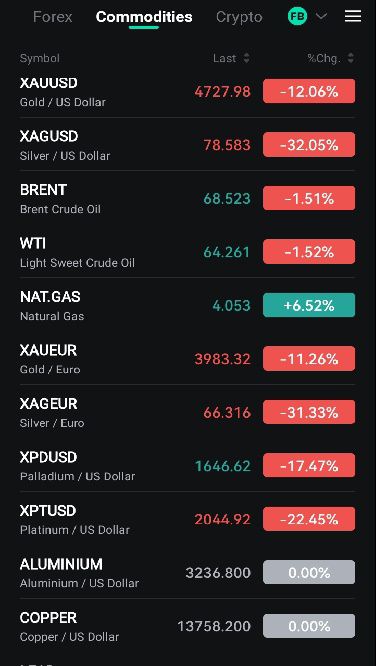
Spot Gold Fell 12.0% On The Day, To $4,725.64 Per Ounce. Spot Silver Fell 34.5% On The Day, To $75.25 Per Ounce

Share

Spot Silver Fell 30.0% On The Day, Closing At $80.64 Per Ounce. New York Silver Fell 29.5% On The Day, Closing At $80.65 Per Ounce

Share

Spot Gold Furhter Extends Declines, Last Down 11% At $4786.85/Oz

Share

Spot Palladium Falls Over 16% To $2041.35/Oz

Share

Spot Platinum Falls Over 19% To $2126.04/Oz

Share

Equipo Técnico Del Banco Central De Colombia Revisa Pronóstico De Crecimiento Económico Para 2025 A 2,9% Desde Previo De 2,6%

Share

Colombia's Central Bank Hikes Interest Rate By 100 Basis Points To 10.25%, Surprising The Market

Share

Colombia Central Bank Rate Decision Was Backed By Majority Of Board Members

Share

Seoul: US And South Korea Need More Discussion On Trade Deal

Share

Baker Hughes - US Natgas Drilling Rig Count Up 3 At 125 In Week To Jan 30

Share

Baker Hughes - US Oil Drilling Rig Count Unchanged At 411 (Down 68 Versus Year Ago) In Week To Jan 30

Share

The Nasdaq Golden Dragon China Index Fell Further, Extending Its Losses To 2%

Share

Spot Gold Fell 10.5% On The Day, Its Biggest Drop In Decades, To $4,807.99 Per Ounce. New York Gold Fell 9.5% To $4,838.1 Per Ounce. Spot Silver Fell 26.0% To $85.06 Per Ounce. New York Silver Fell 25.5% To $85.17 Per Ounce

Share

LME Copper Futures Closed Down $460 At $13,158 Per Tonne. LME Aluminum Futures Closed Down $74 At $3,144 Per Tonne. LME Zinc Futures Closed Down $10 At $3,402 Per Tonne. LME Lead Futures Closed Down $5 At $2,009 Per Tonne. LME Nickel Futures Closed Down $415 At $17,954 Per Tonne. LME Tin Futures Closed Down $3,129 At $51,955 Per Tonne. LME Cobalt Futures Closed Unchanged At $56,290 Per Tonne

Share

Ukrainian Prime Minister Svyrydenko Says Russia Is Attacking Logistics, Launched Seven Attacks On Rail Facilities In Past 24 Hours

Share

Ukraine President Zelenskiy: Week On Halting Strikes On Energy Started On Friday

Share

Ukraine President Zelenskiy: Ukraine Conducted No Strikes On Russian Energy Infrastructure On Friday

Share

[German 10-year Bond Yields Fell More Than 6 Basis Points This Week And More Than 1 Basis Point In January] On Friday (January 30), In Late European Trading, The Yield On 10-year German Government Bonds Rose 0.3 Basis Points To 2.843%, A Cumulative Drop Of 6.3 Basis Points This Week, Continuing Its Overall Downward Trend. In January, It Fell 1.2 Basis Points, With An Overall Trading Range Of 2.910%-2.792%. The Yield On 2-year German Bonds Rose 0.5 Basis Points To 2.089%, A Cumulative Drop Of 4.1 Basis Points This Week And 3.2 Basis Points In January, Trading Within A Range Of 2.156%-2.048%. The Yield On 30-year German Bonds Rose 0.5 Basis Points To 3.494%, A Cumulative Increase Of 1.9 Basis Points In January. The Spread Between The 2-year And 10-year German Bond Yields Fell 0.163 Basis Points To +75.288 Basis Points, Down 2.147 Basis Points This Week And Up 2.142 Basis Points In January

Share

Citi Expects That Both Economic And Geopolitical Risks Will Decline By 2H'26, From Current Extremely Elevated Levels, Taking Some Of The Heat Out Of Gold Market

TIME
ACT
FCST
PREV
U.K. M4 Money Supply (SA) (Dec)

A:--

F: --

P: --
U.K. M4 Money Supply YoY (Dec)

A:--

F: --

P: --

U.K. M4 Money Supply MoM (Dec)

A:--

F: --

P: --

U.K. Mortgage Lending (Dec)

A:--

F: --

P: --
U.K. Mortgage Approvals (Dec)

A:--

F: --

P: --
Italy Unemployment Rate (SA) (Dec)

A:--

F: --

P: --

Euro Zone Unemployment Rate (Dec)

A:--

F: --

P: --

Euro Zone GDP Prelim QoQ (SA) (Q4)

A:--

F: --

P: --

Euro Zone GDP Prelim YoY (SA) (Q4)

A:--

F: --

P: --

Italy PPI YoY (Dec)

A:--

F: --

P: --

Mexico GDP Prelim YoY (Q4)

A:--

F: --

P: --

Brazil Unemployment Rate (Dec)

A:--

F: --

P: --

South Africa Trade Balance (Dec)

A:--

F: --

P: --

India Deposit Gowth YoY

A:--

F: --

P: --

Germany CPI Prelim YoY (Jan)

A:--

F: --

P: --

Germany CPI Prelim MoM (Jan)

A:--

F: --

P: --

Germany HICP Prelim YoY (Jan)

A:--

F: --

P: --

Germany HICP Prelim MoM (Jan)

A:--

F: --

P: --

U.S. Core PPI YoY (Dec)

A:--

F: --

P: --
U.S. Core PPI MoM (SA) (Dec)

A:--

F: --

P: --

U.S. PPI YoY (Dec)

A:--

F: --

P: --

U.S. PPI MoM (SA) (Dec)

A:--

F: --

P: --

Canada GDP MoM (SA) (Nov)

A:--

F: --

P: --

Canada GDP YoY (Nov)

A:--

F: --

P: --

U.S. PPI MoM Final (Excl. Food, Energy and Trade) (SA) (Dec)

A:--

F: --

P: --

U.S. PPI YoY (Excl. Food, Energy & Trade) (Dec)

A:--

F: --

P: --

U.S. Chicago PMI (Jan)

A:--

F: --

P: --
Canada Federal Government Budget Balance (Nov)

A:--

F: --

P: --

U.S. Weekly Total Oil Rig Count

A:--

F: --

P: --

U.S. Weekly Total Rig Count

A:--

F: --

P: --

China, Mainland NBS Manufacturing PMI (Jan)

--

F: --

P: --

China, Mainland NBS Non-manufacturing PMI (Jan)

--

F: --

P: --

China, Mainland Composite PMI (Jan)

--

F: --

P: --

South Korea Trade Balance Prelim (Jan)

--

F: --

P: --
Japan Manufacturing PMI Final (Jan)

--

F: --

P: --

South Korea IHS Markit Manufacturing PMI (SA) (Jan)

--

F: --

P: --

Indonesia IHS Markit Manufacturing PMI (Jan)

--

F: --

P: --

China, Mainland Caixin Manufacturing PMI (SA) (Jan)

--

F: --

P: --

Indonesia Trade Balance (Dec)

--

F: --

P: --

Indonesia Inflation Rate YoY (Jan)

--

F: --

P: --

Indonesia Core Inflation YoY (Jan)

--

F: --

P: --

India HSBC Manufacturing PMI Final (Jan)

--

F: --

P: --

Australia Commodity Price YoY (Jan)

--

F: --

P: --

Russia IHS Markit Manufacturing PMI (Jan)

--

F: --

P: --

Turkey Manufacturing PMI (Jan)

--

F: --

P: --

U.K. Nationwide House Price Index MoM (Jan)

--

F: --

P: --

U.K. Nationwide House Price Index YoY (Jan)

--

F: --

P: --

Germany Actual Retail Sales MoM (Dec)

--

F: --

P: --
Italy Manufacturing PMI (SA) (Jan)

--

F: --

P: --

South Africa Manufacturing PMI (Jan)

--

F: --

P: --

Euro Zone Manufacturing PMI Final (Jan)

--

F: --

P: --

U.K. Manufacturing PMI Final (Jan)

--

F: --

P: --

Brazil IHS Markit Manufacturing PMI (Jan)

--

F: --

P: --

Canada National Economic Confidence Index

--

F: --

P: --

Canada Manufacturing PMI (SA) (Jan)

--

F: --

P: --

U.S. IHS Markit Manufacturing PMI Final (Jan)

--

F: --

P: --

U.S. ISM Output Index (Jan)

--

F: --

P: --

U.S. ISM Manufacturing Employment Index (Jan)

--

F: --

P: --

U.S. ISM Manufacturing New Orders Index (Jan)

--

F: --

P: --

Q&A with Experts
    • All
    • Chatrooms
    • Groups
    • Friends
    Sanjeev Ku flag
    Sanjeev Ku
    low 4748 bro
    Neo Wolf flag
    mama mia silver down 33%
    木木 flag
    4740
    Sean flag
    john
    @johnbut the longer averages are still supportive
    Jamolla flag
    Watching if rallies now get sold instead of bought.
    木木 flag
    4730
    Author flag
    NJGME6M73L
    What is happening with gold 🤔
    @NJGME6M73Lnormal correction phase ...
    Neo Wolf flag
    this is more exicited than football
    闹闹 flag
    Yes, it surpasses the joy of football.
    suosuo flag
    wtf..
    Sanjeev Ku flag
    Sanjeev Ku
    4731 done
    Jamolla flag
    Big question is, is this distribution by strong hands or panic from late longs?
    Sean flag
    john
    @johnbut the longer averages are still supportive
    john flag
    Jamolla
    Big question is, is this distribution by strong hands or panic from late longs?
    @Jamollathis is by the big hands one thing for sure
    Neo Wolf flag
    Jamolla
    Big question is, is this distribution by strong hands or panic from late longs?
    @Jamollaeither way, lots of liquidation
    john flag
    Sean
    @Sean Which is why i see this as correction, not collapse
    john flag
    john flag
    john
    I think we have a broader market sell off
    Sean flag
    john
    @johnso position traders may still be comfortable
    am Swing trader flag
    wow Gold is as said high timeframe is the key
    Type here...
    Add Symbol or Code

      No matching data

      All
      Trump Updates
      Recommend
      Stocks
      Cryptocurrencies
      Central Banks
      Featured News
      • All
      • Russia-Ukraine Conflict
      • Middle East Flashpoint
      • All
      • Russia-Ukraine Conflict
      • Middle East Flashpoint
      Search
      Products

      Charts Free Forever

      Chats Q&A with Experts
      Screeners Economic Calendar Data Tools
      Membership Features
      Data Warehouse Market Trends Institutional Data Policy Rates Macro

      Market Trends

      Market Sentiment Order Book Forex Correlations

      Top Indicators

      Charts Free Forever
      Markets

      News

      News Analysis 24/7 Columns Education
      From Institutions From Analysts
      Topics Columnists

      Latest Views

      Latest Views

      Trending Topics

      Top Columnists

      Latest Update

      Signals

      Copy Rankings Latest Signals Become a signal provider AI Rating
      Contests
      Brokers

      Overview Brokers Assessment Rankings Regulators News Claims
      Broker listing Forex Brokers Comparison Tool Live Spread Comparison Scam
      Q&A Complaint Scam Alert Videos Tips to Detect Scam
      More

      Business
      Events
      Careers About Us Advertising Help Center

      White Label

      Data API

      Web Plug-ins

      Affiliate Program

      Awards Institution Evaluation IB Seminar Salon Event Exhibition
      Vietnam Thailand Singapore Dubai
      Fans Party Investment Sharing Session
      FastBull Summit BrokersView Expo
      Recent Searches
        Top Searches
          Markets
          News
          Analysis
          User
          24/7
          Economic Calendar
          Education
          Data
          • Names
          • Latest
          • Prev

          View All

          No data

          Scan to Download

          Faster Charts, Chat Faster!

          Download App
          English
          • English
          • Español
          • العربية
          • Bahasa Indonesia
          • Bahasa Melayu
          • Tiếng Việt
          • ภาษาไทย
          • Français
          • Italiano
          • Türkçe
          • Русский язык
          • 简中
          • 繁中
          Open Account
          Search
          Products
          Charts Free Forever
          Markets
          News
          Signals

          Copy Rankings Latest Signals Become a signal provider AI Rating
          Contests
          Brokers

          Overview Brokers Assessment Rankings Regulators News Claims
          Broker listing Forex Brokers Comparison Tool Live Spread Comparison Scam
          Q&A Complaint Scam Alert Videos Tips to Detect Scam
          More

          Business
          Events
          Careers About Us Advertising Help Center

          White Label

          Data API

          Web Plug-ins

          Affiliate Program

          Awards Institution Evaluation IB Seminar Salon Event Exhibition
          Vietnam Thailand Singapore Dubai
          Fans Party Investment Sharing Session
          FastBull Summit BrokersView Expo

          US Producer Prices Surge, Signaling New Inflation Risks

          Winkelmann

          Daily News

          Economic

          Central Bank

          Data Interpretation

          Remarks of Officials

          Summary:

          U.S. producer prices recorded their largest monthly gain in five months, jumping 0.5% in December, driven by services costs, suggesting accelerating underlying inflation and bolstering the Federal Reserve's steady interest rate stance.

          U.S. producer prices recorded their largest monthly gain in five months in December, a development that suggests underlying inflation could be accelerating. This uptick, driven by a sharp rise in the cost of services, may give the Federal Reserve reason to keep interest rates steady in the coming months.

          The Labor Department reported on Friday that the Producer Price Index (PPI) for final demand jumped 0.5% last month, beating the 0.2% increase forecast by economists polled by Reuters. This followed an unrevised 0.2% gain in November.

          On a year-over-year basis, the PPI rose 3.0% through December, matching the previous month's pace. For the full year, producer prices advanced 3.0% in 2025, following a 3.5% increase in 2024.

          Services Costs Fuel the December PPI Spike

          The primary driver behind the unexpectedly strong PPI reading was a 0.7% increase in the prices for services, while goods prices remained flat. The surge in services accounted for the entirety of the headline increase.

          A key factor was a 1.7% jump in margins for final demand trade services, which measures the change in margins for wholesalers and retailers. This component alone was responsible for two-thirds of the overall services increase.

          Other notable price hikes in the services sector included:

          • Hotel and motel rooms: Surged 7.3%

          • Airline fares: Soared 2.9%

          • Portfolio management fees: Increased 2.0%

          These components are significant as they feed into the Personal Consumption Expenditures (PCE) price indexes, which are the Federal Reserve's preferred measures for tracking its 2% inflation target.

          The Uneven Impact of Tariffs

          Economists suggest that the effects of import tariffs are starting to filter through the supply chain, though the impact remains uneven.

          "Tariff impacts continued to flow through producer costs unevenly in December," noted Ben Ayers, a senior economist at Nationwide. "At a broad level, costs associated with tariffs remain muted... but localized effects can be pronounced."

          Ayers added that the spike in trade services likely reflects "producers looking to recoup some of the losses caused by higher production costs over 2025."

          What This Means for the Federal Reserve

          The latest inflation data supports the Federal Reserve's current policy stance. The U.S. central bank recently left its benchmark interest rate unchanged in a range of 3.50% to 3.75%.

          Fed Chair Jerome Powell acknowledged that tariffs had contributed to an overshoot in inflation but said he expected that pressure to peak around the middle of the year.

          The report reinforces the central bank's shifting focus, according to Carl Weinberg, chief economist at High Frequency Economics. "This report validates the pivot of the Fed away from labor market risks back toward price stability," he said.

          Economists now estimate that core PCE inflation for December could rise by 0.3% to 0.4%, which would bring the annual rate to 3.0%.

          A Closer Look at the Goods Sector

          In sharp contrast to services, producer prices for goods were unchanged in December after rising 0.8% in the prior month.

          A 1.4% drop in energy prices, driven by lower gasoline costs, weighed on the goods index. Food prices also declined by 0.3%, partly due to a 20.4% plunge in the cost of fresh and dry vegetables.

          However, when volatile food and energy components are excluded, producer goods prices advanced 0.4%, up from a 0.2% rise in November.

          Market Response and Political Backdrop

          The stronger-than-expected PPI data overshadowed President Trump's nomination of Kevin Warsh, a former Fed governor, to replace Powell as head of the central bank.

          Following the report, U.S. stocks opened lower, the dollar strengthened against a basket of other currencies, and U.S. Treasury yields rose.

          The data release also comes as the Bureau of Labor Statistics (BLS) works to catch up on reports delayed by a 43-day federal government shutdown. Lawmakers were working on Friday to avoid another shutdown that could postpone future data releases.

          To stay updated on all economic events of today, please check out our Economic calendar
          Risk Warnings and Disclaimers
          You understand and acknowledge that there is a high degree of risk involved in trading. Following any strategies or investment methods may lead to potential losses. The content on the site is provided by our contributors and analysts for information purposes only. You are solely responsible for determining whether any trading assets, securities, strategy, or any other product is suitable for investing based on your own investment objectives and financial situation.
          Add to Favorites
          Share

          Dollar pares gain, bonds trim drop as Trump picks Warsh for Fed

          Adam

          Forex

          The dollar pared gains and the Treasury curve steepened after US President Donald Trump said he intends to nominate Kevin Warsh as the next Federal Reserve chair, seen by markets as a relatively hawkish choice.
          The Bloomberg dollar index trimmed a rally to 0.2%, holding onto gains versus all its major peers after Trump confirmed on Friday he was picking Warsh. Treasuries pared losses, with two-year yields slipping and 30-year rates remaining up three basis points.
          Warsh has long been considered an inflation hawk, having often emphasized price risks during the financial crisis while others focused on growth. That is raising questions around his policy direction after he recently aligned himself with Trump by arguing publicly for lower borrowing costs.
          “He may be intuitively more hawkish than others but we do think this cycle he will try and get rates down to 3%,” said John Briggs, head of US rates strategy at Natixis SA.
          The market moves follow months-long uncertainty over the next Fed chief. Warsh, a former Fed governor who was one of the four finalists on Trump’s shortlist to be the next central bank leader, visited the White House on Thursday, said a person familiar with the matter.
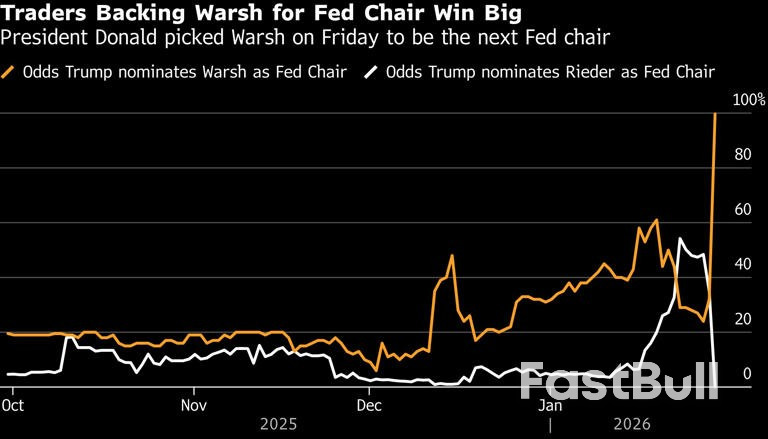
          Betting markets had increasingly favored Warsh, with Polymarket showing his chance of becoming the next Fed chair rising above 90% on Friday, as support faded for BlackRock Inc. executive Rick Rieder.
          Dollar pares gain, bonds trim drop as Trump picks Warsh for Fed_1

          Traders Backing Warsh for Fed Chair Win Big | President Donald picked Warsh on Friday to be the next Fed chair

          Earlier this week, the Fed kept borrowing costs on hold, with Chair Jerome Powell pointing to a “clear improvement” in the US outlook and signs that the job market is steadying. Money markets have continued to price two quarter-point rate cuts this year.
          Even if Warsh is viewed as a relative hawk compared to others on the short list, the presumption is “that he will seek to justify a dovish stance,” said Mark Dowding, chief investment officer of RBC BlueBay Asset Management. As such, “futures markets continue to price two cuts.”
          Warsh has a disdain for big balance sheets, another key issue for markets looking at how the candidate will manage the central bank’s $6.6 trillion pile. At stake is whether the central bank should keep buying Treasury bills to maintain its balance sheet at present levels, or remove more liquidity.
          Trump had teased his impending announcement without giving the name away Thursday evening, saying the pick won’t be too surprising and is someone who could have been in the position years ago.
          What Bloomberg’s Strategists Say...
          It’s rare to see Treasury yield curve steepening during Asian sessions, which suggests this move is a defensive measure by investors to prepare for a more hawkish, rule-oriented regime under Kevin Warsh.
          — Mark Cranfield, Markets Live strategist. Click here for the full analysis.
          Warsh served on the US central bank’s Board of Governors from 2006 to 2011 and has advised Trump on economic policy. If confirmed, he would succeed Powell, whose term at the helm ends in May.
          Indications of a more orthodox choice for Fed chair comes at a time when concerns over unpredictable US policy making, unsustainably large deficits and political interference in central bank policy are pressuring markets. Trump had indicated he favored a weaker greenback in comments earlier this week, before Treasury Secretary Scott Bessent said the administration supports a strong dollar policy.
          “Warsh is seen as credible and respectful of the Fed’s independence – something that should help avoid dollar debasement trades and credibility-induced steepening of the Treasury curve,” said Evelyne Gomez-Liechti, a strategist at Mizuho International Plc.
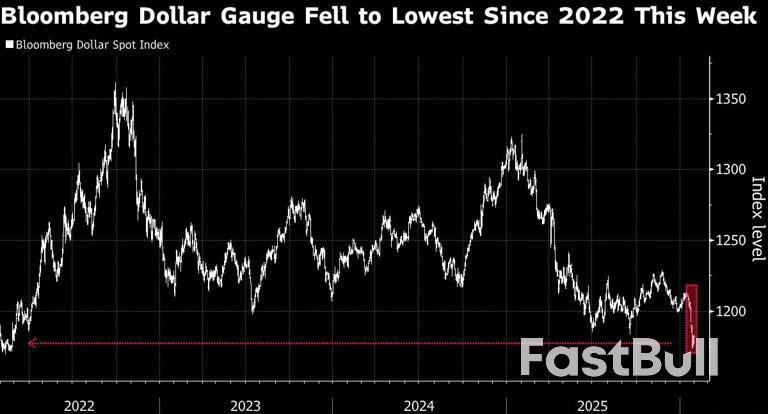
          The dollar has dropped this year amid the so-called debasement trade, which is a bet on a long-term decline in its purchasing power. Bloomberg’s gauge of the currency slid to its lowest level in almost four years this week.
          Dollar pares gain, bonds trim drop as Trump picks Warsh for Fed_2

          Bloomberg Dollar Gauge Fell to Lowest Since 2022 This Week

          The nomination of Warsh is seen as potentially countering some of those factors.
          “The dollar has been waiting for a catalyst for a recovery, and the news that Kevin Warsh is likely to be announced as the new Federal Reserve Chair nominee today offers exactly that,” Francesco Pesole, an FX strategist at ING Groep NV, wrote on Friday. “It appears this could at least lower the risks of another major leg lower in the dollar for now.”

          Source: Bloomberg

          Risk Warnings and Disclaimers
          You understand and acknowledge that there is a high degree of risk involved in trading. Following any strategies or investment methods may lead to potential losses. The content on the site is provided by our contributors and analysts for information purposes only. You are solely responsible for determining whether any trading assets, securities, strategy, or any other product is suitable for investing based on your own investment objectives and financial situation.
          Add to Favorites
          Share

          Trump Taps Kevin Warsh to Lead the Fed: What to Expect

          Kevin Morgan

          Traders' Opinions

          Daily News

          Economic

          Political

          Central Bank

          Remarks of Officials

          President Donald Trump plans to nominate former Federal Reserve governor Kevin Warsh to be the next chair of the central bank, a move that could usher in a new era for U.S. monetary policy.

          Warsh, an experienced Wall Street veteran and former Fed official, has recently advocated for lower interest rates and a smaller central bank balance sheet. Analysts broadly see him as a credible candidate who will likely secure Senate confirmation, but they are closely watching to see how he would balance political pressure with the Fed's mandate.

          A Central Bank Under Pressure

          The nomination arrives at a turbulent time for the Federal Reserve. The institution is grappling with internal policy divisions amid a complex economic outlook, as some members push for lower rates to boost growth while others want to hold firm to contain inflation.

          This internal debate is amplified by external challenges to the Fed's independence and credibility. President Trump has repeatedly criticized current chair Jerome Powell and the Federal Open Market Committee (FOMC) for not cutting interest rates more aggressively.

          Simultaneously, the central bank faces legal scrutiny. The Supreme Court recently heard arguments on whether President Trump has the authority to remove Governor Lisa Cook. The Department of Justice has also issued subpoenas to the Fed and Powell related to renovations at the bank's offices, a move widely seen by analysts as an assertion of executive power.

          Who Is Kevin Warsh?

          Kevin Warsh is currently a fellow at Stanford University's Hoover Institution. His career began on Wall Street at Morgan Stanley before he served in the George W. Bush administration on the National Economic Council and as a Federal Reserve governor.

          Historically known as a policy "hawk"—an official who favors tighter monetary policy to fight inflation—Warsh's public stance has recently shifted to align more closely with President Trump's views.

          He has publicly supported calls for lower interest rates, telling Fox News that Trump's frustration with Powell's policies was justified. In a Wall Street Journal op-ed last fall, Warsh described the Fed's track record under Powell as one of "unwise choices" and argued for reducing the central bank's balance sheet. He has also warned against "mission creep," suggesting the Fed has expanded its role too far.

          Market Reaction and Confirmation Outlook

          Analysts expect Warsh to be viewed as a reliable choice by financial markets and anticipate a smooth confirmation process.

          "Warsh's experience on the Fed, where he developed a reputation as a very competent crisis fighter with a good understanding of financial markets, and his long track record of independent thought about monetary policy mean he is a credible nomination," said Luke Bartholomew, deputy chief economist at Aberdeen Investments.

          Christopher Hodge, chief economist at Natixis, noted that Warsh "should have no problem being confirmed by the Senate" and would likely be seen as "fairly credible by the markets."

          How Would Warsh Steer Monetary Policy?

          While Warsh has recently pushed for lower rates and a reduced Fed balance sheet, analysts are divided on how his leadership would translate into policy decisions once he is in the role. The key question is whether he would prioritize short-term stimulus or revert to his long-held hawkish principles.

          The Case for Lower Rates

          Hodge identifies Warsh as a supply-side optimist, meaning he believes that policies like tax cuts and deregulation can boost long-term economic productivity. This view, Hodge writes, could serve as a "justification to rapidly lower rates."

          However, James Angel, an associate professor of finance at Georgetown University, voiced a common concern. He noted that Warsh "has the background and experience that we expect for a Fed Chair" but added, "My only concern with any Trump appointee is whether he promised Trump that he would bow down to him and lower interest rates too much to try to make things look good at election time."

          Will His Hawkish Instincts Return?

          Several analysts believe Warsh’s hawkish past could re-emerge, especially if inflation persists.

          "It's reasonable to assume that he told the President he favors reducing interest rates today, otherwise he would not have been nominated," wrote Samuel Tombs, chief U.S. economist at Pantheon Macroeconomics. "But Mr. Warsh's hawkish instincts might return once he has secured the Chairmanship."

          Tombs pointed out that during his previous tenure at the Fed, Warsh prioritized controlling inflation over employment during a crisis. He concluded that if inflation remains near 3%, Warsh would likely focus more on his historical legacy than on pleasing the president, making "easier-than-otherwise policy under Mr. Warsh... not a given."

          Hodge echoed this, stating that if productivity gains from deregulation don't appear and inflation remains "sticky," Warsh would "likely pivot to a more hawkish stance."

          The Limits of a Chair's Power

          Even as chair, Warsh would be just one of 12 voting members on the FOMC.

          Bartholomew of Aberdeen Investments projects that Warsh "will almost certainly push for lower interest rates," consistent with a forecast of two 0.25% cuts later this year. However, he added that Warsh "is unlikely to make much progress in shifting the Fed's operating framework and shrinking its balance sheet" on his own.

          What This Means for Near-Term Rate Cuts

          Following its January meeting, the Federal Reserve held interest rates steady. Chair Powell described the current policy rate as being "within plausible estimates of neutral," meaning it is neither stimulating nor restricting the economy.

          Trump's announcement to nominate Warsh has not significantly altered market expectations for a rate cut. According to the CME FedWatch Tool, bond futures traders are pricing in a 48.5% probability of a rate cut in June, up slightly from 47% before the news.

          To stay updated on all economic events of today, please check out our Economic calendar
          Risk Warnings and Disclaimers
          You understand and acknowledge that there is a high degree of risk involved in trading. Following any strategies or investment methods may lead to potential losses. The content on the site is provided by our contributors and analysts for information purposes only. You are solely responsible for determining whether any trading assets, securities, strategy, or any other product is suitable for investing based on your own investment objectives and financial situation.
          Add to Favorites
          Share

          Russian Rouble Forecast: Why Analysts Predict 88.3 Per Dollar

          Henry Thompson

          Traders' Opinions

          Russia-Ukraine Conflict

          Economic

          Political

          Central Bank

          Data Interpretation

          Forex

          Remarks of Officials

          A Reuters poll of 15 analysts projects the Russian rouble will trade at approximately 88.3 to the U.S. dollar within the next 12 months. This forecast suggests a 14% decline from its current value but marks an 8.7% upward revision from last month’s predictions.

          The rouble has already gained 3.5% since the beginning of the year, following a surprising 45% rally in 2025. While a stronger currency helps the central bank manage inflation, it also puts pressure on state budget revenues and exporters.

          Geopolitics and Gold Bolster Rouble Outlook

          Changing market dynamics have prompted some analysts to revise their forecasts significantly. Sberbank, for instance, has adjusted its projection from 100 roubles per dollar to 90. The bank attributes this shift to a rally in gold and other metals, as well as evolving geopolitical factors that could support the currency throughout the year.

          "Negotiations between Russia, the United States, and Ukraine may extend throughout the year, which could support demand for rouble-denominated assets," Sberbank analysts noted in a report.

          Negotiators from Ukraine and Russia met in Abu Dhabi last weekend to discuss territorial issues and are expected to resume talks on Sunday. Moscow's core demand remains that Kyiv cedes the entire Donbas industrial region.

          Fundamental Drivers and Economic Support

          Beyond geopolitics, several core economic factors are underpinning the rouble's stability. Mikhail Vasilyev of Sovkombank highlighted a combination of drivers supporting the currency:

          • A consistent trade surplus

          • Subdued demand for imports

          • The high key interest rate set by the central bank

          • Sales of yuan from state reserves under budget rules

          • General optimism for an improving geopolitical situation

          Economic Growth, Inflation, and Rate Cut Path

          Looking at the broader economy, analysts have slightly downgraded their forecast for Russia's GDP growth in 2026 to a median of 1%, down from 1.1% in the previous month's estimate. Concurrently, the 2026 inflation forecast has been revised upward from 5.2% to 5.3%.

          These figures are influencing expectations for monetary policy. Analysts now anticipate a more conservative approach from the central bank, forecasting a half-percentage-point cut in the key interest rate to 15.5% in the first quarter of 2026. This is a more cautious view than last month's expectation of a cut to 15%.

          The central bank has two rate-setting meetings scheduled for the first quarter. Following a recent spike in inflation, analysts expect policymakers to hold the rate steady at the first meeting on February 13.

          "Macroeconomic data so far does not provide a clear indication that the Bank of Russia is ready to cut the key rate," said Nikolai Dudchenko, an analyst at Finam brokerage.

          To stay updated on all economic events of today, please check out our Economic calendar
          Risk Warnings and Disclaimers
          You understand and acknowledge that there is a high degree of risk involved in trading. Following any strategies or investment methods may lead to potential losses. The content on the site is provided by our contributors and analysts for information purposes only. You are solely responsible for determining whether any trading assets, securities, strategy, or any other product is suitable for investing based on your own investment objectives and financial situation.
          Add to Favorites
          Share

          FTSE 100 falls from record as metals retreat

          Adam

          Economic

          FTSE 100 opens lower as miners retreat

          The FTSE 100 fell about 0.2% at the open, underperforming European markets as mining stocks declined. The index pulled back from the record levels reached in the previous session.
          Commodity prices retreated from recent highs, weighing on resource stocks. Mining companies featured among the top fallers on FTSE 100 after posting strong gains over the previous month.
          Banks and energy stocks also declined in early trading. Healthcare and utilities showed smaller percentage moves as the broader European STOXX 600 posted a more modest decline.

          Sterling and gilts both weaken

          Sterling fell below $1.38 in early London trading, reversing some of the gains made over previous sessions. GBP/USD traded at $1.3795 after holding above $1.38 in recent days, though the pair remains higher on a month-to-date (MoM) basis.
          Gilt yields rose by 2 to 3 basis points (bp) across the curve, lagging moves in euro area government bonds. The 10-year gilt yield climbed to 4.61%, while German bond yields rose by 4 bp to 2.53%.
          United Kingdom (UK) government bonds underperformed their European counterparts. The moves came as investors adjusted positions following overnight developments in currency and commodity markets.
          The pound has given back some of its recent strength against the United States (US) dollar. Sterling remains higher for January overall despite the intraday decline.

          Dollar rebounds on Fed chairman reports

          The dollar strengthened after reports emerged that Donald Trump is preparing to nominate Kevin Warsh as Federal Reserve (Fed) chairman. The dollar index rose 0.3% following the news, with Trump stating he has decided on his pick.
          Multiple reports named former Fed governor Kevin Warsh as the nominee. Prediction markets placed a 92% probability on Warsh's nomination after the reports surfaced.
          US 10-year Treasury yields climbed about 4 bp to 4.27%. The moves came as investors unwound recent bearish bets on the dollar.
          The greenback remains down for January overall. The dollar has fallen against most major currencies this month despite the intraday bounce.

          Precious metals post sharp declines

          Gold fell around 4% in European trading hours to $2748 per ounce. The metal extended a volatile selloff after reaching multi-month highs earlier in the week when it traded above $2850 per ounce on Wednesday.
          Silver declined more than 6% to $30.12 per ounce, recording a sharper fall than gold. Both precious metals gave back a significant portion of their January gains.
          copper prices declined 1.8% to $9385 per tonne on the London Metal Exchange. The base metal showed a smaller percentage decline compared to precious metals.
          The selloff in metals is likely to weigh on London-listed miners. The sector had posted strong performance over the previous month before the reversal.

          Asian markets fall on risk-off tone

          MSCI Asia-Pacific equities excluding Japan dropped as much as 1.3%, marking their biggest one-day fall in a month. China and Hong Kong markets led the declines, falling 1.5% and 1.8% respectively.
          S&P 500 futures fell 0.5% while Nasdaq futures declined 0.6%. Bitcoin dropped 2.7% to $102,450, having traded above $105,000 earlier in the week.
          Japanese markets were closed for a public holiday. Trading volumes across Asian markets were above the 30-day average as investors reacted to the Fed chairman speculation.
          The moves indicated a negative open for US equity markets. Risk assets declined broadly as the dollar strengthened.

          Oil declines but records strong monthly performance

          Brent crude oil fell about 1.4% to $76.52 per barrel, pulling back from the four-month high of $78.34 reached earlier in the week. Despite the daily decline, oil is up nearly 15% in January, representing its biggest monthly gain since October 2023.
          WTI crude oil declined 1.3% to $73.21 per barrel. The US benchmark has tracked Brent's movements closely throughout January.
          Organization of the Petroleum Exporting Countries (OPEC+) production cuts remain in place through the end of the first quarter. Saudi Arabia is maintaining a voluntary output reduction of 1 million barrels per day, providing underlying support for prices.
          Middle East tensions and supply disruptions have supported the oil market throughout the month. The daily pullback has not altered the broader positive trend for crude prices.

          Corporate news provides updates

          Peel Hunt stated that trading has been ahead of expectations, though the investment bank did not provide specific figures. Drax agreed to a tolling deal for new battery storage capacity with no upfront capital cost, with the energy company's shares moving 0.3% higher.
          AstraZeneca struck a $1.2 billion deal with CSPC on obesity and diabetes drugs. The pharmaceutical company also reaffirmed plans to invest $15 billion in China by 2030, underlining its commitment to the Chinese market.
          Octopus Energy announced a joint venture to enter China's renewable power market. The company will partner with a Chinese state-owned enterprise to expand its international operations.
          Corporate activity remained light overall, with most attention focused on macro developments. Companies with China exposure featured in the headlines as ties between Western firms and Chinese partners continued to develop.

          Source: ig

          To stay updated on all economic events of today, please check out our Economic calendar
          Risk Warnings and Disclaimers
          You understand and acknowledge that there is a high degree of risk involved in trading. Following any strategies or investment methods may lead to potential losses. The content on the site is provided by our contributors and analysts for information purposes only. You are solely responsible for determining whether any trading assets, securities, strategy, or any other product is suitable for investing based on your own investment objectives and financial situation.
          Add to Favorites
          Share

          Ford To Record $600 Million Pretax Pension Charge In Fourth Quarter

          Daniel Carter

          Stocks

          Ford Motor said it will report pretax charges of $600 million in its fourth-quarter results due to adjustments in its employee pension plans and other postretirement benefits.
          The Detroit automaker said the special charges, which will affect its net income but not its adjusted results or cash, are split between domestic plans and those outside the U.S.
          "The remeasurement loss for U.S. plans was largely driven by actuarial losses compared to plan assumptions," Ford said in a public filing after markets closed Thursday. "The remeasurement loss for non-U.S. plans was largely driven by changes in key plan measurement assumptions, such as improved life expectancy."
          On an after-tax basis, Ford said the remeasurement loss is expected to decrease its net income by about $500 million based on the tax impact in the jurisdictions where there are remeasurement gains and losses.
          Ford said its retirement plans remain fully funded and the charges would not change its expectations for pension contributions in 2026.
          The new special charges are in addition to about $19.5 billion in special items the company disclosed last month related to a restructuring of its business priorities and a pullback in its all-electric vehicle investments, most of which Ford said would occur during the fourth quarter.
          Automakers commonly exclude "special items" or one-time charges from their adjusted financial results to provide investors with a clearer picture of their core, ongoing business operations.
          Ford is scheduled to report its fourth-quarter results after markets close on Feb. 10.

          Source: CNBC

          Risk Warnings and Disclaimers
          You understand and acknowledge that there is a high degree of risk involved in trading. Following any strategies or investment methods may lead to potential losses. The content on the site is provided by our contributors and analysts for information purposes only. You are solely responsible for determining whether any trading assets, securities, strategy, or any other product is suitable for investing based on your own investment objectives and financial situation.
          Add to Favorites
          Share

          Venezuela Opens Oil Sector After US Pressure

          Daniel Foster

          Economic

          Political

          Commodity

          Remarks of Officials

          Energy

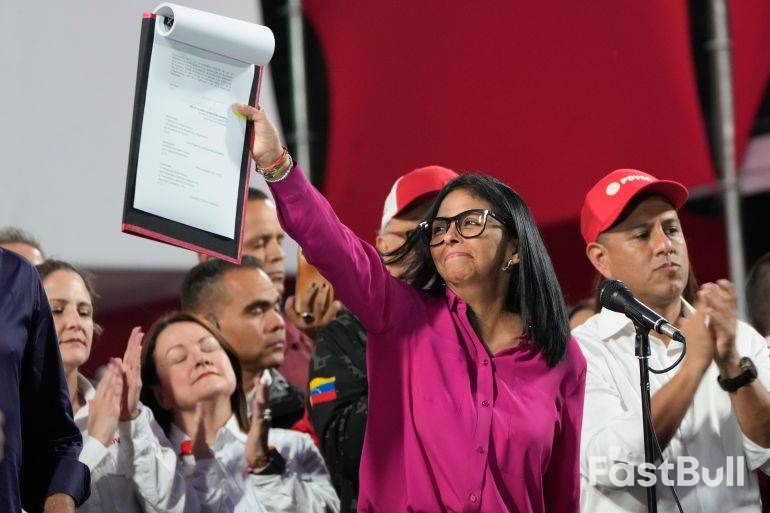
          Venezuela's interim President Delcy Rodriguez has signed a landmark reform bill designed to open the nation's state-run oil sector to private investment. The move fulfills a major demand from the United States and marks a significant shift in the country's economic policy.

          The bill was signed into law on Thursday, just hours after being passed by the National Assembly, which is dominated by Rodriguez's United Socialist Party. During a signing ceremony with state oil workers, Rodriguez framed the reform as a crucial step toward a better economic future.

          "We're talking about the future," she said. "We are talking about the country that we are going to give to our children."

          Interim President Delcy Rodriguez at the signing ceremony for the oil sector reform bill.

          This legislative action follows intense pressure from the Trump administration, which began after the US military's abduction of former leader Nicolas Maduro and his wife on January 3. President Trump had explicitly warned Rodriguez that she could "pay a very big price, probably bigger than Maduro" for failing to comply with his demands to open the oil sector.

          Key Changes in Venezuela's Oil Law

          The new legislation introduces several fundamental changes aimed at attracting foreign companies, many of which have been wary of investing in Venezuela. The core components of the bill include:

          • Private Sector Control: The law gives private firms control over the sale and production of Venezuelan oil.

          • External Dispute Resolution: It mandates that legal disputes be resolved in courts outside of Venezuela, addressing a long-standing concern from foreign companies about the domestic judicial system.

          • Royalty Cap: Government-collected royalties on oil activities will be capped at 30 percent.

          These reforms are designed to create a more appealing environment for outside petroleum firms, who have been hesitant to invest due to the country's history of political instability and economic turmoil under Maduro.

          US Loosens Sanctions in Response

          Coinciding with Rodriguez signing the bill, the Trump administration announced it would ease some of the sweeping sanctions imposed on Venezuela's oil industry in 2019.

          The U.S. Department of the Treasury stated it would now permit limited transactions involving the Venezuelan government and its state oil company, PDVSA. These transactions are specified as those "necessary to the lifting, exportation, reexportation, sale, resale, supply, storage, marketing, purchase, delivery, or transportation of Venezuelan-origin oil" by established U.S. entities.

          A Controversial Path to Reform

          The policy shift comes after a period of intense U.S. intervention. The abduction of former president Nicolas Maduro, who is now awaiting trial in a New York prison, resulted in dozens of deaths and drew accusations that the U.S. had violated Venezuelan sovereignty.

          Trump administration officials have asserted that the U.S. will now determine who can purchase Venezuelan oil and under what terms. The proceeds from these sales are slated to be deposited into a bank account controlled by the United States. This approach has been criticized, though President Trump and his allies have previously claimed that Venezuelan oil should "belong" to the U.S.

          This new era of privatization reverses decades of state control. Venezuela first nationalized its oil sector in the 1970s. In 2007, Maduro's predecessor, Hugo Chavez, further tightened government control by expropriating foreign-held assets, setting the stage for years of confrontation with international oil companies.

          To stay updated on all economic events of today, please check out our Economic calendar
          Risk Warnings and Disclaimers
          You understand and acknowledge that there is a high degree of risk involved in trading. Following any strategies or investment methods may lead to potential losses. The content on the site is provided by our contributors and analysts for information purposes only. You are solely responsible for determining whether any trading assets, securities, strategy, or any other product is suitable for investing based on your own investment objectives and financial situation.
          Add to Favorites
          Share
          FastBull
          Copyright © 2026 FastBull Ltd

          728 RM B 7/F GEE LOK IND BLDG NO 34 HUNG TO RD KWUN TONG KLN HONG KONG

          TelegramInstagramTwitterfacebooklinkedin
          App Store Google Play Google Play
          Products
          Charts

          Chats

          Q&A with Experts
          Screeners
          Economic Calendar
          Data
          Tools
          Membership
          Features
          Function
          Markets
          Copy Trading
          Latest Signals
          Contests
          News
          Analysis
          24/7
          Columns
          Education
          Company
          Careers
          About Us
          Contact Us
          Advertising
          Help Center
          Feedback
          User Agreement
          Privacy Policy
          Personal Information Protection Statement
          Business

          White Label

          Data API

          Web Plug-ins

          Poster Maker

          Affiliate Program

          Risk Disclosure

          The risk of loss in trading financial instruments such as stocks, FX, commodities, futures, bonds, ETFs and crypto can be substantial. You may sustain a total loss of the funds that you deposit with your broker. Therefore, you should carefully consider whether such trading is suitable for you in light of your circumstances and financial resources.

          No decision to invest should be made without thoroughly conducting due diligence by yourself or consulting with your financial advisors. Our web content might not suit you since we don't know your financial conditions and investment needs. Our financial information might have latency or contain inaccuracy, so you should be fully responsible for any of your trading and investment decisions. The company will not be responsible for your capital loss.

          Without getting permission from the website, you are not allowed to copy the website's graphics, texts, or trademarks. Intellectual property rights in the content or data incorporated into this website belong to its providers and exchange merchants.

          Not Logged In

          Log in to access more features

          Connect Broker
          Become a signal provider
          Help Center
          Customer Service
          Dark Mode
          Price Up/Down Colors

          Log In

          Sign Up

          Position
          Layout
          Fullscreen
          Default to Chart
          The chart page opens by default when you visit fastbull.com