Markets
News
Analysis
User
24/7
Economic Calendar
Education
Data
- Names
- Latest
- Prev




Signal Accounts for Members
All Signal Accounts
All Contests


U.K. Refinitiv/Ipsos Primary Consumer Sentiment Index (PCSI) (Jan)A:--
F: --
P: --
Brazil Retail Sales MoM (Nov)A:--
F: --
P: --
U.S. NY Fed Manufacturing Prices Received Index (Jan)A:--
F: --
P: --
U.S. NY Fed Manufacturing New Orders Index (Jan)A:--
F: --
P: --
U.S. NY Fed Manufacturing Employment Index (Jan)A:--
F: --
P: --
U.S. Export Price Index YoY (Nov)A:--
F: --
P: --
U.S. NY Fed Manufacturing Index (Jan)A:--
F: --
U.S. Initial Jobless Claims 4-Week Avg. (SA)A:--
F: --
U.S. Export Price Index MoM (Nov)A:--
F: --
P: --
Canada Manufacturing Unfilled Orders MoM (Nov)A:--
F: --
P: --
Canada Manufacturing New Orders MoM (Nov)A:--
F: --
P: --
U.S. Philadelphia Fed Manufacturing Employment Index (Jan)A:--
F: --
P: --
Canada Wholesale Inventory YoY (Nov)A:--
F: --
P: --
Canada Manufacturing Inventory MoM (Nov)A:--
F: --
P: --
Canada Wholesale Sales YoY (Nov)A:--
F: --
P: --
Canada Wholesale Inventory MoM (Nov)A:--
F: --
P: --
U.S. Import Price Index YoY (Nov)A:--
F: --
U.S. Import Price Index MoM (Nov)A:--
F: --
P: --
U.S. Weekly Continued Jobless Claims (SA)A:--
F: --
Canada Wholesale Sales MoM (SA) (Nov)A:--
F: --
P: --
U.S. Weekly Initial Jobless Claims (SA)A:--
F: --
U.S. Philadelphia Fed Business Activity Index (SA) (Jan)A:--
F: --
P: --
U.S. EIA Weekly Natural Gas Stocks ChangeA:--
F: --
P: --
Richmond Federal Reserve President Barkin delivered a speech.
U.S. Weekly Treasuries Held by Foreign Central BanksA:--
F: --
P: --
Germany CPI Final MoM (Dec)A:--
F: --
P: --
Germany CPI Final YoY (Dec)A:--
F: --
P: --
Germany HICP Final MoM (Dec)A:--
F: --
P: --
Germany HICP Final YoY (Dec)A:--
F: --
P: --
Brazil PPI MoM (Nov)A:--
F: --
P: --
Canada New Housing Starts (Dec)A:--
F: --
P: --
U.S. Capacity Utilization MoM (SA) (Dec)--
F: --
P: --
U.S. Industrial Output YoY (Dec)--
F: --
P: --
U.S. Manufacturing Capacity Utilization (Dec)--
F: --
P: --
U.S. Manufacturing Output MoM (SA) (Dec)--
F: --
P: --
U.S. Industrial Output MoM (SA) (Dec)--
F: --
P: --
U.S. NAHB Housing Market Index (Jan)--
F: --
P: --
Russia CPI YoY (Dec)--
F: --
P: --
U.S. Weekly Total Rig Count--
F: --
P: --
U.S. Weekly Total Oil Rig Count--
F: --
P: --
Japan Core Machinery Orders YoY (Nov)--
F: --
P: --
Japan Core Machinery Orders MoM (Nov)--
F: --
P: --
U.K. Rightmove House Price Index YoY (Jan)--
F: --
P: --
China, Mainland GDP YoY (YTD) (Q4)--
F: --
P: --
China, Mainland Industrial Output YoY (YTD) (Dec)--
F: --
P: --
Japan Industrial Output Final MoM (Nov)--
F: --
P: --
Japan Industrial Output Final YoY (Nov)--
F: --
P: --
Euro Zone Core HICP Final MoM (Dec)--
F: --
P: --
Euro Zone HICP Final MoM (Dec)--
F: --
P: --
Euro Zone HICP Final YoY (Dec)--
F: --
P: --
Euro Zone HICP MoM (Excl. Food & Energy) (Dec)--
F: --
P: --
Euro Zone Core CPI Final YoY (Dec)--
F: --
P: --
Euro Zone Core HICP Final YoY (Dec)--
F: --
P: --
Euro Zone CPI YoY (Excl. Tobacco) (Dec)--
F: --
P: --
Euro Zone Core CPI Final MoM (Dec)--
F: --
P: --
Canada National Economic Confidence Index--
F: --
P: --
Canada Trimmed CPI YoY (SA) (Dec)--
F: --
P: --
Canada CPI YoY (Dec)--
F: --
P: --
Canada CPI MoM (Dec)--
F: --
P: --
Canada Core CPI YoY (Dec)--
F: --
P: --
Canada Core CPI MoM (Dec)--
F: --
P: --


No matching data
Latest Views
Latest Views
Trending Topics
Top Columnists
Latest Update
White Label
Data API
Web Plug-ins
Affiliate Program
View All

No data
US forces secured Venezuela's oil, signaling a new geopolitical doctrine set to reshape global energy markets and challenge rivals.
A stunning operation in Venezuela on January 3 saw U.S. forces capture socialist leader Nicolás Maduro, an event that could reshape global energy markets for the next decade. Following the move, President Donald Trump announced that the United States would not only spearhead the rebuilding of the nation's collapsed oil infrastructure but also assume indefinite control over its crude exports.
This decisive action signals a potential opportunity for investors, but it also introduces significant geopolitical risks. The move has been framed as a modern revival of the Monroe Doctrine, a nearly 200-year-old U.S. policy asserting dominance in the Western Hemisphere and warning foreign powers against interference.
This 21st-century version, dubbed the "Trump Corollary" or "Donroe Doctrine," serves as a direct message to China and Russia that Latin America's resources, particularly its oil, are not open for their influence. President Trump stated his intentions plainly: "We're going to be using [Venezuela's] oil, and we're going to be taking oil."
The administration is already moving to market and sell 30 to 50 million barrels of Venezuelan crude, with President Trump directly controlling the proceeds. Energy Secretary Chris Wright confirmed a long-term strategy, stating the U.S. will sell Venezuelan oil "indefinitely," starting with existing storage and expanding to future production.
This policy directly challenges China, Venezuela's largest oil customer and Latin America's biggest trading partner since 2020. With extensive investments in regional ports, telecom, and power grids—including 37 port projects and $13 billion in credit lines—Beijing is unlikely to cede its influence easily.
Venezuela's vast resource wealth stands in stark contrast to its current output. The nation sits on over 300 billion barrels of proven oil reserves, the largest in the world and representing nearly one-fifth of the global total. Yet, due to decades of corruption and mismanagement, its production has collapsed. Once producing 7 to 8 million barrels per day, the country now accounts for just 1% of global oil supply, with output below 1 million barrels daily.
Reversing this decline presents a monumental task. The energy consultancy firm Rystad estimates that restoring Venezuela's oil production to levels from 15 years ago will require up to $110 billion in capital expenditure. To put that figure in perspective, it is double the entire global spending of all U.S. oil majors in 2024, according to a CLSA report.
Recognizing this financial hurdle, President Trump announced that the government would reimburse oil companies for their efforts to get the country's operations "up and running." He told NBC News, "A tremendous amount of money will have to be spent, and the oil companies will spend it, and then they'll get reimbursed by us or through revenue."
Corporate Resistance and Operational Hurdles
Despite government assurances, major industry players remain cautious. ExxonMobil, whose assets have been seized twice by Venezuela in the past, has expressed significant reservations. During a roundtable with the administration, CEO Darren Woods described the country as "uninvestable" without fundamental changes to its legal system and hydrocarbon laws. President Trump dismissed these concerns as "cute" and suggested he might block Exxon from operating in Venezuela.
Beyond capital, the industry faces a severe human resources crisis. Tens of thousands of skilled engineers and geologists have fled the country. Many also stripped equipment, vehicles, and copper wiring from the state-run oil company, Petróleos de Venezuela, before leaving. Furthermore, much of Venezuela's crude is ultra-heavy, requiring specialized processing and naphtha blending before it can be transported.
News of Maduro's removal triggered a strong positive reaction in financial markets. Chevron, the only U.S. major currently operating in Venezuela, was the best-performing stock in the Dow Jones on January 5, surging as much as 10% during intraday trading before closing up approximately 5%. The company, which exports about 140,000 barrels a day from the country, is reportedly negotiating with the U.S. government for an expanded license to increase exports to both American refineries and third-party buyers.
Defense contractors in both the U.S. and Europe also saw their stocks climb following the events.
The return of Venezuelan oil to the global market is expected to increase supply, which would likely put downward pressure on crude prices. While this could be problematic for OPEC, it would benefit U.S. consumers, refiners, airlines, and shipping companies.
For investors navigating this new landscape, several areas warrant attention:
• Selective Energy Stocks: Companies with existing or potential exposure to Venezuela's reopening, such as Chevron, may see benefits.
• Defense Sector: Geopolitical tensions suggest maintaining an overweight position in defense stocks. This view is reinforced by discussions of a potential military takeover of Greenland and a push to raise the 2027 U.S. military budget to $1.5 trillion.
• Gold as a Hedge: A 10% portfolio allocation to gold, split between physical bullion and high-quality gold mining stocks, remains a recommended strategy for hedging against uncertainty.

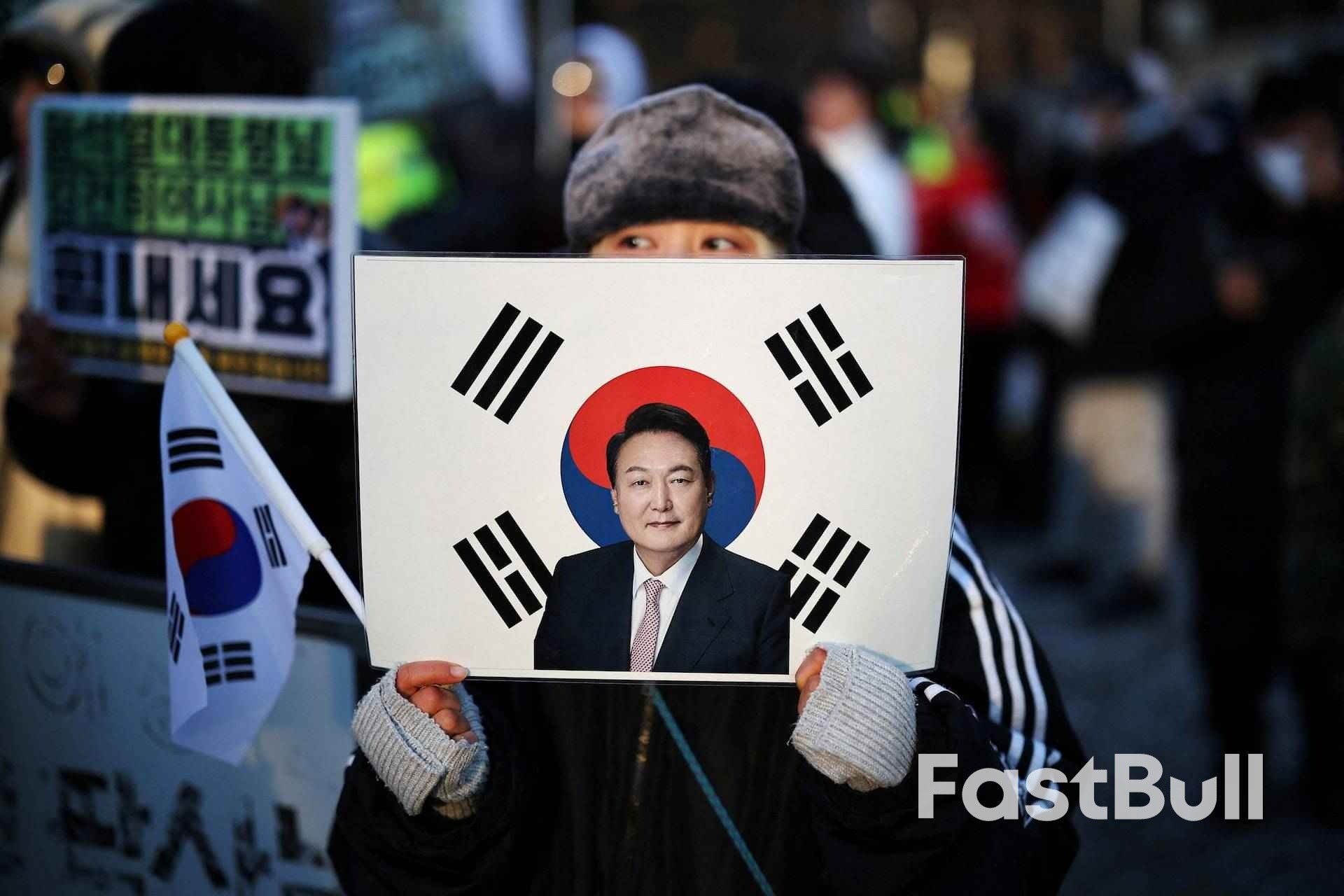
Former South Korean President Yoon Suk Yeol is due to face the first court ruling on Friday stemming from criminal charges over his failed martial law attempt, a case that could result in a long prison sentence if he is found guilty.
Yoon could receive a sentence of up to 10 years in jail if he is convicted on charges that include obstructing officials from executing an arrest warrant against him in January when he barricaded himself inside his residential compound and ordered the security service to block investigators.
He was finally arrested in a second attempt involving more than 3,000 police officers. His arrest was the first ever for a sitting president in South Korea.
Yoon, who is currently being held in the Seoul Detention Center, also faces allegations of falsifying official documents when he declared martial law in December 2024, claiming he planned to restore democratic order to the country that was under siege from the majority opposition and "anti-state" forces.
Separately, Yoon faces a number of other trials, including on a charge of masterminding insurrection. Prosecutors have asked the court to give him the death sentence on this charge, with a ruling scheduled for February.
Parliament, joined by some members of Yoon's conservative party, voted within hours to overturn his surprise martial law decree and later impeached him, suspending his powers.
He was removed from office in April last year by the Constitutional Court that ruled he violated the duties of his office.
While his bid to impose martial law lasted only about six hours, it sent shockwaves through South Korea, which is Asia's fourth-largest economy, a key U.S. security ally and long considered one of the world's most-resilient democracies.
India's recent flurry of free trade agreements (FTAs) may not be enough to shield its economy from the significant damage caused by high US tariffs, according to an analysis by economists at Barclays Plc.
In a Friday report, economists Aastha Gudwani and Amruta Ghare argued that while India's efforts to secure new trade deals are positive, they are unlikely to generate enough export growth to make up for the losses from US trade policy. "While the FTA spree certainly bodes well for making international trade more seamless, it may not necessarily result in higher exports large enough to offset the US tariff-inflicted pain," they wrote.
The United States remains India’s largest single export market, accounting for 19.3% of its total exports before the tariffs were introduced. However, India is one of the few major economies without a free trade deal with Washington and currently faces a steep 50% tariff rate on many goods, among the highest in the world.
These levies have hit India’s labor-intensive industries particularly hard, including:
• Textiles and apparel
• Gems and leather
• Handicrafts
The ongoing trade friction and lack of a deal have pressured the rupee and prompted New Delhi to allocate $5 billion to support its exporters. The situation has also pushed India to accelerate trade talks with other partners, like the European Union, as it works to lower trade barriers and move away from its historically protectionist image.
While India has successfully signed new agreements, including deals with Oman and New Zealand last year, the trade volumes with these partners are too small to replace the US market.
"The sheer scale of things doesn't add up," the Barclays economists noted. They point to the electrical machinery sector as an example. While the UAE, Netherlands, and the UK are India's next largest partners after the US, "these three cumulatively do not make up for the market size that the US offers."
The report highlights that about 70% of India's exports to the US face a "serious threat" if the 50% tariffs remain in place. Key sectors at risk include leather, apparel, gems and jewelry, home furnishings, and marine exports.
India is currently negotiating or already has FTAs with 16 of its top 20 export markets, which collectively represent 51% of its total trade. The US is included in this group of negotiation partners.
However, the real measure of success depends on execution. "The real test lies in translating these agreements into tangible export growth," Barclays stated, adding that success also hinges on whether these deals strengthen India's domestic industrial base.
A prospective FTA with the European Union is seen as a crucial opportunity. The Barclays economists described a potential India-EU deal as a "big step towards export diversification and greater trade openness with a large bloc."
Expectations for progress are rising, with European Commission President Ursula von der Leyen and European Council President António Luís Santos da Costa scheduled to visit India this month. The visit could signal a breakthrough in negotiations that have been ongoing for years.
Oil prices advanced on Friday, with both Brent and U.S. West Texas Intermediate benchmarks seeing gains as investors weighed ongoing supply risks from political instability in Iran against signs that the threat of immediate U.S. military action is receding.
By 1000 GMT, Brent crude rose 50 cents, or 0.78%, to $64.26 a barrel, putting it on track for its fourth consecutive weekly gain. U.S. West Texas Intermediate (WTI) climbed 48 cents, or 0.81%, to $59.67.
Both oil benchmarks hit multi-month highs earlier in the week as protests flared up across Iran and U.S. President Donald Trump signaled the potential for military strikes.
The political upheaval continues to fuel uncertainty. "Oil prices are likely to experience greater volatility as markets digest the potential for supply disruptions," noted analysts at BMI.
However, fears of a direct conflict eased late on Thursday after Trump remarked that Tehran's crackdown on protesters was softening. Despite this development, analysts at IG cautioned that risks linked to Iran "remain significant, keeping the market nervous in the short term."
A central concern for the oil market remains the potential for disruption to flows through the Strait of Hormuz. This critical chokepoint sees the passage of approximately 20 million barrels of oil per day. Analysts warned that any military escalation with Iran could threaten this vital supply route.
While geopolitical tensions are providing short-term support, many analysts believe that higher global oil supply this year could create a ceiling for prices.
According to Phillip Nova analyst Priyanka Sachdeva, "the underlying balance still points to ample supply" despite the "steady drumbeat of geopolitical risks and macro speculation."
Sachdeva suggested that oil is likely to remain range-bound, with Brent crude trading broadly between $57 and $67 a barrel, unless there is a "genuine revival in Chinese demand or a meaningful bottleneck in physical barrel flows."
Iran is experiencing its longest and most severe internet shutdown on record, sparking fears of an intensifying state crackdown on protesters, even as officials have offered assurances to de-escalate punishments.
Activists and global monitors report that the nationwide internet blackout has now stretched into its eighth consecutive day. According to NetBlocks, a watchdog organization that tracks global connectivity, this shutdown has surpassed the duration of the one imposed during the 2019 demonstrations.
The digital blockade persists despite authorities appearing to have largely suppressed the recent wave of protests through a violent response. The Oslo-based group Iran Human Rights reports that nearly 3,500 people have died and at least 20,000 have been arrested since the demonstrations began in late December. Other estimates suggest the death toll could be significantly higher.
The protests, which saw hundreds of thousands take to the streets, were initially triggered by a currency crisis. Iran's government completely cut off internet access on January 8 as the demonstrations escalated. Limited social media footage that has emerged from the country depicts scenes of shootings and killings as authorities moved to crush the unrest.
Iranian officials have publicly characterized the protests as a plot backed by the United States and Israel, accusing them of arming and directing terrorists to attack security forces and civilians.
The situation has drawn sharp focus from Washington. After US President Donald Trump urged Iranians to continue opposing Supreme Leader Ayatollah Ali Khamenei and stated that "help is on the way," Iranian Foreign Minister Abbas Araghchi pledged on Wednesday that protesters would not be executed.
Araghchi's statement seemed to temporarily calm fears of an immediate intervention, with Trump noting he had been informed that "killing in Iran is stopping." However, the risk of military action has not disappeared.
White House spokeswoman Karoline Leavitt confirmed on Thursday that President Trump is closely monitoring the situation and keeping all options on the table. Citing military sources, Fox News reported that at least one US aircraft carrier and other military assets are being moved to the region to provide strike options.
Analysts at Eurasia Group noted in a report that the probability of a US strike will increase once the carrier group arrives between late January and early February, and will remain elevated through the first half of 2026. They argue that because Iran cannot fix the underlying problems causing the protests, new demonstrations could erupt, giving Trump a new reason to threaten military action.
The protests are rooted in severe economic distress. A sharp crash in the value of the Iranian rial was the initial catalyst for the widespread demonstrations.
The country continues to face a severe shortage of foreign exchange, which is expected to maintain pressure on the currency. This ensures that inflation, officially running at around 50%, will likely stay high in the coming weeks and months, further straining the population.
In response to the crackdown, Western governments are increasing pressure on Tehran. European Commission President Ursula von der Leyen stated that the bloc is considering tightening its sanctions against Iran.
On Thursday, the United States also added several individuals and entities to its extensive sanctions list.
"They are weakening the regime," von der Leyen said during a visit to Cyprus on Thursday. "And the sanctions help to push forward that this regime comes to an end and that there is a change."
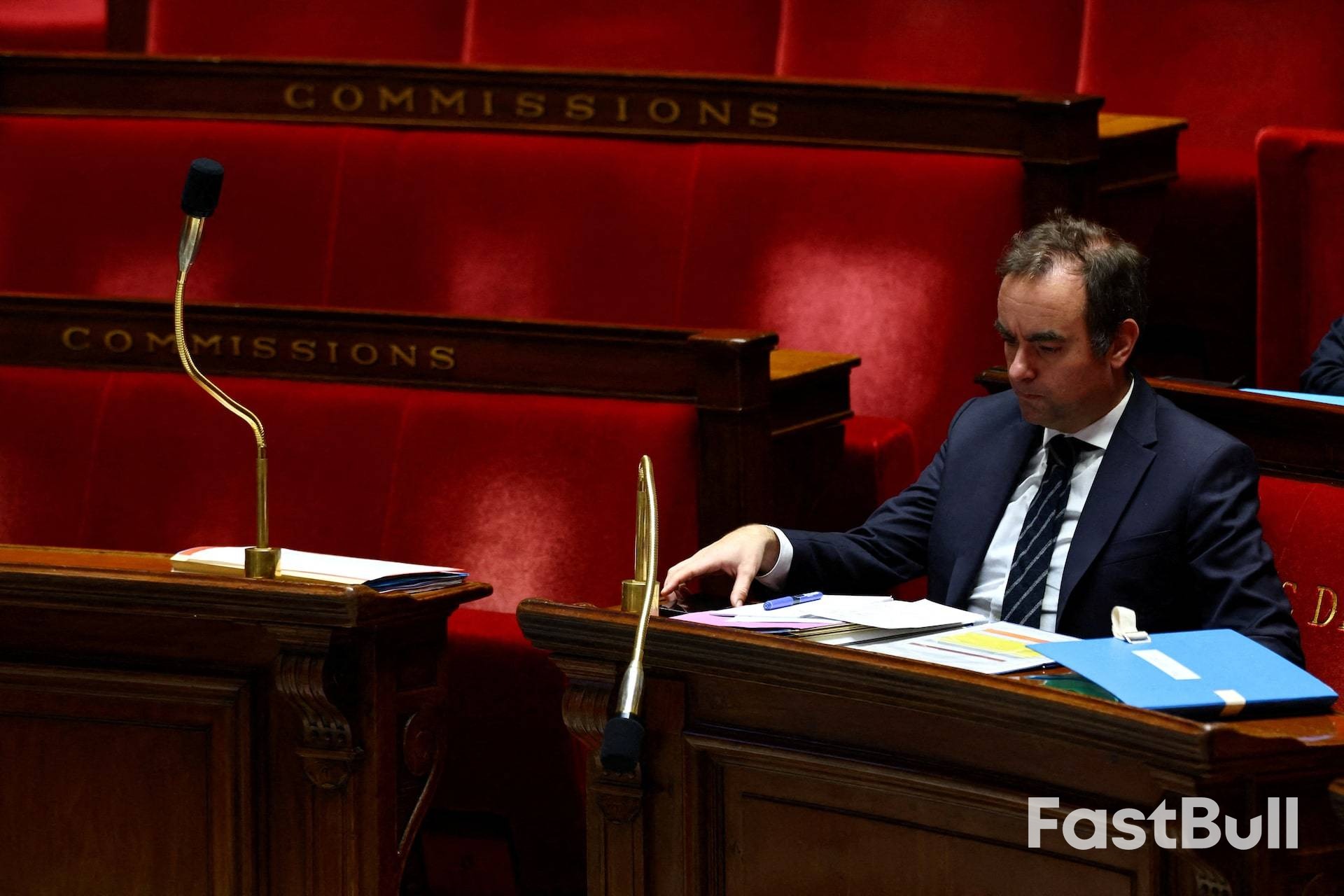
The French government has suspended parliamentary talks on its 2026 budget until Tuesday, escalating a political stalemate that could force Prime Minister Sebastien Lecornu to push the legislation through without a vote. This high-stakes maneuver would almost certainly trigger a no-confidence motion, putting the government's survival on the line.

After three months of negotiations failed to produce a compromise, the government is pointing fingers at opposition parties on both ends of the political spectrum. Budget Minister Amelie de Montchalin accused the hard-left France Unbowed (LFI) and the far-right National Rally (RN) of deliberately sabotaging the process.
"The extremes have methodically voted for amendments to make the budget unvotable," Montchalin stated in a Friday interview on France 2 TV.
In an effort to break the deadlock before talks resume, Lecornu is expected to propose an amended version of the budget bill. Montchalin acknowledged that some government proposals were not working and singled out "issues concerning local authorities" as a major concern that needs to be addressed.
With a parliamentary agreement looking unlikely, a government source confirmed Lecornu is considering two constitutional options to pass the budget without a vote.
1. Article 49.3: This article allows the government to bypass parliament on a bill. However, Lecornu has previously pledged not to use this power, stating his preference for a negotiated agreement.
2. Article 47: This alternative involves using an executive order to pass the budget. The legal downside is that it remains unclear if this method would permit the inclusion of amendments made by lawmakers during the past three months of debate.
Using either option is a significant political gamble, as it is expected to be met with an immediate vote of no confidence from the opposition.
The success of a no-confidence motion could depend on the Socialist party. Their support hinges on whether the final version of the budget incorporates at least some of their proposed amendments.
Philippe Brun, the Socialists' lead on the budget, issued a stark warning, threatening to back a no-confidence motion "without hesitation" if the government attempts to pass the budget by executive order. This leaves Lecornu's administration in a precarious position, forced to choose between concessions and a potential government collapse.
Malaysia's economy closed out 2025 on a high note, posting stronger-than-expected growth that defied earlier forecasts. However, economists warn that the country's vital electrical and electronics (E&E) sector remains exposed to the looming impact of higher US tariffs, with significant risks expected to materialize in 2026.
Official estimates released by the Department of Statistics Malaysia (DOSM) show the economy expanded by 5.7% year-on-year in the fourth quarter of 2025, marking its fastest pace since the second quarter of 2024. This growth was largely driven by robust activity in the services and manufacturing sectors. For the full year, the economy is projected to have grown 4.9%, a slight moderation from the 5.1% recorded in the previous year.
Despite the strong performance in 2025, the export outlook for 2026 is clouded by uncertainty. According to Kenanga Research, the full effects of increased US tariffs have not yet been felt and could pose significant downside risks for export-heavy industries like E&E.
These concerns have been amplified by recent actions from the White House. Within the first two weeks of the year, US President Donald Trump reintroduced a 25% levy on certain advanced computing chips and announced a separate 25% tariff on countries conducting business with Iran.
While a temporary pause in the US-China tariff conflict until November 2026 may provide some breathing room for global trade, UOB Global Economics & Market Research still anticipates that Malaysia's economic growth will moderate to around 4.5% in 2026.
Economists broadly expect Malaysia's resilient domestic economy to buffer the potential fallout from trade risks. A broad-based expansion, particularly in the services and construction sectors, is forecast to provide a solid foundation for growth.
Several key factors are expected to support this domestic strength:
• Rising household incomes from civil service salary adjustments.
• A lower national unemployment rate.
• The realization of previously approved investment projects.
• Continued targeted cash transfers to households.
UOB also highlighted other catalysts, including a federal budget allocation of RM419.2 billion, which covers an RM18 billion second phase for the civil servants' pay hike in January 2026 and RM81 billion for development expenditure. The Visit Malaysia Year 2026 campaign and the continued rollout of national master plans are also expected to contribute positively.
The final, official GDP figures for Q4 2025, along with current account data, are scheduled for release by DOSM on February 13.
On the monetary policy front, the consensus is that Bank Negara Malaysia (BNM) will maintain the overnight policy rate (OPR) at 2.75% in its upcoming announcement. A Bloomberg survey of nine economists showed a median forecast of no change.
According to ANZ Research, the strong economic growth reinforces the view that BNM's next policy move will likely be a hike. However, with price pressures remaining benign, there is no urgency for immediate tightening.
Both UOB and Pantheon Macroeconomics see little reason for policy easing. They note that Malaysia has benefited from relatively competitive tariff treatment and ongoing exemptions for semiconductors. Furthermore, with the US Federal Reserve cutting its own rates, pressure on capital outflows has diminished.
Pantheon Macroeconomics concluded that BNM currently has the luxury of keeping rate cuts in its toolbox, ready to be deployed in the event of any new economic shocks.
White Label
Data API
Web Plug-ins
Poster Maker
Affiliate Program
The risk of loss in trading financial instruments such as stocks, FX, commodities, futures, bonds, ETFs and crypto can be substantial. You may sustain a total loss of the funds that you deposit with your broker. Therefore, you should carefully consider whether such trading is suitable for you in light of your circumstances and financial resources.
No decision to invest should be made without thoroughly conducting due diligence by yourself or consulting with your financial advisors. Our web content might not suit you since we don't know your financial conditions and investment needs. Our financial information might have latency or contain inaccuracy, so you should be fully responsible for any of your trading and investment decisions. The company will not be responsible for your capital loss.
Without getting permission from the website, you are not allowed to copy the website's graphics, texts, or trademarks. Intellectual property rights in the content or data incorporated into this website belong to its providers and exchange merchants.
Not Logged In
Log in to access more features

FastBull Membership
Not yet
Purchase
Log In
Sign Up