Markets
News
Analysis
User
24/7
Economic Calendar
Education
Data
- Names
- Latest
- Prev



Signal Accounts for Members
All Signal Accounts
All Contests


Mexico Unemployment Rate (Not SA) (Dec)A:--
F: --
P: --
Canada National Economic Confidence IndexA:--
F: --
P: --
U.S. Non-Defense Capital Durable Goods Orders MoM (Excl. Aircraft) (Nov)A:--
F: --
U.S. Durable Goods Orders MoM (Excl. Defense) (SA) (Nov)A:--
F: --
U.S. Durable Goods Orders MoM (Excl.Transport) (Nov)A:--
F: --
P: --
U.S. Durable Goods Orders MoM (Nov)A:--
F: --
U.S. Chicago Fed National Activity Index (Nov)A:--
F: --
U.S. Dallas Fed New Orders Index (Jan)A:--
F: --
P: --
U.S. Dallas Fed General Business Activity Index (Jan)A:--
F: --
U.S. 2-Year Note Auction Avg. YieldA:--
F: --
P: --
U.K. BRC Shop Price Index YoY (Jan)A:--
F: --
P: --
China, Mainland Industrial Profit YoY (YTD) (Dec)A:--
F: --
P: --
Germany 2-Year Schatz Auction Avg. YieldA:--
F: --
P: --
Mexico Trade Balance (Dec)A:--
F: --
P: --
U.S. Weekly Redbook Index YoYA:--
F: --
P: --
U.S. S&P/CS 20-City Home Price Index YoY (Not SA) (Nov)A:--
F: --
P: --
U.S. S&P/CS 20-City Home Price Index MoM (SA) (Nov)A:--
F: --
U.S. FHFA House Price Index MoM (Nov)A:--
F: --
P: --
U.S. FHFA House Price Index (Nov)A:--
F: --
P: --
U.S. FHFA House Price Index YoY (Nov)A:--
F: --
U.S. S&P/CS 10-City Home Price Index YoY (Nov)A:--
F: --
P: --
U.S. S&P/CS 10-City Home Price Index MoM (Not SA) (Nov)A:--
F: --
P: --
U.S. S&P/CS 20-City Home Price Index (Not SA) (Nov)A:--
F: --
P: --
U.S. S&P/CS 20-City Home Price Index MoM (Not SA) (Nov)A:--
F: --
P: --
U.S. Richmond Fed Manufacturing Composite Index (Jan)A:--
F: --
P: --
U.S. Conference Board Present Situation Index (Jan)--
F: --
P: --
U.S. Conference Board Consumer Expectations Index (Jan)--
F: --
P: --
U.S. Richmond Fed Manufacturing Shipments Index (Jan)A:--
F: --
P: --
U.S. Richmond Fed Services Revenue Index (Jan)--
F: --
P: --
U.S. Conference Board Consumer Confidence Index (Jan)A:--
F: --
P: --
U.S. 5-Year Note Auction Avg. Yield--
F: --
P: --
U.S. API Weekly Refined Oil Stocks--
F: --
P: --
U.S. API Weekly Crude Oil Stocks--
F: --
P: --
U.S. API Weekly Gasoline Stocks--
F: --
P: --
U.S. API Weekly Cushing Crude Oil Stocks--
F: --
P: --
Australia RBA Trimmed Mean CPI YoY (Q4)--
F: --
P: --
Australia CPI YoY (Q4)--
F: --
P: --
Australia CPI QoQ (Q4)--
F: --
P: --
Germany GfK Consumer Confidence Index (SA) (Feb)--
F: --
P: --
Germany 10-Year Bund Auction Avg. Yield--
F: --
P: --
India Industrial Production Index YoY (Dec)--
F: --
P: --
India Manufacturing Output MoM (Dec)--
F: --
P: --
U.S. MBA Mortgage Application Activity Index WoW--
F: --
P: --
Canada Overnight Target Rate--
F: --
P: --
BOC Monetary Policy Report
U.S. EIA Weekly Crude Stocks Change--
F: --
P: --
U.S. EIA Weekly Cushing, Oklahoma Crude Oil Stocks Change--
F: --
P: --
U.S. EIA Weekly Crude Demand Projected by Production--
F: --
P: --
U.S. EIA Weekly Crude Oil Imports Changes--
F: --
P: --
U.S. EIA Weekly Heating Oil Stock Changes--
F: --
P: --
U.S. EIA Weekly Gasoline Stocks Change--
F: --
P: --
BOC Press Conference
Russia PPI MoM (Dec)--
F: --
P: --
Russia PPI YoY (Dec)--
F: --
P: --
U.S. Target Federal Funds Rate Lower Limit (Overnight Reverse Repo Rate)--
F: --
P: --


No matching data
Latest Views
Latest Views
Trending Topics
Top Columnists
Latest Update
White Label
Data API
Web Plug-ins
Affiliate Program
View All

No data
President Donald Trump announced higher tariffs on South Korean goods, citing delays by Seoul’s legislature in approving a previously agreed trade framework.
Spain's unemployment rate dipped below 10% at the end of 2025, the lowest level in almost 18 years.
Joblessness was 9.93% in the three months through December, the statistics office said Tuesday, adding that almost 22.5 million people are now employed in Spain.
In the past 45 years, there have only been four years during which the unemployment rate has fallen below 10%, according to data from the national statistical office.
Spain's economy has outperformed its euro-area peers in recent years as politicians embraced immigration to boost growth. In a further push Tuesday, the government is set to grant resident permits to about 500,000 undocumented migrants.
The measure is expected to offer legal status to people who were in the country before Dec. 31, have no criminal record and can prove at least five months of uninterrupted residence.
This week's positive jobs data underscore the resilience of the euro zone's fourth-biggest economy and may also shift some attention away from recent fatal train accidents that have put pressure on Prime Minister Pedro Sánchez.
He's also struggling to push through his legislative agenda. Spain hasn't passed a budget since 2023 and the premier needs the backing of at least eight political parties to get anything through parliament.
German companies poured more than €7 billion into China in the first eleven months of 2025, marking a four-year peak and a clear pivot in global investment strategy. This figure represents a massive 55.5% increase from the €4.5 billion invested in both 2023 and 2024.
According to new data from the IW German Economic Institute, the surge highlights how aggressive U.S. trade policies under President Donald Trump are pushing industries in Europe's largest economy to strengthen business ties elsewhere.
The sharp rise in German investment in China is directly linked to the Trump administration's trade policies, which have included significant tariffs on EU imports. This has prompted German firms to actively shift their focus toward China as a more stable alternative for growth.
The trend is further underscored by a corresponding decline in capital flows to the United States. A previous Reuters report revealed that German companies nearly halved their U.S. investments during the first year of Trump's second term. This shift helped China reclaim its position as Germany's top trading partner last year, overtaking the U.S. after a brief period.
This redirection of capital isn't unique to Germany. Governments and industries across the globe, from Britain to Canada, are actively seeking to expand trade relationships with Asian and South American markets to navigate the changing geopolitical landscape.
The investment surge is not just about finding new markets; it's a calculated move to de-risk operations by building resilient, localized supply chains.
"German companies are continuing to expand their activities in China – and at an accelerated pace," said Juergen Matthes, head of international economic policy at the IW institute. He noted that growing concerns about "geopolitical conflicts" are prompting companies to make their Chinese operations more independent in case of major trade disruptions.
The core logic is to produce goods in China specifically for the Chinese market. As Matthes explained, "Many companies say: 'if I'm only producing in China for China, I'm reducing my risk of being affected by possible tariffs and export restrictions'."
Germany's industrial giants remain heavily dependent on the Chinese market, which is the world's largest for cars and chemicals. Major players like BASF, Volkswagen, Infineon, and Mercedes-Benz are all deepening their commitment.
Volkswagen, Europe's largest automaker, stated that while both the U.S. and Chinese markets are strategically important, its investments are guided by local strategies. The company noted that technologies developed in China are now being used to strengthen its global presence in other regions, including Southeast Asia and South America.
The strategy extends beyond the automotive sector. The German fan and motor manufacturer ebm-papst invested €30 million last year to expand its Chinese operations, accounting for over a fifth of its total investments. The company's goal is to produce more where its customers are located.
"This model has proven to be an important anchor of stability, especially in times of tariffs and geopolitical tensions," the company said, adding that it also plans to expand its U.S. business this year.
The overall investment figure for 2025 not only marks a four-year high but also surpasses the €6 billion average recorded between 2010 and 2024, according to the IW report, which used data from Germany's Bundesbank. The trend reflects a broader strategic realignment, as highlighted by German Economy Minister Katherina Reiche, who recently emphasized the need to seek new alliances as established economic relationships become more fragile.
Artificial intelligence is impacting the physical world as it's being used to enhance efficiency and productivity in buildings from airports to hospitals, according to Honeywell International Inc.
So-called "physical AI" went from pilot projects to widespread adoption in 2025, with more than 200,000 sites globally implementing such tools to do things like configuring the workflow of a car factory or deciding what energy sources to use at different times of the day, said Anant Maheshwari, Honeywell's president of global regions.
"Every building needs energy efficiency, it needs a better way of providing safety and security, it needs a better way of providing productivity for people," Maheshwari said in an interview with Bloomberg TV on the sidelines of India Energy Week in Goa.
Honeywell is also using lessons it learned during the pandemic to make sure its supply chains can withstand the disruptions being brought about by constant tariff threats from US President Donald Trump.
"The trade order in the world is shifting, it's moving a lot more to bilaterals from standard global supply chains," Maheshwari said. The pandemic "was a great wake up call to everybody in creating supply chains that could work within local ecosystems. We did that and therefore we are very well set up to work with uncertainties that come in with any kind of bilateral changes."
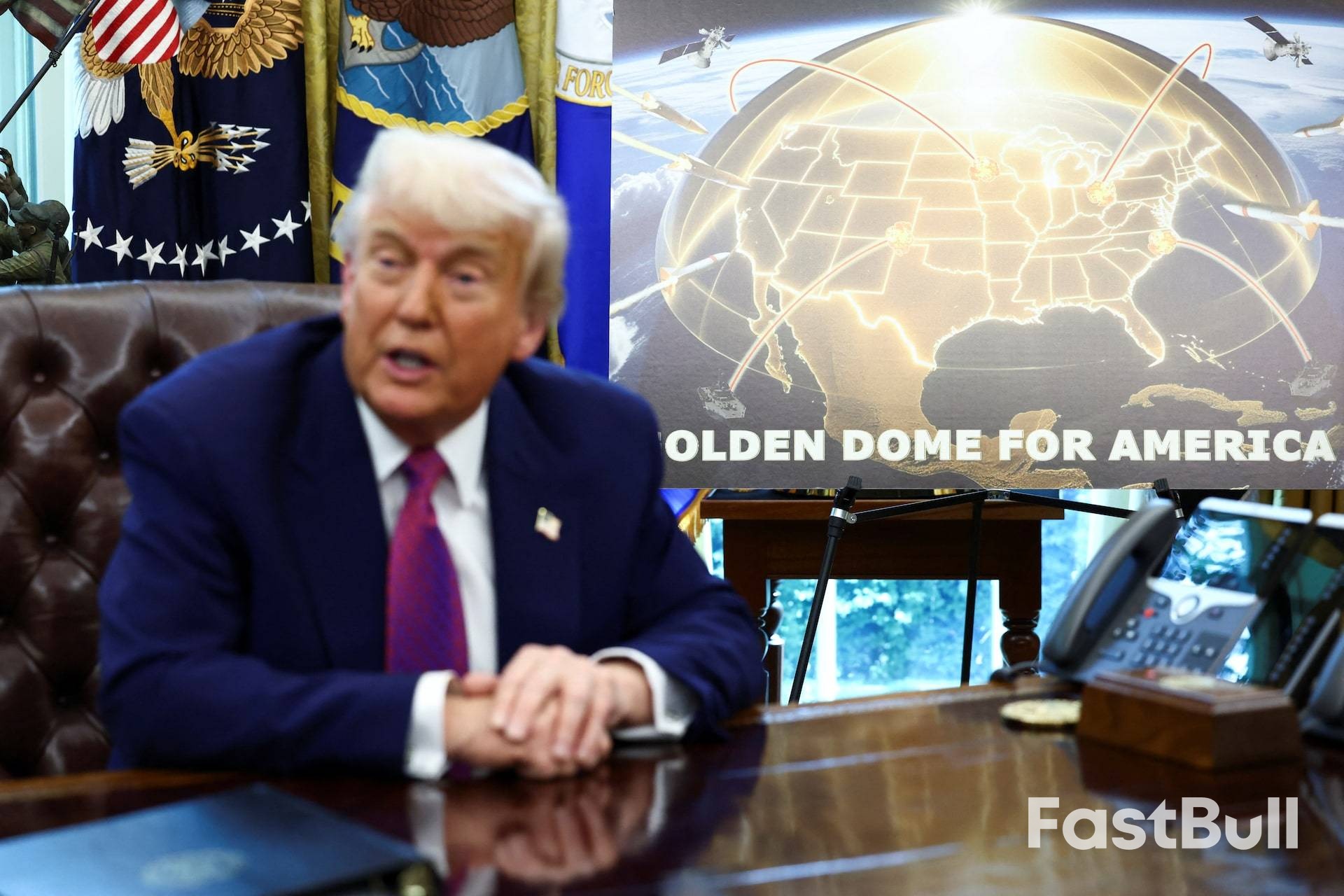
One year after its high-profile launch, President Donald Trump's Golden Dome missile-defense initiative shows little tangible progress. The ambitious national security project has become bogged down by internal technical disputes and serious concerns over its space-based components, delaying the release of billions of dollars in funding.
The executive order, signed on January 27, 2025, established an aggressive 2028 deadline to field a comprehensive missile-defense system for the U.S. homeland. Yet a year later, the program has barely touched the $25 billion appropriated for it last summer as officials continue to debate the fundamental architecture of the system.

According to two U.S. officials, the architectural design of the missile defense shield is still being finalized, preventing the large-scale execution of its budget. While the money is available, they noted that significant funds could be released once critical decisions are made.
In response to questions, a Pentagon official stated that the Golden Dome office continues to meet the goals outlined in the executive order.
"The implementation plan and associated technologies are dynamic; however, the foundational elements of the architecture are now established," the official said. "The specifics of architecture are classified."
The Golden Dome project envisions a multi-layered system. It aims to expand existing ground-based defenses—like interceptor missiles and sensors—while adding experimental, space-based elements to detect, track, and potentially counter threats from orbit. These new elements would include advanced satellite networks and controversial on-orbit weaponry.
One of the primary sources of delay is the internal debate over this classified space-based equipment. A defense industry executive suggested the dispute likely involves communications standards. Another executive speculated it could involve anti-satellite capabilities, which raises questions about how offensive weapons would fit into a defensive shield.
The United States has historically opposed anti-satellite weapons due to concerns about space debris, notably criticizing a Chinese test in 2007.
According to a U.S. official and industry executives, the space-based architecture must be settled before the program's director, General Michael Guetlein, can move forward with a planned series of procurement contracts.
The high-level debates have resulted in a slow start for procurement. So far, the Space Force has only awarded a handful of small-value contracts for Golden Dome.
In November, about a half dozen contracts, each valued at around $120,000, were awarded to companies including Northrop Grumman, True Anomaly, Lockheed Martin, and Anduril to build competing missile defense prototypes. These contracts represent the first small steps in a program Trump has said will eventually cost $175 billion. Since December, at least one classified briefing on the system's architecture has been held for defense companies.
Tom Karako, a weapons security expert at the Center for Strategic and International Studies, noted that much of the past year was dedicated to security reviews, staffing, and planning. He believes the 2028 completion date is unlikely.
"There is a lot that can be done in the next three years in terms of better integrating what we already have," Karako said, "but there's no question that there will be things that will be implemented and evolve after 2028."
Another unresolved issue surrounding Golden Dome is the potential role of Greenland. President Trump has recently linked U.S. control of the Danish territory to the missile defense initiative, stating that acquiring Greenland is "vital" to the project.
However, defense experts point out that existing agreements already permit expanded U.S. military operations on the island. Further complicating the picture, one U.S. official confirmed that Greenland is not part of Golden Dome's proposed architecture.

Roche's (ROG.S) experimental obesity drug, which works in a similar way to Eli Lilly's (LLY.N) Zepbound, produced as much as 22.5% weight loss in a mid-stage trial, underpinning the Swiss drugmaker's efforts to catch up with dominant rivals.
The company said on Tuesday that the Phase-II efficacy rate - adjusted for the placebo effect - reflected 48 weeks of treatment and was based on participants who fully followed the treatment regimen.
Taking into account patients who fell behind the treatment plan, the placebo-adjusted weight loss was 18.3%. The company said treatment for longer would likely yield better results.
Roche's experimental obesity drug CT-388 - a once-weekly injection - is a so-called dual GLP-1/GIP receptor agonist that regulates blood sugar and reduces appetite and is in the same class as Lilly's market-leading Zepbound, also known as tirzepatide and Mounjaro.
CT-388 was acquired through Roche's $2.7 billion purchase of U.S. biotech firm Carmot Therapeutics in 2023.
Roche said the results, based on the highest of five doses tested, validated its choices on two larger Phase III trials it designed late last year and due to start this quarter.
Roche, whose shares have been bolstered by positive trial results in multiple sclerosis and breast cancer, has costly ambitions to catch up with Lilly and Novo Nordisk (NOVOb.CO), opens new tab in an obesity drug market some analysts say could reach $150 billion annually by the early 2030s.
Investors were lukewarm on the trial's results, with shares gaining 0.5% in morning trading, because it will be years until the drug is launched in an already-crowded market.
"The headline data released today puts CT-388 pretty much into the same efficacy ballpark as Zepbound," Jefferies analysts said in a research note.
Still, the company's hopes remained intact that CT-388 offered a superior mode of action, said Manu Chakravarthy, Roche's head of development in the cardiovascular, renal, and metabolic fields.
"To see no plateau and this very steep linear trajectory is likely a reflection of this potential for higher efficacy," he told Reuters, adding that the result further reinforced Roche's "commitment to the field."
Roche has six drug candidates in trials for the treatment of obesity and related conditions like type 2 diabetes and hypertension, which could all be launched by 2030.
It forecasts three of them could become blockbusters with annual sales over $1 billion.
Germany's Economy Minister, Katherina Reiche, has declared that the country must find new economic partners to navigate a changing global landscape. This call comes as long-standing relationships with allies like the United States have soured, leading to damaging import tariffs.

Speaking at the Handelsblatt energy summit, Reiche painted a picture of growing global instability. "The world has become more uncertain, and alliances that we have trusted and relied on are beginning to crumble," she stated.
Reiche clarified that this doesn't mean abandoning traditional partners entirely. Instead, Germany aims to "continue to work together, however challenging that may be," while actively "seeking new partners."
This strategic pivot is a direct response to the unpredictability of U.S. policy under President Donald Trump, whose administration imposed tariffs on key allies, including Canada and the European Union.
To counter this, Reiche identified several potential partners for Germany to pursue deeper economic ties with. The list includes regions and countries such as:
• South America
• India
• The Middle East
• Canada
• Australia
• Malaysia and other Asian nations
Forging new alliances is not just about geopolitics—it is also critical for the future of Germany's economy, the largest in Europe.
Reiche warned that the country's recent economic performance is not sustainable, as it relies heavily on debt-funded investments in defense and infrastructure.
"We are talking about 1%, 1.5%," she said, referring to GDP growth. "This is not sustainable."
The minister's concerns are reflected in official projections. The German government is expected to lower its 2026 GDP growth forecast from 1.3% to just 1.0%. Looking further ahead, GDP growth for 2027 is forecast at 1.3%.
White Label
Data API
Web Plug-ins
Poster Maker
Affiliate Program
The risk of loss in trading financial instruments such as stocks, FX, commodities, futures, bonds, ETFs and crypto can be substantial. You may sustain a total loss of the funds that you deposit with your broker. Therefore, you should carefully consider whether such trading is suitable for you in light of your circumstances and financial resources.
No decision to invest should be made without thoroughly conducting due diligence by yourself or consulting with your financial advisors. Our web content might not suit you since we don't know your financial conditions and investment needs. Our financial information might have latency or contain inaccuracy, so you should be fully responsible for any of your trading and investment decisions. The company will not be responsible for your capital loss.
Without getting permission from the website, you are not allowed to copy the website's graphics, texts, or trademarks. Intellectual property rights in the content or data incorporated into this website belong to its providers and exchange merchants.
Not Logged In
Log in to access more features
Log In
Sign Up