• Trade
  • Markets
  • Copy
  • Contests
  • News
  • 24/7
  • Calendar
  • Q&A
  • Chats
Screeners
SYMBOL
LAST
ASK
BID
HIGH
LOW
NET CHG.
%CHG.
SPREAD
SPX
S&P 500 Index
6974.36
6974.36
6974.36
7002.25
6968.24
-4.24
-0.06%
--
DJI
Dow Jones Industrial Average
48994.89
48994.89
48994.89
49150.34
48908.77
-8.51
-0.02%
--
IXIC
NASDAQ Composite Index
23860.59
23860.59
23860.59
23988.27
23775.49
+43.48
+ 0.18%
--
USDX
US Dollar Index
96.440
96.520
96.440
96.470
95.660
+0.900
+ 0.94%
--
EURUSD
Euro / US Dollar
1.19179
1.19188
1.19179
1.20439
1.19142
-0.01213
-1.01%
--
GBPUSD
Pound Sterling / US Dollar
1.37691
1.37702
1.37691
1.38466
1.37495
-0.00778
-0.56%
--
XAUUSD
Gold / US Dollar
5276.74
5277.08
5276.74
5325.91
5157.13
+98.16
+ 1.90%
--
WTI
Light Sweet Crude Oil
62.926
62.956
62.926
63.337
61.932
+0.489
+ 0.78%
--

Community Accounts

Signal Accounts
--
Profit Accounts
--
Loss Accounts
--
View More

Become a signal provider

Sell trading signals to earn additional income

View More

Guide to Copy Trading

Get started with ease and confidence

View More

Signal Accounts for Members

All Signal Accounts

Best Return
  • Best Return
  • Best P/L
  • Best MDD
Past 1W
  • Past 1W
  • Past 1M
  • Past 1Y

All Contests

  • All
  • Trump Updates
  • Recommend
  • Stocks
  • Cryptocurrencies
  • Central Banks
  • Featured News
Top News Only
Share

[Zelensky Says Security Service Planning New Actions Against Russia] Ukrainian President Volodymyr Zelenskyy Stated On January 28 That The Security Service Of Ukraine (SBU) Is Continuously Planning New Actions Against Russia That Would Alter The Course Of The Russia-Ukraine Conflict. On The Same Day, Zelenskyy Received A Briefing From The SBU On Operational Plans, Including Frontline Combat, Particularly The Operations Of The SBU's Alpha Group Special Forces, And Actions Taken By The SBU Within Russian Territory In Response To Russian Attacks

Share

Kathy Jones, Chief Fixed-income Strategist At Charles Schwab: The Fed's Policy Statement Is Expected To Make A Judgment On U.S. Inflation

Share

USA Natural Gas Inventories Seen Down 232 Billion Cubic Feet Last Week In Thursday's EIA Report, Reuters Poll Shows

Share

Torsten Slok, Chief Economist At Apollo: The Fed Is Expected To Say They Are Staying On The Sidelines

Share

Gold In New York Rose 4.5% Intraday To $5,351.6 Per Ounce

Share

[Market Update] Spot Gold Fell More Than $20 In The Short Term, Currently Trading At $5280.94 Per Ounce

Share

U.S. Senate Majority Leader John Thune: Democrats Must Work With President Trump’s White House To Address The Budget Issues (related To The Department Of Homeland Security/Dhs)

Share

[Market Update] Ahead Of The Fed's Decision, Spot Gold Rose Above $5,320 Per Ounce, Hitting A New High, Up 2.71% On The Day

Share

New York Fed Accepts $1.103 Billion Of $1.103 Billion Submitted To Reverse Repo Facility On Jan 28

Share

Petrobras Says Sales Potential Up To 60 Million Barrels, With A Total Value That May Exceed $ 3.1 Billion

Share

Canada, South Korea Sign Memorandum Of Understanding Intending To Bring South Korean Auto Manufacturing And Investment To Canada -The Globe And Mail, Citing Document

Share

US Tells UN: Gaza Demilitarization To Include Internationally Funded Buyback Program

Share

European Central Bank Executive Board Member Schnabel: European Central Bank Rates In A Good Place And Expected To Remain At Current Levels For Extended Period

Share

USTR: Talks On Stronger Rules Of Origin For Key Industrial Goods, Enhanced Collaboration On Critical Minerals, And Increased External Trade Policy Alignment

Share

LME Copper Rose $80 To $13,086 Per Tonne. LME Aluminum Rose $50 To $3,257 Per Tonne. LME Zinc Rose $13 To $3,364 Per Tonne. LME Lead Fell $3 To $2,017 Per Tonne. LME Nickel Rose $101 To $18,270 Per Tonne. LME Tin Rose $1,075 To $55,953 Per Tonne. LME Cobalt Was Unchanged At $56,290 Per Tonne

Share

Iran's Araqchi: Tehran Has Always Welcomed A Fair Nuclear Deal Which Ensures Iran's Rights And Guarantees No Nuclear Weapons

Share

Blackstone Group Is Considering Providing Debt Financing To Oracle's Project In Michigan, USA

Share

Rubio: There Might Be A USA Presence In The Ukraine Talks In Abu Dhabi This Weekend But It Won't Be Witkoff And Kushner

Share

Rubio: There Is Active Work To Try To Bridge The Issue Of The Donbass In Ukraine Talks

Share

French Presidential Residence Elysee: France Supports The Inclusion Of The Islamic Revolutionary Guard Corps On The European List Of Terrorist Organisation

TIME
ACT
FCST
PREV
U.S. Richmond Fed Manufacturing Composite Index (Jan)

A:--

F: --

P: --

U.S. Conference Board Present Situation Index (Jan)

A:--

F: --

P: --

U.S. Conference Board Consumer Expectations Index (Jan)

A:--

F: --

P: --

U.S. Richmond Fed Manufacturing Shipments Index (Jan)

A:--

F: --

P: --

U.S. Richmond Fed Services Revenue Index (Jan)

A:--

F: --

P: --

U.S. Conference Board Consumer Confidence Index (Jan)

A:--

F: --

P: --
U.S. 5-Year Note Auction Avg. Yield

A:--

F: --

P: --

U.S. API Weekly Refined Oil Stocks

A:--

F: --

P: --

U.S. API Weekly Crude Oil Stocks

A:--

F: --

P: --

U.S. API Weekly Gasoline Stocks

A:--

F: --

P: --

U.S. API Weekly Cushing Crude Oil Stocks

A:--

F: --

P: --

Australia RBA Trimmed Mean CPI YoY (Q4)

A:--

F: --

P: --

Australia CPI YoY (Q4)

A:--

F: --

P: --

Australia CPI QoQ (Q4)

A:--

F: --

P: --

Germany GfK Consumer Confidence Index (SA) (Feb)

A:--

F: --

P: --

Germany 10-Year Bund Auction Avg. Yield

A:--

F: --

P: --

India Industrial Production Index YoY (Dec)

A:--

F: --

P: --

India Manufacturing Output MoM (Dec)

A:--

F: --

P: --

U.S. MBA Mortgage Application Activity Index WoW

A:--

F: --

P: --

Canada Overnight Target Rate

A:--

F: --

P: --

BOC Monetary Policy Report
U.S. EIA Weekly Crude Stocks Change

A:--

F: --

P: --

U.S. EIA Weekly Cushing, Oklahoma Crude Oil Stocks Change

A:--

F: --

P: --

U.S. EIA Weekly Crude Demand Projected by Production

A:--

F: --

P: --

U.S. EIA Weekly Crude Oil Imports Changes

A:--

F: --

P: --

U.S. EIA Weekly Heating Oil Stock Changes

A:--

F: --

P: --

U.S. EIA Weekly Gasoline Stocks Change

A:--

F: --

P: --

BOC Press Conference
Russia PPI MoM (Dec)

A:--

F: --

P: --

Russia PPI YoY (Dec)

A:--

F: --

P: --

U.S. Target Federal Funds Rate Lower Limit (Overnight Reverse Repo Rate)

--

F: --

P: --

U.S. Interest Rate On Reserve Balances

--

F: --

P: --

U.S. Federal Funds Rate Target

--

F: --

P: --

U.S. Target Federal Funds Rate Upper Limit (Excess Reserves Ratio)

--

F: --

P: --

FOMC Statement
FOMC Press Conference
Brazil Selic Interest Rate

--

F: --

P: --

Australia Import Price Index YoY (Q4)

--

F: --

P: --

Japan Household Consumer Confidence Index (Jan)

--

F: --

P: --

Turkey Economic Sentiment Indicator (Jan)

--

F: --

P: --

Euro Zone M3 Money Supply (SA) (Dec)

--

F: --

P: --

Euro Zone Private Sector Credit YoY (Dec)

--

F: --

P: --

Euro Zone M3 Money Supply YoY (Dec)

--

F: --

P: --

Euro Zone 3-Month M3 Money Supply YoY (Dec)

--

F: --

P: --

South Africa PPI YoY (Dec)

--

F: --

P: --

Euro Zone Consumer Confidence Index Final (Jan)

--

F: --

P: --

Euro Zone Selling Price Expectations (Jan)

--

F: --

P: --

Euro Zone Industrial Climate Index (Jan)

--

F: --

P: --

Euro Zone Services Sentiment Index (Jan)

--

F: --

P: --

Euro Zone Economic Sentiment Indicator (Jan)

--

F: --

P: --

Euro Zone Consumer Inflation Expectations (Jan)

--

F: --

P: --

Italy 5-Year BTP Bond Auction Avg. Yield

--

F: --

P: --

Italy 10-Year BTP Bond Auction Avg. Yield

--

F: --

P: --

France Unemployment Class-A (Dec)

--

F: --

P: --

South Africa Repo Rate (Jan)

--

F: --

P: --

U.S. Nonfarm Unit Labor Cost Final (Q3)

--

F: --

P: --

U.S. Initial Jobless Claims 4-Week Avg. (SA)

--

F: --

P: --

U.S. Weekly Continued Jobless Claims (SA)

--

F: --

P: --

U.S. Trade Balance (Nov)

--

F: --

P: --

U.S. Weekly Initial Jobless Claims (SA)

--

F: --

P: --

Canada Trade Balance (SA) (Nov)

--

F: --

P: --

Q&A with Experts
    • All
    • Chatrooms
    • Groups
    • Friends
    Manawar An flag
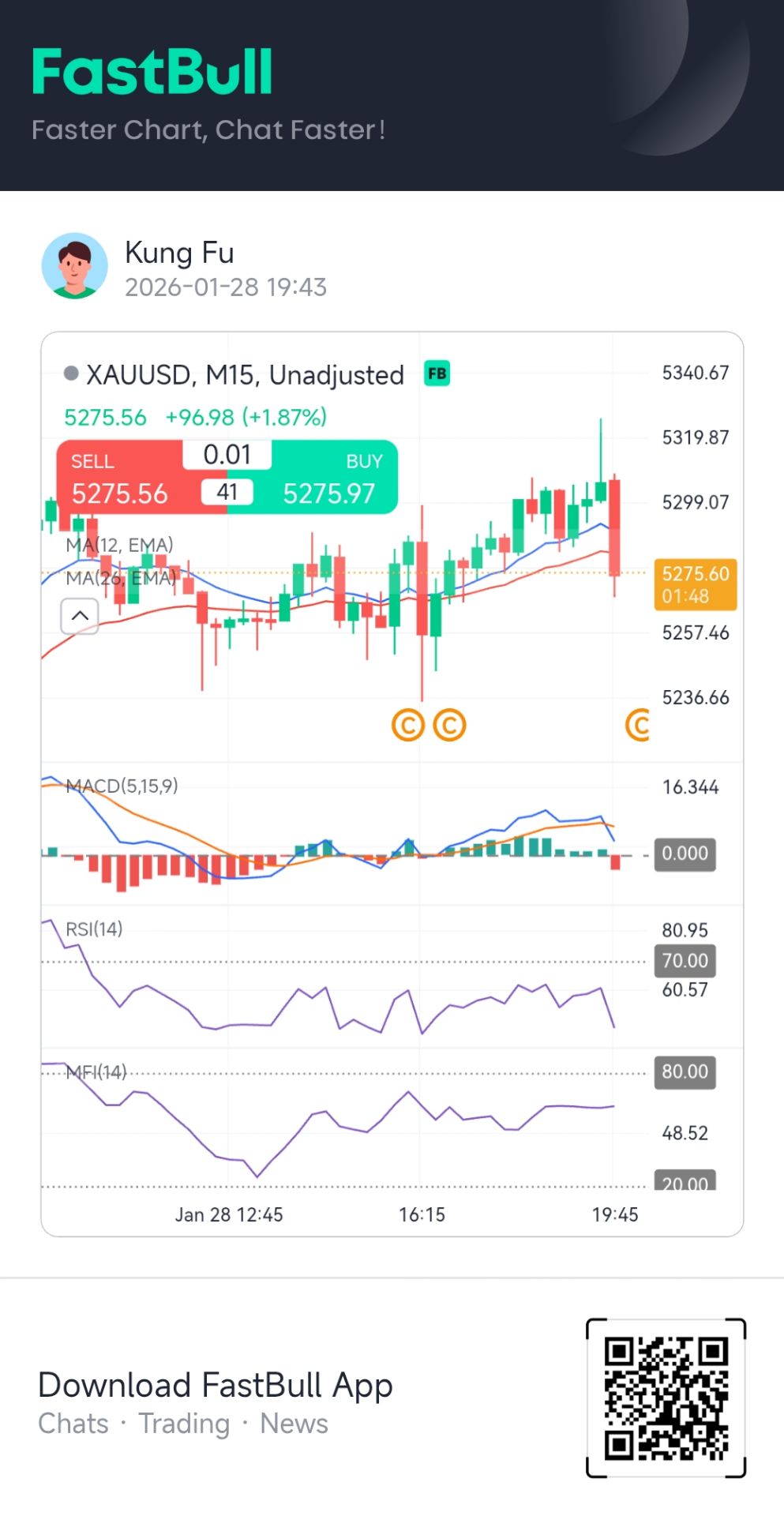
    (XAUUSD)this pair needs to stay in jail
    3461987 flag
    its crazy
    Manawar An flag
    😄😂
    Kung Fu flag
    Manawar An
    (XAUUSD)this pair needs to stay in jail
    @Manawar Anwhat's the price now?
    LD flag
    Kung Fu
    @Kung FuLet's take it that way. Until receipts are presented .
    Kung Fu flag
    Kung Fu flag
    Kung Fu
    @Manawar An@LDit's right back into the box, into the range
    Manawar An flag
    whenever gold become sideways it gives a rally
    EuroTrader flag
    Manawar An
    whenever gold become sideways it gives a rally
    @Manawar AnTue sideways movements is usually gold accumulating new orders
    Kung Fu flag
    Manawar An
    whenever gold become sideways it gives a rally
    @Manawar Anyes, and since it just tested 5325 if it pumps we're likely to see 5340
    Manawar An flag
    you know the intresting thing i work on Fibonacci no smc no ICT 🙂‍↔️
    Manawar An flag
    and i created my strategy by my own and backtested it for 6months and working on it from 5,6 monts on live market. accuracy is almost 80% but it works only in gold.
    Trader flag
    Kung Fu
    stay away from gold this week i think after news it's gonna get rejected once again
    SlowBear ⛅ flag
    Manawar An
    and i created my strategy by my own and backtested it for 6months and working on it from 5,6 monts on live market. accuracy is almost 80% but it works only in gold.
    @Manawar An humm, it works only on gold? what about silver did you try backtesting it on silver?
    Neo Wolf flag
    ready????
    LD flag
    SlowBear ⛅
    @SlowBear ⛅😃
    ANDY flag
    How many more hours until FOMC?
    Manawar An flag
    SlowBear ⛅
    @SlowBear ⛅no dont try it but it Will on some more pairs if i backtest
    SlowBear ⛅ flag
    Neo Wolf
    ready????
    @Neo Wolfready for what bro?
    SlowBear ⛅ flag
    Manawar An
    @Manawar Anyou should try it in my opinon, i always think the more the merrier, however if gold onlu does the trick why bother right?
    Type here...
    Add Symbol or Code

      No matching data

      All
      Trump Updates
      Recommend
      Stocks
      Cryptocurrencies
      Central Banks
      Featured News
      • All
      • Russia-Ukraine Conflict
      • Middle East Flashpoint
      • All
      • Russia-Ukraine Conflict
      • Middle East Flashpoint
      Search
      Products

      Charts Free Forever

      Chats Q&A with Experts
      Screeners Economic Calendar Data Tools
      Membership Features
      Data Warehouse Market Trends Institutional Data Policy Rates Macro

      Market Trends

      Market Sentiment Order Book Forex Correlations

      Top Indicators

      Charts Free Forever
      Markets

      News

      News Analysis 24/7 Columns Education
      From Institutions From Analysts
      Topics Columnists

      Latest Views

      Latest Views

      Trending Topics

      Top Columnists

      Latest Update

      Signals

      Copy Rankings Latest Signals Become a signal provider AI Rating
      Contests
      Brokers

      Overview Brokers Assessment Rankings Regulators News Claims
      Broker listing Forex Brokers Comparison Tool Live Spread Comparison Scam
      Q&A Complaint Scam Alert Videos Tips to Detect Scam
      More

      Business
      Events
      Careers About Us Advertising Help Center

      White Label

      Data API

      Web Plug-ins

      Affiliate Program

      Awards Institution Evaluation IB Seminar Salon Event Exhibition
      Vietnam Thailand Singapore Dubai
      Fans Party Investment Sharing Session
      FastBull Summit BrokersView Expo
      Recent Searches
        Top Searches
          Markets
          News
          Analysis
          User
          24/7
          Economic Calendar
          Education
          Data
          • Names
          • Latest
          • Prev

          View All

          No data

          Scan to Download

          Faster Charts, Chat Faster!

          Download App
          English
          • English
          • Español
          • العربية
          • Bahasa Indonesia
          • Bahasa Melayu
          • Tiếng Việt
          • ภาษาไทย
          • Français
          • Italiano
          • Türkçe
          • Русский язык
          • 简中
          • 繁中
          Open Account
          Search
          Products
          Charts Free Forever
          Markets
          News
          Signals

          Copy Rankings Latest Signals Become a signal provider AI Rating
          Contests
          Brokers

          Overview Brokers Assessment Rankings Regulators News Claims
          Broker listing Forex Brokers Comparison Tool Live Spread Comparison Scam
          Q&A Complaint Scam Alert Videos Tips to Detect Scam
          More

          Business
          Events
          Careers About Us Advertising Help Center

          White Label

          Data API

          Web Plug-ins

          Affiliate Program

          Awards Institution Evaluation IB Seminar Salon Event Exhibition
          Vietnam Thailand Singapore Dubai
          Fans Party Investment Sharing Session
          FastBull Summit BrokersView Expo

          Trump Pitches Economic Boom Ahead of Midterms

          Nathaniel Wright

          Remarks of Officials

          Stocks

          Economic

          Political

          Data Interpretation

          Summary:

          Trump pivots to economic boasts for midterms amid backlash over agent shootings, yet data reveals uneven gains and public skepticism.

          Facing backlash over fatal shootings by U.S. border and immigration agents, President Donald Trump delivered a speech in Iowa aimed at redirecting public attention to the economy. In a pitch tailored for midterm voters, he framed his first year in office as the most successful start to any presidential administration in American history.
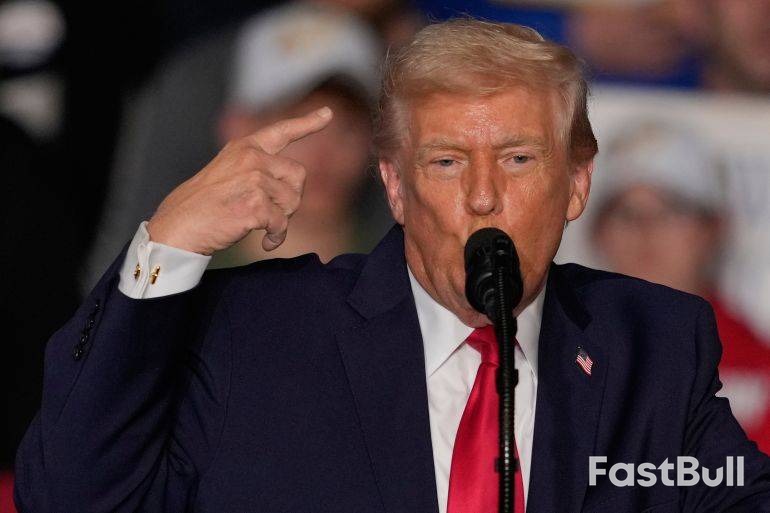
          Donald Trump addresses voters in Iowa, emphasizing economic growth as a key theme for the upcoming midterm elections.

          Touting an Unprecedented Economic Record

          Speaking in the Republican stronghold on Tuesday, Trump painted a picture of broad prosperity. "Today, after just one year of President Trump, our economy is booming, incomes are rising, investment is soaring, inflation has been defeated," he declared. "Our border is closed – totally closed – and America is respected all over the world."

          To support his claims, Trump pointed to several key indicators:

          • Stock Market: He highlighted the U.S. stock market's performance, which has reached record highs, as direct evidence of his tax cuts and tariffs succeeding.

          • Corporate Investment: He cited a $70 million investment by farm-equipment manufacturer Deere & Co. in North Carolina.

          "I made a lot of people rich that I don't even like… I've doubled their net worth," the president added.

          Midterm Stakes and Political Warnings

          The speech also served as a stark warning about the upcoming November midterm elections. With a growing backlash to his immigration policies in neighboring Minnesota, Trump argued that a Democratic victory would unravel his administration's progress.

          "If we lose the midterms, you'll lose so many of the things that we're talking about, so many of the assets that we're talking about, so many of the tax cuts that we're talking about," he cautioned.

          Trump also took aim at criticism over cost-of-living issues, accusing Democrats of manufacturing the problem for political gain. "It's a word that they came up with: 'affordability'. Every time you hear the word, remember, they are the ones who caused the problem," he said, while falsely claiming his administration had lowered grocery prices and had inherited the highest inflation in history.

          Data Reveals a More Complex Reality

          Despite Trump's confident rhetoric, his economic pitch arrives amid signs of public disillusionment. His handling of the economy is considered one of his strongest issues for the 2024 election campaign, yet a New York Times/Siena poll released last week found that only 32 percent of Americans believe the economy is better than it was a year ago.

          While the U.S. economy has outperformed many analysts' expectations, economists note that headline figures mask underlying weaknesses. Gross domestic product (GDP) recorded an annualized growth of 4.3 percent in the final quarter of 2025—the strongest performance in two years and significantly ahead of other advanced economies.

          However, the benefits of this growth have not been evenly distributed. According to estimates from Moody's Analytics, the economic gains have disproportionately flowed to wealthier Americans, with the top 10 percent of earners accounting for approximately half of all spending.

          To stay updated on all economic events of today, please check out our Economic calendar
          Risk Warnings and Disclaimers
          You understand and acknowledge that there is a high degree of risk involved in trading. Following any strategies or investment methods may lead to potential losses. The content on the site is provided by our contributors and analysts for information purposes only. You are solely responsible for determining whether any trading assets, securities, strategy, or any other product is suitable for investing based on your own investment objectives and financial situation.
          Add to Favorites
          Share

          Iran Vows Unprecedented Response to US Military Threats

          James Riley

          Remarks of Officials

          Middle East Situation

          Political

          Iran's mission to the United Nations issued a stark warning on Wednesday, promising an "unprecedented" retaliation against any potential U.S. attack in a direct response to military threats from President Donald Trump.

          Iran's Supreme Leader Ayatollah Ali Khamenei, whose government has warned of severe consequences for any U.S. military action.

          Tehran's Diplomatic Warning Shot

          In a social media post, the Iranian mission stated that while the country "stands ready for dialogue based on mutual respect and interests," it will take decisive action if pressured.

          "IF PUSHED, IT WILL DEFEND ITSELF AND RESPOND LIKE NEVER BEFORE!" the mission wrote on X. The statement was published alongside a screenshot of Trump’s earlier threat that a "massive Armada" was moving toward the Islamic Republic.

          Recalling the High Cost of Past Conflicts

          To underscore its warning against U.S. intervention, the Iranian mission referenced the human and financial toll of America's recent wars.

          "Last time the U.S. blundered into wars in Afghanistan and Iraq, it squandered over $7 trillion and lost more than 7,000 American lives," the mission stated, framing any new conflict as a potential misstep for Washington.

          Trump Doubles Down on Military Option

          The exchange followed President Trump's renewal of threats to attack Iran, asserting that "time is running out" for a deal on nuclear weapons.

          "As I told Iran once before, MAKE A DEAL! They didn't, and there was 'Operation Midnight Hammer,' a major destruction of Iran," Trump said. "The next attack will be far worse!"

          Trump has consistently kept the possibility of new military action on the table. This stance comes after a 12-day war in June where Washington joined Israel in operations aimed at degrading Iran's nuclear and ballistic missile programs.

          Risk Warnings and Disclaimers
          You understand and acknowledge that there is a high degree of risk involved in trading. Following any strategies or investment methods may lead to potential losses. The content on the site is provided by our contributors and analysts for information purposes only. You are solely responsible for determining whether any trading assets, securities, strategy, or any other product is suitable for investing based on your own investment objectives and financial situation.
          Add to Favorites
          Share

          Trump's 2025 China Policy: A Tale of Two Washingtons

          Ukadike Micheal

          China–U.S. Trade War

          Political

          Upon returning to office in January 2025, Donald Trump began to reshape U.S. policy in Asia with unprecedented authority, sidelining Congress and installing a loyalist administration. This second term saw Trump exert extraordinary control over the federal government, the Republican-led Congress, and a Supreme Court dominated by Republican appointees, including three of his own. Unlike his first term, dissent within the White House was virtually nonexistent, giving him a free hand to pursue his agenda with China and Taiwan.

          Trump's Pivot: From Tariffs to Summits with Xi

          The year began with friction. The Trump administration engaged in two brief but intense standoffs with Beijing in April and October, with both sides threatening massive tariffs and severe export controls. However, the confrontations quickly gave way to compromise, culminating in an amicable in-person summit between Trump and President Xi Jinping on October 28.

          This meeting set a new tone. In the months that followed, both Washington and Beijing focused on maintaining stability and securing positive outcomes for Trump's planned visit to China in April and a reciprocal visit by Xi to the U.S. later in the year.

          The summit with Xi was the capstone of a successful week-long tour of East Asia. Despite his general unpopularity in the region, Trump's meetings with ASEAN leaders in Malaysia and summits with Japanese and South Korean counterparts were positive. An earlier meeting in Washington with Australia's prime minister also went smoothly.

          Taiwan Caught in the Middle Amid Mixed Signals

          This trend of rapprochement left officials in Taiwan concerned. The Taiwanese government struggled to secure a tariff-reduction agreement with the United States. Adding to the anxiety, the Trump administration reportedly took several actions in deference to Beijing ahead of the October summit:

          • A planned U.S. visit by Taiwan's defense minister was halted.

          • A U.S. stopover by Taiwan's President Lai Ching-te was blocked.

          • Public announcements of U.S. warships transiting the Taiwan Strait ceased.

          • Key arms sales to Taiwan were delayed.

          After the summit, Trump stated that Taiwan was not discussed. However, the administration later sent reassuring signals. In November, two arms sales packages worth over $1 billion were confirmed. On December 2, Trump signed the Taiwan Assurance Implementation Act into law. This was followed by a December 17 announcement of an $11 billion sale of sophisticated arms to Taiwan. By January 15, 2026, the U.S. and Taiwan announced a trade deal that lowered tariffs to 15% and promised $250 billion in Taiwanese investment in American semiconductor and technology manufacturing.

          Despite these positive developments, the mixed signals fueled fears in Taiwan that Trump's focus on deal-making could lead to a compromise with Beijing at Taiwan's expense. The administration's November 30 National Security Strategy did little to clarify matters, notably omitting China as a specific danger. The National Defense Strategy, released on January 23, prioritized the Western Hemisphere over the Indo-Pacific but emphasized a "strong denial defense along the first Island Chain," a strategic area where Taiwan is central.

          The Congressional Counterweight on China Policy

          While Trump pursued diplomacy with Beijing, Congress operated on a different track. Despite Trump's influence over Republicans, a strong bipartisan consensus remained to counter Chinese government actions and support Taiwan. This congressional activism, a consistent feature since 2018, continued unabated.

          Led by Republicans and the House Select Committee on the CCP, Congress focused primarily on defending U.S. interests from Chinese challenges. By August 2025, 564 pieces of legislation mentioning China had been introduced, with 247 containing substantive provisions on issues including:

          • Technology decoupling

          • Rare earth supply chains

          • Higher education oversight

          • Strengthening U.S. commitments to Taiwan

          Bipartisan Pushback on Trump's Overtures

          Though some Democrats criticized Trump's tariffs and sought to open communication with Beijing—as seen in a September visit to China by a delegation led by Representative Adam Smith—this did not signal a collapse of the "Washington Consensus." In practice, bipartisanship consistently prevailed in hardening U.S. policy.

          Often, Democratic criticism was that the administration's policies were not tough enough on China. For example, Democrats opposed the end of U.S. support for Voice of America and international climate change measures, arguing these moves weakened U.S. resolve.

          A sharp, bipartisan rebuke came in December after Trump allowed the sale of advanced Nvidia AI chips to China. Ahead of the decision, Senate Intelligence Committee Chair Tom Cotton introduced a bill with bipartisan support to block such sales. In January, the House Foreign Affairs Committee voted 42-2 for a bill to give Congress greater control over AI chip exports to China, directly challenging White House AI czar David Sacks.

          Limits of Presidential Power Emerge

          Trump's tight grip on the Republican party showed its limits. He failed to convince Senate Republicans to eliminate the filibuster or end the practice allowing home-state senators to block judicial nominees.

          By early 2026, congressional resistance was growing. Bipartisan majorities began to push back on several of Trump's initiatives, including a military attack in Venezuela and threats against Greenland. Seventeen House Republicans joined Democrats to extend Affordable Care Act subsidies. Furthermore, Congress passed several spending bills that explicitly rejected the president's proposed budget cuts, wording them to limit the administration's ability to make unilateral funding decisions.

          These developments underscore a critical reality: a powerful, bipartisan congressional majority focused on countering China serves as a significant check on the Trump administration. This dynamic acts as a crucial brake, restricting any potential compromises with Beijing that might come at Taiwan's expense.

          Risk Warnings and Disclaimers
          You understand and acknowledge that there is a high degree of risk involved in trading. Following any strategies or investment methods may lead to potential losses. The content on the site is provided by our contributors and analysts for information purposes only. You are solely responsible for determining whether any trading assets, securities, strategy, or any other product is suitable for investing based on your own investment objectives and financial situation.
          Add to Favorites
          Share

          ADP Data Reveals Weekly U.S. Job Growth Decline

          Justin

          Economic

          U.S. private employers recorded a weekly average addition of 7,750 jobs for four weeks ending January 3, 2026, per the latest ADP Nonfarm Employment report released January 27.

          The report's lower figures suggest potential impacts on U.S. economic sentiment and may influence cryptocurrency markets if macro trends adjust monetary policy outlooks.

          The latest ADP Nonfarm Employment data highlights a reduction in U.S. job growth. The average of +7,750 jobs per week reflects a consistent decline from previous weeks' figures.

          ADP, in collaboration with the Stanford Digital Economy Lab, provides this data, noting that private employers added fewer jobs than anticipated.

          "Small establishments recovered from November job losses with positive end-of-year hiring, even as large employers pulled back." — Nela Richardson, Chief Economist, ADP

          The decay in employment figures could potentially influence broader economic indicators. The U.S. labor market's performance is central to shaping Federal Reserve decisions.

          Soft employment figures, such as this report, often raise expectations of looser monetary policy, which can affect cryptocurrency and broader financial markets.

          This report outlines current labor market volatility as seen in recent weeks. It shows fluctuations in job numbers, highlighting potential influences on market sentiment and possible regulatory adjustments.

          Historical data suggest that lower employment numbers might correspond with increased speculation in cryptocurrency markets, with assets like BTC and ETH potentially seeing upward trends.

          Source: CryptoSlate

          To stay updated on all economic events of today, please check out our Economic calendar
          Risk Warnings and Disclaimers
          You understand and acknowledge that there is a high degree of risk involved in trading. Following any strategies or investment methods may lead to potential losses. The content on the site is provided by our contributors and analysts for information purposes only. You are solely responsible for determining whether any trading assets, securities, strategy, or any other product is suitable for investing based on your own investment objectives and financial situation.
          Add to Favorites
          Share

          China's Natural Gas Output Hits Record on Shale Boom

          King Ten

          Remarks of Officials

          Economic

          Energy

          Commodity

          China's natural gas production surged to an all-time high in 2025, reaching 261.9 billion cubic meters. This 6% year-over-year increase was driven by a state-backed campaign to develop complex shale gas fields, allowing the nation to meet 60% of its domestic consumption with homegrown supply.

          The new output level, equivalent to 193 million metric tons of liquefied natural gas (LNG), positions China as a major global producer. For perspective, this volume is roughly triple Japan's annual gas demand and brings China nearly on par with Iran, which produced 262.9 billion cubic meters in 2024 to rank third globally behind the U.S. and Russia.

          China's 2025 production has now eclipsed the 2024 output of major LNG exporters like Qatar (179.5 billion cubic meters) and Australia (150.1 billion cubic meters). A think tank under the state-owned China National Petroleum Corp. (CNPC) projects this growth will continue, targeting 300 billion cubic meters by 2030.

          The State-Fueled Shale Revolution

          The engine behind this record output is China's shale gas revolution. In 2024, shale gas production broke the 100 billion cubic meter mark for the first time and now accounts for nearly half of the country's total natural gas supply. Key production gains have come from the Ordos and Sichuan basins.

          This success is the result of a deliberate government strategy. Beijing has used subsidies and tax incentives to encourage state-owned energy giants, primarily CNPC and Sinopec, to ramp up production. Their efforts contrast with the mass withdrawal of foreign companies like Shell, which found China's unconventional gas fields too difficult to develop due to their depth and complex geology.

          Unlike the U.S. shale boom, which was pioneered by smaller, agile companies through trial and error, China's development has been characterized by strong state leadership. While Chinese firms have invested in American shale projects and likely referenced U.S. technology, the geological differences—notably shallower shale layers in the U.S.—have made direct application difficult.

          Cost Competitiveness and Market Impact

          Despite the technical challenges, Chinese shale gas has proven economically competitive. According to a 2023 analysis by Cinda Securities, the cost to supply shale gas in eastern China was:

          • 50% higher than conventional natural gas.

          • 50% cheaper than imported LNG.

          • 20% cheaper than Russian gas delivered via pipeline.

          This cost advantage is reshaping China's energy import landscape. While maintaining a 60% self-sufficiency rate, the country's combined pipeline and LNG imports fell by 3% in volume last year, the first decrease in two years.

          Shifting Patterns in Gas Imports

          The impact was most pronounced in the LNG market, where imports dropped 11% to 68.43 million tons. Geopolitical tensions dramatically altered trade flows:

          • United States: Imports of U.S. LNG plummeted 94% to just 250,000 tons and have been near zero since March, crippled by Beijing's tariffs.

          • Australia: Shipments from Australia, China's largest LNG supplier, fell 22% to 20.38 million tons.

          • Russia: In contrast, LNG imports from Russia rose 18% to 9.79 million tons, making it the third-largest source with a 14% market share. These supplies included gas from the Arctic LNG 2 project, which is under Western sanctions.

          Pipeline gas imports from Russia also continued to grow, with Tass reporting a 17% increase by value in 2025.

          Resilient Demand and Future Outlook

          Even as China's economy slowed, its demand for natural gas remained resilient, dipping just 0.1% in the first eleven months of 2025. This stability is supported by government policies aimed at improving air quality by encouraging factories to switch from coal and heavy oil to natural gas. The number of gas-fired power plants is also on the rise.

          Looking ahead, the CNPC think tank forecasts that China's gas consumption will climb to 550 billion cubic meters by 2030—a 30% jump from 2024 levels. This suggests that even with its record-breaking domestic production, China will remain a critical player in the global gas market for years to come.

          To stay updated on all economic events of today, please check out our Economic calendar
          Risk Warnings and Disclaimers
          You understand and acknowledge that there is a high degree of risk involved in trading. Following any strategies or investment methods may lead to potential losses. The content on the site is provided by our contributors and analysts for information purposes only. You are solely responsible for determining whether any trading assets, securities, strategy, or any other product is suitable for investing based on your own investment objectives and financial situation.
          Add to Favorites
          Share

          US Unveils Plan for Nuclear Fuel Independence

          Daniel Foster

          Political

          Energy

          Remarks of Officials

          Economic

          The U.S. Department of Energy (DOE) is launching a major initiative to build a domestic nuclear fuel supply chain, signaling a strategic push to support the growing demand for carbon-free energy. The plan centers on creating "Nuclear Lifecycle Innovation Campuses" across the country.

          The DOE will formally invite states to submit proposals for hosting these advanced facilities. The goal is to create hubs that can handle every stage of the nuclear fuel process, a move designed to reduce America's reliance on foreign uranium and pioneer new technologies.

          The Vision: All-in-One Nuclear Hubs

          A core objective of these campuses is to establish commercial-scale recycling for used nuclear fuel. Currently, U.S. reactors only utilize about 5% of the potential energy in their fuel, and there is no commercial infrastructure to reprocess the remaining material. This initiative aims to change that, turning spent fuel into a valuable asset and diverting it from long-term storage sites like Yucca Mountain.

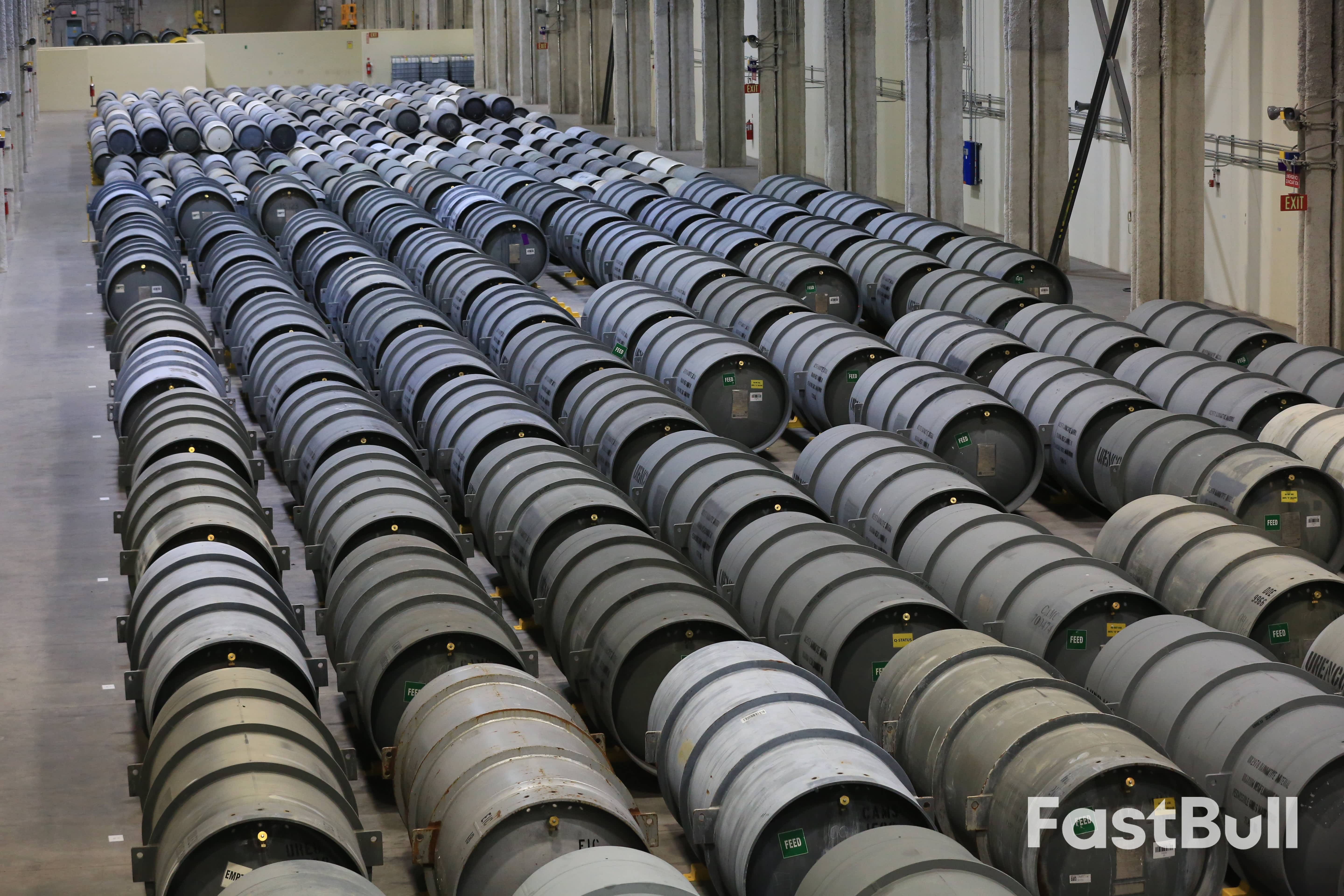
          Figure 1: Storage casks holding enriched uranium illustrate a critical stage in the nuclear fuel supply chain, which the U.S. government is now aiming to bolster domestically.

          Ultimately, a single campus could integrate the entire fuel cycle, from uranium enrichment to recycling. These sites could also host advanced reactors, power generation facilities, and co-located data centers, creating a streamlined system that avoids the complexities of transporting nuclear materials.

          Economic Impact and Private Investment

          The timing of the initiative aligns with a surge in demand for nuclear power, driven partly by the massive electricity needs of AI and data centers. The DOE anticipates that one of these innovation campuses could attract as much as $50 billion in private sector capital investment.

          U.S. Energy Secretary Chris Wright framed the plan as a key part of a broader strategy. "Unleashing the next American nuclear renaissance will drive innovation, fuel economic growth, and create good-paying American jobs," he said, adding that it aligns with "President Trump's vision to revitalize America's nuclear base."

          A Cornerstone of National Energy Policy

          The Trump administration has consistently positioned nuclear power as a central element of its national energy strategy. While nuclear energy already accounts for roughly 21% of U.S. electricity, the country remains dependent on imports for a significant portion of its uranium.

          This new plan builds on several recent policy actions:

          • Regulatory Reform: Last May, President Donald Trump signed executive orders to streamline regulations and accelerate the deployment of both large and small nuclear reactors.

          • Major Investments: Last fall, the administration finalized a deal with Westinghouse owners Cameco and Brookfield Asset Management to invest $80 billion in constructing large-scale nuclear reactors across the U.S.

          • Enrichment Funding: Earlier this year, the DOE announced $2.7 billion to boost domestic enrichment capabilities. This included a $900 million award to Centrus to expand its plant in Piketon, Ohio, though the facility has not yet reached commercial production.

          Speaking in November, Wright emphasized the administration's commitment, stating that most of the department's loan capital will be directed toward building new nuclear plants.

          "When we leave office three years and three months from now, I want to see hopefully dozens of nuclear plants under construction," Wright stated.

          To stay updated on all economic events of today, please check out our Economic calendar
          Risk Warnings and Disclaimers
          You understand and acknowledge that there is a high degree of risk involved in trading. Following any strategies or investment methods may lead to potential losses. The content on the site is provided by our contributors and analysts for information purposes only. You are solely responsible for determining whether any trading assets, securities, strategy, or any other product is suitable for investing based on your own investment objectives and financial situation.
          Add to Favorites
          Share

          Bitcoin and Ethereum Traders Should Watch 'Narrative Whipsaw' Heading into Fed Decision

          Adam

          Cryptocurrency

          Bitcoin and Ethereum have gained 2.1% and 3.5% respectively, as investors await the Federal Reserve's next interest rate decision Wednesday afternoon.
          Bitcoin is changing hands for $89,842, about level with where it was a week ago, according to data from crypto price aggregator CoinGecko. And Ethereum regained $3,000 for the first time since last week, trading for around $3,026 after having risen 2.1% in the past seven days.
          With just hours to go before the Fed's first interest rate decision of the year, the CME FedWatch Tool shows that futures traders estimate there's a 97% chance that interest rates will remain unchanged.
          Traders on prediction market Myriad, owned by Decrypt's parent company Dastan, put just a 33% chance on the the Fed cutting rates by more than 25bps before July.
          "While a ‘hold’ at 3.5%–3.75% is a statistical certainty, crypto traders should be wary of a ‘narrative whipsaw,’" Jummy Xue, co-founder and chief operating officer of institutional crypto management firm Axis, told Decrypt. "The focus is no longer on the cost of capital, but on the Fed’s sensitivity to a 4.4% unemployment rate."
          At the start of January, the Bureau of Labor Statistics reported a December unemployment rate of 4.4%, which was little changed from the revised November 4.5% rate.
          "If [Federal Reserve Chairman Jerome Powell] emphasizes labor market resilience over cooling inflation, he is effectively taking a March rate cut off the table," Xue added. "For Bitcoin, which has thrived on the expectation of continuous easing, such a pivot could transform a ‘neutral’ meeting into a medium-term bearish catalyst."
          In the current economic environment, Xue expects traders to primarily rely on the debasement trade. It's a strategy that assumes governments will keep increasing the supply of money and erode the value of cash. In response, investors gravitate towards less easily diluted assets like commodities, real estate, and cryptocurrencies.
          Aurelie Barthere, a principal research analyst at onchain analytics firm Nansen, told Decrypt that Powell seemed concerned about job market weakness at the December meeting and he expects that to hold.
          "Even with the U.S. economy accelerating into first half of 2026, boosted by fiscal, the labor market has kept cooling," she said, "on the demand side, not just the supply side."
          But more comments from Powell on unemployment isn't necessarily a bad thing, she added, pointing to overnight index swap markets pricing in less than two rate cuts after Powell leaves the Fed in June.
          "If Powell's tone remains as dovish as in December, the pricing of rate cuts could be increased and brought forward before June (March and April)," Barthere said.
          The outlook for crypto
          Digital assets like Bitcoin and Ethereum tend to benefit when investors expect interest rates to fall because lower rates reduce returns on cash and bonds and encourage risk-taking across markets. Conversely, when rate cuts are delayed or taken off the table, crypto prices come under pressure as traders shift capital back towards yield-bearing assets.
          But Wednesday's interest rate decision isn't the only macroeconomic event on the horizon.
          Analysts at Singapore-based crypto trading firm QCP Capital flagged that traders are also bracing for a Friday, Jan. 30 funding deadline to keep the U.S. out of another government shutdown, uncertainty about the Senate's next move on the CLARITY Act and volatile currency markets.

          Source: decrypt

          Risk Warnings and Disclaimers
          You understand and acknowledge that there is a high degree of risk involved in trading. Following any strategies or investment methods may lead to potential losses. The content on the site is provided by our contributors and analysts for information purposes only. You are solely responsible for determining whether any trading assets, securities, strategy, or any other product is suitable for investing based on your own investment objectives and financial situation.
          Add to Favorites
          Share
          FastBull
          Copyright © 2026 FastBull Ltd

          728 RM B 7/F GEE LOK IND BLDG NO 34 HUNG TO RD KWUN TONG KLN HONG KONG

          TelegramInstagramTwitterfacebooklinkedin
          App Store Google Play Google Play
          Products
          Charts

          Chats

          Q&A with Experts
          Screeners
          Economic Calendar
          Data
          Tools
          Membership
          Features
          Function
          Markets
          Copy Trading
          Latest Signals
          Contests
          News
          Analysis
          24/7
          Columns
          Education
          Company
          Careers
          About Us
          Contact Us
          Advertising
          Help Center
          Feedback
          User Agreement
          Privacy Policy
          Personal Information Protection Statement
          Business

          White Label

          Data API

          Web Plug-ins

          Poster Maker

          Affiliate Program

          Risk Disclosure

          The risk of loss in trading financial instruments such as stocks, FX, commodities, futures, bonds, ETFs and crypto can be substantial. You may sustain a total loss of the funds that you deposit with your broker. Therefore, you should carefully consider whether such trading is suitable for you in light of your circumstances and financial resources.

          No decision to invest should be made without thoroughly conducting due diligence by yourself or consulting with your financial advisors. Our web content might not suit you since we don't know your financial conditions and investment needs. Our financial information might have latency or contain inaccuracy, so you should be fully responsible for any of your trading and investment decisions. The company will not be responsible for your capital loss.

          Without getting permission from the website, you are not allowed to copy the website's graphics, texts, or trademarks. Intellectual property rights in the content or data incorporated into this website belong to its providers and exchange merchants.

          Not Logged In

          Log in to access more features

          Connect Broker
          Become a signal provider
          Help Center
          Customer Service
          Dark Mode
          Price Up/Down Colors

          Log In

          Sign Up

          Position
          Layout
          Fullscreen
          Default to Chart
          The chart page opens by default when you visit fastbull.com