• Trade
  • Markets
  • Copy
  • Contests
  • News
  • 24/7
  • Calendar
  • Q&A
  • Chats
Screeners
SYMBOL
LAST
ASK
BID
HIGH
LOW
NET CHG.
%CHG.
SPREAD
SPX
S&P 500 Index
6978.59
6978.59
6978.59
6988.81
6958.82
+28.36
+ 0.41%
--
DJI
Dow Jones Industrial Average
49003.40
49003.40
49003.40
49157.80
48862.52
-408.99
-0.83%
--
IXIC
NASDAQ Composite Index
23817.11
23817.11
23817.11
23865.26
23694.38
+215.76
+ 0.91%
--
USDX
US Dollar Index
96.000
96.080
96.000
96.020
95.770
+0.460
+ 0.48%
--
EURUSD
Euro / US Dollar
1.19769
1.19778
1.19769
1.20439
1.19746
-0.00623
-0.52%
--
GBPUSD
Pound Sterling / US Dollar
1.37907
1.37920
1.37907
1.38466
1.37892
-0.00562
-0.41%
--
XAUUSD
Gold / US Dollar
5250.22
5250.67
5250.22
5250.73
5157.13
+71.64
+ 1.38%
--
WTI
Light Sweet Crude Oil
62.647
62.677
62.647
62.702
62.192
+0.210
+ 0.34%
--

Community Accounts

Signal Accounts
--
Profit Accounts
--
Loss Accounts
--
View More

Become a signal provider

Sell trading signals to earn additional income

View More

Guide to Copy Trading

Get started with ease and confidence

View More

Signal Accounts for Members

All Signal Accounts

Best Return
  • Best Return
  • Best P/L
  • Best MDD
Past 1W
  • Past 1W
  • Past 1M
  • Past 1Y

All Contests

  • All
  • Trump Updates
  • Recommend
  • Stocks
  • Cryptocurrencies
  • Central Banks
  • Featured News
Top News Only
Share

IMF On Sri Lanka: IMF Staff Concludes Visit To Sri Lanka

Share

European Central Bank Would Need To Act If Euro Keeps Gaining, Says Austria's Central Bank Governor

Share

Tanzania Deputy Energy Minister Says Hopes To Reverse Decline In Oil, Gas Output In Coming Years

Share

Kazakhstan's Energy Minister: Operations At Tengiz Oilfield Resumed Two Days Ago, Output Is Increasing

Share

New Zealand Dollar Falls 0.52% To $0.6014

Share

New York Silver Futures Surged 9.00% Intraday, Currently Trading At $115.50 Per Ounce

Share

India's Nifty Bank Futures Up 0.42% In Pre-Open Trade

Share

Citi Raises Silver Price Forecast For Next 3 Months To Usd150/ Ounce

Share

India 10-Year Benchmark Government Bond Yield At 6.7055%, Previous Close 6.7194%

Share

Indian Rupee Opens At 91.61 Per USA Dollar, Up 0.1% From Previous Close

Share

Thai Central Bank Chief: Will Introduce Rules On Unusual Cash Withdrawal Over Next 2-3 Months

Share

Shfe Most Active Aluminium Contract Rises More Than 3%

Share

Thai Central Bank Chief: Cap On Gold Trading To Take Effect In March

Share

Spot Silver Rose 2.00% On The Day, Currently Trading At $114.60 Per Ounce

Share

New York Gold Futures Surged 3.00% On The Day, Currently Trading At $5236.10 Per Ounce

Share

Spot Gold Broke Through $5,240 Per Ounce, Up 1.18% On The Day

Share

New York Silver Futures Surged 8.00% Intraday, Currently Trading At $114.44 Per Ounce

Share

Thai Central Bank Chief: Will Introduce Measures To Manage Grey Capital Next Month

Share

Spot Gold Touched $5,230 Per Ounce, Up 0.99% On The Day

Share

Thai Central Bank Chief: Have Managed Baht

TIME
ACT
FCST
PREV
U.S. Dallas Fed New Orders Index (Jan)

A:--

F: --

P: --

U.S. 2-Year Note Auction Avg. Yield

A:--

F: --

P: --

U.K. BRC Shop Price Index YoY (Jan)

A:--

F: --

P: --

China, Mainland Industrial Profit YoY (YTD) (Dec)

A:--

F: --

P: --

Germany 2-Year Schatz Auction Avg. Yield

A:--

F: --

P: --

Mexico Trade Balance (Dec)

A:--

F: --

P: --

U.S. Weekly Redbook Index YoY

A:--

F: --

P: --

U.S. S&P/CS 20-City Home Price Index YoY (Not SA) (Nov)

A:--

F: --

P: --

U.S. S&P/CS 20-City Home Price Index MoM (SA) (Nov)

A:--

F: --

P: --
U.S. FHFA House Price Index MoM (Nov)

A:--

F: --

P: --

U.S. FHFA House Price Index (Nov)

A:--

F: --

P: --

U.S. FHFA House Price Index YoY (Nov)

A:--

F: --

P: --
U.S. S&P/CS 10-City Home Price Index YoY (Nov)

A:--

F: --

P: --

U.S. S&P/CS 10-City Home Price Index MoM (Not SA) (Nov)

A:--

F: --

P: --

U.S. S&P/CS 20-City Home Price Index (Not SA) (Nov)

A:--

F: --

P: --

U.S. S&P/CS 20-City Home Price Index MoM (Not SA) (Nov)

A:--

F: --

P: --

U.S. Richmond Fed Manufacturing Composite Index (Jan)

A:--

F: --

P: --

U.S. Conference Board Present Situation Index (Jan)

A:--

F: --

P: --

U.S. Conference Board Consumer Expectations Index (Jan)

A:--

F: --

P: --

U.S. Richmond Fed Manufacturing Shipments Index (Jan)

A:--

F: --

P: --

U.S. Richmond Fed Services Revenue Index (Jan)

A:--

F: --

P: --

U.S. Conference Board Consumer Confidence Index (Jan)

A:--

F: --

P: --
U.S. 5-Year Note Auction Avg. Yield

A:--

F: --

P: --

U.S. API Weekly Refined Oil Stocks

A:--

F: --

P: --

U.S. API Weekly Crude Oil Stocks

A:--

F: --

P: --

U.S. API Weekly Gasoline Stocks

A:--

F: --

P: --

U.S. API Weekly Cushing Crude Oil Stocks

A:--

F: --

P: --

Australia RBA Trimmed Mean CPI YoY (Q4)

A:--

F: --

P: --

Australia CPI YoY (Q4)

A:--

F: --

P: --

Australia CPI QoQ (Q4)

A:--

F: --

P: --

Germany GfK Consumer Confidence Index (SA) (Feb)

--

F: --

P: --

Germany 10-Year Bund Auction Avg. Yield

--

F: --

P: --

India Industrial Production Index YoY (Dec)

--

F: --

P: --

India Manufacturing Output MoM (Dec)

--

F: --

P: --

U.S. MBA Mortgage Application Activity Index WoW

--

F: --

P: --

Canada Overnight Target Rate

--

F: --

P: --

BOC Monetary Policy Report
U.S. EIA Weekly Crude Stocks Change

--

F: --

P: --

U.S. EIA Weekly Cushing, Oklahoma Crude Oil Stocks Change

--

F: --

P: --

U.S. EIA Weekly Crude Demand Projected by Production

--

F: --

P: --

U.S. EIA Weekly Crude Oil Imports Changes

--

F: --

P: --

U.S. EIA Weekly Heating Oil Stock Changes

--

F: --

P: --

U.S. EIA Weekly Gasoline Stocks Change

--

F: --

P: --

BOC Press Conference
Russia PPI MoM (Dec)

--

F: --

P: --

Russia PPI YoY (Dec)

--

F: --

P: --

U.S. Target Federal Funds Rate Lower Limit (Overnight Reverse Repo Rate)

--

F: --

P: --

U.S. Interest Rate On Reserve Balances

--

F: --

P: --

U.S. Federal Funds Rate Target

--

F: --

P: --

U.S. Target Federal Funds Rate Upper Limit (Excess Reserves Ratio)

--

F: --

P: --

FOMC Statement
FOMC Press Conference
Brazil Selic Interest Rate

--

F: --

P: --

Australia Import Price Index YoY (Q4)

--

F: --

P: --

Japan Household Consumer Confidence Index (Jan)

--

F: --

P: --

Turkey Economic Sentiment Indicator (Jan)

--

F: --

P: --

Euro Zone M3 Money Supply (SA) (Dec)

--

F: --

P: --

Euro Zone Private Sector Credit YoY (Dec)

--

F: --

P: --

Euro Zone M3 Money Supply YoY (Dec)

--

F: --

P: --

Euro Zone 3-Month M3 Money Supply YoY (Dec)

--

F: --

P: --

South Africa PPI YoY (Dec)

--

F: --

P: --

Q&A with Experts
    • All
    • Chatrooms
    • Groups
    • Friends
    Size flag
    Khawatir_
    @Khawatir_Wanted joining the seller ....
    EuroTrader flag
    Khawatir_
    @Khawatir_You saw how crazy Gold moved yesterday. It was really a massive one to the upside
    Size flag
    Azanialery
    @AzanialeryNice one! 80 pips is solid congrats on the win.
    Gibran Gib flag
    EuroTrader
    @EuroTrader
    Size flag
    How’s the next setup looking?@Azanialery
    Khawatir_ flag
    EuroTrader
    @EuroTraderwe did it at last
    Khawatir_ flag
    Size
    @Sizeseriously?
    miki maka flag
    TIPU SULTAN flag
    Gibran Gib flag
    TIPU SULTAN
    @TIPU SULTAN lungi dance uncle
    Khawatir_ flag
    pria yang kuat? kebanyakan minum kapsul PILKITA !
    Gibran Gib flag
    lol
    Khawatir_ flag
    @EuroTrader skor aku baru Nawhdir 2 - 1 BTC/USD sepupu saya
    Size flag
    Khawatir_
    @Khawatir_It's very obvious mate..
    Khawatir_ flag
    Khawatir_ flag
    Khawatir_
    @EuroTrader 2 - 1
    Khawatir_ flag
    @EuroTradersebab kemarin kalah di Tandang lawan.
    EuroTrader flag
    Gibran Gib
    @Gibran Gibit ripped up my small account and shredded it into pieces but i was able to pick up the pieces with Eurusd
    EuroTrader flag
    Khawatir_
    @Khawatir_Woww .You made money on BTCUSDT also yesterday cousin.
    ndu flag
    morning y'all
    Type here...
    Add Symbol or Code

      No matching data

      All
      Trump Updates
      Recommend
      Stocks
      Cryptocurrencies
      Central Banks
      Featured News
      • All
      • Russia-Ukraine Conflict
      • Middle East Flashpoint
      • All
      • Russia-Ukraine Conflict
      • Middle East Flashpoint
      Search
      Products

      Charts Free Forever

      Chats Q&A with Experts
      Screeners Economic Calendar Data Tools
      Membership Features
      Data Warehouse Market Trends Institutional Data Policy Rates Macro

      Market Trends

      Market Sentiment Order Book Forex Correlations

      Top Indicators

      Charts Free Forever
      Markets

      News

      News Analysis 24/7 Columns Education
      From Institutions From Analysts
      Topics Columnists

      Latest Views

      Latest Views

      Trending Topics

      Top Columnists

      Latest Update

      Signals

      Copy Rankings Latest Signals Become a signal provider AI Rating
      Contests
      Brokers

      Overview Brokers Assessment Rankings Regulators News Claims
      Broker listing Forex Brokers Comparison Tool Live Spread Comparison Scam
      Q&A Complaint Scam Alert Videos Tips to Detect Scam
      More

      Business
      Events
      Careers About Us Advertising Help Center

      White Label

      Data API

      Web Plug-ins

      Affiliate Program

      Awards Institution Evaluation IB Seminar Salon Event Exhibition
      Vietnam Thailand Singapore Dubai
      Fans Party Investment Sharing Session
      FastBull Summit BrokersView Expo
      Recent Searches
        Top Searches
          Markets
          News
          Analysis
          User
          24/7
          Economic Calendar
          Education
          Data
          • Names
          • Latest
          • Prev

          View All

          No data

          Scan to Download

          Faster Charts, Chat Faster!

          Download App
          English
          • English
          • Español
          • العربية
          • Bahasa Indonesia
          • Bahasa Melayu
          • Tiếng Việt
          • ภาษาไทย
          • Français
          • Italiano
          • Türkçe
          • Русский язык
          • 简中
          • 繁中
          Open Account
          Search
          Products
          Charts Free Forever
          Markets
          News
          Signals

          Copy Rankings Latest Signals Become a signal provider AI Rating
          Contests
          Brokers

          Overview Brokers Assessment Rankings Regulators News Claims
          Broker listing Forex Brokers Comparison Tool Live Spread Comparison Scam
          Q&A Complaint Scam Alert Videos Tips to Detect Scam
          More

          Business
          Events
          Careers About Us Advertising Help Center

          White Label

          Data API

          Web Plug-ins

          Affiliate Program

          Awards Institution Evaluation IB Seminar Salon Event Exhibition
          Vietnam Thailand Singapore Dubai
          Fans Party Investment Sharing Session
          FastBull Summit BrokersView Expo

          Trump Deepens Dollar Woes, Saying He’s Not Concerned About Slump

          Manuel

          Forex

          Economic

          Summary:

          The dollar’s recent drop has come despite a rise in government bond yields and expectations that the Fed is poised to pause its interest-rate cuts at Wednesday’s meeting .

          The dollar sank, deepening a four-day selloff that’s sent it to the lowest since early 2022, after President Donald Trump indicated he’s comfortable with those declines.
          “No, I think it’s great,” Trump told reporters in Iowa on Tuesday when asked if he was worried about the currency’s drop. “I think the value of the dollar — look at the business we’re doing. The dollar’s doing great.”
          Trump’s comments added fuel to what was already the dollar’s deepest drop since his tariff rollout sent markets into a tailspin last year and fanned fears that his erratic policy shifts would drive overseas investors to pull back from the US. After his comments Tuesday, the Bloomberg Dollar Spot Index hit a new session low, falling as much as 1.2%, as the US currency weakened against all of its major counterparts.
          The president’s statements were seen as giving a green-light to traders to sell the dollar by indicating that the administration is in favor of a weaker dollar to help boost exports.
          Win Thin, chief economist at Bank of Nassau, said Trump “invited another round of selling” that will trigger further dollar declines.
          “Many in the Trump cabinet want a weaker dollar in order to make exports more competitive,” he said. They’re “taking a calculated risk. A weaker currency can be nice until things get disorderly.”
          Some of the decline in the dollar had been caused by the abrupt rebound in the yen since last week, as traders braced for a potential intervention by Japanese officials to prop up that nation’s currency.
          But the dollar’s drop has also been fanned by Trump’s unpredictable policymaking, which has rattled overseas allies and investors: His threats to take over Greenland; his pressure on the Federal Reserve; tax cuts that deepened the deficit; and a leadership style that’s deepened US political polarization.
          The dollar’s recent drop has come despite a rise in government bond yields and expectations that the Fed is poised to pause its interest-rate cuts at Wednesday’s meeting — both of which would traditionally have been seen as supportive of the currency. Instead, investors have poured into rival stores of value like gold, sending it to record highs, in what’s becoming known as the debasement trade.

          What Bloomberg Strategists say...

          “Today’s move in the dollar may look overdone considering rate differentials remain in its favor against many peers. But, President Trump’s remarks underscore the lingering risks that will continue to batter the currency and encourage investors to seek cover elsewhere.”
          —Tatiana Darie, Macro Strategist, Markets Live
          For years Trump has held competing views on the dollar, touting its strength as a way to preserve an edge in bilateral negotiations while also talking up the benefits of a weak greenback for the manufacturing sector. “I’m the person that likes a strong dollar, but a weak dollar makes you a hell of a lot more money,” he said last year.
          On Tuesday, Trump suggested he could manipulate the strength of the dollar, saying “I could have it go up or go down like a yo yo.” But he cast that as an unfavorable outcome, likening it to hiring unneeded workers to juice employment numbers and criticized Asian economies he said tried to devalue their currencies.
          “If you look at China and Japan, I used to fight like hell with them, because they always wanted to devalue their yen. You know that? The yen and the yuan, and they’d always want to devalue it. They devalue, devalue, devalue,” Trump said Tuesday.
          “And I said, not fair that you devalue, because it’s hard to compete when they devalue. But they always fought, no our dollar’s great,” he added.

          Source: Bloomberg

          To stay updated on all economic events of today, please check out our Economic calendar
          Risk Warnings and Disclaimers
          You understand and acknowledge that there is a high degree of risk involved in trading. Following any strategies or investment methods may lead to potential losses. The content on the site is provided by our contributors and analysts for information purposes only. You are solely responsible for determining whether any trading assets, securities, strategy, or any other product is suitable for investing based on your own investment objectives and financial situation.
          Add to Favorites
          Share

          Why Fed Officials Rarely Vote Against the Chair

          Julia Daniels

          Data Interpretation

          Central Bank

          Economic

          Members of the Federal Reserve's key policy committee are free to vote their conscience. But a new study suggests that casting a vote against the majority carries a professional price, making the recent trend of dissent at the central bank all the more significant.

          According to a research paper published by the National Bureau of Economic Research (NBER), members of the Federal Open Market Committee (FOMC) who vote against the consensus are less likely to influence future policy decisions.

          This finding adds critical context to the Fed's recent meetings, which have seen an unusual number of dissenting votes amid sharp divisions over how to manage the economy.

          The Price of Breaking Consensus

          Researchers from institutions including the University of California, Berkeley, and the Fed itself analyzed historical meeting transcripts and voting records to understand the group dynamics of the FOMC. Most of the committee's votes on interest rates are unanimous, and the study sought to find out why.

          The paper revealed two key findings:

          • The Fed Chair is highly influential in guiding the committee toward a unanimous opinion.

          • When a member dissents, their preferred interest rate policy becomes about one-third less likely to be adopted at a later meeting.

          The study suggests this could be a form of punishment for breaking ranks. However, the authors also consider an alternative explanation: "FOMC members only dissent when they realize the battle is lost and their viewpoint will not carry the day in future meetings."

          Regardless of the motive, the outcome is the same. The researchers concluded that "dissent not only does not move subsequent committee decisions toward the individual's policy preference, but comes at the added cost of future loss of influence."

          A Recent Spike in Dissenting Votes

          This dynamic makes the recent string of disagreements at the Fed particularly noteworthy. At its last three meetings, the majority of officials voted for a quarter-point rate cut, but each decision was met with public dissents. Some members argued for holding rates steady, while others pushed for even deeper cuts.

          This breakdown in consensus underscores a fundamental dilemma facing the central bank. Officials are torn between two competing threats: stubbornly high inflation on one side and a worrying slowdown in the job market on the other.

          Recent speeches from FOMC members have laid bare these sharply divergent economic outlooks. One camp views inflation as the primary danger, while the other sees the cooling labor market as a signal that rising unemployment could be imminent.

          The federal funds rate is the Fed's primary tool for navigating its dual mandate from Congress—to maintain both low inflation and high employment. As the committee weighs its next move, it is widely expected to hold the rate steady on Wednesday to gather more data on how its recent policies have impacted the economy.

          To stay updated on all economic events of today, please check out our Economic calendar
          Risk Warnings and Disclaimers
          You understand and acknowledge that there is a high degree of risk involved in trading. Following any strategies or investment methods may lead to potential losses. The content on the site is provided by our contributors and analysts for information purposes only. You are solely responsible for determining whether any trading assets, securities, strategy, or any other product is suitable for investing based on your own investment objectives and financial situation.
          Add to Favorites
          Share

          US Trade Spat With South Korea Driven by Tech Laws, Gridlock

          Manuel

          Political

          Economic

          The Trump administration is demanding that South Korea take concrete steps to implement its six-month-old trade deal with the US in order to prevent tariffs from rising to 25%, according to US officials.
          President Donald Trump’s latest tariff threat marked the culmination of broader tensions in the trade relationship between Washington and Seoul, which has also been exacerbated by frustration over Korean digital-services regulations.
          Vice President JD Vance met with South Korean Prime Minister Kim Min-seok last week in Washington and warned him against penalizing US tech firms including Coupang Inc., according to a person familiar with the discussion. The US-based e-commerce company is an Amazon-like retailer that is widely popular in South Korea and under scrutiny for a data breach last year. The Wall Street Journal reported earlier on the meeting.
          While the exchange revealed the breadth of the US’s grievances against South Korea, officials said that efforts to shield US internet companies from digital regulations aren’t directly connected to the president’s latest vow to hike duties.
          The main factor driving the president’s announcement was a sense that South Korea is dragging its feet on ratifying their trade agreement, people familiar with the matter said. While the US set tariffs on South Korean goods at 15% under the pact announced last July, Seoul has made little progress fulfilling its end of the bargain.
          US Trade Representative Jamieson Greer said he spoke with South Korean officials on Tuesday morning and that a trade team would travel to Washington later in the week for more discussions.
          “They haven’t been able to get a bill through to do the investment, they’ve introduced new laws on digital services, they haven’t done what they needed to do on agriculture and industry. And so it’s hard to continue to hold up our end of the bargain while they have not moved forward swiftly enough on their end,” Greer said Tuesday in a Fox Business interview.
          The episode illustrates how Trump continues to sow trade uncertainty as his term stretches into its second year. He has recently threatened new levies against products from Europe, Canada and nations doing business with Iran — measures that if implemented could undercut deals he brokered last year. The Supreme Court’s upcoming ruling in a case over his global tariffs could also come in the next month.
          On Tuesday, Trump suggested the US and South Korea could swiftly resolve the dispute, telling reporters: “We’ll work something out. We’ll work something out with South Korea.”
          Trump on Monday declared his intent to hike US levies on goods from South Korea to 25% from the 15% current rate. While the president’s announcement on social media implied the new rate was already in place, the administration has not yet moved to implement it.
          South Korea is the latest nation to be singled out by Trump administration officials over moving too slowly to fulfill trade promises. Greer has criticized what he’s cast as slow progress by the European Union. Indonesia also has drawn fire for the pace of its pledged trade commitments. US officials, however, have contrasted South Korea’s speed with that of Japan, which is seen as moving more expeditiously to deliver on its pact, a White House official said.
          A domestic bill was introduced in South Korea last November to codify its investment commitments under the trade deal, but progress on passing it has been slow over uncertainty regarding capital outflows, currency volatility and the process of selecting projects.
          US officials have also harbored longstanding concerns about South Korea’s rules discriminating against leading American digital platforms and related service providers, but those aren’t pertinent to Trump’s tariff announcement, a White House official said.
          Trump and his aides have railed against digital-services taxes and regulations in the EU and Canada. Scrutiny of South Korea has intensified in recent days, as US investors raise complaints — and seek a federal trade investigation — over Seoul’s probe of a high-profile data breach at Coupang.
          In a meeting with US lawmakers last week, South Korea’s Kim insisted his government wasn’t discriminating against Coupang.
          The firm disclosed a data breach in November that affected roughly two-thirds of South Korea’s population. In the aftermath, a major shareholder, Greenoaks Capital Partners LLC, filed a petition asking the Office of the US Trade Representative to open a trade probe into South Korea. Separately, South Korea’s Justice Ministry has said US-based shareholders of Coupang, including Greenoaks and Altimeter Capital Management LP, have submitted a notice of intent under the Korea–US free trade agreement.
          Concerns about the treatment of US digital-service providers persist regardless of the ongoing Coupang case, the White House official added.
          Many of Trump’s second-term tariff threats ultimately have been scaled back or reversed. Data compiled by Bloomberg show that about 27% of such threats since late 2024 were fully executed.
          Yet if the US implements Trump’s announced 25% tariffs on South Korea, it could have wide-ranging consequences on major companies that export to the US, including Hyundai Motor Co., which sent 1.1 million vehicles to America in 2024.

          Source: Bloomberg

          To stay updated on all economic events of today, please check out our Economic calendar
          Risk Warnings and Disclaimers
          You understand and acknowledge that there is a high degree of risk involved in trading. Following any strategies or investment methods may lead to potential losses. The content on the site is provided by our contributors and analysts for information purposes only. You are solely responsible for determining whether any trading assets, securities, strategy, or any other product is suitable for investing based on your own investment objectives and financial situation.
          Add to Favorites
          Share

          India's Russian Oil Buys Stall US Tariff Deal

          Isaac Bennett

          Energy

          Remarks of Officials

          Commodity

          Political

          Russia-Ukraine Conflict

          Economic

          Daily News

          The United States is not yet prepared to lift tariffs on Indian goods, as India must first do more to address Washington's concerns over its continued purchases of Russian oil.

          According to US Trade Representative Jamieson Greer, a deal to provide tariff relief remains distant until India further reduces its reliance on discounted Russian crude.

          Russian Oil Remains a Key Obstacle

          In a Fox Business interview on Tuesday, Greer acknowledged that New Delhi has "made a lot of progress" in curbing its intake of Russian crude. However, he noted that completely weaning off these supplies is challenging for India because "they like the discount that you get from Russian oil."

          This dynamic is the central sticking point in ongoing trade negotiations. The 50% tariff, imposed by President Donald Trump last year, was a direct response to the view that India's oil purchases were helping to finance Russia's war effort in Ukraine.

          "I am in frequent contact with my counterpart in India. I have a great working relationship with him, but they still have a ways to go on this point," Greer said, signaling that current efforts are insufficient.

          Analysts project that discounted Russian crude will continue to represent a significant portion of India's oil imports, a trend that could persist well into 2026.

          India Finalizes Major Trade Pact with EU

          While talks with the U.S. have stalled, India has successfully finalized a long-awaited free-trade agreement with the European Union. The pact, which was two decades in the making, is widely seen as a strategic move to counter aggressive American trade policies.

          Greer commented on the new agreement, stating that India appears to be the clear winner.

          "I think India comes out on top on this. Frankly, they have more market access into Europe. It sounds like they have some additional immigration rights," he said Tuesday.

          He added that India is positioned for a "heyday" with the deal, leveraging its low-cost labor. Greer contrasted the EU's approach with Washington's, noting, "it looks like the EU is doubling down on globalization when we're trying to fix some of the problems with globalization here in the US."

          To stay updated on all economic events of today, please check out our Economic calendar
          Risk Warnings and Disclaimers
          You understand and acknowledge that there is a high degree of risk involved in trading. Following any strategies or investment methods may lead to potential losses. The content on the site is provided by our contributors and analysts for information purposes only. You are solely responsible for determining whether any trading assets, securities, strategy, or any other product is suitable for investing based on your own investment objectives and financial situation.
          Add to Favorites
          Share

          Yen Hits Multi-Month High as Intervention Talk Grows

          Benjamin Carter

          Central Bank

          Remarks of Officials

          Political

          Daily News

          Economic

          Traders' Opinions

          Forex

          The Japanese yen surged to the 152 level against the U.S. dollar on Tuesday, reaching its strongest point since November 7. The move was driven by comments from Japan's finance minister that fueled speculation of a potential joint currency intervention with the United States.

          Japan Hints at Coordinated Market Action

          Speaking to reporters after a virtual meeting of G7 finance ministers, Japanese Finance Minister Satsuki Katayama stated, "We will take appropriate action as necessary in close cooperation with U.S. authorities."

          This statement was interpreted by traders as a signal that officials in both countries might be preparing to step in to support the yen and prevent it from weakening further.

          Adding to the speculation were reports from the previous week that the Federal Reserve had conducted a "rate check"—a practice often seen as a preliminary step before a foreign exchange intervention. However, when asked about these checks on Monday, Japan's top currency diplomat, Atsushi Mimura, said he had "no intention of answering."

          US Response and Broader Dollar Trends

          The view from the White House presented a different perspective. When asked if he was concerned about a weakening dollar, U.S. President Donald Trump told reporters in Iowa, "No, I think it's great." He added that he wanted the dollar "to seek its own level, which is the fair thing to do."

          The yen's advance comes amid a period of broad weakness for the U.S. dollar. The dollar index, which measures its value against a basket of other currencies, has fallen to its lowest level since February 2022.

          Several factors have contributed to the dollar's decline, including:

          • The Trump administration's stated desire for the Federal Reserve to lower interest rates.

          • Ongoing geopolitical risks.

          • Friction related to trade tariffs.

          How Traders Are Positioned

          The sentiment against the dollar is also reflected in market positioning. According to a January Bank of America survey of approximately 200 fund managers, the most crowded trades were being long gold, buying tech stocks, and shorting the U.S. dollar.

          To stay updated on all economic events of today, please check out our Economic calendar
          Risk Warnings and Disclaimers
          You understand and acknowledge that there is a high degree of risk involved in trading. Following any strategies or investment methods may lead to potential losses. The content on the site is provided by our contributors and analysts for information purposes only. You are solely responsible for determining whether any trading assets, securities, strategy, or any other product is suitable for investing based on your own investment objectives and financial situation.
          Add to Favorites
          Share

          Carney Rejects US Claim He Retracted Davos Speech

          King Ten

          Political

          Remarks of Officials

          Economic

          China–U.S. Trade War

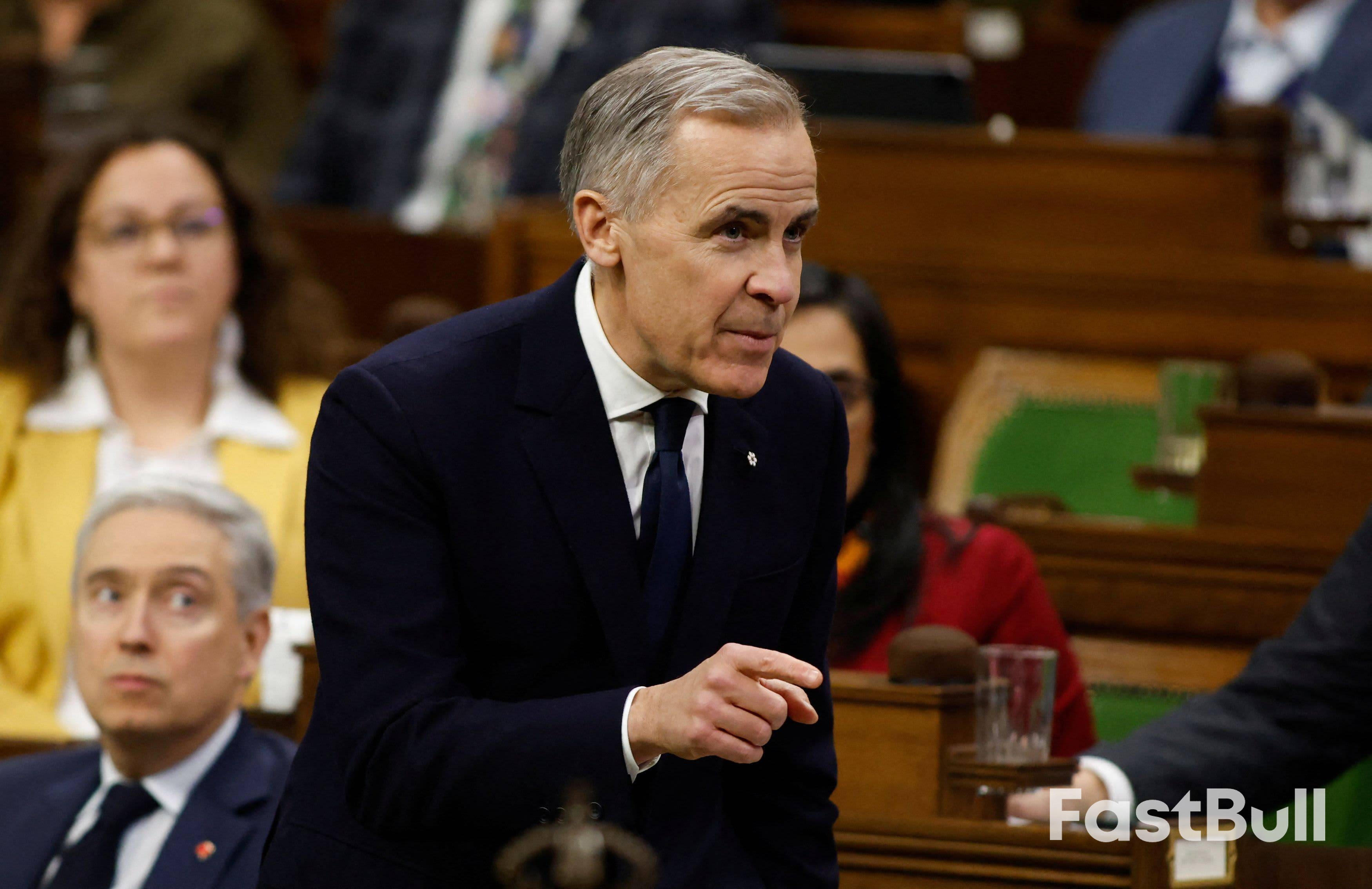
          Canadian Prime Minister Mark Carney on Tuesday forcefully denied claims from the U.S. Treasury Secretary that he had backtracked on critical remarks about the Trump administration’s global economic policies.

          Speaking to reporters in Ottawa, Carney insisted he stood by his recent speech in Davos, Switzerland, where he had challenged the current U.S.-led world order.

          "To be absolutely clear, and I said this to the president, I meant what I said in Davos," Carney stated, directly refuting comments made by Treasury Secretary Scott Bessent.

          Figure 1: Canadian Prime Minister Mark Carney addresses the House of Commons in Ottawa, where he publicly reaffirmed his government's stance on global trade policy.

          The Davos Speech That Sparked a Diplomatic Firestorm

          The dispute stems from Carney's address to the World Economic Forum, which earned a rare standing ovation. In his speech, the Prime Minister declared that the established global order was in the "midst of a rupture" and warned that the "bargain" of American hegemony "no longer works."

          He added that "great powers" have exploited and weaponized economic tools like tariffs—a pointed critique delivered as President Donald Trump was pressuring Europe over the potential U.S. purchase of Greenland from Denmark.

          Carney explained on Tuesday that his speech reflected "that Canada was the first country to understand the change in U.S. trade policy that he [Trump] had initiated, and we're responding to that."

          Washington's Pushback and Tariff Threats

          The U.S. administration's response was swift and critical. In a Fox News interview on Monday, Bessent claimed that during a phone call with Trump earlier that day, Carney was "very aggressively walking back some of the unfortunate remarks he made at Davos."

          President Trump also criticized the Canadian leader, accusing him and his country of being ungrateful. The White House followed by rescinding Canada's invitation to join the "Board of Peace."

          Over the weekend, the situation escalated when Trump threatened to impose a 100% tariff on Canadian imports if Ottawa proceeds with a trade deal with China.

          Carney Clarifies Call with Trump

          Carney confirmed the call with Trump took place, noting that the U.S. president had initiated it. He said they discussed several topics, including the war in Ukraine and "Arctic security," a reference to the Greenland controversy.

          However, he firmly rejected the characterization of the conversation. When asked directly if he had walked back his Davos remarks, Carney gave a simple answer: "No."

          He said the context of the call was to highlight "what Canada is doing positively to build new partnerships around the world," including "our arrangement with China."

          In response to the Trump administration's unpredictable use of tariffs, Canada and other U.S. trading partners have been actively forging new economic ties with other major economies. Carney told reporters he boasted to Trump that Canada had secured "12 new deals on four continents in six months," adding that the president "was impressed."

          Despite the tariff threats, Carney stated on Sunday that Canada does not currently intend to pursue a full free trade agreement with China. The U.S. Treasury Department has not yet responded to requests for comment on Carney’s latest remarks.

          To stay updated on all economic events of today, please check out our Economic calendar
          Risk Warnings and Disclaimers
          You understand and acknowledge that there is a high degree of risk involved in trading. Following any strategies or investment methods may lead to potential losses. The content on the site is provided by our contributors and analysts for information purposes only. You are solely responsible for determining whether any trading assets, securities, strategy, or any other product is suitable for investing based on your own investment objectives and financial situation.
          Add to Favorites
          Share

          Brazilian Real Hits 2-Year High on Rate Policy & Dollar Weakness

          Michael Ross

          Central Bank

          Political

          Traders' Opinions

          Economic

          Daily News

          Forex

          The Brazilian real surged to its strongest level since May 2024 on Tuesday, closing at R5.20 against the US dollar. The currency's impressive performance marks a nearly 14% appreciation over the past 12 months, driven by a combination of domestic policy and a global decline in the dollar.

          The real has been on a sharp upward trend since December 23, when it traded near R5.59 to the dollar.

          Brazil's High Interest Rates Attract Capital

          A key driver behind the real's strength is the central bank's firm monetary policy. According to Milene Dellatore, a director at Brazilian prop firm MIDE, the bank's decision to maintain its target rate at 15% since last June has been a major factor.

          Policymakers are expected to hold rates steady at their meeting on Wednesday, with potential cuts not anticipated until March. This high-rate environment makes Brazilian assets attractive to global investors.

          Further supporting the currency are two additional factors:

          • Cooling Inflation: Brazil's headline inflation slowed to an annual rate of 4.26% in December, coming in lower than market forecasts.

          • Institutional Stability: A widespread perception of short-term stability in the country is creating a favorable moment for global capital to flow into Brazil, Dellatore noted.

          A Weaker US Dollar Provides a Global Tailwind

          The real's rally is also a story about the US dollar's global retreat. The US Dollar Index (DXY), which measures the greenback against six major currencies, fell for a fourth straight session on Tuesday, hitting its lowest point since February 2022.

          Several issues in the United States are weighing on its currency. Dellatore pointed to political uncertainty, including what she described as "President Donald Trump's more volatile rhetoric," as a source of downward pressure.

          Fears of a potential US government shutdown have also contributed to the dollar's weakness this week. As a result, Dellatore added, investors are actively seeking opportunities in emerging markets and other assets outside the US.

          All Eyes on Central Bank Meetings

          Investors are now closely watching the outcomes of monetary policy meetings in both countries. The US Federal Reserve is set to conclude its first meeting of the year on Wednesday, where it is widely expected to leave the federal funds rate unchanged. Brazil's central bank is also anticipated to hold its policy rate steady, reinforcing the current dynamics that favor the real.

          To stay updated on all economic events of today, please check out our Economic calendar
          Risk Warnings and Disclaimers
          You understand and acknowledge that there is a high degree of risk involved in trading. Following any strategies or investment methods may lead to potential losses. The content on the site is provided by our contributors and analysts for information purposes only. You are solely responsible for determining whether any trading assets, securities, strategy, or any other product is suitable for investing based on your own investment objectives and financial situation.
          Add to Favorites
          Share
          FastBull
          Copyright © 2026 FastBull Ltd

          728 RM B 7/F GEE LOK IND BLDG NO 34 HUNG TO RD KWUN TONG KLN HONG KONG

          TelegramInstagramTwitterfacebooklinkedin
          App Store Google Play Google Play
          Products
          Charts

          Chats

          Q&A with Experts
          Screeners
          Economic Calendar
          Data
          Tools
          Membership
          Features
          Function
          Markets
          Copy Trading
          Latest Signals
          Contests
          News
          Analysis
          24/7
          Columns
          Education
          Company
          Careers
          About Us
          Contact Us
          Advertising
          Help Center
          Feedback
          User Agreement
          Privacy Policy
          Personal Information Protection Statement
          Business

          White Label

          Data API

          Web Plug-ins

          Poster Maker

          Affiliate Program

          Risk Disclosure

          The risk of loss in trading financial instruments such as stocks, FX, commodities, futures, bonds, ETFs and crypto can be substantial. You may sustain a total loss of the funds that you deposit with your broker. Therefore, you should carefully consider whether such trading is suitable for you in light of your circumstances and financial resources.

          No decision to invest should be made without thoroughly conducting due diligence by yourself or consulting with your financial advisors. Our web content might not suit you since we don't know your financial conditions and investment needs. Our financial information might have latency or contain inaccuracy, so you should be fully responsible for any of your trading and investment decisions. The company will not be responsible for your capital loss.

          Without getting permission from the website, you are not allowed to copy the website's graphics, texts, or trademarks. Intellectual property rights in the content or data incorporated into this website belong to its providers and exchange merchants.

          Not Logged In

          Log in to access more features

          Connect Broker
          Become a signal provider
          Help Center
          Customer Service
          Dark Mode
          Price Up/Down Colors

          Log In

          Sign Up

          Position
          Layout
          Fullscreen
          Default to Chart
          The chart page opens by default when you visit fastbull.com