Markets
News
Analysis
User
24/7
Economic Calendar
Education
Data
- Names
- Latest
- Prev



Signal Accounts for Members
All Signal Accounts
All Contests


U.K. Input PPI MoM (Not SA) (Dec)A:--
F: --
U.K. Core CPI MoM (Dec)A:--
F: --
P: --
U.K. Retail Prices Index MoM (Dec)A:--
F: --
P: --
U.K. Input PPI YoY (Not SA) (Dec)A:--
F: --
P: --
U.K. CPI YoY (Dec)A:--
F: --
P: --
U.K. Output PPI MoM (Not SA) (Dec)A:--
F: --
P: --
U.K. Output PPI YoY (Not SA) (Dec)A:--
F: --
P: --
U.K. Core Retail Prices Index YoY (Dec)A:--
F: --
P: --
U.K. Core CPI YoY (Dec)A:--
F: --
P: --
U.K. Retail Prices Index YoY (Dec)A:--
F: --
P: --
Indonesia 7-Day Reverse Repo RateA:--
F: --
P: --
Indonesia Loan Growth YoY (Dec)A:--
F: --
P: --
Indonesia Deposit Facility Rate (Jan)A:--
F: --
P: --
Indonesia Lending Facility Rate (Jan)A:--
F: --
P: --
South Africa Core CPI YoY (Dec)A:--
F: --
P: --
South Africa CPI YoY (Dec)A:--
F: --
P: --
IEA Oil Market Report
U.K. CBI Industrial Output Expectations (Jan)A:--
F: --
U.K. CBI Industrial Prices Expectations (Jan)A:--
F: --
P: --
South Africa Retail Sales YoY (Nov)A:--
F: --
P: --
U.K. CBI Industrial Trends - Orders (Jan)A:--
F: --
P: --
Mexico Retail Sales MoM (Nov)A:--
F: --
P: --
U.S. MBA Mortgage Application Activity Index WoWA:--
F: --
P: --
Canada Industrial Product Price Index YoY (Dec)A:--
F: --
Canada Industrial Product Price Index MoM (Dec)A:--
F: --
U.S. Weekly Redbook Index YoYA:--
F: --
P: --
U.S. Pending Home Sales Index YoY (Dec)A:--
F: --
P: --
U.S. Pending Home Sales Index MoM (SA) (Dec)A:--
F: --
P: --
U.S. Construction Spending MoM (Oct)A:--
F: --
U.S. Pending Home Sales Index (Dec)A:--
F: --
P: --
U.S. API Weekly Refined Oil Stocks--
F: --
P: --
U.S. API Weekly Gasoline Stocks--
F: --
P: --
U.S. API Weekly Cushing Crude Oil Stocks--
F: --
P: --
U.S. API Weekly Crude Oil Stocks--
F: --
P: --
South Korea GDP Prelim YoY (SA) (Q4)--
F: --
P: --
South Korea GDP Prelim QoQ (SA) (Q4)--
F: --
P: --
Japan Imports YoY (Dec)--
F: --
P: --
Japan Exports YoY (Dec)--
F: --
P: --
Japan Goods Trade Balance (SA) (Dec)--
F: --
P: --
Japan Trade Balance (Not SA) (Dec)--
F: --
Australia Employment (Dec)--
F: --
P: --
Australia Labor Force Participation Rate (SA) (Dec)--
F: --
P: --
Australia Unemployment Rate (SA) (Dec)--
F: --
P: --
Australia Full-time Employment (SA) (Dec)--
F: --
P: --
Turkey Consumer Confidence Index (Jan)--
F: --
P: --
Turkey Capacity Utilization (Jan)--
F: --
P: --
Turkey Late Liquidity Window Rate (LON) (Jan)--
F: --
P: --
Turkey Overnight Lending Rate (O/N) (Jan)--
F: --
P: --
Turkey 1-Week Repo Rate--
F: --
P: --
U.K. CBI Distributive Trades (Jan)--
F: --
P: --
U.K. CBI Retail Sales Expectations Index (Jan)--
F: --
P: --
U.S. Weekly Continued Jobless Claims (SA)--
F: --
P: --
U.S. Initial Jobless Claims 4-Week Avg. (SA)--
F: --
P: --
U.S. Real Personal Consumption Expenditures Final QoQ (Q3)--
F: --
P: --
Canada New Housing Price Index MoM (Dec)--
F: --
P: --
U.S. Weekly Initial Jobless Claims (SA)--
F: --
P: --
U.S. Real GDP Annualized QoQ Final (Q3)--
F: --
P: --
U.S. PCE Price Index Final QoQ (AR) (Q3)--
F: --
P: --
U.S. Personal Outlays MoM (SA) (Nov)--
F: --
P: --
U.S. Core PCE Price Index YoY (Nov)--
F: --
P: --


No matching data
Latest Views
Latest Views
Trending Topics
Top Columnists
Latest Update
White Label
Data API
Web Plug-ins
Affiliate Program
View All

No data
Swiss franc soars past 200 yen, propelled by safe-haven demand and Japan's fiscal policy concerns.
The Swiss franc surged past 200 yen for the first time in history this week, a milestone driven by the currency's safe-haven appeal amid geopolitical tension and mounting concerns over Japan's fiscal policy.
The currency pair broke the key psychological level in Tokyo on Tuesday before settling slightly lower in the mid-199 yen range during New York trading on Wednesday.
The franc's strength stems from two distinct but converging forces: its traditional role as a stable asset and a sudden sell-off in the Japanese yen.
The Enduring Appeal of a Safe Haven
Switzerland's long-standing neutrality, combined with its economic strength and sound fiscal management, makes the franc a go-to asset during times of international uncertainty. Investors often buy the currency to shield their capital from risk.
The latest catalyst for this move was a dispute between the United States and Europe over control of Greenland, which prompted increased safe-haven buying.
Japan's Fiscal Policy Sparks Yen Sell-Off
While the franc was gaining strength, the yen was simultaneously losing ground. The sell-off was triggered Monday when Japanese Prime Minister Sanae Takaichi announced a snap election and a plan to exempt food and beverages from the 8% consumption tax for two years.
This proposal raised concerns about Japan's fiscal discipline. The reaction was swift in the country's bond market, where yields on ultralong Japanese government bonds surged Tuesday, leading to a broad sell-off of the yen in the foreign exchange market.
The yen is not the only currency facing pressure. The U.S. dollar has also been sold off, with the dollar index—a measure of its strength against a basket of major currencies—falling to a two-week low. Against the dollar, the yen remains weak, trading in the 157 to 158 range.
Looking ahead, the trend favoring the Swiss franc may continue. "A reversal of policy in Japan and the U.S. is unlikely, so the franc will likely be exposed to upward pressure," noted Toshiyasu Endo of Terasu Securities Advisors.
The International Monetary Fund (IMF) has formally requested that Lebanon revise a new law designed to release depositor funds frozen in the country's banking system, according to Prime Minister Nawaf Salam.
Speaking at the World Economic Forum in Davos, Salam confirmed that the IMF "can't endorse the draft as presented" and has proposed several changes. The fund is currently negotiating a financial assistance package with Beirut to address its severe economic crisis.
The proposed law, which Lebanon's cabinet approved last month, aims to allow depositors to withdraw up to $100,000 from their trapped accounts over a four-year period. This legislation is a key part of the government's strategy to resolve the country's long-running financial collapse.
However, the IMF's reservations signal a significant hurdle for the plan's implementation, as the fund's approval is critical for unlocking international aid.
Despite the requested amendments, the prime minister characterized the talks with the IMF as a "positive engagement" that is set to continue.
"We want to have an IMF program as clearly stated in the emergency declaration of my government," added Salam, who was appointed by President Joseph Aoun a year ago. This underscores the government's dependence on securing an IMF deal to stabilize the economy.
News of the government's depositor plan had initially fueled a rally in Lebanese bonds, pushing their value to levels not seen since before the country defaulted on approximately $30 billion of international debt in March 2020.
However, those gains were short-lived. Bond prices have since declined after reports emerged detailing the IMF's objections, highlighting market sensitivity to the negotiations.
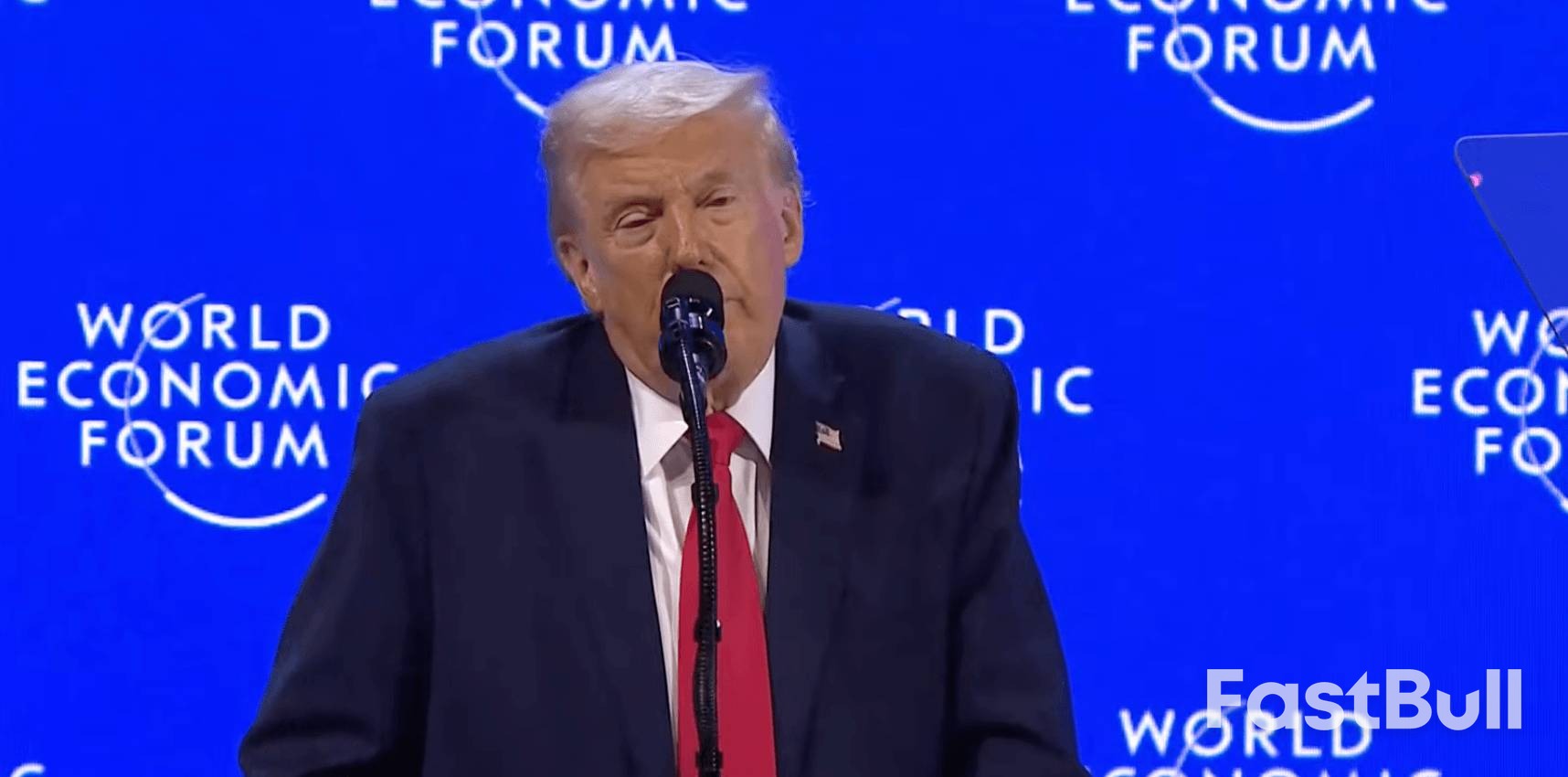
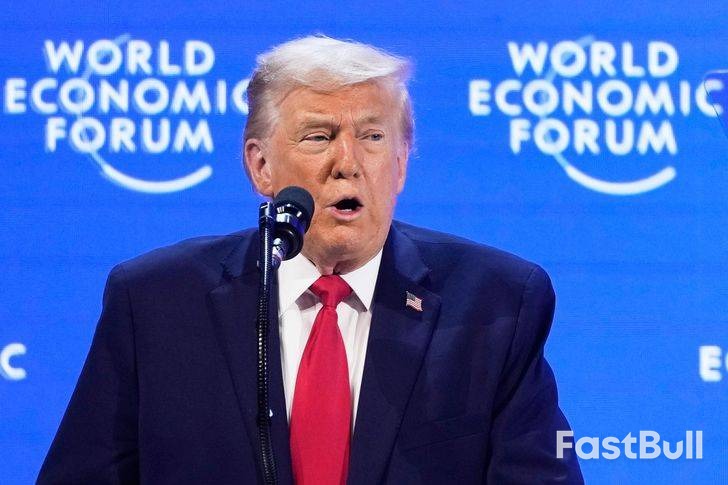
Speaking at the World Economic Forum in Davos, Donald Trump painted a picture of a dramatic American resurgence one year into his return to the presidency. He told global business leaders the U.S. was experiencing "the fastest and most dramatic economic turnaround in our country's history" with a "booming" economy.

Trump consistently contrasted his administration's performance with that of Joe Biden, whom he blamed for high inflation, border insecurity, and slow growth. He described the prior period as a "nightmare of stagflation," while claiming his own policies delivered "virtually no inflation, and extraordinarily high economic growth."
Trump's speech heavily emphasized American exceptionalism, positioning the United States as the essential driver of the world economy. "The USA is the economic engine on the planet, and when America booms, the entire world booms," he declared, urging other nations to follow Washington’s model over what he called failed European approaches.
He credited this success to a specific policy mix:
• Aggressive Deregulation: Trump claimed his administration cut regulations at an unprecedented rate.
• Reduced Federal Workforce: He highlighted a reduction in the number of federal employees.
• Pro-Energy Policy: He celebrated the reversal of the "Green New Scam," stating that reopening fossil fuel production and embracing nuclear power lowered gasoline prices and boosted national security.
Pivoting from energy to geopolitics, Trump made a renewed case for the United States to acquire Greenland. He framed the push not as a commercial venture but as a critical national security issue, citing the island's strategic position between the U.S., Russia, and China.
"No nation or group of nations is in any position to be able to secure Greenland other than the United States," he stated, describing the territory as an "enormous, unsecured island" that is geographically part of North America. Trump called for "immediate negotiations" with Denmark to discuss a purchase, an idea entertained by U.S. presidents for nearly two centuries.
While asserting the move would strengthen NATO, he reiterated complaints about ally burden-sharing. He issued a blunt warning to Denmark, saying they could agree to the proposal "or you can say no, and we will remember."
Trump also focused on technology, casting artificial intelligence and crypto as key arenas for global competition with China. He claimed the U.S. was "leading the world in AI by a lot," a success he attributed to deregulation and allowing companies to build their own power generation to fuel energy-hungry data centers.
On digital assets, he was direct. "I'm also working to ensure America remains the crypto capital of the world," he said, citing the signing of the Genius Act and ongoing work on crypto market structure legislation. He argued that crypto had become a significant electoral issue, claiming millions of voters turned against Democrats due to their hostility toward the sector. Trump stressed the urgency of acting before Beijing could gain an advantage, warning, "China wanted that market, too."
Wall Street’s reaction to the Davos speech was subdued. Major stock indexes crept higher following his remarks around 12 p.m. EST but began to slide back into the red fifteen minutes later, ending the session mostly flat.
The crypto markets, however, saw a negative response. Bitcoin (BTC) fell to an intraday low of $87,193 per coin at 12:15 p.m. EST.
In his closing remarks, Trump linked economic strength directly to military power. "National security requires economic security and economic prosperity," he said, concluding that the U.S. was stronger than ever. The core message was clear: for Trump, American leadership is not up for debate, and Greenland remains a strategic priority.
President Donald Trump is set to begin weekly trips across the United States, shifting his focus to domestic economic and energy issues ahead of the November midterm elections. The new travel schedule, confirmed by White House chief of staff Susie Wiles, will kick off with a speech in Iowa on Tuesday.
Wiles also noted that Cabinet officials will increase their domestic travel in the coming months, signaling a coordinated effort to bring the administration's message directly to voters.
This pivot to domestic issues comes amid growing frustration within the White House and among Republican lawmakers over the president's intense focus on foreign policy. Many fear this emphasis is out of step with the economic and healthcare concerns that are top of mind for voters this election year.
Recently, Trump's agenda has been dominated by international affairs, including:
• A military operation leading to the capture of Venezuelan President Nicolás Maduro.
• Escalated rhetoric about acquiring Greenland.
• Negotiations to end the war between Russia and Ukraine.
• The promotion of an ambitious international Board of Peace.
The potential pitfalls of this focus were highlighted in Davos, Switzerland, where Trump's comments on securing the Danish territory of Greenland overshadowed a speech intended to spotlight the U.S. economy.
Public opinion polls suggest that Americans are broadly unhappy with Trump's stewardship of the economy. A recent Reuters/Ipsos poll found that 36% of Americans approve of his handling of the economy. While this is an increase from a low of 33% in December, it remains well below the 42% rating he held when he first took office.
Trump himself acknowledged the challenge in a recent Reuters interview, conceding that his Republican Party could face a difficult battle to hold onto Congress. He noted that the president's party historically tends to suffer losses during midterm elections.
Despite his polling numbers, Republicans still view Trump as their most effective messenger on the economy and plan to deploy him to persuade skeptical voters. Aides have struggled to craft an affordability message that connects, raising fears of a backlash in November, as foreign policy rarely proves to be a winning issue in U.S. congressional elections.
In response to these concerns, the White House has recently unveiled a series of populist economic proposals aimed at easing the financial pressures on American households.
These initiatives include:
• A proposed 10% cap on credit card interest rates.
• A ban to prevent large investors from purchasing family homes.
• A directive for government-controlled mortgage giants Fannie Mae and Freddie Mac to buy $200 billion in mortgage bonds to help lower mortgage rates.
However, a half-dozen economists and lenders interviewed by Reuters expressed skepticism about the plans. They doubt the proposals will have any significant impact on the cost of living before the November elections, and some warned that the measures could potentially backfire.
UK Business and Trade Secretary Peter Kyle has ignited a debate over Britain's post-Brexit trade policy, suggesting the country should consider a new customs union with the European Union—a stance that directly challenges the Labour Party's official platform.
"We need to be having these conversations as a country about where is the best anchor, what is the best opportunity for Britain's economy post-Brexit," Kyle said in an interview with CNBC in Davos. "It would be crazy not to engage with the prospect of a customs union."
His remarks have raised eyebrows as they appear to contradict a core promise in Labour's election manifesto.
The Labour government's position on EU integration has been firm and frequently repeated. The party's manifesto explicitly states, "there will be no return to the single market, the customs union, or freedom of movement."
This policy has been consistently reinforced by Prime Minister Keir Starmer and Chancellor of the Exchequer Rachel Reeves. Speaking to Bloomberg just a day before Kyle's comments, Reeves confirmed that Britain would not rejoin the EU's single market or customs union.
"It was very clear in our manifesto," Reeves stated. "I don't think we need to return to the customs union to seize greater benefits of free and fair trade."
Joining an EU customs union would involve significant policy shifts for the United Kingdom. The move would require Britain to align its tariff policies with the EU, allowing British goods to move freely within the bloc without origin checks.
However, this would also force the UK to dismantle the independent post-Brexit trade agreements it has already secured with countries like the United States, India, and New Zealand.
Prime Minister Starmer has previously outlined his specific concerns. In December, he told the House of Commons that a new customs union could pose risks to the UK's pharmaceuticals industry and major car manufacturers like Jaguar Land Rover.
This month, he told the BBC he favored closer alignment with the EU's single market over a customs union.
"Having now done significant trade deals with other countries, including the US and India, which are hugely important to the JLR workforce and on pharma, it is not now sensible to unravel what is effectively the best deal with the US that any country has got," Starmer said in Parliament last month.
When asked about Kyle's comments, the Prime Minister's press secretary avoided direct criticism and pointed to Starmer's previous statements on the matter.
Kyle's remarks highlight a growing internal discussion within the Labour government about deepening trade ties with the EU. He is not the only senior figure to signal an interest in exploring a customs union. Both Justice Secretary David Lammy and Health Secretary Wes Streeting have previously indicated support for the idea, even as Starmer and Reeves have dismissed it.
Kyle's Nuanced Position
Despite his call to "engage with the prospect," Kyle's stance is more complex than a simple call to rejoin. He told CNBC that joining a customs union would be a lengthy process and therefore not a quick fix for boosting UK economic growth.
In an interview with the Financial Times earlier this week, he made similar points, calling the pursuit of a new customs union "foolish" and an embrace of "simple solutions." His comments suggest a focus on opening a long-term conversation rather than demanding an immediate policy change.
Speaking at the World Economic Forum in Davos, Switzerland, U.S. President Donald Trump championed what he called "historic" trade deals and renewed his administration's push to acquire Greenland from Denmark. In his speech, Trump outlined achievements since his return to the White House one year ago and renewed his criticism of the former Joe Biden administration.

Trump emphasized the scale of recent trade agreements, stating his administration has secured deals with partners that cover 40% of all U.S. trade. He identified these partners as including European nations, Japan, and South Korea.
"They've gone into massive deals with us, especially on oil and gas," Trump said. He claimed these agreements have stimulated economic growth and caused stock markets to boom, not just in the United States but also in partner countries. "When the United States goes up, you follow," he added.
The President also dedicated part of his speech to his interest in the U.S. acquiring Greenland, an Arctic territory belonging to Denmark, a NATO ally. He argued that the United States is uniquely positioned to manage the territory's security.
"The fact is no nation or group of nations is in any position to be able to secure Greenland other than the U.S.," he stated. To underscore American strength, Trump referenced a recent military operation that captured Venezuelan leader Nicolas Maduro, noting, "We are a great power, much greater than people even understand. I think they found that out two weeks ago in Venezuela."
Military Action Ruled Out
Despite the reference to military might, Trump clarified that force is not part of his plan to acquire the Danish island.
"People thought I would use force, but I don't have to use force. I don't want to use force. I won't use force," he said.
This statement appears to walk back previous indications from the White House. Press Secretary Karoline Leavitt had noted that the administration was considering a range of options for Greenland based on national security, with the use of the military being one possibility for the commander-in-chief.
Trump framed the request as historically justified, stating, "All the U.S. is asking for is a place called Greenland, where we already had it as a trustee, but respectfully returned it back to Denmark not long ago, after we defeated the Germans, the Japanese, the Italians and others in World War II."
Global shares rebounded on Wednesday following a selloff in prior session after President Donald Trump toned down his rhetoric in his threats to acquire Greenland while speaking in Davos.
Trump called for immediate negotiations toward a deal to acquire Greenland, but added that he would not use force in his campaign for the northern island. That was a softer tone from the U.S. president, who had said there was "no going back" on his goal to control the island, and had refused to rule out taking it by force. He had also threatened tariffs on Europe, rekindling fears of a global trade war.
On Wall Street, the Dow Jones Industrial Average rose 1%, the S&P 500 gained 1% and the Nasdaq Composite added 1.1%.
Fears of foreign selling of U.S. assets - the so-called "Sell America" trade that emerged after last year's "Liberation Day" tariff announcements in April - had gripped markets, causing Wall Street's main indexes to notch their biggest daily loss since October 10 in the previous session.
"The market bounced when he said we wouldn't use force," said Mark Hackett, chief market strategist at Nationwide in Boston. "Following the events of last April, investors are catching on that his negotiating style is very different than past administrations, so uncertainty is a natural outcome."
MSCI's All-World index EURONEXT:IACWI was up 0.61% after losing ground in the last session, while Europe's STOXX 600 index , rose 0.17%. The FTSE index CURRENCYCOM:UK100 was up 0.31%.
The VIX index , which measures demand for protection against big swings in the S&P 500, dropped more than 11% to 17.81, a day after jumping to its highest since November. The index is often used as a proxy for investor nervousness and for many, 20 is the point above which market volatility can suddenly explode.
"It wasn't so much what president said that mattered as what he didn't say," said Brian Jacobsen, chief market strategist at Annex Wealth Management in Wisconsin. "He didn't reiterate his tariff threat against Europe. He didn't say the government would use force to get Greenland."
The European Parliament decided to suspend its work on a trade deal between the 27-member bloc and the U.S., a parliament member said, following Trump's repeated requests to take control over Greenland. The European Union will convene an emergency summit in Brussels on Thursday to discuss the matter, with the long-standing U.S.-EU alliance at risk.
The global bond market was still reeling from a brutal selloff, having been caught up in a perfect storm of worries over exposure to U.S. assets and a surge in Japanese government borrowing costs.
At the epicentre were long-dated Japanese sovereign bonds, which endured their most aggressive selloff in nearly 25 years on Tuesday, as fears grew over increased government spending under Japanese Prime Minister Sanae Takaichi.
U.S. 30-year Treasury yields (US30YT=RR) neared the 5% threshold for the first time since September, while German government bond yields also rose sharply (DE30YT=RR).
By Wednesday, Japanese bond prices rallied as buyers returned, almost entirely reversing the previous day's rise in yields. A similar dynamic played out across U.S. Treasuries, where 30-year bond yields were steady at 4.905%. The yield on benchmark U.S. 10-year notes eased to 4.2767%.
In currency markets, the dollar index , which tracks the U.S. currency's performance against that of six others, rebounded from earlier losses and was up 0.11%. The euro pared earlier gains and was down 0.16% to $1.170825, while the Swiss franc fell, leaving the dollar up 0.42% at 0.79330 francs.
The yen was slightly weaker against the dollar at 158.23 per dollar ahead of a Bank of Japan policy meeting on Friday. No rate hike is expected this time, though policymakers could signal an increase may be coming as soon as April.
Oil prices fell, as pressure from geopolitical tensions and an expected build-up in U.S. crude inventories was offset by a temporary halt in output at two large fields in Kazakhstan. Brent crude futures was down 0.32% at $64.71 a barrel. Spot gold was up 1.59%.
White Label
Data API
Web Plug-ins
Poster Maker
Affiliate Program
The risk of loss in trading financial instruments such as stocks, FX, commodities, futures, bonds, ETFs and crypto can be substantial. You may sustain a total loss of the funds that you deposit with your broker. Therefore, you should carefully consider whether such trading is suitable for you in light of your circumstances and financial resources.
No decision to invest should be made without thoroughly conducting due diligence by yourself or consulting with your financial advisors. Our web content might not suit you since we don't know your financial conditions and investment needs. Our financial information might have latency or contain inaccuracy, so you should be fully responsible for any of your trading and investment decisions. The company will not be responsible for your capital loss.
Without getting permission from the website, you are not allowed to copy the website's graphics, texts, or trademarks. Intellectual property rights in the content or data incorporated into this website belong to its providers and exchange merchants.
Not Logged In
Log in to access more features

FastBull Membership
Not yet
Purchase
Log In
Sign Up