• Trade
  • Markets
  • Copy
  • Contests
  • News
  • 24/7
  • Calendar
  • Q&A
  • Chats
Trending
Screeners
SYMBOL
LAST
BID
ASK
HIGH
LOW
NET CHG.
%CHG.
SPREAD
SPX
S&P 500 Index
6827.42
6827.42
6827.42
6899.86
6801.80
-73.58
-1.07%
--
DJI
Dow Jones Industrial Average
48458.04
48458.04
48458.04
48886.86
48334.10
-245.98
-0.51%
--
IXIC
NASDAQ Composite Index
23195.16
23195.16
23195.16
23554.89
23094.51
-398.69
-1.69%
--
USDX
US Dollar Index
98.000
98.080
98.000
98.070
97.920
+0.050
+ 0.05%
--
EURUSD
Euro / US Dollar
1.17320
1.17327
1.17320
1.17447
1.17283
-0.00074
-0.06%
--
GBPUSD
Pound Sterling / US Dollar
1.33553
1.33563
1.33553
1.33740
1.33546
-0.00154
-0.12%
--
XAUUSD
Gold / US Dollar
4328.25
4328.70
4328.25
4329.64
4294.68
+28.86
+ 0.67%
--
WTI
Light Sweet Crude Oil
57.552
57.589
57.552
57.601
57.194
+0.319
+ 0.56%
--

Community Accounts

Signal Accounts
--
Profit Accounts
--
Loss Accounts
--
View More

Become a signal provider

Sell trading signals to earn additional income

View More

Guide to Copy Trading

Get started with ease and confidence

View More

Signal Accounts for Members

All Signal Accounts

Best Return
  • Best Return
  • Best P/L
  • Best MDD
Past 1W
  • Past 1W
  • Past 1M
  • Past 1Y

All Contests

  • All
  • Trump Updates
  • Recommend
  • Stocks
  • Cryptocurrencies
  • Central Banks
  • Featured News
Top News Only
Share

Hsi Closes Midday At 25736, Down 240 Pts, Hsti Closes Midday At 5537, Down 100 Pts, Hansoh Pharma Down Over 7%, Ping An, Youran Dairy, Logan Group Hit New Highs

Share

India Foreign Ministry: Foreign Minister To Visit United Arab Emirates And Israel

Share

Reuters Poll - Bank Of Thailand To Lower Key Policy Rate To 1.00% In Q1 Of 2026, Said A Majority Of Economists

Share

Reuters Poll - Bank Of Thailand To Cut Its Key Interest Rate To 1.25% On December 17, Said 26 Of 27 Economists

Share

Thai Finance Minister: Earlier Stimulus Measures To Shore Up Economy

Share

Thai Finance Minister: Strong Baht Driven By Capital Inflows

Share

Thai Finance Minister: Has Discussed With Central Bank To Handle Baht

Share

India's Nifty Bank Futures Down 0.1% In Pre-Open Trade

Share

India's Nifty 50 Futures Down 0.3% In Pre-Open Trade

Share

India's Nifty 50 Index Down 0.45% In Pre-Open Trade

Share

Indian Rupee Weakens Past 90.55 Versus USA Dollar To All-Time Low

Share

China's Fossil-Fuelled Power Generation Falls 4.2% Year-On-Year In November

Share

Indian Rupee Opens Down 0.1% At 90.5450 Per USA Dollar, Versus 90.4150 Previous Close

Share

Australia Home Minister: Father Involved In Bondi Gun Attack Came To Australia On Student Visa, Son Is An Australian-Born Citizen

Share

Australian Prime Minister Albanese: Stricter Gun Control Laws Will Include Restrictions On The Number Of Guns An Individual Can Own Or License To Use

Share

Australia's Prime Minister Albanese: We Are Considering A Review Of Gun Licenses For Some Time

Share

Australia's Prime Minister Albanese: Government Considering Tougher Gun Laws

Share

China Stats Bureau Spokesperson: Next Year, Adverse Impact Of Protectionism And Unilateralism May Continue

Share

China's Onshore Yuan Strengthens To A High Of 7.0516 Per Dollar, Strongest Level Since Oct 8, 2024

Share

Indonesia's November Refined Tin Exports At 7458.64 Metric Tons

TIME
ACT
FCST
PREV
U.K. Trade Balance (Oct)

A:--

F: --

P: --

France HICP Final MoM (Nov)

A:--

F: --

P: --

China, Mainland Outstanding Loans Growth YoY (Nov)

A:--

F: --

P: --

China, Mainland M2 Money Supply YoY (Nov)

A:--

F: --

P: --

China, Mainland M0 Money Supply YoY (Nov)

A:--

F: --

P: --

China, Mainland M1 Money Supply YoY (Nov)

A:--

F: --

P: --

India CPI YoY (Nov)

A:--

F: --

P: --

India Deposit Gowth YoY

A:--

F: --

P: --

Brazil Services Growth YoY (Oct)

A:--

F: --

P: --

Mexico Industrial Output YoY (Oct)

A:--

F: --

P: --

Russia Trade Balance (Oct)

A:--

F: --

P: --

Philadelphia Fed President Henry Paulson delivers a speech
Canada Building Permits MoM (SA) (Oct)

A:--

F: --

P: --

Canada Wholesale Sales YoY (Oct)

A:--

F: --

P: --

Canada Wholesale Inventory MoM (Oct)

A:--

F: --

P: --

Canada Wholesale Inventory YoY (Oct)

A:--

F: --

P: --

Canada Wholesale Sales MoM (SA) (Oct)

A:--

F: --

P: --

Germany Current Account (Not SA) (Oct)

A:--

F: --

P: --

U.S. Weekly Total Rig Count

A:--

F: --

P: --

U.S. Weekly Total Oil Rig Count

A:--

F: --

P: --

Japan Tankan Small Manufacturing Outlook Index (Q4)

A:--

F: --

P: --

Japan Tankan Large Non-Manufacturing Diffusion Index (Q4)

A:--

F: --

P: --

Japan Tankan Large Non-Manufacturing Outlook Index (Q4)

A:--

F: --

P: --

Japan Tankan Large Manufacturing Outlook Index (Q4)

A:--

F: --

P: --

Japan Tankan Small Manufacturing Diffusion Index (Q4)

A:--

F: --

P: --

Japan Tankan Large Manufacturing Diffusion Index (Q4)

A:--

F: --

P: --

Japan Tankan Large-Enterprise Capital Expenditure YoY (Q4)

A:--

F: --

P: --

U.K. Rightmove House Price Index YoY (Dec)

A:--

F: --

P: --

China, Mainland Industrial Output YoY (YTD) (Nov)

A:--

F: --

P: --

China, Mainland Urban Area Unemployment Rate (Nov)

A:--

F: --

P: --

Saudi Arabia CPI YoY (Nov)

--

F: --

P: --

Euro Zone Industrial Output YoY (Oct)

--

F: --

P: --

Euro Zone Industrial Output MoM (Oct)

--

F: --

P: --

Canada Existing Home Sales MoM (Nov)

--

F: --

P: --

Euro Zone Total Reserve Assets (Nov)

--

F: --

P: --

U.K. Inflation Rate Expectations

--

F: --

P: --

Canada National Economic Confidence Index

--

F: --

P: --

Canada New Housing Starts (Nov)

--

F: --

P: --

U.S. NY Fed Manufacturing Employment Index (Dec)

--

F: --

P: --

U.S. NY Fed Manufacturing Index (Dec)

--

F: --

P: --

Canada Core CPI YoY (Nov)

--

F: --

P: --

Canada Manufacturing Unfilled Orders MoM (Oct)

--

F: --

P: --

U.S. NY Fed Manufacturing Prices Received Index (Dec)

--

F: --

P: --

U.S. NY Fed Manufacturing New Orders Index (Dec)

--

F: --

P: --

Canada Manufacturing New Orders MoM (Oct)

--

F: --

P: --

Canada Core CPI MoM (Nov)

--

F: --

P: --

Canada Trimmed CPI YoY (SA) (Nov)

--

F: --

P: --

Canada Manufacturing Inventory MoM (Oct)

--

F: --

P: --

Canada CPI YoY (Nov)

--

F: --

P: --

Canada CPI MoM (Nov)

--

F: --

P: --

Canada CPI YoY (SA) (Nov)

--

F: --

P: --

Canada Core CPI MoM (SA) (Nov)

--

F: --

P: --

Canada CPI MoM (SA) (Nov)

--

F: --

P: --

Federal Reserve Board Governor Milan delivered a speech
U.S. NAHB Housing Market Index (Dec)

--

F: --

P: --

Australia Composite PMI Prelim (Dec)

--

F: --

P: --

Australia Services PMI Prelim (Dec)

--

F: --

P: --

Australia Manufacturing PMI Prelim (Dec)

--

F: --

P: --

Japan Manufacturing PMI Prelim (SA) (Dec)

--

F: --

P: --

U.K. Unemployment Rate (Nov)

--

F: --

P: --

U.K. 3-Month ILO Unemployment Rate (Oct)

--

F: --

P: --

Q&A with Experts
    • All
    • Chatrooms
    • Groups
    • Friends
    Connecting
    .
    .
    .
    Type here...
    Add Symbol or Code

      No matching data

      All
      Trump Updates
      Recommend
      Stocks
      Cryptocurrencies
      Central Banks
      Featured News
      • All
      • Russia-Ukraine Conflict
      • Middle East Flashpoint
      • All
      • Russia-Ukraine Conflict
      • Middle East Flashpoint
      Search
      Products

      Charts Free Forever

      Chats Q&A with Experts
      Screeners Economic Calendar Data Tools
      Membership Features
      Data Warehouse Market Trends Institutional Data Policy Rates Macro

      Market Trends

      Market Sentiment Order Book Forex Correlations

      Top Indicators

      Charts Free Forever
      Markets

      News

      News Analysis 24/7 Columns Education
      From Institutions From Analysts
      Topics Columnists

      Latest Views

      Latest Views

      Trending Topics

      Top Columnists

      Latest Update

      Signals

      Copy Rankings Latest Signals Become a signal provider AI Rating
      Contests
      Brokers

      Overview Brokers Assessment Rankings Regulators News Claims
      Broker listing Forex Brokers Comparison Tool Live Spread Comparison Scam
      Q&A Complaint Scam Alert Videos Tips to Detect Scam
      More

      Business
      Events
      Careers About Us Advertising Help Center

      White Label

      Data API

      Web Plug-ins

      Affiliate Program

      Awards Institution Evaluation IB Seminar Salon Event Exhibition
      Vietnam Thailand Singapore Dubai
      Fans Party Investment Sharing Session
      FastBull Summit BrokersView Expo
      Recent Searches
        Top Searches
          Markets
          News
          Analysis
          User
          24/7
          Economic Calendar
          Education
          Data
          • Names
          • Latest
          • Prev

          View All

          No data

          Scan to Download

          Faster Charts, Chat Faster!

          Download App
          English
          • English
          • Español
          • العربية
          • Bahasa Indonesia
          • Bahasa Melayu
          • Tiếng Việt
          • ภาษาไทย
          • Français
          • Italiano
          • Türkçe
          • Русский язык
          • 简中
          • 繁中
          Open Account
          Search
          Products
          Charts Free Forever
          Markets
          News
          Signals

          Copy Rankings Latest Signals Become a signal provider AI Rating
          Contests
          Brokers

          Overview Brokers Assessment Rankings Regulators News Claims
          Broker listing Forex Brokers Comparison Tool Live Spread Comparison Scam
          Q&A Complaint Scam Alert Videos Tips to Detect Scam
          More

          Business
          Events
          Careers About Us Advertising Help Center

          White Label

          Data API

          Web Plug-ins

          Affiliate Program

          Awards Institution Evaluation IB Seminar Salon Event Exhibition
          Vietnam Thailand Singapore Dubai
          Fans Party Investment Sharing Session
          FastBull Summit BrokersView Expo

          Small Victory for SVB Financial as Judge Orders FDIC to Return Tax Refund Checks

          Kevin Du
          Summary:

          In a court ruling in New York, the Federal Deposit Insurance Corp. (FDIC) has been ordered to return tax refund checks it took out of the hands of SVB Financial Group, a bankrupt company seeking to compensate bondholders.

          In a court ruling in New York, the Federal Deposit Insurance Corp. (FDIC) has been ordered to return tax refund checks it took out of the hands of SVB Financial Group, a bankrupt company seeking to compensate bondholders. SVB Financial Group is the corporate parent of failed Silicon Valley Bank. The decision poses concerns the FDIC, which had its sights set on claiming future tax refunds.
          On Wednesday, a judge issued a ruling that compels the FDIC to surrender some $10 million worth of tax refund checks made out to SVB Financial Group, Reuters and other sources reported. This marks at least a momentary triumph for the latter in its mission to compensate bondholders.
          SVB Financial Group Owes Bondholders
          During a court hearing in Manhattan, SVB Financial Group's representative, James Bromley, reportedly disclosed that the company anticipates receiving some $300 million in tax refunds over the next two years.
          These refunds, resulting from overpaid taxes, hold great value for SVB Financial. The group needs these crucial assets to repay its creditors.
          This may be good news for SVB Financial and certain of its creditors, not for all depositors of the failed bank. A May 13 story in the Wall Street Journal detailed the concerns of depositors, including some in the Cayman Islands, who currently have the lowly status of unsecured creditors. They may never see the funds they deposited again.
          The latter find themselves in a tough position as unsecured creditors. This status means that their claims for repayment lack specific collateral and have lower priority compared to secured creditors, thus heightening the uncertainty surrounding the recovery of their funds.
          The dispute between SVB Financial and the FDIC has led to a deadlock in the ongoing Chapter 11 case. Further, impeding the progress of the bankruptcy proceedings and posing a threat to the FDIC's established process of repaying creditors. Which in this case means managing deposits totaling over $2 billion.
          The FDIC argues that upon assuming control of Silicon Valley Bank (SVB), it acquired ownership of the $2 billion in deposits. Consequently, it asserts, SVB Financial is merely considered a creditor with the right to pursue the collection of the $2 billion.
          FDIC Should Act Like Other Creditors
          In response to the FDIC's argument, US Bankruptcy Judge Martin Glenn reportedly directed the agency to file a claim like other creditors. Additionally, the judge ordered the FDIC to provide a clear explanation of why it believes it has the right to keep the $2 billion.
          "This is a major setback for the FDIC, which is still trying to recoup its costs from rescuing Silicon Valley Bank earlier this year," Markus Levin, co-founder of XYO Network, told BeInCrypto.
          "Not only does it set the FDIC back financially on the SVB case, but it may also set a precedent for other bankrupt companies facing similar challenges," Levin added.
          The FDIC protected SVB Financial's American depositors when it took over the bank. But, as the Wall Street Journal reported, customers of its Cayman Islands branch have been unable to access their funds since SVB's collapse.
          According to the FDIC's website, there were 564 bank failures from 2001 through 2023. Bank failures dropped off dramatically after 2010, with none in 2021 and 2022. However, the collapse of Silicon Valley Bank in March was the third-largest bank failure in United States history. It also represented the largest failure since the 2007–2008 financial crisis.
          The crisis may not be over. A recent report suggests that half of US banks could be insolvent.

          Source: Be in Crypto

          Risk Warnings and Disclaimers
          You understand and acknowledge that there is a high degree of risk involved in trading. Following any strategies or investment methods may lead to potential losses. The content on the site is provided by our contributors and analysts for information purposes only. You are solely responsible for determining whether any trading assets, securities, strategy, or any other product is suitable for investing based on your own investment objectives and financial situation.
          Comments
          Add to Favorites
          Share

          Shifting Tides in the US Housing Market: Home Sales Dip as Inventory Surges

          Warren Takunda

          Economic

          Traders' Opinions

          The US housing market has been experiencing a series of ebbs and flows, and the latest data from the National Association of Realtors (NAR) highlights this ongoing trend. In April of 2023, existing home sales in the country witnessed a 3.4% month-on-month decline, reaching a seasonally adjusted annual rate of 4.28 million units. This figure represents the lowest level in three months and falls short of the forecasted 4.3 million units. Additionally, the total housing inventory surged by 7.2% from the previous month, resulting in a 2.9-month supply at the current sales pace. Amidst these market shifts, the median existing-home price for all housing types experienced a 1.7% year-on-year decrease, settling at $388,800.

          Shifting Tides in the US Housing Market: Home Sales Dip as Inventory Surges_1Home Sales Struggles

          The recent dip in existing home sales may raise concerns among market observers, but it's important to note that sales remain above recent cyclical lows. The US housing market has been influenced by a combination of factors, including job gains, limited inventory, and fluctuating mortgage rates over the past several months. These dynamics have created an environment of push and pull, affecting the overall housing demand.

          Inventory Expansion

          One significant development in April was the substantial increase in the total housing inventory, which now stands at 1.04 million units. This surge of 7.2% from the previous month suggests a potential easing of the supply shortage that has characterized the market in recent years. The current inventory level represents a 2.9-month supply at the current sales pace, up from 2.6 months in March. While the increase in inventory might provide buyers with more options, it remains to be seen whether this trend will be sustained in the coming months.

          Shifting Tides in the US Housing Market: Home Sales Dip as Inventory Surges_2Regional Variations

          The NAR report also sheds light on regional variations in the housing market. Median home prices experienced a decline of 1.7% compared to the previous year, with the national median price reaching $388,800. Interestingly, while prices rose in the Northeast and Midwest, they retreated in the South and West regions. These divergent trends indicate that localized factors, such as supply-demand dynamics and regional economic conditions, continue to shape the housing market landscape.
          As we move forward, it is essential to closely monitor the interplay of various factors affecting the US housing market. While the recent dip in existing home sales and the rise in inventory could be seen as potential signals of market softening, the broader context of job gains and fluctuating mortgage rates must be considered. These factors create a dynamic environment of push-pull, where demand can be influenced by changing economic conditions.
          Market participants, including prospective homebuyers and sellers, should carefully evaluate the regional dynamics impacting their respective markets. For buyers, the increased inventory might present opportunities to find the right property at a favorable price. Meanwhile, sellers may need to adjust their pricing strategies to remain competitive in areas where prices have retreated.
          To stay updated on all economic events of today, please check out our Economic calendar
          Risk Warnings and Disclaimers
          You understand and acknowledge that there is a high degree of risk involved in trading. Following any strategies or investment methods may lead to potential losses. The content on the site is provided by our contributors and analysts for information purposes only. You are solely responsible for determining whether any trading assets, securities, strategy, or any other product is suitable for investing based on your own investment objectives and financial situation.
          Comments
          Add to Favorites
          Share

          Japan's Inflation Stays Above BOJ's Target, Key Gauge Hits Four-Decade High

          Thomas

          Economic

          Japan's core consumer inflation stayed well above the central bank's 2% target in April and a key index stripping away the effects of fuel hit a fresh four-decade high, keeping alive expectations of a tweak to its massive stimulus this year.
          The reading comes a few days after data showed the world's third-largest economy grew faster than expected in the first quarter on a post-COVID consumer rebound.
          While raw material costs have peaked, a steady rise in services and food prices highlight broadening inflationary pressure that may prod the Bank of Japan (BOJ) to revise up this year's price forecast in July, analysts say.
          "The BOJ will likely have little choice but to revise up its inflation forecast in July," said Ryutaro Kono, chief Japan economist at BNP Paribas. "With inflation expectations heightening, the chance of a policy tweak may be rising."
          The nationwide core consumer price index (CPI), which excludes fresh food but includes energy items, rose 3.4% in April from a year earlier, data showed on Friday, matching a median market forecast and perking up from a 3.1% gain in March.
          Services inflation accelerated to 1.7% in April from 1.5% in March, the data showed, suggesting that rising labour costs may be starting to feed into broader consumer inflation.
          Food prices also jumped 9.0% in April from a year earlier, accelerating from 8.2% in March.
          An index stripping away the effects of both fresh food and fuel - closely watched by the BOJ as a key barometer of domestic demand-driven price trends - rose 4.1% in April from a year earlier, marking the fastest annual pace since September 1981.
          With inflation having stayed above its target for a year, markets are simmering with speculation the BOJ will soon phase out its massive stimulus that critics say is distorting markets and hurting financial institutions' profits.
          A scheduled increase in household electricity bills from June, which was approved on Tuesday, may keep core consumer inflation around 3% until summer, said Taro Saito, an economist at NRI Research Institute.
          "Looking ahead, we'll likely see more companies pass on rising labour costs reflecting recent hike wages," he said. "The key driver of inflation will shift to services from goods."
          Ueda has stressed the need to keep ultra-loose policy until inflation is sustainably around 2% and accompanied by wage hikes.
          He has also said core consumer inflation will slow back below 2% toward the middle of this fiscal year, though sustained price rises have put that view into some doubt.
          A poll of analysts, released on Monday by think tank Japan Center for Economic Research, projects core consumer inflation to hit 2.3% in fiscal 2023. That is much higher than the BOJ's current projection of 1.8% made in April.
          The BOJ next meets for a policy meeting on June 15-16. It will revise its growth and inflation estimates at a subsequent meeting on July 27-28.
          Analysts polled by Reuters expect Tokyo core consumer inflation, considered a leading indicator of nationwide trends, to hit 3.3% in May. The data is due out on May 26.

          Source: CNA

          To stay updated on all economic events of today, please check out our Economic calendar
          Risk Warnings and Disclaimers
          You understand and acknowledge that there is a high degree of risk involved in trading. Following any strategies or investment methods may lead to potential losses. The content on the site is provided by our contributors and analysts for information purposes only. You are solely responsible for determining whether any trading assets, securities, strategy, or any other product is suitable for investing based on your own investment objectives and financial situation.
          Comments
          Add to Favorites
          Share

          Asian Shares Mixed as China Growth Worries Crimp U.S. Debt Ceiling Optimism

          Samantha Luan

          Stocks

          Asian shares nudged lower on Friday, weighed down by China and Hong Kong stocks due to concerns over the stuttering recovery in the world's second-biggest economy, although Japan's Nikkei clocked a near 33-year peak.
          MSCI's broadest index of Asia-Pacific shares outside Japan eased 0.20% but was set to eke out a gain of 0.19% for the week.
          China shares fell 0.61%, while Hong Kong's Hang Seng index dropped as much as 1.8%, dragged down by tech stocks after Alibaba Group Holding Ltd, reported a lower-than-expected 2% rise in quarterly revenue.
          Data in the week underscored that China's economy lost momentum at the beginning of the second quarter, stoking worries over the wobbly post-COVID-19 recovery.
          Japan's Nikkei though continued its ascent, rising to its highest since August 1990, during the country's so-called bubble era.
          Investor attention has been firmly on the negotiations over U.S. debt ceiling and increasing hopes that a deal could be reached sent U.S. shares higher overnight. E-mini futures for the S&P 500 rose 0.16%.
          U.S. President Joe Biden and House of Representatives Speaker Kevin McCarthy, the top Republican in Washington, hope to finalise a deal on the debt ceiling after Biden returns from the Group of Seven meeting in Japan on Sunday.
          "What makes things more complicated this year is that the Democrats and Republicans are so wide apart from each other ... negotiations will take a long time because each one is trying to get something out of those negotiations," said Alexandre Tavazzi, head of CIO office and macro research for Pictet Wealth Management.
          Meanwhile, data overnight showed fewer-than-expected Americans filed initial jobless claims last week, lowering odds that the Federal Reserve will cut interest rates before year-end.
          Hawkish rhetoric from Fed speakers continued with Dallas Fed President Lorie Logan and St. Louis Fed President James Bullard saying inflation was not cooling fast enough to allow the Fed to pause its interest-rate hike campaign.
          Markets are now pricing in 36% chance of a 25-basis point hike when the Fed meets next month, compared with 10% chance a week earlier, CME FedWatch tool showed.
          Focus will now switch to Fed Chair Jerome Powell's panel discussion later in the global day.
          ActivTrades market analyst Anderson Alves said the hawkish narrative starkly contrasts with the message from May's Fed meeting, which signalled a high bar for future hikes, a sentiment that Powell seemingly did not discourage during the last news conference.
          In the currency market, the yen strengthened 0.14% to 138.51 per dollar, but was near the six-month low of 138.75 it touched overnight.
          Against a basket of currencies, the dollar rose 0.077% and was wedged near a two-month high. The euro was down 0.07% to $1.0761, while sterling was last trading at $1.2391, down 0.14% on the day.
          The offshore yuan fell to 7.0677 per dollar, the weakest since Dec. 2. Analysts predict more weakness in the future and point to the Fed's policy as being the bigger driver than economic weakness at home.
          U.S. crude fell 0.14% to $71.76 per barrel and Brent was at $75.78, down 0.11% on the day.
          Spot gold eased 0.1% to $1,956.18 an ounce.

          Source: Yahoo

          Risk Warnings and Disclaimers
          You understand and acknowledge that there is a high degree of risk involved in trading. Following any strategies or investment methods may lead to potential losses. The content on the site is provided by our contributors and analysts for information purposes only. You are solely responsible for determining whether any trading assets, securities, strategy, or any other product is suitable for investing based on your own investment objectives and financial situation.
          Comments
          Add to Favorites
          Share

          US Natural Gas Stocks Fall Short of Expectations, Pushing Prices to 2-Month High

          Warren Takunda

          Commodity

          Traders' Opinions

          In the dynamic world of energy markets, natural gas has taken center stage once again as recent developments have led to unexpected shifts in supply and demand. The latest data from the Energy Information Administration (EIA) reveals that US natural gas stocks have risen less than expected, while prices have reached a two-month high. This article explores the factors behind these fluctuations and their implications for the energy industry and consumers.
          US Natural Gas Stocks Miss Market Expectations
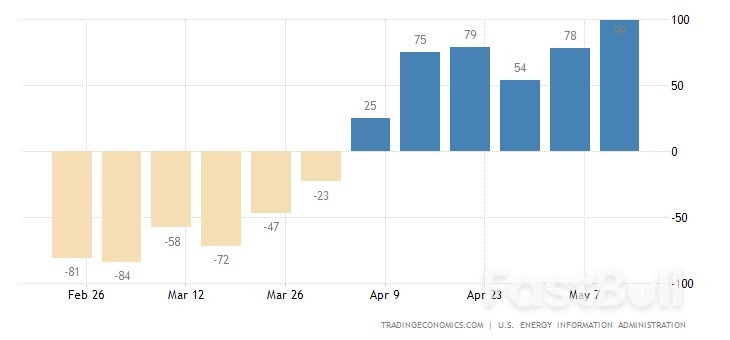
          During the week ending May 12, 2023, US utilities added 99 billion cubic feet (bcf) of gas into storage, falling short of market expectations of a 108 bcf increase. This modest gain can be attributed to mild weather conditions, which suppressed both heating and cooling demand. In comparison, the corresponding week last year witnessed an increase of 87 bcf, while the five-year average stood at 91 bcf. Despite this, the current stockpile of 2.240 trillion cubic feet (tcf) remains substantial, surpassing the levels of the previous year by 521 bcf and exceeding the five-year average by 340 bcf.US Natural Gas Stocks Fall Short of Expectations, Pushing Prices to 2-Month High_1
          Supply Constraints Drive Prices to a 2-Month High
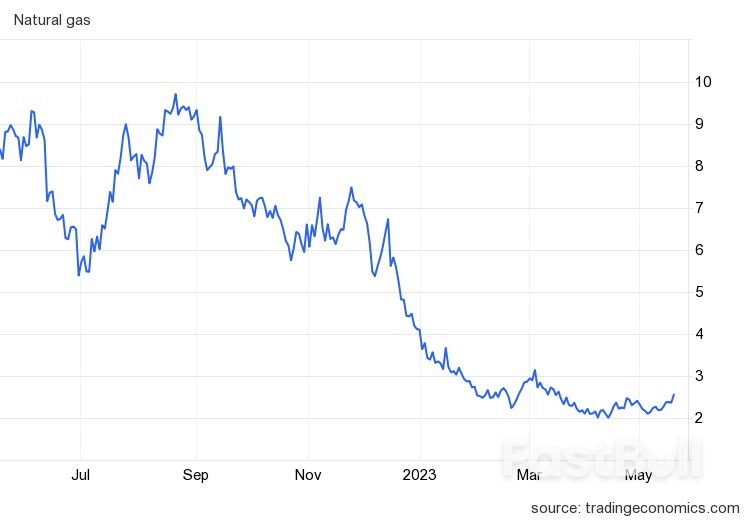
          The limited increase in natural gas stocks, coupled with a reduction in supply and heightened demand, has contributed to a surge in prices. US natural gas futures rose by 6%, reaching over $2.5/MMBtu, the highest level seen in the past two months. One significant factor affecting supply has been the decline in gas exports from Canada. Wildfires in Alberta have forced the shutdown of oil and gas production, disrupting pipeline flows and leading to near a 25-month low in gas exports to the US.
          US Natural Gas Stocks Fall Short of Expectations, Pushing Prices to 2-Month High_2Rising Demand and Meteorological Outlook
          The recent price surge has also been fueled by anticipated warmer-than-normal temperatures across the United States in the coming weeks. Meteorologists predict an increase in cooling demand as households and businesses seek relief from higher temperatures. This uptick in demand for natural gas, primarily used for electricity generation and cooling, has further contributed to the upward pressure on prices.
          Declining LNG Exports and Maintenance Works
          While supply constraints have been prominent, it is worth noting that gas flows to major US liquefied natural gas (LNG) export plants have decreased from record levels observed in April. Several facilities have undergone maintenance work, resulting in reduced export volumes. However, as these maintenance activities conclude, exports are expected to ramp up once again, potentially alleviating some of the supply pressures.
          The recent developments in the natural gas market carry both benefits and challenges. Higher prices can lead to increased profitability for natural gas producers, bolstering investment in exploration and production activities. However, for consumers, elevated natural gas prices may translate into higher electricity bills, especially during the summer months when cooling demand peaks. Industries relying on natural gas as a feedstock or energy source may also face cost pressures, potentially impacting their competitiveness and profitability.
          Risk Warnings and Disclaimers
          You understand and acknowledge that there is a high degree of risk involved in trading. Following any strategies or investment methods may lead to potential losses. The content on the site is provided by our contributors and analysts for information purposes only. You are solely responsible for determining whether any trading assets, securities, strategy, or any other product is suitable for investing based on your own investment objectives and financial situation.
          Comments
          Add to Favorites
          Share

          Stacking up Dismal Kansas Wheat Tour Forecast Against History, USDA

          Owen Li

          Commodity

          Top U.S. winter wheat grower Kansas is having a nightmare season amid exceptional drought, and the annual Wheat Quality Council tour confirmed that Thursday, issuing its lowest winter wheat yield estimate since at least 2000.
          However, U.S. government forecasts typically have an edge over those from the tour at this point in the year.
          This year's heavily watched tour estimated the Kansas winter wheat yield at 30 bushels per acre, well below the five-year tour average of 45.6 but slightly above the U.S. Department of Agriculture's week-ago estimate of 29 bushels per acre.
          The Kansas wheat tour and its findings always prompt these questions: How does the tour yield compare with USDA's May forecast? How does the tour yield compare with final? How does USDA's May forecast compare with the final? Is USDA or the tour closer to the final in May?
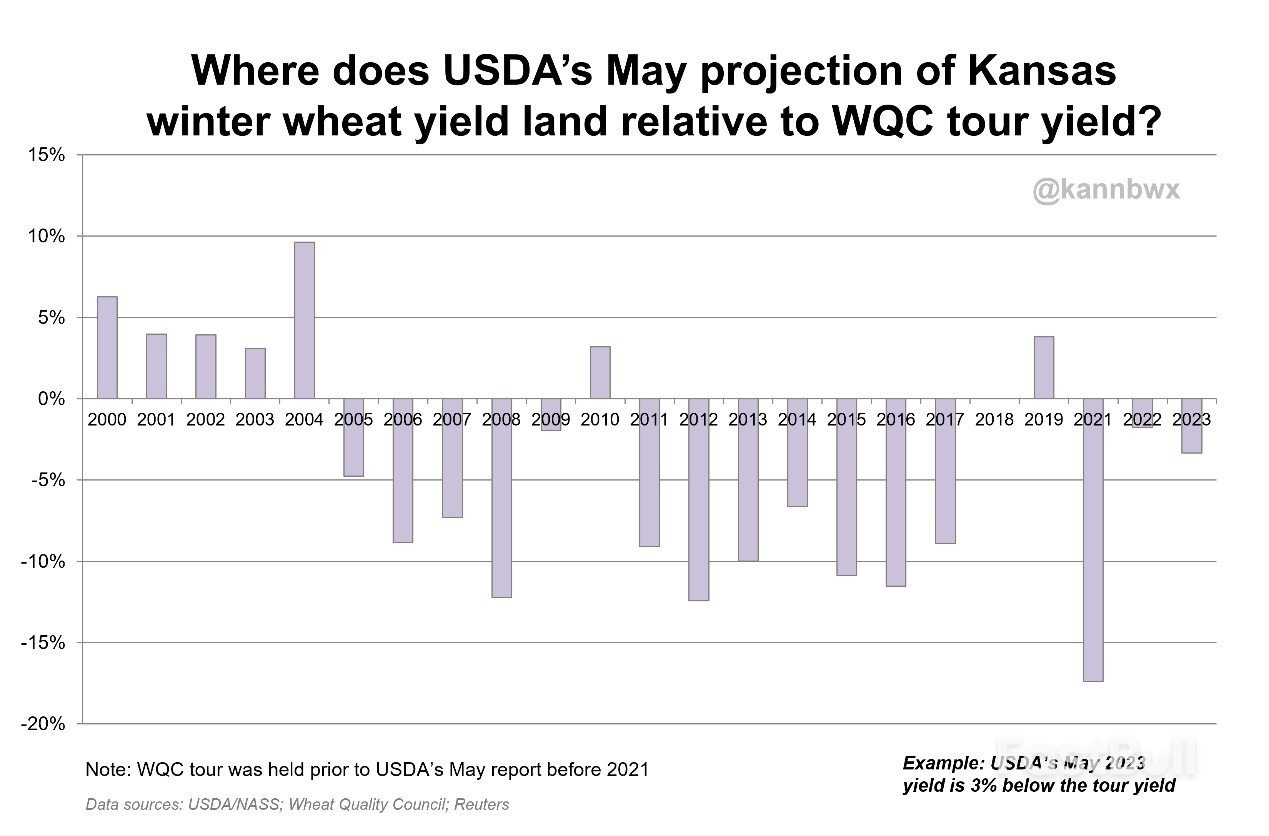
          USDA May versus tour stands out most. Since 2005 and including 2023, USDA's May estimate for Kansas winter wheat yield was lower than the tour yield in all but three years: 2010, 2018 and 2019.
          USDA and the tour came up with the same yield in May 2018. USDA was only slightly higher than the tour in the other years, the largest margin being 2019's 4%. But USDA's margins to the downside were almost always bigger, the largest coming in 2021, when its May yield was 17% lower than the tour's.
          Stacking up Dismal Kansas Wheat Tour Forecast Against History, USDA_1Before 2021, the tour was always held before USDA's May report, but it now takes place after. The fact there was a huge difference between USDA and the tour in May 2021 suggests USDA's forecast might not bias the scouts. But it is something to consider going forward.
          Compared with final Kansas winter wheat yields, the tour yields have been streaky. Final yield has landed below the tour forecast for the last two years, but it came in higher in the previous five years. Between 2011 and 2014, final yield was lower than the tour.
          Stacking up Dismal Kansas Wheat Tour Forecast Against History, USDA_2Final Kansas wheat yield has come in higher than USDA's May forecast in 11 of the last 15 years. That analysis includes 2020, but USDA's 2020 estimates are not being compared with the tour, which was cancelled that year.
          Stacking up Dismal Kansas Wheat Tour Forecast Against History, USDA_3In the 22 tours between 2000 and 2022, the tour yield was closer to the final than USDA's May estimate only seven times, most recently in 2015, 2016 and 2017. The other four instances were 2000, 2002, 2004 and 2009.
          A connection among those years is not immediately clear. Winter wheat yield in Kansas was about 17% below the long-term trend in both 2015 and 2002, though 2016 featured a yield 27% above trend and 2017 was 6% above.
          USDA's May 2023 estimate would put Kansas winter wheat yield 39% below trend, the worst in at least four decades but comparable to 37% below in 2014. Only 10% of Kansas wheat was considered good or excellent as of Sunday, tied for the worst rating for any week since 1989.
          USDA last week pegged the 2023 Kansas winter wheat crop at 191.4 million bushels, the state's smallest since 1963 despite an 11% increase on the year in plantings to a seven-year high. Farmers are seen harvesting only 81% of those for grain, the lowest fraction since 1996.

          Source: Reuters

          Risk Warnings and Disclaimers
          You understand and acknowledge that there is a high degree of risk involved in trading. Following any strategies or investment methods may lead to potential losses. The content on the site is provided by our contributors and analysts for information purposes only. You are solely responsible for determining whether any trading assets, securities, strategy, or any other product is suitable for investing based on your own investment objectives and financial situation.
          Comments
          Add to Favorites
          Share

          May 19th Financial News

          FastBull Featured

          Daily News

          【Quick Facts】
          1. Japanese inflation remains high again, putting pressure on BoJ.
          2. Fed hawks are open to raising interest rates in June.
          3. McCarthy: The House of Representatives is expected to vote on the debt ceiling deal next week.
          4. European natural gas futures prices break 30 euros.
          5. Jefferson: will focus on the employment report and CPI report.
          【News Details】
          1. Japanese inflation remains high again, putting pressure on BoJ.
          Japan's national inflation accelerated again in April, with the core CPI reaching 4.1%, the highest level since the 1980s. Japan's CPI data in April will likely confirm the initial and somewhat worrying signals from Tokyo's April CPI data that cost-push inflationary pressures are heating up again. That would be enough to prompt the BoJ to raise its inflation expectation again after raising it in April, which would be a step toward ending its negative interest rate policy. Japan's Tokyo CPI data for May, which will be released next Friday, is also expected to further confirm the stronger inflation, which means that the BoJ's meeting in June will be closely focused.
          2. Fed hawks are open to raising interest rates in June.
          Dallas Fed President Logan and St. Louis Fed President Bullard had a speech yesterday:
          Data in the coming weeks showed that no rate hike in June might be appropriate, but it was too early to make a decision, Logan said. While inflation is down from last year's peak and the economy is generally as unbalanced as it once was, we haven't made the progress that we need on inflation.
          St. Louis Fed President Bullard said in an interview with the Financial Times that progress on inflation has been slow and further rate hikes may be needed to provide some insurance that we can make inflation under control.
          It is obvious that Logan and Bullard are open to raising rates at the June meeting. This also raised the market's interest rate hike expectations. After the speech, CME FedWatch Tool showed that the chance of the Fed raising interest rates in June rose to 36.2%.
          3. McCarthy: The House of Representatives is expected to vote on the debt ceiling deal next week.
          House Speaker McCarthy said that the House is expected to vote on the debt ceiling deal next week, which is a positive signal so far on the progress of debt ceiling talks. McCarthy said that five negotiators were still discussing the size of the cuts, as well as the size of the debt ceiling increase or the time of the debt ceiling removal. Negotiations are conducted 2-3 times a day and there is already a "structure".
          4. European natural gas futures prices break 30 euros.
          European gas futures have dropped below 30 euros for the first time since June 2021, a sharp contrast to last year's market turmoil and a sign of tepid demand as Europe emerges from its energy crisis. The region has built up large inventories after a mild winter as it previously rushed to import LNG and limited consumption. However, demand remained weak amid an uncertain economic outlook and seasonal factors. The current recovery has been uneven across the region and some gas users are still constrained by energy contracts that were made when prices were higher, meaning that the easing of costs may be delayed.
          5. Jefferson: will focus on the employment report and CPI report.
          Fed Governor Jefferson said in his speech yesterday that in the coming weeks, when the Fed considers the appropriate stance of future monetary policy, it will consider the employment report and the CPI report in May. He also said monetary policy should be forward-looking and data-dependent.
          History has shown that the lag time of monetary policy is long and variable, and one year is not enough for demand to be fully affected by a rate hike. Another factor is the previously mentioned uncertainty about tightening lending standards. He intended to consider all of these factors in the coming weeks while considering the appropriate stance of future monetary policy.
          【Focus of the Day】
          UTC+8 20:30 Canada Retail Sales (Mar)
          UTC+8 20:45 Speech by New York Fed President Williams
          UTC+8 21:55 Speech by ECB Executive Member Schnabel
          UTC+8 23:00 Fed Chairman Powell and Former Chairman Bernanke Attend a Panel Discussion on Monetary Policy
          Risk Warnings and Disclaimers
          You understand and acknowledge that there is a high degree of risk involved in trading. Following any strategies or investment methods may lead to potential losses. The content on the site is provided by our contributors and analysts for information purposes only. You are solely responsible for determining whether any trading assets, securities, strategy, or any other product is suitable for investing based on your own investment objectives and financial situation.
          Comments
          Add to Favorites
          Share
          FastBull
          Copyright © 2025 FastBull Ltd

          728 RM B 7/F GEE LOK IND BLDG NO 34 HUNG TO RD KWUN TONG KLN HONG KONG

          TelegramInstagramTwitterfacebooklinkedin
          App Store Google Play Google Play
          Products
          Charts

          Chats

          Q&A with Experts
          Screeners
          Economic Calendar
          Data
          Tools
          Membership
          Features
          Function
          Markets
          Copy Trading
          Latest Signals
          Contests
          News
          Analysis
          24/7
          Columns
          Education
          Company
          Careers
          About Us
          Contact Us
          Advertising
          Help Center
          Feedback
          User Agreement
          Privacy Policy
          Business

          White Label

          Data API

          Web Plug-ins

          Poster Maker

          Affiliate Program

          Risk Disclosure

          The risk of loss in trading financial instruments such as stocks, FX, commodities, futures, bonds, ETFs and crypto can be substantial. You may sustain a total loss of the funds that you deposit with your broker. Therefore, you should carefully consider whether such trading is suitable for you in light of your circumstances and financial resources.

          No decision to invest should be made without thoroughly conducting due diligence by yourself or consulting with your financial advisors. Our web content might not suit you since we don't know your financial conditions and investment needs. Our financial information might have latency or contain inaccuracy, so you should be fully responsible for any of your trading and investment decisions. The company will not be responsible for your capital loss.

          Without getting permission from the website, you are not allowed to copy the website's graphics, texts, or trademarks. Intellectual property rights in the content or data incorporated into this website belong to its providers and exchange merchants.

          Not Logged In

          Log in to access more features

          FastBull Membership

          Not yet

          Purchase

          Become a signal provider
          Help Center
          Customer Service
          Dark Mode
          Price Up/Down Colors

          Log In

          Sign Up

          Position
          Layout
          Fullscreen
          Default to Chart
          The chart page opens by default when you visit fastbull.com