• Trade
  • Markets
  • Copy
  • Contests
  • News
  • 24/7
  • Calendar
  • Q&A
  • Chats
Trending
Screeners
SYMBOL
LAST
BID
ASK
HIGH
LOW
NET CHG.
%CHG.
SPREAD
SPX
S&P 500 Index
6827.42
6827.42
6827.42
6899.86
6801.80
-73.58
-1.07%
--
DJI
Dow Jones Industrial Average
48458.04
48458.04
48458.04
48886.86
48334.10
-245.98
-0.51%
--
IXIC
NASDAQ Composite Index
23195.16
23195.16
23195.16
23554.89
23094.51
-398.69
-1.69%
--
USDX
US Dollar Index
97.920
98.000
97.920
98.070
97.890
-0.030
-0.03%
--
EURUSD
Euro / US Dollar
1.17391
1.17398
1.17391
1.17447
1.17262
-0.00003
0.00%
--
GBPUSD
Pound Sterling / US Dollar
1.33799
1.33808
1.33799
1.33856
1.33546
+0.00092
+ 0.07%
--
XAUUSD
Gold / US Dollar
4346.09
4346.50
4346.09
4350.16
4294.68
+46.70
+ 1.09%
--
WTI
Light Sweet Crude Oil
57.382
57.412
57.382
57.601
57.194
+0.149
+ 0.26%
--

Community Accounts

Signal Accounts
--
Profit Accounts
--
Loss Accounts
--
View More

Become a signal provider

Sell trading signals to earn additional income

View More

Guide to Copy Trading

Get started with ease and confidence

View More

Signal Accounts for Members

All Signal Accounts

Best Return
  • Best Return
  • Best P/L
  • Best MDD
Past 1W
  • Past 1W
  • Past 1M
  • Past 1Y

All Contests

  • All
  • Trump Updates
  • Recommend
  • Stocks
  • Cryptocurrencies
  • Central Banks
  • Featured News
Top News Only
Share

London Metal Exchange: Intends To Publish A Consultation On The Proposed Changes To Our Rules In Response To The Regime Early In2026

Share

London Metal Exchange: Announces Publication Of Update Describing How The London Metal Exchange Plans To Implement The Fca Policy Statement 25/1 On Commodity Reform

Share

USA - Listed Shares Of Gold Miners Rise Premarket After Gold Rises About 1%

Share

The Council Of The European Union: In Light Of The Situation In Venezuela, The Council Decided Today To Extend The Existing Restrictions For Another Year, Until 10 January 2027

Share

Ivory Coast 2025/26 Cocoa Arrivals Reached 894000 T By December 14 Versus 895000 T Year Ago - Exporters' Estimate

Share

Ishares MSCI Chile ETF Up 3.9% Premarket After Jose Antonio Kast Wins Chile's Presidential Election On Sunday

Share

Spain's Debt-To-GDP Ratio Falls To 103.2% In Third Quarter 2025

Share

China's Central Bank: Authorises DBS Bank As Yuan Clearing Bank In Singapore

Share

Bank Of Korea - South Korea Central Bank, Nps Agree To Extend Currency Swap Agreement For Another Year

Share

Poland's CPI At 0.1% Month-On-Month In November Versus 0.1% Released Earlier

Share

London Metal Exchange (LME): Copper Inventories Decreased By 25 Tons, Aluminum Inventories Decreased By 50 Tons, Nickel Inventories Increased By 360 Tons, Zinc Inventories Increased By 2,550 Tons, Lead Inventories Increased By 17,725 Tons, And Tin Inventories Increased By 125 Tons

Share

Polish Inflation At 2.5% Year-On-Year In November

Share

Poland's January-October Import Up 5.4% To 309.3 Billion Euros

Share

Poland's January-October Trade Balance At -5.1 Billion Euros

Share

Poland's January-October Export Up 2.8% To 304.3 Billion Euros

Share

Ceasefire Negotiations Between Ukraine And US Representatives In Berlin To Continue Monday Morning - German Source Familiar With The Schedule

Share

Spain's IBEX Hits Fresh Record High, Up Over 1%

Share

Spot Silver Rises Nearly 3% To $63.82/Oz

Share

France's Foreign Minister Says He Suggesd To EU's Kallas That US Representatives Brief EU Foreign Ministers On Gaza Peace Plan During Their Meeting

Share

India Trade Secretary: Prime Facie Don't See A Case Of Rice Dumping To USA And There Is No Active Investigation On That

TIME
ACT
FCST
PREV
France HICP Final MoM (Nov)

A:--

F: --

P: --

China, Mainland Outstanding Loans Growth YoY (Nov)

A:--

F: --

P: --

China, Mainland M2 Money Supply YoY (Nov)

A:--

F: --

P: --

China, Mainland M0 Money Supply YoY (Nov)

A:--

F: --

P: --

China, Mainland M1 Money Supply YoY (Nov)

A:--

F: --

P: --

India CPI YoY (Nov)

A:--

F: --

P: --

India Deposit Gowth YoY

A:--

F: --

P: --

Brazil Services Growth YoY (Oct)

A:--

F: --

P: --

Mexico Industrial Output YoY (Oct)

A:--

F: --

P: --

Russia Trade Balance (Oct)

A:--

F: --

P: --

Philadelphia Fed President Henry Paulson delivers a speech
Canada Building Permits MoM (SA) (Oct)

A:--

F: --

P: --

Canada Wholesale Sales YoY (Oct)

A:--

F: --

P: --

Canada Wholesale Inventory MoM (Oct)

A:--

F: --

P: --

Canada Wholesale Inventory YoY (Oct)

A:--

F: --

P: --

Canada Wholesale Sales MoM (SA) (Oct)

A:--

F: --

P: --

Germany Current Account (Not SA) (Oct)

A:--

F: --

P: --

U.S. Weekly Total Rig Count

A:--

F: --

P: --

U.S. Weekly Total Oil Rig Count

A:--

F: --

P: --

Japan Tankan Small Manufacturing Outlook Index (Q4)

A:--

F: --

P: --

Japan Tankan Large Non-Manufacturing Diffusion Index (Q4)

A:--

F: --

P: --

Japan Tankan Large Non-Manufacturing Outlook Index (Q4)

A:--

F: --

P: --

Japan Tankan Large Manufacturing Outlook Index (Q4)

A:--

F: --

P: --

Japan Tankan Small Manufacturing Diffusion Index (Q4)

A:--

F: --

P: --

Japan Tankan Large Manufacturing Diffusion Index (Q4)

A:--

F: --

P: --

Japan Tankan Large-Enterprise Capital Expenditure YoY (Q4)

A:--

F: --

P: --

U.K. Rightmove House Price Index YoY (Dec)

A:--

F: --

P: --

China, Mainland Industrial Output YoY (YTD) (Nov)

A:--

F: --

P: --

China, Mainland Urban Area Unemployment Rate (Nov)

A:--

F: --

P: --

Saudi Arabia CPI YoY (Nov)

A:--

F: --

P: --

Euro Zone Industrial Output YoY (Oct)

--

F: --

P: --

Euro Zone Industrial Output MoM (Oct)

--

F: --

P: --

Canada Existing Home Sales MoM (Nov)

--

F: --

P: --

Euro Zone Total Reserve Assets (Nov)

--

F: --

P: --

U.K. Inflation Rate Expectations

--

F: --

P: --

Canada National Economic Confidence Index

--

F: --

P: --

Canada New Housing Starts (Nov)

--

F: --

P: --

U.S. NY Fed Manufacturing Employment Index (Dec)

--

F: --

P: --

U.S. NY Fed Manufacturing Index (Dec)

--

F: --

P: --

Canada Core CPI YoY (Nov)

--

F: --

P: --

Canada Manufacturing Unfilled Orders MoM (Oct)

--

F: --

P: --

U.S. NY Fed Manufacturing Prices Received Index (Dec)

--

F: --

P: --

U.S. NY Fed Manufacturing New Orders Index (Dec)

--

F: --

P: --

Canada Manufacturing New Orders MoM (Oct)

--

F: --

P: --

Canada Core CPI MoM (Nov)

--

F: --

P: --

Canada Trimmed CPI YoY (SA) (Nov)

--

F: --

P: --

Canada Manufacturing Inventory MoM (Oct)

--

F: --

P: --

Canada CPI YoY (Nov)

--

F: --

P: --

Canada CPI MoM (Nov)

--

F: --

P: --

Canada CPI YoY (SA) (Nov)

--

F: --

P: --

Canada Core CPI MoM (SA) (Nov)

--

F: --

P: --

Canada CPI MoM (SA) (Nov)

--

F: --

P: --

Federal Reserve Board Governor Milan delivered a speech
U.S. NAHB Housing Market Index (Dec)

--

F: --

P: --

Australia Composite PMI Prelim (Dec)

--

F: --

P: --

Australia Services PMI Prelim (Dec)

--

F: --

P: --

Australia Manufacturing PMI Prelim (Dec)

--

F: --

P: --

Japan Manufacturing PMI Prelim (SA) (Dec)

--

F: --

P: --

U.K. Unemployment Claimant Count (Nov)

--

F: --

P: --

U.K. Unemployment Rate (Nov)

--

F: --

P: --

U.K. 3-Month ILO Unemployment Rate (Oct)

--

F: --

P: --

Q&A with Experts
    • All
    • Chatrooms
    • Groups
    • Friends
    Connecting
    .
    .
    .
    Type here...
    Add Symbol or Code

      No matching data

      All
      Trump Updates
      Recommend
      Stocks
      Cryptocurrencies
      Central Banks
      Featured News
      • All
      • Russia-Ukraine Conflict
      • Middle East Flashpoint
      • All
      • Russia-Ukraine Conflict
      • Middle East Flashpoint
      Search
      Products

      Charts Free Forever

      Chats Q&A with Experts
      Screeners Economic Calendar Data Tools
      Membership Features
      Data Warehouse Market Trends Institutional Data Policy Rates Macro

      Market Trends

      Market Sentiment Order Book Forex Correlations

      Top Indicators

      Charts Free Forever
      Markets

      News

      News Analysis 24/7 Columns Education
      From Institutions From Analysts
      Topics Columnists

      Latest Views

      Latest Views

      Trending Topics

      Top Columnists

      Latest Update

      Signals

      Copy Rankings Latest Signals Become a signal provider AI Rating
      Contests
      Brokers

      Overview Brokers Assessment Rankings Regulators News Claims
      Broker listing Forex Brokers Comparison Tool Live Spread Comparison Scam
      Q&A Complaint Scam Alert Videos Tips to Detect Scam
      More

      Business
      Events
      Careers About Us Advertising Help Center

      White Label

      Data API

      Web Plug-ins

      Affiliate Program

      Awards Institution Evaluation IB Seminar Salon Event Exhibition
      Vietnam Thailand Singapore Dubai
      Fans Party Investment Sharing Session
      FastBull Summit BrokersView Expo
      Recent Searches
        Top Searches
          Markets
          News
          Analysis
          User
          24/7
          Economic Calendar
          Education
          Data
          • Names
          • Latest
          • Prev

          View All

          No data

          Scan to Download

          Faster Charts, Chat Faster!

          Download App
          English
          • English
          • Español
          • العربية
          • Bahasa Indonesia
          • Bahasa Melayu
          • Tiếng Việt
          • ภาษาไทย
          • Français
          • Italiano
          • Türkçe
          • Русский язык
          • 简中
          • 繁中
          Open Account
          Search
          Products
          Charts Free Forever
          Markets
          News
          Signals

          Copy Rankings Latest Signals Become a signal provider AI Rating
          Contests
          Brokers

          Overview Brokers Assessment Rankings Regulators News Claims
          Broker listing Forex Brokers Comparison Tool Live Spread Comparison Scam
          Q&A Complaint Scam Alert Videos Tips to Detect Scam
          More

          Business
          Events
          Careers About Us Advertising Help Center

          White Label

          Data API

          Web Plug-ins

          Affiliate Program

          Awards Institution Evaluation IB Seminar Salon Event Exhibition
          Vietnam Thailand Singapore Dubai
          Fans Party Investment Sharing Session
          FastBull Summit BrokersView Expo

          Singularity Now? How AI Will Change Our World Sooner Than We Think

          Kevin Du

          Economic

          Summary:

          What exactly is the Singularity, and what implications does it hold for our collective future?

          What exactly is the Singularity, and what implications does it hold for our collective future? This enigmatic concept refers to a potential moment when artificial intelligence (AI) attains levels of intelligence and autonomy that surpass human capabilities. It marks the point at which machines become self-improving entities, triggering a cascade of advances that defy our current understanding.
          In this article, readers will gain a comprehensive understanding of the Singularity and its potential impact on our world. They will explore AI's journey towards human-like capabilities and discover the fascinating Time to Edit (TTE) metric that measures AI's progress.
          Additionally, readers will gain insights into the confluence of technologies driving us closer to the Singularity, including gene therapy, robotics, and nanotechnology. Could we be approaching this event horizon? The signs are increasingly evident.
          On the Verge of Transformation
          As we approach the mid-21st century, a pivotal juncture looms before us: the Singularity. This concept, envisioned by inventor Ray Kurzweil, foretells a time when AI transcends human control, forever transforming the very fabric of our society. In this captivating exploration, we will delve deeper into AI's remarkable journey towards human-like capabilities, examine the profound implications of the Singularity, and assess the proximity of this transformative event.
          Unveiling the Singularity: A Technological Event Horizon
          The Singularity, a term shrouded in mystery and anticipation, represents a momentous leap in human progress. It signifies a point where AI surpasses the limits of human cognition and ventures into uncharted territories of self-improvement.
          At this juncture, machines become autonomous entities, setting off a chain reaction of advances that challenge our current comprehension. The question arises: are we on the precipice of this mind-bending event?
          Measuring Progress: The Time to Edit (TTE) Metric
          Intriguingly, a translation company has devised a metric called Time to Edit (TTE) to quantify AI's trajectory towards the Singularity, particularly in the domain of language translation. This innovative measure examines the level of proximity between machine-generated translations and their human-authored counterparts. The findings of the TTE metric show a remarkable acceleration in AI's ability to emulate human skills, suggesting that the Singularity might be within closer reach than previously speculated.
          While AI plays a pivotal role in the path to the Singularity, it is not alone in driving progress. Breakthroughs in gene therapy, robotics, and nanotechnology act as catalysts, accelerating our trajectory towards this transformative moment. Gene therapy, with its potential to enhance human cognitive capacities, holds profound implications for bridging the gap between humans and machines.
          Robotics and nanotechnology provide AI with physical embodiment and unprecedented functionality. This convergence of emerging technologies propels us ever closer to the Singularity, raising fundamental questions about societal norms and the very essence of our existence.
          Challenges Ahead: Are We Prepared?
          The advent of the Singularity brings forth unprecedented challenges that demand our utmost preparedness. Are we equipped to navigate a future where AI exceeds human control and reshapes society at an accelerated pace?
          The readiness of individuals, societies, and governments to confront this paradigm shift becomes a pressing concern. Ethical dilemmas, socio-economic disruptions, and political debates surrounding the Singularity require urgent attention and thoughtful consideration to ensure a harmonious transition.
          Embracing the Future: Navigating Uncertainty
          As we embark on this uncharted voyage into the realm of advanced AI, a proactive mindset becomes essential. Rather than succumbing to fear or trepidation, we must actively engage in shaping the future we envision. Collaboration among scientists, policymakers, and the public is crucial for ethically developing and responsibly implementing AI technologies. With a future-oriented perspective, we can harness the Singularity's potential while mitigating its risks.
          Singularity Now? How AI Will Change Our World Sooner Than We Think_1The Inevitable Course
          The Singularity stands as an enigmatic frontier, beckoning us with both possibilities and lingering uncertainties. It represents humanity's tireless pursuit of progress and signals an era of unparalleled transformation. As AI continues its relentless evolution, bridging the gap between human and machine, we find ourselves at the threshold of an epoch-defining metamorphosis.
          The journey towards the Singularity is well underway, and it falls to us to navigate the complexities, sculpting a future that harnesses the power of AI while safeguarding our core values and collective well-being.
          The implications of the Singularity extend far beyond the realm of technology. Industries across the spectrum, from healthcare to transportation, stand to be revolutionized. In a world of AI-driven medical breakthroughs and transformative transportation systems, the Singularity promises advances that enhance our lives beyond our current comprehension.
          However, alongside these prospects come profound ethical considerations. As AI approaches or surpasses human intelligence, questions of morality and responsibility come to the forefront.
          Will machines possess consciousness? How will they make decisions that align with human values? Safeguarding against unintended consequences and ensuring transparency in AI systems becomes paramount to prevent abuses of power.
          Singularity Now? How AI Will Change Our World Sooner Than We Think_2Jobs and the Singularity
          Socio-economic implications also loom large on the horizon. The rapid integration of AI and automation into the workforce has the potential to disrupt traditional employment patterns. As jobs become automated, the displacement of workers may lead to significant societal challenges. It becomes crucial to foster a proactive approach. Emphasizing reskilling and education to adapt to the evolving job market and ensure a smooth transition.
          Governments around the world are grappling with the implications of the Singularity. Policy frameworks are necessary to address the ethical, legal, and social dimensions of AI. International collaborations and standards are crucial to ensure that AI development aligns with shared values and prevents the emergence of a technological divide. Striking a balance between innovation and regulation will be key to harnessing the full potential of the Singularity.
          In conclusion, the Singularity represents a paradigm shift of immense proportions. As AI advances towards human-like capabilities, we find ourselves standing on the precipice of a transformation that will redefine the very essence of our existence.
          The journey towards the Singularity encompasses not only advancements in AI but also breakthroughs in gene therapy, robotics, and nanotechnology. It demands our preparedness, our ethical consideration, and our collective responsibility.
          Amid uncertainties, adopting a future-oriented mindset, collaborating with stakeholders, and establishing strong policy frameworks enable navigation of this uncharted territory. The Singularity presents opportunities for progress and human flourishing, necessitating the preservation of our core values.
          Let us embrace AI's potential while safeguarding our humanity as we navigate this evolving landscape.

          Source: Be in Crypto

          To stay updated on all economic events of today, please check out our Economic calendar
          Risk Warnings and Disclaimers
          You understand and acknowledge that there is a high degree of risk involved in trading. Following any strategies or investment methods may lead to potential losses. The content on the site is provided by our contributors and analysts for information purposes only. You are solely responsible for determining whether any trading assets, securities, strategy, or any other product is suitable for investing based on your own investment objectives and financial situation.
          Comments
          Add to Favorites
          Share

          China Prioritising Turkmenistan over Russia in Next Big Pipeline Project

          Devin

          Energy

          Commodity

          China is accelerating the building of a long-delayed Central Asian pipeline to source gas from Turkmenistan even as Russia pushes its own new Siberian connection, as Beijing juggles its energy security needs with diplomatic priorities.
          Beijing is keen to bolster Central Asia ties under its Belt & Road Initiative, but nearly a decade after construction began, the "Line D" project has been hobbled by complex price talks and the technical hurdles of laying a pipeline crossing another three central Asian nations, Chinese state oil officials said.
          But Moscow's recent push to land its second Siberia pipeline connection with China, the Power of Siberia 2, to make up for shrunken sales in Europe due to the Ukraine crisis, provides Beijing a lever to advance the central Asian project, according to Chinese oil officials and industry consultants.
          "Central Asian pipelines are considered a cornerstone investment in China's energy and geopolitical space. It's a supply channel with strategic value that supersedes commercial concerns," a state-oil official familiar with China National Petroleum Corp's (CNPC) global strategy told Reuters.
          China may eventually seal both deals to feed its massive long-term gas needs, but is prioritising Turkmenistan, industry officials said, as Beijing has long seen Central Asia as a frontier to expand trade, secure energy and maintain stability in its once-restive western Xinjiang region.
          Combined, multi-year contracts worth tens of billions of dollars to bring gas via both pipelines would meet 20% of China's current demand. The pipelines are key to Beijing's goal of using gas as a bridge fuel towards its carbon neutrality targets and also helping to shield it from the volatile tanker-carried liquefied natural gas (LNG) market.
          Estimated in 2014 to cost $6.7 billion, Line D would carry 30 billion cubic meters of gas a year.
          Speaking last week at the first in-person summit of central Asian leaders in the ancient Silk Road city of Xian, President Xi Jinping urged parties to accelerate laying Line D, which would be China's fourth gas pipeline to the region, almost a decade after the start of construction in Tajikistan.
          In 2022, China imported 35 bcm gas or worth $10.3 billion via three pipelines from Turkmenistan, compared with 16 bcm via a single pipeline from Russia at about $4 billion.
          China Prioritising Turkmenistan over Russia in Next Big Pipeline Project_1'Line D getting ready'
          Reflecting renewed urgency, CNPC last week launched the feasibility study for a 200-kilometer connection from Xinjiang's border with Kyrgyzstan to the Chinese town of Wuqia as the first receiving point, said a senior source involved in appraising the project.
          "This means D Line is getting ready," the person told Reuters, adding that construction on the domestic trunkline in Xinjiang could begin next year.
          Separately, a CNPC official told Reuters last week that the company's commercial teams are "standing by" awaiting a mandate to advance the project, without elaborating.
          Without a final gas supply contract, CNPC has only built part of the first tunnel in the mountainous Tajikistan capital Dushanbe where Line D begins, the official said.
          China's state planner the National Development and Reform Commission did not immediately respond to a request for comment.
          A CNPC spokesperson declined to comment.
          Consultancy SIA Energy and Rystad Energy predicted new Turkmenistan gas via Line D could start flowing around 2028 while a new Russian line, designed at 50 bcm a year that sources gas from West Siberia, could start operating in the early 2030s.
          Import Losses
          China is paying some 30% more for Turkmen gas, delivered via three existing pipelines since 2009, than from Russia, which began pumping the fuel from East Siberia in late 2019, Chinese customs data showed.
          Facing years of import losses as it is unable to pass on the cost to a regulated domestic market, CNPC has failed to negotiate a lower price for Turkmen fuel in rounds of price reviews, a second industry source with knowledge of the matter told Reuters.
          Ashgabat wanted to be paid "in line with global pricing practices", a Turkmenistan official familiar with the talks said.
          Sources and officials declined to be named as they are not authorised to speak with media.
          Russia Overtures
          Still, the price negotiations are likely to be complex as China has multiple supply options that also include domestic production and new long-term LNG contracts with Qatar and the United States, said Jason Feer, Houston-based head of business intelligence at consultancy Poten & Partners.
          "The prices need to be high enough to justify the expense of building an expensive pipeline but low enough to be competitive," said Feer.
          Moscow's recent overtures to fast-track the shorter Power of Siberia 2 connection, via Mongolia, and a more recent proposal by Almaty to supply China via Khazakhstan offered CNPC leverage in finalising the Turkmen link, said the CNPC official and the second industry source.
          "CNPC could use the Russian proposals to bargain for a better price for Line D while taking its time to discuss new Russian supplies," said the second source.

          Source: Reuters

          Risk Warnings and Disclaimers
          You understand and acknowledge that there is a high degree of risk involved in trading. Following any strategies or investment methods may lead to potential losses. The content on the site is provided by our contributors and analysts for information purposes only. You are solely responsible for determining whether any trading assets, securities, strategy, or any other product is suitable for investing based on your own investment objectives and financial situation.
          Comments
          Add to Favorites
          Share

          Institutional Investors Bracing for ‘Unhedgeable’ Year

          Justin

          Economic

          Institutional investors have their work cut out for them. Between the bout of inflation in most major economies, tightening financial conditions and slow global growth, concerns for financial stability are mounting. To discuss public investment in a volatile climate, State Street Global Advisers and OMFIF hosted a roundtable series. They convened panels of experts to speak on strategic issues impacting the institutional investment community.
          Representatives from central banks, sovereign funds and public pensions funds from across Europe, the Middle East and Africa spoke on the global macroeconomic outlook, central bank reserve management as well as sovereign and public pension funds’ investment strategies. There was a unanimous acknowledgement of the difficult environment facing investors. One speaker noted that, ‘After 15 years of lower-for-longer, 0% interest rates, there is a lack of risk management knowledge and how to deal with this environment – it is unprecedented.’

          Central banks seen to be reaching end of tightening cycle

          After 10 consecutive rate hikes by the US Federal Reserve, with the Bank of England and European Central Bank not far behind, roundtable participants seemed to agree that not much more monetary tightening is needed. Though prices will fall back down to the target rate, this will take time: ‘The bottom line is that monetary policy takes two years to unfold,’ said one participant, with another noting that credit provision and money supply statistics suggest we are already in a period of ‘marked disinflation’.
          For the panellists, this tightening cycle is unlike those before it. When asked whether central banks should engineer a recession to bring down inflation, one participant reflected: ‘As long as expectations are anchored, we don’t need to crash the economy or the banking sector’ to get inflation back to target.
          Regarding financial stability concerns, Europe is seen to be better positioned than the US. Because governance within the European Union is trickier, the pre-emptive arm of banking regulation – which includes liquidity and capital adequacy provisions – is stronger than in the US. One participant stated that the European banking sector would be ‘well prepared to weather a mild and shallow recession if it happens,’ while the US banking sector may face more difficulties.

          Geopolitical fragmentation anticipated to worsen

          Industrial policy and nearshoring were two key topics of discussion in the context of geopolitical tensions. In addition to China continuing its pursuit of a strong state-led growth model, the US is pursuing a ‘green’ industrial policy with the 2022 Inflation Reduction Act. The climate spending bill ruffled feathers in Europe, bringing accusations of protectionism for US industry. There was a sense among panellists that Europe would need to focus on activating Next Generation EU funds earmarked for digital and green projects before developing another subsidy programme in response to the IRA.
          On nearshoring or ‘friendshoring’, the rate of decoupling between China and the West so far has varied by sector. While some diversion away from China has been seen in high level and strategically important areas of the supply chain, most manufacturing is still being conducted in China. The highest risks are around technology, with potential for further tit-for-tat regulatory moves between the US and China. Some emerging markets, namely Mexico, may stand to benefit from the competition between the two economic superpowers.

          Diversification back on the table

          Due to geopolitical risk and higher, more volatile rates, ‘diversification is back in this cycle’, said one participant. On currencies, though de-dollarisation of central bank reserves has been predicted for years, there seems to be a lack of viable alternatives: ‘It’s hard to find good diversifiers from the dollar,’ noted one panellist. Another agreed, expressing scepticism of de-dollarisation in the short term due to the wide range of dollar instruments available to investors. Where, then, are reserve managers looking to diversify?
          For some, losses are prompting a higher risk tolerance, as they seek to boost returns. Here, equities are a good alternative to traditionally low-yielding government bonds. On equities, exchange-traded funds may be preferable to central banks wishing to maintain neutrality, as they provide access to equities without shareholder voting or other corporate governance responsibilities. Others are retreating to gold as a safe-haven asset.
          Finally, it also looks like a sensible return on safe assets may emerge, making risk-off fixed income a better bet than it has been as yields rise (although not yet, since negative real rates persist). While there is some optimism on fixed income in the medium term, alternative investments look wobbly. Multiple participants from the investment community voiced concerns over commercial real estate and unlisted property, which they fear are ‘highly leveraged’ and ‘yet to have a price correction’.

          Demographic change expected to drag on global growth

          Amid vast uncertainty for investors, one thing is definite: demographic changes will impact economic growth over the long run. Apart from the African continent, all regions in the world are forecasted to undergo demographic decline in the coming decades, as birth rates slow and populations age. This is likely to drive down growth and drag on public finances – ageing is already affecting sovereign credit ratings. As fiscal costs increase from healthcare and pension spending, this will have a perverse effect on debt sustainability. And, as government financing becomes more difficult, ageing will lead to high bond yields and, potentially, default.

          Source:Taylor Pearce

          To stay updated on all economic events of today, please check out our Economic calendar
          Risk Warnings and Disclaimers
          You understand and acknowledge that there is a high degree of risk involved in trading. Following any strategies or investment methods may lead to potential losses. The content on the site is provided by our contributors and analysts for information purposes only. You are solely responsible for determining whether any trading assets, securities, strategy, or any other product is suitable for investing based on your own investment objectives and financial situation.
          Comments
          Add to Favorites
          Share

          Asia Week Ahead: Inflation Data from Australia Plus Growth Numbers from India

          Alex

          Economic

          Inflation to rise in Australia
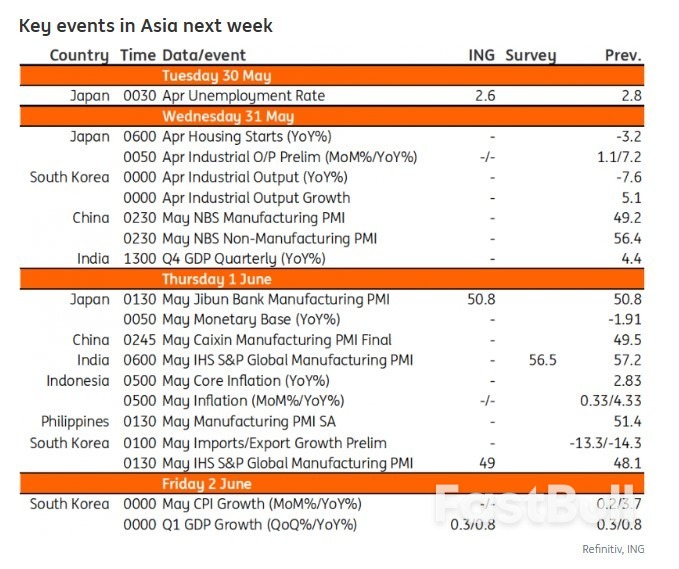
          Australia's April inflation will likely increase from the previous month. This is partly a base effect-driven phenomenon, though not entirely. And we estimate that food prices rose at a similar 0.4% month-on-month pace in April, with larger increases for alcohol and tobacco, and motor fuel, which should offset any further reduction in housing-related inflation over the month. A 0.5% MoM inflation print will deliver a year-on-year inflation rate of 6.6% for April, up from 6.3% in March. We expect inflation will drop back to 6.2% in May, but that still would leave it barely any lower than it is now, creating a headache for the Reserve Bank of Australia.
          Looking beyond India's slowing growth
          1Q23 GDP data will come in at about 3.4% YoY, down from 4.4% in 4Q22. This may seem low, but the year-on-year numbers are all still reflecting earlier lockdown and reopening distortions. The 3.4% in the first quarter will still leave the economy on track to deliver growth for the full year of about 6% if our subsequent forecasts turn out to be correct. High-frequency data for India continues to point to relatively robust growth, though there has been a slight slowdown from 2022 growth rates.
          Signs of recovery in Japan
          April industrial production is expected to rise for the second consecutive month on the back of a solid domestically driven recovery. Auto production will also play a major role in the improvement of IP numbers. Also, ahead of golden week, the jobless rate should have come down a bit with solid service hiring.
          Industrial production to fall in Korea
          Industrial production in Korea is expected to fall again after a temporary rise in March, as suggested by the weak April export numbers. Although manufacturing and construction activity is expected to be weak, we expect service activity to stay firm as consumer sentiment continues to recover.
          The early May exports data has already pointed to a sluggish export trend, which is set to continue through May. We are concerned about the fact that exports to developed markets, especially to the US, are softening. The manufacturing PMI will likely rebound only modestly on the back of an improvement in the global supply chain and China's reopening, but still stay below the neutral level.
          Inflation is expected to decelerate to 3.5% YoY in May despite the recent hike in utility prices as base effects bring down the headline rate.

          Asia Week Ahead: Inflation Data from Australia Plus Growth Numbers from India_1Source: ING

          To stay updated on all economic events of today, please check out our Economic calendar
          Risk Warnings and Disclaimers
          You understand and acknowledge that there is a high degree of risk involved in trading. Following any strategies or investment methods may lead to potential losses. The content on the site is provided by our contributors and analysts for information purposes only. You are solely responsible for determining whether any trading assets, securities, strategy, or any other product is suitable for investing based on your own investment objectives and financial situation.
          Comments
          Add to Favorites
          Share

          How to Unlock Japan’s Baby Boom Savings

          Justin

          Economic

          While Japan’s leaders like to argue the country is poor and complain about the ‘lost decades’ or even the ‘lost generation’, the macroeconomic reality is that Japan is the world’s largest creditor country and has been for the last 31 years. So much for ‘lost decades’.
          Japan’s total net assets stood at $3.2tn at the end of 2021 (and almost certainly rose again during 2022 – the latest available data is for end-2021). This was 1.3 times more than those held by Germany, the world’s number two creditor, and was well ahead of China. Japan is a very rich country. Its stock of assets is the envy of the world.
          Unfortunately, being rich in financial assets does not mean that the assets are being deployed effectively. In the household sector, financial assets have basically doubled from ¥1,000tn to ¥2,000tn ($7.2tn to $14.5tn) over the past 30 years. This asset-doubling happened while wages and disposable income were basically stagnant and income from those assets dropped from ¥40tn in 1994 to ¥25tn in 2022 ($289bn to $180bn).
          Prime Minister Fumio Kishida’s ‘new capitalism’ agenda is right to suggest an asset-income-doubling plan. But to actually achieve this, some policies worthy of being called ‘new capitalism’ must be designed. To start, it would be wise to focus on Japan’s undisputed strength – the enormous stock of assets accumulated.
          Economic growth policies work best when they seize upon a natural trend. And inside Japan, the most powerful megatrend is the unlocking of Japan’s enormous household sector financial assets because of inheritance.

          Opportunity to get creative

          It is estimated that, of the famous ¥2,000tn of household financial wealth, as much as 50% is owned by people aged 70 or older. This implies that somewhere between ¥400tn-¥700tn ($2.9tn-$5.1tn) will become ‘unstuck’ due to Japan’s demographic make-up over the coming 10-15 years. While the exact numbers may be subject to debate, there must be no doubt that this is an unprecedented opportunity for policy-makers to get creative. The goal is simple: channel the stock of baby boomer legacy funds towards investments for Japan’s future.
          Under ‘old capitalism’ and current policy settings this will not happen. Inheritance tax rates run at around 55%. This means that much of the stock of wealth freed-up by inheritance and generational transfer is destined to pay-down government debt. This is backwards looking – paying down debt is paying for past consumption and past investment. But what Japan needs is forward-looking investments. The coming megatrend of inheritance offers a once-in-a-generation opportunity to do so.
          Importantly, I am not advocating a cut in the inheritance tax rates. Far from it. I know that some of the usually much-admired Scandinavian countries have dramatically reduced inheritance tax rates. Sweden abolished it completely a couple of years ago. This is potentially dangerous as it opens the possibility of a ‘plutocracy’ developing. Societies can quickly become unstable when money and family privilege are valued higher than ability, initiative and the belief that value is based on merit. Japan abhors instability and fears a return to the ‘Zaibatsu’ plutocracy when eight families controlled as much as two-thirds of Japan’s wealth and economy in the 1920-30s. Japan must and can do better.

          The good news

          Japan already has a model that effectively takes traditional tax liabilities and channels them into citizen-directed spending. The Furusato Nozei is a scheme that lets taxpayers re-direct local tax liabilities towards region-specific purchases of goods and services. For example, a Tokyo resident can use part of their local tax liability to buy scheme-approved produce from Nagano prefecture or play golf at a scheme-approved resort in Hokkaido. Furusato Nozei has been very successful in stimulating regional economic growth. A similar scheme could build on this to channel inheritance tax liabilities into investments.
          The basic idea is that anyone who receives an inheritance gets the option to invest in projects or investment schemes that build new social and public infrastructure. The amount invested is tax free – not against income taxes, but against inheritance tax due. So someone who inherits ¥10m and makes a ¥3m investment in approved projects would be taxed on ¥7m, not ¥10m.
          The projects and funds eligible for the scheme will be carefully vetted by the government, just like the goods and services eligible for the Furusato Nozei are. There are many possibilities to design this scheme for maximum policy impact.
          For example, if your policy goal is to finance green energy projects in northern Japan or public university deep-tech start-ups, the tax-exempt status should be offered not just to the initial investment but also to potential returns. A new wave of social impact investment funds with all sorts of positive future investment targets would quickly develop – just as local merchants quickly restructured their businesses to become eligible for the original Furusato Nozei consumption scheme. But, like the Furusato Nozei, locally focused initiatives must be integral to this scheme.
          All this requires reform of both the gift tax system and the inheritance tax system. What matters most, however, is the creation of a new philosophy: give individual asset owners an opportunity to self-direct their accumulated wealth towards concrete projects that will create future prosperity. Those with financial means want to create a legacy and contribute towards investments that create a better Japan for their grandchildren.
          Unlike China, Japan got rich before it got old. Now the coming megatrend of inheritance allows Japan to set a positive example of how these riches can be used wisely for the creation of future prosperity. That’s a policy directive worthy of being call ‘new capitalism’. Japan has the potential.

          Source:Jesper Koll

          To stay updated on all economic events of today, please check out our Economic calendar
          Risk Warnings and Disclaimers
          You understand and acknowledge that there is a high degree of risk involved in trading. Following any strategies or investment methods may lead to potential losses. The content on the site is provided by our contributors and analysts for information purposes only. You are solely responsible for determining whether any trading assets, securities, strategy, or any other product is suitable for investing based on your own investment objectives and financial situation.
          Comments
          Add to Favorites
          Share

          World Balance Sheet May Need AI-Style Productivity Leap

          Kevin Du

          Economic

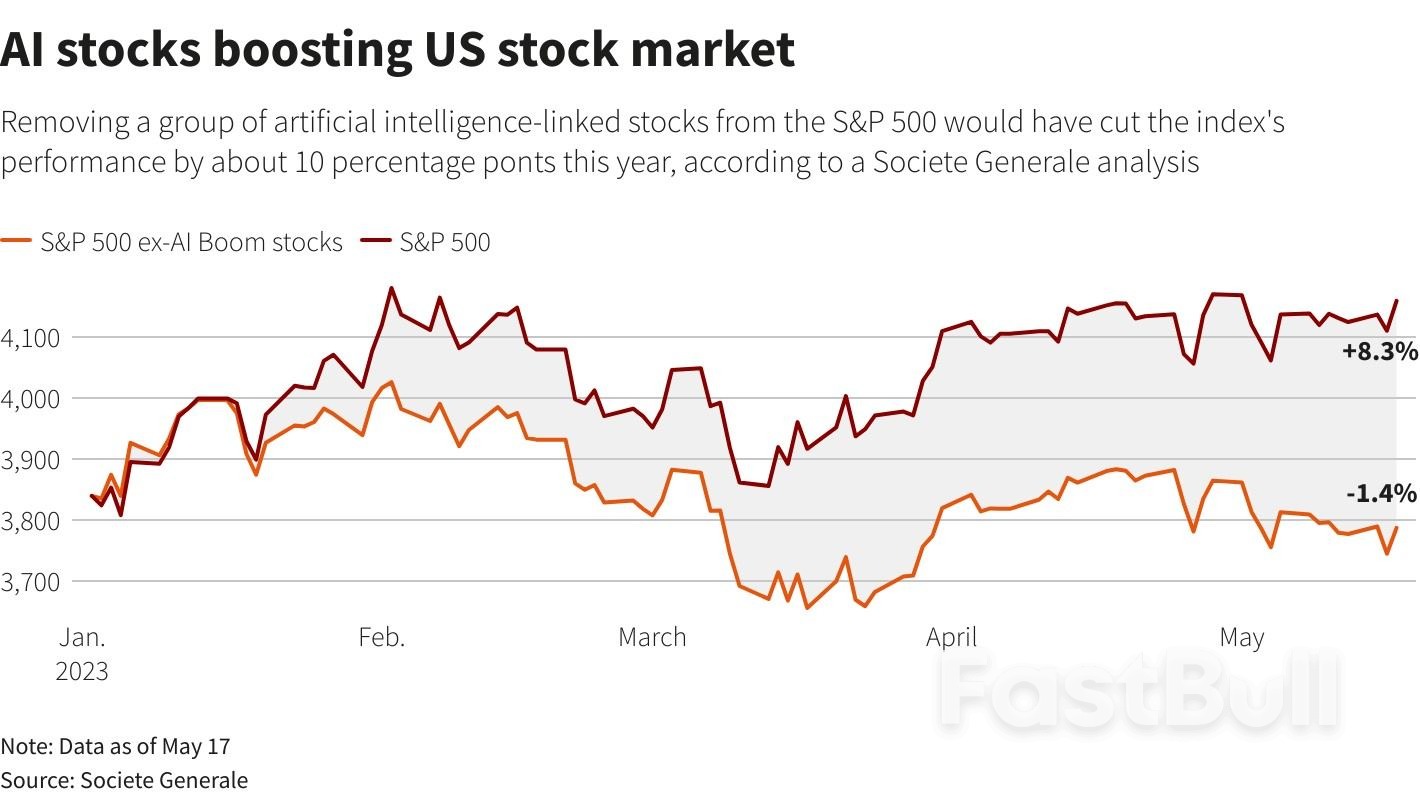
          Hype or hope, this year's boom in artificial intelligence along with other productivity-enhancing tech developments may be one of few ways to sustain an increasingly fragile "global balance sheet" over coming decades.
          There is little doubt about the market heat, corporate alarm and social anxieties created in the mere six months since the breakthrough in "generative AI" tools took the world by storm. What it means for jobs, productivity, profit margins and even trustworthy information dominates the debate.
          Even Bank of America's strategists have taken to describing the stock market craze around it as a "baby bubble" already.
          But in a study into the sustainability of two decades of debt-fueled asset-price gains - a $160 trillion ballooning of "paper wealth" - McKinsey Global Institute reckons accelerating productivity may be the only one of four scenarios that can keep income and wealth growing over coming decades by seeding an economic expansion that catches up with a bloated balance sheet.
          That notional global balance sheet - which comes in at more than $500 trillion, or half a quadrillion - adds up all the real assets in the economy, such as real estate, plants, machinery and intangibles, and all the financial assets and liabilities, such as equity, debt, deposits and pension assets.
          The nub of McKinsey's question is how potentially seismic changes afoot in inflation, interest rates, banking, geopolitics and supply chains may upend those past two decades of slow growth, high liquidity, "seemingly endless" wealth gains and rising inequality.
          That was a world in which the notional world balance sheet outpaced GDP growth, with every dollar of investment generating $1.90 in debt, McKinsey claimed.
          And last year's $8 trillion asset price implosion was just a taster of what that shakeup can do to global household wealth.
          The four possible scenarios sketched by McKinsey through 2030 in a report called "The future of wealth and growth hangs in the balance" have extreme outcomes.
          The first scenario is just a reversion to pre-pandemic growth and inflation norms, weak investment and a savings glut. It sees the biggest annual asset price gains over the coming eight years as an extension of the "wealth illusion" of the past decade. The worst asset price losses and GDP drop comes in a scenario that apes post-property-bust Japan of the 1990s.
          Between the two is a higher-for-longer inflation picture that echoes the 1970s energy crisis and erodes real wealth.
          The only unambiguously positive outcome is a productivity surge - with tech deployment, productive investment, real wealth gains, falling balance sheet risk and falling inequality - not unlike early post-World War Two decades in the United States.
          In that rosy scenario, sustainable real interest rates return to a positive 1% over the 2022-2030 period, average annual real equity and bond gains hit 4-5%.
          U.S. household wealth alone would expand by some $17 trillion by 2030, compared with a $31 trillion collapse in the case of 1990s Japan.
          "Governments and corporations alike should collectively strive toward accelerated productivity growth, the only one of MGI's modeled scenarios that achieves strong growth in income and wealth over the long term and a healthy global balance sheet," the report concluded, highlighting demographic and supply-chain problems ahead that demand this direction.
          "First and foremost, it requires productive capital allocation and investment as well as more rapid adoption of digital tools."World Balance Sheet May Need AI-Style Productivity Leap_1
          World Balance Sheet May Need AI-Style Productivity Leap_2Worker Shortage Vs AI Layoffs
          But there are many doubts, not least the acknowledgment by MGI that digitization over the past 20 years has not yet led to that sort of surge in productivity growth.
          Even if the latest hoopla around generative AI is overstated, there is genuine trepidation about waves of white- collar worker redundancy that may come from this. That hardly jibes with a rosy outlook - even if asset wealth is enhanced.
          After all, Goldman Sachs earlier this year estimated 300 million jobs worldwide could be at risk from automation and generative AI could dispense with a quarter of all current work in the United States and Europe - even though productivity enhancements may lift world economic growth by 7% and average profit margins of S&P 500 companies by 4%.
          Others have talked of pressure on governments to ultimately offset potentially devastating job losses with schemes such as Universal Basic Income, which some fear may require central banks to cap borrowing costs artificially in future - even proving inflationary as a result.
          But if looming worker shortages were the big worry within ageing developed countries, then the tech may not be as dire for the world of work as it first seems - even if requiring deft management, sequencing and even regulation to avoid outsized hits to different countries or population cohorts.
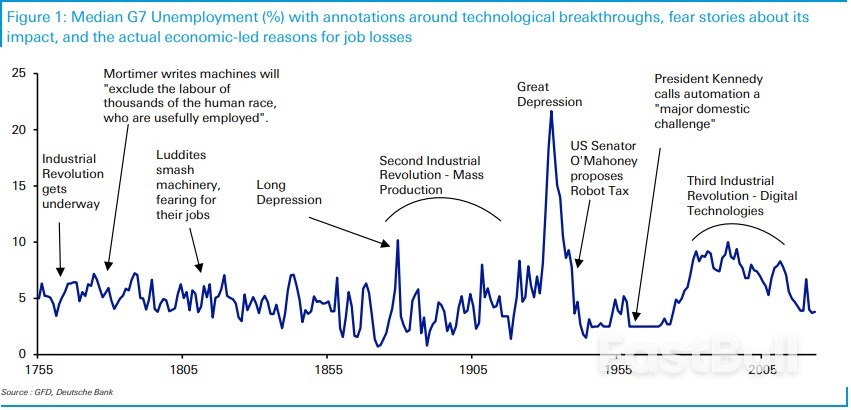
          Deutsche Bank strategists Jim Reid and Henry Allen this week examined how most new technologies over recent centuries were feared due to unemployment concerns - but these were typically unfounded as freed-up resources, higher productivity and real wages lifted living standards at large and made way for other industries and jobs to spring up.
          "Humans are inherently ambitious and will always seek new opportunities when technology closes off previous areas. Such upheaval has always been growth- and employment-enhancing," they concluded.
          "Whilst there are legitimate fears about what AI means for society, we are sceptical that this time is different and it will lead to widespread job losses."World Balance Sheet May Need AI-Style Productivity Leap_3

          World Balance Sheet May Need AI-Style Productivity Leap_4Source: ZAWYA

          To stay updated on all economic events of today, please check out our Economic calendar
          Risk Warnings and Disclaimers
          You understand and acknowledge that there is a high degree of risk involved in trading. Following any strategies or investment methods may lead to potential losses. The content on the site is provided by our contributors and analysts for information purposes only. You are solely responsible for determining whether any trading assets, securities, strategy, or any other product is suitable for investing based on your own investment objectives and financial situation.
          Comments
          Add to Favorites
          Share

          Is the Debt Ceiling Stalemate Just Posturing — or Is This Time Truly Different?

          Justin

          Economic

          Bond

          Political

          On Thursday, Punchbowl News reported that Republicans are now privately optimistic about reaching a deal. And yet House Speaker Kevin McCarthy has been insisting this week that the only “concession” House Republicans will offer to Democrats is raising the debt ceiling — hardly a concession. On Wednesday, Minority Leader Hakeem Jeffries accused Republicans of being “determined to crash the economy because they believe it will benefit them politically.”
          If you take this at face value, it may sound like the parties are terrifyingly far apart, and that a disastrous default could be imminent. But should you take it at face value?
          The markets evidently think you shouldn’t. Stock traders’ apparent view is that this is all just posturing, and that a deal will be struck.
          Because that’s how it always goes with debt ceiling brinkmanship. “Debt Ceiling Drama is Political Theater, Not an Existential Crisis,” a headline in the financial website TheStreet reads. In Washington, too, it’s hard to find many who will outright predict a default is the likely outcome.
          That’s because, in a high-stakes, adversarial negotiation with an impending deadline, it’s common for both sides to dig in until the last minute, trying to drive as hard a bargain as possible. (Take Fox’s settlement with Dominion, reached just as a trial in the defamation lawsuit the voting machine company brought against the network was about to begin.)
          Capitol Hill watchers frequently see this dynamic play out in Congress, where negotiators often loudly insist there’s no deal until, at the end of a prolonged process, one suddenly materializes:
          A default wouldn’t really be in anyone’s interest. Kevin McCarthy doesn’t want a default. Senate Minority Leader Mitch McConnell doesn’t want a default. Rich Republican donors don’t want a default that would likely cause economic chaos and make them a lot poorer.
          What Republicans want is a deal. President Biden wants a deal too. So, this thinking goes, probably, they’ll come up with one.
          There’s also a more pessimistic take.

          The pessimists have a darker view about the House GOP

          The key difference between optimists and pessimists is that the optimists have more faith in the competence and reasonableness of Speaker McCarthy, and the rationality of the GOP generally.
          When House Republicans make absurd demands, the optimists interpret that as tough negotiating. When McCarthy sounds unreasonable in public, the optimists think he’s just trying to sound tough for the GOP base, to convince them he’s fighting as hard as he can — but that he actually really is, in good faith, seeking a deal. They think the adults are in charge of the House GOP.
          The pessimists, who are generally on the left, would suggest a few points in response.
          The House GOP is so extreme that McCarthy won’t be able to lock down the votes for a reasonable deal: Back when McCarthy was trying to lock down the votes for speaker, he had to bow and scrape to get the votes he needed from the hard right. One concession he made was a rules change that effectively makes it easier to force a no-confidence vote in his leadership.
          To avoid that, some believe, he’ll pander even more to the far right, making sure to get their blessing on any deal. But, the argument goes, these members of Congress are so extreme and untethered from political reality that they’ll never agree to anything realistic — anything Democrats have a chance of accepting.
          The optimists’ response to this would be to point out that McCarthy does not actually need the votes of the far right (any bipartisan deal is expected to lose votes from the far right and far left), and that he’d just ideally like to keep their grumbling to a minimum to prevent a revolt against his speakership. Perhaps he can do this by convincing them he fought hard for their priorities.
          Republicans have an incentive to crash the economy and hurt Biden’s presidency: An even darker theory is that the GOP actually has no political incentive to avoid a default — indeed, they may outright want an economic crisis, assuming that Biden as the incumbent president will get the blame, and the GOP will benefit in the 2024 elections.
          The optimists would respond that it’s hardly inevitable voters would blame Biden (Republican extremism, it’s now clear, did indeed hurt certain candidates in the 2022 midterms), that Republican donors’ pocketbooks would also be hurt by a market panic, and just that this is too much of an evil caricature of the other party.
          Miscalculation or bungling could lead to a default no one wants: In adversarial negotiations with a deadline, everyone wants to signal maximal toughness until the last minute, when things suddenly get real.
          But one complication about the current situation is it doesn’t seem the parties know and agree on exactly when the “X-date” — the crisis date — is. Treasury Secretary Janet Yellen has claimed it is “potentially as early as June 1,” but that statement is ambiguous, and some outside analysts think it will be later in June. If Republicans don’t have an accurate view of when it is, they could keep posturing until it’s too late.
          More prosaically, negotiations could collapse because one side “misreads” the other, holding out for more concessions than are in the offing. This is the “incompetence scenario” for a default. And if you think McCarthy is an incompetent bungler, you may view this as disturbingly likely.
          The optimistic take here would be that if a default was really truly just days away, the Biden administration would surely make that information known. Additionally, if it looks like default might really happen, an eventual market panic could bring the parties back to the table. Finally, McCarthy has been a whole lot more competent at managing his conference this year than many expected. (Then again, he hasn’t had to sell them on an unpalatable deal just yet.)

          Disaster may be unlikely — but unlikely things can happen

          Overall, I think the optimists’ case is more convincing than the pessimists’. I think things will probably be fine.
          But how certain am I of that? What are the odds that one of the pessimistic scenarios turns out to be right? Is there a 1 percent chance of disaster? 5 percent? 10 percent? I’m hesitant to put an exact number on it.
          More to the point, the severe consequences of default are disturbing enough that even a low-probability chance they’ll actually happen is disquieting. Unlikely things sometimes happen!
          Which is why it would be nice if Republicans dispensed with this debt ceiling nonsense and negotiated over spending without playing chicken with the global economy. But I’m not holding my breath for that.

          Source:Vox

          To stay updated on all economic events of today, please check out our Economic calendar
          Risk Warnings and Disclaimers
          You understand and acknowledge that there is a high degree of risk involved in trading. Following any strategies or investment methods may lead to potential losses. The content on the site is provided by our contributors and analysts for information purposes only. You are solely responsible for determining whether any trading assets, securities, strategy, or any other product is suitable for investing based on your own investment objectives and financial situation.
          Comments
          Add to Favorites
          Share
          FastBull
          Copyright © 2025 FastBull Ltd

          728 RM B 7/F GEE LOK IND BLDG NO 34 HUNG TO RD KWUN TONG KLN HONG KONG

          TelegramInstagramTwitterfacebooklinkedin
          App Store Google Play Google Play
          Products
          Charts

          Chats

          Q&A with Experts
          Screeners
          Economic Calendar
          Data
          Tools
          Membership
          Features
          Function
          Markets
          Copy Trading
          Latest Signals
          Contests
          News
          Analysis
          24/7
          Columns
          Education
          Company
          Careers
          About Us
          Contact Us
          Advertising
          Help Center
          Feedback
          User Agreement
          Privacy Policy
          Business

          White Label

          Data API

          Web Plug-ins

          Poster Maker

          Affiliate Program

          Risk Disclosure

          The risk of loss in trading financial instruments such as stocks, FX, commodities, futures, bonds, ETFs and crypto can be substantial. You may sustain a total loss of the funds that you deposit with your broker. Therefore, you should carefully consider whether such trading is suitable for you in light of your circumstances and financial resources.

          No decision to invest should be made without thoroughly conducting due diligence by yourself or consulting with your financial advisors. Our web content might not suit you since we don't know your financial conditions and investment needs. Our financial information might have latency or contain inaccuracy, so you should be fully responsible for any of your trading and investment decisions. The company will not be responsible for your capital loss.

          Without getting permission from the website, you are not allowed to copy the website's graphics, texts, or trademarks. Intellectual property rights in the content or data incorporated into this website belong to its providers and exchange merchants.

          Not Logged In

          Log in to access more features

          FastBull Membership

          Not yet

          Purchase

          Become a signal provider
          Help Center
          Customer Service
          Dark Mode
          Price Up/Down Colors

          Log In

          Sign Up

          Position
          Layout
          Fullscreen
          Default to Chart
          The chart page opens by default when you visit fastbull.com