Markets
News
Analysis
User
24/7
Economic Calendar
Education
Data
- Names
- Latest
- Prev


Signal Accounts for Members
All Signal Accounts
All Contests


U.S. EIA Weekly Crude Stocks ChangeA:--
F: --
P: --
U.S. EIA Weekly Heating Oil Stock ChangesA:--
F: --
P: --
U.S. EIA Weekly Gasoline Stocks ChangeA:--
F: --
P: --
U.S. EIA Weekly Crude Demand Projected by ProductionA:--
F: --
P: --
Russia PPI YoY (Nov)A:--
F: --
P: --
Russia PPI MoM (Nov)A:--
F: --
P: --
Australia Consumer Inflation ExpectationsA:--
F: --
P: --
South Africa PPI YoY (Nov)A:--
F: --
P: --
Euro Zone Construction Output MoM (SA) (Oct)A:--
F: --
Euro Zone Construction Output YoY (Oct)A:--
F: --
P: --
U.K. BOE MPC Vote Unchanged (Dec)A:--
F: --
P: --
Mexico Retail Sales MoM (Oct)A:--
F: --
P: --
U.K. Benchmark Interest RateA:--
F: --
P: --
U.K. BOE MPC Vote Cut (Dec)A:--
F: --
P: --
U.K. BOE MPC Vote Hike (Dec)A:--
F: --
P: --
MPC Rate Statement
Euro Zone ECB Deposit RateA:--
F: --
P: --
Euro Zone ECB Marginal Lending RateA:--
F: --
P: --
Euro Zone ECB Main Refinancing RateA:--
F: --
P: --
ECB Monetary Policy Statement
Canada Average Weekly Earnings YoY (Oct)A:--
F: --
U.S. Core CPI YoY (Not SA) (Nov)A:--
F: --
P: --
U.S. Weekly Initial Jobless Claims (SA)A:--
F: --
U.S. Weekly Continued Jobless Claims (SA)A:--
F: --
U.S. Real Income MoM (SA) (Nov)--
F: --
P: --
U.S. CPI YoY (Not SA) (Nov)A:--
F: --
P: --
U.S. Initial Jobless Claims 4-Week Avg. (SA)A:--
F: --
U.S. Philadelphia Fed Business Activity Index (SA) (Dec)A:--
F: --
P: --
U.S. Philadelphia Fed Manufacturing Employment Index (Dec)A:--
F: --
P: --
U.S. Core CPI (SA) (Nov)A:--
F: --
P: --
ECB Press Conference
U.S. EIA Weekly Natural Gas Stocks Change--
F: --
P: --
U.S. Kansas Fed Manufacturing Production Index (Dec)--
F: --
P: --
U.S. Cleveland Fed CPI MoM (Nov)--
F: --
P: --
Russia PPI MoM (Nov)--
F: --
P: --
Russia PPI YoY (Nov)--
F: --
P: --
U.S. Cleveland Fed CPI MoM (SA) (Nov)--
F: --
P: --
U.S. Kansas Fed Manufacturing Composite Index (Dec)--
F: --
P: --
Mexico Policy Interest Rate--
F: --
P: --
Argentina Trade Balance (Nov)--
F: --
P: --
Argentina Unemployment Rate (Q3)--
F: --
P: --
South Korea PPI MoM (Nov)--
F: --
P: --
U.S. Weekly Treasuries Held by Foreign Central Banks--
F: --
P: --
Japan National CPI MoM (Not SA) (Nov)--
F: --
P: --
Japan CPI MoM (Nov)--
F: --
P: --
Japan National Core CPI YoY (Nov)--
F: --
P: --
Japan CPI YoY (Excl. Fresh Food & Energy) (Nov)--
F: --
P: --
Japan National CPI MoM (Excl. Food & Energy) (Nov)--
F: --
P: --
Japan National CPI YoY (Excl. Food & Energy) (Nov)--
F: --
P: --
Japan National CPI YoY (Nov)--
F: --
P: --
Japan National CPI MoM (Nov)--
F: --
P: --
U.K. GfK Consumer Confidence Index (Dec)--
F: --
P: --
Japan Benchmark Interest Rate--
F: --
P: --
BOJ Monetary Policy Statement
Australia Commodity Price YoY--
F: --
P: --
BOJ Press Conference
Turkey Consumer Confidence Index (Dec)--
F: --
P: --
U.K. Retail Sales YoY (SA) (Nov)--
F: --
P: --
U.K. Core Retail Sales YoY (SA) (Nov)--
F: --
P: --
Germany PPI YoY (Nov)--
F: --
P: --
Germany PPI MoM (Nov)--
F: --
P: --


No matching data
Latest Views
Latest Views
Trending Topics
Top Columnists
Latest Update
White Label
Data API
Web Plug-ins
Affiliate Program
View All

No data
Singapore sovereign bond sensitivity to Treasury moves has declined in a boon for the island nation's securities amid the possible re-emergence of de-dollarization concerns.
Moves in the two markets have become almost independent of each other, after their correlation fell to nearly zero. Singapore's fiscal discipline is boosting the appeal of its AAA-rated bonds which are graded above Treasuries amid concern over government finances in the US.
This decoupling bodes well for Singapore's bonds with US Treasuries vulnerable to increased volatility as worries about the Federal Reserve's independence resurface in the run-up to the appointment of a new central bank chair. Singapore's bonds also stand out as fiscal concerns send yields from Japan to Germany soaring.
Investors can "find a safe harbor" in Singapore's bonds in the face of de-dollarization, said Kheng Siang Ng, Asia Pacific head of fixed income at State Street Investment Management. "Singapore is an anchor of stability," he said.
Historically, however, bond markets in Singapore and the US have been closely linked due to the lack of an interest-rate anchor in the Asian nation which uses an exchange rate-based monetary policy. This link broke down in the latter part of this year due to haven demand for Singapore's bonds.
The 120-day correlation between 10-year Singapore government bonds and similar-dated Treasuries has fallen to 0 from 0.40 at the start of the year. This correlation fell to as low as minus 0.07 in late November, the lowest since 2015.
The strong global demand driving this correlation breakdown has boosted domestic liquidity, pushing down the cost of borrowing in the interbank market close to the lowest levels in three years. The flush cash levels may continue to support bond performance, with a Bloomberg index of Singapore bonds offering returns of nearly 14% this year to dollar-based investors, on track for the best performance since 2002.
"We are seeing increasing interest in high-quality investment grade Asia local currency bonds, as investors look for USD investment alternatives," said Belinda Liao, a portfolio manager at Fidelity International.
"Singapore government bonds will maintain the safe-haven status and continue to attract foreign investment," she said.

The U.S. Federal Trade Commission is probing Instacart (CART.O), two sources familiar with the matter told Reuters, as the retail platform faces criticism over its artificial intelligence-driven pricing tool.
Instacart shares were down about 10% in after-hours trading.
The agency has sent the company a civil investigative demand, the sources said. The FTC is seeking information about Instacart's Eversight pricing tool, one of the sources said.
The software, which allows retailers on Instacart to experiment with different prices using AI, drew criticism after a recent study showed different shoppers got different prices for the same groceries on Instacart.
"The Federal Trade Commission has a longstanding policy of not commenting on any potential or ongoing investigations. But, like so many Americans, we are disturbed by what we have read in the press about Instacart's alleged pricing practices," the FTC said in a statement.
The opening of a probe does not prove wrongdoing and not all FTC investigations result in lawsuits.
The FTC is taking on the issue of a company's use of technology to set prices at a time when the high cost of living in the U.S. has been a top daily concern for Americans. The issue of affordability helped Democrats win several state and local elections in November, becoming a major political headwind for President Donald Trump and his Republican party.
In a study involving 437 shoppers viewing Instacart prices in four cities saw wildly different prices for the same items sourced at the same stores. On average, there was a 7% difference in the total cost for the same grocery list at the same store, according to the study conducted by advocacy groups Groundwork Collaborative, Consumer Reports, and More Perfect Union.
"Some shoppers found grocery prices that were up to 23% higher than prices available to other shoppers for the exact same items, in the exact same store, at the exact same time," the study's authors wrote.
Instacart's Eversight allows retailers to run price tests to gauge shoppers' reactions to higher or lower prices across different categories of items. Grocers who use Eversight see revenue growth of 1-3%, according to Instacart's website.
The pricing tests carried out through Eversight were randomized, unlike pricing practices based on fluctuating demand or a user's individual data and behaviors, Instacart said last week.
"This year, we've focused heavily on encouraging more retailers to move toward in-store and online price parity, working closely with partners to remove markups and align online prices with in-store," the company said in a blog post last week.

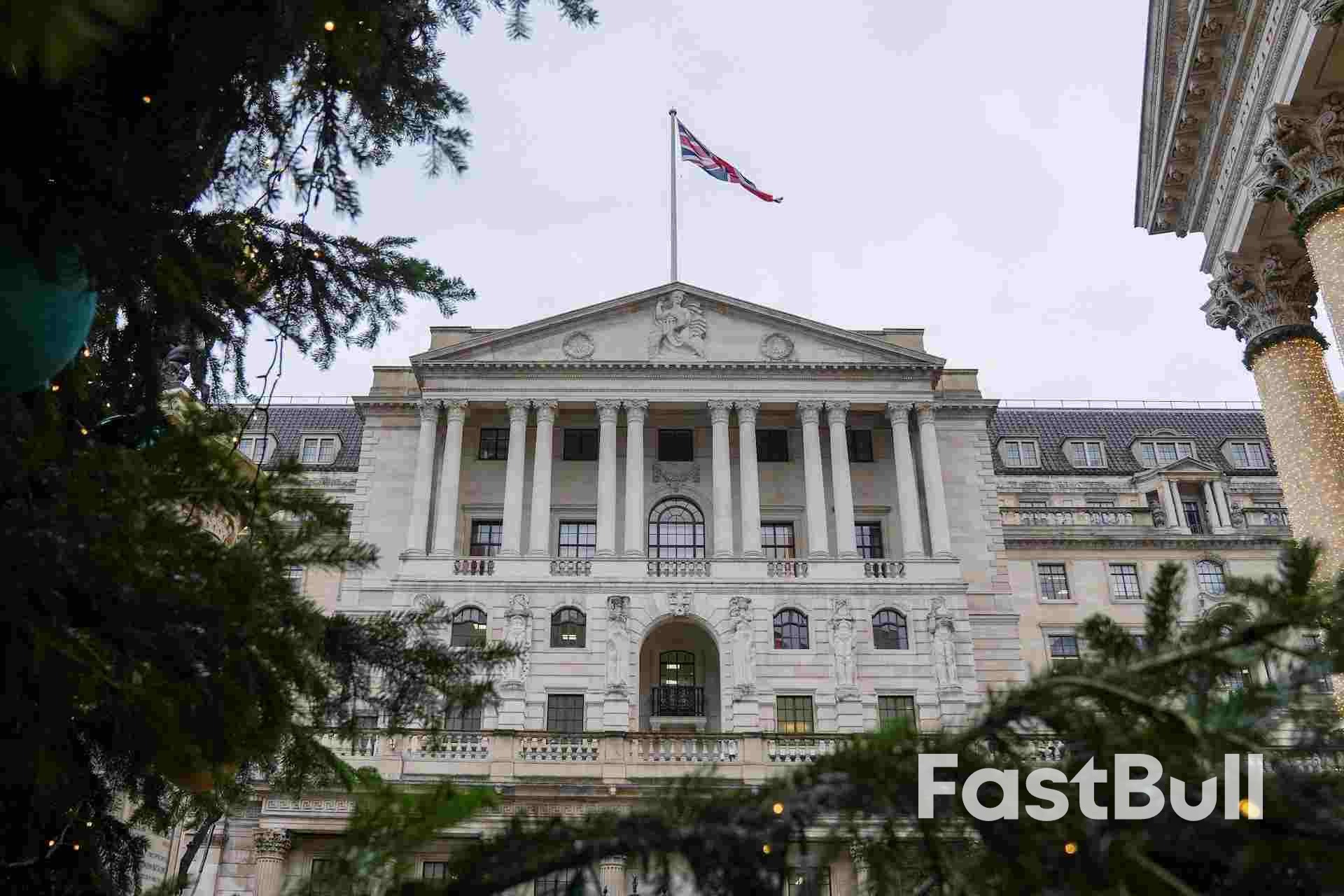
The Bank of England is expected to lower interest rates on Thursday after a sharp slowdown in inflation and a weakening in economic growth, but a string of further cuts in 2026 looks unlikely given Britain's lingering price pressures.
Investors think the BoE will reduce its benchmark rate to 3.75% from 4% for a fourth cut of 2025, welcome news for finance minister Rachel Reeves and Prime Minister Keir Starmer who are struggling to meet promises to voters of faster economic growth.
A quarter-point cut would take Bank Rate to its lowest level in nearly three years, although that would still be almost double the equivalent rate of the European Central Bank.
British inflation remains the highest among the Group of Seven economies - in part because of Reeves' decision last year to raise taxes on employers - even after it fell sharply to 3.2% in data released on Wednesday.
Investors are fully pricing only one more BoE rate cut in 2026, most likely by the end of April, although bets on a second one rose after the November inflation drop.
ENTRENCHED POSITIONS ON MONETARY POLICY COMMITTEE
Hetal Mehta, chief economist at wealth management firm St. James's Place, said the different camps on the BoE's Monetary Policy Committee were unlikely to shift their medium-term stances significantly this week.
"There's enough ambiguity around some of the numbers going into next year for there not to be back-to-back rate cuts," Mehta said. "The data confirms the direction of travel. It's the magnitude (of rate cuts) that is up for debate."
The nine members of the Monetary Policy Committee have been almost evenly split in recent months. In November they voted 5-4 to keep rates on hold.
Analysts polled by Reuters last week forecast a 5-4 split in favour of a cut at their December meeting with Governor Andrew Bailey switching sides to tip the balance.
Wednesday's bigger-than-expected inflation slowdown - which followed data on Tuesday showing a weakening jobs market including the highest unemployment rate since 2021 - might now persuade more MPC members to vote for a cut, Mehta said.
Britain's economy shrank 0.1% in the three months to October amid reports that businesses put investment projects on ice in the run-up to Reeves' budget on November 26.
But Britain is not out of its inflation problem yet.
S&P Global's Purchasing Managers' Index, also published on Tuesday, showed rising inflation pressures and suggested businesses were turning a corner after the budget.
Relief at the BoE over the big drop in the headline inflation rate is likely to be tempered by only a small fall in the pace of price increases in the services sector.
Furthermore, the inflation-reducing impact of Reeves' budget - which removed green levies from power bills and froze rail fares - is likely to be only temporary.
Other major central banks are believed to be close to halting their rate cuts - the U.S. Federal Reserve last week signalled one more in 2026 while the ECB has probably already come to the end of its monetary loosening cycle.
Economists are watching closely for any change in the BoE's language in Thursday's statement about the prospect of further reductions, including possible changes to its recent description of borrowing costs as being on a "gradual downward path".
"Because inflation remains above target and services components still look sticky, policymakers are unlikely to deliver a deeply dovish message," Daniela Hathorn, senior market analyst at trading platform Capital.com, said.
"Instead, the BoE is likely to frame any cut as part of a gradual, risk-managed shift rather than a full easing cycle."
Delta Air Linessaid on Wednesday that Glen Hauenstein, its president and the architect of its premium-focused strategy, will retire in February.
Hauenstein, 64, joined the Atlanta-based airline in 2005 and has served as president since 2016. During his tenure, he led a sweeping transformation that repositioned Delta from a mass-market carrier to a premium brand.
He championed high-end products and persuaded travelers to pay for seats, such as first class, that were once given away as free upgrades.
The strategy has delivered strong results: premium products accounted for 43% of Delta's passenger revenue in the latest quarter, up eight percentage points from pre-pandemic levels.
Executives now expect revenue from premium cabins to surpass main cabin ticket sales as early as 2026.
"Glen's vision and strategic mindset have been essential in transforming Delta into the leading global airline we are today," Chief Executive Ed Bastian said.
Under Hauenstein's leadership, Delta generated far more revenue per seat than its rivals, more than twice the industry average, according to Jefferies analysts.
The company's success has forced rivals Unitedand American Airlinesto follow suit, investing heavily in upgraded cabins and luxury ground experiences to attract high-paying travelers.
Hauenstein also drove the shift in loyalty programs to reward total spending rather than miles flown, a model now standard among major U.S. carriers.
"It's hard to know whether you're lucky or good, but I would say he was good before he was lucky," said Robert Mann, a former airline executive turned consultant.
Hauenstein was instrumental in expanding Delta's global footprint, building a network that spans six continents and forging joint ventures with carriers such as Virgin Atlantic, Air France-KLM, and Korean Air.
He will retire on February 28 but remain with Delta through 2026 as a strategic adviser.
The airline named Joe Esposito, senior vice president of network planning, as executive vice president and chief commercial officer. Esposito will oversee revenue management, sales, and the SkyMiles loyalty program.
Sales of Japan's government bonds for individual investors have surged past ¥5 trillion ($32 billion) this year, the most since 2007, as rising interest rates draw household cash out of bank deposits after the Bank of Japan began tightening policy.
Issuance from January to December totaled about ¥5.28 trillion, Ministry of Finance data show. The five-year retail note issued in November carried a 1.22% coupon, almost 2.7 times the 0.46% offered a year earlier.
As the BOJ pares back the massive bond purchases of its ultra-loose policy, households are taking a more active role in the JGB market. Higher yields and the product's safety, with virtually no risk to principal, are reviving demand.
Issuance this year has included about ¥1.9 trillion of 10-year floating-rate government bonds, which is notable because their coupons adjust in line with broader interest-rate moves, making them especially attractive in a tightening cycle.
Kyoko Takahata, a 37-year-old homemaker in Okayama, bought a 10-year floating-rate government bond at her local bank branch in October last year after withdrawing savings.
"Rates were higher than on my deposits, there was a guarantee, and the floating rate made me think they would rise over time," Takahata said. "It won't beat inflation, I know, but stocks can lose a lot." Purchasing JGBs is a safer way to grow the money she will need for her children's education and for retirement, she added.
Even a 10-year time deposit at Mizuho Bank Ltd. pays about 0.5% for balances of ¥10 million or more, underscoring why some savers are moving money into government bonds with noticeably higher returns.
Coupons on retail JGBs for January settlement are set at 1.1% for the three-year fixed, 1.35% for the five-year fixed and 1.23% for the 10-year floater. The five-year rate is the highest since 2007, while the floater offers a record high since its 2003 launch.
The issuance amount is set based on the total subscriptions submitted by individual investors.
Apple Inc. is making changes to its iOS software in Japan to comply with a new local law aimed at fostering competition, part of broader efforts by the iPhone maker to adapt to regulations around the world.
The company announced a compliance plan on Wednesday for Japan's Mobile Software Competition Act, or MSCA, which was passed last year and goes into effect this week. The changes affect the operating system's payment options, alternative app marketplaces and browser choices. Apple said it worked closely with Japanese regulators on the updates, which are now available in the country as part of iOS 26.2.
Apple also faces similar regulatory scrutiny in the European Union. That region's Digital Markets Act, which seeks to level the playing field for online platforms, has sparked tension with Apple and forced the company to make adjustments.
The Cupertino, California-based company has said that stricter regulations can make it harder to protect user safety and privacy. At the same time, the rules have threatened to upend an App Store business model that generates billions of dollars a year for Apple.
In Japan, the changes are meant to give developers the ability to choose how to process payments for digital goods and services. They also will provide more control over how they distribute apps through alternative marketplaces. And the updates make it easier for users to choose their preferred browser and search engine.
However, the company warned that some of these changes may pose new risks for iOS users in Japan by potentially opening them up to malware, fraud and scams.
To help reduce the possible hazards, Apple is relying on a "notarization" system – a combination of automated checks and human review – to assess the basic functionality and security threats of all iOS apps. But the company said this is less comprehensive than the full App Store review, and other marketplaces can decide to have their own additional policies for review.
Japanese developers will now have three options for handling payments: continuing to rely on Apple's in-app purchases; using an alternative payment service provider inside their app; or linking customers to a website to complete the transaction.
The company is also introducing new business terms with different commission rates and fees depending on how developers choose to distribute their apps and process payments. Apple said some of the changes could expose children to more risks, but it worked with regulators on guardrails, including restricting links to external websites for users under 13.
An Apple spokesperson said the company doesn't have plans to bring these changes to other countries because it believes its existing system provides superior user safety and developer opportunities. The spokesperson also said the company believes Japan is taking a better approach than the EU, stating that the DMA has forced Apple to make changes that create a more confusing experience and introduce greater risks. For instance, mandates aimed at making technology compatible could expose sensitive user data, like Wi-Fi history or notifications, Apple said.
The latest changes follow this week's beta release of iOS 26.3, which includes several features tied to regulatory demands. The software includes new tools that make it easier to transfer data from an iPhone to an Android device and forward notifications to third-party watches.
Oil extended gains after bouncing off a four-and-a-half-year low, as investors weighed geopolitical risks from Venezuela to Russia against a still-bearish supply outlook.
West Texas Intermediate traded just below $57 a barrel, after adding 1.2% on Wednesday, while Brent closed a little under $60. The US is preparing a fresh round of sanctions on Russia's energy sector to spur a peace deal in Ukraine and has declared a blockade of Venezuelan oil exports, raising concerns of a deepening supply outage.
President Donald Trump said the US wants back its Venezuelan oil rights and land, accusing Caracas of taking US "energy rights." Meanwhile, Washington is considering options such as targeting Russia's so-called shadow fleet of oil tankers and traders who facilitate such exports, people familiar with the matter said.
Geopolitical tension is lending short-term support for futures, propping up WTI after it fell below $55 earlier this week for the first time since February 2021. Meanwhile, signs of market weakness are emerging from the Middle East to the US, as investors brace for a glut heading into next year.
In the US, a government report on Wednesday showed a modest drawdown in crude stocks, while holdings of gasoline and distillates both grew.
Meanwhile, BP Plc Chief Executive Officer Murray Auchincloss is stepping down after less than two years at the helm. The British oil major has appointed its first female head. Meg O'Neill, the boss of Australian energy company Woodside Energy Ltd., will take over in April.
White Label
Data API
Web Plug-ins
Poster Maker
Affiliate Program
The risk of loss in trading financial instruments such as stocks, FX, commodities, futures, bonds, ETFs and crypto can be substantial. You may sustain a total loss of the funds that you deposit with your broker. Therefore, you should carefully consider whether such trading is suitable for you in light of your circumstances and financial resources.
No decision to invest should be made without thoroughly conducting due diligence by yourself or consulting with your financial advisors. Our web content might not suit you since we don't know your financial conditions and investment needs. Our financial information might have latency or contain inaccuracy, so you should be fully responsible for any of your trading and investment decisions. The company will not be responsible for your capital loss.
Without getting permission from the website, you are not allowed to copy the website's graphics, texts, or trademarks. Intellectual property rights in the content or data incorporated into this website belong to its providers and exchange merchants.
Not Logged In
Log in to access more features

FastBull Membership
Not yet
Purchase
Log In
Sign Up