• Trade
  • Markets
  • Copy
  • Contests
  • News
  • 24/7
  • Calendar
  • Q&A
  • Chats
Screeners
SYMBOL
LAST
ASK
BID
HIGH
LOW
NET CHG.
%CHG.
SPREAD
SPX
S&P 500 Index
6939.02
6939.02
6939.02
6964.08
6893.47
-29.99
-0.43%
--
DJI
Dow Jones Industrial Average
48892.46
48892.46
48892.46
49047.68
48459.88
-179.09
-0.36%
--
IXIC
NASDAQ Composite Index
23461.81
23461.81
23461.81
23662.25
23351.55
-223.30
-0.94%
--
USDX
US Dollar Index
96.970
97.050
96.970
97.140
96.840
-0.020
-0.02%
--
EURUSD
Euro / US Dollar
1.18572
1.18582
1.18572
1.18745
1.18393
+0.00081
+ 0.07%
--
GBPUSD
Pound Sterling / US Dollar
1.36808
1.36820
1.36808
1.37053
1.36600
-0.00027
-0.02%
--
XAUUSD
Gold / US Dollar
4570.74
4571.17
4570.74
4884.47
4402.03
-323.75
-6.61%
--
WTI
Light Sweet Crude Oil
61.581
61.611
61.581
63.933
61.209
-3.846
-5.88%
--

Community Accounts

Signal Accounts
--
Profit Accounts
--
Loss Accounts
--
View More

Become a signal provider

Sell trading signals to earn additional income

View More

Guide to Copy Trading

Get started with ease and confidence

View More

Signal Accounts for Members

All Signal Accounts

Best Return
  • Best Return
  • Best P/L
  • Best MDD
Past 1W
  • Past 1W
  • Past 1M
  • Past 1Y

All Contests

  • All
  • Trump Updates
  • Recommend
  • Stocks
  • Cryptocurrencies
  • Central Banks
  • Featured News
Top News Only
Share

India's Nifty 50 Index Last Up 0.5%

Share

Swedish Manufacturing PMI 56.0 Points In Jan - Silf/Swedbank

Share

Stats Office - Swiss December Retail Sales +2.9% Year-On-Year Versus Revised +1.7% In Previous Month

Share

Iran's Foreign Ministry Spokesperson Baghaei Says Tehran Is Examining Details Of Various Diplomatic Processes, Hopes For Results In Coming Days

Share

Israel Expected To Reopen Gaza's Rafah Border Crossing To Egypt, With Limits

Share

FAA Head Says Concerned Other Countries Aren't Putting Enough Resources Into Certifying USA Aircraft

Share

European Benchmark Gas Contract Falls 10.5% To 35.50 EUR/Mwh - Lseg Data

Share

Statistics Bureau - Kazakhstan's January CPI At 1.0% Month-On-Month

Share

S&P Global: Kazakhstan January Manufacturing PMI At 49.8%

Share

German Dec Retail Sales +1.5 Percent Year-On-Year (Versus Reuters Consensus Forecast For +1.1 Percent)

Share

Russian Security Committee's Vice Chairman Medvedev: Russia Will Not Accept NATO-Member Forces In Ukraine

Share

Russian Security Committee's Vice Chairman Medvedev: Nuclear Arms Control For Past 60 Years Helped Verify Intentions And Build Trust

Share

Russian Security Committee's Vice Chairman Medvedev: The Territorial Issue In Ukraine Talks Is Most Complicated

Share

Russian Security Committee's Vice Chairman Medvedev: If New Start Expires It Does Not Necessarily Mean A Catastrophe But It Should Alarm Everyone

Share

Russian Security Committee's Vice Chairman Medvedev: Our Proposal To USA On Extending The Limits Of New Start Remains On The Table

Share

USA Dollar Jumps 1% Against Norwegian Crown To 9.7062

Share

Turkey's Main BIST 100 Index Down 1.7% At Early Trading

Share

India's Nifty 50 Index Last Up 0.4%

Share

Kazakhstan's Central Bank Says It Sold Foreign Currency Worth 350 Billion Tenge In January To Mirror Gold Purchases, Will Sell Foreign Currency Worth 350 Billion In February

Share

Spot Gold Extends Losses, Last Down Over 9% At $4403,29.Oz

TIME
ACT
FCST
PREV
U.S. Core PPI YoY (Dec)

A:--

F: --

P: --
U.S. Core PPI MoM (SA) (Dec)

A:--

F: --

P: --

U.S. PPI YoY (Dec)

A:--

F: --

P: --

U.S. PPI MoM (SA) (Dec)

A:--

F: --

P: --

Canada GDP MoM (SA) (Nov)

A:--

F: --

P: --

Canada GDP YoY (Nov)

A:--

F: --

P: --

U.S. PPI MoM Final (Excl. Food, Energy and Trade) (SA) (Dec)

A:--

F: --

P: --

U.S. PPI YoY (Excl. Food, Energy & Trade) (Dec)

A:--

F: --

P: --

U.S. Chicago PMI (Jan)

A:--

F: --

P: --
Canada Federal Government Budget Balance (Nov)

A:--

F: --

P: --

U.S. Weekly Total Oil Rig Count

A:--

F: --

P: --

U.S. Weekly Total Rig Count

A:--

F: --

P: --

China, Mainland NBS Manufacturing PMI (Jan)

A:--

F: --

P: --

China, Mainland NBS Non-manufacturing PMI (Jan)

A:--

F: --

P: --

China, Mainland Composite PMI (Jan)

A:--

F: --

P: --

South Korea Trade Balance Prelim (Jan)

A:--

F: --

P: --
Japan Manufacturing PMI Final (Jan)

A:--

F: --

P: --

South Korea IHS Markit Manufacturing PMI (SA) (Jan)

A:--

F: --

P: --

Indonesia IHS Markit Manufacturing PMI (Jan)

A:--

F: --

P: --

China, Mainland Caixin Manufacturing PMI (SA) (Jan)

A:--

F: --

P: --

Indonesia Trade Balance (Dec)

A:--

F: --

P: --

Indonesia Inflation Rate YoY (Jan)

A:--

F: --

P: --

Indonesia Core Inflation YoY (Jan)

A:--

F: --

P: --

India HSBC Manufacturing PMI Final (Jan)

A:--

F: --

P: --

Australia Commodity Price YoY (Jan)

A:--

F: --

P: --

Russia IHS Markit Manufacturing PMI (Jan)

A:--

F: --

P: --

Turkey Manufacturing PMI (Jan)

A:--

F: --

P: --

U.K. Nationwide House Price Index MoM (Jan)

A:--

F: --

P: --

U.K. Nationwide House Price Index YoY (Jan)

A:--

F: --

P: --

Germany Actual Retail Sales MoM (Dec)

A:--

F: --

P: --
Italy Manufacturing PMI (SA) (Jan)

--

F: --

P: --

South Africa Manufacturing PMI (Jan)

--

F: --

P: --

Euro Zone Manufacturing PMI Final (Jan)

--

F: --

P: --

U.K. Manufacturing PMI Final (Jan)

--

F: --

P: --

Brazil IHS Markit Manufacturing PMI (Jan)

--

F: --

P: --

Canada National Economic Confidence Index

--

F: --

P: --

Canada Manufacturing PMI (SA) (Jan)

--

F: --

P: --

U.S. IHS Markit Manufacturing PMI Final (Jan)

--

F: --

P: --

U.S. ISM Output Index (Jan)

--

F: --

P: --

U.S. ISM Inventories Index (Jan)

--

F: --

P: --

U.S. ISM Manufacturing Employment Index (Jan)

--

F: --

P: --

U.S. ISM Manufacturing New Orders Index (Jan)

--

F: --

P: --

U.S. ISM Manufacturing PMI (Jan)

--

F: --

P: --

South Korea CPI YoY (Jan)

--

F: --

P: --

Japan Monetary Base YoY (SA) (Jan)

--

F: --

P: --

Australia Building Approval Total YoY (Dec)

--

F: --

P: --

Australia Building Permits MoM (SA) (Dec)

--

F: --

P: --

Australia Building Permits YoY (SA) (Dec)

--

F: --

P: --

Australia Private Building Permits MoM (SA) (Dec)

--

F: --

P: --

Australia Overnight (Borrowing) Key Rate

--

F: --

P: --

RBA Rate Statement
Japan 10-Year Note Auction Yield

--

F: --

P: --

Saudi Arabia IHS Markit Composite PMI (Jan)

--

F: --

P: --

RBA Press Conference
Turkey PPI YoY (Jan)

--

F: --

P: --

Turkey CPI YoY (Jan)

--

F: --

P: --

Turkey CPI YoY (Excl. Energy, Food, Beverage, Tobacco & Gold) (Jan)

--

F: --

P: --

Q&A with Experts
    • All
    • Chatrooms
    • Groups
    • Friends
    Ikeh Sunday flag
    am looking at 70.200 in silver sell signal
    Ikeh Sunday flag
    SlowBear ⛅
    @SlowBear ⛅no silver only as usual
    Kung Fu flag
    Ikeh Sunday
    am looking at 70.200 in silver sell signal
    @Ikeh Sundayis this for intraday or for swing
    SlowBear ⛅ flag
    Ikeh Sunday
    am looking at 70.200 in silver sell signal
    @Ikeh Sunday Well i will say that it is feasible, a s the current market price is at 75.01
    SlowBear ⛅ flag
    Ikeh Sunday
    @Ikeh SundayReally? cos the chart i saw earlier wa sthat of XAUUSD and not XAGUSD
    Ikeh Sunday flag
    SlowBear ⛅
    @SlowBear ⛅am on one month on silver chart. it was gold i show 15m view
    Ikeh Sunday flag
    SlowBear ⛅
    @SlowBear ⛅the one with entry is silver not gold
    SlowBear ⛅ flag
    Ikeh Sunday
    @Ikeh Sunday Oh got it now, thanks for that clarification
    Ikeh Sunday flag
    SlowBear ⛅
    @SlowBear ⛅ur well come
    SlowBear ⛅ flag
    Ikeh Sunday
    @Ikeh Sunday Cool that is clear now, so you are selling and targeting 70.20 on Silver not bad i will look into it myself
    SlowBear ⛅ flag
    Ikeh Sunday
    @Ikeh Sunday Wow, you are one discipline trader bro, you are very loyal to silver
    Ikeh Sunday flag
    SlowBear ⛅
    @SlowBear ⛅am use to it and besides it's the only instrument that moves in volume . we just have to get it right or get wiped
    SlowBear ⛅ flag
    Ikeh Sunday
    @Ikeh Sunday I completely understands you bro, experience mixed with sustainability - Silver provides both!
    Kung Fu flag
    Ikeh Sunday
    @Ikeh SundayI'd rather target a sellside when or if silver drops to $70.
    SlowBear ⛅ flag
    Ikeh Sunday
    @Ikeh SundayAnd getting it right comes in slow but once mastered that is all you need to buy a mansion in Johanesburg!
    Kung Fu flag
    I'd look for more sellside just below $70, precisely at $69.50. That's a breakout to the downside @Ikeh Sunday
    Kung Fu flag
    @Ikeh Sunday$65 will be, in that case, my very first target.
    JOSHUA flag
    Seems gold is picking up
    SlowBear ⛅ flag
    JOSHUA
    Seems gold is picking up
    @JOSHUAIt will pick up, but the pick will be slow and sluggish - so stay on a look out
    favour flag
    JOSHUA
    Seems gold is picking up
    @JOSHUAnot yet
    Type here...
    Add Symbol or Code

      No matching data

      All
      Trump Updates
      Recommend
      Stocks
      Cryptocurrencies
      Central Banks
      Featured News
      • All
      • Russia-Ukraine Conflict
      • Middle East Flashpoint
      • All
      • Russia-Ukraine Conflict
      • Middle East Flashpoint
      Search
      Products

      Charts Free Forever

      Chats Q&A with Experts
      Screeners Economic Calendar Data Tools
      Membership Features
      Data Warehouse Market Trends Institutional Data Policy Rates Macro

      Market Trends

      Market Sentiment Order Book Forex Correlations

      Top Indicators

      Charts Free Forever
      Markets

      News

      News Analysis 24/7 Columns Education
      From Institutions From Analysts
      Topics Columnists

      Latest Views

      Latest Views

      Trending Topics

      Top Columnists

      Latest Update

      Signals

      Copy Rankings Latest Signals Become a signal provider AI Rating
      Contests
      Brokers

      Overview Brokers Assessment Rankings Regulators News Claims
      Broker listing Forex Brokers Comparison Tool Live Spread Comparison Scam
      Q&A Complaint Scam Alert Videos Tips to Detect Scam
      More

      Business
      Events
      Careers About Us Advertising Help Center

      White Label

      Data API

      Web Plug-ins

      Affiliate Program

      Awards Institution Evaluation IB Seminar Salon Event Exhibition
      Vietnam Thailand Singapore Dubai
      Fans Party Investment Sharing Session
      FastBull Summit BrokersView Expo
      Recent Searches
        Top Searches
          Markets
          News
          Analysis
          User
          24/7
          Economic Calendar
          Education
          Data
          • Names
          • Latest
          • Prev

          View All

          No data

          Scan to Download

          Faster Charts, Chat Faster!

          Download App
          English
          • English
          • Español
          • العربية
          • Bahasa Indonesia
          • Bahasa Melayu
          • Tiếng Việt
          • ภาษาไทย
          • Français
          • Italiano
          • Türkçe
          • Русский язык
          • 简中
          • 繁中
          Open Account
          Search
          Products
          Charts Free Forever
          Markets
          News
          Signals

          Copy Rankings Latest Signals Become a signal provider AI Rating
          Contests
          Brokers

          Overview Brokers Assessment Rankings Regulators News Claims
          Broker listing Forex Brokers Comparison Tool Live Spread Comparison Scam
          Q&A Complaint Scam Alert Videos Tips to Detect Scam
          More

          Business
          Events
          Careers About Us Advertising Help Center

          White Label

          Data API

          Web Plug-ins

          Affiliate Program

          Awards Institution Evaluation IB Seminar Salon Event Exhibition
          Vietnam Thailand Singapore Dubai
          Fans Party Investment Sharing Session
          FastBull Summit BrokersView Expo

          Selling America: Why a Global Portfolio Shift Is Turning Into a Structural Risk

          Gerik

          Economic

          Summary:

          A growing move to reduce exposure to US assets is reshaping global capital flows, weakening the dollar, lifting borrowing costs, and accelerating a flight toward gold as confidence in American financial dominance is reassessed....

          The Emergence Of A Global Sell America Trade

          Entering early 2026, global financial markets are witnessing a notable strategic pivot. Investment approaches that long relied on the structural dominance of the United States are increasingly being recalibrated. The direction is becoming clearer: a gradual but broad based reduction in exposure to US assets rather than an outright exit, driven by risk management and portfolio diversification concerns.
          This sentiment first took shape after the tariff shock in April last year, when both US equities and government bonds fell sharply. Since then, the idea of reallocating capital away from the US has gained traction, moving from a defensive hedge into a more explicit allocation strategy.

          From Diversification To Market Impact

          According to Lauren Goodwin, economist at New York Life Investments, the ex America investment theme dominated discussions at the firm’s recent global investment meeting. European investors were reportedly surprised by how open US based investors had become toward diversifying beyond domestic markets.
          Crucially, this strategy is framed as a response to rising market risks rather than a wholesale withdrawal from the US. Even so, its effects have been tangible. Over the past month alone, selling pressure has contributed to a weaker US dollar, restrained equity market performance, higher government borrowing costs, and a sharp rise in precious metals prices.

          Dollar Volatility And Policy Signals

          The nomination of Kevin Warsh as the next chair of the Federal Reserve, together with a last minute budget funding agreement, briefly supported the dollar in late January. Despite this rebound, the dollar still ended the month down 1.2 percent against a basket of major currencies including the euro, pound sterling, and Japanese yen.
          Measured over a longer horizon, the decline is more striking. The US dollar has fallen around 10 percent over the past 12 months, an unusually large move for a currency that typically anchors global financial stability. In this environment, gold and silver have both reached new highs. Even after a sharp correction on January 30, gold and silver remained up 24 percent and 19 percent respectively for January, while gold has surged roughly 75 percent over the past year.

          Equities Repriced Through A Currency Lens

          US equity markets have lost momentum since the start of the year, particularly when returns are translated into foreign currencies. Adam Turnquist, chief technical strategist at LPL Financial, notes that the relationship between the dollar and US stocks has fundamentally shifted. Previously, rising dollar strength amplified US equity returns for foreign investors. That dynamic has now reversed, making US assets less attractive on a currency adjusted basis.
          This shift is especially visible to international investors, for whom currency movements directly influence realized returns. The adjustment does not imply an immediate collapse in US equities but signals a rebalancing of relative attractiveness across regions.

          Political Messaging And Investor Confidence

          Further unease emerged when Donald Trump publicly welcomed a prolonged period of dollar weakness, arguing that it would improve the competitiveness of US exports. Markets reacted nervously, as investors have long associated US economic policy with support for a strong and stable currency.
          The following day, Treasury Secretary Scott Bessent attempted to reassure markets that the government remains committed to a strong dollar and to the principle of American exceptionalism that has underpinned investment strategies for more than a decade. While these assurances helped limit immediate volatility, they did not fully dispel concerns about policy consistency.

          Why US Assets Are Losing Some Of Their Shine

          Fundamentally, the United States remains the backbone of global growth, with unmatched market depth and liquidity. The dollar continues to dominate global trade and finance. However, the shift away from US assets reflects deeper structural anxieties. Investors are increasingly uneasy about geopolitical risks, political pressure on independent institutions, expanding public debt, and questions surrounding the durability of the legal and institutional framework.
          Despite political promises to address living cost pressures, many analysts argue that trade tariffs and unchecked government spending are exacerbating inflationary and fiscal risks. This concern is mirrored in the bond market. The yield on 10 year US Treasury bonds has climbed to 4.25 percent from below 4 percent in October 2025, an increase comparable to a standard interest rate hike by the Fed and contrary to the administration’s preference for lower borrowing costs.

          Bond Yields And The Cost Of Confidence

          The administration has partly attributed rising yields to bond selloffs in Japan spilling over into US markets. Investors, however, remain focused on domestic political risk as a key driver. As Steve Englander, currency strategist at Standard Chartered, observes, a weaker dollar combined with higher interest rates is a problematic mix. If this also dampens demand for US equities, the broader signal becomes negative rather than stimulative.
          Over the past decade, one dollar invested in US equities has roughly quadrupled in value, while European equities delivered about half that return based on the Stoxx 600. This persistent outperformance has dramatically increased the weight of US stocks in global benchmarks. Today, US equities account for around 70 percent of the MSCI All World, up from roughly 50 percent ten years ago.
          This concentration has made global portfolios highly sensitive to US market movements. With valuations elevated and expectations increasingly tied to artificial intelligence driven growth, some investors view diversification not as optional but as necessary risk control.

          Gold As The Primary Beneficiary

          Unlike previous periods of dollar weakness, no major fiat currency has emerged as a clear alternative beneficiary. Instead, capital has flowed decisively into gold and other precious metals. Earlier versions of the sell America strategy were largely confined to central banks seeking to reduce dependence on US assets after Russian reserves were frozen following the Ukraine conflict.
          According to Ryan McIntyre, president of Sprott Inc., the perceived safety of US assets is now being reassessed. Data from the US Treasury shows that China’s holdings of US Treasuries have fallen steadily from 1.1 trillion dollars to below 700 billion dollars over the past decade. Brazil and India have also reduced their holdings, with the pace accelerating recently.
          Selling Treasuries reduces the need to hold dollars, placing additional pressure on the currency. In parallel, data from the World Gold Council indicates that central bank gold purchases nearly doubled after the seizure of Russian assets and accelerated again late last year. More recently, strong inflows into gold exchange traded funds have opened this safe haven to retail investors seeking alternatives to US assets.
          Taken together, these developments suggest that selling US assets is no longer a niche hedge but an evolving structural trend, one that carries meaningful implications for currencies, capital markets, and the future balance of global financial power.
          To stay updated on all economic events of today, please check out our Economic calendar
          Risk Warnings and Disclaimers
          You understand and acknowledge that there is a high degree of risk involved in trading. Following any strategies or investment methods may lead to potential losses. The content on the site is provided by our contributors and analysts for information purposes only. You are solely responsible for determining whether any trading assets, securities, strategy, or any other product is suitable for investing based on your own investment objectives and financial situation.
          Add to Favorites
          Share

          French Banks Accelerate Digital Restructuring as Thousands of Jobs Come Under Threat

          Gerik

          Economic

          A Banking Sector Entering A Structural Turning Point

          The French banking industry is entering one of its most profound restructuring phases in decades. Rising competitive pressure, shrinking margins, and the rapid shift toward digital banking models are forcing traditional institutions to overhaul their operating structures. Recent announcements from Société Générale and Crédit Agricole illustrate how this transformation is unfolding simultaneously through cost cutting, workforce reductions, and internal reorganization.
          Rather than isolated corporate decisions, these moves reflect a broader redefinition of how banks operate, how value is created, and how human labor fits into increasingly automated financial systems.

          Société Générale And The Logic Of Cost Compression

          Société Générale has officially confirmed plans to eliminate 1,800 positions in France by 2027, following the removal of 900 jobs at its headquarters earlier in 2024. Unlike previous restructuring cycles, management has ruled out voluntary departure schemes or early retirement programs. Instead, the bank has adopted a strategy of natural attrition, allowing positions to disappear as employees leave, combined with internal redeployment.
          Chief executive Slawomir Krupa has framed this approach as necessary to reduce operating costs and raise profitability to levels comparable with other European banks. From a financial perspective, the relationship is clear: lower fixed labor costs are associated with improved return on equity. From a workforce perspective, however, trade unions argue that this strategy imposes unilateral outcomes on employees while shielding management from negotiation, intensifying concerns over workload concentration and organizational stress. The cuts are concentrated in headquarters functions and regional structures, signaling a deep reconfiguration of the bank’s operational backbone.

          Crédit Agricole And An Unprecedented Labor Conflict

          At the same time, Crédit Agricole is facing the first system wide strike in its history, involving 78,000 employees. The immediate trigger was a proposed salary increase capped at 0.5 percent, set against a backdrop of strong financial performance. Between January and September 2025, the group’s regional banks generated 3.2 billion euros, equivalent to 3.76 billion US dollars, in net profit.
          Unions accuse management of using an internal Efficiency plan as a mechanism for gradual workforce reduction. Support functions are being centralized, processes increasingly automated, and the role of local units steadily diminished. In several regions, hundreds of jobs are reportedly at risk. While wage negotiations sparked the strike, union representatives emphasize that the dispute reflects a deeper confrontation over the future banking model, particularly the balance between local presence and centralized digital platforms.

          The Rapid Retreat Of Physical Banking Networks

          These labor tensions are unfolding against the backdrop of a rapid contraction in France’s physical banking network. Over the past five years, more than 3,000 branches have closed nationwide. Société Générale alone has eliminated nearly 20 percent of its points of sale, while Crédit Agricole continues to accelerate network rationalization.
          Branch closures are closely linked to the consolidation of back office and customer support functions into centralized hubs. The intended effects include cost reduction, service standardization, and faster digital deployment. The associated trade off is the gradual erosion of local expertise and rising pressure on employees working in high volume operational centers, where efficiency metrics increasingly dominate performance evaluation.

          Limited Political Response And A Growing Social Question

          Despite the scale of job losses, political reaction has been relatively muted. While industrial employment is frequently framed as a strategic priority, the disappearance of thousands of banking jobs is often treated as a technical adjustment rather than a social issue. This distinction overlooks the unique role banks play in credit allocation, especially for small businesses and rural communities.
          The substitution of human advisers with centralized platforms and algorithms raises fundamental questions about service accessibility, advisory quality, and the social responsibility of financial institutions. These are not merely correlated outcomes of digitalization but interconnected consequences of strategic choices about cost structures and operational design.

          Shareholders Gain While Workforce Pressure Intensifies

          So far, the primary beneficiaries of cost cutting efforts appear to be shareholders and capital strengthening objectives. Savings generated from workforce reductions are largely reinvested in technology and digital infrastructure, which banks view as essential competitive tools against fintech firms and online only banks.
          For employees, the adjustment path looks markedly different. Career progression is narrowing, work intensity is rising, and participation in strategic decision making feels increasingly distant. The strikes and tensions now emerging suggest that the industrialization of French banking has moved beyond internal management debates and into the realm of broader economic and social concern, with implications that extend well beyond balance sheets.
          To stay updated on all economic events of today, please check out our Economic calendar
          Risk Warnings and Disclaimers
          You understand and acknowledge that there is a high degree of risk involved in trading. Following any strategies or investment methods may lead to potential losses. The content on the site is provided by our contributors and analysts for information purposes only. You are solely responsible for determining whether any trading assets, securities, strategy, or any other product is suitable for investing based on your own investment objectives and financial situation.
          Add to Favorites
          Share

          Global Exchange Rates Enter a Period of Heightened Uncertainty

          Gerik

          Economic

          Forex

          A Sharp Shift In The Euro Dollar Balance

          The global foreign exchange market has entered a phase marked by elevated volatility as the euro recently surpassed the 1.20 USD per euro threshold, its highest level since June 2021. This movement signals more than a short term fluctuation. It highlights a relative strengthening of the European common currency alongside a visible erosion of confidence in the US dollar as a stable anchor in international finance.
          Market observers note that exchange rate movements of this magnitude rarely occur in isolation. The euro’s advance reflects changes in investor expectations regarding macroeconomic stability, policy consistency, and institutional credibility on both sides of the Atlantic.

          Monetary Policy Considerations Inside The Euro Area

          The European Central Bank has been closely monitoring the appreciation of the euro. French central bank governor François Villeroy de Galhau has reiterated that the ECB does not target exchange rates directly. Even so, a stronger euro exerts downward pressure on imported prices, which tends to soften inflation dynamics within the eurozone.
          This relationship matters for interest rate decisions. Lower inflation creates additional room for accommodative monetary policy, potentially allowing the ECB to continue reducing interest rates to support consumption and investment. In this context, the euro’s strength functions as a correlated variable that influences, rather than dictates, policy outcomes.

          Political Signals And The Loss Of Dollar Safe Haven Status

          Since Donald Trump returned to the White House, the US dollar has lost more than 15 percent of its value against the euro. This decline coincides with renewed trade tensions, unpredictable public statements, and increasing political pressure on the Federal Reserve.
          These developments have unsettled investors who traditionally viewed the dollar as a safe haven. Uncertainty surrounding US economic governance has encouraged a reduction in exposure to American assets. Paradoxically, repeated political assurances regarding the strength of the dollar have tended to amplify currency swings rather than stabilize expectations.

          Winners And Losers From A Stronger Euro

          Within the euro area, currency appreciation produces divergent effects across sectors. On one side, a stronger euro raises the foreign currency price of European exports, placing pressure on industries such as automobiles, machinery, industrial equipment, and luxury goods. Germany, with its export driven economic model, is widely regarded as particularly exposed, especially as European firms also face US tariff measures.
          On the other side, euro strength reduces the cost of imports, especially energy and raw materials priced in US dollars. This dynamic supports household purchasing power and benefits sectors that rely heavily on imported inputs, including chemicals, construction, aviation, and heavy industry. The effect is a redistribution of economic advantage rather than a uniformly positive or negative outcome.

          Inflation Dynamics And Interest Rate Space

          The appreciation of the euro contributes to restraining inflation across the eurozone by lowering import costs. This interaction broadens the scope for further interest rate reductions by the ECB. While lower rates can stimulate borrowing, spending, and capital investment, the relationship remains one of correlation shaped by multiple variables rather than a single determining factor.
          Beyond short term market impacts, the weakening of the US dollar is reinforcing a broader trend toward diversification in global reserves and investment portfolios. The euro is gradually becoming more attractive to international investors, even as European policymakers remain cautious about any suggestion that it could replace the dollar’s dominant global role.
          At the same time, political instability and fiscal risks across several Western economies continue to drive capital toward tangible assets such as gold and silver. This sustained demand helps explain why precious metal prices have repeatedly reached record highs in recent months.
          Taken together, these developments suggest that global exchange rates are entering a structurally uncertain phase, where confidence, policy credibility, and geopolitical signals play an increasingly central role in shaping currency movements.
          To stay updated on all economic events of today, please check out our Economic calendar
          Risk Warnings and Disclaimers
          You understand and acknowledge that there is a high degree of risk involved in trading. Following any strategies or investment methods may lead to potential losses. The content on the site is provided by our contributors and analysts for information purposes only. You are solely responsible for determining whether any trading assets, securities, strategy, or any other product is suitable for investing based on your own investment objectives and financial situation.
          Add to Favorites
          Share

          China's Factory Activity Up in Jan, Defying Gloom

          Owen Li

          Economic

          Data Interpretation

          China’s manufacturing sector showed unexpected signs of life in January, according to a private survey, offering a rare piece of good news for an economy facing considerable headwinds.

          Private Survey Signals Unexpected Growth

          The RatingDog China manufacturing purchasing managers index (PMI) climbed to 50.3 in January, up from 50.1 in December. This reading surpassed the median forecast from a Bloomberg survey of economists, who had anticipated the gauge would fall to the 50.0 mark.

          A PMI figure above 50 indicates expansion in the manufacturing sector, while a reading below 50 signals contraction.

          Divergence from Official Government Data

          The positive results from the private survey stand in contrast to the official government data released over the weekend. The official poll revealed that China's factory activity had unexpectedly worsened last month, following a brief recovery in December.

          This divergence can often be explained by the different compositions of the surveys. The private RatingDog poll tends to focus more on smaller, export-oriented firms. In recent months, these results have generally been stronger than the official data, reflecting the resilience of China's export market.

          Broader Economic Headwinds Persist

          This flicker of manufacturing strength comes as China's broader economy continues to lose momentum. Policymakers have shown little inclination to introduce major stimulus, as they remain focused on managing risks associated with local government debt.

          There are also indications that Beijing may be recalibrating its growth expectations. President Xi Jinping has signaled a greater tolerance for slower growth in certain regions, and the government may lower its national economic growth target for the first time in four years.

          In the previous year, China's gross domestic product grew by 5%, a figure largely propped up by record exports that helped offset cooling private consumption and a significant drop in investment.

          To stay updated on all economic events of today, please check out our Economic calendar
          Risk Warnings and Disclaimers
          You understand and acknowledge that there is a high degree of risk involved in trading. Following any strategies or investment methods may lead to potential losses. The content on the site is provided by our contributors and analysts for information purposes only. You are solely responsible for determining whether any trading assets, securities, strategy, or any other product is suitable for investing based on your own investment objectives and financial situation.
          Add to Favorites
          Share

          If Kevin Warsh Leads the Fed, What Lies Ahead for Bitcoin

          Gerik

          Economic

          Cryptocurrency

          A Political Nomination Amid A Fragile Crypto Market

          The potential appointment of Kevin Warsh as Chair of the Federal Reserve comes at a sensitive moment for global financial markets, particularly digital assets. On January 30, U.S. President Donald Trump publicly announced his decision to nominate Warsh to succeed Jerome Powell, a move that also signals the end of prolonged public friction between the White House and the Fed. This leadership transition coincides with a period in which investors are reassessing interest rate trajectories while risk assets, including cryptocurrencies, show signs of fatigue.
          At the time of the nomination, Bitcoin was already under notable pressure. According to CoinGecko, Bitcoin fell from nearly 90,400 USD to around 82,800 USD within a week, representing a decline of about 7 percent. This downturn reflects a broader contraction across the digital asset market as capital rotates away from risk-sensitive assets. The relationship here is largely correlational rather than deterministic, as weakening crypto prices tend to coincide with shifts in interest rate expectations rather than being driven by a single policy signal.

          Monetary Policy Expectations And Risk Assets

          Federal Reserve policy plays a crucial role in shaping crypto market sentiment because digital assets are widely categorized as high-risk investments. When interest rates remain elevated, U.S. Treasury bonds and other low-risk instruments become relatively more attractive, drawing liquidity away from cryptocurrencies. Conversely, lower rates typically improve market liquidity and encourage capital flows into risk assets. A stronger U.S. dollar, often associated with tighter monetary conditions, has historically coincided with downward pressure on Bitcoin prices. However, this relationship is not strictly causal and has shown significant variation across different market cycles.
          Historical data suggests that Bitcoin’s reaction to Fed announcements often follows a “sell the news” pattern. CoinGecko data indicates that in 2025, Bitcoin posted gains after only one out of eight meetings of the Federal Open Market Committee, even though the Fed was in a rate-cutting cycle typically viewed as supportive for risk assets. This highlights that investor behavior around monetary policy announcements may be driven more by positioning and expectations than by the policy outcome itself.

          Warsh’s Policy Stance And A More Hawkish Reputation

          Warsh is widely regarded as having a firmer stance than Powell, particularly due to his past criticism of quantitative easing and the expansion of the Fed’s balance sheet. According to Shady El Damaty, CEO and co-founder of Holonym, Warsh’s historical views raise concerns that he could favor more aggressive interest rate policies if inflation pressures re-emerge. This introduces uncertainty for crypto markets, as tighter financial conditions tend to suppress speculative investment in the short term. The connection here reflects a plausible causal channel through liquidity conditions rather than a guaranteed policy outcome.
          From an investor perspective, uncertainty itself has become the most influential factor. El Damaty notes that it remains unclear whether Warsh would act decisively on his prior views, especially during an election year when maintaining financial stability and liquidity carries political weight. In such an environment, venture capital flows into crypto could slow temporarily. Yet, over a longer horizon, a more disciplined Fed could paradoxically strengthen Bitcoin’s narrative as a hedge against centralized monetary tightening and institutional control.

          Kevin Warsh’s Complex Relationship With Digital Assets

          Warsh’s views on digital assets are nuanced rather than uniformly hostile. A former Fed Governor from 2006 to 2011 and later an advisor to the Bank of England, he has criticized many private crypto projects as fraudulent or lacking intrinsic value, arguing that the term “cryptocurrency” is misleading because these assets function as software rather than money. At the same time, he has strongly supported the development of central bank digital currencies, viewing them as a strategic response to China’s digital yuan and a tool to protect the U.S.-led financial system.
          Warsh has consistently favored CBDCs over private stablecoins, previously criticizing the Biden administration for encouraging privately issued digital currencies. This stance contrasts with recent developments tied to Trump’s circle, including the launch of the USD1 stablecoin via World Liberty Financial. Warsh has expressed skepticism that private digital currencies could reliably replace the U.S. dollar or remain stable during crises without government backing, highlighting structural risks rather than short-term volatility.

          A Softer Tone Toward Bitcoin In Recent Years

          Despite earlier criticism, Warsh’s more recent remarks suggest a shift in tone toward Bitcoin itself. In a 2024 interview at the Hoover Institution, he stated that Bitcoin does not concern him and described it as an important asset capable of acting as a form of oversight on policymakers. This evolving perspective has drawn attention from prominent Bitcoin advocates, including Michael Saylor, co-founder of MicroStrategy, who characterized Warsh as potentially the first Fed Chair to openly acknowledge Bitcoin as a transformative technology and a barometer of monetary policy credibility.
          If Kevin Warsh assumes leadership of the Federal Reserve, Bitcoin is likely to face near-term headwinds tied to policy uncertainty and tighter financial expectations. Over the longer term, however, a more disciplined and assertive Fed could reinforce Bitcoin’s strategic appeal as an alternative asset that reflects confidence, or lack thereof, in centralized monetary systems.
          To stay updated on all economic events of today, please check out our Economic calendar
          Risk Warnings and Disclaimers
          You understand and acknowledge that there is a high degree of risk involved in trading. Following any strategies or investment methods may lead to potential losses. The content on the site is provided by our contributors and analysts for information purposes only. You are solely responsible for determining whether any trading assets, securities, strategy, or any other product is suitable for investing based on your own investment objectives and financial situation.
          Add to Favorites
          Share

          Gold & Silver Plunge as Dollar Rallies on Fed Shakeup

          Golden Gleam

          Traders' Opinions

          Remarks of Officials

          Economic

          Central Bank

          Forex

          Commodity

          Political

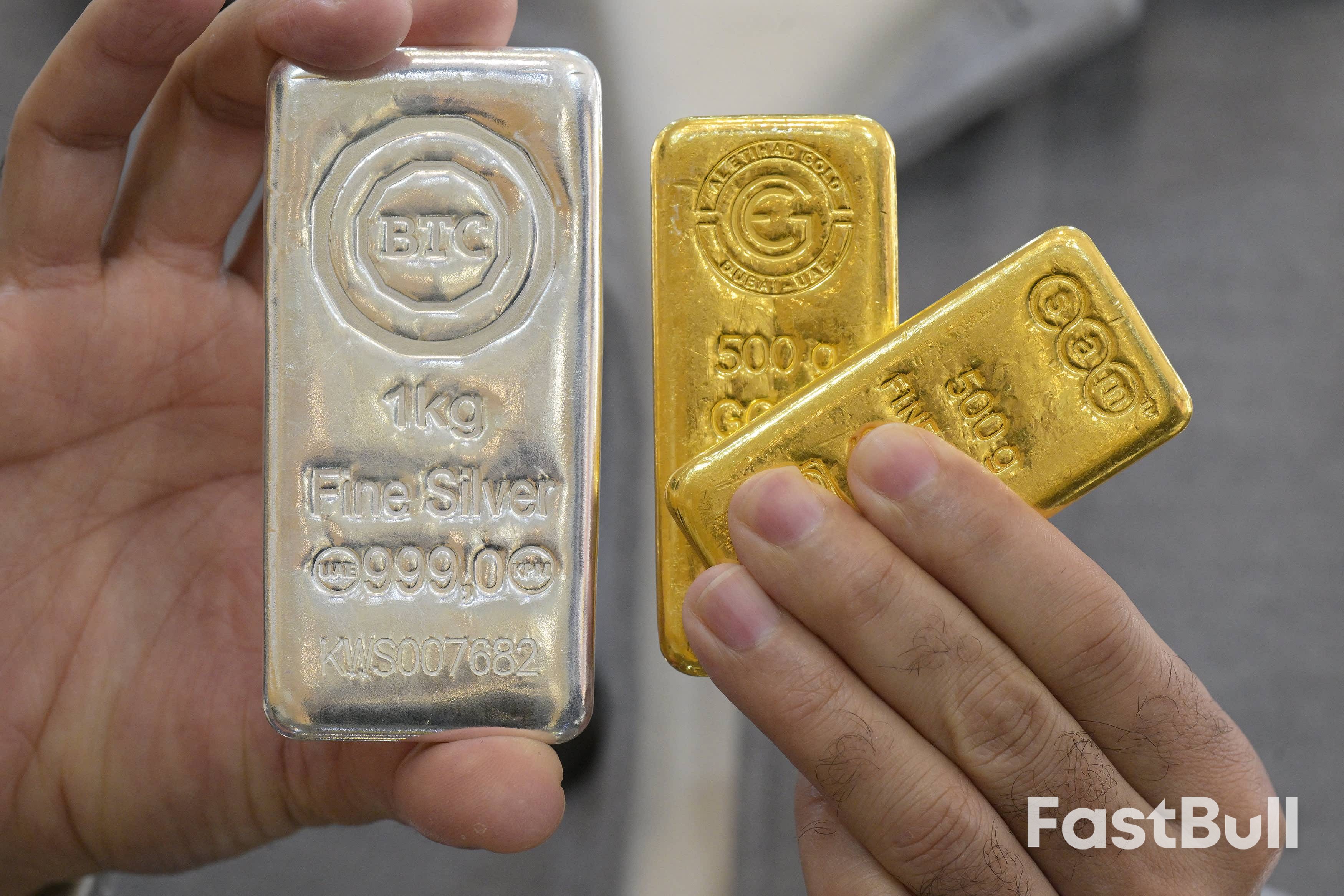
          Gold and silver prices extended their sharp sell-off on Monday, deepening the losses from last Friday’s rout. The decline follows a period of intense rallying that sent both metals to record highs, but a strengthening U.S. dollar and widespread profit-taking have since reversed that momentum.

          Spot gold fell approximately 5% to trade at $4,617.07 per ounce. This follows a dramatic crash of nearly 10% on Friday, which saw prices fall below the $5,000 mark.

          Silver also remained under heavy pressure after nosediving 30% last Friday. The metal, which had climbed on safe-haven demand, saw spot prices drop more than 4% to $80.63 per ounce.

          New Fed Chair Prospect Spooks Markets

          According to analysts, the sudden reversal was triggered by a collision of market optimism over U.S. interest-rate cuts with a major leadership change at the Federal Reserve. President Donald Trump nominated former Fed Governor Kevin Warsh to succeed Jerome Powell as Chair when his term concludes in May.

          Warsh is widely seen as an advocate for tighter monetary policy, and his nomination immediately bolstered the U.S. dollar.

          "The 'Buy America' trade is back as a result, and the independence bid that drove gold and silver to nosebleed record heights right below $5,600 and $122 per ounce early Thursday morning is unraveling," noted José Torres, a senior economist at Interactive Brokers.

          Adding to the pressure on precious metals, recent statements from Trump have suggested a potential deal with Iran, which has eased some geopolitical tensions in the market.

          Just a Breather in a Bull Market?

          Despite the sharp downturn, some analysts see it as a natural market correction rather than a fundamental shift in the long-term trend for precious metals.

          Christopher Forbes, head of Asia and the Middle East at CMC Markets, described gold's retreat as a "classic air-pocket after an extraordinary run." He attributes the sell-off to a combination of factors. "Profit-taking, a firmer dollar, and fresh geopolitical headlines from Washington have knocked froth off a crowded trade," Forbes said.

          How a Strong Dollar Hits Precious Metals

          The U.S. dollar's performance is a critical driver for gold prices. The dollar index, which tracks the greenback against other major currencies, has gained about 0.8% since Thursday.

          • Pricing Power: Since gold is priced in U.S. dollars, a stronger dollar makes it more expensive for buyers using other currencies, which can dampen demand.

          • Opportunity Cost: Higher interest rates, often associated with a hawkish Fed and a strong dollar, make interest-bearing assets like U.S. Treasurys more attractive. This raises the opportunity cost of holding gold, which pays no interest.

          What's Next for Gold and Silver Prices?

          In the immediate future, Forbes expects gold prices to remain elevated but volatile as the market seeks more clarity on Warsh's potential policy direction at the Fed.

          Even with the recent pullback, both metals are still showing strong year-to-date gains. Silver prices remain up around 15% since the start of the year, while gold is about 8% higher.

          Looking ahead, the long-term bullish case for precious metals remains intact for some. "Renewed dollar weakness or confirmation of a dovish Warsh would bring dip-buyers back," said Forbes. He maintains a positive 12-month outlook, suggesting bullion could revisit its recent highs if the Federal Reserve continues its easing cycle amid uneven economic growth and inflation.

          To stay updated on all economic events of today, please check out our Economic calendar
          Risk Warnings and Disclaimers
          You understand and acknowledge that there is a high degree of risk involved in trading. Following any strategies or investment methods may lead to potential losses. The content on the site is provided by our contributors and analysts for information purposes only. You are solely responsible for determining whether any trading assets, securities, strategy, or any other product is suitable for investing based on your own investment objectives and financial situation.
          Add to Favorites
          Share

          China Factory Activity Rebounds in Jan, Private Survey Shows

          Devin

          Economic

          Daily News

          China–U.S. Trade War

          Data Interpretation

          China's manufacturing sector showed renewed signs of life to start 2026, with a key private survey indicating that factory activity expanded at a faster pace in January, beating analyst expectations.

          The RatingDog China General Manufacturing Purchasing Managers' Index (PMI), compiled by S&P Global, climbed to 50.3 from 50.1 in December. This marks the index's highest reading since October and holds it above the 50-point threshold that separates growth from contraction.

          A Split View on China's Manufacturing Health

          The upbeat private survey presents a conflicting picture of China's industrial economy. An official PMI released on Saturday suggested that factory activity had actually faltered, weighed down by deteriorating orders both at home and abroad. Analysts suggest that differences in survey scope and respondent profiles likely account for the divergent results.

          The data follows a year in which China's economy grew by 5.0%, meeting the government's official target. This performance was largely supported by capturing a record share of global demand for goods, which helped compensate for weaker domestic consumption. Beijing has also ramped up trade diplomacy, securing deals with Britain and Canada as U.S. President Donald Trump's administration disrupts traditional trade relationships.

          Export Orders and Production Drive Expansion

          The January expansion was fueled by a rebound in foreign demand and a pickup in production, according to the RatingDog survey.

          • Output Growth: The rate of production accelerated to a three-month high.

          • New Business: Overall new orders rose for the eighth consecutive month.

          • Export Orders: After contracting in December, new export orders swung back into expansionary territory, with firms noting particularly strong demand from Southeast Asia.

          Factories also appeared to be front-loading work ahead of the Chinese New Year holiday. The nine-day festival, which falls in mid-February this year, typically encourages manufacturers to accelerate overseas shipments and boost production in advance.

          Hiring Improves as Order Books Fill

          The increase in orders and production needs led manufacturers to expand their workforce for the first time in three months, lifting hiring to its highest level since October. This boost in staffing, combined with efficiency gains, allowed companies to reduce their backlogs of work for the first time in eight months.

          Inflationary Pressures Mount for Producers

          On the cost side, inflationary pressures are building. Average input costs for manufacturers rose to their highest level since September, primarily driven by price hikes for metals.

          In response, producers raised their factory gate charges for the first time since November 2024. Prices for exported goods also saw a notable increase, rising at the fastest pace in a year and a half. These price hikes could offer some relief to producer margins, which have been squeezed by price cuts aimed at defending market share amid soft domestic demand.

          "If cost pressures persist while demand recovery is limited, profit margins will remain under pressure," warned Yao Yu, founder of RatingDog.

          Business Confidence Positive but Waning

          Looking ahead, business sentiment among manufacturers remained positive at the start of the year. Companies expressed hope that new product launches and expansion plans would support sales and output over the next 12 months.

          However, broader concerns about the economic growth outlook and rising costs weighed on confidence. As a result, overall optimism fell to its lowest level in nine months, signaling a more cautious outlook for the year ahead.

          To stay updated on all economic events of today, please check out our Economic calendar
          Risk Warnings and Disclaimers
          You understand and acknowledge that there is a high degree of risk involved in trading. Following any strategies or investment methods may lead to potential losses. The content on the site is provided by our contributors and analysts for information purposes only. You are solely responsible for determining whether any trading assets, securities, strategy, or any other product is suitable for investing based on your own investment objectives and financial situation.
          Add to Favorites
          Share
          FastBull
          Copyright © 2026 FastBull Ltd

          728 RM B 7/F GEE LOK IND BLDG NO 34 HUNG TO RD KWUN TONG KLN HONG KONG

          TelegramInstagramTwitterfacebooklinkedin
          App Store Google Play Google Play
          Products
          Charts

          Chats

          Q&A with Experts
          Screeners
          Economic Calendar
          Data
          Tools
          Membership
          Features
          Function
          Markets
          Copy Trading
          Latest Signals
          Contests
          News
          Analysis
          24/7
          Columns
          Education
          Company
          Careers
          About Us
          Contact Us
          Advertising
          Help Center
          Feedback
          User Agreement
          Privacy Policy
          Personal Information Protection Statement
          Business

          White Label

          Data API

          Web Plug-ins

          Poster Maker

          Affiliate Program

          Risk Disclosure

          The risk of loss in trading financial instruments such as stocks, FX, commodities, futures, bonds, ETFs and crypto can be substantial. You may sustain a total loss of the funds that you deposit with your broker. Therefore, you should carefully consider whether such trading is suitable for you in light of your circumstances and financial resources.

          No decision to invest should be made without thoroughly conducting due diligence by yourself or consulting with your financial advisors. Our web content might not suit you since we don't know your financial conditions and investment needs. Our financial information might have latency or contain inaccuracy, so you should be fully responsible for any of your trading and investment decisions. The company will not be responsible for your capital loss.

          Without getting permission from the website, you are not allowed to copy the website's graphics, texts, or trademarks. Intellectual property rights in the content or data incorporated into this website belong to its providers and exchange merchants.

          Not Logged In

          Log in to access more features

          Connect Broker
          Become a signal provider
          Help Center
          Customer Service
          Dark Mode
          Price Up/Down Colors

          Log In

          Sign Up

          Position
          Layout
          Fullscreen
          Default to Chart
          The chart page opens by default when you visit fastbull.com