• Trade
  • Markets
  • Copy
  • Contests
  • News
  • 24/7
  • Calendar
  • Q&A
  • Chats
Screeners
SYMBOL
LAST
ASK
BID
HIGH
LOW
NET CHG.
%CHG.
SPREAD
SPX
S&P 500 Index
6976.00
6976.00
6976.00
6978.45
6958.82
+25.77
+ 0.37%
--
DJI
Dow Jones Industrial Average
49007.53
49007.53
49007.53
49132.33
48955.31
-404.86
-0.82%
--
IXIC
NASDAQ Composite Index
23788.90
23788.90
23788.90
23796.36
23694.38
+187.55
+ 0.79%
--
USDX
US Dollar Index
96.180
96.260
96.180
97.060
96.160
-0.650
-0.67%
--
EURUSD
Euro / US Dollar
1.19527
1.19534
1.19527
1.19555
1.18502
+0.00734
+ 0.62%
--
GBPUSD
Pound Sterling / US Dollar
1.37770
1.37778
1.37770
1.37805
1.36636
+0.00990
+ 0.72%
--
XAUUSD
Gold / US Dollar
5059.61
5060.04
5059.61
5100.65
5013.05
+49.34
+ 0.98%
--
WTI
Light Sweet Crude Oil
61.097
61.127
61.097
61.728
60.054
+0.349
+ 0.57%
--

Community Accounts

Signal Accounts
--
Profit Accounts
--
Loss Accounts
--
View More

Become a signal provider

Sell trading signals to earn additional income

View More

Guide to Copy Trading

Get started with ease and confidence

View More

Signal Accounts for Members

All Signal Accounts

Best Return
  • Best Return
  • Best P/L
  • Best MDD
Past 1W
  • Past 1W
  • Past 1M
  • Past 1Y

All Contests

  • All
  • Trump Updates
  • Recommend
  • Stocks
  • Cryptocurrencies
  • Central Banks
  • Featured News
Top News Only
Share

Richmond Fed Composite Manufacturing Index -6 In Jan Versus-7 In Dec

Share

The U.S. Conference Board Consumer Expectations Index For January Was 65.1, Down From 70.7 In The Previous Month

Share

The U.S. Conference Board Consumer Current Conditions Index Came In At 113.7 In January, Down From 116.8 In January

Share

United Parcel Service (UPS) Will Lay Off An Additional 30,000 Employees

Share

Goldman Sachs Expects Extreme Price Swings In Silver To Persist-Both Up And Down

Share

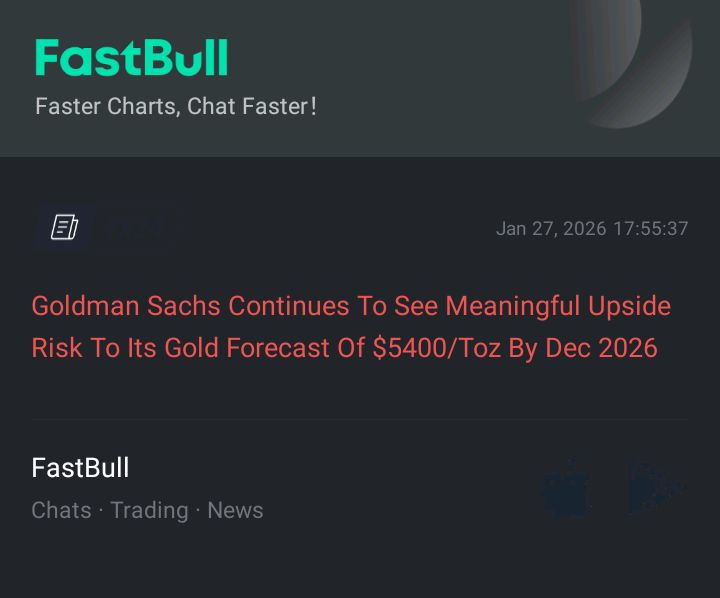
Goldman Sachs Continues To See Meaningful Upside Risk To Its Gold Forecast Of $5400/Toz By Dec 2026

Share

[Saudi-UAE Tensions Leave Middle Eastern Businesses Walking On Thin ICE] Middle Eastern Businesses Are Watching The Growing Tensions Between Saudi Arabia And The United Arab Emirates With Increasing Anxiety, Fearing A Potential Disruption To Trade And Commerce. Bloomberg Reports, Citing Sources Familiar With The Matter, That Some Companies Operating In Both Countries Have Begun Developing Contingency Plans To Ensure Business Continuity Should The Situation Escalate Further. At The Heart Of The Risk Lies The Approximately $22 Billion In Trade Between The Two Gulf's Largest Economies And Business Confidence As They Vie For Global Financial Center Status

Share

Russian Central Bank: Sets Official Rouble Rate For January 28 At 76.5519 Roubles Per USA Dollar (Previous Rate - 76.0101)

Share

Governor: Power Restored To Russia's Main Naval Base Home Town After 4 Days

Share

Shares Of Pinterest Fall 6.6%, Co Announces Layoffs

Share

Mexican President Sheinbaum: Asked About Report Of Halting Crude Shipment To Cuba, Says 'It Is A Sovereign Decision'

Share

The Nasdaq Golden Dragon China Index Rose More Than 0.5% In Early Trading

Share

Most Sector ETFs Rose In Early Trading On The US Stock Market, With The Semiconductor ETF Up 1.23%, The Global Technology ETF Up 1.2%, The Technology Sector ETF Up 1.07%, The Internet ETF Up 0.8%, The Banking ETF Up 0.38%, And The Healthcare ETF Down 1.2%

Share

Citi Raises Silver 0-3M Price Forecast To $150/Oz (From $100/Oz)

Share

Hungarian Central Bank Governor Varga: Services Inflation Still High

Share

Finance Minister: Japan To Respond Appropriately On Forex

Share

French Finance Minister Lescure: Relations Must Be Based On Trust And Respect For Common Principles Of Sovereignty And Territorial Integrity

Share

USA National Transportation Safety Board Member Says "Multitude Of Errors" Led To Fatal Collission Between American Airlines Jet, Army Helicopter That Killed 67

Share

French Finance Minister Lescure Stressed To G7 Counterparts The Importance Of Prioritizing Dialogue And Seeking Common Solutions Rather Than Unilateral Measures

Share

Lseg Data: USA Natgas Output Fell To Two-Year Lows On Sunday And Monday As Arctic Blast Froze Wells And Pipes In Louisiana, Texas And North Dakota

TIME
ACT
FCST
PREV
Mexico Unemployment Rate (Not SA) (Dec)

A:--

F: --

P: --

Canada National Economic Confidence Index

A:--

F: --

P: --

U.S. Non-Defense Capital Durable Goods Orders MoM (Excl. Aircraft) (Nov)

A:--

F: --

P: --
U.S. Durable Goods Orders MoM (Excl. Defense) (SA) (Nov)

A:--

F: --

P: --
U.S. Durable Goods Orders MoM (Excl.Transport) (Nov)

A:--

F: --

P: --

U.S. Durable Goods Orders MoM (Nov)

A:--

F: --

P: --
U.S. Chicago Fed National Activity Index (Nov)

A:--

F: --

P: --
U.S. Dallas Fed New Orders Index (Jan)

A:--

F: --

P: --

U.S. Dallas Fed General Business Activity Index (Jan)

A:--

F: --

P: --
U.S. 2-Year Note Auction Avg. Yield

A:--

F: --

P: --

U.K. BRC Shop Price Index YoY (Jan)

A:--

F: --

P: --

China, Mainland Industrial Profit YoY (YTD) (Dec)

A:--

F: --

P: --

Germany 2-Year Schatz Auction Avg. Yield

A:--

F: --

P: --

Mexico Trade Balance (Dec)

A:--

F: --

P: --

U.S. Weekly Redbook Index YoY

A:--

F: --

P: --

U.S. S&P/CS 20-City Home Price Index YoY (Not SA) (Nov)

A:--

F: --

P: --

U.S. S&P/CS 20-City Home Price Index MoM (SA) (Nov)

A:--

F: --

P: --
U.S. FHFA House Price Index MoM (Nov)

A:--

F: --

P: --

U.S. FHFA House Price Index (Nov)

A:--

F: --

P: --

U.S. FHFA House Price Index YoY (Nov)

A:--

F: --

P: --
U.S. S&P/CS 10-City Home Price Index YoY (Nov)

A:--

F: --

P: --

U.S. S&P/CS 10-City Home Price Index MoM (Not SA) (Nov)

A:--

F: --

P: --

U.S. S&P/CS 20-City Home Price Index (Not SA) (Nov)

A:--

F: --

P: --

U.S. S&P/CS 20-City Home Price Index MoM (Not SA) (Nov)

A:--

F: --

P: --

U.S. Richmond Fed Manufacturing Composite Index (Jan)

A:--

F: --

P: --

U.S. Conference Board Present Situation Index (Jan)

--

F: --

P: --

U.S. Conference Board Consumer Expectations Index (Jan)

--

F: --

P: --

U.S. Richmond Fed Manufacturing Shipments Index (Jan)

A:--

F: --

P: --

U.S. Richmond Fed Services Revenue Index (Jan)

--

F: --

P: --

U.S. Conference Board Consumer Confidence Index (Jan)

A:--

F: --

P: --

U.S. 5-Year Note Auction Avg. Yield

--

F: --

P: --

U.S. API Weekly Refined Oil Stocks

--

F: --

P: --

U.S. API Weekly Crude Oil Stocks

--

F: --

P: --

U.S. API Weekly Gasoline Stocks

--

F: --

P: --

U.S. API Weekly Cushing Crude Oil Stocks

--

F: --

P: --

Australia RBA Trimmed Mean CPI YoY (Q4)

--

F: --

P: --

Australia CPI YoY (Q4)

--

F: --

P: --

Australia CPI QoQ (Q4)

--

F: --

P: --

Germany GfK Consumer Confidence Index (SA) (Feb)

--

F: --

P: --

Germany 10-Year Bund Auction Avg. Yield

--

F: --

P: --

India Industrial Production Index YoY (Dec)

--

F: --

P: --

India Manufacturing Output MoM (Dec)

--

F: --

P: --

U.S. MBA Mortgage Application Activity Index WoW

--

F: --

P: --

Canada Overnight Target Rate

--

F: --

P: --

BOC Monetary Policy Report
U.S. EIA Weekly Crude Stocks Change

--

F: --

P: --

U.S. EIA Weekly Cushing, Oklahoma Crude Oil Stocks Change

--

F: --

P: --

U.S. EIA Weekly Crude Demand Projected by Production

--

F: --

P: --

U.S. EIA Weekly Crude Oil Imports Changes

--

F: --

P: --

U.S. EIA Weekly Heating Oil Stock Changes

--

F: --

P: --

U.S. EIA Weekly Gasoline Stocks Change

--

F: --

P: --

BOC Press Conference
Russia PPI MoM (Dec)

--

F: --

P: --

Russia PPI YoY (Dec)

--

F: --

P: --

U.S. Target Federal Funds Rate Lower Limit (Overnight Reverse Repo Rate)

--

F: --

P: --

Q&A with Experts
    • All
    • Chatrooms
    • Groups
    • Friends
    SlowBear ⛅ flag
    marsgents
    @marsgents 5000 and 4985 are good regions for swing buy but intraday should be look at 5020 or so
    marsgents flag
    SlowBear ⛅
    @SlowBear ⛅im put limit on 94 on silver😁
    john flag
    this might be revised again to 6000 given the current momentum
    john flag
    marsgents flag
    SlowBear ⛅
    @SlowBear ⛅ok i put around that zone,thx boss
    Khawatir_ flag
    Khawatir_ flag
    @Sizebut thankfully the price went down again, so I entered manually ☝
    Size flag
    I’m out on silver. Just holding gold and EUR/USD now letting the rest rest for the moment.@Khawatir_
    @Sarkar flag
    SlowBear ⛅ flag
    marsgents
    @marsgents oh you are one serious trader my boss I infact have a 0.5 buy limit at 95 myself and I have 0.8 lot on gold at 4500 just incase there was a miracle during one Asian session while I was asleep
    john flag
    3460820
    The US, an importing country, is now taxing exporting countries. We buy goods from them, then ask for tax money, forcing them to raise prices to pay the tax so we can bring the food into our homes. So who suffers when Trump taxes exporting countries? The American people are the ones who bear the brunt of that tax, leading to higher prices and inflation. What Trump says about inflation decreasing is just a figure that doesn't reflect the current situation in the US. Trump is even calling on the Fed to drastically lower interest rates and demanding the removal of the Fed chairman, the current guardian of the USD. If the Fed listens to Trump and lowers interest rates, the world will sell bonds, move away from the market, and de-dollarize more. When confidence is lost, they will shift to gold. Trump has contributed significantly to the world's faster de-dollarization, and gold prices will rise sharply. This is not surprising if the Fed succeeds, but in 1980, raising interest rates to 10 percent was necessary for the USD to regain confidence, but it would have meant years of recession.
    @Visitor3460820but anything can hapepen,,,
    SlowBear ⛅ flag
    marsgents
    @marsgents you are always welcome boss, you know I always like to follow your footsteps
    SlowBear ⛅ flag
    @Sarkar
    @@Sarkar wow, 🤩 you are in for a long haul today bro
    john flag
    3460820
    The US, an importing country, is now taxing exporting countries. We buy goods from them, then ask for tax money, forcing them to raise prices to pay the tax so we can bring the food into our homes. So who suffers when Trump taxes exporting countries? The American people are the ones who bear the brunt of that tax, leading to higher prices and inflation. What Trump says about inflation decreasing is just a figure that doesn't reflect the current situation in the US. Trump is even calling on the Fed to drastically lower interest rates and demanding the removal of the Fed chairman, the current guardian of the USD. If the Fed listens to Trump and lowers interest rates, the world will sell bonds, move away from the market, and de-dollarize more. When confidence is lost, they will shift to gold. Trump has contributed significantly to the world's faster de-dollarization, and gold prices will rise sharply. This is not surprising if the Fed succeeds, but in 1980, raising interest rates to 10 percent was necessary for the USD to regain confidence, but it would have meant years of recession.
    @Visitor3460820and so far we can say that tariffs have not contributed to inflation just yet
    @Sarkar flag
    Size flag
    Khawatir_
    @Sizebut thankfully the price went down again, so I entered manually ☝
    @Khawatir_Nice one. Looks like you’ll be riding it up now.
    Khawatir_ flag
    Size
    If you get SL, it's still okay@Size
    john flag
    3460820
    The US, an importing country, is now taxing exporting countries. We buy goods from them, then ask for tax money, forcing them to raise prices to pay the tax so we can bring the food into our homes. So who suffers when Trump taxes exporting countries? The American people are the ones who bear the brunt of that tax, leading to higher prices and inflation. What Trump says about inflation decreasing is just a figure that doesn't reflect the current situation in the US. Trump is even calling on the Fed to drastically lower interest rates and demanding the removal of the Fed chairman, the current guardian of the USD. If the Fed listens to Trump and lowers interest rates, the world will sell bonds, move away from the market, and de-dollarize more. When confidence is lost, they will shift to gold. Trump has contributed significantly to the world's faster de-dollarization, and gold prices will rise sharply. This is not surprising if the Fed succeeds, but in 1980, raising interest rates to 10 percent was necessary for the USD to regain confidence, but it would have meant years of recession.
    @Visitor3460820so at some point Trump might make history
    @Sarkar flag
    Guys Ready for Signal
    Size flag
    Let’s see how far momentum takes it! @Khawatir_
    Type here...
    Add Symbol or Code

      No matching data

      All
      Trump Updates
      Recommend
      Stocks
      Cryptocurrencies
      Central Banks
      Featured News
      • All
      • Russia-Ukraine Conflict
      • Middle East Flashpoint
      • All
      • Russia-Ukraine Conflict
      • Middle East Flashpoint
      Search
      Products

      Charts Free Forever

      Chats Q&A with Experts
      Screeners Economic Calendar Data Tools
      Membership Features
      Data Warehouse Market Trends Institutional Data Policy Rates Macro

      Market Trends

      Market Sentiment Order Book Forex Correlations

      Top Indicators

      Charts Free Forever
      Markets

      News

      News Analysis 24/7 Columns Education
      From Institutions From Analysts
      Topics Columnists

      Latest Views

      Latest Views

      Trending Topics

      Top Columnists

      Latest Update

      Signals

      Copy Rankings Latest Signals Become a signal provider AI Rating
      Contests
      Brokers

      Overview Brokers Assessment Rankings Regulators News Claims
      Broker listing Forex Brokers Comparison Tool Live Spread Comparison Scam
      Q&A Complaint Scam Alert Videos Tips to Detect Scam
      More

      Business
      Events
      Careers About Us Advertising Help Center

      White Label

      Data API

      Web Plug-ins

      Affiliate Program

      Awards Institution Evaluation IB Seminar Salon Event Exhibition
      Vietnam Thailand Singapore Dubai
      Fans Party Investment Sharing Session
      FastBull Summit BrokersView Expo
      Recent Searches
        Top Searches
          Markets
          News
          Analysis
          User
          24/7
          Economic Calendar
          Education
          Data
          • Names
          • Latest
          • Prev

          View All

          No data

          Scan to Download

          Faster Charts, Chat Faster!

          Download App
          English
          • English
          • Español
          • العربية
          • Bahasa Indonesia
          • Bahasa Melayu
          • Tiếng Việt
          • ภาษาไทย
          • Français
          • Italiano
          • Türkçe
          • Русский язык
          • 简中
          • 繁中
          Open Account
          Search
          Products
          Charts Free Forever
          Markets
          News
          Signals

          Copy Rankings Latest Signals Become a signal provider AI Rating
          Contests
          Brokers

          Overview Brokers Assessment Rankings Regulators News Claims
          Broker listing Forex Brokers Comparison Tool Live Spread Comparison Scam
          Q&A Complaint Scam Alert Videos Tips to Detect Scam
          More

          Business
          Events
          Careers About Us Advertising Help Center

          White Label

          Data API

          Web Plug-ins

          Affiliate Program

          Awards Institution Evaluation IB Seminar Salon Event Exhibition
          Vietnam Thailand Singapore Dubai
          Fans Party Investment Sharing Session
          FastBull Summit BrokersView Expo

          Saudi Aramco Taps Debt Market with $4B Bond Sale

          Daniel Foster

          Bond

          Energy

          Commodity

          Economic

          Summary:

          Aramco's $4B bond sale amid weak oil prices underscores growing financial strain for the oil giant and Saudi Arabia.

          Saudi Arabia's state-owned oil giant, Aramco, has successfully issued a $4 billion bond, marking its first entry into the debt market this year. The move comes as global oil prices remain weak, hovering in the low $60s per barrel range.

          The company, which is the world's largest crude exporter, initially announced its plan to issue U.S. dollar-denominated international bonds under its Global Medium Term Note Programme, stating the final amount would depend on market conditions.

          Overwhelming Demand Signals Investor Confidence

          The offering ultimately raised $4 billion through a four-tranche bond that attracted more than $21 billion in orders from investors.

          This exceptionally high demand allowed Aramco to secure more favorable terms. According to market sources, the company was able to offer lower yields compared to benchmark U.S. Treasuries than it had initially guided, reducing its borrowing costs.

          A Pattern of Increased Borrowing

          While this is Aramco's first bond sale of the year, it represents the company's second debt issuance in the last five months, highlighting a growing trend. In September 2025, the oil firm offered Islamic bonds, known as sukuk, with five and ten-year maturities.

          The turn to debt markets follows a period of financial pressure caused by declining oil prices. Lower prices have already reduced Aramco's cash flows, with Q1 figures showing a decline and Q2 results revealing an even larger drop in both cash flow and profits as prices slumped.

          Kingdom's Finances Strained by Oil Price Slump

          Aramco's recent bond sale is part of a broader pattern of increased borrowing by Saudi Arabia as the Kingdom grapples with the financial impact of lower oil revenue. This trend suggests that the country's finances are under strain.

          Other recent debt activities include:

          • Saudi Arabia: The Kingdom sold $5.5 billion in Islamic bonds, which received orders totaling $17.5 billion.

          • Public Investment Fund (PIF): The nation's sovereign wealth fund raised $2 billion by selling 10-year dollar bonds to help finance its investment plans.

          Saudi Arabia’s budget deficit expanded last year as oil prices have remained well below the estimated $90 per barrel the Kingdom needs to balance its budget, prompting both the government and its flagship company to increasingly tap debt markets for funding.

          To stay updated on all economic events of today, please check out our Economic calendar
          Risk Warnings and Disclaimers
          You understand and acknowledge that there is a high degree of risk involved in trading. Following any strategies or investment methods may lead to potential losses. The content on the site is provided by our contributors and analysts for information purposes only. You are solely responsible for determining whether any trading assets, securities, strategy, or any other product is suitable for investing based on your own investment objectives and financial situation.
          Add to Favorites
          Share

          Germany's €6.5B Bond Sale Sees Near-Record Demand

          Oliver Scott

          Bond

          Remarks of Officials

          Traders' Opinions

          Economic

          Germany has successfully raised €6.5 billion from its first-ever sale of new 20-year government bonds, attracting a near-record flood of investor orders that signals intense appetite for sovereign debt.

          The offering for the new May 2047 note drew orders exceeding €72 billion, just shy of the national record set for a 30-year bond two years ago. According to sources familiar with the deal, the final price was set at two basis points over comparable bonds, slightly tighter than the initial guidance.

          This landmark sale is part of a broader government strategy to increase its debt offerings and expand its range of maturities. The move follows the loosening of strict borrowing limits last year, an effort aimed at revitalizing Europe's largest economy.

          A Global Surge in Bond Appetite

          The successful German offering highlights a historically busy start to the year for global bond sales, as borrowers capitalize on strong investor demand. Other European nations, including Italy and Portugal, have also recently seen record-breaking orders for their debt issues.

          Financial authorities anticipated strong interest, partly due to an overhaul of the Dutch pension system—the largest in the region—which has dampened appetite for longer-term 30-year bonds and shifted focus to intermediate maturities.

          "It's been a very good start of the year for all these syndications," said Evelyne Gomez-Liechti, a strategist at Mizuho International plc. "Investors are happy to have German risk at current yield levels."

          The Lure of the 20-Year Yield

          A key driver of the high demand is the attractiveness of current yields. German 20-year yields are trading around 3.39%, close to a 14-year high reached last month.

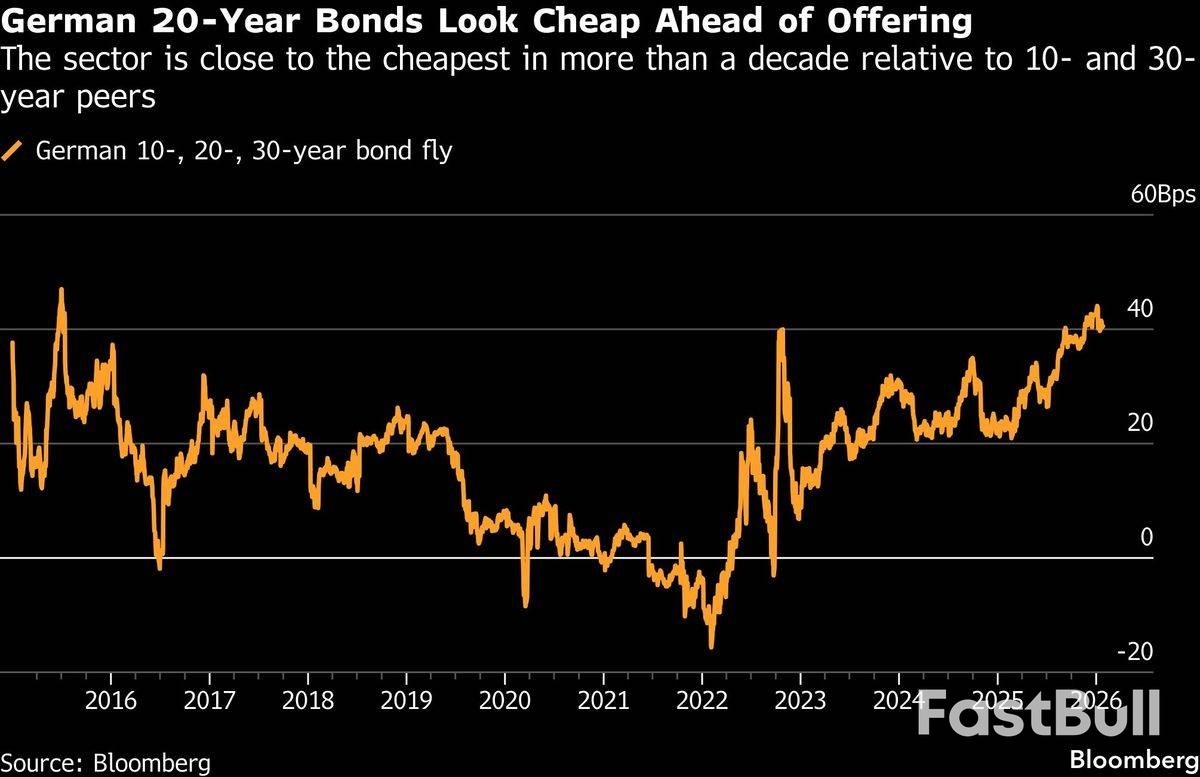
          Furthermore, this particular bond maturity is considered relatively cheap. When compared to its 10- and 30-year peers, the 20-year sector is trading near its most affordable level in over a decade, making it a compelling opportunity for investors.

          Figure 1: The spread between German 20-year bonds and their 10- and 30-year counterparts has widened significantly, making this maturity historically attractive for investors ahead of the offering.

          While Germany has occasionally sold debt with this maturity in the past decade, those were bonds originally issued with longer terms that had shortened over time. This sale marks the first new issuance specifically targeting the 20-year segment.

          "The 20-year segment is being developed to meet demand," noted Tammo Diemer, co-director of Germany's finance agency, when the plan was first announced last month.

          Lessons from the US Experience

          The decision to launch a new 20-year bond comes with historical context. Five years ago, the United States struggled to find consistent buyers when it reintroduced its own 20-year bonds. A notably poor auction in May of that year even triggered a wider market selloff.

          Steven Mnuchin, who served as Treasury Secretary under President Donald Trump and brought the bond back, later admitted the move was "costly to the taxpayer."

          However, market appetite appears to have evolved. A recent US sale of 20-year bonds was oversubscribed by the second-highest margin on record, indicating that investor demand for this maturity is improving.

          Syndication Strategy and Market Health

          Germany opted for a debt syndication, a method that is typically more expensive than a conventional auction but allows governments to raise large sums quickly while diversifying their investor base. The bookrunners for the deal included Barclays plc, BNP Paribas SA, Citigroup Inc, Deutsche Bank AG, JPMorgan Chase & Co, and Morgan Stanley.

          The strong demand for German debt was not limited to this offering. On Tuesday, the finance agency also sold new two-year notes through a standard auction, which was similarly met with robust investor interest.

          To stay updated on all economic events of today, please check out our Economic calendar
          Risk Warnings and Disclaimers
          You understand and acknowledge that there is a high degree of risk involved in trading. Following any strategies or investment methods may lead to potential losses. The content on the site is provided by our contributors and analysts for information purposes only. You are solely responsible for determining whether any trading assets, securities, strategy, or any other product is suitable for investing based on your own investment objectives and financial situation.
          Add to Favorites
          Share

          EU Inks 'Mother of All Trade Deals' With India Amid Global Turmoil

          Warren Takunda

          Economic

          After months of intense negotiations, the European Commission concluded on Tuesday a free-trade deal with India which sharply reduces tariffs on EU products from cars to wine as the world looks for alternative markets following President Donald Trump's tariff hit.
          The announcement was made during a high-level visit by European authorities including Commission President Ursula von der Leyen. Both countries hailed a "new chapter in strategic relations" as the two looks for alternatives to the US market.
          India is currently facing tariffs of 50% from the Trump administration, which has severely dented its exports. After sealing the Mercosur deal with Latin American countries earlier this month, the EU has said it aims to speed up its trade agenda with new partners.
          "We did it - we delivered the mother of all deals," von der Leyen said after the deal was announced. "This is the tale of two giants who choose partnership in a true win-win fashion. A strong message that cooperation is the best answer to global challenges."
          Talks went down to the wire with negotiators meeting over the weekend and in the early hours of Monday. The deal says it will bolster the "untapped" potential of their combined markets but did not include politically sensitive sectors such as agriculture.
          The EU's powerful trade chief Maroš Šefčovič, who in charge of negotiating on behalf of the 27 EU member states, said Brussels aims for a fast implementation by 2027.
          In an interview with Euronews from Delhi after the deal was announced, Šefčovič said the India deal showcases the EU's new approach when it comes to trade: more pragmatic on deliverables, rather than getting stuck on political red lines.
          "We resumed negotiations with a new philosophy, being very clear in saying: if this is sensitive for you, let's not touch it," Šefčovič told Euronews, describing the strategy as a gamechanger.

          A win for European exports looking to tap Indian market

          Under the agreement, the EU aims to double goods exports to India by 2032 by cutting tariffs on approximately 96% of EU exports to the country, saving around €4 billion a year in duties. At its full potential, the deal creates a market of 2 billion people.
          Europe’s carmakers emerge as beneficiaries, with Indian customs duties gradually reduced from 110% to 10% under a quota system. Tariffs in sectors including machinery, chemicals and pharmaceuticals will also be almost entirely eliminated.
          Wine and spirits, key exports for countries like France, Italy and Spain, will see duties reduced from 150% to around 20 to 30%. Olive oil duties will be cut to zero from 40%.
          After years of tensions with EU farmers, the Commission said sensitive agricultural products had been excluded from the agreement, leaving out beef, chicken, rice and sugar.
          When it comes to India, the agreement keeps trade terms on dairy and grain untouched in line with the demands of the Indian authorities, which saw it as a red line.
          The Commission, which negotiated the deal on behalf of the EU’s 27 member states, said it included a dedicated sustainable development chapter “which enhances environmental protection and addresses climate change.”
          The agreement does not cover geographical indications, another contentious area for negotiators, which will be addressed in a separate deal aimed at protecting EU products from imitation on the Indian market.

          Deal cut under pressure from Trump's tariffs

          The timing of the deal is important as the two sides look to de-risk their economies from the threat of Trump's tariffs.
          The EU saw tariffs triple to 15% last year under a contentious deal and India is currently operating under a 50% tariff regime from Washington.
          The Trump administration slapped an additional 25% duty on India last year as punishment for buying Russian oil, which India has defended citing a need for cheap energy to power a country of 1.4 billion people.
          Talks between the EU and India first began in 2007 but quickly ran into hurdles.
          Negotiations were relaunched in 2022 and talks intensified last year as the two sought to cushion the impact of Trump's return to the White House.
          After the deal was signed during a two-day trip on Tuesday, in which the chiefs of the Commission and the European Council were guest of honour, the EU said the deal showcases that "rules-based cooperation" remains the preferred path for the bloc - and a growing number of partners from Latin America to India.
          Before the deal can be implemented, the European Council and the European Parliament will have to ratify it, which can become an arduous process.
          The Commission hopes to begin implementing the agreement from January 2027.

          Source: Euronews

          To stay updated on all economic events of today, please check out our Economic calendar
          Risk Warnings and Disclaimers
          You understand and acknowledge that there is a high degree of risk involved in trading. Following any strategies or investment methods may lead to potential losses. The content on the site is provided by our contributors and analysts for information purposes only. You are solely responsible for determining whether any trading assets, securities, strategy, or any other product is suitable for investing based on your own investment objectives and financial situation.
          Add to Favorites
          Share

          Czech Central Bank Hints at Rate Cut Despite Domestic Strength

          Frederick Miles

          Central Bank

          Remarks of Officials

          Economic

          The Czech National Bank (CNB) may consider a small interest rate cut at its upcoming policy meeting, driven primarily by economic shifts happening outside the country, according to Vice-Governor Jan Frait.

          In an interview on Monday, Frait suggested that external pressures, such as potential rate cuts by other major central banks, are now a central consideration for the CNB's board.

          "In my view the external forces are exactly what the meeting will be and should be about," Frait said, describing them as a "very, very strong set of factors."

          Global Headwinds vs. Local Economic Data

          This focus on international trends marks a significant pivot, as the Czech Republic's domestic economy shows signs that would typically support maintaining higher interest rates. Frait acknowledged that a domestic recovery, a tight labor market, rising wages, and a loose fiscal policy all argue against monetary easing.

          "Labour market and wage developments were truly an argument for maintaining relatively higher interest rates," he stated.

          Despite these strong local indicators, the vice-governor projected that rates would likely remain stable or fall by a maximum of 50 basis points over the course of the year.

          CNB's Shifting Policy Stance

          The central bank's last policy move was in May 2025, when it cut its main repo rate by half to 3.50% before pausing.

          Initially, the CNB had signaled that its next adjustment would likely be a rate hike. However, the board altered its perspective in December, changing its official risk assessment for meeting its 2% inflation target from "inflationary" to "neutral." This adjustment opened the door for discussions about potential rate cuts.

          The bank’s next meeting on February 5 will be crucial, as board members will review new economic forecasts alongside their rate decision. Frait underscored the importance of pre-emptive policymaking but did not reveal how he intends to vote.

          To stay updated on all economic events of today, please check out our Economic calendar
          Risk Warnings and Disclaimers
          You understand and acknowledge that there is a high degree of risk involved in trading. Following any strategies or investment methods may lead to potential losses. The content on the site is provided by our contributors and analysts for information purposes only. You are solely responsible for determining whether any trading assets, securities, strategy, or any other product is suitable for investing based on your own investment objectives and financial situation.
          Add to Favorites
          Share

          India Targets $100B Oil Investment to Cut Imports

          Daniel Foster

          Energy

          Remarks of Officials

          Commodity

          Political

          Economic

          Prime Minister Narendra Modi announced an ambitious plan to attract US$100 billion (RM395.45 billion) in investment into India's oil and gas sector by the end of the decade. Speaking via video at the India Energy Week conference, Modi outlined a strategy centered on expanding drilling into previously restricted territories.

          To support this push, India also plans to increase its refining capacity by one million barrels per day, reaching a total of six million. This move signals a long-term commitment to domestic energy processing and provides a stable demand outlook for potential explorers.

          Tackling India's Heavy Reliance on Foreign Oil

          The new initiative aims to address a long-standing economic vulnerability. For decades, India's own oil production has failed to keep pace with its surging demand, forcing the country to import 90% of its crude oil and half of its natural gas needs.

          This heavy reliance on foreign energy is a significant drain on the nation's foreign exchange reserves. In December alone, oil and gas imports comprised 17% of the total value of goods shipped from overseas.

          Currently, India's domestic oil output averages just 550,000 barrels a day—comparable to the combined production of OPEC members Congo and Gabon, but only a small fraction of the country's total consumption.

          A New Frontier: Opening Vast Areas for Exploration

          To reverse this trend, India is opening nearly one million square kilometers of previously ring-fenced areas to oil and gas exploration. This new territory is in addition to the 170 blocks already available for drilling.

          A key component of this strategy is the National Deepwater Exploration Mission, which was launched last August. The mission's goals include:

          • Unlocking between 600 million and 1,200 million tonnes of oil and gas reserves.

          • Drilling 40 new wildcat wells to discover new fields.

          • Doubling the country's reserves by 2032.

          • Tripling domestic output by 2047.

          • Ultimately slashing import dependency by 88%.

          To stay updated on all economic events of today, please check out our Economic calendar
          Risk Warnings and Disclaimers
          You understand and acknowledge that there is a high degree of risk involved in trading. Following any strategies or investment methods may lead to potential losses. The content on the site is provided by our contributors and analysts for information purposes only. You are solely responsible for determining whether any trading assets, securities, strategy, or any other product is suitable for investing based on your own investment objectives and financial situation.
          Add to Favorites
          Share

          India's Bond Yields Spike Amid Supply Glut Fears

          Michael Ross

          Data Interpretation

          Central Bank

          Bond

          Remarks of Officials

          Traders' Opinions

          Economic

          Daily News

          Indian government bond yields surged to a nearly 11-month high on Tuesday, as concerns over heavy government borrowing and tight liquidity overshadowed central bank support.

          The benchmark 10-year 6.48% 2035 bond yield settled at 6.7194%, its highest level since March 4. This was a notable increase from the previous close of 6.6635% on Friday, following a market holiday on Monday.

          State Debt Supply Weighs on the Market

          A key driver of the sell-off was a significant supply of new debt from state governments. States sold 398 billion rupees in bonds at slightly elevated yields, contributing to market pressure.

          This is part of a broader trend, as states have announced a record borrowing plan of 5 trillion rupees for the January-March quarter. Adding to investor concerns, the central government is expected to announce its own record gross borrowing plan for the next fiscal year, estimated to be between 16 trillion and 17.5 trillion rupees. Traders fear this supply glut will continue to weigh on bond prices.

          RBI's Liquidity Push Fails to Calm Nerves

          The rising yields occurred despite a recent announcement from the Reserve Bank of India (RBI). After market hours on Friday, the central bank said it would inject over $23 billion of liquidity into the banking system.

          However, the positive impact of this announcement was eclipsed by the immediate and substantial supply of new debt hitting the market.

          Tight Liquidity Stalls Monetary Policy

          Indian bond yields have been rising for weeks, even though the RBI has already cut interest rates by 100 basis points this year and engaged in record bond purchases. This reflects a difficult dynamic where debt supply is outpacing demand.

          The situation has been made worse by persistently tight liquidity in the banking system, which has blunted the effect of the RBI's rate cuts.

          In a note, an economist at BofA Securities observed, "Despite the RBI resuming its rate cutting cycle in December, the rate transmission has stalled meaningfully thanks to tight liquidity conditions."

          Data shows India's average bank liquidity surplus was only 0.2% of bank deposits in January, with a daily average of 569 billion rupees. This is well below the RBI's stated goal of keeping the surplus within the 0.6% to 1% range, as mentioned by Governor Sanjay Malhotra.

          OIS Curve Reacts to Liquidity Squeeze

          The impact of tight liquidity was also visible in the overnight index swap (OIS) market, where the curve steepened.

          • The one-year OIS was slightly down at 5.5925%.

          • The two-year OIS rate rose 3.25 basis points to 5.76%.

          • The five-year OIS rate climbed 4.25 basis points to 6.18%.

          To stay updated on all economic events of today, please check out our Economic calendar
          Risk Warnings and Disclaimers
          You understand and acknowledge that there is a high degree of risk involved in trading. Following any strategies or investment methods may lead to potential losses. The content on the site is provided by our contributors and analysts for information purposes only. You are solely responsible for determining whether any trading assets, securities, strategy, or any other product is suitable for investing based on your own investment objectives and financial situation.
          Add to Favorites
          Share

          North Korea Fires Missiles as US, Seoul Talk Defense

          Ukadike Micheal

          Remarks of Officials

          Daily News

          Political

          Russia-Ukraine Conflict

          North Korea launched multiple ballistic missiles toward the sea on Tuesday in a move that coincided with high-level defense talks between the United States and South Korea. Officials in Seoul and Tokyo identified the projectiles as likely being short-range missiles, continuing Pyongyang's pattern of weapons testing.

          The launch underscores regional tensions as Washington and Seoul work to modernize their military alliance and redefine the U.S. role in deterring North Korean threats.

          Launch Details from Pyongyang

          South Korea's Joint Chiefs of Staff reported that the missiles were fired from an area near Pyongyang at approximately 3:50 p.m. local time. The projectiles traveled about 350 kilometers (217 miles) before landing in the sea off North Korea's east coast.

          Japanese authorities provided further details, with Japan's coast guard detecting the missile launch and noting a maximum altitude of 80 km. Prime Minister Sanae Takaichi confirmed the missiles would not have an impact on Japan.

          Regional Condemnation and Protests

          Both South Korea and Japan swiftly condemned the launch as a violation of international agreements.

          • South Korea: The Office of National Security labeled the test a "provocative activity" and urged North Korea to immediately stop its ballistic missile launches, which defy U.N. Security Council resolutions.

          • Japan: The Japanese government issued a statement calling the repeated launches a threat to the peace and security of Japan, the region, and the international community. Tokyo lodged a strong protest with Pyongyang, describing the action as a grave issue affecting public safety.

          Strategic Context: Defense Talks and Arms to Russia

          The missile test occurred as a senior U.S. Defense Department official was visiting South Korea to discuss the future of the two countries' combined defense posture. The talks have focused on modernizing their alliance, with Washington reportedly exploring a more limited role in direct defense efforts against North Korea.

          In recent months, North Korea has frequently tested short-range missiles and multiple-launch rockets, which it claims are essential for its tactical nuclear arsenal.

          Global interest in Pyongyang's short-range ballistic missiles and artillery has intensified after it began supplying these weapons to Russia. Under a 2024 mutual defense pact, North Korean arms have been used in the war against Ukraine, raising the stakes of its continued weapons development.

          Risk Warnings and Disclaimers
          You understand and acknowledge that there is a high degree of risk involved in trading. Following any strategies or investment methods may lead to potential losses. The content on the site is provided by our contributors and analysts for information purposes only. You are solely responsible for determining whether any trading assets, securities, strategy, or any other product is suitable for investing based on your own investment objectives and financial situation.
          Add to Favorites
          Share
          FastBull
          Copyright © 2026 FastBull Ltd

          728 RM B 7/F GEE LOK IND BLDG NO 34 HUNG TO RD KWUN TONG KLN HONG KONG

          TelegramInstagramTwitterfacebooklinkedin
          App Store Google Play Google Play
          Products
          Charts

          Chats

          Q&A with Experts
          Screeners
          Economic Calendar
          Data
          Tools
          Membership
          Features
          Function
          Markets
          Copy Trading
          Latest Signals
          Contests
          News
          Analysis
          24/7
          Columns
          Education
          Company
          Careers
          About Us
          Contact Us
          Advertising
          Help Center
          Feedback
          User Agreement
          Privacy Policy
          Personal Information Protection Statement
          Business

          White Label

          Data API

          Web Plug-ins

          Poster Maker

          Affiliate Program

          Risk Disclosure

          The risk of loss in trading financial instruments such as stocks, FX, commodities, futures, bonds, ETFs and crypto can be substantial. You may sustain a total loss of the funds that you deposit with your broker. Therefore, you should carefully consider whether such trading is suitable for you in light of your circumstances and financial resources.

          No decision to invest should be made without thoroughly conducting due diligence by yourself or consulting with your financial advisors. Our web content might not suit you since we don't know your financial conditions and investment needs. Our financial information might have latency or contain inaccuracy, so you should be fully responsible for any of your trading and investment decisions. The company will not be responsible for your capital loss.

          Without getting permission from the website, you are not allowed to copy the website's graphics, texts, or trademarks. Intellectual property rights in the content or data incorporated into this website belong to its providers and exchange merchants.

          Not Logged In

          Log in to access more features

          Connect Broker
          Become a signal provider
          Help Center
          Customer Service
          Dark Mode
          Price Up/Down Colors

          Log In

          Sign Up

          Position
          Layout
          Fullscreen
          Default to Chart
          The chart page opens by default when you visit fastbull.com