Markets
News
Analysis
User
24/7
Economic Calendar
Education
Data
- Names
- Latest
- Prev


Signal Accounts for Members
All Signal Accounts
All Contests


U.K. Retail Sales MoM (SA) (Dec)A:--
F: --
P: --
France Manufacturing PMI Prelim (Jan)A:--
F: --
P: --
France Services PMI Prelim (Jan)A:--
F: --
P: --
France Composite PMI Prelim (SA) (Jan)A:--
F: --
P: --
Germany Manufacturing PMI Prelim (SA) (Jan)A:--
F: --
P: --
Germany Services PMI Prelim (SA) (Jan)A:--
F: --
P: --
Germany Composite PMI Prelim (SA) (Jan)A:--
F: --
P: --
Euro Zone Composite PMI Prelim (SA) (Jan)A:--
F: --
P: --
Euro Zone Manufacturing PMI Prelim (SA) (Jan)A:--
F: --
P: --
Euro Zone Services PMI Prelim (SA) (Jan)A:--
F: --
P: --
U.K. Composite PMI Prelim (Jan)A:--
F: --
P: --
U.K. Manufacturing PMI Prelim (Jan)A:--
F: --
P: --
U.K. Services PMI Prelim (Jan)A:--
F: --
P: --
Mexico Economic Activity Index YoY (Nov)A:--
F: --
P: --
Russia Trade Balance (Nov)A:--
F: --
P: --
Canada Core Retail Sales MoM (SA) (Nov)A:--
F: --
P: --
Canada Retail Sales MoM (SA) (Nov)A:--
F: --
U.S. IHS Markit Manufacturing PMI Prelim (SA) (Jan)A:--
F: --
P: --
U.S. IHS Markit Services PMI Prelim (SA) (Jan)A:--
F: --
P: --
U.S. IHS Markit Composite PMI Prelim (SA) (Jan)A:--
F: --
P: --
U.S. UMich Consumer Sentiment Index Final (Jan)A:--
F: --
P: --
U.S. UMich Current Economic Conditions Index Final (Jan)A:--
F: --
P: --
U.S. UMich Consumer Expectations Index Final (Jan)A:--
F: --
P: --
U.S. Conference Board Leading Economic Index MoM (Nov)A:--
F: --
P: --
U.S. Conference Board Coincident Economic Index MoM (Nov)A:--
F: --
P: --
U.S. Conference Board Lagging Economic Index MoM (Nov)A:--
F: --
P: --
U.S. UMich 1-Year-Ahead Inflation Expectations Final (Jan)A:--
F: --
P: --
U.S. Conference Board Leading Economic Index (Nov)A:--
F: --
P: --
U.S. Weekly Total Rig CountA:--
F: --
P: --
U.S. Weekly Total Oil Rig CountA:--
F: --
P: --
Germany Ifo Business Expectations Index (SA) (Jan)--
F: --
P: --
Germany IFO Business Climate Index (SA) (Jan)--
F: --
P: --
Germany Ifo Current Business Situation Index (SA) (Jan)--
F: --
P: --
U.S. Dallas Fed PCE Price Index YoY (Nov)--
F: --
P: --
Brazil Current Account (Dec)--
F: --
P: --
Mexico Unemployment Rate (Not SA) (Dec)A:--
F: --
P: --
Canada National Economic Confidence Index--
F: --
P: --
U.S. Non-Defense Capital Durable Goods Orders MoM (Excl. Aircraft) (Nov)--
F: --
P: --
U.S. Durable Goods Orders MoM (Excl. Defense) (SA) (Nov)--
F: --
P: --
U.S. Durable Goods Orders MoM (Excl.Transport) (Nov)--
F: --
P: --
U.S. Durable Goods Orders MoM (Nov)--
F: --
P: --
U.S. Chicago Fed National Activity Index (Nov)--
F: --
P: --
U.S. Dallas Fed New Orders Index (Jan)--
F: --
P: --
U.S. Dallas Fed General Business Activity Index (Jan)--
F: --
P: --
U.K. BRC Shop Price Index YoY (Jan)--
F: --
P: --
China, Mainland Industrial Profit YoY (YTD) (Dec)--
F: --
P: --
Mexico Trade Balance (Dec)--
F: --
P: --
U.S. S&P/CS 20-City Home Price Index YoY (Not SA) (Nov)--
F: --
P: --
U.S. S&P/CS 20-City Home Price Index MoM (SA) (Nov)--
F: --
P: --
U.S. FHFA House Price Index MoM (Nov)--
F: --
P: --
U.S. FHFA House Price Index (Nov)--
F: --
P: --
U.S. Richmond Fed Manufacturing Composite Index (Jan)--
F: --
P: --
U.S. Conference Board Present Situation Index (Jan)--
F: --
P: --
U.S. Conference Board Consumer Expectations Index (Jan)--
F: --
P: --
U.S. Richmond Fed Manufacturing Shipments Index (Jan)--
F: --
P: --
U.S. Richmond Fed Services Revenue Index (Jan)--
F: --
P: --
U.S. Conference Board Consumer Confidence Index (Jan)--
F: --
P: --
Australia RBA Trimmed Mean CPI YoY (Q4)--
F: --
P: --
Australia CPI YoY (Q4)--
F: --
P: --
Australia CPI QoQ (Q4)--
F: --
P: --


No matching data
Latest Views
Latest Views
Trending Topics
Top Columnists
Latest Update
White Label
Data API
Web Plug-ins
Affiliate Program
View All

No data
Fed Chair Powell's rare court appearance for Lisa Cook signals an escalating battle with Trump over central bank independence.
Federal Reserve Chairman Jerome Powell is set to attend a U.S. Supreme Court hearing concerning the case against Federal Reserve Board member Lisa Cook, according to sources familiar with the matter.
Powell's planned appearance in the courtroom on Wednesday is a rare and significant display of support from a sitting central bank governor, signaling a major development in the ongoing friction between the White House and the Federal Reserve.
The Supreme Court is currently reviewing whether President Donald Trump has the authority to remove Cook from his position on the Fed's seven-member board of governors. Trump's effort to oust a board member is viewed as an unprecedented move in modern history.
By attending the hearing personally, Powell is taking a much more visible stance than he has previously. This follows reports that the Trump administration sent notices to the Fed and threatened a criminal investigation into Powell himself. Appointed by Trump in 2018, Powell appears to be shifting from a cautious approach to a more direct confrontation with the administration.
The conflict intensified after Powell released a video message on January 11, describing the administration's actions as "pretexts" to pressure the Federal Reserve into making deep cuts to its policy interest rates.
While the Fed implemented three rate cuts late last year, bringing the rate to around 3.6 percent, President Trump has publicly argued that rates should be lowered to 1 percent. This view is not shared by the majority of economists.
The administration's formal case against Cook centers on accusations of mortgage fraud. However, Cook has denied these allegations, and no formal charges have been filed against him.
Cook initiated a lawsuit to protect his position on the board. On October 1, the Supreme Court issued a temporary ruling that allows him to remain in his role while the legal case proceeds.
Analysts note that if President Trump succeeds in removing Cook, he would be able to appoint a replacement of his choosing. Such a move could give Trump's appointees a majority on the Federal Reserve's board of governors.
This outcome would significantly increase the administration's influence over the central bank's critical decisions on interest rate policy and banking regulations, potentially compromising its long-held independence.
A major trade agreement between Malaysia and the United States remains on hold, nearly three months after it was signed, Prime Minister Datuk Seri Anwar Ibrahim confirmed in Parliament on Tuesday.
Anwar explained that Malaysia is seeking further clarification and adjustments to several clauses before the Agreement on Reciprocal Trade (ART) can officially come into force.
According to the Prime Minister, discussions between the United States Trade Representative (USTR) and Malaysia's Minister of Investment, Trade and Industry are ongoing. While verbal assurances have been received on certain points, the Malaysian government insists these commitments must be put in writing.
"We believe it would be better for these assurances to be put in writing before we finalise the agreement," Anwar stated during Minister's Question Time. He was responding to a query from Ahmad Tarmizi Sulaiman (PN–Sik) about the status of the deal's ratification.
Anwar also noted that any proposed changes to the ART will be discussed by the Cabinet. He confirmed there is currently no fixed schedule for completing the formal notifications required to activate the pact.
The ART was originally signed on October 26 of last year during an official visit by US President Donald Trump, on the sidelines of the 47th Asean Summit in Kuala Lumpur.
The agreement was designed as a strategic tool to lower US tariffs on Malaysian products, with rates on some goods set to decrease from 25% to 19%. It also aimed to address non-tariff barriers faced by US exporters in Malaysia.
However, the deal has faced criticism. Former prime minister Tun Dr Mahathir Mohamad warned that the agreement could risk Malaysia's economic sovereignty by forcing the country to align with Washington's trade and investment regulations.
Malaysia’s Attorney General's Chambers (AGC) previously addressed concerns about the agreement on November 3. The AGC clarified several key points regarding Malaysia's rights under the deal:
• Right to Terminate: Citing Article 7.5, the AGC affirmed that Malaysia can terminate the ART at any time with a written notice, without needing US consent.
• Sovereignty Protections: The agreement contains explicit protections intended to safeguard Malaysia's sovereignty and national interests.
• Activation Process: According to Article 7.2, the ART will only take effect 60 days after both countries have formally notified each other that their respective domestic legal procedures are complete.
In a separate matter, the Prime Minister commented on Malaysia's strategy for managing international relations, particularly in light of an announcement by US President Donald Trump to impose a 25% tariff on countries conducting business with Iran.
Anwar stated that Malaysia will continue to act with prudence. He revealed that he has personally engaged with Iranian leadership twice and that several Malaysian ministers have also visited the country.
While emphasizing that Malaysia cannot afford actions that might harm its national interests, he reaffirmed the country's diplomatic stance.
"As far as relations with Iran are concerned, we will continue to maintain ties and defend Iran's rights and sovereignty," Anwar said. "That is also a principle we uphold."
Oil steadied as traders tracked the fallout from the US push to take control of Greenland and concerns about a global surplus.
Brent held near US$64 (RM259.36) a barrel while West Texas Intermediate was below US$60. US President Donald Trump's push to annex Greenland has rocked markets, bruised the dollar and raised fears of a damaging US-EU trade war. The US leader is set to address the World Economic Forum in Davos, Switzerland, on Wednesday (Jan 21).
"The market is not pricing a full retaliation between the US and the EU, and it's likely that a compromise will be found," said Mukesh Sahdev, CEO at XAnalysts Pty Ltd. Still, in the event of an escalating spat, the US may prevail given its economic and energy-supply advantage, he said.
Crude remains under pressure from signs supply is outpacing demand, with prices of some physical grades in the Middle East declining as Opec+ producers raise output. The International Energy Agency, which publishes its next market analysis on Wednesday, has consistently warned of a glut this year.
"A weaker US dollar and firm timespreads have provided some relative support to oil despite the broader risk-off move," said Warren Patterson, the head of commodities strategy at ING Groep NV, referring to crude's pricing differentials between months.
"The outlook for a large surplus suggests prices should trend lower while the potential for a further escalation in US-EU tensions poses further downside risk," Patterson added.
Still, beyond overarching glut concerns, pockets of tightness remain in some parts of the market, with issues in the Caspian Pipeline Consortium port in the Black Sea and, now, Kazakhstan's giant Tengiz oil field contributing to a near-term shortfall of crude from the Mediterranean region.
Prices:
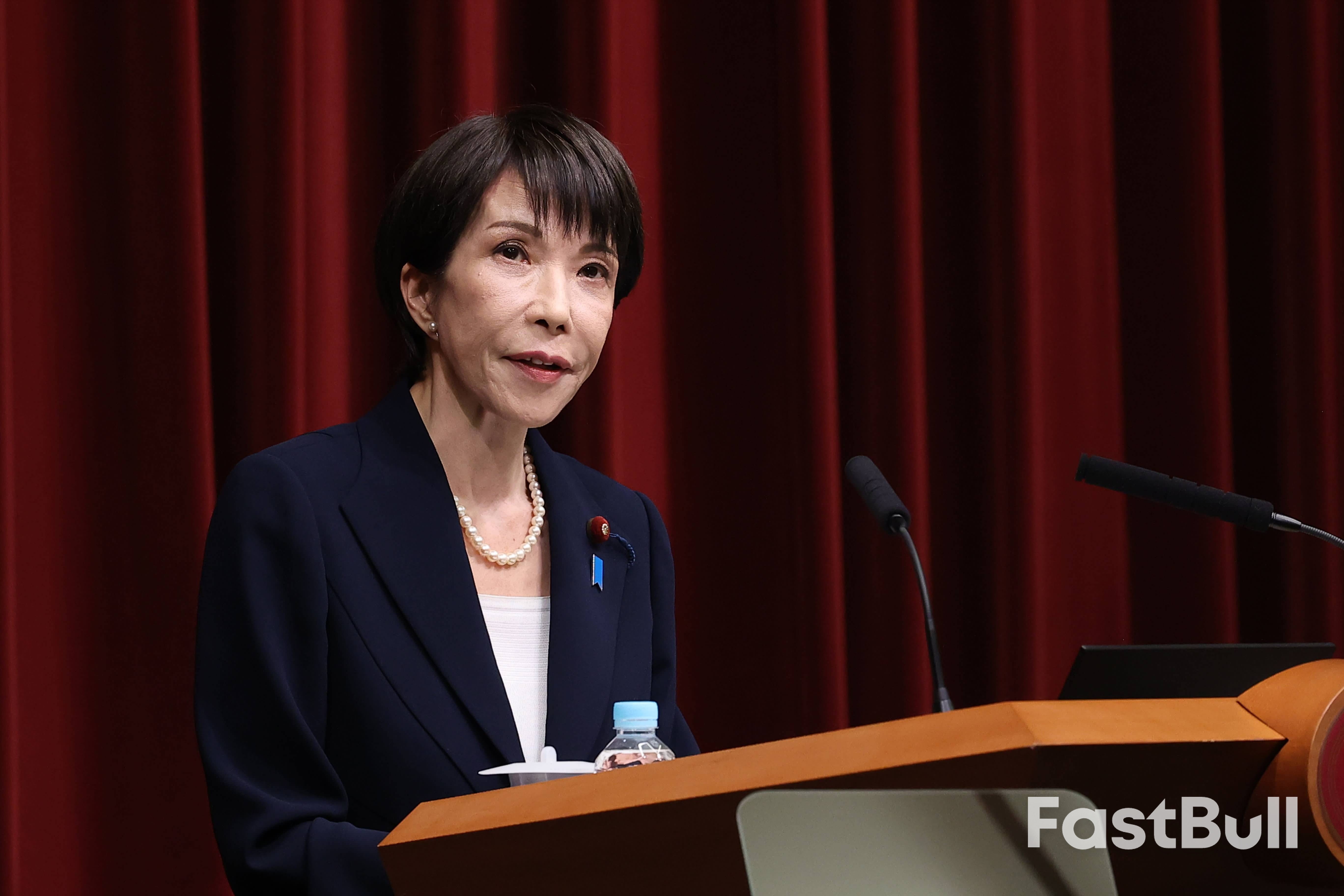
Just months into her tenure, Japanese Prime Minister Sanae Takaichi has called a snap election, dissolving the Lower House on January 23 and setting the vote for February 8. The move comes despite her term running until October 2028, sparking questions about the strategy behind the early poll.
"I am putting my future as prime minister on this election," Takaichi stated at a press conference, adding, "I would like the people to make a direct decision on whether they can entrust the management of the nation to Sanae Takaichi."

Analysts believe the decision is a calculated effort to leverage Takaichi's immense personal popularity to secure a stronger majority for the ruling Liberal Democratic Party (LDP) and its coalition.
There is a stark contrast between support for the prime minister and her party. Since taking office, Takaichi has enjoyed historically high approval ratings, with a recent NHK survey pegging her support at 62%. Other polls show even higher numbers, including 75% reported by Nikkei and 78.1% from a Japan News Network poll.
The LDP, however, has an approval rating of just 29.7%. Currently, the party and its junior partner, the Japan Innovation Party, hold a combined 230 seats in the 456-seat Lower House. With the support of three independents, their coalition commands a razor-thin majority of just one seat.
A stronger majority would provide Takaichi with a firmer political mandate, a crucial asset in international relations. Sam Jochim, an economist at Swiss private bank EFG, noted this would be particularly important ahead of a potential meeting with U.S. President Donald Trump as early as March.
Jochim also suggested that Takaichi is aiming to capitalize on her popularity before escalating tensions with China begin to erode public sentiment. Diplomatic relations have cooled since Takaichi's statement on November 8 that Japan's Self-Defense Forces could intervene if China attempted to take Taiwan by force. In response, Beijing has imposed export controls on dual-use items to Japan and issued travel advisories for its citizens.
Despite Takaichi's high approval ratings, analysts warn that her popularity may not automatically translate into electoral gains for the LDP.
A Newly United Opposition
Jochim describes the move as "taking a risk," highlighting a key challenge: "while she is an extremely popular Prime Minister, her party is less popular and faces a united opposition following a surprise partnership between the main opposition party and the former LDP coalition partner."
On January 16, the Constitutional Democratic Party of Japan, the largest opposition force, joined with Komeito—the LDP's coalition partner for 26 years—to form the "Centrist Reform Alliance." Together, they control 172 seats in the Lower House. Norihiro Yamaguchi, lead Japan Economist at Oxford Economics, cautioned that without Komeito's organizational backing, many LDP candidates could face significant struggles at the ballot box.
The Power of Personal Appeal
Other observers are more optimistic. Jesper Koll, expert director at Monex Group, believes Takaichi's personal story could be the decisive factor. He described her as an "inspiration" to both older and younger Japanese voters, suggesting her appeal could drive a landslide victory.
"Takaichi is the living example of a self-made woman rising to the top against all the odds," Koll said, noting her working-class background and rise through "hard work, dedication, passion, and willingness to do what is right." The election will reveal whether this personal brand is enough to overcome her party's weakness and a newly unified opposition.
China is preparing a major policy overhaul for the 2026-2030 period designed to tackle a fundamental imbalance in its economy: factory output is strong, but domestic demand is lagging. The country's state planner announced the new strategy will pivot toward boosting the services sector to supercharge household consumption.
According to the National Development and Reform Commission (NDRC), this shift is a direct response to a "prominent problem" facing the economy.
While China’s economy hit its 5% growth target last year, the headline number masked a growing internal gap. The core issue lies in the mismatch between production and spending.
In 2025, industrial output expanded by 5.9%, but retail sales only grew by 3.7%. This divergence highlights an economy that is producing more than its citizens are consuming, a dynamic that has been propped up by a boom in exports—a strategy seen as increasingly difficult to sustain.
"The issue of having strong supply, but weak demand in the current economic operation is indeed a prominent problem," said Wang Changlin, vice head of the NDRC, at a recent press conference.
To address this, Chinese leaders have pledged to "significantly" increase household consumption's share of the economy. The new strategy moves the spotlight from goods to services.
NDRC official Zhou Chen stated that the "services sector has now become a key focus in efforts to expand domestic demand." The government sees substantial room for growth in several key areas, including:
• Elderly care
• Healthcare
• Leisure and recreation
This marks a strategic shift in how Beijing plans to stimulate its domestic market over the next five years.
The new focus on services does not mean existing support for goods consumption will disappear. The government will continue to use policies like trade-in subsidies to encourage purchases of items such as electric vehicles (EVs) and home appliances.
For instance, in December, China deployed 62.5 billion yuan ($8.98 billion) from special treasury bond funds to support its 2026 consumer trade-in programs, demonstrating an ongoing commitment to stimulating spending on big-ticket goods alongside the new services-oriented push.
The United Kingdom and China have quietly established a new high-level forum for security officials to discuss cyberattacks, a significant development as relations remain strained by persistent hacking allegations.
According to sources familiar with the private agreement, the new "Cyber Dialogue" is designed to create a direct channel for managing national security threats, improving communication, and preventing miscalculations from escalating.
This marks the first time a single, dedicated mechanism exists for senior officials from both nations to address cyber incidents. Previously, establishing clear lines of communication on these sensitive issues was often a difficult process.
The primary goal of the dialogue is to allow for private discussions on deterrence measures and to help manage the fallout from cyber activities. The forum provides a structured way for London and Beijing to engage directly on security matters that have soured their relationship.
This initiative comes at a critical juncture. The UK government is expected to decide by January 20 on China's request to build a new super-embassy in London. Following that, Prime Minister Keir Starmer is scheduled to meet with President Xi Jinping in Beijing at the end of the month.
The UK government declined to comment on the matter, citing policy on security issues. China's embassy in London stated it was unaware of the agreement, and the Foreign Ministry in Beijing did not immediately respond to a request for comment.
Since being elected 18 months ago, the Labour government has attempted to improve ties with Beijing. However, these efforts have been consistently undermined by British allegations of a near-constant Chinese cyber campaign targeting the UK's national infrastructure and government systems. Diplomatic relations were already under pressure due to the COVID-19 pandemic and China’s support for Russia's war in Ukraine.
Sources believe this new cyber forum is the first of its kind between China and any other country, highlighting it as a crucial step toward improving diplomatic engagement.
In November, China's top diplomat Wang Yi met with British National Security Adviser Jonathan Powell in Beijing. While the official statement from China did not mention cyber activities, it noted that the two had agreed to "confront and resolve issues" and "further enhance regular dialogues."
The creation of the forum follows reports that underscore the severity of the cyber threat. In October, Bloomberg reported that British officials believe Chinese hackers have been spying on UK government computer systems for over a decade. Officials have also indicated that state-backed actors from China have compromised critical infrastructure to a greater extent than has been publicly disclosed.
While the new dialogue is unlikely to halt these cyber operations entirely, insiders suggest it offers a valuable opportunity to mitigate the risk of a dangerous miscalculation between the two powers.
White Label
Data API
Web Plug-ins
Poster Maker
Affiliate Program
The risk of loss in trading financial instruments such as stocks, FX, commodities, futures, bonds, ETFs and crypto can be substantial. You may sustain a total loss of the funds that you deposit with your broker. Therefore, you should carefully consider whether such trading is suitable for you in light of your circumstances and financial resources.
No decision to invest should be made without thoroughly conducting due diligence by yourself or consulting with your financial advisors. Our web content might not suit you since we don't know your financial conditions and investment needs. Our financial information might have latency or contain inaccuracy, so you should be fully responsible for any of your trading and investment decisions. The company will not be responsible for your capital loss.
Without getting permission from the website, you are not allowed to copy the website's graphics, texts, or trademarks. Intellectual property rights in the content or data incorporated into this website belong to its providers and exchange merchants.
Not Logged In
Log in to access more features
Log In
Sign Up