








Markets
News
Analysis
User
24/7
Economic Calendar
Education
Data
- Names
- Latest
- Prev


Signal Accounts for Members
All Signal Accounts
All Contests


U.S. Average Hourly Wage MoM (SA) (Dec)A:--
F: --
U.S. Average Weekly Working Hours (SA) (Dec)A:--
F: --
P: --
U.S. New Housing Starts Annualized MoM (SA) (Oct)A:--
F: --
U.S. Total Building Permits (SA) (Oct)A:--
F: --
P: --
U.S. Building Permits MoM (SA) (Oct)A:--
F: --
P: --
U.S. Annual New Housing Starts (SA) (Oct)A:--
F: --
U.S. U6 Unemployment Rate (SA) (Dec)A:--
F: --
P: --
U.S. Manufacturing Employment (SA) (Dec)A:--
F: --
U.S. Labor Force Participation Rate (SA) (Dec)A:--
F: --
P: --
U.S. Private Nonfarm Payrolls (SA) (Dec)A:--
F: --
U.S. Unemployment Rate (SA) (Dec)A:--
F: --
U.S. Nonfarm Payrolls (SA) (Dec)A:--
F: --
U.S. Average Hourly Wage YoY (Dec)A:--
F: --
Canada Part-Time Employment (SA) (Dec)A:--
F: --
P: --
Canada Unemployment Rate (SA) (Dec)A:--
F: --
P: --
Canada Labor Force Participation Rate (SA) (Dec)A:--
F: --
P: --
U.S. Government Employment (Dec)A:--
F: --
P: --
U.S. UMich Consumer Expectations Index Prelim (Jan)A:--
F: --
P: --
U.S. UMich Consumer Sentiment Index Prelim (Jan)A:--
F: --
P: --
U.S. UMich Current Economic Conditions Index Prelim (Jan)A:--
F: --
P: --
U.S. UMich 1-Year-Ahead Inflation Expectations Prelim (Jan)A:--
F: --
P: --
U.S. UMich 5-Year-Ahead Inflation Expectations Prelim YoY (Jan)A:--
F: --
P: --
U.S. 5-10 Year-Ahead Inflation Expectations (Jan)A:--
F: --
P: --
U.S. Weekly Total Oil Rig CountA:--
F: --
P: --
U.S. Weekly Total Rig CountA:--
F: --
P: --
China, Mainland M0 Money Supply YoY (Dec)--
F: --
P: --
China, Mainland M1 Money Supply YoY (Dec)--
F: --
P: --
China, Mainland M2 Money Supply YoY (Dec)--
F: --
P: --
Indonesia Retail Sales YoY (Nov)A:--
F: --
P: --
Euro Zone Sentix Investor Confidence Index (Jan)A:--
F: --
P: --
India CPI YoY (Dec)--
F: --
P: --
Germany Current Account (Not SA) (Nov)--
F: --
P: --
Canada National Economic Confidence Index--
F: --
P: --
U.S. Conference Board Employment Trends Index (SA) (Dec)--
F: --
P: --
Russia CPI YoY (Dec)--
F: --
P: --
Richmond Federal Reserve President Barkin delivered a speech.
U.S. 3-Year Note Auction Yield--
F: --
P: --
U.S. 10-Year Note Auction Avg. Yield--
F: --
P: --
New York Federal Reserve President Williams delivered a speech.
Japan Trade Balance (Customs Data) (SA) (Nov)--
F: --
P: --
Japan Trade Balance (Nov)--
F: --
P: --
U.K. BRC Overall Retail Sales YoY (Dec)--
F: --
P: --
U.K. BRC Like-For-Like Retail Sales YoY (Dec)--
F: --
P: --
Turkey Retail Sales YoY (Nov)--
F: --
P: --
U.S. NFIB Small Business Optimism Index (SA) (Dec)--
F: --
P: --
Brazil Services Growth YoY (Nov)--
F: --
P: --
Canada Building Permits MoM (SA) (Nov)--
F: --
P: --
U.S. CPI MoM (SA) (Dec)--
F: --
P: --
U.S. CPI YoY (Not SA) (Dec)--
F: --
P: --
U.S. Real Income MoM (SA) (Dec)--
F: --
P: --
U.S. CPI MoM (Not SA) (Dec)--
F: --
P: --
U.S. Core CPI (SA) (Dec)--
F: --
P: --
U.S. Core CPI YoY (Not SA) (Dec)--
F: --
P: --
U.S. Core CPI MoM (SA) (Dec)--
F: --
P: --
U.S. Weekly Redbook Index YoY--
F: --
P: --
U.S. New Home Sales Annualized MoM (Oct)--
F: --
P: --
U.S. Annual Total New Home Sales (Oct)--
F: --
P: --
U.S. Cleveland Fed CPI MoM (SA) (Dec)--
F: --
P: --
China, Mainland Imports YoY (CNH) (Dec)--
F: --
P: --
China, Mainland Trade Balance (CNH) (Dec)--
F: --
P: --
China, Mainland Imports YoY (USD) (Dec)--
F: --
P: --


No matching data
Latest Views
Latest Views
Trending Topics
Top Columnists
Latest Update
White Label
Data API
Web Plug-ins
Affiliate Program
View All

No data
Oil prices softened, swayed by easing Iranian supply fears and the impending return of Venezuelan crude to global markets.
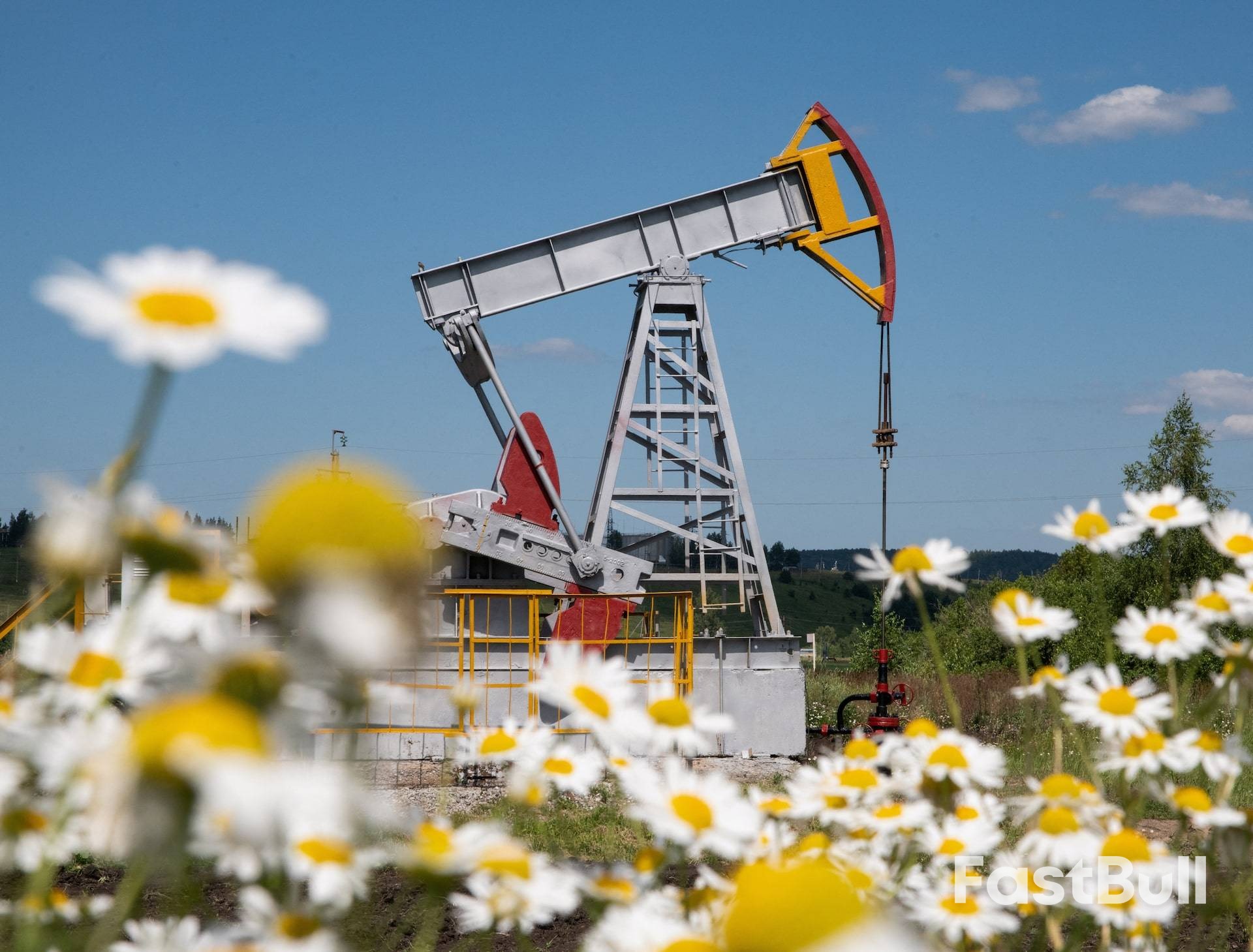
Crude oil prices dipped on Monday as concerns over immediate supply disruptions from Iran eased and investors began to price in the potential return of Venezuelan oil exports.
Brent crude futures fell 9 cents to trade at $63.25 a barrel by 0750 GMT. U.S. West Texas Intermediate (WTI) crude saw a similar decline, down 10 cents to $59.02 a barrel. The slight downturn follows a strong performance last week, where both benchmarks gained over 3%—their largest weekly increase since October.
Last week's price surge was driven by escalating unrest in Iran, as the clerical establishment intensified its crackdown on the largest demonstrations seen since 2022. However, sentiment shifted after Iran’s Foreign Minister, Abbas Araqchi, stated on Monday that the situation was "under total control" following a weekend of violence.
Araqchi also claimed that U.S. President Donald Trump's warnings of action against Tehran had motivated "terrorists" to target protesters and security forces, aiming to provoke foreign intervention. The civil unrest has reportedly led to more than 500 deaths, according to a rights group. President Trump is expected to meet with senior advisers on Tuesday to discuss U.S. options regarding Iran.
Despite the government's reassurances, some analysts believe the market is underestimating the geopolitical risk. Saul Kavonic, head of energy research at MST Marquee, noted that a wider conflict could still threaten oil shipments through the critical Strait of Hormuz. "The market is saying, 'Show me the disruption to supply', before materially responding," Kavonic said.
Adding to the downward pressure on prices is the prospect of Venezuelan oil re-entering the global market. Following the ouster of President Nicolas Maduro, President Trump announced last week that the government in Caracas is preparing to release as much as 50 million barrels of sanctioned oil to the United States.
This development has triggered a rush among oil companies to secure tankers and organize the logistics needed to transfer crude from Venezuela’s dilapidated ports and vessels. According to four sources familiar with the matter, the race is on to manage the complex operations safely. At a White House meeting on Friday, trading house Trafigura announced that it expects its first vessel to load within the next week.
Looking ahead, analysts expect oil prices to remain within a defined range unless a significant supply disruption occurs or demand clearly revives. Priyanka Sachdeva, a senior market analyst at Phillip Nova, commented that oil futures are increasingly reflecting an "oversupply narrative" as the market looks toward 2026.
Beyond the Middle East and South America, traders are also monitoring potential supply disruptions from Russia. Ongoing Ukrainian attacks on Russian energy infrastructure and the possibility of tougher U.S. sanctions on Moscow’s energy sector remain key risk factors for the global oil market.

The new US Ambassador to India, Sergio Gor, has affirmed that Washington and New Delhi are close partners capable of resolving their differences, including a long-stalled trade deal. Appointed by the Trump administration, Gor noted that officials from both nations are set to hold a call on the trade pact this Tuesday.
In his first official address at the US Embassy in New Delhi on Monday, Gor signaled a commitment to finalizing the agreement. "Real friends can disagree but always resolve their differences in the end," he stated. "Both sides continue to actively engage. In fact, the next call on trade will occur tomorrow."
Acknowledging the complexities, he added, "Remember India is the world's largest nation so it's not an easy task to get this across the finish line but we are determined to get there."
Gor's arrival comes as US-India relations face a notable downturn during President Trump's second term. Washington has imposed tariffs of 50% on India, some of the highest globally, partly in response to its purchases of Russian oil. Despite months of negotiations, India remains one of the few major economies without a trade agreement with the United States.
Tensions also flared after India's clash with Pakistan last May. President Trump has repeatedly claimed he brokered an end to the conflict, a claim that officials in New Delhi have denied, causing frustration.
Relations were further complicated last week by comments from US Commerce Secretary Howard Lutnick, who suggested the trade deal stalled because Prime Minister Narendra Modi did not call the president to finalize it. Gor, however, sought to smooth over these issues by highlighting the personal connection between the two leaders. "I can attest that his friendship with Prime Minister Modi is real," he said. "US and India are bound not just by shared interest but by relationship anchored at the highest levels."
In a significant policy announcement, Gor revealed that India will be invited to join "Pax Silica," a strategic alliance focused on technology and supply chain security. This group already includes Japan, South Korea, the UK, and Israel.
"Today, I am pleased to announce that India will be invited to join this group of nations as a full member next month," Gor said. He described the initiative as a US-led effort "to build a secure, prosperous and innovation driven silicon supply chain - from critical minerals, energy inputs to advanced manufacturing semiconductors, AI development and logistics."
This move is part of a broader strategy by the Trump administration, which has taken government equity stakes in raw materials firms and chip makers. The US is also directing investments into global rare earths projects and data centers. Furthermore, it has leveraged chip export licenses as a diplomatic tool while working to prevent individual US states from regulating artificial intelligence independently of Washington.
Gor's appointment places a top Trump aide in charge of the US mission in India. While his direct experience with the country is limited, he previously served as the head of the White House Presidential Personnel Office, where he managed the hiring of thousands of officials across the administration.
He succeeds former Los Angeles mayor Eric Garcetti, who was the national co-chair of former President Joe Biden's 2020 presidential campaign.
China is aggressively promoting high-tech industries to drive its economy forward, but a new report from the Rhodium Group argues this strategy is not nearly enough to offset the damage from a collapsing property sector.
According to the analysis, emerging sectors like artificial intelligence, robotics, and electric vehicles contributed just 0.8 percentage points to China's economic output between 2023 and 2025. During the same period, the decline in real estate and other traditional industries dragged the economy down by a combined 6 percentage points.
Beijing's tech-focused strategy is a direct response to U.S. restrictions, aiming to reduce reliance on foreign suppliers. A new five-year development plan, set for a full rollout in March, emphasizes state funding and policy support for advanced technologies. This push comes as China struggles to maintain its annual GDP growth target of around 5%, a goal that now seems increasingly difficult to achieve.
The Rhodium Group report highlights a massive gap between China's ambitions and its economic reality. To hit the country's GDP target, new industries would need to expand sevenfold over the next five years, generating about 2 percentage points of annual investment growth.
This translates to a staggering 2.8 trillion yuan in new investment required this year alone—an amount roughly 120% higher than projected investment levels for 2025.
While spending on AI and robotics may increase in the near term, most emerging sectors are unlikely to sustain the required pace of growth. The sheer scale is simply too large. This imbalance mirrors trends in the United States, where a handful of AI-related companies have fueled stock market gains while the broader economy shows mixed signals.
Zhang Jianping, a deputy director at China's Commerce Ministry, recently noted that the government's policies are designed to support innovation over many years. He added that traditional sectors like steel and real estate must also integrate new technology to remain competitive.
Leaning heavily on technology comes with significant costs. While new industrial sectors tend to offer higher wages, they employ far fewer people than traditional industries—a critical issue in an economy where jobs are a cornerstone of social stability.
Factory automation is on the rise in a country that already accounts for about 30% of global manufacturing output. According to KKR, this combination could eliminate up to 100 million jobs over the next decade, a figure that exceeds the entire workforce of most developed nations.
Labor market data already reveals growing pressure. China's urban unemployment rate remained above 5% for most of last year, with youth unemployment hovering at nearly three times that level.
With weak domestic demand, internal investment is insufficient to absorb the country's massive production capacity. "Beijing will become even more dependent upon gaining market share in export markets," the Rhodium Group report states, leaving the economy highly exposed to trade restrictions.
This reliance on exports is already facing a global backlash. As a flood of lower-priced Chinese goods, including electric vehicles, hits international markets, the European Union and Mexico have joined the United States in raising tariffs on imports from China.
Meanwhile, domestic policy tools appear to have limited impact. An extended trade-in program, for instance, now offers subsidies for niche products like AI glasses and certain smart home devices while narrowing the list of eligible appliances. As HSBC analysts noted last week, the program primarily benefits the "white goods" sector, suggesting its overall economic stimulus effect is narrow.
Goldman Sachs predicts that oil prices will likely decline this year as a surge in global supply creates a market surplus. While geopolitical tensions involving Russia, Venezuela, and Iran are expected to fuel market volatility, the investment bank sees the fundamental trend pointing downward.
This forecast follows a challenging year for oil, where both Brent and West Texas Intermediate (WTI) benchmarks saw their worst performance since 2020, dropping nearly 20%. As of the report, Brent crude futures were trading around $63 per barrel, with WTI holding at $59.

Goldman Sachs maintained its average price forecast for 2026 at $56 per barrel for Brent and $52 for WTI. The bank anticipates that prices will hit a low point in the final quarter of the year, with Brent reaching $54 and WTI at $50, as inventories in OECD countries build up.
The core driver of this bearish outlook is a projected market surplus of 2.3 million barrels per day (mb/d) in 2026. According to the bank, rebalancing the market will require lower oil prices to slow non-OPEC supply growth and stimulate strong demand, assuming no major supply disruptions or production cuts from OPEC.
Analysts at the bank noted that U.S. policymakers' focus on maintaining strong energy supplies and relatively low oil prices will likely prevent any sustained price increases, particularly ahead of the midterm elections.
While the fundamental picture points to a surplus, ongoing geopolitical risks will continue to introduce uncertainty and potential price swings.
Looking ahead, Goldman expects the market to begin a gradual recovery in 2027. The forecast suggests the market will shift back into a deficit as non-OPEC supply growth slows while demand remains solid.
For 2027, the bank projects an average price of $58 for Brent and $54 for WTI. This is $5 lower than its previous estimate, reflecting upgraded supply forecasts for the U.S. (+0.3 mb/d), Venezuela (+0.4 mb/d), and Russia (+0.5 mb/d).
A more substantial price recovery is anticipated later in the decade. After years of low investment in long-cycle projects, Goldman projects average Brent and WTI prices of $75 and $71, respectively, between 2030 and 2035, driven by demand growth through 2040. This long-term forecast is also $5 below the bank's prior estimate.
Goldman Sachs stated that the risks to its price forecasts are moderately skewed to the downside. A further increase in non-OPEC supply could exert additional pressure on prices. The bank's base case assumes no production cuts from OPEC, despite geopolitical risks and low speculative positioning in the market.
Based on this outlook, Goldman Sachs offered two key recommendations:
• Investors should consider shorting the 2026Q3-Dec2028 Brent time-spread to capitalize on the expected 2026 surplus.
• Oil producers should hedge against downside price risk for 2026.
With recent US operations targeting Venezuela and Greenland, President Donald Trump's attention now appears to be shifting toward Iran, where widespread domestic unrest has created a volatile new flashpoint.
For three weeks, Iran has been gripped by a wave of protests. The demonstrations, initially sparked by a sharp rise in inflation, have since grown into nationwide anti-government movements. In response, the Iranian government has moved to suppress the dissent, resulting in the deaths of more than 500 people, according to the U.S.-based Human Rights Activists News Agency.

President Trump addressed the situation in a Truth Social post on Friday, declaring that "the United States of America will come to their rescue," in a direct reference to the protestors.
This statement appears to be more than just rhetoric. According to reports from MS Now and other media outlets, White House officials have begun outlining potential courses of action for the president. Briefings are scheduled this week to review a range of responses, which could include military, cyber, and economic measures. As of now, no final decisions have been announced.
Any escalation with Iran carries significant consequences for the global economy. Iran is a major oil producer and exerts critical influence over the Strait of Hormuz, a narrow waterway that serves as a vital artery for nearly a third of the world's seaborne crude oil.
A disruption in this chokepoint would almost certainly send shockwaves through energy markets. "The complete closure of the Strait that can result in a $10 to $20 per barrel spike," warned Andy Lipow, president of Lipow Oil Associates.
Analysts also highlight that Iran is a far more formidable adversary than other recent U.S. targets. "Iran is far more capable of retaliating against the U.S., especially by attacking regional energy infrastructure," said Matt Gertken, chief geopolitical strategist at BCA Research.
Iranian officials have issued stark warnings of their own. Parliament Speaker Mohammad Baqer Qalibaf stated that Iran would retaliate if attacked by the U.S.
"In the case of an attack on Iran, the occupied territories (Israel) as well as all U.S. bases and ships will be our legitimate target," Qalibaf said, as reported by Reuters.
Several other major developments are shaping the global landscape:
• Fed Chair Powell Under Investigation: Federal prosecutors are conducting a criminal investigation into Federal Reserve Chair Jerome Powell concerning the $2.5 billion renovation of the Fed's headquarters. Powell stated Sunday that the probe is a result of the central bank's refusal to cut interest rates as fast as President Trump has demanded.
• US Blocks Venezuelan Oil to Cuba: President Trump announced that Cuba will no longer receive Venezuelan oil and signed an executive order to prevent the seizure of Venezuelan oil revenue held in U.S. Treasury accounts. Cuba has pushed back against the threat.
• Markets Post Gains: The S&P 500 and Dow Jones Industrial Average reached closing highs on Friday, capping a winning week. On Monday, Asia-Pacific markets were mostly higher, while oil prices rose and spot gold hit an all-time high.
China's efforts to pivot its economy toward high-tech industries like artificial intelligence and robotics are not enough to counteract the drag from its struggling property sector, leaving growth exposed to trade risks.
According to a Monday report from the U.S.-based research firm Rhodium Group, new industries such as AI, robotics, and electric cars added only 0.8 percentage points to economic output between 2023 and 2025. During the same period, traditional sectors, including real estate, experienced a combined decline of 6 percentage points.
While Beijing has prioritized high-tech development, it has done little to resolve a yearslong slump in real estate, a sector that once constituted over a quarter of the economy. A report last week from the China Real Estate Information Corp. noted that new home sales by floor area fell last year to levels not seen since 2009.
White Label
Data API
Web Plug-ins
Poster Maker
Affiliate Program
The risk of loss in trading financial instruments such as stocks, FX, commodities, futures, bonds, ETFs and crypto can be substantial. You may sustain a total loss of the funds that you deposit with your broker. Therefore, you should carefully consider whether such trading is suitable for you in light of your circumstances and financial resources.
No decision to invest should be made without thoroughly conducting due diligence by yourself or consulting with your financial advisors. Our web content might not suit you since we don't know your financial conditions and investment needs. Our financial information might have latency or contain inaccuracy, so you should be fully responsible for any of your trading and investment decisions. The company will not be responsible for your capital loss.
Without getting permission from the website, you are not allowed to copy the website's graphics, texts, or trademarks. Intellectual property rights in the content or data incorporated into this website belong to its providers and exchange merchants.
Not Logged In
Log in to access more features

FastBull Membership
Not yet
Purchase
Log In
Sign Up