Markets
News
Analysis
User
24/7
Economic Calendar
Education
Data
- Names
- Latest
- Prev



Signal Accounts for Members
All Signal Accounts
All Contests


U.K. Core CPI MoM (Dec)A:--
F: --
P: --
Indonesia 7-Day Reverse Repo RateA:--
F: --
P: --
Indonesia Loan Growth YoY (Dec)A:--
F: --
P: --
Indonesia Deposit Facility Rate (Jan)A:--
F: --
P: --
Indonesia Lending Facility Rate (Jan)A:--
F: --
P: --
South Africa Core CPI YoY (Dec)A:--
F: --
P: --
South Africa CPI YoY (Dec)A:--
F: --
P: --
IEA Oil Market Report
U.K. CBI Industrial Output Expectations (Jan)A:--
F: --
U.K. CBI Industrial Prices Expectations (Jan)A:--
F: --
P: --
South Africa Retail Sales YoY (Nov)A:--
F: --
P: --
U.K. CBI Industrial Trends - Orders (Jan)A:--
F: --
P: --
Mexico Retail Sales MoM (Nov)A:--
F: --
P: --
U.S. MBA Mortgage Application Activity Index WoWA:--
F: --
P: --
Canada Industrial Product Price Index YoY (Dec)A:--
F: --
Canada Industrial Product Price Index MoM (Dec)A:--
F: --
U.S. Weekly Redbook Index YoYA:--
F: --
P: --
U.S. Pending Home Sales Index YoY (Dec)A:--
F: --
P: --
U.S. Pending Home Sales Index MoM (SA) (Dec)A:--
F: --
P: --
U.S. Construction Spending MoM (Oct)A:--
F: --
U.S. Pending Home Sales Index (Dec)A:--
F: --
P: --
U.S. API Weekly Refined Oil StocksA:--
F: --
P: --
U.S. API Weekly Gasoline StocksA:--
F: --
P: --
U.S. API Weekly Cushing Crude Oil Stocks--
F: --
P: --
U.S. API Weekly Crude Oil StocksA:--
F: --
P: --
South Korea GDP Prelim YoY (SA) (Q4)A:--
F: --
P: --
South Korea GDP Prelim QoQ (SA) (Q4)A:--
F: --
P: --
Japan Imports YoY (Dec)A:--
F: --
P: --
Japan Exports YoY (Dec)A:--
F: --
P: --
Japan Goods Trade Balance (SA) (Dec)A:--
F: --
P: --
Japan Trade Balance (Not SA) (Dec)A:--
F: --
Australia Employment (Dec)--
F: --
P: --
Australia Labor Force Participation Rate (SA) (Dec)--
F: --
P: --
Australia Unemployment Rate (SA) (Dec)--
F: --
P: --
Australia Full-time Employment (SA) (Dec)--
F: --
P: --
Turkey Consumer Confidence Index (Jan)--
F: --
P: --
Turkey Capacity Utilization (Jan)--
F: --
P: --
Turkey Late Liquidity Window Rate (LON) (Jan)--
F: --
P: --
Turkey Overnight Lending Rate (O/N) (Jan)--
F: --
P: --
Turkey 1-Week Repo Rate--
F: --
P: --
U.K. CBI Distributive Trades (Jan)--
F: --
P: --
U.K. CBI Retail Sales Expectations Index (Jan)--
F: --
P: --
U.S. Weekly Continued Jobless Claims (SA)--
F: --
P: --
U.S. Initial Jobless Claims 4-Week Avg. (SA)--
F: --
P: --
U.S. Real Personal Consumption Expenditures Final QoQ (Q3)--
F: --
P: --
Canada New Housing Price Index MoM (Dec)--
F: --
P: --
U.S. Weekly Initial Jobless Claims (SA)--
F: --
P: --
U.S. Real GDP Annualized QoQ Final (Q3)--
F: --
P: --
U.S. PCE Price Index Final QoQ (AR) (Q3)--
F: --
P: --
U.S. PCE Price Index MoM (Nov)--
F: --
P: --
U.S. PCE Price Index YoY (SA) (Nov)--
F: --
P: --
U.S. Real Personal Consumption Expenditures MoM (Nov)--
F: --
P: --
U.S. Personal Income MoM (Nov)--
F: --
P: --
U.S. Core PCE Price Index MoM (Nov)--
F: --
P: --
U.S. Personal Outlays MoM (SA) (Nov)--
F: --
P: --
U.S. Dallas Fed PCE Price Index YoY (Nov)--
F: --
P: --
U.S. Core PCE Price Index YoY (Nov)--
F: --
P: --
U.S. EIA Weekly Natural Gas Stocks Change--
F: --
P: --


No matching data
Latest Views
Latest Views
Trending Topics
Top Columnists
Latest Update
White Label
Data API
Web Plug-ins
Affiliate Program
View All

No data

Data Interpretation

Commodity

Political

Remarks of Officials

Economic

Traders' Opinions

Middle East Situation

Energy

Daily News
Oil prices declined as Iran's geopolitical risk eased, unwinding a premium, and U.S. crude stocks unexpectedly rose.
Oil prices declined on Monday, pulling back from earlier gains as the geopolitical risk premium associated with Iran began to unwind. Easing civil unrest in the country has lowered market fears of a potential U.S. intervention that could disrupt crude supply from the major OPEC producer.
By 0734 GMT, Brent crude had fallen 28 cents, or 0.44%, to trade at $63.85 a barrel. U.S. West Texas Intermediate (WTI) crude for February delivery dropped 36 cents, or 0.61%, to $59.08 a barrel. The more active March contract for WTI was down 24 cents at $59.10.
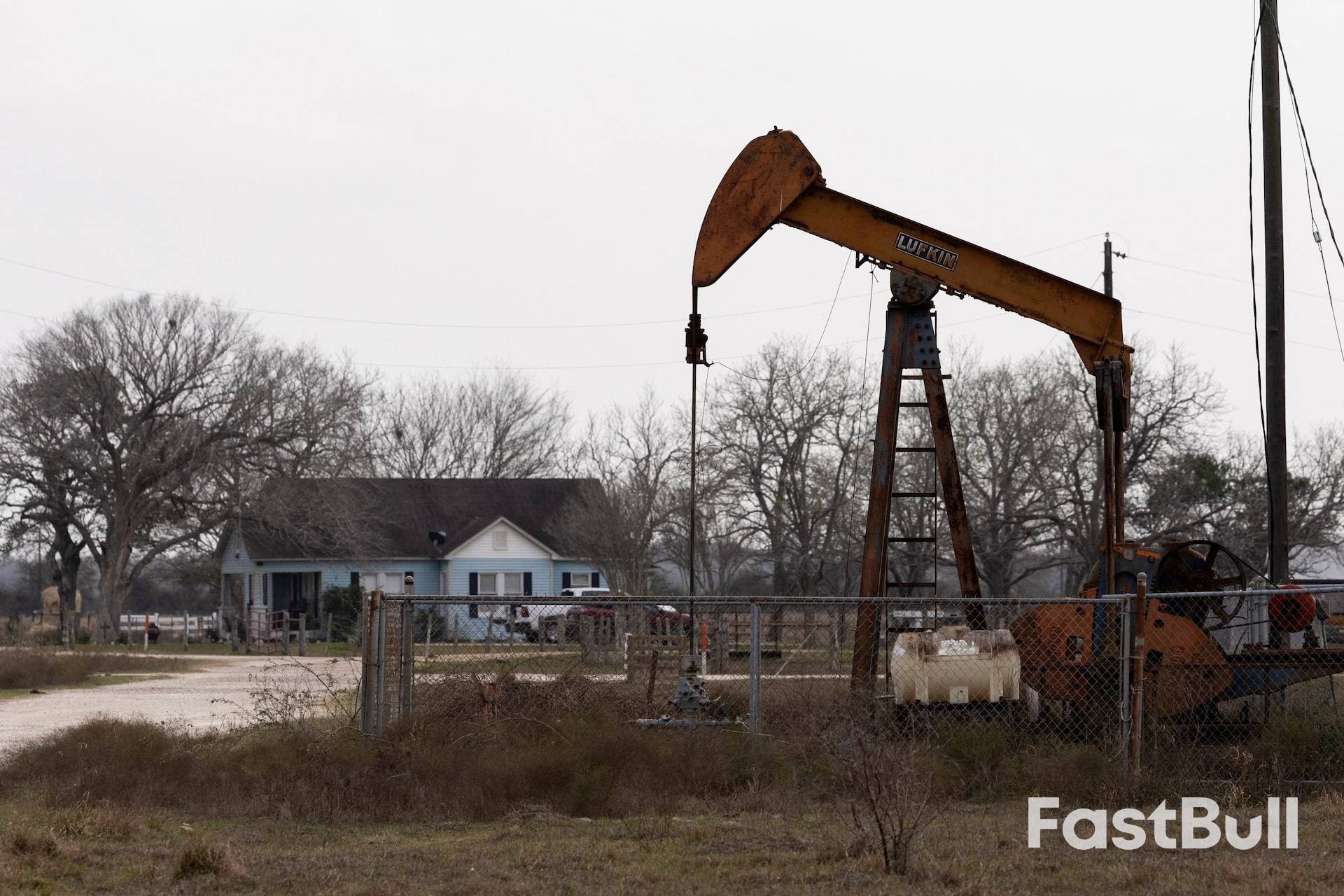
The primary driver for the price drop is a perceived de-escalation of conflict risk in Iran. A severe government crackdown has reportedly quelled widespread protests sparked by economic hardship, which officials claim resulted in 5,000 deaths.
Adding to the calmer sentiment, U.S. President Donald Trump appeared to soften his previous threats of intervention. His recent social media posts suggested Iran had reversed plans for mass executions of protestors, although Tehran had not publicly announced such plans. This development reduced the likelihood of a U.S. military action that could interrupt oil flows from Iran, the fourth-largest producer within OPEC.
"The pullback followed a swift unwind of the 'Iran premium' that had driven prices to 12-week highs, triggered by signs of easing in Iran's crackdown on protesters," noted Tony Sycamore, a market analyst at IG.
Reinforcing the bearish mood, recent data from the U.S. revealed an unexpected increase in crude oil inventories.
According to the Energy Information Administration (EIA), crude stocks rose by 3.4 million barrels in the week ending January 9. This figure defied market expectations, as analysts in a Reuters poll had forecasted a draw of 1.7 million barrels. The substantial inventory build suggests weaker demand or stronger-than-expected supply in the U.S. market.
Trading activity is expected to be lighter, as U.S. markets are closed Monday for the Martin Luther King Jr. Day holiday.
Traders are also monitoring developments in Venezuela. Following the capture of Nicolas Maduro, the U.S. has indicated it would run the country's oil industry, with the U.S. energy secretary stating that the government is moving quickly to grant Chevron an expanded production license.
However, some analysts remain skeptical about an immediate impact on global supply. "Venezuela and Ukraine remain on the back burner," said Vandana Hari, founder of oil market analysis firm Vanda Insights. She anticipates "rangebound movement for the rest of the day" due to the U.S. holiday.
Meanwhile, fresh data from China showed that the country's refinery throughput increased by 4.1% year-on-year in 2025, while domestic crude oil output grew 1.5% from 2024. Both metrics reached all-time highs, signaling robust energy demand.
In a letter to Norwegian Prime Minister Jonas Gahr Store, former U.S. President Donald Trump explicitly linked his ambition to control Greenland with his failure to receive the Nobel Peace Prize. The correspondence reveals a direct connection between his personal grievances and his geopolitical objectives.
"Considering your Country decided not to give me the Nobel Peace Prize for having stopped 8 Wars PLUS, I no longer feel an obligation to think purely of Peace," Trump wrote in the letter, which was obtained by Bloomberg. He added that while peace would remain "predominant," he could now prioritize "what is good and proper for the United States of America."
The letter concluded with a stark declaration: "The World is not secure unless we have Complete and Total Control of Greenland."
For clarity, the Nobel Peace Prize is awarded by an independent committee, not the Norwegian government. The White House and the office of Prime Minister Store did not immediately respond to requests for comment.
Trump's letter follows a period of heightened friction with NATO allies. He recently threatened to impose tariffs on European members of the alliance if his demands regarding Greenland were not met.
The threat has triggered a swift reaction from the European Union. EU ambassadors convened on Sunday to formulate a response should Trump proceed, with potential retaliatory tariffs on approximately €93 billion ($108 billion) of American goods. The bloc's leaders have scheduled an emergency summit for Thursday to address the situation.
On his social media platform, Truth Social, Trump offered a rationale for his position. "NATO has been telling Denmark, for 20 years, that 'you have to get the Russian threat away from Greenland.' Unfortunately, Denmark has been unable to do anything about it. Now it is time, and it will be done!!!," he posted.
This view was supported by senior U.S. officials, including Treasury Secretary Scott Bessent. In a Sunday interview on NBC's Meet the Press, Bessent stated that Europe was too weak to guarantee Greenland's security on its own.
The focus on the Nobel Prize was amplified last week when laureate María Corina Machado, a Venezuelan opposition leader, gave her medal to Trump during a White House meeting. Trump, who has long expressed a desire for the award and claims credit for resolving numerous conflicts during his second term, accepted the medal.
The Norwegian Nobel Committee responded firmly to the transfer. "The Nobel Prize and the laureate are inseparable," the committee said in a statement. "Even if the medal or diploma later comes into someone else's possession, this does not alter who was awarded the Nobel Peace Prize." In a separate social media post, the committee reiterated that "a prize can therefore not, even symbolically, be passed on or further distributed."
The letter to Norway's prime minister was first reported by a PBS journalist on X and was subsequently shared by Trump's National Security Council with other European governments, according to sources familiar with the private correspondence.
"Dear Jonas:
Considering your Country decided not to give me the Nobel Peace Prize for having stopped 8 Wars PLUS, I no longer feel an obligation to think purely of Peace, although it will always be predominant, but can now think about what is good and proper for the United States of America.
Denmark cannot protect that land from Russia or China, and why do they have a "right of ownership" anyway? There are no written documents, it's only that a boat landed there hundreds of years ago, but we had boats landing there, also. I have done more for NATO than any other person since its founding, and now, NATO should do something for the United States.
The World is not secure unless we have Complete and Total Control of Greenland.
Thank you!
President DJT"
China is expected to hold its benchmark lending rates steady for the eighth consecutive month in January, but traders are increasingly betting that a rate cut is coming in the first half of the year to support a sputtering economy.
A recent Reuters survey confirmed the market consensus, with all 22 respondents anticipating that the one-year and five-year Loan Prime Rates (LPRs) will remain at 3.0% and 3.5%, respectively.
While the January decision seems locked in, the focus is shifting to future moves. China's central bank has already signaled its readiness to act, recently cutting sector-specific interest rates to provide an early economic boost. It also indicated that it has room for broader monetary easing this year, including reductions in bank reserve requirements and policy rates.
This has fueled expectations for a cut in the first quarter. "The probability of a January LPR reduction is low," noted a trader at an East China bank. "The latest cuts to structural tools suggest the central bank isn't ready to move broad policy levers yet." However, they added that February "is worth watching" for a potential policy shift.
An analyst at a Shanghai private fund echoed this view, highlighting a window for easing in the first quarter. If policymakers send a stronger pro-growth signal, the analyst said, "we can't rule out trimming policy rates first and then guiding LPR lower."
The pressure for monetary easing stems from an economy struggling to gain momentum. Although China’s economy grew 5.0% last year, meeting the official target, this was largely driven by a record share of global goods demand that compensated for weak domestic consumption—a strategy that is becoming difficult to sustain.
Domestic demand remains sluggish due to low confidence, driven largely by a protracted property crisis. Official data released on Monday showed that new home prices continued to fall in December, underscoring the persistent weakness in the real estate sector despite repeated government pledges of support.
The LPR serves as China's key lending benchmark and is set monthly based on rates submitted by 20 designated commercial banks.
• The one-year LPR forms the basis for most new and outstanding loans in the country.
• The five-year LPR is the primary reference for pricing residential mortgages.
A reduction in these rates would signal a broader effort to lower borrowing costs and stimulate both corporate investment and household spending.
India's central bank is pushing for BRICS nations to connect their official digital currencies, a move designed to streamline cross-border trade and reduce reliance on the U.S. dollar amid rising geopolitical friction.
According to sources, the Reserve Bank of India (RBI) has urged the government to place a proposal for linking Central Bank Digital Currencies (CBDCs) on the agenda for the 2026 BRICS summit. If the recommendation is accepted during India's host summit this year, it would mark the first formal effort to integrate the digital currencies of the bloc, which includes Brazil, Russia, India, China, and South Africa.
This initiative is poised to attract attention from the United States, which has cautioned against efforts to circumvent the dollar. Former U.S. President Donald Trump has previously labeled the BRICS alliance "anti-American" and threatened its members with tariffs.
When approached for comment, the RBI, the Indian government, and the central banks of Brazil and Russia did not respond. The People's Bank of China stated it had no information to share, while South Africa's central bank declined to comment.
The RBI's proposal advances a 2025 BRICS declaration from a summit in Rio de Janeiro that called for greater interoperability between member payment systems to improve transactional efficiency.
India’s central bank has been vocal about its interest in linking its digital rupee with other nations' CBDCs to accelerate cross-border transactions and elevate its currency's global profile. However, the RBI has maintained that its efforts to promote the rupee are not aimed at de-dollarization.
While none of the core BRICS members have fully launched a national digital currency, all five are actively running pilot programs.
• India's e-rupee: Launched in December 2022, it has already attracted seven million retail users. The RBI is encouraging its adoption by enabling offline payments, allowing programmability for government subsidies, and permitting fintech firms to offer digital currency wallets.
• China's digital yuan: Beijing has committed to expanding the international use of its CBDC.
For a linked BRICS digital currency system to succeed, several critical challenges must be addressed. Key discussion points will include creating interoperable technology, establishing clear governance rules, and devising a method for settling imbalanced trade volumes.
Progress could be slowed by the reluctance of some members to adopt technological platforms from other countries, requiring consensus on both tech and regulation before any concrete steps are taken.
One potential solution being explored to manage trade imbalances involves bilateral foreign exchange swap arrangements between central banks. This approach follows past difficulties, such as when a Russia-India initiative to trade in local currencies left Russia with large, difficult-to-use balances of Indian rupees. To resolve that, the RBI eventually allowed the investment of such balances in local bonds. Under the new proposal, settlements for transactions could occur weekly or monthly via these swaps.
Founded in 2009 by Brazil, Russia, India, and China, the BRICS group has since expanded to include South Africa and newer members like the United Arab Emirates, Iran, and Indonesia. The bloc has regained prominence as trade tensions and tariff threats resurface.
However, past ambitions to transform BRICS into a major economic counterweight have faced obstacles. An idea for a common BRICS currency, once floated by Brazil, was ultimately rejected.
Globally, interest in CBDCs has been tempered by the rise of stablecoins. India, however, continues to advocate for its e-rupee as a safer, state-regulated alternative. RBI Deputy Governor T Rabi Sankar noted last month that CBDCs "do not pose many of the risks associated with stablecoins."
Sankar added that stablecoins raise "significant concerns for monetary stability, fiscal policy, banking intermediation and systemic resilience," beyond their potential use in illicit payments. India remains concerned that widespread stablecoin adoption could fragment its national payments infrastructure and undermine its digital ecosystem.
Donald Trump has pivoted his focus to a new geopolitical battleground, placing Europe on high alert. The conflict isn't one of military hardware but of economic warfare, with tariff threats being wielded to achieve strategic ambitions. At the center of this escalating dispute are the territory of Greenland and proposed taxes that risk destabilizing the transatlantic economy, forcing the European Union to formulate a response.
Donald Trump's administration has announced a plan to use tariffs as a form of economic leverage. The proposal involves imposing a 10% tax on imports from eight European nations: Denmark, Norway, Sweden, France, Germany, the United Kingdom, the Netherlands, and Finland. This measure is slated to begin in February and could escalate to 25% by June if an agreement allowing the United States to acquire Greenland is not reached.
This move is a direct response to these countries deploying symbolic troops to Greenland, an action meant to assert their presence in the Arctic and counter American interests in the region.
European leaders have condemned the tariff threat as a form of economic blackmail that jeopardizes transatlantic stability. A joint statement issued by the targeted nations warned that the new tariffs undermine the relationship between the allies and could set off a dangerous downward spiral in trade relations.
Trump’s strategy demonstrates how economic policy can be repurposed as a lever for geopolitical pressure, transforming diplomatic negotiations into a commercial conflict. The final outcome is uncertain, but it highlights the growing use of tariffs as a political weapon in international affairs.
Faced with this economic ultimatum, the European Union finds itself in a challenging position. The bloc is divided on how to proceed.
• A Call for a Firm Stance: Nations like France and Denmark are advocating for a strong, unified response. They have pushed for the activation of the EU's anti-coercion instrument, a powerful tool designed to counter foreign economic pressure. Often called a "trade bazooka," this mechanism would empower the EU to restrict access to its single market for specific products or operators engaging in economic blackmail.
• A Preference for Dialogue: Other member states are wary of escalating the conflict. These leaders prioritize maintaining an open dialogue with the United States to avoid a full-blown trade war, which could have severe economic consequences for European industries and consumers.
This internal division highlights the inherent difficulty the EU faces in balancing strategic unity against the diverse economic interests of its member states. French President Emmanuel Macron has been vocal about the need to meet the tariff threats head-on, stating that the EU will not be intimidated. Meanwhile, diplomats are weighing a range of retaliatory measures, including reviving a previously considered retaliation package and making more robust use of the anti-coercion instrument.
The standoff is forcing Europeans to defend their economic sovereignty while testing the political unity of their bloc against unconventional American pressure.
The confrontation over Greenland is more than a simple territorial dispute; it represents a significant test for the economic and strategic alliance between the European Union and the United States. Trump’s tactic of linking economic access to national security objectives has triggered a sharp reaction from historic allies.
While some European leaders call for a coordinated and firm response, others fear the potential for a wider trade confrontation. Regardless of the path chosen, the economy has become central to this geopolitical debate, moving far beyond standard tariff negotiations. The European Union must now navigate a fragile environment, weighing the principle of solidarity against the real-world costs and benefits of its actions.
Key Aspects of the Crisis
• Initial Tariffs: Trump has proposed a 10% tariff to be implemented in February.
• Potential Escalation: The rate could rise to 25% by June if no deal is reached.
• Targeted Nations: Eight European countries are in the direct line of fire.
• EU Countermeasure: The anti-coercion instrument is being considered as a primary response tool.
This tense situation with European allies contrasts with the current state of the Sino-American trade relationship, which has remained relatively calm since a tariff truce was agreed upon in November. While economic confrontations between Washington and Beijing appear to have subsided for now, the new focus on Europe suggests a strategic shift in global trade dynamics.
A new report from a leading think tank is calling on the UK government to end its policy indecisiveness and pursue bold reforms to capitalize on early signs of economic improvement.
The Resolution Foundation argues that without decisive action on trade, housing, and employment, Britain risks squandering an opportunity to reverse years of stagnation.
According to the report, the first 18 months of Prime Minister Keir Starmer's government have been characterized by policy U-turns, tentative tax proposals, and general timidity. While Starmer and finance minister Rachel Reeves have promised to accelerate the economy, significant changes have yet to materialize, with many planned reforms being dropped or significantly weakened.
"With signs that productivity may be turning a corner, the government must capitalise by ramping up its plans," said Greg Thwaites, research director at the Resolution Foundation.
The think tank outlines a clear path to boosting the economy. It recommends three key policy shifts:
• Planning Reform: Implement changes to help cities meet their housing construction targets.
• EU Alignment: Deepen regulatory alignment with the European Union.
• Labor Force Expansion: Create policies to bring more young and older people into the workforce.
Successfully implementing these measures could increase household incomes by an average of £2,000 ($2,680) a year. The resulting economic growth would also generate enough tax revenue to fund a 25% increase in spending on the public health service.
The call for action comes against a backdrop of long-term economic struggle. The UK economy has largely stagnated in the nearly two decades since the global financial crisis. Since the pandemic, GDP per person has fallen further behind other major European nations.
Recent shocks from COVID, high energy prices, and Brexit have all contributed to a drop in productivity growth. The Resolution Foundation report also noted growing evidence that the economic damage from Brexit could be nearly double the 4% impact officially assumed by budget forecasters.
Despite the challenges, the report identifies a reason for optimism. After adjusting official data using payroll figures, productivity was found to have jumped by 3.1% in the year leading up to the third quarter of 2025.
This uptick presents a crucial opportunity for the government to act decisively and build a foundation for sustained economic growth.
According to an analysis from HSBC, the Korean won's depreciation last year provided an unexpected boost to the nation's economy by strengthening export competitiveness. The bank's economists outlined this view in a virtual press conference for the HSBC Asian Outlook 2026 on Monday.
"We do not believe that the weak won itself was a challenge for Korea's economic performance — rather, it likely supported it over the past year," stated Frederic Neumann, HSBC's Chief Asia Economist.

Neumann explained that the won's weakness was a key factor in helping Korean exporters maintain a competitive edge on the global stage. This effect was amplified as global commodity prices, especially for oil, stabilized, which in turn eased inflationary pressures.
Despite challenging conditions like tariff frictions with the United States, this competitive advantage helped Korea’s exports surpass the $700 billion mark for the first time in 2025.
However, the currency's slide has created a difficult situation for monetary policy. Neumann warned that concerns over a persistently weak won could prevent the Bank of Korea (BOK) from implementing interest rate cuts. Such cuts would provide monetary easing to help sustain economic growth.
Reflecting these concerns, the BOK has held its key policy rate steady for five consecutive meetings. This has led some market observers to speculate that the central bank's easing cycle has effectively concluded.
Looking ahead, HSBC analysts see the Korean won as one of the few currencies in the region positioned for a potential rebound in 2026 after its significant depreciation last year. The Korean won was among the worst-performing currencies in Asia in 2025, with its real effective exchange rate hitting a 16-year low in October, according to data from the Bank for International Settlements.
Foreign exchange authorities have identified rising capital outflows from overseas investments as a primary cause. In response, the government has announced several measures aimed at stemming these outflows and encouraging capital to return to the domestic market. These plans include:
• Offering tax incentives on capital gains from foreign stock sales, on the condition that the proceeds are reinvested in the domestic stock market for at least one year.
• Considering the introduction of leveraged exchange-traded funds (ETFs) that track specific domestic stock indices at three times the rate.

How Capital Flows Could Trigger a Won Recovery
Joey Chew, head of Asia FX research at HSBC, detailed the mechanics of a potential recovery. She noted that when investors sell U.S. stocks and convert the funds back into Korean won to purchase local equities, there is a direct impact on the foreign exchange market.
Beyond this, government incentives could create a broader shift in behavior. More exporters might be encouraged to sell their dollar holdings, while foreign investors could be attracted to Korean assets, reinforcing the trend already started by domestic retail investors.
"This could create a rolling effect and really help the Korean won recover from its excessive weakness last year," Chew explained. "At this moment, we still need to see the proper implementation of the measures. Assuming a lot of these measures do get passed, our view is a modest recovery in the Korean won in the first few months of this year."
White Label
Data API
Web Plug-ins
Poster Maker
Affiliate Program
The risk of loss in trading financial instruments such as stocks, FX, commodities, futures, bonds, ETFs and crypto can be substantial. You may sustain a total loss of the funds that you deposit with your broker. Therefore, you should carefully consider whether such trading is suitable for you in light of your circumstances and financial resources.
No decision to invest should be made without thoroughly conducting due diligence by yourself or consulting with your financial advisors. Our web content might not suit you since we don't know your financial conditions and investment needs. Our financial information might have latency or contain inaccuracy, so you should be fully responsible for any of your trading and investment decisions. The company will not be responsible for your capital loss.
Without getting permission from the website, you are not allowed to copy the website's graphics, texts, or trademarks. Intellectual property rights in the content or data incorporated into this website belong to its providers and exchange merchants.
Not Logged In
Log in to access more features

FastBull Membership
Not yet
Purchase
Log In
Sign Up