• Trade
  • Markets
  • Copy
  • Contests
  • News
  • 24/7
  • Calendar
  • Q&A
  • Chats
Screeners
SYMBOL
LAST
ASK
BID
HIGH
LOW
NET CHG.
%CHG.
SPREAD
SPX
S&P 500 Index
6950.22
6950.22
6950.22
6964.65
6921.61
+34.61
+ 0.50%
--
DJI
Dow Jones Industrial Average
49412.39
49412.39
49412.39
49488.81
49137.65
+313.69
+ 0.64%
--
IXIC
NASDAQ Composite Index
23601.35
23601.35
23601.35
23688.94
23486.08
+100.11
+ 0.43%
--
USDX
US Dollar Index
96.600
96.680
96.600
97.060
96.600
-0.230
-0.24%
--
EURUSD
Euro / US Dollar
1.19030
1.19038
1.19030
1.19036
1.18502
+0.00237
+ 0.20%
--
GBPUSD
Pound Sterling / US Dollar
1.37184
1.37193
1.37184
1.37191
1.36636
+0.00404
+ 0.30%
--
XAUUSD
Gold / US Dollar
5079.66
5080.09
5079.66
5100.65
5013.05
+69.39
+ 1.38%
--
WTI
Light Sweet Crude Oil
60.499
60.529
60.499
60.929
60.054
-0.249
-0.41%
--

Community Accounts

Signal Accounts
--
Profit Accounts
--
Loss Accounts
--
View More

Become a signal provider

Sell trading signals to earn additional income

View More

Guide to Copy Trading

Get started with ease and confidence

View More

Signal Accounts for Members

All Signal Accounts

Best Return
  • Best Return
  • Best P/L
  • Best MDD
Past 1W
  • Past 1W
  • Past 1M
  • Past 1Y

All Contests

  • All
  • Trump Updates
  • Recommend
  • Stocks
  • Cryptocurrencies
  • Central Banks
  • Featured News
Top News Only
Share

Naftogaz Says It Is 15Th Deliberate Attack On Its Infrastructure Since Since Start Of 2026

Share

Reserve Bank Of India: MOU Demonstrates Importance Of Cross-Border Cooperation To Facilitate International Clearing Activities

Share

Reserve Bank Of India: Reserve Bank Of India And European Securities And Markets Authority Sign A MOU

Share

India Trade Minister: Hope For Entry Into Force Of Trade Deal With EU Within Calendar 2026 Itself

Share

Stats Agency - Mexico Diciembre Trade Balance +2.43 Billion Dollars

Share

Ibge - Brazil's IPCA-15 Price Index 4.50 Percent In 12 Months To Mid-January

Share

Zelenkiy Says Ukraine Should Become EU Member By 2027, Hopes For Members' Support

Share

UN Agency: School Materials Enter Gaza After Being Blocked For Two Years

Share

Gm: Q4 Tariff Costs Of $0.7 Billion, Expects Gross Tariff Costs Of $3 Billion To $4 Billion In 2026

Share

ECB Governing Council Member Simkus Tells Reuters There Is Equal Chance That Next Rate Move, Whenever It Comes, Will Be A Hike Or A Cut

Share

Malaysia Looking To Sign Free Trade Pact With South Korea By Mid-2026- Deputy Trade Minister

Share

Poland's Kghm Says Dec Copper Sales At 62.7 Thousand Tonnes

Share

USA Natural Gas Futures Falls Nearly 8% To $6.241/Mmbtu

Share

[Hamas Official Claims Completion Of All First-Phase Ceasefire Agreement Terms] On January 27, Local Time, Senior Hamas Official Hussam Badran Stated That Hamas Has Fulfilled All The Terms Of The First Phase Of The Gaza Ceasefire Agreement, Accusing Israel Of Continued Delays In Implementing The Agreement, Particularly Regarding The Opening Of The Rafah Crossing And The Withdrawal From Occupied Territories. Regarding The Next Phase Of The Gaza Ceasefire Agreement, Badran Stated That The Second Phase Must Include A Complete Israeli Withdrawal From The Gaza Strip, The Commencement Of Reconstruction, The Allowance Of Aid, And Guarantees For Gaza's Future. He Believes That Discussions About "disarmament" Are Hindering The Agreement's Progress

Share

Pakistan Finance Minister Report: Current Account Posted Deficit Of $1.2 Billion During Jul-Dec Fy2026, Compared To Surplus Of $0.96 Billion Recorded Last Year

Share

Pakistan Finance Minister Report: Inflation Expected To Remain Within Range Of 5-6 % Percent In January

Share

EU High Representative For Foreign Affairs And Security Policy Karas: (Regarding The Reasons For The EU's Security And Defense Partnership With India) We Can't Put All Our Eggs In One Basket

Share

EU High Representative For Foreign Affairs And Security Policy Karas: I Have Asked My Indian Counterparts To Engage In Dialogue With Russia And To Pressure Russia On The Peace Process In Ukraine

Share

China Defence Minister: Improve Capability To Respond To Various Risks And Challenges

Share

China Defence Minister Held Phone Call With Russia Counterpart

TIME
ACT
FCST
PREV
U.S. IHS Markit Manufacturing PMI Prelim (SA) (Jan)

A:--

F: --

P: --

U.S. IHS Markit Services PMI Prelim (SA) (Jan)

A:--

F: --

P: --

U.S. UMich Consumer Sentiment Index Final (Jan)

A:--

F: --

P: --

U.S. UMich Current Economic Conditions Index Final (Jan)

A:--

F: --

P: --

U.S. UMich Consumer Expectations Index Final (Jan)

A:--

F: --

P: --

U.S. Conference Board Leading Economic Index MoM (Nov)

A:--

F: --

P: --

U.S. Conference Board Coincident Economic Index MoM (Nov)

A:--

F: --

P: --

U.S. Conference Board Lagging Economic Index MoM (Nov)

A:--

F: --

P: --

U.S. UMich 1-Year-Ahead Inflation Expectations Final (Jan)

A:--

F: --

P: --

U.S. Conference Board Leading Economic Index (Nov)

A:--

F: --

P: --

U.S. Weekly Total Rig Count

A:--

F: --

P: --

U.S. Weekly Total Oil Rig Count

A:--

F: --

P: --

Japanese Prime Minister Sanae Takaichi delivers a speech
Germany Ifo Business Expectations Index (SA) (Jan)

A:--

F: --

P: --

Germany IFO Business Climate Index (SA) (Jan)

A:--

F: --

P: --

Germany Ifo Current Business Situation Index (SA) (Jan)

A:--

F: --

P: --

Brazil Current Account (Dec)

A:--

F: --

P: --

Mexico Unemployment Rate (Not SA) (Dec)

A:--

F: --

P: --

Canada National Economic Confidence Index

A:--

F: --

P: --

U.S. Non-Defense Capital Durable Goods Orders MoM (Excl. Aircraft) (Nov)

A:--

F: --

P: --
U.S. Durable Goods Orders MoM (Excl. Defense) (SA) (Nov)

A:--

F: --

P: --
U.S. Durable Goods Orders MoM (Excl.Transport) (Nov)

A:--

F: --

P: --

U.S. Durable Goods Orders MoM (Nov)

A:--

F: --

P: --
U.S. Chicago Fed National Activity Index (Nov)

A:--

F: --

P: --
U.S. Dallas Fed New Orders Index (Jan)

A:--

F: --

P: --

U.S. Dallas Fed General Business Activity Index (Jan)

A:--

F: --

P: --
U.S. 2-Year Note Auction Avg. Yield

A:--

F: --

P: --

U.K. BRC Shop Price Index YoY (Jan)

A:--

F: --

P: --

China, Mainland Industrial Profit YoY (YTD) (Dec)

A:--

F: --

P: --

Germany 2-Year Schatz Auction Avg. Yield

A:--

F: --

P: --

Mexico Trade Balance (Dec)

A:--

F: --

P: --

U.S. Weekly Redbook Index YoY

--

F: --

P: --

U.S. S&P/CS 20-City Home Price Index YoY (Not SA) (Nov)

--

F: --

P: --

U.S. S&P/CS 20-City Home Price Index MoM (SA) (Nov)

--

F: --

P: --

U.S. FHFA House Price Index MoM (Nov)

--

F: --

P: --

U.S. FHFA House Price Index (Nov)

--

F: --

P: --

U.S. FHFA House Price Index YoY (Nov)

--

F: --

P: --

U.S. S&P/CS 10-City Home Price Index YoY (Nov)

--

F: --

P: --

U.S. S&P/CS 10-City Home Price Index MoM (Not SA) (Nov)

--

F: --

P: --

U.S. S&P/CS 20-City Home Price Index (Not SA) (Nov)

--

F: --

P: --

U.S. S&P/CS 20-City Home Price Index MoM (Not SA) (Nov)

--

F: --

P: --

U.S. Richmond Fed Manufacturing Composite Index (Jan)

--

F: --

P: --

U.S. Conference Board Present Situation Index (Jan)

--

F: --

P: --

U.S. Conference Board Consumer Expectations Index (Jan)

--

F: --

P: --

U.S. Richmond Fed Manufacturing Shipments Index (Jan)

--

F: --

P: --

U.S. Richmond Fed Services Revenue Index (Jan)

--

F: --

P: --

U.S. Conference Board Consumer Confidence Index (Jan)

--

F: --

P: --

U.S. 5-Year Note Auction Avg. Yield

--

F: --

P: --

U.S. API Weekly Refined Oil Stocks

--

F: --

P: --

U.S. API Weekly Crude Oil Stocks

--

F: --

P: --

U.S. API Weekly Gasoline Stocks

--

F: --

P: --

U.S. API Weekly Cushing Crude Oil Stocks

--

F: --

P: --

Australia RBA Trimmed Mean CPI YoY (Q4)

--

F: --

P: --

Australia CPI YoY (Q4)

--

F: --

P: --

Australia CPI QoQ (Q4)

--

F: --

P: --

Germany GfK Consumer Confidence Index (SA) (Feb)

--

F: --

P: --

Germany 10-Year Bund Auction Avg. Yield

--

F: --

P: --

India Industrial Production Index YoY (Dec)

--

F: --

P: --

India Manufacturing Output MoM (Dec)

--

F: --

P: --

U.S. MBA Mortgage Application Activity Index WoW

--

F: --

P: --

Canada Overnight Target Rate

--

F: --

P: --

Q&A with Experts
    • All
    • Chatrooms
    • Groups
    • Friends
    Khawatir_ flag
    Size
    @SizeYou can use it intraday, but make sure you buy and look for the lowest price to buy. Focus on buying.
    Size flag
    EuroTrader
    @EuroTraderPerfect move. Locking in breakeven takes the pressure off.
    Size flag
    Khawatir_
    @Khawatir_😲 Wow, that’s ambitious!
    Khawatir_ flag
    Size
    The last time £1 = $2 was on July 27, 2008.
    Size flag
    If that happens in a year, it would mean major dollar weakness and big shifts in global rates and sentiment@Khawatir_
    EuroTrader flag
    Khawatir_
    @Khawatir_Yeahh and if the euro would rise and still maintain strength that means the USD would weaken
    Size flag
    Definitely exciting to think about, but a lot would need to align for it to hit that fast.@Khawatir_
    Khawatir_ flag
    Size
    If that happens in a year, it would mean major dollar weakness and big shifts in global rates and sentiment@Khawatir_
    @Size:) but normally it takes 3 - 6 years. The fastest is 2 years
    EuroTrader flag
    Khawatir_
    @Khawatir_Yeahh .this is really a long term trade that you would be holding for months
    EuroTrader flag
    Khawatir_
    @Khawatir_That was during the crisis. The markets crash of 2008 if am correct cousin?
    Size flag
    Khawatir_
    @Khawatir_Intraday focus makes sense
    Khawatir_ flag
    From Fib Levels To Fireworks: Natural Gas Explodes 146% In 12 Days
    Natural Gas has once again reminded traders of its explosive potential. After finding buyers at a key Fibonacci extension area, prices catapulted 146% in just 12 trading days—an extraordinary rally that left skeptics behind and rewarded those who trusted the technical confluence.
    News
    Khawatir_ flag
    This is the news. But I had already done it before this news came out.
    Size flag
    Hunting for those lows before buying is key. Patience and precision will make the move smoother.@Khawatir_
    Khawatir_ flag
    EuroTrader
    @EuroTraderSubPrime Mortgage
    Size flag
    Khawatir_
    Wow, that takes us back quite a bit
    3271138 flag
    market pls updete buy/sell position bro
    Size flag
    Shows how historic that target would be it’s been over 17 years since we saw that level.@Khawatir_
    3454164 flag
    EuroTrader
    That's right, the Fed was created to stabilize and regulate the market, currency, and inflation. The Fed must balance the market and inflation, but currently, inflation in the US is very high, unlike what's shown on the charts and what Trump says. Trump always says inflation has decreased, but that's just fabricated information. When an importing country imposes tariffs on exporting countries, those exporting countries have to raise prices to pay the US government taxes. But when those goods reach stores, they incur additional costs, and by the time they reach consumers in the US, the price has doubled. Therefore, lowering interest rates will only increase inflation, devalue the currency, and countries that are accelerating de-dollarization will face significant risks; it could destroy the USD.
    Size flag
    Definitely not impossible, but would need major macro shifts to revisit it.@Khawatir_
    Type here...
    Add Symbol or Code

      No matching data

      All
      Trump Updates
      Recommend
      Stocks
      Cryptocurrencies
      Central Banks
      Featured News
      • All
      • Russia-Ukraine Conflict
      • Middle East Flashpoint
      • All
      • Russia-Ukraine Conflict
      • Middle East Flashpoint
      Search
      Products

      Charts Free Forever

      Chats Q&A with Experts
      Screeners Economic Calendar Data Tools
      Membership Features
      Data Warehouse Market Trends Institutional Data Policy Rates Macro

      Market Trends

      Market Sentiment Order Book Forex Correlations

      Top Indicators

      Charts Free Forever
      Markets

      News

      News Analysis 24/7 Columns Education
      From Institutions From Analysts
      Topics Columnists

      Latest Views

      Latest Views

      Trending Topics

      Top Columnists

      Latest Update

      Signals

      Copy Rankings Latest Signals Become a signal provider AI Rating
      Contests
      Brokers

      Overview Brokers Assessment Rankings Regulators News Claims
      Broker listing Forex Brokers Comparison Tool Live Spread Comparison Scam
      Q&A Complaint Scam Alert Videos Tips to Detect Scam
      More

      Business
      Events
      Careers About Us Advertising Help Center

      White Label

      Data API

      Web Plug-ins

      Affiliate Program

      Awards Institution Evaluation IB Seminar Salon Event Exhibition
      Vietnam Thailand Singapore Dubai
      Fans Party Investment Sharing Session
      FastBull Summit BrokersView Expo
      Recent Searches
        Top Searches
          Markets
          News
          Analysis
          User
          24/7
          Economic Calendar
          Education
          Data
          • Names
          • Latest
          • Prev

          View All

          No data

          Scan to Download

          Faster Charts, Chat Faster!

          Download App
          English
          • English
          • Español
          • العربية
          • Bahasa Indonesia
          • Bahasa Melayu
          • Tiếng Việt
          • ภาษาไทย
          • Français
          • Italiano
          • Türkçe
          • Русский язык
          • 简中
          • 繁中
          Open Account
          Search
          Products
          Charts Free Forever
          Markets
          News
          Signals

          Copy Rankings Latest Signals Become a signal provider AI Rating
          Contests
          Brokers

          Overview Brokers Assessment Rankings Regulators News Claims
          Broker listing Forex Brokers Comparison Tool Live Spread Comparison Scam
          Q&A Complaint Scam Alert Videos Tips to Detect Scam
          More

          Business
          Events
          Careers About Us Advertising Help Center

          White Label

          Data API

          Web Plug-ins

          Affiliate Program

          Awards Institution Evaluation IB Seminar Salon Event Exhibition
          Vietnam Thailand Singapore Dubai
          Fans Party Investment Sharing Session
          FastBull Summit BrokersView Expo

          Newsom Probes TikTok for Trump Censorship

          Hannah Ellis

          Remarks of Officials

          Daily News

          Political

          Summary:

          Newsom probes TikTok over alleged suppression of anti-Trump content, linking it to the platform's new ownership.

          California Governor Gavin Newsom has launched an official review into TikTok's content moderation practices, accusing the platform of suppressing posts critical of President Donald Trump. The move escalates scrutiny of the social media giant just after its Chinese parent company, ByteDance, finalized a deal to secure its U.S. operations.
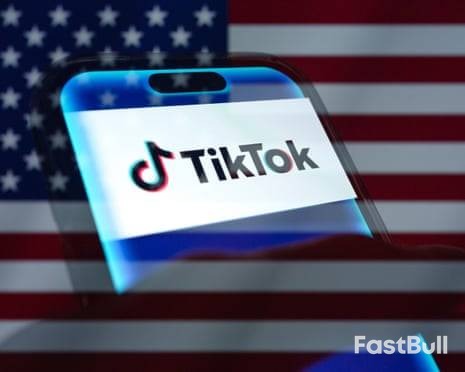
          California Alleges Politically Motivated Suppression

          On Monday, Newsom's office announced that it had received reports and independently verified instances of content critical of President Trump being suppressed on TikTok. The governor has called on the California Department of Justice to investigate whether this conduct violates state law.

          The accusations directly link the alleged censorship to the platform's recent sale to what Newsom's office described as a "Trump-aligned business group." This development has sparked concerns over the platform's editorial independence and its role in political discourse.

          TikTok Blames Technical Failures for Glitches

          In response, a representative for TikTok's new U.S. joint venture dismissed the allegations as inaccurate. The company attributed the performance issues to a data center power outage that caused a "cascading systems failure."

          According to a statement released before Newsom's announcement, the company acknowledged that users might experience bugs, slow load times, or failed posts. The representative stressed that the problems were purely technical and that the network has since been recovered, though a full resolution is still underway.

          User Reports Fuel Censorship Suspicions

          The official investigation comes amid a wave of user complaints about abnormalities on the platform. Several users reported that their posts were being censored, adding weight to the governor's concerns.

          • Steve Vladeck, a professor at Georgetown University's School of Law, reported that a video he made about federal immigration powers was placed "under review."

          • Casey Fiesler, an expert in technology ethics at the University of Colorado, noted a "significant lack of trust" in TikTok's new ownership. She told CNN that she experienced problems uploading videos related to an immigration crackdown in Minneapolis.

          Scrutiny Follows Landmark U.S. Deal

          The controversy follows a landmark deal designed to resolve longstanding U.S. government concerns over national security and data privacy. The agreement established TikTok USDS Joint Venture LLC to manage the app's U.S. user data, algorithms, and security.

          The deal, praised by Trump, was seen as a major milestone for ByteDance after years of regulatory battles under both the Trump and Biden administrations. The new ownership structure is as follows:

          • American and global investors: Hold an 80.1% majority stake.

          • ByteDance: Retains a 19.9% stake.

          • Managing Investors: Cloud company Oracle, private equity firm Silver Lake, and Abu Dhabi-based investment firm MGX each hold a 15% stake.

          A White House official confirmed that both the U.S. and Chinese governments had approved the arrangement. President Trump, who has over 16 million followers on his personal account, previously credited TikTok with helping him win the 2024 election.

          Risk Warnings and Disclaimers
          You understand and acknowledge that there is a high degree of risk involved in trading. Following any strategies or investment methods may lead to potential losses. The content on the site is provided by our contributors and analysts for information purposes only. You are solely responsible for determining whether any trading assets, securities, strategy, or any other product is suitable for investing based on your own investment objectives and financial situation.
          Add to Favorites
          Share

          Micron To Invest $24 Billion In Singapore Plant As AI Boom Strains Global Memory Supply

          James Whitman

          Stocks

          Economic

          Micron Technology on Tuesday committed approximately $24 billion to expand its wafer manufacturing operations in Singapore, as the American memory chipmaker moves to expand production amid global shortages.

          In a press release, Micron said the investment would add 700,000 square feet of cleanroom space —highly-controlled manufacturing areas designed to prevent contamination — at an existing NAND manufacturing complex.

          Production of NAND, a type of memory chip widely used in personal computers, servers and smartphones, is expected to start in the second half of 2028.

          Demand for NAND technology has been skyrocketing in recent months, driven by the rapid expansion of artificial intelligence and data-centric applications.

          In response to the shortage, Micron and its memory competitors, including Samsung Electronics and SK Hynix, have been increasing output.

          Micron operates manufacturing facilities in Singapore as part of its broader Asian production network, which also includes sites in China, Taiwan, Japan, and Malaysia.

          The company is also building a $7 billion advanced packaging plant in Singapore to produce high-bandwidth memory, a type of dynamic random-access memory, or DRAM, used in AI applications.

          The pivot by Micron and other memory makers to prioritize high-bandwidth memory production has contributed to shortages of other types of memory chips. These shortfalls are expected to last through late 2027, according to some estimates.

          Micron said its high-bandwidth memory facility, also located in the same Singapore manufacturing complex, is on track to contribute meaningfully to its HBM supply in 2027.

          "As HBM becomes a part of Micron's Singapore manufacturing footprint, the company expects opportunities for synergies between NAND and DRAM production," the company said in its release.

          Micron added that it plans to manage the pace of capacity expansion at the new facility based on market demand.

          The newly announced NAND expansion is set to generate about 1,600 jobs in fab engineering and operations, incorporating AI, robotics, and smart manufacturing. That follows the creation of about 1,400 new positions tied to the high-bandwidth memory plant.

          "Micron's latest expansion will strengthen our semiconductor ecosystem and further anchor Singapore as a critical node in the global semiconductor supply chain," said Jermaine Loy, managing director of Singapore's Economic Development Board, which encourages local semiconductor manufacturing through various incentives and policies.

          Shares of Micron rose over 3% in overnight trading on Robinhood following the announcement

          Source: CNBC

          To stay updated on all economic events of today, please check out our Economic calendar
          Risk Warnings and Disclaimers
          You understand and acknowledge that there is a high degree of risk involved in trading. Following any strategies or investment methods may lead to potential losses. The content on the site is provided by our contributors and analysts for information purposes only. You are solely responsible for determining whether any trading assets, securities, strategy, or any other product is suitable for investing based on your own investment objectives and financial situation.
          Add to Favorites
          Share

          India and EU Finalize Landmark Free Trade Agreement

          King Ten

          Remarks of Officials

          Daily News

          Economic

          Political

          India and the European Union have concluded a long-awaited Free Trade Agreement, finalizing negotiations that first began in 2007. The pact, described as the "Mother of all deals," creates an economic bloc that accounts for 25% of the world's GDP and a third of all international trade.

          Modi Touts Major Boost for Indian Economy

          Speaking at the India Energy Week 2026 opening ceremony, Prime Minister Narendra Modi announced the historic agreement, highlighting its potential to unlock significant opportunities for citizens in both India and Europe.

          Modi projected that the deal would deliver a substantial boost to India's manufacturing sector and fuel expansion in its services industry. He emphasized that the Free Trade Agreement is set to enhance the confidence of investors and businesses looking to commit capital to India.

          The Prime Minister also noted that the agreement aligns with and complements India's existing trade pacts with the United Kingdom and the European Free Trade Association (EFTA). "This agreement empowers our shared commitment towards democracy and the rule of law," Modi stated.

          Trade between India and the EU reached $136.5 billion in the fiscal year ending March 2025. Combined, the two partners represent nearly 20% of global trade and about a quarter of the world's population.

          Beyond Trade: A New Security and Defence Pact

          Alongside the economic agreement, India and the EU also formalized a Security and Defence Partnership. India’s Defence Minister, Rajnath Singh, and the chiefs of the three military services met with a high-level EU delegation at the Defence Ministry. The EU group was led by Kaja Kallas, the EU High Representative for Foreign Affairs and Security Policy.

          The formal signing of this partnership is scheduled to take place during the 16th India-EU Summit in New Delhi. The summit will be co-chaired by Prime Minister Modi, European Council President Antonio Costa, and European Commission President Ursula von der Leyen, where leaders are expected to adopt a comprehensive joint strategic agenda.

          A Strategic Hedge Against US Trade Policy

          This series of agreements highlights a broader global effort to build alliances that can act as a hedge against the United States. President Donald Trump's actions, including his bid to acquire Greenland and tariff threats against European nations, have tested long-standing Western alliances.

          President Trump has already imposed a 50% tariff on goods from India, and an attempted India-U.S. trade deal collapsed last year following a breakdown in communication between the two governments. The new India-EU pact arrives just days after the EU secured a similar deal with the Mercosur bloc and follows India's own recent trade agreements with Britain, New Zealand, and Oman.

          To stay updated on all economic events of today, please check out our Economic calendar
          Risk Warnings and Disclaimers
          You understand and acknowledge that there is a high degree of risk involved in trading. Following any strategies or investment methods may lead to potential losses. The content on the site is provided by our contributors and analysts for information purposes only. You are solely responsible for determining whether any trading assets, securities, strategy, or any other product is suitable for investing based on your own investment objectives and financial situation.
          Add to Favorites
          Share

          Germany's Push to Reclaim Its Gold From the U.S.

          John Adams

          Central Bank

          Remarks of Officials

          Commodity

          Political

          Russia-Ukraine Conflict

          Economic

          A growing number of German officials are calling for the Bundesbank to repatriate the country's vast gold reserves stored in the United States, citing escalating geopolitical risks. Germany holds 3,352 tonnes of gold, the second-largest reserve in the world, with a significant portion remaining in foreign vaults.

          Approximately 1,200 tonnes, valued at around €164 billion ($194 billion), are currently held at the Federal Reserve Bank of New York. This arrangement, a relic of the Cold War designed to keep the assets safe from the Soviet Union, is now facing intense scrutiny.

          The Geopolitical Trigger for Repatriation

          The primary driver behind the repatriation calls is a shifting global landscape. Emanuel Mönch, a prominent German economist and former head of research at the Bundesbank, has labeled the current storage arrangement in the U.S. as "too risky."

          "Given the current geopolitical situation, it seems risky to store so much gold in the U.S.," Mönch stated. "In the interest of greater strategic independence from the U.S., the Bundesbank would therefore be well-advised to consider repatriating the gold."

          This sentiment is fueled by the United States' increasing use of economic pressure and the dollar as foreign policy tools. Michael Jäger, head of the European Taxpayers Association (TAE), pointed to former President Trump's unpredictability as a key concern.

          "Our gold is no longer safe in the Fed's vaults," Jäger warned, suggesting the risk of the Bundesbank losing access to its reserves is rising.

          Echoing these concerns, EU Parliament member Markus Ferber has called for regular, in-person audits of Germany's gold by Bundesbank officials. "The Bundesbank's policy for gold reserves has to reflect the new geopolitical realities," he explained.

          A Cross-Party Debate Emerges

          While calls for repatriation have traditionally come from politically conservative figures, the idea is gaining broader support. Katharina Beck, the Green Party's finance spokesperson, endorsed the move, describing the country's gold reserves as an "important anchor of stability and trust" that "must not become pawns in geopolitical disputes."

          Despite this growing pressure, the official stance remains unchanged for now. A spokesperson for Friedrich Merz's coalition government recently stated that moving gold out of the U.S. is not currently being considered. The Bundesbank has also made no official statements on the matter, publicly maintaining its trust in the Federal Reserve.

          Voices of Caution Advise Against Hasty Moves

          Not everyone agrees that bringing the gold home is the right decision. Clemens Fuest, President of the Institute for Economic Research (Ifo), advised against repatriation, warning it could have unintended consequences and would "only pour oil on the fire of the current situation."

          Frauke Heiligenstadt, a financial policy spokesperson for the Social Democrats, acknowledged the concerns but argued against a rush to action. She noted that Germany's gold reserves are well diversified, with about half already stored in Frankfurt, which "guaranteed" the country's ability to act. Heiligenstadt added that keeping some gold in New York remains logical due to the close financial ties between Germany, Europe, and the U.S.

          Part of a Global De-Dollarization Trend

          The debate in Germany is not happening in a vacuum. It is part of a wider global trend of de-dollarization and asset repatriation as countries seek to reduce their dependence on the U.S. financial system. This movement gained momentum after the U.S. and its allies froze nearly half of Russia's $650 billion in gold and foreign exchange reserves.

          A 2023 World Gold Council survey revealed the impact of these sanctions.

          • A "substantial share" of central banks expressed concern about potential sanctions.

          • 68% of banks surveyed said they plan to keep their gold reserves within their own borders, up from 50% in 2020.

          One central bank official anonymously told Reuters they had moved their gold from London back to their own country "to hold as a safe haven asset and to keep it safe."

          Numerous countries have already taken action. India repatriated 100 tonnes of its gold in 2024. This follows earlier moves by Poland, which brought home 100 tons in 2019, as well as repatriation programs initiated by Hungary, Romania, Australia, the Netherlands, and Belgium. Germany itself completed a project in 2017 to return roughly half of its total reserves to its own vaults.

          To stay updated on all economic events of today, please check out our Economic calendar
          Risk Warnings and Disclaimers
          You understand and acknowledge that there is a high degree of risk involved in trading. Following any strategies or investment methods may lead to potential losses. The content on the site is provided by our contributors and analysts for information purposes only. You are solely responsible for determining whether any trading assets, securities, strategy, or any other product is suitable for investing based on your own investment objectives and financial situation.
          Add to Favorites
          Share

          Xi Courts Finland Amid Rising Arctic Tensions

          King Ten

          Energy

          Remarks of Officials

          Political

          Russia-Ukraine Conflict

          Economic

          Chinese President Xi Jinping met with Finnish Prime Minister Petteri Orpo on Tuesday, outlining a vision for a partnership centered on a multipolar global order and strengthened economic ties. The talks come as shifting geopolitics and growing strategic competition in the Arctic region reshape international relations.

          China's Vision for a Multipolar World

          During the meeting, Xi expressed Beijing's readiness to collaborate with Helsinki to support an international system centered on the United Nations. He emphasized a future based on a multipolar world and continued economic globalization.

          In this context, Xi highlighted the role he hopes Finland will play in fostering a healthy and stable relationship between China and the European Union. The discussions occur as European nations increasingly look to diversify their foreign relations in response to the volatile foreign policy decisions of the U.S. under President Donald Trump.

          The Arctic: A New Geopolitical Flashpoint

          The Arctic has emerged as a key area of strategic interest for both nations. As melting ice opens new, faster shipping routes between Asia and Europe, the region's importance for international trade is growing rapidly.

          Finland, with one-third of its territory above the Arctic Circle, has deep security concerns. Speaking at the World Economic Forum in Davos, Finnish President Alexander Stubb stated his desire for NATO to agree on an Arctic security deal at its July summit. This follows recent heightened attention on the region, partly fueled by Trump's previous threats regarding Greenland, which were aimed at curbing Chinese and Russian influence.

          China, which defines itself as a "near-Arctic state," is actively pursuing its "Polar Silk Road" initiative to capitalize on these new maritime corridors.

          Undercurrents of Tension in Bilateral Talks

          While the meeting focused on cooperation, it follows recent candid discussions about sensitive security issues. During a state visit to Beijing in 2024, President Stubb raised concerns with Xi over a series of incidents involving damage to undersea power cables, gas pipelines, and telecom infrastructure where Chinese-registered vessels have been implicated. A Chinese ship captain is currently facing allegations of criminal damage in a Hong Kong court related to one of the cases.

          Stubb also addressed the issue of North Korean support for Russia's invasion of Ukraine, a matter that both NATO and the EU consider a provocation.

          Economic Cooperation and Diplomatic Overtures

          On the economic front, Xi encouraged deeper collaboration in sectors like energy transition, agriculture, and forestry. He welcomed Finnish enterprises to "swim freely" in the "vast ocean" of China's market.

          Prime Minister Orpo, who is in Beijing from January 25 to 28, told Xi he looked forward to continuing discussions on both bilateral cooperation and international issues. He also reiterated President Stubb's invitation for Xi to visit Finland. In a reciprocal gesture, Finland's speaker of parliament, Jussi Halla-aho, has invited top Chinese lawmaker Zhao Leji for a visit.

          To stay updated on all economic events of today, please check out our Economic calendar
          Risk Warnings and Disclaimers
          You understand and acknowledge that there is a high degree of risk involved in trading. Following any strategies or investment methods may lead to potential losses. The content on the site is provided by our contributors and analysts for information purposes only. You are solely responsible for determining whether any trading assets, securities, strategy, or any other product is suitable for investing based on your own investment objectives and financial situation.
          Add to Favorites
          Share

          China’s Factory Profits Return to Growth in 2025 as Price War Controls Take Hold

          Gerik

          Economic

          Industrial Profits Reverse A Three Year Slide

          China’s industrial profits rose 0.6% in 2025 compared with the previous year, marking a turning point after three years of contraction. Data released by the National Bureau of Statistics showed that profit growth accelerated toward the end of the year, improving from a 0.1% increase recorded over the January to November period. While the rebound is limited in scale, it signals a stabilization phase for the industrial sector following prolonged margin pressure.
          This improvement reflects a correlation between tighter pricing discipline and profit recovery rather than a broad based demand revival. Manufacturing output expanded despite subdued household consumption, suggesting that cost control and output efficiency played a larger role than final demand growth.

          December Surge Signals Short Term Momentum

          The recovery became more visible in December, when industrial profits climbed 5.3% year on year, the strongest monthly performance since September, when profits surged 21.6%. This followed sharp declines in October and November, when profits fell 5.5% and 13.1% respectively. The rebound coincided with a return to growth in factory activity after eight consecutive months of contraction.
          According to officials, part of the December improvement was linked to pre holiday stockpiling ahead of the Lunar New Year in February. This highlights a short term cyclical boost rather than a structural shift, as seasonal inventory building temporarily lifted production and earnings.

          Policy Intervention Curbs Price Erosion

          A key driver behind the profit stabilization has been Beijing’s campaign against aggressive price undercutting across industrial sectors. Last year’s intense price wars, triggered by weak consumer demand and excess capacity, had significantly eroded margins for major manufacturers. Government intervention to discourage destructive competition appears to have eased downward pressure on prices, allowing profits to recover modestly.
          At the same time, Chinese firms have increasingly turned outward, expanding overseas sales to offset domestic weakness. This strategy has helped sustain industrial output and provided an alternative revenue channel, reinforcing the link between export orientation and profit resilience.

          Exports Offset Weak Domestic Demand

          China met its official economic growth target of 5% last year, supported in part by strong export performance under a one year U.S. China trade truce that limited tariff escalation. Industrial output expanded 5.9% in 2025, outpacing retail sales growth of 3.7%, underscoring the imbalance between production capacity and household consumption.
          This divergence suggests that the profit recovery is more closely tied to supply side adjustments and external demand than to improvements in domestic spending power. As long as consumption growth lags behind output, profit gains are likely to remain uneven across sectors.

          Beijing Signals More Support For Consumption

          Policymakers have acknowledged the need to strengthen domestic demand to sustain recovery momentum. Officials from the Commerce Ministry said Beijing will intensify efforts to boost household spending on cars, home appliances, and electronic goods, while also targeting services consumption. These measures aim to address the structural weakness in consumer demand that continues to constrain broader profit growth.
          Overall, the return to positive industrial profit growth in 2025 marks an important stabilization point rather than a full recovery. The data indicate that policy discipline and export expansion can arrest declines, but lasting improvement will depend on whether consumption driven demand can meaningfully reaccelerate in the year ahead.

          Source: CNBC

          To stay updated on all economic events of today, please check out our Economic calendar
          Risk Warnings and Disclaimers
          You understand and acknowledge that there is a high degree of risk involved in trading. Following any strategies or investment methods may lead to potential losses. The content on the site is provided by our contributors and analysts for information purposes only. You are solely responsible for determining whether any trading assets, securities, strategy, or any other product is suitable for investing based on your own investment objectives and financial situation.
          Add to Favorites
          Share

          Tariff Threats Return as Big Tech Earnings Steady Market Focus

          Gerik

          Economic

          Trump Reapplies Tariff Leverage On South Korea

          The White House has once again turned to tariffs as a policy lever, with Donald Trump announcing plans to raise duties on selected South Korean imports. Tariffs on automobiles, pharmaceuticals, and lumber are set to increase to 25% from 15%, a move Trump framed as a response to delays in Seoul’s legislative approval of a bilateral trade agreement reached in October.
          This decision underscores how trade policy is increasingly being used as a tool to influence domestic political processes in partner countries, rather than purely to address trade imbalances. The relationship between tariff threats and legislative pressure is direct, as the higher duties are explicitly tied to perceived inaction by South Korea’s parliament rather than shifts in trade volumes or competitiveness.

          Global Trade Realignment Continues Elsewhere

          While Washington raises barriers, other economies are pursuing deeper integration. India confirmed it has concluded negotiations on a trade agreement with the European Union, with formal signing expected within six months and implementation within a year. This contrast highlights a growing divergence in global trade strategy, where U.S. policy leans toward coercive measures while other regions prioritize corridor building and tariff reduction.
          The broader implication is not immediate market disruption, but a gradual recalibration of global trade relationships. As U.S. actions become more unpredictable, partners may increasingly seek stability through alternative alliances, a trend that remains correlational for now but could develop into a structural shift over time.

          Markets Stay Anchored To Big Tech Momentum

          Despite the geopolitical noise, equity markets showed resilience. Major U.S. indexes closed higher on Monday, driven by gains in Apple, Meta, and Microsoft, as investors positioned ahead of their earnings reports later this week. The performance suggests that corporate fundamentals and profit outlooks continue to outweigh political risk in the short term.
          Technology sector confidence was further supported by Nvidia’s $2 billion investment in CoreWeave, reinforcing expectations of sustained capital spending tied to artificial intelligence infrastructure. In parallel, industry executives warned that memory chip shortages are likely to persist through 2027, reflecting ongoing demand pressures from AI-related applications.

          Currencies And Commodities Signal Underlying Unease

          While equities held firm, other asset classes reflected growing caution. The U.S. Dollar Index hovered near its weakest level since September, suggesting that tariff escalation and policy uncertainty are weighing on currency sentiment. Precious metals extended their rally, with both gold and silver posting sharp gains, indicating sustained demand for perceived stores of value amid geopolitical tension.
          These movements point to a correlation between policy unpredictability and hedging behavior, even as risk assets remain supported by earnings strength.

          Federal Reserve Looms As Next Catalyst

          Attention now shifts to the Federal Reserve, which is set to announce its policy decision in the coming days. While rates are widely expected to remain unchanged, Chair Jerome Powell’s press conference will be closely scrutinized, particularly in light of Trump’s repeated criticism of the Fed’s independence. Markets are also alert to the possibility that Trump could time the announcement of a future Fed chair nominee around the same period, adding another layer of uncertainty.
          For now, markets appear willing to compartmentalize geopolitical risk, focusing instead on earnings momentum and technology-led growth. Trump’s renewed tariff threats against South Korea add to an already crowded policy backdrop, but unless they translate into broader trade retaliation or earnings damage, investors remain anchored to corporate performance rather than political headlines.

          Source: CNBC

          To stay updated on all economic events of today, please check out our Economic calendar
          Risk Warnings and Disclaimers
          You understand and acknowledge that there is a high degree of risk involved in trading. Following any strategies or investment methods may lead to potential losses. The content on the site is provided by our contributors and analysts for information purposes only. You are solely responsible for determining whether any trading assets, securities, strategy, or any other product is suitable for investing based on your own investment objectives and financial situation.
          Add to Favorites
          Share
          FastBull
          Copyright © 2026 FastBull Ltd

          728 RM B 7/F GEE LOK IND BLDG NO 34 HUNG TO RD KWUN TONG KLN HONG KONG

          TelegramInstagramTwitterfacebooklinkedin
          App Store Google Play Google Play
          Products
          Charts

          Chats

          Q&A with Experts
          Screeners
          Economic Calendar
          Data
          Tools
          Membership
          Features
          Function
          Markets
          Copy Trading
          Latest Signals
          Contests
          News
          Analysis
          24/7
          Columns
          Education
          Company
          Careers
          About Us
          Contact Us
          Advertising
          Help Center
          Feedback
          User Agreement
          Privacy Policy
          Personal Information Protection Statement
          Business

          White Label

          Data API

          Web Plug-ins

          Poster Maker

          Affiliate Program

          Risk Disclosure

          The risk of loss in trading financial instruments such as stocks, FX, commodities, futures, bonds, ETFs and crypto can be substantial. You may sustain a total loss of the funds that you deposit with your broker. Therefore, you should carefully consider whether such trading is suitable for you in light of your circumstances and financial resources.

          No decision to invest should be made without thoroughly conducting due diligence by yourself or consulting with your financial advisors. Our web content might not suit you since we don't know your financial conditions and investment needs. Our financial information might have latency or contain inaccuracy, so you should be fully responsible for any of your trading and investment decisions. The company will not be responsible for your capital loss.

          Without getting permission from the website, you are not allowed to copy the website's graphics, texts, or trademarks. Intellectual property rights in the content or data incorporated into this website belong to its providers and exchange merchants.

          Not Logged In

          Log in to access more features

          Connect Broker
          Become a signal provider
          Help Center
          Customer Service
          Dark Mode
          Price Up/Down Colors

          Log In

          Sign Up

          Position
          Layout
          Fullscreen
          Default to Chart
          The chart page opens by default when you visit fastbull.com