Markets
News
Analysis
User
24/7
Economic Calendar
Education
Data
- Names
- Latest
- Prev



Signal Accounts for Members
All Signal Accounts
All Contests


U.S. Average Hourly Wage MoM (SA) (Dec)A:--
F: --
U.S. Average Weekly Working Hours (SA) (Dec)A:--
F: --
P: --
U.S. New Housing Starts Annualized MoM (SA) (Oct)A:--
F: --
U.S. Total Building Permits (SA) (Oct)A:--
F: --
P: --
U.S. Building Permits MoM (SA) (Oct)A:--
F: --
P: --
U.S. Annual New Housing Starts (SA) (Oct)A:--
F: --
U.S. U6 Unemployment Rate (SA) (Dec)A:--
F: --
P: --
U.S. Manufacturing Employment (SA) (Dec)A:--
F: --
U.S. Labor Force Participation Rate (SA) (Dec)A:--
F: --
P: --
U.S. Private Nonfarm Payrolls (SA) (Dec)A:--
F: --
U.S. Unemployment Rate (SA) (Dec)A:--
F: --
U.S. Nonfarm Payrolls (SA) (Dec)A:--
F: --
U.S. Average Hourly Wage YoY (Dec)A:--
F: --
Canada Labor Force Participation Rate (SA) (Dec)A:--
F: --
P: --
U.S. Government Employment (Dec)A:--
F: --
P: --
U.S. UMich Consumer Expectations Index Prelim (Jan)A:--
F: --
P: --
U.S. UMich Consumer Sentiment Index Prelim (Jan)A:--
F: --
P: --
U.S. UMich Current Economic Conditions Index Prelim (Jan)A:--
F: --
P: --
U.S. UMich 1-Year-Ahead Inflation Expectations Prelim (Jan)A:--
F: --
P: --
U.S. UMich 5-Year-Ahead Inflation Expectations Prelim YoY (Jan)A:--
F: --
P: --
U.S. 5-10 Year-Ahead Inflation Expectations (Jan)A:--
F: --
P: --
China, Mainland M1 Money Supply YoY (Dec)--
F: --
P: --
China, Mainland M0 Money Supply YoY (Dec)--
F: --
P: --
China, Mainland M2 Money Supply YoY (Dec)--
F: --
P: --
U.S. Weekly Total Oil Rig CountA:--
F: --
P: --
U.S. Weekly Total Rig CountA:--
F: --
P: --
China, Mainland M0 Money Supply YoY (Dec)--
F: --
P: --
China, Mainland M1 Money Supply YoY (Dec)--
F: --
P: --
China, Mainland M2 Money Supply YoY (Dec)--
F: --
P: --
Indonesia Retail Sales YoY (Nov)A:--
F: --
P: --
Euro Zone Sentix Investor Confidence Index (Jan)--
F: --
P: --
India CPI YoY (Dec)--
F: --
P: --
Germany Current Account (Not SA) (Nov)--
F: --
P: --
Canada National Economic Confidence Index--
F: --
P: --
U.S. Conference Board Employment Trends Index (SA) (Dec)--
F: --
P: --
Russia CPI YoY (Dec)--
F: --
P: --
FOMC Member Barkin Speaks
U.S. 3-Year Note Auction Yield--
F: --
P: --
U.S. 10-Year Note Auction Avg. Yield--
F: --
P: --
Japan Trade Balance (Customs Data) (SA) (Nov)--
F: --
P: --
Japan Trade Balance (Nov)--
F: --
P: --
U.K. BRC Overall Retail Sales YoY (Dec)--
F: --
P: --
U.K. BRC Like-For-Like Retail Sales YoY (Dec)--
F: --
P: --
Turkey Retail Sales YoY (Nov)--
F: --
P: --
U.S. NFIB Small Business Optimism Index (SA) (Dec)--
F: --
P: --
Brazil Services Growth YoY (Nov)--
F: --
P: --
Canada Building Permits MoM (SA) (Nov)--
F: --
P: --
U.S. CPI MoM (SA) (Dec)--
F: --
P: --
U.S. CPI YoY (Not SA) (Dec)--
F: --
P: --
U.S. Real Income MoM (SA) (Dec)--
F: --
P: --
U.S. CPI MoM (Not SA) (Dec)--
F: --
P: --
U.S. Core CPI (SA) (Dec)--
F: --
P: --
U.S. Core CPI YoY (Not SA) (Dec)--
F: --
P: --
U.S. Core CPI MoM (SA) (Dec)--
F: --
P: --
U.S. Weekly Redbook Index YoY--
F: --
P: --
U.S. New Home Sales Annualized MoM (Oct)--
F: --
P: --
U.S. Annual Total New Home Sales (Oct)--
F: --
P: --
U.S. Cleveland Fed CPI MoM (SA) (Dec)--
F: --
P: --
China, Mainland Trade Balance (CNH) (Dec)--
F: --
P: --


No matching data
Latest Views
Latest Views
Trending Topics
Top Columnists
Latest Update
White Label
Data API
Web Plug-ins
Affiliate Program
View All

No data
US warns citizens to leave Venezuela following Maduro's capture, amidst military pressure and diplomatic opening.
The U.S. State Department has issued an urgent warning for American citizens to depart Venezuela immediately, citing a volatile and unpredictable security environment across the South American nation.
This advisory follows a high-stakes U.S. military operation in Caracas last week that resulted in the capture of Venezuelan leader Nicolás Maduro and his wife, Cilia Flores. Both have since pleaded not guilty to a series of federal charges, including narco-terrorism, in a New York court.
Venezuela remains under a "Level 4: Do Not Travel" advisory, the highest warning level issued by the U.S. government. The State Department points to severe risks for Americans, including:
• Wrongful detention and torture
• Kidnapping and terrorism
• Arbitrary enforcement of local laws
• Violent crime and civil unrest
• Poor health infrastructure
The advisory specifically highlights reports of armed militias, known as "colectivos," establishing roadblocks to search vehicles for any signs of U.S. citizenship or affiliation.
Even with the resumption of international flights, officials are urging Americans to remain vigilant, be aware of their surroundings, and exercise caution on the roads. The U.S. government has reiterated that it cannot provide any emergency services to its citizens within Venezuela.
The travel warning comes amid a broader pressure campaign by the Trump administration against drug cartels and the socialist regime in Venezuela.
U.S. military initiatives include:
• Operation Southern Spear: Launched in September 2025, this operation involves strikes against vessels in the Pacific and Caribbean suspected of transporting drugs. Officials report that over 100 alleged narco-terrorists have been killed.
• Operation Absolute Resolve: This targeted overnight raid on January 3 led to the capture of Maduro and his wife without any American casualties.
In addition to military action, the U.S. has imposed sanctions on oil tankers moving to and from Venezuela. On Friday, the U.S. seized an oil tanker in the Caribbean Sea as part of this enforcement.
Days after Maduro’s capture, President Trump announced that the United States would receive between 30 and 50 million barrels of previously sanctioned Venezuelan oil.
"This Oil will be sold at its Market Price, and that money will be controlled by me, as President of the United States of America, to ensure it is used to benefit the people of Venezuela and the United States!" Trump stated on Truth Social.
The president has directed Energy Secretary Chris Wright to implement this plan and has also said that oil companies are expected to invest at least $100 billion to rebuild Venezuela's oil infrastructure and increase production.

Despite the heightened tensions, both the U.S. and Venezuela have indicated they are exploring the possibility of restoring diplomatic relations. An American delegation recently visited the country to assess the potential reopening of the U.S. Embassy in Caracas. The embassy was closed in 2019 after the United States declined to recognize Maduro as the country's legitimate leader following allegations of election fraud.
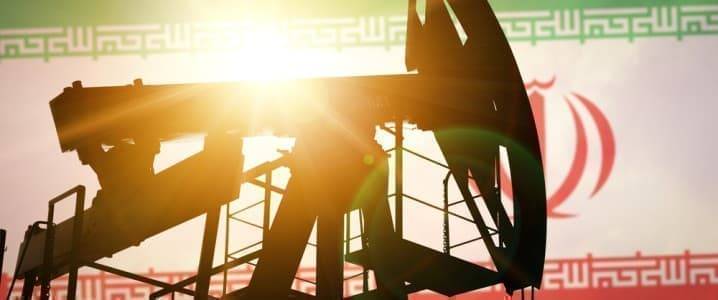
Despite facing heavy United States sanctions on its energy exports and bombings by Israel, Iran has been producing oil at record levels. By building strong partnerships with China and other global powers, Tehran has successfully sidestepped sanctions to keep its crude flowing—a trend expected to continue into 2026.
However, a new geopolitical shockwave threatens this stability. The recent U.S. military intervention in Venezuela could make Iran's trading partners increasingly wary of buying sanctioned crude, potentially undermining its export growth.

While years of sanctions have diminished its former influence, Iran remains a major force in the global energy market. The country’s powerful position is built on vast natural resources.
• Oil Reserves: Fourth-largest proven oil reserves in the world, holding about 9% of the global total, surpassed only by Venezuela, Saudi Arabia, and Canada.
• Natural Gas: Second-largest proven natural gas reserves, accounting for 17% of the world's share.
• OPEC Status: The third-largest crude producer and fourth-largest exporter within the organization.
Washington first reinstated sanctions on Iran in 2018 during President Trump's first term. Since beginning his second term in January of last year, Trump has rolled out several new rounds of sanctions targeting Iranian oil.
At its peak in 1974, Iran was producing over 6 million barrels per day (bpd) of crude. Although years of war and conflict have lowered its capacity, the country has steadily rebuilt its output despite the sanctions regime. Production has climbed from around 2.9 million bpd in 2019 to an estimated 3.2 to 4 million bpd in 2024.
This resurgence is driven by two key factors: lax sanctions enforcement by the United States and Iran's persistent efforts to circumvent the restrictions. This strategy has allowed the nation to re-emerge as a major crude exporter, with one country in particular providing a crucial lifeline.
China, the world's largest oil importer, has become the primary destination for Iranian crude. In the first half of 2025, Iranian oil made up around 13.6% of China’s total purchases.
According to Kpler data, China buys roughly 90% of all oil shipped from Iran, averaging about 1.38 million bpd in the first half of last year. Tehran has successfully attracted Chinese buyers by offering its crude at steep discounts of up to $7 to $8 a barrel below global benchmarks—a tactic also used by Russia to move its sanctioned energy supplies.
The main buyers are China's independent refiners, known as "teapots," which are concentrated in Shandong province and account for about a quarter of the country's refining capacity. In contrast, China's state-owned oil companies have largely avoided purchasing Iranian crude due to the sanctions. In December, these teapot refiners increased their purchases of Iranian oil from bonded storage and offshore tankers after new import quotas were issued in November.
While the Trump administration has penalized three Chinese independent refiners for importing Iranian crude, Beijing continues to reject unilateral sanctions and defends its trade with Tehran as legitimate.
Even with rising oil exports, Iran's economy is in distress. A former senior Iranian oil official highlighted a core issue: "Even if export volumes increase, the key problem is the repatriation of revenues, which faces numerous obstacles. This lack of oil revenue repatriation, despite higher export volumes, puts Iran's economy at risk of bankruptcy."
The economic indicators are grim. Iran's currency has collapsed, and the country faced a headline inflation rate of 42.2% in December. In response to unsustainable subsidies, the government was forced to increase gasoline prices for certain vehicles, sparking widespread protests across the country.
The U.S. military intervention in Venezuela on January 3rd, which involved the capture of President Maduro and his wife, has intensified geopolitical uncertainty. The unilateral action has raised questions about whether Washington might intervene similarly in Iran. President Trump has suggested that U.S. military action could also extend to Colombia and Mexico. In response, Iranian officials have warned that U.S. troops could be targeted if America intervenes in Iran's protests.
This development is set to shift global oil trade in 2026. Like Iran, Venezuela is a major oil producer under U.S. sanctions, and both China and Iran have bypassed these restrictions to purchase Venezuelan crude. The recent military action may now prompt Chinese refiners to reconsider their reliance on Iranian crude in the coming months, though any concrete shift has yet to materialize.

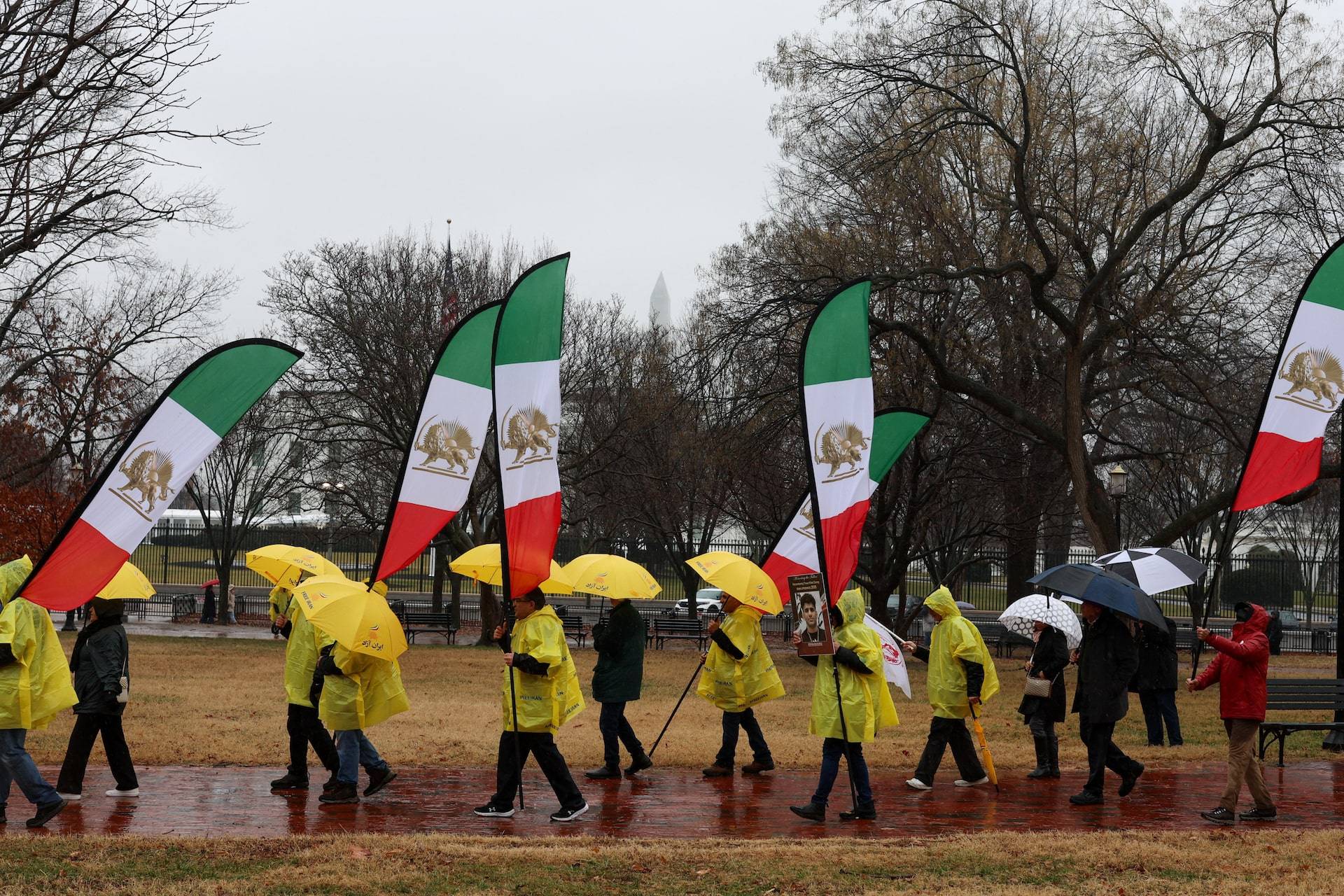
As major anti-government protests sweep across Iran, a sharp debate is unfolding in Washington over the best course of action for the United States. Key lawmakers from both parties are questioning the wisdom of military intervention, even as President Donald Trump keeps the option on the table.
The situation has triggered diverse reactions among senior U.S. senators:
• Senators Rand Paul and Mark Warner are urging caution, warning that military strikes could backfire.
• Senator Lindsey Graham is advocating for a muscular approach to destabilize the Iranian regime.
• Warner suggests that diplomatic pressure, backed by international allies, is a more prudent path.
On Sunday, prominent senators from both Republican and Democratic parties expressed skepticism about using military force against Iran. They argued that such a move could inadvertently strengthen the current regime by unifying the Iranian populace against a foreign aggressor.
"I don't know that bombing Iran will have the effect that is intended," Republican Senator Rand Paul stated on ABC's "This Week."
Democratic Senator Mark Warner echoed this sentiment on "Fox News Sunday," warning that a military strike could risk uniting Iranians against the U.S. "in a way that the regime has not been able to." Warner pointed to history, arguing that the U.S.-backed overthrow of Iran's government in 1953 ultimately paved the way for the rise of the Islamic regime in the late 1970s.
The domestic turmoil in Iran has been described as the most significant in years, leading the Revolutionary Guards to blame the unrest on terrorists while vowing to protect the existing system.
In stark contrast, Republican Senator Lindsey Graham advocated for a much more aggressive strategy. A well-known foreign policy hawk, Graham urged President Trump to take decisive action to support the protesters and intimidate the Iranian government.
"If I were you, Mr. President, I would kill the leadership that are killing the people," Graham declared on Fox News' "Sunday Morning Futures." He added that Trump "needs to embolden the protesters and scare the hell out of the [Iranian] regime... You've got to end this."
His comments reflect a push for direct intervention aimed at collapsing the current power structure in Iran.
The debate comes as President Trump is reportedly considering his next steps. According to The Wall Street Journal, military and diplomatic officials are scheduled to brief the president on Tuesday about a range of options, including potential cyberattacks and military action.
In response to the threat of American intervention, Iran has stated it would target U.S. military bases if an attack occurs.
Meanwhile, a prominent opposition figure is preparing for a potential political shift. Reza Pahlavi, the U.S.-based son of the shah ousted in the 1979 revolution, announced Sunday that he is ready to return to Iran and guide a transition to a democratic government.
"I'm already planning on that," Pahlavi said on "Sunday Morning Futures." "My job is to lead this transition to make sure that no stone is left unturned, that in full transparency, people have an opportunity to elect their leaders freely and to decide their own future."
Investors might be underestimating how sharply UK inflation, interest rates, and gilt yields could fall by 2026, according to a new forecast from Capital Economics. While the firm’s predictions point to a significant cooling, it also warns that political pressures could easily derail this economic trajectory.
The firm's projections for GDP growth are largely in line with mainstream expectations. It foresees economic growth slowing from 1.4% in 2025 to 1% in 2026, before rising to 1.2% in 2027—closely matching consensus forecasts of 1.1% and 1.4% for those years. This slowdown is attributed to the lingering effects of past interest rate hikes, tighter fiscal policy, and weak demand from overseas.
Even with expected cuts to the Bank Rate, the average mortgage rate for households will continue to rise. Capital Economics estimates that UK growth will remain below its potential rate of around 1.5%. However, the firm’s analysis diverges from the consensus view in four crucial areas that could reshape the market outlook.
Capital Economics has identified four specific points where its forecasts break from the mainstream, painting a different picture for consumer behavior, inflation, interest rates, and government bonds.
1. Weaker Consumer Spending and Wage Growth
The firm anticipates softer consumer spending growth than others, projecting 0.7% in 2026 and 1.2% in 2027, compared to consensus estimates of 0.9% and 1.4%.
This is linked to the labor market. While its unemployment forecast matches the consensus—rising from 4.7% in 2025 to 5.1% in 2026 before falling to 4.9% in 2027—Capital Economics believes this will trigger a more pronounced slowdown in wage growth. As a result, real household income growth is expected to slow from 1.0% in 2025 to just 0.8% in 2026, before recovering to 1.5% in 2027.
2. Inflation Falling Below the 2% Target
Slower GDP and wage growth directly feed into the firm's second contrarian call: inflation will fall further and faster than expected.
The analysts project that CPI inflation will drop from 3.2% in November 2025 to meet the 2% target by April 2026, eventually hitting 1.8% by December 2026. This is a more aggressive decline than the consensus forecast, which sees inflation only reaching 2.2% by the fourth quarter of 2026.
3. Deeper Interest Rate Cuts
With inflation under control, Capital Economics predicts the Bank of England will cut its key interest rate to 3%—significantly lower than the 3.50% currently expected by investors. This rate aligns with the firm’s estimate of the neutral rate of interest. To support its view, the brokerage noted it correctly predicted last year that the Bank Rate would fall to 3.75% when financial markets were pricing in a rate between 4.25% and 4.50% at the start of 2025.
4. Lower Gilt Yields
The fourth divergence concerns government bond yields. Capital Economics forecasts the 10-year gilt yield will fall from 4.40% to 4.25% by the end of 2026 and then move sideways in 2027. This outlook is more bullish for bonds than the consensus, which projects yields will only decline to 4.35% and 4.30% over the same period.
While the economic data points one way, political decisions could shift the outcome. Capital Economics suggests that fiscal policy may not be tightened as much as the Chancellor currently plans.
The firm's forecasts are consistent with the Chancellor's fiscal "headroom" growing from £21.7 billion in the Budget to about £40 billion. The recent fall in gilt yields has already increased this headroom to an estimated £24 billion. This financial flexibility means the budget deficit can be reduced without implementing such severe fiscal tightening.
Political pressure will likely lead the Chancellor to use this extra headroom to increase public spending. In a departure from consensus, Capital Economics argues that higher public spending and borrowing are more probable than additional tax hikes.
The extent of this fiscal shift could depend on whether Prime Minister Starmer and Chancellor Reeves remain in their roles before and after the local elections on May 7. The firm outlined three scenarios if they are replaced, most of which would result in looser fiscal policy and slightly stronger GDP growth, but also higher inflation, interest rates, and gilt yields. The biggest domestic political risk to their forecast would be a leadership change that causes a sharp spike in gilt yields.
Looking beyond the next few years, Capital Economics is optimistic. An easing of inflation and a return to a neutral interest rate would support stronger economic growth. The firm expects UK GDP growth to accelerate in the 2030s to an average of 2%, forecasting that the UK is positioned to benefit more than many other economies from productivity gains linked to artificial intelligence.
President Donald Trump is weighing a range of potential actions against Iran, with aides reportedly preparing to brief him on military, cyber, and economic options. This development comes amid the most significant anti-government protests in Iran since 2022, prompting a series of warnings from the White House to Tehran.

According to reports from MS Now and other media outlets citing U.S. officials, the president has been presented with plans that include everything from direct military strikes to non-military measures. Trump’s advisors are scheduled to brief him on Tuesday regarding these options, which are designed to follow through on his recent threats against the Iranian government.
In recent days, Trump has warned Iran’s leaders against using force on protestors and said on Saturday that the U.S. is "ready to help."
The deliberations in Washington are set against a backdrop of major civil unrest in Iran. The country's clerical leadership is facing a third week of widespread protests fueled by an ongoing economic crisis.
Human rights agencies report that more than 500 people have been killed as the government intensifies its crackdown, which has reportedly included internet blackouts to disrupt communication among demonstrators.
Economic Crisis Fuels Unrest
Iran, a nation of 92 million people, is struggling with one of the world's highest inflation rates, which currently stands above 50%. This severe economic pressure is a key driver of the public's discontent.
The country has been an Islamic Republic since the 1979 revolution, which deposed the U.S.-backed Shah. It is currently led by the Supreme Leader, Ayatollah Ali Khamenei.
Earlier this week, President Trump threatened direct military intervention if Iran moves to crush the protest movement. In response, Tehran issued a stern warning on Sunday, stating that any U.S. strike would trigger retaliation against both American and Israeli military bases in the region.
The White House and the U.S. Department of Defense have not yet responded to requests for comment on the matter. This story is developing and will be updated.
Tensions between the United States and Cuba are escalating, with Cuban Foreign Minister Bruno Rodriguez accusing the U.S. of "criminal behavior" in the Western Hemisphere. The sharp rebuke comes as the U.S. repositions warships off the Cuban coast following the successful military capture of Venezuelan ex-president Nicolas Maduro.

The diplomatic clash ignited after President Donald Trump claimed Venezuela had been paying Cuba for security services, a charge Havana vehemently denies. With Maduro now renditioned to New York to face drug trafficking charges, the Trump administration has shifted its focus to Cuba, long seen as a disruptive force in the region by U.S. policymakers.
President Trump has intensified his rhetoric, threatening to completely isolate the island nation. In a social media post written in all caps, Trump declared: "THERE WILL BE NO MORE OIL OR MONEY GOING TO CUBA — ZERO!" He followed up with a warning, stating, "I strongly suggest they make a deal, BEFORE IT IS TOO LATE."
The President did not specify what "deal" he was seeking or what consequences Cuba would face for non-compliance. He framed the U.S. intervention in Venezuela as a protective measure, stating, "Venezuela now has the United States of America, the most powerful military in the World (by far!), to protect them, and protect them we will."
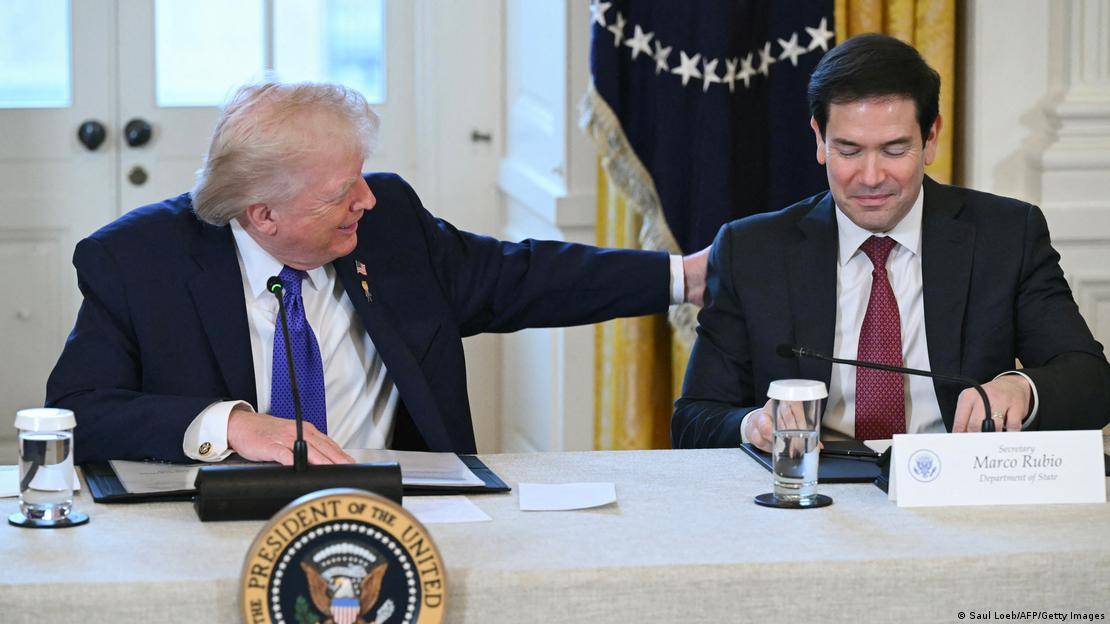
Trump has also predicted that Cuba is "ready to fall." In a notable exchange, he responded affirmatively to suggestions that Secretary of State Marco Rubio—a Florida native of Cuban descent—would soon become the president of Cuba. "Sounds good to me," Trump wrote. Rubio also serves as acting national security advisor and has been tasked by Trump with overseeing operations in Venezuela and other global hotspots.

Cuban Foreign Minister Bruno Rodriguez fired back on X, rejecting Trump's claims and defending his country's policies. "Cuba has never received monetary or material compensation for the security services it has provided to any country," his post read.
Rodriguez underscored Cuba's right to source its energy independently, stating Havana is entitled to import fuel "without interference or subordination to the unilateral coercive measures of the United States." This assertion addresses Trump's direct threat to cut off Cuba's oil supply, a critical resource for the island nation.
The relationship between Cuba and Venezuela has been a cornerstone of regional politics for decades, with former leaders Fidel Castro and Hugo Chavez viewing each other as allies against U.S. influence. This partnership became economically vital for Cuba, which grew increasingly dependent on Venezuelan oil after 2000 in the face of a longstanding U.S. trade embargo.
The recent U.S. military operation in Caracas has had a direct human cost for Cuba. The government in Havana reported this week that 32 of its military personnel were killed during the U.S. attack. They were present in the Venezuelan capital under a security agreement between the two nations.
President Trump believes Maduro's removal will precipitate the collapse of Cuba's Communist government. Predicting a dire economic future for the island, he stated confidently, "It's going down. It's going down for the count."
Protests across Iran have led to more than 500 deaths, according to a new report from the U.S.-based rights group HRANA. The escalating crisis has prompted Tehran to issue a stark warning to the United States, threatening to target American military bases if President Donald Trump intervenes.
The demonstrations, which began on December 28 over rising prices, have evolved into the most significant challenge to Iran's clerical leadership since 2022. HRANA, which compiles data from activists, reports a death toll including 490 protesters and 48 security personnel. The group also estimates that over 10,600 people have been arrested in just two weeks. Iranian authorities have not released an official casualty count, and Reuters could not independently verify these numbers.
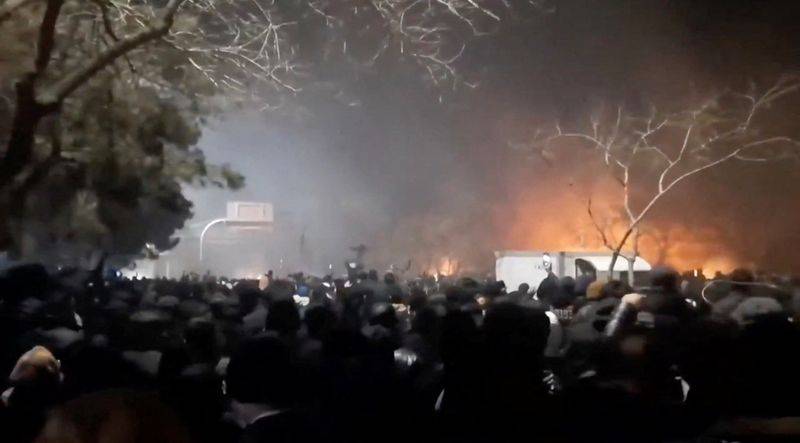
Information from within the country remains limited due to an internet blackout imposed by the government. However, social media footage from Tehran on Saturday showed massive crowds marching and chanting. Another video, verified by Reuters, captured a chaotic scene in the northeastern city of Mashhad, with smoke from street fires filling the night sky amid sounds of explosions.

In a counter-narrative, Iranian state television on Sunday aired footage of dozens of body bags at the Tehran coroner's office, attributing the deaths to "armed terrorists."
The Iranian government has responded with force and rhetoric, accusing the United States and Israel of orchestrating the unrest. As President Trump considers his options, which reportedly include military strikes and cyber warfare, Tehran is drawing clear red lines.
Mohammad Baqer Qalibaf, Iran's Parliament Speaker and a former Revolutionary Guards commander, warned Washington against any "miscalculation."
"Let us be clear: in the case of an attack on Iran, the occupied territories (Israel) as well as all U.S. bases and ships will be our legitimate target," Qalibaf stated.
The Wall Street Journal reported on Sunday that President Trump was scheduled to receive a briefing on potential actions against Iran, ranging from expanded sanctions to direct military intervention.
This geopolitical tension has placed regional actors on high alert. Israeli sources confirmed their security apparatus was preparing for the possibility of U.S. action. An Israeli military official described the protests as an internal Iranian matter but affirmed that Israel's military was monitoring the situation and was ready to respond "with power if need be."
Iranian President Masoud Pezeshkian claimed in a television interview that the U.S. and Israel were masterminding the destabilization. He alleged that Iran's enemies had brought in "terrorists" to attack banks, mosques, and public property.
"Families, I ask you: do not allow your young children to join rioters and terrorists who behead people and kill others," Pezeshkian said. He added that his government was prepared to listen to the public's economic concerns.
To bolster the official narrative, state TV has broadcast funeral processions for security personnel killed during the protests in cities like Gachsaran and Yasuj. According to state media, 30 security members will be buried in Isfahan, with another six reported killed by "rioters" in Kermanshah.
Alan Eyre, a former U.S. diplomat and Iran expert, told Reuters he believes it is unlikely the protests will topple the government. "I think it more likely that it puts these protests down eventually, but emerges from the process far weaker," he said, noting the cohesion of Iran's elite and the lack of an organized opposition.
President Trump has been vocal in his support for the protesters. "Iran is looking at FREEDOM, perhaps like never before. The USA stands ready to help!!!" he posted on social media Saturday.
High-level discussions are ongoing. An Israeli source confirmed that Prime Minister Benjamin Netanyahu and U.S. Secretary of State Marco Rubio discussed potential U.S. intervention in a phone call on Saturday.
Prominent opposition figures have also weighed in. Reza Pahlavi, the exiled son of Iran's last shah, praised the protesters' "indescribable bravery" and urged them, "Do not abandon the streets."
Maryam Rajavi, president-elect of the Paris-based National Council of Resistance of Iran, wrote on X that the Iranian people had "asserted control of public spaces and reshaped Iran's political landscape."
Speaking at a cabinet meeting, Netanyahu said Israel was closely monitoring events. "We all hope that the Persian nation will soon be freed from the yoke of tyranny," he said.
White Label
Data API
Web Plug-ins
Poster Maker
Affiliate Program
The risk of loss in trading financial instruments such as stocks, FX, commodities, futures, bonds, ETFs and crypto can be substantial. You may sustain a total loss of the funds that you deposit with your broker. Therefore, you should carefully consider whether such trading is suitable for you in light of your circumstances and financial resources.
No decision to invest should be made without thoroughly conducting due diligence by yourself or consulting with your financial advisors. Our web content might not suit you since we don't know your financial conditions and investment needs. Our financial information might have latency or contain inaccuracy, so you should be fully responsible for any of your trading and investment decisions. The company will not be responsible for your capital loss.
Without getting permission from the website, you are not allowed to copy the website's graphics, texts, or trademarks. Intellectual property rights in the content or data incorporated into this website belong to its providers and exchange merchants.
Not Logged In
Log in to access more features

FastBull Membership
Not yet
Purchase
Log In
Sign Up