• Trade
  • Markets
  • Copy
  • Contests
  • News
  • 24/7
  • Calendar
  • Q&A
  • Chats
Screeners
SYMBOL
LAST
ASK
BID
HIGH
LOW
NET CHG.
%CHG.
SPREAD
SPX
S&P 500 Index
6978.59
6978.59
6978.59
6988.81
6958.82
+28.36
+ 0.41%
--
DJI
Dow Jones Industrial Average
49003.40
49003.40
49003.40
49157.80
48862.52
-408.99
-0.83%
--
IXIC
NASDAQ Composite Index
23817.11
23817.11
23817.11
23865.26
23694.38
+215.76
+ 0.91%
--
USDX
US Dollar Index
95.910
95.990
95.910
96.020
95.660
+0.370
+ 0.39%
--
EURUSD
Euro / US Dollar
1.19904
1.19912
1.19904
1.20439
1.19746
-0.00488
-0.41%
--
GBPUSD
Pound Sterling / US Dollar
1.37961
1.37968
1.37961
1.38466
1.37885
-0.00508
-0.37%
--
XAUUSD
Gold / US Dollar
5278.83
5279.24
5278.83
5285.45
5157.13
+100.25
+ 1.94%
--
WTI
Light Sweet Crude Oil
62.361
62.391
62.361
62.842
62.192
-0.076
-0.12%
--

Community Accounts

Signal Accounts
--
Profit Accounts
--
Loss Accounts
--
View More

Become a signal provider

Sell trading signals to earn additional income

View More

Guide to Copy Trading

Get started with ease and confidence

View More

Signal Accounts for Members

All Signal Accounts

Best Return
  • Best Return
  • Best P/L
  • Best MDD
Past 1W
  • Past 1W
  • Past 1M
  • Past 1Y

All Contests

  • All
  • Trump Updates
  • Recommend
  • Stocks
  • Cryptocurrencies
  • Central Banks
  • Featured News
Top News Only
Share

'Dollar Smile' Theory Developer: New Cycle Of USD Depreciation May Have Begun

Share

South Korea Won Strengthens Past 1420 Per Dollar For First Time Since Oct 30, 2025

Share

Spot Gold Surged $100.03 During The Day, Breaking Through $5,280 Per Ounce, A Gain Of 1.93%

Share

Turkish Stocks Have Become One Of The Main Holdings Of A Top-performing Fund At BlackRock. A Year Ago, The Fund Had Almost No Allocation To The Turkish Market, But Now Believes The Market Is At A Potential Turning Point

Share

The Draft Joint Statement Indicates That The EU And Vietnam Intend To Reach An Agreement On Closer Cooperation On “trustworthy” Communications Infrastructure

Share

The Draft Joint Statement Indicates That The EU Is Considering Transferring Security Technology To Hanoi And Seeking Infrastructure Investment

Share

EU, Vietnam Set To Agree On Deeper Cooperation On Critical Minerals, Semiconductors - Draft Joint Statement

Share

Amsterdam Index Futures Up 1.4% After Asml Q4 Bookings Beat Expectations

Share

Franchise Brands: Anticipate That Confidence May Finally Return To German Market In H2 2026 As A Result Of Expected Infrastructure Spending

Share

Eurostoxx 50 Futures Up 0.62%, DAX Futures Up 0.12%, FTSE Futures Up 0.1%

Share

GFZ: Earthquake Of Magnitude 6 Strikes Mindanao, Philippines

Share

Governor: Russian Drones Damage Port Infrastructure, Hurt Three People In Attack On Ukraine's Southern Odesa Region

Share

UK- UK Prime Minister Spoke To Ukrainian President Volodymyr Zelenskyy This Afternoon

Share

Uzbekistan Central Bank Sets Policy Rate At 14%

Share

Russia, India To Hold Joint Naval Drills Next Month, Tass Reports

Share

Ab Volvo Sees 2026 China Construction Equipment Market At 0% To +10% % (Earlier View -5% To +5%)

Share

Yield On 2-Year Japanese Government Bond Falls 3.5 Basis Points To 1.240%

Share

U.S. Natural Gas Futures Fell 3.00% On The Day, Currently Trading At $3.705 Per Million British Thermal Units

Share

Kazakhstan's Energy Minister: Kazakhstan Has Lost Roughly 3.8 Million Tons Of Oil Exports Due To Attacks On CPC

Share

Standard Chartered On Copper: "USD Softness And Sharp Moves Higher In Gold And Silver Have Supported Copper Prices"

TIME
ACT
FCST
PREV
U.S. 2-Year Note Auction Avg. Yield

A:--

F: --

P: --

U.K. BRC Shop Price Index YoY (Jan)

A:--

F: --

P: --

China, Mainland Industrial Profit YoY (YTD) (Dec)

A:--

F: --

P: --

Germany 2-Year Schatz Auction Avg. Yield

A:--

F: --

P: --

Mexico Trade Balance (Dec)

A:--

F: --

P: --

U.S. Weekly Redbook Index YoY

A:--

F: --

P: --

U.S. S&P/CS 20-City Home Price Index YoY (Not SA) (Nov)

A:--

F: --

P: --

U.S. S&P/CS 20-City Home Price Index MoM (SA) (Nov)

A:--

F: --

P: --
U.S. FHFA House Price Index MoM (Nov)

A:--

F: --

P: --

U.S. FHFA House Price Index (Nov)

A:--

F: --

P: --

U.S. FHFA House Price Index YoY (Nov)

A:--

F: --

P: --
U.S. S&P/CS 10-City Home Price Index YoY (Nov)

A:--

F: --

P: --

U.S. S&P/CS 10-City Home Price Index MoM (Not SA) (Nov)

A:--

F: --

P: --

U.S. S&P/CS 20-City Home Price Index (Not SA) (Nov)

A:--

F: --

P: --

U.S. S&P/CS 20-City Home Price Index MoM (Not SA) (Nov)

A:--

F: --

P: --

U.S. Richmond Fed Manufacturing Composite Index (Jan)

A:--

F: --

P: --

U.S. Conference Board Present Situation Index (Jan)

A:--

F: --

P: --

U.S. Conference Board Consumer Expectations Index (Jan)

A:--

F: --

P: --

U.S. Richmond Fed Manufacturing Shipments Index (Jan)

A:--

F: --

P: --

U.S. Richmond Fed Services Revenue Index (Jan)

A:--

F: --

P: --

U.S. Conference Board Consumer Confidence Index (Jan)

A:--

F: --

P: --
U.S. 5-Year Note Auction Avg. Yield

A:--

F: --

P: --

U.S. API Weekly Refined Oil Stocks

A:--

F: --

P: --

U.S. API Weekly Crude Oil Stocks

A:--

F: --

P: --

U.S. API Weekly Gasoline Stocks

A:--

F: --

P: --

U.S. API Weekly Cushing Crude Oil Stocks

A:--

F: --

P: --

Australia RBA Trimmed Mean CPI YoY (Q4)

A:--

F: --

P: --

Australia CPI YoY (Q4)

A:--

F: --

P: --

Australia CPI QoQ (Q4)

A:--

F: --

P: --

Germany GfK Consumer Confidence Index (SA) (Feb)

A:--

F: --

P: --

Germany 10-Year Bund Auction Avg. Yield

--

F: --

P: --

India Industrial Production Index YoY (Dec)

--

F: --

P: --

India Manufacturing Output MoM (Dec)

--

F: --

P: --

U.S. MBA Mortgage Application Activity Index WoW

--

F: --

P: --

Canada Overnight Target Rate

--

F: --

P: --

BOC Monetary Policy Report
U.S. EIA Weekly Crude Stocks Change

--

F: --

P: --

U.S. EIA Weekly Cushing, Oklahoma Crude Oil Stocks Change

--

F: --

P: --

U.S. EIA Weekly Crude Demand Projected by Production

--

F: --

P: --

U.S. EIA Weekly Crude Oil Imports Changes

--

F: --

P: --

U.S. EIA Weekly Heating Oil Stock Changes

--

F: --

P: --

U.S. EIA Weekly Gasoline Stocks Change

--

F: --

P: --

BOC Press Conference
Russia PPI MoM (Dec)

--

F: --

P: --

Russia PPI YoY (Dec)

--

F: --

P: --

U.S. Target Federal Funds Rate Lower Limit (Overnight Reverse Repo Rate)

--

F: --

P: --

U.S. Interest Rate On Reserve Balances

--

F: --

P: --

U.S. Federal Funds Rate Target

--

F: --

P: --

U.S. Target Federal Funds Rate Upper Limit (Excess Reserves Ratio)

--

F: --

P: --

FOMC Statement
FOMC Press Conference
Brazil Selic Interest Rate

--

F: --

P: --

Australia Import Price Index YoY (Q4)

--

F: --

P: --

Japan Household Consumer Confidence Index (Jan)

--

F: --

P: --

Turkey Economic Sentiment Indicator (Jan)

--

F: --

P: --

Euro Zone M3 Money Supply (SA) (Dec)

--

F: --

P: --

Euro Zone Private Sector Credit YoY (Dec)

--

F: --

P: --

Euro Zone M3 Money Supply YoY (Dec)

--

F: --

P: --

Euro Zone 3-Month M3 Money Supply YoY (Dec)

--

F: --

P: --

South Africa PPI YoY (Dec)

--

F: --

P: --

Q&A with Experts
    • All
    • Chatrooms
    • Groups
    • Friends
    EuroTrader flag
    Khawatir_ flag
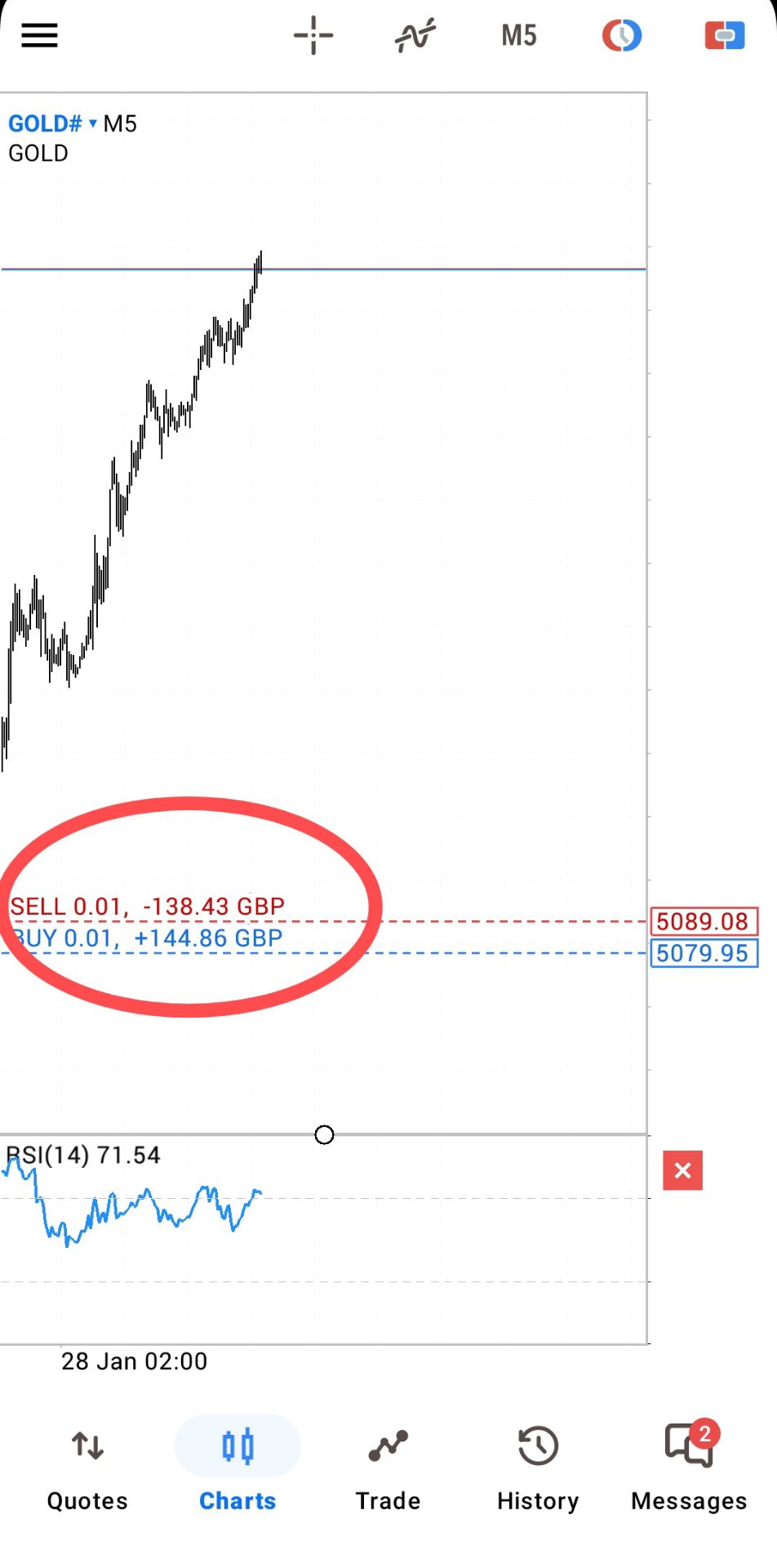
    I still have a positive hedge + and that's not bad at all +£6@EuroTrader because the sell position is higher than the buy
    EuroTrader flag
    EuroTrader
    @Khawatir_Have you heard this theory called the dollar smile theory before Seems I'll have to do a research on the topic
    "SlowBear ⛅" recalled a message
    Sanjeev Ku flag
    SlowBear ⛅ flag
    Sanjeev Ku
    @Sanjeev KuAlright, i am always ready to atch an wait - anytime any day
    Khawatir_ flag
    EuroTrader
    @EuroTraderi still kept 2.
    Khawatir_ flag
    Khawatir_
    4.
    EuroTrader flag
    Khawatir_
    I still have a positive hedge + and that's not bad at all +£6@EuroTrader because the sell position is higher than the buy
    @Khawatir_Okay Yeahh i can see it .that's really good cousin. At least you are gonna make 🤑
    EuroTrader flag
    Khawatir_
    @Khawatir_You kept 4 of the positions and you would be holding them over FOMC release right?.
    SlowBear ⛅ flag
    Sanjeev Ku
    @Sanjeev Kui am not sure i completely understnds what this is speaking about!
    Khawatir_ flag
    EuroTrader
    @EuroTraderyes, GBP/USD, Google Stock.
    SlowBear ⛅ flag
    Khawatir_
    @Khawatir_I would have added more buys since i see that the market is heading in one direction but then again - anything can happen!
    TIPU SULTAN flag
    Khawatir_ flag
    SlowBear ⛅
    @SlowBear ⛅yes, of course we are in the same direction
    TIPU SULTAN flag
    TIPU SULTAN flag
    SlowBear ⛅ flag
    Khawatir_
    @Khawatir_yes and the direction is a slow grind with heavy pace - I see Gold at 40mil/OZ by 2030
    Khawatir_ flag
    SlowBear ⛅
    @SlowBear ⛅WHAT!
    Khawatir_ flag
    $10.000/oz???!!! @SlowBear ⛅
    Type here...
    Add Symbol or Code

      No matching data

      All
      Trump Updates
      Recommend
      Stocks
      Cryptocurrencies
      Central Banks
      Featured News
      • All
      • Russia-Ukraine Conflict
      • Middle East Flashpoint
      • All
      • Russia-Ukraine Conflict
      • Middle East Flashpoint
      Search
      Products

      Charts Free Forever

      Chats Q&A with Experts
      Screeners Economic Calendar Data Tools
      Membership Features
      Data Warehouse Market Trends Institutional Data Policy Rates Macro

      Market Trends

      Market Sentiment Order Book Forex Correlations

      Top Indicators

      Charts Free Forever
      Markets

      News

      News Analysis 24/7 Columns Education
      From Institutions From Analysts
      Topics Columnists

      Latest Views

      Latest Views

      Trending Topics

      Top Columnists

      Latest Update

      Signals

      Copy Rankings Latest Signals Become a signal provider AI Rating
      Contests
      Brokers

      Overview Brokers Assessment Rankings Regulators News Claims
      Broker listing Forex Brokers Comparison Tool Live Spread Comparison Scam
      Q&A Complaint Scam Alert Videos Tips to Detect Scam
      More

      Business
      Events
      Careers About Us Advertising Help Center

      White Label

      Data API

      Web Plug-ins

      Affiliate Program

      Awards Institution Evaluation IB Seminar Salon Event Exhibition
      Vietnam Thailand Singapore Dubai
      Fans Party Investment Sharing Session
      FastBull Summit BrokersView Expo
      Recent Searches
        Top Searches
          Markets
          News
          Analysis
          User
          24/7
          Economic Calendar
          Education
          Data
          • Names
          • Latest
          • Prev

          View All

          No data

          Scan to Download

          Faster Charts, Chat Faster!

          Download App
          English
          • English
          • Español
          • العربية
          • Bahasa Indonesia
          • Bahasa Melayu
          • Tiếng Việt
          • ภาษาไทย
          • Français
          • Italiano
          • Türkçe
          • Русский язык
          • 简中
          • 繁中
          Open Account
          Search
          Products
          Charts Free Forever
          Markets
          News
          Signals

          Copy Rankings Latest Signals Become a signal provider AI Rating
          Contests
          Brokers

          Overview Brokers Assessment Rankings Regulators News Claims
          Broker listing Forex Brokers Comparison Tool Live Spread Comparison Scam
          Q&A Complaint Scam Alert Videos Tips to Detect Scam
          More

          Business
          Events
          Careers About Us Advertising Help Center

          White Label

          Data API

          Web Plug-ins

          Affiliate Program

          Awards Institution Evaluation IB Seminar Salon Event Exhibition
          Vietnam Thailand Singapore Dubai
          Fans Party Investment Sharing Session
          FastBull Summit BrokersView Expo

          Japan's Bond Auction Soothes Nerves Amid Election Jitters

          Nathaniel Wright

          Central Bank

          Bond

          Remarks of Officials

          Political

          Economic

          Traders' Opinions

          Forex

          Summary:

          JGBs rallied on strong auction demand, offering brief relief amid election fiscal worries, while the yen strengthened.

          Japanese government bonds rallied after a 40-year bond auction attracted its strongest demand since March, offering a moment of calm to a market worried about long-term debt and mounting fiscal pressure ahead of a snap election.

          The auction's bid-to-cover ratio, a key indicator of demand, climbed to 2.76 from 2.585 at the previous sale. In response, the 40-year bond yield fell 3.5 basis points to 3.9%, retreating from an all-time high of 4.215% set just over a week ago. Yields on 10-year and 20-year notes also declined.

          "The results were strong, providing the bond market with a bit of relief," said Miki Den, a senior rates strategist at SMBC Nikko Securities Inc. "Still, volatility in the super-long sector is likely to persist until after the election is over."

          A Market Breather After Political Shock

          The successful sale provides some breathing room after Prime Minister Sanae Takaichi's proposal to suspend the sales tax on food for two years triggered a period of exceptional market volatility.

          All eyes are now on the Ministry of Finance's upcoming auctions of 10- and 30-year bonds next week. These sales will serve as a crucial test of whether the renewed appetite for sovereign debt can hold up ahead of the February 8 vote.

          Despite the recent turbulence, some major institutional investors see value. Meiji Yasuda Life Insurance Co. stated in an interview that Japan's super-long government bonds present attractive investment opportunities, and the firm is now looking for the right entry point. Similarly, Pacific Investment Management Co. is maintaining its conviction in 30-year bonds following the sell-off.

          Market analysts noted that JGB futures rose following the auction, suggesting traders were unwinding short hedges established beforehand. This dynamic is expected to help flatten the yield curve as the long end of the bond market outperforms.

          Election Risks and Fiscal Concerns Loom

          The primary challenge for Prime Minister Takaichi's government and the Bank of Japan is navigating the markets through the election period without a major disruption, according to a Finance Ministry official. The prime minister's decision to call a surprise vote is seen as risky, with several recent polls showing a slight dip in her approval ratings.

          Fiscal discipline remains a central concern for investors, as both major political camps are proposing tax cuts. The Centrist Reform Alliance, Japan's largest opposition party, has promised a permanent tax reduction on food. This has intensified fears that government finances will weaken regardless of the election's outcome. Meanwhile, some BOJ policymakers have expressed concern about how the yen's depreciation is affecting price trends.

          Yen Strengthens on Intervention Talk

          Separately, the Japanese yen strengthened to its highest level since October during U.S. trading on Tuesday. The move was driven by two key factors:

          • Intervention Speculation: Comments from Japanese officials, including the finance minister, fueled speculation that the government might intervene to stop the currency's slide.

          • Weaker Dollar: The U.S. dollar broadly declined after President Donald Trump indicated he was comfortable with its recent weakness.

          These developments followed a fresh warning from Prime Minister Takaichi on Sunday that the government was prepared to take action in response to a weakening yen and surging bond yields, though she did not specify any particular market.

          To stay updated on all economic events of today, please check out our Economic calendar
          Risk Warnings and Disclaimers
          You understand and acknowledge that there is a high degree of risk involved in trading. Following any strategies or investment methods may lead to potential losses. The content on the site is provided by our contributors and analysts for information purposes only. You are solely responsible for determining whether any trading assets, securities, strategy, or any other product is suitable for investing based on your own investment objectives and financial situation.
          Add to Favorites
          Share

          China's Global Trade Pivot Amid US Pressure

          King Ten

          Data Interpretation

          Remarks of Officials

          Political

          Stocks

          Economic

          Daily News

          Forex

          China–U.S. Trade War

          When Donald Trump returned to office with an "America First" agenda, many predicted trouble for China's economy. Instead, Beijing has navigated the geopolitical landscape by strengthening ties with other global partners, culminating in a record trade surplus.

          While U.S. policies have strained relationships with traditional allies, China has focused on building new economic bridges. In 2025, this strategy resulted in a $1.2 trillion trade surplus and monthly foreign exchange inflows that hit a record $100 billion. At the same time, the global use of the yuan has steadily expanded.

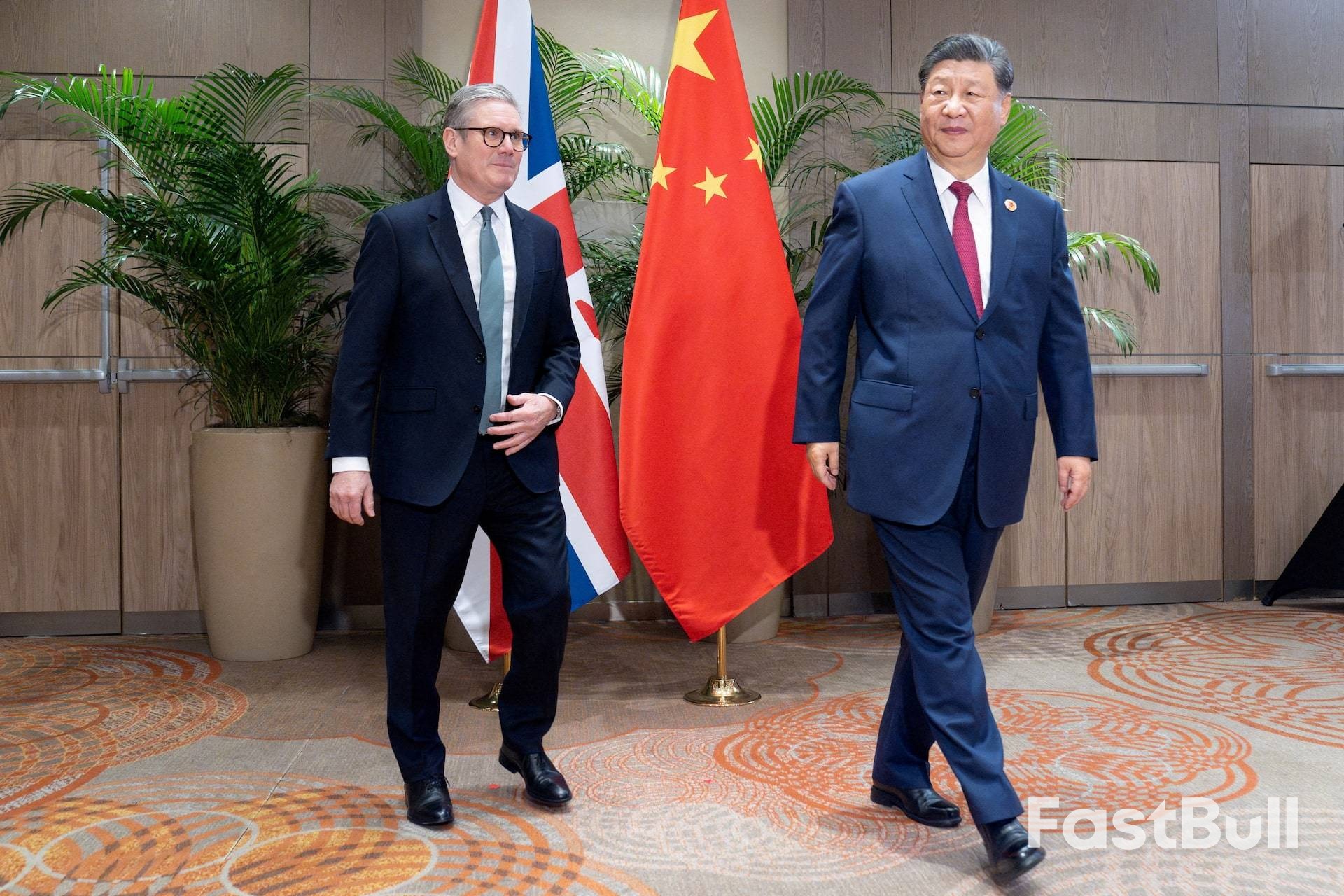
          This pivot is gaining momentum, with leaders like British Prime Minister Keir Starmer visiting Beijing to reinvigorate business ties and explore new opportunities for cooperation.

          Figure 1: British Prime Minister Keir Starmer meets with Chinese President Xi Jinping, highlighting a trend of Western leaders seeking stronger economic ties with Beijing.

          Forging New Alliances as US Relations Cool

          As Washington's trade approach becomes more unpredictable, China is positioning itself as a stable and reliable economic partner. According to Aleksandar Tomic, an economics professor at Boston College, China is emerging as a "steady partner" for many countries looking for certainty.

          "I think China has done a good job... to position itself as the reliable and stable trade partner," said Derrick Irwin, co-head of intrinsic emerging markets equity at Allspring Global Investments. "They basically said, look... We can offer predictability and certainty."

          Starmer's four-day visit is the first by a British prime minister since 2018. It follows a trip by Canadian Prime Minister Mark Carney, who signed an economic deal to lower trade barriers and build a new strategic relationship with Beijing. Carney described China as "a more predictable and reliable partner."

          This trend extends beyond China's direct efforts. Other major economies are also diversifying their trade relationships. India and the European Union recently finalized a trade deal that will slash tariffs, potentially doubling European exports to India by 2032.

          Shifting Trade Flows and Economic Resilience

          The geopolitical tensions between the world's two largest economies escalated sharply in January 2025 when Trump returned to the White House. Tariffs on Chinese goods were raised to over 100% before a temporary truce was reached.

          In response, Beijing focused on boosting exports to non-US markets and supporting its domestic enterprises. While Chinese shipments to the U.S. fell by 20% in 2025, they grew significantly elsewhere:

          • Africa: +25.8%

          • Latin America: +7.4%

          • Southeast Asia: +13.4%

          • European Union: +8.4%

          "Many countries previously have not been China-friendly are now kind of pivoting to China... because the United States is becoming a lot less predictable," Tomic noted. "The more the U.S. gets difficult to deal with, the more it opens up for China."

          Despite trade friction and domestic pressures from a property sector slump and weak consumption, China's economy still met the government's 5% growth target for 2025. To attract foreign investment, Beijing has also launched pilot programs in cities like Shanghai and Beijing to open market access in services like telecommunications, healthcare, and education.

          Financial Markets and the Yuan's Growing Influence

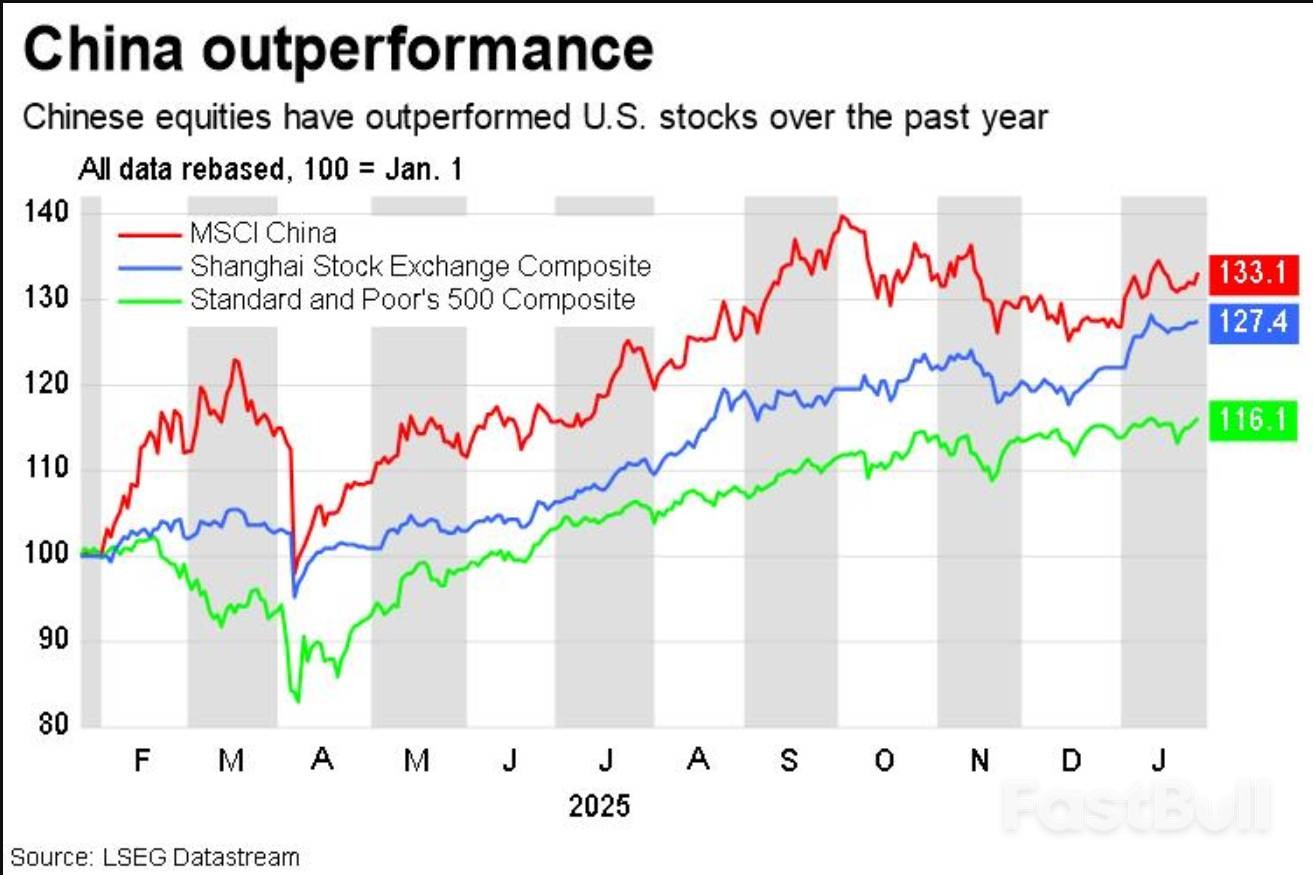
          China's financial markets have also shown resilience. The Shanghai index climbed 27% over the past year, outperforming U.S. equities, while market turnover hit a record high. In December, the country recorded its largest-ever monthly forex inflows of $100.1 billion, and its official forex reserves reached a 10-year high of $3.36 trillion.

          Figure 2: Chinese equities, represented by the MSCI China and Shanghai Composite indices, have significantly outperformed the U.S. S&P 500 over the past year.

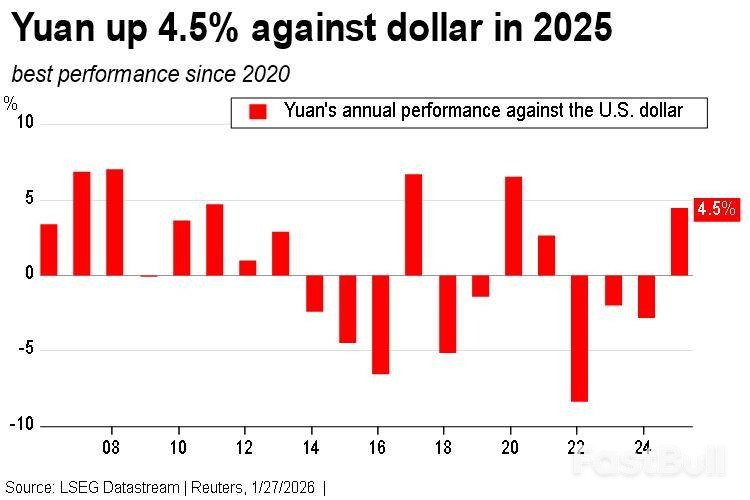
          Beijing is also capitalizing on the situation to advance the internationalization of the yuan. With Trump's erratic approach to trade making the U.S. dollar less appealing to some investors, global banks are reportedly boosting yuan liquidity in offshore hubs and improving payment settlement frameworks.

          "We have seen quite a few cycles of China trying to internationalise yuan and then pulling back," said a banker at a global bank with a presence in China. "This time it's different... Trump policies are very conducive for boosting yuan usage."

          The data reflects this shift. More than half of China's cross-border transactions are now settled in yuan, up from almost zero 15 years ago. According to the PBOC and SAFE, nearly half of China's overseas bank lending is now in renminbi.

          Figure 3: The Chinese Yuan's performance against the U.S. dollar, showing a notable appreciation in 2025 as its global usage expands.

          Skepticism Remains Despite New Trade Deals

          However, some foreign policy analysts advise caution. Patricia Kim, a fellow at the Brookings Institution in Washington, argues that distrust of the U.S. does not automatically translate into trust in Beijing for American allies.

          "Many of these countries harbour deep concerns about China's approach to trade, its use of economic coercion, and unresolved maritime and historical disputes," Kim said.

          She added that while China may currently appear more pragmatic compared to the Trump administration's rhetoric, "Beijing's actual behaviour has not been especially reassuring." This suggests that while China is successfully forging new economic pacts, underlying political and strategic concerns remain a significant hurdle for its long-term ambitions.

          To stay updated on all economic events of today, please check out our Economic calendar
          Risk Warnings and Disclaimers
          You understand and acknowledge that there is a high degree of risk involved in trading. Following any strategies or investment methods may lead to potential losses. The content on the site is provided by our contributors and analysts for information purposes only. You are solely responsible for determining whether any trading assets, securities, strategy, or any other product is suitable for investing based on your own investment objectives and financial situation.
          Add to Favorites
          Share

          Australia Inflation Climbs To 3.6 Percent As Policy Easing Remains Distant

          Gerik

          Economic

          Inflation Returns To A Multi-Quarter High

          Australia’s consumer inflation reached 3.6 percent year on year in the fourth quarter of 2025, marking its highest level in six quarters and accelerating from 3.2 percent in the previous quarter. The result aligned with forecasts from economists surveyed by Reuters, suggesting price pressures remain persistent rather than transitory. On a quarterly basis, inflation increased by 0.6 percent, a notable moderation from the 1.3 percent rise recorded in the third quarter, yet still sufficient to keep inflation well above the policy target.
          December data added to the inflationary picture, with prices rising 3.8 percent year on year, exceeding the 3.55 percent consensus estimate. This outcome highlights that underlying price momentum continues into the end of the year rather than easing as hoped.

          Housing And Consumption As Key Price Drivers

          According to the Australian Bureau of Statistics, housing costs were the largest contributor to December’s inflation, increasing by 5.5 percent. This reflects ongoing pressures from rents, construction costs, and broader supply constraints in the housing market. Food and non-alcoholic beverages also added to price growth, alongside recreation and culture, indicating that inflationary pressures are spread across both essential and discretionary spending categories. The breadth of these increases suggests correlation across consumption sectors rather than isolated price shocks.
          The inflation outcome strengthens expectations that the Reserve Bank of Australia will maintain a cautious monetary policy stance. Shier Lee Lim, Lead FX and Macro Strategist for Asia Pacific at Convera, noted that while a rate hike at the February policy meeting appears unlikely, further tightening cannot be dismissed if inflation remains sticky and continues to exceed the target range in coming quarters. The RBA’s mandate is to keep inflation between 2 percent and 3 percent, a threshold inflation has now exceeded for an extended period.

          Why Inflation Is Still Too High For Rate Cuts

          Recent commentary from RBA officials underscores why rate cuts remain improbable. Deputy Governor Andrew Hauser described inflation above 3 percent as “too high,” emphasizing that current levels fall outside the bank’s mandate. He indicated that the probability of near-term rate cuts is very low, reinforcing the signal that monetary policy will stay restrictive until inflation convincingly returns to target.
          These remarks align with earlier statements from RBA Governor Michele Bullock, who said in December that rate cuts were not on the horizon, citing improving private-sector activity and growth increasingly driven by private rather than public demand.

          Economic Growth Adds Complexity To Policy Outlook

          Australia’s economy expanded by 2.1 percent in the third quarter, accelerating from a revised 2 percent in the second quarter and marking its fastest pace in nearly two years. This growth momentum complicates the policy outlook, as stronger economic activity can sustain demand-driven inflation. While growth itself is not a direct cause of inflation, its correlation with rising demand supports the RBA’s reluctance to ease policy prematurely.
          Taken together, persistent inflation, resilient growth, and broad-based price pressures suggest that monetary policy in Australia is likely to remain tight for longer, with any rate cuts this year expected to be limited and highly conditional on clearer evidence of disinflation.

          Source: CNBC

          To stay updated on all economic events of today, please check out our Economic calendar
          Risk Warnings and Disclaimers
          You understand and acknowledge that there is a high degree of risk involved in trading. Following any strategies or investment methods may lead to potential losses. The content on the site is provided by our contributors and analysts for information purposes only. You are solely responsible for determining whether any trading assets, securities, strategy, or any other product is suitable for investing based on your own investment objectives and financial situation.
          Add to Favorites
          Share

          The EU–India Trade Pact Faces Its Final Test in a Trump-Dominated Trade Order

          Gerik

          Economic

          A Landmark Agreement Two Decades in the Making

          India and the European Union have unveiled what both sides describe as a landmark free trade agreement, aiming to remove or reduce tariffs on more than 90% of goods exchanged between them. After nearly twenty years of negotiations, the pact signals a strategic shift in how major economies recalibrate supply chains amid rising protectionism elsewhere. India has agreed to ease tariffs in politically sensitive sectors such as agriculture and automobiles, while the European Union will lower barriers for Indian exports including textiles, leather goods, marine products, and gems and jewelry.
          From a structural perspective, this agreement reflects a causal response to the fragmentation of global trade. As tariff risks rise in other corridors, especially those linked to the United States, both India and the EU are seeking to lock in market access and reduce long-term uncertainty through bilateral frameworks.

          Strategic Context in a Fragmenting Global Trade System

          The EU–India deal does not exist in isolation. It emerges alongside a broader wave of bilateral engagement as countries diversify economic partnerships. Recent high-level visits by Canada and the United Kingdom to China illustrate a parallel trend of governments hedging against overreliance on any single trade partner. These developments correlate with Washington’s increasingly assertive use of tariffs as a foreign policy instrument rather than serving as their sole cause.
          European Commission President Ursula von der Leyen famously described the agreement as the “mother of all deals,” underlining its symbolic and economic significance for Europe’s trade strategy in Asia. For India, led by Prime Minister Narendra Modi, the pact reinforces the country’s ambition to position itself as a manufacturing and export hub amid shifting global supply chains.

          The US Factor and Trump’s Unpredictable Shadow

          Despite the celebratory tone in New Delhi and Brussels, the agreement’s future is complicated by the stance of the United States under President Donald Trump. Trump has yet to publicly comment on the EU–India pact, a silence that markets and policymakers view with caution rather than comfort. His administration has previously imposed higher tariffs on Indian goods, including levies linked to India’s energy purchases from Russia, and has escalated rhetoric toward the EU on unrelated geopolitical issues.
          Recent criticism from US Treasury Secretary Scott Bessent regarding the EU’s outreach to India further reinforces the perception that Washington views such agreements through a competitive lens. The relationship here is primarily causal: US tariff pressure incentivizes other economies to deepen bilateral ties, yet those same ties risk provoking retaliatory or punitive responses from Washington.

          A Counterbalance Through US–India Negotiations

          There are, however, signs that US–India relations may offset some of this uncertainty. India’s Minister of Petroleum and Natural Gas indicated that New Delhi and Washington are at an advanced stage of finalizing a separate trade agreement. If concluded, such a deal could reduce the likelihood that the EU–India pact becomes a direct target of US trade action, introducing a stabilizing counterweight rather than eliminating risk altogether.
          This dynamic illustrates a complex interplay rather than a single cause-and-effect chain. The EU–India deal strengthens India’s bargaining position with the US, while parallel US–India negotiations may, in turn, shape how aggressively Washington responds to Europe’s expanding role in South Asia.
          Market Implications and Relative Trade WeightFrom a trade-weight perspective, India remains a modest partner for the EU, accounting for 2.4% of the bloc’s total goods trade in 2024, far below the shares of the US, China, or the UK. Conversely, the EU ranks among India’s largest trading partners, alongside the US and China, giving the agreement disproportionate importance for New Delhi’s export strategy.
          Financial markets have reacted positively in Europe, with stocks rising following the announcement, suggesting a short-term confidence effect that correlates with improved trade visibility. Whether this optimism translates into sustained economic gains will depend on implementation, political follow-through, and external pressures from the US trade agenda.
          While the EU–India free trade agreement has crossed a historic milestone, its real test lies ahead. Implementation challenges, domestic political sensitivities, and the unpredictable nature of US trade policy mean the story is far from finished. In a world where trade is increasingly shaped by strategic leverage rather than pure economics, the pact represents progress, but not closure, in the evolving balance of global commerce.

          Source: CNBC

          To stay updated on all economic events of today, please check out our Economic calendar
          Risk Warnings and Disclaimers
          You understand and acknowledge that there is a high degree of risk involved in trading. Following any strategies or investment methods may lead to potential losses. The content on the site is provided by our contributors and analysts for information purposes only. You are solely responsible for determining whether any trading assets, securities, strategy, or any other product is suitable for investing based on your own investment objectives and financial situation.
          Add to Favorites
          Share

          US–South Korea Trade Frictions Intensify as Implementation Gaps and Tech Rules Collide

          Gerik

          Economic

          A Trade Deal Under Pressure From Delays

          Tensions between Washington and Seoul have escalated as the Trump administration signals impatience with South Korea’s progress in fulfilling commitments made under a trade pact announced in July last year. Under that agreement, US tariffs on South Korean goods were set at 15%, yet US officials now argue that Seoul has moved too slowly on key legislative and policy steps required to formalize investment and market-access promises. This perceived delay forms the core rationale behind President Donald Trump’s threat to raise tariffs to 25%, a move that, while not yet implemented, has already unsettled markets and exporters.
          The causal logic articulated by US officials centers on reciprocity. From Washington’s perspective, maintaining lower tariffs becomes increasingly difficult when the counterpart has not delivered parallel reforms. South Korean authorities, however, point to domestic political gridlock and economic concerns such as capital outflows and currency volatility as factors slowing the passage of enabling legislation, suggesting correlation rather than deliberate obstruction.

          Digital Services Regulations Add a Second Fault Line

          Alongside trade implementation issues, frustration over South Korea’s digital-services regulations has deepened bilateral unease. US officials have repeatedly raised concerns that new Korean laws may disproportionately affect American technology firms. Vice President JD Vance recently warned Seoul against actions that could penalize US companies, including Coupang Inc., which has faced heightened scrutiny following a major data breach disclosed in November that affected roughly two-thirds of South Korea’s population.
          Seoul has consistently rejected accusations of discrimination, emphasizing that its digital regulations are applied uniformly and are not designed to target US firms. Both sides stress that these regulatory disputes are formally separate from the tariff threat, yet their coexistence has amplified overall mistrust. In analytical terms, the relationship here is largely correlational: regulatory tensions intensify the broader climate of dissatisfaction but are not cited as the direct trigger for tariff escalation.

          Negotiations Resume Amid Political Uncertainty

          US Trade Representative Jamieson Greer confirmed ongoing talks with South Korean officials, with further discussions scheduled in Washington. Greer publicly highlighted unmet commitments in investment, agriculture, industry, and digital policy, framing them as obstacles to sustaining the existing tariff framework. At the same time, President Trump struck a more conciliatory tone, suggesting that the dispute could be resolved quickly through negotiation.
          This episode reflects a broader pattern in Trump’s second term, where tariff threats are frequently used as leverage to accelerate compliance, though not all such threats are ultimately enforced. Bloomberg data indicate that only about 27% of similar warnings since late 2024 have been fully executed, underscoring uncertainty about whether the proposed 25% tariff will materialize.

          Potential Economic Impact on Key Exporters

          Should higher tariffs be enacted, the economic consequences could be significant. Major South Korean exporters, including Hyundai Motor Co., which shipped 1.1 million vehicles to the US in 2024, would face increased costs and potential competitiveness pressures in the American market. This represents a clear causal risk: tariff increases would directly raise export costs and could disrupt supply chains built around preferential access.
          For now, the standoff illustrates how implementation delays, domestic legislative constraints, and regulatory disagreements can converge to strain even recently concluded trade agreements. Whether the threatened tariff hike becomes reality will depend on the speed and substance of South Korea’s policy response and Washington’s willingness to accept incremental progress rather than immediate compliance.

          Source: Bloomberg

          To stay updated on all economic events of today, please check out our Economic calendar
          Risk Warnings and Disclaimers
          You understand and acknowledge that there is a high degree of risk involved in trading. Following any strategies or investment methods may lead to potential losses. The content on the site is provided by our contributors and analysts for information purposes only. You are solely responsible for determining whether any trading assets, securities, strategy, or any other product is suitable for investing based on your own investment objectives and financial situation.
          Add to Favorites
          Share

          US-Taiwan Talks Target AI, Chips, and Supply Chains

          Thomas

          Remarks of Officials

          Daily News

          Economic

          Political

          Senior U.S. and Taiwanese officials have concluded a high-level dialogue focused on deepening cooperation in artificial intelligence, technology, and drone manufacturing. The meeting marks the sixth round of the U.S.-Taiwan Economic Prosperity Partnership Dialogue, a forum initiated during the first Trump administration.

          The U.S. State Department praised Taipei as a "vital partner," reaffirming America's role as Taiwan's most crucial international supporter despite the absence of formal diplomatic ties.

          Securing the Future of Tech

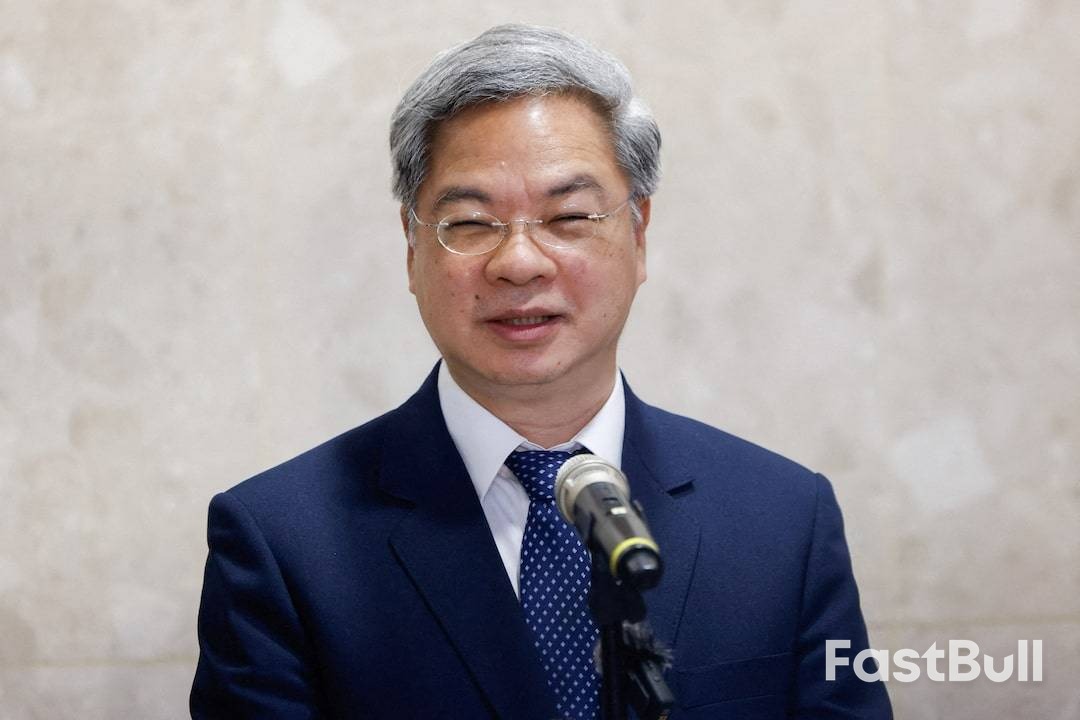
          The talks, led by U.S. Under Secretary for Economic Affairs Jacob Helberg and Taiwan's Economy Minister Kung Ming-hsin, underscored a mutual commitment to securing critical technology supply chains.

          Kung Ming-hsin, Taiwan's Minister of Economic Affairs, led the Taiwanese delegation in talks focused on technology and supply chain security.

          Both sides signed statements advancing the Pax Silica Declaration, a U.S.-led initiative designed to safeguard AI and semiconductor supply chains. The State Department noted that "Taiwan's advanced manufacturing sector plays a key role in fuelling the AI revolution."

          Discussions also covered key strategic areas, including:

          • Supply chain security as it relates to AI

          • Certification standards for drone components

          • Cooperation on securing critical minerals

          Expanding Economic and Security Cooperation

          The dialogue extended beyond technology to address broader economic challenges and security concerns. Officials focused on developing strategies to respond to economic coercion and identified opportunities for mutual cooperation in third countries.

          A significant point of discussion was the need to address tax-related barriers to increase investment. Taiwan, a global leader in advanced semiconductor production, has long advocated for an agreement to prevent double taxation, arguing it would stimulate bilateral investment.

          The talks also addressed the security of critical infrastructure, including undersea cables and the use of low-Earth-orbit satellites. Taiwan has previously accused China of involvement in damaging its undersea telecom and internet cables, a charge Beijing denies. In response, Taiwan is expanding its satellite capabilities to ensure backup communications.

          Geopolitical Context and Recent Deals

          These discussions follow a separate deal reached earlier this month between Taiwan and the U.S. to cut tariffs on Taiwanese exports and encourage Taiwanese investment in American semiconductor and technology sectors.

          Officials hold a press conference to brief the public on the outcomes of Taiwan-US tariff negotiations.

          According to Taiwan's economy ministry, both sides agreed that peace and stability across the Taiwan Strait are "crucial to global economic security and prosperity."

          China consistently objects to official interactions between Washington and Taipei, viewing Taiwan as an internal affair and a red line. Taiwan's government, however, rejects Beijing's sovereignty claims, maintaining that only the island's people can determine their future.

          To stay updated on all economic events of today, please check out our Economic calendar
          Risk Warnings and Disclaimers
          You understand and acknowledge that there is a high degree of risk involved in trading. Following any strategies or investment methods may lead to potential losses. The content on the site is provided by our contributors and analysts for information purposes only. You are solely responsible for determining whether any trading assets, securities, strategy, or any other product is suitable for investing based on your own investment objectives and financial situation.
          Add to Favorites
          Share

          Trump Signals Comfort With a Weaker Dollar, Deepening Market Concerns

          Gerik

          Economic

          Forex

          Presidential rhetoric shifts currency expectations

          The dollar extended its sharp selloff after Donald Trump told reporters in Iowa that he was unconcerned about the greenback’s recent slump, calling the situation “great” and arguing that U.S. business activity remains strong. These remarks arrived at a sensitive moment for currency markets, where investors were already reassessing assumptions of dollar stability amid policy volatility. Trump’s comments were widely interpreted as an implicit endorsement of a weaker currency, lowering the psychological barrier for traders to maintain or add to short-dollar positions.
          Following his remarks, the Bloomberg Dollar Spot Index fell as much as 1.2%, with the U.S. currency weakening against all major peers before stabilizing somewhat in Asian trading. Since Trump’s inauguration, the index has dropped close to 10%, marking one of the steepest post-inaugural declines in recent history.

          Policy unpredictability and investor confidence

          The dollar’s weakness cannot be explained solely by short-term market mechanics. Trump’s broader policy posture including repeated tariff threats, pressure on the Federal Reserve, large tax cuts that have widened the fiscal deficit, and confrontational diplomacy has unsettled overseas investors. While rising Treasury yields and expectations that the Federal Reserve will pause rate cuts would typically support the dollar, those traditional relationships have weakened as political risk has taken center stage.
          Treasury Secretary Scott Bessent has sought to separate the dollar’s exchange rate from its status as the world’s primary reserve currency. However, market participants appear increasingly focused on price action rather than institutional assurances, particularly as Trump has reiterated his preference for much lower interest rates, a stance that structurally undermines currency support through narrower yield differentials.

          The debasement trade gathers momentum

          As confidence in the dollar has eroded, capital has flowed into alternative stores of value. Gold has surged to record highs, becoming a central beneficiary of what investors now describe as the “debasement trade,” in which assets perceived as insulated from fiscal and political interference attract growing demand. At the same time, emerging-market funds have seen record inflows, reflecting a gradual diversification away from U.S.-centric portfolios.
          This shift is not purely causal but strongly correlational. While Trump’s rhetoric does not mechanically force the dollar lower, it amplifies existing vulnerabilities by reinforcing expectations that policy stability is no longer a priority. As a result, even modest negative shocks can generate outsized currency moves.

          Options markets and positioning signal further downside

          Derivative markets suggest that traders expect the dollar’s slide to continue. Premiums on short-dated options that profit from further dollar weakness have climbed to their highest levels since data collection began in 2011. Turnover in currency-related instruments has also surged, with clearing volumes at the Depository Trust & Clearing Corporation reaching their second-highest level on record earlier this week.
          Nomura strategist Dominic Bunning noted that while rate differentials still nominally favor the dollar against several peers, geopolitical and policy antagonism is now the dominant driver. This represents a structural change in market behavior rather than a temporary dislocation.

          A deliberate ambiguity with long-term risks

          Trump has long held conflicting views on the dollar, alternating between praising its strength as a negotiating tool and promoting weakness as a boost for manufacturing competitiveness. His latest remarks lean decisively toward the latter interpretation. While a softer currency may support exports in the short term, economists warn that prolonged or disorderly depreciation risks undermining financial stability and accelerating capital flight.
          For now, markets appear to be taking Trump at his word. With policy signals pointing toward tolerance of further declines, the dollar’s recent weakness looks less like an overshoot and more like a repricing of U.S. political risk in global currency markets.

          Source: Bloomberg

          To stay updated on all economic events of today, please check out our Economic calendar
          Risk Warnings and Disclaimers
          You understand and acknowledge that there is a high degree of risk involved in trading. Following any strategies or investment methods may lead to potential losses. The content on the site is provided by our contributors and analysts for information purposes only. You are solely responsible for determining whether any trading assets, securities, strategy, or any other product is suitable for investing based on your own investment objectives and financial situation.
          Add to Favorites
          Share
          FastBull
          Copyright © 2026 FastBull Ltd

          728 RM B 7/F GEE LOK IND BLDG NO 34 HUNG TO RD KWUN TONG KLN HONG KONG

          TelegramInstagramTwitterfacebooklinkedin
          App Store Google Play Google Play
          Products
          Charts

          Chats

          Q&A with Experts
          Screeners
          Economic Calendar
          Data
          Tools
          Membership
          Features
          Function
          Markets
          Copy Trading
          Latest Signals
          Contests
          News
          Analysis
          24/7
          Columns
          Education
          Company
          Careers
          About Us
          Contact Us
          Advertising
          Help Center
          Feedback
          User Agreement
          Privacy Policy
          Personal Information Protection Statement
          Business

          White Label

          Data API

          Web Plug-ins

          Poster Maker

          Affiliate Program

          Risk Disclosure

          The risk of loss in trading financial instruments such as stocks, FX, commodities, futures, bonds, ETFs and crypto can be substantial. You may sustain a total loss of the funds that you deposit with your broker. Therefore, you should carefully consider whether such trading is suitable for you in light of your circumstances and financial resources.

          No decision to invest should be made without thoroughly conducting due diligence by yourself or consulting with your financial advisors. Our web content might not suit you since we don't know your financial conditions and investment needs. Our financial information might have latency or contain inaccuracy, so you should be fully responsible for any of your trading and investment decisions. The company will not be responsible for your capital loss.

          Without getting permission from the website, you are not allowed to copy the website's graphics, texts, or trademarks. Intellectual property rights in the content or data incorporated into this website belong to its providers and exchange merchants.

          Not Logged In

          Log in to access more features

          Connect Broker
          Become a signal provider
          Help Center
          Customer Service
          Dark Mode
          Price Up/Down Colors

          Log In

          Sign Up

          Position
          Layout
          Fullscreen
          Default to Chart
          The chart page opens by default when you visit fastbull.com