Markets
News
Analysis
User
24/7
Economic Calendar
Education
Data
- Names
- Latest
- Prev



Signal Accounts for Members
All Signal Accounts
All Contests


China, Mainland Imports (CNH) (Dec)A:--
F: --
P: --
China, Mainland Imports YoY (USD) (Dec)A:--
F: --
P: --
China, Mainland Exports YoY (USD) (Dec)A:--
F: --
P: --
U.K. 10-Year Note Auction YieldA:--
F: --
P: --
Canada Leading Index MoM (Dec)A:--
F: --
U.S. MBA Mortgage Application Activity Index WoWA:--
F: --
P: --
U.S. PPI YoY (Excl. Food, Energy & Trade) (Oct)A:--
F: --
U.S. PPI MoM Final (Excl. Food, Energy and Trade) (SA) (Oct)A:--
F: --
U.S. Core PPI YoY (Nov)A:--
F: --
U.S. PPI MoM (SA) (Nov)A:--
F: --
U.S. PPI YoY (Nov)A:--
F: --
U.S. Current Account (Q3)A:--
F: --
U.S. Retail Sales YoY (Nov)A:--
F: --
P: --
U.S. Retail Sales (Nov)A:--
F: --
P: --
U.S. Core Retail Sales MoM (Nov)A:--
F: --
U.S. Retail Sales MoM (Excl. Automobile) (SA) (Nov)A:--
F: --
U.S. Core Retail Sales (Nov)A:--
F: --
P: --
U.S. Retail Sales MoM (Excl. Gas Stations & Vehicle Dealers) (SA) (Nov)A:--
F: --
U.S. Retail Sales MoM (Nov)A:--
F: --
U.S. Core PPI MoM (SA) (Nov)A:--
F: --
Philadelphia Fed President Henry Paulson delivers a speech
U.S. Commercial Inventory MoM (Oct)A:--
F: --
U.S. Existing Home Sales Annualized Total (Dec)A:--
F: --
U.S. Existing Home Sales Annualized MoM (Dec)A:--
F: --
U.S. EIA Weekly Cushing, Oklahoma Crude Oil Stocks ChangeA:--
F: --
P: --
U.S. EIA Weekly Crude Stocks ChangeA:--
F: --
P: --
U.S. EIA Weekly Gasoline Stocks ChangeA:--
F: --
P: --
U.S. EIA Weekly Crude Demand Projected by ProductionA:--
F: --
P: --
U.S. EIA Weekly Crude Oil Imports ChangesA:--
F: --
P: --
U.S. EIA Weekly Heating Oil Stock ChangesA:--
F: --
P: --
U.S. Refinitiv/Ipsos Primary Consumer Sentiment Index (PCSI) (Jan)--
F: --
P: --
Japan Domestic Enterprise Commodity Price Index YoY (Dec)--
F: --
P: --
Japan Domestic Enterprise Commodity Price Index MoM (Dec)--
F: --
P: --
Japan PPI MoM (Dec)--
F: --
P: --
Australia Consumer Inflation Expectations (Jan)--
F: --
P: --
U.K. 3-Month RICS House Price Balance (Dec)--
F: --
P: --
South Korea Benchmark Interest Rate--
F: --
P: --
Saudi Arabia CPI YoY (Dec)--
F: --
P: --
U.K. Services Index MoM (SA) (Nov)--
F: --
P: --
U.K. Services Index YoY (Nov)--
F: --
P: --
U.K. Manufacturing Output MoM (Nov)--
F: --
P: --
U.K. Trade Balance (Nov)--
F: --
P: --
U.K. Monthly GDP 3M/3M Change (Nov)--
F: --
P: --
U.K. GDP MoM (Nov)--
F: --
P: --
U.K. Industrial Output MoM (Nov)--
F: --
P: --
U.K. Trade Balance Non-EU (SA) (Nov)--
F: --
P: --
U.K. Trade Balance (SA) (Nov)--
F: --
P: --
U.K. Manufacturing Output YoY (Nov)--
F: --
P: --
U.K. Construction Output MoM (SA) (Nov)--
F: --
P: --
U.K. Industrial Output YoY (Nov)--
F: --
P: --
U.K. Services Index MoM--
F: --
P: --
U.K. Construction Output YoY (Nov)--
F: --
P: --
U.K. GDP YoY (SA) (Nov)--
F: --
P: --
U.K. Trade Balance EU (SA) (Nov)--
F: --
P: --
Indonesia Loan Growth YoY (Dec)--
F: --
P: --
France HICP Final MoM (Dec)--
F: --
P: --
Germany Annual GDP Growth--
F: --
Italy Industrial Output YoY (SA) (Nov)--
F: --
P: --
Canada Existing Home Sales MoM (Dec)--
F: --
P: --
Euro Zone Trade Balance (SA) (Nov)--
F: --
P: --


No matching data
Latest Views
Latest Views
Trending Topics
Top Columnists
Latest Update
White Label
Data API
Web Plug-ins
Affiliate Program
View All

No data
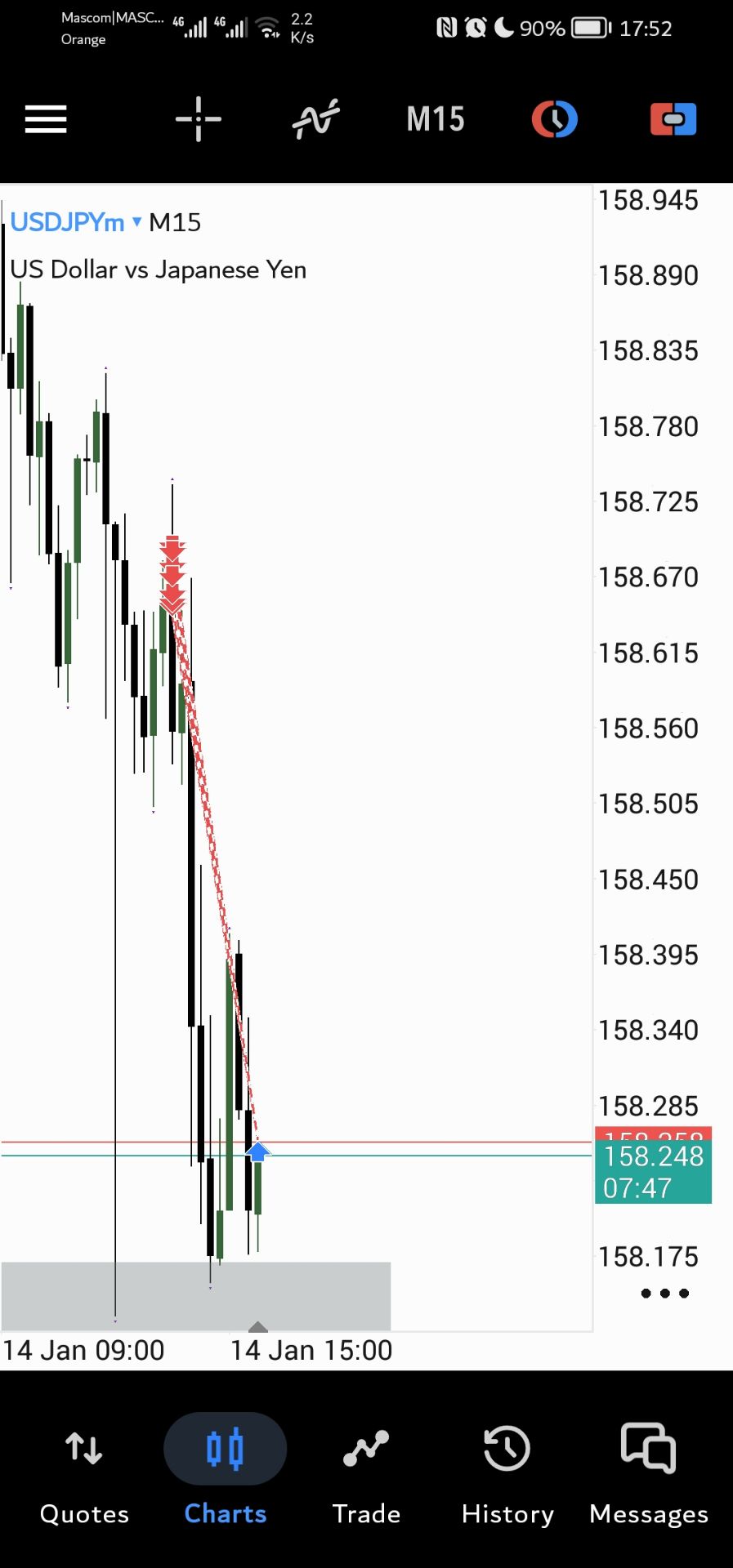
The yen slid to an 18-month low near 160 per dollar on election and fiscal-stimulus fears, reviving intervention talk, while the dollar stayed firm after U.S. inflation data and Fed-independence concerns.
The Trump administration is set for critical talks with Danish and Greenlandic officials on Wednesday as President Donald Trump intensifies his campaign to bring Greenland under U.S. control.
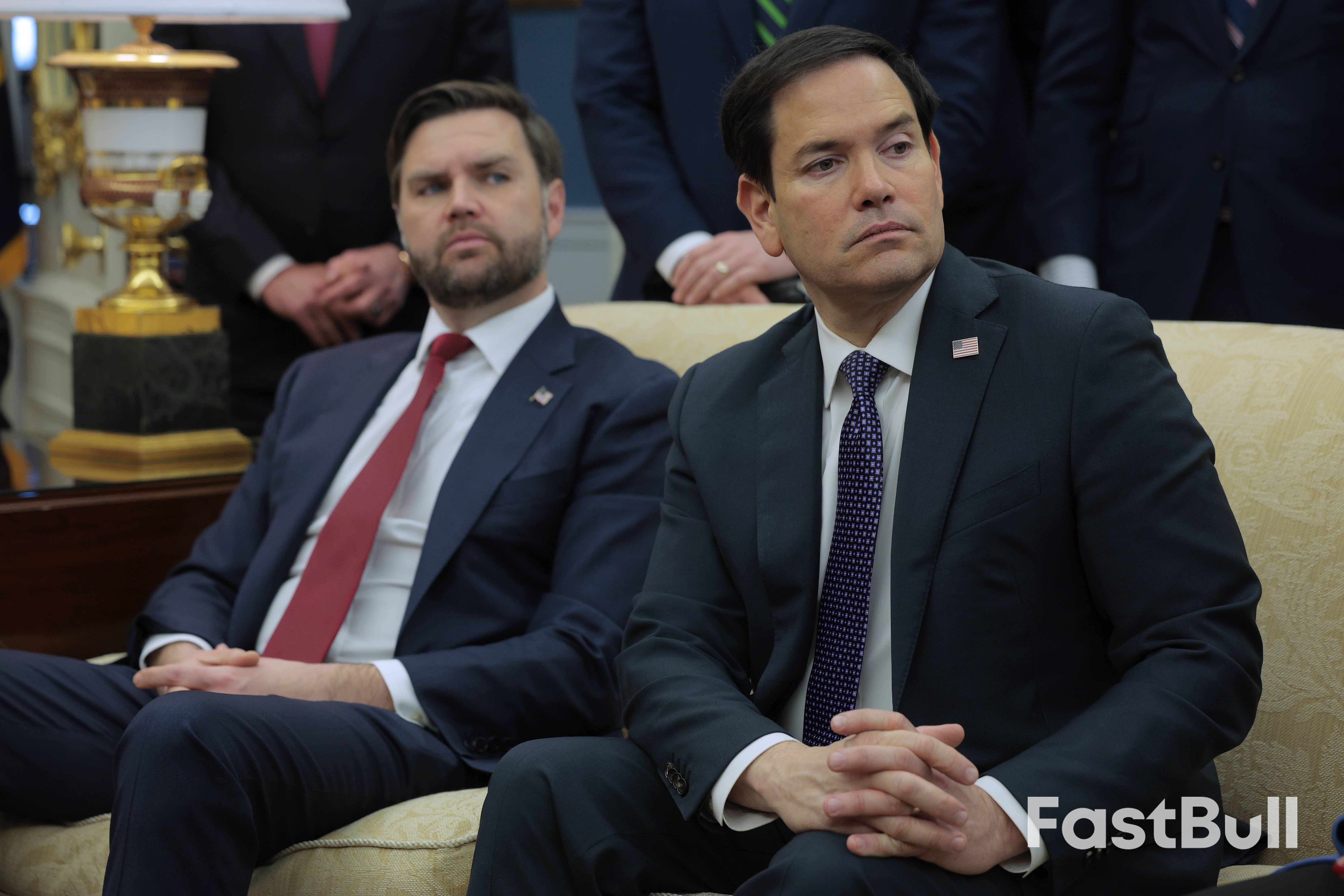
Greenland's Foreign Minister, Vivian Motzfeldt, and her Danish counterpart, Lars Lokke Rasmussen, are scheduled to meet with U.S. Vice President JD Vance and Secretary of State Marco Rubio at the White House. The meeting follows President Trump’s recent declaration that anything less than U.S. sovereignty over the Arctic island would be "unacceptable."
In a social media post on Wednesday, President Trump laid out his reasoning, tying the acquisition of Greenland directly to U.S. strategic interests.
"The United States needs Greenland for the purpose of National Security. It is vital for the Golden Dome that we are building," Trump stated on Truth Social. He argued that NATO's effectiveness would be significantly enhanced with the territory in American hands. "NATO should be leading the way for us to get it... Anything less than that is unacceptable."
Trump’s renewed focus on the mineral-rich island follows a U.S. military operation in Venezuela on January 3. His long-standing interest in acquiring Greenland has now escalated into a major diplomatic issue, alarming allies in Denmark, which is responsible for Greenland's defense. Danish Prime Minister Mette Frederiksen has warned that a U.S. attack would signal the end of the NATO alliance.

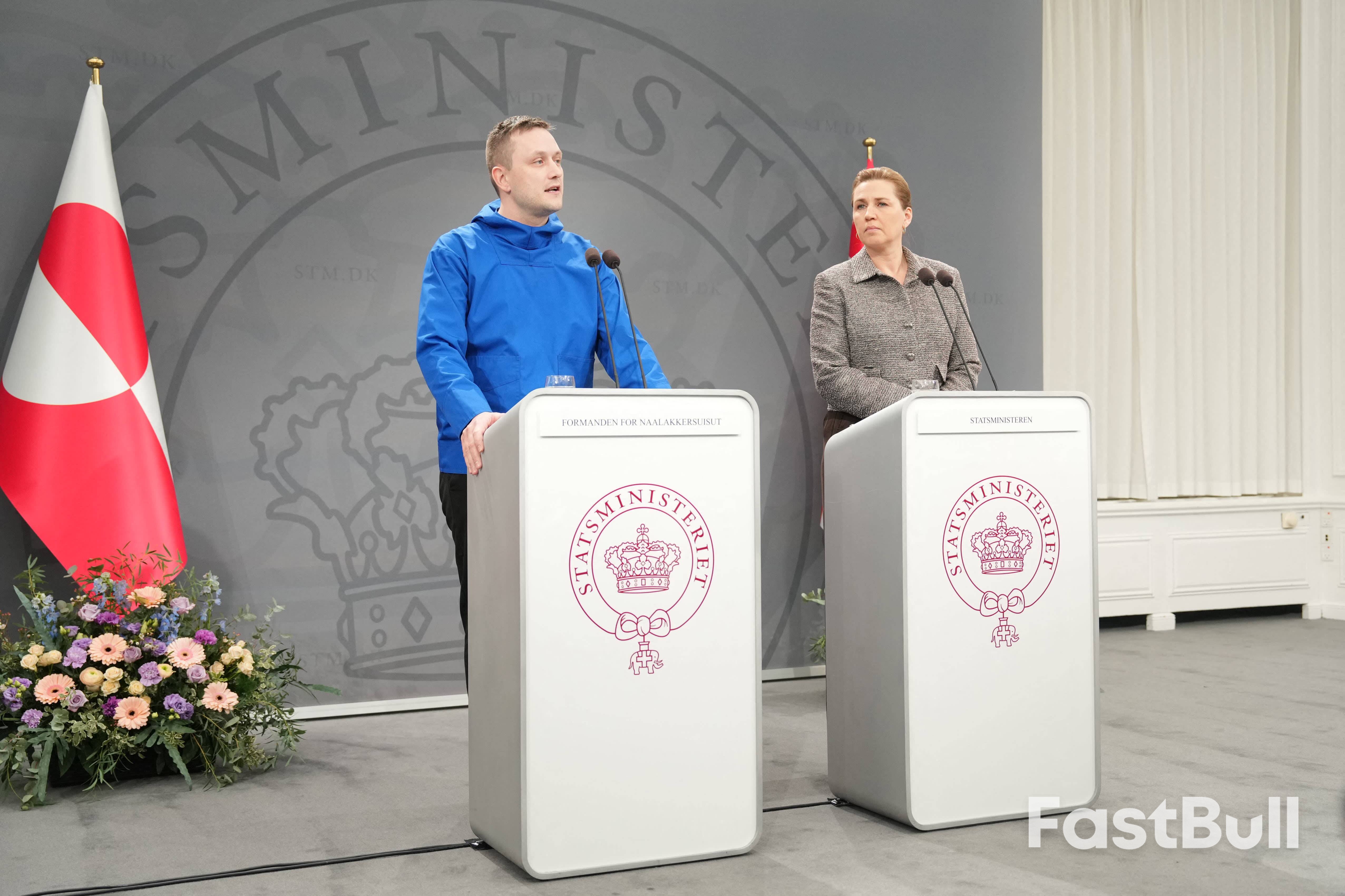
The high-stakes meeting comes just after Greenland's Prime Minister Jens-Frederik Nielsen and Danish Prime Minister Mette Frederiksen publicly stood together against Trump’s threats.
At a joint press conference in Copenhagen on Tuesday, Nielsen was unequivocal. He stated that if the self-governing Danish territory were forced to choose between the U.S. and Denmark, "we choose Denmark."
Frederiksen acknowledged the difficulty of resisting what she called "completely unacceptable pressure" from their closest ally. "But there is much to suggest that the hardest part is still ahead of us," she added.

Analysts warn that the diplomatic crisis could have severe consequences for the trans-Atlantic alliance.
Ian Lesser, a distinguished fellow at the think tank GMF, described the stakes for the talks as "very high," cautioning that a failure to find a resolution "does not just threaten NATO cohesion, it threatens the future existence of the Alliance as we know it."
According to Lesser, the meeting could either establish a path for a negotiated settlement—potentially involving new European defense commitments for Greenland and preferential U.S. access to its resources—or it "could end in acrimony." The prospect of a public fallout recalls a contentious meeting in February last year where Trump and Vance engaged in a shouting match with Ukrainian President Volodymyr Zelenskyy on live television.
A 'Profound Crisis' with No Easy Fix
Carl Bildt, former prime minister of Sweden, expressed skepticism about a diplomatic breakthrough on Wednesday, calling the situation "a profound crisis." He pointed to a significant development: Vice President JD Vance taking the lead in the talks from Secretary of State Marco Rubio.
"It was scheduled to be with Secretary of State Marco Rubio, who has indicated a slightly milder approach, but JD Vance has, of course, been directly insulting towards Denmark and demanding very strange things," Bildt told CNBC. "I expect a fairly hard meeting. I don't expect any resolution."
Bildt, who co-chairs the European Council on Foreign Relations, referenced Vance's "rather extraordinary" analysis of Europe at the Munich Security Conference in February of the previous year, which he said aligned with the region's "extreme right." He concluded, "This is not the trans-Atlantic alliance we used to have."
What a 'Good Outcome' Could Look Like
Otto Svendsen, an associate fellow at the Center for Strategic and International Studies (CSIS), noted that U.S. threats have pushed Greenland and Denmark to set aside their own tensions. He said the White House meeting will reveal the administration's level of commitment to acquiring Greenland.
"A good outcome for the Danes and Greenlanders would be a statement that affirms Greenland's sovereignty and position within the Kingdom," Svendsen explained. "Anything short of that leaves the door open to continued threats and coercion."
In return for such an affirmation, Svendsen suggested the Danish and Greenlandic delegation might offer to revisit economic and security arrangements, including more favorable access for U.S. companies to Greenland's mining sector and increased Danish investment in Arctic security.
Last week, several European leaders, including the heads of France, Germany, and the United Kingdom, rallied in support of Greenland, asserting that Arctic security must be a collective effort. "Greenland belongs to its people," they wrote in a joint letter. "It is for Denmark and Greenland, and them only, to decide on matters concerning Denmark and Greenland."
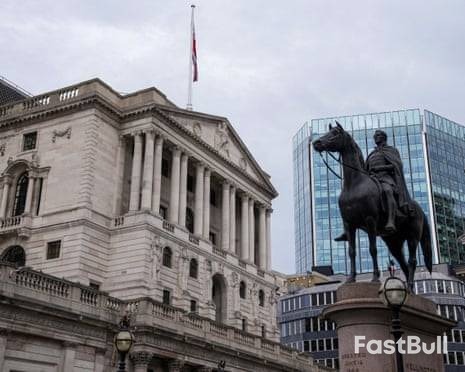
A senior Bank of England policymaker has called for further cuts to UK interest rates this year, citing a predicted sharp slowdown in inflation.

Alan Taylor, an external member of the Bank's Monetary Policy Committee (MPC), believes that cooling energy prices and cost-of-living measures from Rachel Reeves's autumn budget will help steer inflation back to its 2% target by the middle of 2026.
Based on this outlook, Taylor argues that borrowing costs should be lowered. "Interest rates should continue on a downward path, that is if my outlook continues to match up with the data, as it has done over the past year," he stated.
In a speech delivered in Singapore, Taylor outlined several factors that he expects will drive UK inflation down from its current rate of 3.2% to near the 2% target by mid-2026.
He noted that the impact of tax and administered price hikes will diminish in April. Furthermore, he highlighted key disinflationary pressures:
• Budget Measures: New policies from the budget are estimated to lower inflation by 0.5 percent.
• Food and Energy: Food inflation has already fallen significantly, and energy prices have stabilized at lower levels.
Taylor, a consistent advocate for rate cuts on the MPC, sees these developments as sufficient justification for reducing the Bank Rate from its current 3.75%.
Despite risks from Donald Trump's tariff policies and rising geopolitical tensions, Taylor presented an optimistic assessment of global trade's long-term trajectory. He argued that history shows a tendency for trade barriers to eventually fall.
Looking ahead, he suggested that AI technologies and the growth of developing nations could accelerate global trade. This trend, he said, should help keep long-term inflation low, including in Britain.
Taylor pointed out that the UK has already benefited from an influx of cheaper goods due to trade diversions caused by international tariff policies, which has helped ease domestic inflationary pressures. This phenomenon has been observed recently with a surge in Chinese imports to the UK.
Taylor believes the cooling inflation trend is sustainable, especially with wage growth also slowing. "I now therefore expect monetary policy to normalise at neutral sooner rather than later," he said.
City investors appear to share this view, with financial markets currently pricing in at least one additional quarter-point interest rate cut this year.

Political

Commodity

Remarks of Officials

Economic

Central Bank

Russia-Ukraine Conflict

Traders' Opinions

China–U.S. Trade War
Gold and silver's record-setting performance in 2025 has accelerated into the new year, with prices continuing to climb on the back of supply pressures, rising political risk, and new questions about central bank independence.
The rally gained fresh momentum on Monday when gold prices surged past $4,600 an ounce. The move followed news that U.S. Federal Reserve Chair Jerome Powell is under criminal investigation concerning the $2.5 billion renovation of the Fed's headquarters.
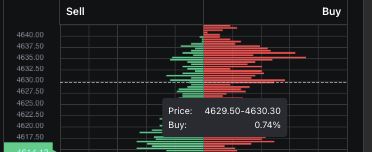
By Wednesday, spot gold was trading near $4,633.46 an ounce. Silver also extended its gains, breaking through the $90 per ounce mark for the first time on Tuesday before climbing another 3.5% to trade at $90.42.
This builds on a powerful trend from the previous year. In 2025, spot gold appreciated by about 65%, while silver skyrocketed roughly 150%. The momentum has not slowed in 2026, with gold already up 7.1% and silver adding 26.6% year-to-date. According to market managers, the fundamental drivers behind this rally remain firmly in place.
Analysts point to persistent geopolitical stress as a core pillar supporting precious metals. Daniel Casali, a partner in investment strategy at Evelyn Partners, noted that events like Russia's 2022 invasion of Ukraine and President Donald Trump’s "liberation day" tariff announcements continue to buoy gold.
"When Trump started to raise tariffs, China started to respond, so they pulled out what I would define as a battle between the U.S. and China of resource nationalism," Casali explained.
He said Beijing retaliated against U.S. tariffs by restricting exports of rare earth minerals, a move that highlighted their critical role in American defense, technology, and AI supply chains. These export controls were later expanded to include silver, a vital component for AI hardware, electric vehicles, and other industrial applications in the U.S. and Europe.
Investors are now focused on a potential meeting between Trump and Chinese President Xi in April. "How that goes? No idea," Casali said. "But you bet your bottom dollar export controls are going to be a key discussion point."
Political risk escalated further in early 2026 after the U.S. removed Venezuelan President Nicolas Maduro from power and the White House floated the idea of military action to secure control over Greenland. Casali observed that both Washington and Beijing are positioning their resources for leverage. While China controls rare earths and silver exports, the Trump administration is working to limit Venezuelan oil flows, which are primarily directed to China.
With these dynamics in play, some experts believe precious metals have much further to run. Ned Naylor-Leyland, an investment manager at Jupiter Asset Management, stated it was "absolutely" possible for gold to hit $5,000 and for silver to exceed $100 this year. He said investors "should assume that that would definitely happen this year" based on current conditions.
Naylor-Leyland identified silver as the market facing the most severe tightness, largely due to Beijing's export controls. "Silver is basically disappearing now to China and India, there's about a $10 premium being paid in Shanghai," he noted, adding that the market is now centered on physical bars rather than screen-based trading.
Silver’s widespread industrial use makes this shortage particularly acute. "The thing about silver is, if you don't have it, you can't build anything," Naylor-Leyland said. "Whether it's electronics or white goods or missiles or cars, you don't have it, you can't have it."
For gold, he identified accommodative monetary policy as a primary catalyst. "The base case with gold is presuming central banks remain dovish," he said. "We're in a rate cutting environment with unconventional policies and chasing down Chairman Powell. Unless they reverse course and start hiking, you can expect gold to do pretty much what it did last year or more."
Paul Syms, head of EMEA ETF fixed income and commodity product management at Invesco, agreed that the trends supporting metals appear even stronger now. He highlighted that the investigation into Powell has ignited fresh concerns over the Federal Reserve's independence, prompting a dozen global central bank heads to issue a statement in his support.
Syms concluded that with persistent worries over the U.S. dollar, budget deficits, lower interest rates, high geopolitical tension, and growing industrial demand for silver, there is no obvious catalyst that would reverse the upward trend in metal prices in the near term.
The United Arab Emirates has officially joined Pax Silica, a US-led technology bloc focused on strengthening innovation and securing supply chains for the artificial intelligence era.
The agreement was signed in Abu Dhabi on Wednesday by UAE Minister of State Saeed Alhajeri and US Undersecretary of State for Economic Affairs Jacob Helberg. The signing was part of Helberg's Middle East tour, which also includes stops in Qatar, Saudi Arabia, and Israel.
Following the agreement, Helberg invited Alhajeri to a ministerial dialogue on critical minerals scheduled for February 4 in Washington.
According to Alhajeri, the UAE’s entry into Pax Silica demonstrates the nation's commitment to its AI ambitions and the technology's power to reshape the global economy. He stated that the pact "reflects the shared commitment to shaping the future of AI with the responsibility of foresight and purpose."
Alhajeri described the move as a "defining moment for the future of human innovation," adding that AI is "no longer a technology but a lifeblood of the 21st century."
Pax Silica is a strategic initiative aimed at bringing together "trusted" partners to collaborate on technology. The US Embassy in the UAE had hinted at the announcement on Monday, calling the Emirates' participation "a key step in strengthening secure, resilient and innovation-driven supply chains critical to the AI era."
The UAE attended the initial Pax Silica meeting in Washington in December, alongside Japan, South Korea, Singapore, the Netherlands, the UK, Israel, and Australia. Qatar also signed the declaration on Monday, a development Helberg said "effectively fast-tracks diplomatic normalisation" by bringing Israel and Qatar into a single US-led framework.
Next, India will be invited to join the alliance next month, according to US Ambassador to India Sergio Gor.
Jacob Helberg described Pax Silica as a "real coalition of capabilities," emphasizing the strong relationship between the two nations. "The UAE is and always will be a cherished partner of the US... [we] can write the code for the next generation together," he said.
Drawing a parallel to the last century's economy, Helberg noted, "If the 20th century ran on oil and fuel, the 21st century will run on compute and the minerals that feed it."
The official Pax Silica declaration underscores this vision, stating that resilient supply chains are fundamental to the economic security of its signatories. It also acknowledges that "artificial intelligence represents a transformative force for our long-term prosperity and that trustworthy systems are essential to safeguarding our mutual security and prosperity."
This partnership is the latest in a series of strategic moves by the UAE to position itself as a global leader in artificial intelligence as part of its economic diversification away from hydrocarbons.
The country's focused AI strategy has already produced significant results:
• Major Investments: The UAE has attracted partnerships and investments from top industry players, including Microsoft, Nvidia, and OpenAI.
• Infrastructure Projects: In collaboration with the US, the UAE is developing the Stargate AI campus in Abu Dhabi, which will feature 5 gigawatts of capacity for AI data centers.
• Language Models: The nation has developed its own large language models, such as Falcon Arabic, to ensure Arabic culture is represented in the global AI ecosystem.
• Dedicated University: In 2019, the UAE launched the Mohamed bin Zayed University of Artificial Intelligence (MBZUAI), a graduate-level university exclusively for AI studies.
• Government Leadership: As early as 2017, the UAE appointed Omar Al Olama as one of the world's first ministers for artificial intelligence.
Federal Reserve Chair Jerome Powell recently took the unusual step of recording a video statement to protest the Trump administration's latest actions against the central bank, a move that drew a letter of support from his global peers. Despite these high-level alarms, investors have remained remarkably calm.
Treasury markets were little changed, and stock indexes climbed to record highs to start the week. This quiet market response suggests a broad confidence that, despite the political noise, the Federal Reserve's core decision-making remains insulated from interference.
The most telling indicator of market sentiment might be inflation expectations. If investors truly believed President Donald Trump could successfully pressure the Fed into cutting interest rates against its better judgment, they would anticipate higher inflation.
However, a key bond market gauge shows long-term inflation expectations holding steady around 2.35%, a level largely unchanged since Trump's election victory in November 2024.
Fed watchers attribute this market stability to the institution's structure. Rate decisions require a majority vote from the 12-member Federal Open Market Committee (FOMC). While Trump is set to appoint a new chair, he lacks the votes to command a majority on the committee before his term ends.
This stability, however, could be fragile. A pivotal moment is approaching on January 21, when the Supreme Court is scheduled to hear oral arguments in Trump's effort to fire Fed board member Lisa Cook.
According to Bloomberg litigation analyst Elliott Stein, Cook has a 60% chance of winning her case to remain in her post. "The high court has indicated the Fed is distinct from other agencies and so far has let her stay in her role while the case advances, signaling a higher bar for removing a Fed governor," Stein noted.
But a loss for Cook could be a game-changer. Macro strategists at Wells Fargo, led by Michael Schumacher, warned that a successful ouster could be "the proverbial straw that broke the camel's back."
The primary concern is that a victory for the administration would set a precedent. The White House could then seek to remove other Fed board members by citing similar justifications, such as the alleged misrepresentations in mortgage application documents used in Cook's case. This would grant the executive branch significant power to reshape the Fed's board and build a compliant majority.
Beyond the Supreme Court, another potential flashpoint is an indictment of Powell himself. Jeanine Pirro, the federal attorney who issued subpoenas to the Fed, recently noted that Powell is currently the only official to have publicly used the word "indictment."
Analysts Steven Englander and John Davies of Standard Chartered argue that even a "marginally credible" indictment could finally provoke a strong investor reaction. "The dollar could come under more extended pressure," they wrote, explaining that the Fed's credibility would plummet if its governors could be removed at will, leading to expectations of easier monetary policy.
Separately, the administration's proposal to cap credit card interest rates at 10% is also under scrutiny. While seemingly a pro-consumer move, economists at Morgan Stanley, including Heather Berger, predict it would ultimately harm consumer spending.
The team calculates that lower rates could free up approximately $100 billion in consumer income. However, they expect this benefit "would be more than offset by the negative effects," primarily a reduction in credit availability.
Faced with lower profits, credit card companies would likely tighten lending standards, shrink credit lines, and issue fewer new cards. The most impacted would be consumers with the lowest credit scores, who might resort to more expensive options like buy-now, pay-later services or be forced to cut spending altogether. The Morgan Stanley team concluded that the policy would not only depress overall outlays but also "only worsen the K-shape narrative" of economic inequality.
White Label
Data API
Web Plug-ins
Poster Maker
Affiliate Program
The risk of loss in trading financial instruments such as stocks, FX, commodities, futures, bonds, ETFs and crypto can be substantial. You may sustain a total loss of the funds that you deposit with your broker. Therefore, you should carefully consider whether such trading is suitable for you in light of your circumstances and financial resources.
No decision to invest should be made without thoroughly conducting due diligence by yourself or consulting with your financial advisors. Our web content might not suit you since we don't know your financial conditions and investment needs. Our financial information might have latency or contain inaccuracy, so you should be fully responsible for any of your trading and investment decisions. The company will not be responsible for your capital loss.
Without getting permission from the website, you are not allowed to copy the website's graphics, texts, or trademarks. Intellectual property rights in the content or data incorporated into this website belong to its providers and exchange merchants.
Not Logged In
Log in to access more features

FastBull Membership
Not yet
Purchase
Log In
Sign Up