Markets
News
Analysis
User
24/7
Economic Calendar
Education
Data
- Names
- Latest
- Prev




Signal Accounts for Members
All Signal Accounts
All Contests


U.S. API Weekly Cushing Crude Oil StocksA:--
F: --
P: --
U.S. API Weekly Refined Oil StocksA:--
F: --
P: --
U.S. API Weekly Gasoline StocksA:--
F: --
P: --
Mexico Unemployment Rate (Not SA) (Nov)A:--
F: --
P: --
U.S. MBA Mortgage Application Activity Index WoWA:--
F: --
P: --
U.S. Weekly Continued Jobless Claims (SA)A:--
F: --
U.S. Weekly Initial Jobless Claims (SA)A:--
F: --
P: --
U.S. Initial Jobless Claims 4-Week Avg. (SA)A:--
F: --
P: --
Japan Construction Orders YoY (Nov)A:--
F: --
P: --
Japan New Housing Starts YoY (Nov)A:--
F: --
P: --
Turkey Capacity Utilization (Dec)A:--
F: --
P: --
Japan Tokyo CPI YoY (Excl. Food & Energy) (Dec)A:--
F: --
P: --
Japan Unemployment Rate (Nov)A:--
F: --
P: --
Japan Tokyo Core CPI YoY (Dec)A:--
F: --
P: --
Japan Tokyo CPI YoY (Dec)A:--
F: --
P: --
Japan Jobs to Applicants Ratio (Nov)A:--
F: --
P: --
Japan Tokyo CPI MoM (Dec)A:--
F: --
P: --
Japan Tokyo CPI MoM (Excl. Food & Energy) (Dec)A:--
F: --
P: --
Japan Industrial Inventory MoM (Nov)A:--
F: --
P: --
Japan Retail Sales (Nov)A:--
F: --
P: --
Japan Industrial Output Prelim MoM (Nov)A:--
F: --
P: --
Japan Large-Scale Retail Sales YoY (Nov)A:--
F: --
P: --
Japan Industrial Output Prelim YoY (Nov)A:--
F: --
P: --
Japan Retail Sales MoM (SA) (Nov)A:--
F: --
P: --
Japan Retail Sales YoY (Nov)A:--
F: --
P: --
Russia Retail Sales YoY (Nov)A:--
F: --
P: --
Russia Unemployment Rate (Nov)A:--
F: --
P: --
Argentina Retail Sales YoY (Oct)A:--
F: --
P: --
U.S. Weekly Treasuries Held by Foreign Central Banks--
F: --
P: --
China, Mainland Industrial Profit YoY (YTD) (Nov)A:--
F: --
P: --
Russia IHS Markit Manufacturing PMI (Dec)--
F: --
P: --
India Manufacturing Output MoM (Nov)--
F: --
P: --
India Industrial Production Index YoY (Nov)--
F: --
P: --
France Unemployment Class-A (Nov)--
F: --
P: --
Euro Zone Total Reserve Assets (Nov)--
F: --
P: --
Canada National Economic Confidence Index--
F: --
P: --
U.S. Pending Home Sales Index (Nov)--
F: --
P: --
U.S. Pending Home Sales Index MoM (SA) (Nov)--
F: --
P: --
U.S. Pending Home Sales Index YoY (Nov)--
F: --
P: --
U.S. EIA Weekly Crude Oil Imports Changes--
F: --
P: --
U.S. EIA Weekly Cushing, Oklahoma Crude Oil Stocks Change--
F: --
P: --
U.S. EIA Weekly Crude Demand Projected by Production--
F: --
P: --
U.S. EIA Weekly Gasoline Stocks Change--
F: --
P: --
U.S. Dallas Fed General Business Activity Index (Dec)--
F: --
P: --
U.S. EIA Weekly Heating Oil Stock Changes--
F: --
P: --
U.S. EIA Weekly Crude Stocks Change--
F: --
P: --
U.S. Dallas Fed New Orders Index (Dec)--
F: --
P: --
Russia CPI YoY (Dec)--
F: --
P: --
U.S. EIA Weekly Natural Gas Stocks Change--
F: --
P: --
Brazil CAGED Net Payroll Jobs (Nov)--
F: --
P: --
South Korea Industrial Output MoM (SA) (Nov)--
F: --
P: --
South Korea Retail Sales MoM (Nov)--
F: --
P: --
South Korea Services Output MoM (Nov)--
F: --
P: --
Russia IHS Markit Services PMI (Dec)--
F: --
P: --
Turkey Economic Sentiment Indicator (Dec)--
F: --
P: --
Brazil Unemployment Rate (Nov)--
F: --
P: --
U.S. Weekly Redbook Index YoY--
F: --
P: --
U.S. S&P/CS 20-City Home Price Index YoY (Not SA) (Oct)--
F: --
P: --
U.S. S&P/CS 20-City Home Price Index MoM (SA) (Oct)--
F: --
P: --
U.S. FHFA House Price Index MoM (Oct)--
F: --
P: --


No matching data
Latest Views
Latest Views
Trending Topics
Top Columnists
Latest Update
White Label
Data API
Web Plug-ins
Affiliate Program
View All

No data
Israel became the first country to formally recognise the self-declared Republic of Somaliland as an independent and sovereign state on Friday -- a decision that could reshape regional dynamics and test Somalia's longstanding opposition to its secession.
Dec 26 (Reuters) - Israel became the first country to formally recognise the self-declared Republic of Somaliland as an independent and sovereign state on Friday -- a decision that could reshape regional dynamics and test Somalia's longstanding opposition to its secession.
Prime Minister Benjamin Netanyahu said Israel would seek immediate cooperation with Somaliland in agriculture, health, technology and the economy. In a statement he congratulated Somaliland's president, Abdirahman Mohamed Abdullahi, praised his leadership and invited him to visit Israel.
Netanyahu said the declaration "is in the spirit of the Abraham Accords, signed at the initiative of President Trump."
The 2020 accords were brokered by Trump's first administration and included Israel formalising diplomatic relations with the United Arab Emirates and Bahrain, with other countries joining later.
Netanyahu, Foreign Minister Gideon Saar and Somaliland's president signed a joint declaration of mutual recognition, the Israeli statement said.
Abdullahi said in a statement that Somaliland would join the Abraham Accords, calling it a step toward regional and global peace. He said Somaliland was committed to building partnerships, boosting mutual prosperity and promoting stability across the Middle East and Africa.
Egypt meanwhile said Foreign Minister Badr Abdelatty held phone calls on Friday with his counterparts from Somalia, Turkey and Djibouti to discuss what they described as dangerous developments in the Horn of Africa following Israel's announcement.
The ministers condemned Israel's recognition of Somaliland, reaffirmed their full support for Somalia's unity and territorial integrity, and warned that recognising breakaway regions poses a threat to international peace and security, Egypt's foreign ministry said.
Somaliland has enjoyed effective autonomy - and relative peace and stability - since 1991 when Somalia descended into civil war, but the breakaway region has failed to receive recognition from any other country.
Over the years, Somalia has rallied international actors against any country recognising Somaliland.
The former British protectorate hopes that recognition by Israel will encourage other nations to follow suit, increasing its diplomatic heft and access to international markets.
In March, Somalia and its breakaway region of Somaliland also denied receiving any proposal from the United States or Israel to resettle Palestinians from Gaza, with Mogadishu saying it categorically rejected any such move.
Reporting by Maayan Lubell and George Obulutsa and Abdi Sheikh in Mogadishu, and Hatem Maher in Egypt; Writing by Tala Ramadan; Editing by Louise Heavens and Howard Goller
Target Corp. shares rose on Friday after the Financial Times reported that an activist investor built up a stake in the big-box retailer, citing people it didn't identify.
Toms Capital Investment Management has made a significant investment in Target, the FT said, without disclosing further details.
Target shares jumped as much as 6.7% on Friday. The stock is headed for an annual decline of about 25% following a difficult year in which the company lost market share and sales slumped.
In response to a request for comment, Target said it maintains "regular dialogue with the investment community" and its top priority is "getting back to growth." The company said its plan to improve its merchandise, shopping experience and technology "will drive the business forward and deliver sustained, long-term value for shareholders."
A Bloomberg gauge of the dollar headed for its worst week since June and Treasuries rose as traders looked to data due early next month to confirm expectations for further Federal Reserve interest-rate cuts in 2026.
With trading subdued because of holidays this week and markets in the UK closed Friday, investors' attention has largely turned to major economic reports out of the US expected in the first few weeks of January. The December jobs report and consumer inflation readings, in particular, will help chart the Fed's next steps after officials reduced borrowing costs this month for the third straight meeting to support growth.
The Bloomberg Dollar Spot Index edged lower on Friday and is down about 0.8% this week. It has declined around 8% this year, which would be its steepest annual drop since 2017. The measure is also set for its lowest close since September. Risk-sensitive currencies like the Australian dollar and Norway's krone led gains against the greenback on the week among major peers.
"Liquidity was thin this week, and that didn't help the dollar, which was already in a relatively weak position," said Andrew Hazlett, a foreign-exchange trader at Monex Inc. "Looking ahead, our focus is going to be on inflation numbers as guidance for the Fed's next cut."
The greenback's decline has coincided with gains in Treasuries, with US 10-year yields falling about three basis points this week to 4.12%, within the range of the past couple of weeks. Traders see about a 90% probability that the Fed will stay put next month. But they're betting on another quarter-point cut by mid-year, and one more several months later.
US unemployment data released this month showed the jobless rate rising to its highest since 2021, while data on consumer inflation showed lower-than-expected readings.
Traders have bolstered expectations for a weaker US currency for five days in a row, with a key options gauge now at the most bearish on the greenback in more than three months.
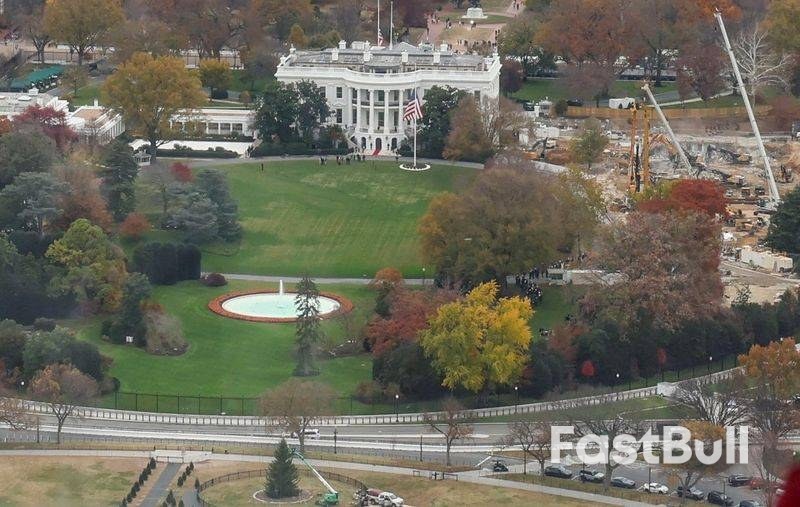
The White House will unveil new details on President Donald Trump's planned East Wing ballroom during a hearing early next month, according to a federal commission tasked with reviewing the project.
The new ballroom, which Trump has said would cost $400 million and would dwarf the adjacent White House building, has been challenged in court by preservationists, while Democratic lawmakers have called it an abuse of power and are investigating which donors are supporting it.
The National Capital Planning Commission, chartered by Congress to manage planning for Washington-area federal lands, said on its website that the White House will provide an "information presentation" on plans to rebuild the East Wing during a commission meeting on January 8.
The White House did not immediately respond to a request for comment.
The commission, chaired by a White House aide and onetime personal lawyer to Trump, Will Scharf, has declined to review the demolition of the former East Wing, preparation activities at the site, or potential effects to historic properties, in what would mark the biggest change to the historic property in decades.
The National Trust for Historic Preservation, a nonprofit organization chartered by Congress, is suing to halt the construction, arguing that the proposed 90,000 square foot (8,360 square meter) ballroom would dwarf the rest of the White House, at 55,000 square feet.
The judge in the case earlier this month declined to issue a temporary restraining order against work on the project, noting among other things that the size, scale and other specifications had not been finalized. Another hearing is scheduled for next month.
The president, a one-time real estate developer, has taken a hands-on role in what he has described as sprucing up the White House and the U.S. capital city ahead of celebrations next year marking the Declaration of Independence's 250th anniversary.
He has also proposed a new grand arch near Washington, while decorating the Oval Office extensively in gold leaf and installing plaques there offering his personal take on his predecessors' legacies.

The former East Wing was largely demolished in October, with comparatively little public notice or consultation.
In a recent notice posted online, the planning commission said a formal review taking place this coming spring will consider topics including lines of sight, public space and landscapes. Members of the public will be allowed to submit comments or testify during the review, it said.
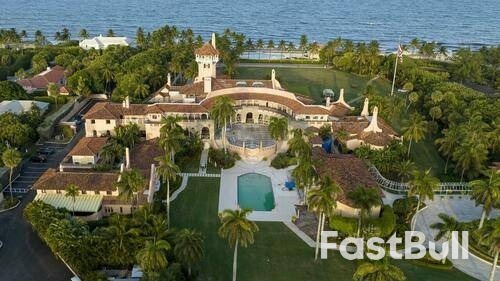
Ukrainian President Volodymyr Zelensky will meet with US President Donald Trump on Sunday in Mar-a-Lago to talk peace with Russia, Zelensky's top officials have confirmed. Ukraine is touting that a deal is close - and yet outside observers might easily note that huge hurdles remain.
Zelensky also stated on Telegram that "Many things can be decided before the new year." And yet he is still rejecting Russia's main sticking point - the demand to control the entirety of the Donbas region under any final peace settlement. Moscow also wants international legal recognition (and so, from Washington) of the eastern territories as being part of the Russian Federation.
via Associated PressSome level of progress must have been made in negotiations over the draft - at least from the US point of view - given that Trump said previously he would only meet Zelensky if he felt a deal was close.
Zelensky said Friday morning, "We are not losing a single day. We have agreed on a meeting at the highest level — with President Trump in the near future. A lot can be decided before the New Year."
At the same time, Kremlin spokesperson Dmitry Peskov said Russia had received and reviewed information shared by Russian negotiator Kirill Dmitriev following his recent talks with the Witkoff-Kushner delegation in Miami. Crucially the latest talks included top negotiators from both Russia and Ukraine directly engaging.
A senior US official characterized the talks involving envoys Rustem Umerov and Kirill Dmitriev as "positive and constructive."
"We've gone as far as possible with the Russians and the Ukrainians. We've made more progress in the last two weeks than the last year. We want to push the ball into the goal. We're heading in the right direction," the official was quoted in Axios as saying.
Another point of contention between Moscow and Kiev is expected to be the strong security guarantees for Ukraine backed by the West. Zelensky has been pushing that they are akin to NATO's Article 5 - but it's unlikely the Kremlin would go for anything approaching this language.
Breakthrough on the territory issue? Not likely from Russia's point of view, given that what Zelensky is proposing still sounds like a temporary solution, and not the kind of full, legal, and permanent recognition the Kremlin seeks. Russia has emphasized many times it won't contemplate a merely temporary truce.
"The U.S. and Europe will provide Ukraine with security guarantees. If Russia invades Ukraine there will be a military response and sanctions will be reinstated," Zelensky told reporters earlier this week.
As for the still open question of territorial concessions, Zelensky has maintained that if land is given up, then this must be decided by the Ukrainian people in a popular referendum. But of course, the country still hasn't had a single parliamentary or presidential vote since the war began, so it's hard to see how such a referendum would actually happen anytime soon.
The National People's Power (NPP) party led by Sri Lankan President Anura Kumara Dissanayake has received much publicity for its anti-corruption drive since it came to power just over a year ago. The regime has focused on systemic reforms, seeking to tackle structural and institutional problems.
The NPP's reforms range from digital transformation to public sector restructuring to reducing government excesses and waste. The administration's agenda resonates with a public weary of inflation, corruption and poor governance.
State institutions have been captured by political elites, entrenching fraud, waste and bribery and contributing to Sri Lanka's economic crisis. The Rajapaksa family — prominent in Sri Lankan politics for many years — appointed their allies to high-ranking roles in the government and state-controlled companies. Global factors such as the COVID-19 pandemic and Russia's invasion of Ukraine aggravated the crisis.
The NPP is seeking to maintain its legitimacy through its anti-corruption efforts and dismantling of public waste. The government has removed some benefits given to former heads of state, such as allowances, personal staff and numerous vehicles. The NPP has launched investigations against bureaucrats, former MPs, and members of the judiciary, the police and the private sector. These efforts ground the country's economic recovery in anti-corruption reforms. They are also part of a broader effort to shift political culture from elite patronage to greater accountability.
Sri Lanka has a legacy of launching but not concluding investigations, particularly against individuals connected to top politicians. But several high-profile arrests occurred in 2025, notably former Sri Lankan president Ranil Wickremesinghe's arrest for allegedly misusing public funds in August. Academic Thiruni Kelegama argues that Wickremesinghe's arrest showcased that accountability now extends to the entire political class. Yet his arrest has brought polarised reactions from the public. Some applauded the move as heralding the end of elite impunity, while others said that the charges against him were minor.
The government's efforts to tackle corruption will likely be met with resistance from the old guard. Wickremesinghe's arrest triggered a display of unity from politicians across different parties, with many coming together at a press conference bearing the slogan 'Let's defeat the constitutional dictatorship'.
In November 2023, the Sri Lankan Supreme Court stated that many key figures, including former presidents Gotabaya Rajapaksa and Mahinda Rajapaksa and former finance minister Basil Rajapaksa were responsible for the 2022 economic crisis. But the ruling was seen as tokenistic since its only punishment was paying the legal fees of the case's petitioners.
The Wickremesinghe government had created the pathway for the incumbent government's anti-corruption agenda. The Wickremesinghe administration introduced the Anti-Corruption Act No. 9 of 2023 and revised the National Audit Act No. 19 of 2018. Progress was made on the Regulation of Election Expenditure Act No. 3 of 2023, which the NPP has continued. The Commission to Investigate Allegations of Bribery or Corruption (CIABOC) also started work on the National Action Plan for Anti-Corruption 2025–2029.
The amended Anti-Corruption Act No. 9 of 2023 has widened CIABOC's scope, enabling a more comprehensive approach to tackling corruption. This allows investigations into a broader range of offences, including money laundering, private sector bribery and trading in influence.
The NPP has continued the Extended Fund Facility program with the International Monetary Fund (IMF), though it pledged to revisit the deal during the 2024 election campaign. The government decided to stick to the IMF deal since renegotiation might have slowed the country's economic recovery, which is connected to the debt restructuring process.
While the Wickremesinghe government was criticised for austerity measures implemented through the IMF program, the NPP's continuation of this program has been received differently by the public. This is connected to the erosion of the old guard and opposition politicians' legitimacy, particularly after the 2022 Aragalaya protest movement. The NPP has enjoyed public support as a new political contender thanks to its moral high ground, despite lacking economic or administrative experience.
The incumbent government complemented existing anti-corruption legal frameworks by introducing the Proceeds of Crime Act No. 5 of 2025 to allow for the recovery of proceeds through forfeiture, freezing and disposal. Writer Asoka S Seneviratne argues that this act is revolutionary since it paves the way to introduce the Proceeds of Crime Recovery and Management Authority. But Seneviratne has noted that considerable resources and time will be required to fully operationalise this law.
To better tackle corruption and bribery, the CIABOC, together with the UNDP and the Japanese government, launched a case-file tracking system in October 2025. This system serves as a digital platform that increases workflow efficiency, improves case management and allows for timely investigations. The system seeks to increase the commission's capability to meet its institutional mandate.
While the NPP has initiated digitalisation only in a few sectors, the incorporation of such tools advances the digital transformation and state modernisation agenda articulated in its Digital Policy for Sri Lanka document.
The NPP has displayed more political will to tackle corruption than previous administrations. There is a public perception that the government is executing, at least partly, on its anti-corruption agenda. But other crucial issues such as underfunding, weak legal enforcement and limited mandates still need to be addressed to make state institutions more resilient and independent.
Roshni Kapur is PhD Candidate at the University of Ghent specialising in caste and land conflicts.
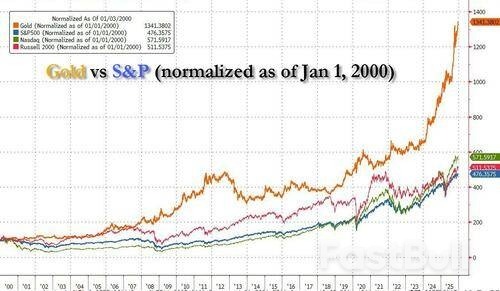
The gold price is racing from one all-time high to the next. That's good news for friends of the precious metal and bad news for anyone still hoping for a stabilization of global debt dynamics.

Assuming the markets close out the year without major volatility, gold holders can look forward to an approximate 70 percent increase in value within a single year. This is remarkable—not least because 2024 already ended with a 26 percent gain for the otherwise conservative asset class of precious metals. That amounts to a doubling of value in just two years—a surge usually seen in the tech sector rather than gold.
For the most stable money humanity has ever known, which has served as a store of value in crises for millennia, this is no ordinary development. Quite the opposite. Among those who follow geopolitical developments and financial markets closely, such a compressed upward movement is an unmistakable signal: Danger is imminent.
Whether it's military conflicts—like the Ukraine crisis, which still carries dangerous escalation potential—or the global debt dynamics now affecting nearly every region, capital is visibly fleeing to the safe haven of gold. Gold has a key advantage over other assets: there is no counterparty risk. Physical ownership—not as an ETF held at a bank—represents a tangible value that, aside from the annual 1.6 percent mining increase, neither inflates nor can be arbitrarily frozen.
By comparison, the M2 money supply—which includes cash, deposits, short-term term deposits such as money market funds, and savings accounts—is expected to grow by seven to nine percent globally this year. Gold is becoming scarcer relative to circulating fiat money—a compelling argument, particularly in central bank circles. Banks are well aware that their interest rate policies, coupled with ongoing debt monetization, lead to planned currency devaluation. Hence, the precise move into gold—central bankers are essentially trying to secure themselves.
The size of the global gold stock is limited and fairly precisely measurable. Worldwide, there are 216,000 tons of gold, equating to a volume of 11,200 m³—forming a cube with a side length of 22.3 meters.
Globally, it was again the central banks pushing gold prices higher this year. The Polish, Chinese, and Turkish central banks stand out. Combined, central banks are expected to add roughly 1,000 tons of gold to their vaults this year—a figure well above the long-term average of 400–500 tons. As mentioned: danger is imminent.
This massive buying suggests that central bankers know full well we are facing a global debt problem—or may already be in the eye of the storm. Interest rates are rising in almost every economy, prompting investors to demand higher risk premiums on sovereign bonds from highly indebted states. The U.S., with over 120 percent debt, joins France (~117 percent) and Italy (~136 percent). Even Germany, currently an exception at 65 percent debt, plans a significant buildup in the coming years. Overstretched welfare states and additional burdens from migration-related crises push public budgets further into deficit, only offset by continuously growing bond volumes.
When central banks step in and take on large parts of this new debt, the credit money supply grows alongside the actual credit process, driving inflation in both goods and asset prices.
Subordinating monetary policy to fiscal mandates has created a powerful political unit. Debt policy becomes the norm, and the natural causality between deficit, higher taxes, and inflation is systematically stretched out over time. Who today links rising food prices or the precious metal boom to the Federal Reserve or the ECB?
Private investors feel the pressure, too: German households, for instance, bought about 9,000 tons of gold this year in the form of jewelry, goods, and coins.
Growing private and institutional demand for safe assets, which shows no sign of abating and is expected to continue into 2026, points to a severe trust crisis. Rising sovereign bond yields—especially in Japan, with debt around 230 percent—have reached alarming levels, scaring investors and exposing the depth of the trust crisis. A storm is brewing—and Japan may well be where it begins.
For years, Japan served as a carry trade hub: borrowing cheaply in yen and investing elsewhere for higher returns with limited currency risk. Rising rates there could abruptly make these long-standing financing models unprofitable.
The foundation of the international financial market, largely built on U.S. Treasuries, risks destabilization. Options to hedge against the monetary excess—central banks taking on massive state debts—are limited.
Gold remains one of the safest havens. For those preferring more volatility, Bitcoin is digital gold: serving the same purpose, independent of state creditworthiness, and operating as a self-contained economic ecosystem.
As if one more proof were needed that a storm might hit capital markets, Italy—one of the Eurozone's three pillars—has gone on the offensive. The country is working to legally transfer gold stored at the Italian central bank to state ownership.
Does Prime Minister Giorgia Meloni foresee that in a Euro crisis, the ECB might tap national gold reserves to stabilize the common currency?
How far has the trust crisis in capital markets already advanced? The new year may soon give us a clearer answer to this pressing question.
White Label
Data API
Web Plug-ins
Poster Maker
Affiliate Program
The risk of loss in trading financial instruments such as stocks, FX, commodities, futures, bonds, ETFs and crypto can be substantial. You may sustain a total loss of the funds that you deposit with your broker. Therefore, you should carefully consider whether such trading is suitable for you in light of your circumstances and financial resources.
No decision to invest should be made without thoroughly conducting due diligence by yourself or consulting with your financial advisors. Our web content might not suit you since we don't know your financial conditions and investment needs. Our financial information might have latency or contain inaccuracy, so you should be fully responsible for any of your trading and investment decisions. The company will not be responsible for your capital loss.
Without getting permission from the website, you are not allowed to copy the website's graphics, texts, or trademarks. Intellectual property rights in the content or data incorporated into this website belong to its providers and exchange merchants.
Not Logged In
Log in to access more features

FastBull Membership
Not yet
Purchase
Log In
Sign Up