Markets
News
Analysis
User
24/7
Economic Calendar
Education
Data
- Names
- Latest
- Prev




Signal Accounts for Members
All Signal Accounts
All Contests


U.K. Retail Sales MoM (SA) (Dec)A:--
F: --
P: --
France Manufacturing PMI Prelim (Jan)A:--
F: --
P: --
France Services PMI Prelim (Jan)A:--
F: --
P: --
France Composite PMI Prelim (SA) (Jan)A:--
F: --
P: --
Germany Manufacturing PMI Prelim (SA) (Jan)A:--
F: --
P: --
Germany Services PMI Prelim (SA) (Jan)A:--
F: --
P: --
Germany Composite PMI Prelim (SA) (Jan)A:--
F: --
P: --
Euro Zone Composite PMI Prelim (SA) (Jan)A:--
F: --
P: --
Euro Zone Manufacturing PMI Prelim (SA) (Jan)A:--
F: --
P: --
Euro Zone Services PMI Prelim (SA) (Jan)A:--
F: --
P: --
U.K. Composite PMI Prelim (Jan)A:--
F: --
P: --
U.K. Manufacturing PMI Prelim (Jan)A:--
F: --
P: --
U.K. Services PMI Prelim (Jan)A:--
F: --
P: --
Mexico Economic Activity Index YoY (Nov)A:--
F: --
P: --
Russia Trade Balance (Nov)A:--
F: --
P: --
Canada Core Retail Sales MoM (SA) (Nov)A:--
F: --
P: --
Canada Retail Sales MoM (SA) (Nov)A:--
F: --
U.S. IHS Markit Manufacturing PMI Prelim (SA) (Jan)A:--
F: --
P: --
U.S. IHS Markit Services PMI Prelim (SA) (Jan)A:--
F: --
P: --
U.S. IHS Markit Composite PMI Prelim (SA) (Jan)A:--
F: --
P: --
U.S. UMich Consumer Sentiment Index Final (Jan)A:--
F: --
P: --
U.S. UMich Current Economic Conditions Index Final (Jan)A:--
F: --
P: --
U.S. UMich Consumer Expectations Index Final (Jan)A:--
F: --
P: --
U.S. Conference Board Leading Economic Index MoM (Nov)A:--
F: --
P: --
U.S. Conference Board Coincident Economic Index MoM (Nov)A:--
F: --
P: --
U.S. Conference Board Lagging Economic Index MoM (Nov)A:--
F: --
P: --
U.S. UMich 1-Year-Ahead Inflation Expectations Final (Jan)A:--
F: --
P: --
U.S. Conference Board Leading Economic Index (Nov)A:--
F: --
P: --
U.S. Weekly Total Rig CountA:--
F: --
P: --
U.S. Weekly Total Oil Rig CountA:--
F: --
P: --
Germany Ifo Business Expectations Index (SA) (Jan)--
F: --
P: --
Germany IFO Business Climate Index (SA) (Jan)--
F: --
P: --
Germany Ifo Current Business Situation Index (SA) (Jan)--
F: --
P: --
Mexico Unemployment Rate (Not SA) (Dec)--
F: --
P: --
Canada National Economic Confidence Index--
F: --
P: --
U.S. Non-Defense Capital Durable Goods Orders MoM (Excl. Aircraft) (Nov)--
F: --
P: --
U.S. Durable Goods Orders MoM (Excl. Defense) (SA) (Nov)--
F: --
P: --
U.S. Durable Goods Orders MoM (Excl.Transport) (Nov)--
F: --
P: --
U.S. Durable Goods Orders MoM (Nov)--
F: --
P: --
U.S. Dallas Fed General Business Activity Index (Jan)--
F: --
P: --
U.K. BRC Shop Price Index YoY (Jan)--
F: --
P: --
China, Mainland Industrial Profit YoY (YTD) (Dec)--
F: --
P: --
Mexico Trade Balance (Dec)--
F: --
P: --
U.S. S&P/CS 20-City Home Price Index YoY (Not SA) (Nov)--
F: --
P: --
U.S. S&P/CS 20-City Home Price Index MoM (SA) (Nov)--
F: --
P: --
U.S. FHFA House Price Index MoM (Nov)--
F: --
P: --
U.S. FHFA House Price Index (Nov)--
F: --
P: --
U.S. Richmond Fed Manufacturing Composite Index (Jan)--
F: --
P: --
U.S. Conference Board Present Situation Index (Jan)--
F: --
P: --
U.S. Conference Board Consumer Expectations Index (Jan)--
F: --
P: --
U.S. Richmond Fed Manufacturing Shipments Index (Jan)--
F: --
P: --
U.S. Richmond Fed Services Revenue Index (Jan)--
F: --
P: --
U.S. Conference Board Consumer Confidence Index (Jan)--
F: --
P: --
Australia RBA Trimmed Mean CPI YoY (Q4)--
F: --
P: --
Australia CPI YoY (Q4)--
F: --
P: --
Australia CPI QoQ (Q4)--
F: --
P: --
Germany GfK Consumer Confidence Index (SA) (Feb)--
F: --
P: --
India Industrial Production Index YoY (Dec)--
F: --
P: --
India Manufacturing Output MoM (Dec)--
F: --
P: --


No matching data
Latest Views
Latest Views
Trending Topics
Top Columnists
Latest Update
White Label
Data API
Web Plug-ins
Affiliate Program
View All

No data
The Inland Revenue Board (IRB) has committed to completing corporate tax refunds for the 2023 and 2024 assessment years within 2026.
Currently, the tax collection agency is prioritising the completion of corporate tax refunds for the 2023 assessment year in the first quarter of 2026, while refunds for the 2024 assessment year are expected to be settled by the end of 2026, Deputy Finance Minister Liew Chin Tong said.
"Excess tax refunds — regardless of the age of cases — will continue to be paid to all non-corporate taxpayers," he said during a special chamber session in Parliament on Thursday.
According to Liew, the IRB refunded a total of RM22.45 billion in excess taxes to 3.6 million taxpayers in 2025, marking the highest annual tax refund in the past five years.
To strengthen refund management, Liew said the IRB has implemented a fairer and more structured distribution strategy. This includes prioritising older refund backlogs under a first-in, first-out (Fifo) approach, balancing payouts based on the age of arrears, making full refunds to individual taxpayers, and giving priority to micro, small and medium enterprises (MSMEs) or companies facing cash-flow constraints.
Legislative amendments have also been introduced to allow taxpayers to review their tax estimates in the 11th month, compared with the previous sixth or ninth month, Liew noted. The move aims to ensure estimated tax payments are closer to actual tax liabilities, thereby reducing excess tax refunds.
Cash-strapped builder New World Development Co. is facing fresh turmoil at its HK$20 billion ($2.6 billion) mall near Hong Kong's international airport, as a slew of tenants terminate leases, according to people familiar with the matter.
In a striking sign of waning confidence, even a store of Chow Tai Fook Jewellery Group Ltd., tied to New World's founding Cheng family, has withdrawn from the 11 Skies mall, the people said, asking not to be identified discussing private matters. Chow Tai Fook Jewellery is co-led by Sonia Cheng, daughter of family patriarch Henry Cheng.
Other tenants that have exited include Japan's Uniqlo, premium sportswear label Y-3 and Lukfook, one of China's biggest jewelers, they said.
Once envisioned as Hong Kong's largest shopping and entertainment hub for mainland Chinese tourists, the 3.8 million-square-foot 11 Skies mall-and-office complex now sits largely vacant amid a retail slump. New World is eager to offload the showcase-turned-troubled asset, even at a loss, as vacancies mount and rent obligations loom. The developer is already racing to sell at least one asset by June in a quest for positive cash flow, separate people familiar with the matter said.
The mall's outlook is further dented by delays to the airport's terminal 2 development, originally slated to open in March, which was expected to be a primary driver of visitor traffic. The terminal 2 is expected to be delayed by another two to three months, people familiar with the matter said. The opening of 11 Skies has been pushed back until at least mid-2026.
Hopes that the Cheng family might step in have faded, with Chow Tai Fook's retreat underscoring not just the mall's faltering prospects but the broader financial strains facing one of Hong Kong's most indebted developers.
New World didn't immediately respond to a request from Bloomberg for comments. Airport Authority Hong Kong reiterated its plan was to open the new terminal in the second quarter. Chow Tai Fook Jewellery, Uniqlo and Y-3 didn't immediately respond to requests for comment, while Lukfook declined to comment.
Tenant losses have added to the urgency for New World to seek a revised deal with AAHK, which awarded the tender for 11 Skies in 2018. The developer is required to pay a guaranteed rent of HK$1.8 billion a year — or up to 30% of gross revenue, whichever is higher — from 2028 through 2066, according to stock exchange filings and a note from UBS Group AG.
AAHK is now weighing a split from New World and has approached rival developers about taking over operations, the people said.
Options under review include waiving at least some of the guaranteed rent in exchange for control of the project, people familiar with the matter have previously said.
Uncertainty over the project has also become an obstacle for New World to raise fresh funds. The Cheng family's talks with third-party investors on jointly injecting capital into the company have stalled, partly because potential partners saw no clarity on the outcome of the discussions involving 11 Skies.
Some work remains unfinished and is scheduled for completion in phases by 2026 and 2027, New World said in its financial report released in September.
Greenland's pension fund is mulling whether it should continue investing in US stocks, in what its chief executive says would be a symbolic stand against US President Donald Trump's push to seize control of the Arctic island.
SISA Pension, which manages around seven billion Danish kroner ($1.1 billion), currently has around a 50% exposure to the US, mostly in public equities. While no decision has been made, its board and investment committee have been debating the merits of divestment, CEO Søren Schock Petersen said in an interview.
"We are still discussing it and will continue discussing it. Probably sometime in the future, we will say enough is enough," Copenhagen-based Petersen said via telephone. "This continuous pressure will perhaps end with a decision that we now have to act and can't keep ignoring it."
Talk of selling US assets by foreign holders resurfaced this week after Trump threatened to impose tariffs on goods from European countries opposing his push to take control of Greenland. But he reversed his tariff plan on Wednesday, citing a "framework of a future deal" that he said was reached regarding the island.
Petersen, who made his initial remarks before Trump appeared to ease his stance, later said he stood by his comments on the fund reconsidering its US investments.
If the island's pension fund decides to dump US assets, it would be a remarkable shift given the premier status of US equity markets. About 70% of the MSCI World benchmark is made up of US stocks, whose outperformance in recent decades has fueled talk of "American Exceptionalism." For almost everyone, it's too big a market to ignore.
In Europe, some pension funds this week announced sales of US Treasuries, while refraining from fully divesting from equities. Danish pension fund AkademikerPension said it's planning to exit its roughly $100 million of US Treasuries by the end of the month, while Sweden's biggest private pension fund Alecta has divested most of its holdings since early 2025.
Read: Selling Treasuries Looks Symbolic If European Funds Keep Stocks
Petersen, 65, acknowledged the fund, whose Treasury holdings are negligible, is too small for any stock divestment to meaningfully dent US capital markets. The case for divesting stocks is also more complex than selling US government debt, he said.
"Would that be a fair decision? Only half of the US population voted for Trump," he asked. "If our results come out and US shares perform how they have done recently, will our members still appreciate it?"
The "worst-case scenario" would be a US invasion, Petersen said. Greenland's prime minister said Tuesday residents need to start preparing for a possible military invasion, even if it's unlikely.
Petersen predicts most Greenlanders would depart for Denmark in that extreme scenario. That would likely hurt the valuation of the fund's private investments across the island, such as a recently-acquired stake in a local seafood firm, he said.
In the event of an invasion, Petersen assumes SISA's assets wouldn't be seized by the US, "but of course you never know."
SISA was founded in 1999 and is owned by its over 44,000 members. Its main office is in Nuuk, where it has six members of staff.
"Our size is very small compared to the rest of the industry," Petersen said. But any decision to divest US assets "could be symbolic. It could be a signal."
A new framework deal on Greenland involving U.S. President Donald Trump is compelling NATO to significantly increase its focus on Arctic security, with the first results of this strategic shift expected in 2026.
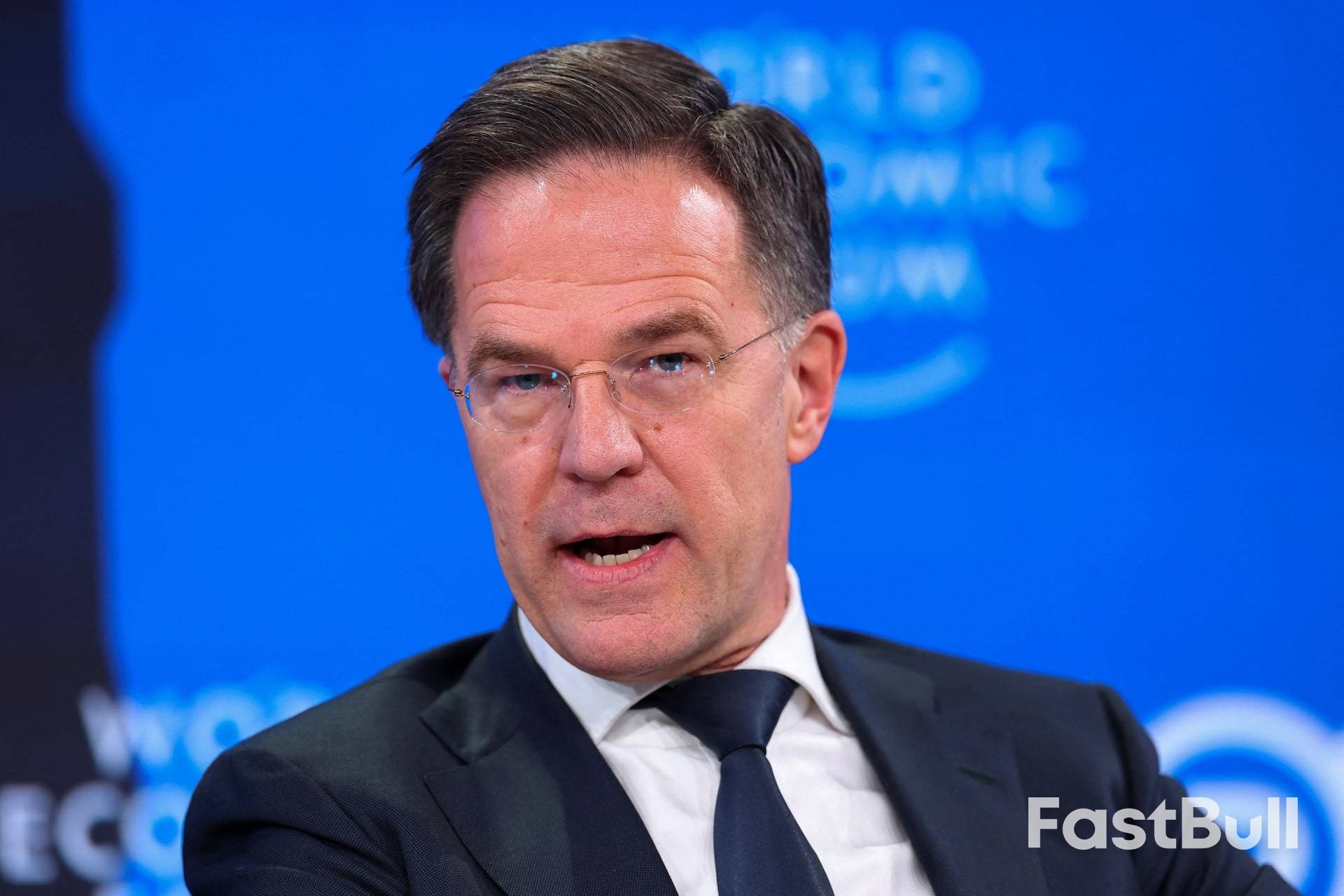
Speaking in an interview from the World Economic Forum in Davos, Switzerland, NATO Secretary General Mark Rutte confirmed that the agreement requires a direct response from the alliance.

According to Rutte, the next step is for NATO's military commanders to determine the specific security requirements for the region. He expressed confidence that even non-Arctic NATO members would contribute to the effort.
"We will come together in NATO with our senior commanders to work out what is necessary," Rutte stated, emphasizing the urgency of the task. "I have no doubt we can do this quite fast. Certainly I would hope for 2026, I hope even early in 2026."
During his meeting with President Trump in Davos, Rutte noted that the topic of mineral exploitation was not discussed. He clarified that direct negotiations over the Arctic island would continue between the United States, Denmark, and Greenland.
Rutte also provided reassurance that the intensified Arctic effort would not come at the expense of other commitments, specifically stating it would not drain resources intended for the support of Ukraine.
When asked if allies can trust President Trump's commitments, Rutte responded directly: "You can always take Donald Trump at his word."
His comment comes as Trump stated on Wednesday that the U.S. would not use force to pursue its interest in Greenland. The President also recently dropped threats of imposing additional tariffs on some European allies over the matter.

Japan's long-standing goal of achieving a primary budget surplus has been delayed once again, as Prime Minister Sanae Takaichi forges ahead with a "proactive" fiscal policy centered on increased spending. The updated forecast suggests the timeline for fiscal discipline has been pushed back, a move that is already rattling the country's bond market.
The government's latest projections reveal a sharp reversal of fortune. For the fiscal year starting in April 2026, Japan is now expected to post a primary budget deficit of 800 billion yen ($5 billion). This stands in stark contrast to the previous forecast of a 3.6 trillion yen surplus for the same period.
The dramatic shift is primarily driven by a 21.3 trillion yen stimulus package launched by Takaichi late last year. With the previous target now out of reach, the government is aiming for a 3.9 trillion yen surplus in fiscal 2027, a goal that assumes the Japanese economy maintains a modest growth trajectory.
The fiscal outlook could worsen further. The current projections do not yet account for a major election promise made by Takaichi: a proposed two-year suspension of the 8% tax on food. This measure alone is estimated to cost the government about 5 trillion yen ($32 billion) annually.
The announcement of this potential tax cut, made when Takaichi called a snap election for February, sent a shockwave through financial markets. Bond investors reacted with alarm, pushing the yield on the benchmark 10-year Japanese government bond (JGB) to a 27-year high on Tuesday.
The primary budget balance is a critical metric for fiscal health, as it indicates a government's ability to fund its policies without issuing new debt.
Japan's battle with deficits has been a defining feature of its post-war economy. Except for a brief period during the asset bubble from 1986 to 1991, the country has consistently run a primary budget deficit. This has resulted in a national debt pile more than twice the size of its economy—the highest among all developed nations.
The objective of returning to a surplus was first established in the early 2000s, but the target has been postponed multiple times over the past two decades.
Prime Minister Takaichi has signaled a clear departure from previous austerity-focused approaches. She intends to implement a new multi-year fiscal target that allows for more flexible spending, rather than adhering to a strict year-by-year surplus goal.
At a recent economic council meeting, Takaichi stated her aim is to secure the confidence of financial markets by achieving a stable reduction in the country's debt-to-GDP ratio. While she did not directly address the recent bond market sell-off, she acknowledged a proposal from private-sector council members emphasizing the need to monitor debt-servicing costs as interest rates rise.
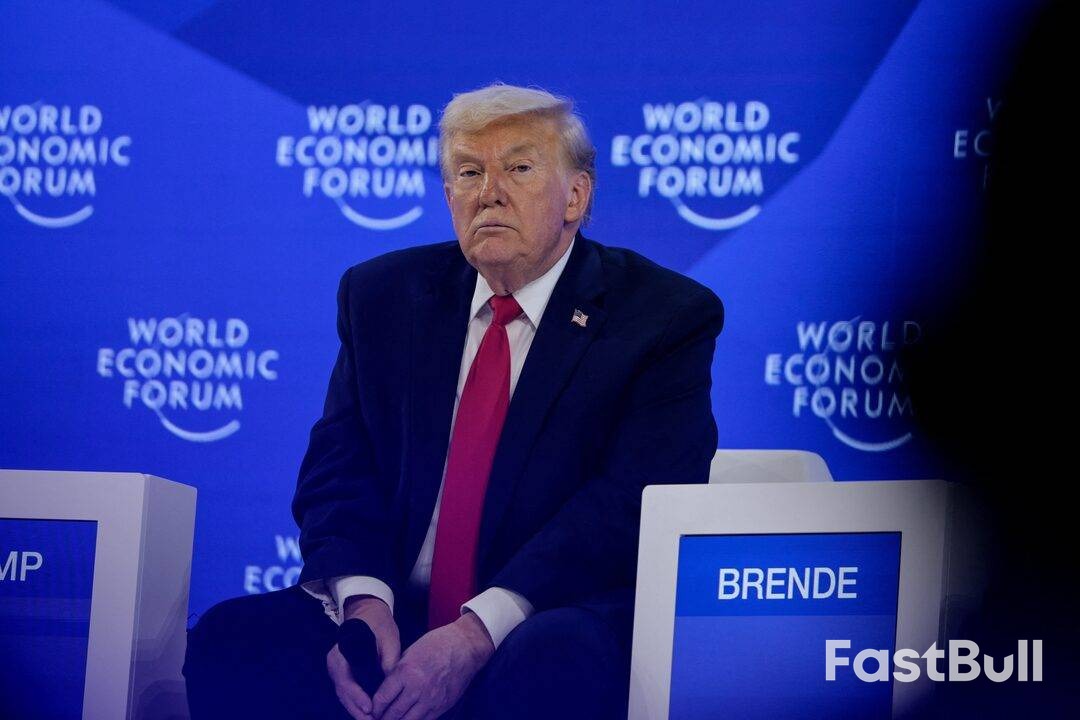
President Donald Trump has stepped back from his threat to use tariffs to acquire Greenland, signaling a major de-escalation in a standoff that has strained transatlantic relations and rattled European markets.
Speaking from the World Economic Forum in Davos, Trump indicated that he would no longer consider using force or imposing tariffs on countries that oppose his plans for the Arctic island. Instead, he suggested a framework deal could be reached, easing fears of a severe rupture within the NATO alliance.

The president's ambition to gain sovereignty over Greenland, a territory of fellow NATO member Denmark, had previously threatened to reignite a trade war with Europe and undermine Western security cooperation.
After meeting with NATO Secretary General Mark Rutte, Trump outlined the potential for a deal that would satisfy U.S. strategic interests. The objectives include establishing a missile-defense system, securing access to critical minerals, and blocking Russian and Chinese influence in the Arctic.
Rutte confirmed that the discussions focused on how NATO can best defend the region from Russian and Chinese ambitions.
"One workstream coming out of yesterday... is to make sure when it comes to Greenland, particularly, that we ensure that the Chinese and the Russians will not gain access to the Greenland economy (or) militarily to Greenland," Rutte stated at a panel on Thursday.
While the specifics of a potential deal remain unclear, the shift from confrontation to negotiation has been widely welcomed.
Denmark has responded to the development with a mix of openness and firmness. Prime Minister Mette Frederiksen said her country and Greenland would engage in constructive talks, but only on the condition that Denmark's territorial integrity is respected.

Danish Defence Minister Troels Lund Poulsen reinforced this position, stating that Denmark has drawn a "clear red line" and will not cede sovereignty over Greenland. "Following Wednesday's meeting between NATO Secretary General Mark Rutte and Donald Trump, we are in a much better place today than we were yesterday," he commented on the social media platform X.
However, some European leaders advise against premature optimism. German Vice Chancellor Lars Klingbeil told ZDF television, "It's good that they are engaged in dialogue, but we have to wait a bit and not get our hopes up too soon."
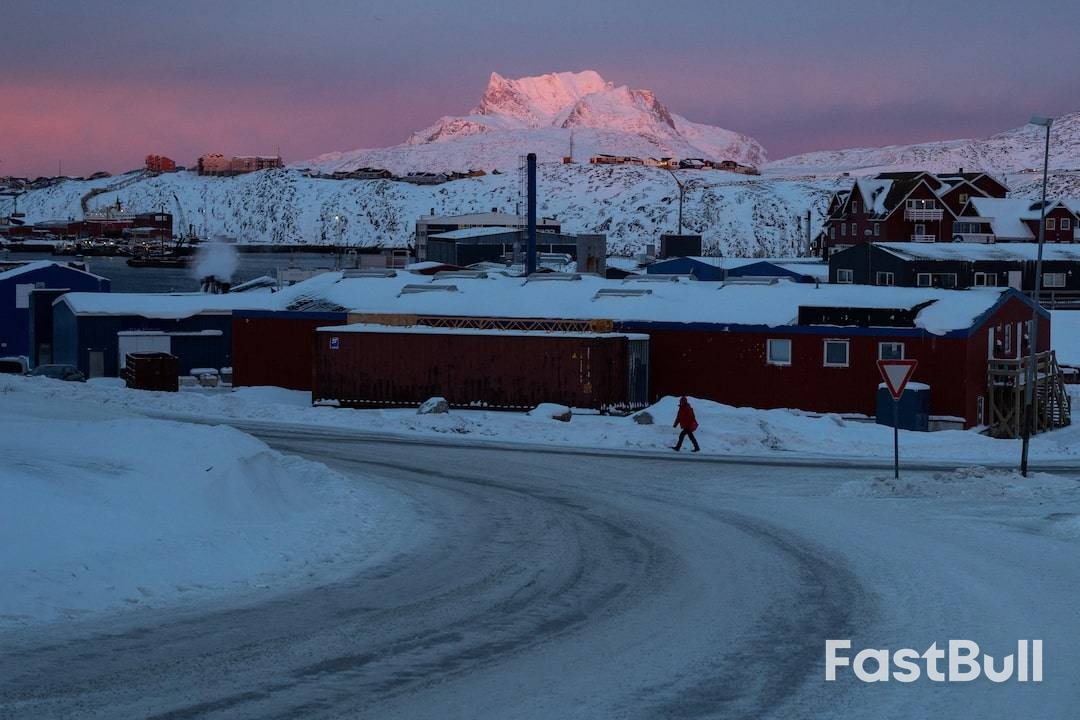
This cautious sentiment was echoed by residents in Nuuk, Greenland's capital. Tour guide Ivi Luna Olsen expressed relief but remained wary: "I'm also like keeping my hopes down and still, like, hoping for the best and preparing for the worst because sometimes he can be saying a lot of stuff."
Meanwhile, Russia and China have dismissed the allegations of their strategic ambitions in the region. President Vladimir Putin said Greenland's ownership was not Russia's concern, and China's foreign ministry called the "China threat" narrative groundless.
The easing of tensions had an immediate positive effect on European financial markets. The pan-European STOXX 600 index climbed 1% by 0802 GMT, recovering from a 1.9% loss earlier in the week driven by trade war fears.
The Greenland issue had raised concerns about a serious rift within NATO at a critical time, as the alliance works to support Ukraine against Russia. Ukrainian President Volodymyr Zelenskiy is scheduled to meet with Trump in Davos amid an ongoing energy crisis in his country caused by Russian airstrikes.
Speaking in Davos, German Chancellor Friedrich Merz welcomed Trump's softened stance and urged allies not to abandon the security alliance. "Despite all the frustration and anger of recent months, let us not be too quick to write off the transatlantic partnership," he said.
White Label
Data API
Web Plug-ins
Poster Maker
Affiliate Program
The risk of loss in trading financial instruments such as stocks, FX, commodities, futures, bonds, ETFs and crypto can be substantial. You may sustain a total loss of the funds that you deposit with your broker. Therefore, you should carefully consider whether such trading is suitable for you in light of your circumstances and financial resources.
No decision to invest should be made without thoroughly conducting due diligence by yourself or consulting with your financial advisors. Our web content might not suit you since we don't know your financial conditions and investment needs. Our financial information might have latency or contain inaccuracy, so you should be fully responsible for any of your trading and investment decisions. The company will not be responsible for your capital loss.
Without getting permission from the website, you are not allowed to copy the website's graphics, texts, or trademarks. Intellectual property rights in the content or data incorporated into this website belong to its providers and exchange merchants.
Not Logged In
Log in to access more features

FastBull Membership
Not yet
Purchase
Log In
Sign Up