• Trade
  • Markets
  • Copy
  • Contests
  • News
  • 24/7
  • Calendar
  • Q&A
  • Chats
Trending
Screeners
SYMBOL
LAST
BID
ASK
HIGH
LOW
NET CHG.
%CHG.
SPREAD
SPX
S&P 500 Index
6875.61
6875.61
6875.61
6910.40
6804.97
+78.75
+ 1.16%
--
DJI
Dow Jones Industrial Average
49077.22
49077.22
49077.22
49295.03
48546.03
+588.64
+ 1.21%
--
IXIC
NASDAQ Composite Index
23224.81
23224.81
23224.81
23383.24
22927.88
+270.50
+ 1.18%
--
USDX
US Dollar Index
98.550
98.630
98.550
98.640
98.140
+0.220
+ 0.22%
--
EURUSD
Euro / US Dollar
1.16765
1.16774
1.16765
1.16855
1.16701
-0.00099
-0.08%
--
GBPUSD
Pound Sterling / US Dollar
1.34192
1.34203
1.34192
1.34322
1.34170
-0.00090
-0.07%
--
XAUUSD
Gold / US Dollar
4782.72
4783.11
4782.72
4833.82
4777.40
-49.33
-1.02%
--
WTI
Light Sweet Crude Oil
60.407
60.442
60.407
60.579
60.357
-0.218
-0.36%
--

Community Accounts

Signal Accounts
--
Profit Accounts
--
Loss Accounts
--
View More

Become a signal provider

Sell trading signals to earn additional income

View More

Guide to Copy Trading

Get started with ease and confidence

View More

Signal Accounts for Members

All Signal Accounts

Best Return
  • Best Return
  • Best P/L
  • Best MDD
Past 1W
  • Past 1W
  • Past 1M
  • Past 1Y

All Contests

  • All
  • Trump Updates
  • Recommend
  • Stocks
  • Cryptocurrencies
  • Central Banks
  • Featured News
Top News Only
Share

[Market Update] Spot Gold Fell 1.00% Intraday, Currently Trading At $4780.56 Per Ounce. Spot Silver Plunged $2 Intraday, Currently Trading At $91.07 Per Ounce, A Drop Of 2.15%

Share

[Venezuela's Acting President: Unafraid To Face Differences With The US] On The 21st Local Time, Venezuelan Acting President Rodriguez Stated That She Was "unafraid" Of Facing Differences With The United States And Reiterated That She Was Engaged In A Dialogue Process With The Trump Administration. Speaking At A Meeting With Governors And Mayors That Day, Rodriguez Said, "We Are Engaging In Dialogue And Cooperation With The United States, And We Are Not Afraid To Resolve Differences And Difficulties Through Diplomatic Channels, Regardless Of Their Sensitivity."

Share

MOF - Japan Dec Preliminary Crude Oil Import Volume -1.5% Year-On-Year

Share

MOF - Japan Dec Thermal Coal Imports -14.7% Year-On-Year At 9.345 Million Tonnes

Share

MOF - Japan Dec LNG Imports +2.8% Year-On-Year At 6.538 Million Tonnes

Share

MOF - Japan Dec Exports To Asia +10.2% Year On Year

Share

MOF - Japan Dec Exports To EU +2.6% Year On Year

Share

MOF - Japan Dec Exports To China +5.6% Year On Year

Share

MOF - Japan Dec Exports To USA -11.1% Year On Year

Share

Japan Dec Trade Balance +105.7 Billion Yen - MOF (Poll: +356.6 Billion Yen)

Share

Japan Dec Imports +5.3% Year On Year - MOF (Poll: +3.6%)

Share

Japan Dec Exports +5.1% Year On Year - MOF (Poll: +6.1%)

Share

Nikkei Futures Trade At 53455 Versus Cash Close 52,774

Share

NATO Secretary General Rutte When Asked If Greenland Will Remain With Denmark: That Issue Did Not Come Up In My Conversation With Trump

Share

Australia's S&P/ASX 200 Index Up 0.8% At 8850.30 Points In Early Trade

Share

S&P 500 Eminis Rise 0.2% In Early Trade, Nasdaq Futures Up 0.3%

Share

South Korea Q4 2025 GDP -0.3% Quarter-On-Quarter, Misses Forecast

Share

South Korea Q4 2025 GDP +1.5% Year-On-Year (Reuters Poll +1.9%) - Central Bank Estimate

Share

[Mexico Announces Further Tightening Of Entry Requirements For US Military Aircraft] On January 21, Mexican President Jacques Sinbaum Announced That The Country Will Adjust Entry Requirements For US Military Aircraft, Further Restricting Their Entry Into Mexican Territory. Recently, A US C-130 Hercules Transport Plane Landed At Toluca Airport In Mexico, Sparking Controversy. Sinbaum Emphasized That The Entry Of The US Military Aircraft Had Been Approved In Advance By The Mexican National Security Council And Was For Transporting Mexican Personnel To The United States For Training, And Did Not Violate Any Laws. Sinbaum Pointed Out That The National Security Council Has Adjusted Its Policy; Henceforth, Mexican Personnel Participating In Overseas Training Programs Will Be Transported By Mexican Aircraft, And US Military Aircraft Will No Longer Be Allowed To Enter The Country Unless Under "special Logistical Conditions."

Share

SPDR Gold Trust Reports Holdings Down 0.37%, Or 4.00 Tonnes, To 1077.66 Tonnes By Jan 21

TIME
ACT
FCST
PREV
U.K. Core CPI MoM (Dec)

A:--

F: --

P: --

Indonesia 7-Day Reverse Repo Rate

A:--

F: --

P: --

Indonesia Loan Growth YoY (Dec)

A:--

F: --

P: --

Indonesia Deposit Facility Rate (Jan)

A:--

F: --

P: --

Indonesia Lending Facility Rate (Jan)

A:--

F: --

P: --

South Africa Core CPI YoY (Dec)

A:--

F: --

P: --

South Africa CPI YoY (Dec)

A:--

F: --

P: --

IEA Oil Market Report
U.K. CBI Industrial Output Expectations (Jan)

A:--

F: --

P: --
U.K. CBI Industrial Prices Expectations (Jan)

A:--

F: --

P: --

South Africa Retail Sales YoY (Nov)

A:--

F: --

P: --

U.K. CBI Industrial Trends - Orders (Jan)

A:--

F: --

P: --

Mexico Retail Sales MoM (Nov)

A:--

F: --

P: --

U.S. MBA Mortgage Application Activity Index WoW

A:--

F: --

P: --

Canada Industrial Product Price Index YoY (Dec)

A:--

F: --

P: --
Canada Industrial Product Price Index MoM (Dec)

A:--

F: --

P: --
U.S. Weekly Redbook Index YoY

A:--

F: --

P: --

U.S. Pending Home Sales Index YoY (Dec)

A:--

F: --

P: --

U.S. Pending Home Sales Index MoM (SA) (Dec)

A:--

F: --

P: --

U.S. Construction Spending MoM (Oct)

A:--

F: --

P: --
U.S. Pending Home Sales Index (Dec)

A:--

F: --

P: --

U.S. API Weekly Refined Oil Stocks

A:--

F: --

P: --

U.S. API Weekly Gasoline Stocks

A:--

F: --

P: --

U.S. API Weekly Cushing Crude Oil Stocks

--

F: --

P: --

U.S. API Weekly Crude Oil Stocks

A:--

F: --

P: --

South Korea GDP Prelim YoY (SA) (Q4)

A:--

F: --

P: --

South Korea GDP Prelim QoQ (SA) (Q4)

A:--

F: --

P: --

Japan Imports YoY (Dec)

A:--

F: --

P: --

Japan Exports YoY (Dec)

A:--

F: --

P: --

Japan Goods Trade Balance (SA) (Dec)

A:--

F: --

P: --

Japan Trade Balance (Not SA) (Dec)

A:--

F: --

P: --
Australia Employment (Dec)

--

F: --

P: --

Australia Labor Force Participation Rate (SA) (Dec)

--

F: --

P: --

Australia Unemployment Rate (SA) (Dec)

--

F: --

P: --

Australia Full-time Employment (SA) (Dec)

--

F: --

P: --

Turkey Consumer Confidence Index (Jan)

--

F: --

P: --

Turkey Capacity Utilization (Jan)

--

F: --

P: --

Turkey Late Liquidity Window Rate (LON) (Jan)

--

F: --

P: --

Turkey Overnight Lending Rate (O/N) (Jan)

--

F: --

P: --

Turkey 1-Week Repo Rate

--

F: --

P: --

U.K. CBI Distributive Trades (Jan)

--

F: --

P: --

U.K. CBI Retail Sales Expectations Index (Jan)

--

F: --

P: --

U.S. Weekly Continued Jobless Claims (SA)

--

F: --

P: --

U.S. Initial Jobless Claims 4-Week Avg. (SA)

--

F: --

P: --

U.S. Real Personal Consumption Expenditures Final QoQ (Q3)

--

F: --

P: --

Canada New Housing Price Index MoM (Dec)

--

F: --

P: --

U.S. Weekly Initial Jobless Claims (SA)

--

F: --

P: --

U.S. Real GDP Annualized QoQ Final (Q3)

--

F: --

P: --

U.S. PCE Price Index Final QoQ (AR) (Q3)

--

F: --

P: --

U.S. PCE Price Index MoM (Nov)

--

F: --

P: --

U.S. PCE Price Index YoY (SA) (Nov)

--

F: --

P: --

U.S. Real Personal Consumption Expenditures MoM (Nov)

--

F: --

P: --

U.S. Personal Income MoM (Nov)

--

F: --

P: --

U.S. Core PCE Price Index MoM (Nov)

--

F: --

P: --

U.S. Personal Outlays MoM (SA) (Nov)

--

F: --

P: --

U.S. Dallas Fed PCE Price Index YoY (Nov)

--

F: --

P: --

U.S. Core PCE Price Index YoY (Nov)

--

F: --

P: --

U.S. EIA Weekly Natural Gas Stocks Change

--

F: --

P: --

Q&A with Experts
    • All
    • Chatrooms
    • Groups
    • Friends
    marsgents flag
    SlowBear ⛅
    @SlowBear ⛅i did ride long from 4805 to 4845 tho
    3427935 flag
    what time for market to open..???
    3008994 flag
    at 6 o'clock
    SlowBear ⛅ flag
    marsgents
    @marsgents Its cool sleepig is fine but missing out is not fun
    SlowBear ⛅ flag
    marsgents
    @marsgentsI think possibly, but i will like to see hoe it al plays out eventualy
    FlexyG flag
    alot of accounts got closed today 😓
    SlowBear ⛅ flag
    3427935
    when will the market open..?
    @3427935The market alredy opened bro, start cooking
    SlowBear ⛅ flag
    FlexyG
    alot of accounts got closed today 😓
    @FlexyGYes that is what you get when you sleep on a buy at the very top
    SlowBear ⛅ flag
    FlexyG
    alot of accounts got closed today 😓
    @FlexyGHow did you know the account that gets closed out?
    SlowBear ⛅ flag
    marsgents
    @marsgents400pips that is not bad at all bro, well done indeed
    SlowBear ⛅ flag
    I am going to bed guys. - see you later! Byee and trade safe!
    3405122 flag
    can I buy gold now
    oscar flag
    Could you please explain how to use Bookmap? Thank you.
    NEWBIE flag
    Wait for 4755 I think
    oscar flag
    Richard🇿🇦
    @EurusdonlyHello, do you know how to use a book?
    One Lucky Chen flag
    Good morning 🌞
    SURYAVANSHI flag
    One Lucky Chen
    Good morning 🌞
    h@One Lucky Chengn
    ThatfxSniper📈 flag
    FlexyG
    alot of accounts got closed today 😓
    @FlexyGdamn
    ThatfxSniper📈 flag
    Are you guys already asleep?
    NEWBIE flag
    FVG in action
    Type here...
    Add Symbol or Code

      No matching data

      All
      Trump Updates
      Recommend
      Stocks
      Cryptocurrencies
      Central Banks
      Featured News
      • All
      • Russia-Ukraine Conflict
      • Middle East Flashpoint
      • All
      • Russia-Ukraine Conflict
      • Middle East Flashpoint
      Search
      Products

      Charts Free Forever

      Chats Q&A with Experts
      Screeners Economic Calendar Data Tools
      Membership Features
      Data Warehouse Market Trends Institutional Data Policy Rates Macro

      Market Trends

      Market Sentiment Order Book Forex Correlations

      Top Indicators

      Charts Free Forever
      Markets

      News

      News Analysis 24/7 Columns Education
      From Institutions From Analysts
      Topics Columnists

      Latest Views

      Latest Views

      Trending Topics

      Top Columnists

      Latest Update

      Signals

      Copy Rankings Latest Signals Become a signal provider AI Rating
      Contests
      Brokers

      Overview Brokers Assessment Rankings Regulators News Claims
      Broker listing Forex Brokers Comparison Tool Live Spread Comparison Scam
      Q&A Complaint Scam Alert Videos Tips to Detect Scam
      More

      Business
      Events
      Careers About Us Advertising Help Center

      White Label

      Data API

      Web Plug-ins

      Affiliate Program

      Awards Institution Evaluation IB Seminar Salon Event Exhibition
      Vietnam Thailand Singapore Dubai
      Fans Party Investment Sharing Session
      FastBull Summit BrokersView Expo
      Recent Searches
        Top Searches
          Markets
          News
          Analysis
          User
          24/7
          Economic Calendar
          Education
          Data
          • Names
          • Latest
          • Prev

          View All

          No data

          Scan to Download

          Faster Charts, Chat Faster!

          Download App
          English
          • English
          • Español
          • العربية
          • Bahasa Indonesia
          • Bahasa Melayu
          • Tiếng Việt
          • ภาษาไทย
          • Français
          • Italiano
          • Türkçe
          • Русский язык
          • 简中
          • 繁中
          Open Account
          Search
          Products
          Charts Free Forever
          Markets
          News
          Signals

          Copy Rankings Latest Signals Become a signal provider AI Rating
          Contests
          Brokers

          Overview Brokers Assessment Rankings Regulators News Claims
          Broker listing Forex Brokers Comparison Tool Live Spread Comparison Scam
          Q&A Complaint Scam Alert Videos Tips to Detect Scam
          More

          Business
          Events
          Careers About Us Advertising Help Center

          White Label

          Data API

          Web Plug-ins

          Affiliate Program

          Awards Institution Evaluation IB Seminar Salon Event Exhibition
          Vietnam Thailand Singapore Dubai
          Fans Party Investment Sharing Session
          FastBull Summit BrokersView Expo

          IEA: Global Oil Surplus Eases Geopolitical Fears

          Edward Lawson

          Energy

          Commodity

          Economic

          Remarks of Officials

          Summary:

          Global oil oversupply, per IEA, neutralizes geopolitical risks, with a widening glut forecast through 2026.

          The International Energy Agency (IEA) reports that a substantial oversupply in the global oil market is effectively neutralizing price risks from geopolitical tensions in key regions like Venezuela, Iran, and Russia.

          In its first Oil Market Report of the year, the IEA stated that "bloated balances provide some comfort to market participants and have kept prices in check," even as geopolitical developments unfold.

          A Widening Supply Glut Forecast for 2026

          The Paris-based watchdog anticipates a large supply surplus continuing through 2026, coupled with subdued growth in oil demand.

          The agency slightly increased its 2026 oil demand growth forecast by 70,000 barrels per day (b/d) to 930,000 b/d, driven by higher expectations from the Asia-Pacific region and Africa. This would bring total global demand to 104.98 million b/d.

          On the supply side, the IEA projects global oil production will grow by 2.5 million b/d in 2026. Without a policy change from OPEC+ or a potential slowdown from U.S. shale producers, the market could face a supply surplus of 3.7 million b/d.

          The IEA also expects a "significant surplus" to re-emerge in the current quarter as refineries begin scheduled maintenance. First-quarter year-on-year growth is projected at a relatively weak 840,000 b/d before picking up to around 1 million b/d in the second half of the year.

          Headwinds Capping Oil Demand

          Several factors are expected to temper demand growth in 2026, including:

          • Sub-par global GDP growth

          • Improvements in energy efficiency

          • Robust sales of electric vehicles in some markets

          How 2025 Set the Stage for Oversupply

          The 2026 forecast builds on a trend established in 2025, which saw a supply surplus of 2.1 million b/d.

          Last year, global oil supply increased by 3.05 million b/d to 106.19 million b/d. In contrast, demand grew by just 850,000 b/d to 104.05 million b/d. The IEA noted that "trade policy uncertainty and economic risk aversion weighed heavily on commercial activity in emerging economies, causing oil demand to stagnate."

          The agency has revised its demand forecasts downward over time. In April 2024, it had projected 2025 consumption growth of 1.15 million b/d, and a year ago, it foresaw growth of 1.05 million b/d.

          IEA and OPEC Diverge on Demand Forecasts

          The IEA's assessment remains significantly more conservative than that of OPEC.

          OPEC forecasts that oil consumption will rise by 1.3 million b/d in 2025 to a total of 105.14 million b/d. Looking further ahead, the producer group anticipates strong demand growth of 1.38 million b/d in 2026 and 1.34 million b/d in 2027, a starkly different outlook from the IEA's projections.

          Rising Inventories Confirm Market Slack

          Physical market data appears to support the surplus narrative. The IEA reported that global observed stocks surged by 75 million barrels in November, an average increase of 2.5 million b/d.

          Preliminary data for December suggests these inventory builds continued, partly driven by China's issuance of new import quotas. This influx offset steep inventory declines seen in several Middle Eastern countries at the end of 2025.

          To stay updated on all economic events of today, please check out our Economic calendar
          Risk Warnings and Disclaimers
          You understand and acknowledge that there is a high degree of risk involved in trading. Following any strategies or investment methods may lead to potential losses. The content on the site is provided by our contributors and analysts for information purposes only. You are solely responsible for determining whether any trading assets, securities, strategy, or any other product is suitable for investing based on your own investment objectives and financial situation.
          Add to Favorites
          Share

          EU Vows Retaliation Over Trump's Greenland Tariffs

          Isaac Bennett

          Daily News

          Political

          Economic

          Remarks of Officials

          The European Union is preparing to retaliate against US President Donald Trump over his tariff threats, signaling a tougher stance from Brussels in the face of mounting transatlantic pressure. European Commission President Ursula von der Leyen declared that while the EU prefers dialogue, it is ready to act decisively if necessary.

          "We are at a crossroads," von der Leyen stated in a speech to the European Parliament in Strasbourg. "Europe prefers dialog and solutions—but we are fully prepared to act, if necessary, with unity, urgency and determination."

          A New Era of 'Raw Power'

          Von der Leyen argued that the global order has fundamentally and permanently changed, marking an end to the decades-long framework Europe built with the United States.

          "The shift in the international order is not only seismic—but it is permanent," she said. "We now live in a world defined by raw power." Acknowledging this new reality, she added, "While many of us may not like it, we must deal with the world as it is now."

          Her speech reflects a more forceful approach to Trump's policies, as EU leaders face growing pressure to counter his administration's global strategy. All eyes are on Trump's upcoming address at the World Economic Forum in Davos, where European capitals will be looking for any signs of de-escalation.

          The Core of the Dispute: Tariffs and Territory

          The conflict centers on Trump's recent announcement of a 10% tariff on goods from eight European countries, scheduled to begin on February 1. The tariff is set to rise to 25% in June unless the US is permitted to buy Greenland.

          Greenland is a semi-autonomous territory of Denmark, which is both a member of the EU and a NATO ally. In response to the ultimatum, EU leaders have scheduled an emergency meeting in Brussels to formulate potential retaliatory measures.

          Europe's Strategic Response

          Von der Leyen called the proposed tariffs "simply wrong," highlighting that the EU and the US share the same strategic assessment of Arctic security.

          "If we are now plunging into a dangerous downward spiral between allies, this would only embolden the very adversaries we are both so committed to keeping out of our strategic landscape," she warned, echoing comments she made in Davos.

          The escalating crisis has already had consequences, with the European Parliament poised to delay a ratification vote on a major EU-US trade agreement.

          Investing in a Secure Future

          The EU is developing a multi-pronged strategy to counter the US pressure. Von der Leyen confirmed the bloc is preparing a "massive European investment surge" in Greenland to support its local economy and infrastructure.

          Furthermore, she announced plans to strengthen security arrangements with the UK, Canada, Norway, and Iceland. This is part of a broader re-evaluation of the continent's defense posture.

          "I believe Europe itself needs to reassess its wider security strategy," she concluded. "The world has changed so fast, and Europe now has to change with it."

          To stay updated on all economic events of today, please check out our Economic calendar
          Risk Warnings and Disclaimers
          You understand and acknowledge that there is a high degree of risk involved in trading. Following any strategies or investment methods may lead to potential losses. The content on the site is provided by our contributors and analysts for information purposes only. You are solely responsible for determining whether any trading assets, securities, strategy, or any other product is suitable for investing based on your own investment objectives and financial situation.
          Add to Favorites
          Share

          German Bond Yields Face Weekly Spike After Japan Rout

          George Anderson

          Central Bank

          Remarks of Officials

          Bond

          Political

          Economic

          Long-dated German bond yields dipped on Wednesday but are still on course for their largest weekly increase in a month. The volatility isn't rooted in Europe; instead, it's a direct consequence of a selloff in Japanese government debt that cascaded across global fixed-income markets.

          Germany's 10-year bond yield, the primary benchmark for the eurozone, was last down by about 1 basis point to 2.8443%. Similarly, the 30-year yield fell by 1 basis point to 3.473%. Despite the small daily decline, the 30-year yield is set for a 4.7-basis-point rise this week, its biggest jump since the start of the year.

          The Shockwave from Japan's Bond Market

          This week's global yield spike was triggered by a sharp selloff in Japanese bonds. The rout began after a looming snap election in Japan sparked fresh concerns about the country's fiscal outlook.

          While Japanese bond yields fell sharply during Wednesday's session, partially reversing the previous day's surge, the initial shock had already rippled through international markets.

          According to analysts at ING, recent price action in German bonds suggests that the eurozone's macroeconomic picture has not changed significantly. Instead, the market is being driven by volatility in Japan rather than Europe-centric factors.

          Global Spillovers vs. Local Fundamentals

          Analysts observe a clear divergence in the European market. "The back end of the euro curve is being driven by global spillovers, but the front end remains remarkably stable," ING noted.

          This indicates that while short-term debt is anchored by expectations for European Central Bank (ECB) policy, longer-term bonds are more sensitive to worldwide events. Other geopolitical tensions, such as U.S. President Donald Trump's interest in Greenland, which has drawn pushback from European leaders and renewed threats of tariffs, have also contributed to market uncertainty.

          A Global Warning on Government Spending

          The events in Japan serve as a reminder of a broader global issue: mounting fiscal concerns. As government spending continues to rise worldwide, the path of least resistance is toward steeper yield curves, where investors demand a larger risk premium for holding longer-term debt.

          "Japan is not the only country facing fiscal challenges," ING analysts warned. "As global rates rise, budget deficits will only be strained further."

          Implications for the European Central Bank

          The persistent global uncertainty could factor into the ECB's decision-making in the coming months. An unstable environment makes interest rate hikes less likely and could even slightly increase the inclination toward further rate cuts.

          For now, however, the broad market expectation is that the ECB will keep its rates steady.

          To stay updated on all economic events of today, please check out our Economic calendar
          Risk Warnings and Disclaimers
          You understand and acknowledge that there is a high degree of risk involved in trading. Following any strategies or investment methods may lead to potential losses. The content on the site is provided by our contributors and analysts for information purposes only. You are solely responsible for determining whether any trading assets, securities, strategy, or any other product is suitable for investing based on your own investment objectives and financial situation.
          Add to Favorites
          Share

          Germany's Nuclear Shutdown: A 'Severe Strategic Mistake'

          King Ten

          Energy

          Political

          Economic

          Remarks of Officials

          Germany is facing a severe electricity crisis marked by shortages and soaring costs, and the situation is getting worse. In a frank admission, German Chancellor Friedrich Merz has called the country's decision to shut down its nuclear power plants a "severe strategic mistake."

          German Chancellor Friedrich Merz has criticized the country's move away from nuclear power, citing unsustainable costs.

          The High Cost of an Ambitious Energy Transition

          According to Merz, the only way to achieve acceptable market prices for energy is through ongoing government intervention. "We would have to permanently subsidize energy prices from the federal budget," he stated, before adding a critical reality check: "We can't do this in the long run."

          With pronounced frustration, Merz described Germany’s current path as "the most expensive energy transition in the entire world." He lamented the unique difficulty of his country's self-imposed energy challenge, stating, "I know of no other country that makes things so expensive and difficult as Germany."

          A Pivot to Gas to Fill the Power Gap

          To address the energy shortfall, Merz's government is turning to fossil fuels. It plans to solicit bids this year to build 8 gigawatts of new gas-fired power plants, with a target of bringing them online by 2031.

          An additional 4 gigawatts of capacity is also planned, intended to come from lower-carbon energy sources or from gas plants that can be quickly converted to run on hydrogen. Merz also noted that for industrial power prices, "the European Commission will also approve the combination of several options."

          Broader Economic Risks for Europe

          Germany's energy problems have significant implications beyond its borders. As the largest economy in the European Union, its industrial sector forms the backbone of the entire European economic model.

          When combined with other mounting pressures, this internal energy struggle paints a tenuous picture for Europe's economic future. Key challenges include:

          • A new trade relationship with the USA.

          • Increasingly cheap goods from China being dumped into the EU market.

          • The EU's continued financial commitment to the war effort in Ukraine against Russia.

          To stay updated on all economic events of today, please check out our Economic calendar
          Risk Warnings and Disclaimers
          You understand and acknowledge that there is a high degree of risk involved in trading. Following any strategies or investment methods may lead to potential losses. The content on the site is provided by our contributors and analysts for information purposes only. You are solely responsible for determining whether any trading assets, securities, strategy, or any other product is suitable for investing based on your own investment objectives and financial situation.
          Add to Favorites
          Share

          Japan Election: How Each Party Plans to Fix the Economy

          Michael Ross

          Remarks of Officials

          Data Interpretation

          Daily News

          Political

          Economic

          Prime Minister Sanae Takaichi’s call for a snap general election on February 8 has sent tremors through Japan’s financial markets. Her decision to seek a public mandate for her reflationist economic policies has pushed bond yields to multi-decade highs, signaling rising anxiety over the country’s strained finances.

          With voters heading to the polls, each political party is presenting a distinct vision for Japan's economy. Here’s a clear breakdown of the key economic policies on the table.

          LDP: Takaichi's High-Stakes Bet on Spending

          The ruling Liberal Democratic Party (LDP), led by Prime Minister Takaichi, is campaigning on a platform of more aggressive government spending. Since succeeding her predecessor Shigeru Ishiba, Takaichi has worked to relax Japan's traditionally strict fiscal targets.

          While she recently acknowledged the Bank of Japan's December interest rate hike, which aimed to curb the yen's slide, an election victory could empower her advisors to push back against further rate increases that might slow economic growth.

          Takaichi has promised to end what she calls "excessively" tight fiscal policy. A core pledge is to suspend the 8% sales tax on food for two years. She has ruled out issuing more government debt to fund this but remains vague on how the revenue gap will be filled, stating it will be decided after negotiations with other parties.

          Critics argue these policies could fuel already-rising inflation while failing to solve deeper economic problems like labor shortages and supply-chain constraints. The LDP's draft manifesto insists Japan can achieve both a strong economy and sustainable fiscal policy to maintain market trust in the yen, aiming to lower the nation's debt-to-GDP ratio.

          Japan Innovation Party (Ishin): The LDP's Key Ally

          The right-wing Japan Innovation Party (Ishin) helped Takaichi secure the premiership in October and now forms a ruling coalition with the LDP.

          While the party traditionally advocates for deregulation and cutting wasteful spending, it has aligned with the LDP on a key tax issue. As part of their coalition agreement, Ishin supports suspending the 8% food sales tax for two years and agrees that the measure should be funded without issuing additional debt.

          Centrist Reform Alliance: A Permanent Tax Cut Proposal

          A new force in opposition, the Centrist Reform Alliance (CRA) was formed between the Constitutional Democratic Party of Japan and Komeito. The alliance positions itself as a middle-ground alternative on economic policy.

          The CRA’s flagship proposal is to permanently abolish the 8% consumption tax on food. To make up for the lost revenue, the party suggests creating a sovereign wealth fund to generate profits by investing government reserves more effectively. The alliance also aims to correct the "excessive" weakness of the yen that is driving up inflation, with a focus on lowering prices for essentials like food and fuel.

          Democratic Party for the People (DPP): Targeted Spending

          Led by former finance ministry official Yuichiro Tamaki, the DPP is focused on boosting household purchasing power, primarily through tax exemptions.

          The party proposes a significant investment in the future, calling for the issuance of 5 trillion yen ($31.62 billion) in "education" bonds each year. This funding would be used to double spending on child care, education, and scientific research.

          In an interview, Tamaki expressed a cautious view on broad tax cuts, arguing that the consumption tax should only be reduced if the economy falters due to weak demand. He believes it is not a fast enough tool to provide immediate relief from rising living costs. On monetary policy, he said the Bank of Japan should continue raising interest rates, provided that small and medium-sized firms can sustain wage hikes of around 5%.

          Sanseito: A Radical Call to Axe the Consumption Tax

          Once a fringe political group, the far-right Sanseito party gained significant ground in the upper house election last July with its "Japan First" campaign.

          The party’s economic platform is its most radical. Sanseito calls for abandoning the consumption tax altogether and completely overhauling what it sees as overly restrictive fiscal policy by dramatically ramping up government spending.

          To stay updated on all economic events of today, please check out our Economic calendar
          Risk Warnings and Disclaimers
          You understand and acknowledge that there is a high degree of risk involved in trading. Following any strategies or investment methods may lead to potential losses. The content on the site is provided by our contributors and analysts for information purposes only. You are solely responsible for determining whether any trading assets, securities, strategy, or any other product is suitable for investing based on your own investment objectives and financial situation.
          Add to Favorites
          Share

          South Africa Signals Rate Cut Despite Inflation Rise

          Liam Peterson

          Data Interpretation

          Central Bank

          Economic

          Remarks of Officials

          Inflation Edges Up, But Big Picture Looks Different

          South Africa’s inflation rate saw a minor increase in December, but this is unlikely to derail a potential interest rate cut by the central bank later this month. The key reason is that average price growth for 2025 undershot the bank's own projections, and underlying inflationary pressures continue to weaken.

          Statistics South Africa reported on Wednesday that annual consumer prices rose by 3.6% in December, a slight acceleration from November's 3.5% figure. This matched the median forecast from a Bloomberg survey of 17 economists.

          More importantly, the average inflation rate for the full year of 2025 came in at 3.2%. This is lower than the central bank's forecast of 3.3%, signaling that the broader price trend remains under control.

          Factors Supporting a Sooner-Than-Expected Cut

          The lower-than-expected annual average, combined with several favorable economic factors, strengthens the case for the monetary policy committee to lower borrowing costs at its January 29 meeting. These factors include:

          • Softer oil prices

          • A stronger rand relative to the U.S. dollar

          • Record-low inflation expectations among the public and investors

          These developments give policymakers more room to consider easing monetary policy to support the economy.

          Central Bank Sets Sights on New 3% Target

          The central bank is now operating with a new, formal inflation target of 3%, a goal officially adopted by the National Treasury in November. This new framework is central to its forward-looking policy decisions.

          Speaking from the World Economic Forum in Davos, Governor Lesetja Kganyago indicated that inflation is expected to remain contained. "Throughout the year," he said in a Bloomberg TV interview, "the inflation prints that we expect for each one of the months is that they will all have a 3% handle."

          Kganyago clarified that any decision to cut interest rates will depend on the inflation outlook. He projects that inflation in the current year will "average anything around 3.5%." By 2027, he expects it to converge toward the new 3% target, which he said means "we still have room" to ease policy.

          To stay updated on all economic events of today, please check out our Economic calendar
          Risk Warnings and Disclaimers
          You understand and acknowledge that there is a high degree of risk involved in trading. Following any strategies or investment methods may lead to potential losses. The content on the site is provided by our contributors and analysts for information purposes only. You are solely responsible for determining whether any trading assets, securities, strategy, or any other product is suitable for investing based on your own investment objectives and financial situation.
          Add to Favorites
          Share

          UK Inflation Ticks Up to 3.4%, Defying Forecasts

          Michael Ross

          Central Bank

          Remarks of Officials

          Data Interpretation

          Daily News

          Traders' Opinions

          Economic

          UK inflation unexpectedly climbed in December, reaching 3.4% and slightly complicating the outlook for the Bank of England. The figure surpassed both the 3.2% recorded in November and the 3.3% median forecast from economists.

          Despite the increase, which keeps Britain's inflation the highest among G7 nations, investors largely held their ground, maintaining expectations for interest rate cuts later this year. Markets showed little reaction, as key indicators watched by the central bank, such as services price inflation, moved in line with predictions.

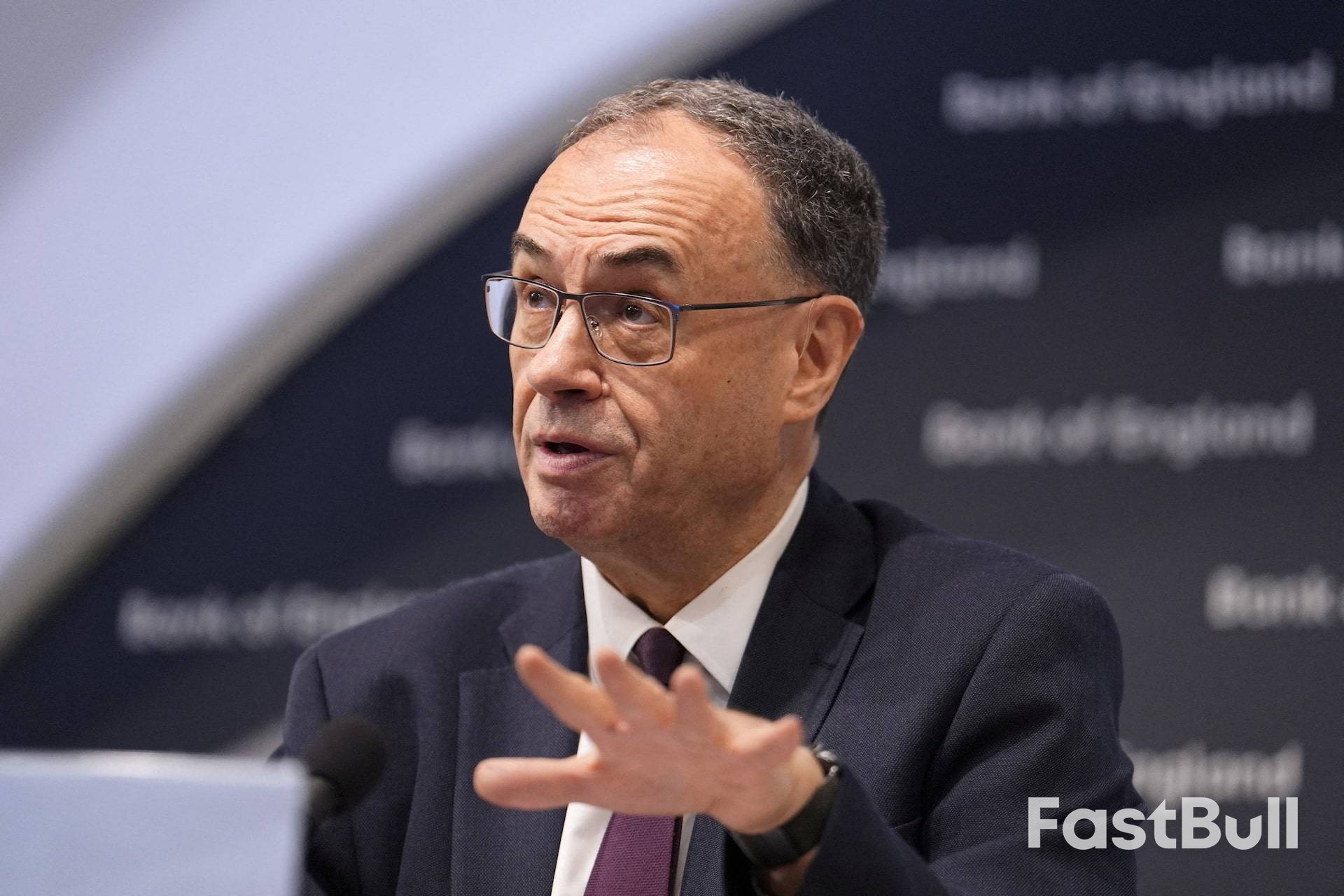
          Bank of England Governor Andrew Bailey has signaled that inflation is on track to approach the 2% target in the coming months.

          What Drove the Price Increase?

          The Office for National Statistics reported that the primary drivers behind the December inflation rise were increased costs for tobacco and air travel. The uptick was largely attributed to a government duty increase on tobacco products and seasonal flight pricing around the Christmas period.

          Services inflation, a metric closely monitored by the Bank of England for underlying price pressures, rose from 4.4% to 4.5%, matching economists' expectations.

          Bank of England's Stance and Market Outlook

          The latest figures are unlikely to alarm policymakers at the Bank of England. Economists noted that the data aligned closely enough with the central bank's projections from November. Adam Deasy, an economist at PwC, described the increase as a "speed-bump, rather than an indication we are veering off course on the road to price stability."

          Financial markets continue to price in at least one quarter-point interest rate cut in 2026, with some anticipating two. This outlook persists even though the Monetary Policy Committee was divided at its last meeting, where it cut the Bank Rate to 3.75%, with nearly half its members favoring no change due to inflation concerns.

          Nicholas Crittenden of the National Institute of Economic and Social Research think tank stated, "The Bank of England will ... not be worried by these numbers." He added, "We still predict one cut in Bank Rate in the first half of this year, provided renewed geopolitical tensions do not blow the current path of inflation off course."

          Why Analysts Expect Inflation to Cool

          Despite the December uptick, the broader consensus is that inflation will slow significantly in the coming months. Bank of England Governor Andrew Bailey has previously stated that inflation is likely to return to the central bank's 2% target around April or May.

          This expected decline is largely due to base effects, as the sharp rises in utility costs and other government-regulated tariffs from the previous year will no longer be part of the annual comparison.

          Further data on producer prices showed that while costs in the services sector rose to 2.9% in the fourth quarter from 2.0% in the third, prices from manufacturing firms remained stable in December, suggesting a mixed but not universally inflationary business environment.

          To stay updated on all economic events of today, please check out our Economic calendar
          Risk Warnings and Disclaimers
          You understand and acknowledge that there is a high degree of risk involved in trading. Following any strategies or investment methods may lead to potential losses. The content on the site is provided by our contributors and analysts for information purposes only. You are solely responsible for determining whether any trading assets, securities, strategy, or any other product is suitable for investing based on your own investment objectives and financial situation.
          Add to Favorites
          Share
          FastBull
          Copyright © 2026 FastBull Ltd

          728 RM B 7/F GEE LOK IND BLDG NO 34 HUNG TO RD KWUN TONG KLN HONG KONG

          TelegramInstagramTwitterfacebooklinkedin
          App Store Google Play Google Play
          Products
          Charts

          Chats

          Q&A with Experts
          Screeners
          Economic Calendar
          Data
          Tools
          Membership
          Features
          Function
          Markets
          Copy Trading
          Latest Signals
          Contests
          News
          Analysis
          24/7
          Columns
          Education
          Company
          Careers
          About Us
          Contact Us
          Advertising
          Help Center
          Feedback
          User Agreement
          Privacy Policy
          Personal Information Protection Statement
          Business

          White Label

          Data API

          Web Plug-ins

          Poster Maker

          Affiliate Program

          Risk Disclosure

          The risk of loss in trading financial instruments such as stocks, FX, commodities, futures, bonds, ETFs and crypto can be substantial. You may sustain a total loss of the funds that you deposit with your broker. Therefore, you should carefully consider whether such trading is suitable for you in light of your circumstances and financial resources.

          No decision to invest should be made without thoroughly conducting due diligence by yourself or consulting with your financial advisors. Our web content might not suit you since we don't know your financial conditions and investment needs. Our financial information might have latency or contain inaccuracy, so you should be fully responsible for any of your trading and investment decisions. The company will not be responsible for your capital loss.

          Without getting permission from the website, you are not allowed to copy the website's graphics, texts, or trademarks. Intellectual property rights in the content or data incorporated into this website belong to its providers and exchange merchants.

          Not Logged In

          Log in to access more features

          FastBull Membership

          Not yet

          Purchase

          Become a signal provider
          Help Center
          Customer Service
          Dark Mode
          Price Up/Down Colors

          Log In

          Sign Up

          Position
          Layout
          Fullscreen
          Default to Chart
          The chart page opens by default when you visit fastbull.com