

Markets
News
Analysis
User
24/7
Economic Calendar
Education
Data
- Names
- Latest
- Prev



Signal Accounts for Members
All Signal Accounts
All Contests
 U.K. Retail Sales MoM (SA) (Dec)
A:--
F: --
P: --
 France Manufacturing PMI Prelim (Jan)
A:--
F: --
P: --
France Services PMI Prelim (Jan)A:--
F: --
P: --
France Composite PMI Prelim (SA) (Jan)A:--
F: --
P: --
 Germany Manufacturing PMI Prelim (SA) (Jan)
A:--
F: --
P: --
Germany Services PMI Prelim (SA) (Jan)A:--
F: --
P: --
Germany Composite PMI Prelim (SA) (Jan)A:--
F: --
P: --
 Euro Zone Composite PMI Prelim (SA) (Jan)
A:--
F: --
P: --
Euro Zone Manufacturing PMI Prelim (SA) (Jan)A:--
F: --
P: --
Euro Zone Services PMI Prelim (SA) (Jan)A:--
F: --
P: --
U.K. Composite PMI Prelim (Jan)A:--
F: --
P: --
U.K. Manufacturing PMI Prelim (Jan)A:--
F: --
P: --
U.K. Services PMI Prelim (Jan)A:--
F: --
P: --
 Mexico Economic Activity Index YoY (Nov)
A:--
F: --
P: --
 Russia Trade Balance (Nov)
A:--
F: --
P: --
 Canada Core Retail Sales MoM (SA) (Nov)
A:--
F: --
P: --
Canada Retail Sales MoM (SA) (Nov)A:--
F: --
 U.S. IHS Markit Manufacturing PMI Prelim (SA) (Jan)
A:--
F: --
P: --
U.S. IHS Markit Services PMI Prelim (SA) (Jan)A:--
F: --
P: --
U.S. IHS Markit Composite PMI Prelim (SA) (Jan)A:--
F: --
P: --
U.S. UMich Consumer Sentiment Index Final (Jan)A:--
F: --
P: --
U.S. UMich Current Economic Conditions Index Final (Jan)A:--
F: --
P: --
U.S. UMich Consumer Expectations Index Final (Jan)A:--
F: --
P: --
U.S. Conference Board Leading Economic Index MoM (Nov)A:--
F: --
P: --
U.S. Conference Board Coincident Economic Index MoM (Nov)A:--
F: --
P: --
U.S. Conference Board Lagging Economic Index MoM (Nov)A:--
F: --
P: --
U.S. UMich 1-Year-Ahead Inflation Expectations Final (Jan)A:--
F: --
P: --
U.S. Conference Board Leading Economic Index (Nov)A:--
F: --
P: --
U.S. Weekly Total Rig CountA:--
F: --
P: --
U.S. Weekly Total Oil Rig CountA:--
F: --
P: --
Germany Ifo Business Expectations Index (SA) (Jan)--
F: --
P: --
Germany IFO Business Climate Index (SA) (Jan)--
F: --
P: --
Germany Ifo Current Business Situation Index (SA) (Jan)--
F: --
P: --
U.S. Dallas Fed PCE Price Index YoY (Nov)--
F: --
P: --
 Brazil Current Account (Dec)
--
F: --
P: --
Mexico Unemployment Rate (Not SA) (Dec)A:--
F: --
P: --
Canada National Economic Confidence Index--
F: --
P: --
U.S. Non-Defense Capital Durable Goods Orders MoM (Excl. Aircraft) (Nov)--
F: --
P: --
U.S. Durable Goods Orders MoM (Excl. Defense) (SA) (Nov)--
F: --
P: --
U.S. Durable Goods Orders MoM (Excl.Transport) (Nov)--
F: --
P: --
U.S. Durable Goods Orders MoM (Nov)--
F: --
P: --
U.S. Chicago Fed National Activity Index (Nov)--
F: --
P: --
U.S. Dallas Fed New Orders Index (Jan)--
F: --
P: --
U.S. Dallas Fed General Business Activity Index (Jan)--
F: --
P: --
U.K. BRC Shop Price Index YoY (Jan)--
F: --
P: --
 China, Mainland Industrial Profit YoY (YTD) (Dec)
--
F: --
P: --
Mexico Trade Balance (Dec)--
F: --
P: --
U.S. S&P/CS 20-City Home Price Index YoY (Not SA) (Nov)--
F: --
P: --
U.S. S&P/CS 20-City Home Price Index MoM (SA) (Nov)--
F: --
P: --
U.S. FHFA House Price Index MoM (Nov)--
F: --
P: --
U.S. FHFA House Price Index (Nov)--
F: --
P: --
U.S. Richmond Fed Manufacturing Composite Index (Jan)--
F: --
P: --
U.S. Conference Board Present Situation Index (Jan)--
F: --
P: --
U.S. Conference Board Consumer Expectations Index (Jan)--
F: --
P: --
U.S. Richmond Fed Manufacturing Shipments Index (Jan)--
F: --
P: --
U.S. Richmond Fed Services Revenue Index (Jan)--
F: --
P: --
U.S. Conference Board Consumer Confidence Index (Jan)--
F: --
P: --
 Australia RBA Trimmed Mean CPI YoY (Q4)
--
F: --
P: --
Australia CPI YoY (Q4)--
F: --
P: --
Australia CPI QoQ (Q4)--
F: --
P: --























No matching data

Latest Views
Latest Views
Trending Topics
Top Columnists
Latest Update
White Label
Data API
Web Plug-ins
Affiliate Program
View All
No data
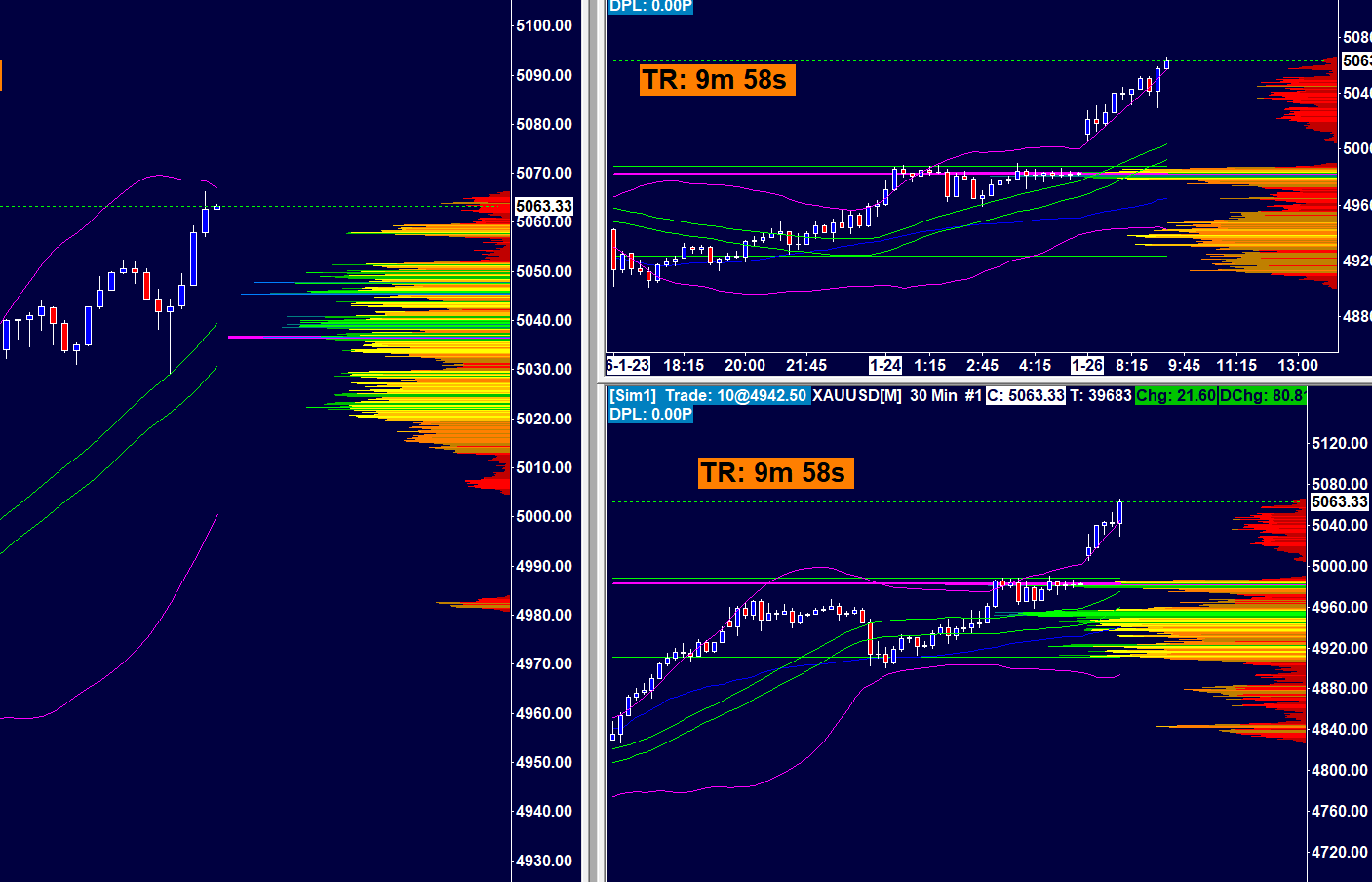
Gold jumped to a record high, topping the $5,000 an ounce milestone on Monday, extending a historic rally as investors sought the safe-haven asset amid rising geopolitical tensions.

Gold jumped to a record high, topping the $5,000 an ounce milestone on Monday, extending a historic rally as investors sought the safe-haven asset amid rising geopolitical tensions.
Escalating friction between the U.S. and NATO over Greenland has further fueled gold's run this year over prospects of more financial and geopolitical uncertainty.
The yellow metal soared 64 percent in 2025, underpinned by U.S. monetary policy easing, central bank demand — with China extending its gold-buying spree for a fourteenth month in December — and record inflows into exchange-traded-funds.
"Our forecast for the year is that gold will see a high of $6,400 an ounce with an average of $5,375," independent analyst Ross Norman said.
The Japanese yen strengthened against the U.S. dollar in early Monday trading, touching the 154 level for the first time since December 17. The move followed reports that U.S. authorities have taken a preliminary step toward intervening in the currency market to support the yen.
Market sentiment shifted after multiple media outlets, including Reuters, cited sources confirming that the U.S. Federal Reserve had conducted a "rate check." A London broker informed Nikkei on Friday that the action was performed at the direction of the U.S. Treasury Department.
This development has led to widespread speculation that the United States and Japan may be preparing to work together to halt the yen's ongoing weakness.
A rate check is a specific action where currency authorities contact financial institutions to ask for the exchange rate they would quote if an intervention were to occur. While it is not an actual intervention, it serves as a much stronger signal to the market than simple verbal warnings from officials.
By initiating this process, authorities can gauge market conditions and signal their readiness to act, effectively putting traders on notice.
Adding to the narrative, comments made by Prime Minister Sanae Takaichi during a Japanese television appearance on Saturday were interpreted by some market participants as another warning against allowing further depreciation of the yen.
Stock futures fell on Sunday night as traders braced for a big week, with key earnings reports and a U.S. monetary policy meeting.
Dow Jones Industrial Average futures lost 317 points, or 0.6%. S&P 500 and Nasdaq-100 futures shed 0.8% and 1.1%, respectively.
More than 90 S&P 500 companies are set to post quarterly reports this week, including Apple, Meta Platforms and Microsoft. So far, the earnings season has been strong, with 76% of the companies that have reported beating expectations, per FactSet.
To be sure, some stocks still fell despite companies topping expectations, such as Intel and Netflix.
"Based on what we've seen so far, the overall picture remains the same. We anticipate earnings growth accelerating to 14%, and thus we reiterate our recommendations from December: energy, basic materials, Magnificent Seven, Bitcoin, and Ethereum," wrote Tom Lee, head of research at Fundstrat.
Traders this week will also turn their attention to the Federal Reserve. The central bank is set to announce its first policy decision of the year on Wednesday.
While the Fed is widely expected to keep its overnight rate unchanged, Wall Street will look for clues on when Fed officials will cut rates.
Wall Street is coming off a losing week, after increasing geopolitical tensions unnerved investors. Concerns eased toward the end of the week, with President Donald Trump announcing that a "framework" for a deal regarding Greenland had been reached. Still, the S&P 500 lost about 0.4% last week for its second straight weekly decline.
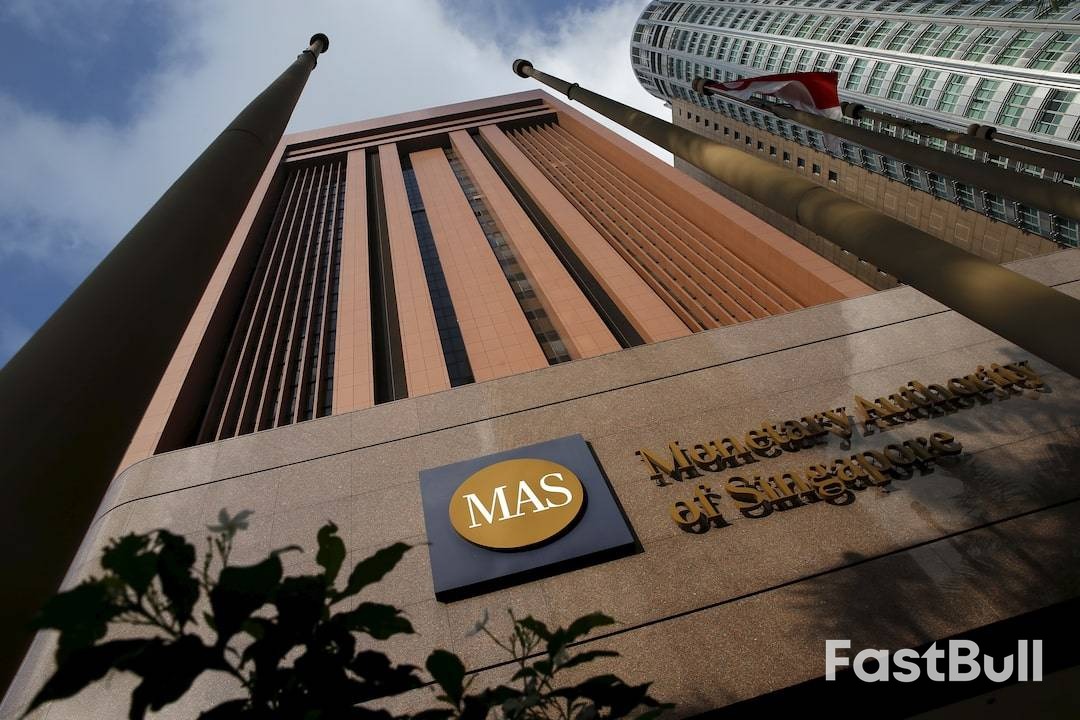
The Monetary Authority of Singapore (MAS) is widely expected to maintain its current monetary policy settings at its upcoming review, as a strong economic outlook and controlled inflation reduce the need for immediate adjustments.
A Reuters poll shows a strong consensus, with 15 out of 16 analysts predicting the central bank will stand pat. This follows two previous decisions to hold policy steady in July and October of last year, which came after easing measures in January and April.
Singapore's economy is performing better than anticipated, providing a solid foundation for the MAS to maintain its current stance. The country's GDP grew by 4.8% in 2025, significantly outpacing the government's earlier forecast of around 4.0% and its initial estimate of 1.5% to 2.5%.
A key driver of this performance is the technology sector. Tay Qi Hang, an analyst at the Economist Intelligence Unit Asia, pointed to the strong electronics purchasing managers' index reading of 50.9 in December as evidence of sustained momentum. He noted that growing demand related to artificial intelligence and rising memory chip prices are set to benefit the semiconductor industry in the coming months.
"The Q4 2025 growth outperformance coupled with stable core inflation at just above 1% in November has reduced near-term pressure to ease," said Tay.
While the immediate outlook points to a steady policy, some analysts are looking ahead to potential tightening. Standard Chartered chief economist Edward Lee stated there is no urgency for the MAS to act this month with inflation under control. However, he anticipates a policy tightening at the April review, citing a bottoming out of the inflation cycle and easing trade uncertainties.
A more hawkish view comes from Bank of America economists, who suggested in a report that the MAS could tighten policy as soon as this week. Their reasoning is based on signs of strengthening inflation from December's data, where price increases for travel-related components offset declines in raw food and beverage prices.
These economists project that the MAS might raise its core inflation forecast for 2026 to a range of 1% to 2%, up from its current forecast of 0.5% to 1.5%. The central bank will release its updated inflation forecasts in its upcoming monetary policy statement.
How Singapore Manages Its Monetary Policy
Unlike many central banks that use interest rates, the MAS manages monetary conditions by adjusting the exchange rate of the Singapore dollar. It allows the local dollar to move against a trade-weighted basket of currencies within an undisclosed band, known as the Singapore dollar nominal effective exchange rate (S$NEER).
The MAS has three main tools to adjust its policy:
• The slope of the policy band, which sets the pace of appreciation.
• The mid-point, which anchors the band's center.
• The width of the band, which determines the volatility of the exchange rate.
Singapore's expected policy stability aligns with a broader global trend. Major central banks are largely predicted to hold rates steady in the near term.
The U.S. Federal Reserve, for instance, cut interest rates by 25 basis points at its December meeting but signaled a pause to assess the job market, inflation, and the overall economy. This stance has drawn criticism from U.S. President Donald Trump, who has repeatedly called for more aggressive rate cuts from Fed chair Jerome Powell.
Similarly, the European Central Bank's chief economist, Philip Lane, indicated in January that the bank will not debate any rate changes in the near future if the economy continues on its current path.

Canadian Prime Minister Mark Carney has officially halted plans for a comprehensive free trade agreement (FTA) with China, a major strategic shift in North American trade policy. The move comes in direct response to a threat from former U.S. President Donald Trump to levy 100% tariffs on Canadian exports if Ottawa moved forward with the Beijing negotiations.
The announcement, first reported by Solidintel, signals a critical turning point for Canada’s economic and foreign policy, forcing the nation to prioritize its relationship with the United States over deeper ties with China.
The Carney administration has suspended all formal discussions on an FTA with China, reversing years of exploratory talks. The government’s new focus is on strengthening existing trade partnerships, citing the paramount need to maintain stable economic relations within North America. This strategic retreat also reflects the broader geopolitical realignments reshaping global trade.
While Canada's bilateral trade with China previously reached about $100 billion annually, several persistent challenges have prevented deeper economic integration:
• Security Risks: Concerns over cybersecurity and the protection of intellectual property have remained a major hurdle.
• Human Rights: Ongoing diplomatic disagreements have strained the relationship.
• Supply Chain Vulnerabilities: The pandemic exposed the risks of over-reliance on single sources for critical goods.
• U.S. Relations: Preserving privileged access to the massive American market remains Canada's top economic priority.
Former President Donald Trump’s warning, delivered via Truth Social, fundamentally changed the Canadian government's calculations. His threat to impose 100% tariffs on Canadian goods promised severe economic consequences, prompting urgent impact assessments in Ottawa.
The potential damage would be catastrophic for Canada’s export-driven economy, with key sectors facing complete disruption. Projections indicated devastating impacts:
• Automotive: The $50 billion export market to the U.S. would face total collapse.
• Agriculture: A potential wave of farm bankruptcies could hit the $30 billion sector.
• Energy: The $80 billion energy export industry would likely see pipeline projects canceled.
• Manufacturing: The $40 billion sector would face the risk of massive job losses.
Trade experts agree that Canada was caught in an exceptionally difficult position. Dr. Sarah Chen, Director of the North American Trade Institute, described the situation as a "classic geopolitical trilemma." She explained that Canada cannot simultaneously maintain full sovereignty, pursue an independent trade deal with China, and preserve its privileged market access to the United States.
This dilemma is not new. The previous Trudeau administration had also explored diversifying trade toward China, particularly after difficult USMCA renegotiations. However, shifting global dynamics and consistent pressure from the U.S. under both the Biden and Trump administrations have made that strategy increasingly unfeasible. Trump's explicit ultimatum simply forced the issue to a head.
In response, the Carney government is rolling out a multi-pronged alternative strategy designed to build domestic resilience and diversify its trade partnerships beyond both the U.S. and China.
The new approach focuses on several parallel initiatives:
• CPTPP Enhancement: Deepening trade ties with partners in the Comprehensive and Progressive Agreement for Trans-Pacific Partnership.
• EU-Canada CETA: Expanding the existing comprehensive economic agreement with the European Union.
• UK-Canada FTA: Finalizing a post-Brexit trade deal with the United Kingdom.
• ASEAN Engagement: Building stronger economic connections with Southeast Asian nations.
• Domestic Innovation: Investing in Canada's technological sovereignty to reduce external dependencies.
This diversified strategy aims to mitigate the risks of dependency on any single market while aligning Canada with broader Western economic security goals.
Beijing has reacted to Canada's decision with measured disappointment. Chinese officials have reiterated their interest in comprehensive trade deals but acknowledged the geopolitical realities complicating the negotiations. For now, existing trade between the two countries will continue under current frameworks.
The Canada-China relationship is now entering a new phase of pragmatic, but limited, engagement. Cooperation is expected to continue in areas of mutual interest, such as:
• Climate change and green technology
• Educational and research collaborations
• Limited agricultural and resource trade
• Coordination in multilateral forums
However, the prospect of comprehensive economic integration is officially off the table, highlighting the complex challenges middle powers face while navigating great power competition in 2025.
What was Carney's announcement on the China FTA?
Prime Minister Carney confirmed that Canada has suspended plans for a comprehensive free trade agreement with China. This decision was a direct result of former President Trump's threat to impose 100% tariffs on Canadian goods if the deal proceeded.
How severe would Trump's proposed tariffs be?
The proposed 100% tariffs would devastate key Canadian industries, including the automotive, agriculture, energy, and manufacturing sectors. Economic models predicted a potential GDP contraction of 3-5% and widespread job losses.
Is Canada-China trade ending completely?
No. Existing trade will continue under current agreements and frameworks. The decision specifically cancels negotiations for a new, comprehensive FTA that would have significantly deepened economic integration.
What is Canada's new trade strategy?
Canada is now focused on diversifying its trade relationships. This includes strengthening existing deals like CETA (with the EU) and the CPTPP, finalizing a new agreement with the UK, engaging more with ASEAN countries, and boosting domestic innovation.
Could Canada restart FTA talks with China later?
While possible, experts believe that structural geopolitical factors make a comprehensive trade deal with China unlikely for Canada in the medium term, regardless of who is in office in the United States.
Canada is holding its ground on a trade diversification strategy, refusing to alter its course despite escalating pressure from Washington and a direct tariff threat from U.S. President Donald Trump. Foreign Minister Anita Anand confirmed the government will continue its push to reduce economic reliance on the United States, signaling that external pressure will not dictate its trade policy.
The core message from Ottawa is clear: its plan to seek new global partners remains firmly in place.
The diplomatic friction intensified after President Donald Trump, the 47th U.S. president, issued a sharp warning on social media. Targeting Prime Minister Mark Carney, Trump threatened to impose a 100% tariff on all Canadian goods if the country becomes a "drop off port" for Chinese exports destined for the American market.
This threat was a direct response to a new agreement between Canada and China. Under the deal, Canada agreed to lower its tariffs on a limited number of Chinese electric vehicles in exchange for China easing its own restrictions on Canadian food exports, including canola and beef.
In response, Foreign Minister Anand pushed back, clarifying that Canada is not negotiating a comprehensive free trade agreement with Beijing. She framed the government's actions as a matter of economic necessity, not ideology.
The government's stated goal is to double its non-U.S. exports within a decade. "We need to protect and empower the Canadian economy, and trade diversification is fundamental to that," Anand stated. "That is why we went to China, that's why we will be going to India, and that is why we won't put all our eggs in one basket."
This strategy is already in motion. Energy Minister Tim Hodgson is traveling to Goa, India, for an energy conference, where he is scheduled to meet with officials from Indian industry and Prime Minister Narendra Modi's government. Discussions are expected to focus on cooperation in critical minerals, uranium, and liquefied natural gas—resources Canada possesses in large quantities. Prime Minister Carney also plans to visit India soon, with a subsequent trip to Australia scheduled for March.
Despite the recent tension, Anand emphasized that the relationship with Washington remains strong and is expected to continue that way. The economic partnership between the two nations is massive. In the first ten months of last year, the U.S. exported approximately $280 billion in goods to Canada, more than to any other country. During the same period, U.S. imports from Canada totaled $322 billion, according to Commerce Department data.
The automotive sector is the backbone of this relationship, with manufacturing supply chains deeply integrated across the border. This integration is precisely why Canada's EV deal with China, which allows just 49,000 vehicles per year, struck a nerve in Washington.
"We have a highly integrated market with Canada," U.S. Treasury Secretary Scott Bessent explained on ABC's This Week. "The goods can cross the border during the manufacturing process six times. And we can't let Canada become an opening that the Chinese pour their cheap goods into the US."
Analysts agree that the economic risk from a major trade rupture is not symmetrical. Canada's smaller, less diversified economy would be hit much harder.
"If there were 100% tariffs on Canada, it would be a disaster," said Randall Bartlett, deputy chief economist at Desjardins Group. "I guess my question would be, what's the likelihood of that happening?"
Bartlett noted that President Trump frequently issues tariff threats only to reverse his position later, suggesting the probability of full-scale tariffs is low.
Meanwhile, Trump continued his social media commentary on Sunday, posting on Truth Social: "China is successfully and completely taking over the once Great Country of Canada. So sad to see it happen. I only hope they leave Ice Hockey alone!"
California, once nicknamed the "Golden State" for its 19th-century Gold Rush, long symbolized the American Dream—a place of ambition and prosperity. Today, however, the state is the center of a political experiment that increasingly mirrors European centralist ideology, with significant economic and social consequences.
The contrast was on full display at this year's World Economic Forum in Davos. While U.S. President Donald Trump used his speech to declare EU-style, centrally planned climate policies a failure, California Governor Gavin Newsom offered a starkly different performance.
The day after Trump’s address, Newsom, a potential Democratic presidential candidate, presented his counter-vision. In a move widely seen as bizarre, he accused Western leaders of a "pathetic" and cowardly response to the Trump administration. As a political prop, he carried bright red "Trump Signature Knee Pads," suggesting he should have brought a pair for every world leader present. This conduct raised questions about his seriousness as a statesman, especially as his own policies back home are creating deep economic and social challenges.
If California were a nation, it would be the world's fourth-largest economy. Governor Newsom, however, often seems to prioritize the role of a climate activist over that of a pragmatic governor.
He has consistently attributed events like the 2024 wildfire disaster to climate change, using the immediate shock of catastrophe to push his policy agenda. Similarly, state-induced water shortages are framed as the result of extreme droughts caused by CO₂ emissions. This narrative loop reinterprets every major weather event as a climate catastrophe, sidelining normal conditions in a media-driven panic.
Newsom’s approach extends beyond environmental policy. Under his leadership, California has become a hub for progressive social policies, often prioritizing gender politics and state control over individual autonomy. This shift away from the traditional American spirit of a minimal state mirrors the bureaucratic model of the European Union.
Since Newsom took office in 2019, California has become the U.S. model for implementing a radical Green Deal. Regulatory codes for industry, agriculture, and transportation are structured much like Brussels' playbook, with a goal of eliminating CO₂ emissions by 2045.
This green transformation, funded by debt and subsidies, has come at a staggering cost. Over the last three years, California's budget deficit has reached approximately $110 billion. The state's total debt, including unfunded social obligations, now stands at an estimated $1.8 trillion.
Newsom's tenure has also seen the rise of a state-funded, privately managed system of homelessness care. The number of people managed by this social complex has surged tenfold to 180,000. Critics argue this system functions similarly to a network of immigrant-run daycares in Minnesota that created a tax-extraction model. In California, poverty is managed and monetized, with major beneficiaries often connected to the Democratic Party, creating a political donation machine to finance future campaigns.
Despite these fiscal realities, Newsom continues to position himself as a savior of the American Dream, a message he delivered on the friendly turf of the WEF, where belief in a centrally planned Net-Zero economy remains strong.
To delay an economic collapse, California is pursuing aggressive fiscal measures. Alongside heavy burdens on the middle class and businesses, a so-called "billionaire tax" is close to being enacted. This populist tool mirrors policies seen in Europe, where wealth taxes are used to assign blame for economic decay while distracting from its root causes.
Newsom’s billionaire tax is seen by many as a Trojan horse. Initially proposed as a one-time plunder of the private wealth of roughly 200 California billionaires, it is expected to become a recurring levy. The proposal calls for a five percent tax on total net worth, payable at once or over five years.
This policy ignores the fact that much of this capital is invested in companies that create jobs and fund the state's future. Newsom needs liquidity to fund the green transformation, especially as the Trump administration's deregulation of the energy sector is encouraging businesses to leave California for "Red States" that value market freedom.
The state's billionaires have responded decisively:
• Larry Page, former CEO of Alphabet/Google, is spinning off parts of his companies to Delaware.
• Elon Musk relocated Tesla long ago.
• Peter Thiel, co-founder of Palantir, is moving capital to Miami, Florida.
• David Sachs of Craft Ventures has also left California for Austin, Texas.
This industrial exodus is a direct boost for business locations that protect private property, a dynamic nearly identical to the one currently unfolding in Germany under similar policies.
Like his European counterparts, Newsom uses media skirmishes with political opponents like Donald Trump to distract from economic decline, capital flight, and criticism of his misplaced priorities.
The proposed solutions in both California and the EU follow a similar pattern of controlled "green socialism." This includes social scoring models based on carbon footprints, expansive censorship on social media, and digital central bank currencies that would grant the state total control over the private sector. The ultimate goal is to forcibly reshape society to fit a political ideology, regardless of the cost, using "woke" rhetoric to soften its brutal reality.
728 RM B 7/F GEE LOK IND BLDG NO 34 HUNG TO RD KWUN TONG KLN HONG KONG


White Label
Data API
Web Plug-ins
Poster Maker
Affiliate Program
The risk of loss in trading financial instruments such as stocks, FX, commodities, futures, bonds, ETFs and crypto can be substantial. You may sustain a total loss of the funds that you deposit with your broker. Therefore, you should carefully consider whether such trading is suitable for you in light of your circumstances and financial resources.
No decision to invest should be made without thoroughly conducting due diligence by yourself or consulting with your financial advisors. Our web content might not suit you since we don't know your financial conditions and investment needs. Our financial information might have latency or contain inaccuracy, so you should be fully responsible for any of your trading and investment decisions. The company will not be responsible for your capital loss.
Without getting permission from the website, you are not allowed to copy the website's graphics, texts, or trademarks. Intellectual property rights in the content or data incorporated into this website belong to its providers and exchange merchants.
Not Logged In
Log in to access more features


Log In
Sign Up


