Markets
News
Analysis
User
24/7
Economic Calendar
Education
Data
- Names
- Latest
- Prev



Signal Accounts for Members
All Signal Accounts
All Contests


U.K. CPI MoM (Dec)A:--
F: --
P: --
U.K. Input PPI MoM (Not SA) (Dec)A:--
F: --
U.K. Core CPI MoM (Dec)A:--
F: --
P: --
U.K. Retail Prices Index MoM (Dec)A:--
F: --
P: --
U.K. Input PPI YoY (Not SA) (Dec)A:--
F: --
P: --
U.K. CPI YoY (Dec)A:--
F: --
P: --
U.K. Output PPI MoM (Not SA) (Dec)A:--
F: --
P: --
U.K. Output PPI YoY (Not SA) (Dec)A:--
F: --
P: --
U.K. Core Retail Prices Index YoY (Dec)A:--
F: --
P: --
U.K. Core CPI YoY (Dec)A:--
F: --
P: --
U.K. Retail Prices Index YoY (Dec)A:--
F: --
P: --
Indonesia 7-Day Reverse Repo RateA:--
F: --
P: --
Indonesia Loan Growth YoY (Dec)A:--
F: --
P: --
Indonesia Deposit Facility Rate (Jan)A:--
F: --
P: --
Indonesia Lending Facility Rate (Jan)A:--
F: --
P: --
South Africa Core CPI YoY (Dec)A:--
F: --
P: --
South Africa CPI YoY (Dec)A:--
F: --
P: --
IEA Oil Market Report
U.K. CBI Industrial Output Expectations (Jan)A:--
F: --
U.K. CBI Industrial Prices Expectations (Jan)A:--
F: --
P: --
South Africa Retail Sales YoY (Nov)A:--
F: --
P: --
U.K. CBI Industrial Trends - Orders (Jan)A:--
F: --
P: --
Mexico Retail Sales MoM (Nov)A:--
F: --
P: --
U.S. MBA Mortgage Application Activity Index WoWA:--
F: --
P: --
Canada Industrial Product Price Index YoY (Dec)A:--
F: --
Canada Industrial Product Price Index MoM (Dec)A:--
F: --
U.S. Weekly Redbook Index YoYA:--
F: --
P: --
U.S. Pending Home Sales Index YoY (Dec)A:--
F: --
P: --
U.S. Pending Home Sales Index MoM (SA) (Dec)A:--
F: --
P: --
U.S. Construction Spending MoM (Oct)A:--
F: --
U.S. Pending Home Sales Index (Dec)A:--
F: --
P: --
U.S. API Weekly Refined Oil Stocks--
F: --
P: --
U.S. API Weekly Gasoline Stocks--
F: --
P: --
U.S. API Weekly Cushing Crude Oil Stocks--
F: --
P: --
U.S. API Weekly Crude Oil Stocks--
F: --
P: --
South Korea GDP Prelim YoY (SA) (Q4)--
F: --
P: --
South Korea GDP Prelim QoQ (SA) (Q4)--
F: --
P: --
Japan Imports YoY (Dec)--
F: --
P: --
Japan Exports YoY (Dec)--
F: --
P: --
Japan Goods Trade Balance (SA) (Dec)--
F: --
P: --
Japan Trade Balance (Not SA) (Dec)--
F: --
Australia Employment (Dec)--
F: --
P: --
Australia Labor Force Participation Rate (SA) (Dec)--
F: --
P: --
Australia Unemployment Rate (SA) (Dec)--
F: --
P: --
Australia Full-time Employment (SA) (Dec)--
F: --
P: --
Turkey Consumer Confidence Index (Jan)--
F: --
P: --
Turkey Capacity Utilization (Jan)--
F: --
P: --
Turkey Late Liquidity Window Rate (LON) (Jan)--
F: --
P: --
Turkey Overnight Lending Rate (O/N) (Jan)--
F: --
P: --
Turkey 1-Week Repo Rate--
F: --
P: --
U.K. CBI Distributive Trades (Jan)--
F: --
P: --
U.K. CBI Retail Sales Expectations Index (Jan)--
F: --
P: --
U.S. Weekly Continued Jobless Claims (SA)--
F: --
P: --
U.S. Initial Jobless Claims 4-Week Avg. (SA)--
F: --
P: --
U.S. Real Personal Consumption Expenditures Final QoQ (Q3)--
F: --
P: --
Canada New Housing Price Index MoM (Dec)--
F: --
P: --
U.S. Weekly Initial Jobless Claims (SA)--
F: --
P: --
U.S. Real GDP Annualized QoQ Final (Q3)--
F: --
P: --


No matching data
Latest Views
Latest Views
Trending Topics
Top Columnists
Latest Update
White Label
Data API
Web Plug-ins
Affiliate Program
View All

No data
Japanese bond turmoil rattled global markets, driving German yields higher and spotlighting escalating fiscal anxieties.
Long-dated German bond yields dipped on Wednesday but are still on course for their largest weekly increase in a month. The volatility isn't rooted in Europe; instead, it's a direct consequence of a selloff in Japanese government debt that cascaded across global fixed-income markets.
Germany's 10-year bond yield, the primary benchmark for the eurozone, was last down by about 1 basis point to 2.8443%. Similarly, the 30-year yield fell by 1 basis point to 3.473%. Despite the small daily decline, the 30-year yield is set for a 4.7-basis-point rise this week, its biggest jump since the start of the year.
This week's global yield spike was triggered by a sharp selloff in Japanese bonds. The rout began after a looming snap election in Japan sparked fresh concerns about the country's fiscal outlook.
While Japanese bond yields fell sharply during Wednesday's session, partially reversing the previous day's surge, the initial shock had already rippled through international markets.
According to analysts at ING, recent price action in German bonds suggests that the eurozone's macroeconomic picture has not changed significantly. Instead, the market is being driven by volatility in Japan rather than Europe-centric factors.
Analysts observe a clear divergence in the European market. "The back end of the euro curve is being driven by global spillovers, but the front end remains remarkably stable," ING noted.
This indicates that while short-term debt is anchored by expectations for European Central Bank (ECB) policy, longer-term bonds are more sensitive to worldwide events. Other geopolitical tensions, such as U.S. President Donald Trump's interest in Greenland, which has drawn pushback from European leaders and renewed threats of tariffs, have also contributed to market uncertainty.
The events in Japan serve as a reminder of a broader global issue: mounting fiscal concerns. As government spending continues to rise worldwide, the path of least resistance is toward steeper yield curves, where investors demand a larger risk premium for holding longer-term debt.
"Japan is not the only country facing fiscal challenges," ING analysts warned. "As global rates rise, budget deficits will only be strained further."
The persistent global uncertainty could factor into the ECB's decision-making in the coming months. An unstable environment makes interest rate hikes less likely and could even slightly increase the inclination toward further rate cuts.
For now, however, the broad market expectation is that the ECB will keep its rates steady.
Germany is facing a severe electricity crisis marked by shortages and soaring costs, and the situation is getting worse. In a frank admission, German Chancellor Friedrich Merz has called the country's decision to shut down its nuclear power plants a "severe strategic mistake."

According to Merz, the only way to achieve acceptable market prices for energy is through ongoing government intervention. "We would have to permanently subsidize energy prices from the federal budget," he stated, before adding a critical reality check: "We can't do this in the long run."
With pronounced frustration, Merz described Germany’s current path as "the most expensive energy transition in the entire world." He lamented the unique difficulty of his country's self-imposed energy challenge, stating, "I know of no other country that makes things so expensive and difficult as Germany."
To address the energy shortfall, Merz's government is turning to fossil fuels. It plans to solicit bids this year to build 8 gigawatts of new gas-fired power plants, with a target of bringing them online by 2031.
An additional 4 gigawatts of capacity is also planned, intended to come from lower-carbon energy sources or from gas plants that can be quickly converted to run on hydrogen. Merz also noted that for industrial power prices, "the European Commission will also approve the combination of several options."
Germany's energy problems have significant implications beyond its borders. As the largest economy in the European Union, its industrial sector forms the backbone of the entire European economic model.
When combined with other mounting pressures, this internal energy struggle paints a tenuous picture for Europe's economic future. Key challenges include:
• A new trade relationship with the USA.
• Increasingly cheap goods from China being dumped into the EU market.
• The EU's continued financial commitment to the war effort in Ukraine against Russia.
Prime Minister Sanae Takaichi’s call for a snap general election on February 8 has sent tremors through Japan’s financial markets. Her decision to seek a public mandate for her reflationist economic policies has pushed bond yields to multi-decade highs, signaling rising anxiety over the country’s strained finances.
With voters heading to the polls, each political party is presenting a distinct vision for Japan's economy. Here’s a clear breakdown of the key economic policies on the table.
The ruling Liberal Democratic Party (LDP), led by Prime Minister Takaichi, is campaigning on a platform of more aggressive government spending. Since succeeding her predecessor Shigeru Ishiba, Takaichi has worked to relax Japan's traditionally strict fiscal targets.
While she recently acknowledged the Bank of Japan's December interest rate hike, which aimed to curb the yen's slide, an election victory could empower her advisors to push back against further rate increases that might slow economic growth.
Takaichi has promised to end what she calls "excessively" tight fiscal policy. A core pledge is to suspend the 8% sales tax on food for two years. She has ruled out issuing more government debt to fund this but remains vague on how the revenue gap will be filled, stating it will be decided after negotiations with other parties.
Critics argue these policies could fuel already-rising inflation while failing to solve deeper economic problems like labor shortages and supply-chain constraints. The LDP's draft manifesto insists Japan can achieve both a strong economy and sustainable fiscal policy to maintain market trust in the yen, aiming to lower the nation's debt-to-GDP ratio.
The right-wing Japan Innovation Party (Ishin) helped Takaichi secure the premiership in October and now forms a ruling coalition with the LDP.
While the party traditionally advocates for deregulation and cutting wasteful spending, it has aligned with the LDP on a key tax issue. As part of their coalition agreement, Ishin supports suspending the 8% food sales tax for two years and agrees that the measure should be funded without issuing additional debt.
A new force in opposition, the Centrist Reform Alliance (CRA) was formed between the Constitutional Democratic Party of Japan and Komeito. The alliance positions itself as a middle-ground alternative on economic policy.
The CRA’s flagship proposal is to permanently abolish the 8% consumption tax on food. To make up for the lost revenue, the party suggests creating a sovereign wealth fund to generate profits by investing government reserves more effectively. The alliance also aims to correct the "excessive" weakness of the yen that is driving up inflation, with a focus on lowering prices for essentials like food and fuel.
Led by former finance ministry official Yuichiro Tamaki, the DPP is focused on boosting household purchasing power, primarily through tax exemptions.
The party proposes a significant investment in the future, calling for the issuance of 5 trillion yen ($31.62 billion) in "education" bonds each year. This funding would be used to double spending on child care, education, and scientific research.
In an interview, Tamaki expressed a cautious view on broad tax cuts, arguing that the consumption tax should only be reduced if the economy falters due to weak demand. He believes it is not a fast enough tool to provide immediate relief from rising living costs. On monetary policy, he said the Bank of Japan should continue raising interest rates, provided that small and medium-sized firms can sustain wage hikes of around 5%.
Once a fringe political group, the far-right Sanseito party gained significant ground in the upper house election last July with its "Japan First" campaign.
The party’s economic platform is its most radical. Sanseito calls for abandoning the consumption tax altogether and completely overhauling what it sees as overly restrictive fiscal policy by dramatically ramping up government spending.
South Africa’s inflation rate saw a minor increase in December, but this is unlikely to derail a potential interest rate cut by the central bank later this month. The key reason is that average price growth for 2025 undershot the bank's own projections, and underlying inflationary pressures continue to weaken.
Statistics South Africa reported on Wednesday that annual consumer prices rose by 3.6% in December, a slight acceleration from November's 3.5% figure. This matched the median forecast from a Bloomberg survey of 17 economists.
More importantly, the average inflation rate for the full year of 2025 came in at 3.2%. This is lower than the central bank's forecast of 3.3%, signaling that the broader price trend remains under control.
The lower-than-expected annual average, combined with several favorable economic factors, strengthens the case for the monetary policy committee to lower borrowing costs at its January 29 meeting. These factors include:
• Softer oil prices
• A stronger rand relative to the U.S. dollar
• Record-low inflation expectations among the public and investors
These developments give policymakers more room to consider easing monetary policy to support the economy.
The central bank is now operating with a new, formal inflation target of 3%, a goal officially adopted by the National Treasury in November. This new framework is central to its forward-looking policy decisions.
Speaking from the World Economic Forum in Davos, Governor Lesetja Kganyago indicated that inflation is expected to remain contained. "Throughout the year," he said in a Bloomberg TV interview, "the inflation prints that we expect for each one of the months is that they will all have a 3% handle."
Kganyago clarified that any decision to cut interest rates will depend on the inflation outlook. He projects that inflation in the current year will "average anything around 3.5%." By 2027, he expects it to converge toward the new 3% target, which he said means "we still have room" to ease policy.
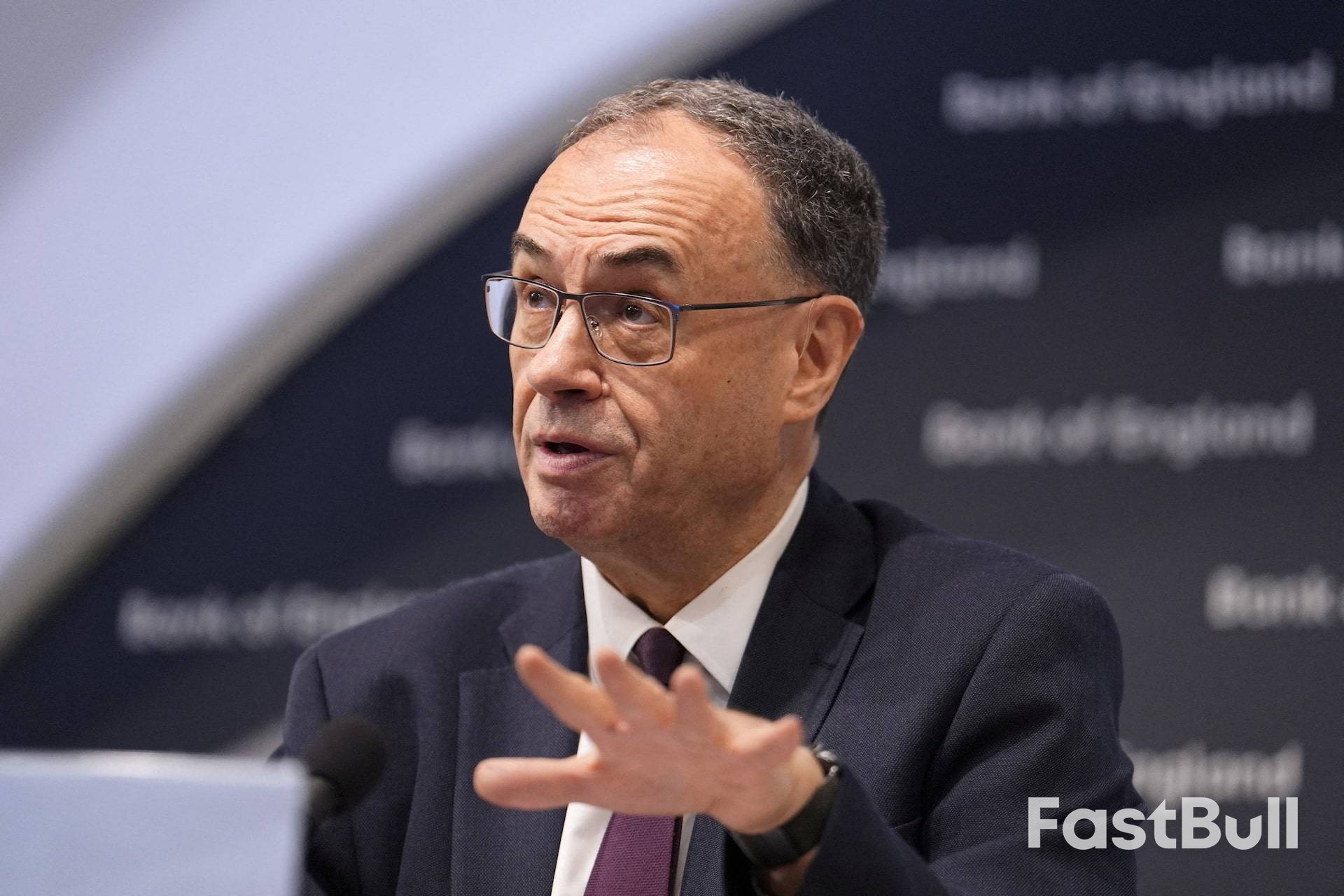
UK inflation unexpectedly climbed in December, reaching 3.4% and slightly complicating the outlook for the Bank of England. The figure surpassed both the 3.2% recorded in November and the 3.3% median forecast from economists.
Despite the increase, which keeps Britain's inflation the highest among G7 nations, investors largely held their ground, maintaining expectations for interest rate cuts later this year. Markets showed little reaction, as key indicators watched by the central bank, such as services price inflation, moved in line with predictions.

The Office for National Statistics reported that the primary drivers behind the December inflation rise were increased costs for tobacco and air travel. The uptick was largely attributed to a government duty increase on tobacco products and seasonal flight pricing around the Christmas period.
Services inflation, a metric closely monitored by the Bank of England for underlying price pressures, rose from 4.4% to 4.5%, matching economists' expectations.
The latest figures are unlikely to alarm policymakers at the Bank of England. Economists noted that the data aligned closely enough with the central bank's projections from November. Adam Deasy, an economist at PwC, described the increase as a "speed-bump, rather than an indication we are veering off course on the road to price stability."
Financial markets continue to price in at least one quarter-point interest rate cut in 2026, with some anticipating two. This outlook persists even though the Monetary Policy Committee was divided at its last meeting, where it cut the Bank Rate to 3.75%, with nearly half its members favoring no change due to inflation concerns.
Nicholas Crittenden of the National Institute of Economic and Social Research think tank stated, "The Bank of England will ... not be worried by these numbers." He added, "We still predict one cut in Bank Rate in the first half of this year, provided renewed geopolitical tensions do not blow the current path of inflation off course."
Despite the December uptick, the broader consensus is that inflation will slow significantly in the coming months. Bank of England Governor Andrew Bailey has previously stated that inflation is likely to return to the central bank's 2% target around April or May.
This expected decline is largely due to base effects, as the sharp rises in utility costs and other government-regulated tariffs from the previous year will no longer be part of the annual comparison.
Further data on producer prices showed that while costs in the services sector rose to 2.9% in the fourth quarter from 2.0% in the third, prices from manufacturing firms remained stable in December, suggesting a mixed but not universally inflationary business environment.
China's latest auction of seven-year government bonds saw exceptionally strong demand on Wednesday, signaling growing investor appetite for the nation's debt even as global markets experience volatility.
The auction's bid-to-cover ratio, a key measure of demand, surged to 5.91. According to Bloomberg data, this figure represents a record high for China's seven-year government debt offerings.
This overwhelming interest underscores the increasing perception of Chinese sovereign debt as a reliable hedge against international instability.
Investors are turning to Chinese bonds due to their low correlation with turbulent external markets. The robust demand comes at a time of heightened global uncertainty, driven by several key factors:
• The United States is threatening tariffs against European nations over Greenland.
• Japanese government bonds have recently experienced a slump.
In this environment, the stability offered by Chinese sovereign debt has become a significant draw for capital.
The demand for China's sovereign bonds is not just an international story. It is also heavily supported by rich liquidity within China's domestic financial system, which particularly benefits shorter-tenor debt.
Cash has been plentiful in the onshore market, keeping funding costs at relatively low levels. Last month, the overnight repo rate fell to its lowest point since 2023 and has remained subdued, creating favorable conditions for bond investment.
Jeffrey Zhang, an emerging markets strategist at Credit Agricole CIB, noted that the auction results suggest a positive shift in market dynamics. "This could suggest that supply-demand dynamics have started to turn favorable, as dip-buyers began to see attractive value" in certain parts of the yield curve, he said.
However, Zhang cautioned that a broader trend reversal is not yet confirmed. "We haven't noticed clear fundamental catalysts to reverse the steepening trend of the yield curve at this moment," he added.
Following the successful auction, the yield on the seven-year bond in the secondary market fell by one basis point to 1.69%. This marked the lowest yield for the bond so far this month, reflecting the immediate market impact of the strong investor demand.
The European Union's landmark trade deal with the Mercosur bloc is already facing a critical test, with lawmakers set to vote on a legal challenge that could delay the agreement for at least two years and possibly derail it entirely.
Signed just last Saturday, the pact with South American nations Argentina, Brazil, Paraguay, and Uruguay is the EU's largest-ever trade agreement. However, it requires final approval before it can be implemented, and a significant faction within the European Parliament is moving to halt its progress.
A coalition of 144 lawmakers has formally requested that the EU's top court, the European Court of Justice, review the agreement's legality. Their challenge is built on two key questions:
1. Can the trade deal be applied provisionally before it is fully ratified by all individual EU member states?
2. Do the agreement's terms illegally restrict the EU's authority to establish its own environmental and consumer health policies?
A referral to the court would trigger a lengthy review process, which typically takes around two years to conclude. This delay introduces significant uncertainty for a deal that has already been 25 years in the making.
Opposition is fierce, led by France, the EU's agricultural heavyweight. Critics warn the pact will open the floodgates to inexpensive beef, sugar, and poultry from South America, undercutting domestic producers. European farmers have staged repeated demonstrations, arguing the deal poses a direct threat to their livelihoods.

On the other side, supporters like Germany and Spain see the agreement as a crucial strategic move. They argue it is essential for offsetting business lost to U.S. tariffs under President Donald Trump and for reducing economic reliance on China by securing access to critical minerals from South America. Proponents also warn that the Mercosur governments are growing impatient after decades of negotiations.
The vote on whether to proceed with the legal challenge is scheduled for 1130 GMT on Wednesday.
Even if the matter is sent to the court, the EU could theoretically apply the pact on a provisional basis while awaiting the ruling. However, this would be a politically difficult step given the intense backlash. Furthermore, the European Parliament would ultimately retain the power to annul the agreement at a later stage, leaving its long-term future in doubt.
White Label
Data API
Web Plug-ins
Poster Maker
Affiliate Program
The risk of loss in trading financial instruments such as stocks, FX, commodities, futures, bonds, ETFs and crypto can be substantial. You may sustain a total loss of the funds that you deposit with your broker. Therefore, you should carefully consider whether such trading is suitable for you in light of your circumstances and financial resources.
No decision to invest should be made without thoroughly conducting due diligence by yourself or consulting with your financial advisors. Our web content might not suit you since we don't know your financial conditions and investment needs. Our financial information might have latency or contain inaccuracy, so you should be fully responsible for any of your trading and investment decisions. The company will not be responsible for your capital loss.
Without getting permission from the website, you are not allowed to copy the website's graphics, texts, or trademarks. Intellectual property rights in the content or data incorporated into this website belong to its providers and exchange merchants.
Not Logged In
Log in to access more features

FastBull Membership
Not yet
Purchase
Log In
Sign Up