• Trade
  • Markets
  • Copy
  • Contests
  • News
  • 24/7
  • Calendar
  • Q&A
  • Chats
Trending
Screeners
SYMBOL
LAST
BID
ASK
HIGH
LOW
NET CHG.
%CHG.
SPREAD
SPX
S&P 500 Index
6827.42
6827.42
6827.42
6899.86
6801.80
-73.58
-1.07%
--
DJI
Dow Jones Industrial Average
48458.04
48458.04
48458.04
48886.86
48334.10
-245.98
-0.51%
--
IXIC
NASDAQ Composite Index
23195.16
23195.16
23195.16
23554.89
23094.51
-398.69
-1.69%
--
USDX
US Dollar Index
97.950
98.030
97.950
98.500
97.950
-0.370
-0.38%
--
EURUSD
Euro / US Dollar
1.17394
1.17409
1.17394
1.17496
1.17192
+0.00011
+ 0.01%
--
GBPUSD
Pound Sterling / US Dollar
1.33707
1.33732
1.33707
1.33997
1.33419
-0.00148
-0.11%
--
XAUUSD
Gold / US Dollar
4299.39
4299.39
4299.39
4353.41
4257.10
+20.10
+ 0.47%
--
WTI
Light Sweet Crude Oil
57.233
57.485
57.233
58.011
56.969
-0.408
-0.71%
--

Community Accounts

Signal Accounts
--
Profit Accounts
--
Loss Accounts
--
View More

Become a signal provider

Sell trading signals to earn additional income

View More

Guide to Copy Trading

Get started with ease and confidence

View More

Signal Accounts for Members

All Signal Accounts

Best Return
  • Best Return
  • Best P/L
  • Best MDD
Past 1W
  • Past 1W
  • Past 1M
  • Past 1Y

All Contests

  • All
  • Trump Updates
  • Recommend
  • Stocks
  • Cryptocurrencies
  • Central Banks
  • Featured News
Top News Only
Share

USA Embassy In Lithuania: Maria Kalesnikava Is Not Going To Vilnius

Share

USA Embassy In Lithuania: Other Prisoners Are Being Sent From Belarus To Ukraine

Share

Ukraine President Zelenskiy: Five Ukrainians Released By Belarus In US-Brokered Deal

Share

USA Vilnius Embassy: USA Stands Ready For "Additional Engagement With Belarus That Advances USA Interests"

Share

USA Vilnius Embassy: Belarus, USA, Other Citizens Among The Prisoners Released Into Lithuania

Share

USA Vilnius Embassy: USA Will Continue Diplomatic Efforts To Free The Remaining Political Prisoners In Belarus

Share

USA Vilnius Embassy: Belarus Releases 123 Prisoners Following Meeting Of President Trump's Envoy Coale And Belarus President Lukashenko

Share

USA Vilnius Embassy: Masatoshi Nakanishi, Aliaksandr Syrytsa Are Among The Prisoners Released By Belarus

Share

USA Vilnius Embassy: Maria Kalesnikava And Viktor Babaryka Are Among The Prisoners Released By Belarus

Share

USA Vilnius Embassy: Nobel Peace Prize Laureate Ales Bialiatski Is Among The Prisoners Released By Belarus

Share

Belarusian Presidential Administration Telegram Channel: Lukashenko Has Pardoned 123 Prisoners As Part Of Deal With US

Share

Two Local Syrian Officials: Joint US-Syrian Military Patrol In Central Syria Came Under Fire From Unknown Assailants

Share

Israeli Military Says It Targeted 'Key Hamas Terrorist' In Gaza City

Share

Rwanda's Actions In Eastern Drc Are A Clear Violation Of Washington Accords Signed By President Trump - Secretary Of State Rubio

Share

Israeli Military Issues Evacuation Warning In Southern Lebanon Village Ahead Of Strike - Spokesperson On X

Share

Belarusian State Media Cites US Envoy Coale As Saying He Discussed Ukraine And Venezuela With Lukashenko

Share

Belarusian State Media Cites US Envoy Coale As Saying That US Removes Sanctions On Belarusian Potassium

Share

Thai Prime Minister: No Ceasefire Agreement With Cambodia

Share

US, Ukraine To Discuss Ceasefire In Berlin Ahead Of European Summit

Share

Incoming Czech Prime Minister Babis: Czech Republic Will Not Take On Guarantees For Ukraine Financing, European Commission Must Find Alternatives

TIME
ACT
FCST
PREV
U.K. Trade Balance Non-EU (SA) (Oct)

A:--

F: --

P: --

U.K. Trade Balance (Oct)

A:--

F: --

P: --

U.K. Services Index MoM

A:--

F: --

P: --

U.K. Construction Output MoM (SA) (Oct)

A:--

F: --

P: --

U.K. Industrial Output YoY (Oct)

A:--

F: --

P: --

U.K. Trade Balance (SA) (Oct)

A:--

F: --

P: --

U.K. Trade Balance EU (SA) (Oct)

A:--

F: --

P: --

U.K. Manufacturing Output YoY (Oct)

A:--

F: --

P: --

U.K. GDP MoM (Oct)

A:--

F: --

P: --

U.K. GDP YoY (SA) (Oct)

A:--

F: --

P: --

U.K. Industrial Output MoM (Oct)

A:--

F: --

P: --

U.K. Construction Output YoY (Oct)

A:--

F: --

P: --

France HICP Final MoM (Nov)

A:--

F: --

P: --

China, Mainland Outstanding Loans Growth YoY (Nov)

A:--

F: --

P: --

China, Mainland M2 Money Supply YoY (Nov)

A:--

F: --

P: --

China, Mainland M0 Money Supply YoY (Nov)

A:--

F: --

P: --

China, Mainland M1 Money Supply YoY (Nov)

A:--

F: --

P: --

India CPI YoY (Nov)

A:--

F: --

P: --

India Deposit Gowth YoY

A:--

F: --

P: --

Brazil Services Growth YoY (Oct)

A:--

F: --

P: --

Mexico Industrial Output YoY (Oct)

A:--

F: --

P: --

Russia Trade Balance (Oct)

A:--

F: --

P: --

Philadelphia Fed President Henry Paulson delivers a speech
Canada Building Permits MoM (SA) (Oct)

A:--

F: --

P: --

Canada Wholesale Sales YoY (Oct)

A:--

F: --

P: --

Canada Wholesale Inventory MoM (Oct)

A:--

F: --

P: --

Canada Wholesale Inventory YoY (Oct)

A:--

F: --

P: --

Canada Wholesale Sales MoM (SA) (Oct)

A:--

F: --

P: --

Germany Current Account (Not SA) (Oct)

A:--

F: --

P: --

U.S. Weekly Total Rig Count

A:--

F: --

P: --

U.S. Weekly Total Oil Rig Count

A:--

F: --

P: --

Japan Tankan Large Non-Manufacturing Diffusion Index (Q4)

--

F: --

P: --

Japan Tankan Small Manufacturing Outlook Index (Q4)

--

F: --

P: --

Japan Tankan Large Non-Manufacturing Outlook Index (Q4)

--

F: --

P: --

Japan Tankan Large Manufacturing Outlook Index (Q4)

--

F: --

P: --

Japan Tankan Small Manufacturing Diffusion Index (Q4)

--

F: --

P: --

Japan Tankan Large Manufacturing Diffusion Index (Q4)

--

F: --

P: --

Japan Tankan Large-Enterprise Capital Expenditure YoY (Q4)

--

F: --

P: --

U.K. Rightmove House Price Index YoY (Dec)

--

F: --

P: --

China, Mainland Industrial Output YoY (YTD) (Nov)

--

F: --

P: --

China, Mainland Urban Area Unemployment Rate (Nov)

--

F: --

P: --

Saudi Arabia CPI YoY (Nov)

--

F: --

P: --

Euro Zone Industrial Output YoY (Oct)

--

F: --

P: --

Euro Zone Industrial Output MoM (Oct)

--

F: --

P: --

Canada Existing Home Sales MoM (Nov)

--

F: --

P: --

Euro Zone Total Reserve Assets (Nov)

--

F: --

P: --

U.K. Inflation Rate Expectations

--

F: --

P: --

Canada National Economic Confidence Index

--

F: --

P: --

Canada New Housing Starts (Nov)

--

F: --

P: --

U.S. NY Fed Manufacturing Employment Index (Dec)

--

F: --

P: --

U.S. NY Fed Manufacturing Index (Dec)

--

F: --

P: --

Canada Core CPI YoY (Nov)

--

F: --

P: --

Canada Manufacturing Unfilled Orders MoM (Oct)

--

F: --

P: --

Canada Manufacturing New Orders MoM (Oct)

--

F: --

P: --

Canada Core CPI MoM (Nov)

--

F: --

P: --

Canada Manufacturing Inventory MoM (Oct)

--

F: --

P: --

Canada CPI YoY (Nov)

--

F: --

P: --

Canada CPI MoM (Nov)

--

F: --

P: --

Canada CPI YoY (SA) (Nov)

--

F: --

P: --

Canada Core CPI MoM (SA) (Nov)

--

F: --

P: --

Q&A with Experts
    • All
    • Chatrooms
    • Groups
    • Friends
    Connecting
    .
    .
    .
    Type here...
    Add Symbol or Code

      No matching data

      All
      Trump Updates
      Recommend
      Stocks
      Cryptocurrencies
      Central Banks
      Featured News
      • All
      • Russia-Ukraine Conflict
      • Middle East Flashpoint
      • All
      • Russia-Ukraine Conflict
      • Middle East Flashpoint
      Search
      Products

      Charts Free Forever

      Chats Q&A with Experts
      Screeners Economic Calendar Data Tools
      Membership Features
      Data Warehouse Market Trends Institutional Data Policy Rates Macro

      Market Trends

      Market Sentiment Order Book Forex Correlations

      Top Indicators

      Charts Free Forever
      Markets

      News

      News Analysis 24/7 Columns Education
      From Institutions From Analysts
      Topics Columnists

      Latest Views

      Latest Views

      Trending Topics

      Top Columnists

      Latest Update

      Signals

      Copy Rankings Latest Signals Become a signal provider AI Rating
      Contests
      Brokers

      Overview Brokers Assessment Rankings Regulators News Claims
      Broker listing Forex Brokers Comparison Tool Live Spread Comparison Scam
      Q&A Complaint Scam Alert Videos Tips to Detect Scam
      More

      Business
      Events
      Careers About Us Advertising Help Center

      White Label

      Data API

      Web Plug-ins

      Affiliate Program

      Awards Institution Evaluation IB Seminar Salon Event Exhibition
      Vietnam Thailand Singapore Dubai
      Fans Party Investment Sharing Session
      FastBull Summit BrokersView Expo
      Recent Searches
        Top Searches
          Markets
          News
          Analysis
          User
          24/7
          Economic Calendar
          Education
          Data
          • Names
          • Latest
          • Prev

          View All

          No data

          Scan to Download

          Faster Charts, Chat Faster!

          Download App
          English
          • English
          • Español
          • العربية
          • Bahasa Indonesia
          • Bahasa Melayu
          • Tiếng Việt
          • ภาษาไทย
          • Français
          • Italiano
          • Türkçe
          • Русский язык
          • 简中
          • 繁中
          Open Account
          Search
          Products
          Charts Free Forever
          Markets
          News
          Signals

          Copy Rankings Latest Signals Become a signal provider AI Rating
          Contests
          Brokers

          Overview Brokers Assessment Rankings Regulators News Claims
          Broker listing Forex Brokers Comparison Tool Live Spread Comparison Scam
          Q&A Complaint Scam Alert Videos Tips to Detect Scam
          More

          Business
          Events
          Careers About Us Advertising Help Center

          White Label

          Data API

          Web Plug-ins

          Affiliate Program

          Awards Institution Evaluation IB Seminar Salon Event Exhibition
          Vietnam Thailand Singapore Dubai
          Fans Party Investment Sharing Session
          FastBull Summit BrokersView Expo

          Financial Markets Exude Optimism, Awaiting Crucial FOMC Rate Decisions

          Cohen
          Summary:

          As the mood in the financial markets seems to be rather upbeat, Asian markets are riding the wave of positivity, tracing the upward trajectory set by their U.S. counterparts.

          As the mood in the financial markets seems to be rather upbeat, Asian markets are riding the wave of positivity, tracing the upward trajectory set by their U.S. counterparts. All eyes are on FOMC rate decision today, with most expecting a 25 basis point increase. However, uncertainty lingers as opinions within the market remain divided on what next for Fed. Market participants are eager to hear from Fed Chair Jerome Powell during today's press conference, hoping for clarity on future policy direction, though doubts persist about how much reassurance he can provide.
          The currency markets have witnessed Euro taking the lead as the week's strongest performer, followed closely by Swiss Franc and British Pound. Sterling's performance will hinge on the release of today's CPI data and BoE rate decision tomorrow. Meanwhile, the Swiss Franc will turn its attention to SNB rate decision scheduled prior to the BoE's announcement. Although commodity currencies show signs of recovery, they remain at the bottom of the performance chart. Dollar is currently exhibiting mixed results, faring slightly only better than Yen, Aussie, and Kiwi.
          On the technical front, market-watchers are keen to see if Euro can maintain its momentum and extend this week's robust rally. The surges past 1.0759 resistance in EUR/USD and break of 1.4780 resistance in EUR/CAD were bullish indicators. However, EUR/AUD encountered resistance at 1.6200, and EUR/GBP is grappling to surpass the 0.8842 minor resistance. Euro's strength will be put to the test as it seeks to solidify its position in the markets.
          Financial Markets Exude Optimism, Awaiting Crucial FOMC Rate Decisions_1In Asia, at the time of writing, Nikkei is up 1.93%. Hong Kong HSI is up 1.88%. China Shanghai SSE is up 0.08%. Singapore Strait Times is up 1.50%. Japan 10-year JGB yield is up 0.319 at 0.724. Overnight, DOW rose 0.98%. S&P 500 rose 1.30%. NASDAQ rose 1.58%. 10-year yield rose 0.125 to 3.606.

          Fed expected to hike 25bps, divided opinion on future path

          Today marks a significant moment as Fed is expected to continue with its tightening policy. Amid the recent banking crisis and market turmoil, it is widely anticipated that Fed will raise interest rates by 25bps to the 4.75-5.00% range, with around 85% probability. Fed Chair Jerome Powell is likely to stress the importance of bringing inflation back on target during the post-meeting conference, while acknowledging the current market turbulence.
          Financial Markets Exude Optimism, Awaiting Crucial FOMC Rate Decisions_2The Fed's future rate path remains a hot topic of debate. According to Fed fund futures pricing, there is over 55% chance of an additional 25 basis point hike in May, bringing the interest rate to 5.00-5.25%. However, this is followed by a over 62% probability of a -25 basis point cut in June, reverting the rate back to 4.75-5.00%. This apparent contradiction reflects the divided opinions on whether there will be another rate move in May. But in more certainty, traders seem to be leaning more towards a rate cut in September, with around 75% chance of interest rate falling back into the 4.50-4.75% range.
          Financial Markets Exude Optimism, Awaiting Crucial FOMC Rate Decisions_3The new staff economic projections scheduled for release today were initially expected to provide some clarity on the future rate path. However, it is speculated that the Fed might choose to delay or suspend these projections, as it did in March 2020 during the onset of the pandemic, to avoid creating further confusion. As a result, a clear answer to the future rate path may remain elusive for now.
          Here are some previews:
          · Suderman Says: To Raise Rates or Not, Fed Walks a Tightrope
          · Fed Faces Dilemma, Hit Pause or Keep Raising Rates?
          · Fed Meeting Preview: Dollar Index at 1-month Low ahead of Tight Decision
          · Fed to Go Ahead with 25 bp Hike; Canadian CPI Growth to Slow
          · Fed Preview – Rate Hikes Continue Despite the Volatility
          · March Flashlight for the FOMC Blackout Period: The Flashlight Needs Fresh Batteries

          Australia Westpac leading index remains negative, indicating further slowdown

          Australia's Westpac Leading Index rose slightly from -1.04% to -0.94% in February, but it still marks the seventh consecutive month of negative growth rate, pointing to below-trend growth over the next 3-9 months. This is in line with Westpac's forecast that growth in the Australian economy will be only 1% in 2023.
          The slowdown reflects the lagged effects of rising interest rates, a deep shock to real wages, a bottoming out of the savings rate, and falling house prices. Westpac also expects the weakness to extend into 2024, with more negative readings likely.
          RBA indicated in its March minutes that the board intends to consider a pause at its April meeting. However, Westpac does not expect that a decision to pause in April will mark the end of the cycle. It expects new information for the May meeting to indicate the need for a further response from the board, with a final 0.25% increase in the cash rate in May marking the end of the tightening cycle.

          NZ consumer confidence rose slightly to 77.7, but well below long-term average

          New Zealand's Westpac McDermott Miller Consumer Confidence Index rose slightly by 2.1 points to 77.7 in March, but still remains well below the long-term average of 108.8. The President Conditions Index and the Expected Conditions Index also increased, but are still far below their long-term averages of 106.1 and 100.6, respectively.
          Despite the slight uptick in confidence, Westpac notes that households across the country continue to grapple with the increasing costs of living, higher mortgage rates, and a downturn in the housing market. The Expected financial situation has improved, but remains negative at -3.8, while the 1-year economic outlook has only slightly improved to -41.1, and the 5-year economic outlook has dropped to -10.8.
          The mounting financial pressures are already affecting household spending, and as they become more pronounced, Westpac expects to see an increasing number of households winding back their spending over the next year. This weakness in consumer confidence could have significant implications for the overall economy, as household spending is a major driver of economic growth.

          Elsewhere

          UK inflation data will also be watched closely in European session, with CPI, RPI and PPI featured. Eurozone will release current account. Canada will publish new housing price index.

          Source: ActionForex.Com

          Risk Warnings and Disclaimers
          You understand and acknowledge that there is a high degree of risk involved in trading. Following any strategies or investment methods may lead to potential losses. The content on the site is provided by our contributors and analysts for information purposes only. You are solely responsible for determining whether any trading assets, securities, strategy, or any other product is suitable for investing based on your own investment objectives and financial situation.
          Comments
          Add to Favorites
          Share

          U.S. Banks Face Scrutiny as Fed Rate Decision Looms

          Alex
          A scramble by troubled U.S. lender First Republic Bank to secure a capital infusion kept worries about the broader banking sector alive on Wednesday as authorities considered steps to further strengthen financial stability.
          While recent market turmoil has eased, the Federal Reserve's meeting later in the day is now a major focus for investors, with traders split over whether the U.S. central bank will be forced to pause its hiking cycle to ensure financial stability.
          The Fed's relentless rate hikes to rein in inflation have been partly blamed for sparking the biggest meltdown in the banking sector since the 2008 financial crisis.
          The collapse of Silicon Valley Bank, which sank under the weight of bond-related losses due to surging interest rates, kicked off a tumultuous 10 days for banks which culminated, for now, in the 3 billion Swiss franc ($3.2 billion) Swiss regulator-engineered takeover of Credit Suisse by rival UBS on Sunday.
          U.S. Banks Face Scrutiny as Fed Rate Decision Looms_1The wipeout of Credit Suisse's Additional Tier-1 (AT1) bondholders has sent shockwaves through bank debt markets, and some Asian lenders may find it difficult to replenish their capital by issuing AT1 bonds, Citigroup said in a research note on Wednesday.
          And worries over the health of mid-sized U.S. lenders linger, particularly First Republic.
          For now, Credit Suisse's rescue appears to have assuaged the worst fears of systemic contagion, boosting shares of European banks and U.S. regional lenders.
          The S&P 500 banks index rallied 3.6%, its largest one-day gain since November.
          However, First Republic's efforts to secure a capital infusion continued without success on Tuesday, as the troubled regional lender started to plan for the possibility it may need to downsize or get a government backstop.
          That sent shares of First Republic tumbling 9% in extended trade on Tuesday evening, having surged as much as 60% and closing regular trade up 30%. First Republic has shed 80% of its market value this month.
          The San Francisco-based bank is looking at ways it can downsize if its attempts to raise new capital fail, three people familiar with the matter told Reuters. JPMorgan Chase has been helping the bank find new sources of capital after a $30 billion injection of deposits from big banks failed to stem fears over its viability.
          The scenarios were being discussed as major bank chief executives gathered in Washington for a scheduled two-day meeting starting Tuesday, sources familiar with the matter said.
          Among options was the possibility the government could play a role in lifting assets out of First Republic that have eroded its balance sheet, Bloomberg News reported on Tuesday, citing people with knowledge of the situation.

          'Feel secure'

          Policymakers from Washington to Tokyo have stressed the current turmoil is different from the crisis 15 years ago, saying banks are better capitalised and funds more easily available.
          Still, Australia's prudential regulator has started asking the country's banks to declare their exposure to startups and crypto-focused ventures following the collapse of Silicon Valley Bank, according to the Australian Financial Review.
          U.S. Treasury Secretary Janet Yellen said the country's banking system was sound despite recent pressure.
          U.S. Banks Face Scrutiny as Fed Rate Decision Looms_2Deputy Treasury Secretary Wally Adeyemo said a review of the failures of Silicon Valley Bank and rival Signature Bank was in order.
          "It's ... important that we review the failures of the two banks in question to ensure we have a set of rules and procedures for the banking system that continues to protect our economy and depositors across the country," Adeyemo said on Tuesday at an event hosted by the U.S. Hispanic Chamber of Commerce.
          "We of course continue to monitor the current situation and consider what steps can be taken to further strengthen America's financial stability," he said, without elaborating.
          Political pressure continued to grow in the United States to hold bank executives accountable. The Senate Banking Committee's chairman said the panel will hold the "first of several hearings" on the collapse of SVB and Signature Bank on March 28.
          U.S. Banks Face Scrutiny as Fed Rate Decision Looms_3($1 = 0.9280 Swiss franc)

          Source: Yahoo

          Risk Warnings and Disclaimers
          You understand and acknowledge that there is a high degree of risk involved in trading. Following any strategies or investment methods may lead to potential losses. The content on the site is provided by our contributors and analysts for information purposes only. You are solely responsible for determining whether any trading assets, securities, strategy, or any other product is suitable for investing based on your own investment objectives and financial situation.
          Comments
          Add to Favorites
          Share

          The Return of the London Metal Exchange's Nickel Curse

          Samantha Luan

          Commodity

          The London Metal Exchange (LME) has discovered that some of its registered nickel is missing.
          Nine warrants, equivalent to 54 tonnes, have been declared invalid after being found to be "non-conformant with the contract specifications", the LME said in a March 17 notice.
          What should have been bags of nickel briquettes grading at least 99.8% pure metal have turned out to be bags of stones.
          The incident comes one month after Trafigura took a $577 million charge against cargoes of nickel that turned out to be steel. The trading company alleges "a systematic fraud" and is pursuing legal action against companies associated with Indian businessman Prateek Gupta. A spokesperson for Gupta has said that they were preparing "a robust response" to the allegations.
          The latest incident also comes almost exactly one year after the LME suspended nickel trading and cancelled trades, a fateful decision that has generated a slew of lawsuits from disgruntled fund players and an unprecedented enforcement investigation by UK regulators.
          The LME, owned by Hong Kong Exchanges and Clearing, seems to be cursed by the devil's metal.
          Missing Nickel
          It's not the first time that LME nickel stocks have been in the legal limelight but previous scams, such as one which resulted in a courtroom tussle between Natixis and Marex after the unravelling of a repo deal in 2017, were based on false receipts.
          This one seems to be a much more basic deception and one which raises serious questions about the controls at the warehouse operator in question.
          LME rules stipulate that all metal placed on warrant must be weighed, a requirement that is particularly important if the metal is bagged and can't be visually checked for any irregularities.
          It is clearly also in the warehouse operator's own interest not to accept anything which isn't what it seems, particularly a metal that is currently valued at $22,750 per tonne.
          Bags of stones shouldn't pass any inspection, whether at original load-in or during the annual audit of registered stock required by the LME's warehousing agreement.
          Access World has confirmed to Reuters the fake nickel was located in one of its sheds in Rotterdam. The company "is currently undertaking inspections of warranted bags of nickel briquettes at all locations and will engage external surveyors to assist," it said.
          Access was owned by Glencore until January, when it was sold to Global Capital Merchants.
          The LME has required every other warehouse operator to check its nickel and advised holders of off-warrant stocks to do their own inspections, if they haven't already after the Trafigura revelations.
          So far at least, there is nothing to suggest that this wasn't a one-off incident, affecting just 0.14% of live LME nickel stocks, according to the LME.
          Reputational Hit
          The LME, it is worth noting, does not itself own or operate warehouses for the storage of warranted metal but rather licences approved operators.
          Warehouse companies seeking LME approval must meet a host of capital adequacy, insurance and detailed operating qualifications. They must also allow routine inspections by exchange staff to inspect warranted metal.
          LME registration is therefore something of a gold standard for metals warehousing, which is why the exchange can boast of over 500 facilities across 32 locations in Asia, Europe and the United States.
          Or at least it was.
          While we wait to find out exactly how 54 tonnes of nickel were replaced with stones, the reputational damage to the LME's storage system has already been done.
          The LME may not own or operate any sheds but it is the front-line regulator of its warehousing system.
          Deliverability lies at the heart of the LME's price discovery role and good warehousing practice is critical to maintaining an orderly market.
          It's a point the exchange has repeatedly underlined in past clashes with warehouse operators over long load-out queues, which disrupted the relationship between LME and physical market pricing.
          An isolated incident at one particular warehouse wouldn't at any other time have much impact on the LME's broader reputation.
          But it folds into the bigger issues around the exchange's governance and regulatory capacity after the blow-out of the nickel contract this time last year.
          Broken Nickel
          The latest scandal will also intensify the question of whether the LME nickel contract is fulfilling the function of efficient price discovery forum.
          The mismatch between the LME's Class I refined nickel contract and the new flows of nickel chemicals feeding the electric vehicle battery sector were a root cause of last year's market mayhem.
          The big short in the market, China's Tsingshan Group, may be the world's largest producer but not in a form it could deliver against its positions on the LME.
          The nickel market was already looking for different pricing solutions before the March 8, 2022 suspension of LME nickel trading. The subsequent collapse in activity has fuelled the debate.
          Average daily volumes on the LME contract were 34,613 lots in February, down 58% on February 2022, the last full month of trading before the March breakdown.
          The LME is hoping that the restoration of trading in Asian hours will revive flagging activity.
          The first attempt was blocked in January by Britain's Financial Conduct Authority (FCA) due to concerns about the LME's ability to maintain market order.
          It finally got the go-ahead to extend hours on March 20, a date which has just been pushed back a week to next Monday so everyone can check their nickel, particularly if it's bagged.
          The LME already had a mountain to climb to rebuild trust in its nickel contract. The mountain has just grown by another 54 tonnes of stone.

          Source: Reuters

          Risk Warnings and Disclaimers
          You understand and acknowledge that there is a high degree of risk involved in trading. Following any strategies or investment methods may lead to potential losses. The content on the site is provided by our contributors and analysts for information purposes only. You are solely responsible for determining whether any trading assets, securities, strategy, or any other product is suitable for investing based on your own investment objectives and financial situation.
          Comments
          Add to Favorites
          Share

          A Guide to the Banking Crisis: What Happened and What Comes Next?

          Owen Li
          A banking crisis on both sides of the Atlantic has triggered fears about the health of the global financial system in 2023, with two of the biggest banking failures in US history and the rushed rescue deal for embattled Swiss outfit Credit Suisse sending shockwaves through the markets over the past two weeks.
          But how did it happen and what comes next?

          Why did Silicon Valley Bank collapse?

          The Federal Reserve and other central banks have hiked interest rates to their highest level since the 2008 financial crisis as they try to contain persistently high inflation, but this made life more difficult for many of Silicon Valley Bank's clients, dominated by fast-growing but often loss-making businesses that still require lots of cash to keep going.
          Rising rates led to venture capital drying up and made it more expensive for clients to borrow money, forcing them to tap into their deposits. SVB struggled to keep up with the pace of withdrawals, which left it short on the cash it needed to fulfil all the requests.
          To plug the hole, it sold a chunk of its investment portfolio. The problem was, it sold it for a $1.8 billion loss because the portfolio included bonds that had lost a large amount of their value thanks to higher interest rates reducing their yields.
          SVB was in a tight spot because over half of its total assets were in its investment portfolio after the bank decided to turn deposits, which customers can redeem on demand, for held-to-maturity bonds that needed to be kept for the long-term. Importantly, those bonds would have proven profitable if they were held to maturity but SVB was pushed to sell at a loss as more deposits were withdrawn, especially as it had not undertaken sufficient interest rate hedging.
          The fiasco prompted SVB to try and raise fresh capital to bolster its balance sheet but this was ultimately unsuccessfully. The move set off a siren that the bank was financial unstable and led to some influential venture capitalists telling the businesses they were invested in to start pulling their money from SVB, which only exacerbated the situation. Clients didn't want their money in SVB and investors didn't want to throw good money after bad.
          Unable to raise fresh cash or find a buyer quickly, SVB was closed by regulators on Friday March 10, 2023. It is the second biggest bank failure in US history, and the largest collapse since the 2008 financial crisis. SVB was the 16th largest bank in the United States that had over $200 billion of assets and $340 billion of client funds on its books at the end of 2022, predominantly from fast-growing startups in areas like tech and healthcare. In fact, SVB was the bank of choice for nearly half of all US venture-backed startups.

          Why did Signature Bank collapse?

          Another domino fell just two days after SVB was closed when Signature Bank was shut down by regulators. This was the third largest banking collapse in US history after Signature also struggled to cope with a rush of withdrawals from clients, which only worsened as news of SVB's failure ripped through the markets and caused Signature's clients to panic.
          Like SVB, virtually all of its deposits came from businesses and around 90% of them at both banks were uninsured, meaning they were not covered by guarantees provided by the Federal Deposit Insurance Corp (FDIC). That left deposits vulnerable if the banks fell into trouble, encouraging clients to shift their money out and into more financially-stable institutions.
          That may have drawn the eye of regulators that were scrambling to find other vulnerabilities in the system following the demise of SVB, leading to the abrupt closure of Signature Bank on March 12, 2023.

          What will happen to SVB and Signature Bank?

          Both SVB and Signature Bank were placed under the control of the FDIC after being closed by regulators. The FDIC is now responsible for finding buyers to take on the assets of the two failed banks, while keeping both companies operational in order to serve clients in the meantime.

          Will First Citizens bid for SVB assets?

          Attempts to find a buyer for SVB's assets has proven fruitless so far. That has prompted the FDIC to break the bank into two and hold separate auctions for the arm that holds its deposits and its private bank catering to high net-worth clients.
          First Citizens BancShares, known for snapping up parts from collapsed banks, is reported to have submitted a bid for the entire bank and is willing to purchase parts if necessary, according to Reuters.
          New York Community Bank buys Signature Bank assets
          Meanwhile, New York Community Bank has already stepped up to buy substantially all of Signature Bank's deposits and nearly $13 billion in loans, sending the share price soaring after securing them at a discount to make it among the few banking stocks trading higher now than it was before the crisis started. The assets are being taken over by NYCB's subsidiary Flagstar.
          That leaves the FDIC looking for a buyer for about $60 billion worth of Signature Bank loans, bonds and other assets – including Signature's cryptocurrency unit Signet.

          What about the collapse of Silvergate?

          It is worth noting that another bank, Silvergate, was actually the first to buckle after crumbling just days before SVB. The bank, known for its close ties to the cryptocurrency market, entered voluntary liquidation after its balance sheet succumbed to a rush of withdrawals as depositors demanded their money back. It was also being plagued by an investigation by the US Department of Justice over transactions with the now defunct FTX and Alameda Research, both of which rocked crypto markets after imploding last year.
          Unlike SVB and Signature, the bank was not rescued by regulators but instead entered voluntary liquidation and started to wind down operations, pledging to fully repay deposits.

          Liquidity crisis spreads to US regional bank stocks

          Fears of a broader banking crisis quickly started to spread as markets fretted more businesses and consumers would start withdrawing their money from smaller institutions in fear they could lose their cash.
          A bank run is self-fulfilling in nature – fear of it makes it happen and creates a flywheel effect that sees the withdrawal of deposits accelerate, escalating the problem and quickly making it a much bigger issue for the wider financial system.
          This sparked fears for smaller regional lenders in the US and hit the shares of stocks like Western Alliance, East West Bancorp, Fifth Third Bancorp and KeyCorp.

          Will the big banks save First Republic?

          One of the hardest hit regional banks has been First Republic. Clients started taking their money out of the bank and placing it into larger, more financially-stable banks as the threat of contagion mounted.
          That left First Republic short on cash and in need of a lifeline. Fortunately, a group of the largest US banks comprised of JPMorgan, Bank of America, Citigroup and Wells Fargo stepped-up and pledged to take $30 billion of their deposits and inject it into First Republic to strengthen its finances and send a message that the banking industry was strong and working together.
          Unfortunately, that hasn't been enough to save First Republic. Media reports suggest it is now weighing up all of its options, including a potential sale to a larger rival. This would be from a distressed position considering its weak liquidity position has led to First Republic being downgraded to junk status by ratings agencies.
          Bloomberg has reported that JPMorgan is considering a new rescue plan for First Republic that could see some or all of that $30 billion in deposits be turned into equity to provide the troubled bank with fresh capital.

          What caused the Credit Suisse crisis?

          It didn't take very long for the threats facing the US banking system to spread over the Atlantic and ripple through Europe.
          At the forefront of the troubles on the continent is Credit Suisse. The 167-year old bank, a big player in Europe and the second largest lender in its home country of Switzerland, was already seeing clients withdrawing their money last year as they become increasingly worried about the state of the bank, which has been ensnarled in a series of scandals and legal problems over the years – from being caught up in the Greensill Capital debacle to the fall of Archegos Capital.
          That left it extremely vulnerable as clients responded to the chaos in the US and started taking action to protect their money.
          Things got worse when Saudi National Bank, which has a 10% stake in Credit Suisse, said it would not provide any more financial assistance to the bank because regulatory rules wouldn't allow it to increase its stake. That spooked investors and clients even further as it signalled raising equity would be difficult and that major shareholders would not emerge as Credit Suisse's white knight if called upon.
          The subsequent drop in equity, with the share price having hit all-time lows, and of its bonds, with the cost of insuring them against default hitting dangerous levels, prompted Credit Suisse to open discussions with regulators on Wednesday March 15, 2023.
          That resulted in Credit Suisse becoming the first major global bank to secure an emergency lifeline since the last financial crash as regulators agreed to provide a CHF50 billion ($54 billion) liquidity facility to ensure it had the cash it needed to cover deposits.

          UBS to takeover Credit Suisse

          The Swiss National Bank moved quickly to provide as much certainty as possible and said it would provide all the liquidity necessary to keep Credit Suisse going. In the meantime, it was holding talks with the largest lender in Switzerland, UBS, and encouraging it to take its smaller rival under its wing as the lifeline failed to prevent Credit Suisse's share price plunging further.
          Swiss president Alain Berset said the outflow of funds from Credit Suisse meant it was 'no longer possible to restore market confidence' and that the takeover by UBS was necessary.
          UBS, despite reports suggesting it was reluctant to complete a merger with its beleaguered peer, agreed to take Credit Suisse over on March 19, 2023.
          UBS low-balled its first offer and said it would pay just CHF0.25 on the day that SVB collapsed but this was rebuffed by Credit Suisse, which balked at the $1 billion price tag. UBS returned with an improved offer of CHF0.76 a share in stock, tripling the value to CHF3 billion. It also agreed to assume CHF5.4 billion in losses as part of the deal after the Swiss government provided a loss guarantee for an even larger sum of around CHF9 billion.
          UBS has said it will remain 'rock solid' after it buys Credit Suisse. It plans to downsize Credit Suisse's investment banking business in order to reduce risk and align it with its more conservative approach. That plan will be welcome in the current environment. For Credit Suisse, which at its peak was once worth almost CHF75 per share, it is has proven to be a slow and painful end.
          UBS shares initially took a hit over fears it was taking on trouble, but have swiftly rebounded as markets warm to the addition considering the price tag and the fact the deal cements UBS as the largest wealth manager in the world.

          Will more banks collapse?

          We have seen unprecedented action taken by central banks, regulators and government officials in the past two weeks as they try to stamp-out the threats facing the global financial system and the contagion spreading through the markets.
          US Treasury secretary Janet Yellen announced just today that that the department is willing to provide more support to try and calm market jitters over the state of the banking sector if necessary.
          'The steps we took were not focused on aiding specific banks or classes of banks. Our intervention was necessary to protect the broader US banking system,' Yellen is set to say at the American Bankers Association conference later today. 'And similar actions could be warranted if smaller institutions suffer deposit runs that pose the risk of contagion.'
          The Federal Reserve has already provided extra financing to the banking industry and officials are considering the idea of temporarily expanding insurance over all deposits. Currently, the FDIC insures deposits up to $250,000, but the idea has been floated to increase this and provide new protections for uninsured deposits. The hope is that deposits will stabilise and the action already taken will be enough, but there has been a strong signal that authorities are prepared to introduce more supportive measures if markets demand it. Others, such as the Swiss National Bank, have sent a similar message to restore faith.
          US officials have stressed that the actions taken over SVB and Signature Bank have been taken to stop the problem from spreading to other institutions and protect depositors, but have refused to call it a bailout. Instead, it says shareholders will be wiped out. Meanwhile, Credit Suisse, a larger behemoth regarded as one of those potentially 'too big to fail', has been thrusted upon its more disciplined rival UBS, while bondholders will also lose out after the value of Credit Suisse's additional tier-1 bonds were written down to zero.
          The situation will improve for any banks still feeling the pressure if markets calm down and depositors grow more confident about the security of their cash. We have seen a broad rebound in banking stocks today but most remain much lower than they did a week or two ago, and markets are eagerly keeping an eye out for any new signs that another domino will fall. Confidence remains fragile and it won't take a lot to revive the haunting memories of the last financial crisis – and we are yet to see how it will impact the path of interest rates….

          Banking crisis: What does it mean for interest rates?

          Higher interest rates have contributed to the stress being applied to the global financial sector and this is raising questions about the strategy of central banks. Raising rates is the primary weapon wielded when battling inflation, which is proving persistently high and is still way above ideal levels.
          However, with rates also putting the global banking system under strain, markets believe central banks could slow or even pause rate increases, providing more time for economic data to show the impact existing hikes have had, to provide some stability and ensure they don't put the system under further pressure.

          Source: Forex.com

          Risk Warnings and Disclaimers
          You understand and acknowledge that there is a high degree of risk involved in trading. Following any strategies or investment methods may lead to potential losses. The content on the site is provided by our contributors and analysts for information purposes only. You are solely responsible for determining whether any trading assets, securities, strategy, or any other product is suitable for investing based on your own investment objectives and financial situation.
          Comments
          Add to Favorites
          Share

          March 22nd Financial News

          FastBull Featured

          Daily News

          【Quick Facts】

          1. U.S. stocks closed sharply higher as banking sector liquidity concerns eased.
          2. Credit Suisse's $150 billion debt graph emerged.
          3. Chinese and Russian heads of state signed a joint statement.
          4. Economists: the Fed's suspension of interest rate hikes could trigger further fears.
          5. UBS raises its inflation forecast for the U.S. this year.
          6. The probability of the Fed raising interest rates by 25 bps in March rose to 87.1%.

          【News Details】

          1. U.S. stocks closed sharply higher as banking sector liquidity concerns eased.
          Last week, two U.S. regional banks collapsed in a row, followed by the bailout of First Republic Bank and the takeover of Credit Suisse, sending the banking sector into severe decline and fueling fears of spreading turmoil in the financial sector, which in turn reinforced global anxiety over the increased likelihood of a recession. However, widespread concerns about banking liquidity eased this week, with the banking sector continuing to rally and all three major U.S. stock indexes closing sharply higher.
          2. Credit Suisse's $150 billion debt graph emerged.
          Bloomberg terminal data show that as of March 20, Credit Suisse's (parent company and subsidiaries on a consolidated basis) total debt balance of more than $ 150 billion. Its debt graph shows that its corporate debt occupies an absolute proportion (loans, senior debt and treasury bonds are rare or even absent), with over 3,800 corporate bonds in existence and over 1,200 holders. Of these, AT1 bonds account for roughly 11% of Credit Suisse's overall corporate debt. Moody's moved Credit Suisse from the negative watch list to the positive watch list, confirming UBS's unsecured debt rating at A3 and downgrading its outlook to Negative from Stable. Fitch has downgraded Credit Suisse's Additional Tier 1 (AT1) debt rating to "C" from "BB-". In addition, the European Central Bank expanded its investigation into banks' exposure to Credit Suisse.
          3. Chinese and Russian heads of state signed a joint statement.
          Chinese President Xi Jinping and Russian President Vladimir Putin signed the Joint Statement of the People's Republic of China and the Russian Federation on Deepening the Comprehensive Strategic Partnership for Coordination for the New Era and the Joint Statement of the President of the People's Republic of China and the President of the Russian Federation on the Development Plan of the Key Directions of Russian-Chinese Economic Cooperation before 2030, which emphasizes the settlement of the Ukrainian crisis through peace talks.
          4. Economists: the Fed's suspension of interest rate hikes could trigger further fears.
          Daniel Berkowitz, a professor of economics at the University of Pittsburgh, said there is a view that the recent turmoil in the banking sector could lead to a tighter loan environment, which is equivalent to another rate hike by the Fed. Berkowitz said he would not be surprised by a strategic pause in the Fed's rate hikes, but it is possible that the Fed believes that a pause in rate hikes will send a signal to the market that the current condition of the U.S. banking sector is worse than it looks and could trigger further fear.
          5. UBS raises its inflation forecast for the U.S. this year.
          UBS economists said in a research note that the current U.S. inflation rate is likely to be higher than previously expected, although it remains on a downward trend. UBS raised its annual U.S. core personal consumption expenditure inflation forecast for 2023 by 0.25 percentage points to 2.75 percent. That compares with the Federal Reserve's target of 2 percent. Economists said that the factors that depress price increases include "economic weakness, slowing wage growth, slowing market rents and flat import prices. The base effect will also become an important driver of inflation decline in the next four months.
          6. The probability of the Fed raising interest rates by 25 bps in March rose to 87.1%.
          According to CME "Fed Watch": The probability of the Fed keeping interest rates unchanged in March is 12.9%, and the probability of raising interest rates by 25 bps to the 4.75%-5.00% range is 87.1%; the probability of keeping interest rates unchanged by May is 3.9%, the probability of raising interest rates cumulatively by 25 bps is 35.5%, and the probability of raising interest rates cumulatively by 50 bps is 60.5%.

          【Focus of the Day】

          UTC+8 15:00 UK CPI monthly rate (Feb)
          UTC+8 16:30 A number of ECB officials spoke one after another
          UTC+8 22:30 U.S. EIA crude oil inventories as of the week to March 17 (million barrels)
          [TBD] U.S. Treasury Secretary Yellen and U.S. Secretary of State Blinken appear before a Senate subcommittee hearing
          [Next day] UTC+8 2:00 Fed releases interest rate resolution and summary of economic expectations
          [Next day] UTC+8 2:30 Fed Chairman Powell holds monetary policy press conference

          Risk Warnings and Disclaimers
          You understand and acknowledge that there is a high degree of risk involved in trading. Following any strategies or investment methods may lead to potential losses. The content on the site is provided by our contributors and analysts for information purposes only. You are solely responsible for determining whether any trading assets, securities, strategy, or any other product is suitable for investing based on your own investment objectives and financial situation.
          Comments
          Add to Favorites
          Share

          Global Freight Slump Deepens at The Start of 2023

          Cohen

          Economic

          Global freight movements continued to dwindle in the first two months of 2023 as manufacturers and distributors struggled to reduce excess inventories and cope with rising interest rates and increased caution among buyers.
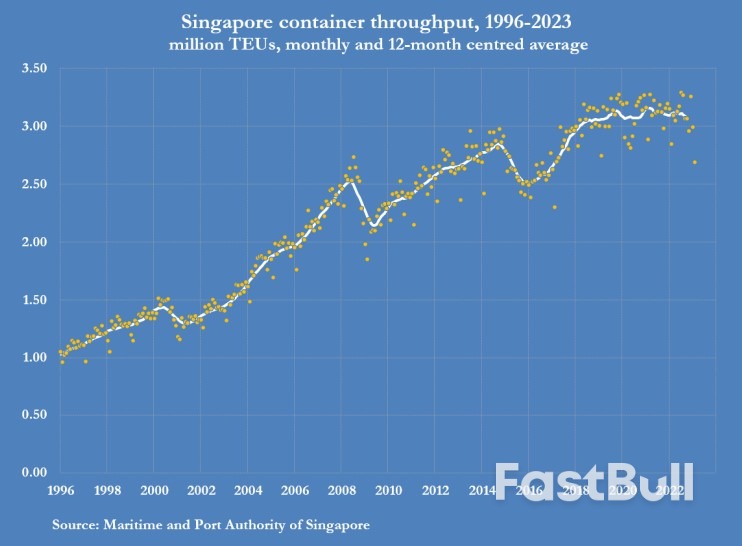
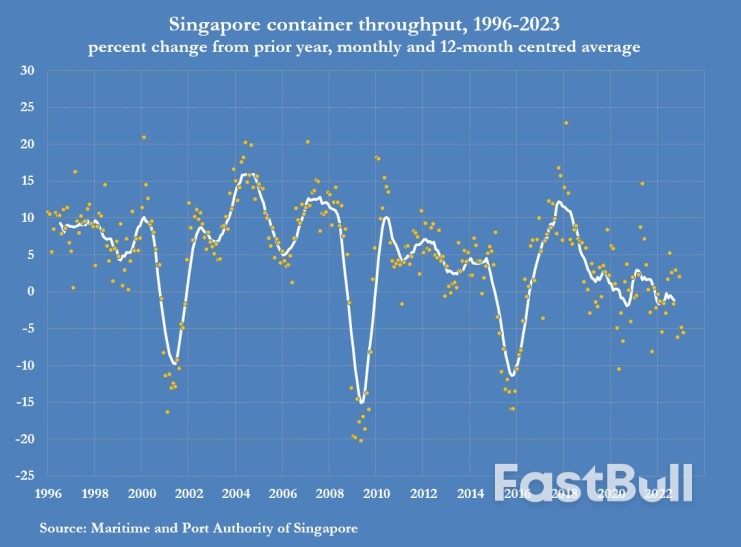
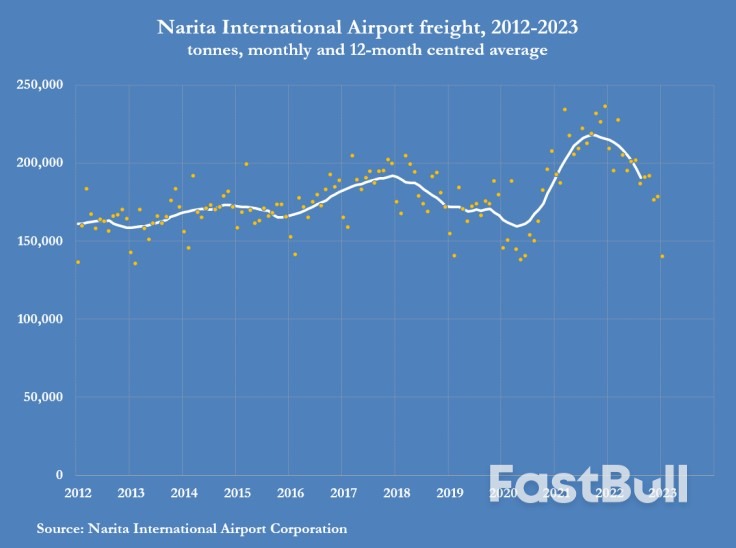
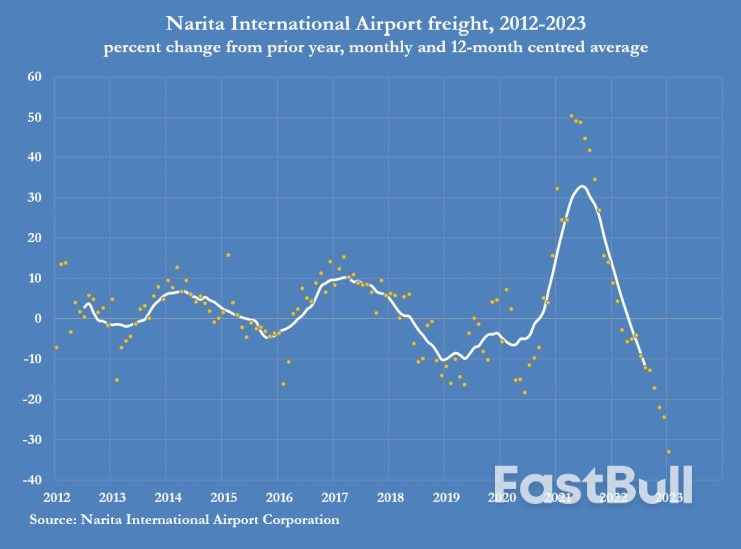
          Container flows fell further in January and February compared with the same months a year earlier, showing the inventory-liquidation cycle was not over yet:
          · Singapore's seaborne container shipments were down 6% in February compared with a year earlier, one of the steepest falls since the first wave of the pandemic.
          · Japan's air cargo through Narita airport, used for higher-value and more time-sensitive merchandise, was down 33% in January after a 24% year-on-year drop in December.
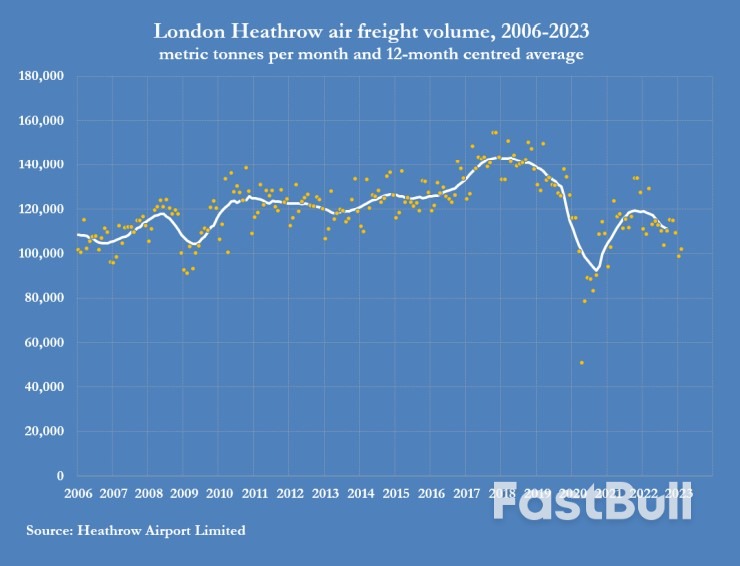
          · London's Heathrow handled 6% less air cargo in January than a year earlier after moving 11% less in December.
          In response, freight rates have slumped to the lowest level since the first wave of the pandemic, which peaked in April and May 2020, as volumes have shrivelled and excess capacity has emerged.
          In the spot market, the cost of moving a box from China to the West Coast of the United States by sea has tumbled to just over $1,000 per forty-foot equivalent unit (FEU) down from almost $16,000 a year ago.
          The spot rate from China to North Europe has fallen to less than $1,400 per FEU from almost $14,000 a year ago, based on the Freightos Baltic Exchange index.
          Most shipping containers are moved onwards inland by road or rail so there has also been a sharp drop in the number of units transferred.
          In the United States, the number of containers hauled on the major railroads in the first 10 weeks of 2023 was down by 9% compared with the same period in 2022.Global Freight Slump Deepens at The Start of 2023_1
          Global Freight Slump Deepens at The Start of 2023_2Global Freight Slump Deepens at The Start of 2023_3Global Freight Slump Deepens at The Start of 2023_4Global Freight Slump Deepens at The Start of 2023_5Global Freight Slump Deepens at The Start of 2023_6Global Freight Slump Deepens at The Start of 2023_7Some of the drop in freight has been driven by the rotation back to spending on hospitality, travel, leisure and other services and away from merchandise after the pandemic.
          The extent of that reversal has caught manufacturers and retailers by surprise and left them holding an enormous volume of excess raw materials, work-in-progress and unsold products.
          More recently, persistent inflation, rising interest rates and a darkening economic outlook have begun to weigh on sales of expensive, interest-sensitive items such as vehicles, computers and housing-related products.
          Since the start of the March, the eruption of a banking crisis in North America and Europe is likely to tighten credit conditions and deepen the pull back in the short term.
          Postponing purchases of durable goods is one of the easiest ways for businesses and households to reduce spending and conserve cash.
          As a result, it now seems probable that inventory liquidation and cautious buyer behaviour will continue to weigh on freight movements through at least the second quarter.
          Thereafter a freight recovery depends on the United States, Europe and the other major economies averting a full-blown recession.

          Source: MLP

          To stay updated on all economic events of today, please check out our Economic calendar
          Risk Warnings and Disclaimers
          You understand and acknowledge that there is a high degree of risk involved in trading. Following any strategies or investment methods may lead to potential losses. The content on the site is provided by our contributors and analysts for information purposes only. You are solely responsible for determining whether any trading assets, securities, strategy, or any other product is suitable for investing based on your own investment objectives and financial situation.
          Comments
          Add to Favorites
          Share

          How Trump Will Use Stormy Daniels Case to Fire up His Campaign for 2024 Election

          Thomas

          Political

          Donald Trump will try to turn any indictment to his advantage by stoking anger among core supporters over what they see as the weaponization of the justice system, though it may also push more Republicans tired of the drama around him to look for another presidential candidate.
          A Manhattan grand jury could bring charges as soon as this week against the former Republican president for alleged hush money payments made to porn star Stormy Daniels during his 2016 presidential campaign. Trump has denied having an affair with Daniels, whose legal name is Stephanie Clifford.
          While the prosecution of a former president is unprecedented in U.S. history and places Trump in legal peril, it will likely be viewed by his most loyal supporters as politically motivated and only harden their determination to back him in the 2024 Republican primary, party officials, strategists and political analysts told Reuters.
          "I think this will strengthen the resolve of his supporters," said Ford O'Connell, a Republican strategist who represented Trump in many media appearances during the 2020 presidential campaign.
          But to win the party's nomination, Trump will likely have to broaden his support beyond the 25%-30% of the Republican electorate generally thought to be in his corner no matter what, especially if the field of Republican candidates narrows in the coming months. An indictment could make it difficult for him to broaden his appeal.
          Larry Sabato, director of the Center for Politics at the University of Virginia, said some Republicans could be swayed by the charges to back Florida Governor Ron DeSantis or another potential candidate without Trump's legal baggage, which has grown considerably since he left the White House in 2021.
          "It’s not good for Trump, the question is how bad for Trump it is," said Sabato. "There could be multiple indictments ... it begins to add up to a major problem."
          Trump's campaign has accused the Manhattan District Attorney's office, as well as prosecutors pursuing separate cases against him in Georgia and at the federal level, of doing the bidding of Democrats out to stop his re-election campaign.
          People close to Trump said his campaign would seek to frame the indictment as proof that all prosecutions - including his two impeachments in Congress - are unjustified attempts by the "Deep State" to undermine him and his supporters.
          Trump will have more social media outlets to get his message across after YouTube became the latest platform to reinstate him on Friday. Trump was cut off from YouTube, Facebook and Twitter following the Jan. 6, 2021, attack by his supporters on the U.S. Capitol. He has now been reinstated on all three, giving him a powerful megaphone to rally his base, as he did effectively during his 2016 White House run.
          It is unclear how Trump's rivals for the Republican nomination will approach the indictment, although several have already made clear they view any attempt to charge Trump as politically motivated.
          Sam DeMarco, chair of the Republican Party in Pennsylvania's Allegheny County, said candidates will likely allude to the need for less drama without explicitly calling Trump out.
          DeSantis got a taste of that on Monday when he criticized what he said was the politicization of the Manhattan DA's office but also took a veiled swipe at his rival. Trump responded aggressively with an innuendo-filled post on his Truth Social platform.
          'Teflon don'
          DeMarco said Republicans would view the Manhattan indictment as political, given that federal prosecutors reviewed the Daniels case in 2018 and decided not to charge Trump, although it is Justice Department policy not to indict a sitting president.
          Republicans would take a similar view of any charges arising out of the ongoing investigation in Fulton County, Georgia, into Trump's effort to overturn his 2020 loss to Democrat Joe Biden there, said DeMarco, who plans to vote for DeSantis should he run.
          Trump has defied predictions of his demise numerous times since he launched his bid for the White House in 2015. Sometimes called "Teflon Don" for his record of skirting accountability, Trump once bragged that he could gun down someone in the middle of Manhattan and not face consequences.
          Trump defeated Democrat Hillary Clinton in 2016 despite the emergence of the infamous "Access Hollywood" tape in which he made vulgar comments about women. And in 2018, when he was president, he paid no apparent political price for the Stormy Daniels affair, even as his lawyer went to prison for arranging the payments and pointed the finger at Trump.
          Trump remains the front-runner in the 2024 Republican field, with the support of 44% of Republicans in a Reuters/Ipsos poll completed on Monday, ahead of DeSantis' 30% support.

          Source: STL Today

          Risk Warnings and Disclaimers
          You understand and acknowledge that there is a high degree of risk involved in trading. Following any strategies or investment methods may lead to potential losses. The content on the site is provided by our contributors and analysts for information purposes only. You are solely responsible for determining whether any trading assets, securities, strategy, or any other product is suitable for investing based on your own investment objectives and financial situation.
          Comments
          Add to Favorites
          Share
          FastBull
          Copyright © 2025 FastBull Ltd

          728 RM B 7/F GEE LOK IND BLDG NO 34 HUNG TO RD KWUN TONG KLN HONG KONG

          TelegramInstagramTwitterfacebooklinkedin
          App Store Google Play Google Play
          Products
          Charts

          Chats

          Q&A with Experts
          Screeners
          Economic Calendar
          Data
          Tools
          Membership
          Features
          Function
          Markets
          Copy Trading
          Latest Signals
          Contests
          News
          Analysis
          24/7
          Columns
          Education
          Company
          Careers
          About Us
          Contact Us
          Advertising
          Help Center
          Feedback
          User Agreement
          Privacy Policy
          Business

          White Label

          Data API

          Web Plug-ins

          Poster Maker

          Affiliate Program

          Risk Disclosure

          The risk of loss in trading financial instruments such as stocks, FX, commodities, futures, bonds, ETFs and crypto can be substantial. You may sustain a total loss of the funds that you deposit with your broker. Therefore, you should carefully consider whether such trading is suitable for you in light of your circumstances and financial resources.

          No decision to invest should be made without thoroughly conducting due diligence by yourself or consulting with your financial advisors. Our web content might not suit you since we don't know your financial conditions and investment needs. Our financial information might have latency or contain inaccuracy, so you should be fully responsible for any of your trading and investment decisions. The company will not be responsible for your capital loss.

          Without getting permission from the website, you are not allowed to copy the website's graphics, texts, or trademarks. Intellectual property rights in the content or data incorporated into this website belong to its providers and exchange merchants.

          Not Logged In

          Log in to access more features

          FastBull Membership

          Not yet

          Purchase

          Become a signal provider
          Help Center
          Customer Service
          Dark Mode
          Price Up/Down Colors

          Log In

          Sign Up

          Position
          Layout
          Fullscreen
          Default to Chart
          The chart page opens by default when you visit fastbull.com