Markets
News
Analysis
User
24/7
Economic Calendar
Education
Data
- Names
- Latest
- Prev



Signal Accounts for Members
All Signal Accounts
All Contests


Canada Existing Home Sales MoM (Dec)A:--
F: --
P: --
Euro Zone Industrial Output MoM (Nov)A:--
F: --
Euro Zone Trade Balance (SA) (Nov)A:--
F: --
Euro Zone Trade Balance (Not SA) (Nov)A:--
F: --
Euro Zone Industrial Output YoY (Nov)A:--
F: --
South Africa Refinitiv/Ipsos Primary Consumer Sentiment Index (PCSI) (Jan)A:--
F: --
P: --
U.K. Refinitiv/Ipsos Primary Consumer Sentiment Index (PCSI) (Jan)A:--
F: --
P: --
Brazil Retail Sales MoM (Nov)A:--
F: --
P: --
U.S. NY Fed Manufacturing Prices Received Index (Jan)A:--
F: --
P: --
U.S. NY Fed Manufacturing New Orders Index (Jan)A:--
F: --
P: --
U.S. NY Fed Manufacturing Employment Index (Jan)A:--
F: --
P: --
U.S. Export Price Index YoY (Nov)A:--
F: --
P: --
U.S. NY Fed Manufacturing Index (Jan)A:--
F: --
U.S. Initial Jobless Claims 4-Week Avg. (SA)A:--
F: --
U.S. Export Price Index MoM (Nov)A:--
F: --
P: --
Canada Manufacturing Unfilled Orders MoM (Nov)A:--
F: --
P: --
Canada Manufacturing New Orders MoM (Nov)A:--
F: --
P: --
U.S. Philadelphia Fed Manufacturing Employment Index (Jan)A:--
F: --
P: --
Canada Wholesale Inventory YoY (Nov)A:--
F: --
P: --
Canada Manufacturing Inventory MoM (Nov)A:--
F: --
P: --
Canada Wholesale Sales YoY (Nov)A:--
F: --
P: --
Canada Wholesale Inventory MoM (Nov)A:--
F: --
P: --
U.S. Import Price Index YoY (Nov)A:--
F: --
U.S. Import Price Index MoM (Nov)A:--
F: --
P: --
U.S. Weekly Continued Jobless Claims (SA)A:--
F: --
Canada Wholesale Sales MoM (SA) (Nov)A:--
F: --
P: --
U.S. Weekly Initial Jobless Claims (SA)A:--
F: --
U.S. Philadelphia Fed Business Activity Index (SA) (Jan)A:--
F: --
P: --
U.S. EIA Weekly Natural Gas Stocks ChangeA:--
F: --
P: --
Richmond Federal Reserve President Barkin delivered a speech.
U.S. Weekly Treasuries Held by Foreign Central BanksA:--
F: --
P: --
Germany CPI Final MoM (Dec)--
F: --
P: --
Germany CPI Final YoY (Dec)--
F: --
P: --
Germany HICP Final MoM (Dec)--
F: --
P: --
Germany HICP Final YoY (Dec)--
F: --
P: --
Brazil PPI MoM (Nov)--
F: --
P: --
Canada New Housing Starts (Dec)--
F: --
P: --
U.S. Capacity Utilization MoM (SA) (Dec)--
F: --
P: --
U.S. Industrial Output YoY (Dec)--
F: --
P: --
U.S. Manufacturing Capacity Utilization (Dec)--
F: --
P: --
U.S. Manufacturing Output MoM (SA) (Dec)--
F: --
P: --
U.S. Industrial Output MoM (SA) (Dec)--
F: --
P: --
U.S. NAHB Housing Market Index (Jan)--
F: --
P: --
Russia CPI YoY (Dec)--
F: --
P: --
U.S. Weekly Total Rig Count--
F: --
P: --
U.S. Weekly Total Oil Rig Count--
F: --
P: --
Japan Core Machinery Orders YoY (Nov)--
F: --
P: --
Japan Core Machinery Orders MoM (Nov)--
F: --
P: --
U.K. Rightmove House Price Index YoY (Jan)--
F: --
P: --
China, Mainland GDP YoY (YTD) (Q4)--
F: --
P: --
China, Mainland Industrial Output YoY (YTD) (Dec)--
F: --
P: --
Japan Industrial Output Final MoM (Nov)--
F: --
P: --
Japan Industrial Output Final YoY (Nov)--
F: --
P: --
Euro Zone Core HICP Final MoM (Dec)--
F: --
P: --
Euro Zone HICP Final MoM (Dec)--
F: --
P: --
Euro Zone HICP Final YoY (Dec)--
F: --
P: --
Euro Zone HICP MoM (Excl. Food & Energy) (Dec)--
F: --
P: --
Euro Zone Core CPI Final YoY (Dec)--
F: --
P: --
Euro Zone Core HICP Final YoY (Dec)--
F: --
P: --
Euro Zone CPI YoY (Excl. Tobacco) (Dec)--
F: --
P: --
Euro Zone Core CPI Final MoM (Dec)--
F: --
P: --


No matching data
Latest Views
Latest Views
Trending Topics
Top Columnists
Latest Update
White Label
Data API
Web Plug-ins
Affiliate Program
View All

No data
Chicago Fed warns undermining central bank independence risks inflation, as Chair Powell faces a DOJ probe.
Chicago Fed President Austan Goolsbee delivered a stark warning on Thursday, stating that any attempt to weaken the Federal Reserve's independence could unleash a new wave of inflation.
"Anything that's infringing or attacking the independence of the central bank is a mess," Goolsbee said. "You're going to get inflation come roaring back if you try to take away the independence of the central bank."
Goolsbee's comments come as Fed Chair Jerome Powell confirms he has been served a subpoena by the Justice Department. The investigation relates to a major renovation of the Federal Reserve's headquarters in Washington, D.C.
The Chicago Fed president supported Powell’s recent assertion that the investigation could be a pretext for Donald Trump to exert influence over interest rate policy.
Trump has consistently criticized Powell, using insults and publicly demanding lower rates. This pressure has continued even though the Fed has already cut its main interest rate three times since September 2025. Trump has nicknamed the Fed chair "Too Late," signaling his dissatisfaction with the pace of monetary easing.
While Powell's term as chair is set to end in May, he is eligible to remain a Fed governor until 2028.
Goolsbee, who joined the Chicago Fed in December 2022, directly addressed the unusual nature of a government investigation into its own central bank. He argued that such actions are not characteristic of stable, advanced economies.
"I know that there have been countries that had criminal investigations of their central banks," he noted. "But those countries are Zimbabwe and Russia and Turkey and a bunch of places that you would not characterize as advanced economies."
The underlying principle is that when a central bank loses its political independence, its credibility erodes. Historically, a loss of central bank credibility is often followed by a rise in inflation as the public loses faith in the institution's commitment to price stability.
Goolsbee, who previously served as an advisor to Barack Obama and Joe Biden, emphasized that his political past is irrelevant to his current role. "Once you've become a sworn member of the Federal Reserve, you're out of the elections business," he stated.
He also offered a strong endorsement of Powell's performance, calling him a "first-ballot Hall of Famer" for successfully bringing down inflation without triggering a recession. Goolsbee's comments frame the current conflict not just as a political dispute, but as a fundamental threat to the economic stability Powell has worked to achieve.
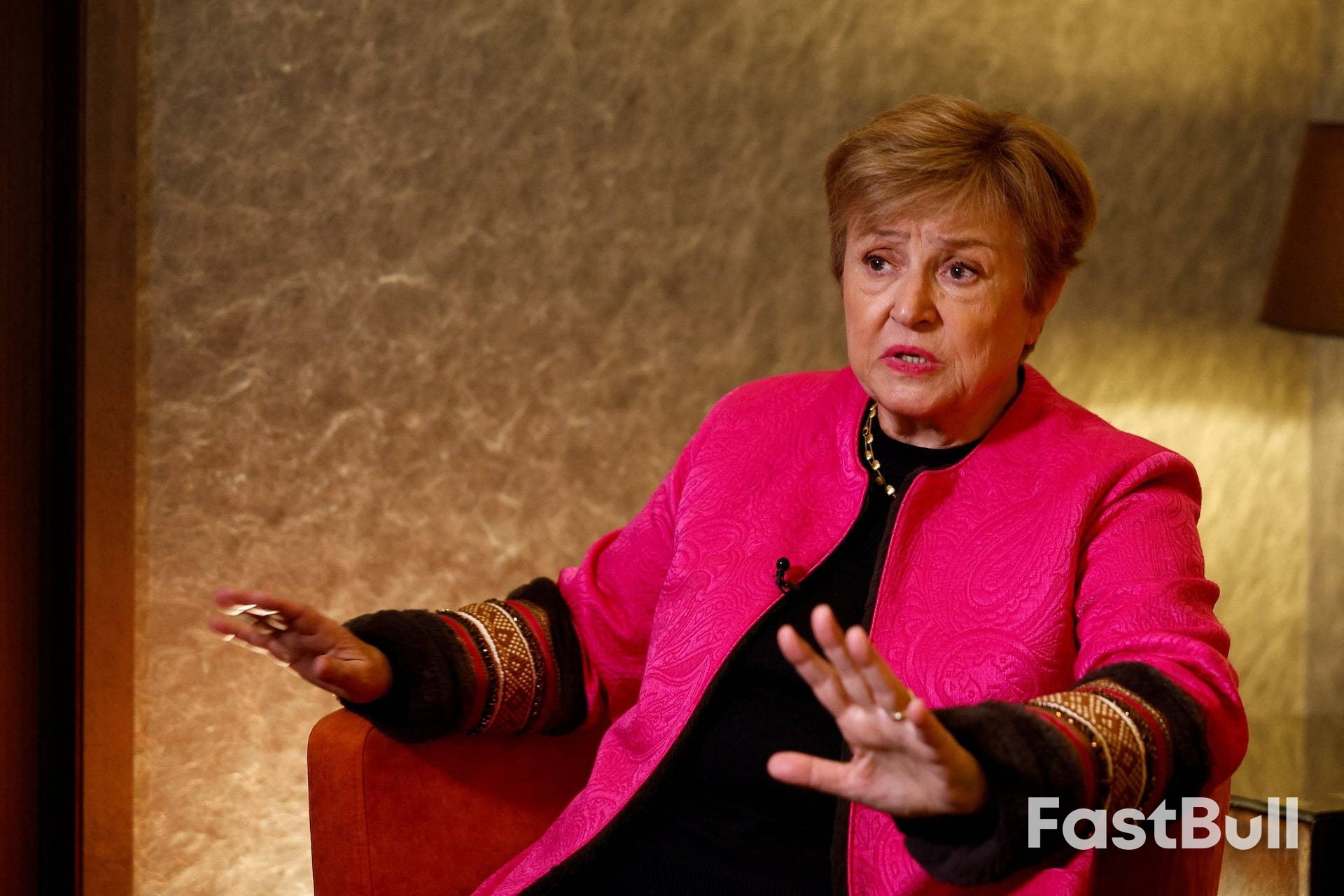
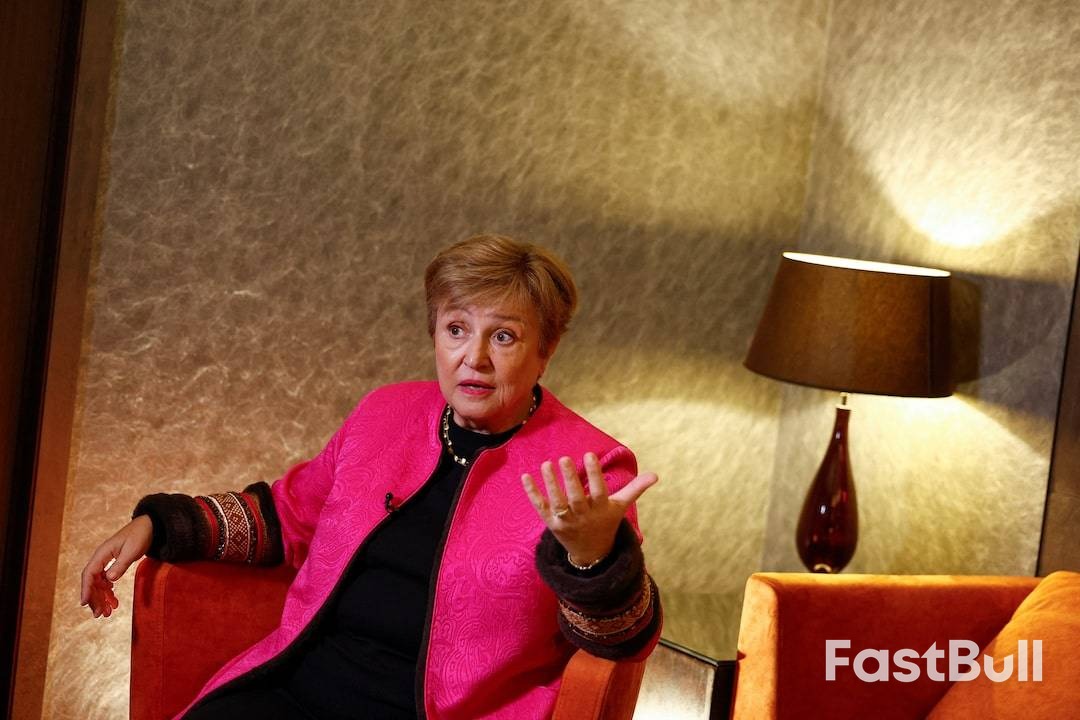
International Monetary Fund (IMF) chief Kristalina Georgieva has publicly defended the principle of central bank independence and offered her support for Federal Reserve Chair Jerome Powell, who is currently facing an investigation by the Trump administration.

In a Thursday interview with Reuters, Georgieva stressed that substantial evidence shows independent central banks serve the best interests of both businesses and households. She argued that evidence-based, data-driven decision-making is fundamentally good for the economy.
Voicing her personal respect for the Fed Chair, the IMF managing director stated, "I have worked with Jay Powell. He is a very good professional, a very decent man, and I think that his standing among his colleagues tells the story." Her comments align with a letter of support for Powell signed by her predecessor, European Central Bank head Christine Lagarde, and other major central bank leaders.
The show of support comes after Powell revealed on Sunday that the Trump administration has launched an investigation into him. The probe focuses on cost overruns related to a $2.5 billion project to renovate two historic buildings at the Fed's Washington headquarters.
Powell has denied any wrongdoing, describing the administration's actions as a pretext to pressure him for not yielding to President Trump's repeated demands for significantly lower interest rates.
This unprecedented move against a sitting Fed Chair has triggered widespread criticism from several key Republican senators, foreign economic officials, investors, and former U.S. government officials from both political parties.
President Trump has frequently criticized Powell's leadership at the Federal Reserve, often launching personal attacks over the pace of interest rate cuts.
On Wednesday, Trump dismissed concerns that eroding the central bank's independence could weaken the U.S. dollar and fuel inflation. When asked about these risks by Reuters, he replied, "I don't care."
The pressure extends beyond Powell. Trump has also sought to fire another Fed official, Governor Lisa Cook, who is challenging her termination in a legal case scheduled to be heard by the Supreme Court next week.
Georgieva noted that the IMF closely monitors issues like monetary and financial stability, as well as the institutional strength of member countries. The Federal Reserve receives special attention given the U.S. dollar's crucial role as a global reserve currency.
"It would be very good to see that there is a recognition ... that the Fed is precious for the Americans," she said. "It is very important for the rest of the world."
The International Monetary Fund (IMF) is preparing to seek board approval for a new $8.1 billion lending program for Ukraine within weeks, according to Managing Director Kristalina Georgieva. The announcement signals a major step in securing critical funding for the war-torn country's economy.
Speaking after high-level meetings in Kyiv with Ukrainian President Volodymyr Zelenskiy and other senior officials, Georgieva emphasized that while the fund is adapting to Ukraine's evolving situation, the core requirements of the program remain firm.

"I'm here to see how the country is doing in these unusually harsh times, because I want to make sure that what was agreed in November is implementable as it was agreed," she said. "We recognize that the direction to travel remains the same (but) the way we take these steps, we have to calibrate carefully."
A central condition for the new program is Ukraine's commitment to press forward with removing a value-added tax (VAT) exemption for consumer goods, a policy that has faced domestic resistance. Georgieva described the reform as a "must-have" requirement.
However, the IMF is showing some flexibility on the timeline. Before the new program can be approved, the fund will only require that the measure is introduced in parliament, not that it has already been passed into law.
"On the VAT exemptions, we made it very clear that this has to happen," Georgieva stated. "We cannot possibly have the Ukrainian economy lingering between market economy and non-market economy."
The IMF chief stressed to Ukrainian officials that the VAT reform is non-negotiable and essential for the country's long-term economic health and strategic goals.
"I was very clear. You know, this, you cannot touch it," Georgieva explained. "You need it for you. You need it for EU accession. You need it to attract the private sector to make the business environment more conducive."
The fund plans to assess which required measures can be implemented quickly and which need to be "calibrated" more carefully given the circumstances. In a sign of this calibrated approach, the IMF is discussing a one-year timeframe for Ukraine to build the necessary parliamentary support to pass the controversial tax law.
Trump administration officials have declared a clear policy goal: keeping the nation's coal-fired power plants fully operational to meet rising electricity demand and fuel an industrial revival.
"The goal is 100% open," stated Interior Secretary Doug Burgum. "That's the standard we're operating against."
This directive was announced during the first meeting of the National Coal Council, an advisory panel revived by President Donald Trump after being left inactive under Joe Biden. The move is a cornerstone of Trump's second-term energy strategy, which seeks to reverse the long-term decline of the coal industry.
While the administration projects a bullish future for coal, many analysts remain skeptical, pointing to the persistent economic advantages of natural gas and renewable energy. This policy push also comes as the administration confronts rising electricity prices, a critical issue for voters ahead of the November elections.
The administration is moving aggressively to support coal through a series of regulatory and executive actions. These efforts include:
• Rolling back regulations and subsidies that previously favored emissions-free renewable power.
• Issuing emergency orders through the Energy Department to force certain coal plants to continue operating.
• Blocking state-level closures, as seen when the Environmental Protection Agency rejected a proposal from Colorado to shut down a coal plant.
• Expanding access to resources by opening more federal land for coal leasing in North Dakota, Montana, and Wyoming.
Energy Secretary Chris Wright noted the immediate impact of these policies. "Seventeen gigawatts of coal generation are open today that would not have been open," he said, crediting the emergency orders. "You will not see those coal plants close during this administration."
Wright added that utilities are now proactively contacting the Energy Department to keep their plants online, even as some states advocate for their closure. Burgum, who leads the National Energy Dominance Council, went a step further, predicting the construction of new coal plants—a possibility most industry analysts have dismissed.
The renewed National Coal Council, which met to discuss strategies for maintaining and expanding the US coal fleet, is packed with industry heavyweights. The panel of roughly 60 members includes executives from top producers like Peabody Energy, Warrior Met Coal Inc., Hallador Energy Co., and Nacco Industries Inc. Other members include utility FirstEnergy Corp., railroad Norfolk Southern Corp., and Trump donor Joe Craft, CEO of Alliance Resource Partners. The group is chaired by Peabody Energy CEO Jim Grech and vice-chaired by Jimmy Brock, CEO of Core Natural Resources Inc.
Despite this unified industry front, coal faces steep market challenges. Once the source of over half the country's electricity, coal's share fell to approximately 17% in 2025 and is forecast to drop to 15% this year as utilities favor cheaper natural gas and renewables.
However, a recent surge in US electricity demand has given coal producers a temporary boost. Utilities have delayed some plant retirements, and federal orders have kept others running. This, combined with higher gas prices, led to a 13% increase in electric generation from coal last year. Government forecasts, however, predict the downward trend will resume in 2026.
Administration officials are framing the pro-coal policy as essential to broader national goals. During the council meeting, executives warned against over-reliance on natural gas and stressed the need to protect American mines and control electricity prices.
Wright connected a healthy coal sector to a thriving manufacturing base. Burgum linked it directly to the strategic competition with China over artificial intelligence, arguing that reliable power is critical to winning the AI race.
The effort to support coal has also extended to the financial sector. Wright warned that a court-ordered divestment of coal assets by the world's largest asset managers could severely undermine the industry.
This concern stems from a lawsuit led by Texas Attorney General Ken Paxton against BlackRock Inc., Vanguard Group Inc., and the asset management division of State Street Corp. The suit alleges that the firms violated antitrust laws by colluding through environmental, social, and governance (ESG) initiatives to suppress coal production.
Fossil fuel advocates have long criticized ESG principles for steering capital away from oil, gas, and coal. Former Trump Energy Secretary and Texas Governor Rick Perry estimated that a successful lawsuit could force the firms to sell off $18 billion in coal holdings. He warned such an outcome would pose "a direct threat to coal companies' ability to raise capital, finance infrastructure and support jobs."
Australia is launching a A$1.2 billion strategic reserve for critical minerals, a direct move to secure supply chains for itself and its key international partners. The government's plan will initially focus on three essential resources: antimony, gallium, and rare earths.
The details were unveiled as Treasurer Jim Chalmers promoted the initiative in Washington. At a meeting with finance ministers from the "G-7 plus" group, hosted by U.S. Treasury Secretary Scott Bessent, Chalmers framed the reserve as a way to "shore up access to critical minerals during periods of market disruption."
This move fleshes out a policy first proposed by the Labor party before the last federal election. The core challenge is clear: while Australia has untapped reserves of these minerals, China dominates their global processing, accounting for 48% of antimony, 98% of gallium, and 69% of rare earths.
The plan raises two key questions: Why have these specific minerals become so vital, and can Australia truly establish itself as the "most reliable" mineral partner for its allies?
Critical minerals are elements essential for modern technology that have no viable substitutes. Their applications are wide-ranging and fundamental to several high-tech industries, including:
• Green Energy: Solar panels and wind turbines.
• Electronics: Lithium-ion batteries, semiconductors, and computing.
• Defense: Advanced systems like radar, fighter jets, submarines, and drones.
• Medicine: High-tech equipment and medical imaging.
Australia faces a significant supply risk despite its abundant reserves. The country exports most of its raw critical minerals to China for processing before they are sold back as finished components in products like solar panels. This dependency makes the market vulnerable to disruptions from global events or trade disputes.
All three minerals targeted by the new reserve are considered "dual-use," meaning they have both civilian and military applications. Antimony is used in flame retardants and night vision goggles; gallium is vital for semiconductors and radar; and rare earths are necessary for the powerful permanent magnets used in fighter jets and lasers.
To build this reserve, Australia will leverage its export finance credit agency to facilitate "offtake agreements." This model allows buyers, including the Australian government itself, to agree to purchase minerals as security, sometimes even before a mine has started production. These secured minerals can then be sold to Australia's international partners.
This strategy is designed to make Western investment more competitive. Currently, Chinese investors are often more willing to provide the equity and long-term offtake agreements needed to get mining projects off the ground. China also holds significant cost and technical advantages over Western firms in the processing stage.
The timing of the announcement, just before the G-7 plus meeting, was a deliberate strategic move. The G-7—comprising the United States, Britain, Canada, France, Germany, Italy, and Japan—has already agreed to a five-point plan for critical minerals security. While not a member, Australia often aligns with the group's positions.
Many G-7 nations are also part of the Minerals Security Partnership, an initiative aimed at building sustainable and diverse critical mineral supply chains. By establishing the reserve, Australia is signaling its willingness to intervene in the market to support the strategic needs of its allies.
Above all, this is an effort to reassure the United States that Australia is a dependable partner. The U.S. is urgently seeking to secure its own mineral supplies, making Australia's "geoeconomic" decision—using economic tools to achieve geopolitical goals—a timely one. The aim is to diversify supply chains and reduce collective dependence on China.
Entering the critical minerals market is inherently risky. The sector requires massive public and private investment, often supported by financial tools like export credits.
The recent boom-and-bust cycle in the lithium market serves as a cautionary tale. High demand for electric vehicles (EVs) drove a surge in lithium mining, but when EV sales slowed, the market collapsed, forcing some Australian mines to scale back or halt production.
While Australia's new reserve may improve Western access to raw materials, a major hurdle remains: China's entrenched dominance in processing is built on years of accumulated knowledge, advanced skills, and superior technology.
White Label
Data API
Web Plug-ins
Poster Maker
Affiliate Program
The risk of loss in trading financial instruments such as stocks, FX, commodities, futures, bonds, ETFs and crypto can be substantial. You may sustain a total loss of the funds that you deposit with your broker. Therefore, you should carefully consider whether such trading is suitable for you in light of your circumstances and financial resources.
No decision to invest should be made without thoroughly conducting due diligence by yourself or consulting with your financial advisors. Our web content might not suit you since we don't know your financial conditions and investment needs. Our financial information might have latency or contain inaccuracy, so you should be fully responsible for any of your trading and investment decisions. The company will not be responsible for your capital loss.
Without getting permission from the website, you are not allowed to copy the website's graphics, texts, or trademarks. Intellectual property rights in the content or data incorporated into this website belong to its providers and exchange merchants.
Not Logged In
Log in to access more features

FastBull Membership
Not yet
Purchase
Log In
Sign Up