Markets
News
Analysis
User
24/7
Economic Calendar
Education
Data
- Names
- Latest
- Prev



Signal Accounts for Members
All Signal Accounts
All Contests


U.K. Core CPI MoM (Dec)A:--
F: --
P: --
Indonesia 7-Day Reverse Repo RateA:--
F: --
P: --
Indonesia Loan Growth YoY (Dec)A:--
F: --
P: --
Indonesia Deposit Facility Rate (Jan)A:--
F: --
P: --
Indonesia Lending Facility Rate (Jan)A:--
F: --
P: --
South Africa Core CPI YoY (Dec)A:--
F: --
P: --
South Africa CPI YoY (Dec)A:--
F: --
P: --
IEA Oil Market Report
U.K. CBI Industrial Output Expectations (Jan)A:--
F: --
U.K. CBI Industrial Prices Expectations (Jan)A:--
F: --
P: --
South Africa Retail Sales YoY (Nov)A:--
F: --
P: --
U.K. CBI Industrial Trends - Orders (Jan)A:--
F: --
P: --
Mexico Retail Sales MoM (Nov)A:--
F: --
P: --
U.S. MBA Mortgage Application Activity Index WoWA:--
F: --
P: --
Canada Industrial Product Price Index YoY (Dec)A:--
F: --
Canada Industrial Product Price Index MoM (Dec)A:--
F: --
U.S. Weekly Redbook Index YoYA:--
F: --
P: --
U.S. Pending Home Sales Index YoY (Dec)A:--
F: --
P: --
U.S. Pending Home Sales Index MoM (SA) (Dec)A:--
F: --
P: --
U.S. Construction Spending MoM (Oct)A:--
F: --
U.S. Pending Home Sales Index (Dec)A:--
F: --
P: --
U.S. API Weekly Refined Oil StocksA:--
F: --
P: --
U.S. API Weekly Gasoline StocksA:--
F: --
P: --
U.S. API Weekly Cushing Crude Oil Stocks--
F: --
P: --
U.S. API Weekly Crude Oil StocksA:--
F: --
P: --
South Korea GDP Prelim YoY (SA) (Q4)A:--
F: --
P: --
South Korea GDP Prelim QoQ (SA) (Q4)A:--
F: --
P: --
Japan Imports YoY (Dec)A:--
F: --
P: --
Japan Exports YoY (Dec)A:--
F: --
P: --
Japan Goods Trade Balance (SA) (Dec)A:--
F: --
P: --
Japan Trade Balance (Not SA) (Dec)A:--
F: --
Australia Employment (Dec)--
F: --
P: --
Australia Labor Force Participation Rate (SA) (Dec)--
F: --
P: --
Australia Unemployment Rate (SA) (Dec)--
F: --
P: --
Australia Full-time Employment (SA) (Dec)--
F: --
P: --
Turkey Consumer Confidence Index (Jan)--
F: --
P: --
Turkey Capacity Utilization (Jan)--
F: --
P: --
Turkey Late Liquidity Window Rate (LON) (Jan)--
F: --
P: --
Turkey Overnight Lending Rate (O/N) (Jan)--
F: --
P: --
Turkey 1-Week Repo Rate--
F: --
P: --
U.K. CBI Distributive Trades (Jan)--
F: --
P: --
U.K. CBI Retail Sales Expectations Index (Jan)--
F: --
P: --
U.S. Weekly Continued Jobless Claims (SA)--
F: --
P: --
U.S. Initial Jobless Claims 4-Week Avg. (SA)--
F: --
P: --
U.S. Real Personal Consumption Expenditures Final QoQ (Q3)--
F: --
P: --
Canada New Housing Price Index MoM (Dec)--
F: --
P: --
U.S. Weekly Initial Jobless Claims (SA)--
F: --
P: --
U.S. Real GDP Annualized QoQ Final (Q3)--
F: --
P: --
U.S. PCE Price Index Final QoQ (AR) (Q3)--
F: --
P: --
U.S. PCE Price Index MoM (Nov)--
F: --
P: --
U.S. PCE Price Index YoY (SA) (Nov)--
F: --
P: --
U.S. Real Personal Consumption Expenditures MoM (Nov)--
F: --
P: --
U.S. Personal Income MoM (Nov)--
F: --
P: --
U.S. Core PCE Price Index MoM (Nov)--
F: --
P: --
U.S. Personal Outlays MoM (SA) (Nov)--
F: --
P: --
U.S. Dallas Fed PCE Price Index YoY (Nov)--
F: --
P: --
U.S. Core PCE Price Index YoY (Nov)--
F: --
P: --
U.S. EIA Weekly Natural Gas Stocks Change--
F: --
P: --


No matching data
Latest Views
Latest Views
Trending Topics
Top Columnists
Latest Update
White Label
Data API
Web Plug-ins
Affiliate Program
View All

No data
The Fed's liquidity surge, dubbed 'QE – Not QE,' sparks altcoin speculation despite a rate cut pause.
The Federal Reserve has initiated a major liquidity injection into the financial system, beginning with an $8.16 billion infusion today. This move is part of a larger plan to add between $40 billion and $80 billion to the market every month.
This strategy is drawing comparisons to a previous period when a doubling of the Fed's balance sheet triggered a massive rally in small and mid-cap alternative assets. During that time, some altcoins delivered extraordinary returns, soaring by as much as 1000x. While the full effects of this new stimulus, dubbed "QE – Not QE," are still unfolding, it has fueled optimism for significant wealth creation.
While injecting billions into the market, the Federal Reserve is also navigating its future interest rate policy. The debate over rate cuts continues, with U.S. Treasury Secretary Scott Bessent recently suggesting that the Fed should keep cutting rates.
Last year, the central bank implemented a series of 75-basis point rate cuts to support the economy. However, in December, Fed Chair Jerome Powell signaled a potential pause to this easing cycle.
Currently, money markets are pricing in two separate 25-basis point rate cuts for 2026. If these cuts materialize, the federal funds rate would settle in a range between 3% and 3.25%.
The Fed's next policy meeting is scheduled for January 27-28, but an immediate rate cut appears unlikely. Several Fed officials have recently stated that interest rates are approaching a "neutral" level, reinforcing the expectation that the central bank will hold steady for now.
This suggests a strategic pause in the rate-cutting cycle while the market absorbs the new wave of liquidity.
As the Fed pours capital into the market, investors are closely watching smaller-cap altcoins. Historical trends show a strong correlation between Fed liquidity injections and exponential growth in these digital assets.
If history repeats itself, this fresh capital could provide the necessary fuel for another explosive altcoin season. With investors searching for higher returns in a low-interest rate environment, the conditions may be aligning for some assets to see significant growth, potentially even achieving the 1000x returns seen in past cycles. The Fed's monetary policy will undoubtedly remain a critical driver for financial markets in the months ahead.
Taiwan is on track to report a record-breaking annual trade surplus with the United States, a development that is adding new friction to long-running tariff negotiations between the two partners.
The Finance Ministry is set to release the official trade numbers for 2025 this Friday. Projections indicate the surplus with the US will likely be at least double the $64.7 billion figure from the previous year, driven by immense demand for Taiwan's advanced chips and servers as American companies race to build out their AI infrastructure.
This ballooning trade surplus could make discussions with Washington trickier for Taipei's officials, and signs of turbulence are already emerging.
Taiwan's President Lai Ching-te has expressed support for the Trump administration's goal of reindustrializing the US but noted that American policies on land, electricity, and talent need to improve for projects to succeed. Taipei has also pushed back against a US request to relocate enough chip production to cover half of America's total demand.
For months, officials in Taipei have signaled that talks with the US—its most important military backer amid increasing pressure from China—were nearing a conclusion. However, a final agreement has proven elusive.
Taipei had considered the original 20% tariffs imposed by President Donald Trump to be a temporary measure. Since then, it has watched economic competitors like Japan and South Korea successfully secure lower rates, putting Taiwanese exporters at a disadvantage.
Despite the tariffs, Taiwan's exports surged to record levels in 2025. A significant portion of these shipments, including over 60% of its specialty advanced chips, remains exempt from US duties while the Trump administration conducts a probe into imports of key goods.
The trade data release coincides with a critical legal moment in the US. The Supreme Court is expected to decide on the fate of most of Trump's tariffs as soon as Friday, concluding a legal battle involving more than 1,000 corporate entities and setting the stage for an unprecedented struggle over the future of US trade policy.
New trade data reveals a significant shift in Canada's export strategy, with the country's reliance on the United States falling to its lowest level since May 2020.
According to figures released by Statistics Canada on Thursday, exports to the US accounted for approximately 67% of Canada's total goods exports in October. This marks a notable decrease from nearly 73% during the same month in 2024.
The data suggests a pivot from a peak reliance seen in February when the US share of Canadian exports hit 79%. That spike was likely driven by traders rushing shipments to preempt tariffs threatened by US President Donald Trump. The trade policies enacted during his administration prompted Canadian leaders to re-evaluate their trade dependency on the US and actively pursue stronger relationships with other global partners.
This strategic shift is aligned with Prime Minister Mark Carney's stated goal of doubling Canada's non-US exports within the next decade.
The decline is not just in percentages but also in absolute value. In October, Canadian exports to the US totaled C$44 billion ($36 billion), down from C$47 billion a year earlier.
Over the same period, Canada's imports from the US also decreased, falling from just under C$41 billion to C$39 billion. The net result was a shrinking trade surplus for Canada, which narrowed from C$6.7 billion to C$4.8 billion.
The move away from the US market is fueled by strong growth in exports to other key regions, driven by commodities like oil and gold. Statistics Canada noted that higher oil exports to China and lower volumes to the US contributed to the change. Simultaneously, Canada increased its gold exports, with the United Kingdom emerging as a key destination.
Trade figures with other partners underscore this diversification:
• United Kingdom: Exports surged by an impressive 91%, reaching C$5.9 billion.
• European Union: Shipments grew by approximately 18% to C$4.2 billion.
• China: Exports also rose by about 18%, totaling C$3.3 billion.
The trend holds when looking at the broader picture for the year. In the first 10 months of 2025, Canada exported C$467 billion worth of goods to the United States. This figure is 4% lower than the amount recorded during the same period in 2024, confirming a sustained redirection of Canadian trade flows.
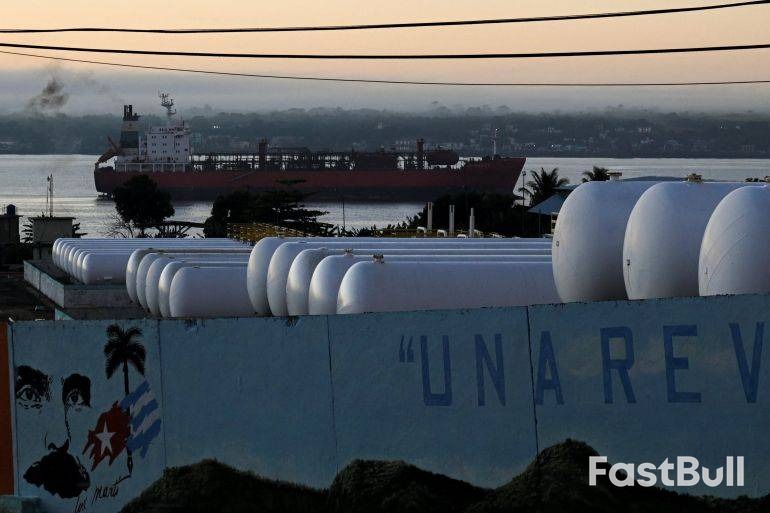
The United States government has announced its intention to control Venezuelan oil sales indefinitely, a move that could reshape global energy dynamics. The declaration follows the abduction of Venezuelan leader Nicolas Maduro by US forces on Saturday.

"We need to have that leverage and that control of those oil sales to drive the changes that simply must happen in Venezuela," Energy Secretary Chris Wright stated on Wednesday.
In the wake of Maduro's abduction, the Trump administration revealed a deal where Venezuela would transfer 30 million to 50 million barrels of sanctioned oil for the US to sell. This development is paired with demands for Venezuelan officials to grant access to US oil companies under the threat of further military action.
Executives from major energy firms, including ExxonMobil, ConocoPhillips, and Chevron, are scheduled to meet with the president on Friday to discuss potential investments in the South American nation.
Analysts believe the US has the domestic authority to seize and redirect Venezuelan oil shipments.
"The US federal government can absolutely intervene, make demands, capture what it wants, and redirect those barrels accordingly," said Jeff Krimmel, founder of energy consulting firm Krimmel Strategy Group. Speaking to Al Jazeera, he added, "I don't know of anything that would meaningfully interfere with the federal government if that's what it decided to do."
However, the geopolitical landscape presents significant hurdles. The global power structure has shifted dramatically since the US-led invasion of Iraq in 2003.
"When we went into Iraq, we were living in a unipolar moment as the world's only great power. That era is over," explained Anthony Orlando, a professor of finance and law at California State Polytechnic University, Pomona. "China is now a great power, and most experts consider it a peer competitor. That means it has ways to hurt the US economy and to push back militarily... if it chooses to oppose such actions."
China is the single largest buyer of Venezuelan crude, though it constitutes only about 4% of China's total oil imports. The key question, according to Orlando, is whether Beijing will challenge Washington's actions.
"It's a question of whether they want to draw a line in the sand with the United States," Orlando said. He warned that such US intervention could incentivize smaller nations to align more closely with China or Russia for protection, an outcome not favorable to American interests.
Comparisons have been drawn between the current situation in Venezuela and the 2003 invasion of Iraq, another nation with vast oil reserves. At the time, Iraq held the world's second-largest reserves at 112 billion barrels.
Post-invasion, Iraqi oil production surged from 1.5 million barrels per day (bpd) to 4.5 million bpd by 2018. While the Iraqi government technically retained ownership, US companies like ExxonMobil and BP often received no-bid contracts to operate there.
A crucial difference, however, lies in the explicit nature of the Trump administration's goals. In a conversation with MS Now anchor Joe Scarborough, President Trump stated, "The difference between Iraq and this is that [Bush] didn't keep the oil. We're going to keep the oil."
This stands in stark contrast to the rhetoric of the George W. Bush administration. In 2002, then-Secretary of Defense Donald Rumsfeld claimed the Iraq operation had "literally nothing to do with oil."
"When the Bush administration went into Iraq, they claimed it wasn't about that, even though there was substantial evidence it was a factor," Orlando noted. "This time it's more explicit... [But] one lesson from the Iraq war is that it's easier said than done."
Despite the administration's push, analysts are skeptical that large-scale investment in Venezuela would actually benefit major oil companies. Key challenges include:
• Massive Capital Requirements: Revitalizing Venezuela's dilapidated infrastructure would demand immense investment. Krimmel noted companies would have to "take on more debt or issue more equity" or divert capital from other projects, both likely to face "substantial shareholder pushback."
• Difficult Extraction: Venezuelan oil is dense and heavy, making it more difficult and expensive to extract compared to lighter grades from Iraq or the US. It is often blended with lighter US crude and is comparable in density to Canadian oil, which comes from a stable ally with modern infrastructure.
• Market Surplus: "There is an oil supply surplus," Krimmel stated. "Even if we were in a supply deficit right now, military action in Venezuela wouldn't unlock incremental barrels quickly."
Chevron remains the only US company with active operations in Venezuela. Reuters reported on Thursday that the company is seeking expanded authorization from Washington to continue its work there after restrictions were imposed last year.
While Venezuela possesses the world's largest oil reserves, its influence on the global market has waned. The OPEC member now accounts for just 1% of global oil output.
Production has collapsed since the oil sector was nationalized under Hugo Chavez in 2007. After peaking at 3.5 million bpd in the 1990s, output fell to an average of 1.1 million bpd last year due to chronic underinvestment and mismanagement.
"Venezuela's infrastructure has deteriorated under both the Chavez and Maduro regimes," said Orlando. "Returning to production levels from 10 or 20 years ago would require significant investment."
The US itself is now the world's largest oil producer, thanks to fracking technology. As the administration doubles down on expanding the oil and gas sector, the move on Venezuela signals a direct and assertive new chapter in American energy policy.
The United States is intensifying its campaign to acquire Greenland, with Vice President JD Vance accusing Denmark and other European allies of failing to secure the strategically vital island from Russian and Chinese influence. The move signals a direct challenge to a fellow NATO member and has triggered a flurry of diplomatic activity.
"I guess my advice to European leaders and anybody else would be to take the president of the United States seriously," Vance told reporters at the White House on Thursday.

The renewed American effort, which President Donald Trump has suggested could involve military force, follows the US military's capture of Venezuelan leader Nicolas Maduro last weekend. Vance specifically called on Europe to address Trump's concerns about the island's role in "missile defense."
"So what we're asking our European friends to do is to take the security of that land mass more seriously," Vance stated. "Because if they're not, the United States is going to have to do something about it."
While the US already operates the Pituffik Space Base in Greenland under a 1951 treaty with Denmark, President Trump is now pushing for full sovereignty over the territory. In an interview with The New York Times published Thursday, Trump argued that existing military agreements are insufficient.
"I think that ownership gives you a thing that you can't do with, you're talking about a lease or a treaty," Trump said. "Ownership gives you things and elements that you can't get from just signing a document."
In response to the escalating pressure, top Danish and Greenlandic diplomats met with officials from the White House National Security Council on Thursday. According to the Associated Press, Denmark's ambassador, Jesper Moller Sorensen, and Greenland's chief representative in Washington, Jacob Isbosethsen, have been engaging with American lawmakers all week to persuade the administration to abandon its threats.
US Secretary of State Marco Rubio is slated to meet with Danish officials next week to continue the discussions.
Danish Defense Minister Troels Lund Poulsen told broadcaster DR that the talks represent an opportunity for "the dialogue that is needed" to address the situation.
The American stance has prompted a firm response from European allies. UK Prime Minister Keir Starmer spoke with Danish Prime Minister Mette Frederiksen on Thursday afternoon, where he "reiterated his position on Greenland," according to a Downing Street statement.
Earlier this week, the UK and its European partners issued a joint declaration pledging to "not stop defending" Greenland's territorial integrity. The statement was widely interpreted as a direct message to the United States to de-escalate its demands.
Cambodia is pushing for de-escalation in its border dispute with Thailand, urging Bangkok to preserve a fragile ceasefire and rejecting its justification for recent military strikes. Deputy Prime Minister Sun Chanthol directly challenged Thailand's claim that its actions were a necessary response to cross-border scam operations.
The call for calm follows a recent round of border clashes that killed dozens of soldiers and civilians and displaced more than half a million people before a ceasefire was brokered last month.
Before the ceasefire, Thailand’s military framed the conflict as a fight against criminal scam centers, using it as a rationale for bombing runs across the border.
"You cannot use the one issue of the scam centers to invade another country," Sun Chanthol said in an interview in Phnom Penh. "Do not add fuel to the fire."
Sun Chanthol emphasized the heavy human toll of the conflict and his desire for displaced people to return home. He stated that peace is essential for both nations to focus on economic development for their citizens. Despite the fighting, he noted that Cambodia's trade still grew, with export volumes rising approximately 17% last year.
The issue of industrial-scale scam compounds has drawn international attention. Both the United States and China have pressed Southeast Asian nations, including Cambodia, Myanmar, and Laos, to dismantle these operations, which are believed to defraud victims worldwide of billions of dollars.
This week, the matter was highlighted when Cambodian authorities arrested Chen Zhi, the alleged kingpin of a global scam syndicate wanted in the US. He was deported to China to face investigation.
"When we had all the evidence, we took action, according to the law of the land," Sun Chanthol said, without commenting on why Chen Zhi was sent to China instead of the United States.
Addressing Cambodia's foreign policy, the deputy prime minister stressed a neutral stance amid growing US-China competition.
"Cambodia cannot afford to choose sides. We must be friends with every country in the world," he explained. "I am not saying that we have to walk a fine line within the US and China. We walk the Cambodia line that benefits Cambodia."
The border conflict also has significant economic implications. Days after the fighting erupted in July, then-President Donald Trump threatened to freeze trade deals with both Thailand and Cambodia if they did not cease hostilities.
Following an initial ceasefire, the U.S. imposed a 19% tariff on Cambodian goods as part of broader levies on multiple nations.
Sun Chanthol, who leads trade negotiations with Washington, confirmed that discussions are ongoing to lower these duties. "We are continuing to discuss with USTR regarding certain sectors that we believe should receive a lower reciprocal tariff," he said, referencing the US Trade Representative.
He added that Cambodia is actively working to diversify its trade, which is currently concentrated on the US and China. The government, he said, is focused on facilitating private sector growth and "getting out of the way."

The House of Representatives passed a bipartisan package of three spending bills on Thursday, a critical step toward funding parts of the federal government through September and avoiding another shutdown at the end of the month.
With a Jan. 30 deadline looming, Congress has so far passed only three of the 12 annual spending bills required to fund federal agencies for the current fiscal year. The new measure passed with an overwhelming 397-28 vote, signaling strong bipartisan support that is expected to carry over to the Senate.
This move comes just weeks after a record-setting 43-day government shutdown late last year, highlighting the urgency among lawmakers to complete their work. The White House has also endorsed the package, calling it a "fiscally responsible bill."
The legislation covers funding for several key agencies, including the Department of the Interior, the Environmental Protection Agency (EPA), the Departments of Commerce and Justice, and the U.S. Army Corps of Engineers.
The bipartisan compromise allowed both Republicans and Democrats to declare victories on their respective priorities.
Republican Focus on Fiscal Savings
Republican lawmakers noted that the package's price tag, estimated at roughly $175 billion, is below current spending levels, which they framed as a win for taxpayers.
"Republicans are strongest when we stay focused, Democrats are more effective when they negotiate in good faith, and the country is better off when Republicans and Democrats work together," said Rep. Tom Cole, the Republican chairman of the House Appropriations Committee.
Democrats Secure Funding and Block Policy Riders
Democrats countered by highlighting their success in negotiating spending levels far higher than those requested by the Trump administration. They also successfully removed numerous policy riders that aimed to weaken gun safety regulations, expand oil and gas leasing, and target LGBTQ and racial equity policies.
A key provision for Democrats includes legally binding requirements that limit the White House's ability to withhold or delay funds for programs opposed by President Trump. This follows numerous lawsuits filed against the administration during Trump's first year in office by states, cities, and nonprofits alleging unlawful power grabs.
"This legislation is a forceful rejection of draconian cuts to public services proposed by the Trump administration and Republicans in Congress," said Rep. Rosa DeLauro, the ranking Democrat on the House Appropriations Committee.
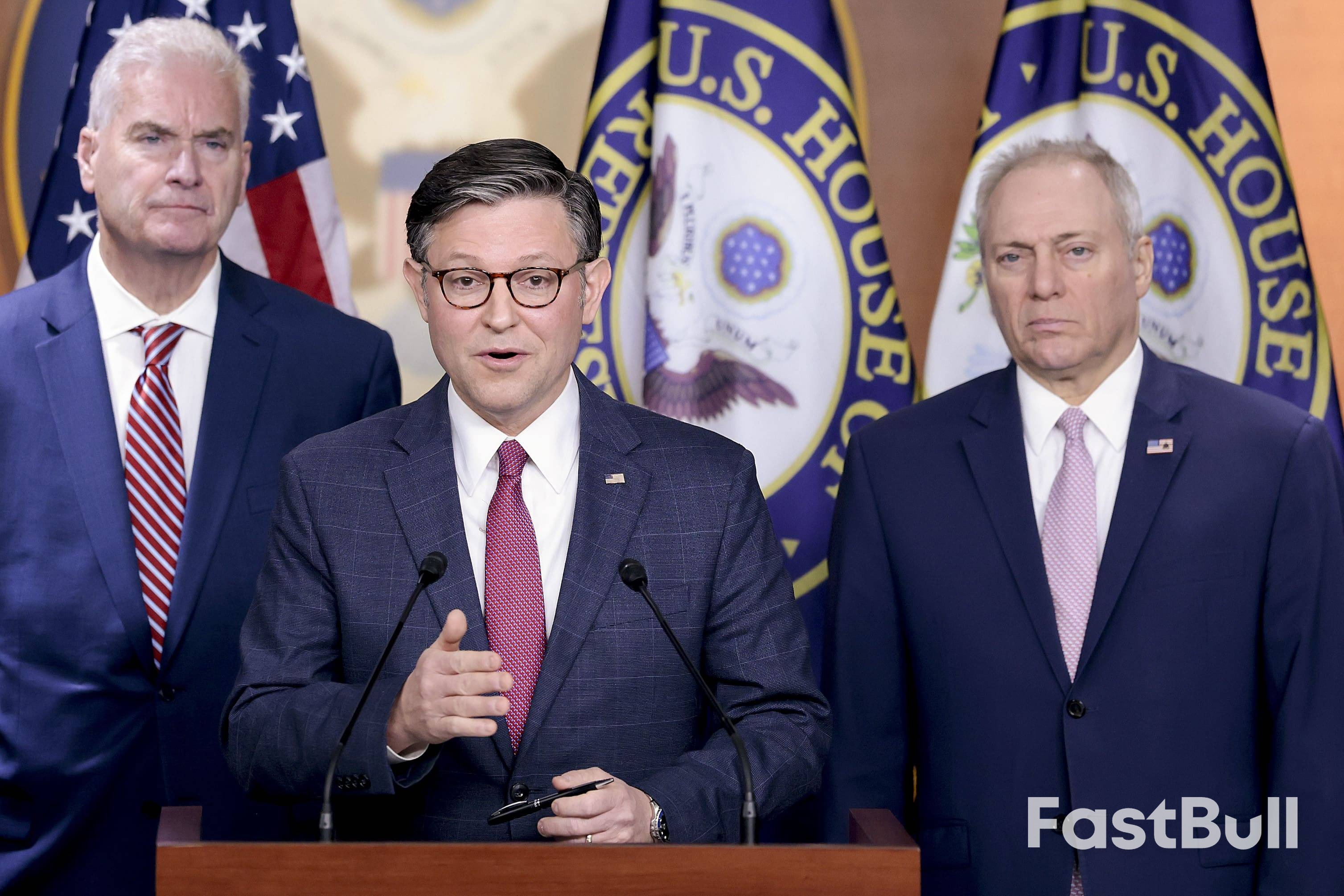
The fiscal year began on October 1, yet Congress is still debating full-year funding for most of the government. House Speaker Mike Johnson has expressed a desire to pass the 12 spending bills individually, a departure from the recent practice of bundling them into one or two large measures before the holiday recess. However, implementing this "regular order" has proven challenging.
Democrats pointed to specific funding wins despite administration opposition. For example:
• A program to improve energy efficiency in low-income homes received a $3 million increase, avoiding an elimination proposed by Trump.
• The EPA, a frequent target of the administration, was allocated $8.8 billion—more than double what Trump had requested.
The bill was not without controversy. Republicans raised concerns about certain earmarks, leading to the removal of a nearly $1.5 million community funding project secured by Rep. Ilhan Omar, D-Minn. The funds were intended for a Somali-led organization providing job training and addiction support. The removal followed Republican focus on fraud allegations related to day care centers run by Somali residents, an ongoing investigation. Omar has cautioned against blaming an entire community for the actions of a few.
White Label
Data API
Web Plug-ins
Poster Maker
Affiliate Program
The risk of loss in trading financial instruments such as stocks, FX, commodities, futures, bonds, ETFs and crypto can be substantial. You may sustain a total loss of the funds that you deposit with your broker. Therefore, you should carefully consider whether such trading is suitable for you in light of your circumstances and financial resources.
No decision to invest should be made without thoroughly conducting due diligence by yourself or consulting with your financial advisors. Our web content might not suit you since we don't know your financial conditions and investment needs. Our financial information might have latency or contain inaccuracy, so you should be fully responsible for any of your trading and investment decisions. The company will not be responsible for your capital loss.
Without getting permission from the website, you are not allowed to copy the website's graphics, texts, or trademarks. Intellectual property rights in the content or data incorporated into this website belong to its providers and exchange merchants.
Not Logged In
Log in to access more features

FastBull Membership
Not yet
Purchase
Log In
Sign Up