• Trade
  • Markets
  • Copy
  • Contests
  • News
  • 24/7
  • Calendar
  • Q&A
  • Chats
Trending
Screeners
SYMBOL
LAST
BID
ASK
HIGH
LOW
NET CHG.
%CHG.
SPREAD
SPX
S&P 500 Index
6827.42
6827.42
6827.42
6899.86
6801.80
-73.58
-1.07%
--
DJI
Dow Jones Industrial Average
48458.04
48458.04
48458.04
48886.86
48334.10
-245.98
-0.51%
--
IXIC
NASDAQ Composite Index
23195.16
23195.16
23195.16
23554.89
23094.51
-398.69
-1.69%
--
USDX
US Dollar Index
97.890
97.970
97.890
98.070
97.880
-0.060
-0.06%
--
EURUSD
Euro / US Dollar
1.17468
1.17475
1.17468
1.17486
1.17262
+0.00074
+ 0.06%
--
GBPUSD
Pound Sterling / US Dollar
1.33855
1.33862
1.33855
1.33894
1.33546
+0.00148
+ 0.11%
--
XAUUSD
Gold / US Dollar
4340.55
4340.96
4340.55
4350.16
4294.68
+41.16
+ 0.96%
--
WTI
Light Sweet Crude Oil
57.036
57.066
57.036
57.601
57.030
-0.197
-0.34%
--

Community Accounts

Signal Accounts
--
Profit Accounts
--
Loss Accounts
--
View More

Become a signal provider

Sell trading signals to earn additional income

View More

Guide to Copy Trading

Get started with ease and confidence

View More

Signal Accounts for Members

All Signal Accounts

Best Return
  • Best Return
  • Best P/L
  • Best MDD
Past 1W
  • Past 1W
  • Past 1M
  • Past 1Y

All Contests

  • All
  • Trump Updates
  • Recommend
  • Stocks
  • Cryptocurrencies
  • Central Banks
  • Featured News
Top News Only
Share

EU Commission Spokersperson: EU Commission President Set To Travel To Berlin Monday Evening

Share

Brazil Economists See Brazilian Real At 5.40 Per Dollar By Year-End 2025 Versus 5.40 In Previous Estimate - Central Bank Poll

Share

Brazil Economists See Year-End 2026 Interest Rate Selic At 12.13% Versus 12.25% In Previous Estimate - Central Bank Poll

Share

Indonesia Minister: Final Agreement With USA On Tariffs Will Be Signed By Both Leaders And It Likely Would Not Happened This Year

Share

EU Commission Spokesperson: EU Commission Still Expects To Sign EU MERCOSUR Agreement By The End Of The Year

Share

New Czech Finance Minister Schillerova: Aiming For 2026 Budget To Be Approved By Cabinet In Second Half Of January

Share

Capital One Financial-30+ Day Performing Delinquencies Rate For Domestic Credit Card 4.01% At November End

Share

Capital One Financial- November Domestic Credit Card Net Charge-Offs Rate 5.02%

Share

Capital One Financial - November Auto Net Charge-Offs Rate 1.71%

Share

Capital One Financial - 30+ Day Performing Delinquencies Rate For Auto 5.02% At November End

Share

Brazil's Igp-10 Price Index Rises 0.04% In Dec

Share

Ukraine President Zelenskiy Will Meet Dutch Prime Minister Schoof And Dutch King In The Hague On Tuesday

Share

Pakistan Central Bank: Cuts Key Rate By 50 Bps To 10.50%

Share

German Government Spokesperson: Russian Central Bank Lawsuit Has No Impact On EU Plans To Use Frozen Russian State Assets For Ukraine

Share

German Government Spokesperson: United States Is Also Invited To This Evening's Talks Between The Europeans And Ukraine President Zelenskiy

Share

EU Official: EU Foreign Ministers Adopt Sanctions Targeting 14 Persons, Entities Under Russia Hybrid Threats Regime

Share

Polish Zloty Firms To 4.2175 Versus Euro, Strongest Since Early April

Share

China Npc Standing Committee Meeting To Review Draft Revision To Foreign Trade Law

Share

China Npc Standing Committee To Hold Meeting Dec 22-27

Share

The European Council Stated That, In Light Of Recent Mixed Activities And Threats Against Member States, It Has Expanded The List Of Individuals And Entities That Support Or Benefit From Actions Linked To The Belarusian Government

TIME
ACT
FCST
PREV
China, Mainland M1 Money Supply YoY (Nov)

A:--

F: --

P: --

India CPI YoY (Nov)

A:--

F: --

P: --

India Deposit Gowth YoY

A:--

F: --

P: --

Brazil Services Growth YoY (Oct)

A:--

F: --

P: --

Mexico Industrial Output YoY (Oct)

A:--

F: --

P: --

Russia Trade Balance (Oct)

A:--

F: --

P: --

Philadelphia Fed President Henry Paulson delivers a speech
Canada Building Permits MoM (SA) (Oct)

A:--

F: --

P: --

Canada Wholesale Sales YoY (Oct)

A:--

F: --

P: --

Canada Wholesale Inventory MoM (Oct)

A:--

F: --

P: --

Canada Wholesale Inventory YoY (Oct)

A:--

F: --

P: --

Canada Wholesale Sales MoM (SA) (Oct)

A:--

F: --

P: --

Germany Current Account (Not SA) (Oct)

A:--

F: --

P: --

U.S. Weekly Total Rig Count

A:--

F: --

P: --

U.S. Weekly Total Oil Rig Count

A:--

F: --

P: --

Japan Tankan Small Manufacturing Outlook Index (Q4)

A:--

F: --

P: --

Japan Tankan Large Non-Manufacturing Diffusion Index (Q4)

A:--

F: --

P: --

Japan Tankan Large Non-Manufacturing Outlook Index (Q4)

A:--

F: --

P: --

Japan Tankan Large Manufacturing Outlook Index (Q4)

A:--

F: --

P: --

Japan Tankan Small Manufacturing Diffusion Index (Q4)

A:--

F: --

P: --

Japan Tankan Large Manufacturing Diffusion Index (Q4)

A:--

F: --

P: --

Japan Tankan Large-Enterprise Capital Expenditure YoY (Q4)

A:--

F: --

P: --

U.K. Rightmove House Price Index YoY (Dec)

A:--

F: --

P: --

China, Mainland Industrial Output YoY (YTD) (Nov)

A:--

F: --

P: --

China, Mainland Urban Area Unemployment Rate (Nov)

A:--

F: --

P: --

Saudi Arabia CPI YoY (Nov)

A:--

F: --

P: --

Euro Zone Industrial Output YoY (Oct)

A:--

F: --

P: --

Euro Zone Industrial Output MoM (Oct)

A:--

F: --

P: --

Canada Existing Home Sales MoM (Nov)

A:--

F: --

P: --

U.K. Inflation Rate Expectations

--

F: --

P: --

Euro Zone Total Reserve Assets (Nov)

--

F: --

P: --

Canada National Economic Confidence Index

--

F: --

P: --

Canada New Housing Starts (Nov)

--

F: --

P: --

U.S. NY Fed Manufacturing Employment Index (Dec)

--

F: --

P: --

U.S. NY Fed Manufacturing Index (Dec)

--

F: --

P: --

Canada Core CPI YoY (Nov)

--

F: --

P: --

Canada Manufacturing Unfilled Orders MoM (Oct)

--

F: --

P: --

U.S. NY Fed Manufacturing Prices Received Index (Dec)

--

F: --

P: --

U.S. NY Fed Manufacturing New Orders Index (Dec)

--

F: --

P: --

Canada Manufacturing New Orders MoM (Oct)

--

F: --

P: --

Canada Core CPI MoM (Nov)

--

F: --

P: --

Canada Trimmed CPI YoY (SA) (Nov)

--

F: --

P: --

Canada Manufacturing Inventory MoM (Oct)

--

F: --

P: --

Canada CPI YoY (Nov)

--

F: --

P: --

Canada CPI MoM (Nov)

--

F: --

P: --

Canada CPI YoY (SA) (Nov)

--

F: --

P: --

Canada Core CPI MoM (SA) (Nov)

--

F: --

P: --

Canada CPI MoM (SA) (Nov)

--

F: --

P: --

Federal Reserve Board Governor Milan delivered a speech
U.S. NAHB Housing Market Index (Dec)

--

F: --

P: --

Australia Composite PMI Prelim (Dec)

--

F: --

P: --

Australia Services PMI Prelim (Dec)

--

F: --

P: --

Australia Manufacturing PMI Prelim (Dec)

--

F: --

P: --

Japan Manufacturing PMI Prelim (SA) (Dec)

--

F: --

P: --

U.K. 3-Month ILO Employment Change (Oct)

--

F: --

P: --

U.K. Unemployment Claimant Count (Nov)

--

F: --

P: --

U.K. Unemployment Rate (Nov)

--

F: --

P: --

U.K. 3-Month ILO Unemployment Rate (Oct)

--

F: --

P: --

U.K. Average Weekly Earnings (3-Month Average, Including Bonuses) YoY (Oct)

--

F: --

P: --

U.K. Average Weekly Earnings (3-Month Average, Excluding Bonuses) YoY (Oct)

--

F: --

P: --

Q&A with Experts
    • All
    • Chatrooms
    • Groups
    • Friends
    Connecting
    .
    .
    .
    Type here...
    Add Symbol or Code

      No matching data

      All
      Trump Updates
      Recommend
      Stocks
      Cryptocurrencies
      Central Banks
      Featured News
      • All
      • Russia-Ukraine Conflict
      • Middle East Flashpoint
      • All
      • Russia-Ukraine Conflict
      • Middle East Flashpoint
      Search
      Products

      Charts Free Forever

      Chats Q&A with Experts
      Screeners Economic Calendar Data Tools
      Membership Features
      Data Warehouse Market Trends Institutional Data Policy Rates Macro

      Market Trends

      Market Sentiment Order Book Forex Correlations

      Top Indicators

      Charts Free Forever
      Markets

      News

      News Analysis 24/7 Columns Education
      From Institutions From Analysts
      Topics Columnists

      Latest Views

      Latest Views

      Trending Topics

      Top Columnists

      Latest Update

      Signals

      Copy Rankings Latest Signals Become a signal provider AI Rating
      Contests
      Brokers

      Overview Brokers Assessment Rankings Regulators News Claims
      Broker listing Forex Brokers Comparison Tool Live Spread Comparison Scam
      Q&A Complaint Scam Alert Videos Tips to Detect Scam
      More

      Business
      Events
      Careers About Us Advertising Help Center

      White Label

      Data API

      Web Plug-ins

      Affiliate Program

      Awards Institution Evaluation IB Seminar Salon Event Exhibition
      Vietnam Thailand Singapore Dubai
      Fans Party Investment Sharing Session
      FastBull Summit BrokersView Expo
      Recent Searches
        Top Searches
          Markets
          News
          Analysis
          User
          24/7
          Economic Calendar
          Education
          Data
          • Names
          • Latest
          • Prev

          View All

          No data

          Scan to Download

          Faster Charts, Chat Faster!

          Download App
          English
          • English
          • Español
          • العربية
          • Bahasa Indonesia
          • Bahasa Melayu
          • Tiếng Việt
          • ภาษาไทย
          • Français
          • Italiano
          • Türkçe
          • Русский язык
          • 简中
          • 繁中
          Open Account
          Search
          Products
          Charts Free Forever
          Markets
          News
          Signals

          Copy Rankings Latest Signals Become a signal provider AI Rating
          Contests
          Brokers

          Overview Brokers Assessment Rankings Regulators News Claims
          Broker listing Forex Brokers Comparison Tool Live Spread Comparison Scam
          Q&A Complaint Scam Alert Videos Tips to Detect Scam
          More

          Business
          Events
          Careers About Us Advertising Help Center

          White Label

          Data API

          Web Plug-ins

          Affiliate Program

          Awards Institution Evaluation IB Seminar Salon Event Exhibition
          Vietnam Thailand Singapore Dubai
          Fans Party Investment Sharing Session
          FastBull Summit BrokersView Expo

          Europe Set to Open Cautiously Higher

          Devin

          Forex

          Summary:

          After opening the week lower, European stocks recovered early losses to finish the day higher yesterday, as markets tried to absorb the events of the weekend, and the $3bn absorption of Credit Suisse by its bigger Swiss rival UBS.

          After opening the week lower, European stocks recovered early losses to finish the day higher yesterday, as markets tried to absorb the events of the weekend, and the $3bn absorption of Credit Suisse by its bigger Swiss rival UBS.
          While the deal raises a number of questions with respect to shareholder and bond holder priorities, regulators across the EU assured nervous markets that the Swiss bailout was unique to the two Swiss banks, while investors took the view that recent events would prompt a slowdown in the pace of central bank tightening this week.
          Even the problems being felt in the US banking system were being shrugged off with further weakness in First Republic Bank being treated as a localised difficulty, rather than anything more systemic.
          US markets also finished the day strongly, building on the gains that we saw last week with the Dow and S&P500 closing close to the highs of the last few days. This positive finish has seen Asia markets edge higher and also looks set to translate into a positive European open this morning.
          With the Federal Reserve rate meeting due to start later today, markets have become increasingly divided as to what the FOMC may well do when it comes to interest rates tomorrow, with opinions split between another 25bps hike, a pause, and a 25bps rate cut.
          Assuming recent gains hold, and we get no further surprises then the odds still favour a 25bps rate rise, otherwise, the Fed runs the risk that it sends the message it is more concerned about financial stability than it is about its fight against inflation. A rate cut would send an even worse message that the Fed sees something the market doesn’t and could spook already jittery markets even further.
          Against that backdrop today’s European open looks set to be a positive one, however, sentiment is likely to remain fragile over the next few days until we see the outcome of tomorrow’s Fed meeting, and their take on recent events, while on Thursday we get the latest central bank decisions from the Swiss National Bank and the Bank of England.
          In light of recent events, the actions of the SNB will be particularly notable given they are expected to hike rates by 50bps. If any central bank has a reason to think again about raising rates it's surprising no one has mentioned the SNB, although Swiss rates are still very low relative to their peers at 1%.
          On the data front the latest UK Public sector borrowing numbers for February are expected to see normal service resumed for the UK government are the net receipts of £5.4bn that topped up the Treasury coffers in January.
          Today’s numbers are expected to see monthly borrowing rise to £11.8bn, even as tax receipts showed the UK economy is performing much better than the more pessimistic expectations that we saw at the end of last year.
          We also have the latest German ZEW investor survey for March which is expected to show a significant deterioration from the improvement seen in the February numbers. March expectations are expected to slow to 15.7, after hitting an 11-month high of 28.1 the previous month. The current situation isn’t expected to change that much, with an expectation of an improvement from -45.1 to -44.3.
          In Canada the latest inflation numbers are expected to show a modest slowing in headline CPI to 5.4% from 5.9%, while the median core is forecast to slip back to 4.8%, in a sign that it continues to remain sticky, having been stuck around the 5% level for the previous 3 months. .
          EUR/USD – retesting the last week's highs at 1.0760 as well as the 50-day SMA. A move through here retargets the recent range highs at 1.1030. Still have support at recent lows at 1.0520.
          GBP/USD – had a strong day yesterday and looks set for a retest of the range highs at 1.2300, and even the 1.2450 area. Still has solid support at 1.1800 with a break targeting the 1.1640 area.
          EUR/GBP – a break of trend line support from the lows last August, currently just above the 0.8700 area, could well see further losses towards 0.8620. Resistance at the 0.8830 area.
          USD/JPY – slipped back to cloud support between 130.30/40 yesterday, with the main resistance still up near the 200-day SMA at 135.90. A break of 130.00 targets the 128.00 area.

          Source: CMC

          Risk Warnings and Disclaimers
          You understand and acknowledge that there is a high degree of risk involved in trading. Following any strategies or investment methods may lead to potential losses. The content on the site is provided by our contributors and analysts for information purposes only. You are solely responsible for determining whether any trading assets, securities, strategy, or any other product is suitable for investing based on your own investment objectives and financial situation.
          Comments
          Add to Favorites
          Share

          Aussie Falters After RBA Minutes; Canada CPI Awaited

          Samantha Luan

          Forex

          Central Bank

          Australian Dollar is declining broadly as RBA minutes hinted at the possibility of a pause during their next meeting. Meanwhile, Yen has managed to hold on to the some gains it made earlier this week and appears poised for further rallying, particularly against commodity-based currencies.
          Both Euro and Sterling have maintained their strength after being bought against Swiss Franc. However, their momentum seems to have slowed down a bit. Dollar is on the path to recovery from previous losses but all would depend on tomorrow's FOMC rate decision. Canadian Dollar remains in a mixed state as market participants eagerly await the release of the Canada CPI data.
          Elsewhere in the markets, the banking crisis seems to have reached a point of stabilization at last, with hope that this trend will continue. Asian stock markets are making a comeback, taking cues from the rebound in US markets. Benchmark treasury yields in both the US and Europe have also bounced back, signaling a halt in the flow of funds towards safe-haven assets.
          Gold, after spiking higher yesterday, is currently in a consolidation phase. However, it remains poised to potentially break through the 2000 mark again in the near future.

          RBA Minutes: To reconsider a pause at next meeting

          The minutes of RBA's meeting on March 7 indicate that the central bank is considering a more cautious approach in tightening monetary policy, as uncertainty surrounding the economic outlook persists. The RBA members observed that "further tightening of monetary policy would likely be required to ensure that inflation returns to target." However, they also noted the restrictive nature of current monetary policy and the economic uncertainty, stating that "it would be appropriate at some point to hold the cash rate steady."
          During the meeting, RBA members agreed to "reconsider the case for a pause at the following meeting, recognizing that pausing would allow additional time to reassess the outlook for the economy." The decision on when to pause will be determined by incoming data and the board's assessment of the economic situation.
          The RBA acknowledges that "the outlook for consumption remained a key source of uncertainty." The central bank will closely monitor upcoming data releases on employment, inflation, retail trade, and business surveys, as well as developments in the global economy, to inform their decision-making.

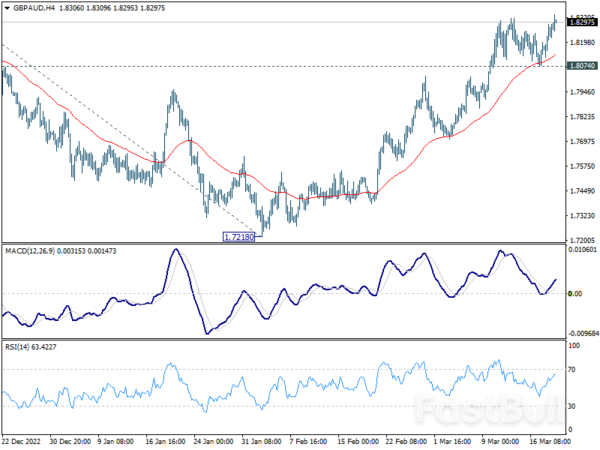
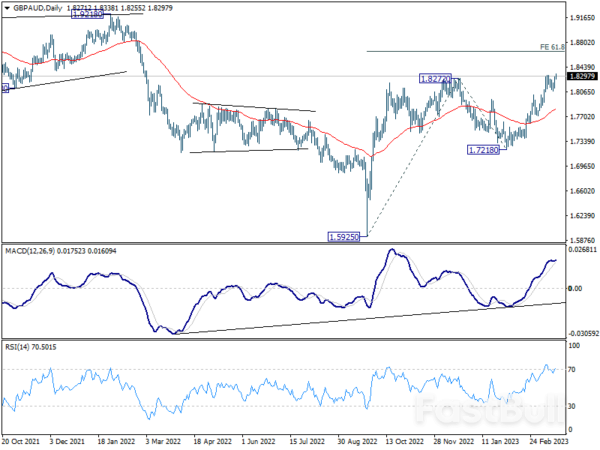
          GBP/AUD resuming rally after dovish RBA minutes

          Australian Dollar trades mildly lower after RBA minutes indicated the possibility of a pause in tightening at next meeting. On the other hand, Sterling (and Euro too) is supported by funds flow from Swiss Franc. But there are some uncertainties for the Pound ahead with UK CPI and BoE rate decisions scheduled later in the week.
          Technically, GBP/AUD is resuming the near term rise by breaking last week's high at 1.8316. At the same time, rise from 1.7218 is likely resuming the whole up trend from 1.5925. Near term outlook will stay bullish as long as 1.8074 support holds, even in case of retreat. Next target is 61.8% projection of 1.5925 to 1.8272 from 1.7218 at 1.8668. Nevertheless, break of 1.8074 support will delay the bullish case and bring some consolidations before another rally attempt.Aussie Falters After RBA Minutes; Canada CPI Awaited_1

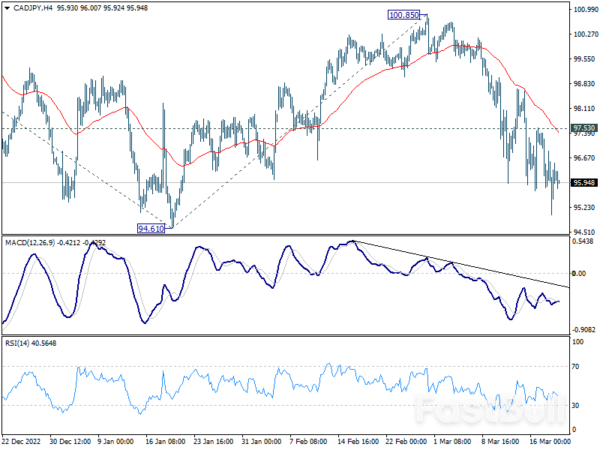
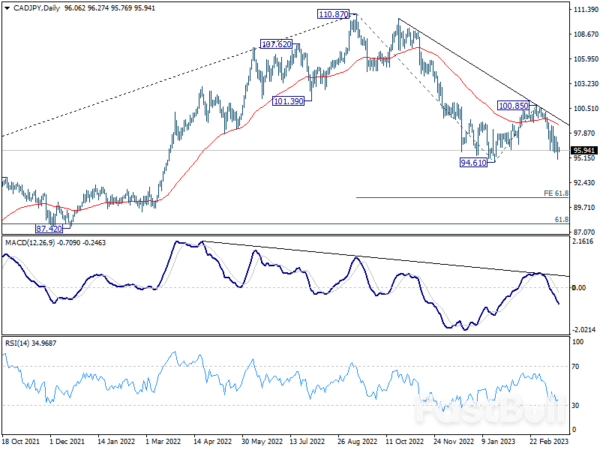
          Aussie Falters After RBA Minutes; Canada CPI Awaited_2CAD/JPY ready for down trend resumption as Canada CPI looms

          Today, Canada's consumer inflation data takes center stage as markets anticipate a slowdown in headline inflation from 5.9% yoy to 5.4% yoy in February. If this decrease materializes, it would mark the lowest inflation reading in over a year. BoC's preferred core inflation metrics, the trimmed and median CPI, are also projected to decelerate from 5.1% yoy to 4.8% yoy and from 5.0% yoy to 4.8% yoy, respectively.
          BoC became the first major central bank to pause its tightening cycle last Wednesday, following eight consecutive rate hikes totaling 425 basis points. Market participants are still expecting one more rate increase this year, but these odds could dwindle if inflation continues to decline.
          CAD/JPY is closely watching the 94.61 support level after a recent drop. A decisive break below this threshold would rekindle the broader downtrend from the 110.87 high and aim for a 61.8% projection of 110.87 to 94.61 from 100.85 at 90.80. However, if the cross breaks above 97.53 resistance, it could delay the bearish scenario and extend the corrective pattern from 94.61 with another upswing.Aussie Falters After RBA Minutes; Canada CPI Awaited_3

          Aussie Falters After RBA Minutes; Canada CPI Awaited_4Looking ahead

          Germany ZEW economic sentiment will be the man focus in European session. UK will release public sector net borrowing. Swiss will publish trade balance. Later in the day, Canada CPI will take center stage while US will release existing home sales.

          Source: ActionForex.Com

          Risk Warnings and Disclaimers
          You understand and acknowledge that there is a high degree of risk involved in trading. Following any strategies or investment methods may lead to potential losses. The content on the site is provided by our contributors and analysts for information purposes only. You are solely responsible for determining whether any trading assets, securities, strategy, or any other product is suitable for investing based on your own investment objectives and financial situation.
          Comments
          Add to Favorites
          Share

          RBA Board Opens the Door to a Pause in April

          Owen Li

          Central Bank

          The Minutes of the Reserve Bank Board meeting on March 7 highlight that unlike recent meetings when several policy options were considered the March meeting only considered the case for 25 basis point increase – the resulting decision.
          However, the Minutes note that “Members agreed to reconsider the case for a pause at the following meeting, recognizing that pausing would allow additional time to reassess the outlook for the economy.”
          This decision is despite the Board meeting (March 7) occurring before the Regulators took control of Silicon Valley Bank on March 10.
          There is considerable discussion of market pricing in the Minutes. “Market pricing implied a 25 basis point increase in the cash rate at the March meeting and suggested that the cash rate would peak at around 4 ¼ % in the second half of 2023,” – with the market response to the global disruptions to the financial sector this pricing has fallen to below 3.6%; that is no further rate hikes with the possibility of rate cuts.
          Similarly on international markets the Minutes refer to, “Market participants’ expectations of the path of policy rates in advanced economies had shifted up since the previous meeting.” Now, market pricing for the FOMC is predicting a series of rate cuts over the course of 2023.
          Clearly the Board takes market pricing into account. At the time of the Board meeting market pricing supported the view that, in the case of the RBA, nearly 75 more basis points of tightening were likely to follow the March meeting. Now that pricing has fallen away completely.
          The discussion on the outlook for policy as dictated by the data highlights the Board’s current uncertainty.
          It makes the strong case for the increase at the March meeting while emphasizing uncertainty going forward.
          In assessing the recent softening in the data – national output growth; wages growth; monthly inflation – the Board noted “it would be prudent not to place too much weight on one period’s data” …. But “it was appropriate to take some signal from the consistent pattern across recent data releases.”
          There are other examples in the Minutes where the Board highlights its uncertainty through its mixed interpretation of the data: “monetary policy was in restrictive territory and that the economic outlook was uncertain”; “members noted that it was not yet possible to determine how these various considerations would balance out.”
          But the key point remains clear, “core inflation remains too high ….. the staff’s most recent forecasts were for inflation to return to the 2-3% target only by mid–2025.”
          We expect that the case for a pause in April is supported in these Minutes – particularly given the unusual commitment to consider a pause and subsequent developments in market pricing and global financial markets.
          However, the overriding challenge of returning inflation to the target will remain the dominant theme at the May meeting when, we expect, the Board will be confronted with a refreshed set of forecasts (benefitting from the March quarter Inflation Report), which will still highlight that inflation will not be at target until mid-2025 – requiring a final 25 basis point increase.

          Conclusion

          Westpac has been forecasting a pause at the April meeting – the strong emphasis on uncertainty in the March Minutes; the unusual commitment to consider a pause in April; and developments in market pricing and global financial markets all support that view.
          But the Minutes continue to make a strong case for the need to reign in the “too high” inflation. This challenge is likely to be just as apparent at the May meeting, when much more information will be available on the inflation challenge, requiring a “final” 25 basis point tightening.

          Source: Westpac Banking

          Risk Warnings and Disclaimers
          You understand and acknowledge that there is a high degree of risk involved in trading. Following any strategies or investment methods may lead to potential losses. The content on the site is provided by our contributors and analysts for information purposes only. You are solely responsible for determining whether any trading assets, securities, strategy, or any other product is suitable for investing based on your own investment objectives and financial situation.
          Comments
          Add to Favorites
          Share

          Has the Long-Awaited Recession Arrived?

          Cohen
          Stock markets are falling, oil dropped to prices not seen since 2021 and gold is trending higher. The general symptoms that would be expected as a recession developed. The collapse of three banks in the US, and Credit Suisse not only once again dropping to record lows, but having the largest drop in its stock price in history. It's not surprising at all that the market is having jitters. The question is whether this is a passing issue, or can we expect the situation to get worse.
          The contagion issue
          There has been a lot of talk in the media of "contagion". That implies that there is a problem in, say, SVB which passes on to other banks, causing them to have issues. And so on for a cascading effect. Regulators have come out to repeatedly assure the market that there isn't any "contagion" risk.
          The problem with this is that it could lead people to think that a company which doesn't have investments in SVB (or any of the other banks in trouble), then it's safe. There is no contact through which there could be contagion. While that certainly is a concern, it's also possible for other bank or businesses to be in trouble without a direct link to one of the banks that recently went under.
          The tip of the iceberg or just a mirage?
          Take Credit Suisse, for example; it is experiencing difficulties and isn't related to SVB. However, it is operating in a similar environment. A prolonged period of low interest rates led banks to build up a large amount of low-interest reserves that is now causing them unrealized losses when interest rates go up.
          The problem isn't necessarily "contagion", but that other banks could be in a similar position, and SVB was just the first. Sort of a canary in the coal mine scenario. Ultimately, the problem that the three banks that just went under had – and increasingly Credit Suisse has – is difficulty accessing liquidity. Tight liquidity means they are forced to sell assets at a discount, pushing down the value of those assets. If enough institutions find themselves in that position, then the whole market goes down in a crash.
          It's now down to monetary policy
          If other institutions don't end up having a liquidity problem, or their central bank provides liquidity, then SVB might just be a hiccup in an otherwise steady market. The focus, therefore, turns to what the central banks will do. Until now, they've been pushing rates higher to get inflation down. But the current crisis could lead to putting an end to that, which could allow inflation to start rising.
          Until recently, the fear of inflation was that it would cause central banks to raise rates and slow the economy. But if central banks don't raise rates, inflation can still be a problem, since the erosion of purchasing power can lead to demand destruction. So far, central banks have been relieved that there has been no wage-price spiral, because wages have increased less than inflation has. That's fine if inflation is transitory. But central banks give up on fighting inflation, and wages don't keep up with prices, then there could be an extended economic slump instead of a crash.

          Source: Orbex

          Risk Warnings and Disclaimers
          You understand and acknowledge that there is a high degree of risk involved in trading. Following any strategies or investment methods may lead to potential losses. The content on the site is provided by our contributors and analysts for information purposes only. You are solely responsible for determining whether any trading assets, securities, strategy, or any other product is suitable for investing based on your own investment objectives and financial situation.
          Comments
          Add to Favorites
          Share

          The Canary is Alive and Chirping a Year into Fed's Rate Hiking Cycle

          Alex

          Economic

          Utah homebuilder Ivory Homes still has a pipeline of several hundred houses under construction, but CEO Clark Ivory isn't pulling permits for any more at this point, and in a year of retrenchment for the single-family home industry, he has laid off just under 10% of his workers.
          But don't look for that to be reflected in overall U.S. construction employment or spending data, a canary that is very much still breathing inside what would usually be the toxifying air of rising U.S. interest rates.
          While housing starts are falling, "there is still a fair amount of completion happening," Ivory said, adding that contractors can move on to other jobs once finished with his company's projects. "There are other areas of construction - public works, industrial, roads and infrastructure. There is so much money out there," he said, from pandemic spending programs as well as recent federal government initiatives like the Inflation Reduction Act.
          The Canary is Alive and Chirping a Year into Fed's Rate Hiking Cycle_1A year after the Federal Reserve began a historic drive to arrest inflation with rapid interest rate hikes, Fed officials meeting this week face a wildly confusing economy that by some measures continues operating beyond capacity - a recipe for rising prices - and by others seems to be approaching a serious fissure given how a banking crisis has rattled markets in the last two weeks.
          Is the economy really standing firm against the Fed's aggressive rate moves? Rate increases have averaged more than half a percentage point at each of the eight Fed meetings since March of 2022, and pushed the benchmark overnight interest rate from the near-zero level to the current 4.50%-4.75% range.
          Or are businesses and consumers just slow to respond, with the full impact perhaps developing now?
          As the tightening orchestrated by Fed Chair Jerome Powell hits the one-year mark, the extent of the influence depends on where you look.

          A Mixed Inflation Scorecard

          The Fed's purpose throughout its aggressive tightening cycle has been to reduce inflation from the 40-year-high reached last summer down to the 2% annual rate the central bank regards as consistent with its generic goal of "price stability."
          Inflation has slowed.
          But recent progress has been less than hoped. As of March 8, in his last public comments before the Fed's March 21-22 meeting, Powell said recent data had "reversed the softening trends" the central bank had hoped were becoming established, and that meant higher interest rates might be needed to slow an economy that doesn't want to buckle.

          The Canary is Alive and Chirping a Year into Fed's Rate Hiking Cycle_2Dogs That Didn't Bark (Yet)

          Construction: The status of the construction industry shows the Fed's pandemic-era dilemma.
          Monetary policy works on the economy through many different channels, but housing is an important one. As interest rates rise, buying slows, spending that would have taken place on home building supplies and new home furnishings plummets, and existing homeowners shy away from financing major improvements.
          Since the 1970s, declines in housing starts have been followed by drops in construction employment, and been associated with the onset of recession.
          It is not happening the same way this time.
          The Canary is Alive and Chirping a Year into Fed's Rate Hiking Cycle_3Employment: The job market overall in fact has shown only initial signs of slowing - and the Fed has put a lot of weight on tempered job and wage growth as a necessary condition for inflation to fall.
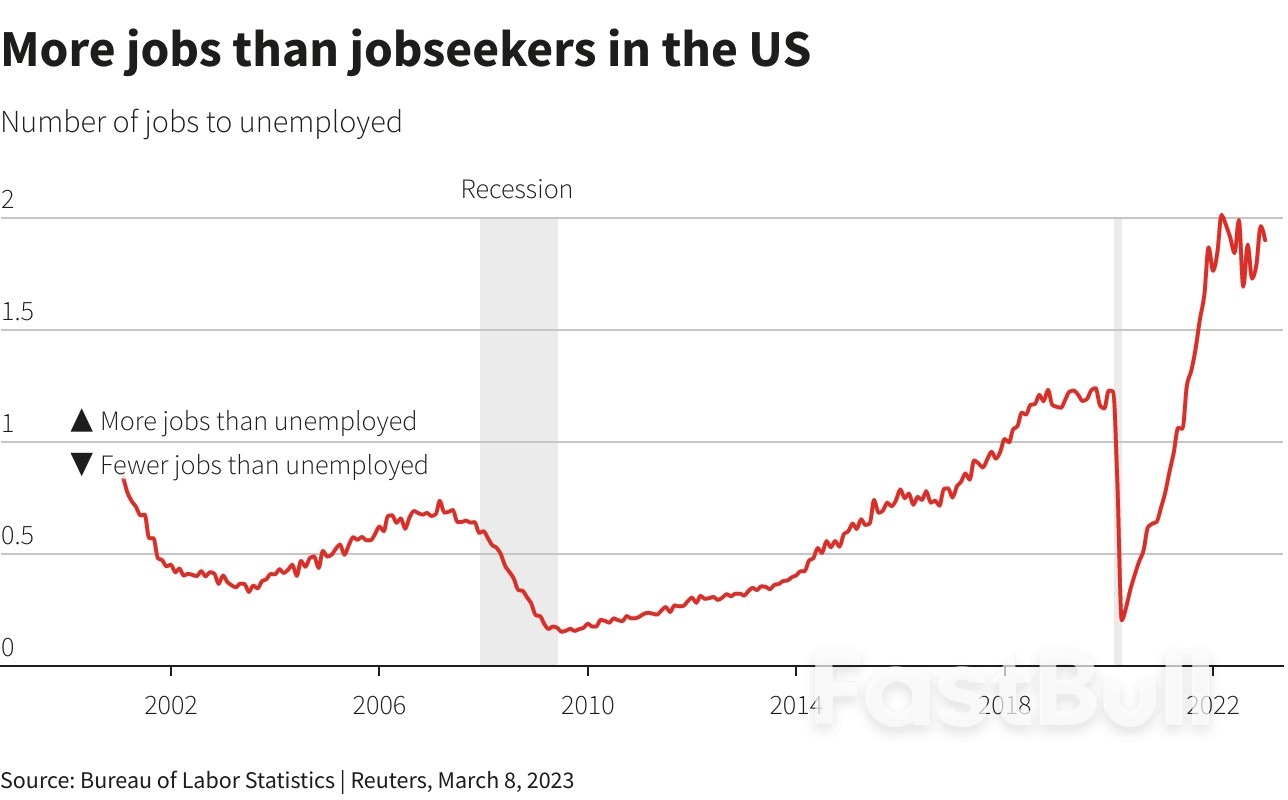
          Between ongoing demand and the difficulty of hiring, many businesses seem to be holding on to existing workers and adding headcount when they can to try to stay fully staffed. The number of job openings for each available worker has barely budged from the record levels set during the COVID-19 pandemic, and monthly job growth remains in the hundreds of thousands.
          The Canary is Alive and Chirping a Year into Fed's Rate Hiking Cycle_4Income: For households, that means the pump is still primed. Even after adjusting for inflation, after-tax income - the amount of money left to spend or save - has been rising.

          The Canary is Alive and Chirping a Year into Fed's Rate Hiking Cycle_5Signs of stress?

          The Fed's rate increases have had an impact.
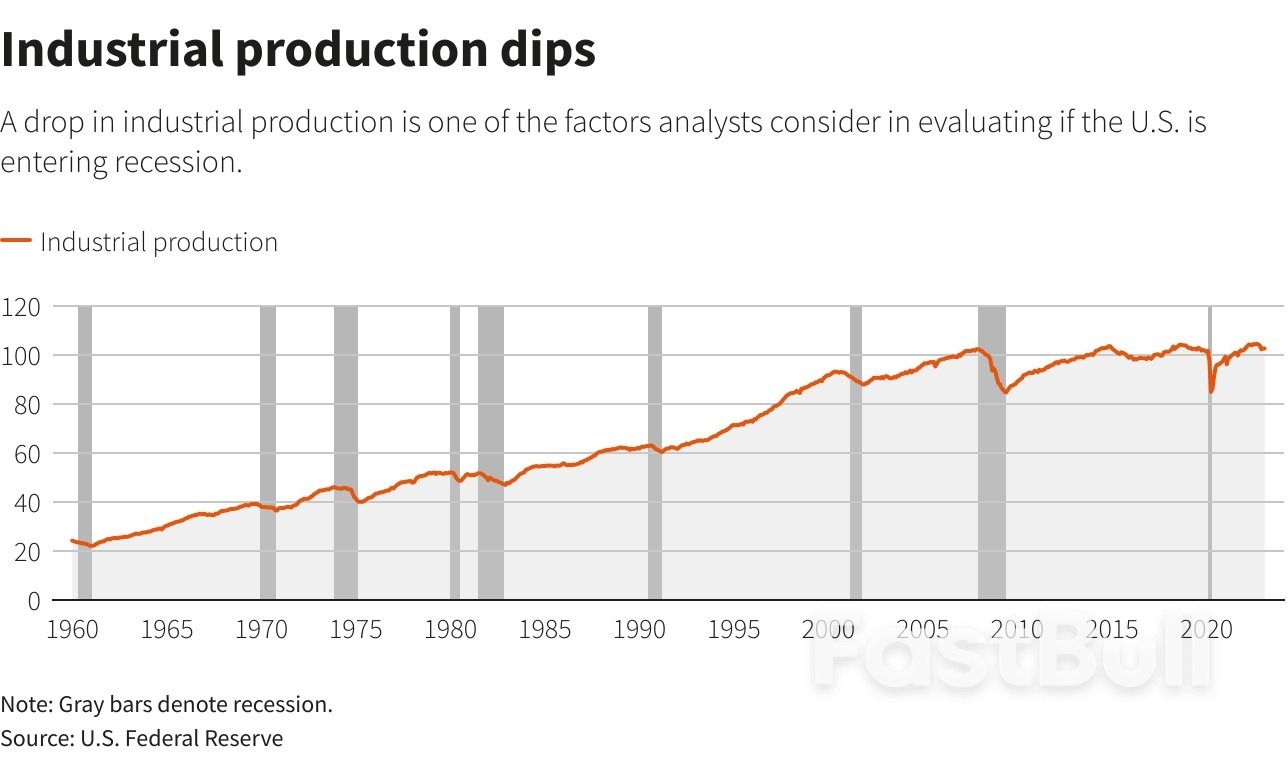
          Manufacturing: A broad index of industrial output published by the Fed is among the top-line data that economists watch for signs the U.S. is entering recession. It is currently declining.
          The Canary is Alive and Chirping a Year into Fed's Rate Hiking Cycle_6Capital expenditures: Business investment is also weak, and detracted from overall economic output last year - also a common precursor to recession and a sort of proxy vote by firms about the outlook and a sign they are delaying spending.
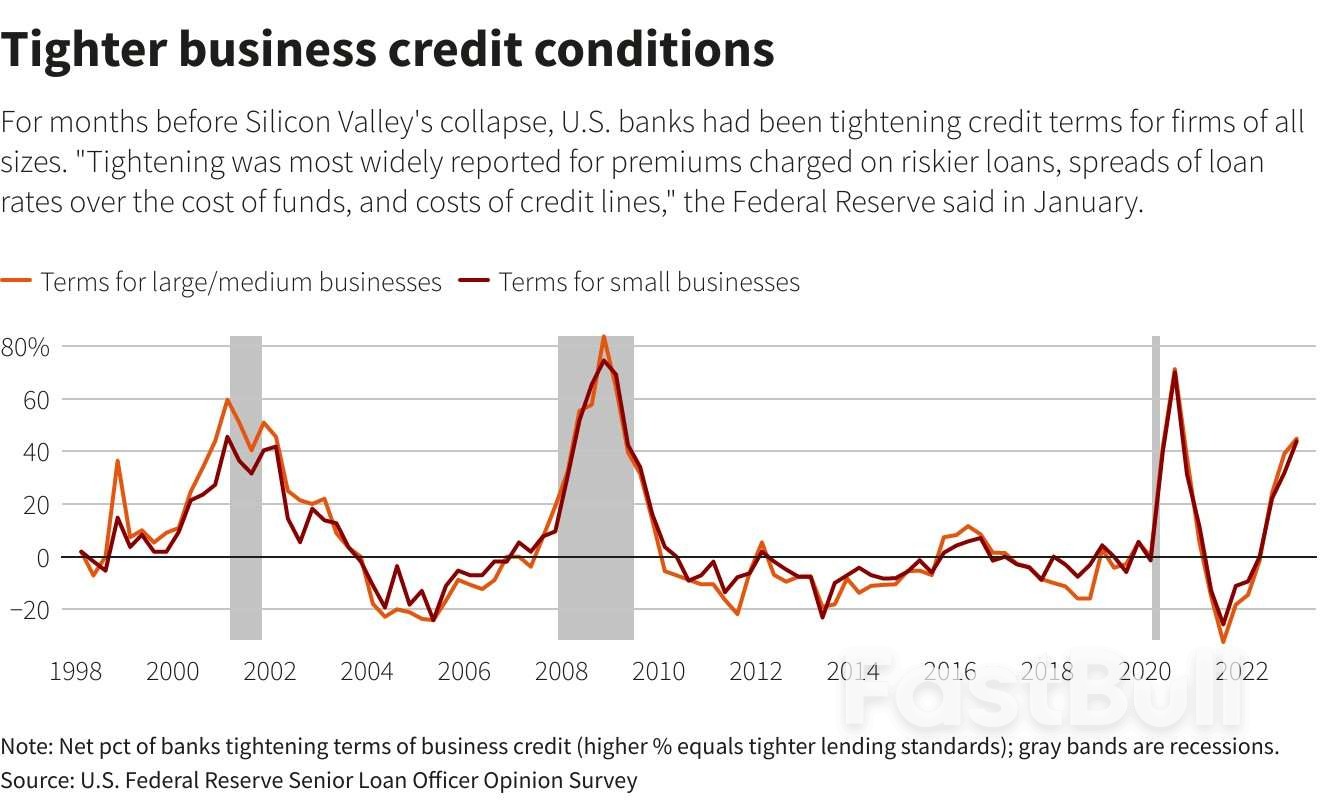
          The Canary is Alive and Chirping a Year into Fed's Rate Hiking Cycle_7Credit: Tighter monetary policy is starting to show up in measures of credit as well, and recent stress among midsized banks may add to that if financial firms become more cautious in their lending.
          As long as it remains orderly, a credit crunch could be positive for the Fed. If businesses and households are less free to borrow, they are likely less free to spend - and demand for goods and services will fall, as should the pressure to raise prices.

          The Canary is Alive and Chirping a Year into Fed's Rate Hiking Cycle_8Source: Reuters

          To stay updated on all economic events of today, please check out our Economic calendar
          Risk Warnings and Disclaimers
          You understand and acknowledge that there is a high degree of risk involved in trading. Following any strategies or investment methods may lead to potential losses. The content on the site is provided by our contributors and analysts for information purposes only. You are solely responsible for determining whether any trading assets, securities, strategy, or any other product is suitable for investing based on your own investment objectives and financial situation.
          Comments
          Add to Favorites
          Share

          Market Stress Indicators Flash Warnings as Banking Worries Continue

          Devin
          Fears of a global banking crisis are continuing to swirl, with investors keeping a close eye on a dashboard of indicators that show how stress is rippling through markets and the banking system.
          Many of these are continuing to flash warnings, though they have not surpassed levels seen during the COVID-19-fueled market turbulence of 2020. Despite a state-backed takeover of Credit Suisse by UBS AG, a wipeout of some Credit Suisse bondholders has added to concerns over broader bank capital.
          Uncertainty around U.S. banks remains high as well. Shares of embattled regional lender First Republic Bank were down 34% Monday afternoon following a downgrade by S&P Global and continuing worries over the bank's liquidity despite a $30-billion rescue last week.
          Here are some of the indicators investors are watching, and what they are showing:
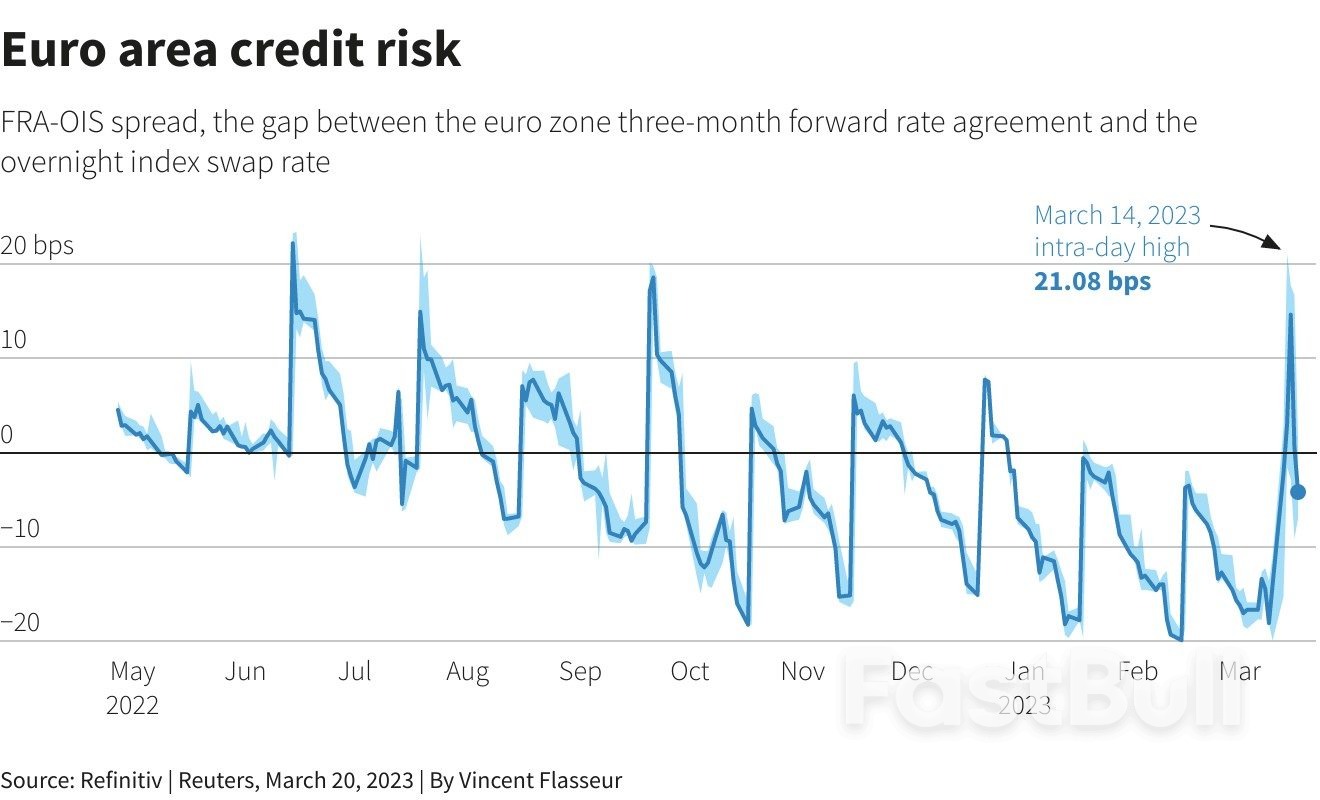
          Market Stress Indicators Flash Warnings as Banking Worries Continue_1An indicator of credit-risk in the euro zone banking system, the so-called FRA-OIS spread, hit its highest levels since mid-July last week but has pulled back from those highs.
          But the spread, measuring the gap between the euro zone three-month forward rate agreement and the overnight index swap rate, is still relatively elevated at around -1 basis points in a sign of lingering concern about financial market stress.
          Market Stress Indicators Flash Warnings as Banking Worries Continue_2The cost of insuring exposure to European junk bonds rose to the highest since mid-November on Monday at over 516 basis points.
          This has risen over 130 basis points since March 7 as riskier assets have borne the brunt of bank turmoil on both sides of the Atlantic.
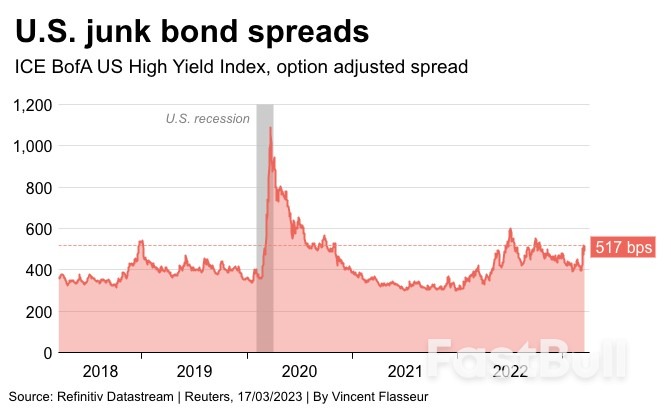
          Market Stress Indicators Flash Warnings as Banking Worries Continue_3Junk spreads - the premium investors demand to hold the riskier debt over U.S. Treasuries – rose to 520 basis points last week, the highest since October last year, according to the ICE BofA U.S. High Yield Index.
          Investment grade credit spreads, which indicate the premium investors demand to hold highly rated corporate bonds over safer U.S. Treasuries – rose to 164 basis points last week, the highest since October, according to the ICE BofA US Corporate Index
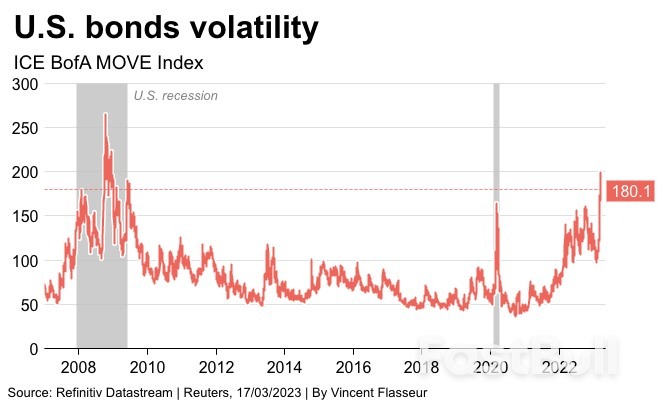
          Market Stress Indicators Flash Warnings as Banking Worries Continue_4Meanwhile, last week's wild swings in the Treasury market have whipsawed investors and contributed to unease. The ICE BofAML MOVE Index, a measure of expected volatility in U.S. Treasuries, surged to its highest level since the financial crisis last week as troubles in the banking sector forced investors to pull back on their views of how aggressively the Federal Reserve will raise rates in coming months.
          With little certainty on what signal the central bank will send on the future trajectory of monetary policy at the conclusion of its meeting on Tuesday and Wednesday, many believe volatility in Treasuries is unlikely to die down anytime soon.

          Source: The Economic Times

          Risk Warnings and Disclaimers
          You understand and acknowledge that there is a high degree of risk involved in trading. Following any strategies or investment methods may lead to potential losses. The content on the site is provided by our contributors and analysts for information purposes only. You are solely responsible for determining whether any trading assets, securities, strategy, or any other product is suitable for investing based on your own investment objectives and financial situation.
          Comments
          Add to Favorites
          Share

          Asia Stocks Bounce Gingerly but Bank Fears Lurk

          Thomas

          Stocks

          Asian stocks were lifted from lows on Tuesday, with the rescue of Credit Suisse stemming selling in bank shares, though the mood was fragile and the stress in markets had traders wondering whether U.S. rate hikes might be finished.
          MSCI's broadest index of Asia-Pacific shares outside Japan rose 0.5% in early trade. Australian shares bounced 1.3% from Monday's four-month trough and the Hang Seng opened 0.7% higher.
          Japanese markets were closed for a holiday, though Chicago-traded Nikkei futures were in the green.
          Overnight an early selloff in Europe was reversed and on Wall Street the S&P 500 rose 0.9%. U.S. futures rose 0.2% in early Asia trade.
          A Swiss government-backed buyout of Credit Suisse by UBS has cauterized the immediate concern over European financial stability. But the wipeout of some Credit Suisse bondholders has sent a shockwave through bank debt, and persistent signs of stress at U.S. regional lenders has investors on high alert.
          "Globally, I think we're a long way from being out of the woods on this," Sydney-based Jefferies' banking analyst Brian Johnson said, with the present stress set against a backdrop of higher capital costs and declining loan growth.
          San Francisco lender First Republic seems to be a case in point. Its share price halved on Monday on worries that $30 billion in deposits posted by bigger banks less than a week earlier would not be enough to shore up its stability.
          The writedown of Credit Suisse's "additional tier 1" debt to zero also set off frantic selling of similar debts at other banks because holders were surprised that the long-standing practice of paying creditors before shareholders was not fully followed.
          That somewhat abated after regulators in Europe and Britain stepped in to reassure investors that it would not set a precedent.
          A London-listed exchange-traded fund <INAT1.L > that tracks such debts pared steeper losses to finish 5.7% lower on Monday, but nerves - and higher funding costs for banks - will likely linger.
          "This remains a significant breakdown in how the credit stack works," Johnson said.
          In foreign exchange markets the U.S. dollar steadied after slipping overnight. It last bought 131.90 yen and held at $1.0718 per euro. Bond markets whipsawed overnight as traders seek to figure out what the bank stress means for rates policy.
          A holiday in Tokyo left Treasuries untraded in Asia.
          Central bank meetings in Britain and the United States are scheduled this week, with the Fed first up on Wednesday.
          U.S. interest rate futures have priced in just one more 25 basis point hike before a series of cuts beginning as soon as June. The CME FedWatch tool shows pricing implying about a 74% chance of a rate hike on Wednesday.
          "The banking sector's near-death experience over the last two weeks is likely to make Fed officials more measured in their stance on the pace of hikes," said Standard Chartered's head of G10 FX research, Steve Englander.
          "If the (Fed) pauses, the message may be that it sees further hikes as markets settle down. But the reality may be that a March pause effectively ends the hiking cycle if the economy slows."
          In commodity markets, demand jitters have Brent crude futures pinned below $80 a barrel; they were last at $73.80. Gold hit a one-year high of $2,009 an ounce overnight, before easing to $1,979 on Tuesday.

          Source: Reuters

          Risk Warnings and Disclaimers
          You understand and acknowledge that there is a high degree of risk involved in trading. Following any strategies or investment methods may lead to potential losses. The content on the site is provided by our contributors and analysts for information purposes only. You are solely responsible for determining whether any trading assets, securities, strategy, or any other product is suitable for investing based on your own investment objectives and financial situation.
          Comments
          Add to Favorites
          Share
          FastBull
          Copyright © 2025 FastBull Ltd

          728 RM B 7/F GEE LOK IND BLDG NO 34 HUNG TO RD KWUN TONG KLN HONG KONG

          TelegramInstagramTwitterfacebooklinkedin
          App Store Google Play Google Play
          Products
          Charts

          Chats

          Q&A with Experts
          Screeners
          Economic Calendar
          Data
          Tools
          Membership
          Features
          Function
          Markets
          Copy Trading
          Latest Signals
          Contests
          News
          Analysis
          24/7
          Columns
          Education
          Company
          Careers
          About Us
          Contact Us
          Advertising
          Help Center
          Feedback
          User Agreement
          Privacy Policy
          Business

          White Label

          Data API

          Web Plug-ins

          Poster Maker

          Affiliate Program

          Risk Disclosure

          The risk of loss in trading financial instruments such as stocks, FX, commodities, futures, bonds, ETFs and crypto can be substantial. You may sustain a total loss of the funds that you deposit with your broker. Therefore, you should carefully consider whether such trading is suitable for you in light of your circumstances and financial resources.

          No decision to invest should be made without thoroughly conducting due diligence by yourself or consulting with your financial advisors. Our web content might not suit you since we don't know your financial conditions and investment needs. Our financial information might have latency or contain inaccuracy, so you should be fully responsible for any of your trading and investment decisions. The company will not be responsible for your capital loss.

          Without getting permission from the website, you are not allowed to copy the website's graphics, texts, or trademarks. Intellectual property rights in the content or data incorporated into this website belong to its providers and exchange merchants.

          Not Logged In

          Log in to access more features

          FastBull Membership

          Not yet

          Purchase

          Become a signal provider
          Help Center
          Customer Service
          Dark Mode
          Price Up/Down Colors

          Log In

          Sign Up

          Position
          Layout
          Fullscreen
          Default to Chart
          The chart page opens by default when you visit fastbull.com