• Trade
  • Markets
  • Copy
  • Contests
  • News
  • 24/7
  • Calendar
  • Q&A
  • Chats
Trending
Screeners
SYMBOL
LAST
BID
ASK
HIGH
LOW
NET CHG.
%CHG.
SPREAD
SPX
S&P 500 Index
6827.42
6827.42
6827.42
6899.86
6801.80
-73.58
-1.07%
--
DJI
Dow Jones Industrial Average
48458.04
48458.04
48458.04
48886.86
48334.10
-245.98
-0.51%
--
IXIC
NASDAQ Composite Index
23195.16
23195.16
23195.16
23554.89
23094.51
-398.69
-1.69%
--
USDX
US Dollar Index
97.920
98.000
97.920
98.070
97.890
-0.030
-0.03%
--
EURUSD
Euro / US Dollar
1.17402
1.17409
1.17402
1.17447
1.17262
+0.00008
+ 0.01%
--
GBPUSD
Pound Sterling / US Dollar
1.33798
1.33805
1.33798
1.33856
1.33546
+0.00091
+ 0.07%
--
XAUUSD
Gold / US Dollar
4346.12
4346.53
4346.12
4350.16
4294.68
+46.73
+ 1.09%
--
WTI
Light Sweet Crude Oil
57.341
57.371
57.341
57.601
57.194
+0.108
+ 0.19%
--

Community Accounts

Signal Accounts
--
Profit Accounts
--
Loss Accounts
--
View More

Become a signal provider

Sell trading signals to earn additional income

View More

Guide to Copy Trading

Get started with ease and confidence

View More

Signal Accounts for Members

All Signal Accounts

Best Return
  • Best Return
  • Best P/L
  • Best MDD
Past 1W
  • Past 1W
  • Past 1M
  • Past 1Y

All Contests

  • All
  • Trump Updates
  • Recommend
  • Stocks
  • Cryptocurrencies
  • Central Banks
  • Featured News
Top News Only
Share

London Metal Exchange: Intends To Publish A Consultation On The Proposed Changes To Our Rules In Response To The Regime Early In2026

Share

London Metal Exchange: Announces Publication Of Update Describing How The London Metal Exchange Plans To Implement The Fca Policy Statement 25/1 On Commodity Reform

Share

USA - Listed Shares Of Gold Miners Rise Premarket After Gold Rises About 1%

Share

The Council Of The European Union: In Light Of The Situation In Venezuela, The Council Decided Today To Extend The Existing Restrictions For Another Year, Until 10 January 2027

Share

Ivory Coast 2025/26 Cocoa Arrivals Reached 894000 T By December 14 Versus 895000 T Year Ago - Exporters' Estimate

Share

Ishares MSCI Chile ETF Up 3.9% Premarket After Jose Antonio Kast Wins Chile's Presidential Election On Sunday

Share

Spain's Debt-To-GDP Ratio Falls To 103.2% In Third Quarter 2025

Share

China's Central Bank: Authorises DBS Bank As Yuan Clearing Bank In Singapore

Share

Bank Of Korea - South Korea Central Bank, Nps Agree To Extend Currency Swap Agreement For Another Year

Share

Poland's CPI At 0.1% Month-On-Month In November Versus 0.1% Released Earlier

Share

London Metal Exchange (LME): Copper Inventories Decreased By 25 Tons, Aluminum Inventories Decreased By 50 Tons, Nickel Inventories Increased By 360 Tons, Zinc Inventories Increased By 2,550 Tons, Lead Inventories Increased By 17,725 Tons, And Tin Inventories Increased By 125 Tons

Share

Polish Inflation At 2.5% Year-On-Year In November

Share

Poland's January-October Import Up 5.4% To 309.3 Billion Euros

Share

Poland's January-October Trade Balance At -5.1 Billion Euros

Share

Poland's January-October Export Up 2.8% To 304.3 Billion Euros

Share

Ceasefire Negotiations Between Ukraine And US Representatives In Berlin To Continue Monday Morning - German Source Familiar With The Schedule

Share

Spain's IBEX Hits Fresh Record High, Up Over 1%

Share

Spot Silver Rises Nearly 3% To $63.82/Oz

Share

France's Foreign Minister Says He Suggesd To EU's Kallas That US Representatives Brief EU Foreign Ministers On Gaza Peace Plan During Their Meeting

Share

India Trade Secretary: Prime Facie Don't See A Case Of Rice Dumping To USA And There Is No Active Investigation On That

TIME
ACT
FCST
PREV
France HICP Final MoM (Nov)

A:--

F: --

P: --

China, Mainland Outstanding Loans Growth YoY (Nov)

A:--

F: --

P: --

China, Mainland M2 Money Supply YoY (Nov)

A:--

F: --

P: --

China, Mainland M0 Money Supply YoY (Nov)

A:--

F: --

P: --

China, Mainland M1 Money Supply YoY (Nov)

A:--

F: --

P: --

India CPI YoY (Nov)

A:--

F: --

P: --

India Deposit Gowth YoY

A:--

F: --

P: --

Brazil Services Growth YoY (Oct)

A:--

F: --

P: --

Mexico Industrial Output YoY (Oct)

A:--

F: --

P: --

Russia Trade Balance (Oct)

A:--

F: --

P: --

Philadelphia Fed President Henry Paulson delivers a speech
Canada Building Permits MoM (SA) (Oct)

A:--

F: --

P: --

Canada Wholesale Sales YoY (Oct)

A:--

F: --

P: --

Canada Wholesale Inventory MoM (Oct)

A:--

F: --

P: --

Canada Wholesale Inventory YoY (Oct)

A:--

F: --

P: --

Canada Wholesale Sales MoM (SA) (Oct)

A:--

F: --

P: --

Germany Current Account (Not SA) (Oct)

A:--

F: --

P: --

U.S. Weekly Total Rig Count

A:--

F: --

P: --

U.S. Weekly Total Oil Rig Count

A:--

F: --

P: --

Japan Tankan Small Manufacturing Outlook Index (Q4)

A:--

F: --

P: --

Japan Tankan Large Non-Manufacturing Diffusion Index (Q4)

A:--

F: --

P: --

Japan Tankan Large Non-Manufacturing Outlook Index (Q4)

A:--

F: --

P: --

Japan Tankan Large Manufacturing Outlook Index (Q4)

A:--

F: --

P: --

Japan Tankan Small Manufacturing Diffusion Index (Q4)

A:--

F: --

P: --

Japan Tankan Large Manufacturing Diffusion Index (Q4)

A:--

F: --

P: --

Japan Tankan Large-Enterprise Capital Expenditure YoY (Q4)

A:--

F: --

P: --

U.K. Rightmove House Price Index YoY (Dec)

A:--

F: --

P: --

China, Mainland Industrial Output YoY (YTD) (Nov)

A:--

F: --

P: --

China, Mainland Urban Area Unemployment Rate (Nov)

A:--

F: --

P: --

Saudi Arabia CPI YoY (Nov)

A:--

F: --

P: --

Euro Zone Industrial Output YoY (Oct)

--

F: --

P: --

Euro Zone Industrial Output MoM (Oct)

--

F: --

P: --

Canada Existing Home Sales MoM (Nov)

--

F: --

P: --

Euro Zone Total Reserve Assets (Nov)

--

F: --

P: --

U.K. Inflation Rate Expectations

--

F: --

P: --

Canada National Economic Confidence Index

--

F: --

P: --

Canada New Housing Starts (Nov)

--

F: --

P: --

U.S. NY Fed Manufacturing Employment Index (Dec)

--

F: --

P: --

U.S. NY Fed Manufacturing Index (Dec)

--

F: --

P: --

Canada Core CPI YoY (Nov)

--

F: --

P: --

Canada Manufacturing Unfilled Orders MoM (Oct)

--

F: --

P: --

U.S. NY Fed Manufacturing Prices Received Index (Dec)

--

F: --

P: --

U.S. NY Fed Manufacturing New Orders Index (Dec)

--

F: --

P: --

Canada Manufacturing New Orders MoM (Oct)

--

F: --

P: --

Canada Core CPI MoM (Nov)

--

F: --

P: --

Canada Trimmed CPI YoY (SA) (Nov)

--

F: --

P: --

Canada Manufacturing Inventory MoM (Oct)

--

F: --

P: --

Canada CPI YoY (Nov)

--

F: --

P: --

Canada CPI MoM (Nov)

--

F: --

P: --

Canada CPI YoY (SA) (Nov)

--

F: --

P: --

Canada Core CPI MoM (SA) (Nov)

--

F: --

P: --

Canada CPI MoM (SA) (Nov)

--

F: --

P: --

Federal Reserve Board Governor Milan delivered a speech
U.S. NAHB Housing Market Index (Dec)

--

F: --

P: --

Australia Composite PMI Prelim (Dec)

--

F: --

P: --

Australia Services PMI Prelim (Dec)

--

F: --

P: --

Australia Manufacturing PMI Prelim (Dec)

--

F: --

P: --

Japan Manufacturing PMI Prelim (SA) (Dec)

--

F: --

P: --

U.K. Unemployment Claimant Count (Nov)

--

F: --

P: --

U.K. Unemployment Rate (Nov)

--

F: --

P: --

U.K. 3-Month ILO Unemployment Rate (Oct)

--

F: --

P: --

Q&A with Experts
    • All
    • Chatrooms
    • Groups
    • Friends
    Connecting
    .
    .
    .
    Type here...
    Add Symbol or Code

      No matching data

      All
      Trump Updates
      Recommend
      Stocks
      Cryptocurrencies
      Central Banks
      Featured News
      • All
      • Russia-Ukraine Conflict
      • Middle East Flashpoint
      • All
      • Russia-Ukraine Conflict
      • Middle East Flashpoint
      Search
      Products

      Charts Free Forever

      Chats Q&A with Experts
      Screeners Economic Calendar Data Tools
      Membership Features
      Data Warehouse Market Trends Institutional Data Policy Rates Macro

      Market Trends

      Market Sentiment Order Book Forex Correlations

      Top Indicators

      Charts Free Forever
      Markets

      News

      News Analysis 24/7 Columns Education
      From Institutions From Analysts
      Topics Columnists

      Latest Views

      Latest Views

      Trending Topics

      Top Columnists

      Latest Update

      Signals

      Copy Rankings Latest Signals Become a signal provider AI Rating
      Contests
      Brokers

      Overview Brokers Assessment Rankings Regulators News Claims
      Broker listing Forex Brokers Comparison Tool Live Spread Comparison Scam
      Q&A Complaint Scam Alert Videos Tips to Detect Scam
      More

      Business
      Events
      Careers About Us Advertising Help Center

      White Label

      Data API

      Web Plug-ins

      Affiliate Program

      Awards Institution Evaluation IB Seminar Salon Event Exhibition
      Vietnam Thailand Singapore Dubai
      Fans Party Investment Sharing Session
      FastBull Summit BrokersView Expo
      Recent Searches
        Top Searches
          Markets
          News
          Analysis
          User
          24/7
          Economic Calendar
          Education
          Data
          • Names
          • Latest
          • Prev

          View All

          No data

          Scan to Download

          Faster Charts, Chat Faster!

          Download App
          English
          • English
          • Español
          • العربية
          • Bahasa Indonesia
          • Bahasa Melayu
          • Tiếng Việt
          • ภาษาไทย
          • Français
          • Italiano
          • Türkçe
          • Русский язык
          • 简中
          • 繁中
          Open Account
          Search
          Products
          Charts Free Forever
          Markets
          News
          Signals

          Copy Rankings Latest Signals Become a signal provider AI Rating
          Contests
          Brokers

          Overview Brokers Assessment Rankings Regulators News Claims
          Broker listing Forex Brokers Comparison Tool Live Spread Comparison Scam
          Q&A Complaint Scam Alert Videos Tips to Detect Scam
          More

          Business
          Events
          Careers About Us Advertising Help Center

          White Label

          Data API

          Web Plug-ins

          Affiliate Program

          Awards Institution Evaluation IB Seminar Salon Event Exhibition
          Vietnam Thailand Singapore Dubai
          Fans Party Investment Sharing Session
          FastBull Summit BrokersView Expo

          Escalating Middle East Conflict Could Send Global Inflation Soaring

          Damon

          Economic

          Palestinian-Israeli conflict

          Summary:

          Credit rating agency says further deterioration in Israel-Hamas war could raise oil prices with knock-on effect for inflation.

          The global economy risks suffering a renewed inflation shock from the war between Israel and Hamas, a leading credit rating agency has warned, amid growing concern over a sharp rise in oil prices.
          Standard & Poor's, which rates the creditworthiness of governments and companies, said the conflict threatened to compound an already fragile global outlook, as the world's leading central banks battle inflationary pressures sparked by the Covid pandemic and war in Ukraine.
          Oil prices rose on Wednesday, touching $93 a barrel, as traders reacted to the prospect of an escalating conflict, after a devastating blast at a Gaza hospital during Joe Biden's one-day visit to Israel.
          Highlighting the risks of a renewed energy supply shock, figures from the UK published on Wednesday morning showed the annual inflation rate unexpectedly held steady in September after a sharp rise in fuel costs.
          Standard & Poor's warned a further increase in energy prices triggered by escalating conflict in the Middle East "could underpin inflation and weigh on economic activity".
          While not underestimating the severity of the unfolding human tragedy, the agency said it expected the conflict would be largely contained to Israel and Gaza. However, there were still dangers for the global outlook and "extreme tail risks" should Iran become directly involved.
          "Even in the absence of a material energy supply shock, the evident sensitivity in energy prices to recent events indicates that some inflationary pressures could persist through the northern hemisphere winter," it said.
          Underlining the risk of high prices at the petrol pumps, figures from the Office for National Statistics showed UK inflation was unchanged at 6.7% last month, as the first month on month fall in food prices for two years was offset by a jump in the cost of petrol and diesel.
          Crude oil has risen from a low of about $72 a barrel in June to over $90, putting at risk progress made to bring down the highest inflation rates in decades after the surge in energy prices fuelled by Russia's war in Ukraine.
          A finely balanced Bank of England decision on interest rates is due in November, after the central bank last month paused its most aggressive cycle of rate increases in decades.
          Financial markets expect the Bank to leave rates at the current level of 5.25%. While inflation remains at more than three times higher than the Bank's 2% target, concerns are growing over the strength of the economy after 14 successive increases from a record low of 0.1% in December 2021.
          Despite remaining unchanged on the month, economists said inflation in the UK was still on track to drop below 5.1% by December – meeting Rishi Sunak's pledge to halve the rate this year – helped by cooling food price growth and this month's drop in the Ofgem energy price cap.
          The chancellor, Jeremy Hunt, said: "As we have seen across other G7 countries, inflation rarely falls in a straight line, but if we stick to our plan then we still expect it to keep falling this year. Today's news just shows this is even more important so we can ease the pressure on families and businesses."
          Paul Dales, the chief UK economist at the consultancy Capital Economics, said he didn't expect the Bank to raise interest rates again. "The new risk, though, is that events in the Middle East restrain how far inflation falls next year."
          September's inflation rate is normally used by the government to increase the value of benefits the following April. However, Sunak has so far refused to commit amid speculation he is considering a below-inflation rise as the government grapples with tight public finances.
          "For ministers to cast doubt on whether they will deliver this uprating in full is unacceptable," Alfie Stirling, the chief economist of the Joseph Rowntree Foundation poverty charity, said. "Millions of families need the certainty that benefit payments will begin to recover some of the significant real-terms losses suffered over the past two years, and they need that certainty now."

          Source: The Guardian

          To stay updated on all economic events of today, please check out our Economic calendar
          Risk Warnings and Disclaimers
          You understand and acknowledge that there is a high degree of risk involved in trading. Following any strategies or investment methods may lead to potential losses. The content on the site is provided by our contributors and analysts for information purposes only. You are solely responsible for determining whether any trading assets, securities, strategy, or any other product is suitable for investing based on your own investment objectives and financial situation.
          Comments
          Add to Favorites
          Share

          Venezuela's Oil Sanctions Relief May Lift Profits, No Fast Output Rebound

          Alex

          Energy

          A broad easing of US oil sanctions on Venezuela will not quickly expand its output but could boost profits by returning some foreign companies to its oilfields and providing its crude to a wider set of cash-paying customers, experts said.
          The South American Opec producer received broad waivers from the US on Wednesday, setting up a six-month period for reanimating oil and gas operations that have been severely constrained by the sanctions and decades of under-investment.
          "This looks like a wide lifting of oil sanctions on Venezuela, which is surprising because the license is more expansive than expected," said Francisco Monaldi, a Latin American energy expert with Rice University's Baker Institute.
          Rolling back Trump-era sanctions, US officials issued general licenses for Venezuela's oil, gas and mining sectors in response to a deal between Venezuelan President Nicolas Maduro and the county's opposition on the 2024 presidential election.
          The administration of President Joe Biden has been seeking to boost global oil flows to ease high prices caused by sanctions on Russia and by Opec+ output cuts. But Venezuela's overall exports are unlikely to offset those global cuts absent sustained investment, experts said.
          The oil licence exempts energy firms around the world from requiring individual licences or "comfort letters" to work with state-run oil company PDVSA, Monaldi said.
          PDVSA could make a quick comeback to its traditional oil markets and offer its crude at higher prices after being forced to discount for years. The license could also reduce the company's struggles to raise capital, import rigs, repair refineries, advance projects and secure relevant partnerships.
          Slow recovery
          The sanctions relief authorizes the production, sale and export of Venezuela's crude and gas, while keeping a ban on business with Russia. A senior US official said the easing will not change Iran-related sanctions linked to Venezuela.
          The changes pave the way for new investments in the industry through April 18.
          Payment to Venezuela for goods or services related to the oil and gas sectors is also permitted, removing a series of obstacles for PDVSA to receive cash for its oil.
          Since the US imposed secondary oil sanctions on Venezuela in 2020, PDVSA had been unable to fulfil its supply contracts to clients in regions from Europe to Asia. An individual authorisation to Chevron Corp allowed the return of Venezuela's crude to the US this year.
          But the six-month authorisation is short and the easing could be reversed if Maduro does not stick to the electoral pact. It could take more than a year for some now-idled production and export operations to have an impact on world supplies.
          Venezuela has produced an average 780,000 barrels per day (bpd) of crude so far this year, above last year's 716,000 bpd of 2022 but still far below the official 2024 goal of 1.7 million bpd.
          The country averaged 2.4 million bpd before sanctions began in 2017. Only one drilling rig is active in the country, compared with more than 80 in 2014, according to Baker Hughes data.
          Opec allies have excluded Venezuela from quotas, giving it room to pump more, but experts predict a slow recovery due to the advanced deterioration of PDVSA's infrastructure.
          Output is expected to grow by between 170,000 and 200,000 bpd in the next two years, fuelled by larger output by joint ventures with US Chevron, Eni, Repsol and other foreign companies, Monaldi said.
          Investment needed
          Venezuela needs a long list of items to once again become a relevant oil exporter, analysts say, including dozens of drilling rigs, billions of dollars in infrastructure replacements for refineries, flow stations and crude upgraders and a reliable power supply.
          Venezuela could also inaugurate gas exports if US-authorised negotiations with Trinidad and Tobago for joint offshore projects progress, while a portion of oil currently going to China could end up in the Caribbean if Maduro re-establishes its Petrocaribe supply program.
          With US authorisations clearing the way for more exports to the US, Europe and the Caribbean, Venezuela could in the short term divert more of its oil currently going to China, the analysts said.
          Venezuela's exports to China directly and through trans-shipments hubs have fallen to 437,000 bpd so far this year from 477,000 bpd in 2022, according to vessel monitoring data.
          If Venezuela and China reach a pact to resume debt payments and expand joint oil projects, that could add some extra 100,000 bpd of output in the two-year period, Monaldi said, potentially expanding exports to that destination again.
          But if no sustained investment happens, it is difficult to predict overall output of more than 1.1 million bpd in the short and medium terms, he said.

          Source: Reuters

          Risk Warnings and Disclaimers
          You understand and acknowledge that there is a high degree of risk involved in trading. Following any strategies or investment methods may lead to potential losses. The content on the site is provided by our contributors and analysts for information purposes only. You are solely responsible for determining whether any trading assets, securities, strategy, or any other product is suitable for investing based on your own investment objectives and financial situation.
          Comments
          Add to Favorites
          Share

          Lebanon's Economy Could Collapse Completely If Israel–Gaza War Spreads

          Devin

          Palestinian-Israeli conflict

          Economic

          The spillover of the Israel-Gaza war into Lebanon would push its economy into an abyss and severely damage the country's fragile infrastructure, analysts have warned.
          Poverty is expected to surge in the country, which is already in the grip of a severe economic crisis after it defaulted on about $31 billion of Eurobonds in March 2020 and the banking sector suffered heavy losses.
          "The economic situation and all the indicators will rapidly deteriorate as a result of the security crisis and the Hamas-Israel war which can spill over into Lebanon," Nasser Saidi, a former economy minister and vice-governor of Lebanon's central bank, told The National.
          An escalation of the conflict into Lebanon, he said, would lead to "potential destruction of its remaining infrastructure, including ports and the airport which are the economic lifeline of the country given its high dependence on the Lebanese diaspora."
          Fears have grown that the Israel-Gaza war, which is in its second week, could engulf the entire region. Israel and Hezbollah have exchanged gunfire and shells this week, leading to the deaths of five militants.
          Lebanon's Middle East Airlines has moved five of its planes to Turkey in case the conflict worsens and airports are targeted.
          Swiss International Airlines has also suspended flights between Switzerland and Beirut amid the continuing tensions.
          Lebanon "could experience complete collapse" if the fighting continued to spread, added Mr Saidi, president of Nasser Saidi and Associates.
          "Already we have seen population displacement from the south of the country, while we are witnessing an accelerated exodus of skilled professionals."
          Lebanon is grappling with what the World Bank has called one of the worst global financial crises since the middle of the 19th century.
          The banking sector is facing more than $70 billion in losses and the currency has lost more than 90 per cent of its value since 2019 when Lebanon defaulted on its debt for the first time in its history.
          The country has yet to enforce critical structural and financial reforms required to unlock $3 billion of assistance from the International Monetary Fund, as well as billions in aid from other international donors, due to a lack of consensus among the political ruling class.
          It has a caretaker cabinet led by Prime Minister Najib Mikati, but with limited powers. It also needs to elect a president after the six-year term of Michel Aoun finished at the end of October, but this requires the agreement of the political elite.
          "The implications of Hezbollah's intervention in the current conflict will have devastating economic and political consequences for Lebanon as a whole and southern Lebanon in particular," Pat Thaker, regional director for Middle East and Africa at the Economic Intelligence Unit, said.
          "Economically, the country cannot withstand a wide military confrontation with Israel, the intensity of which will far exceed the 2006 Israel-Lebanon War.
          "It would worsen Lebanon's already high inflation rate, currently around 250 per cent per year, increase poverty, which currently hovers around 80 per cent, and further erode the purchasing power of the Lebanese population."
          Inflation in Lebanon hit an annual 230 per cent in August, amid stalled economic reforms and the political vacuum around the country's leadership, according to the official data.
          The increase in the cost of living was led by the soaring cost of housing, water, electricity, gas and other fuels, as well as a surge in the price of food, non-alcoholic beverages and transport, the Central Administration of Statistics' Consumer Price Index showed.
          A predicted economic recovery in 2024 would be delayed if the country gets involved in the conflict, Maya Senussi, lead economist of the Middle East at Oxford Economics, said.
          "The Lebanese economy is vulnerable to downsides stemming from a potential escalation of the war after years of decline," she said.
          Lebanon would also struggle to pay for the massive damage a war would inflict. The central bank's foreign exchange reserves currently stand at $7 billion, compared to $30 billion in 2018.
          "There is also the fear that should Hezbollah become involved, America's response will be strong, including imposing harsh sanctions," Ms. Thaker said.
          "Damage to infrastructure could also occur at Beirut's International Airport, the country's only airport. This would negatively impact one of the few sectors that managed to function this year in Lebanon – the tourism sector," she added.
          The country's currency is expected to come under pressure and its value against the dollar will plunge if the war is extended, analysts say. The Lebanese pound was trading slightly lower at 15,030.5 against the U.S. dollar at 3.40pm UAE time on Wednesday.
          "Various rates set by the BdL [Banque du Liban] have been realigned multiple times in 2023 alone, although the official peg has been left at 15,000 Lebanese pounds to the U.S. dollar since a belated devaluation from 1,507.5 Lebanese pounds in February 2023," Ms. Thaker said.
          "Although the exchange rate has been more stable since mid-2023, we expect these multiple parallel rates to come under intermittent pressure, in line with continuing political instability."

          Source: The National New

          To stay updated on all economic events of today, please check out our Economic calendar
          Risk Warnings and Disclaimers
          You understand and acknowledge that there is a high degree of risk involved in trading. Following any strategies or investment methods may lead to potential losses. The content on the site is provided by our contributors and analysts for information purposes only. You are solely responsible for determining whether any trading assets, securities, strategy, or any other product is suitable for investing based on your own investment objectives and financial situation.
          Comments
          Add to Favorites
          Share

          UK Inflation Exceeds Expectations, Fueling Rate Hike Speculation

          Warren Takunda

          Economic

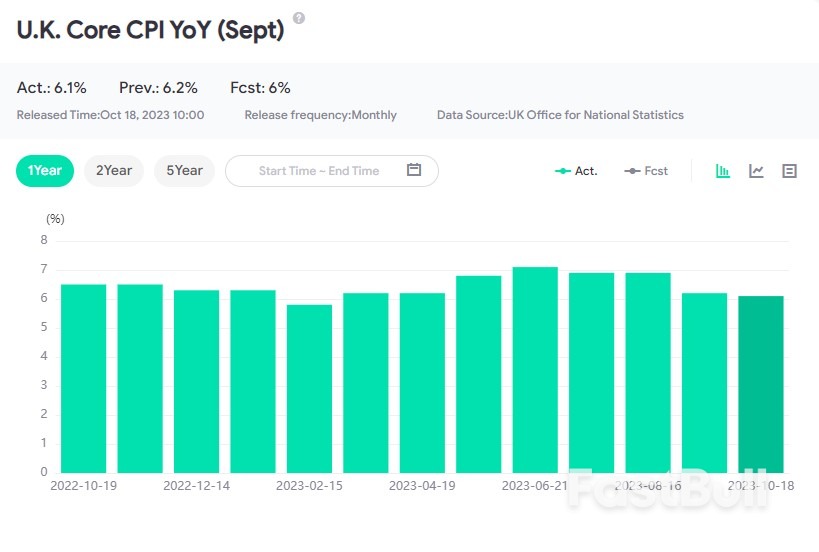
          The latest UK inflation data for September has taken markets by surprise, and the consequences are rippling through the financial landscape. Headline Consumer Price Index (CPI) inflation came in at 6.7% year-on-year, matching August's figure but exceeding the market's conservative 6.6% expectation. Furthermore, the month-on-month inflation rate for September saw a notable increase to 0.5%, surpassing the expected 0.3%. These inflation figures have reignited speculations about a potential rate hike by the Bank of England (BoE) before the year ends.
          Core CPI Holds Strong
          While core CPI inflation has experienced a slight dip from 6.2% to 6.1% year-on-year, it has outperformed predictions that it would drop to 6.0%. The unexpected resilience of core inflation adds fuel to the debate surrounding the BoE's future policy decisions.
          UK Inflation Exceeds Expectations, Fueling Rate Hike Speculation _1Pound Strengthens on Rate Hike Expectations
          The British Pound (GBP) swiftly responded to the higher-than-anticipated inflation figures by strengthening its position. As a result, the Pound to Euro exchange rate reached 1.1540, reflecting the heightened rate hike expectations. The Pound to Dollar exchange rate, on the other hand, remained relatively steady at 1.2180.
          50-50 Odds for a Rate Hike
          The market is currently pricing in a 50% chance of another rate hike by the BoE before the end of the year. However, despite the impressive inflation figures, they might not be compelling enough to trigger a rate hike in November. This cautious sentiment stems from the recent wage data, which showed a decline in wage pressures. A cooling in wage pressures could potentially lead to lower inflation in the future.
          Market Sentiment Shifts*
          It appears that market sentiment has already moved ahead of the inflation release, actively searching for data that supports the narrative that the BoE is concluding its rate hikes. This shift in sentiment has had repercussions on the value of the Pound.
          Inflation Contributors and Future Predictions
          Rising fuel costs have played a pivotal role in driving inflation. However, with oil prices showing signs of decline, this trend might ease in the coming weeks. Additionally, the Office for National Statistics (ONS) has highlighted downward effects on inflation from various sectors, including restaurants, hotels, food and beverages, recreation, culture, furniture, and household goods.
          As for the future, some economists anticipate a gradual rise in inflation over the coming months. They predict that the headline rate of CPI inflation could average around 4.5% in Q4 and 4.0% in Q1. These forecasts will undoubtedly factor into the BoE's decision regarding the Bank Rate, which currently stands at 5.25%.
          In summary, the surprising UK inflation figures have stirred speculation about the BoE's monetary policy, causing fluctuations in currency exchange rates. However, uncertainties around future rate hikes persist due to various economic factors, including wage pressures and sector-specific inflation contributors. These factors will play a crucial role in shaping the BoE's decisions in the months ahead.
          To stay updated on all economic events of today, please check out our Economic calendar
          Risk Warnings and Disclaimers
          You understand and acknowledge that there is a high degree of risk involved in trading. Following any strategies or investment methods may lead to potential losses. The content on the site is provided by our contributors and analysts for information purposes only. You are solely responsible for determining whether any trading assets, securities, strategy, or any other product is suitable for investing based on your own investment objectives and financial situation.
          Comments
          Add to Favorites
          Share

          Bank of Canada Preview: Stretching the 'Hawkish Hold' Approach

          ING

          Economic

          Central Bank

          Forex

          Chance of a hike have dwindled on slower inflation
          Market expectations for the upcoming Bank of Canada policy meeting have fluctuated quite a lot since the last policy meeting on 6 September when it left rates on hold at 5%. Back then the BoC signalled it was "prepared to increase the policy interest rate further if needed" and the market was anticipating a 60% chance of a 25bp rate hike at the 25 October meeting in the wake of much hotter-than-expected August inflation and strong jobs numbers.
          However, since then the data has been moving in the opposite direction and after the September inflation readings the probability of a hike next week has crashed back down to 17%. This week, September CPI figures showed a faster-than-expected slowdown in all measures of inflation: the core rate came in at 3.8%, the BoC's preferred 3-month average core rate fell from 4.3% to 3.7%.

          Bank of Canada Preview: Stretching the 'Hawkish Hold' Approach_1Growth concerns persist

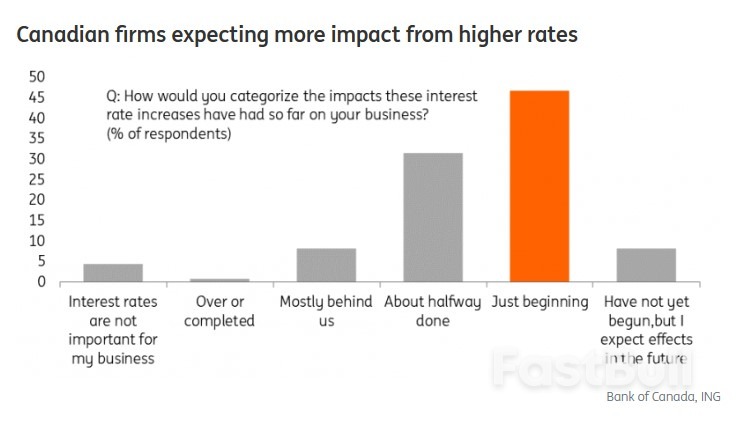
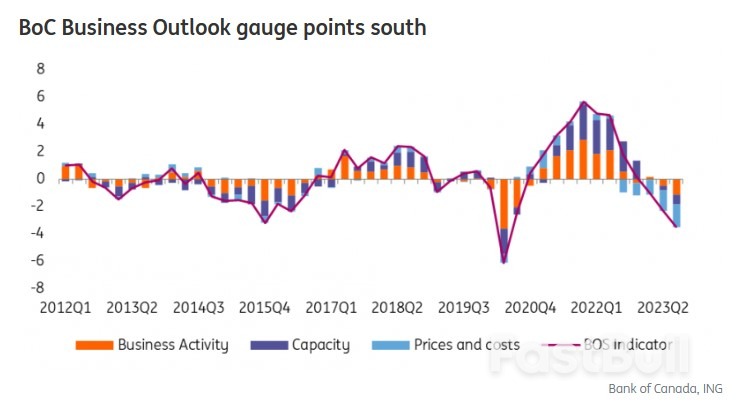
          It isn't only the latest inflation number that has surprised. The economy posted a shock contraction in the second quarter, and since then activity has flat-lined with wildfires, floods and strike action, all acting as a brake on activity in addition to the cumulative effects of policy tightening from the Bank of Canada. The BoC Business Outlook indicator slumped further in the third quarter on the back of weaker demand expectations, as well as a reduced plan for hiring and capex spending.
          With an increasing number of households facing mortgage rate resets at much higher borrowing rates, there is a concern that highly indebted households will feel intensifying pain over coming quarters. We have already seen three consecutive monthly declines in home sales and further weakness is likely with affordability looking incredibly stretched.

          Bank of Canada Preview: Stretching the 'Hawkish Hold' Approach_2The counterargument: strong jobs market

          Canada's jobs market has surprised even the most optimistic forecasters recently. August and September saw employment rising by a total of over 100k, equally split between part- and full-time hiring, while unemployment remained low at 5.5%.
          In a recent speech, the BoC Governor said: "it's not so much about where inflation is now, it's about where inflation's going to be", stressing the importance of inflation expectations and wage growth. Wage inflation has been on the upside according to official data, touching 5.3% year-on-year in September after four consecutive months of acceleration. Wage figures in Canada tend, however, to be rather volatile.
          The BoC puts a lot of weight on the BoC Business Outlook survey, and the third quarter issue contained a few notions that partly offset the strong labour market narrative. Firms reported expected wage growth at around 4.3% for the year ahead, a fifth consecutive quarter-on-quarter decline, with a record 60% of respondents expecting increases in labour costs to abate in the next 12 months.
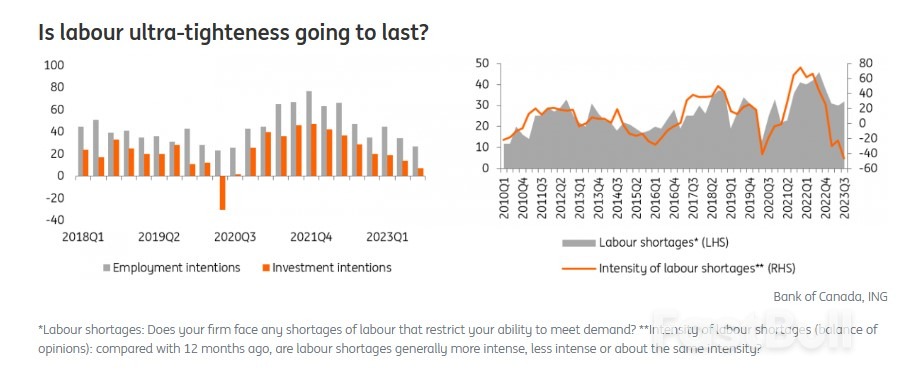
          Incidentally, hiring intentions have declined in tandem with collapsing investment plans and are at the lowest since the third quarter of 2020. A key driver of strong employment gains – supply shortages – also appears to be abating: the BoC indicator of labour shortage intensity has dropped to the lowest since 2009.

          Bank of Canada Preview: Stretching the 'Hawkish Hold' Approach_3Another hawkish hold, but the BoC may well be done

          We must add another factor to the equation: higher bond yields. Canadian sovereign yields have jumped in line with the US ones, reaching a peak a 4.24% peak in early October and now trading around 4.10% – over 100bp higher compared to when the BoC last met in September. BoC speakers have not been as vocal as their Fed counterparts about the link between higher market yields and lower chances of another hike, but there are few reasons to believe they strongly oppose such a line of reasoning.
          When adding the clouded growth pictures and indications that the extreme tightness in labour market may not last much longer, we see little scope for a surprise rate hike by the BoC on 25 October. However, policymakers still have all the interest to keep the higher-for-longer narrative to keep a floor below Canadian yields and let them do part of the tightening.
          Moving ahead, we are of the view that economic weakness will also contribute to inflation continuing to slow to target, meaning no further rate hikes from the Bank of Canada. We see the potential for the BoC having to start to reversing course and bring policy rates towards a more neutral level from the second quarter of 2024 onwards.

          Market implications: CAD still struggling to shine

          The CAD OIS curve is pricing only 4bp ahead of the October meeting, meaning that a hold is a very well-telegraphed outcome and should not have a major impact per-se. Markets will primarily focus on the content of the monetary policy report: revisions of the inflation and growth projections will be particularly in focus, and there is a risk those may hinder the attempts by Governor Macklem to maintain a hawkish stance.
          There are still around 15bp of tightening in the price to a peak, and therefore some downside risks for CAD if new projections show a more benign path for inflation and/or worse growth outlook. Either way, USD/CAD should remain primarily driven by non-Canadian factors: the USD performance on the back of US data releases, geopolitical events and the connected implications for commodity prices and risk sentiment.
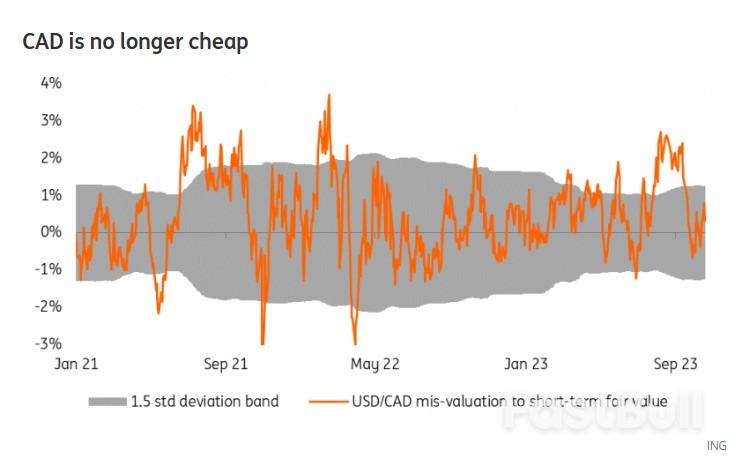
          Despite trading around the levels of late August and early September, our short-term fair value model shows that USD/CAD is not overvalued as it was back then – meaning that the move in spot is justified by the rates and equity dynamics and there is no risk premium into the pair. While we still expect a turn lower in the pair on the back of a broad-based USD decline from the first quarter of 2024, we maintain a neutral bias (1.37/1.38) into December, with only some potential downside risks on the back of seasonal USD weakness into year-end.Bank of Canada Preview: Stretching the 'Hawkish Hold' Approach_4
          To stay updated on all economic events of today, please check out our Economic calendar
          Risk Warnings and Disclaimers
          You understand and acknowledge that there is a high degree of risk involved in trading. Following any strategies or investment methods may lead to potential losses. The content on the site is provided by our contributors and analysts for information purposes only. You are solely responsible for determining whether any trading assets, securities, strategy, or any other product is suitable for investing based on your own investment objectives and financial situation.
          Comments
          Add to Favorites
          Share

          Higher Treasury Yields Weigh, AUD/USD Lower While EUR/USD Hovers at Support

          IG

          Forex

          Market Recap
          Risk sentiments continue to reel in from the fresh multi-year highs in US Treasury yields yesterday, as resilient US economic data brought the high-for-longer rate outlook for the Federal Reserve (Fed) back into the limelight lately. Some after-effects of the blowout US retail sales report this week may remain in play, while lukewarm US housing data overnight did not change much of the hawkish narrative. The US 10-year yields seem to be setting its sight on the key 5% level, surging close to 20 basis-points (bp) over the past two days to stand at 4.91%.
          After-market result releases from Netflix and Tesla may offer investors some diversion. A higher-than-expected addition of 8.76 million global subscribers during the quarter once again pushed back against any lingering views that Netflix's membership growth momentum may be slowing, while a price hike announced by the company may be a net-positive for its subsequent top and bottom-line, given its resilient user base. Its share price is up 13% after-market.
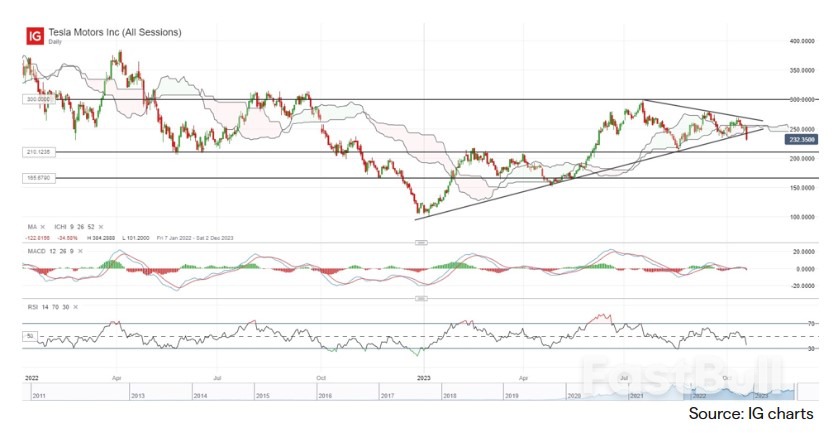
          The same optimism is not displayed in Tesla however, which failed to beat both revenue and earnings expectations. A more cautious outlook in the earnings call, along with some pushback in the financial contribution for Cybertruck, seems to take the bulk of the attention. Not to mention its slowest revenue growth in more than three years and a significant softening in operating margin (7.6% vs 17.2% a year ago).
          A trendline breakdown with a 4.3% decline in its share price after-market may offer a huge obstacle for the bulls, while its daily moving average convergence/divergence (MACD) seems to be setting its sight on a reversion into negative territory as a sign of downward momentum. Any follow-through selling in tonight's session may leave the US$210.12 level on watch next as potential support.
          Higher Treasury Yields Weigh, AUD/USD Lower While EUR/USD Hovers at Support_1Asia Open
          Asian stocks look set for a negative open, with Nikkei -1.55%, ASX -1.14% and KOSPI -1.24% at the time of writing. Another surge in Treasury yields, lingering geopolitical tensions in the Middle East and higher oil prices seem to dampen appetite in risk-taking for now. Despite some promising signs of policy success seeping into China's economic data yesterday, Chinese equities failed to move higher with the Hang Seng heading back towards its early-October low. Unresolved risks in the property sector may have some part to play, as concerns revolve around a potential default for troubled Chinese developer Country Garden.
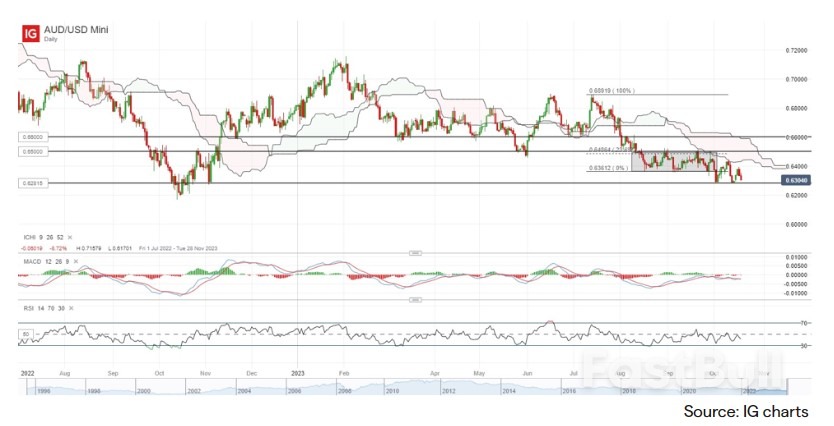
          Aside, the economic calendar this morning brought fresh update on Australia's employment numbers, which rose significantly less than expected (6,700 vs 20,000 expected), but unemployment rate saw a tick lower (3.6% vs 3.7% forecast) as an indication of a tight labour supply. Reaction in the AUD/USD is to the downside, with intermittent bounces lately failing to find much of follow-through. With its daily Relative Strength Index (RSI) struggling to cross above the key 50 level since July this year, sellers seems to retain control for now, with any fresh break below recent lows potentially leaving its October 2022 low on watch next at the 0.617 level.
          Higher Treasury Yields Weigh, AUD/USD Lower While EUR/USD Hovers at Support_2On the watchlist: EUR/USD attempting to defend key support but much awaits
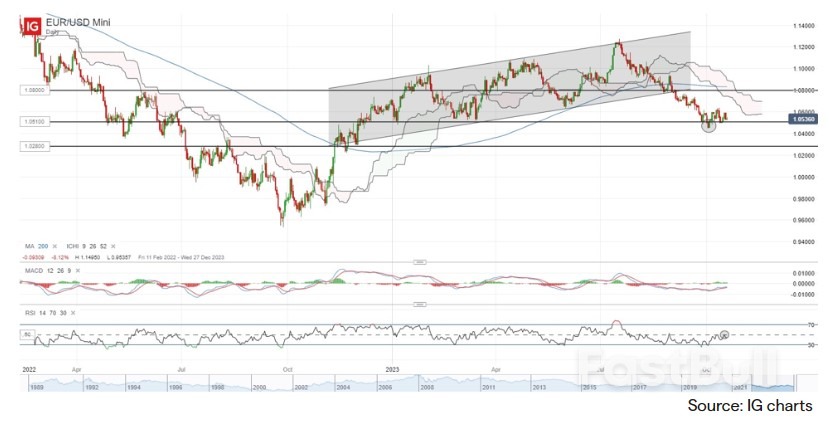
          The EUR/USD has been attempting to hold above a key horizontal support at the 1.051 level lately, with its MACD forming a rounding bottom as an attempt to stabilise from its 7% sell-off since mid-July. A brief breakdown of the support line in early-October was met with some defending from buyers for now, but greater conviction may have to come from a move above its recent October high at the 1.063 level to form a near-term higher high. That may pave the way to retest the 1.081 level next.
          One may also watch for a move in its daily RSI back above the 50 level, which it has not done so since July this year. Any failure to defend the 1.051 level could unlock fresh selling pressures potentially towards the 1.028 level, where the next line of support resides.Higher Treasury Yields Weigh, AUD/USD Lower While EUR/USD Hovers at Support_3
          Risk Warnings and Disclaimers
          You understand and acknowledge that there is a high degree of risk involved in trading. Following any strategies or investment methods may lead to potential losses. The content on the site is provided by our contributors and analysts for information purposes only. You are solely responsible for determining whether any trading assets, securities, strategy, or any other product is suitable for investing based on your own investment objectives and financial situation.
          Comments
          Add to Favorites
          Share

          October 19th Financial News

          FastBull Featured

          Daily News

          [Quick Facts]

          1. Thousands of Detroit casino workers go on strike.
          2. U.S. President Biden promises to aid Gaza and Israel.
          3. The U.S. has temporarily lifted oil sanctions on Venezuela.
          4. Fed's Beige Book sees U.S. growth as stable or slightly weaker.
          5. Fed's Waller favors holding rates steady and thinks it's premature to discuss rate cuts.
          6. A former BOJ official expects a possible end of negative rates by year-end.
          7. With inventories falling, demand is a key driver of oil prices.

          [News Details]

          Thousands of Detroit casino workers go on strike
          Three casinos (MGM Grand, MotorCity Casino Hotel, and Hollywood Casino at Greektown) in Detroit, Michigan, the United States, failed to reach an agreement on welfare benefits with unions on Oct. 17, local time, resulting in a strike by the 3,700 workers of the three casinos. It was the first strike in more than 20 years since the three casinos opened.
          Data from the Detroit Casino Council suggests that Detroit casino workers have received only 3% pay raises since 2020, while local inflation has risen 20%.
          Strikes keep going on in the United States. In mid-September, about 34,000 of the 146,000 workers of the three major automakers, including Ford, were on strike as the United Auto Workers failed to reach a new labor agreement with the three automakers. The strike has been going on for over a month.
          U.S. President Biden promises to aid Gaza and Israel
          U.S. President Joe Biden visited Israel on Wednesday and pledged more aid to Israel. He argued that a rocket-launching blunder by Gaza militants caused a deadly hospital explosion that derailed talks to prevent the war from expanding.
          The White House National Security Council echoed Biden's comments, saying the U.S. assessment was based on analysis of overhead imagery, intercepts, and open-source information.
          Biden said the U.S. would provide $100 million for humanitarian assistance to Palestinians in both Gaza and the Israeli-occupied West Bank. Biden also said he would ask Congress this week to provide an "unprecedented" package of aid to Israel, but no action would be likely until the House of Representatives elected a new speaker.
          At the end of Biden's visit, Israeli Prime Minister Benjamin Netanyahu's office issued a statement saying that Israel would allow food, water, and medicine to enter southern Gaza via Egypt. Israel reiterated that it will not allow aid to enter Gaza from Israel until Hamas releases some 200 hostages it took in the Oct. 7 attack.
          The U.S. temporarily lifts oil sanctions on Venezuela
          The U.S. Treasury Department issued a stay order authorizing transactions with Venezuela's oil and gas sector for six months. The Treasury added that it is prepared to "modify or revoke the authorization at any time" if commitments are not met. This means that the U.S. will temporarily lift some key sanctions against Venezuela's oil and gas sector.
          In November 2022, the White House eased sanctions on Venezuela to allow Chevron to increase oil production in its joint ventures there with Venezuela's state-owned PdV.
          Fed's Beige Book sees U.S. growth as stable or slightly weaker
          The Federal Reserve's Beige Book showed that the near-term outlook for the U.S. economy was generally described as stable or having slightly weaker growth, and tightness in the labor market continued to ease. Economic activity in most districts has remained largely unchanged since the release of the September Beige Book report. Consumer spending was mixed due to differences in prices and product availability which was particularly pronounced among general retailers and automobile dealers. Overall price increases have moderated. Some districts reported a decrease in the number of firms expecting significant price increases in the future. Wages increased at a moderate to modest pace in most districts. There were multiple reports of firms modifying their compensation packages to mitigate higher labor costs, including allowing remote work in lieu of higher wages and reducing sign-on bonuses.
          Fed's Waller favors holding rates steady and thinks it's premature to discuss rate cuts
          I believe we can wait, watch, and see how the economy evolves before making definitive moves on the path of the policy rate, said Fed Governor Christopher Waller. I will carefully watch the data performance, and then determine whether the economy is really cooling and whether nominal price increases have accelerated. It is still possible that we could raise rates one more time, and whether and when to do so will be data-driven, added Waller.
          For now, it is too early to draw conclusions, but there's no doubt Waller favors holding interest rates steady at the rate decision meeting two weeks later.
          During the Q&A part, Waller said it was premature to discuss a rate cut. He believes that the Middle East conflict will have little impact on U.S. economic growth unless there is an escalation and expansion of the conflict.
          The comments came a day before Fed Chairman Jerome Powell was due to deliver a policy speech in New York. In recent days, several Fed officials have said that rising U.S. Treasury yields indicate that financial conditions are tightening so further rate hikes may not be needed.
          A former BOJ official expects a possible end of negative rates by year-end
          Similar to the Federal Reserve, the Bank of Japan (BOJ) has only two monetary policy meetings left this year, and it will announce its interest rate decision on Oct. 31 and Dec. 19, respectively. More data and remarks are now pointing to that Japan's monetary policymakers will pull off a historic moment at the end of the year.
          The Bank of Japan may cancel negative interest rates by the end of this year to adjust the currently excessive level of monetary easing, said former BOJ Monetary Policy Committee member Makoto Sakurai on Wednesday. Given the current state of the economic recovery, the Bank of Japan may act at any time. Makoto Sakurai thought that the Bank of Japan appears to be cautious under the leadership of the new Governor Kazuo Ueda, but they are taking policy steadily and faster than expected. Makoto Sakurai, who was a monetary policy member from 2016 to 2021, not only has a close relationship with former Governor Haruhiko Kuroda but also knows Kazuo Ueda very well. He had successfully predicted the BOJ's unexpected adjustments to its yield curve control policy in late 2022.
          Also, people familiar with the matter revealed on Wednesday that the BOJ will raise its inflation forecast for the current fiscal year, which ends in March 2024, to 3% from 2.5% in its economic forecast to be released at the end of the month. In addition, the BOJ will also raise its 2024 inflation forecast from 1.9% to above its 2% policy target.
          With inventories falling, demand is a key driver of oil prices
          The EIA data confirmed the API report, with all categories of inventories declining. Most notably, gasoline inventories have plummeted. The replenishment of the Strategic Petroleum Reserve (SPR) has stalled and hasn't made any progress for 6 weeks. Cushing crude inventories fell to their lowest level since October 2014. Brent and WTI crude oil futures forward curves have moved higher on expectations that supply disruptions may persist. A possible U.S.-Venezuela deal would have limited short-term impact on supply due to Venezuela's poor infrastructure. Demand remains a more important short-term driver of oil prices.

          [Focus of the Day]

          UTC+8 20:30 U.S. Weekly Initial Jobless Claims
          UTC+8 21:00 Federal Reserve Vice Chairman Jefferson speaks
          UTC+8 00:00 Next Day: Federal Reserve Chairman Jerome Powell speaks
          UTC+8 01:20 Next Day: Chicago Fed President Goolsby participates in a question and answer session at an event
          UTC+8 05:30 Next Day: Philadelphia Fed President Harker speaks
          Risk Warnings and Disclaimers
          You understand and acknowledge that there is a high degree of risk involved in trading. Following any strategies or investment methods may lead to potential losses. The content on the site is provided by our contributors and analysts for information purposes only. You are solely responsible for determining whether any trading assets, securities, strategy, or any other product is suitable for investing based on your own investment objectives and financial situation.
          Comments
          Add to Favorites
          Share
          FastBull
          Copyright © 2025 FastBull Ltd

          728 RM B 7/F GEE LOK IND BLDG NO 34 HUNG TO RD KWUN TONG KLN HONG KONG

          TelegramInstagramTwitterfacebooklinkedin
          App Store Google Play Google Play
          Products
          Charts

          Chats

          Q&A with Experts
          Screeners
          Economic Calendar
          Data
          Tools
          Membership
          Features
          Function
          Markets
          Copy Trading
          Latest Signals
          Contests
          News
          Analysis
          24/7
          Columns
          Education
          Company
          Careers
          About Us
          Contact Us
          Advertising
          Help Center
          Feedback
          User Agreement
          Privacy Policy
          Business

          White Label

          Data API

          Web Plug-ins

          Poster Maker

          Affiliate Program

          Risk Disclosure

          The risk of loss in trading financial instruments such as stocks, FX, commodities, futures, bonds, ETFs and crypto can be substantial. You may sustain a total loss of the funds that you deposit with your broker. Therefore, you should carefully consider whether such trading is suitable for you in light of your circumstances and financial resources.

          No decision to invest should be made without thoroughly conducting due diligence by yourself or consulting with your financial advisors. Our web content might not suit you since we don't know your financial conditions and investment needs. Our financial information might have latency or contain inaccuracy, so you should be fully responsible for any of your trading and investment decisions. The company will not be responsible for your capital loss.

          Without getting permission from the website, you are not allowed to copy the website's graphics, texts, or trademarks. Intellectual property rights in the content or data incorporated into this website belong to its providers and exchange merchants.

          Not Logged In

          Log in to access more features

          FastBull Membership

          Not yet

          Purchase

          Become a signal provider
          Help Center
          Customer Service
          Dark Mode
          Price Up/Down Colors

          Log In

          Sign Up

          Position
          Layout
          Fullscreen
          Default to Chart
          The chart page opens by default when you visit fastbull.com