• Trade
  • Markets
  • Copy
  • Contests
  • News
  • 24/7
  • Calendar
  • Q&A
  • Chats
Screeners
SYMBOL
LAST
ASK
BID
HIGH
LOW
NET CHG.
%CHG.
SPREAD
SPX
S&P 500 Index
6950.22
6950.22
6950.22
6964.65
6921.61
+34.61
+ 0.50%
--
DJI
Dow Jones Industrial Average
49412.39
49412.39
49412.39
49488.81
49137.65
+313.69
+ 0.64%
--
IXIC
NASDAQ Composite Index
23601.35
23601.35
23601.35
23688.94
23486.08
+100.11
+ 0.43%
--
USDX
US Dollar Index
96.570
96.650
96.570
97.060
96.560
-0.260
-0.27%
--
EURUSD
Euro / US Dollar
1.19070
1.19077
1.19070
1.19079
1.18502
+0.00277
+ 0.23%
--
GBPUSD
Pound Sterling / US Dollar
1.37217
1.37224
1.37217
1.37235
1.36636
+0.00437
+ 0.32%
--
XAUUSD
Gold / US Dollar
5080.75
5081.09
5080.75
5100.65
5013.05
+70.48
+ 1.41%
--
WTI
Light Sweet Crude Oil
60.493
60.593
60.493
60.929
60.054
-0.255
-0.42%
--

Community Accounts

Signal Accounts
--
Profit Accounts
--
Loss Accounts
--
View More

Become a signal provider

Sell trading signals to earn additional income

View More

Guide to Copy Trading

Get started with ease and confidence

View More

Signal Accounts for Members

All Signal Accounts

Best Return
  • Best Return
  • Best P/L
  • Best MDD
Past 1W
  • Past 1W
  • Past 1M
  • Past 1Y

All Contests

  • All
  • Trump Updates
  • Recommend
  • Stocks
  • Cryptocurrencies
  • Central Banks
  • Featured News
Top News Only
Share

Naftogaz Says It Is 15Th Deliberate Attack On Its Infrastructure Since Since Start Of 2026

Share

Reserve Bank Of India: MOU Demonstrates Importance Of Cross-Border Cooperation To Facilitate International Clearing Activities

Share

Reserve Bank Of India: Reserve Bank Of India And European Securities And Markets Authority Sign A MOU

Share

India Trade Minister: Hope For Entry Into Force Of Trade Deal With EU Within Calendar 2026 Itself

Share

Stats Agency - Mexico Diciembre Trade Balance +2.43 Billion Dollars

Share

Ibge - Brazil's IPCA-15 Price Index 4.50 Percent In 12 Months To Mid-January

Share

Zelenkiy Says Ukraine Should Become EU Member By 2027, Hopes For Members' Support

Share

UN Agency: School Materials Enter Gaza After Being Blocked For Two Years

Share

Gm: Q4 Tariff Costs Of $0.7 Billion, Expects Gross Tariff Costs Of $3 Billion To $4 Billion In 2026

Share

ECB Governing Council Member Simkus Tells Reuters There Is Equal Chance That Next Rate Move, Whenever It Comes, Will Be A Hike Or A Cut

Share

Malaysia Looking To Sign Free Trade Pact With South Korea By Mid-2026- Deputy Trade Minister

Share

Poland's Kghm Says Dec Copper Sales At 62.7 Thousand Tonnes

Share

USA Natural Gas Futures Falls Nearly 8% To $6.241/Mmbtu

Share

[Hamas Official Claims Completion Of All First-Phase Ceasefire Agreement Terms] On January 27, Local Time, Senior Hamas Official Hussam Badran Stated That Hamas Has Fulfilled All The Terms Of The First Phase Of The Gaza Ceasefire Agreement, Accusing Israel Of Continued Delays In Implementing The Agreement, Particularly Regarding The Opening Of The Rafah Crossing And The Withdrawal From Occupied Territories. Regarding The Next Phase Of The Gaza Ceasefire Agreement, Badran Stated That The Second Phase Must Include A Complete Israeli Withdrawal From The Gaza Strip, The Commencement Of Reconstruction, The Allowance Of Aid, And Guarantees For Gaza's Future. He Believes That Discussions About "disarmament" Are Hindering The Agreement's Progress

Share

Pakistan Finance Minister Report: Current Account Posted Deficit Of $1.2 Billion During Jul-Dec Fy2026, Compared To Surplus Of $0.96 Billion Recorded Last Year

Share

Pakistan Finance Minister Report: Inflation Expected To Remain Within Range Of 5-6 % Percent In January

Share

EU High Representative For Foreign Affairs And Security Policy Karas: (Regarding The Reasons For The EU's Security And Defense Partnership With India) We Can't Put All Our Eggs In One Basket

Share

EU High Representative For Foreign Affairs And Security Policy Karas: I Have Asked My Indian Counterparts To Engage In Dialogue With Russia And To Pressure Russia On The Peace Process In Ukraine

Share

China Defence Minister: Improve Capability To Respond To Various Risks And Challenges

Share

China Defence Minister Held Phone Call With Russia Counterpart

TIME
ACT
FCST
PREV
U.S. IHS Markit Manufacturing PMI Prelim (SA) (Jan)

A:--

F: --

P: --

U.S. IHS Markit Services PMI Prelim (SA) (Jan)

A:--

F: --

P: --

U.S. UMich Consumer Sentiment Index Final (Jan)

A:--

F: --

P: --

U.S. UMich Current Economic Conditions Index Final (Jan)

A:--

F: --

P: --

U.S. UMich Consumer Expectations Index Final (Jan)

A:--

F: --

P: --

U.S. Conference Board Leading Economic Index MoM (Nov)

A:--

F: --

P: --

U.S. Conference Board Coincident Economic Index MoM (Nov)

A:--

F: --

P: --

U.S. Conference Board Lagging Economic Index MoM (Nov)

A:--

F: --

P: --

U.S. UMich 1-Year-Ahead Inflation Expectations Final (Jan)

A:--

F: --

P: --

U.S. Conference Board Leading Economic Index (Nov)

A:--

F: --

P: --

U.S. Weekly Total Rig Count

A:--

F: --

P: --

U.S. Weekly Total Oil Rig Count

A:--

F: --

P: --

Japanese Prime Minister Sanae Takaichi delivers a speech
Germany Ifo Business Expectations Index (SA) (Jan)

A:--

F: --

P: --

Germany IFO Business Climate Index (SA) (Jan)

A:--

F: --

P: --

Germany Ifo Current Business Situation Index (SA) (Jan)

A:--

F: --

P: --

Brazil Current Account (Dec)

A:--

F: --

P: --

Mexico Unemployment Rate (Not SA) (Dec)

A:--

F: --

P: --

Canada National Economic Confidence Index

A:--

F: --

P: --

U.S. Non-Defense Capital Durable Goods Orders MoM (Excl. Aircraft) (Nov)

A:--

F: --

P: --
U.S. Durable Goods Orders MoM (Excl. Defense) (SA) (Nov)

A:--

F: --

P: --
U.S. Durable Goods Orders MoM (Excl.Transport) (Nov)

A:--

F: --

P: --

U.S. Durable Goods Orders MoM (Nov)

A:--

F: --

P: --
U.S. Chicago Fed National Activity Index (Nov)

A:--

F: --

P: --
U.S. Dallas Fed New Orders Index (Jan)

A:--

F: --

P: --

U.S. Dallas Fed General Business Activity Index (Jan)

A:--

F: --

P: --
U.S. 2-Year Note Auction Avg. Yield

A:--

F: --

P: --

U.K. BRC Shop Price Index YoY (Jan)

A:--

F: --

P: --

China, Mainland Industrial Profit YoY (YTD) (Dec)

A:--

F: --

P: --

Germany 2-Year Schatz Auction Avg. Yield

A:--

F: --

P: --

Mexico Trade Balance (Dec)

A:--

F: --

P: --

U.S. Weekly Redbook Index YoY

--

F: --

P: --

U.S. S&P/CS 20-City Home Price Index YoY (Not SA) (Nov)

--

F: --

P: --

U.S. S&P/CS 20-City Home Price Index MoM (SA) (Nov)

--

F: --

P: --

U.S. FHFA House Price Index MoM (Nov)

--

F: --

P: --

U.S. FHFA House Price Index (Nov)

--

F: --

P: --

U.S. FHFA House Price Index YoY (Nov)

--

F: --

P: --

U.S. S&P/CS 10-City Home Price Index YoY (Nov)

--

F: --

P: --

U.S. S&P/CS 10-City Home Price Index MoM (Not SA) (Nov)

--

F: --

P: --

U.S. S&P/CS 20-City Home Price Index (Not SA) (Nov)

--

F: --

P: --

U.S. S&P/CS 20-City Home Price Index MoM (Not SA) (Nov)

--

F: --

P: --

U.S. Richmond Fed Manufacturing Composite Index (Jan)

--

F: --

P: --

U.S. Conference Board Present Situation Index (Jan)

--

F: --

P: --

U.S. Conference Board Consumer Expectations Index (Jan)

--

F: --

P: --

U.S. Richmond Fed Manufacturing Shipments Index (Jan)

--

F: --

P: --

U.S. Richmond Fed Services Revenue Index (Jan)

--

F: --

P: --

U.S. Conference Board Consumer Confidence Index (Jan)

--

F: --

P: --

U.S. 5-Year Note Auction Avg. Yield

--

F: --

P: --

U.S. API Weekly Refined Oil Stocks

--

F: --

P: --

U.S. API Weekly Crude Oil Stocks

--

F: --

P: --

U.S. API Weekly Gasoline Stocks

--

F: --

P: --

U.S. API Weekly Cushing Crude Oil Stocks

--

F: --

P: --

Australia RBA Trimmed Mean CPI YoY (Q4)

--

F: --

P: --

Australia CPI YoY (Q4)

--

F: --

P: --

Australia CPI QoQ (Q4)

--

F: --

P: --

Germany GfK Consumer Confidence Index (SA) (Feb)

--

F: --

P: --

Germany 10-Year Bund Auction Avg. Yield

--

F: --

P: --

India Industrial Production Index YoY (Dec)

--

F: --

P: --

India Manufacturing Output MoM (Dec)

--

F: --

P: --

U.S. MBA Mortgage Application Activity Index WoW

--

F: --

P: --

Canada Overnight Target Rate

--

F: --

P: --

Q&A with Experts
    • All
    • Chatrooms
    • Groups
    • Friends
    Size flag
    Definitely exciting to think about, but a lot would need to align for it to hit that fast.@Khawatir_
    Khawatir_ flag
    Size
    If that happens in a year, it would mean major dollar weakness and big shifts in global rates and sentiment@Khawatir_
    @Size:) but normally it takes 3 - 6 years. The fastest is 2 years
    EuroTrader flag
    Khawatir_
    @Khawatir_Yeahh .this is really a long term trade that you would be holding for months
    EuroTrader flag
    Khawatir_
    @Khawatir_That was during the crisis. The markets crash of 2008 if am correct cousin?
    Size flag
    Khawatir_
    @Khawatir_Intraday focus makes sense
    Khawatir_ flag
    From Fib Levels To Fireworks: Natural Gas Explodes 146% In 12 Days
    Natural Gas has once again reminded traders of its explosive potential. After finding buyers at a key Fibonacci extension area, prices catapulted 146% in just 12 trading days—an extraordinary rally that left skeptics behind and rewarded those who trusted the technical confluence.
    News
    Khawatir_ flag
    This is the news. But I had already done it before this news came out.
    Size flag
    Hunting for those lows before buying is key. Patience and precision will make the move smoother.@Khawatir_
    Khawatir_ flag
    EuroTrader
    @EuroTraderSubPrime Mortgage
    Size flag
    Khawatir_
    Wow, that takes us back quite a bit
    3271138 flag
    market pls updete buy/sell position bro
    Size flag
    Shows how historic that target would be it’s been over 17 years since we saw that level.@Khawatir_
    3454164 flag
    EuroTrader
    That's right, the Fed was created to stabilize and regulate the market, currency, and inflation. The Fed must balance the market and inflation, but currently, inflation in the US is very high, unlike what's shown on the charts and what Trump says. Trump always says inflation has decreased, but that's just fabricated information. When an importing country imposes tariffs on exporting countries, those exporting countries have to raise prices to pay the US government taxes. But when those goods reach stores, they incur additional costs, and by the time they reach consumers in the US, the price has doubled. Therefore, lowering interest rates will only increase inflation, devalue the currency, and countries that are accelerating de-dollarization will face significant risks; it could destroy the USD.
    Size flag
    Definitely not impossible, but would need major macro shifts to revisit it.@Khawatir_
    Khawatir_ flag
    00:36
    Size flag
    Khawatir_
    @Khawatir_Ah, that makes sense. So a year would be super aggressive.
    Khawatir_ flag
    Size
    @Sizeif it reaches 1/1.5 years it means the damage is serious
    Size flag
    Patience is key with targets like that the market rarely moves that fast without big catalysts.@Khawatir_
    Khawatir_ flag
    Size
    Patience is key with targets like that the market rarely moves that fast without big catalysts.@Khawatir_
    @Sizeyes, buy it slowly / in installments
    Size flag
    Khawatir_
    It would signal serious dollar weakness and major shifts in the global economy.
    Type here...
    Add Symbol or Code

      No matching data

      All
      Trump Updates
      Recommend
      Stocks
      Cryptocurrencies
      Central Banks
      Featured News
      • All
      • Russia-Ukraine Conflict
      • Middle East Flashpoint
      • All
      • Russia-Ukraine Conflict
      • Middle East Flashpoint
      Search
      Products

      Charts Free Forever

      Chats Q&A with Experts
      Screeners Economic Calendar Data Tools
      Membership Features
      Data Warehouse Market Trends Institutional Data Policy Rates Macro

      Market Trends

      Market Sentiment Order Book Forex Correlations

      Top Indicators

      Charts Free Forever
      Markets

      News

      News Analysis 24/7 Columns Education
      From Institutions From Analysts
      Topics Columnists

      Latest Views

      Latest Views

      Trending Topics

      Top Columnists

      Latest Update

      Signals

      Copy Rankings Latest Signals Become a signal provider AI Rating
      Contests
      Brokers

      Overview Brokers Assessment Rankings Regulators News Claims
      Broker listing Forex Brokers Comparison Tool Live Spread Comparison Scam
      Q&A Complaint Scam Alert Videos Tips to Detect Scam
      More

      Business
      Events
      Careers About Us Advertising Help Center

      White Label

      Data API

      Web Plug-ins

      Affiliate Program

      Awards Institution Evaluation IB Seminar Salon Event Exhibition
      Vietnam Thailand Singapore Dubai
      Fans Party Investment Sharing Session
      FastBull Summit BrokersView Expo
      Recent Searches
        Top Searches
          Markets
          News
          Analysis
          User
          24/7
          Economic Calendar
          Education
          Data
          • Names
          • Latest
          • Prev

          View All

          No data

          Scan to Download

          Faster Charts, Chat Faster!

          Download App
          English
          • English
          • Español
          • العربية
          • Bahasa Indonesia
          • Bahasa Melayu
          • Tiếng Việt
          • ภาษาไทย
          • Français
          • Italiano
          • Türkçe
          • Русский язык
          • 简中
          • 繁中
          Open Account
          Search
          Products
          Charts Free Forever
          Markets
          News
          Signals

          Copy Rankings Latest Signals Become a signal provider AI Rating
          Contests
          Brokers

          Overview Brokers Assessment Rankings Regulators News Claims
          Broker listing Forex Brokers Comparison Tool Live Spread Comparison Scam
          Q&A Complaint Scam Alert Videos Tips to Detect Scam
          More

          Business
          Events
          Careers About Us Advertising Help Center

          White Label

          Data API

          Web Plug-ins

          Affiliate Program

          Awards Institution Evaluation IB Seminar Salon Event Exhibition
          Vietnam Thailand Singapore Dubai
          Fans Party Investment Sharing Session
          FastBull Summit BrokersView Expo

          Denmark & Greenland Rally EU Support Over US Spat

          James Riley

          Remarks of Officials

          Daily News

          Political

          Summary:

          Denmark and Greenland rally European support, asserting sovereignty amidst U.S. pressure for control of the Arctic island.

          The leaders of Denmark and Greenland are meeting with top European officials in Berlin and Paris to build a united front following recent U.S. pressure to gain control of Greenland. The diplomatic tour aims to reinforce European solidarity as tensions over the Arctic island continue to simmer.

          Danish Prime Minister Mette Frederiksen (right) and Greenlandic Prime Minister Jens-Frederik Nielsen (left) addressing the media. The leaders are coordinating their response to U.S. diplomatic pressure over Greenland's status.

          European Tour to Counter US Influence

          Danish Prime Minister Mette Frederiksen and her Greenlandic counterpart, Jens-Frederik Nielsen, are scheduled to meet with German Chancellor Friedrich Merz on Tuesday and French President Emmanuel Macron on Wednesday. The discussions will focus on "the current foreign policy situation and the need for a strengthened Europe," according to the Danish prime minister's office.

          The meetings follow U.S. President Donald Trump's push to acquire Greenland, a Danish territory for centuries. While Trump recently withdrew tariff threats and ruled out a forcible takeover, the initial demand sent shockwaves through transatlantic relations and prompted European nations to reassess their reliance on the United States.

          In addition to their political meetings, Frederiksen and Nielsen will also attend the Welt Economic Summit in Germany on Tuesday.

          France Pledges Solidarity on Sovereignty

          France has signaled strong backing for its European partners. President Macron is expected to reaffirm European solidarity and French support for the sovereignty and territorial integrity of both Denmark and Greenland.

          A statement from the Elysee Palace noted that the leaders will address key regional issues, including:

          • Security challenges in the Arctic

          • The economic and social development of Greenland

          The statement confirmed that France and the European Union are prepared to support Greenland's development initiatives. This move highlights a broader European effort to offer a strategic alternative to U.S. influence in the region.

          Navigating Red Lines in Arctic Security

          The diplomatic crisis initially strained the NATO alliance, of which both Denmark and the U.S. are founding members. Though the conflict has shifted to a more diplomatic track, underlying tensions remain.

          Last week, President Trump claimed he had secured "total and permanent U.S. access to Greenland" through a deal with NATO. The alliance's leadership has emphasized the need for allies to increase their commitment to Arctic security, citing potential threats from Russia and China.

          In response, Denmark and Greenland have maintained they are open to discussions with the United States on a range of topics. However, they insist that their "red lines" regarding sovereignty and territorial integrity are non-negotiable.

          Risk Warnings and Disclaimers
          You understand and acknowledge that there is a high degree of risk involved in trading. Following any strategies or investment methods may lead to potential losses. The content on the site is provided by our contributors and analysts for information purposes only. You are solely responsible for determining whether any trading assets, securities, strategy, or any other product is suitable for investing based on your own investment objectives and financial situation.
          Add to Favorites
          Share

          Oil Prices Pulled Between US Storm and Kazakh Supply

          Daniel Foster

          Energy

          Remarks of Officials

          Middle East Situation

          Commodity

          Political

          Economic

          Daily News

          Oil prices edged lower on Tuesday as the market weighed the prospect of returning supply from Kazakhstan against major production disruptions in the United States caused by a severe winter storm.

          By 0900 GMT, Brent crude futures had slipped 28 cents, or 0.4%, to trade at $65.31 a barrel. U.S. West Texas Intermediate (WTI) crude saw a similar dip, falling 19 cents, or 0.3%, to $60.44 a barrel.

          Kazakh Production Ramps Up, Pressuring Prices

          A key factor weighing on the market is the anticipated resumption of production from Kazakhstan's largest oilfield. The country's energy ministry confirmed on Monday that output is poised to return, although industry sources noted that volumes remained low.

          Further signaling a return to normal operations, the Caspian Pipeline Consortium (CPC) announced it was back to full loading capacity at its Russian Black Sea terminal after completing maintenance at a mooring point. The CPC operates the main export pipeline for Kazakh crude.

          "Oil production in Kazakhstan resuming in the near future puts downward pressure on the market," explained Tamas Varga, an oil analyst at brokerage PVM. He also suggested that some traders may be taking profits on heating oil, which had risen sharply due to the cold weather in the U.S.

          US Winter Storm Knocks Out Significant Output

          Counterbalancing the bearish news from Kazakhstan, a severe winter storm sweeping across the United States has strained energy infrastructure and curtailed crude production.

          Analysts and traders estimate that U.S. oil producers lost up to 2 million barrels per day over the weekend, accounting for roughly 15% of the nation's total production.

          The freezing weather has also caused operational issues at several refineries along the U.S. Gulf Coast. According to Daniel Hynes, an analyst at ANZ, this has sparked concerns about potential fuel supply disruptions. In response, analysts are now forecasting significant drawdowns in oil inventories in the upcoming weeks, a factor that could provide a boost to prices.

          Geopolitical and OPEC+ Factors Provide Support

          Beyond the immediate supply disruptions, several other elements are helping to support the oil market.

          Middle East Tensions Remain a Factor

          On the geopolitical front, two U.S. officials confirmed on Monday that a U.S. aircraft carrier and its supporting warships have arrived in the Middle East. The move expands President Donald Trump's military capabilities in the region, particularly concerning potential actions against Iran.

          "Supply risks haven't totally evaporated," noted Hynes. "Tension in the Middle East persists after President Trump dispatched naval assets to the region."

          OPEC+ Poised to Maintain Production Discipline

          Adding another layer of support, key members of the Organization of the Petroleum Exporting Countries and their allies (OPEC+) are expected to maintain their current pause on oil output increases for March.

          According to three OPEC+ delegates, the decision is likely to be confirmed at a meeting scheduled for February 1. The eight members participating in the meeting are Saudi Arabia, Russia, the UAE, Kazakhstan, Kuwait, Iraq, Algeria, and Oman.

          To stay updated on all economic events of today, please check out our Economic calendar
          Risk Warnings and Disclaimers
          You understand and acknowledge that there is a high degree of risk involved in trading. Following any strategies or investment methods may lead to potential losses. The content on the site is provided by our contributors and analysts for information purposes only. You are solely responsible for determining whether any trading assets, securities, strategy, or any other product is suitable for investing based on your own investment objectives and financial situation.
          Add to Favorites
          Share

          Yen Plummets as Japan's Fiscal Fears Mount

          Alexander

          Data Interpretation

          Central Bank

          Bond

          Remarks of Officials

          Political

          Economic

          Traders' Opinions

          Forex

          The Japanese yen's steady decline is flashing warning signs about the nation's financial health, prompting talk of government intervention. But with a snap election looming and stimulus promises on the table, history suggests that any official action to prop up the currency may only be a temporary fix.

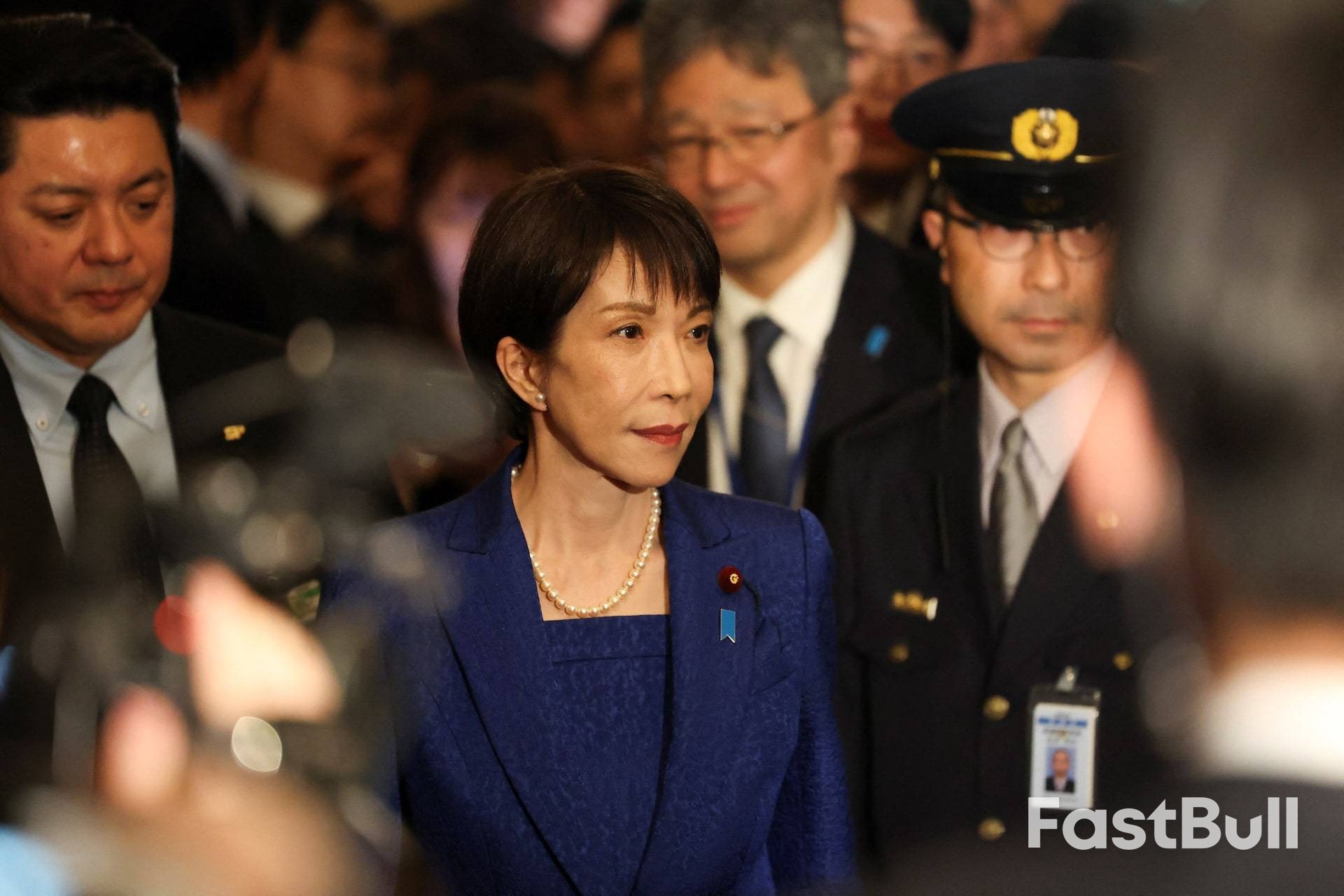
          Japanese authorities are hinting at their first market intervention since July 2024. The move comes as Prime Minister Sanae Takaichi bases her election campaign on a platform of expanded stimulus, a strategy that is rattling investors and fueling a sell-off of the yen.

          A Currency Disconnected from Fundamentals

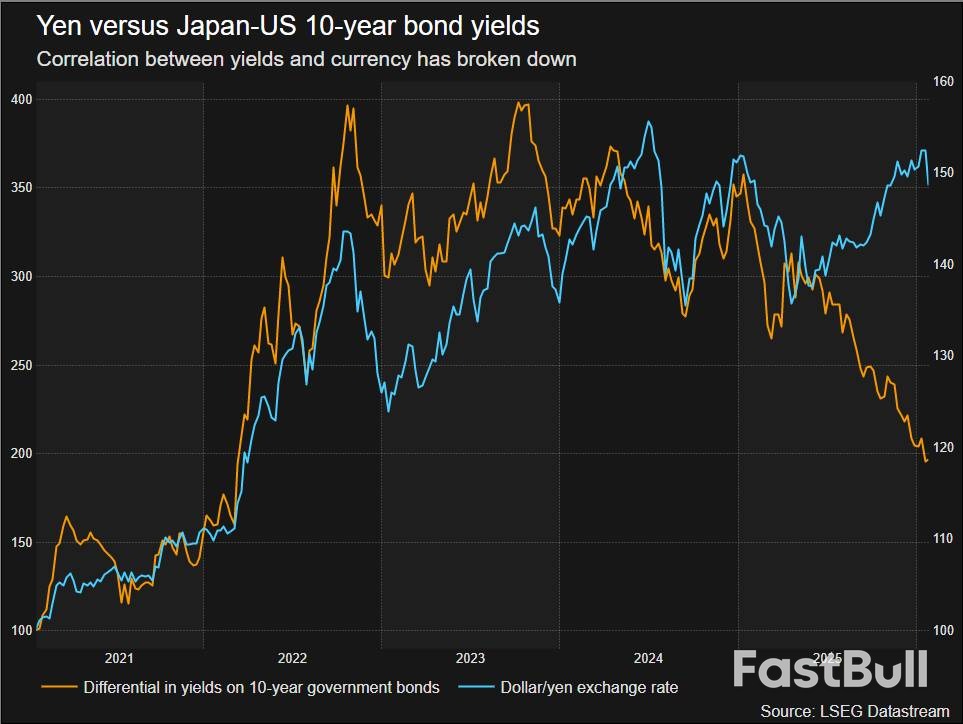
          The yen's weakness has become a potent symbol of market anxiety. Typically, rising government bond yields would support a currency. Yet, even as Japanese government bond (JGB) yields have soared to record highs, the yen has continued its relentless slide. This breakdown in a classic market relationship signals deeper concerns.

          Figure 1: The historical correlation between the Japan-US 10-year bond yield differential and the USD/JPY exchange rate has broken down, with the yen weakening even as the yield gap narrowed.

          Toshinobu Chiba, a fund manager at Simplex Asset Management, believes the currency could spiral toward 180 per dollar if Takaichi secures a major election win and expands her stimulus plans. While many expect intervention if the dollar-yen rate moves beyond 160, Chiba is skeptical about its long-term impact.

          "Most investors do not trust Japan's fiscal control," he noted. "It's a sovereign credit issue."

          Election Promises Fuel Market Anxiety

          At the core of the market's fear is Japan's massive government debt, which stands at roughly 230% of its gross domestic product—the highest in the developed world.

          Adding to these concerns, Prime Minister Takaichi has pledged to suspend the consumption tax on food. This policy, also supported by her main political opponents, would remove approximately 5 trillion yen ($32.36 billion) in annual revenue without a clear plan to cover the shortfall.

          These fears of a fiscal blowout triggered a sharp market reaction last week. Long-dated JGB yields jumped to record highs, stocks saw their worst selloff in three months, and the yen hit record lows against the euro and Swiss franc.

          Tokyo's Warning Shot: A Glimpse of Intervention?

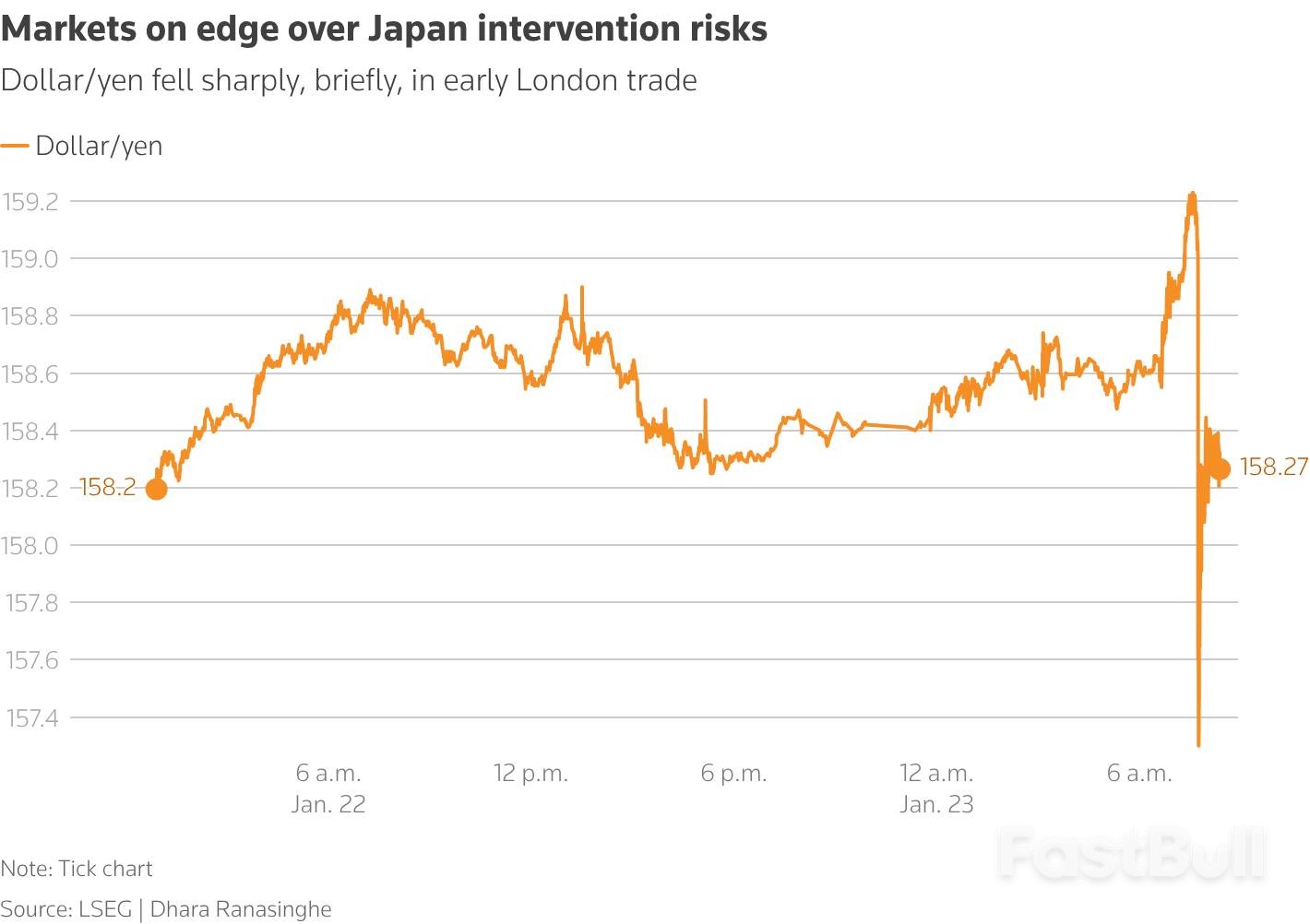
          Facing a potential "Sell Japan" market rout ahead of an election, authorities appeared to act. On Friday, the yen suddenly spiked twice despite hawkish signals from the Bank of Japan, in what traders believe were rate checks from both the BOJ and the Federal Reserve Bank of New York.

          The yen strengthened dramatically, moving from around 159.20 per dollar to as strong as 153.30 by the close of the day.

          Figure 2: The dollar-yen exchange rate saw a dramatic, sharp drop on January 23, a move widely interpreted as a response to potential intervention signals from authorities.

          While Japan's top currency diplomat, Atsushi Mimura, declined to comment, he affirmed that policymakers would maintain close coordination with their U.S. counterparts. Joint action with Washington, though rare, would align with American support for a stronger yen.

          Why Intervention Is a Short-Term Fix

          Even with potential U.S. support, currency intervention is generally seen as a tool to slow a currency's move, not reverse its fundamental direction—especially when that direction is driven by fears of fiscal collapse.

          Japan's recent history with intervention highlights its limitations:

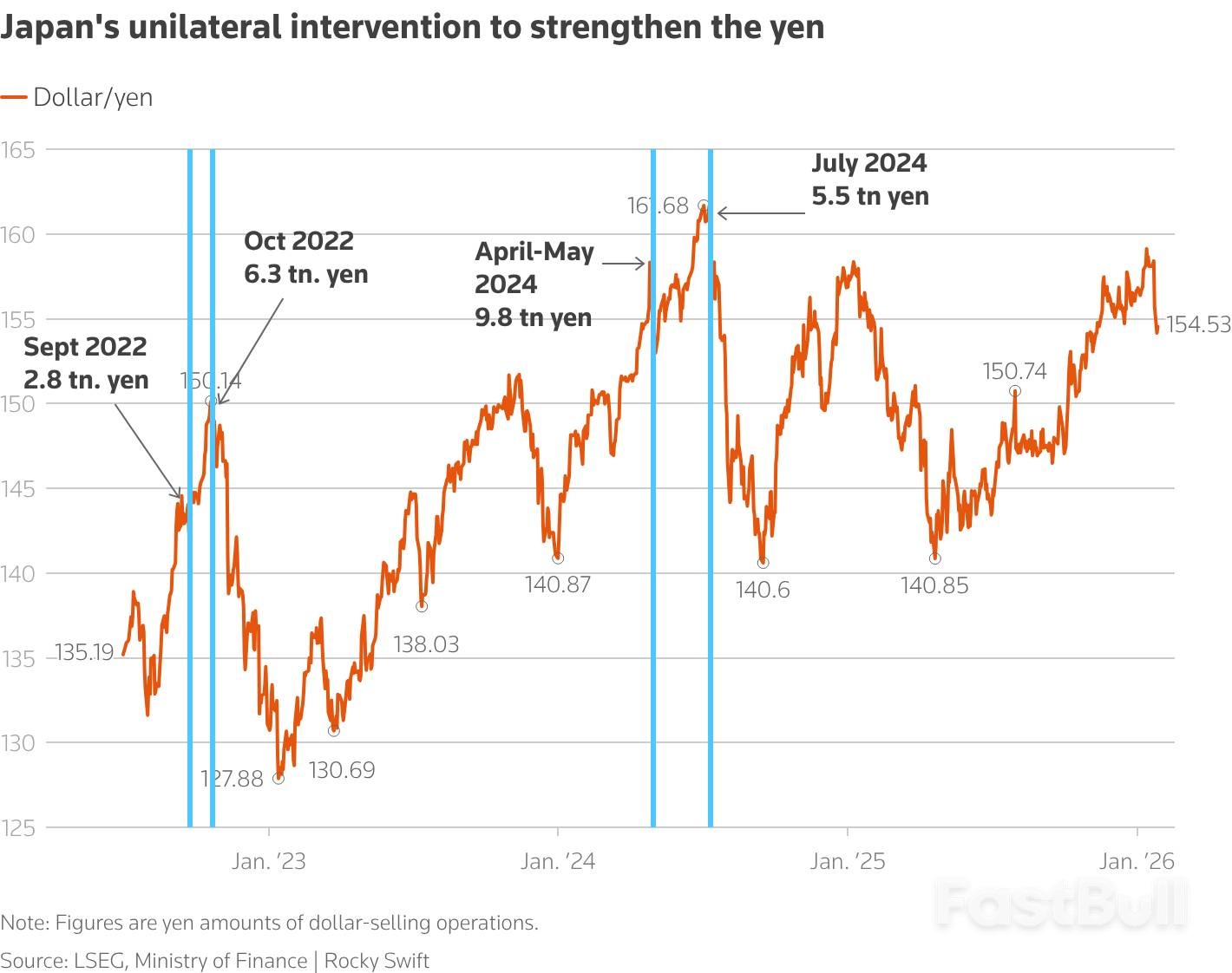
          • Massive Spending, Limited Effect: In 2024, Tokyo spent a record 15.3 trillion yen to stop yen selling, driven by diverging monetary policies between the Fed and the BOJ. After an intervention in late April of that year, the yen was hitting new lows again within two months.

          • Timing is Everything: A more successful intervention in July 2024 worked primarily because it was immediately followed by an unexpected dovish pivot from U.S. Federal Reserve Chair Jerome Powell.

          Figure 3: A history of Japan's unilateral interventions shows that while they can cause sharp, temporary yen strengthening, the currency often resumes its prior trend.

          Today, policymakers are worried that suspending the food tax will be politically difficult to reverse. Chris Scicluna, head of research at Daiwa Capital Markets Europe, pointed out that consumption tax hikes since 2014, while unpopular, were crucial for improving Japan's fiscal health.

          "The snap election is very much crystallising in investors' minds the risks that Japan's public finances just are not going to be put on a sustainable path," Scicluna said. While the country is benefiting from the return of inflation and reasonable growth, he concluded, "Unfortunately, the politics is getting in the way."

          To stay updated on all economic events of today, please check out our Economic calendar
          Risk Warnings and Disclaimers
          You understand and acknowledge that there is a high degree of risk involved in trading. Following any strategies or investment methods may lead to potential losses. The content on the site is provided by our contributors and analysts for information purposes only. You are solely responsible for determining whether any trading assets, securities, strategy, or any other product is suitable for investing based on your own investment objectives and financial situation.
          Add to Favorites
          Share

          Middle Powers Unite Against Superpower Dominance

          Isaac Bennett

          Remarks of Officials

          Political

          As American influence resurges in the West and the global rules-based order shows signs of unraveling, the world's "middle powers" are emerging as a potential check on the growing unilateralism of global superpowers.

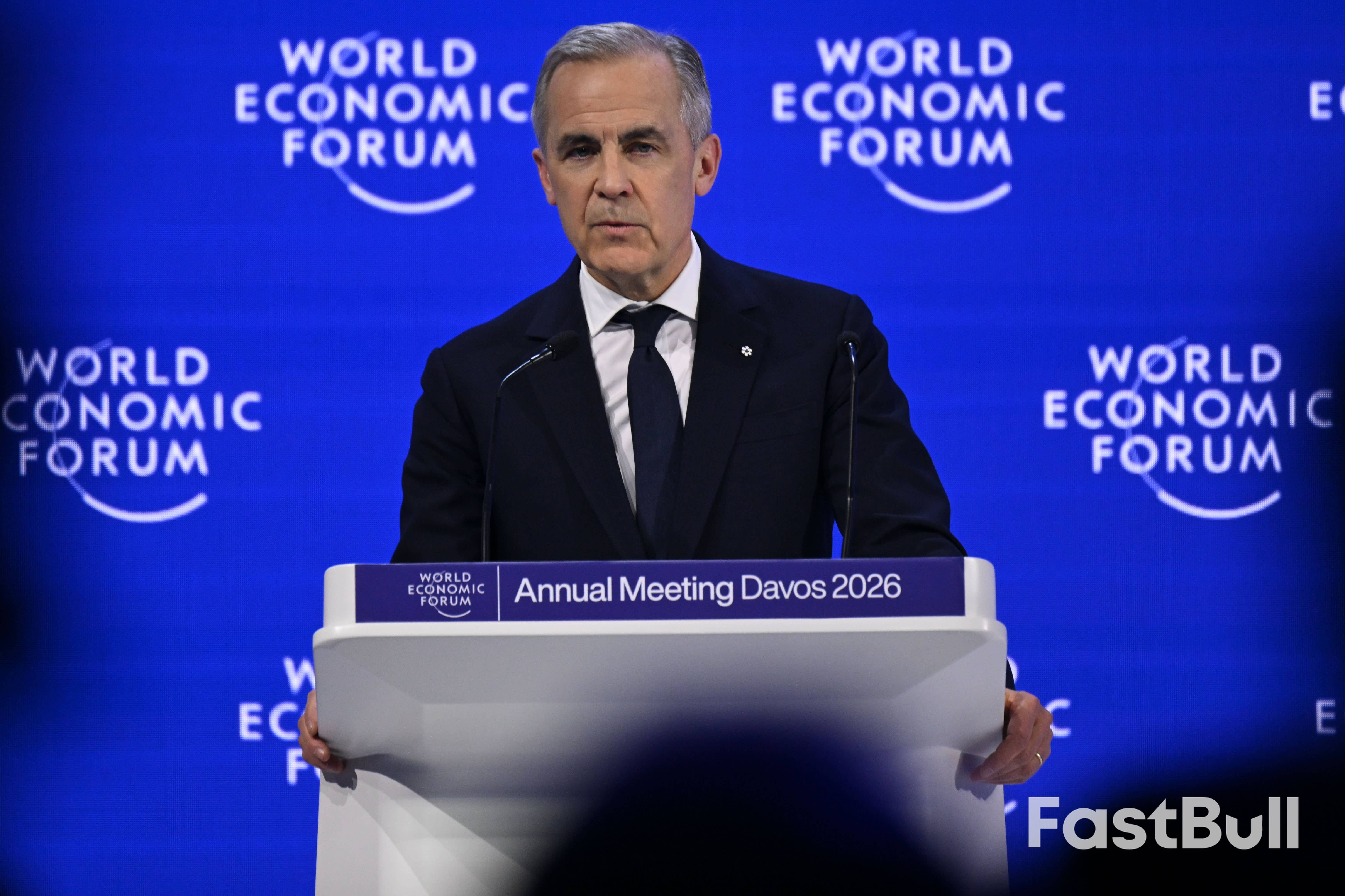
          This sentiment found a powerful voice last week when Canada's Prime Minister, Mark Carney, addressed the World Economic Forum (WEF). He argued that middle powers must collaborate to defend against the rise of hard power and the erosion of multilateral institutions like the United Nations and the World Trade Organization.

          "Great powers can afford, for now, to go it alone," Carney stated. "They have the market size, the military capacity and the leverage to dictate terms. Middle powers do not."

          His warning was stark: "The middle powers must act together, because if we're not at the table, we're on the menu."

          Canadian Prime Minister Mark Carney addresses the World Economic Forum Annual Meeting in Davos, Switzerland on January 20, 2026.

          Defining the Global Pecking Order

          The term "superpower" has historically been associated with countries holding a permanent seat on the United Nations Security Council, such as China, France, Russia, the U.K., and the U.S. However, in today's geopolitical landscape, the only nations with true superpower status are arguably the United States and China.

          The definition of a "middle power" is less precise. It generally refers to states that wield significant economic, diplomatic, or political influence but are considered to be in the second tier of the global hierarchy.

          Most members of the G20 fit this description. A WEF whitepaper, "Shaping Cooperation in a Fragmenting World," identifies prominent middle powers in the Global North, including Australia, Canada, and South Korea. In the Global South, countries like Argentina, Brazil, and Indonesia fall into the same category.

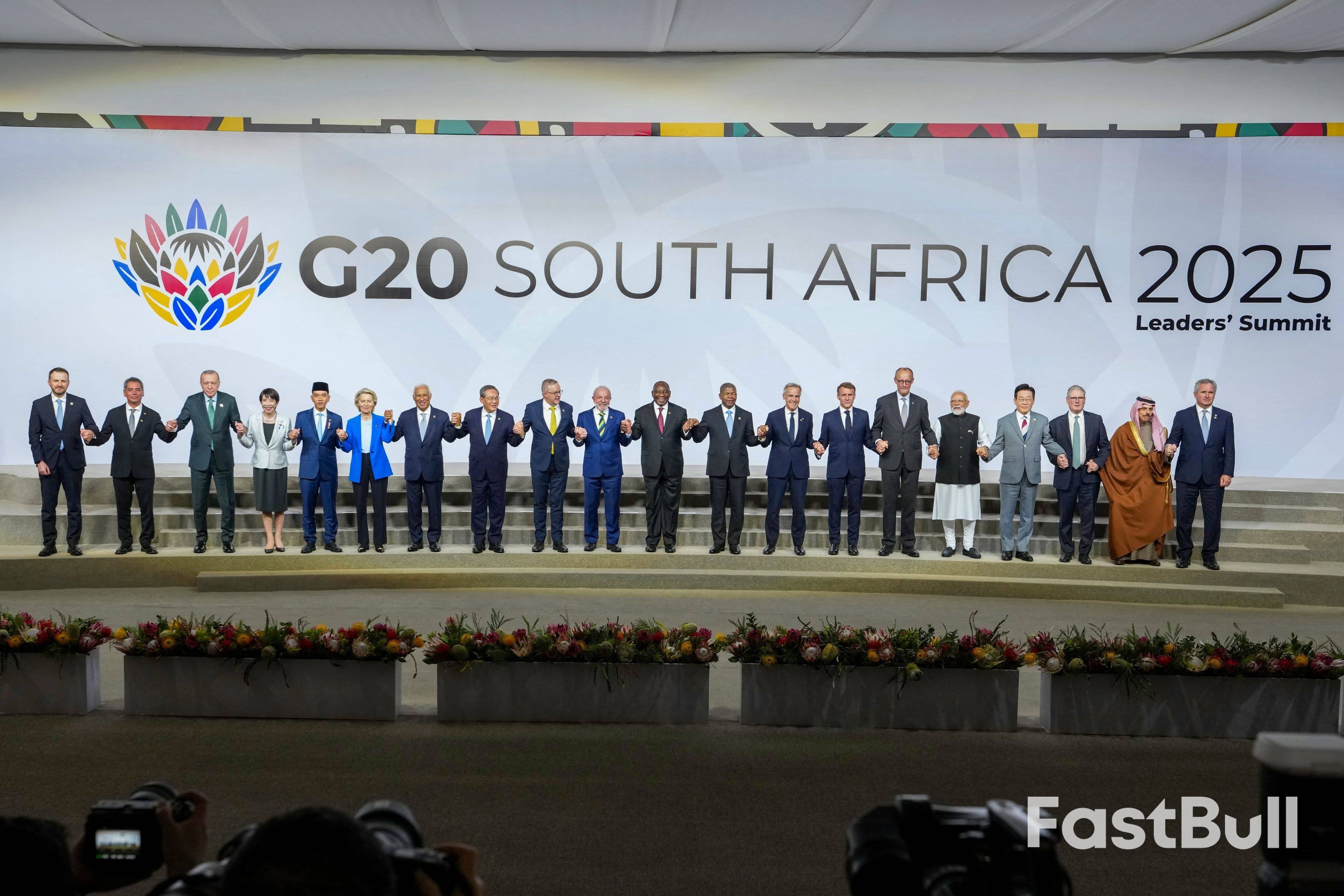
          Leaders assemble for a group photo at the G20 Leaders' Summit in Johannesburg, South Africa, on November 22, 2025.

          A Pushback Against US Foreign Policy

          While not mentioning him by name, Carney's speech was widely interpreted as a thinly veiled critique of U.S. President Donald Trump. Over the past year, Trump has frequently used the threat of tariffs to pressure partners into trade agreements more favorable to the United States.

          Furthermore, Trump's threat to use military force to acquire Greenland and the U.S. capture of Venezuelan leader Nicolas Maduro have raised questions among allies about America's commitment to international law.

          The speech resonated with a growing frustration at Davos over Trump's perceived hostility toward long-term allies, positioning Carney as the leader of a "middle powers charge." If this movement gains traction, analysts believe it could lead to more bilateral deals that sideline the U.S., such as the trade agreement announced Tuesday between India and the EU.

          Stewart Patrick, a senior fellow at the Carnegie Endowment for Global Peace, praised Carney's address. "The most striking thing... was that it was the first time that the leader of a close U.S. ally had the courage to stand up to President Donald Trump and the guts to say enough is enough," he wrote in a post-Davos analysis.

          Patrick added that Carney "signaled that at least one erstwhile ally is prepared not only to hedge against an unpredictable and predatory United States, but if need be to balance against it."

          The White House response was sharp. In his own Davos speech, Trump lambasted Carney, stating, "Canada lives because of the United States. Remember that, Mark, the next time you make your statements."

          This public friction highlights a deeper shift. "America's closest and longest standing allies are now publicly questioning not only U.S. credibility but its motives," noted Michael Butler, professor at Clark University. He warned that this damage may be lasting, cautioning that it "would be a mistake to assume that Canada and Europe will rush right back into the fold if and when U.S. foreign policy moderates."

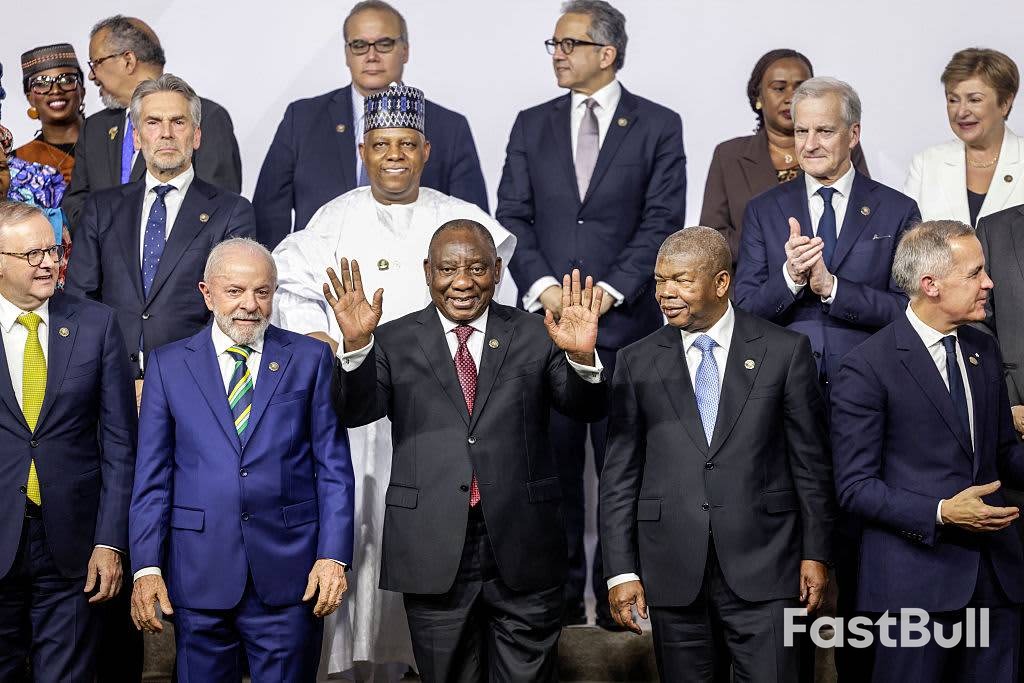
          World leaders, including Canadian PM Mark Carney, gather for a photo during a G20 Leaders' Summit plenary session in Johannesburg on November 22, 2025.

          The Limits of Middle Power Activism

          While middle powers may be "having their moment," their ability to revive international cooperation faces significant hurdles. Carnegie's Stewart Patrick urged a dose of realism, outlining several key challenges.

          First, the global political structure remains largely bipolar, dominated by the U.S. and China. Both superpowers may actively work to thwart or constrain initiatives led by smaller coalitions.

          Second, the middle powers themselves are a "heterogeneous bunch." Their varied interests, competing values, and different visions for the world will often limit their ability to unite on joint projects.

          Finally, Patrick cautioned against idealizing these nations. "Not all are admirable, much less prepared to contribute to international cooperation," he noted. "And even those that do support multilateralism are motivated not by altruism but by self-interest, albeit enlightened."

          Risk Warnings and Disclaimers
          You understand and acknowledge that there is a high degree of risk involved in trading. Following any strategies or investment methods may lead to potential losses. The content on the site is provided by our contributors and analysts for information purposes only. You are solely responsible for determining whether any trading assets, securities, strategy, or any other product is suitable for investing based on your own investment objectives and financial situation.
          Add to Favorites
          Share

          Gold Soars Past $5,100 Amid New Trump Tariff Threats

          Golden Gleam

          Central Bank

          Remarks of Officials

          Commodity

          Political

          Economic

          Daily News

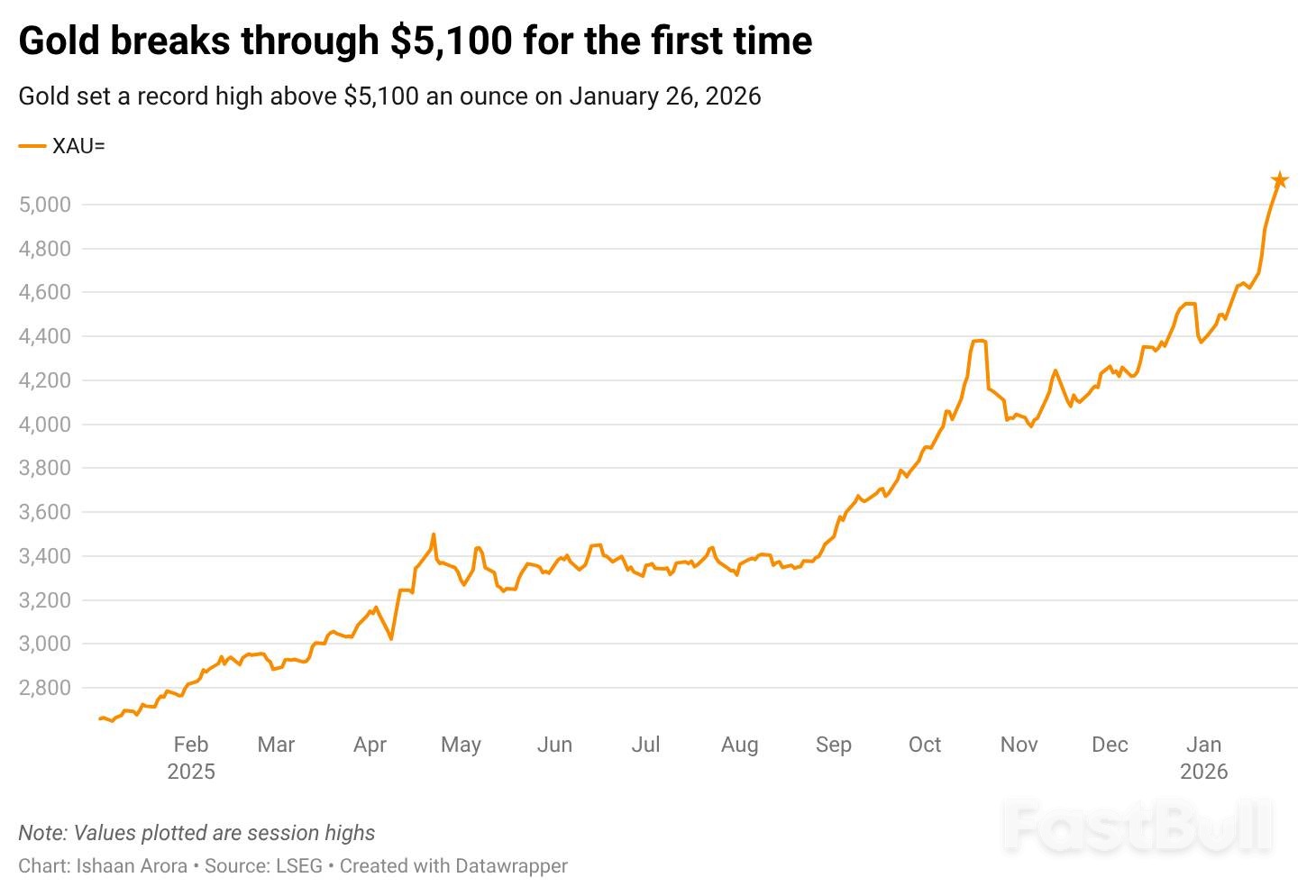
          Gold prices climbed on Tuesday, continuing a powerful rally driven by geopolitical uncertainty and renewed trade tensions. The precious metal is holding near record highs as investors seek safe-haven assets.

          Spot gold rose 1.6% to $5,092.70 per ounce after hitting an all-time high of $5,110.50 on Monday. This marks the first time the metal has breached the significant $5,100 level. Meanwhile, U.S. gold futures for February delivery saw a modest increase of 0.1%, trading at $5,088.40 per ounce.

          Figure 1: Gold prices (XAU/USD) chart from early 2025 to January 2026, showing a powerful uptrend that breached the $5,100 level.

          Trade Tensions and Dollar Weakness Drive Demand

          Analysts point to President Donald Trump's aggressive trade policy as a key catalyst for gold's recent performance. "Trump's disruptive policy approach this year is playing into the hands of precious metals as a defensive play," said Tim Waterer, chief market analyst at KCM Trade. "The threats of higher tariffs to Canada and South Korea are doing enough to keep gold a safe-haven choice."

          On Monday, President Trump announced plans to raise tariffs to 25% on certain South Korean imports, including autos, lumber, and pharmaceuticals, citing Seoul's failure to implement a trade deal. This followed recent tariff threats against Canada, which emerged after Canadian Prime Minister Mark Carney's visit to China.

          This policy unpredictability, coupled with the risk of a U.S. government shutdown, has pressured the U.S. dollar. A weaker greenback typically makes gold cheaper for buyers holding other currencies, further boosting its appeal.

          Christopher Wong, a strategist at OCBC, noted that gold's rally reflects a "material geopolitical, or uncertainty premium" that is "driven less by cyclical factors and more by the persistent uncertainty around geopolitics, policy unpredictability and (loss of) confidence in the dollar."

          Silver Surges, But Is It Overbought?

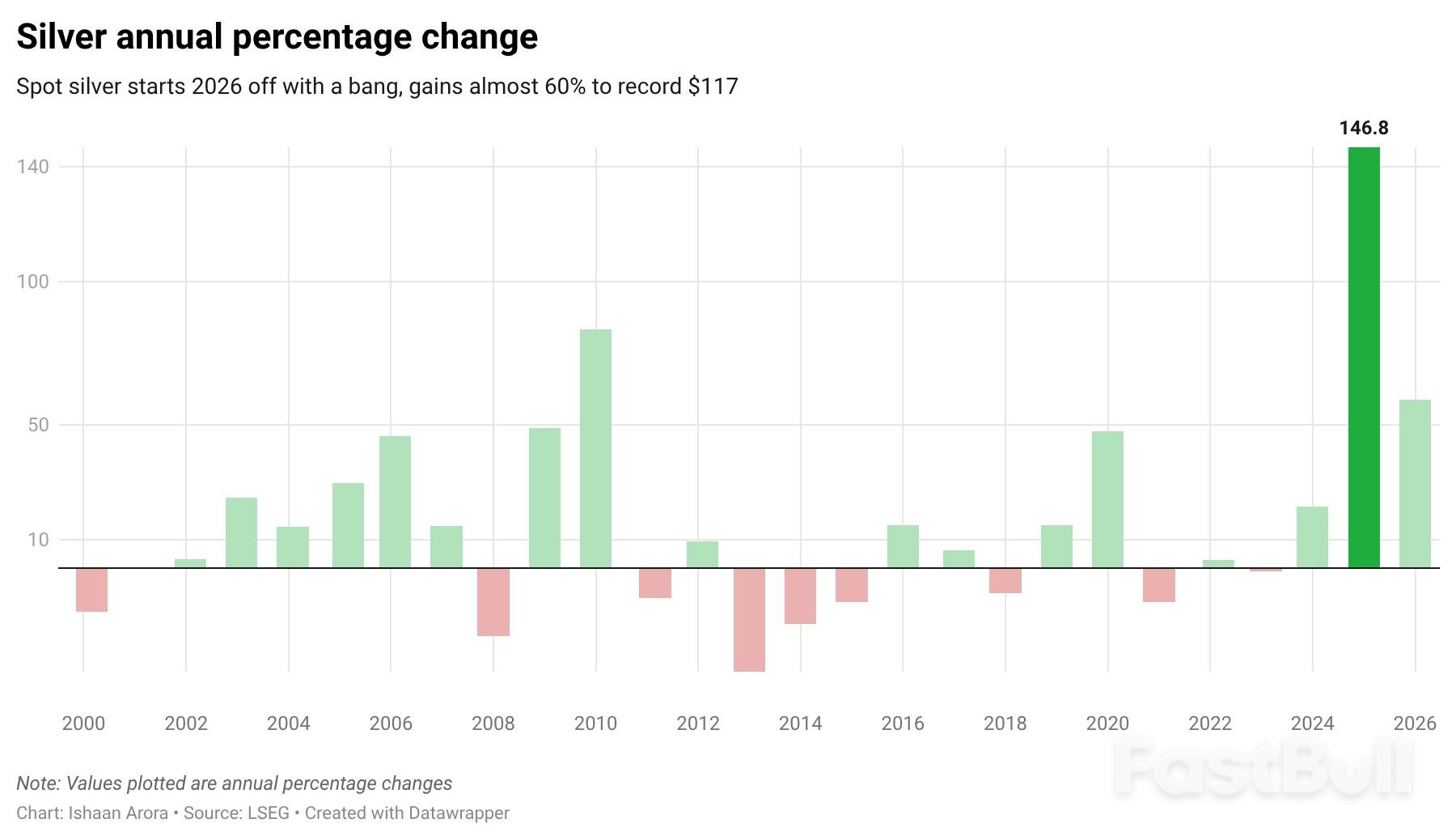
          Silver has also experienced a dramatic surge, with spot prices jumping 6.1% to $110.19 an ounce. This follows a record high of $117.69 set on Monday. So far this year, silver is up more than 50%.

          However, some analysts are sounding a note of caution. According to a note from BMI, a unit of Fitch Solutions, silver now appears expensive relative to gold. The gold-to-silver ratio has fallen to a 14-year low, suggesting a potential imbalance.

          BMI attributed the latest rally to speculative buying and expects prices to ease in the coming months. The firm anticipates that easing supply tightness and peaking industrial demand, partly due to a slowing Chinese economy, could cool the market.

          Figure 2: The annual percentage change in silver prices from 2000 to 2026, highlighting a massive projected gain in 2025 and a subsequent strong performance in 2026.

          Other Metals and Fed Outlook

          The rally has not extended to all precious metals. Spot platinum fell 2.2% to $2,697.45 per ounce after setting its own record of $2,918.80 in the previous session. In contrast, palladium added 1.1% to reach $2,004.37.

          Market participants are also watching the U.S. Federal Reserve, which begins its policy meeting later today. The central bank is widely expected to hold interest rates steady, especially given the challenges posed by the Trump administration's policies to its independence.

          To stay updated on all economic events of today, please check out our Economic calendar
          Risk Warnings and Disclaimers
          You understand and acknowledge that there is a high degree of risk involved in trading. Following any strategies or investment methods may lead to potential losses. The content on the site is provided by our contributors and analysts for information purposes only. You are solely responsible for determining whether any trading assets, securities, strategy, or any other product is suitable for investing based on your own investment objectives and financial situation.
          Add to Favorites
          Share

          EU Bank Rules Stifle Growth, Warns Top Lobby

          George Anderson

          Central Bank

          Remarks of Officials

          Economic

          Europe's economy could fall further behind its global rivals unless the European Union urgently overhauls banking regulations that are choking off lending, the European Banking Federation (EBF) has warned.

          In a letter to European Commission President Ursula von der Leyen and other top officials, the influential industry group described the current situation as "neither satisfactory, nor sustainable."

          The €1.5 Trillion Cost of Regulation

          Slawomir Krupa, President of the EBF and CEO of French bank Societe Generale, argued in the January 19 letter that the regulatory landscape has become "increasingly complex and fragmented."

          The core issue, Krupa stated, is that "Banks, already subject to high capital requirements, operate under the spectre of further increases."

          To back this claim, the EBF presented data from 2021-2024 showing the concrete impact on 15 major European banks:

          • Over €100 billion ($119 billion) in extra capital was required due to discretionary supervisory actions.

          • 90% of net capital generated by these banks was absorbed by these measures.

          • This resulted in a lost lending capacity of €1.5 trillion.

          Brussels Responds: A Balancing Act

          Europe's sluggish economic growth has long been a point of concern for policymakers, and attempts to create a truly unified banking market have stalled.

          A spokesperson for the European Commission acknowledged that simplifying rules is a "central priority" and pointed to existing proposals aimed at reducing complexity. However, the official noted that regulatory simplification is a shared responsibility among the Commission, Europe's parliament, national governments, and supervisors.

          The Commission is currently preparing a report on the competitiveness of the region's banking sector, which "will help inform our assessment of where targeted measures could most effectively support banks' ability to compete and finance the European economy," the spokesperson added.

          The European Central Bank (ECB) has also taken a cautious stance. In December, it proposed measures to simplify bank regulation but did not ease the overall financial burden. ECB Vice President Luis de Guindos stated this month that current capital demands support bank resilience and are not holding back lending.

          This view is echoed privately by some supervisors, who argue that lowering capital requirements would more likely lead to higher shareholder payouts than increased lending to the economy. Adding to this complex picture, European banks are currently enjoying a period of record profits, with stock prices hitting their highest levels since the 2008 financial crisis.

          Global Rivals Loosen Rules

          The EBF's warning comes as other major financial centers move in the opposite direction. In the United States, former President Donald Trump has been pushing regulators to cut red tape for Wall Street, while UK regulators are also easing certain rules.

          Krupa warned that these reforms abroad highlight a strategic risk for Europe. "Europe is risking further competitive disadvantage in terms of a level playing field that could be irreversible for our economy," he wrote.

          To counter this, the EBF urged the EU to take several steps to simplify its regulatory framework, including:

          • Eliminating the duplication of capital requirements.

          • Removing the systemic risk buffer.

          • Aligning rules for banks' trading divisions with those in the U.S.

          ($1 = 0.8413 euros)

          To stay updated on all economic events of today, please check out our Economic calendar
          Risk Warnings and Disclaimers
          You understand and acknowledge that there is a high degree of risk involved in trading. Following any strategies or investment methods may lead to potential losses. The content on the site is provided by our contributors and analysts for information purposes only. You are solely responsible for determining whether any trading assets, securities, strategy, or any other product is suitable for investing based on your own investment objectives and financial situation.
          Add to Favorites
          Share

          India–EU Seal ‘Mother of All Deals’ as Global Trade Realigns

          Gerik

          Economic

          A Landmark Deal After Two Decades of Negotiation

          India and the European Union have formally closed what Prime Minister Narendra Modi described as a “landmark” free trade agreement, capping nearly twenty years of on-and-off negotiations. Speaking at India Energy Week, Modi framed the pact as the “mother of all deals,” emphasizing its scale and timing as global trade becomes increasingly shaped by geopolitical tensions rather than pure economics.
          The agreement brings together economies that collectively represent around 25% of global GDP and roughly one-third of world trade, forging a combined market of about 2 billion people. Modi highlighted that the deal will directly benefit labor-intensive Indian sectors such as textiles, gems and jewelry, leather goods, and footwear, industries that are particularly sensitive to tariff barriers and external demand shocks.

          Strategic Timing Amid U.S. Tariff Pressure

          For New Delhi, the agreement carries significance beyond headline trade volumes. India has been grappling with steep U.S. tariffs since August last year, when Washington imposed duties of up to 50% on Indian goods. With the U.S. remaining India’s single largest export destination, these measures have forced policymakers to accelerate diversification toward alternative markets.
          Against this backdrop, the EU deal offers a crucial counterweight. While it does not replace the importance of U.S. trade, it provides India with greater bargaining power and export resilience. Experts note that both India and the EU have struggled to secure major trade agreements in recent years, particularly as U.S.-China trade relations remain largely closed off, making this pact one of the most meaningful options available to both sides.

          Economic Scale and Trade Structure

          According to European Commission data, goods trade between India and the EU exceeded €120 billion in 2024, making the bloc India’s largest trading partner in goods terms. India’s key exports to the EU include machinery and appliances, chemicals, base metals, mineral products, and textiles, while the EU primarily exports machinery, transport equipment, and chemicals to India.
          Despite this scale, India remains only the EU’s ninth-largest trading partner, accounting for about 2.4% of the bloc’s total goods trade. This imbalance underscores the growth potential embedded in the agreement, particularly if tariff reductions and regulatory alignment unlock greater two-way investment and supply-chain integration.

          Political Signals and Broader Alignment

          European Commission President Ursula von der Leyen is expected to issue a joint statement with Modi at the India-EU summit in New Delhi, outlining the agreement’s detailed provisions. Speaking earlier in Davos, von der Leyen framed the EU’s trade philosophy as choosing “fair trade over tariffs” and “partnership over isolation,” language that aligns closely with India’s current push to rebalance its external economic relationships.
          Trade talks were formally relaunched in 2022 after years of stagnation, with sensitive areas such as agriculture and automobiles proving the most difficult to resolve. Analysts have noted that both sides retain protectionist instincts, which explains the unusually long gestation period of the deal.

          What the Deal Can and Cannot Do

          While the India-EU free trade agreement marks a major milestone, economists caution against overstating its immediate impact. India’s goods trade surplus with the U.S. remains significantly larger than with the EU, highlighting why an eventual India-U.S. trade framework is still strategically important. Nonetheless, the EU pact strengthens India’s trade architecture at a moment when global commerce is increasingly shaped by tariff threats, regional blocs, and political risk.
          In that sense, the deal is less about replacing any single partner and more about repositioning India within a more multipolar global trade system, one where flexibility and diversification have become as valuable as market size itself.

          Source: CNBC

          To stay updated on all economic events of today, please check out our Economic calendar
          Risk Warnings and Disclaimers
          You understand and acknowledge that there is a high degree of risk involved in trading. Following any strategies or investment methods may lead to potential losses. The content on the site is provided by our contributors and analysts for information purposes only. You are solely responsible for determining whether any trading assets, securities, strategy, or any other product is suitable for investing based on your own investment objectives and financial situation.
          Add to Favorites
          Share
          FastBull
          Copyright © 2026 FastBull Ltd

          728 RM B 7/F GEE LOK IND BLDG NO 34 HUNG TO RD KWUN TONG KLN HONG KONG

          TelegramInstagramTwitterfacebooklinkedin
          App Store Google Play Google Play
          Products
          Charts

          Chats

          Q&A with Experts
          Screeners
          Economic Calendar
          Data
          Tools
          Membership
          Features
          Function
          Markets
          Copy Trading
          Latest Signals
          Contests
          News
          Analysis
          24/7
          Columns
          Education
          Company
          Careers
          About Us
          Contact Us
          Advertising
          Help Center
          Feedback
          User Agreement
          Privacy Policy
          Personal Information Protection Statement
          Business

          White Label

          Data API

          Web Plug-ins

          Poster Maker

          Affiliate Program

          Risk Disclosure

          The risk of loss in trading financial instruments such as stocks, FX, commodities, futures, bonds, ETFs and crypto can be substantial. You may sustain a total loss of the funds that you deposit with your broker. Therefore, you should carefully consider whether such trading is suitable for you in light of your circumstances and financial resources.

          No decision to invest should be made without thoroughly conducting due diligence by yourself or consulting with your financial advisors. Our web content might not suit you since we don't know your financial conditions and investment needs. Our financial information might have latency or contain inaccuracy, so you should be fully responsible for any of your trading and investment decisions. The company will not be responsible for your capital loss.

          Without getting permission from the website, you are not allowed to copy the website's graphics, texts, or trademarks. Intellectual property rights in the content or data incorporated into this website belong to its providers and exchange merchants.

          Not Logged In

          Log in to access more features

          Connect Broker
          Become a signal provider
          Help Center
          Customer Service
          Dark Mode
          Price Up/Down Colors

          Log In

          Sign Up

          Position
          Layout
          Fullscreen
          Default to Chart
          The chart page opens by default when you visit fastbull.com