• Trade
  • Markets
  • Copy
  • Contests
  • News
  • 24/7
  • Calendar
  • Q&A
  • Chats
Trending
Screeners
SYMBOL
LAST
BID
ASK
HIGH
LOW
NET CHG.
%CHG.
SPREAD
SPX
S&P 500 Index
6827.42
6827.42
6827.42
6899.86
6801.80
-73.58
-1.07%
--
DJI
Dow Jones Industrial Average
48458.04
48458.04
48458.04
48886.86
48334.10
-245.98
-0.51%
--
IXIC
NASDAQ Composite Index
23195.16
23195.16
23195.16
23554.89
23094.51
-398.69
-1.69%
--
USDX
US Dollar Index
97.950
98.030
97.950
98.500
97.950
-0.370
-0.38%
--
EURUSD
Euro / US Dollar
1.17394
1.17409
1.17394
1.17496
1.17192
+0.00011
+ 0.01%
--
GBPUSD
Pound Sterling / US Dollar
1.33707
1.33732
1.33707
1.33997
1.33419
-0.00148
-0.11%
--
XAUUSD
Gold / US Dollar
4299.39
4299.39
4299.39
4353.41
4257.10
+20.10
+ 0.47%
--
WTI
Light Sweet Crude Oil
57.233
57.485
57.233
58.011
56.969
-0.408
-0.71%
--

Community Accounts

Signal Accounts
--
Profit Accounts
--
Loss Accounts
--
View More

Become a signal provider

Sell trading signals to earn additional income

View More

Guide to Copy Trading

Get started with ease and confidence

View More

Signal Accounts for Members

All Signal Accounts

Best Return
  • Best Return
  • Best P/L
  • Best MDD
Past 1W
  • Past 1W
  • Past 1M
  • Past 1Y

All Contests

  • All
  • Trump Updates
  • Recommend
  • Stocks
  • Cryptocurrencies
  • Central Banks
  • Featured News
Top News Only
Share

Ukraine's Navy Says Russian Drone Attack Hit Civilian Turkish Vessel Carrying Sunflower Oil To Egypt On Saturday

Share

Israeli Military Says It Put Planned Strike On South Lebanon Site On Hold After Lebanese Army Requested Access

Share

Norwegian Nobel Committee: Calls On The Belarusian Authorities To Release All Political Prisoners

Share

Norwegian Nobel Committee: His Freedom Is A Deeply Welcome And Long-Awaited Moment

Share

Ukraine Says It Received 114 Prisoners From Belarus

Share

USA Embassy In Lithuania: Maria Kalesnikava Is Not Going To Vilnius

Share

USA Embassy In Lithuania: Other Prisoners Are Being Sent From Belarus To Ukraine

Share

Ukraine President Zelenskiy: Five Ukrainians Released By Belarus In US-Brokered Deal

Share

USA Vilnius Embassy: USA Stands Ready For "Additional Engagement With Belarus That Advances USA Interests"

Share

USA Vilnius Embassy: Belarus, USA, Other Citizens Among The Prisoners Released Into Lithuania

Share

USA Vilnius Embassy: USA Will Continue Diplomatic Efforts To Free The Remaining Political Prisoners In Belarus

Share

USA Vilnius Embassy: Belarus Releases 123 Prisoners Following Meeting Of President Trump's Envoy Coale And Belarus President Lukashenko

Share

USA Vilnius Embassy: Masatoshi Nakanishi, Aliaksandr Syrytsa Are Among The Prisoners Released By Belarus

Share

USA Vilnius Embassy: Maria Kalesnikava And Viktor Babaryka Are Among The Prisoners Released By Belarus

Share

USA Vilnius Embassy: Nobel Peace Prize Laureate Ales Bialiatski Is Among The Prisoners Released By Belarus

Share

Belarusian Presidential Administration Telegram Channel: Lukashenko Has Pardoned 123 Prisoners As Part Of Deal With US

Share

Two Local Syrian Officials: Joint US-Syrian Military Patrol In Central Syria Came Under Fire From Unknown Assailants

Share

Israeli Military Says It Targeted 'Key Hamas Terrorist' In Gaza City

Share

Rwanda's Actions In Eastern Drc Are A Clear Violation Of Washington Accords Signed By President Trump - Secretary Of State Rubio

Share

Israeli Military Issues Evacuation Warning In Southern Lebanon Village Ahead Of Strike - Spokesperson On X

TIME
ACT
FCST
PREV
U.K. Trade Balance Non-EU (SA) (Oct)

A:--

F: --

P: --

U.K. Trade Balance (Oct)

A:--

F: --

P: --

U.K. Services Index MoM

A:--

F: --

P: --

U.K. Construction Output MoM (SA) (Oct)

A:--

F: --

P: --

U.K. Industrial Output YoY (Oct)

A:--

F: --

P: --

U.K. Trade Balance (SA) (Oct)

A:--

F: --

P: --

U.K. Trade Balance EU (SA) (Oct)

A:--

F: --

P: --

U.K. Manufacturing Output YoY (Oct)

A:--

F: --

P: --

U.K. GDP MoM (Oct)

A:--

F: --

P: --

U.K. GDP YoY (SA) (Oct)

A:--

F: --

P: --

U.K. Industrial Output MoM (Oct)

A:--

F: --

P: --

U.K. Construction Output YoY (Oct)

A:--

F: --

P: --

France HICP Final MoM (Nov)

A:--

F: --

P: --

China, Mainland Outstanding Loans Growth YoY (Nov)

A:--

F: --

P: --

China, Mainland M2 Money Supply YoY (Nov)

A:--

F: --

P: --

China, Mainland M0 Money Supply YoY (Nov)

A:--

F: --

P: --

China, Mainland M1 Money Supply YoY (Nov)

A:--

F: --

P: --

India CPI YoY (Nov)

A:--

F: --

P: --

India Deposit Gowth YoY

A:--

F: --

P: --

Brazil Services Growth YoY (Oct)

A:--

F: --

P: --

Mexico Industrial Output YoY (Oct)

A:--

F: --

P: --

Russia Trade Balance (Oct)

A:--

F: --

P: --

Philadelphia Fed President Henry Paulson delivers a speech
Canada Building Permits MoM (SA) (Oct)

A:--

F: --

P: --

Canada Wholesale Sales YoY (Oct)

A:--

F: --

P: --

Canada Wholesale Inventory MoM (Oct)

A:--

F: --

P: --

Canada Wholesale Inventory YoY (Oct)

A:--

F: --

P: --

Canada Wholesale Sales MoM (SA) (Oct)

A:--

F: --

P: --

Germany Current Account (Not SA) (Oct)

A:--

F: --

P: --

U.S. Weekly Total Rig Count

A:--

F: --

P: --

U.S. Weekly Total Oil Rig Count

A:--

F: --

P: --

Japan Tankan Large Non-Manufacturing Diffusion Index (Q4)

--

F: --

P: --

Japan Tankan Small Manufacturing Outlook Index (Q4)

--

F: --

P: --

Japan Tankan Large Non-Manufacturing Outlook Index (Q4)

--

F: --

P: --

Japan Tankan Large Manufacturing Outlook Index (Q4)

--

F: --

P: --

Japan Tankan Small Manufacturing Diffusion Index (Q4)

--

F: --

P: --

Japan Tankan Large Manufacturing Diffusion Index (Q4)

--

F: --

P: --

Japan Tankan Large-Enterprise Capital Expenditure YoY (Q4)

--

F: --

P: --

U.K. Rightmove House Price Index YoY (Dec)

--

F: --

P: --

China, Mainland Industrial Output YoY (YTD) (Nov)

--

F: --

P: --

China, Mainland Urban Area Unemployment Rate (Nov)

--

F: --

P: --

Saudi Arabia CPI YoY (Nov)

--

F: --

P: --

Euro Zone Industrial Output YoY (Oct)

--

F: --

P: --

Euro Zone Industrial Output MoM (Oct)

--

F: --

P: --

Canada Existing Home Sales MoM (Nov)

--

F: --

P: --

Euro Zone Total Reserve Assets (Nov)

--

F: --

P: --

U.K. Inflation Rate Expectations

--

F: --

P: --

Canada National Economic Confidence Index

--

F: --

P: --

Canada New Housing Starts (Nov)

--

F: --

P: --

U.S. NY Fed Manufacturing Employment Index (Dec)

--

F: --

P: --

U.S. NY Fed Manufacturing Index (Dec)

--

F: --

P: --

Canada Core CPI YoY (Nov)

--

F: --

P: --

Canada Manufacturing Unfilled Orders MoM (Oct)

--

F: --

P: --

Canada Manufacturing New Orders MoM (Oct)

--

F: --

P: --

Canada Core CPI MoM (Nov)

--

F: --

P: --

Canada Manufacturing Inventory MoM (Oct)

--

F: --

P: --

Canada CPI YoY (Nov)

--

F: --

P: --

Canada CPI MoM (Nov)

--

F: --

P: --

Canada CPI YoY (SA) (Nov)

--

F: --

P: --

Canada Core CPI MoM (SA) (Nov)

--

F: --

P: --

Q&A with Experts
    • All
    • Chatrooms
    • Groups
    • Friends
    Connecting
    .
    .
    .
    Type here...
    Add Symbol or Code

      No matching data

      All
      Trump Updates
      Recommend
      Stocks
      Cryptocurrencies
      Central Banks
      Featured News
      • All
      • Russia-Ukraine Conflict
      • Middle East Flashpoint
      • All
      • Russia-Ukraine Conflict
      • Middle East Flashpoint
      Search
      Products

      Charts Free Forever

      Chats Q&A with Experts
      Screeners Economic Calendar Data Tools
      Membership Features
      Data Warehouse Market Trends Institutional Data Policy Rates Macro

      Market Trends

      Market Sentiment Order Book Forex Correlations

      Top Indicators

      Charts Free Forever
      Markets

      News

      News Analysis 24/7 Columns Education
      From Institutions From Analysts
      Topics Columnists

      Latest Views

      Latest Views

      Trending Topics

      Top Columnists

      Latest Update

      Signals

      Copy Rankings Latest Signals Become a signal provider AI Rating
      Contests
      Brokers

      Overview Brokers Assessment Rankings Regulators News Claims
      Broker listing Forex Brokers Comparison Tool Live Spread Comparison Scam
      Q&A Complaint Scam Alert Videos Tips to Detect Scam
      More

      Business
      Events
      Careers About Us Advertising Help Center

      White Label

      Data API

      Web Plug-ins

      Affiliate Program

      Awards Institution Evaluation IB Seminar Salon Event Exhibition
      Vietnam Thailand Singapore Dubai
      Fans Party Investment Sharing Session
      FastBull Summit BrokersView Expo
      Recent Searches
        Top Searches
          Markets
          News
          Analysis
          User
          24/7
          Economic Calendar
          Education
          Data
          • Names
          • Latest
          • Prev

          View All

          No data

          Scan to Download

          Faster Charts, Chat Faster!

          Download App
          English
          • English
          • Español
          • العربية
          • Bahasa Indonesia
          • Bahasa Melayu
          • Tiếng Việt
          • ภาษาไทย
          • Français
          • Italiano
          • Türkçe
          • Русский язык
          • 简中
          • 繁中
          Open Account
          Search
          Products
          Charts Free Forever
          Markets
          News
          Signals

          Copy Rankings Latest Signals Become a signal provider AI Rating
          Contests
          Brokers

          Overview Brokers Assessment Rankings Regulators News Claims
          Broker listing Forex Brokers Comparison Tool Live Spread Comparison Scam
          Q&A Complaint Scam Alert Videos Tips to Detect Scam
          More

          Business
          Events
          Careers About Us Advertising Help Center

          White Label

          Data API

          Web Plug-ins

          Affiliate Program

          Awards Institution Evaluation IB Seminar Salon Event Exhibition
          Vietnam Thailand Singapore Dubai
          Fans Party Investment Sharing Session
          FastBull Summit BrokersView Expo

          'Day of Reckoning': Turkish Economy's Post-Election Peril

          Cohen

          Political

          Summary:

          President Recep Tayyip Erdogan campaigned round the clock to win the toughest election of his two decades in power in a historic runoff last weekend.

          Turkey's economy is in a double bind: analysts see its current policies leading to imminent peril and the prescriptions incurring massive pain.
          President Recep Tayyip Erdogan campaigned round the clock to win the toughest election of his two decades in power in a historic runoff last weekend.
          He also poured billions of dollars into campaign pledges -- and tens of billions more into keeping the lira from suffering politically sensitive falls before the vote.
          Analysts at Capital Economics think Turkey now faces its post-election "day of reckoning".
          Turkey's once-vibrant economy -- driven by relatively cheap labour and a well-oiled banking system -- is confronting a self-inflicted problem few other countries have faced.
          Erdogan has waged a lifelong war on high interest rates that he occasionally attributes to his faith in Muslim rules against usury.
          He calls high rates "the mother and father of all evil" promoted by a foreign "interest lobby".
          Erdogan sped through a series of central bankers before finding one willing to follow through on his desire to slash rates at all costs in 2021.
          The results were dire.
          Freefall
          The lira entered a freefall and the official annual inflation rate soon touched 85 percent. The unofficial one estimated by economists -- and believed by most Turks -- neared 200 percent.
          Analysts see the most recent period of chaos as the culmination of Erdogan's gradual departure from the prosperous policies of his first decade of rule.
          Foreign investors have largely abandoned Turkey because of its political instability and Erdogan's takeover of state institutions that were once run by impartial technocrats.
          "The balance sheet so far of Erdogan's two decades in power has been the progressive destabilisation of the economy," Conotoxia investment firm market analyst Bartosz Sawicki said.
          "Foreign equity exposure to Turkish bonds is estimated to have declined by around 85 percent since 2013, during which time the lira has lost around 90 percent against the dollar."
          Turkey's most immediate problem is that its central bank is running out of cash.
          It burned through nearly $30 billion supporting the lira this year alone.
          The bank's net international reserves -- a technical measure of how much it has to spend on emergencies -- have dropped into negative territory for the first time since 2002.
          "The current setup is just not sustainable," London-based emerging markets economist Timothy Ash said.
          Export competitiveness
          Analysts have two simple solutions: quickly hike interest rates and let the lira float freely again.
          Turkey's currency support measures have wiped out the benefits low interest rates gave its loan-dependent producers.
          The cars and jewellery Turkey exports in places such as the United States and Europe now simply cost too much.
          Analysts at Allianz said the lira has "appreciated by around 35 percent in real effective terms since the unorthodox monetary policy stance took full effect in December 2021".
          The lira was hovering near a record 20.3 to the dollar on Tuesday. Analysts at JPMorgan think it could reach the 30 mark if the government stopped intervening.
          This would further erode people's purchasing power and potentially require the government to find billions of dollars to spend on new social support measures.
          The vicious cycle could be broken by a sharp interest rate hike -- something Erdogan has repeatedly ruled out during the campaign.
          Atilla Yesilada, analyst at Turkish consultancy GlobalSource Partners, worries that the country may simply start printing money to pay for the huge hikes in benefits and wages Erdogan promised during the campaign.
          'Soft capital controls'
          Turkey must also find vast sums -- estimated at roughly $100 billion -- to pay for the reconstruction of cities destroyed by a February earthquake that claimed more than 50,000 lives.
          "How any government would finance the reconstruction effort without printing money and leading to hyperinflation is a question that people prefer not to address at this point," Yesilada said.
          Analysts agree that Turkey would eventually have no choice but to raise rates.
          Emre Peker, Europe director at the Eurasia Group political risk consultancy, said Turkey would first try to contain demand for dollars through "soft capital controls on locals".
          But Erdogan could relent and raise rates once March 2024 municipal elections involving Turkey's biggest cities are out of the way.
          Allianz said they should go up from the current 8.5 percent to at least 20-25 percent -- the current rate of bank deposits.
          But that would create still more problems.
          "Raising rates will reduce bank capital," Yesilada warned. "Banks will not be able to lend for a long time."

          Source: AFP

          Risk Warnings and Disclaimers
          You understand and acknowledge that there is a high degree of risk involved in trading. Following any strategies or investment methods may lead to potential losses. The content on the site is provided by our contributors and analysts for information purposes only. You are solely responsible for determining whether any trading assets, securities, strategy, or any other product is suitable for investing based on your own investment objectives and financial situation.
          Comments
          Add to Favorites
          Share

          U.S. Debt Ceiling Deal to Face Its First Test in Congress

          Alex

          Bond

          A bipartisan deal to raise the $31.4 trillion U.S. debt ceiling faces its first test in Congress on Tuesday, setting up what could be a nail-biting week of voting before the United States runs out of money to pay its bills.
          The House of Representatives Rules Committee is due to consider the 99-page bill at 3 p.m. (1900 GMT) on Tuesday, ahead of votes in the Republican-controlled House of Representatives and the Democratic-controlled Senate.
          Both Democratic President Joe Biden and the top Republican in Congress, House Speaker Kevin McCarthy, have predicted they will get enough votes to pass it into law before Monday, when the U.S. Treasury Department says it will not have enough money to cover its obligations.
          Representative Stephanie Bice, a Republican vote counter, said she was confident it would pass.
          "It is a true negotiation and reflective of divided government," she told reporters.
          But first it will have to clear the Rules Committee.
          Normally a rubber stamp for House leadership, McCarthy placed three hardline conservatives on the powerful 13-member panel as a price for winning the speaker's gavel in January.
          Two of those lawmakers have said they will vote against the bill, while the third, Representative Thomas Massie, has said previously that he does not want to use his perch to block legislation.
          He hinted on Monday that he might support the package. "I think it's important to keep in mind the debt limit bill itself does not spend money," he wrote on Twitter. His office declined to comment further.
          The four Democrats on the panel typically vote against Republican-backed legislation, but it is not clear whether they would oppose a deal that had been crafted by Biden.
          At least one, Representative Mary Gay Scanlon, is a member of a moderate group that supports the deal. Her office did not respond to a request for comment.
          McCarthy said on Monday he was not worried the Rules Committee would kill the bill.
          A successful vote there would set up a vote by the full House on Wednesday.
          A Senate vote could possibly stretch into the weekend if lawmakers in that chamber try to slow its passage. At least one, Republican Mike Lee, has said he may try to do so, and other Republicans have also expressed discomfort with some aspects of the deal.
          The bill would suspend the U.S. debt limit through Jan. 1, 2025, allowing Biden and lawmakers to set aside the politically risky issue until after the November 2024 presidential election.
          It would also cap some government spending over the next two years, speed up the permitting process for some energy projects, claw back unused COVID-19 funds, and introduce work requirements for food aid programs for some poor Americans.
          In another win for Republicans, it would shift some funding away from the Internal Revenue Service, though the White House says that should not undercut tax enforcement.
          Biden can point to gains as well: the deal leaves his signature infrastructure and green-energy laws largely intact, and the spending cuts and work requirements are far less than Republicans had pushed for.
          Republicans have argued that steep spending cuts are necessary to curb the growth of the national debt, which at $31.4 trillion is roughly equal to the annual output of the economy.
          Interest payments on that debt are projected to eat up a growing share of the budget in the decades to come as an aging population pushes up health and retirement costs, according to government forecasts.
          The deal would not do anything to rein in those fast-growing programs.
          Most of the savings would come by capping spending on domestic programs like housing, border control, scientific research and other forms of "discretionary" spending. Military spending would be allowed to increase over the next two years.
          The debt-ceiling standoff prompted ratings agencies to warn they might downgrade U.S. debt, which underpins the global financial system. Markets have reacted positively to the agreement so far.

          Source: Reuters

          Risk Warnings and Disclaimers
          You understand and acknowledge that there is a high degree of risk involved in trading. Following any strategies or investment methods may lead to potential losses. The content on the site is provided by our contributors and analysts for information purposes only. You are solely responsible for determining whether any trading assets, securities, strategy, or any other product is suitable for investing based on your own investment objectives and financial situation.
          Comments
          Add to Favorites
          Share

          In the Market: Amid the Calm, the Fed Brews the Next Storm

          Damon

          Stocks

          Having navigated the financial crisis of 2008, Neel Kashkari worries about systemic risks. But now, as a U.S. monetary policymaker, he worries even more about inflation.
          "I think if I had to err, I would err on being a little bit too aggressive in terms of bringing inflation down,” the president of the Federal Reserve Bank of Minneapolis told Reuters last week.
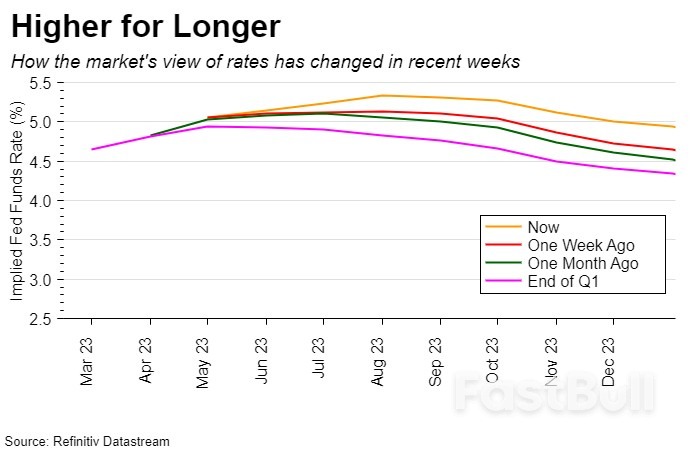
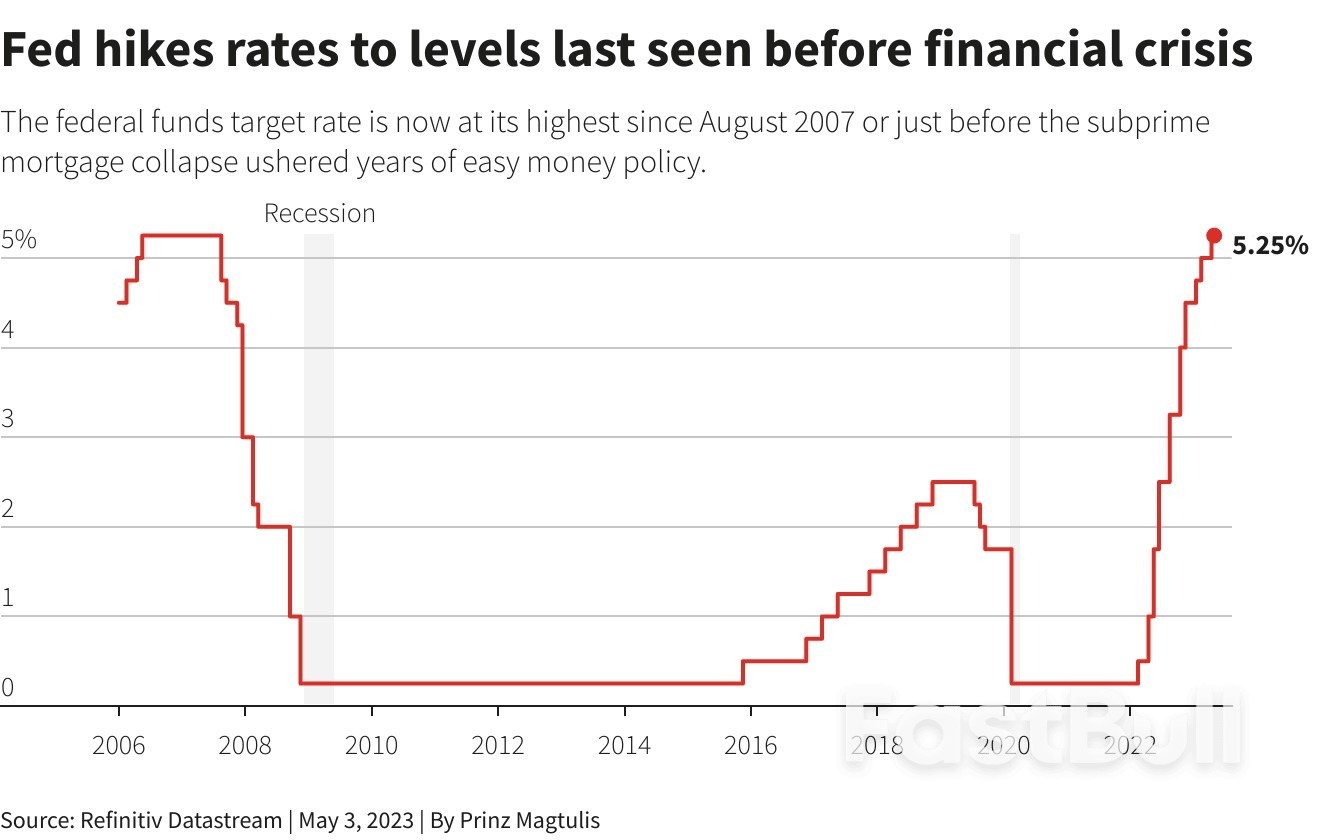
          Surprised by the persistence of inflation in the face of the fastest rate hike cycle since the 1980s, Kashkari and some other Fed officials have turned up the heat again in recent days, with a hawkish outlook on interest rates.
          In doing so, they may also be inadvertently setting the stage for the next market crisis and Fed intervention, in turn, undercutting the bank's policy tightening to fight inflation.
          So, the Fed's attempt to guide the economy to a so-called "soft landing" while preserving financial stability is instead increasing the odds that it will either be a crash landing or a longer, more turbulent glide path to the ground.
          "They're a little bit in a situation where they're damned if they do, and damned if they don't," said Raghuram Rajan, the former Indian central bank governor and finance professor at Chicago Booth. "If they do raise short-term policy rates, clearly, at some point, something more breaks.”
          The probability of a soft landing? "Very small," Rajan said.
          The Fed declined to comment.
          In the Market: Amid the Calm, the Fed Brews the Next Storm_1Over the past year rapidly rising interest rates after more than decade of ultra-cheap money have exposed risky bets and bad business models.
          Stress has flared up in different parts of the global financial system, from the bursting of the crypto bubble a year ago to turbulence in the U.S. regional banking sector in March.
          While it is not clear where the next storm would hit markets, the potential sources of vulnerability are many, from commercial real estate to money market funds.
          Threading A Needle
          Markets have settled down since the worst of the banking upheaval receded. Signs that the economy remains resilient also have more investors betting the Fed could bring inflation down without causing too much economic pain or instability.
          Earlier this month, Chairman Jay Powell said the Fed's monetary policy and financial stability tools were "working well together," allowing it to support banks and pursue price stability.
          But several people in the market believe not only is the regional banking sector still under stress, multiple other risks to financial stability also remain.
          Tighter monetary policy could well cause them to blow up or worsen the impact of other shocks, such as debt ceiling negotiations. Those flare ups could force more interventions, partially offsetting tighter policy.
          "The Fed has no desire to conduct monetary policy through financial crises," said Wendy Edelberg, director of The Hamilton Project at the Brookings Institution. "And so they have to thread a needle if they see their actions creating crises. Then they need to mitigate that."
          Many Risks
          In the aftermath of the run-on Silicon Valley Bank (SVB) in March, the Fed had to step in with tens of billions of dollars of emergency support to the banking system. Some argue that in effect countered its moves to tighten policy.
          "The market is confused as to whether the Fed is tightening or easing,” said James Tabacchi, chief executive of broker-dealer South Street Securities. "We try to follow what they're going to do. And right now, the market doesn't know which Fed to follow."
          Systemic shocks could come from both known and unexpected avenues. In its most recent financial stability report earlier this month, the Fed listed several areas of concern, including life insurance and some types of bond and loan funds.
          The Minneapolis Fed's Kashkari pointed to private markets, where although many experts expect risk to be limited, lack of transparency means that officials do not fully understand the extent of debt-fueled bets that have been taken. It is also not always clear how financial institutions are interconnected.
          "There's a lot of complexity out there that we don't have great visibility into," Kashkari said. "That unfortunately may not get revealed until there is a real problem."

          In the Market: Amid the Calm, the Fed Brews the Next Storm_2Source: Yahoo

          Risk Warnings and Disclaimers
          You understand and acknowledge that there is a high degree of risk involved in trading. Following any strategies or investment methods may lead to potential losses. The content on the site is provided by our contributors and analysts for information purposes only. You are solely responsible for determining whether any trading assets, securities, strategy, or any other product is suitable for investing based on your own investment objectives and financial situation.
          Comments
          Add to Favorites
          Share

          Oil Prices Fall Amid Fears of a U.S. Debt Default and Further Rate Increases

          Cohen

          Commodity

          Oil prices were down in morning trading on Tuesday amid concerns of further interest rate increases and as political opposition to the U.S. debt-ceiling agreement reignited concerns of a default.
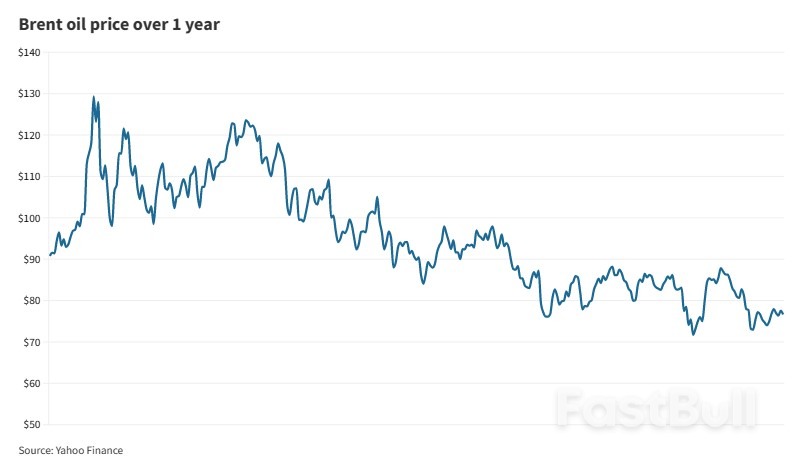
          Brent, the benchmark for two thirds of the world’s oil, was trading 2.14 per cent lower at $75.42 a barrel at 2.13pm UAE time. West Texas Intermediate, the gauge that tracks U.S. crude, was down 2.01 per cent at $71.21 a barrel.
          On Monday, Brent settled 0.16 per cent higher at $77.07 a barrel. There was no trading in WTI futures overnight as markets were closed for the Memorial Day holiday in the US.
          "The market is pricing in the odds – even if small at this point – that the debt-ceiling bill does not pass through the U.S. Congress smoothly. That leaves the spectre of a default lurking in the shadows," Vandana Hari, chief executive of Singapore-based Vanda Insights, told The National.
          "That anxiety is probably drawing attention back to the broader economic worries surrounding credit tightness, which had been pushed aside by the debt-ceiling drama over the past fortnight, but are now gradually returning to the centre stage."
          U.S. President Joe Biden and Kevin McCarthy, the Republican Speaker of the House, reached a provisional agreement late on Saturday to suspend the federal government's $31.4 trillion debt ceiling.
          However, a group of Republican politicians said on Monday they would oppose the deal to raise the debt ceiling, Reuters reported.
          Oil Prices Fall Amid Fears of a U.S. Debt Default and Further Rate Increases_1“Another month of strong U.S. jobs data and solid wage growth should further fuel the [U.S. Federal Reserve] rate hike bets and support the dollar,” said Ipek Ozkardeskaya, a senior analyst at Swissquote Bank.
          In March, the central bank raised interest rates by a quarter of a percentage point and indicated that it could pause future increases after the collapse of three big U.S. banks triggered fears of a new financial crisis.
          Rising interest rates limit economic growth and strengthen the dollar, making oil more expensive for holders of other currencies.
          The U.S. Dollar Index – a measure of the value of the greenback against a weighted basket of major currencies – has gained more than 2 per cent over the last month. It was down 0.07 per cent at 104.14 on Tuesday.
          Daniel Richards, Mena economist at Emirates NBD, said energy markets will be looking ahead to the OPEC+ meeting on June 4 for signals on where crude prices will head in the short term.
          The oil producer's group will meet as Brent futures trade well below $80 a barrel despite the announcement of an output cut by some members last month.
          The international benchmark has lost more than 11 per cent of its value since the beginning of the year as weak economic growth in the U.S. and China weigh on the outlook for fuel demand.
          Last week, Saudi Arabia's Energy Minister told oil market short sellers to “watch out”, which was seen by some traders as a signal for further output reductions.
          “I keep advising them that they will be 'ouching'. They did 'ouch' in April,” said Prince Abdulaziz bin Salman during an event in Qatar.
          However, Russian Deputy Prime Minister Alexander Novak later said he expected no new steps from OPEC+, Reuters reported, citing his interview with Russian daily Izvestia.
          "On the physical side, oil has no support from China as the outlook over its economic recovery remains gloomy, while the additional voluntary OPEC+ cuts are also being partially discounted, as Russia is clearly not curtailing output by 500,000 barrels per day," Ms. Hari said.

          Source: The National News

          Risk Warnings and Disclaimers
          You understand and acknowledge that there is a high degree of risk involved in trading. Following any strategies or investment methods may lead to potential losses. The content on the site is provided by our contributors and analysts for information purposes only. You are solely responsible for determining whether any trading assets, securities, strategy, or any other product is suitable for investing based on your own investment objectives and financial situation.
          Comments
          Add to Favorites
          Share

          Risk-off Sentiment Prevails

          Devin

          Commodity

          Energy – oil trades sideways ahead of OPEC+ meeting

          ICE Brent has continued to trade sideways this week as the market awaits a decision from the OPEC+ meeting this weekend (4 June). The warning from the Saudi energy minister over short-selling in oil supported prices last week, however, broader macro-economic concerns, uncertainty around the U.S. debt ceiling agreement and the possibility of a continued rate hike in the U.S. weighed on the sentiment. Speculative shorts in ICE Brent fell the last week after Saudi's warning, although speculative shorts in NYMEX WTI increased, giving no clear indication about the market sentiment. The possibility of another production cut from the OPEC+ at its June meeting appears slim for now, but it can't be ruled out completely.
          Asian LNG prices returned to trade at a premium over European gas prices as natural gas prices in Europe continued to trade softer given ample inventories and softer demand prospects. TTF gas prices have dropped by around 37% since the start of the month while Asian LNG has dropped by only around 17% so far. As a result, Japan-Korea LNG currently trades at a premium of around US$1.5/MMBtu over the TTF, compared to a discount of around $1/MMBtu at the start of the month. LNG demand from China and India appears to be recovering due to low prices which has been supportive for the Asian LNG market.

          Metals – Risk-off sentiment weighs on the complex

          Copper, along with other major metals, edged lower in the morning session following weakness in the Chinese equity market along with a stronger USD index. LME copper prices fell to $8,080/t (at the time of writing) while zinc prices fell more than 1% day-on-day and led the declines among base metals this morning. The market awaits the conclusion of the ongoing U.S. debt ceiling agreement, and any positive outcome might help to lift up the mood in the risk assets.
          Meanwhile, the latest reports from the Shanghai Metals Market suggest that some smelters in China, Japan and South Korea have started the initial round of negotiations on copper treatment charges for long-term contracts with Antofagasta. The 2023/24 copper treatment charges are expected to be at least higher than the benchmark charges of $88/t, while some Chinese smelters are expecting it to be in the triple digits due to the estimated supply shortage of copper concentrate next year.
          In ferrous metals, the most active contract of iron ore trading at the Singapore Exchange failed to keep up the upward rally (seen over the last three trading days), with prices falling more than 2% day-on-day due to softening demand in the Chinese end-use industry. In China, falling industrial profits and poor demand have impacted the profit margins at domestic steel mills recently. Meanwhile, the China Metallurgical Industry Planning and Research Institute expects the total steel demand in China to drop to 910mt this year from 920mt in 2022 following weak demand from the construction sector. Steel demand from the property sector is expected to decline this year as well, while China will continue to reduce domestic steel output and replace older steel capacity this year in its constant effort to meet the set decarbonisation goals.

          Agriculture – Unfavourable weather conditions hurt Vietnam's coffee shipments

          The General Statistics Office of Vietnam released trade volume estimates for May which showed coffee exports at 165kt, up 16% compared to 143kt reported a year ago. However, the coffee export estimates for May are down 18% compared to the 200kt shipped in April. In the first five months of 2023, coffee exports are projected at 882kt, down 2.2% year-on-year. The fall in exports can be attributed to the severe rains witnessed in the country and many farmers shifting from coffee to alternative crops undermining production activities.
          The latest comments from Russia's Agriculture Ministry on Monday confirmed that authorities are not planning to increase the grain state intervention fund to 10mt in 2023. The Ministry added that 3mt has already been purchased, which is enough for now. Previous comments from the nation's deputy prime minister suggested that the Russian government is considering the possibility of increasing the state intervention fund by 7mt to 10mt of grain for the year. In 2022, the state purchased 3.08mt of grain.

          Source: ING

          Risk Warnings and Disclaimers
          You understand and acknowledge that there is a high degree of risk involved in trading. Following any strategies or investment methods may lead to potential losses. The content on the site is provided by our contributors and analysts for information purposes only. You are solely responsible for determining whether any trading assets, securities, strategy, or any other product is suitable for investing based on your own investment objectives and financial situation.
          Comments
          Add to Favorites
          Share

          Dollar, European Stocks Steady with U.S. Debt Deal in Focus

          Damon

          Stocks

          The U.S. dollar steadied after climbing to a two-month high and European stocks flattened on Tuesday as relief that a possible default by the U.S. government had been averted gave way to concern that the deal could face a rocky path through Congress.
          The U.S. dollar index and longer-dated U.S. Treasuries rallied as traders welcomed the deal to suspend Washington's borrowing limit until January 2025 in exchange for caps on spending and cuts in government programmes.
          But European stocks steadied after slipping in early trading, dented by uncertainty on whether the Congress will approve the deal after a handful of hard-right Republican lawmakers said on Monday they would oppose the bill, though it is expected to pass.
          Despite the initial risk-on sentiment on the deal announced on Saturday, investors also fear now that the agreement was a compromise that could have negative consequences.
          "The U.S had a poor resolution to the debt ceiling negotiations with still a huge increase in government debt and no real cuts to spending, but (it) has relieved pressure for now," said James Rosenberg, an advisor at broker Ord Minnett in Sydney.
          "There's still a huge disconnect between bond markets and equities," he said, flagging that the bond market is pricing in an U.S. recession.
          JB Were analysts said there could be up to $600 billion worth of bill issuance in the next six to eight weeks.
          The size of the Treasury issuance and the economic implications are now being considered, according to Invesco's Asia Pacific global strategist David Chao.
          "The announcement of a debt deal in the near term is a boost to market sentiment but it places pressure on growth due to the government spending cuts, the tighter liquidity conditions, but the flipside is the pressure on growth is doing the job for the Fed as it tries to cool the economy. It could place a dampening effect on inflation."
          The pan European STOXX 600 index flattened after recording on Friday its biggest weekly decline in two months.
          The Nikkei stock index rose 0.3%, after the Japanese benchmark hit a 33-year high on Monday on optimism over the U.S debt deal and a weaker yen, which helps the country's exporters.
          Hong Kong's Hang Seng Index and China's CSI300 Index closed about flat after tumbling to their lowest level since November, with investors also remaining cautious ahead of China's May manufacturing data due on Wednesday.
          U.S. futures were up 0.5% pointing to a start of the day in positive territory for U.S. stocks, which were closed on Monday for the Memorial Day holiday.
          U.S. 10-year bond yields dropped 8 basis points to 3.74%, while thirty-year yields fell 6 bps to 3.91%. Bond yields move inversely to price.
          The dollar index, which measures the greenback against six peers, flattened at 104.3 after rising to a two-month high. It was also trading near a six-month peak against the Chinese yuan.
          China Post Lockdowns
          The Hang Seng lost around 7% in May while the CSI300 is off almost 5% as a result of China's economy not recovering from its pandemic closures ending in January as fast as expected.
          "Everyone is looking at the disappointment in the performance of China equities recently and that is now creating negative investor sentiment," said Jack Siu, Credit Suisse's greater China chief investment officer.
          "Investors are now more muted towards the reopening story of China and are contemplating their positions."

          Source: Yahoo

          Risk Warnings and Disclaimers
          You understand and acknowledge that there is a high degree of risk involved in trading. Following any strategies or investment methods may lead to potential losses. The content on the site is provided by our contributors and analysts for information purposes only. You are solely responsible for determining whether any trading assets, securities, strategy, or any other product is suitable for investing based on your own investment objectives and financial situation.
          Comments
          Add to Favorites
          Share

          Though the Thai Election's Done and Dusted, Political Uncertainty Remains

          Thomas

          Political

          There's a Thai proverb - "flee a tiger only to find a crocodile" - that describes a situation in Thai politics in the aftermath of this month's elections aptly. After the progressive anti-junta Move Forward Party's electoral victory on May 14, tigers and crocodiles abound.
          In Thailand's second general election since the 2014 coup, Move Forward captured the largest number of parliamentary seats (152) based on unofficial Election Commission numbers, edging out its opposition ally Pheu Thai (141 seats).
          The two parties' combined 293 seats dominate the seats won by parties supporting the former junta chief-turned-prime minister General Prayut Chan-o-cha and his ally General Prawit Wongsuwan. Their parties received much weaker support than expected, with only 36 and 40 seats respectively. For fans of Thai democracy, this was a long-overdue win.
          On May 18, Pita Limjaroenrat, leader of Move Forward and its sole prime ministerial candidate, announced an agreement between eight parties to form a coalition government encompassing 313 parliamentarians. In most countries, this clear and convincing majority in the 500-seat lower house would provide an obvious mandate for Move Forward to form a government.
          But not in Thailand.
          The Battle Is Not Over
          Under the 2017 Constitution, which was designed by the 2014 coup group to ensure its continued control in determining the country's leadership, both the 500-seat House of Representatives and the 250-seat junta-appointed Senate vote for prime minister - meaning that Pita must assemble an overwhelming 376 votes.
          This is a difficult task. Despite winning the largest share of parliamentary seats and initially announcing a coalition in the 2019 election, the Pheu Thai party was unable to form a government.
          Instead, Prayut became prime minister after the junta-appointed Election Commission allocated party list seats away from large parties to a series of small parties that supported the coup-maker.
          While circumstances are different today, multiple dangers abound for Move Forward, threatening Pita's chance at the prime minister's chair. Before any vote for prime minister occurs, the Election Commission has 60 days to verify the election's official results. During the coming weeks, the Election Commission expects to receive more than 2,000 complaints of potential electoral violations.
          If the Election Commission determines electoral rules were broken, new elections could be held in some districts. A shift in seat numbers could reduce or erase Move Forward's narrow lead over Pheu Thai or weaken the coalition.
          Additional Hindrance
          The Election Commission is also considering a complaint against Pita over ownership of shares in the now-defunct iTV broadcasting corporation, which he inherited from his father. Holding shares in a media company could violate electoral laws, which would mean Pita would be ineligible to hold political office.
          A similar charge brought down Thanathorn Juangroongruangkit in 2019, who led the Future Forward party, Move Forward's predecessor.
          The Election Commission will likely decide in the coming weeks whether to forward Pita's case to the conservative Constitutional Court, which could result in a conviction and ban from political office. As Move Forward nominated only Pita for the prime minister's seat, this result could dash hopes that the party would be able to head the government.
          Pheu Thai, the second-place party which nominated three candidates for prime minister, could potentially step in and lead the coalition, provided it does not run afoul of the Election Commission.
          Insufficient Support from The Senate
          These considerations aside, obtaining 376 votes in the combined legislature remains elusive. As the Senate was hand-picked by a committee headed by General Prawit, most senators are expected to only support a prime ministerial candidate approved by the former junta chiefs.
          While the Move Forward coalition will enjoy a strong majority in the lower house, the party does not have sufficient support to bypass the Senate.
          Many senators have expressed opposition to Move Forward's progressive stance on reforming Section 112 of the penal code, or the lese-majeste law. Move Forward's coalition partners have demanded that the party moderate its policy goals, and potential extra-coalition votes are also reportedly contingent on Move Forward abandoning its plans on Section 112.
          If Pita is unable to gather sufficient support, the prime ministership could fall into the hands of Pheu Thai - and Thai media has speculated that a Pheu Thai government may be willing to drop Move Forward from its coalition to secure senate support.
          If Pita becomes prime minister, he would still face extreme antagonism from conservative sectors of Thai society who are infuriated by Move Forward's commitments to reform the military and repeal Section 112.
          At a United Thai Nation rally in Bangkok on May 12, former deputy prime minister Trairong Suwankiri declared to cheers from the crowd that Thailand's true enemies are Thais who don't respect the three institutions of nation, religion and monarchy - a thinly veiled reference to Move Forward.
          Accusations that Move Forward is too progressive or a threat to the military and monarchic institutions feed speculation of another coup. Though army chief General Narongpan Jitkaewthae publicly declared there would be no coup prior to the election, Prayut made the exact same promise when he was Army chief in 2014.
          Even if Pita successfully survives these threats, it will likely be quite some time before he is able to breathe easily in this political scene.

          Source: CNA

          Risk Warnings and Disclaimers
          You understand and acknowledge that there is a high degree of risk involved in trading. Following any strategies or investment methods may lead to potential losses. The content on the site is provided by our contributors and analysts for information purposes only. You are solely responsible for determining whether any trading assets, securities, strategy, or any other product is suitable for investing based on your own investment objectives and financial situation.
          Comments
          Add to Favorites
          Share
          FastBull
          Copyright © 2025 FastBull Ltd

          728 RM B 7/F GEE LOK IND BLDG NO 34 HUNG TO RD KWUN TONG KLN HONG KONG

          TelegramInstagramTwitterfacebooklinkedin
          App Store Google Play Google Play
          Products
          Charts

          Chats

          Q&A with Experts
          Screeners
          Economic Calendar
          Data
          Tools
          Membership
          Features
          Function
          Markets
          Copy Trading
          Latest Signals
          Contests
          News
          Analysis
          24/7
          Columns
          Education
          Company
          Careers
          About Us
          Contact Us
          Advertising
          Help Center
          Feedback
          User Agreement
          Privacy Policy
          Business

          White Label

          Data API

          Web Plug-ins

          Poster Maker

          Affiliate Program

          Risk Disclosure

          The risk of loss in trading financial instruments such as stocks, FX, commodities, futures, bonds, ETFs and crypto can be substantial. You may sustain a total loss of the funds that you deposit with your broker. Therefore, you should carefully consider whether such trading is suitable for you in light of your circumstances and financial resources.

          No decision to invest should be made without thoroughly conducting due diligence by yourself or consulting with your financial advisors. Our web content might not suit you since we don't know your financial conditions and investment needs. Our financial information might have latency or contain inaccuracy, so you should be fully responsible for any of your trading and investment decisions. The company will not be responsible for your capital loss.

          Without getting permission from the website, you are not allowed to copy the website's graphics, texts, or trademarks. Intellectual property rights in the content or data incorporated into this website belong to its providers and exchange merchants.

          Not Logged In

          Log in to access more features

          FastBull Membership

          Not yet

          Purchase

          Become a signal provider
          Help Center
          Customer Service
          Dark Mode
          Price Up/Down Colors

          Log In

          Sign Up

          Position
          Layout
          Fullscreen
          Default to Chart
          The chart page opens by default when you visit fastbull.com