• Trade
  • Markets
  • Copy
  • Contests
  • News
  • 24/7
  • Calendar
  • Q&A
  • Chats
Trending
Screeners
SYMBOL
LAST
BID
ASK
HIGH
LOW
NET CHG.
%CHG.
SPREAD
SPX
S&P 500 Index
6875.61
6875.61
6875.61
6910.40
6804.97
+78.75
+ 1.16%
--
DJI
Dow Jones Industrial Average
49077.22
49077.22
49077.22
49295.03
48546.03
+588.64
+ 1.21%
--
IXIC
NASDAQ Composite Index
23224.81
23224.81
23224.81
23383.24
22927.88
+270.50
+ 1.18%
--
USDX
US Dollar Index
98.550
98.630
98.550
98.640
98.140
+0.220
+ 0.22%
--
EURUSD
Euro / US Dollar
1.16724
1.16731
1.16724
1.16855
1.16701
-0.00140
-0.12%
--
GBPUSD
Pound Sterling / US Dollar
1.34197
1.34206
1.34197
1.34322
1.34178
-0.00085
-0.06%
--
XAUUSD
Gold / US Dollar
4791.47
4791.91
4791.47
4833.82
4784.87
-40.58
-0.84%
--
WTI
Light Sweet Crude Oil
60.406
60.436
60.406
60.579
60.357
-0.219
-0.36%
--

Community Accounts

Signal Accounts
--
Profit Accounts
--
Loss Accounts
--
View More

Become a signal provider

Sell trading signals to earn additional income

View More

Guide to Copy Trading

Get started with ease and confidence

View More

Signal Accounts for Members

All Signal Accounts

Best Return
  • Best Return
  • Best P/L
  • Best MDD
Past 1W
  • Past 1W
  • Past 1M
  • Past 1Y

All Contests

  • All
  • Trump Updates
  • Recommend
  • Stocks
  • Cryptocurrencies
  • Central Banks
  • Featured News
Top News Only
Share

MOF - Japan Dec Preliminary Crude Oil Import Volume -1.5% Year-On-Year

Share

MOF - Japan Dec Thermal Coal Imports -14.7% Year-On-Year At 9.345 Million Tonnes

Share

MOF - Japan Dec LNG Imports +2.8% Year-On-Year At 6.538 Million Tonnes

Share

MOF - Japan Dec Exports To Asia +10.2% Year On Year

Share

MOF - Japan Dec Exports To EU +2.6% Year On Year

Share

MOF - Japan Dec Exports To China +5.6% Year On Year

Share

MOF - Japan Dec Exports To USA -11.1% Year On Year

Share

Japan Dec Trade Balance +105.7 Billion Yen - MOF (Poll: +356.6 Billion Yen)

Share

Japan Dec Imports +5.3% Year On Year - MOF (Poll: +3.6%)

Share

Japan Dec Exports +5.1% Year On Year - MOF (Poll: +6.1%)

Share

Nikkei Futures Trade At 53455 Versus Cash Close 52,774

Share

NATO Secretary General Rutte When Asked If Greenland Will Remain With Denmark: That Issue Did Not Come Up In My Conversation With Trump

Share

Australia's S&P/ASX 200 Index Up 0.8% At 8850.30 Points In Early Trade

Share

S&P 500 Eminis Rise 0.2% In Early Trade, Nasdaq Futures Up 0.3%

Share

South Korea Q4 2025 GDP -0.3% Quarter-On-Quarter, Misses Forecast

Share

South Korea Q4 2025 GDP +1.5% Year-On-Year (Reuters Poll +1.9%) - Central Bank Estimate

Share

[Mexico Announces Further Tightening Of Entry Requirements For US Military Aircraft] On January 21, Mexican President Jacques Sinbaum Announced That The Country Will Adjust Entry Requirements For US Military Aircraft, Further Restricting Their Entry Into Mexican Territory. Recently, A US C-130 Hercules Transport Plane Landed At Toluca Airport In Mexico, Sparking Controversy. Sinbaum Emphasized That The Entry Of The US Military Aircraft Had Been Approved In Advance By The Mexican National Security Council And Was For Transporting Mexican Personnel To The United States For Training, And Did Not Violate Any Laws. Sinbaum Pointed Out That The National Security Council Has Adjusted Its Policy; Henceforth, Mexican Personnel Participating In Overseas Training Programs Will Be Transported By Mexican Aircraft, And US Military Aircraft Will No Longer Be Allowed To Enter The Country Unless Under "special Logistical Conditions."

Share

SPDR Gold Trust Reports Holdings Down 0.37%, Or 4.00 Tonnes, To 1077.66 Tonnes By Jan 21

Share

[Mexico Announces Continued Oil Shipments To Cuba] On January 21, Mexican President Jacques Sinbaum Announced That The Country Would Continue Oil Shipments To Cuba To Alleviate Pressure From The US Economic Blockade. Sinbaum Stated That The Oil Supply Was "both Contractually Binding And Out Of Humanitarian Considerations," And Was A Show Of Support For The Cuban People. She Pointed Out That The More Than 60-year-long US Trade Embargo Against Cuba Has Restricted The Country's Free Trade And Economic Development, And Mexico Has Consistently Opposed Such Coercive Measures

Share

Venezuelan Acting President Delcy Rodriguez: I Have Spoken With Cuban Official Diaz-Canel

TIME
ACT
FCST
PREV
U.K. Core CPI MoM (Dec)

A:--

F: --

P: --

Indonesia 7-Day Reverse Repo Rate

A:--

F: --

P: --

Indonesia Loan Growth YoY (Dec)

A:--

F: --

P: --

Indonesia Deposit Facility Rate (Jan)

A:--

F: --

P: --

Indonesia Lending Facility Rate (Jan)

A:--

F: --

P: --

South Africa Core CPI YoY (Dec)

A:--

F: --

P: --

South Africa CPI YoY (Dec)

A:--

F: --

P: --

IEA Oil Market Report
U.K. CBI Industrial Output Expectations (Jan)

A:--

F: --

P: --
U.K. CBI Industrial Prices Expectations (Jan)

A:--

F: --

P: --

South Africa Retail Sales YoY (Nov)

A:--

F: --

P: --

U.K. CBI Industrial Trends - Orders (Jan)

A:--

F: --

P: --

Mexico Retail Sales MoM (Nov)

A:--

F: --

P: --

U.S. MBA Mortgage Application Activity Index WoW

A:--

F: --

P: --

Canada Industrial Product Price Index YoY (Dec)

A:--

F: --

P: --
Canada Industrial Product Price Index MoM (Dec)

A:--

F: --

P: --
U.S. Weekly Redbook Index YoY

A:--

F: --

P: --

U.S. Pending Home Sales Index YoY (Dec)

A:--

F: --

P: --

U.S. Pending Home Sales Index MoM (SA) (Dec)

A:--

F: --

P: --

U.S. Construction Spending MoM (Oct)

A:--

F: --

P: --
U.S. Pending Home Sales Index (Dec)

A:--

F: --

P: --

U.S. API Weekly Refined Oil Stocks

A:--

F: --

P: --

U.S. API Weekly Gasoline Stocks

A:--

F: --

P: --

U.S. API Weekly Cushing Crude Oil Stocks

--

F: --

P: --

U.S. API Weekly Crude Oil Stocks

A:--

F: --

P: --

South Korea GDP Prelim YoY (SA) (Q4)

A:--

F: --

P: --

South Korea GDP Prelim QoQ (SA) (Q4)

A:--

F: --

P: --

Japan Imports YoY (Dec)

--

F: --

P: --

Japan Exports YoY (Dec)

--

F: --

P: --

Japan Goods Trade Balance (SA) (Dec)

--

F: --

P: --

Japan Trade Balance (Not SA) (Dec)

--

F: --

P: --
Australia Employment (Dec)

--

F: --

P: --

Australia Labor Force Participation Rate (SA) (Dec)

--

F: --

P: --

Australia Unemployment Rate (SA) (Dec)

--

F: --

P: --

Australia Full-time Employment (SA) (Dec)

--

F: --

P: --

Turkey Consumer Confidence Index (Jan)

--

F: --

P: --

Turkey Capacity Utilization (Jan)

--

F: --

P: --

Turkey Late Liquidity Window Rate (LON) (Jan)

--

F: --

P: --

Turkey Overnight Lending Rate (O/N) (Jan)

--

F: --

P: --

Turkey 1-Week Repo Rate

--

F: --

P: --

U.K. CBI Distributive Trades (Jan)

--

F: --

P: --

U.K. CBI Retail Sales Expectations Index (Jan)

--

F: --

P: --

U.S. Weekly Continued Jobless Claims (SA)

--

F: --

P: --

U.S. Initial Jobless Claims 4-Week Avg. (SA)

--

F: --

P: --

U.S. Real Personal Consumption Expenditures Final QoQ (Q3)

--

F: --

P: --

Canada New Housing Price Index MoM (Dec)

--

F: --

P: --

U.S. Weekly Initial Jobless Claims (SA)

--

F: --

P: --

U.S. Real GDP Annualized QoQ Final (Q3)

--

F: --

P: --

U.S. PCE Price Index Final QoQ (AR) (Q3)

--

F: --

P: --

U.S. PCE Price Index MoM (Nov)

--

F: --

P: --

U.S. PCE Price Index YoY (SA) (Nov)

--

F: --

P: --

U.S. Real Personal Consumption Expenditures MoM (Nov)

--

F: --

P: --

U.S. Personal Income MoM (Nov)

--

F: --

P: --

U.S. Core PCE Price Index MoM (Nov)

--

F: --

P: --

U.S. Personal Outlays MoM (SA) (Nov)

--

F: --

P: --

U.S. Dallas Fed PCE Price Index YoY (Nov)

--

F: --

P: --

U.S. Core PCE Price Index YoY (Nov)

--

F: --

P: --

U.S. EIA Weekly Natural Gas Stocks Change

--

F: --

P: --

Q&A with Experts
    • All
    • Chatrooms
    • Groups
    • Friends
    marsgents flag
    SlowBear ⛅
    @SlowBear ⛅i did ride long from 4805 to 4845 tho
    3427935 flag
    what time for market to open..???
    3008994 flag
    at 6 o'clock
    SlowBear ⛅ flag
    marsgents
    @marsgents Its cool sleepig is fine but missing out is not fun
    SlowBear ⛅ flag
    marsgents
    @marsgentsI think possibly, but i will like to see hoe it al plays out eventualy
    FlexyG flag
    alot of accounts got closed today 😓
    SlowBear ⛅ flag
    3427935
    when will the market open..?
    @3427935The market alredy opened bro, start cooking
    SlowBear ⛅ flag
    FlexyG
    alot of accounts got closed today 😓
    @FlexyGYes that is what you get when you sleep on a buy at the very top
    SlowBear ⛅ flag
    FlexyG
    alot of accounts got closed today 😓
    @FlexyGHow did you know the account that gets closed out?
    SlowBear ⛅ flag
    marsgents
    @marsgents400pips that is not bad at all bro, well done indeed
    SlowBear ⛅ flag
    I am going to bed guys. - see you later! Byee and trade safe!
    3405122 flag
    can I buy gold now
    oscar flag
    Could you please explain how to use Bookmap? Thank you.
    NEWBIE flag
    Wait for 4755 I think
    oscar flag
    Richard🇿🇦
    @EurusdonlyHello, do you know how to use a book?
    One Lucky Chen flag
    Good morning 🌞
    SURYAVANSHI flag
    One Lucky Chen
    Good morning 🌞
    h@One Lucky Chengn
    ThatfxSniper📈 flag
    FlexyG
    alot of accounts got closed today 😓
    @FlexyGdamn
    ThatfxSniper📈 flag
    Are you guys already asleep?
    NEWBIE flag
    FVG in action
    Type here...
    Add Symbol or Code

      No matching data

      All
      Trump Updates
      Recommend
      Stocks
      Cryptocurrencies
      Central Banks
      Featured News
      • All
      • Russia-Ukraine Conflict
      • Middle East Flashpoint
      • All
      • Russia-Ukraine Conflict
      • Middle East Flashpoint
      Search
      Products

      Charts Free Forever

      Chats Q&A with Experts
      Screeners Economic Calendar Data Tools
      Membership Features
      Data Warehouse Market Trends Institutional Data Policy Rates Macro

      Market Trends

      Market Sentiment Order Book Forex Correlations

      Top Indicators

      Charts Free Forever
      Markets

      News

      News Analysis 24/7 Columns Education
      From Institutions From Analysts
      Topics Columnists

      Latest Views

      Latest Views

      Trending Topics

      Top Columnists

      Latest Update

      Signals

      Copy Rankings Latest Signals Become a signal provider AI Rating
      Contests
      Brokers

      Overview Brokers Assessment Rankings Regulators News Claims
      Broker listing Forex Brokers Comparison Tool Live Spread Comparison Scam
      Q&A Complaint Scam Alert Videos Tips to Detect Scam
      More

      Business
      Events
      Careers About Us Advertising Help Center

      White Label

      Data API

      Web Plug-ins

      Affiliate Program

      Awards Institution Evaluation IB Seminar Salon Event Exhibition
      Vietnam Thailand Singapore Dubai
      Fans Party Investment Sharing Session
      FastBull Summit BrokersView Expo
      Recent Searches
        Top Searches
          Markets
          News
          Analysis
          User
          24/7
          Economic Calendar
          Education
          Data
          • Names
          • Latest
          • Prev

          View All

          No data

          Scan to Download

          Faster Charts, Chat Faster!

          Download App
          English
          • English
          • Español
          • العربية
          • Bahasa Indonesia
          • Bahasa Melayu
          • Tiếng Việt
          • ภาษาไทย
          • Français
          • Italiano
          • Türkçe
          • Русский язык
          • 简中
          • 繁中
          Open Account
          Search
          Products
          Charts Free Forever
          Markets
          News
          Signals

          Copy Rankings Latest Signals Become a signal provider AI Rating
          Contests
          Brokers

          Overview Brokers Assessment Rankings Regulators News Claims
          Broker listing Forex Brokers Comparison Tool Live Spread Comparison Scam
          Q&A Complaint Scam Alert Videos Tips to Detect Scam
          More

          Business
          Events
          Careers About Us Advertising Help Center

          White Label

          Data API

          Web Plug-ins

          Affiliate Program

          Awards Institution Evaluation IB Seminar Salon Event Exhibition
          Vietnam Thailand Singapore Dubai
          Fans Party Investment Sharing Session
          FastBull Summit BrokersView Expo

          Crude Oil Prices Rise as Geopolitical Tensions Flare

          Edward Lawson

          Remarks of Officials

          Commodity

          Data Interpretation

          Economic

          Energy

          Forex

          Summary:

          Crude oil saw modest gains driven by U.S.-EU tensions over Greenland, though a 2026 surplus looms.

          Crude oil prices posted modest gains on Wednesday as traders processed geopolitical developments, particularly U.S. President Donald Trump's renewed push to acquire Greenland and the resulting friction with European allies.

          West Texas Intermediate (WTI) crude for March delivery saw a slight increase, rising $0.10, or 0.17%, to trade at $60.46 per barrel. The price movement reflects growing economic uncertainty tied to new tariff threats from the United States.

          U.S.-EU Rift Over Greenland Bid

          Speaking at the World Economic Forum in Davos, Switzerland, President Trump reaffirmed his administration's goal of taking control of Greenland, a semi-autonomous territory of Denmark. While he stated the U.S. would not use military force, he sought immediate negotiations on the matter.

          The situation has escalated tensions between Washington and Brussels. The U.S. has threatened 10% tariffs on eight EU nations if they do not support its position. In response, some European countries have suggested they could retaliate by selling U.S. assets. This dynamic has put downward pressure on the U.S. dollar, which in turn typically provides support for oil prices.

          However, a prolonged dispute risks widening the trade gap between the U.S. and the EU, a scenario that could weaken global oil demand. In his address, Trump sought to ease some concerns by reassuring that the U.S. would not be a threat to NATO.

          While analysts acknowledge Greenland's critical strategic location in the Arctic, they remain skeptical about the potential for oil extraction on the largely ice-covered island.

          Shifting Global Oil Supply Dynamics

          Beyond the immediate geopolitical headlines, several other factors are influencing the global oil supply landscape.

          Venezuelan Production Remains Disrupted

          In Venezuela, oil supplies continue to face disruption. Following the ouster of President Nicolas Maduro, the U.S. has taken control of the nation's oil industry and encouraged major oil companies to invest. However, corporations are still evaluating the risks before committing billions of dollars, leaving a short-term gap in the market.

          Iran Tensions Have Eased

          Concerns over potential supply disruptions from Iran and the broader Middle East have subsided. The situation in the country is now peaceful following a period of widespread civil unrest that was met with a government crackdown.

          Kazakhstan Faces Production Outage

          Tengizchevroil, the Chevron-led consortium operating Kazakhstan's Tengiz and Korolev oilfields, announced a production halt due to a power outage that occurred on Sunday. This has disrupted exports through the Caspian Pipeline Consortium.

          Long-Term Forecast Points to Major Surplus

          Looking further ahead, the International Energy Agency (IEA) projects a significant surplus in the global oil market. The agency forecasts that supply will exceed demand by 4.25 million barrels per day (bpd) in the first quarter of 2026.

          While the IEA raised its demand growth forecast to 930,000 bpd, it warned that "bloated balances" will be a key factor weighing on prices.

          Market participants are also anticipating the latest U.S. inventory data. The Energy Information Administration (EIA) is scheduled to release its Weekly Petroleum Status Report on January 22, with a delay caused by Monday's federal holiday.

          To stay updated on all economic events of today, please check out our Economic calendar
          Risk Warnings and Disclaimers
          You understand and acknowledge that there is a high degree of risk involved in trading. Following any strategies or investment methods may lead to potential losses. The content on the site is provided by our contributors and analysts for information purposes only. You are solely responsible for determining whether any trading assets, securities, strategy, or any other product is suitable for investing based on your own investment objectives and financial situation.
          Add to Favorites
          Share

          Trump Cancels Tariffs in Greenland Standoff with NATO

          King Ten

          Political

          Economic

          Remarks of Officials

          President Donald Trump announced on Wednesday that he was calling off a planned tariff on European allies, a sudden reversal that came after he and NATO's leader agreed to a "framework of a future deal" on Arctic security.

          The abrupt shift occurred in Davos, Switzerland, just hours after Trump had publicly insisted on acquiring Greenland. His remarks at the World Economic Forum threatened to rupture the decades-old military alliance and triggered a swift, unified pushback from European leaders.

          An Extraordinary Demand at Davos

          In a remarkable speech, Trump laid out his case for the U.S. to "get Greenland, including right, title and ownership." He framed the territory as "cold and poorly located" but strategically vital for countering Russian and Chinese influence in the Arctic, despite the U.S. already operating a large military base there.

          Recalling America's role in World War II, Trump suggested Europe owed the U.S. a debt. "It's a very small ask compared to what we have given them for many, many decades," he declared of NATO.

          The president also hinted at the use of force before quickly walking back the comment. "We probably won't get anything unless I decide to use excessive strength and force, where we would be frankly unstoppable. But I won't do that, OK?" he said, adding, "I don't have to."

          This tactic of applying maximum pressure to secure a deal seemed to be on full display, creating a high-stakes geopolitical standoff with one of America's most steadfast alliances.

          Europe's United Front Against US Pressure

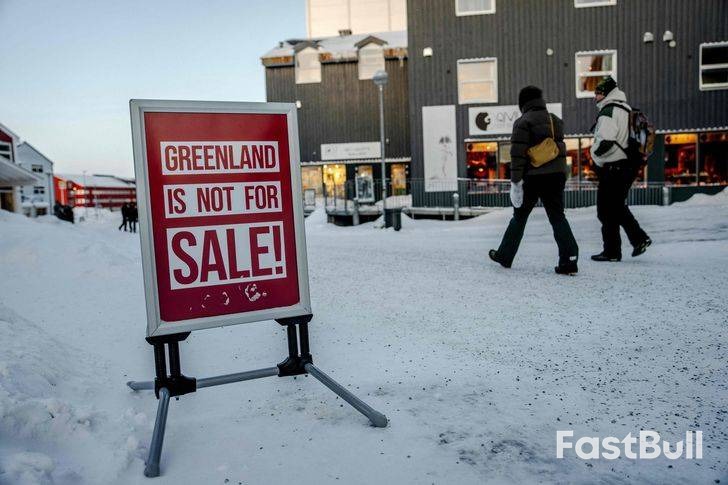
          European nations and NATO allies responded with a firm and unified message: Greenland is not for sale. NATO, founded by the U.S., Canada, and European nations to counter the Soviet Union, found itself in the unprecedented position of resisting territorial demands from its most powerful member.

          A sign in Nuuk, Greenland, reflects the firm local and Danish stance against the U.S. proposal.

          A Danish government official, speaking anonymously, confirmed Copenhagen was open to discussing U.S. security concerns but emphasized that "red lines"—namely Denmark's sovereignty over Greenland—must be respected.

          Danish Foreign Minister Lars Løkke Rasmussen called Trump's speech "a way of thinking about territorial integrity that does not match the institutions we have." He added, "Greenland is part of NATO. Denmark is part of NATO, and we can exercise our sovereignty in Greenland."

          Greenland on High Alert

          In Greenland itself, the government issued a crisis handbook in English and Greenlandic, advising citizens to have enough food, water, and fuel to last for five days.

          Residents in the capital, Nuuk, took the advice seriously. "We just went to the grocery store and bought the supplies," said Tony Jakobsen, displaying bags filled with candles, snacks, and toilet paper. He viewed Trump's rhetoric as "just threats... but it's better to be ready than not ready."

          Another resident, Johnny Hedemann, found Trump's remarks "insulting." He criticized the president for talking about "the Greenlandic people and the Greenlandic nation as just an ice cube." Hedemann added, "With this lunatic, you don't know what's going to happen tomorrow."

          The Economic Fallout of the Tariff Threat

          The crisis deepened when Trump threatened to impose steep import taxes on Denmark and seven other allies if they refused to negotiate a transfer of the semi-autonomous territory. The proposed tariffs would start at 10% the following month and rise to 25% by June.

          The threat immediately spooked investors and economists, who warned it could unravel the fragile trade truce reached between the U.S. and the EU the previous summer. U.S. stock markets initially fell before recovering on Wednesday after Trump announced he was canceling the tariffs.

          Leaders across Europe made their positions clear. British Prime Minister Keir Starmer stated in the House of Commons that "Britain will not yield on our principles and values about the future of Greenland under threats of tariffs."

          European Commission President Ursula von der Leyen warned that if Trump moved forward with the tariffs, the bloc's response "will be unflinching, united and proportional."

          Off-Topic Remarks and Onstage Confusion

          The Greenland controversy completely overshadowed the intended topic of Trump's speech: lowering U.S. housing prices. When he eventually touched on the subject, he suggested he did not support affordability measures, arguing that falling home prices hurt property values and make homeowners feel poorer.

          Throughout the dispute, Trump also repeatedly and mistakenly referred to Greenland as Iceland, doing so four times during his speech and five times since the previous day. He argued that the island was geographically part of North America, stating, "That's our territory."

          He also contrasted the U.S. economy with Europe's, claiming, "I want to see Europe go good, but it's not heading in the right direction."

          After his speech, Trump met with the leaders of Poland, Belgium, and Egypt, repeating his assurance that a military option was off the table. However, he left his European counterparts with an ominous warning from his earlier address: "You can say yes, and we will be very appreciative. Or you can say no, and we will remember."

          To stay updated on all economic events of today, please check out our Economic calendar
          Risk Warnings and Disclaimers
          You understand and acknowledge that there is a high degree of risk involved in trading. Following any strategies or investment methods may lead to potential losses. The content on the site is provided by our contributors and analysts for information purposes only. You are solely responsible for determining whether any trading assets, securities, strategy, or any other product is suitable for investing based on your own investment objectives and financial situation.
          Add to Favorites
          Share

          Supreme Court Appears Wary of Trump Bid to Fire Fed’s Cook

          Manuel

          Political

          Central Bank

          US Supreme Court justices suggested they are wary of President Donald Trump’s effort to fire Federal Reserve Governor Lisa Cook over unproven mortgage-fraud allegations, saying the move could upend the Fed’s independence and rattle markets.
          Hearing arguments in Washington Wednesday, conservative and liberal justices alike sharply questioned US Solicitor General D. John Sauer, who urged the court to let Trump oust Cook for the time being while her lawsuit goes forward.
          Trump’s own appointees were among the skeptics. Justice Brett Kavanaugh said the president’s position would “weaken if not shatter the independence of the Federal Reserve.” Justice Amy Coney Barrett asked whether the risk to financial markets was reason for “caution on our part,” though she also suggested she wasn’t ready to fully embrace Cook’s position.
          The case is testing the Supreme Court’s commitment to the independence of the central bank. The court so far has helped shield the Fed from Trump’s efforts to seize control, but the Cook case presents a new set of legal issues.
          The stakes for the US and world economies are massive, as underscored by a bipartisan group of former Treasury secretaries, Federal Reserve chairs and other experts. They filed a brief saying a decision for Trump would undermine public confidence in the Fed and jeopardize its ability to effectively set monetary policy. The court is set to rule by July.
          The Supreme Court argument coincided with a Justice Department criminal investigation into Fed Chair Jerome Powell, a probe that has sparked bipartisan backlash. Powell, a lawyer by training, attended the argument Wednesday, as did Cook and former Fed Chair Ben Bernanke.

          ‘Hurried Manner’

          In a hearing that lasted just short of two hours, justices from across the ideological spectrum voiced reluctance to definitively resolve the major constitutional issues presented by the case. The case reached the high court in September when Trump sought an emergency order letting him oust Cook temporarily.
          “Is there any reason why this whole matter had to be handled by everybody — by the executive branch, by the district court, by the DC Circuit — in such a hurried manner?” Justice Samuel Alito asked Sauer. Alito was referring to the district judge who blocked the firing and the US Court of Appeals for the DC Circuit, which refused to lift the lower court’s order.
          Trump says it’s Cook who is harming the Fed’s credibility. The administration accuses Cook of fraudulently listing homes in Michigan and Georgia as a “primary residence” to secure more favorable terms on loans when she obtained mortgages in 2021, before she joined the Fed.
          The veracity of those allegations isn’t before the court, though Cook has said they are baseless claims that rely on “cherry-picked, incomplete snippets” of documents. Her lawyer, Paul Clement, said Wednesday that Cook had made “at most, an inadvertent mistake.”
          In a statement issued after the argument, Cook said the case “is about whether the Federal Reserve will set key interest rates guided by evidence and independent judgment or will succumb to political pressure.”
          Cook contends Trump’s bid to fire her is improper for multiple reasons. She argues that, even if the allegations were true, they wouldn’t be grounds for firing because they don’t concern her job performance or eligibility to hold the position. The Federal Reserve Act bars presidential removal of governors except “for cause.”
          She also says the Constitution and federal law give her important procedural rights, including an opportunity to contest the allegations before she loses her job.

          Kavanaugh Worries

          Kavanaugh, appointed to the Supreme Court by Trump in 2018, openly worried about the consequences of giving presidents too much leeway to fire governors.
          “Once these tools are unleashed, they are used by both sides, and usually more the second time around,” he said.
          The court’s liberal justices joined Kavanaugh in signaling alarm at Trump’s attempted takeover of the Fed.
          Since the Fed’s creation in 1913 “it’s unprecedented that any Federal Reserve officer has ever been removed,” Justice Sonia Sotomayor said. “So the unprecedented nature of this case is a part of what the president did, not what Ms. Cook did.”
          Sauer responded that, in the past, governors accused of wrongdoing have resigned. Cook has not been criminally charged.
          Barrett wondered why the administration couldn’t have offered Cook a hearing, rather than spending so much time in litigation.
          “If there isn’t anything to fear from a hearing, and if you have the evidence, why couldn’t those resources have been put into a hearing?” she asked Sauer.
          But Barrett also suggested discomfort with the implications of Cook’s arguments. The justice voiced concern that a president wouldn’t be able to remove a governor who watched Nazi videos or engaged in shoplifting or domestic abuse.
          “So there’s nothing that the president can do to get rid of someone who does those kinds of things while in office?” she asked Clement.

          Narrow Ruling

          Because the case is still on the court’s emergency docket — with Trump seeking an order letting him remove Cook only while the government presses an appeal — the justices don’t have to definitively resolve the legal questions.
          They instead could factor in the consequences of the decision, including the economic impact. Cook says a ruling in Trump’s favor would have dire implications for financial markets. Trump contends the government would suffer significant harm if he were required to leave Cook in office.
          Near the end of the argument, Kavanaugh suggested the possibility of a narrow ruling that would keep Cook in her seat for now while avoiding the trickiest issues for the time being.
          “One way would just be to say there was insufficient process and therefore we at this juncture deny the government’s application,” Kavanaugh said to Clement.
          Even a narrow ruling letting Cook stay in office would bolster the Fed’s independence, said Kathryn Judge, a Columbia University law professor who studies the Fed.
          “It would also make it clear that the Fed is different from other agencies,” said Judge, a former law clerk to now-retired Justice Stephen Breyer.
          The Supreme Court seemed to shield Fed governors in May, when it exempted the central bank from a ruling that let Trump oust top officials at two other independent agencies, including the National Labor Relations Board. Though temporary, the decision nullified job protections Congress had created for those positions, with the court majority saying the president’s constitutional authority means he generally can fire top officials at executive-branch agencies for any reason.
          The Federal Reserve Act contains a similar provision with its “for cause” limitation. But the court went out of its way to say the NLRB decision didn’t affect the Fed, calling it a “uniquely structured, quasi-private entity.”

          Source: Bloomberg

          Risk Warnings and Disclaimers
          You understand and acknowledge that there is a high degree of risk involved in trading. Following any strategies or investment methods may lead to potential losses. The content on the site is provided by our contributors and analysts for information purposes only. You are solely responsible for determining whether any trading assets, securities, strategy, or any other product is suitable for investing based on your own investment objectives and financial situation.
          Add to Favorites
          Share

          Diego Garcia: The Island Fueling a Geopolitical Clash

          Isaac Bennett

          Remarks of Officials

          Middle East Situation

          Political

          Economic

          Energy

          On January 20, Donald Trump blasted the UK's plan to transfer the Chagos Archipelago to Mauritius, calling it an act of "total weakness" and "great stupidity." He linked this perceived weakness among allies to his long-standing argument that the US must acquire Greenland.

          Trump's focus on controlling strategic territories like Greenland is often justified by concerns over China and Russia's growing influence in the Atlantic and Arctic. Now, that same logic is being applied to the Indian Ocean, with the sovereignty of the Chagos Archipelago and its critical military base at the center of the debate.

          The Indian Ocean: A Global Trade Chokepoint

          While global warming may open new trade routes in the Arctic, they are not yet capable of handling major shipping volumes. The Indian Ocean remains far more critical to the global economy. Today, it serves as the transit route for two-thirds of the world's oil shipments and one-third of all cargo.

          Tensions in this vital region have been escalating. In November, the US seized a ship traveling from China to Iran near Sri Lanka, a move that preceded other tanker seizures worldwide. More recently, Russia, China, and Iran conducted joint naval exercises off the coast of South Africa.

          This exercise was a strategic power play focused on the world's most important maritime chokepoints. While India and Brazil sat out, several other nations were invited:

          • Egypt (Suez Canal)

          • Ethiopia & UAE (Bab-el-Mandeb Strait)

          • Indonesia (Malacca Strait)

          • Iran (Strait of Hormuz)

          • South Africa (Cape of Good Hope)

          The joint drill sent a clear message: rival powers can also exert pressure on global trade routes, putting US shipping and economic interests at risk.

          Diego Garcia: America's Indian Ocean Stronghold

          Diego Garcia, the only US military base in the Indian Ocean, sits at the heart of this complex region. Its location, equidistant from the Bab-el-Mandeb Strait and the Strait of Malacca, allows the United States to project military power across a vast and vital area.

          The Indian Ocean is home to 33 countries and 2.9 billion people, creating a complicated web of interests. Diego Garcia serves as a central hub for US strategy. The base has supported operations in Iraq, Iran, and the Horn of Africa. In 2024, two B-52 Stratofortress bombers were deployed from the island on a deterrence mission across the Indo-Pacific, seen as a signal to the Houthis, Iran, and China.

          For strategists like Trump, hemispheric defense requires controlling key points far beyond America's borders. Diego Garcia functions as a crucial defensive node, deterring rivals from weaponizing the Indian Ocean’s sea lanes against US interests.

          A Controversial Sovereignty Agreement

          The future of Diego Garcia is complicated by its history of decolonization and the UK's recent agreement with Mauritius. In 2024, the British government agreed to transfer sovereignty of the Chagos Archipelago to Mauritius. In return, the joint US-UK military base on Diego Garcia would continue to operate.

          This deal has faced significant pushback in the UK Parliament. Critics raise several concerns:

          • Chinese Influence: Some fear that without direct UK control, China could establish a commercial dual-use facility in Mauritius, threatening Western security.

          • Indigenous Rights: The indigenous Chagossian people were excluded from the negotiation process, fueling criticism.

          • Financial Cost: The deal's estimated cost ranges from £3.4 billion to £35 billion.

          • Nuclear Proliferation: The Chagos Archipelago is part of the African Nuclear Weapons Free Zone, an agreement designed to keep the continent free of nuclear weapons, creating another layer of complexity.

          Beyond a Zero-Sum Game

          Many policymakers in the US and UK have overlooked the possibility of a solution that serves all parties. The intense politicization of the issue has obscured outcomes that could accommodate military security, indigenous rights, and international norms.

          For example, the resettlement of the Chagossian people on the archipelago is not geographically incompatible with the military base's operations. Furthermore, security cooperation between the UK, US, and Mauritius could create shared interests in ensuring the base continues to function smoothly, regardless of who holds sovereignty.

          Ultimately, the transfer of sovereignty is not Washington's decision to make. The US leases the Diego Garcia base from the UK, and that lease is set to expire in 2036. Despite Trump's strong opinions, the future of the Chagos Archipelago will be decided in London.

          To stay updated on all economic events of today, please check out our Economic calendar
          Risk Warnings and Disclaimers
          You understand and acknowledge that there is a high degree of risk involved in trading. Following any strategies or investment methods may lead to potential losses. The content on the site is provided by our contributors and analysts for information purposes only. You are solely responsible for determining whether any trading assets, securities, strategy, or any other product is suitable for investing based on your own investment objectives and financial situation.
          Add to Favorites
          Share

          Trump's 10% Credit Card Cap Sparks Wall Street Showdown

          Frederick Miles

          Remarks of Officials

          Stocks

          Daily News

          Political

          Economic

          A proposal by President Donald Trump to cap credit card interest rates at 10% has drawn a sharp rebuke from JPMorgan Chase CEO Jamie Dimon, setting the stage for a high-stakes clash between Washington and the financial industry.

          Speaking at the World Economic Forum in Davos, Switzerland, Dimon warned that such a limit would sever a vital financial lifeline for the majority of Americans. He argued that approximately 80% of the country's population relies on credit cards as a crucial safety net during financial emergencies.

          Trump Pushes Forward with Rate Cap Plan

          President Trump reiterated his call for a one-year, 10% cap on credit card interest rates during his own address in Davos. He framed the move as a way to combat what he described as excessive profits in the credit card industry, claiming companies are making margins of over 50%.

          According to the president, high credit card bills are a significant barrier preventing families from saving for homeownership and achieving financial stability.

          The proposal was first mentioned earlier in January with few details. Trump later specified a January 20 deadline in a Truth Social post, a move that surprised the banking sector. The initial announcement sent bank stocks tumbling as investors feared a major blow to a highly profitable business line.

          Banks Warn of Economic Consequences

          The banking industry has forcefully pushed back, arguing that a rate cap would ultimately harm consumers by constricting access to credit. Industry groups contend that everyday people would lose the borrowing options they depend on.

          Jamie Dimon outlined a grim forecast if the cap is implemented nationwide. He predicted the loudest complaints would come not from banks but from businesses and public services. Dimon suggested that restaurants, retailers, travel companies, schools, and even local governments would suffer as consumers begin to miss payments on other obligations, including essential utilities like water.

          Dimon's Two-State Test Proposal

          As an alternative, Dimon proposed a pilot program to test the rate cap in just two states—Vermont and Massachusetts—to observe its real-world effects before a national rollout. The suggestion drew laughter from the Davos audience, as senators from those states, Bernie Sanders and Elizabeth Warren, have long advocated for similar limits on credit card rates.

          The Logic Behind High Credit Card Rates

          Banks justify higher interest rates on credit cards because they represent unsecured debt. Unlike a mortgage backed by a house or a car loan secured by a vehicle, credit card debt has no collateral. If a borrower defaults, the lender cannot seize an asset to recoup the loss, making it a riskier form of lending.

          JPMorgan plans to provide the administration with more detailed information on the potential impacts of a rate cap. The bank’s finance chief also noted during a recent earnings call that the company might explore legal action if the government imposes poorly justified mandates that drastically alter its operations.

          Political Reality and Industry Strategy

          Political analysts believe the proposal faces an uphill battle in Congress, where Republicans and Democrats are divided on the issue. One strategist noted that since Trump has asked lawmakers to pass legislation rather than taking executive action, the chances of a 10% cap becoming law soon are low.

          Other banking leaders share Dimon's concerns. Citigroup CEO Jane Fraser told CNBC from Davos that she does not believe Congress will ultimately approve the measure.

          In the meantime, bank stocks have shown signs of recovery, with an index of large banking firms rising 1.2% on Wednesday. Major banks are reportedly working to present alternative solutions to the administration as it looks to address voter concerns about the cost of living ahead of upcoming congressional elections. Some analysts suggest that a possible compromise could involve new credit card products, such as basic, no-frills cards with a 10% rate, lower credit limits, or cards with fewer rewards.

          To stay updated on all economic events of today, please check out our Economic calendar
          Risk Warnings and Disclaimers
          You understand and acknowledge that there is a high degree of risk involved in trading. Following any strategies or investment methods may lead to potential losses. The content on the site is provided by our contributors and analysts for information purposes only. You are solely responsible for determining whether any trading assets, securities, strategy, or any other product is suitable for investing based on your own investment objectives and financial situation.
          Add to Favorites
          Share

          Meloni Hits Pause on Trump's 'Board of Peace' Charter

          Isaac Bennett

          Palestinian-Israeli conflict

          Political

          Remarks of Officials

          Italian Prime Minister Giorgia Meloni has confirmed she will not immediately sign onto President Donald Trump's "Board of Peace" charter, citing significant legal and constitutional hurdles.

          "Some elements are incompatible with our constitution and this prevents us from signing tomorrow," Meloni told Italian state television. Despite the delay, she signaled that her position remains one of "openness" to the initiative.

          A Challenge to the United Nations?

          Trump is set to launch the new institution with a signing ceremony at the World Economic Forum in Davos. The board, designed as a forum to establish peace in Gaza, has raised concerns among allies who see it as an attempt to supplant the United Nations.

          This view has led most European Union governments to hold back from joining, at least for now.

          Internal assessments within the Italian government flagged friction between the proposed board's framework and existing UN structures. According to sources familiar with the matter, these conflicts are a key reason for Meloni’s hesitation, as Italy weighs the charter's compatibility with its membership in international organizations like the UN.

          Furthermore, any commitment would have required a potentially lengthy domestic approval process, including assent from both the Italian parliament and President Sergio Mattarella.

          Meloni's High-Stakes Balancing Act

          While pressing pause, Meloni argued that it remains in Italy's and Europe's long-term interest to eventually join the initiative. She warned that failing to do so would risk "self-exclusion."

          "We are in a context in which all our certainties are vanishing — or at risk of doing so," she stated. "It is in nobody's interest to drive a wedge between Europe and the US — and it certainly isn't in Italy's interest."

          Since Trump's return to power, Meloni has carefully positioned herself as a diplomatic bridge to the United States, trying to maintain strong transatlantic ties without unsettling her allies in Europe. This was recently highlighted by her offer to mediate Europe's dispute over Greenland.

          On the specific issue of Gaza, Meloni’s public stance has softened during her time as premier, partly in response to large-scale protests and a shift in public opinion toward the Palestinians. She has since pledged Italian contributions to rebuild Gaza and assist in training the territory's future police force.

          Risk Warnings and Disclaimers
          You understand and acknowledge that there is a high degree of risk involved in trading. Following any strategies or investment methods may lead to potential losses. The content on the site is provided by our contributors and analysts for information purposes only. You are solely responsible for determining whether any trading assets, securities, strategy, or any other product is suitable for investing based on your own investment objectives and financial situation.
          Add to Favorites
          Share

          Argentina's Economy Contracts as Election Woes Linger

          Nathaniel Wright

          Data Interpretation

          Daily News

          Political

          Economic

          Argentina's economy shrank for a second consecutive month in November, feeling the aftershocks of a turbulent midterm election cycle that sparked a sharp market selloff. The contraction highlights the economic challenges facing the nation amid significant political shifts.

          Economic Data Disappoints Forecasts

          According to the national statistics agency, economic activity fell 0.3% in November compared to the previous month, following a 0.4% decline recorded in October.

          On a year-over-year basis, the economy also contracted by 0.3%. This figure fell dramatically short of expectations, as economists surveyed by Bloomberg had forecast median growth of 2.0%. The primary drivers behind the annual decline were poor performance in the fishing, manufacturing, and retail sectors.

          Political Volatility Hits Key Industries

          The economic slowdown is closely linked to the political climate. President Javier Milei's libertarian party secured a decisive victory in the midterms, recovering from a major setback in a provincial vote in September. However, the seven weeks leading up to the October 26 ballot were marked by severe market instability, with Argentine assets plunging as traders anticipated another loss for Milei.

          A key stabilizing factor during this period was a financial lifeline from the United States, which provided a currency swap to support the peso. Argentina paid down this swap earlier this month.

          Despite this intervention, the pre-election volatility continued to impact South America's second-largest economy. Data from November shows the construction sector suffered its largest monthly decline of the year, while activity in the manufacturing industry also slowed.

          Inflation Accelerates Amid Cautious Outlook

          Adding to the economic pressure, inflation in December accelerated more than anticipated, driven by rising prices for beef, bus fares, and electricity.

          Looking ahead, economists surveyed by the central bank project a potential recovery. The forecast anticipates inflation will cool to 20.1% by 2026, with the economy expected to grow by 3.5% that year.

          To stay updated on all economic events of today, please check out our Economic calendar
          Risk Warnings and Disclaimers
          You understand and acknowledge that there is a high degree of risk involved in trading. Following any strategies or investment methods may lead to potential losses. The content on the site is provided by our contributors and analysts for information purposes only. You are solely responsible for determining whether any trading assets, securities, strategy, or any other product is suitable for investing based on your own investment objectives and financial situation.
          Add to Favorites
          Share
          FastBull
          Copyright © 2026 FastBull Ltd

          728 RM B 7/F GEE LOK IND BLDG NO 34 HUNG TO RD KWUN TONG KLN HONG KONG

          TelegramInstagramTwitterfacebooklinkedin
          App Store Google Play Google Play
          Products
          Charts

          Chats

          Q&A with Experts
          Screeners
          Economic Calendar
          Data
          Tools
          Membership
          Features
          Function
          Markets
          Copy Trading
          Latest Signals
          Contests
          News
          Analysis
          24/7
          Columns
          Education
          Company
          Careers
          About Us
          Contact Us
          Advertising
          Help Center
          Feedback
          User Agreement
          Privacy Policy
          Personal Information Protection Statement
          Business

          White Label

          Data API

          Web Plug-ins

          Poster Maker

          Affiliate Program

          Risk Disclosure

          The risk of loss in trading financial instruments such as stocks, FX, commodities, futures, bonds, ETFs and crypto can be substantial. You may sustain a total loss of the funds that you deposit with your broker. Therefore, you should carefully consider whether such trading is suitable for you in light of your circumstances and financial resources.

          No decision to invest should be made without thoroughly conducting due diligence by yourself or consulting with your financial advisors. Our web content might not suit you since we don't know your financial conditions and investment needs. Our financial information might have latency or contain inaccuracy, so you should be fully responsible for any of your trading and investment decisions. The company will not be responsible for your capital loss.

          Without getting permission from the website, you are not allowed to copy the website's graphics, texts, or trademarks. Intellectual property rights in the content or data incorporated into this website belong to its providers and exchange merchants.

          Not Logged In

          Log in to access more features

          FastBull Membership

          Not yet

          Purchase

          Become a signal provider
          Help Center
          Customer Service
          Dark Mode
          Price Up/Down Colors

          Log In

          Sign Up

          Position
          Layout
          Fullscreen
          Default to Chart
          The chart page opens by default when you visit fastbull.com